
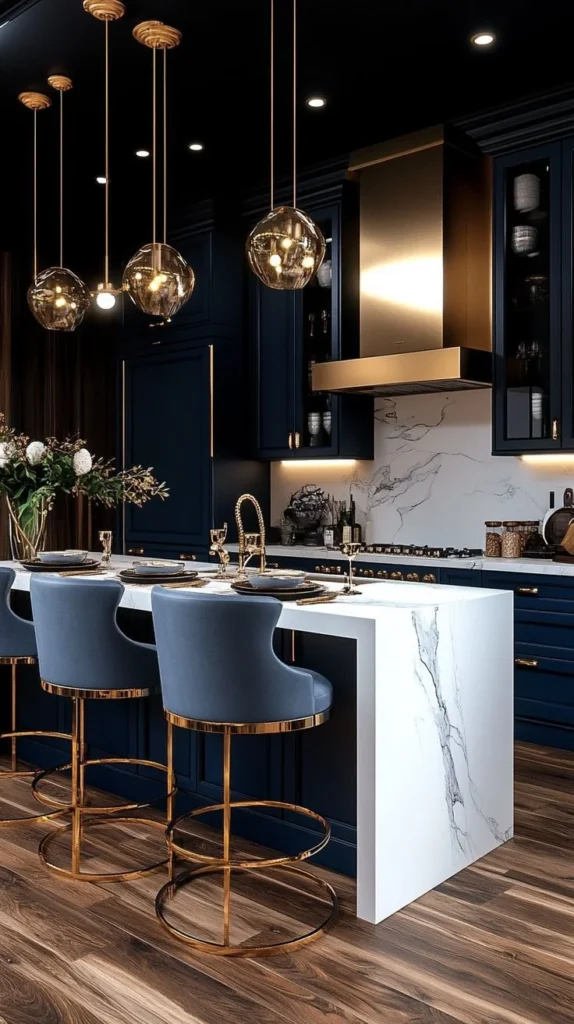
Many small kitchens share the same frustrations: not enough prep space, nowhere to put the toaster, and a walkway that feels tighter every time two people are in the room. In most cases, the room does not need more square footage. It needs a better plan.
A successful small kitchen remodel solves practical problems while improving the look of the space. That means thinking beyond paint color. Cabinet height, appliance depth, lighting, storage access, and the way materials meet all shape how a compact kitchen feels and functions.
The best approach is to put your budget toward decisions that affect the room every day. A new cabinet color looks good, but a smarter storage layout saves time at every meal. A decorative pendant adds personality, but well-placed task lighting makes evening food prep easier.
The 10 small kitchen remodel ideas below are built around that balance. Each one delivers a noticeable style upgrade without making a compact room feel busier.
Use One Light, Cohesive Color Story
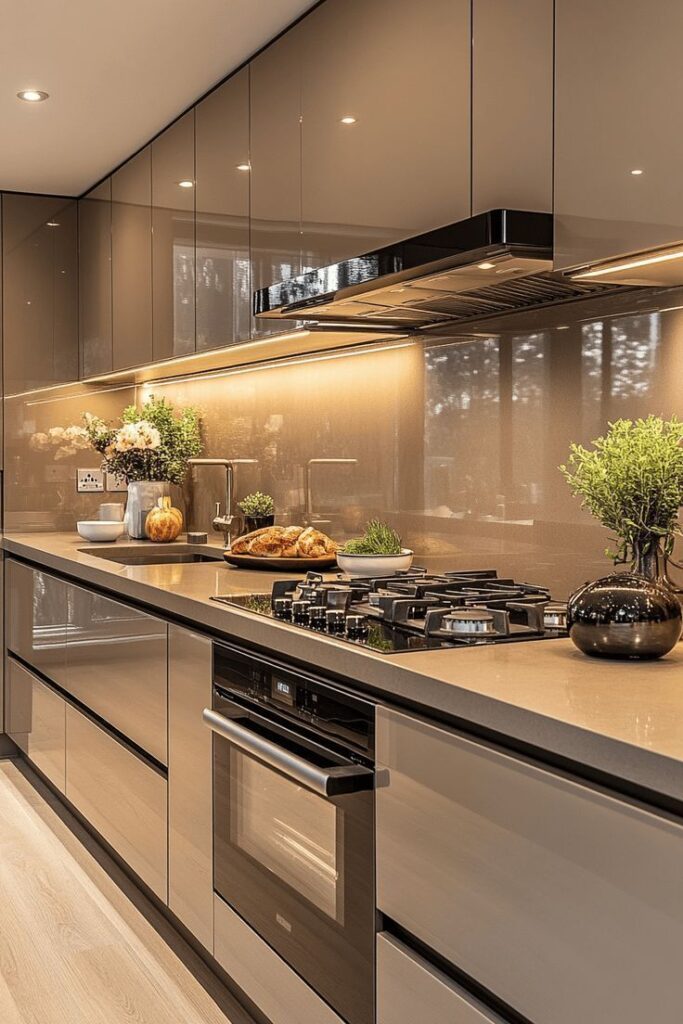
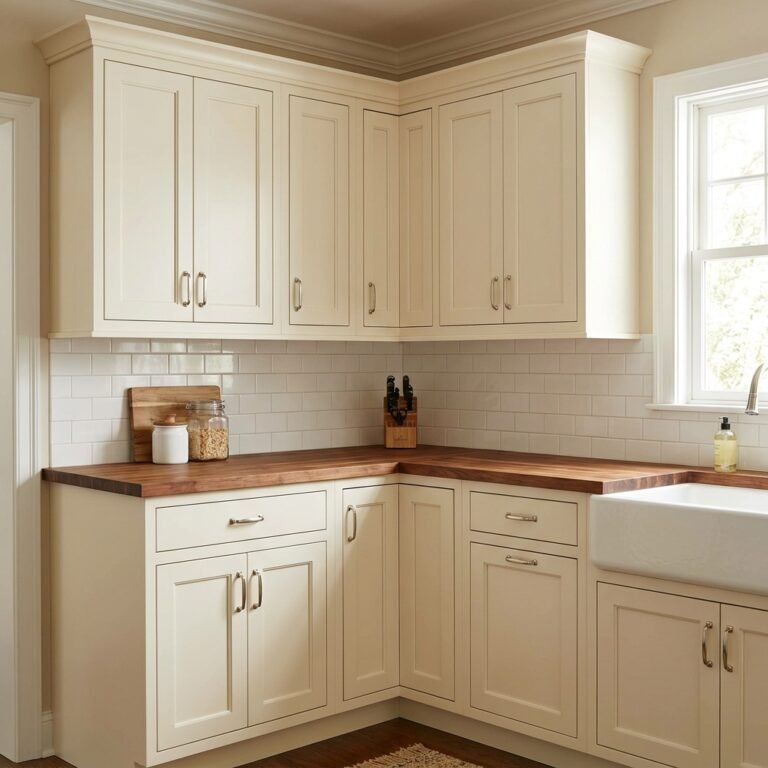
Color is one of the quickest ways to change how a small kitchen feels, but the best results come from continuity, not simply choosing white. When cabinets, walls, and trim share a related tonal family, the eye has fewer places to stop, and the room feels calmer and more connected.
Warm white, soft cream, pale taupe, and light greige all work well. The right choice depends on your natural light and the undertones in your countertop and flooring. Sherwin-Williams explains that light reflectance value (LRV) indicates how much light a paint color reflects, and it recommends testing colors in the actual room rather than relying on a small swatch. See Sherwin-Williams’ guidance on making rooms look bigger with color.
During a remodel, try painting the walls and cabinet frames in closely related tones rather than creating sharp contrast on every surface. Then introduce warmth through a single material, such as natural oak or softly veined stone.
The goal is not to remove personality. It is to keep the room visually continuous so limited square footage does not look chopped into sections.
Take Cabinets All the Way to the Ceiling
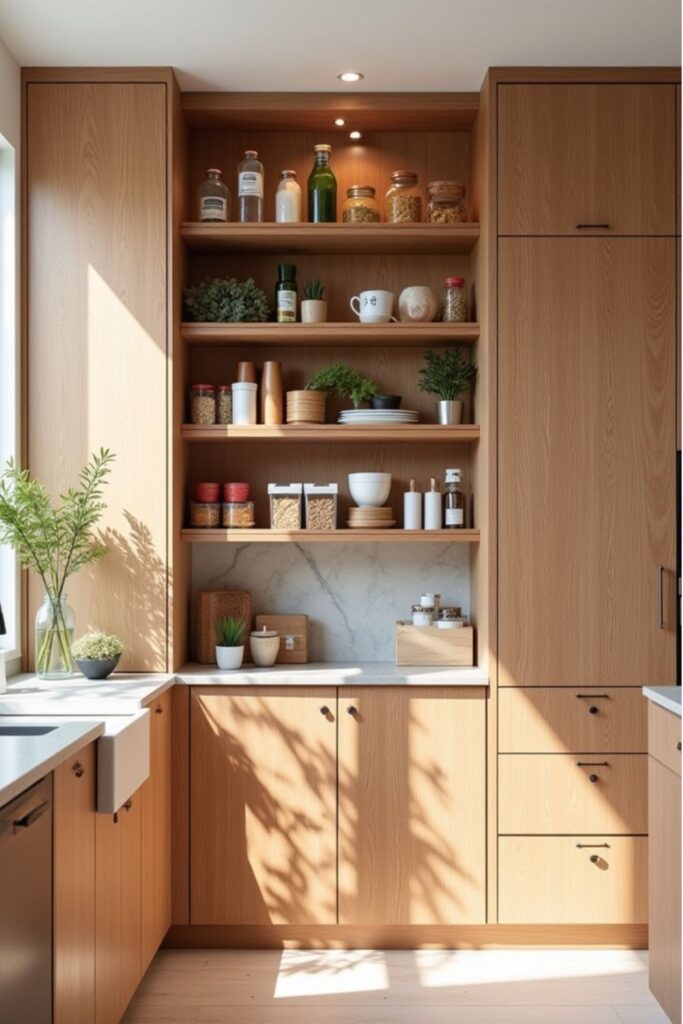
The empty strip above standard cabinets collects dust and wastes valuable storage. In a small kitchen, that gap is one of the clearest signs that vertical space is going unused.
Ceiling-height cabinetry turns that dead zone into usable storage and creates a cleaner architectural line. Reserve the top section for items you need only occasionally, such as serving platters, seasonal cookware, or specialty baking tools. Keep everyday dishes and ingredients within easy reach.
If a full wall of tall cabinets feels heavy, balance it with one open section, glass-front doors, or a lighter cabinet color. You can also concentrate the tall storage on a single wall instead of spreading it across every surface.
Consistent door fronts and aligned cabinet tops make a kitchen look custom, even when the cabinets are standard stock. That cohesive look often matters more than the price tag of the cabinetry.
Fix the Layout Before Choosing Finishes
No finish can rescue a kitchen that forces you to cross the room every time you cook. Before selecting tile, hardware, or paint, spend a few days observing how you move through the space.
Start with the refrigerator, sink, and cooking surface. Note where you stand while chopping, where groceries land after you open the fridge, and whether the dishwasher door blocks the path when it is open.
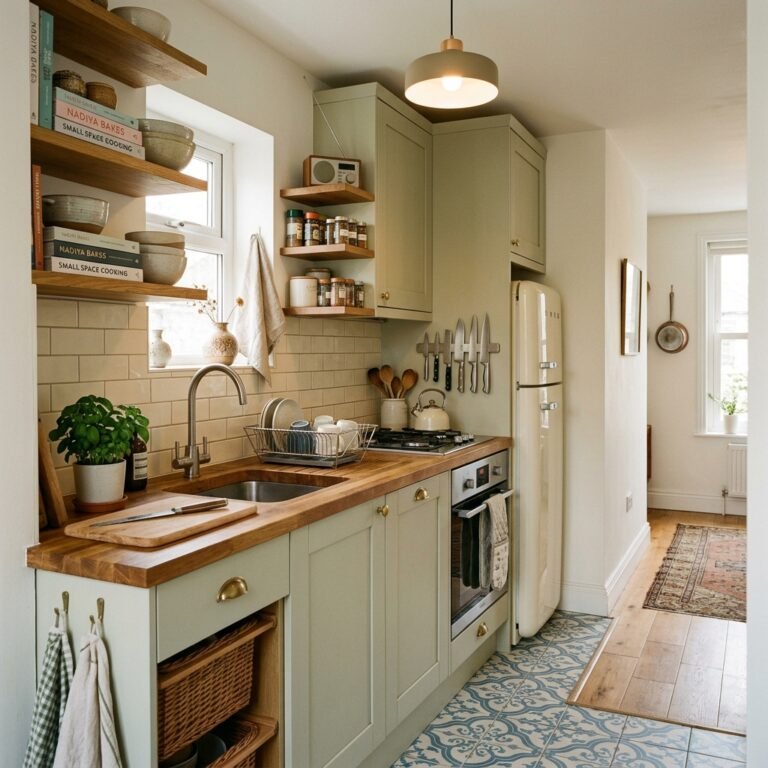
One-wall, galley, and L-shaped layouts often suit small kitchens because they keep key functions close together. The best option still depends on your walls, doors, windows, and appliance positions, so measure clearances instead of trusting how a plan looks on paper.
Appliance depth deserves the same attention. A counter-depth refrigerator reduces how far the appliance projects into the room. Consumer Reports notes that counter-depth models sit nearly flush with surrounding cabinets, which makes them a practical choice for compact kitchens. See Consumer Reports’ counter-depth refrigerator guide.
For a deeper look at circulation, work zones, and storage placement, read our small kitchen layouts guide.
Here is a quick test: stand at your main prep position and mentally reach toward the refrigerator, sink, and cooktop. If several daily tasks require awkward turns or repeated steps, fix the layout before anything decorative.
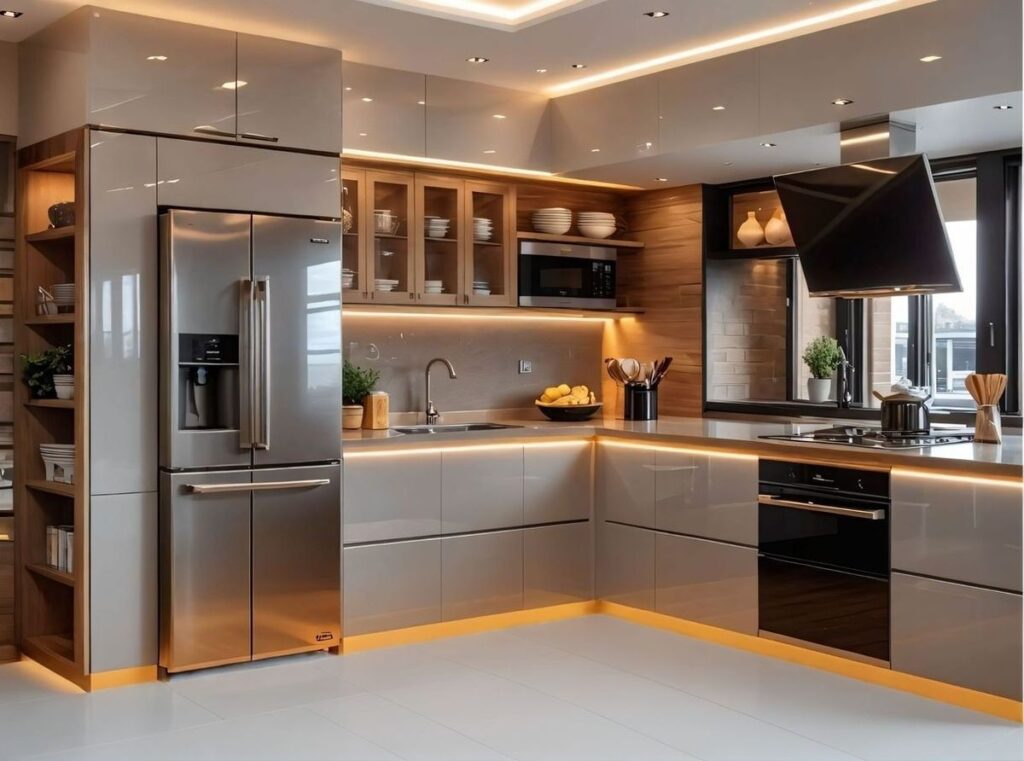
Use Open Shelving as a Deliberate Accent
Open shelving can make a compact kitchen feel lighter, but it works best as a controlled design move. Replacing every upper cabinet exposes every dish, mug, and appliance at once, which often makes the room feel more cluttered.
A better approach is to remove one short section of upper cabinets and replace it with two sturdy shelves. This creates a visual opening while keeping most everyday storage behind doors.
Use the shelves for items you reach for often, such as plates, bowls, and glasses. Keep the palette tight so the display reads as one composition instead of a collection of unrelated objects.
Placement matters as well. Shelves near a cooktop collect grease, so choose a section farther from the range. If you want the lighter look without the upkeep, reeded or clear glass cabinet doors create a similar visual break.
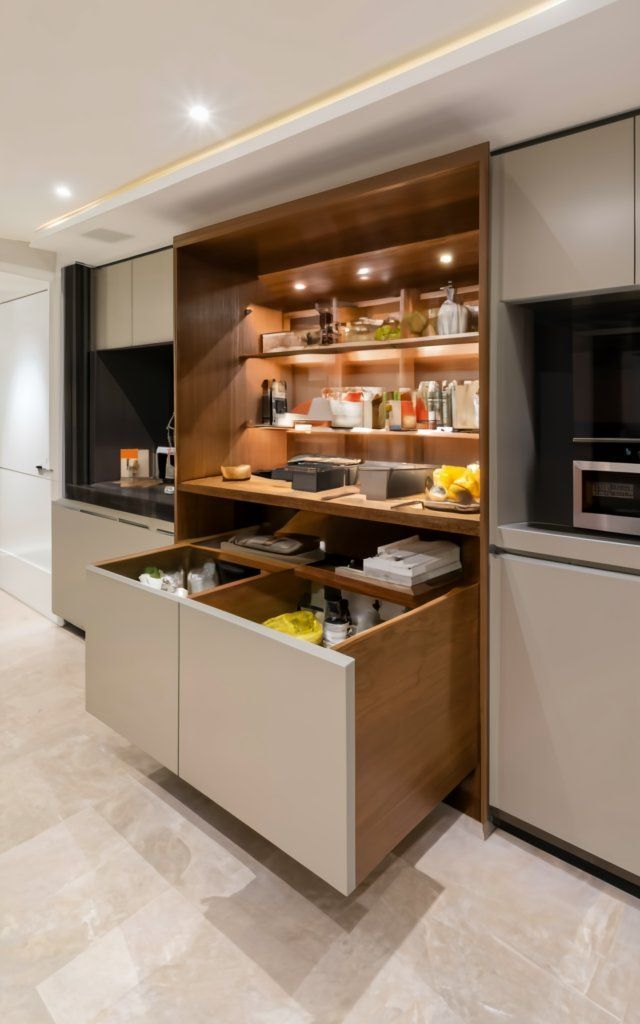
Build Storage Around How You Actually Cook
Storage works best when it follows your habits. A small kitchen needs fewer wasted steps, not just more cabinets.
Keep pans and cooking utensils near the cooktop. Store knives, cutting boards, and prep bowls near your main chopping area. Put plates and glasses close to the dishwasher or sink to make unloading easier, and move backup appliances to higher shelves if you use them only a few times a month.
Deep drawers are ideal for pots, pans, and bowls because you can see everything from above. Pull-out shelves make narrow cabinets easier to use, and a slim vertical cabinet can turn a leftover gap beside the refrigerator into a home for trays, spices, or cutting boards.
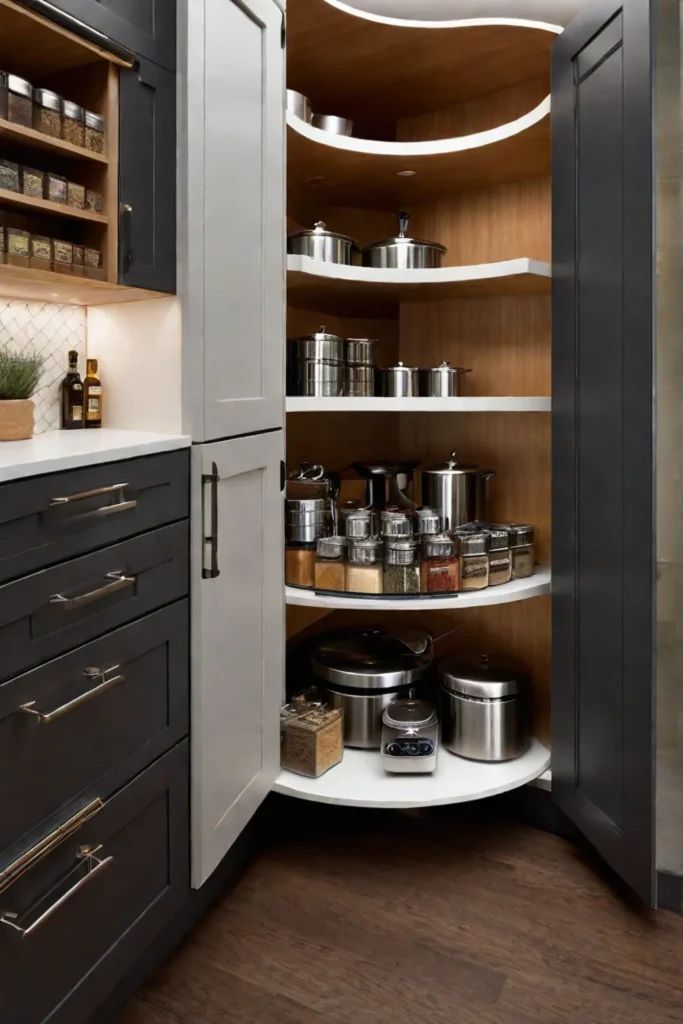
Do not ignore awkward corners. With planning, they can hold bulky items, or they can house a pull-out system that makes the hidden space accessible.
The right question is not “How many cabinets can I fit?” but “How quickly can I find what I need?” A kitchen that answers that well feels larger because less of the room is working against you.
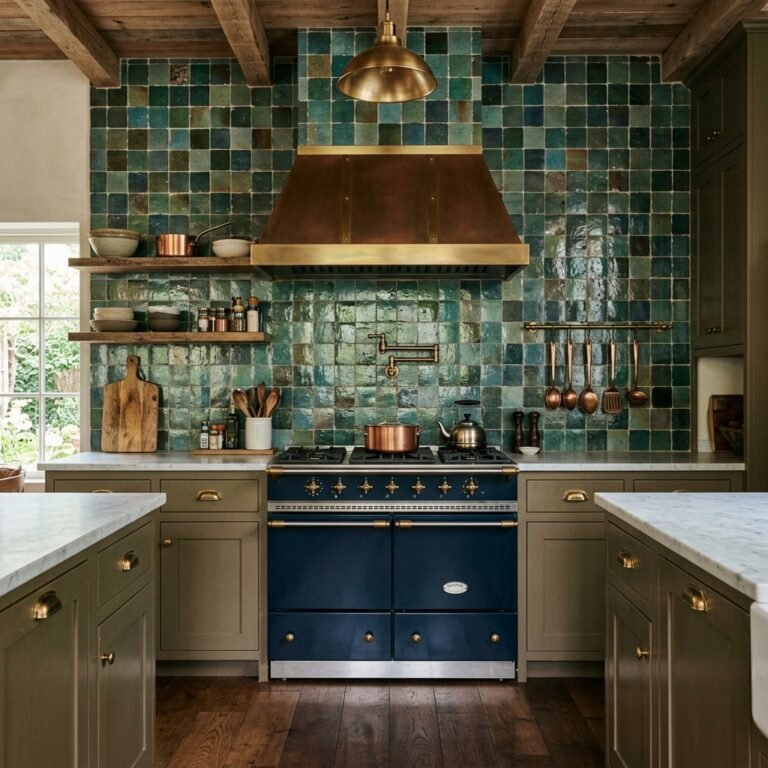
Create One Strong Backsplash Focal Point and Add Reflective Surfaces
In a small kitchen, the backsplash is one of the largest uninterrupted surfaces you can redesign. That makes it an efficient place to add personality without adding more objects to the room.
Rather than mixing several patterns, choose one material to define the kitchen’s character. Handmade-look ceramic, slim vertical tile, softly veined stone, and single-color glazed tile all work. What matters most is consistency.
Full-height installation can make a wall feel more finished, especially behind the range, while a quieter treatment elsewhere keeps the focal area from overwhelming the room. If your countertop has strong movement, choose a simple backsplash. If the countertop is restrained, the backsplash can carry more texture.
Glossy tile, glass details, and polished hardware also help bounce daylight around a compact room. Use them selectively so the kitchen feels bright rather than shiny.
Our kitchen backsplash guide covers height, material contrast, and custom-looking installation details in more depth.
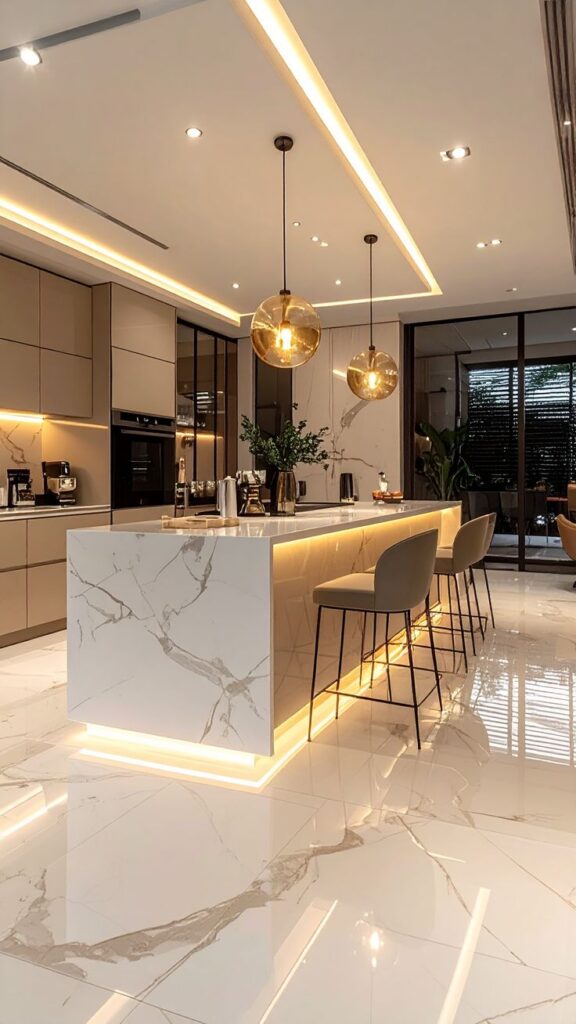
Layer Lighting Where You Need It Most
Lighting makes a remodeled kitchen look polished, but its biggest value is functional. A single ceiling fixture often leaves the countertop in shadow because your body blocks the light while you work.
Plan lighting in three layers: ambient ceiling light for moving through the room, under-cabinet lighting for food prep, and a pendant or decorative fixture over a peninsula or table for character.
Keep the design language consistent. A warm metal pendant can echo your cabinet hardware, and a simple linear fixture can match the clean lines of flat-panel doors. Under-cabinet strips tucked behind the cabinet edge keep the room from looking crowded.
In a small kitchen, placement matters more than the number of fixtures. Light the work surface first, then add decorative light where you want the eye to land. Dimmers are well worth the small extra cost, since bright task lighting suits cooking and a softer setting works after dinner.
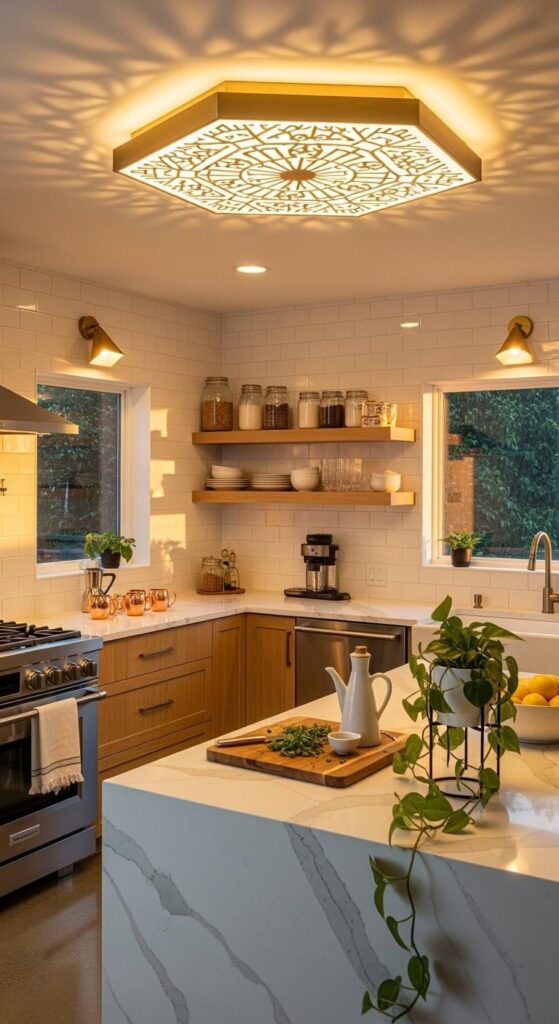
Choose a Peninsula When an Island Would Crowd the Room
Islands are popular, but a small kitchen does not automatically need one. A poorly scaled island turns a workable room into an obstacle course.
A peninsula often delivers the same benefits with less floor area. It adds prep space, storage, and a seat or two while staying connected to the existing cabinet run.
Before committing, tape the proposed footprint on the floor. Make sure you can walk past it, open doors, pull out drawers, and use the refrigerator without squeezing sideways. This simple test is worth doing before you order a single cabinet.
For very tight kitchens, a narrow worktable or rolling cart can provide extra surface when needed and move out of the way when it is not. Whatever you choose, keep the styling simple: one wood tone, one countertop material, and restrained seating make the addition look intentional.
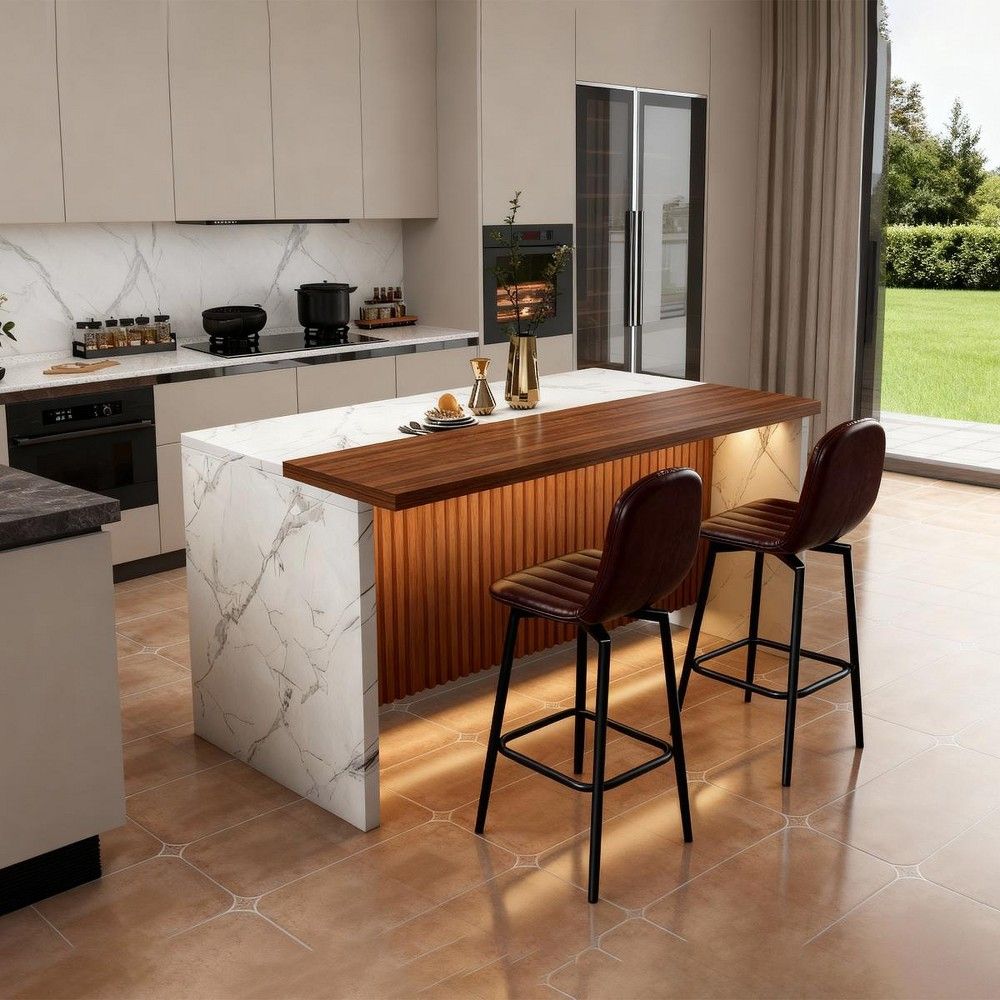
Edit the Room So the Remodel Can Be Seen
After investing in new cabinetry, lighting, or a backsplash, it is tempting to fill the countertops right back up. That can erase the visual payoff of the remodel.
In a compact kitchen, negative space is part of the design. Leave enough counter visible to show off the material. Keep what you use daily, and store duplicate tools and rarely used appliances elsewhere.
Choose a few decorative pieces with a clear role: a wooden board for warmth, a small plant to soften hard surfaces, or a tray that groups oils and coffee supplies so they look organized. Try the one-surface rule: before adding a decorative item, remove something else from the same area.
The goal is not an empty showroom. A kitchen should still look lived in, with just enough breathing room for the new design to stand out.
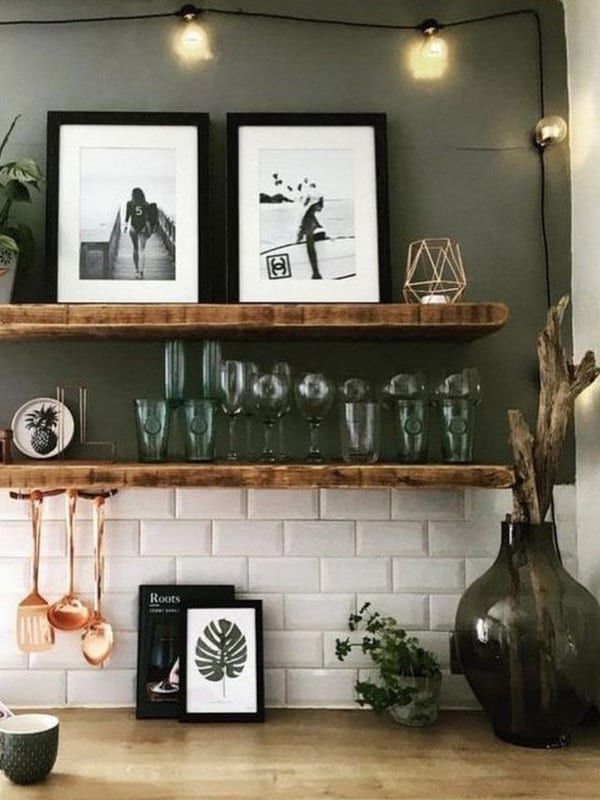
Spend the Budget on Changes You Notice Every Day
A small kitchen remodel can get expensive quickly because there is always another finish to upgrade. A smarter approach is to divide the budget by impact.
Start with changes that affect daily function: layout adjustments, cabinet storage, appliance fit, and task lighting. Once those are settled, use finishes to build the style you want.
- Lower-cost refresh: repaint, replace cabinet hardware, update the faucet, and improve lighting.
- Mid-level project: add new cabinet fronts, a better backsplash, storage inserts, or a counter-depth appliance.
- Larger renovation: rework the cabinet layout, add a peninsula, or replace the full cabinet package.
New cabinet fronts are especially valuable when the existing boxes are sound. A fresh door profile and one consistent hardware finish can make the kitchen look newly designed without a full replacement.
Resist the urge to make every surface a statement. One beautiful material paired with quieter supporting finishes often looks more expensive than a room full of competing upgrades.
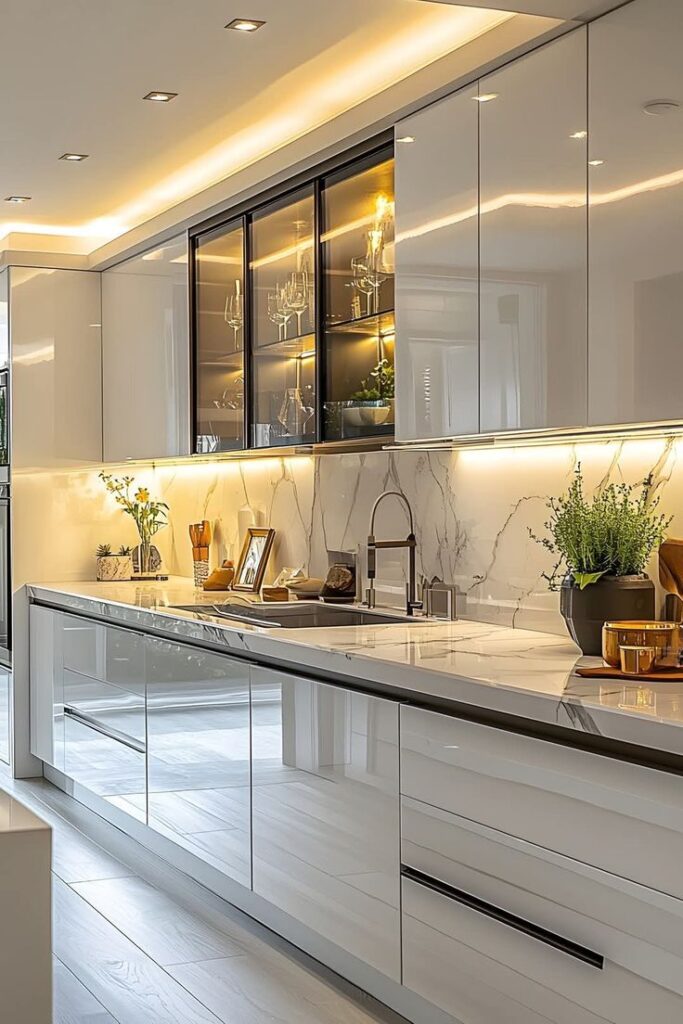
Common Small Kitchen Remodel Mistakes to Avoid
Even a well-designed plan can go wrong if a few common errors slip in. Watch for these before you start.
- Choosing finishes before fixing the layout. Beautiful tile cannot make up for a poor work triangle or a blocked walkway.
- Skipping measurements. Appliance depth, door swing, and drawer clearance should be confirmed on site, not assumed from a plan.
- Relying on a single ceiling light. Without under-cabinet task lighting, your own shadow falls across the work surface.
- Installing an oversized island. If you cannot walk around it comfortably, it is too big. Tape the footprint first.
- Mixing too many statement materials. Several competing patterns make a small room feel busy and smaller.
- Removing all upper cabinets for open shelving. You lose storage and expose every item to dust, grease, and clutter.
- Picking paint from a swatch alone. Test colors in the actual room and in different lighting before committing.
- Ignoring corners and gaps. Unused corners and narrow spaces beside appliances are some of the easiest places to gain storage.
- Overfilling the finished kitchen. Cluttered counters hide the work you just paid for.
- Splurging on decoration while underfunding function. Prioritize storage, lighting, and layout first.
Frequently Asked Questions About Small Kitchen Remodels
What is the best way to make a small kitchen look bigger?
Use a cohesive, light color palette, take cabinets to the ceiling, add layered lighting, and keep countertops clear. Reflective surfaces such as glossy tile or glass-front doors can also help bounce light around the room.
What layout works best for a small kitchen?
One-wall, galley, and L-shaped layouts are common choices because they keep the refrigerator, sink, and cooktop close together. The best option depends on your room’s dimensions, doors, and windows, so measure clearances before deciding.
Should I choose an island or a peninsula?
In most small kitchens, a peninsula is the safer choice because it adds prep space and seating without taking up as much floor area. If you are unsure, tape the footprint on the floor and test your walking paths first.
Are open shelves a good idea in a small kitchen?
They can be, if used sparingly. Replace one short section of upper cabinets rather than all of them, and keep the display limited to items you use often and that look good together.
Is a counter-depth refrigerator worth it?
For many compact kitchens, yes. Counter-depth models sit closer to the cabinet line, which keeps the walkway clearer. Their interior capacity is typically smaller than standard-depth models, so consider how much fridge space your household needs.
What should I upgrade first on a limited budget?
Start with items that improve daily use: lighting, cabinet hardware, paint, and the faucet. If the budget allows, add storage inserts or new cabinet fronts before moving on to larger structural changes.
What color cabinets are best for a small kitchen?
Light, warm neutrals such as warm white, cream, pale taupe, and light greige are reliable choices. Check the paint’s LRV and test samples in your own lighting, since natural light changes how colors read.
How can I get more storage without adding cabinets?
Use the space above existing cabinets, add deep drawers and pull-out shelves, and fit a slim vertical cabinet into leftover gaps. Organizing storage around the way you cook also helps you use every inch.
Give a Small Kitchen a Bigger Sense of Purpose
The strongest small kitchen remodels are not the ones with the most features. They are the ones where every feature earns its place.
Start with the room’s real problems. Fix the path between the refrigerator, sink, and cooking area, choose appliances that protect the walkway, and build storage around your habits. Use the backsplash and lighting to add character, then edit the final layer so the room still has breathing room.
A compact kitchen can stay compact and still feel generous, because good design changes both how the room works and how the eye experiences it.
Before your remodel begins, stand in the kitchen during a normal cooking moment and write down every small frustration you notice. Those details are often the best design brief you already have.
1 comment