Modern Art Deco has returned with a quieter kind of glamour. The revival keeps the movement’s geometry, symmetry, curves, and rich materials, then pares back the ornament. The result feels polished without becoming formal.
That balance explains the style’s appeal across contemporary homes. Velvet, brass, marble, arches, sculptural lighting, and jewel tones can work as individual accents or as a coordinated design language. The strongest rooms usually give one or two elements visual priority and let the remaining details support them.

What Makes the Art Deco Revival Feel Modern
Classic Art Deco is associated with geometric ornament, symmetry, polished surfaces, and theatrical glamour. A contemporary interpretation keeps those signatures but reduces visual clutter. Clean silhouettes replace excessive detailing, while texture creates richness without requiring many decorative objects.
Modern Art Deco also works through contrast. A curved sofa can sit against a crisp wall. Matte black can frame warm brass. Marble can balance velvet. Glass can lighten darker furniture. These relationships create the layered effect that makes the style feel collected rather than themed.
Curved Velvet Sofas in Jewel Tones
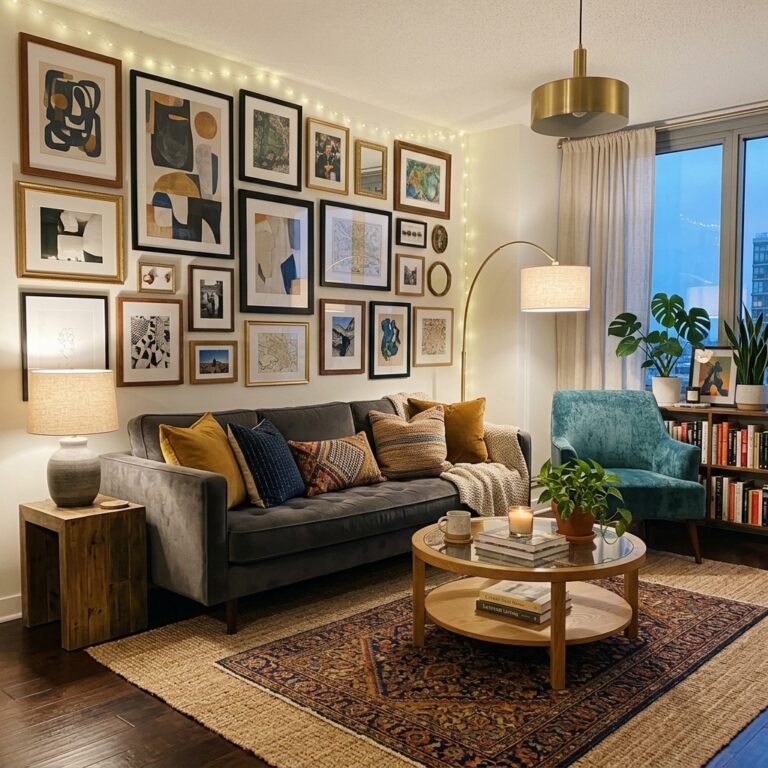
A curved velvet sofa can establish the Art Deco mood immediately. Rounded arms and backs soften a room filled with straight architectural lines, while velvet adds depth through its changing surface sheen. Emerald, sapphire, burgundy, and deep teal create stronger statements than pale upholstery.
The surrounding furniture should remain relatively simple. A restrained rug, clean-lined side table, and limited metallic accents allow the sofa to remain the visual anchor. In smaller rooms, a curved chair or compact loveseat can provide the same language with less visual weight.

Statement Brass and Gold Accents
Brass and gold bring warmth and reflection to modern Deco interiors. The most successful rooms use metallic finishes as punctuation rather than covering every surface. A sculptural sconce, framed mirror, table base, or cabinet pull can introduce the characteristic glow.
Finish consistency also matters. Repeating one dominant warm metal across several areas creates cohesion. Matte or brushed surfaces can keep the look contemporary, while polished details create more drama. A neutral backdrop gives metallic elements enough contrast to read clearly.

Black and White High-Contrast Interiors
Black and white create one of the clearest routes into Art Deco styling. The palette supplies graphic contrast before furniture or accessories enter the room. Checkerboard surfaces, monochrome artwork, striped textiles, and black-framed details can all reinforce the geometry.
The balance should prevent either color from becoming visually oppressive. White, cream, or soft stone tones can open the composition, while black can define architectural edges. Warm metallic details then provide a bridge between the high contrast and the room’s softer textures.

Sculptural Lighting as Functional Art
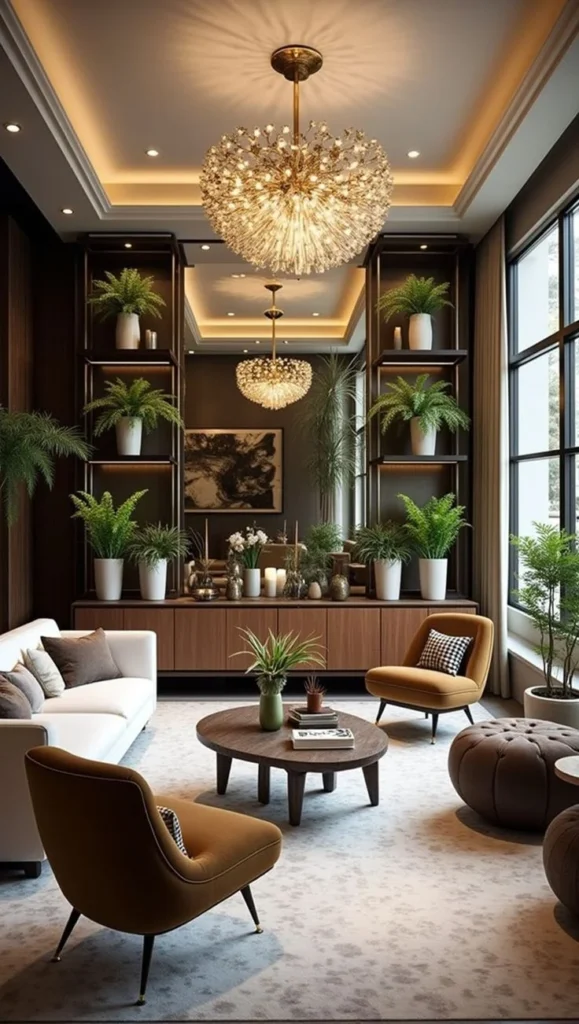
Art Deco lighting works best when the fixture contributes to the room during the day as well as at night. Globe clusters, stepped pendants, geometric chandeliers, and sculptural sconces can function as focal points. Their silhouettes echo the style without requiring additional ornament.
Lighting temperature also changes how the materials appear. A University of California, Davis residential lighting guide describes lower correlated color temperatures around 2,700–3,000 K as warm in appearance, while higher temperatures appear cooler. The residential lighting guide supports choosing light appearance deliberately when layered lighting is part of the design.
Warm illumination can complement brass, velvet, wood, and cream finishes. Dimmers can further change the atmosphere when the same room needs both practical and relaxed lighting.

Fluted and Ribbed Wall Panels
Fluting introduces repeated vertical rhythm and shadow. It can make a flat wall feel architectural without relying on elaborate ornament. Wood, painted panels, and other finished surfaces can carry the pattern into living rooms, bedrooms, dining spaces, and entryways.
The texture becomes more effective when the surrounding finishes stay calm. A fluted surface already provides repetition, so heavy pattern on nearby walls or upholstery can weaken the hierarchy. Warm wood works naturally with brass, while painted fluting creates a quieter interpretation.

Marble and Stone with Bold Veining
Bold stone veining gives an Art Deco room a naturally graphic surface. Marble can act as a focal material on a table, fireplace surround, vanity, backsplash, or feature wall. The strongest application depends on the room’s architecture and the amount of pattern already present.
Stone becomes especially expressive beside softer materials. Velvet, linen, and woven textiles temper the hardness of the surface, while brass introduces warmth. Dark stone can create drama, while lighter stone supports a quieter luxury palette.

Archways and Rounded Door Frames
Arches translate the Art Deco love of geometry into a softer architectural language. Rounded openings, recessed niches, arched mirrors, and painted arches can break up rectangular rooms while maintaining a strong sense of order.
Existing architecture can carry the idea naturally. Where structural changes are unsuitable, a painted wall arch or arched artwork can suggest the same shape without altering the building. Repeating the curve in furniture or lighting helps the feature feel integrated.

Geometric Wallpaper Statements
Geometric wallpaper can provide the pattern that makes an Art Deco room immediately recognizable. Symmetrical fans, stepped motifs, linear grids, and metallic linework all reference the movement without copying historic interiors literally.
Pattern scale should match the room. A strong design can energize a powder room or dining nook, while a quieter repeat may suit a bedroom. Furniture with simple silhouettes helps the wallpaper remain the main decorative statement.

Luxe Minimalist Color Palettes
Modern Deco color palettes work through controlled contrast rather than endless color. Cream, black, and brass create a crisp foundation. Taupe, emerald, and warm metal produce a softer direction. Gray, champagne, and muted stone can create a quieter interpretation.
One dominant neutral should establish the background. A secondary tone can define furniture or textiles, while a stronger accent appears selectively. This approach keeps jewel tones and metallic finishes expressive without turning the room into a visual collage.

Statement Mirrors with Geometric Frames
Mirrors combine two important Deco qualities: geometry and reflection. Sunburst, stepped, arched, and radial frames can act as artwork while reflecting daylight or nearby illumination. Placement should consider what the mirror reflects, because a beautiful frame cannot improve a cluttered reflection.
A large mirror can define an entryway or living room wall. Smaller grouped mirrors can create rhythm where a single oversized piece would dominate. Brass or dark frames connect especially well with other architectural details.

Art Deco Bedrooms with Upholstered Headboards
An upholstered headboard gives the bedroom a softer version of Deco glamour. Curved silhouettes and channel tufting create rhythm, while neutral upholstery keeps the room contemporary. Linen, bouclé, and velvet can each change the character of the same shape.
The bed wall should remain the visual anchor. Matching bedside lighting can reinforce symmetry, while a restrained palette prevents the headboard from competing with artwork or patterned walls. This treatment also connects naturally with modern luxury bedroom design.

Dining Rooms with Luxe Seating
A Deco dining room benefits from strong symmetry and comfortable sculptural seating. Velvet or textured chairs can soften a marble or dark wood table, while a statement pendant or chandelier establishes the vertical focal point.
Round and oval tables echo the style’s curved vocabulary. Rectangular tables can work just as well when paired with rounded chairs or a curved lighting fixture. The goal is repetition of shape, not strict historical imitation.

Matte Black with Warm Metallics
Matte black gives warm metallics a strong contemporary background. The flat finish absorbs visual attention, allowing brass, champagne metal, or copper details to provide controlled highlights. The combination works on cabinetry, lighting, furniture frames, doors, and decorative accents.
The finish pairing becomes especially effective when softer materials interrupt the hard surfaces. Wood, linen, velvet, and woven textiles keep the palette from feeling severe while preserving its graphic character.

Minimalist Deco Coffee Tables
A coffee table can carry the Deco theme without turning the living room into a period set. Rounded marble tops, glass surfaces, dark wood, and sculptural bases provide recognizable cues while keeping the overall form clean.
Table styling should stay edited. A tray, books, or one sculptural object can create a focal point without hiding the table itself. The surrounding seating should leave enough visual space for the table’s silhouette to remain legible.

Deco-Inspired Bathrooms
Bathrooms can adopt Art Deco through material and geometry rather than decorative excess. Fluted vanities, arched mirrors, dark-and-light contrast, geometric tile, and warm metal fixtures create a cohesive language.
Because bathrooms contain many reflective and hard surfaces, texture needs careful balance. A ribbed cabinet, soft wall color, or textile accent can prevent the room from feeling visually cold. The strongest schemes repeat one curve or geometric motif across several details.

Wall Sconces with a Soft Glow
Wall sconces are useful when a room needs both symmetry and atmospheric light. Geometric brass frames, frosted glass, and rounded globes can echo Deco forms without demanding a large ceiling fixture. Pairing sconces on either side of a mirror, bed, or artwork creates a clear visual axis.
Layered lighting also prevents one fixture from carrying the entire room. Ambient, task, and accent sources can each contribute to the final mood. Warm light generally complements the rich materials associated with modern Deco.

Modern Art Deco Home Offices
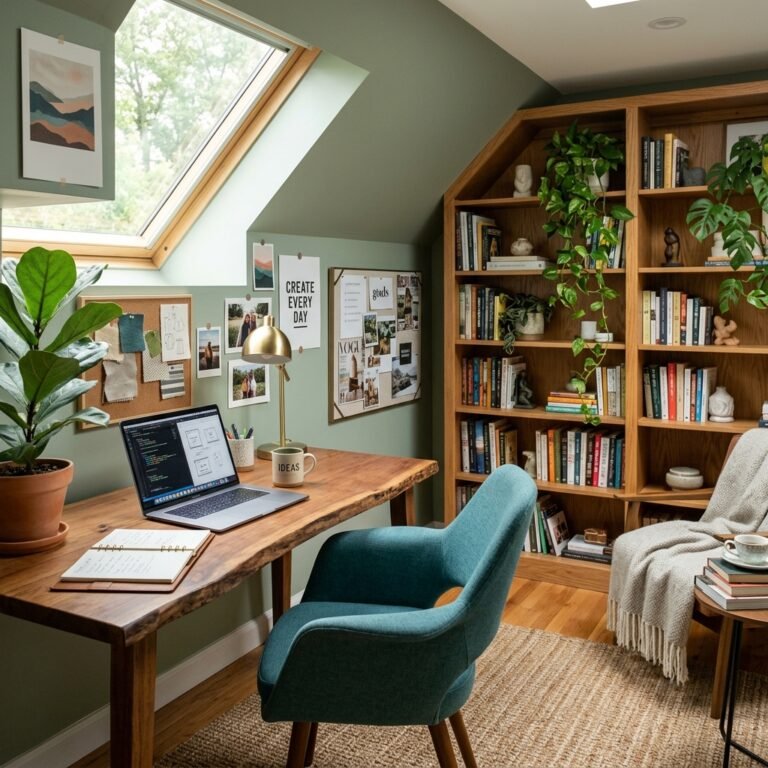
A home office can borrow Deco character without sacrificing concentration. A clean-lined desk in dark wood, a sculptural chair, and a geometric lamp create a controlled focal group. Brass or glass details can add polish without filling the workspace with decoration.
Storage should remain visually quiet. Closed cabinetry and carefully selected artwork help preserve the clean lines that make modern Deco feel contemporary. A single textured chair or statement lamp can provide enough personality.

Layered Textures for Subtle Drama
Texture can deliver luxury without adding more objects. Velvet, bouclé, linen, marble, wood, glass, and metal each respond differently to light. Combining a few contrasting surfaces gives a room depth while preserving a restrained palette.
The strongest combinations contrast soft and hard materials. A velvet chair beside a stone table feels richer than either material alone. Matte walls can also make polished accents more noticeable. Repetition keeps the material story coherent.

Sculptural Accent Chairs
A sculptural accent chair can introduce the Deco silhouette without changing an entire room. Barrel backs, scalloped edges, rounded arms, and curved frames provide the characteristic softness of the revival. A textured upholstery fabric can make the chair feel even more substantial.
Placement determines its impact. A single chair can define a reading corner, while a pair can frame a fireplace or conversation area. The chair should repeat a curve, color, or material already present so it feels connected rather than randomly decorative.
Art Deco-Inspired Entryways
The entryway provides a natural place for symmetry and reflection. A slim console, geometric mirror, sculptural lamp, and restrained metallic accents can establish the style before the rest of the home begins.
The composition should account for circulation. Decorative pieces should remain secondary to a clear path through the entrance. A mirror can become the focal point, while the console supplies a practical surface and the lighting adds vertical emphasis.

Common Mistakes in Modern Art Deco Rooms
Too much metallic shine: Repeating polished gold across every surface can flatten the hierarchy. A better approach mixes one dominant metal with matte materials.
Too many geometric patterns: Several competing motifs can make the room feel busy. One strong pattern should lead, while smaller patterns support it.
Overloading dark colors: Black, emerald, burgundy, and walnut can become heavy when used everywhere. Lighter walls, textiles, or stone surfaces can restore visual balance.
Ignoring scale: Oversized furniture can overwhelm compact rooms. The fix is to choose one substantial focal piece and keep surrounding forms lighter.
Creating a theme instead of a style: Reproducing every historic Deco detail can make a room feel theatrical. Modern Deco works better when historic cues appear selectively.
Room Placement and Material Guide
Living rooms often benefit from one strong curved or sculptural piece. Bedrooms can focus on an upholstered headboard and balanced lighting. Dining rooms respond well to a statement fixture and coordinated seating. Bathrooms can use fluting, arches, and warm metal as repeated details. Entryways can rely on a mirror-console composition.
Material selection should follow the room’s use. Upholstery suits spaces where softness matters. Marble and stone provide visual weight. Wood adds warmth. Glass can lighten dense compositions. Metal works best as a repeated accent rather than an uncontrolled collection of finishes.
Wood sourcing can also become part of the design decision. FSC explains that certification applies to indoor furniture and supports responsible forest management. That makes certified timber a useful consideration when wood furniture or panels form a major part of a Deco scheme.
Style Variations for Different Homes
A soft Deco scheme can use cream, taupe, champagne metal, curved upholstery, and pale stone. A dramatic version can combine black, emerald, walnut, and brass. A warmer interpretation can emphasize terracotta, caramel, bronze, and textured wood. A minimalist interpretation can reduce the palette and keep only the strongest geometric cues.
Small homes can benefit from mirrors, open metal frames, lighter upholstery, and carefully scaled furniture. Larger rooms can absorb substantial sofas, full-height wall treatments, sculptural tables, and more dramatic lighting. In every variation, repetition matters more than quantity.
Questions Readers Ask
Can modern Art Deco work in a small home?
Yes, modern Art Deco can work in a small home when visual weight remains controlled. Mirrors, open metal furniture, curved accent pieces, and lighter backgrounds can introduce the style without crowding the room. One strong focal element usually creates more impact than several large statement pieces competing for attention.
Which colors create a modern Art Deco palette?
Modern Art Deco palettes often combine strong neutrals with selective jewel tones and warm metals. Black, cream, taupe, stone, emerald, sapphire, burgundy, brass, and champagne can all support the look. The strongest schemes establish one dominant background and use richer colors or metallics as controlled accents.
Does Art Deco require brass or gold finishes?
No, brass and gold are characteristic but not mandatory. Matte black, bronze, dark wood, chrome, glass, and stone can also support the style. The defining qualities are stronger geometry, symmetry, material contrast, and sculptural form. A room can therefore feel distinctly Deco without relying on a bright metallic finish.
How should Art Deco lighting be layered?
Art Deco lighting works best when decorative fixtures support several lighting functions. Ceiling fixtures can provide general illumination, while sconces or lamps add localized light. Accent lighting can highlight artwork or architectural texture. The UC Davis residential lighting guide distinguishes warm and cool light by correlated color temperature, making light appearance an important part of material and mood selection.
Which materials make a Deco room feel luxurious?
Velvet, marble, wood, glass, metal, linen, and textured upholstery can all contribute to a luxury Deco scheme. Luxury comes from how those materials interact rather than from using every premium finish. A controlled combination of soft, hard, matte, and reflective surfaces usually creates more sophistication than an overloaded material palette.
A More Livable Art Deco Revival
Modern Art Deco works because it translates glamour into a flexible contemporary language. Curves soften geometry. Texture replaces excessive ornament. Brass adds warmth. Marble supplies structure. Lighting creates atmosphere. These elements can appear in a living room, bedroom, bathroom, dining area, office, or entryway without forcing the entire home into a historical theme.
The most successful interpretation starts with one recognizable Deco gesture and builds outward. A curved sofa, fluted wall, geometric mirror, sculptural light, or rich color can establish the direction. Repeating its shape or material elsewhere creates cohesion.
The result is a home that feels polished without feeling precious. That balance gives modern Art Deco its staying power and makes the style particularly effective for inspiration-driven spaces.