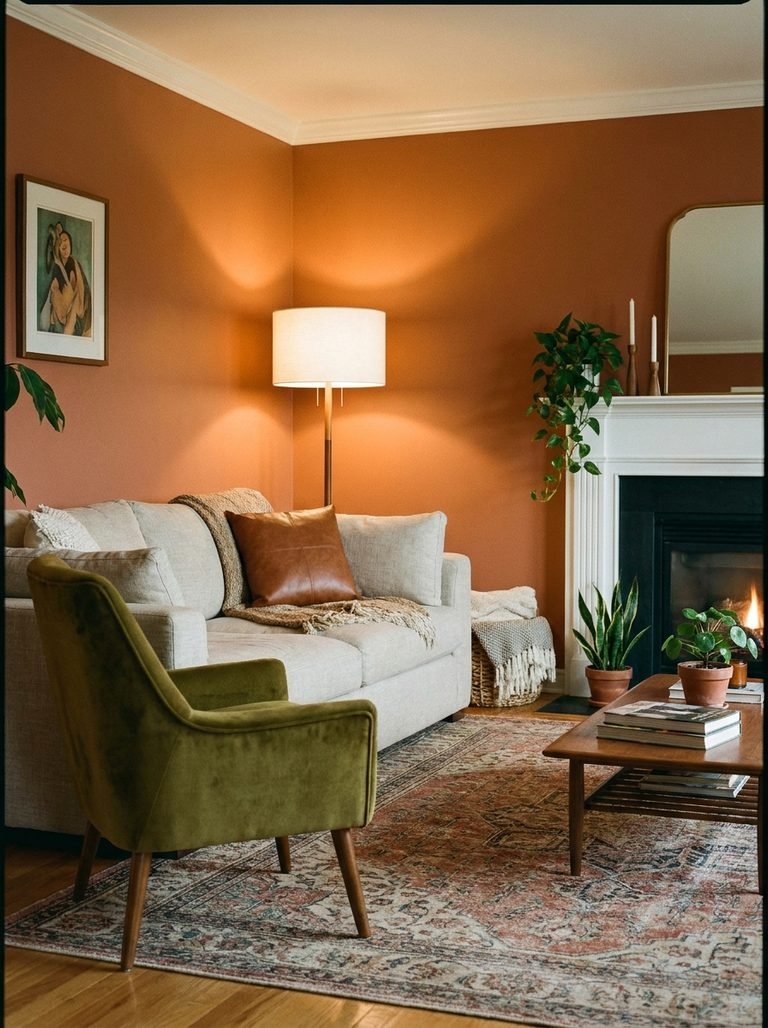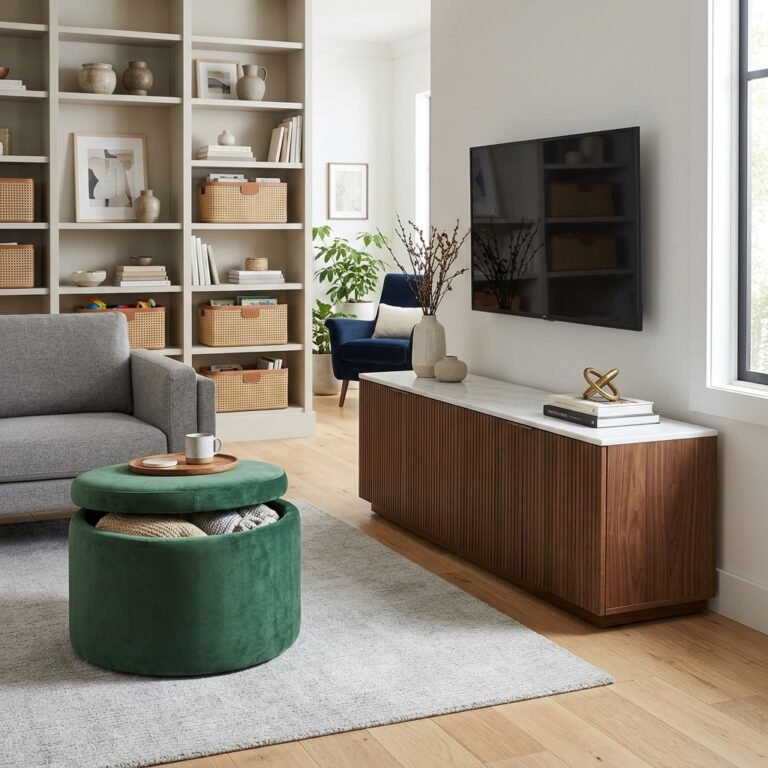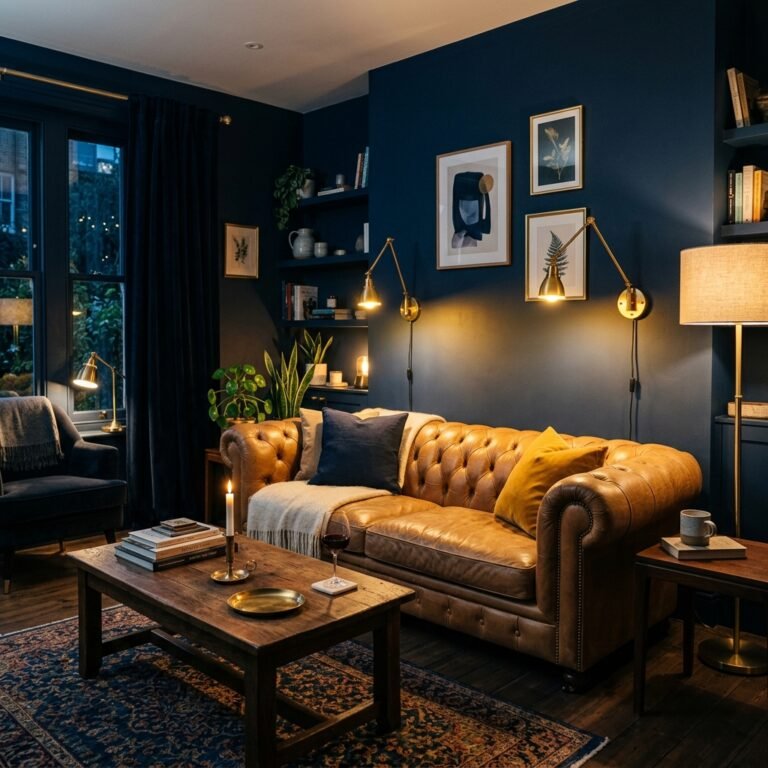
It is Sunday evening in a rental living room that measures eleven feet by twelve. You have switched on every lamp, folded a knit throw over the sofa arm, and added a sixth pillow. You sit down, look around, and feel oddly tense. Nothing in the room is ugly. It just looks busy, like a shop display someone forgot to finish.
That tension has a cause. Most advice about a cozy small living room treats warmth as something you add: another textile, another lamp, another object on the shelf. But 132 square feet gives you a handful of sightlines, and every addition competes for the same ones. Warmth needs a little empty space around it to register. This guide shows where to concentrate softness, light, and color so a small room feels sheltered rather than stuffed, and what to take out first.
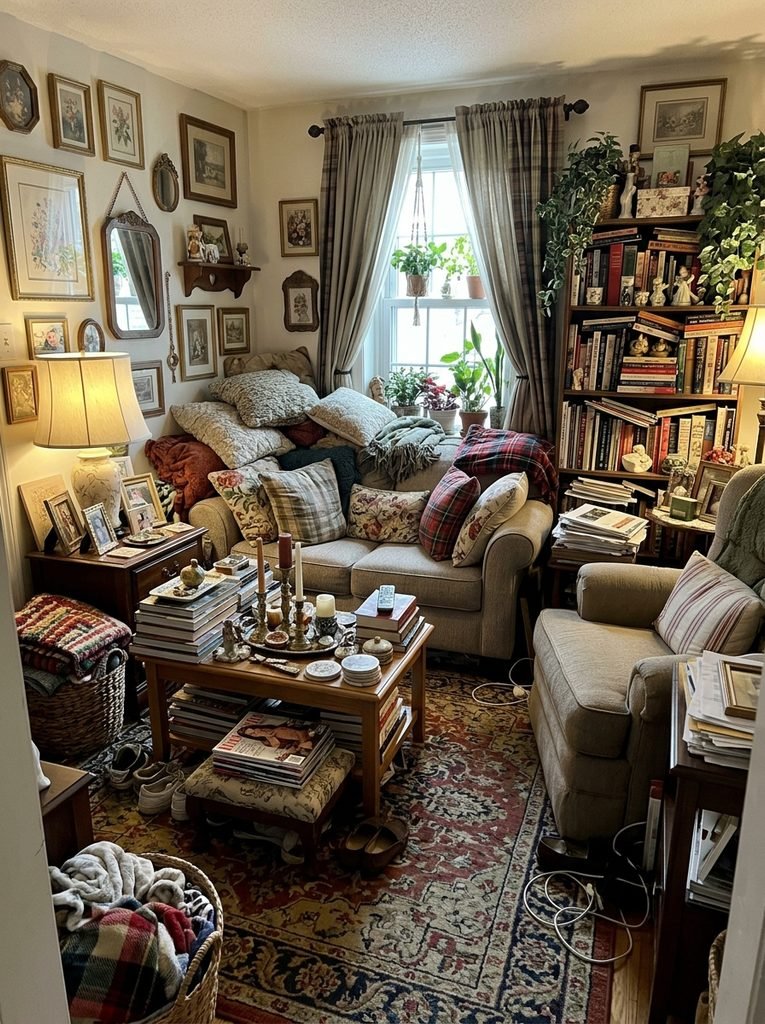
Why Adding Warmth Backfires in a Small Room
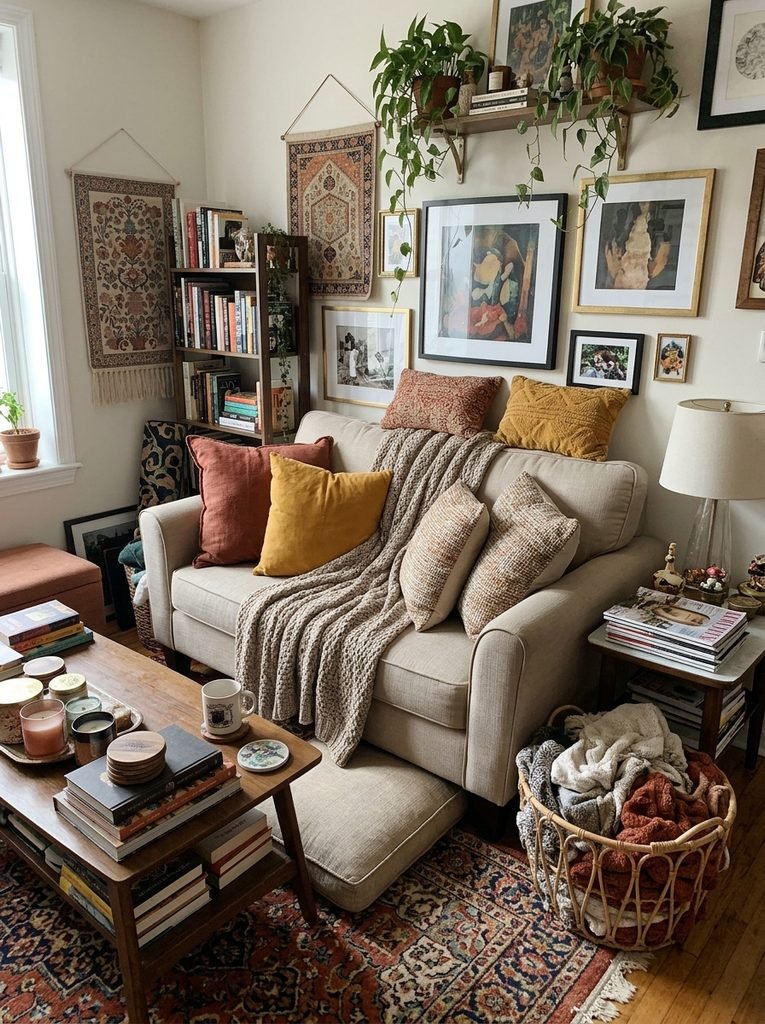
In a large room, ten soft objects spread out, and each one reads as a deliberate choice. In a small room, all ten sit inside a single glance. Your eye never finds a quiet patch to rest on, so the space registers as noisy no matter how pretty the pieces are.
Furniture math makes it worse. A 72-inch loveseat holds two real seats. Put three 20-inch pillows on it and you have lost most of one seat before anyone sits down. People then perch on the edge or drop pillows on the floor, and the room never settles.
Three signs you have crossed the line: you relocate objects every time you sit, you cannot see at least a foot of bare wall behind the sofa, and the room looks better in a photo than it feels in person. If two of those fit, subtracting will help more than shopping.
What Cozy Actually Depends On
Cozy comes down to three things: a sense of enclosure, soft surfaces under and against your body, and low, warm light. A small room delivers enclosure for free. Walls sit close, ceilings feel near, and nobody is far from anybody. That leaves surfaces and light, which is where your money and effort belong.
A quick test shows the priorities. Sit in your usual seat and note what is within arm’s reach and what sits at eye level, roughly 40 to 44 inches off the floor. Those two zones decide how the room feels. Everything outside them, such as the top of the bookcase or the far corner, matters far less than most decorating advice suggests.
Count Your Soft Surfaces Before Adding Another
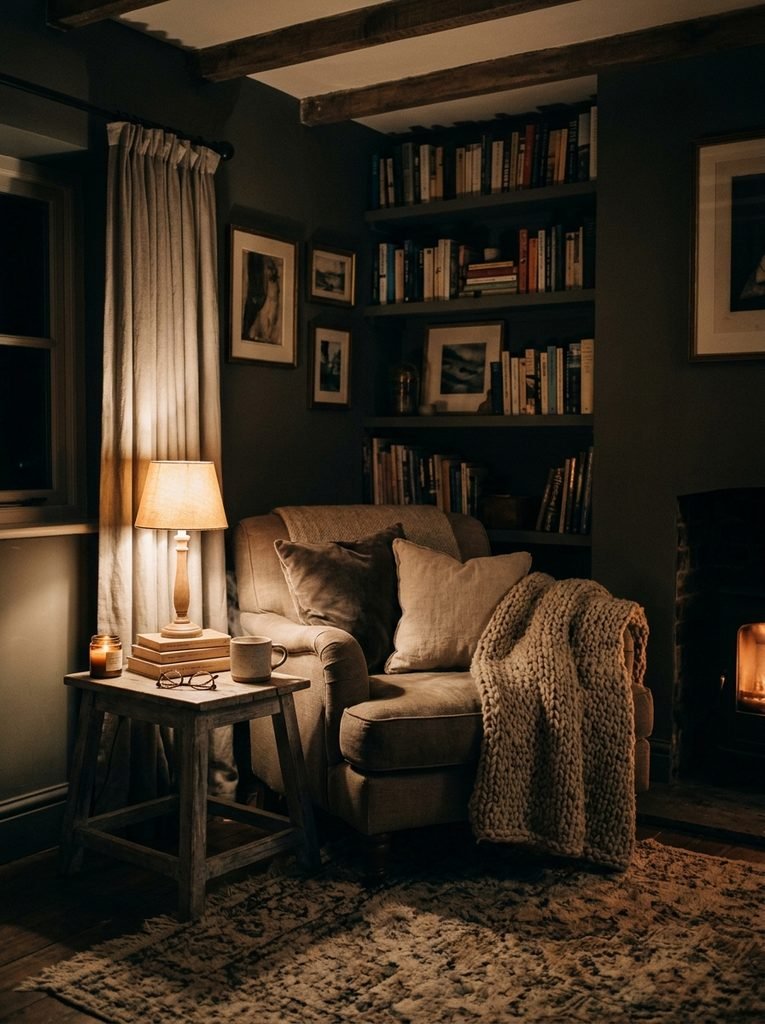
Think of fabric as a budget. Choose one dominant texture, such as cotton chenille or bouclé, one supporting weave like linen or wool, and one accent in knit or velvet. Three textures read as layered. Six read as a clearance table.
On a 72-inch loveseat, two 20-inch pillows plus one 12-by-20 lumbar is plenty. An 84-inch sofa can take four. Buy inserts one size up from the covers, a 22-inch insert in a 20-inch cover, so the pillows look full without you needing more of them. Feather-and-down blends run about $20 to $40 each and need a fluff every few days.
Keep one throw on the seat you use most. Fold the rest into a lidded basket, around 18 inches square, tucked beside the sofa. Throws draped over every arm look cozy in a photo and turn into clutter within a week.
If guests need extra seating, one 26-inch floor cushion that slides under a console beats two poufs that end up living in the middle of the floor.
Bring the Light Down to Where You Sit
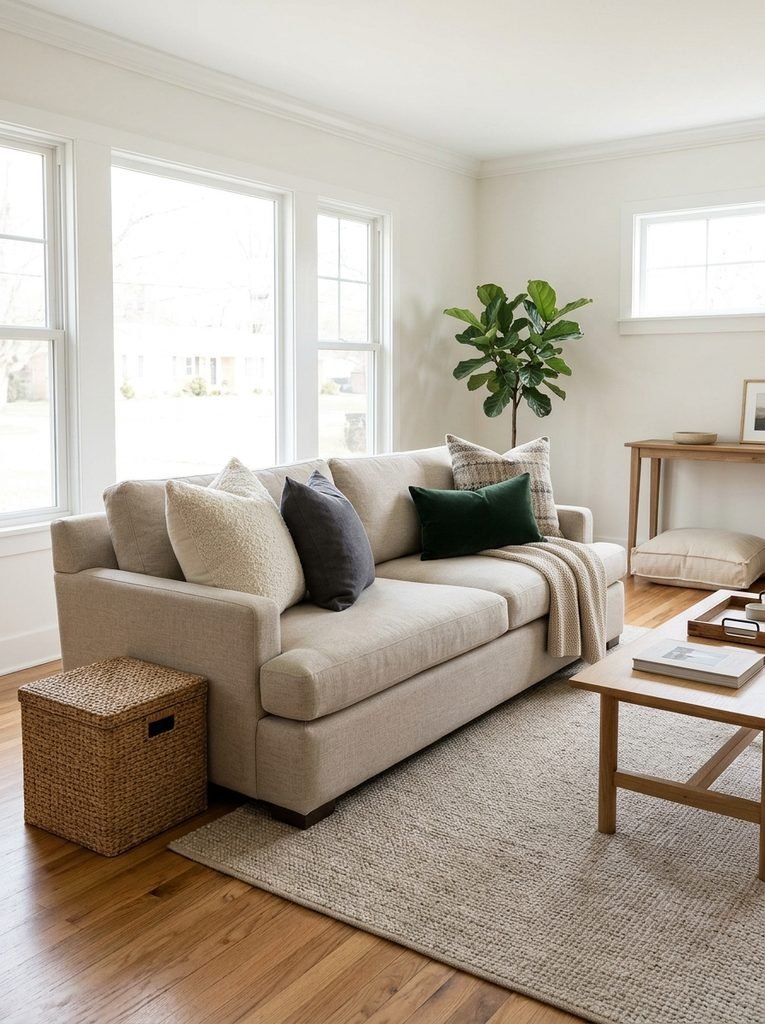
Lighting in most small living rooms fails by height. A 30-inch lamp on a 26-inch side table puts the bulb, and its glare, right at seated eye level. A lamp that is too short on a low table leaves the upper half of the room dark, and the ceiling starts to feel like a lid.
Aim for the bottom edge of each lampshade to land near seated eye level, 40 to 44 inches off the floor. On a 24-inch side table, that means a lamp about 22 to 26 inches tall with a drum shade. Choose fabric shades. They soften the beam, while open or glass shades throw hard spots on the wall.
Then retire the overhead fixture for evenings. Two lamps at different heights, one beside the sofa and one across the room, do more than any new purchase. If there is no outlet where you need one, plug-in wall sconces with a paintable cord cover cost $40 to $90 each and need no electrician.
Dimming matters more than bulb color. A $12 to $25 plug-in dimmer, or a warm-dim bulb that shifts redder as it dims, lets one lamp cover both homework hours and late evening. Add a 3-foot LED strip behind the TV, around $15 to $30, to take the harsh contrast off a dark screen.
Choose One Padded Rug Over a Stack of Two
Layered rugs look generous in a large room. In a room under about 150 square feet, every rug edge becomes another line the eye has to process. One rug does more.
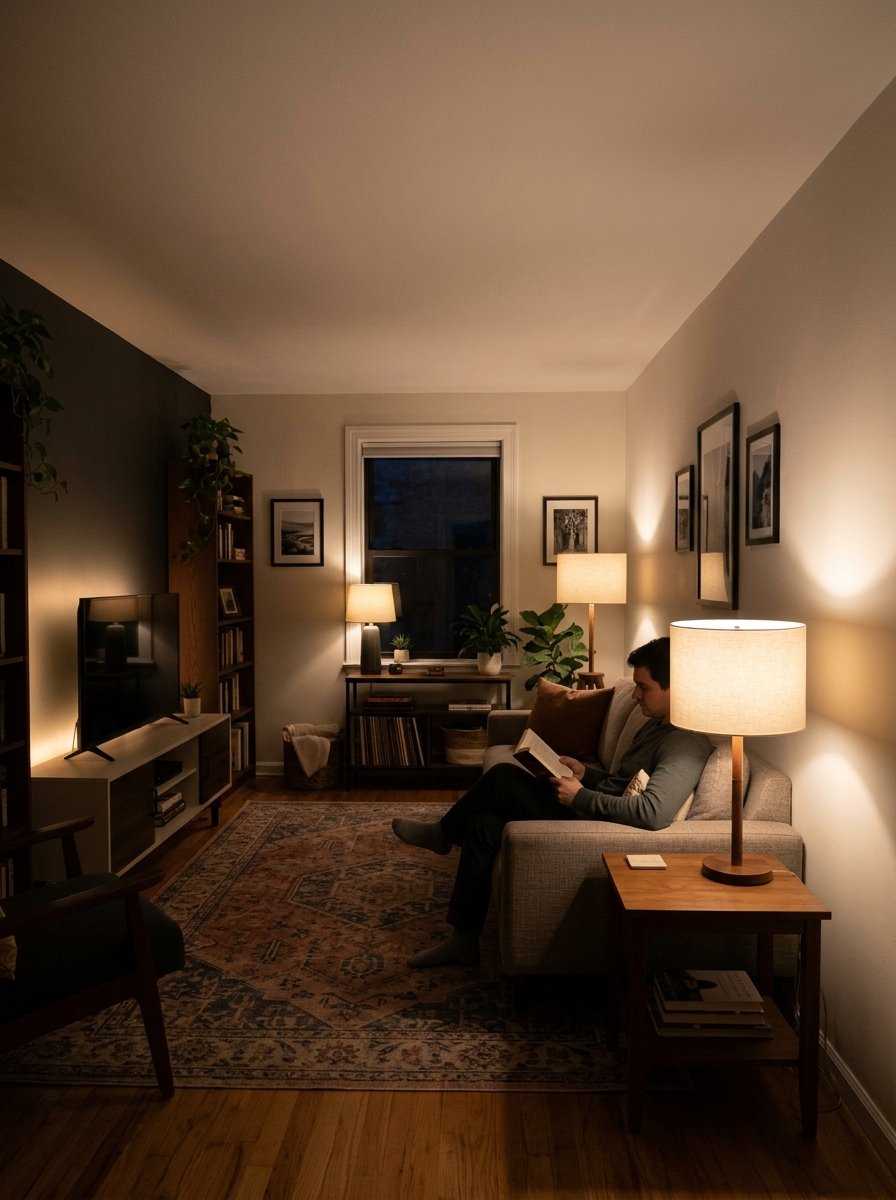
Size it so the front legs of the sofa and both chairs sit on it, and stop it about eight inches short of the walls so bare floor frames it. In an eleven-by-twelve room that usually means a 5-by-8 or a 6-by-9, depending on how far apart your seats sit.
Then add the part nobody sees. A quarter-inch felt-and-rubber pad costs roughly $40 to $70 at that size, makes a thin flatweave feel plush underfoot, and stops the corners curling toward your ankles. It is the cheapest way to make a floor feel warm.
If you love the layered look, limit it to a sheepskin or a 2-by-3 wool mat in front of one chair. That gives you a second texture without a second edge.
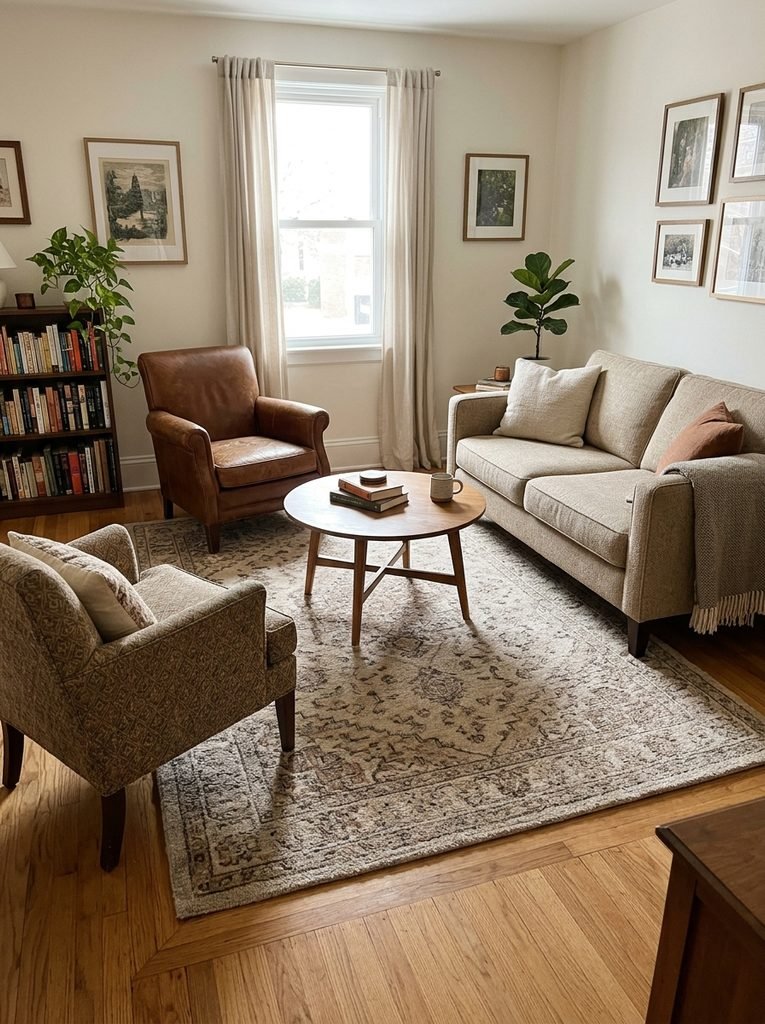
Pick Seating for Depth and Back Height, Not Length
A common buying mistake is sizing the sofa to the wall rather than to the room. An 84-inch sofa on an 11-foot wall leaves 48 inches. Add a side table and a lamp, and the walkway drops below the 30 inches most people need to move comfortably.
Cozy seating is deep in the seat and low in the back. In a small room, look for a seat depth of 21 to 23 inches, enough to tuck your feet up without stealing floor, and a back under about 34 inches so the sofa does not wall off a window. Exposed legs let floor show underneath and lighten the bulk.
Compare three setups for a room under 12 feet wide:
- An 80-inch loveseat plus one swivel chair, which turns toward the TV or the window.
- A 100-inch L-shaped sectional, which adds seats but points everyone one way and eats the walkway.
- A curved sofa around 78 inches, which avoids the sharp corners that bruise hips on tight routes.
Replace a rectangular coffee table with a 30-inch round storage ottoman. Expect to spend $90 to $200, and use the lid with a tray for evening drinks.
Give One Wall the Color and Keep the Rest Quiet
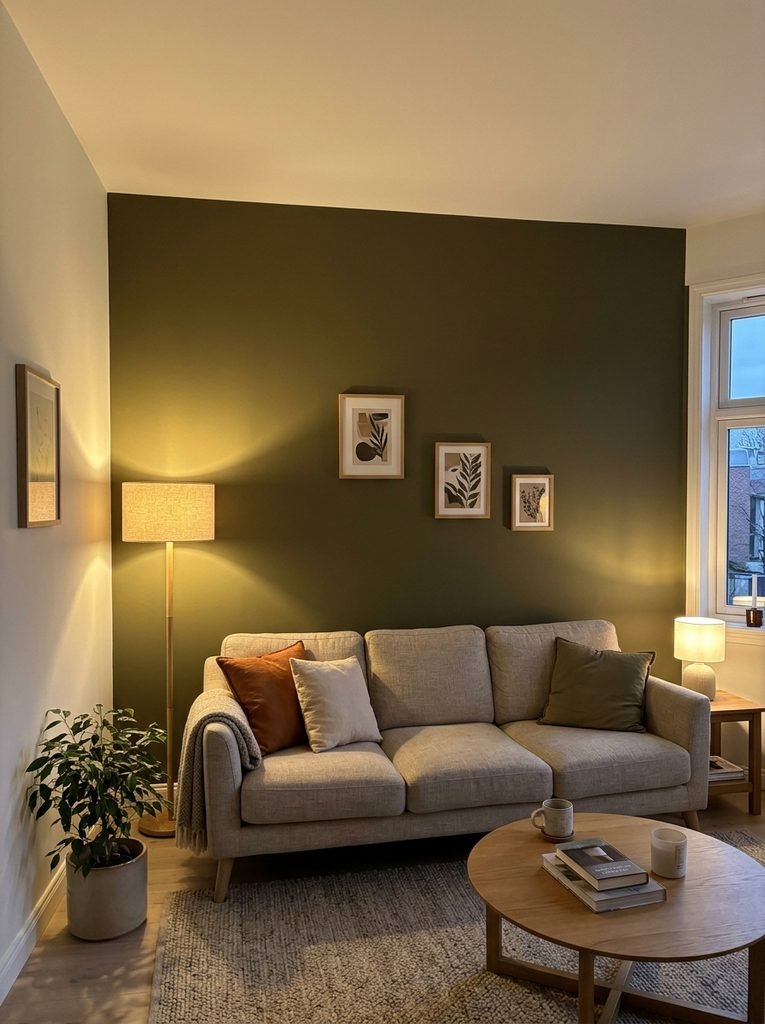
Painting every wall dark can backfire in a north-facing space. One deep wall behind the sofa gives you enclosure without costing the whole room its brightness. Choose the wall the sofa backs onto, or the one you face when seated.
Use LRV, the light reflectance value printed on most paint chips, as a guide. Apartment Therapy walks through how Benjamin Moore color specialists explain it: a score from 0 to 100 for how much light a color sends back into the room, with the reminder to test on your actual wall before committing. For a warm, enclosing wall, look at a mid-depth clay, oat-brown, or muted olive instead of a near-black.
Paint two-foot sample squares on two different walls, then judge them at seven in the evening with your lamps on, not at noon. Choose eggshell or matte, because gloss near a lamp throws glare. A wall of 88 square feet usually needs two quarts for two coats, about $55 to $70.
Edit What You See From the Sofa
Here is a ten-minute audit. Sit where you sit most, then photograph the room from that spot. Cameras flatten a scene, so clutter you stopped noticing shows up immediately.
Look at the band between 24 and 48 inches off the floor, where seated eyes land. Limit each surface in that band to three objects of different heights. On the coffee table that might be a tray, one low bowl, and a single stem in a bud vase.
Shelves work best about two-thirds full, with one shelf left deliberately bare. Swap a scatter of six small frames for three that share a finish; a trio of 11-by-14 frames reads calmer than a handful of 5-by-7s.
If one corner is doing nothing, a chair about 28 inches wide beside a floor lamp turns it into a reading spot without a full nook setup.
Treat the Windows as Light Sources
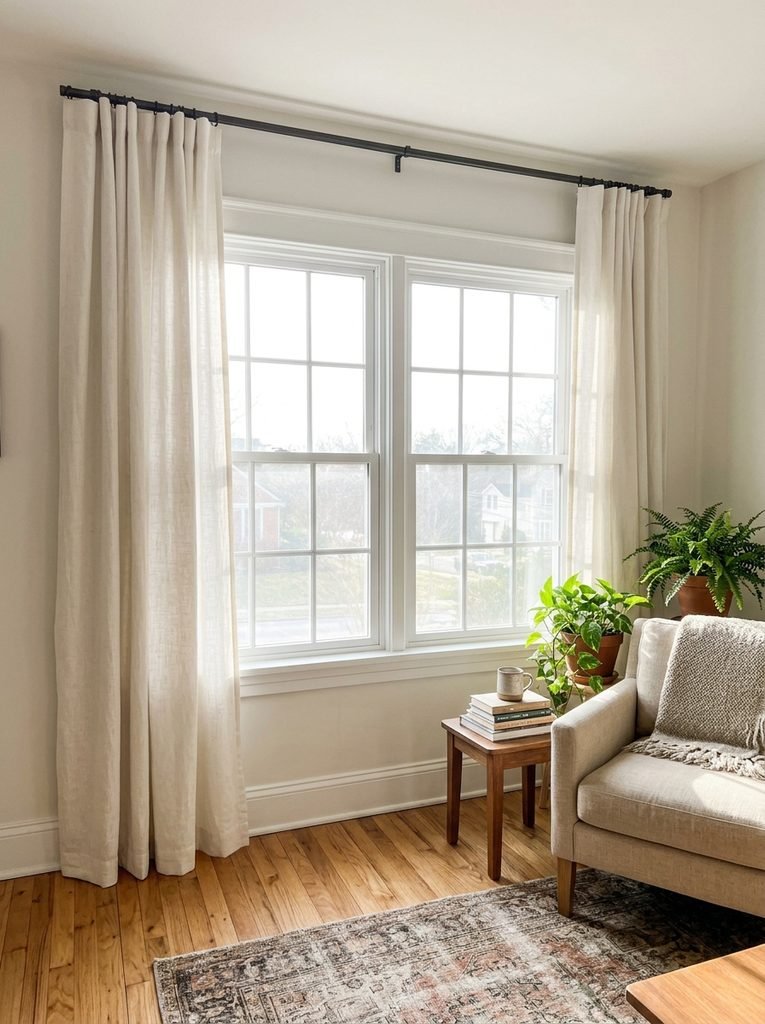
Heavy, layered drapes in a small room eat daylight and add bulk. Hang one lined linen panel per side, mounted so the fabric stacks beside the glass rather than across it. You keep the light by day and the privacy at night. Hang height and panel length are their own topic, covered in our guide to the curtain length mistake that makes windows look cheap.
A Weekend Order of Operations
Sequence matters, because the free steps often solve half the problem before you spend anything.
| Step | What to do | Typical cost | Time |
|---|---|---|---|
| First | Photo audit and clear the surfaces | $0 | 30 minutes |
| Second | Reset lamps to seated height, add a dimmer | $25 to $110 | 1 hour |
| Third | Add a rug pad | $40 to $70 | 15 minutes |
| Fourth | Trim pillows, basket the extra throws | $0 to $60 | 30 minutes |
| Fifth | Paint one wall | $55 to $70, plus supplies | One weekend day |
Take One Thing Off the Sofa Tonight
Start with subtraction. Pull the two pillows nobody uses, put the extra throws in the basket, and switch off the overhead light. Sit for ten minutes. If the room still feels cold, add one lamp at seated height before buying anything else. If your room is bigger than about 12 by 14 feet, our fuller guide to cozy living room decorating ideas gives you more floor to layer on.
Frequently Asked Questions
Can I make a small living room cozy without painting?
Yes. Hang a wool blanket or tapestry behind the sofa on a wooden quilt rod, which costs about $15 to $25. It adds a block of warm color and absorbs echo. Use removable hooks rated for the weight, and it comes down without leaving holes.
How much walkway do I need in a small living room?
Keep main paths at least 30 inches wide and secondary routes, such as between a chair and a console, at 24 inches. Measure furniture edge to furniture edge, not wall to wall. If you must squeeze, remove the side table first, since it usually costs the most clearance.
Will dark paint make a small living room feel cozy or cramped?
It can do either, depending on daylight. With a south or west window, a deep color on all four walls and the ceiling feels like a cocoon. In a north-facing room, confine the dark shade to one wall and add a lamp at seated height so it does not turn flat and gloomy.
Are plug-in wall sconces worth it for a rental?
Yes, because they add light without wiring. Mount them about 55 to 60 inches from the floor so the bulb sits above seated eye level, flank the sofa or a mirror, and run the cord through a paintable raceway. Budget $40 to $90 per sconce plus roughly $10 for the cord cover.
How do I warm up a small living room with no natural light?
Use lamps at two heights with warm bulbs, then bounce light off a pale ceiling with an uplight in one corner. Place a round mirror opposite a lamp rather than a window to double the glow. A walnut side table or oak tray adds the warmth daylight cannot.