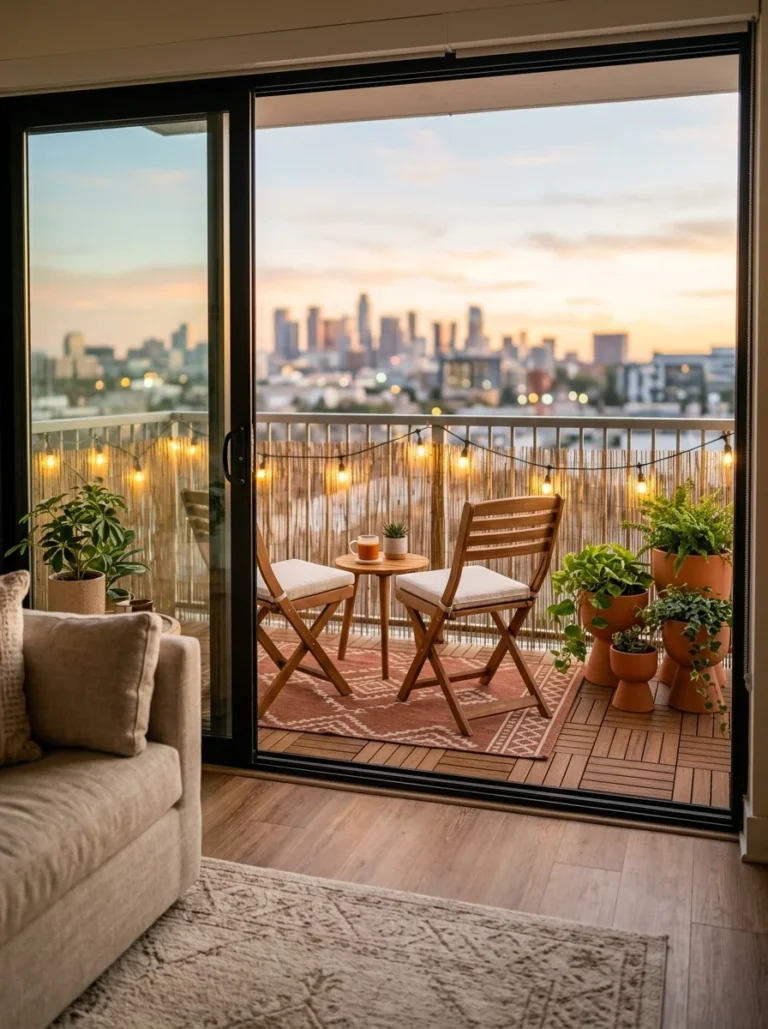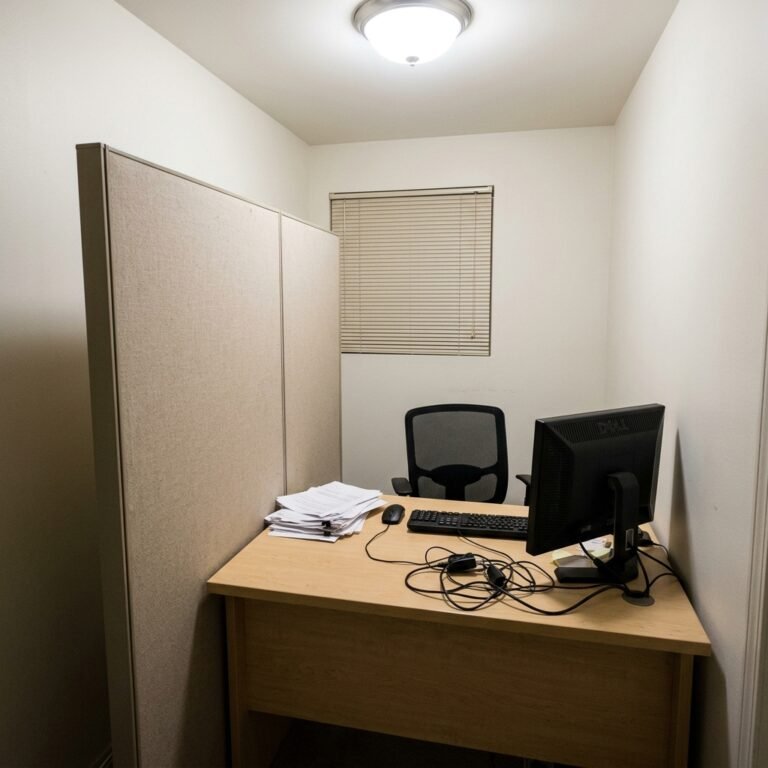
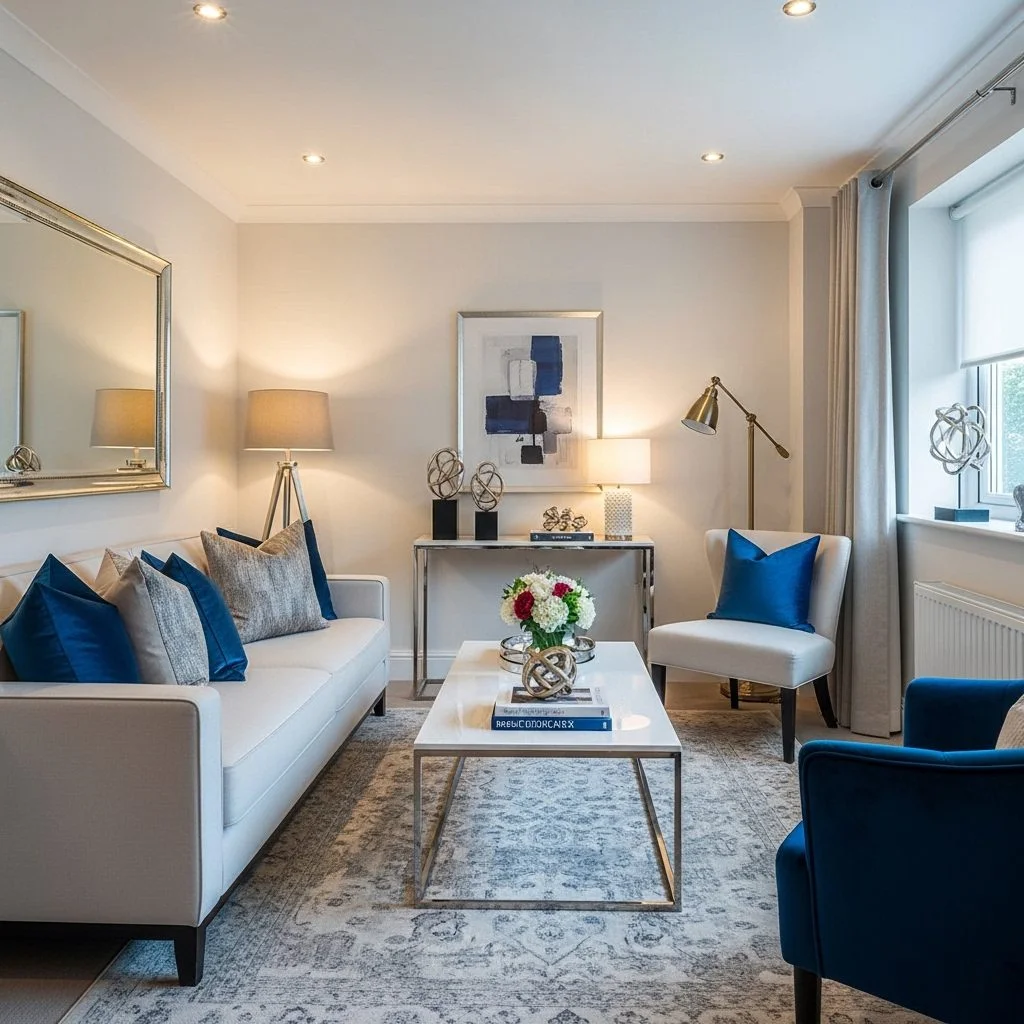
Picture two apartments, both about 520 square feet, both furnished from the same three stores. In the first, you walk in and think someone planned it. In the second, you can’t name the problem, but it feels like a showroom floor nobody finished. The sofa is the same. The budget is the same.
What differs is scale. The second apartment has a 5 by 8 rug that stops short of the sofa legs. Its curtain panels are 63 inches long on a window that wants 84. Three 16-inch frames sit in a row above a 78-inch sofa, and the lamp shade lands right at chin height. Nothing is ugly. Everything is slightly too small, and slightly too alike.
This guide shows where that happens, why small apartments invite it, and what to fix first with a tape measure, a free Saturday, and roughly $500.

What Cheap Actually Looks Like in a Small Room
Cheap is rarely about price. A $90 thrifted dresser can look inherited. A $2,000 sectional can look temporary. What reads as cheap is a room with no hierarchy, where every object sits at roughly the same size, height, and visual weight.
Call it the medium-size mistake. The rug is medium. The art is medium. The lamp, the plant, and the throw pillows are all medium. Your eye has nowhere to land, so the room reads like a product photo of a room instead of a place someone lives.
Rooms that look expensive have contrast. One or two things are clearly large, and most things are clearly small. A 9 by 12 rug makes a 4-inch candle look intentional. Put that same candle next to a 5 by 7 rug and a 12-inch frame, and it just looks like one more small thing.
Here is a quick test. Photograph your living room from the doorway and switch the photo to black and white. If nothing stands out as clearly the largest or darkest object, the room has no anchor. Repeat it after dark with the lamps on, because lighting often changes the answer.

Why Small Apartments Push You Toward Safe Sizes
The mistake isn’t carelessness. It comes from three very reasonable instincts.
First, you measure the room, say 11 by 13 feet, subtract the furniture, and decide everything else must be small to “fit.” Second, online listings hide scale. A rug tagged “large” can be 5 by 7, and a 30-inch mirror looks huge in a white-background photo. Third, you rent, so you buy middle-of-the-road pieces that will survive the next move.
Color makes it worse. A beige sofa, a beige rug, and beige curtains in the same mid-tone flatten the room. Without contrast in size or shade, nothing in the space gets to be the star.
The Rug Is the Biggest Giveaway
If you fix only one thing, fix the rug. In an 11 by 13 living room, a 5 by 8 rug floats in the middle like a placemat. An 8 by 10 lets the front legs of the sofa and both chairs sit on it, which ties the seating into one zone and makes the floor look larger, not smaller.
If the room is under 10 feet wide, drop to a 6 by 9 and keep the front legs of the main seating on it. The rule is that the rug must touch every major piece, not that it must hit a specific size.
Leave 6 to 10 inches of bare floor between the rug and each wall. In a room this size, that margin looks deliberate. Any wider and the rug starts to look undersized again.
Budget about $180 to $400 for an 8 by 10 flat-weave in a wool blend or polyester, and add a $30 to $60 pad. The 5 by 8 is $70 to $150, so you’re paying roughly $150 to $250 more for the single biggest visual upgrade in the apartment.
One installation trap: check your door clearance before you buy. A rug with its pad can reach three-quarters of an inch of pile height, and that is enough to scrape the bottom of a bedroom or closet door.

Curtains Fail on Width and Length, Not Just Height
Most renters know to hang the rod high. Fewer know that a standard 36-inch window needs panels with a combined width of two to two and a half times the rod length. Flat, stretched panels look like blinds that gave up. Full panels look tailored.
Extend the rod 8 to 12 inches past each side of the frame. When the curtains are open, they then stack on the wall instead of blocking the glass, and the window looks wider.
Length matters just as much. Panels that end 4 inches above the floor read as hand-me-downs. Aim for a half inch above the floor or a light touch. Ready-made 96-inch panels run $30 to $60 each, and iron-on hem tape ($6) fixes the length in ten minutes.
Check the fabric too. Thin, unlined polyester shows the window frame through it in daylight. A lined panel or a $15 add-on liner gives the fabric weight and a straighter fall. Steam the packaging creases out within a day of hanging, or they will stay put for months.

Art Should Match the Furniture, Not the Wall
Three 16-inch frames above a 78-inch sofa cover about 40 percent of its width. That is why they look like postage stamps. A good target is two-thirds to three-quarters of the furniture width, so for a 78-inch sofa, you want roughly 52 to 58 inches of art.
You can get there with a single large piece, such as a 36 by 48 frame, or with two 24 by 36 prints hung 3 inches apart. A poster-size print from a local print shop typically costs $20 to $60, and a simple matted frame adds $60 to $120. That is far less than a gallery piece, and it holds the wall like one.
Hang it with the center at 57 inches from the floor, and keep the bottom edge 6 to 10 inches above the sofa back. On wide frames, use two hanging points so it doesn’t tilt after the first slammed door.

Lamps and Bulbs: Two Scale Problems at Once
Start with the lamp itself. Sit on your sofa and look straight ahead. The bottom of the shade should land at or just below eye level, roughly 38 to 42 inches from the floor, so you see a glow instead of a bare bulb. A table lamp on a 24-inch end table usually totals 26 to 30 inches tall.
Then look at the bulbs, because color temperature is the quietest way a room looks cheap. Builder-grade ceiling fixtures often ship with cool white bulbs, while your lamps carry warm ones. You end up with yellow pools sitting inside a bluish wash.
ENERGY STAR sorts bulbs into soft or warm white (roughly 2200 to 3000K), neutral or cool white (3500 to 4100K), and daylight (5000 to 6500K). The Department of Energy describes 2700K as a warm, friendly light for homes, with 3000K a close second. Pick one number and use it everywhere in the room.
Check the package for the Kelvin figure and a CRI of 90 or higher, which keeps fabrics and wood looking natural. These bulbs usually cost $6 to $9 each, so swapping five of them runs about $40.

Small Details That Read as Cheap Up Close
Once the big pieces are right, a few small things still give the game away. They cost almost nothing to fix.
Cords come first. A TV cable running down the wall or a lamp cord crossing the floor is the fastest way to make an apartment feel temporary. Adhesive cord covers painted to match the wall cost $8 to $15 and disappear in an hour.
Hardware is next. Flat-pack dressers ship with thin pulls that feel hollow in your hand. Solid metal knobs run $3 to $8 each, and a six-drawer dresser is a $40 upgrade. Keep the original screws, because the hole spacing varies, and measure it before you order.
Then look at your coffee table. Five items at the same height look like a yard sale. Use a 14 by 20 inch tray with three things on it: one tall piece around 12 to 15 inches, one low piece of 2 to 4 inches, and one natural material, such as a wood bowl or a small plant.

The Fix: One Large Thing Per Zone, Everything Else Small
You don’t need to buy everything at once. You need a scale pass, and it takes one Saturday.
Tape the outline of the rug you’re considering on the floor with painter’s tape, and live with it for a day. Cut a piece of cardboard to the size of the art you want and tack it to the wall. Walk the room and write down every object that is neither big nor small. Those are your mediums.
Each zone, whether the sofa wall, the bed wall, or the dining corner, gets one clearly large element. It might be the rug, a 36 by 48 print, a 5-foot floor plant, or a tall arc lamp. The rest should either shrink to a clearly small size or leave.
Bedrooms follow the same logic. The bed is already the large element, so keep everything around it small and matched. A queen bed with two nightstands about 24 inches tall and two lamps of equal height looks calm, while mismatched nightstand heights make the bed wall look unplanned.
If you already own three medium-size decor pieces on one surface, remove two. Store them, sell them, or move them to another room. The remaining piece looks richer because it has room to breathe.

What to Spend First, and What to Skip
If you have roughly $500, spend it in this order: an 8 by 10 rug with a pad ($220 to $350), two pairs of properly wide curtain panels with liners ($120 to $150), one large print with a frame ($80 to $150), matching 2700K bulbs ($40), and cord covers ($12). Hardware swaps can wait until the next paycheck.
If you have only $150, buy the bulbs, the curtain panels, and the cord covers. Those three changes alter the look of the room more than any new accessory, and none of them requires a drill.
Skip the small decor you were going to buy to fill the gap. A $25 vase doesn’t fix a rug that is 3 feet too short. For a longer shopping list with real price tags, see our cheap small apartment decor ideas with real prices.

When Scale Isn’t the Problem
Sometimes the proportions are right and the room still feels off. In that case, look at clutter, storage, and traffic paths instead. Our guide to tiny apartment decor ideas for a roomier feel covers those fixes in more depth.
Frequently Asked Questions
Why does my small apartment look cheap even though I bought nice furniture?
Scale and consistency usually matter more than price. Good furniture surrounded by an undersized rug, short curtains, and mismatched bulbs still looks unfinished. Measure the rug against your sofa first. If the front legs aren’t on it, that is your most likely culprit, and it is a $200 fix, not a furniture replacement.
What size rug should go in a small living room?
Choose the largest rug that leaves 6 to 10 inches of bare floor at each wall. For most living rooms around 11 by 13 feet, that is an 8 by 10. The front legs of the sofa and chairs should rest on it, and you should confirm door clearance, since pile plus a pad can catch.
Do mismatched light bulbs really make a room look cheap?
Yes, because uneven color temperature makes lighting look accidental. A 4000K ceiling bulb beside 2700K lamps creates a visible clash on walls and fabrics. Choose one Kelvin number for the whole room, usually 2700K or 3000K, and look for a CRI of 90 or higher so fabrics and wood keep their true color.
How high should I hang art above a sofa?
Center the art at about 57 inches from the floor, and leave 6 to 10 inches between the bottom edge and the sofa back. If that puts the art too high on a low sofa, favor the gap over the 57-inch mark, so the pieces read as connected. Wide frames need two hanging points to stay level.
How do I hide an ugly builder-grade ceiling light in a rental?
Switch to warm 2700K bulbs first, then draw attention elsewhere. Add two or three lamps at different heights and keep the ceiling fixture off in the evenings. For a visible upgrade, many flush-mount fixtures accept a clip-on drum shade for around $25, and you can save the original parts for move-out.