It’s the first cold evening of November. You carry a wool blanket to the sofa, switch on a lamp, and look around. The room has a cowhide, an antler, and a framed horse. None of it feels like a place where anyone actually lives.
A good ranch-style living room works the other way around. It starts with big, honest materials: timber, stone, leather, and wool. Then it adds a few Western details on top. This guide gives you 20 ways to do that, and each idea comes with a size, a test, or a rule you can use before you spend money.
Whether you own a true ranch house or a suburban split-level, the same logic applies. Pick the real materials first. Add the theme last.

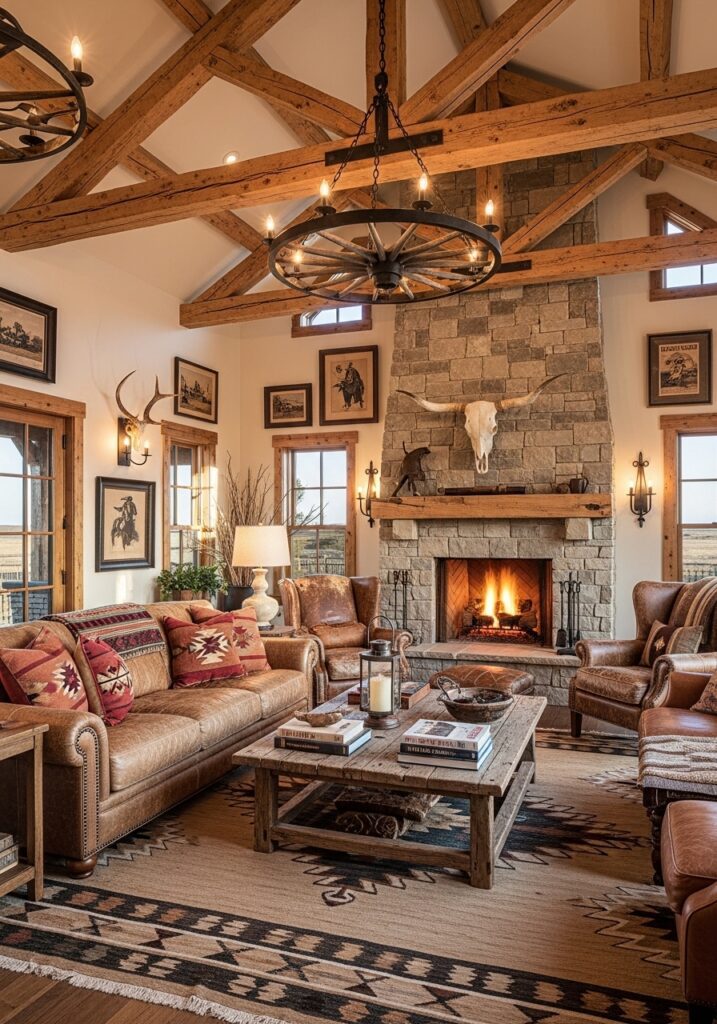
Exposed Wooden Beams That Are Dry and Properly Scaled
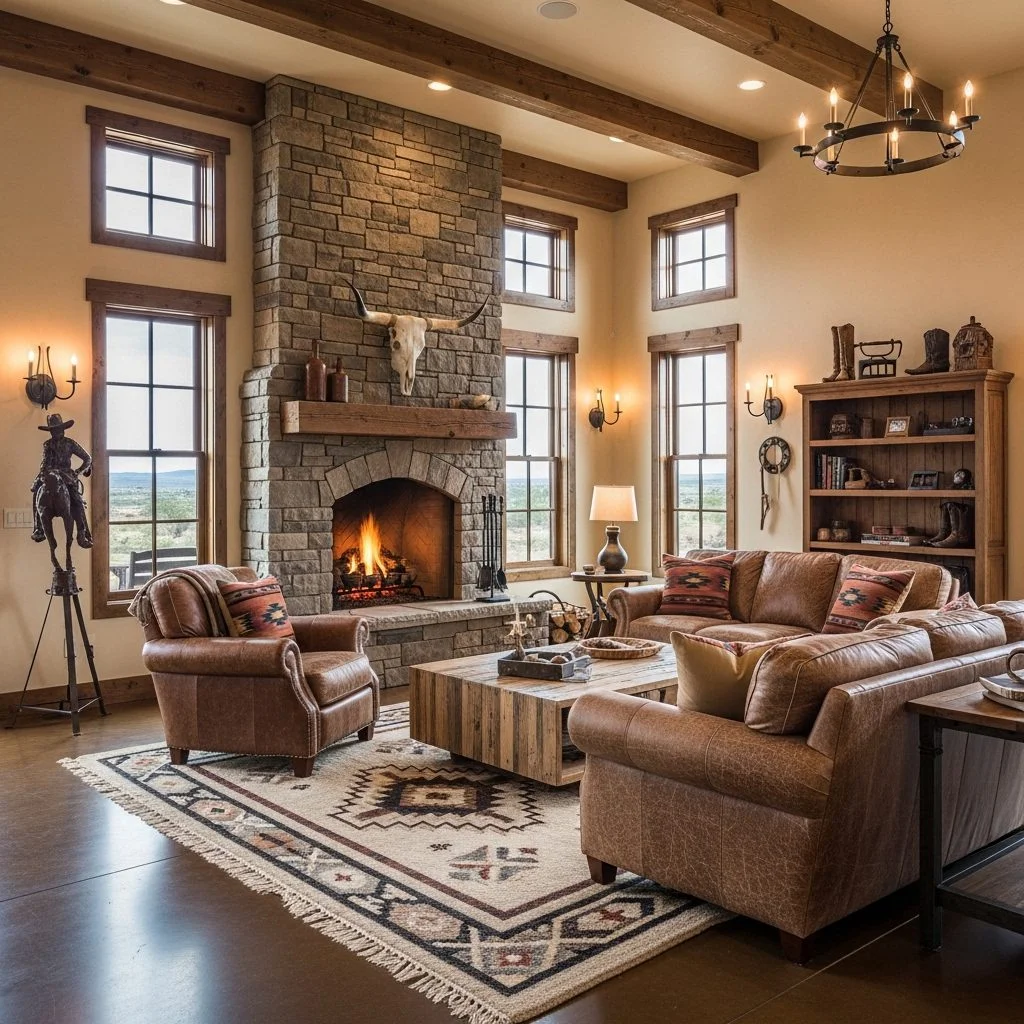
Beams do the heaviest visual work in a ranch room, so get the basics right before you choose a stain. Real structural beams stay exactly where they are. If your ceiling is flat, hollow box beams slip over it and look convincing. Under an eight-foot ceiling, keep them four to six inches deep and space them four to six feet apart. Anything deeper makes the room feel squat.
If you buy reclaimed timber, ask about moisture first. Purdue Extension guidance says wood at six to eight percent moisture suits indoor use. Wetter boards shrink and split over your head. Painted beams from before 1978 may carry lead paint, so test before you sand. Light them from below with a warm sconce rather than a spotlight.
A Leather Sofa That Can Earn Its Patina
Patina is real, but only some leather can grow one. Aniline and semi-aniline hides darken and soften with use. Coated or bonded leather does the opposite. It peels and cracks within a few years. Ask for the leather type in writing before you buy. A quick test works too: press a fingernail into the hide, and a true aniline surface will show a mark that slowly fades.
Choose cognac, tobacco, or chestnut, and keep a three-seat sofa near 84 to 90 inches long. Place it at least two feet from heating vents and out of hard afternoon sun, because heat dries leather. Condition it once or twice a year. Then toss a wool throw over one arm and let the sofa age.
A Stone Fireplace That Anchors the Seating
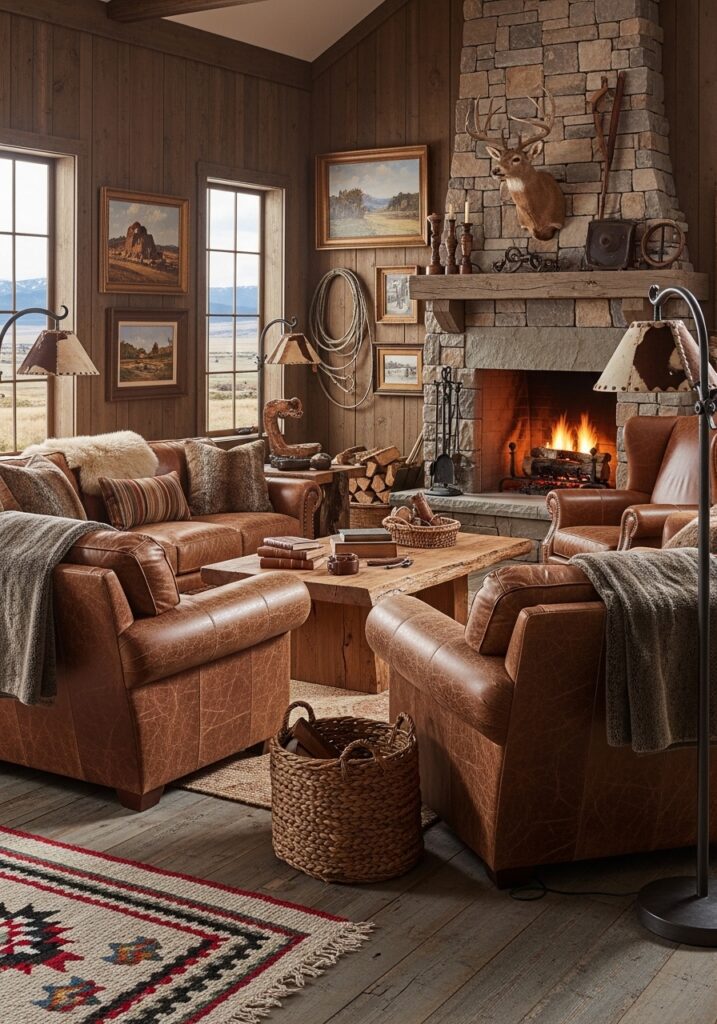
Stone gives a ranch room its weight. Stacked ledgestone reads clean and modern. Rounded river rock or irregular fieldstone reads older and more rugged. Carry the stone all the way to the ceiling if you can. A half-height stone surround looks like an afterthought in a room with low ceilings.
Ask your installer how far combustible materials must sit from the opening before you add a wood mantel or shelves. Then style the mantel with only three things: one landscape painting, one piece of pottery, and one lantern or candle. Keep a single day’s worth of firewood in a basket. Store the rest outside, since logs bring bark, dust, and insects indoors.
Warm Neutral Walls That Let the Wood Lead
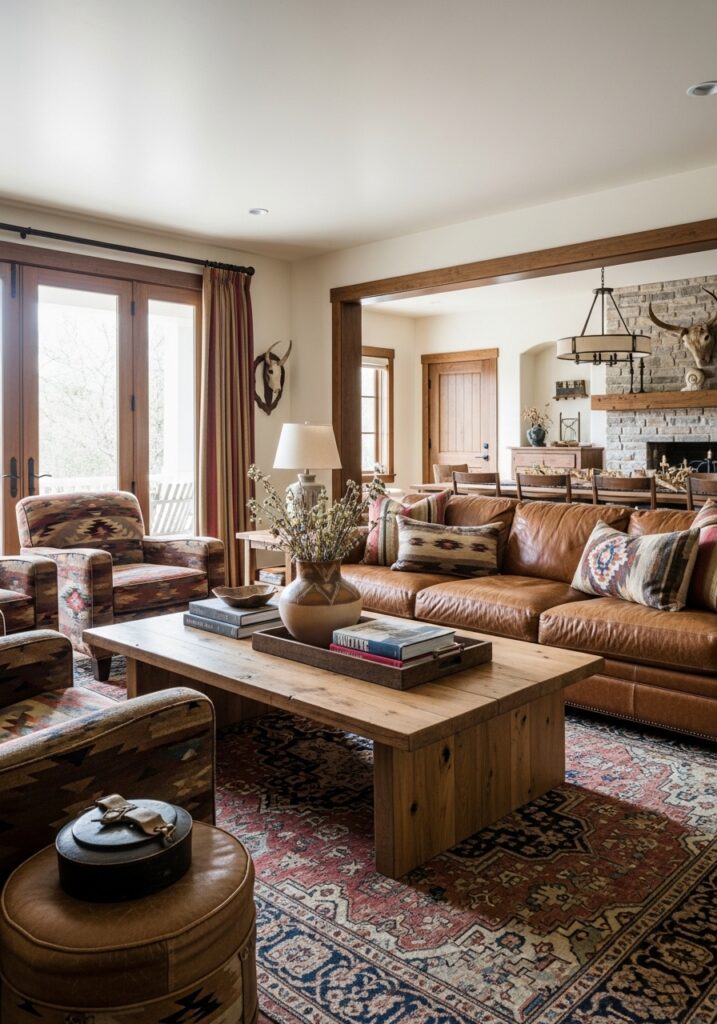
Cool grays go flat beside tobacco leather and honey-colored pine. Choose a warm white, cream, or soft greige with a yellow or red undertone instead. Paint a two-foot square on two different walls. Check each one at 9 a.m., at 3 p.m., and again under lamplight at night. The color that still looks good at night is the one to keep.
Use a matte or eggshell finish, because both hide the wavy drywall common in older ranch homes. Keep terracotta and rust in objects like pots and pillows, not on the wall. Paint the ceiling white or one shade lighter than the walls so the room feels taller.
Western-Inspired Artwork With One Clear Star
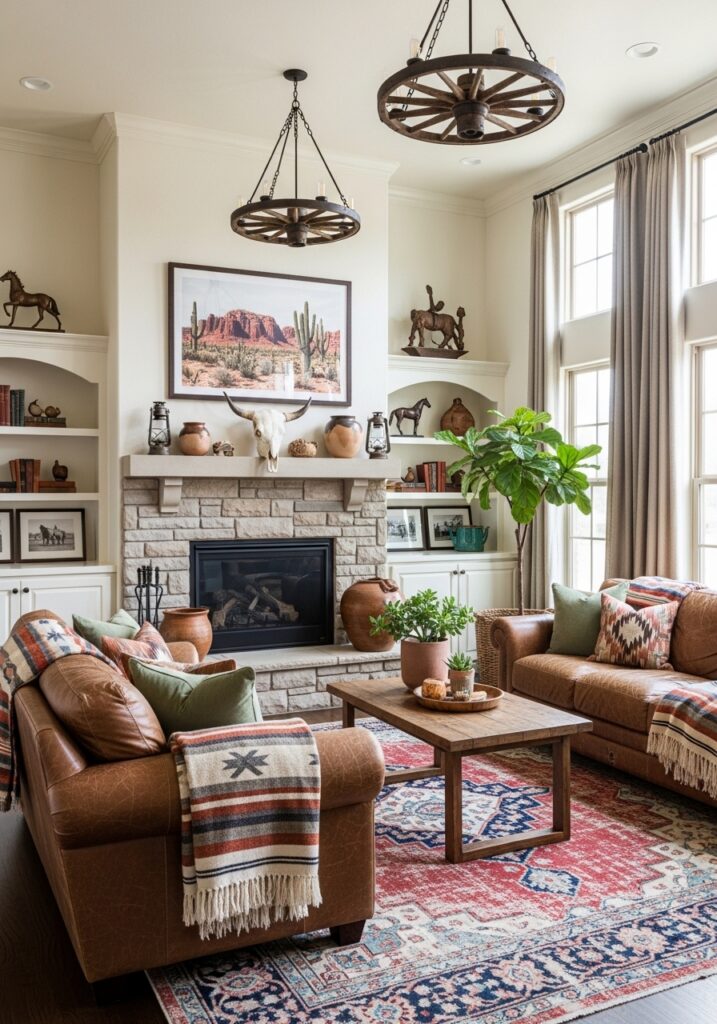
Skip the cowboy cutouts. A single large landscape does more. Look for desert dusk, a mountain pasture, or a grazing horse painted in muted tones. Regional painters and small galleries often sell originals for less than you expect.
Size the piece to the furniture below it. Aim for about two-thirds of the sofa’s width, and hang the center near 57 inches from the floor. Choose one hero piece and let two or three small pieces support it. A wood frame in a raw or lightly distressed finish keeps everything looking intentional.
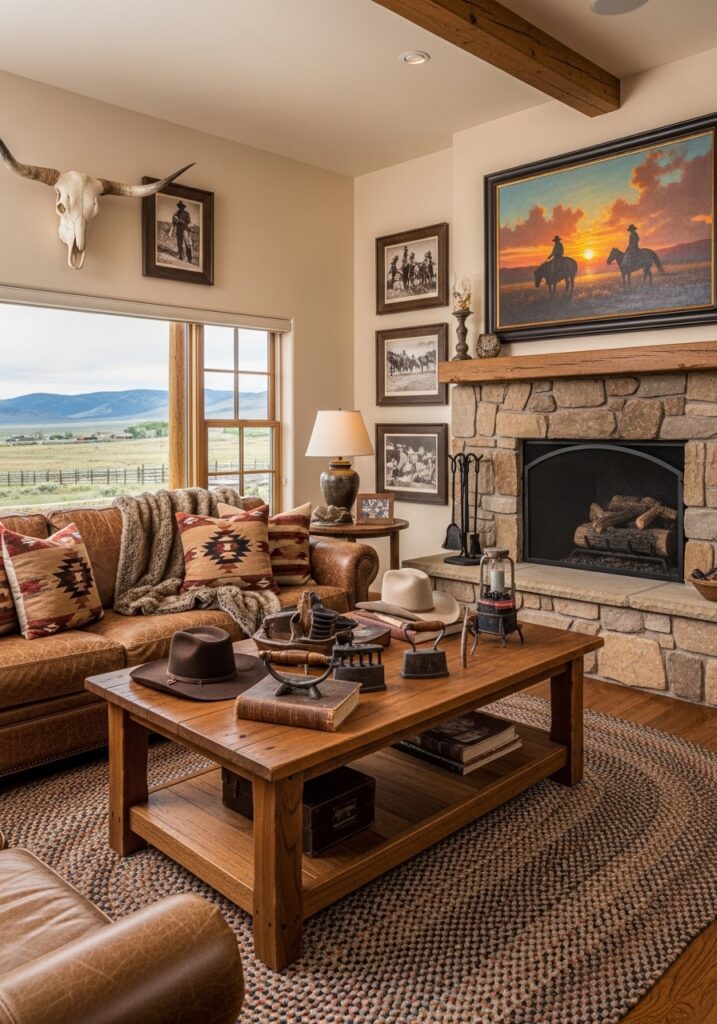
Layered Textures With Wool, Sheepskin, and Throws
Texture is what makes a Western room feel warm instead of staged. Limit yourself to three: one smooth, one nubby, and one fluffy. A woven wool blanket, a linen pillow, and a sheepskin over a chair cover all three.
Use a standard 50-by-60-inch throw and fold it lengthwise over the sofa arm. Drape the sheepskin on a chair back or bench. Wool blankets suit a room you use daily, and many can be washed on a gentle cycle. Store spare wool with a cedar block so moths stay away. Save rugs for the sections below.
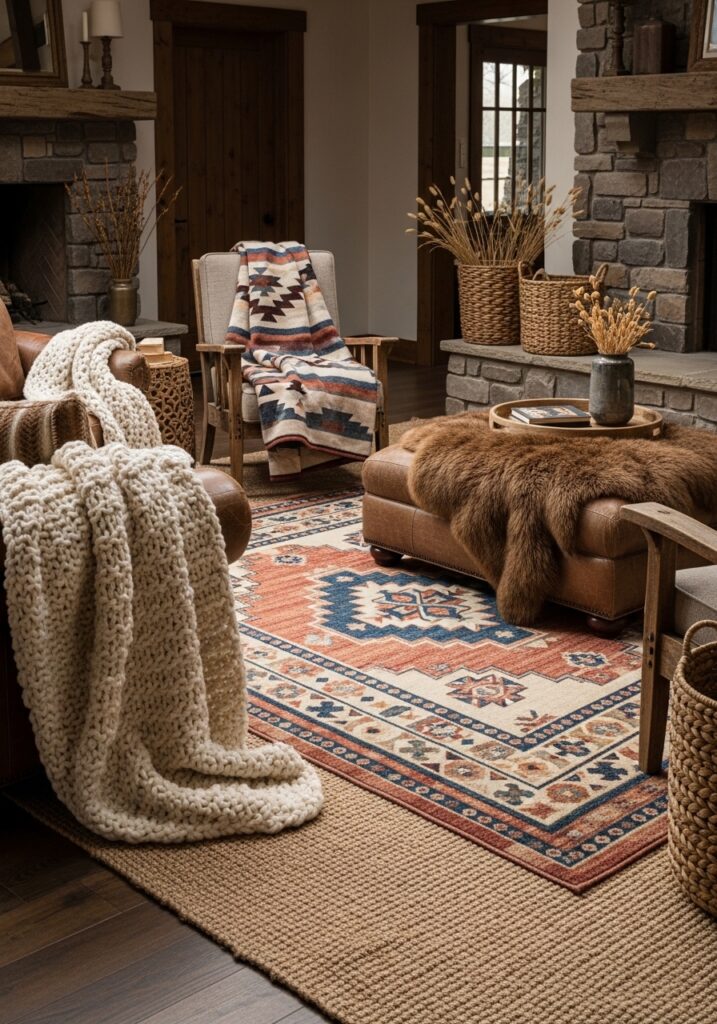
Open Shelving Built to Carry Weight
Reclaimed planks look great on a shelf and fail quickly if they are too thin. Use boards 1.5 to 2 inches thick and 10 to 12 inches deep. Keep each span near 36 inches, or add iron brackets for longer runs. Screw into studs. Drywall anchors alone will not hold a loaded shelf.
A foot of hardcover books weighs roughly 20 pounds, so plan for it. Fill about two-thirds of each shelf and leave the rest empty. Group objects in odd numbers: three pieces of pottery, a stack of books, and a trailing plant. Open shelves beside a fireplace are a classic ranch move, but check clearances first.
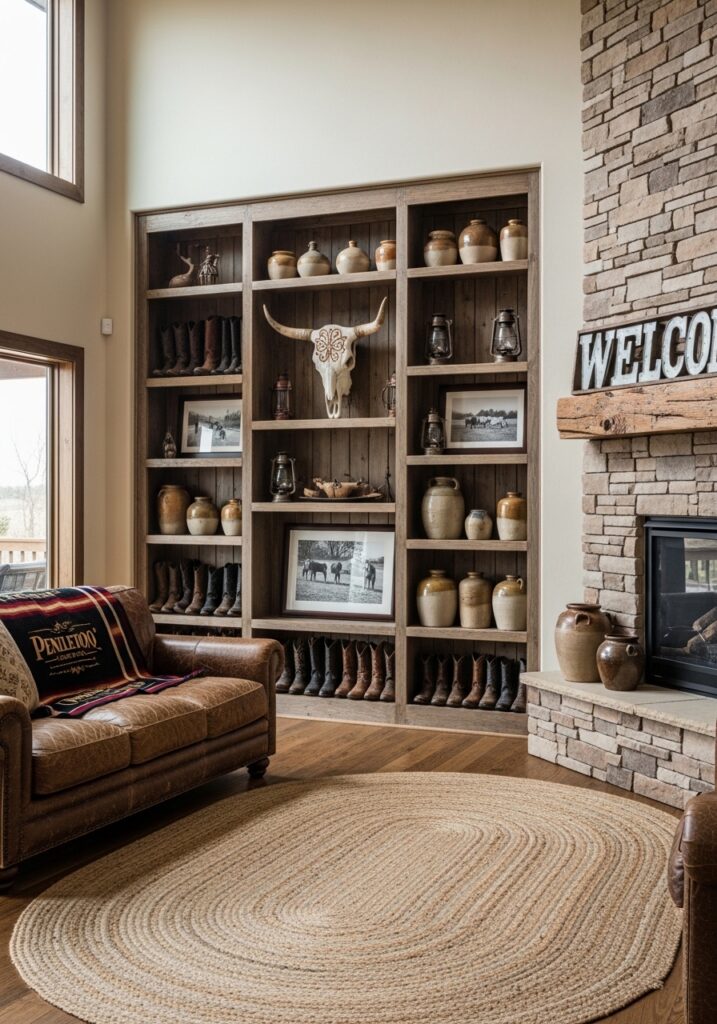
Iron Chandeliers Sized by a Simple Formula
A wrought iron chandelier is the quickest way to add Western drama, and the most common to buy too small. Add your room’s length and width in feet. That number is the chandelier’s diameter in inches. A 14-by-18-foot room takes a fixture about 32 inches wide.
Hang it so the lowest point sits at least seven feet above the floor in open areas. Over a table, aim for 30 to 34 inches above the surface. Iron is heavy, so confirm the ceiling box is rated for the weight. Use warm bulbs around 2,700K and add a dimmer. Bright white light wrecks the mood.
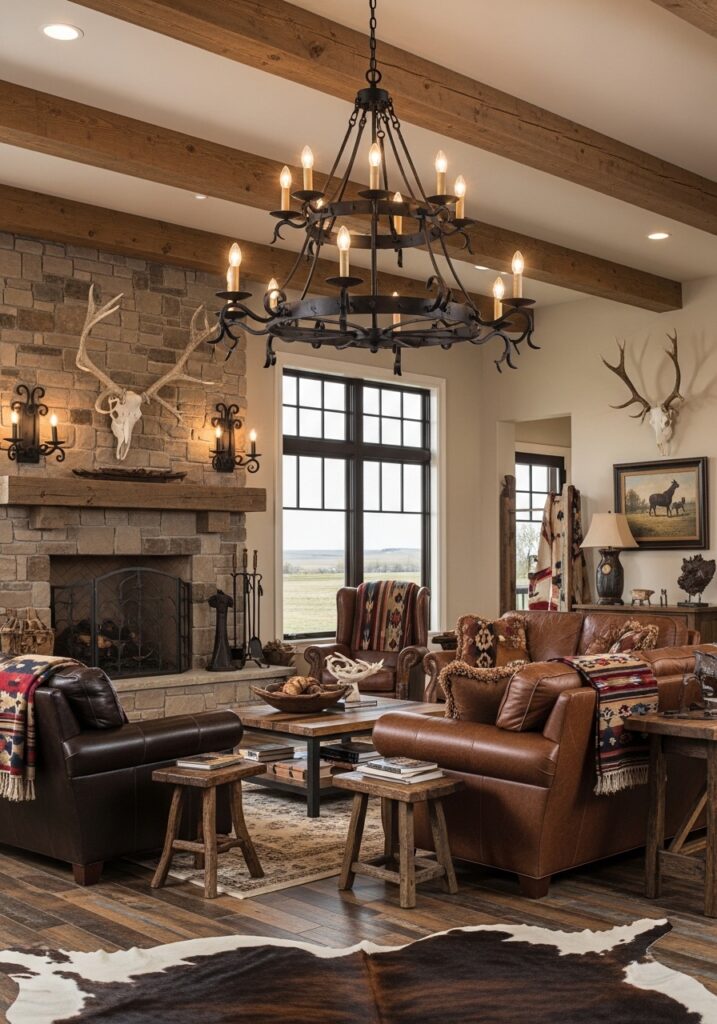
Sliding Barn Doors Used With Eyes Open
A barn door saves the swing space a regular door needs. That helps in a tight ranch floor plan. It also leaves gaps, so it blocks sight but not sound or light. Use it for a pantry, laundry nook, or office, not a bedroom.
Make the door one to two inches wider than the opening on each side. Hang it about half an inch above the floor. You also need a clear wall run beside the opening that equals the door’s width, with no switches or art in the way. Choose a black track and natural wood, and let the door be the feature.
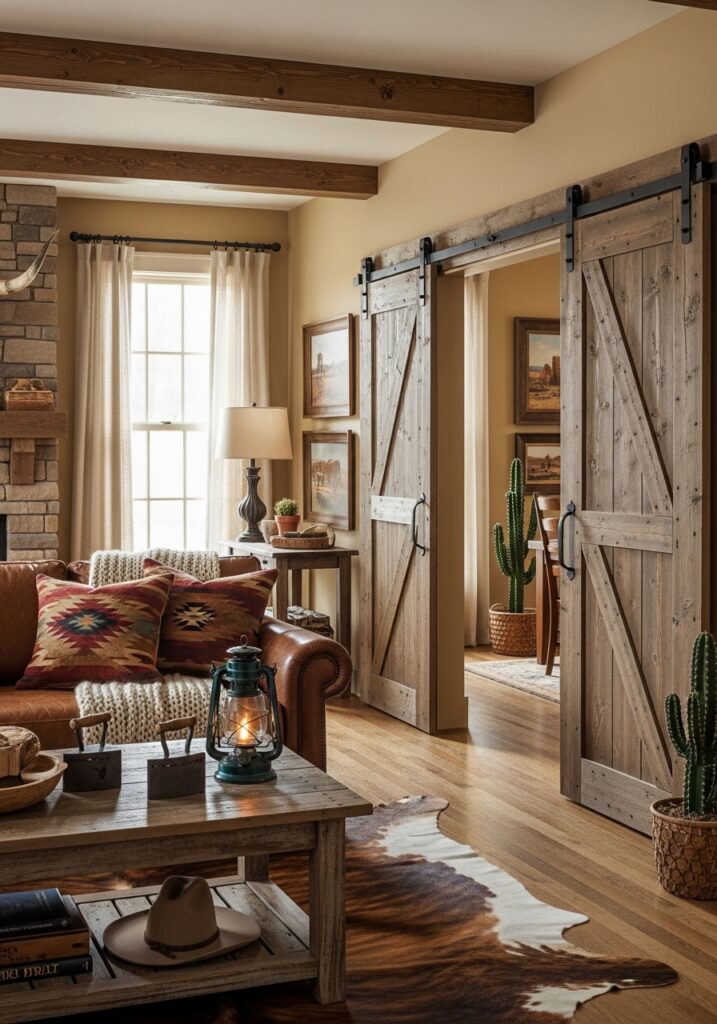
Built-In Window Seats With Real Cushions
A window seat gives a living room a quiet corner without adding a chair. Build it 18 to 20 inches high and at least 18 inches deep. Twenty to 24 inches is more comfortable for lounging. A cushion two to four inches thick brings it to a normal seat height.
Add drawers or lift-up lids underneath for blankets and games. Run an outlet to the corner so a small lamp can sit nearby. Keep cushions off heating vents, and choose a durable linen or canvas in a warm tone. Skip the extra pillows. Two is plenty.
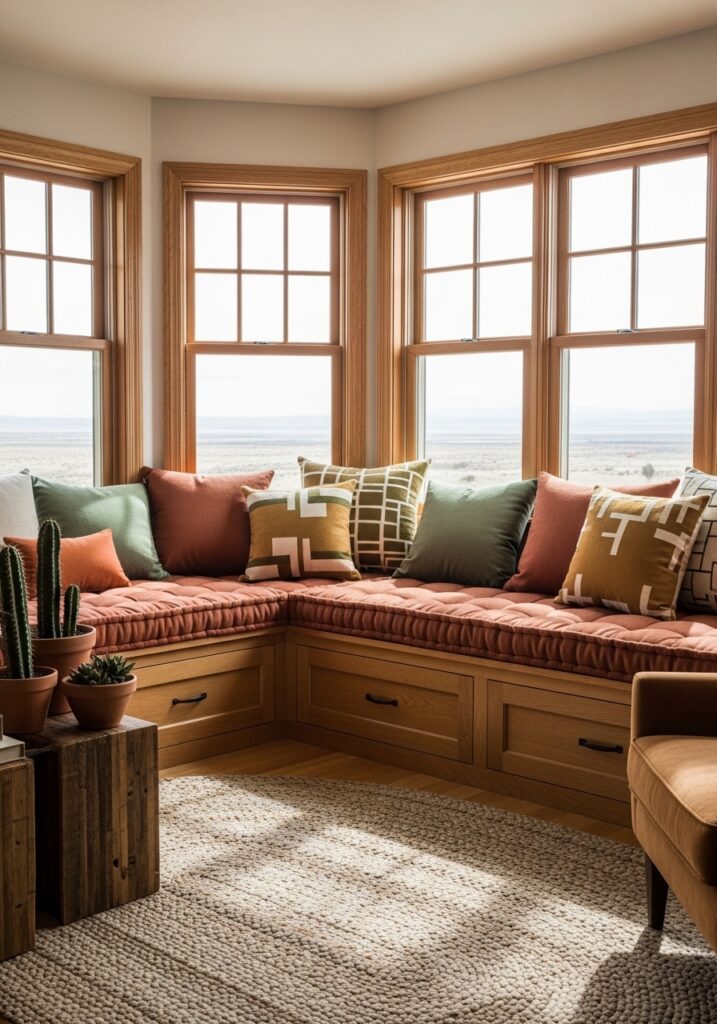
Cowhide Rugs Layered the Right Way
A cowhide works as an accent, not a foundation. Most hides run roughly five by seven feet, but each one is different, so check the actual measurements. Lay it across the corner of an 8-by-10 jute or wool rug at an angle. That keeps the shape organic and the floor protected.
Add a thin non-slip pad underneath. Keep it out of dining areas, where spills and chair legs will wear it down. Vacuum with the direction of the hair, and spot-clean with a barely damp cloth. Faux hides are easier to clean and lighter on the budget, but they rarely feel as soft.
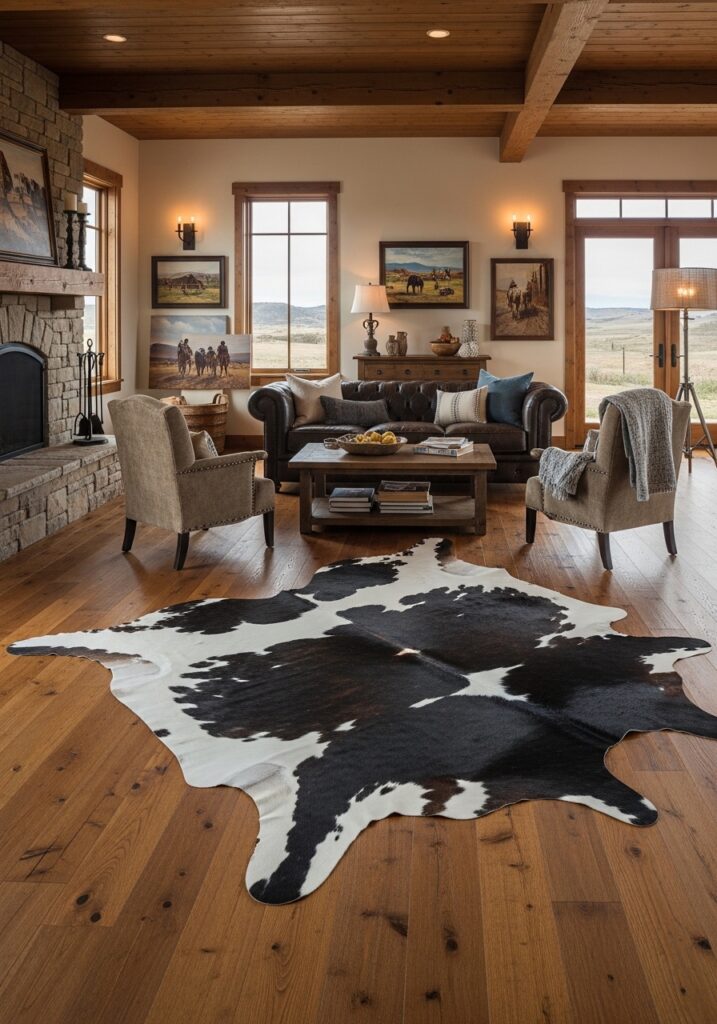
Leather Armchairs Placed for Conversation
Two leather armchairs can turn a long, narrow ranch living room into two zones. Angle them slightly toward the sofa and keep four to eight feet between seats. Closer feels crowded, and farther makes people raise their voices.
A tufted chair feels formal. A slouchy sling chair feels like a porch. Match the leather tone to the sofa or go one shade lighter. Add a side table close to arm height so a mug is always reachable. For more on angles and spacing, see our guide to placing and styling an accent chair.
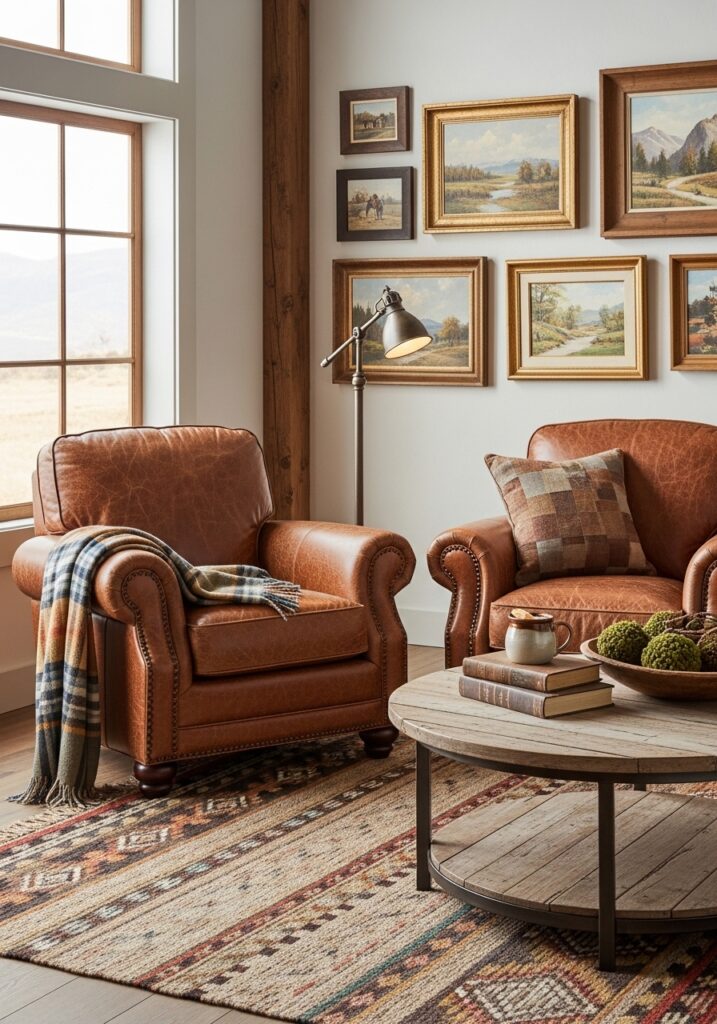
A Natural Wood Coffee Table With the Right Proportions
A rough-sawn top looks right in this room, but proportions matter more than finish. Choose a table about two-thirds the length of your sofa. Leave 14 to 18 inches between table and sofa so knees clear. Keep the tabletop level with the seat cushion, or an inch or two lower.
Seal raw edges so they do not snag sleeves. Add coasters, because reclaimed wood still shows rings. Style it with a tray, one stack of books, and a bowl. If the surface feels messy, read our piece on the coffee table styling mistake that makes living rooms look cluttered.
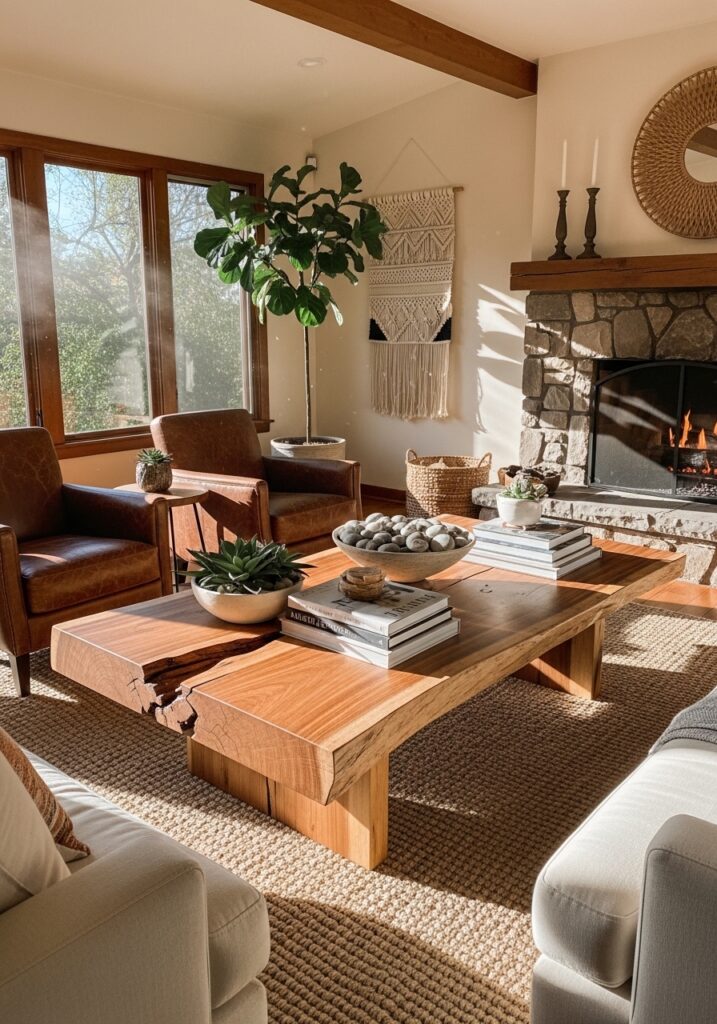
Southwestern Pillows Without the Costume Effect
Patterned pillows are the cheapest way to add Southwestern color. Use the three-scale rule: one large-scale geometric, one medium stripe, and one small print. Keep a shared color, such as rust or indigo, so they read as a set.
Mix sizes: two 22-inch squares on the outside, an 18-inch square in front, and a lumbar in the middle. Pair them with a solid leather or linen sofa. If a label claims a pillow is Navajo or Native-made, look for the weaver’s name and a story about the maker. Honest sellers share that information.
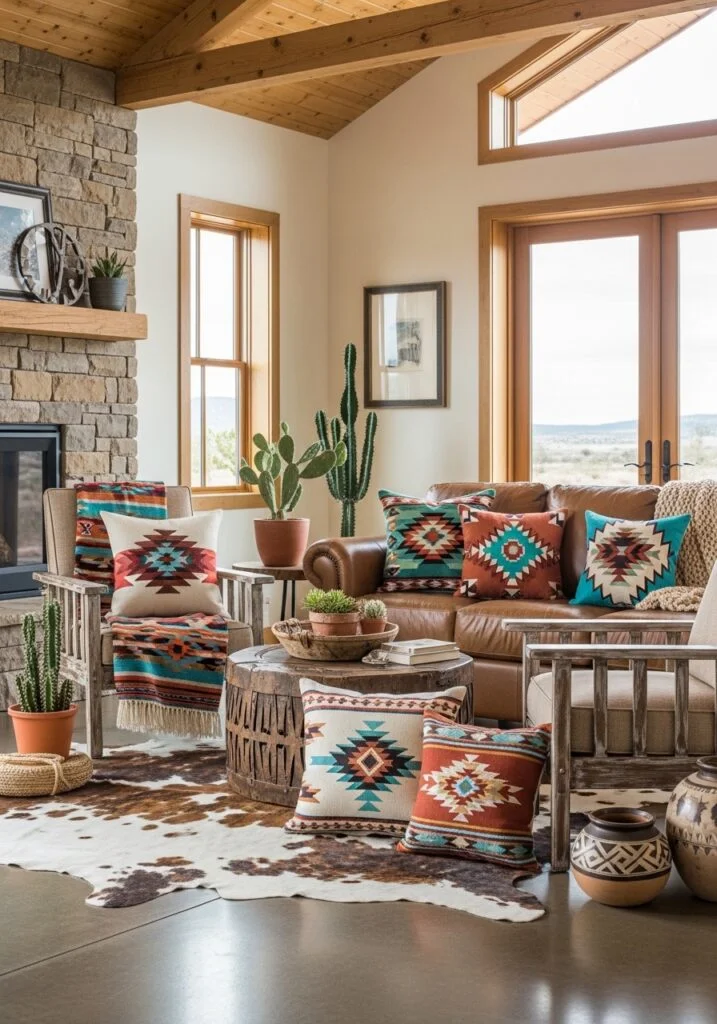
A Large Earth-Toned Rug Sized to the Seating
The rug sets the floor plan, so size it before you choose a pattern. In most living rooms, an 8-by-10 works. A bigger room may need a 9-by-12. Place it so at least the front legs of every seat sit on it, with 12 to 18 inches of bare floor along the walls.
Choose wool in tan, rust, or faded red. A low-contrast kilim or vintage-style pattern hides crumbs and wear better than a plain field. Add a rug pad about a quarter inch thick so the rug stays flat and feels softer underfoot.
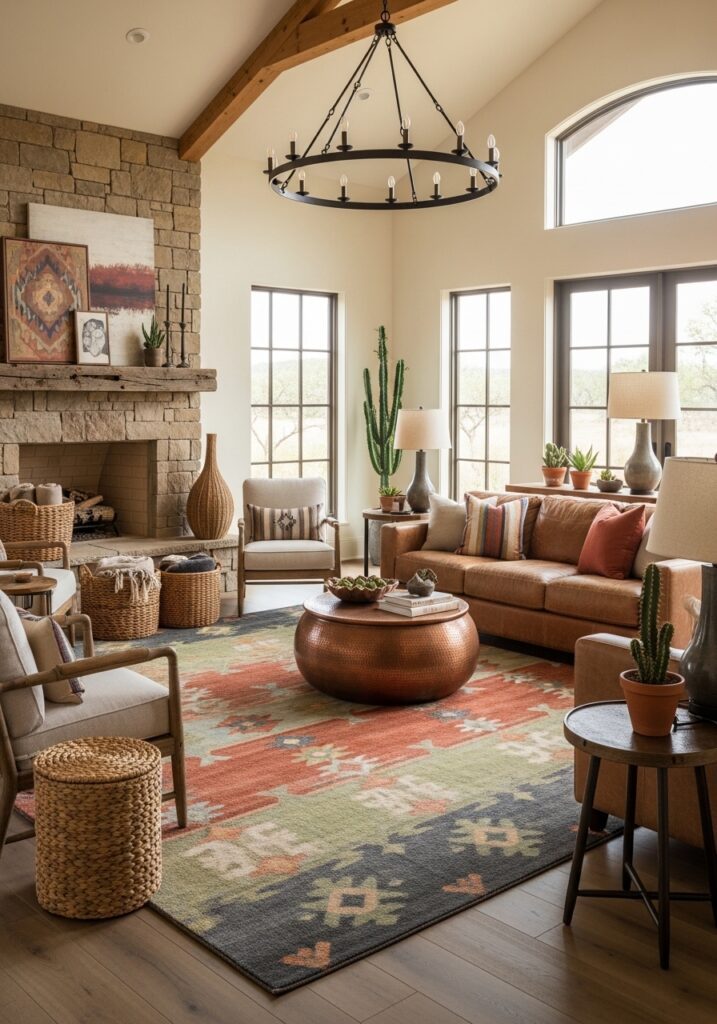
Shiplap or Rustic Wall Panels on One Wall
Wood paneling adds depth, but one wall is enough. Choose the wall behind the sofa or the fireplace. Boards about six inches wide with a narrow gap give the classic clean line. A whitewash keeps the room bright, while a natural stain adds warmth.
Let the boards sit in the room for a few days before you install them, so they adjust to your home’s humidity. Use outlet box extenders so the covers sit flush. Real wood costs more than MDF, but it takes paint and wear better. Leave the other walls plain to avoid a cabin-in-a-box look.
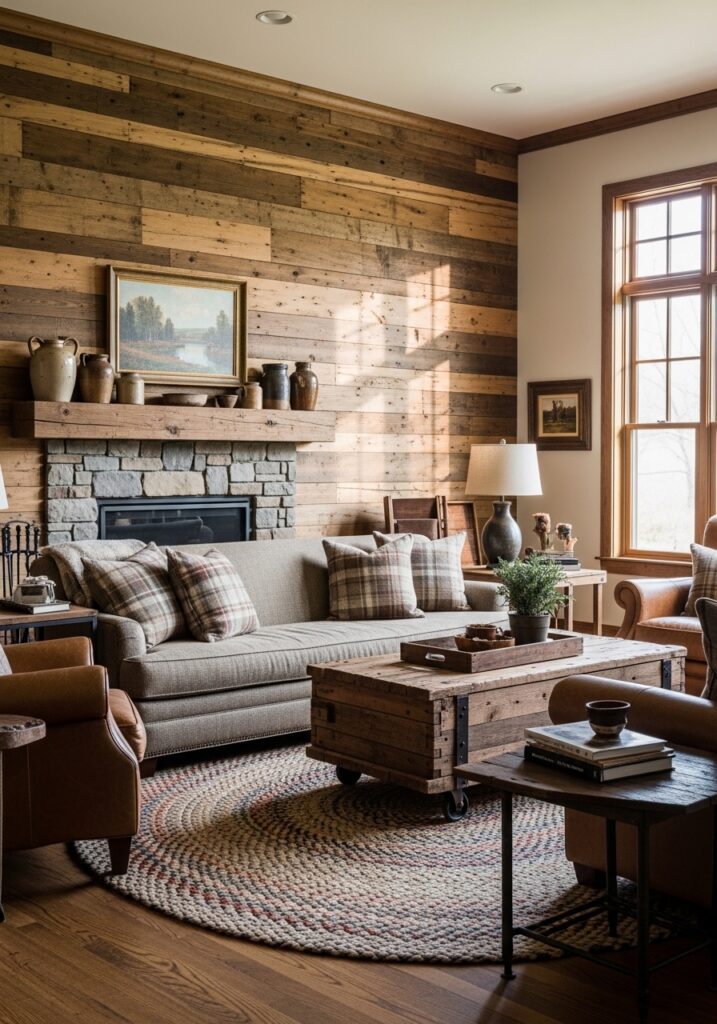
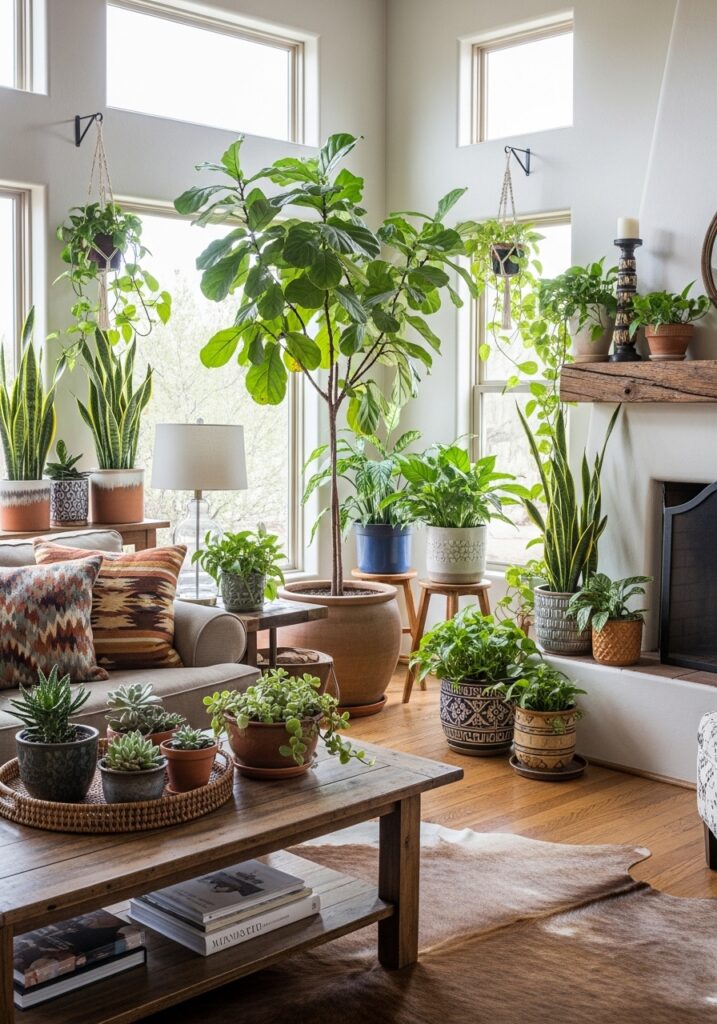
Indoor Plants That Suit the Light You Have
Ranch rooms lean heavy, and plants lighten them. Match the plant to the window before you buy. A bright south window can handle an olive tree or a cactus. A dim corner suits a snake plant or ZZ plant.
Pick pots with weight, like terra-cotta, stoneware, or a woven basket with a plastic liner. Group one tall plant with one mid-height plant for a corner. If you have pets, keep aloe and agave out of reach. Both can be toxic if chewed. Water less in winter, since most indoor plants slow down.
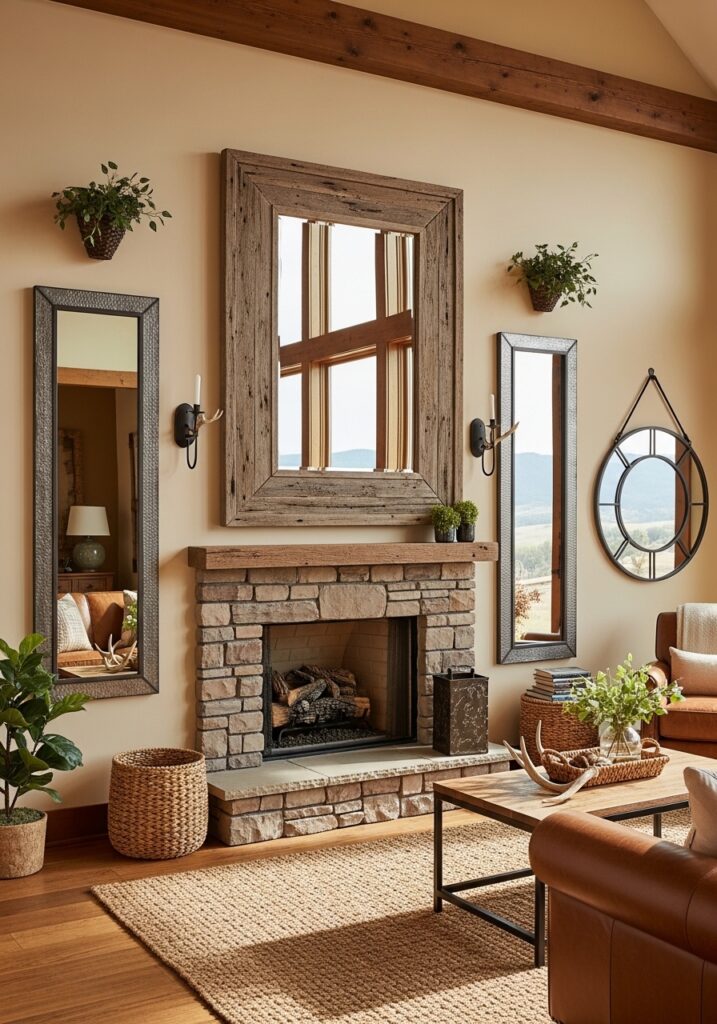
Rustic Mirrors That Catch the Right Light
A mirror in the wrong spot just reflects a blank wall. Hang it opposite or beside a window so it bounces daylight. A frame in iron, reclaimed wood, or rope fits the theme. Size it to about two-thirds of the console or mantel beneath it.
Center it around 57 inches from the floor. A leaning floor mirror at least 60 inches tall works well in a corner. Check what it reflects from your sofa. A mirror that doubles the TV or a pile of mail does the opposite of what you want.
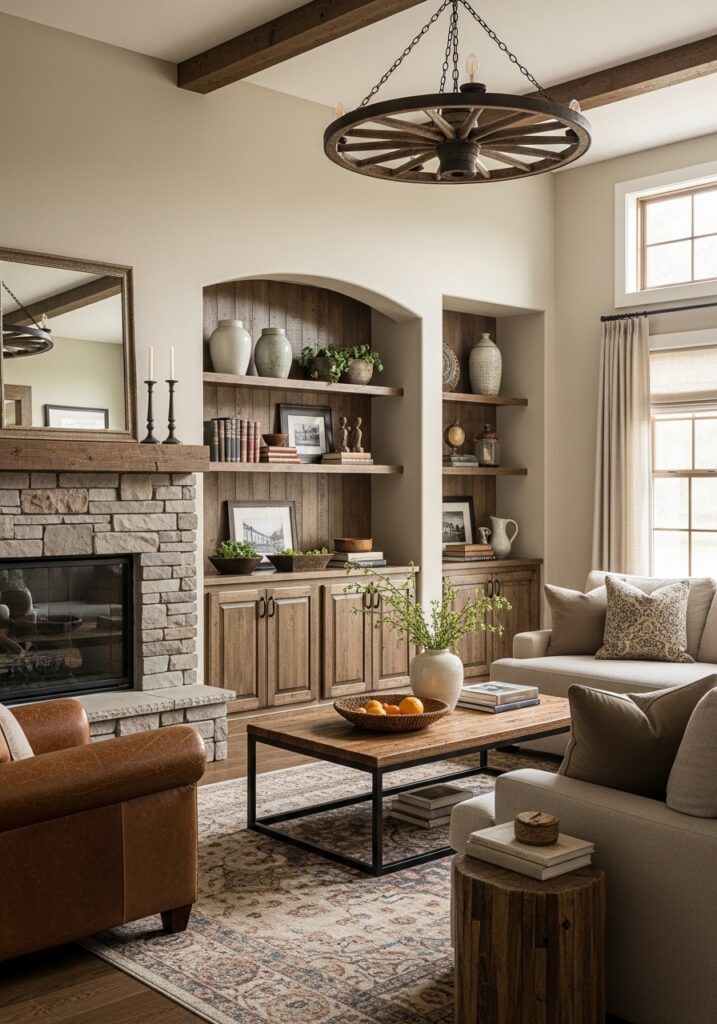
Distressed Wooden Cabinets That Hide the Clutter
A sideboard or media cabinet solves the cord-and-remote problem while adding character. Look for 16 to 20 inches of depth and a height of 30 to 36 inches. Check the construction. Solid wood and dovetailed drawers will outlast veneer.
If the cabinet holds electronics, drill a cord hole in the back and leave two or three inches for airflow. Heat shortens the life of a streaming box. Swap flimsy knobs for iron pulls. Top it with a lamp, a piece of pottery, and a framed print rather than a crowd of small objects.
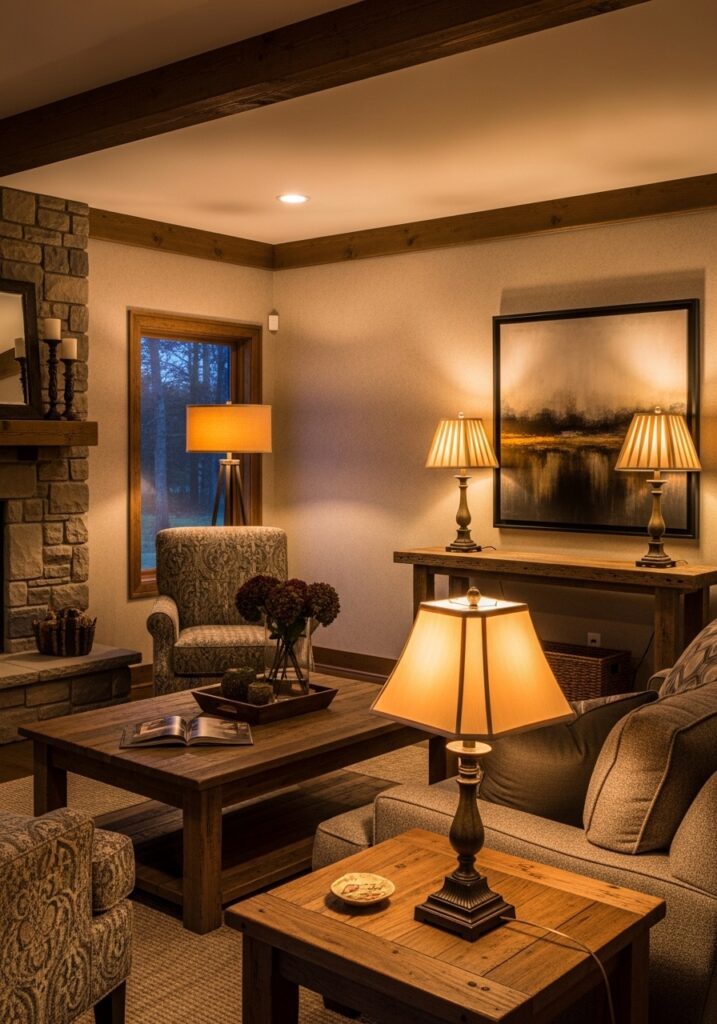
Layered Lamp Lighting at Three Heights
Overhead lights flatten a rustic room, and lamps bring it back to life. Use three levels: a floor lamp, a table lamp, and one accent light low on a shelf or mantel. Aim for at least three sources in each seating area.
Choose a table lamp 26 to 30 inches tall, so the bottom of the shade sits near eye level when you sit. Pick bulbs in the 2,700K range. Wire-wrapped iron, ceramic, and turned wood bases suit this style. Plug-in sconces can light beams or art without any electrical work. Put it all on a dimmer or smart plug.
Pick Three Before You Buy Twenty
You do not need every idea here. A room with all twenty will look like a showroom. Pick one anchor from each group instead: one wood, one leather or textile, and one light. For example, choose beams, a leather sofa, and layered lamps.
Then use a simple ratio. Keep about 70 percent of the room quiet: plain walls, solid fabrics, and clear surfaces. Let the last 30 percent carry the Western detail. That split keeps the room warm without feeling like a set.
Conclusion
A ranch-style living room feels right when the materials are real and the proportions are correct. Start with one anchor, like a dry reclaimed beam or a leather sofa that can age well. Measure before you buy. Then add texture and light slowly, and stop before it starts to look like a theme.
Which idea will you try first? Pick one this weekend and see how the room feels by Sunday evening.