
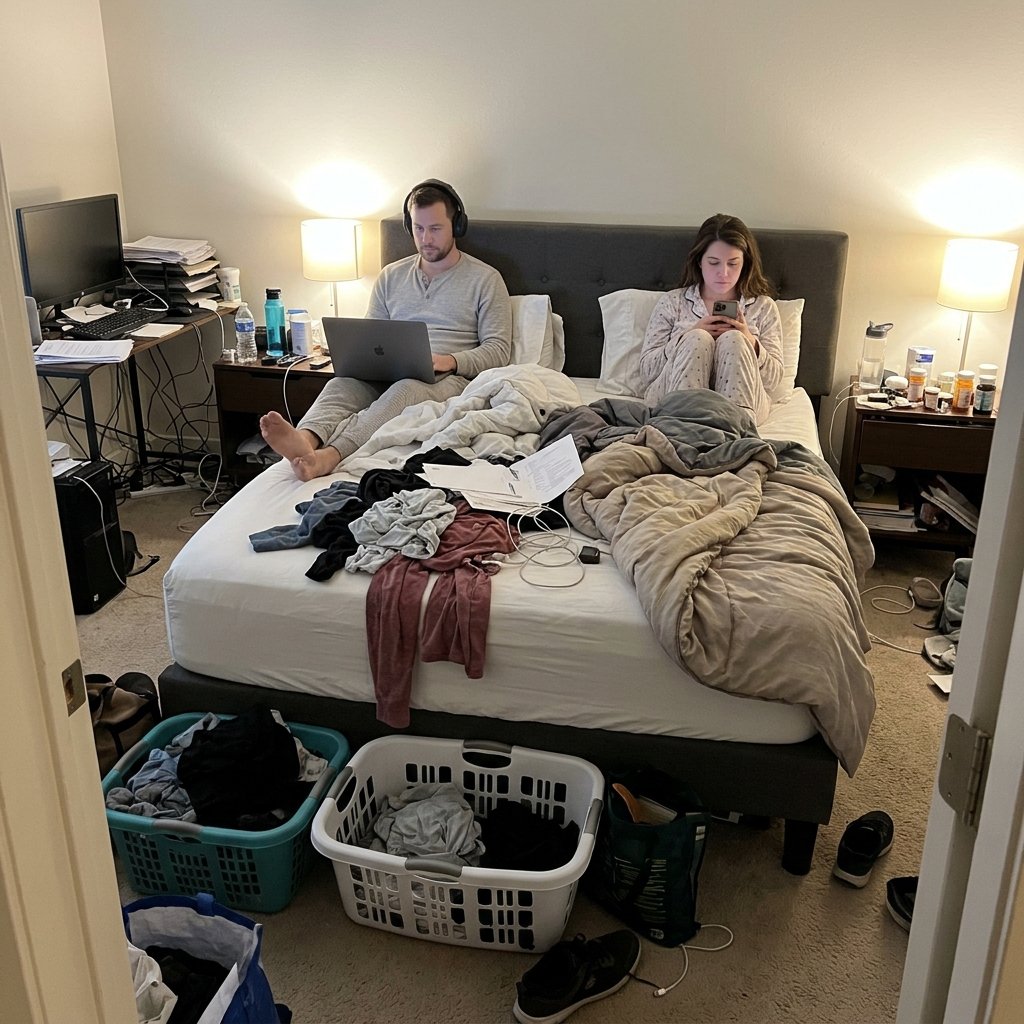
Lie down on your side of the bed tonight with the lights on and count what you can see. Two phone chargers, probably. A laptop on the dresser or a TV at the foot of the bed. A chair buried in clothes. A ceiling light controlled by a switch that sits eight feet from your pillow. Now ask the question that matters: does anything in your line of sight point you toward your partner?
For most couples, the honest answer is no. We buy blush pillows and a pack of candles, and the room stays arranged for two people doing separate things. That is the mistake. A bedroom can be beautifully styled and still work like a shared office with a mattress in it, and no amount of linen fixes that.
This guide skips the usual shopping list. It walks through the setup problems that quietly turn married couples and long-term partners into roommates, explains why they happen, and gives you fixes that mostly cost under $50. Do them in order, and the candles you add at the end will finally have something to work with.
What the Mistake Looks Like From Your Pillow
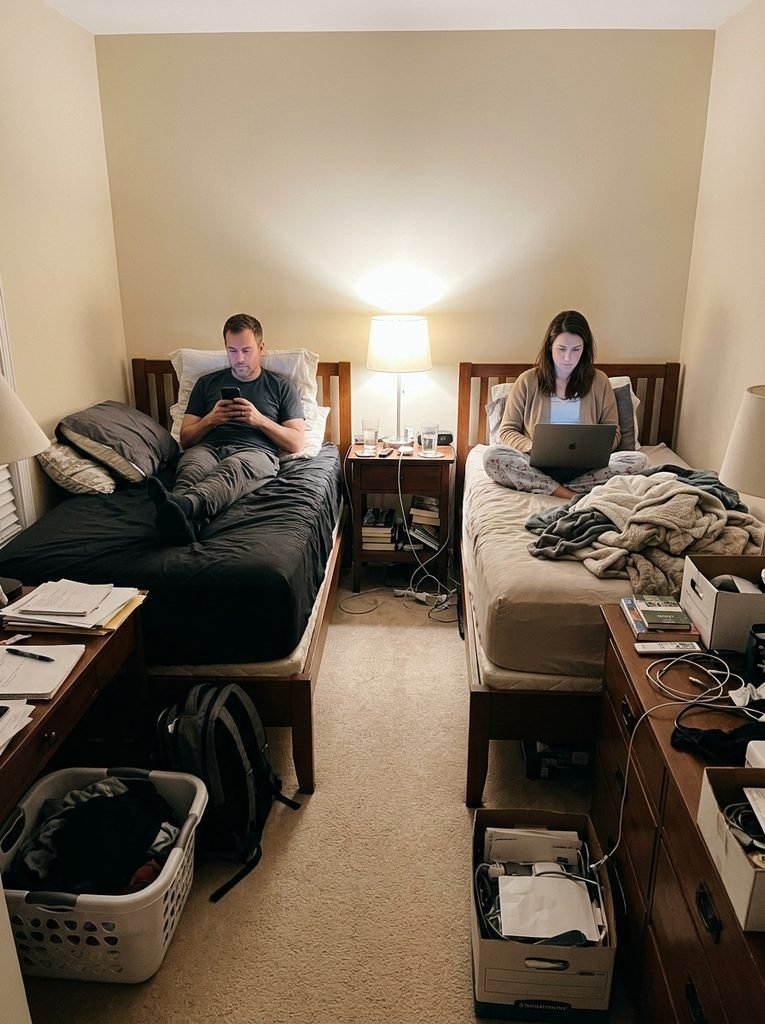
Walk through a normal Tuesday in a shared bedroom. You come in at different times. One of you flips on the ceiling light, and the other squints into the glare. Phones go on the nightstands, plugged into cables that are exactly long enough to keep you scrolling in bed. One partner watches a show on a laptop while the other reads a feed on a phone. Lights go out from the doorway, so whoever is last must cross a dark room, catch a shin on the dresser corner, and slide under the covers cold.
None of this is dramatic, which is why it goes unnoticed. Each habit makes sense alone. Together, they build a room where you lie side by side and face different directions. Romance depends on shared attention, and this setup splits attention into two small glowing rectangles.
Why Decor Alone Never Fixes It
Bedrooms collect jobs. A room meant for sleep turns into a desk, a TV room, a laundry sorter, a changing room, and a charging station. Nobody plans it. You need a surface, an outlet, and a corner, and the bedroom is the closest option.
Then decor lands on top of the pile. A candle beside a tangle of cables and a stack of unfolded T-shirts doesn’t read as romantic. It reads as a candle beside a mess.
Think of it as friction. Anything that makes the end of the day clumsier, louder, or lonelier works against you, however good the room looks in photos. So the order of operations matters: remove friction first, then add atmosphere. The sections below follow that order.
Move Screens Out of the Line Between You
Start with the biggest offender. A phone on each nightstand is two tiny televisions aimed at two faces.
Charge phones across the room instead. A dresser top or wall shelf six to eight feet from the bed works because it is too far to grab without standing up. Add a basic alarm clock, usually $12 to $25, so nobody needs the phone for the morning. A three-port charging station runs roughly $25 to $60, holds phones, a watch, and earbuds in one spot, and clears the cables off your nightstands at the same time.
If you keep a TV in the room, get it off the bed’s sightline. A screen mounted straight across from the mattress turns the bed into a sofa. A console with doors you can close works better, or a swing-arm bracket that folds the screen flat against the wall. A closed cabinet matters more than screen size, because once the TV is out of sight the room stops offering a default activity.
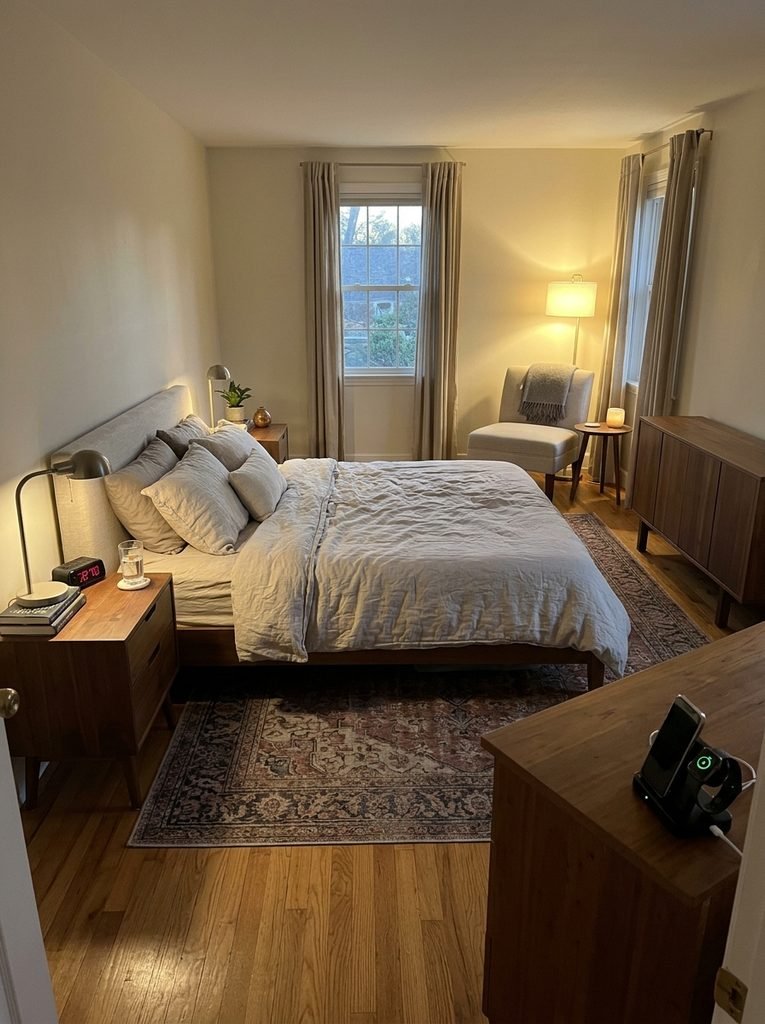
Then give your evenings somewhere else to go. A slipper chair and a small lamp in the corner give you a spot to talk or read side by side without a laptop between you. If the bed already fills most of the floor, see our guide to arranging bedroom furniture around a bed that dominates the room before you commit to a chair.
Put the Light Switch Where Your Hand Already Is
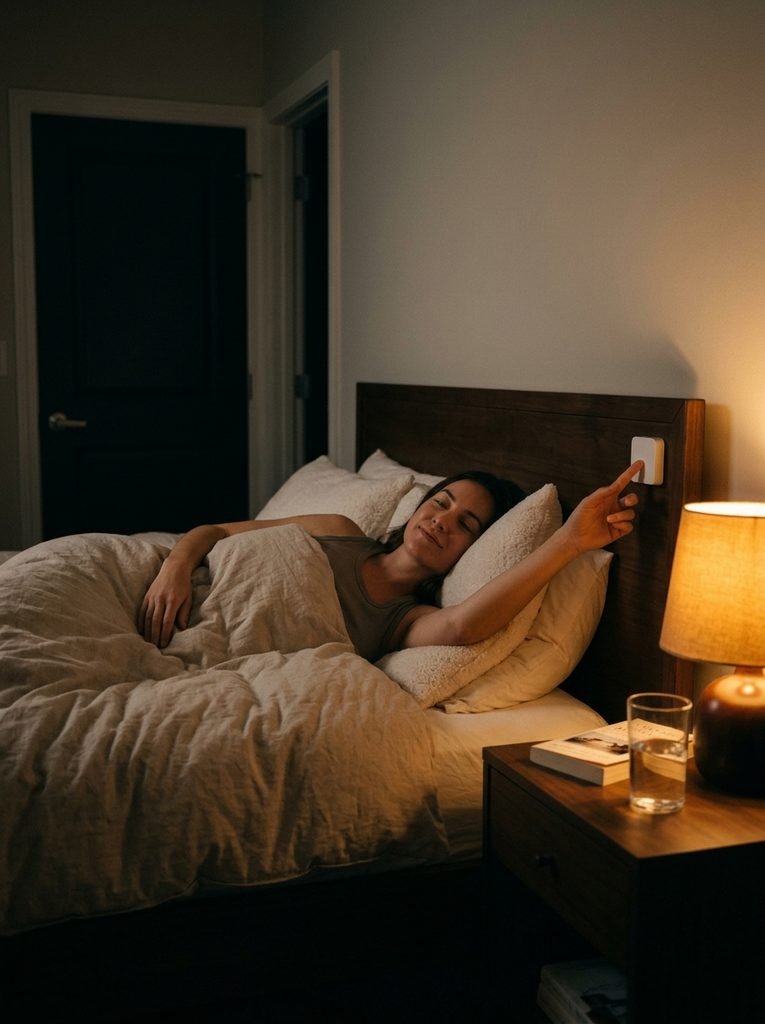
In most bedrooms the main light is wired beside the door. That means the last person into bed does the long walk through the dark, and the evening’s good mood ends at the doorframe. The fix is to bring the control to the bed.
There are three routes, by cost. A smart plug on each lamp runs about $10 to $15 and lets you switch lamps off by voice or app. A peel-and-stick wireless switch, the kind that controls a smart plug or bulb, costs roughly $20 to $40 and sticks to the headboard or nightstand where your hand lands. If you own the home, an electrician can convert the door switch into a pair with a second switch by the bed. Expect it to cost a few hundred dollars, depending on your wiring.
Add a plug-in dimmer, around $10, to one lamp if its bulb is dimmable. Check the bulb box first, because a non-dimmable LED will buzz or flicker.
Finally, solve the 3 a.m. bathroom trip so nobody reaches for the overhead light. A plug-in motion-sensor nightlight along the path does it. Choose a warm amber one rather than cool white, so it doesn’t wake the person who is still asleep.
Stop Fighting Over One Comforter
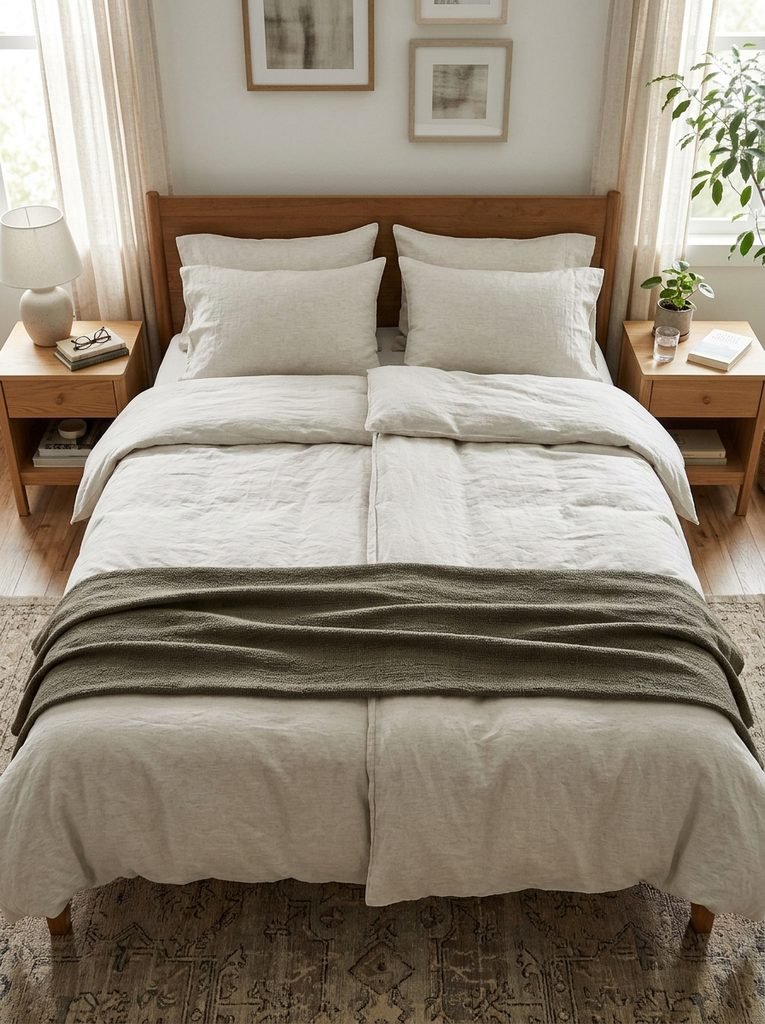
One duvet for two sleepers usually means one thief and one victim. Couples also run at different temperatures, so the same weight of cover is too hot for one person and too thin for the other. Neither of you wakes up feeling affectionate.
The fix is two duvets. A queen mattress is 60 inches wide, which gives each person 30 inches, while a standard queen comforter is cut to roughly 88 to 90 inches. Two twin-size duvets, each about 66 to 70 inches wide, give you your own cover with enough overlap in the middle that no cold gap opens at night.
Make it look like one bed. Choose matching covers in the same fabric and color, and let the weight underneath differ, with a light fill for the warm sleeper and a heavier fill for the cold one. Budget roughly $50 to $150 per insert, plus the covers. Pull both duvets up square and fold a throw across the foot, and the bed still reads as a single, calm shape.
Test the Mattress Before You Style the Bed
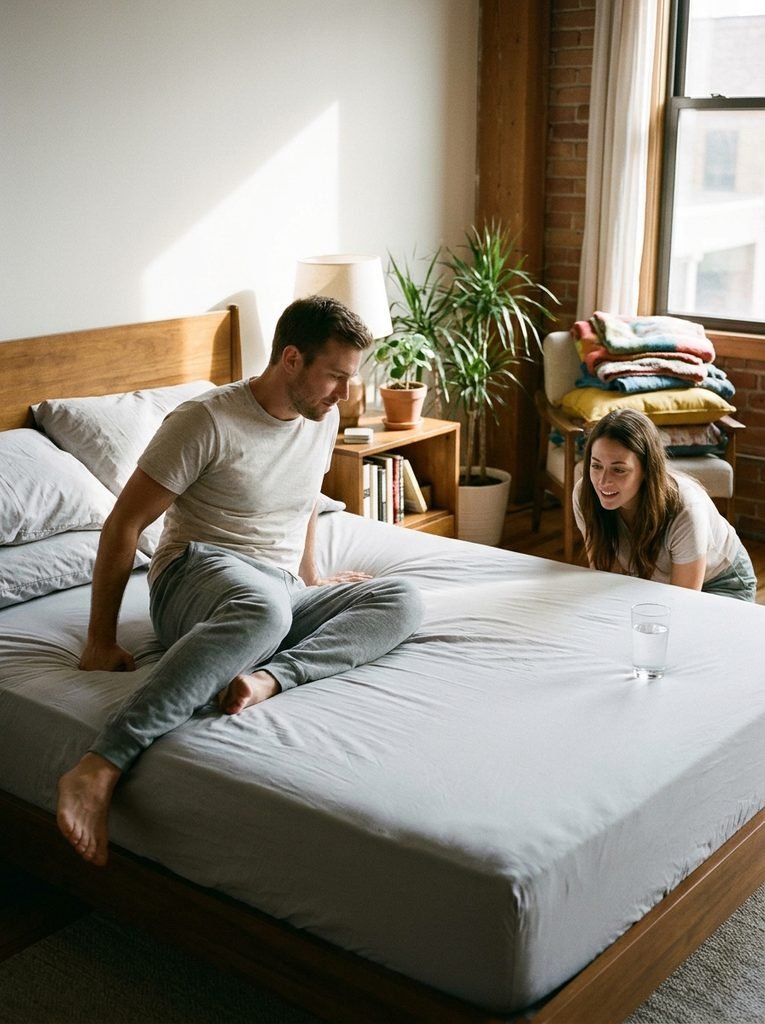
A romantic room still fails if one partner’s 2 a.m. roll-over wakes the other. Before you buy another pillow, run a simple test. Set a full glass of water on one side, then sit down hard or roll over on the other side. If the water ripples hard or spills, your mattress passes motion straight across the bed.
Consumer Reports notes that foam construction tends to bounce less, which is why foam is often a sensible pick for couples who want good motion isolation Consumer Reports, best mattresses for couples. If a new mattress is out of budget, a two- to three-inch foam topper over a bouncy innerspring can help. Toppers vary widely, from about $80 to $250 for a queen.
Know the trade-off before you buy. Foam holds more body heat than coils, so the warmer sleeper in the pair may need a breathable cover or the lighter of the two duvets above.
Treat Sound and Privacy as Part of the Design
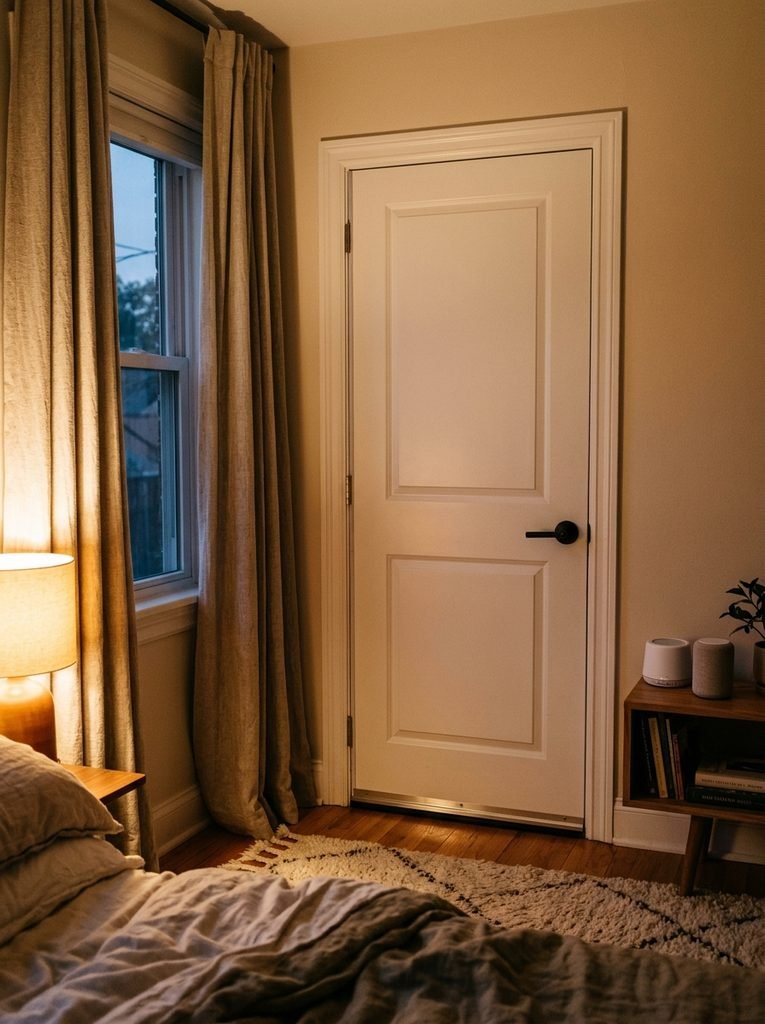
If you share a home with kids, parents, roommates, or thin walls, privacy is part of romance. Most of it comes down to the door. Builder-grade interior doors are often hollow-core and pass sound easily. Replacing one with a solid-core door costs real money, but you can close most of the gap for far less.
Screw a door sweep onto the bottom edge, about $10 to $20, and press adhesive weatherstripping around the frame, about $8 to $15. If your knob is a passage set with no lock, swap it for a privacy knob with a push-button lock. That runs $15 to $30 and takes ten minutes with a screwdriver.
Then soften the room itself. Bare floors and uncovered windows bounce sound around like a bathroom does. Lined drapes and a rug absorb it. A small white-noise machine near the door masks hallway sound, and a low playlist from a speaker on a shelf does the same job with more charm.
Give Each of You a Landing Spot for Daily Stuff
Romance dies a little every time someone has to search for a charger or move a sweater to sit down. Give each person one nightstand drawer for everything that lives by the bed, so the tops stay clear.
Send the clothes pile somewhere real. Mount two wall hooks, about $8 for a pair, at roughly 60 inches high beside the closet for clothes that aren’t dirty but aren’t clean. Keep a lidded hamper in the closet, not at the foot of the bed. A hamper about 14 inches deep tucks beside most dressers without blocking a walkway.
Where Decor Finally Earns Its Place
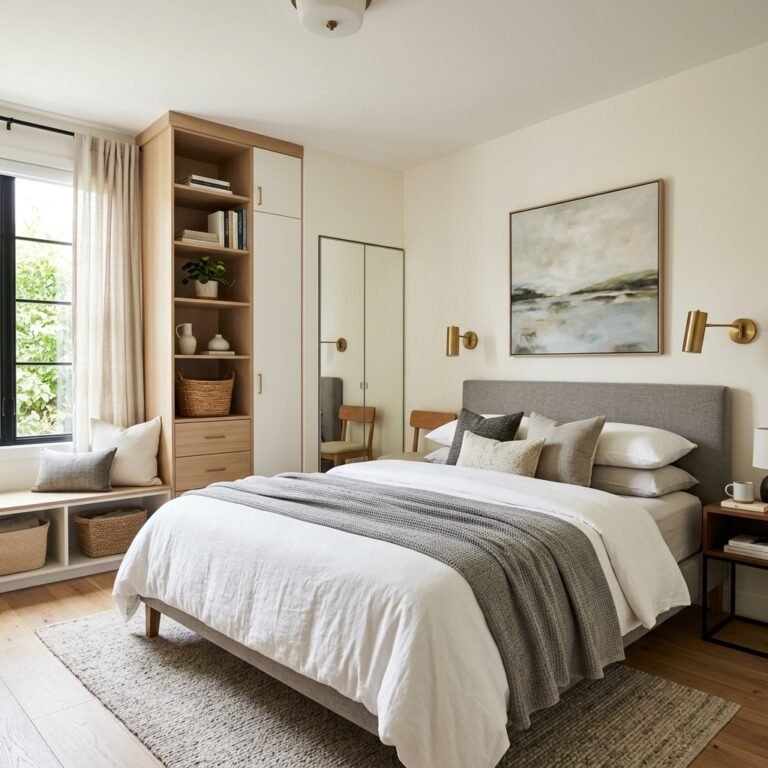
Once the friction is gone, a few pieces do real work. Pick these before candles and flowers.
Start with the rug. On a queen bed, an 8-by-10 rug placed so it extends 18 to 24 inches past each side lets your bare feet land on something soft, and it quiets the room. A rug that stops at the bed frame does neither.
Next, anchor the headboard. A loose headboard knocks the wall every time someone shifts, which is the opposite of intimate. Bolt it to the frame or wall studs, and add felt or rubber bumpers where it touches. A padded one also gives you something comfortable to lean against when you read together.
Last, put both lamps on a plug-in timer set for dusk. You walk back into a room that is already lit and ready, which tells you someone set it up for you both. For palettes, candles, and the full styling list, our Valentine’s Day bedroom decor ideas for couples go deeper on the decor side.
A Fix-It Order That Fits One Weekend
Do the free changes first, because they take about an hour. Move the chargers across the room, close or relocate the TV, and put the hamper in the closet.
Next come the changes under $50. Buy the alarm clock, the door sweep, two smart plugs, and the wall hooks. Add the privacy knob if your door needs one.
The changes in the $50 to $250 range follow: a second duvet, a foam topper, and a wireless switch for the bedside. Leave the rug and headboard work for last, since they cost the most and change the least about how the room behaves.
Run the Pillow Test Again
Lie back down tonight with the lights on and count again. If no screen glows within reach, the lamp switch sits under your hand, and each of you has your own cover and your own drawer, the room already does its job. Anything you add after that is decoration on something sturdy.
Frequently Asked Questions
Is it bad to have a TV in the bedroom for couples?
A TV isn’t automatically a problem, but its position matters. Keep it off the bed’s direct sightline and behind closed cabinet doors, so it isn’t the default activity. A swing-arm mount that folds flat to the wall also works. Many couples find that putting the screen away on weeknights improves conversation more than any decor change.
Is it weird for married couples to use separate duvets?
No, and it is a common fix for couples who run at different temperatures. Each person gets their own cover, so nobody steals warmth. Use two twin-size duvets, about 66 to 70 inches wide, on a queen bed, and keep the covers matching so the bed still looks like one calm piece.
Where should couples charge their phones at night?
Charge them at least six to eight feet from the bed, on a dresser or shelf, so reaching them means standing up. A three-port station holds both phones and a watch in one place. Replace the phone alarm with a basic alarm clock, which usually costs $12 to $25.
How can I soundproof a bedroom door cheaply?
Seal the gaps first. A door sweep on the bottom edge costs about $10 to $20, and adhesive weatherstripping around the frame costs $8 to $15. Together they cut much of the sound that leaks around a hollow-core door. Add a small white-noise machine near the door to mask what still gets through.
Can a desk stay in a romantic bedroom?
Yes, if it can disappear at night. Choose a fold-down wall desk or a secretary-style cabinet that closes over the laptop and papers. A rolling screen about 60 inches tall also works in a rental. The goal is that your last view before sleep is calm surfaces, not a blinking monitor.


1 comment