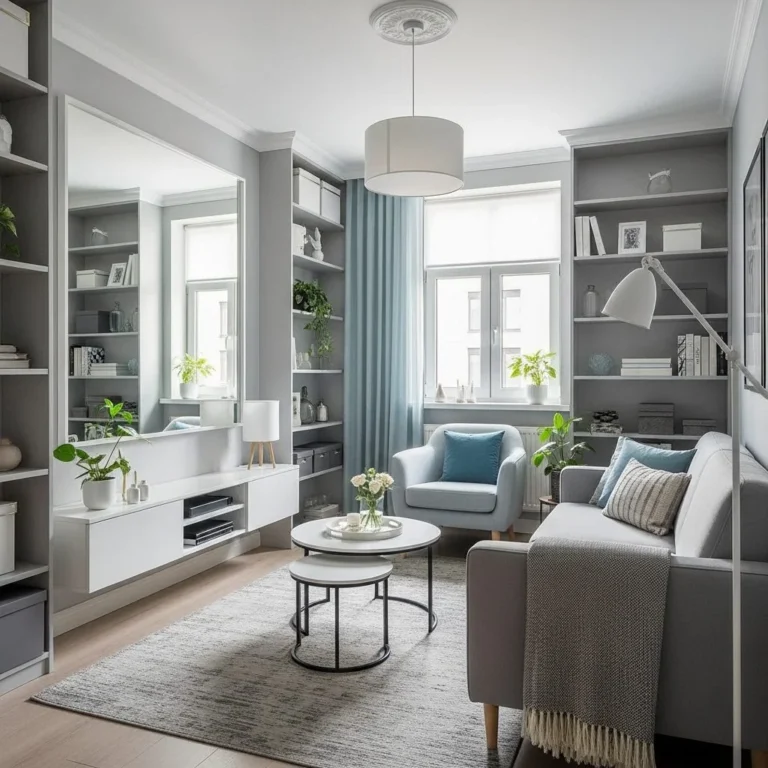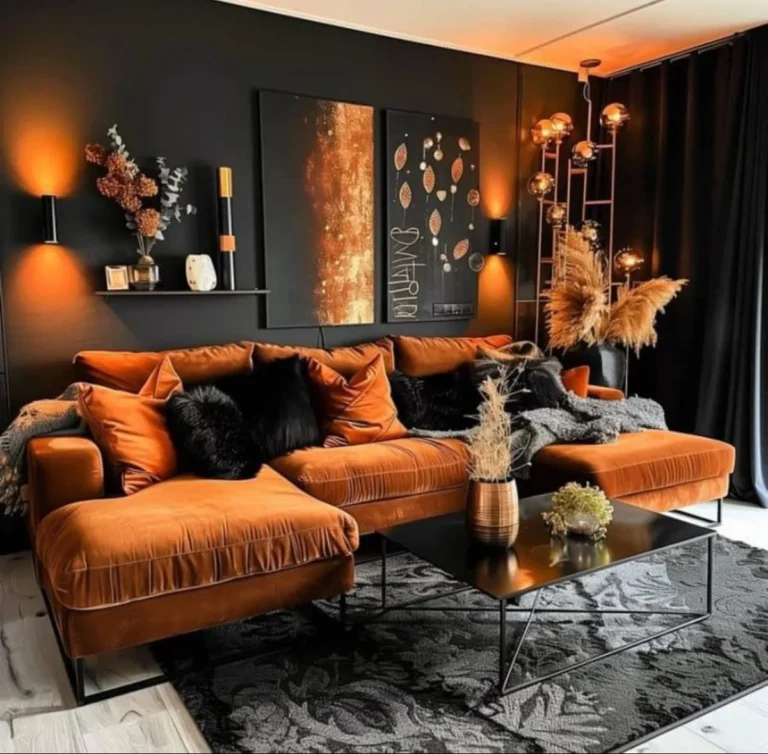
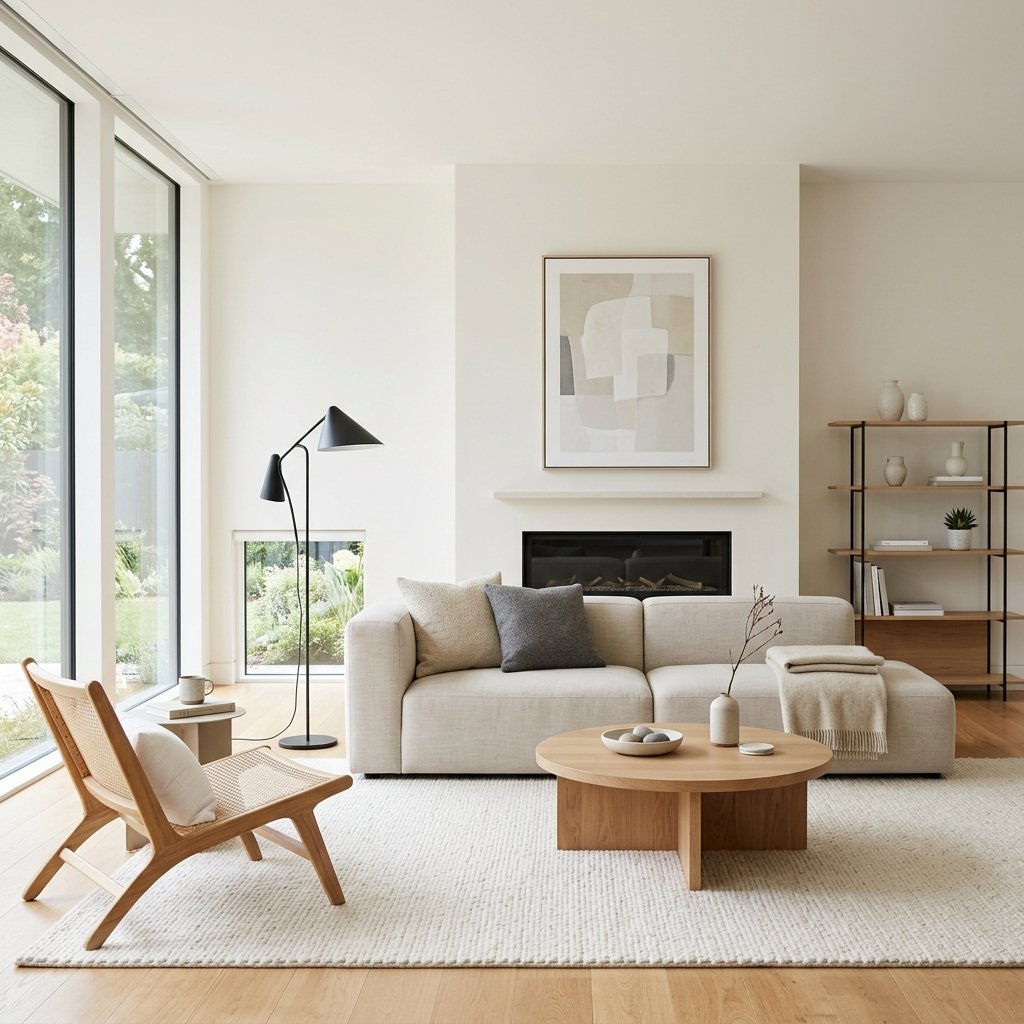
Minimalist Living Room Ideas for a Clean & Elegant Home
There is a version of minimalism that feels cold. Rooms that look like showrooms, spaces where you are afraid to set down a coffee cup, interiors that seem to exist for photography rather than living. That is not what this is about.
Real minimalist living room design is something entirely different. It is about choosing what stays and editing out everything that does not earn its place. It is about calm and intention rather than emptiness and restriction. When it is done well, a minimalist living room feels like a deep exhale. It feels like the visual equivalent of a quiet morning before the day starts.
The challenge is that most people overcorrect. They strip everything away and end up with a room that feels sterile and uncomfortable. Or they try to go minimal and still somehow end up with too much because they were not strategic about what they kept.
These fifteen minimalist living room ideas are the ones that actually work in real homes, for real people who want elegance without excess and comfort without clutter. Whether you are starting from scratch or trying to pull back a room that has gotten away from you, this is the guide to doing minimalism right.
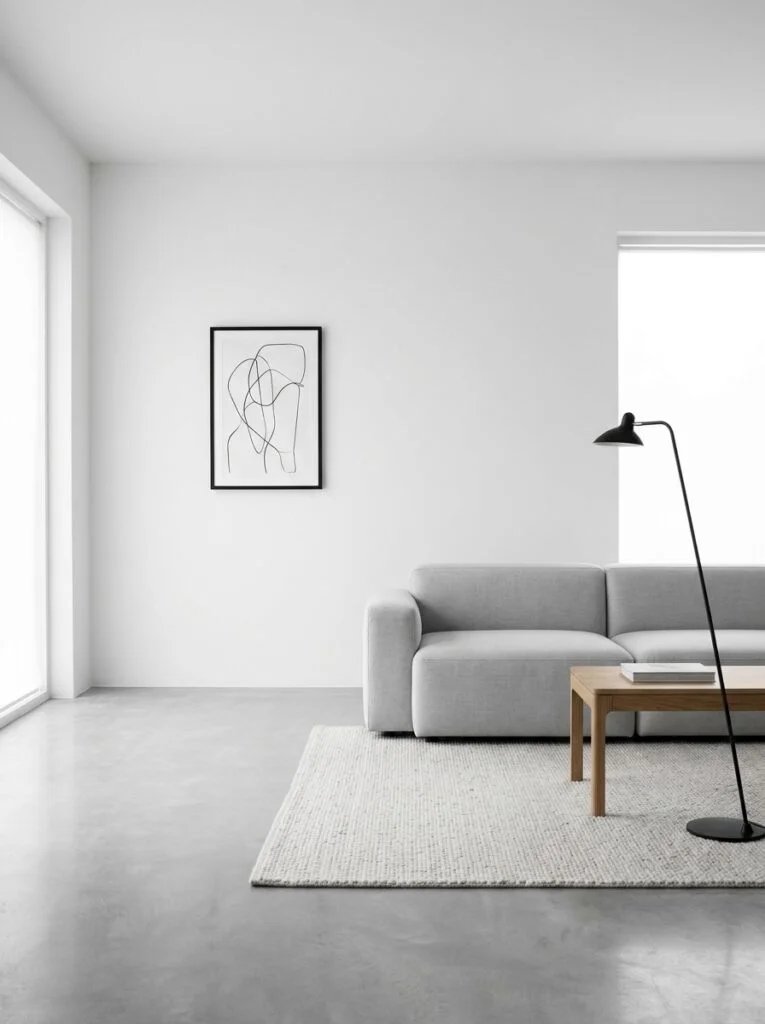
Commit to a Neutral Foundation First
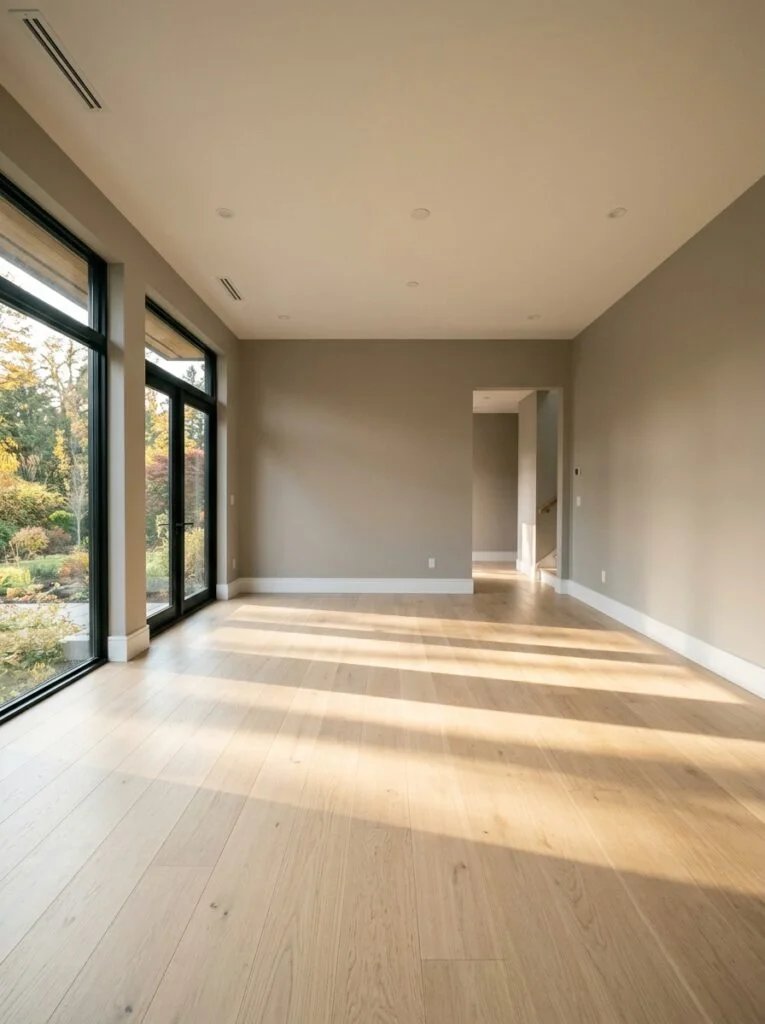
Every successful minimalist living room starts in the same place: the walls, floors, and large surfaces. Before a single piece of furniture is chosen or a single object is placed, the foundation needs to be right.
Neutral does not have to mean white. Warm greige, soft clay, pale sage, muted linen, deep off-white with an undertone. These are all neutrals that breathe differently than stark white and feel significantly more livable. The point is that the bones of the room should not compete with anything in it.
If your walls are currently a color that demands attention, repainting is the most cost-effective minimalist upgrade you can make. A room with the right neutral walls will immediately feel quieter, cleaner, and larger than the same room with a busy or strong color. Everything you add after that will read better simply because the background stopped shouting.
This foundation principle extends to flooring too. Light hardwood, polished concrete, large-format stone tile, or a simple neutral area rug laid over existing flooring. Keep the ground plane simple and everything above it gets easier.
Choose Furniture With Clean Lines and Clear Silhouettes
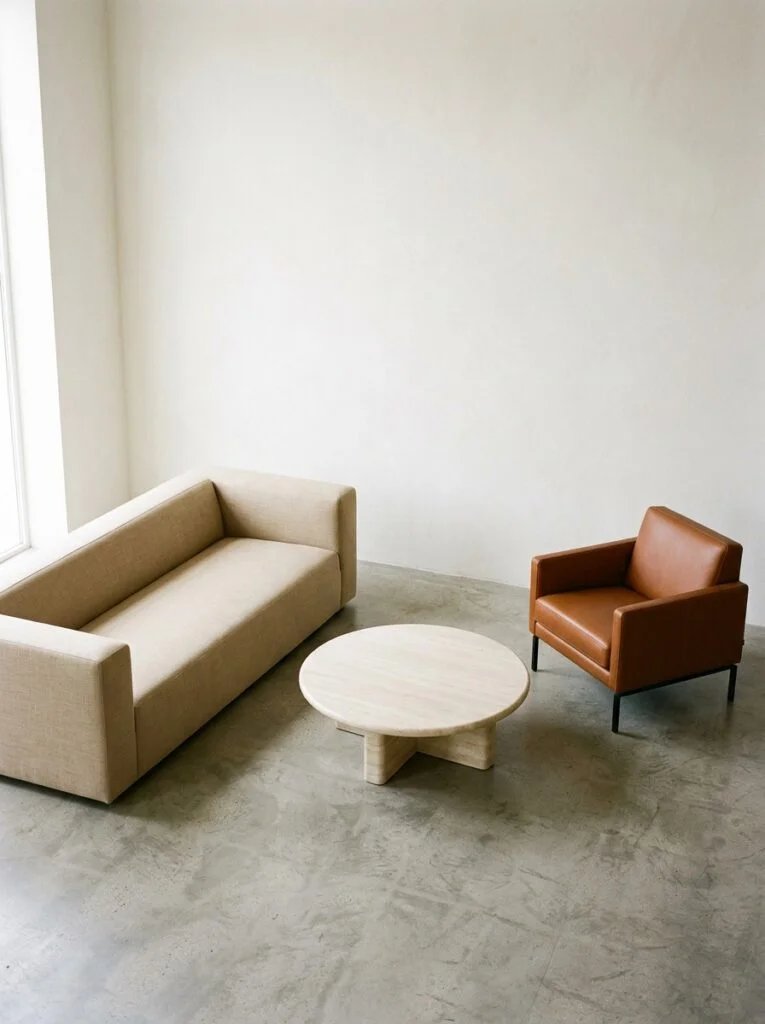
Minimalist living rooms are not defined by having less furniture. They are defined by having the right furniture with the right shapes. Pieces with ornate carved details, curved legs with decorative feet, or complex profiles all add visual noise even when they are high quality. In a minimalist room, that noise accumulates quickly.
What works is furniture with clean, uninterrupted lines. A sofa with a simple rectangular silhouette and legs that lift it off the floor. A coffee table with a clear geometric shape, a rectangle, a circle, a simple oval. Shelving that is flush or nearly flush to the wall. A media console with flat fronts and no decorative hardware.
These shapes are not boring. They are architectural. They let the form of the piece speak without ornamentation, which is actually a much harder design challenge than slapping a carved detail on something and calling it interesting.
When evaluating any piece of furniture for a minimalist space, ask yourself: if you took a photo of just this piece against a white wall, would the shape alone be enough? If the answer is yes, it belongs.
Limit Your Color Palette to Three Tones
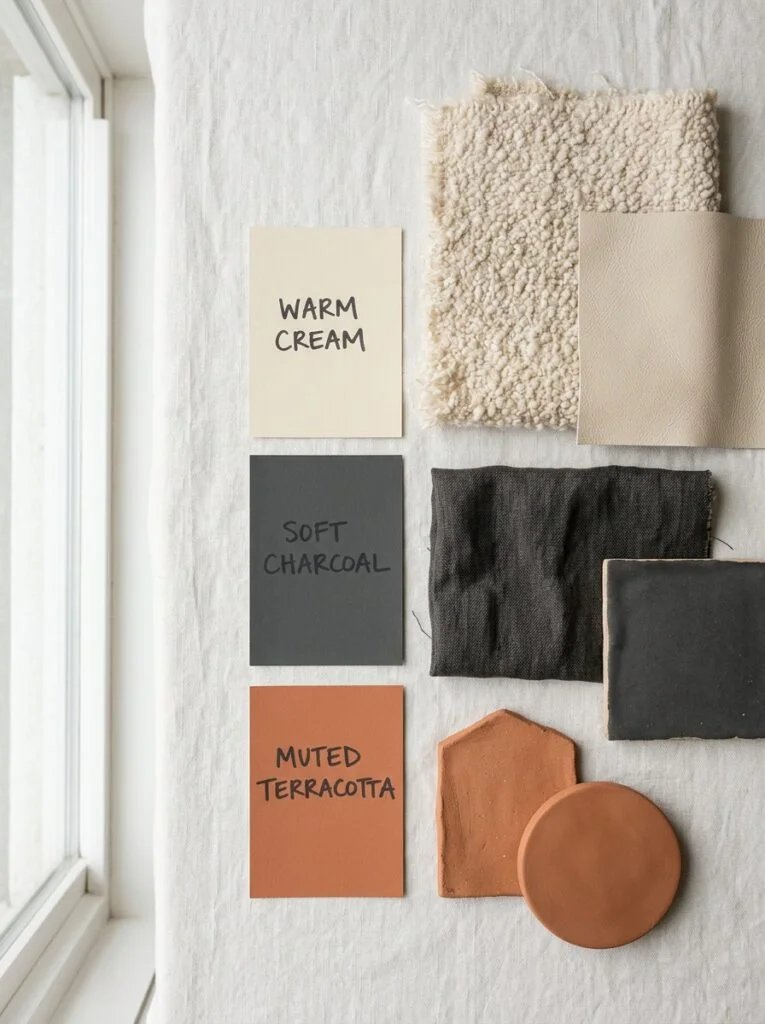
Color is where minimalist rooms either come together or fall apart. Too many colors create visual fragmentation even when each individual color is beautiful on its own. Too few colors and the room can start to feel like a hospital waiting room. The sweet spot for a clean and elegant minimalist living room is three tones used consistently.
This does not mean three colors in equal measure. Think of it as a primary tone (the dominant color that covers walls, large upholstery, and flooring), a secondary tone (a darker or contrasting shade used in smaller upholstery pieces, shelving, or accent furniture), and an accent tone (something that appears in small doses, in a throw pillow, a vase, a single piece of artwork, maybe a plant pot).
When those three tones repeat throughout the room in different materials and scales, the space achieves a cohesion that feels genuinely effortless. When a fourth or fifth color creeps in, that cohesion starts to break down.
The most enduring minimalist palettes tend to be warm neutrals paired with a deeper tone, like cream with charcoal, or greige with soft black, with a single organic accent like terracotta or olive.
Invest in One Statement Sofa
In a minimalist living room, every piece carries more visual weight because there are fewer pieces. This means the sofa, which is almost always the dominant furniture item, needs to be exceptional. Not trendy. Not cheap. Exceptional.
The sofa in a minimalist room is not something to save money on by going with the budget option and hoping throw pillows will save it. It is the centerpiece. Everything else is chosen in relation to it.
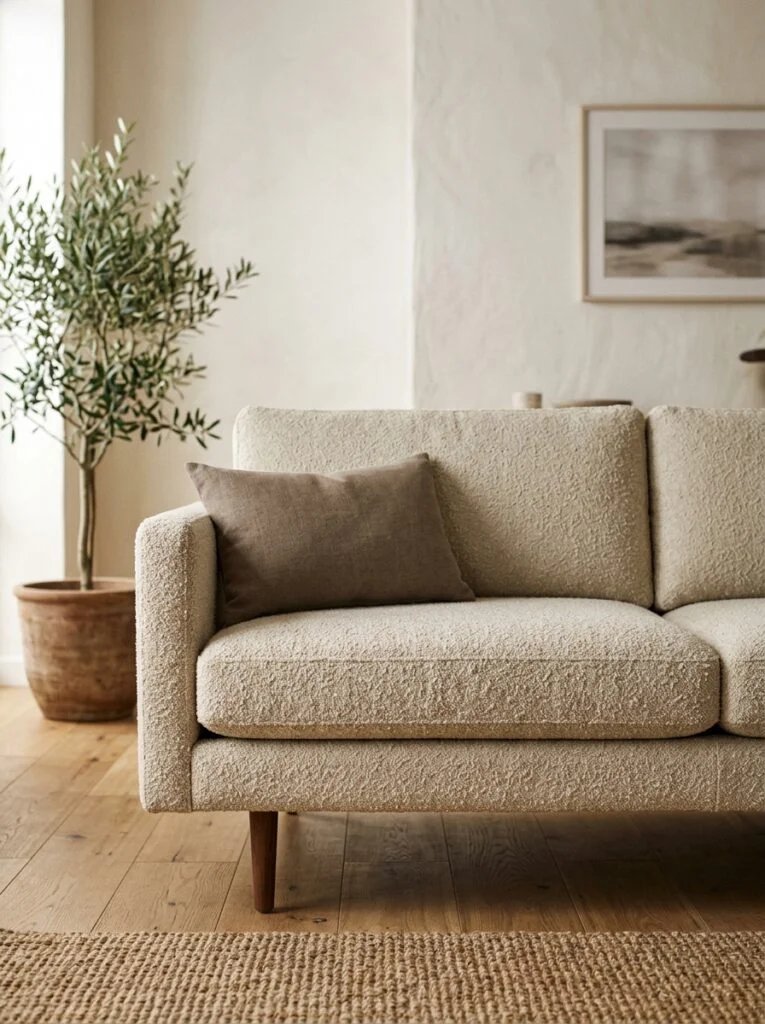
A quality sofa in a solid, durable fabric, whether that is a tight-weave linen blend, a performance velvet, a boucle, or a leather, will anchor the room in a way that nothing else can replicate. Choose a color that fits your three-tone palette and a silhouette that matches the clean-line principle. Then build everything else from there.
One great sofa will serve a minimalist room better than three mediocre pieces competing for attention.
Use Negative Space as a Design Element
This is the concept most people struggle with most because it requires resisting the impulse to fill. In design, negative space is the empty area around and between objects. In a minimalist room, it is not empty at all. It is doing essential work.
Negative space gives the eye somewhere to rest. It makes the things that are in the room feel chosen and intentional. It creates a sense of calm that cluttered rooms, no matter how beautifully appointed, simply cannot achieve.
The practical application of this is straightforward. Leave gaps between pieces of furniture. Do not push every item against a wall. Place a single object on a coffee table instead of covering the surface. Keep one wall completely bare. These decisions feel uncomfortable at first because they go against every decorating instinct that says more is better. Trust them anyway.
A room with deliberately maintained negative space reads as confident and considered. A room where every corner is filled reads as anxious. You want confidence.
Layer Texture Within a Single Color Family
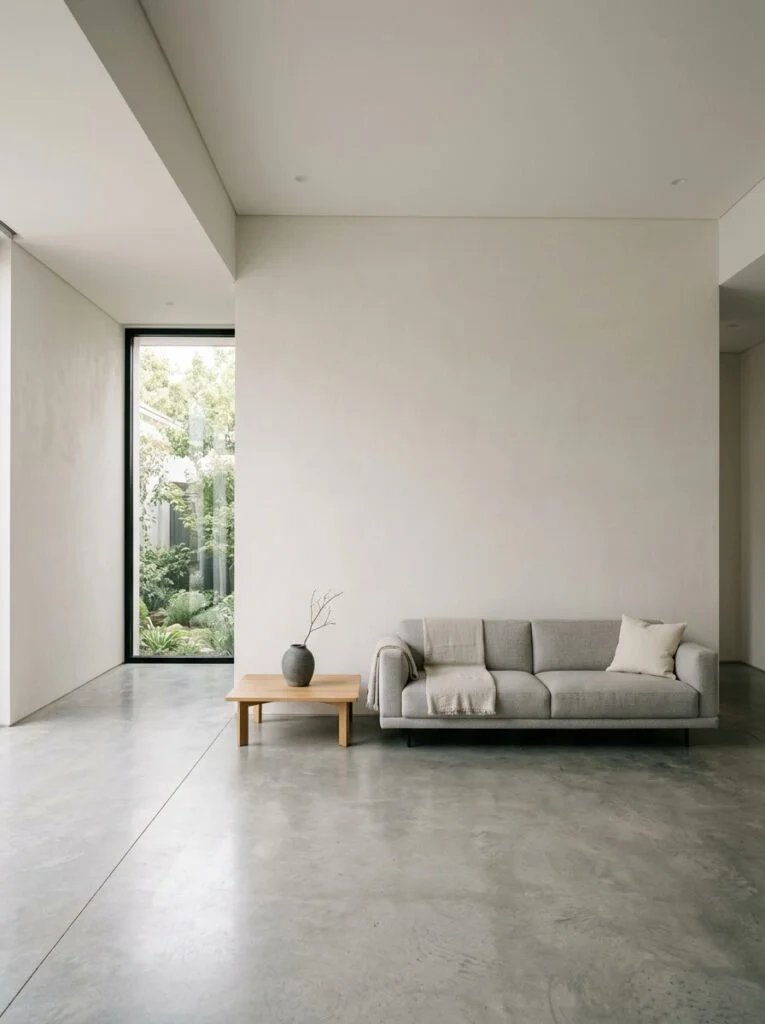
One of the most common misconceptions about minimalist design is that it must feel flat or monotonous. The solution to that is texture, and the key is using texture within a single color family rather than introducing more colors to create interest.
Think of a living room built primarily in warm cream and linen tones. A sofa in a woven boucle. A throw in a chunky knit. A rug with a low-pile texture that catches light differently from different angles. A ceramic vase with a matte glaze. A side table in natural rattan. A linen window panel. All of these could live within the same creamy neutral range and create extraordinary richness through texture alone.
The eye reads material and texture as visual interest just as readily as it reads color. A room that is tonally quiet but texturally rich will never feel boring because there is always something to look at, something to reach out and touch, something that changes as the light moves through the day.
Texture is how minimalist rooms stay warm. Without it, they go cold.
Opt for Multi-Functional Furniture
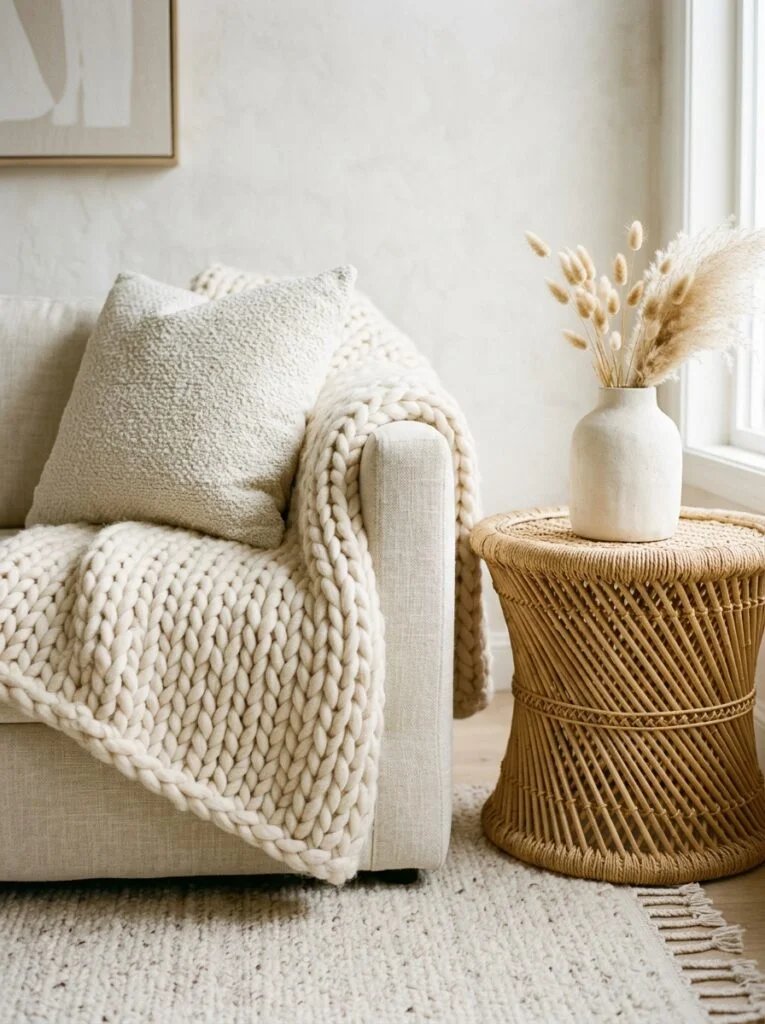
Minimalism and practicality are natural allies. A room with less in it needs what remains to work harder, and multi-functional furniture is one of the most elegant expressions of that principle.
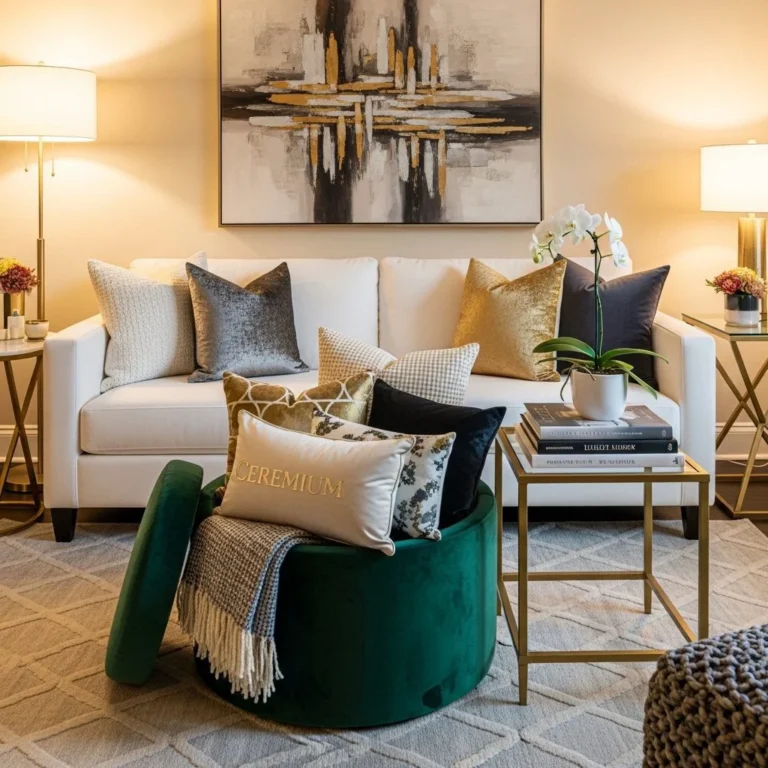
An ottoman that opens for storage and doubles as a coffee table when a tray is placed on top. A bench at the base of a sofa that provides extra seating for guests and holds extra blankets inside. A side table with a drawer that takes the place of a small console. Nesting tables that expand when needed and disappear when they do not.
These pieces are not compromises. In a minimalist living room, they are genuinely better than the single-purpose alternative because they reduce the total number of items in the space while increasing the room’s functionality. Every multi-functional piece you choose is one less additional piece you need.
This approach is especially valuable in smaller living rooms where space is a real constraint. The fewer pieces you have, the more intentional each one needs to be.
Keep Window Treatments Simple
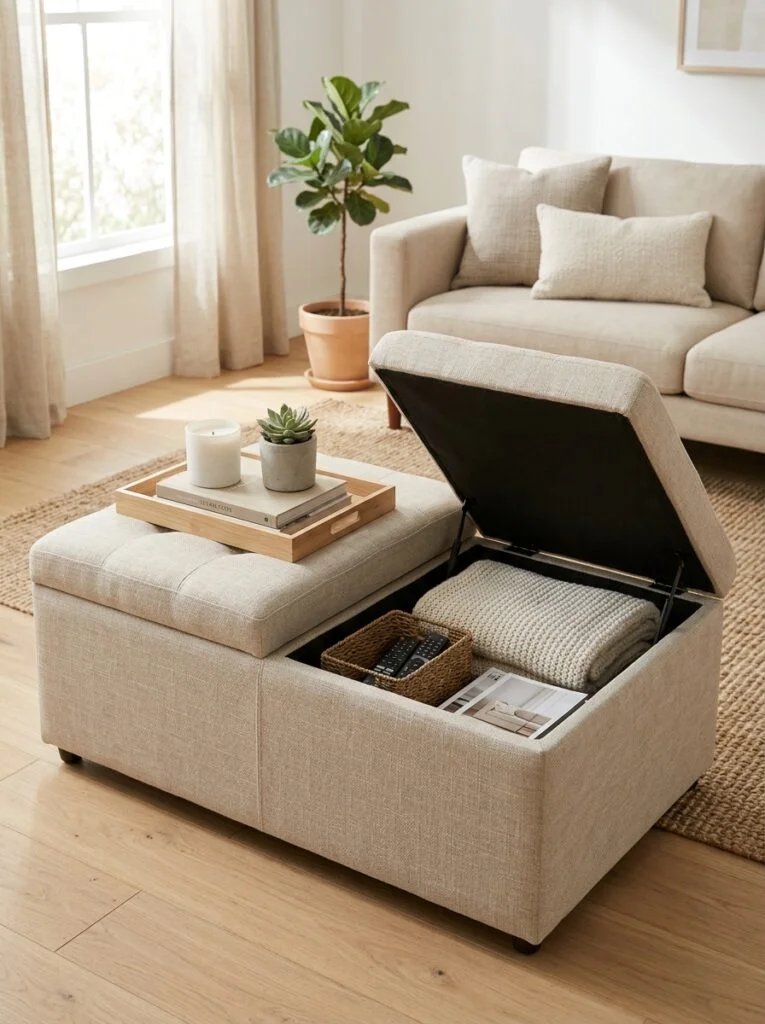
Windows are one of the most overlooked elements in a living room, and the wrong window treatment can immediately undermine a minimalist aesthetic. Heavy drapes with multiple layers, patterned curtains, elaborate valances, blinds in a contrasting color to the walls. Any of these will add visual weight that minimalism cannot absorb without consequence.
The simplest and most universally effective minimalist window treatment is a sheer linen panel in white or natural, hung high and wide. High means the curtain rod is mounted close to the ceiling rather than close to the window frame. Wide means the panels extend well beyond the window on each side. This makes windows look taller and wider and lets the panel frame the window rather than cover it.
For rooms that need more privacy or light control, a simple roller shade in a neutral tone installed inside the window frame is completely invisible when rolled up and unobtrusive when down. Layer a sheer panel over it for a combination that handles both light and privacy without visual noise.
What you want is for windows to feel like they belong to the room rather than announcing themselves as a decorating decision.
Curate Rather Than Collect
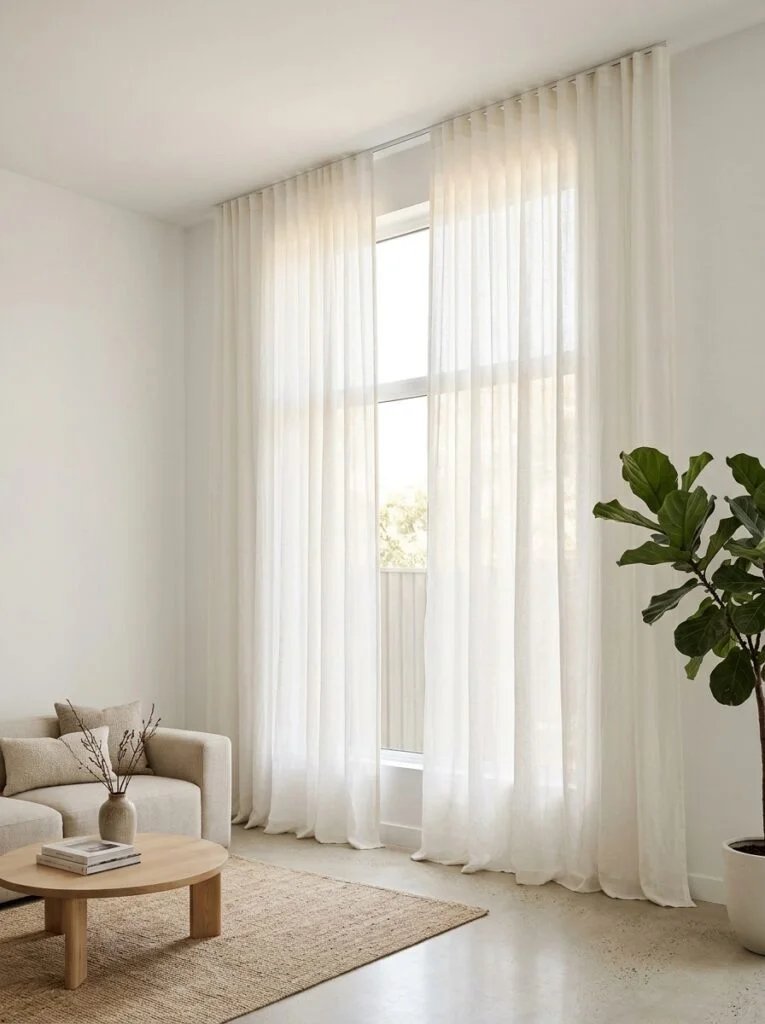
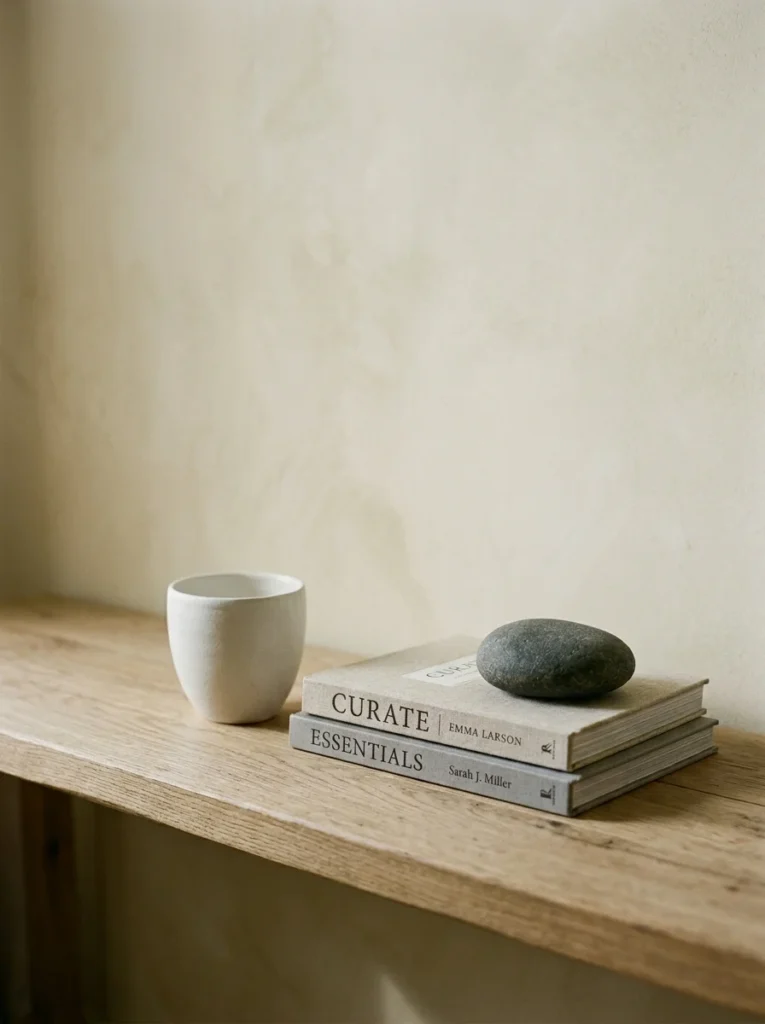
Every minimalist living room needs some objects. The goal is not a room with nothing in it. The goal is a room where everything has been chosen with genuine intention, where each object either serves a purpose, has personal meaning, or is simply beautiful enough to earn its place on its own merits.
The word for this is curation. A curator does not display everything available. A curator selects what best represents something, removes what does not, and arranges what remains to tell a coherent story.
Apply that thinking to your living room. Instead of a collection of fifteen small objects on a shelf, choose three that you genuinely love and give them the space to be noticed. Instead of a gallery wall with a dozen pieces crowded together, select two or three with real resonance and hang them with breathing room between them. Instead of a bowl of miscellaneous things on the coffee table, use a single sculptural object or a small stack of books you actually read.
Curation takes more confidence than collecting because it requires saying no to things, including things you like. But the result is a room that feels intentional in a way that collecting never achieves.
Bring in One Organic Element
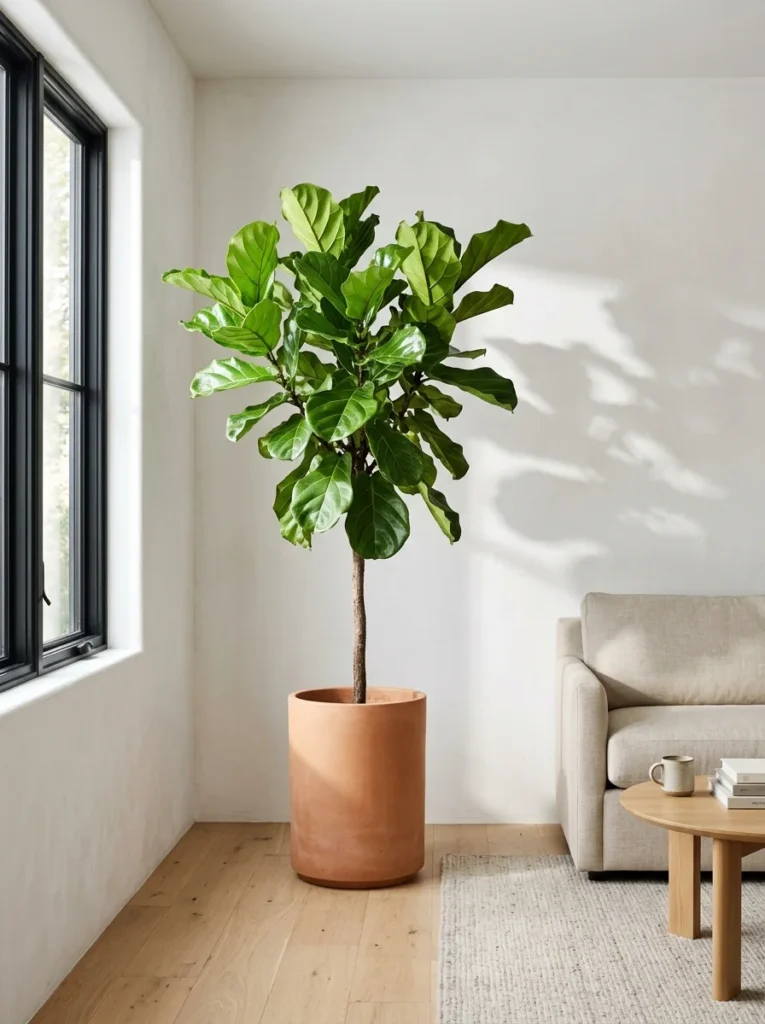
For all its elegance, a room built entirely of manufactured objects can feel airless and disconnected from the natural world. One well-chosen organic element changes that entirely and without disrupting the minimalist aesthetic at all.
A large-format plant in a simple ceramic pot is the most obvious choice and it works beautifully. A fiddle-leaf fig, a bird of paradise, a monstera, an olive tree. Any of these in a pot that matches the room’s palette will bring life, scale, and organic movement to a space that might otherwise feel too static.
If plants are not practical for your life or your light situation, consider other organic materials instead. A large piece of raw-edge wood used as a coffee table or shelf. A woven grass rug. A ceramic sculpture with an organic, hand-made quality. A single branch in a tall floor vase.
The organic element does not need to be large and it does not need to be a plant specifically. It just needs to remind the room that nature exists outside and that the people living in this space are connected to it.
Address Lighting at Three Levels
Lighting is one of the most powerful tools in any interior design approach, and in a minimalist living room it is especially critical because you are relying on fewer decorative elements to create atmosphere. Get the lighting right and the room transforms at different times of day. Get it wrong and even a beautifully furnished minimalist space feels flat and uninviting.
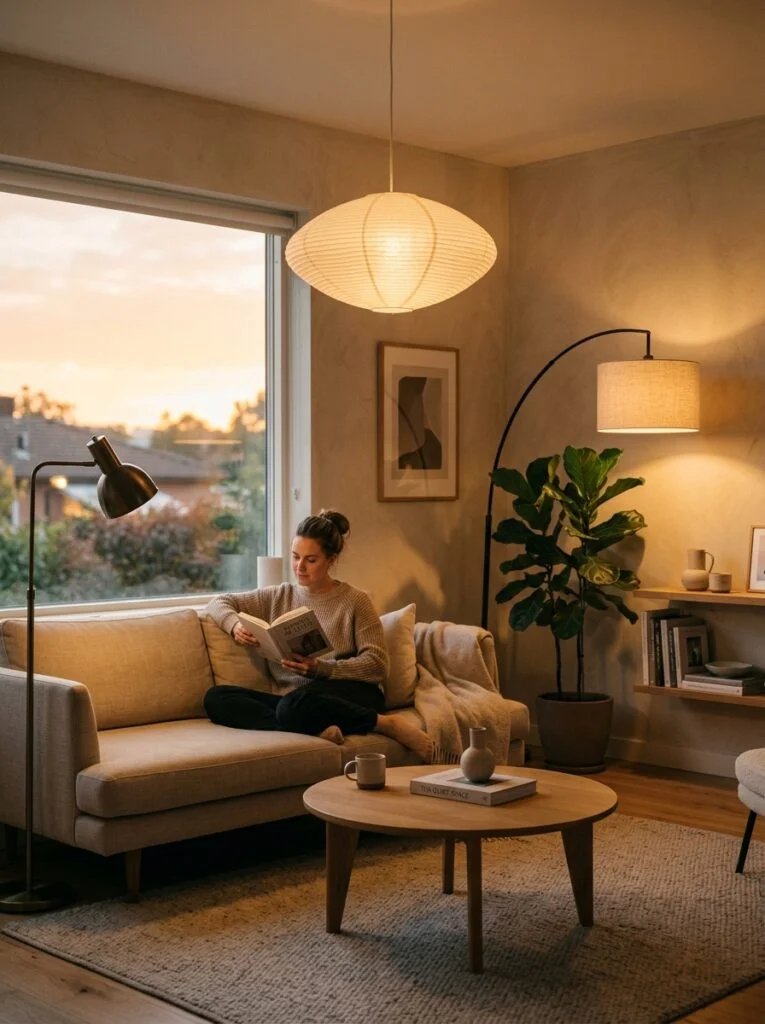
The three-layer lighting approach applies here just as it does in any room. Ambient lighting provides the overall illumination, typically from a ceiling fixture or recessed lights. Task lighting serves functional needs, like reading lamps beside the sofa. Accent lighting creates atmosphere and highlights specific elements, like a floor lamp behind a plant or an LED strip that washes a wall with indirect light.
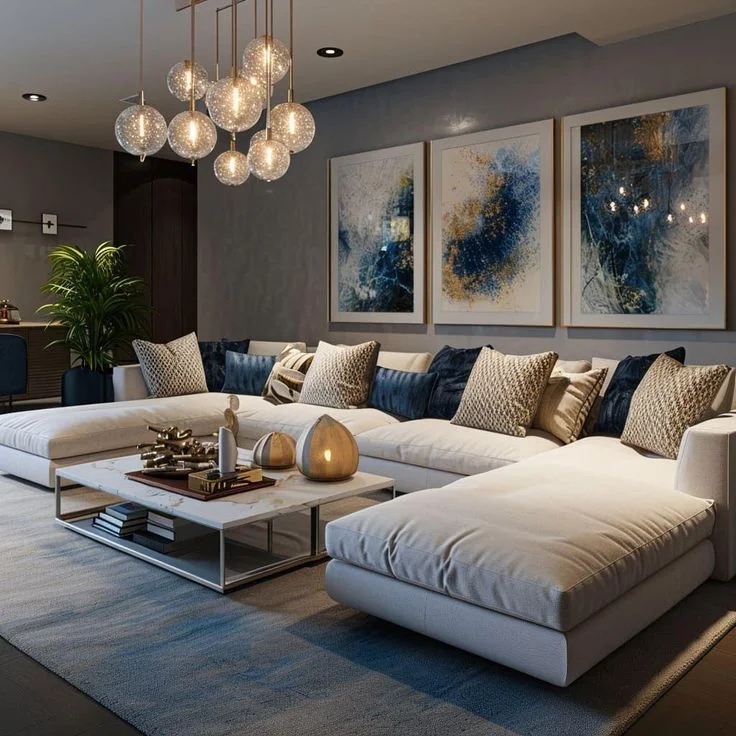
In a minimalist room, fixtures themselves become part of the design. A sculptural pendant light above a coffee table. A sleek arc floor lamp with a simple shade. A wall sconce with a clean, architectural profile. These are objects in their own right, not just utilities.
Warm-toned bulbs are non-negotiable. Cool white light makes even the most thoughtfully designed minimalist room feel institutional. Aim for around 2700K to 3000K for a warmth that flatters both the space and the people in it.
Use Art Intentionally and Sparingly
Art is where minimalist rooms reveal the most about the person living in them, and it is where the instinct to either overdo it or skip it entirely is strongest. Both of those instincts lead to the same problem: a room that feels impersonal.
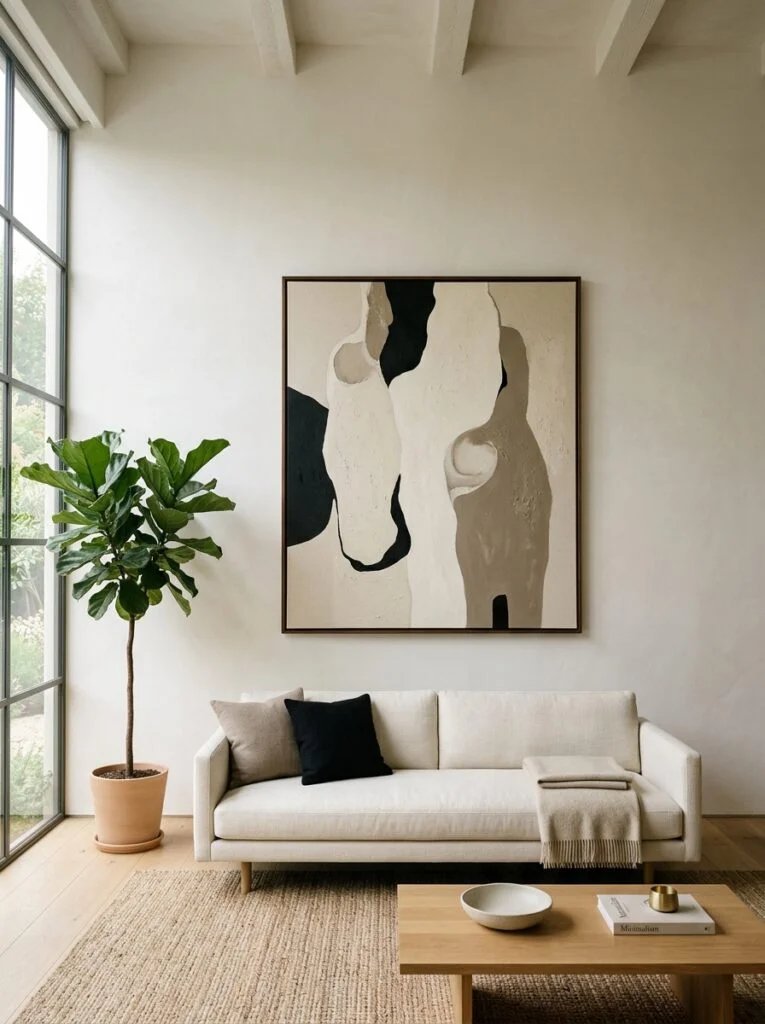
In a minimalist living room, one or two pieces of art placed with genuine intention will always outperform a wall covered in prints. Choose pieces that actually mean something to you or that are visually extraordinary enough to warrant a dedicated space. Then give them room to breathe.
Scale matters more here than in any other context. A piece of art that is too small on a wall looks like an afterthought. In a minimalist room, you want your art to hold its own against the negative space around it. Go larger than feels comfortable and hang it at true eye level, which for most people is around fifty-seven inches from the floor to the center of the piece.
One large, powerful piece on a single wall will do more for a minimalist room than a dozen smaller pieces ever could.
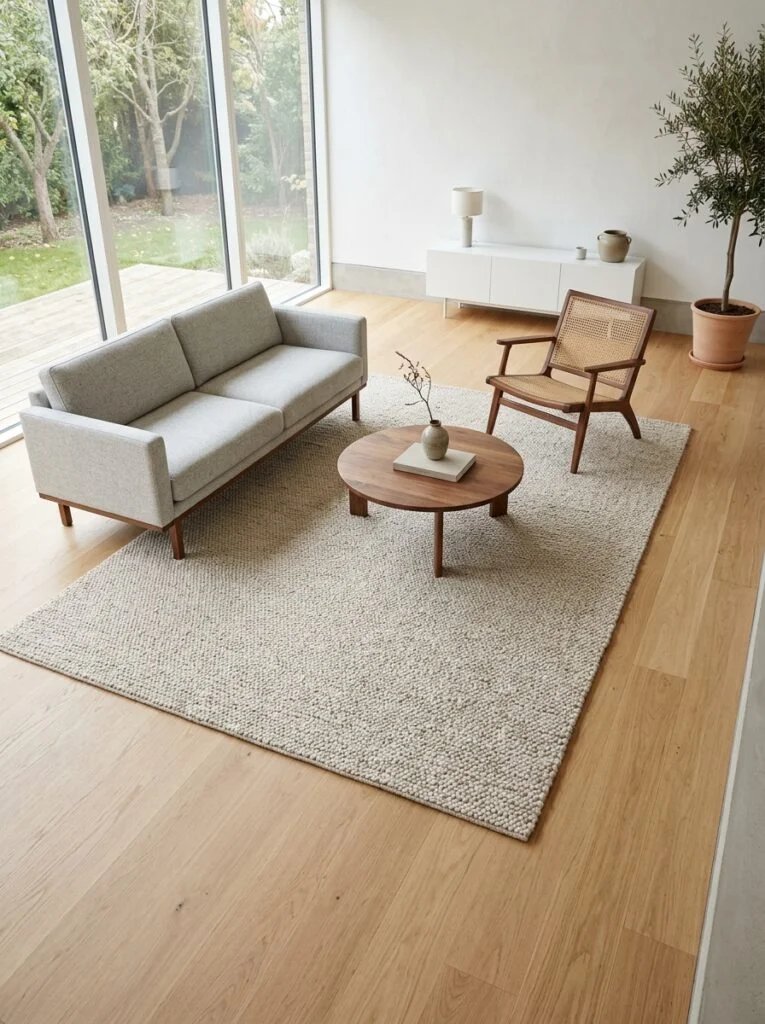
Keep the Floor as Clear as Possible
The floor plan of a minimalist living room is as important as anything on the walls or surfaces. Visual clutter at floor level, whether that is too much furniture, items stored where they can be seen, or a rug that is too small to anchor the seating properly, undermines the clean aesthetic from the ground up.
The goal is to see as much of the floor and rug as possible. Furniture with legs that lift pieces off the ground helps because the visible floor beneath creates a sense of continuity and openness. Low furniture that sits heavy on the floor can feel grounding in some styles but tends to add visual weight in a minimalist context.
Keep baskets, storage boxes, and anything you might be tempted to stow under the coffee table out of sight. If items need to be in the room, they should be contained in a piece of furniture that is part of the intentional design, not stored in the room because there is nowhere else to put them.
A clear floor is one of the fastest ways to make a room feel more spacious, more serene, and more deliberate than it did before.
Edit Ruthlessly and Regularly
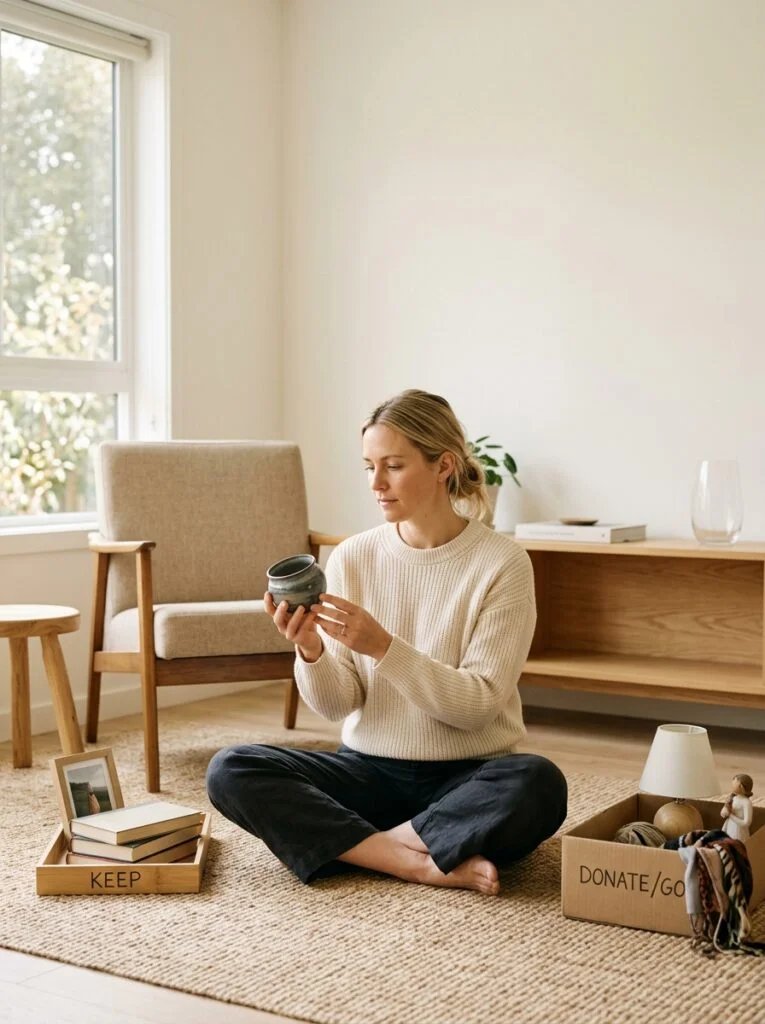
This is perhaps the most important minimalist living room idea of all, and it is the one that never ends. Minimalism is not a project you complete. It is a practice you maintain. Stuff accumulates. Life happens. Things get brought into a space and never find their way back out.
A regular editing practice, even just once or twice a year, keeps a minimalist living room from slowly reverting to its previous state. Walk through the room with fresh eyes and ask of each object: does this still belong here? Is it earning its place? Would removing it make the room feel better or worse?
The things that pass that test stay. Everything else gets donated, moved to a more appropriate space, or let go of entirely.
Editing is easier when you have a clear vision of what the room is supposed to feel like. Come back to that feeling when you are not sure. The feeling is the north star. If something disrupts the calm, the clarity, the quiet confidence the room is supposed to project, it does not belong there regardless of how much it cost or how much you liked it when you bought it.
Get the Rug Right
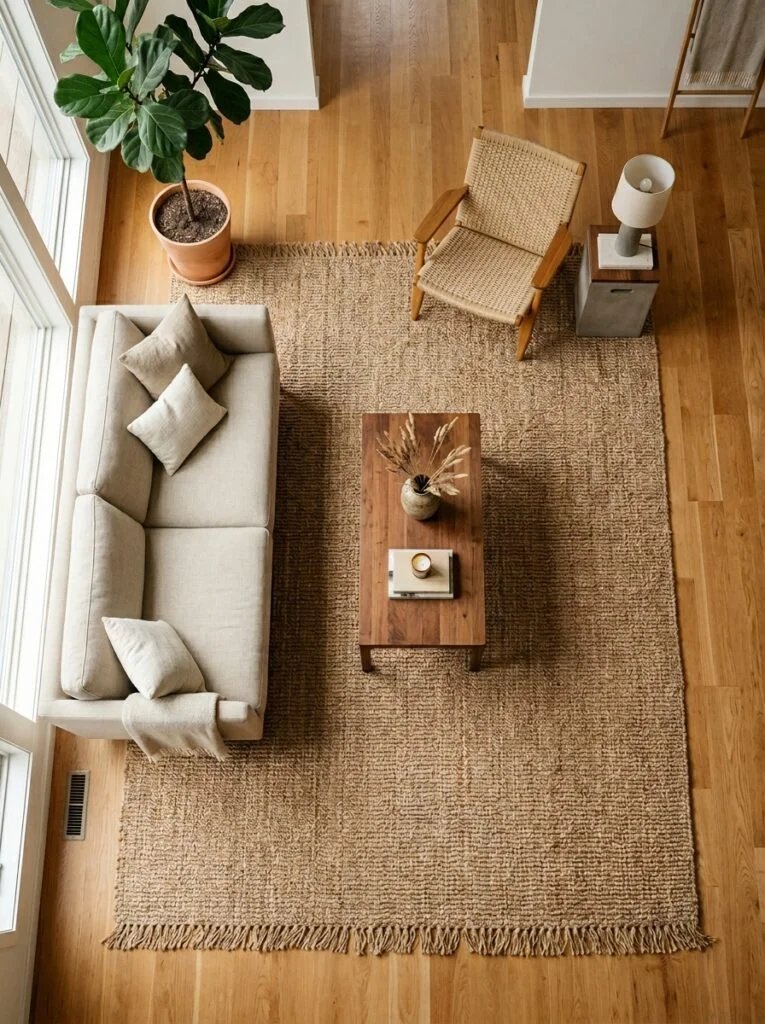
The rug in a minimalist living room does double duty. It defines the seating zone and anchors the furniture arrangement, and it introduces texture and warmth in a way that nothing else quite replicates. Getting it wrong affects everything sitting on top of it.
Size is the most common mistake. In a minimalist space, the rug should be large enough that the front legs of every seating piece can sit on it comfortably. This creates visual cohesion between the pieces of furniture, tying them together as a grouping rather than leaving them to float independently.
For material, natural fibers work beautifully in minimalist rooms. Jute, sisal, and wool in their more refined weaves add texture without pattern. A low-pile wool rug in a solid neutral is one of the most versatile investments a minimalist living room can have.
Avoid anything with a busy pattern or multiple colors. A subtle texture or the most restrained geometric in a tone-on-tone palette can work, but the more complex the pattern, the harder it becomes to maintain the visual quiet that minimalism depends on.
Frequently Asked Questions
- What is the key principle behind minimalist living room design? The core principle is intentionality. Every item in a minimalist living room should earn its place through function, beauty, or personal meaning. The goal is not a room with nothing in it but a room where nothing is there by accident.
- How do I make a minimalist living room feel warm and not cold? Warmth in a minimalist room comes from texture, organic materials, and lighting. Layer different materials within a neutral palette, include at least one natural element like a plant or wood surface, and use warm-toned lighting around 2700K to 3000K. These three elements prevent a minimalist room from feeling sterile.
- Can a minimalist living room still feel personal? Absolutely. In fact, a well-curated minimalist space often feels more personal than a cluttered one because every item that is there was chosen deliberately. Use art that genuinely resonates with you, display a few meaningful objects, and bring in materials and textures you are actually drawn to.
- How many pieces of furniture should a minimalist living room have? There is no fixed number, but the test is whether each piece serves a genuine purpose and whether removing it would leave the room feeling incomplete. A sofa, a coffee table, one or two accent chairs, a side table, and some form of storage or shelving is a common baseline. Anything beyond that should justify its inclusion.
- What colors work best in a minimalist living room? Warm neutrals are the most reliable foundation: cream, linen, greige, warm white, soft clay. From there, a deeper tone like charcoal, warm black, or deep taupe adds contrast and grounding. A single muted accent in olive, terracotta, or dusty blue can add personality without disrupting the calm.
Bringing It All Together
Minimalism at its best is not about sacrifice. It is about clarity. It is the understanding that a room with less in it, when that less has been chosen well, offers more comfort, more beauty, and more daily ease than a room packed with things that were never quite right.
The fifteen ideas in this guide are not rules. They are starting points. Some will apply immediately to your space. Others will make more sense after you have worked through the foundational steps. Take what resonates and let the rest inform how you think about the space over time.
A clean and elegant minimalist living room is not built in a weekend. It is built through a series of good decisions made one at a time, each one moving the room closer to the feeling you are actually after.
That feeling is worth pursuing.