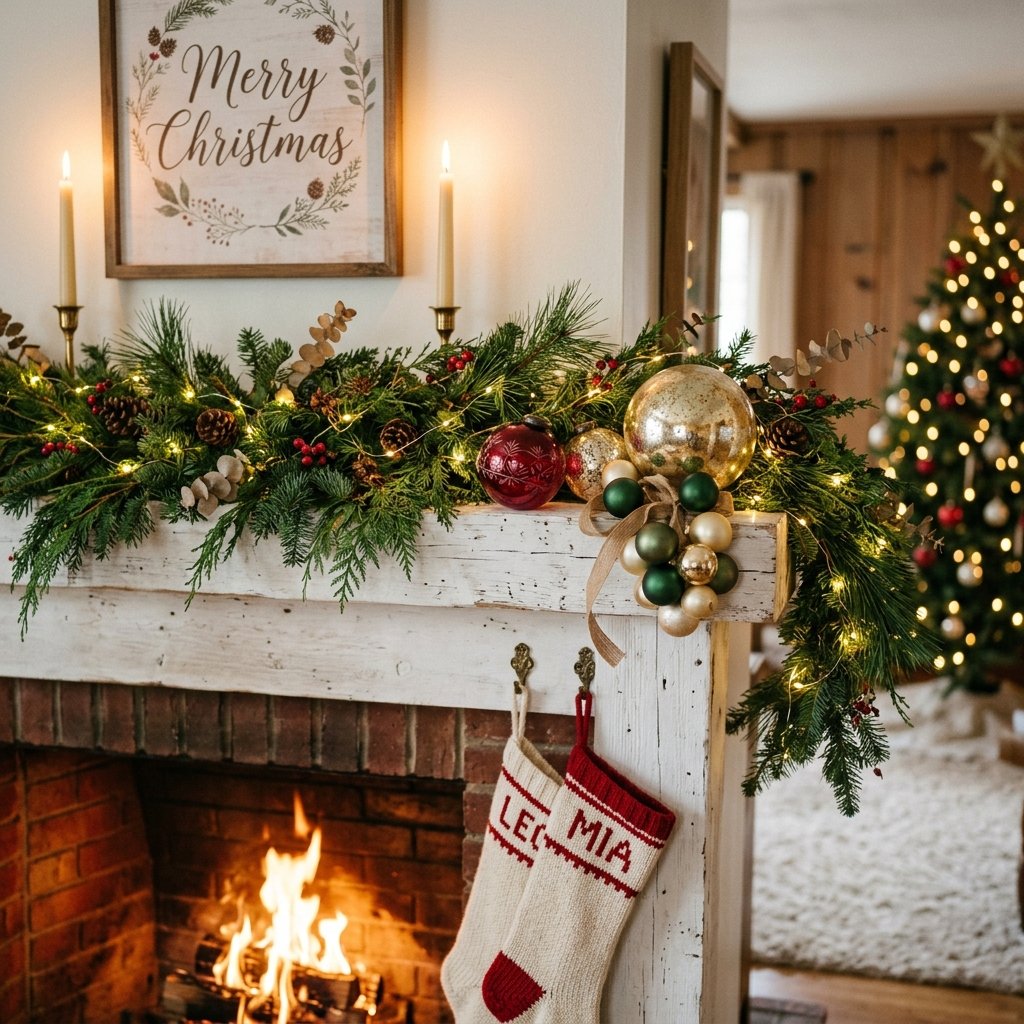
The Christmas Mantel Mistake That Makes Fireplaces Look Overdone
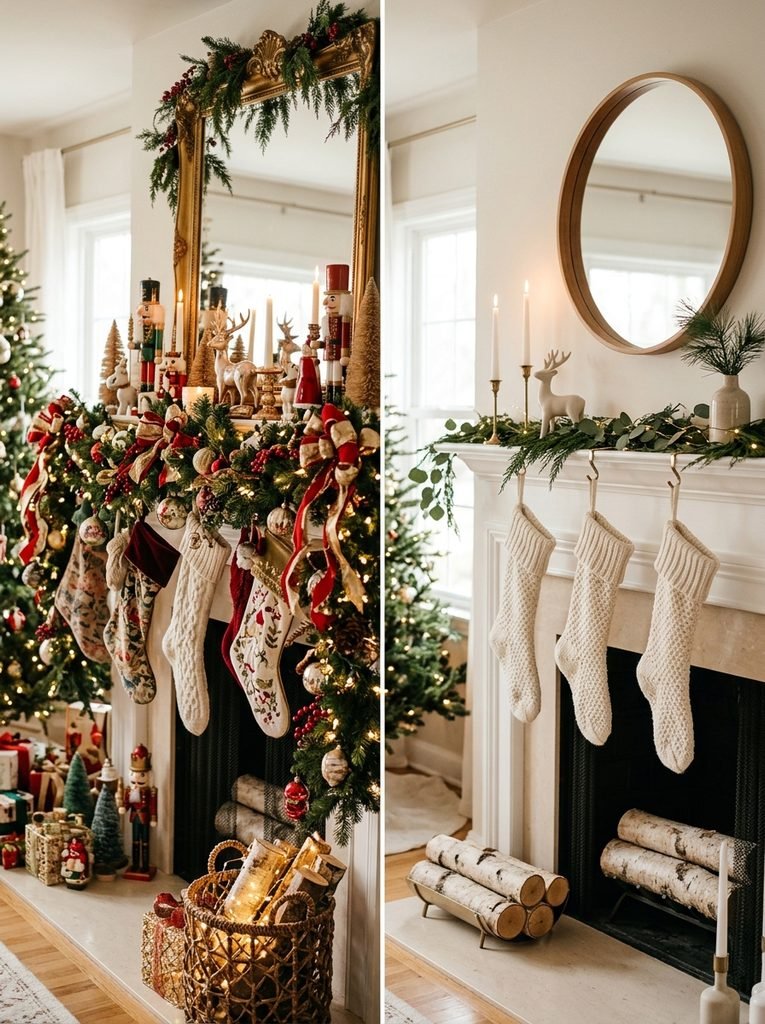
There is a specific kind of Christmas mantel that looks tired the moment it goes up. Garland along the top, stockings hanging below, a cluster of ornament balls in a bowl, string lights woven through, a ribbon threaded somewhere in there too, and maybe a small collection of nutcrackers standing guard on either end. Every individual piece might be lovely. Together, they read as too much.
The instinct at Christmas is to reach for every seasonal category at once, as if a mantel isn’t finished unless it has garland and stockings and lights and ornaments and ribbon and a few collectibles all doing their own thing simultaneously. That instinct is what tips a mantel from festive into overdone. The fix isn’t decorating less. It’s choosing fewer categories and doing each one properly.
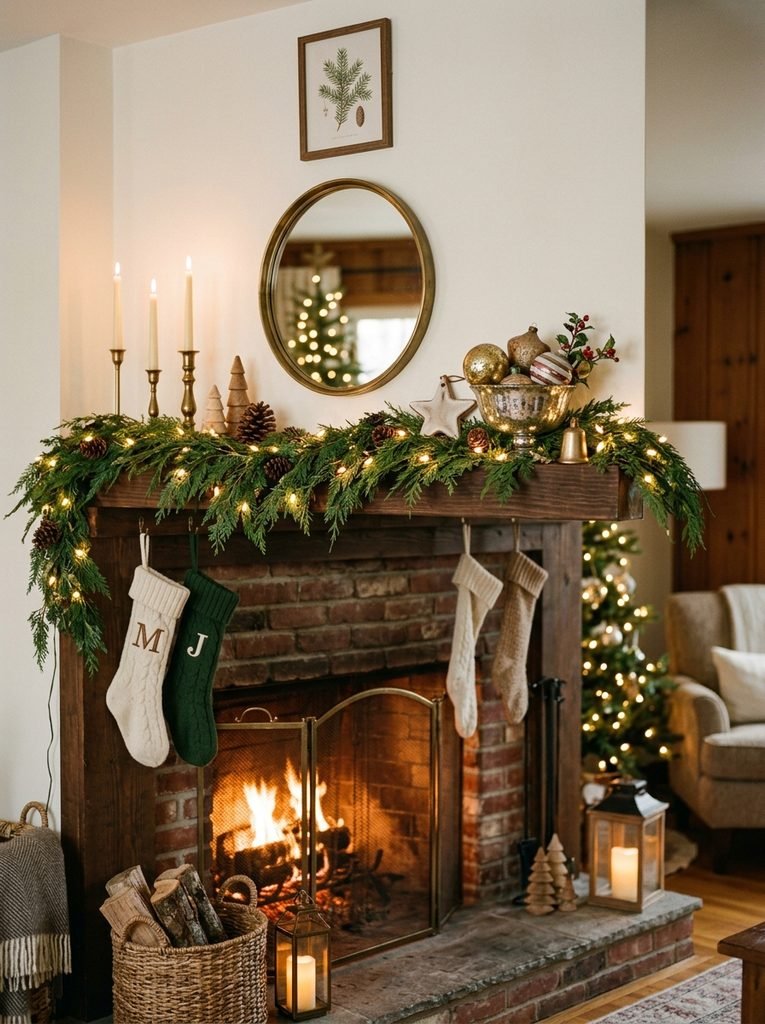
Why Christmas Makes People Abandon Restraint
Most people style a mantel carefully the rest of the year. They think about height, negative space, and how many pieces actually belong there. Then December arrives and all of that discipline goes out the window, because Christmas decor feels like it comes with an unwritten checklist. Garland, check. Stockings, check. Lights, check. Ornaments, check. Skipping any one of them can feel like the mantel is missing something, so everything gets added at once.
The problem is that a mantel only has so much visual bandwidth. Every category you add is a new pattern, texture, and light source competing for attention. Five categories running at full volume don’t add up to five times the cheer. They add up to noise.
Pick Three or Four Elements and Let Them Carry the Whole Look
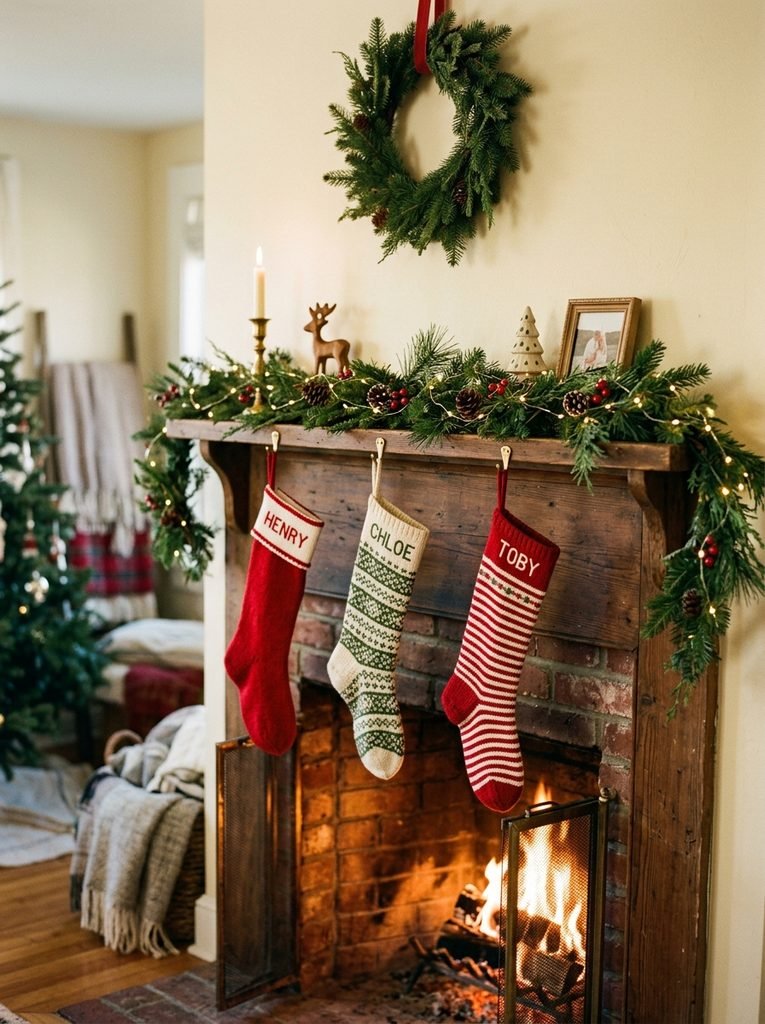
Instead of including every possible category, choose three or four and commit to them fully. A strong combination might be garland, warm white lights woven into that same garland, and one considered ornament category like glass balls in a single color family. That’s it. No separate ribbon layer, no extra figurine collection competing for the same real estate.
This isn’t about decorating less overall. It’s about letting fewer elements do more work. A mantel with three well-executed layers almost always reads as more polished than one with six competing layers, even if the six-layer version technically has more decor on it.
If your everyday mantel styling already struggles with this same instinct to fill every gap, The Mantel Styling Mistake That Makes Fireplaces Look Unfinished covers the opposite problem in detail, and reading both together makes the underlying principle click faster: restraint and intention beat both extremes.
Stick to One Light Temperature
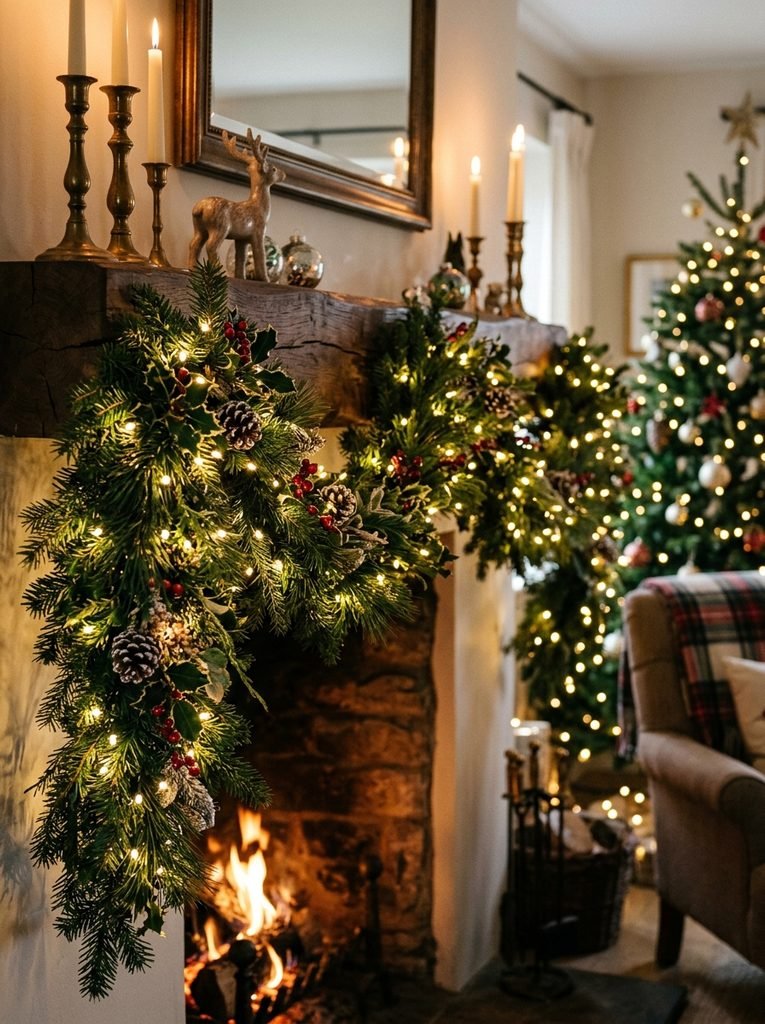
This is the detail that trips people up more than almost anything else, and it rarely gets mentioned in typical holiday decorating advice. Warm white string lights, cool white LED candles, and multicolor twinkle lights all have different color temperatures, and mixing them on the same mantel creates a visual clash even when each individual light source looks fine on its own.
Pick one temperature and use it everywhere on that mantel. Warm white, sometimes labeled around 2700K on packaging, tends to feel the coziest and pairs well with most Christmas color schemes. If you’re using flameless candles alongside string lights, check that both are labeled with a similar warm tone rather than assuming all “white” lights match. This single adjustment can make a mantel look noticeably calmer without removing a single decoration.
Limit Your Color Story to Three Tones
Traditional red and green is only one option among many, but whatever palette you land on, the number of tones matters more than which ones you pick. Three tones, including a neutral like cream, natural wood, or brass, gives a mantel enough variety to feel rich without tipping into visual chaos.
A common overdone pattern is mixing red, green, gold, silver, and white all in the same arrangement, usually because ornaments and stockings were bought separately over several years without a plan. Editing down to three tones for this particular display, even if your full ornament collection has more colors in storage, keeps the mantel from fighting itself. Save the rest of the collection for the tree, where a busier mix tends to read as festive rather than cluttered.
Give the Garland One Job
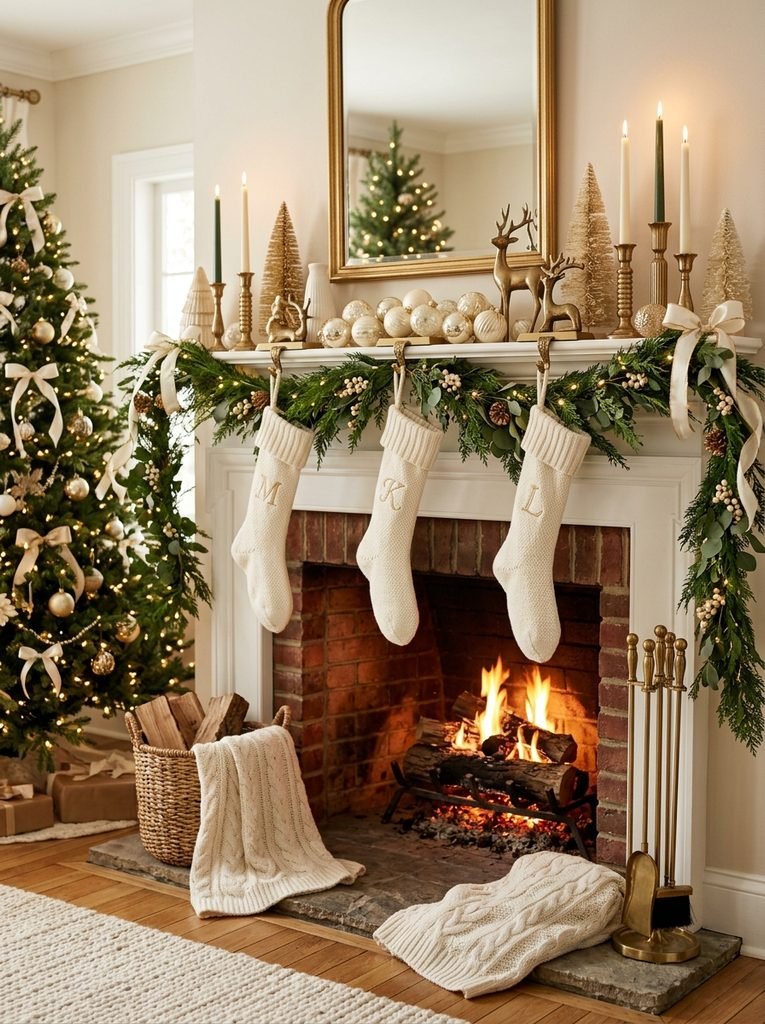
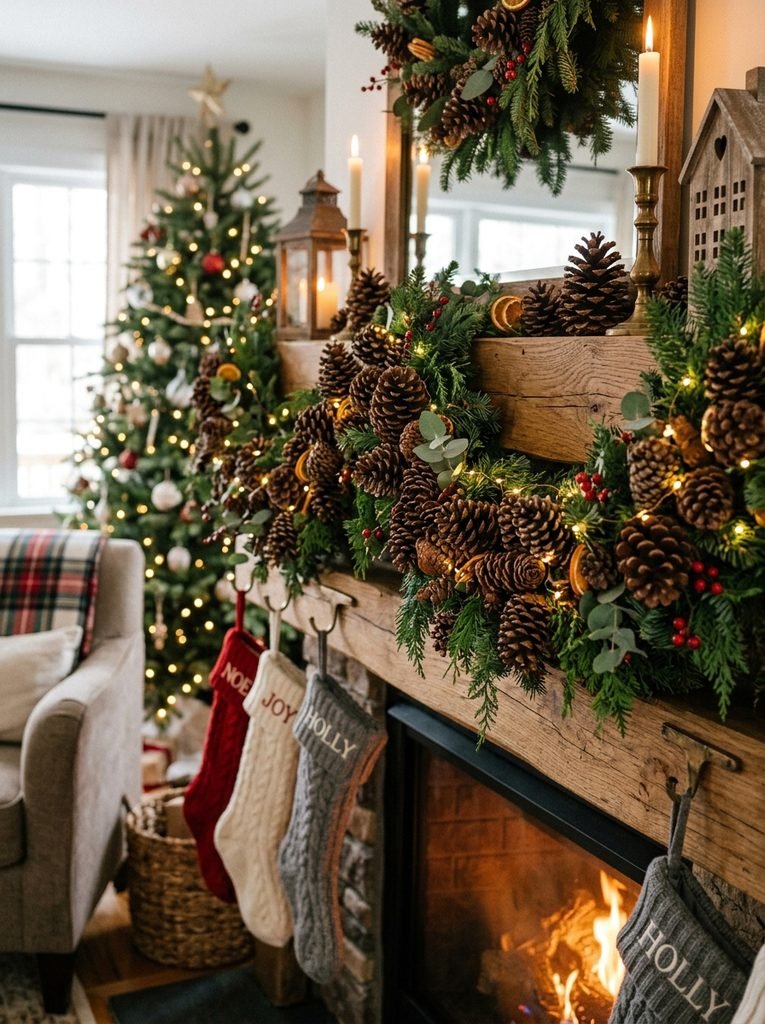
Garland gets asked to do too much on a lot of mantels. It’s expected to provide greenery, hold the lights, display the ornaments, and sometimes support a ribbon on top of all that. When one element is carrying four different jobs, it usually ends up looking heavy and overstuffed rather than lush.
Decide what the garland’s actual job is before you start. If it’s providing texture and base greenery, let the lights and any ornaments sit in it sparingly rather than covering every inch. If you want the garland to be the star with visible pinecones or dried florals woven through, skip adding a separate string of lights on top and let it stay simpler. Trying to make one strand of greenery do everything is a big part of why so many garlands end up looking heavier than intended.
What to Take Off Before You Add Anything New
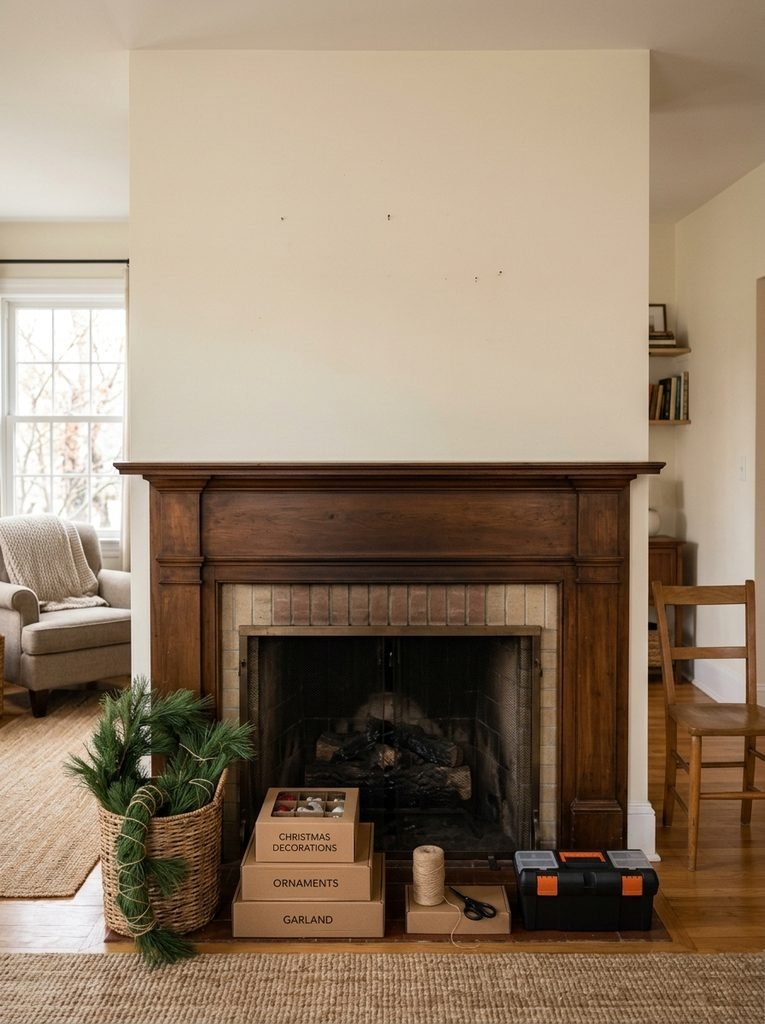
Before adding a single holiday item, look at what’s already sitting on the mantel year round and decide what needs to come down. Everyday decor, family photos, and existing decorative objects rarely need to stay in place once holiday styling goes up, and leaving them there is one of the fastest ways to end up with an overdone final look.
This is the same principle behind The Coffee Table Styling Mistake That Makes Living Rooms Look Cluttered, where clutter usually isn’t about any single object being wrong, it’s about too many objects from different seasons of your life competing on the same surface at once. Clear the mantel down to bare wood or stone first, then build back up with only your chosen holiday elements.
Working With a Short or Narrow Mantel
Smaller mantels are especially vulnerable to the overdone effect, since there’s less physical space to absorb multiple competing categories. A short mantel with garland, stockings, lights, and a full ornament display simply doesn’t have room to let any one element breathe.
For a narrow or short mantel, dropping down to two categories, garland with woven lights and nothing else, or stockings with a single grouping of candles, often looks more considered than trying to fit everything a larger mantel could handle. If your mantel sits against a white or neutral fireplace surround, the ideas in White Fireplace Ideas to Warm Your Cozy Space Today are worth a look for balancing a simpler holiday display against that kind of backdrop.
A Quick Real Life Example
A neighbor of mine redoes her mantel every December with everything she owns pulled from three separate storage bins. Garland with built-in lights, a second string of warm white lights layered on top, a cluster of red and gold ornaments in a bowl, matching stockings, a strand of ribbon woven through the garland, and a small row of ceramic snowmen anchoring each end.
It photographed fine from far away but felt busy up close, and she admitted it always looked slightly different from the cozy, magazine-style mantels she was picturing when she bought everything. Last year she tried something different. Garland with the built-in lights only, no second string layered on top, stockings hung with simple clips, and the ornament bowl and snowmen packed away for another display elsewhere in the house. Three elements instead of six. She said it was the first year the mantel actually looked like the photos she’d been saving.
Common Mistakes That Push a Mantel Into Overdone Territory
A few habits show up again and again once the categories start piling up.
Buying new holiday decor every year without retiring anything. Collections grow steadily over time, and without an annual edit, a mantel ends up displaying five years of purchases at once instead of one cohesive look.
Treating every gift or hand-me-down ornament as mandatory to display. Sentimental pieces matter, but not every one needs a spot on the mantel specifically. Some can go on the tree or elsewhere in the room instead.
Mixing metallic finishes without a plan. Gold, silver, brass, and rose gold all in the same display usually reads as mismatched rather than eclectic. Pick one metallic to anchor the look.
Forgetting to check things from a normal viewing distance. A mantel that looks fine piece by piece up close can look completely overwhelming from across the room, which is the actual distance most people will experience it from during a holiday gathering.
One more practical note worth keeping in mind while you’re decorating: avoid lighting an actual fire in the fireplace while stockings or other decorations are hanging directly on the mantel or draped in front of it, since heat and open flame near flammable materials is a genuine year-round fire safety consideration, not just a Christmas-specific rule.
FAQs
How many decorative elements should a Christmas mantel have? Three to four distinct categories, like garland, one light source, and one ornament grouping, tends to look more polished than five or six competing elements. Fewer categories done well beats more categories done thinly.
Is it okay to mix warm and cool white lights on the same mantel? It’s better to avoid it. Mixing color temperatures creates a visual clash even when each light strand looks fine individually. Choosing one temperature throughout keeps the display looking cohesive.
Do I need to take down my everyday mantel decor before adding Christmas decorations? Yes, generally. Leaving everyday photos or objects in place alongside new holiday decor is one of the most common reasons a mantel ends up looking cluttered rather than festive.
What’s the easiest way to simplify an existing Christmas mantel that already feels overdone? Remove one full category at a time, starting with whichever element feels most repetitive or least essential, and reassess after each removal rather than trying to redesign everything at once.
Can a small mantel still look festive with fewer decorations? Yes, and often more so. A short or narrow mantel styled with two well-chosen categories usually looks more intentional than the same space overloaded with everything a larger mantel could hold.
Wrapping This Up
An overdone Christmas mantel almost never comes down to bad taste. It comes down to trying to include every holiday decor category at once instead of choosing a few and letting them carry the whole look. Garland, one consistent light temperature, and a single considered ornament grouping will almost always beat a mantel stacked with everything from the storage bins.
Clear the mantel completely before you start, commit to three or four elements, and keep the color palette and light temperature consistent throughout. The goal isn’t a smaller display. It’s a more intentional one, and that distinction is usually the entire difference between a mantel that feels cozy and one that feels like too much.