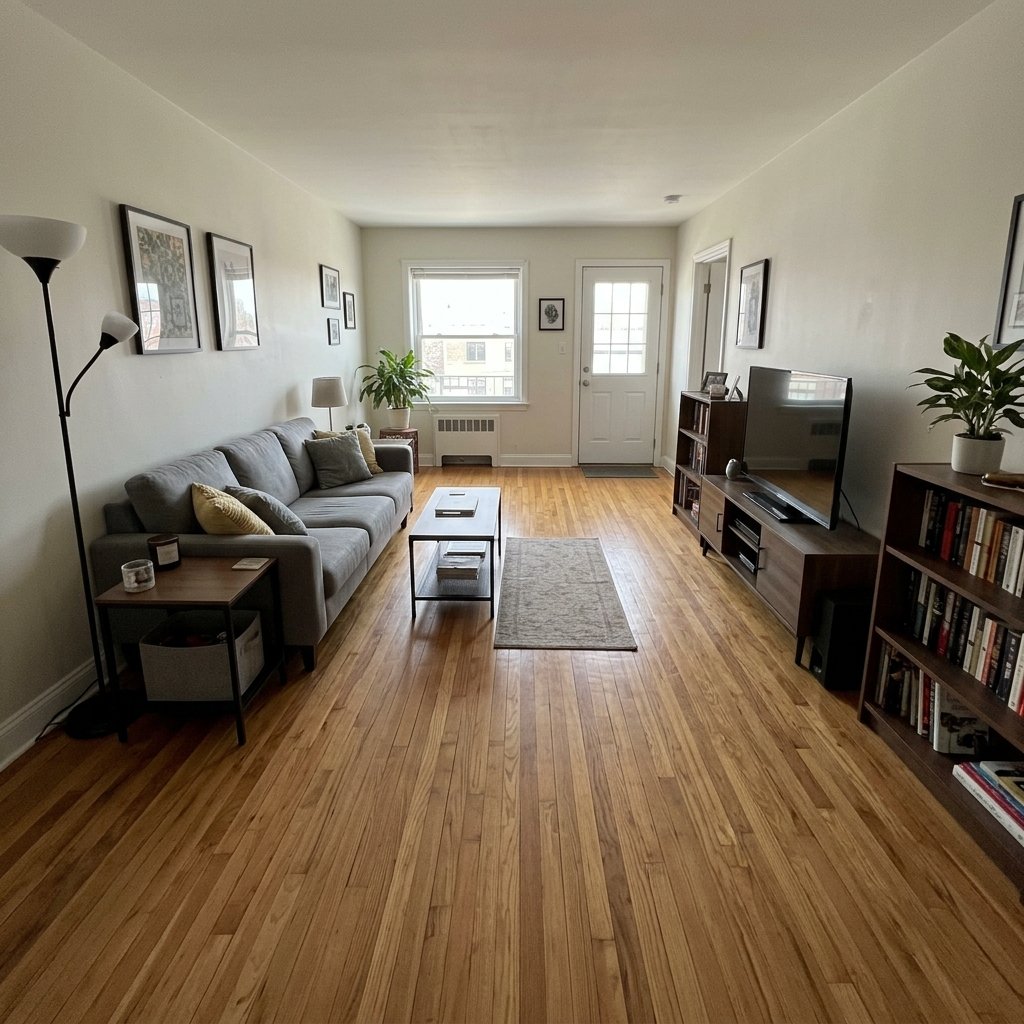
Picture a 12-by-20-foot living room. A 90-inch sofa runs along one long wall. A TV hangs on the opposite wall, about nine feet away. Two chairs sit in the far corners, and a coffee table floats between them. Every piece touches a wall, which leaves a seven-foot-wide strip of empty floor. Guests walk straight down it like a bowling lane, and nobody sits at the far end.
Now picture the same room with the TV on the short wall, the sofa floating in the middle, and a reading chair under a lamp at the back. Nothing was bought. The furniture moved.
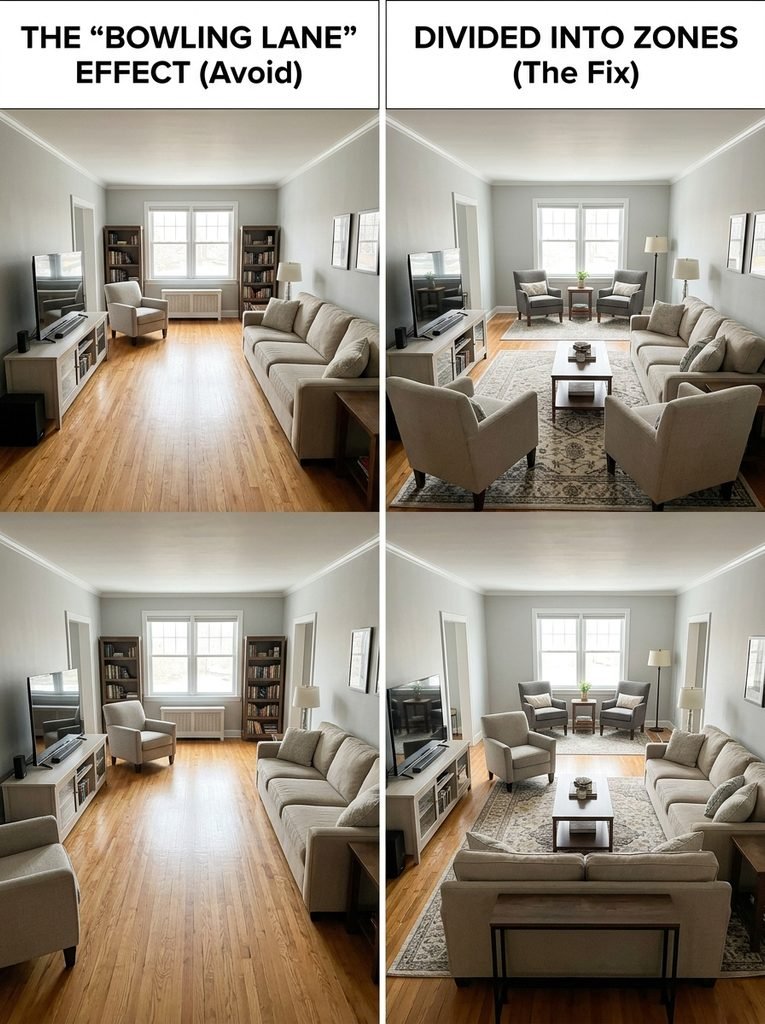
That is the wall-hugging mistake. Most layout advice says to line furniture up with the long walls, so long rooms get pushed flat and read as corridors. This guide shows why that fails and how to split a rectangular room into zones that each feel finished. It assumes a room roughly 11 to 14 feet wide and 16 to 24 feet long. For anything smaller, start with the small living room layout guide, and treat open-concept rooms with a dining area as a separate problem.
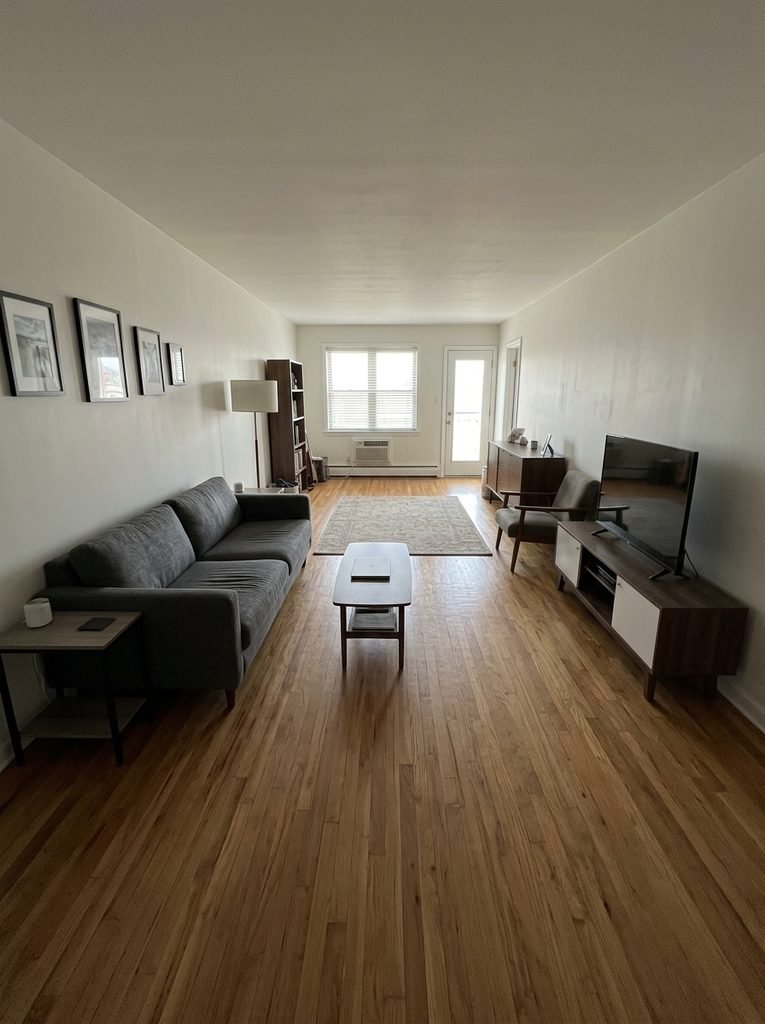
Why Long Rooms Turn Into Bowling Lanes
The eye follows the longest clear line in a room. When the sofa, the TV, and every chair touch a wall, that line becomes a runway. Guests cut straight down it, and the furniture looks like it was stored along the sides.
Conversation breaks down too. Designers often keep seats within about 8 to 10 feet of each other so people can talk without raising their voices. A 20-foot room holds two of those groups, not one. If a single group stretches across the whole length, the people at each end sit 15 feet apart and drift into separate rooms.
So the fix is not a better sofa. Divide the length into zones, give each zone one job, and use furniture backs, rugs, and lamps to mark the edges.
Measure and Tape Before You Move Anything
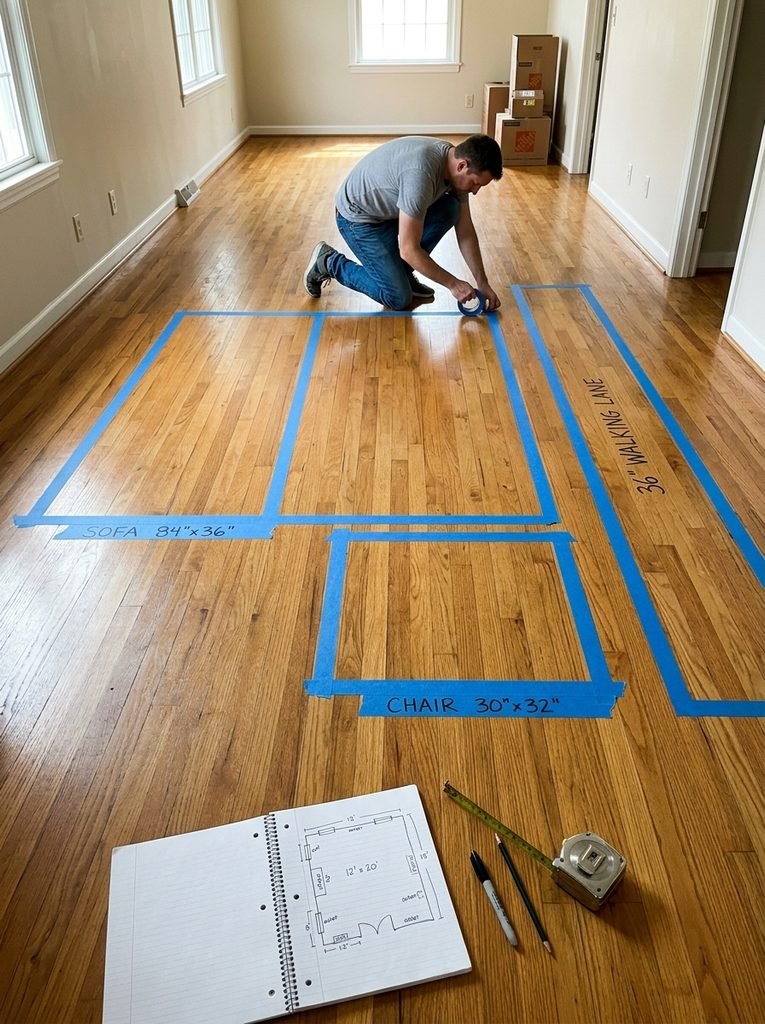
Start with a tape measure. Write down the length and width, then sketch the door, windows, vents, and outlets. A room 12 feet wide and 20 feet long has a ratio of about 1.7 to 1. Once the ratio passes roughly 1.5 to 1, a room tends to read as long, and the tactics below start to pay off.
Next, tape the footprints on the floor with painter’s tape, which costs $5 to $8 a roll. A sofa runs about 84 to 108 inches wide and 36 inches deep. An armchair takes roughly 30 by 32 inches. Mark walking lanes 36 inches wide. Leave the tape down for two days and walk through at normal speed. A lane that feels tight in tape will feel worse with furniture on it.
Make a Short Wall the Anchor
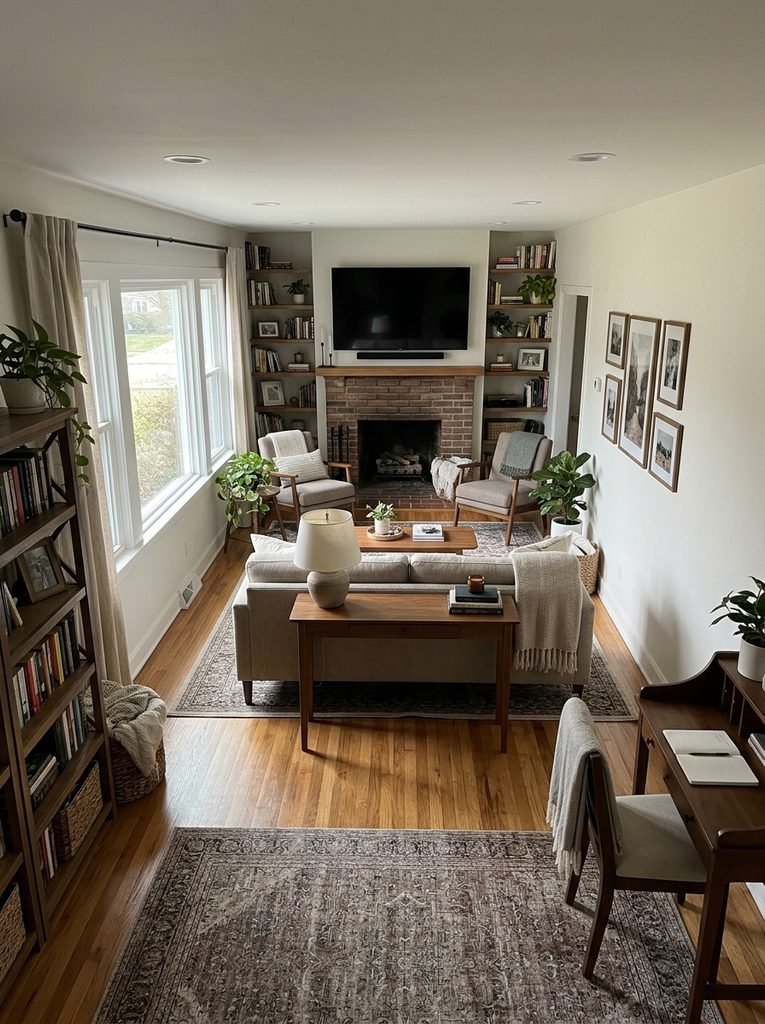
Choose one short wall as the room’s anchor and put the TV, the fireplace, or the largest piece of art there. Turn the main seating to face it. The room’s length now works as viewing depth instead of empty runway.
A TV on the short wall also keeps the windows on the long wall at your side, which avoids glare on the screen. For a 65-inch 4K set, a sofa about 6 to 8 feet away is comfortable. In a 20-foot room, that puts the sofa near the middle and leaves about nine feet behind it for a second zone.
Mind the safety side of that placement. The CPSC’s Anchor It campaign says TVs should sit only on furniture built to hold them, and should be anchored to the wall even when they are not mounted. It also recommends anti-tip brackets for tall pieces such as bookcases. Brackets and straps are cheap, usually under $20 for a kit.
If the anchor is a fireplace on the short wall, the logic holds. Arrange the sofa and two chairs in a U with the open side facing the hearth, so everyone sits near the fire and still faces each other.
Float the Sofa and Give It a Back Worth Seeing
Pull the sofa off the wall and let it mark where the first zone ends. In a room 12 feet wide, a 9-foot sofa leaves exactly 36 inches on one side. That gap becomes a controlled gate between zones, wide enough for comfortable passage. A 10-foot sofa leaves only 24 inches, which is too tight, so cap the sofa at about nine feet.
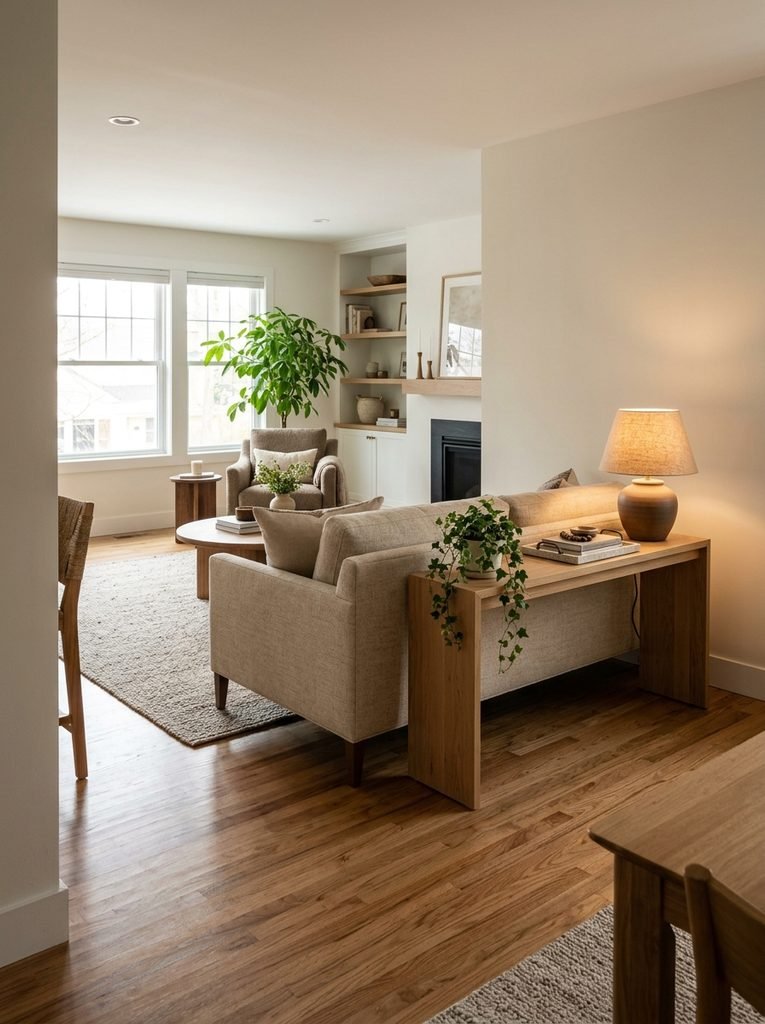
Give the sofa’s back a job. Slide a console table behind it, 12 to 14 inches deep and at or just below the sofa-back height, which is usually 30 to 34 inches. A lamp, a tray, and a small plant make the back look planned instead of unfinished. The console also gives you a surface to plug that lamp into without a cord crossing the lane.
When a Sectional Does the Dividing
A sectional can mark the zone edge by itself. Put the long side facing the anchor wall and keep it at nine feet or less. Set the chaise on the side away from the walkway so the lane stays at 36 inches. Choose a back height under 34 inches so the edge feels low and open, not like a wall.
Give the Far End a Single Job
The far end of a long room needs one purpose, or it becomes a landing strip for baskets, boxes, and an unused chair. Pick one of three jobs:
- A reading nook: a chair, a small table, and a lamp, with the chair angled slightly toward the room.
- A conversation pair: two chairs about 30 inches wide each, around a 24- to 30-inch round table. The set needs roughly eight feet of width.
- A work surface: a desk 20 to 24 inches deep and 40 to 48 inches wide, with the chair tucked under when it is not in use.
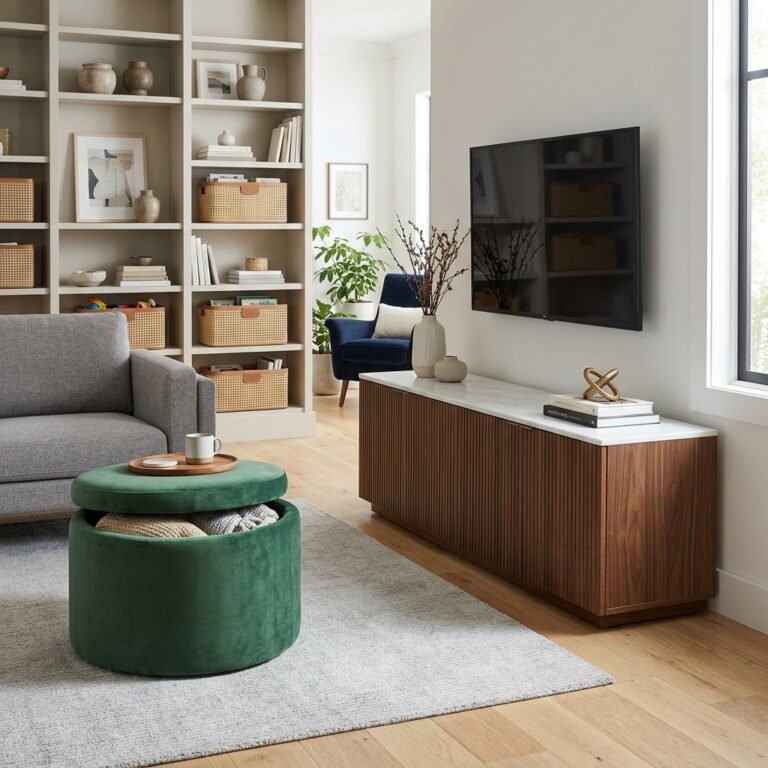
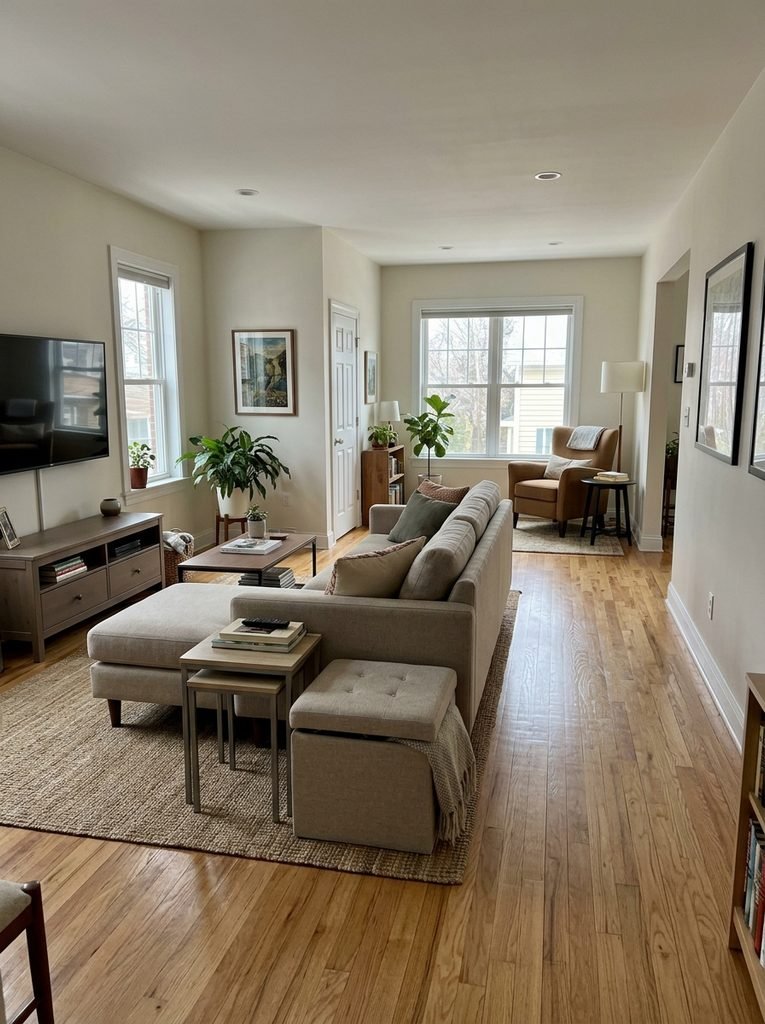
Choose pieces that fold, nest, or store, so the zone can change jobs later. An ottoman with a lift-off lid holds throws, and a nesting pair of side tables tucks away when you need floor space.
Two Rugs and One Gap
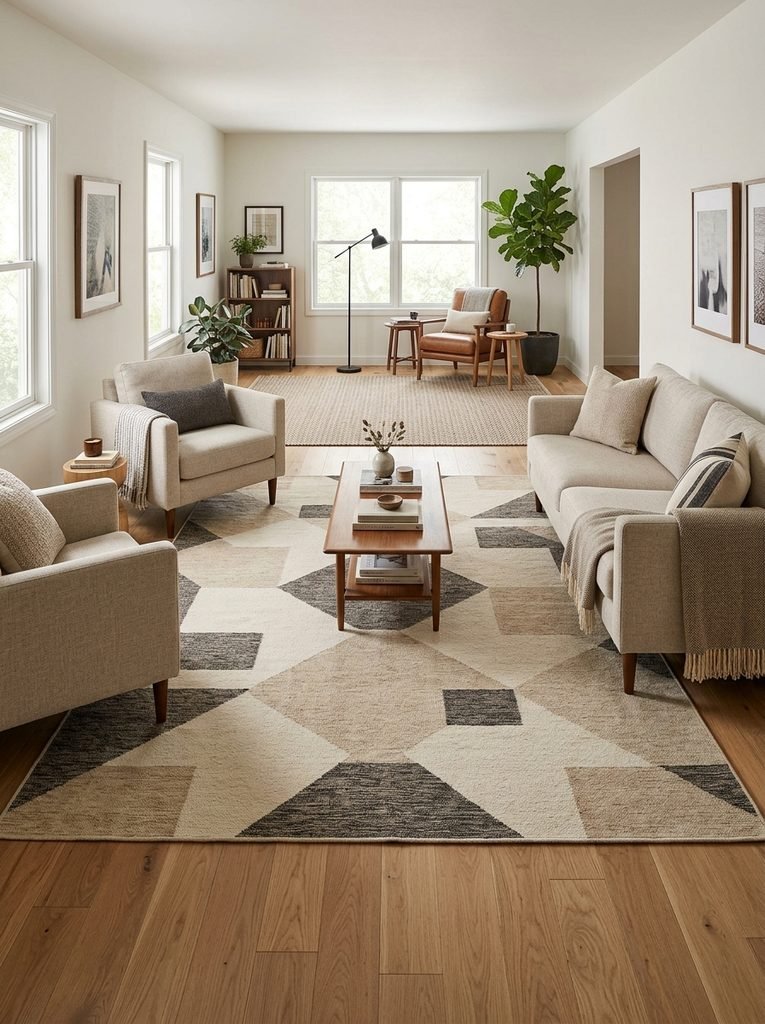
Use one rug per zone. In the main zone, an 8-by-10 rug works well when you turn its 10-foot side across the room, so the front legs of the sofa and chairs sit on it. In a 12-foot-wide room, that leaves 12 inches of bare floor on each side. In the far zone, a 5-by-8 rug turned the same way defines the nook.
Leave 6 to 12 inches of bare floor between the two rugs so they read as separate islands. Match the undertone, but vary the pattern scale: a large geometric under the sofa and a fine weave under the chair. Keep both piles within about a quarter inch of each other so nobody trips at the gap. For sizes and materials, see our modern area rug ideas for living rooms.
Walkway Lanes: Where Doors Change the Plan
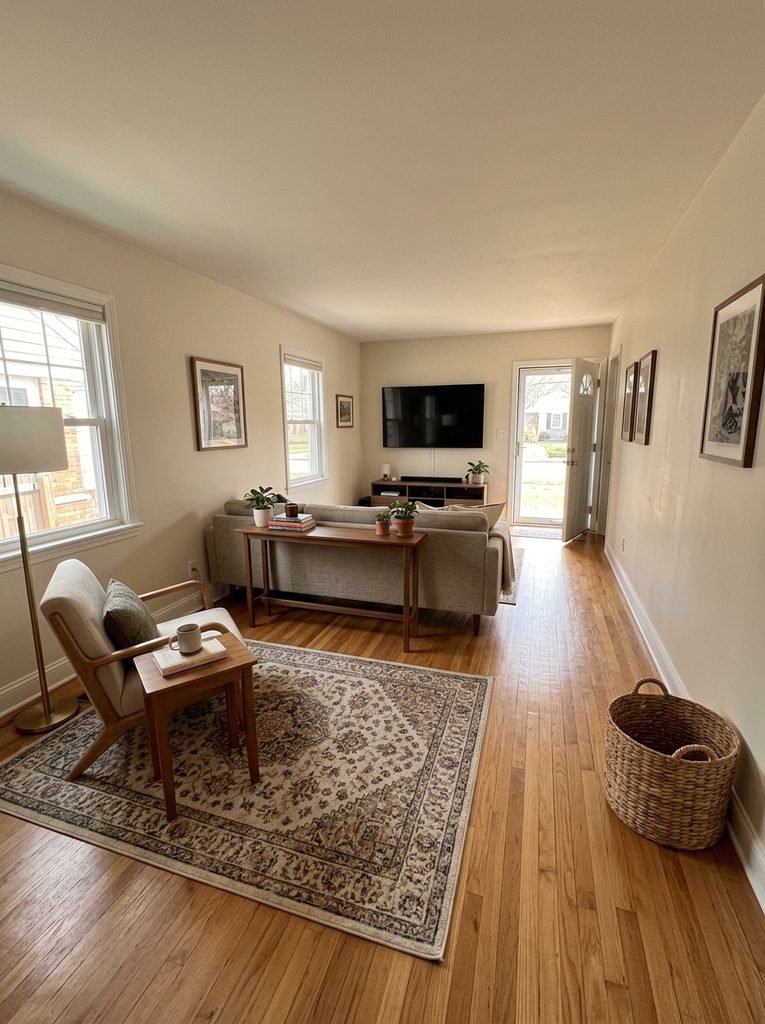
A lane at least 30 inches wide, and ideally 36, should connect the door to the far zone without crossing the conversation group. Where that lane runs depends on the door.
Door on the Anchor Wall
You enter beside the TV, so the lane naturally hugs the nearest long wall. Put the sofa’s gate gap on that side, and keep the lane clear of floor lamps and baskets.
Door on the Opposite Short Wall
You see the back of the sofa first. Keep the back under about 34 inches and style the console low, so the view reaches the TV wall. Run the lane along the side with the gate gap.
Door Partway Along a Long Wall
The door cuts the room in two. Treat the entry as a pivot: the seating group on one side, the far zone on the other, and a 36-inch cross lane between them. Do not float the sofa across that lane.
Angles, Curves, and Pairs That Break the Runway
Once the zones exist, small moves break up the straight lines that remain. Angle one chair 30 to 45 degrees in the far corner so it points into the room instead of along the wall.
Choose a round or oval coffee table, 36 to 42 inches across, which removes the corners that catch hips in a tight lane.
If you prefer a formal look, mirror the anchor wall. A matching pair of chairs or lamps flanking the TV or fireplace gives the first zone a calm center, and it works better than matching pairs across the whole room.
One Lamp per Zone
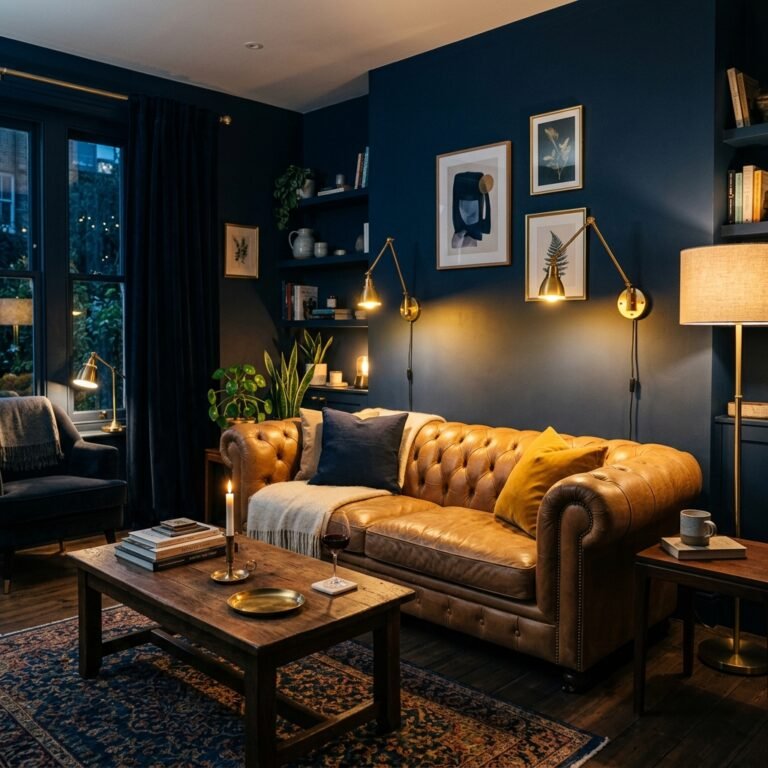
One overhead light cannot mark two zones. Give each zone its own lamp: a floor lamp beside the sofa and a table lamp in the nook. Plug both into a switched outlet or a pair of smart plugs, about $10 to $25, so you can turn them on from the door. Keep cords off the lane, because a cord across a 36-inch path is a trip hazard.
Scale and Restraint
Each piece has to match the zone it sits in. A 108-inch sofa suits a room 12 feet wide, while a 96-inch sofa leaves more air if the lane matters more than seats. Count the major pieces in each zone: sofa, chairs, tables, and console. Three to five is plenty. A sixth piece usually eats a lane.
A Worked Example in a Long Rectangular Living Room
Take a room 12 feet wide and 20 feet long, with the door in the left corner of one short wall and two windows on the right long wall. Put the 65-inch TV on a low media console on the door’s short wall, anchored to the wall.
The sofa is a 9-foot, low-back model whose front sits seven feet from the TV. Its depth puts the back at ten feet, and a 14-inch console behind it ends at about 11.2 feet. Push the sofa toward the windows, and the 36-inch gate opens on the left, next to the door. An 8-by-10 rug sits under the front legs, with its 10-foot side across the room.
That leaves roughly 8.8 feet at the back. A 5-by-8 rug, an armchair angled 35 degrees toward the TV, a side table, and a floor lamp turn it into a reading zone. Costs run about $6 for tape, $150 to $400 for the console, $120 to $350 for the second rug, $40 to $120 for lamps, and under $20 for anchor kits. The total lands between roughly $330 and $920.
Finish with one test. Carry a full laundry basket from the door to the back chair without turning sideways. If you make it, the lanes work.
Frequently Asked Questions
How far should a coffee table sit from the sofa?
Leave 16 to 18 inches, close enough to reach and far enough to walk past. Size the table to about two-thirds of the sofa’s length, which is roughly 72 inches for a 9-foot sofa. In a tight lane, a round 40-inch table is easier to pass than a long rectangle.
Do I need a console table behind a floating sofa?
Not required, but a bare sofa back looks like an afterthought from the other zone. A console 10 to 14 inches deep fixes that and holds a lamp. In a very tight lane, a narrow ledge 8 to 10 inches deep still does the job without crowding the walkway.
How do I power a lamp in the middle of the room?
Put the lamp on the console and run its cord down the back to a wall outlet, or hire an electrician to add a floor outlet, which often costs a few hundred dollars. Never run an extension cord under a rug, because heat can build up where the cord is covered.
Can I put a sofa in front of a window in a long room?
Yes, if the sofa back stays below the sill, which is usually 30 to 36 inches off the floor. Leave a few inches between the sofa and the glass for air movement. Check that the sofa does not cover a heating vent or radiator, which wastes heat and can damage upholstery.
Should the two rugs in a rectangular living room match?
No. Match the undertone and fiber family, but change the pattern scale, so the zones feel related without looking copied. A wool rug in one zone and a cotton flatweave in the other can look mismatched, so keep fibers similar and pile heights within about a quarter inch.