
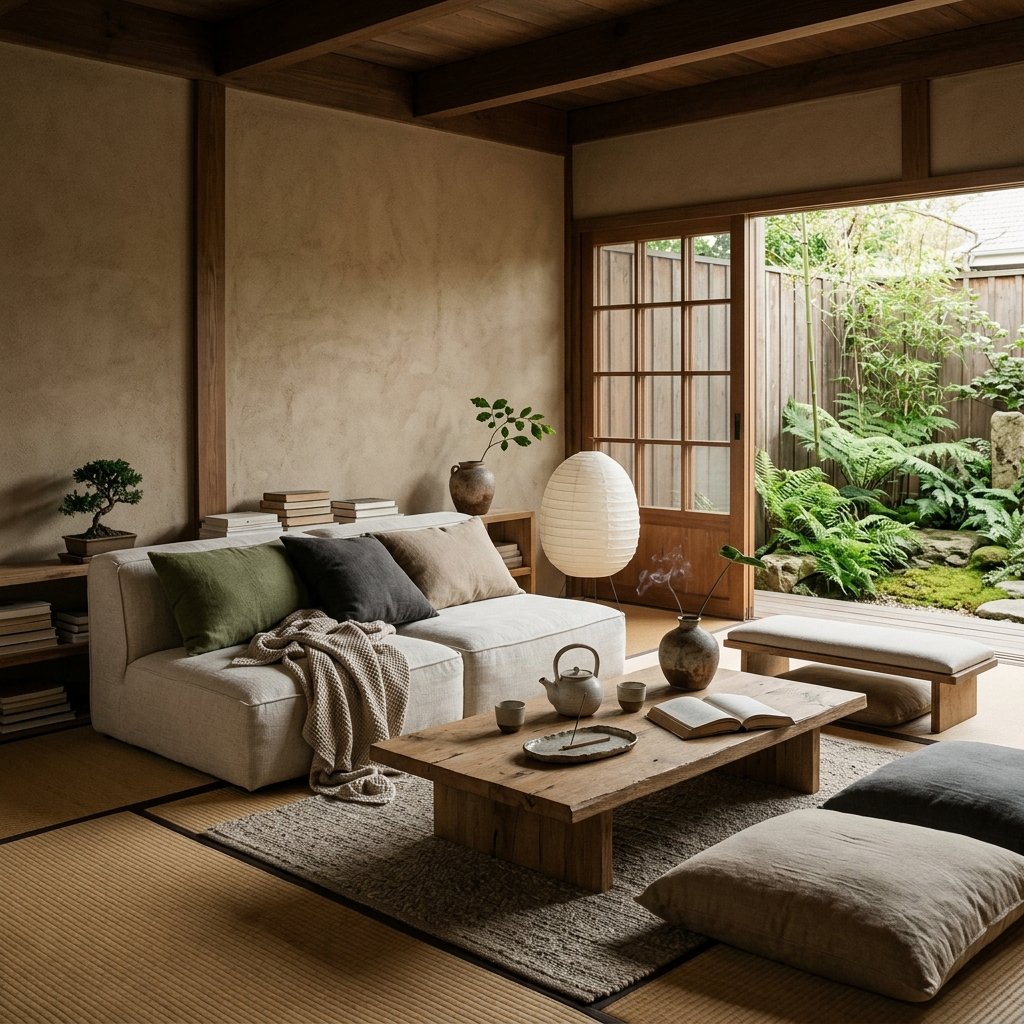
It’s 9:40 on a Sunday night. The sofa is clear, one candle sits on the coffee table, and the throw is folded just so. You still can’t unwind. The dishwasher hum bounces off bare walls, the router blinks green beside the TV, and a cool 4000K ceiling light is doing its best impression of noon. The room looks calm. Your senses haven’t been told.
That gap is what this guide closes. Most zen living room advice stops at beige paint and bamboo, which styles a room for the eye and ignores everything else. Calm also arrives through sound, light levels, what you see from your seat, what your hands touch, and how quickly the room recovers after a messy day. The fifteen ideas below work on those layers one at a time, with real measurements, rough prices, and the install mistakes that catch people out.
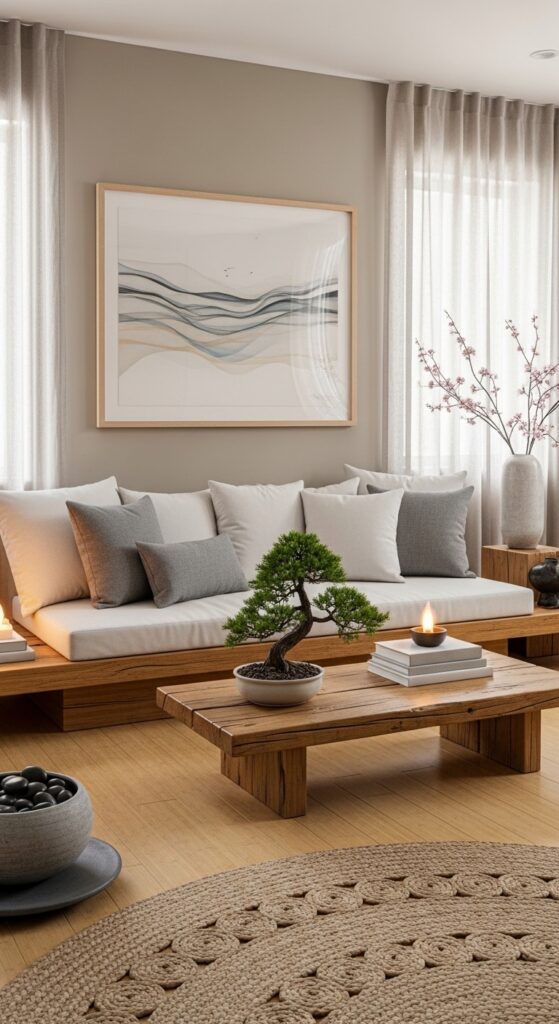
Run a Clap Test Before You Buy Anything
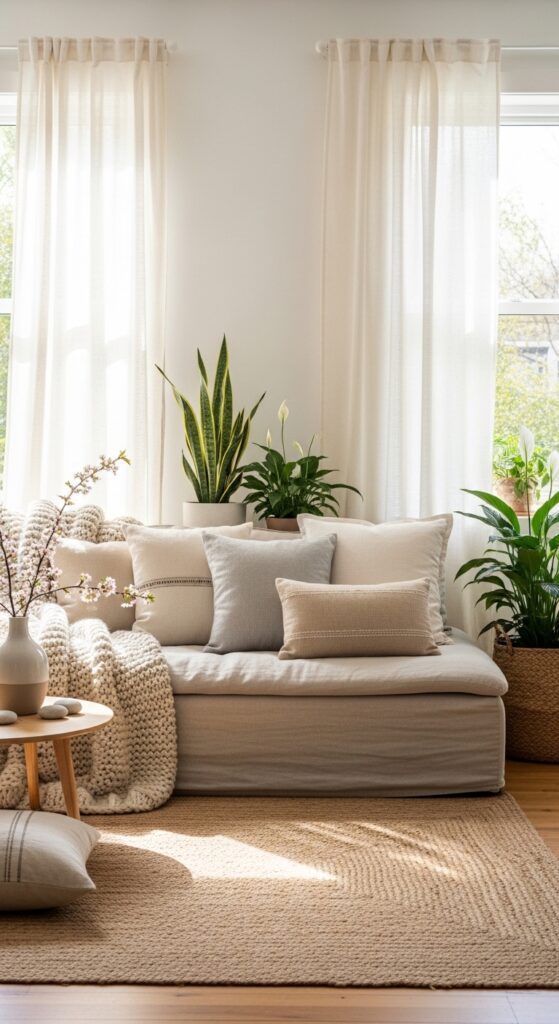
Stand in the middle of the room and clap once. A sharp ring or a fluttering echo means hard, bare surfaces are bouncing sound around, which is why a quiet TV still sounds tinny. Fix it with soft mass rather than decor. Put a rug of at least 8 by 10 feet under the seating, with a felt pad underneath for extra absorption. A rug that stops short of the sofa legs leaves a hard strip that still reflects sound, so let the front legs sit on it. Hang floor-length lined curtains, and add one upholstered piece to each long wall. A flat jute rug looks right in a zen room but absorbs far less sound than wool. If one wall stays bare and reflective, a 2-by-3-foot fabric-wrapped acoustic panel, usually $40 to $120, can pass as art. Clap again after every change.
Add One Source of Moving Water
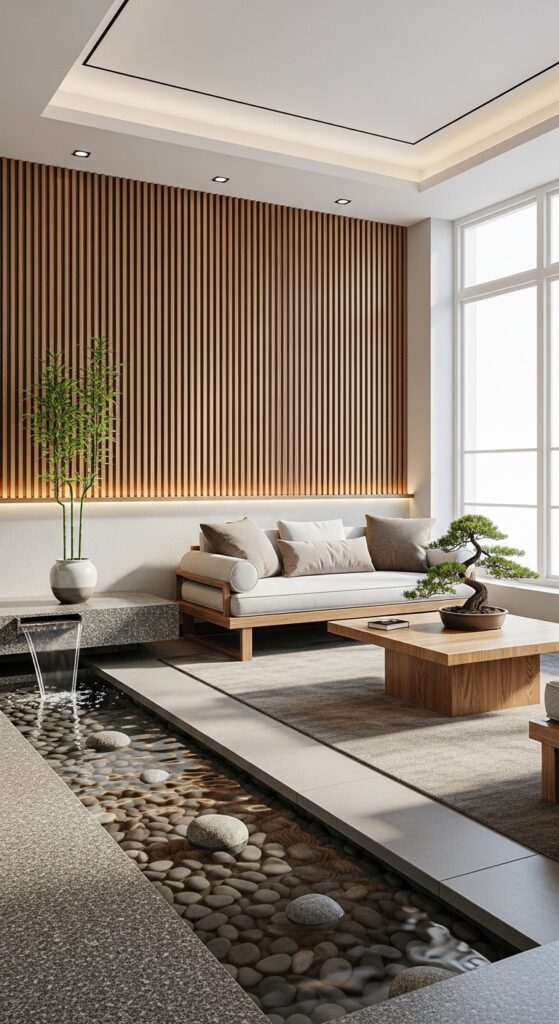
A tabletop fountain adds a steady, low sound that softens street noise and fridge hum. Listen to the product’s sound clip before buying, because a thin trickle over a short drop sounds more like a leaky tap than a stream. Look for a wide, gentle spill. Keep the water above the pump at all times, which means topping it up every few days; a pump that runs dry buzzes and burns out. Distilled water slows the white mineral crust that builds on the pump. Set the fountain on a felt pad, since pumps send a hum through hollow wooden tables. Expect to pay $30 to $120.
Turn Off the Ceiling Light After Dark
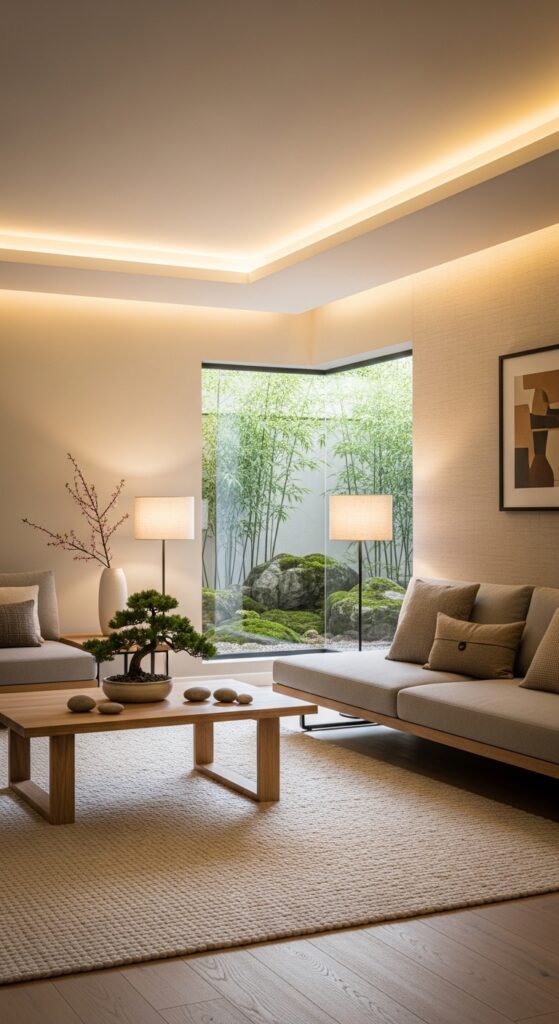
One flat, overhead light keeps a room feeling like daytime long after the sun goes down. After dinner, switch it off and let two lamps do the work: a table lamp whose shade bottom sits at seated eye level, so you never see the bare bulb, and a taller floor lamp aimed at a wall corner. Use dim-to-warm bulbs, which shift from roughly 2700K to around 2200K as you lower them, much like a flame. They need an LED-rated dimmer, or they flicker and hum. If a lamp has no dimmer, an inline cord dimmer costs about $15.
Seat Yourself Where the Morning Light Lands
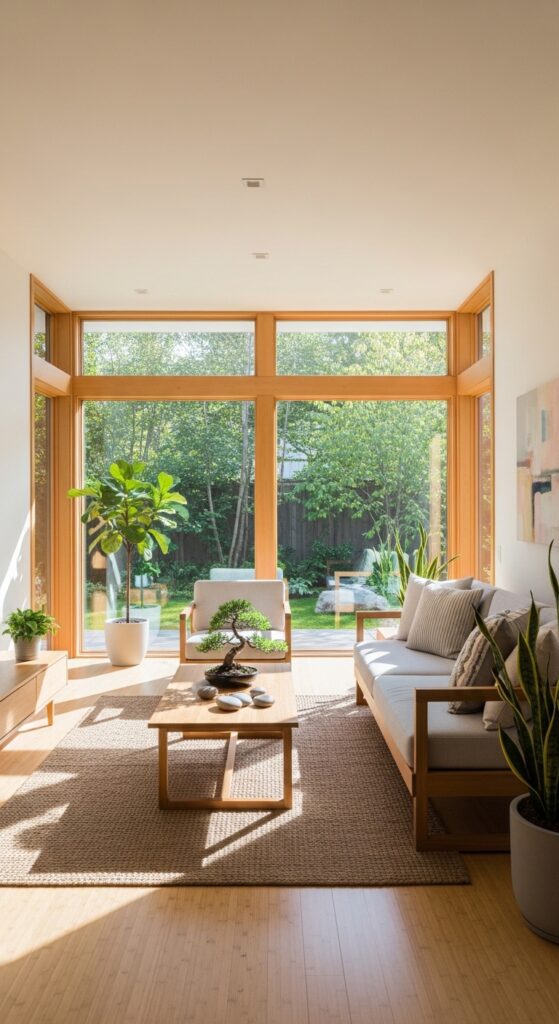
Most people face the TV and treat the window as background. Try one week of morning coffee on the sofa end that catches the first hour of direct sun. Light on your face feels good; light on your screen is glare. Check the dark TV at 4 p.m., and if you can see a window reflected in it, move it to a side wall at a right angle to the glass. On west-facing windows, a sheer panel tames the harsh 4 p.m. beam. On east-facing windows, leave the glass bare, because that’s the light you actually want. Mark how far the sun reaches across the floor at 8 a.m., and put your reading chair at the edge of that patch.
Hide the Standby Lights and Cords
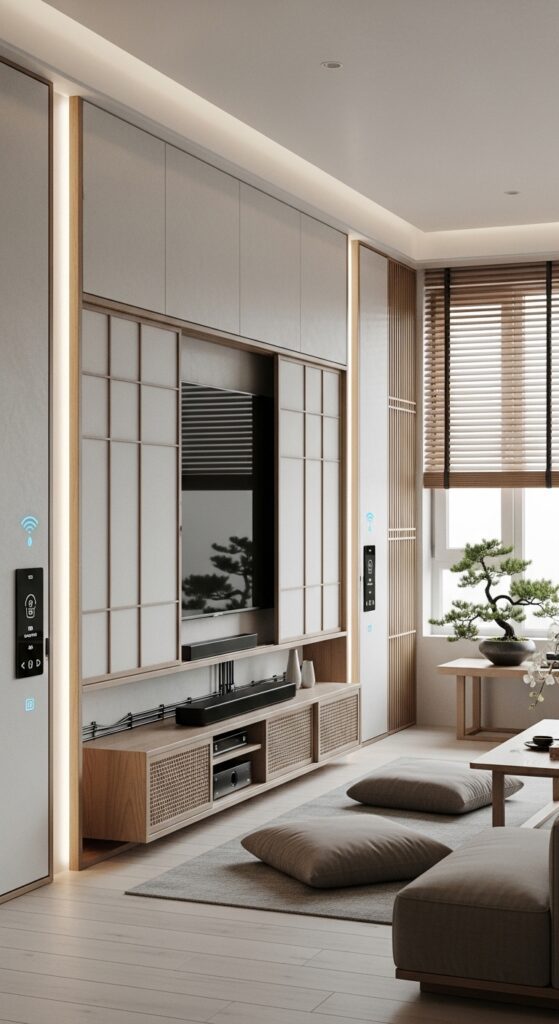
In a dark room, the router blink, the soundbar display and the console LED become three small stars competing for attention. Cover each with a dab of matte black tape or LED dimming film, and switch off the soundbar display in its settings. Next, deal with the cables: a paintable cable raceway, about $10 to $20, hides a TV cord run in ten minutes. Then tackle the black rectangle itself. A closed cabinet works only if it has a ventilated back or an infrared remote extender, because a sealed streaming box and receiver overheat. Leave at least 2 inches of airflow behind them.
Choose a Scent You Can Ventilate
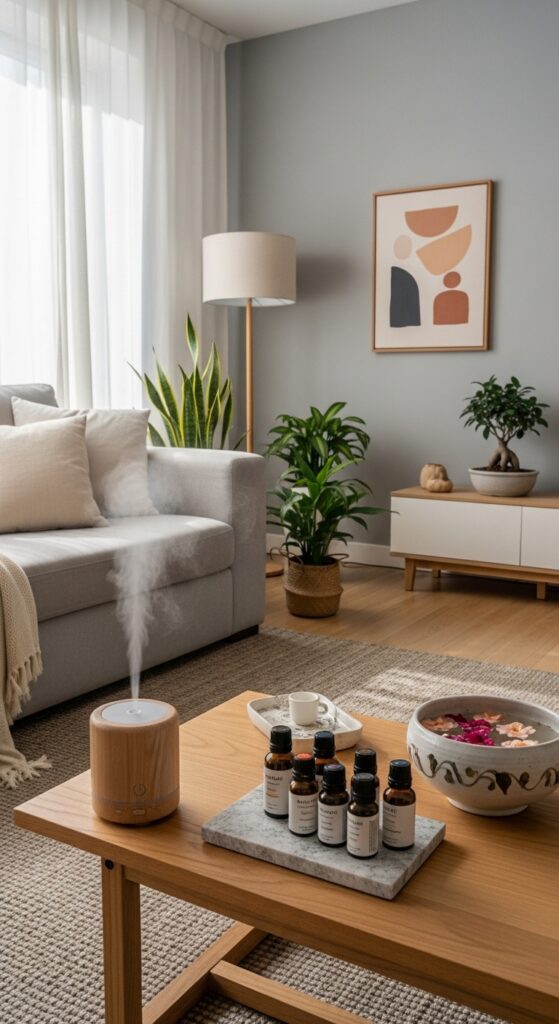
Older zen advice says to burn incense or sage. EPA’s guidance on indoor particles lists burning candles as a source of fine particulates and advises ventilation when you burn candles or incense. It also warns that pine- and citrus-scented products can react with ozone to form particles and formaldehyde. So keep fire-based scent short and deliberate: one candle, one hour, a window cracked, then snuffed. Better still, aim for a room that smells like nothing. Wash throws and cushion covers every two weeks, because fabric holds cooking smells, and open a window for ten minutes after dinner. Clean air reads as calm without anything burning.
Keep One Plant and Buy It for the Looks
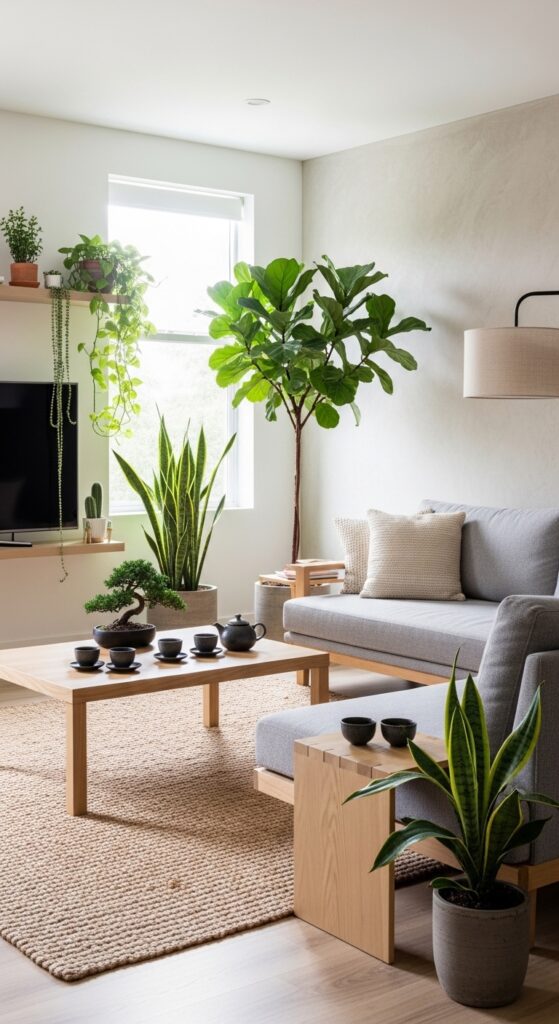
A few pots won’t measurably clean your air, so buy a plant for its shape rather than its supposed health benefits. One 3-foot snake plant or ZZ plant in a 10-to-12-inch pot calms a corner better than six small pots, which read as clutter. Both tolerate dim rooms, though they still need to sit within a few feet of a window. Check that the pot has a drainage hole, and use a saucer so the rug survives. Overwatering kills these two more often than neglect does, so water only when the top two to three inches of soil feel dry. Wipe the leaves monthly with a damp cloth.
Audit the View From Your Favorite Seat
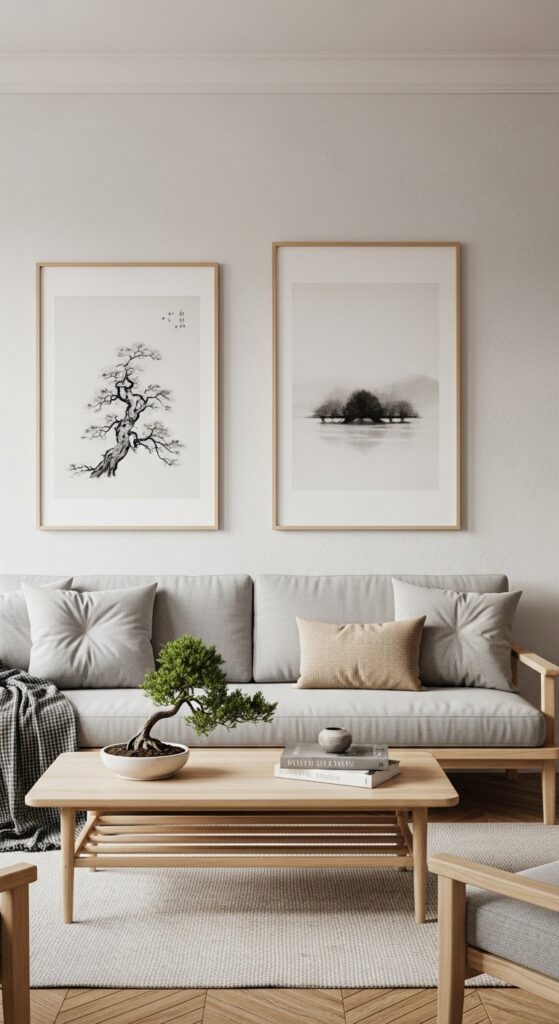
Sit where you sit most, hold your phone at eye level, and take one photo straight ahead. Seated eye level is about 40 inches off the floor, and whatever fills that frame is what your eyes rest on all evening. If it’s a pile of mail, a dark TV, or a scuffed blank wall, fix the frame rather than the whole room. Hang one large piece of art, about two-thirds the width of the console or sofa beneath it, or rearrange so the window becomes the view. Skip the gallery wall here. Several small frames give your eye six places to wander.
Clear a Straight Path From Door to Sofa
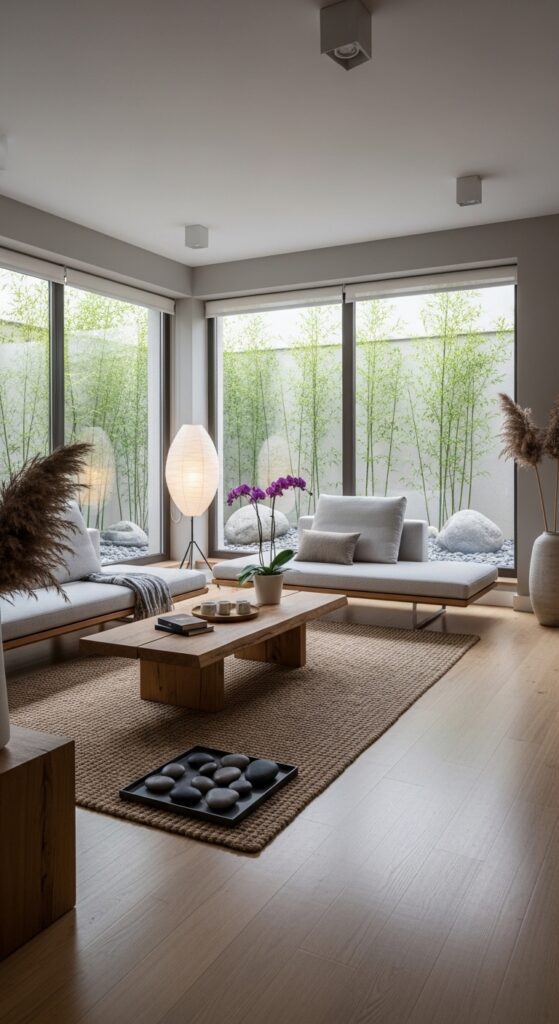
Count your steps from the front door to your usual seat. If you zigzag around a console, a basket and a chair corner, the room starts your evening with small obstacles. Keep the main route at least 30 inches wide, and 36 if you can, with 14 to 18 inches between the sofa and the coffee table. Then build a landing strip by the door: a 12-inch-deep shelf or bench, one hook per person, and a lidded tray for keys. The bag then has somewhere to go besides the sofa cushions. Check door swing too: a door that opens onto a chair corner by even three inches will annoy you every single day.
Make a Sit Spot Instead of a Shrine
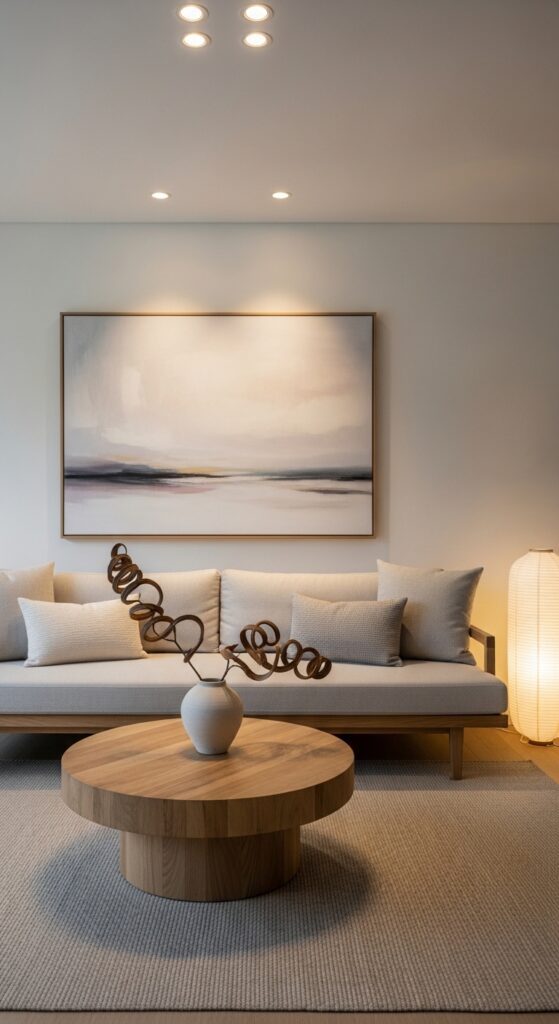
A meditation corner fails when it’s built for display. Claim a 3-by-3-foot patch with a wall at your back or a window ahead, and add one firm cushion about 5 inches high, which lifts your hips above your knees. Keep a timer within reach so five minutes of sitting doesn’t turn into checking your phone. One small side table holds the timer and nothing else. If you can’t keep the spot free of laundry and gadgets, shrink it rather than decorate it. A spot you actually use beats a styled corner that collects dust. Leave the cushion in plain view, because it works as the reminder.
Touch the Wood You Own
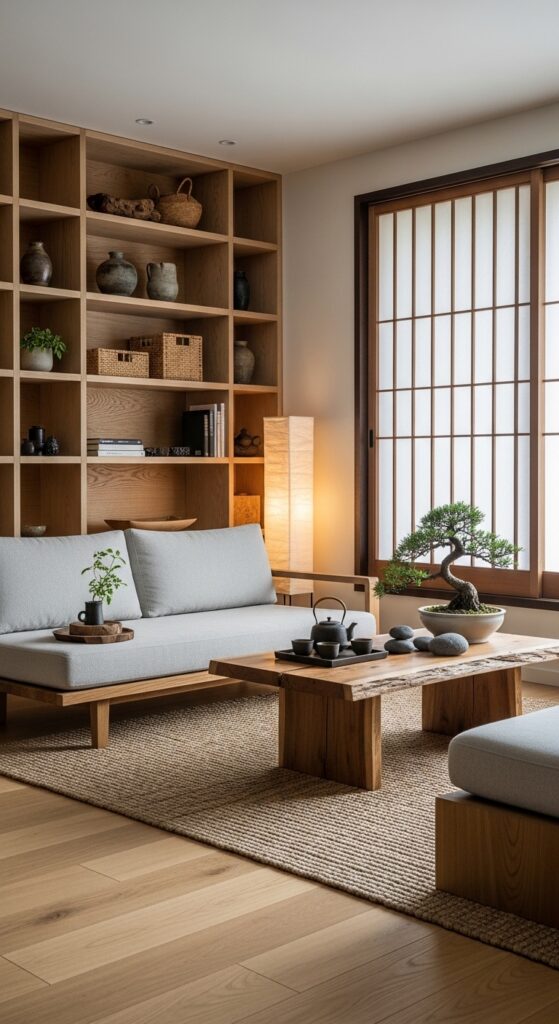
Calm is tactile. Run your hand along the coffee table edge: a rough or tacky finish breaks the mood faster than a clashing color. Oil and hardwax-oil finishes feel like wood, while thick polyurethane feels like plastic and shows scratches as pale lines. The trade-off is upkeep. Oiled wood takes a fresh coat every year or two and marks easily from hot mugs. A 220-grit sanding block and a small tin of hardwax oil, roughly $25 to $40 together, cover an afternoon refresh. While you’re at it, round over any sharp table corner at knee height with that same block.
Test Your Neutral After Sunset
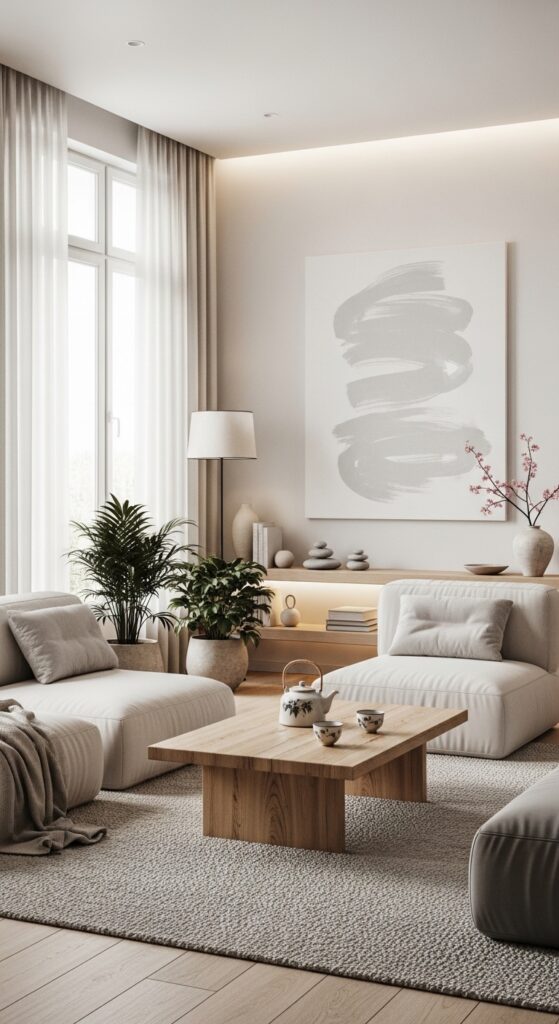
Paint chips lie under daylight. Tape a 2-by-2-foot swatch to two different walls, wait a full day for it to dry, and look at it at 8 p.m. under your own lamps, not just at noon. Warm lamp light pushes greige toward yellow, and many “calm” whites turn dingy. Cool grays can go flat and heavy. Pick a matte or flat finish, which scatters lamp glare instead of throwing a shiny patch across the wall. Our guide to living room color combinations that look good after dark goes deeper on how lamplight changes a palette.
Give Yourself One Chair That’s Only Yours
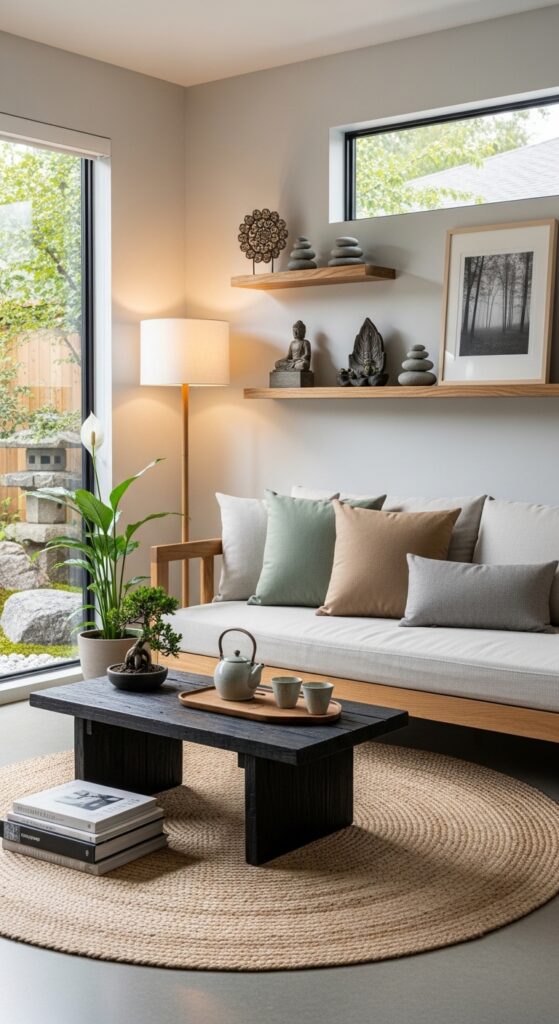
Every calm room needs one seat that belongs to a person: a chair with a side table in reach, a lamp behind your shoulder, and a throw on the arm. Look for a seat height of 17 to 19 inches. Choose a side table one to two inches below the chair arm, so you can set down a mug without lifting your elbow. Face the chair toward the window or the room, not the TV. Removable cushion covers make washing easy, which matters more than the fabric’s label. One small basket beside it holds the book you’re really reading.
Reset the Room in Ten Minutes Each Night
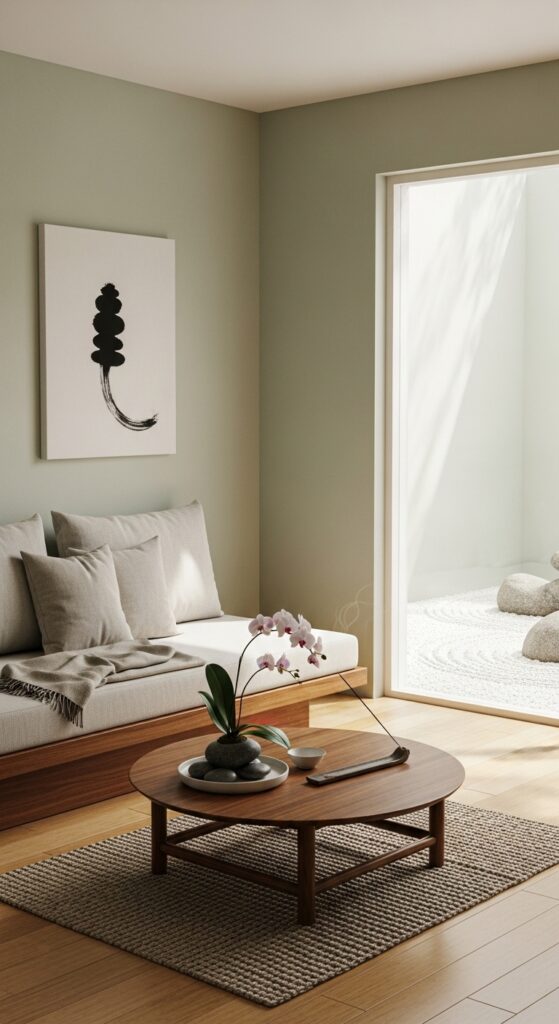
Calm isn’t a styling job you finish. It’s the state the room returns to. Set a ten-minute timer each night and run the same loop: cushions up, blanket folded over the chair arm, remotes and chargers in one tray, mugs to the kitchen, floor clear. Give every recurring object a home, because objects without one drift into piles. If something takes more than about ten seconds to put away, it needs a new location, not more discipline. After a week, you’ll see which items always wander. Buy a basket for those, not for the whole room.
Rotate One Thing Each Season
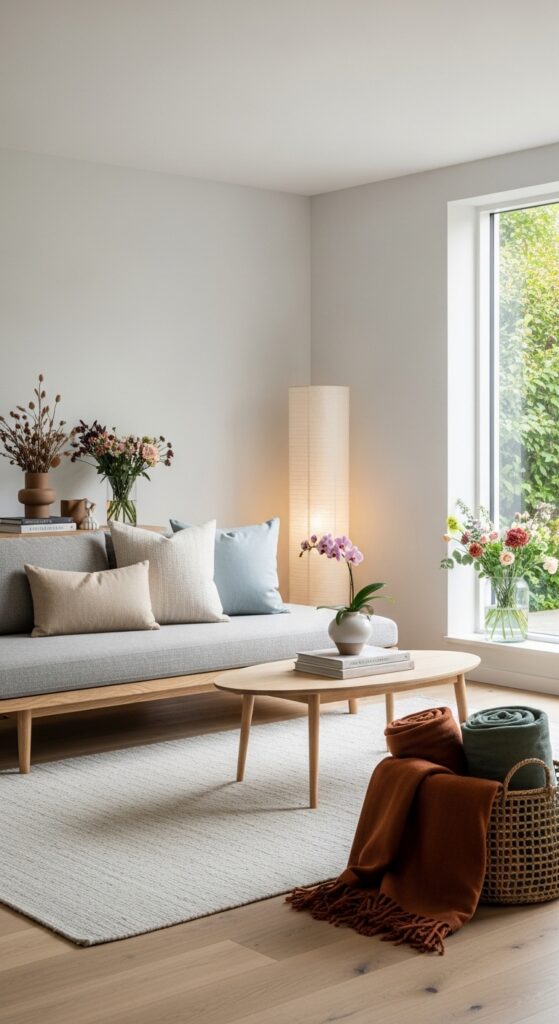
Swap instead of adding. In summer, trade the heavy wool throw for a cotton waffle blanket. In winter, replace the sheer panel with a lined one. Store off-season wool in cotton bags or a breathable box with a cedar block, not sealed plastic bins, which trap moisture and can invite mildew. Limit yourself to one swap per season, which keeps the room feeling alive without piling up objects. Photograph the room before you swap so you can put everything back where it belonged.
Do This Walkthrough Tonight
Clap once, switch off the overhead light, and sit in your usual seat for five minutes. Note the first thing that bothers you: an echo, a glare, a blinking light. Fix that one thing this week before buying anything else. Start with the free fixes, such as the lamp switch and the clear path, then spend money on the wool rug or the fountain. If you want actual Japanese pieces, such as tatami, shoji panels or low platforms, our guide to Japanese living room furniture ideas for a zen design covers the furniture side in detail.
Frequently Asked Questions
Can a zen living room have a TV?
Yes, if it stops dominating the room when it’s off. Mount it so the screen’s center sits at seated eye level, roughly 40 to 42 inches from the floor, and keep it off the wall opposite a bright window. A matte screen and a wall painted one shade darker than the others help it recede.
Is a zen living room the same as Japandi?
No. Zen design is a philosophy of restraint that can use any furniture, while Japandi is a specific blend of Japanese and Scandinavian style. A Japandi room usually pairs light oak with matte black hardware and soft curves. A zen room might have neither, just a few well-chosen pieces and plenty of open floor.
Do salt lamps make a living room calmer?
Only as lamps. A salt lamp is a dim, warm night-light, and the claims about air-cleaning ions lack solid evidence. Pick one with a dimmable cord, and keep it out of humid rooms, because salt absorbs moisture and the base can weep onto your table. Set it on a coaster.
How do you keep a zen living room calm with kids or pets?
Give every toy a home your kids can reach alone. A low basket or lidded ottoman, about 16 to 18 inches high, lets small children tidy without help. Turn cleanup into a two-song game before bedtime. For pets, choose a tight-weave fabric, because looped weaves snag claws and shed pulls.
Is it disrespectful to use a Buddha statue as decor?
It can be. Many Buddhists regard Buddha figures as sacred, so treat them that way: display one at or above eye level, never on the floor, near shoes, or as a shelf bookend. If the statue holds no personal meaning for you, a smooth river stone or a hand-thrown ceramic bowl gives the same quiet focal point.
Will a tabletop fountain make my living room too humid?
Rarely, since a small fountain adds very little moisture. Still, EPA guidance says to keep indoor relative humidity below 60 percent, ideally between 30 and 50 percent. A $10 hygrometer shows where you stand. If windows fog, switch the fountain off for a few days and run an exhaust fan.
A really good blog and me back again.