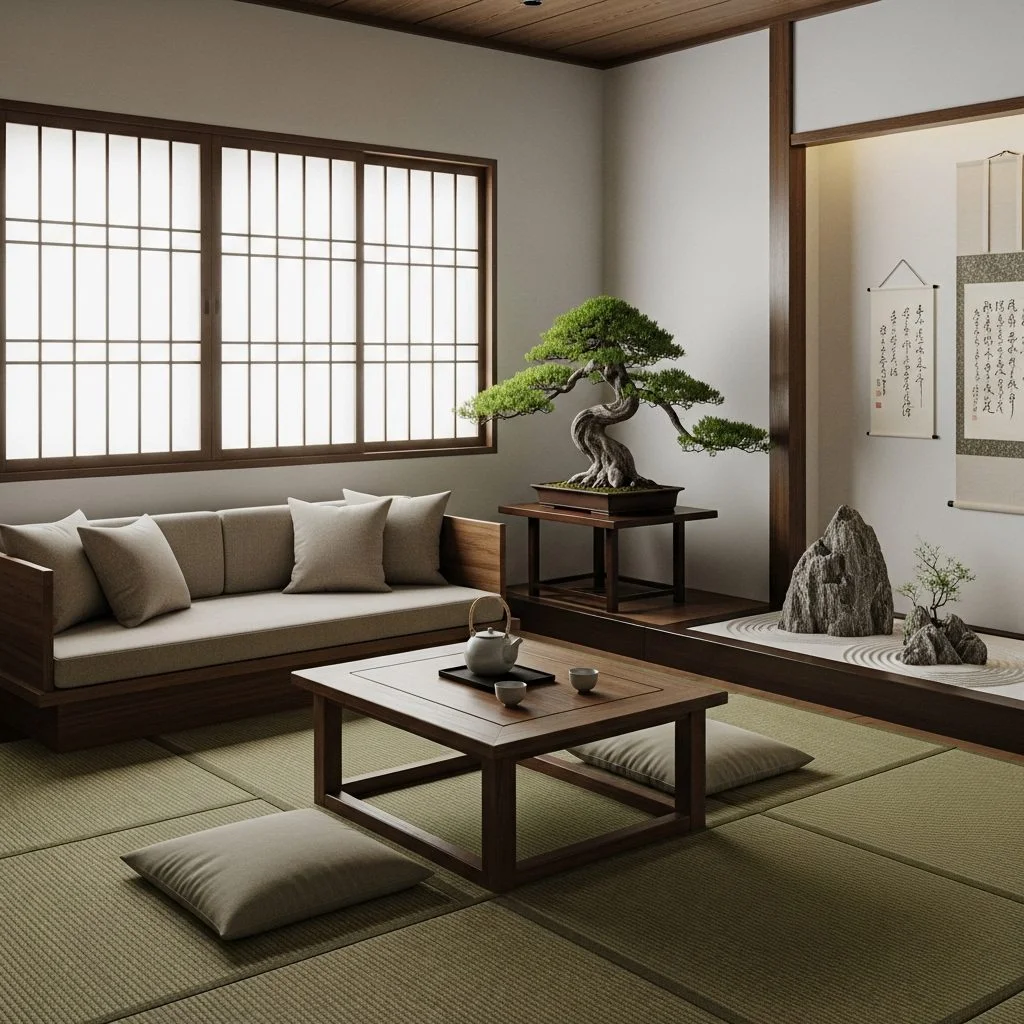
30 Japanese Living Room Furniture Ideas for a Zen Design
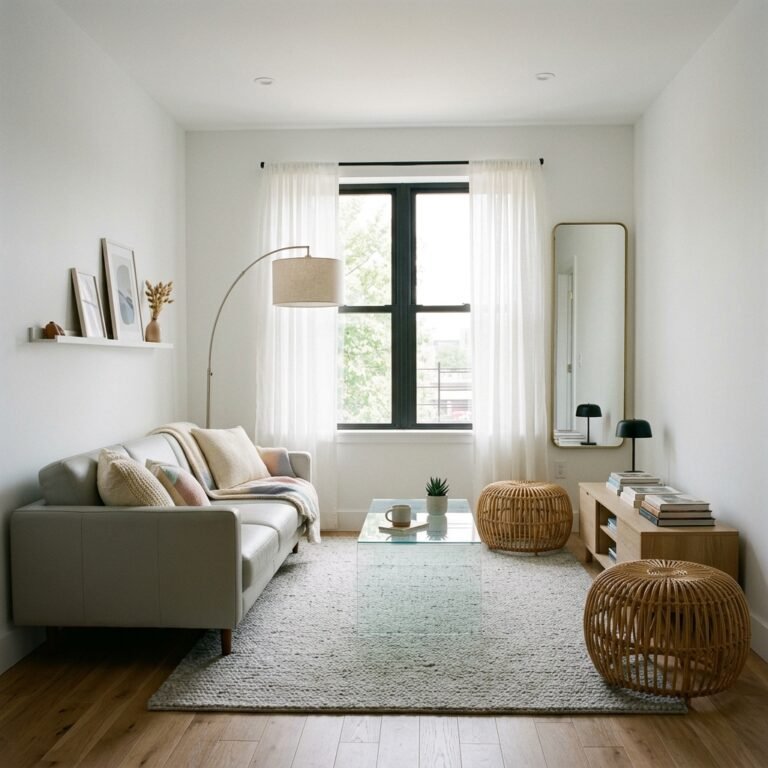
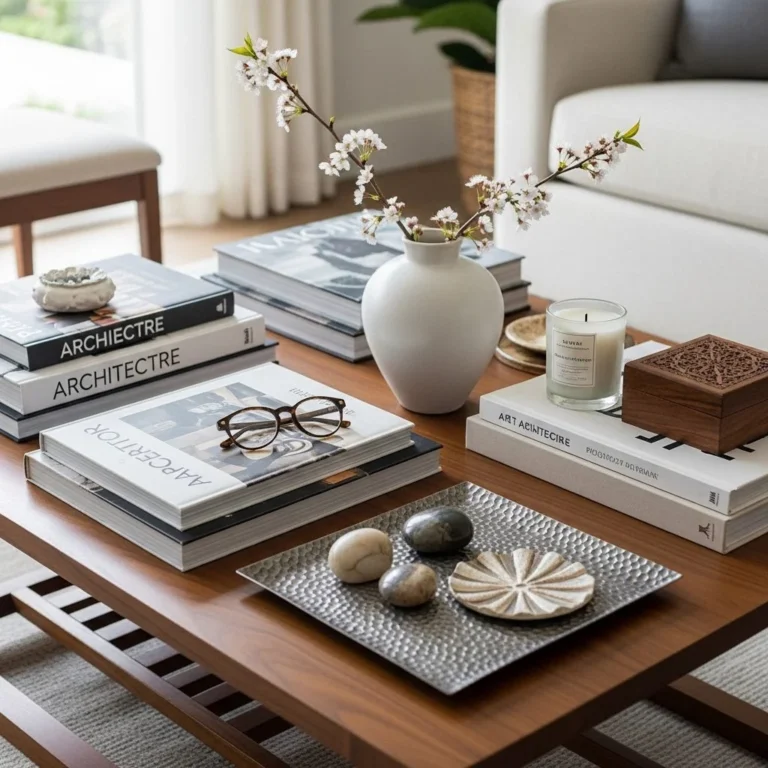
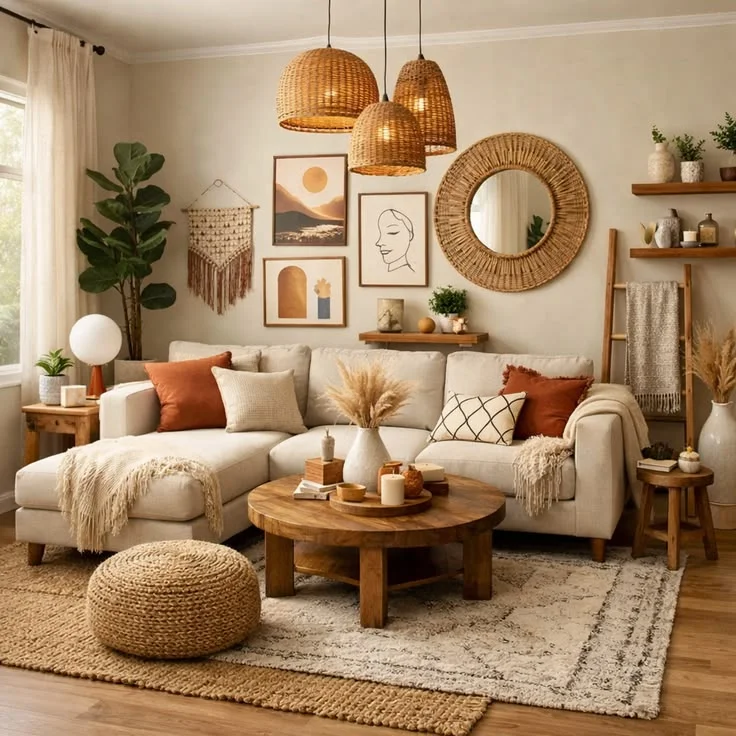
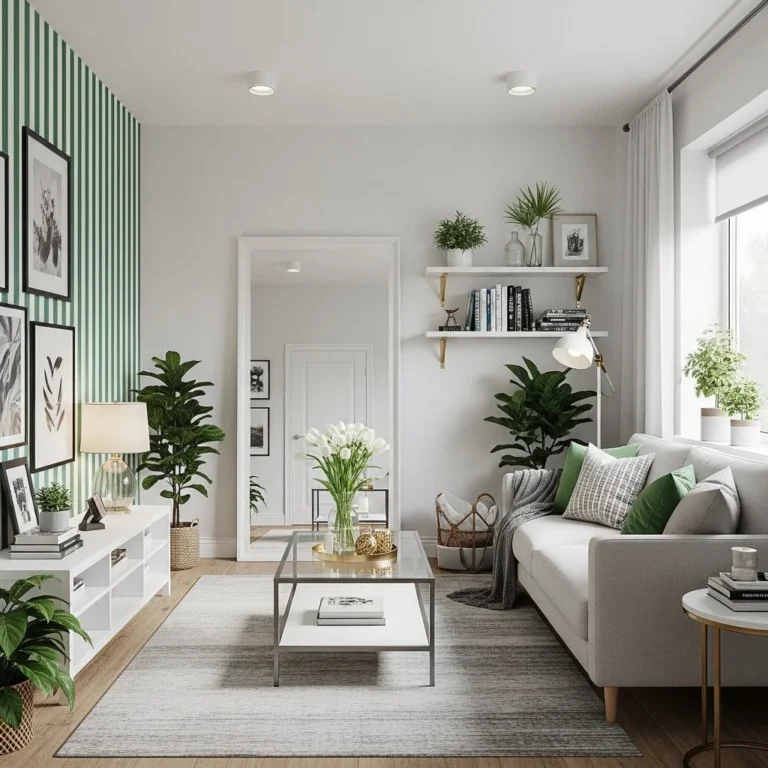
Japanese living room ideas are rooted in simplicity, balance, and a deep connection with nature. In today’s fast-paced world, Zen living room design has become one of the most sought-after styles for creating peaceful home environments. Inspired by traditional Japanese interiors and modern Japandi living room ideas, this aesthetic focuses on natural materials, clean lines, and uncluttered spaces. Japanese style furniture living room design is not about filling a space—it’s about creating breathing room. Every piece has meaning, every texture has purpose, and every corner feels calm. These 30 ideas will guide you into building a minimalist Japanese interior design that feels warm, grounded, and timeless.
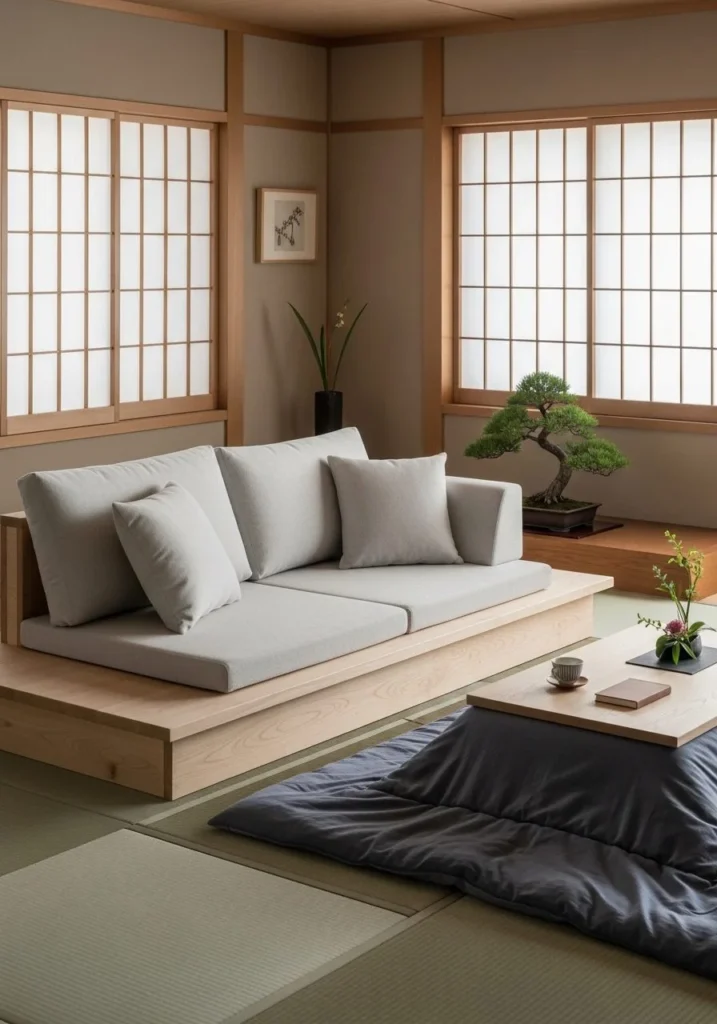
1. Low Platform Wooden Sofa Foundation
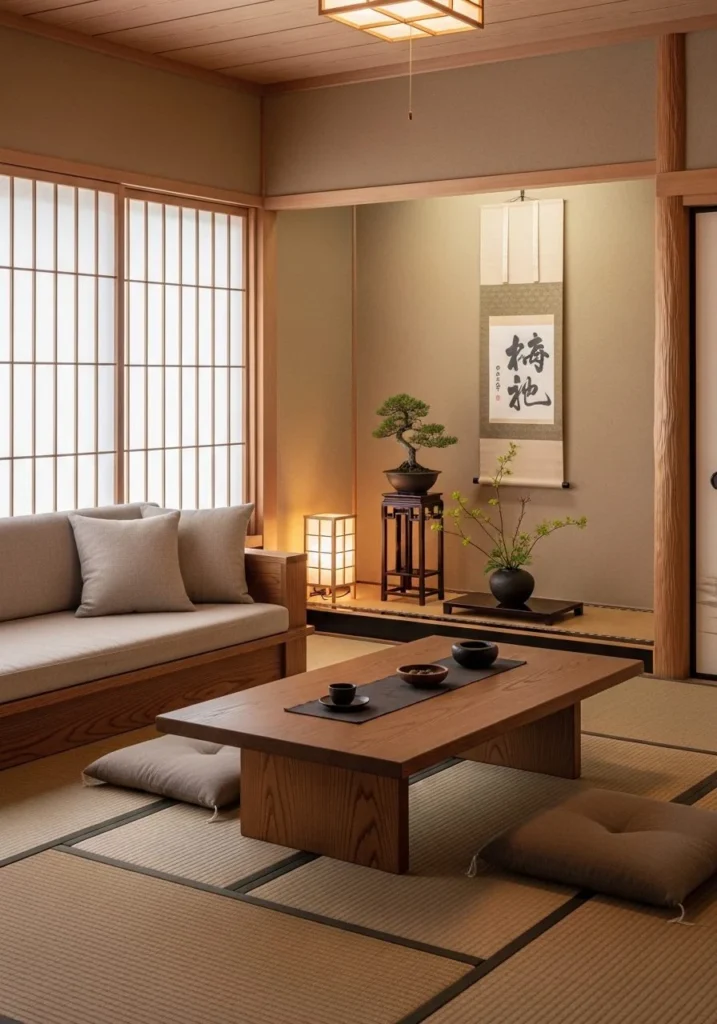
A low platform wooden sofa is the heart of Japanese living room ideas, reflecting grounded living and simplicity. In Zen living room design, furniture stays close to the earth to create stability and calmness. Choose natural oak, ash, or walnut wood with clean, straight lines and soft linen cushions. This design is essential in Japanese style furniture living room layouts because it removes visual heaviness and encourages relaxation. Pair it with neutral walls and soft lighting to maintain balance. The low height makes the ceiling feel taller, enhancing spaciousness. This setup works beautifully in Japandi living room ideas where Japanese simplicity meets Scandinavian warmth, creating a peaceful and uncluttered home environment that feels deeply soothing and intentional.
Styling Tips:
- Low wooden platform base
- Linen cushions in neutral tones
- Natural oak or ash wood
Why it works:
It creates grounding energy and visual simplicity.
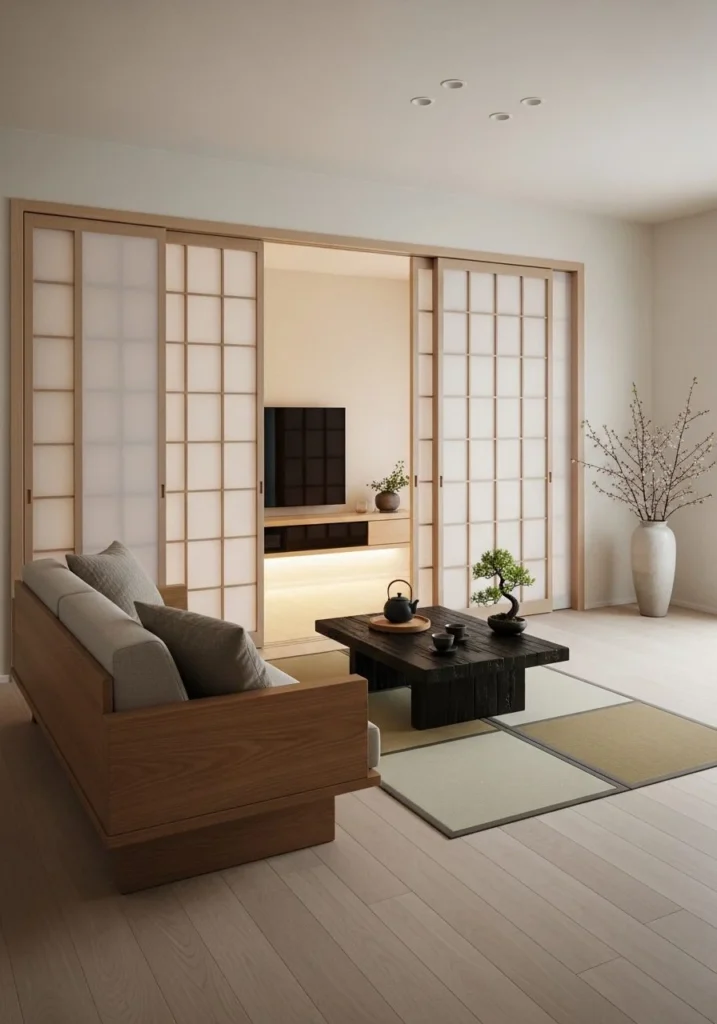
2. Shoji-Inspired Sliding Panel Elegance
Shoji sliding panels are a signature feature in minimalist Japanese interior design, offering both function and beauty. These translucent wooden frames with rice paper or frosted glass allow soft light diffusion, creating a calming atmosphere. In Japanese living room ideas, they replace heavy walls and enhance openness. Use them as room dividers or decorative backdrops. This design fits perfectly into modern Zen living room concepts because it maintains privacy while keeping visual flow. The soft light effect creates a peaceful, meditative environment.
Styling Tips:
- Wooden frame sliding panels
- Rice paper or frosted glass
- Neutral surroundings
Why it works:
It diffuses light and enhances spatial harmony.
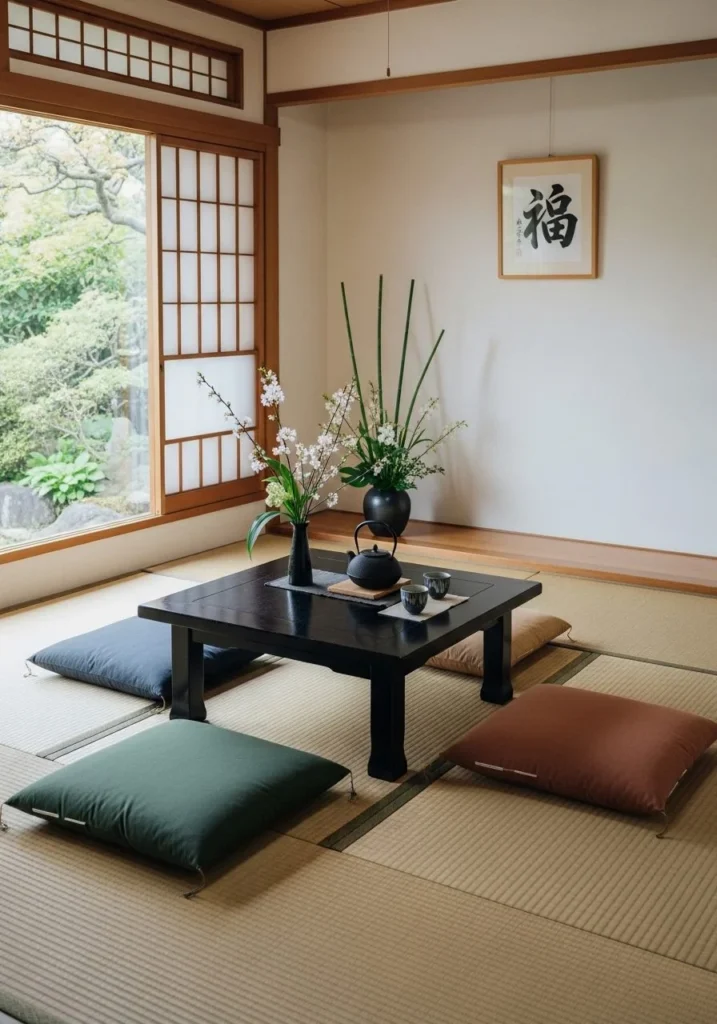
3. Tatami Floor Seating Arrangement
Tatami floor seating is a foundational element in traditional Japanese style furniture living room design, offering a calm, grounded, and naturally harmonious atmosphere. Made from woven natural straw, tatami mats introduce organic texture, subtle fragrance, and a sense of balance that connects the interior to nature. This flooring style encourages simplicity and mindful living, aligning closely with authentic Zen living room design principles. A traditional setup typically includes low wooden tables paired with zabuton floor cushions, creating a comfortable yet minimal seating arrangement that promotes relaxation and informal interaction. In Japanese home decor ideas, this layout is valued for its flexibility, allowing the space to be easily adapted for dining, meditation, or gathering. The absence of bulky furniture enhances openness and visual clarity, reinforcing a peaceful environment. This design works beautifully because it prioritizes intention over excess, transforming the living room into a serene, functional, and deeply calming space rooted in simplicity and natural beauty.
Styling Tips:
- Natural tatami mats
- Floor cushions (zabuton)
- Low wooden table
Why it works:
It encourages grounded, mindful living.
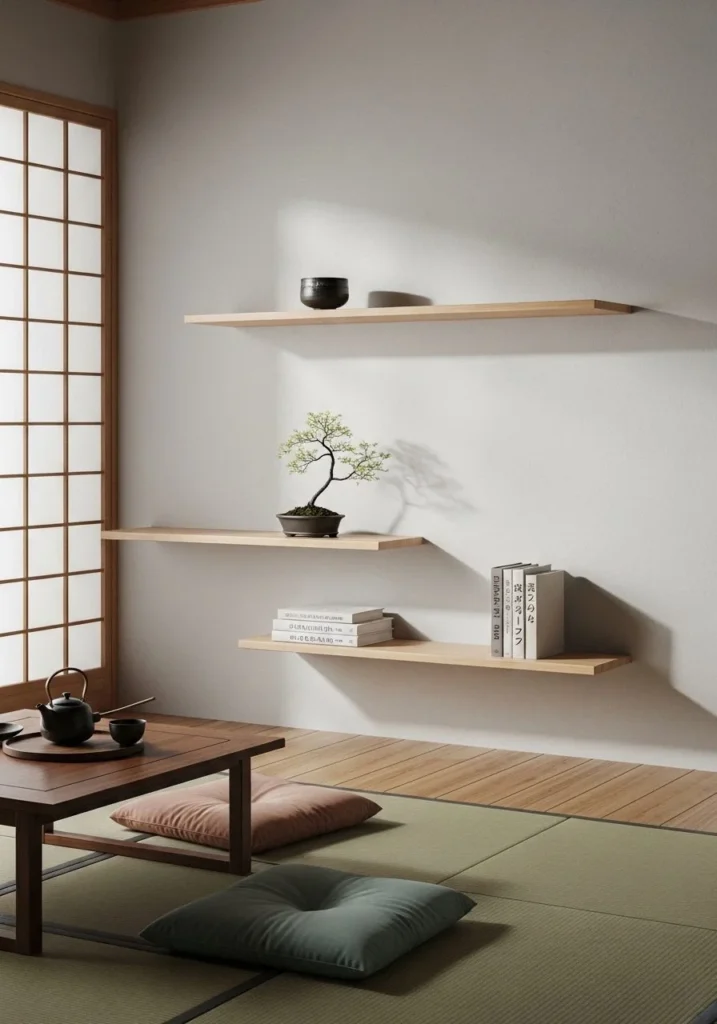
4. Minimal Floating Wooden Shelf Design
Minimal floating wooden shelves are a key feature in Japanese living room ideas, emphasizing simplicity, order, and visual clarity. In Japandi living room ideas, which blend Japanese minimalism with Scandinavian warmth, storage is designed to be both subtle and highly functional. Light oak, ash, or bamboo shelves are commonly used to maintain a natural, airy aesthetic that blends seamlessly with the wall. These shelves are typically styled with a carefully curated selection of items such as handmade ceramics, small green plants, or a few meaningful objects, ensuring that every piece has intention and purpose. The focus is on negative space, which allows the room to breathe and prevents visual clutter. This approach enhances calmness while still adding gentle visual interest through texture and form. The design works beautifully because it balances practicality with restraint, creating a serene, organized, and thoughtfully styled living environment rooted in simplicity, nature, and quiet elegance.
Styling Tips:
- Light wood floating shelves
- Minimal décor items
- Clean wall backgrounds
Why it works:
It maintains order and visual clarity.
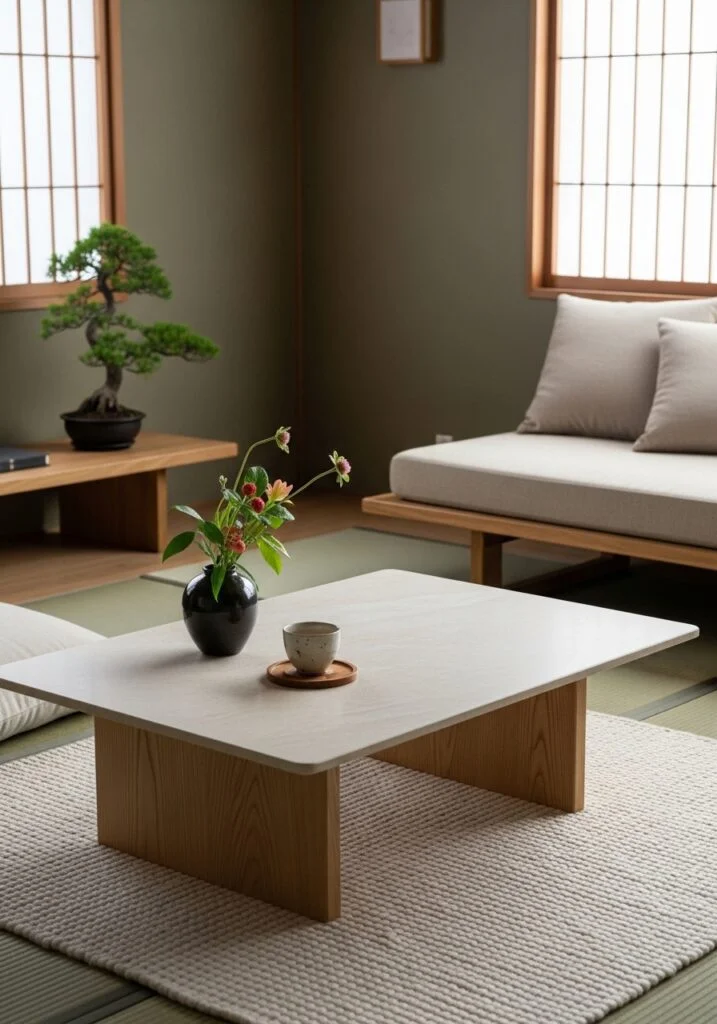
5. Zen Stone and Wood Coffee Table Blend
A stone and wood coffee table is a grounding centerpiece in Zen living room design, embodying balance, simplicity, and natural harmony. In minimalist Japanese interior design, the combination of raw stone and warm wood reflects the core philosophy of blending natural elements to create visual and emotional equilibrium. A smooth stone tabletop paired with a solid wooden base introduces a striking yet subtle contrast—hard against soft, cool against warm—enhancing the sense of balance within the space. This material pairing works beautifully in calm, uncluttered interiors where every object is chosen with intention. In Japanese living room ideas, such tables are often kept minimally styled, perhaps with a single ceramic bowl, a small plant, or an unadorned tray, allowing the materials themselves to stand out. The design succeeds because it emphasizes texture, grounding energy, and natural beauty, creating a serene focal point that supports mindfulness and reinforces the peaceful, meditative atmosphere of a Zen-inspired home.
Styling Tips:
- Stone tabletop with wood base
- Neutral tones
- Minimal accessories
Why it works:
It balances natural elements beautifully.
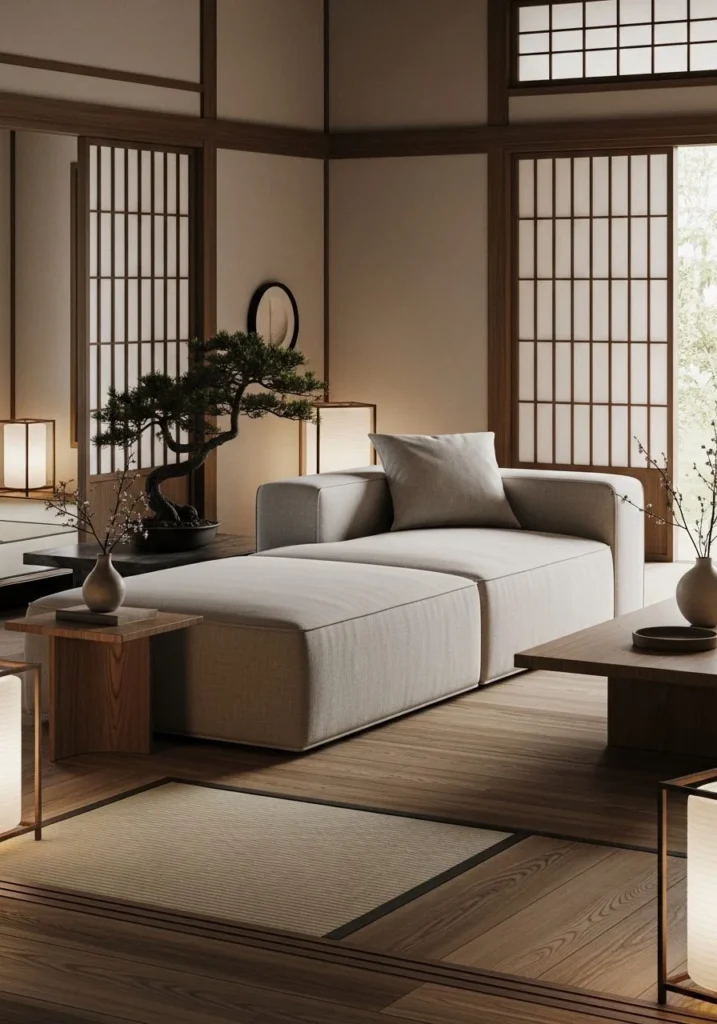
6. Neutral Linen Modular Sofa Simplicity
A neutral linen modular sofa is a perfect fit for Japanese living room ideas in modern homes, where simplicity, comfort, and functionality work together in harmony. Its soft, modular structure allows for flexible seating arrangements that can be easily adapted to different needs, whether for relaxation, gathering, or open space flow. In minimalist Japanese interior design, furniture is intentionally low-profile and unobtrusive, and a linen sofa in beige, off-white, or soft gray aligns beautifully with this philosophy. The natural texture of linen adds subtle warmth and softness, balancing the clean lines and open space typical of Zen-inspired interiors. This type of sofa avoids visual heaviness while still providing comfort, making it ideal for calm, uncluttered environments. In Japanese living room ideas, restraint is essential, and this piece supports that by blending into the space rather than dominating it. The result is a serene, airy, and effortlessly balanced living area that feels modern, peaceful, and thoughtfully designed.
Styling Tips:
- Linen fabric upholstery
- Modular layout
- Soft neutral colors
Why it works:
It adds comfort without visual clutter.
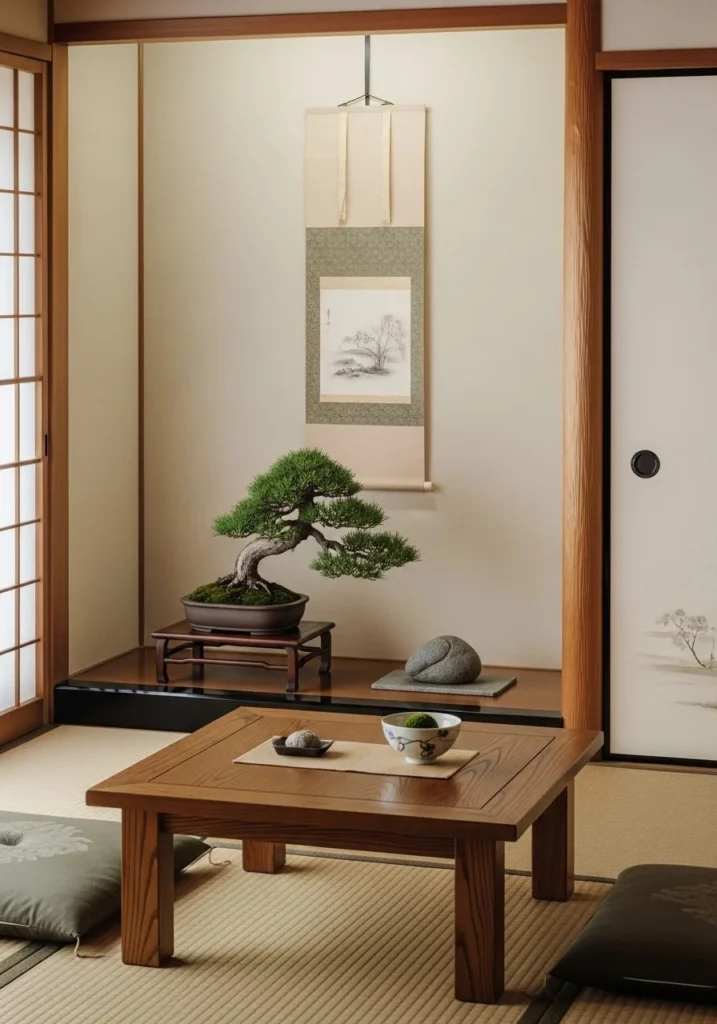
7. Indoor Bonsai Accent Corner Design
An indoor bonsai corner is a meaningful and visually calming addition to Japanese home decor ideas, bringing nature, balance, and quiet elegance into the living space. In Zen living room design, bonsai trees symbolize harmony, patience, and the beauty of slow, intentional growth, making them a powerful focal point for mindfulness-based interiors. Placing a bonsai on a simple wooden stand enhances its natural form while keeping the presentation minimal and refined. Soft, warm lighting—such as a small spotlight or ambient lamp—can be used to gently highlight the tree’s shape and texture, creating a peaceful visual corner within the room. In Japanese living room ideas, this type of arrangement emphasizes connection with nature while maintaining a clutter-free environment. The design works beautifully because it introduces life and organic movement without disrupting simplicity, resulting in a serene, grounded, and meditative atmosphere that reflects the essence of Zen-inspired living.
Styling Tips:
- Bonsai plant centerpiece
- Wooden pedestal stand
- Soft spotlight
Why it works:
It connects nature with interior calmness.
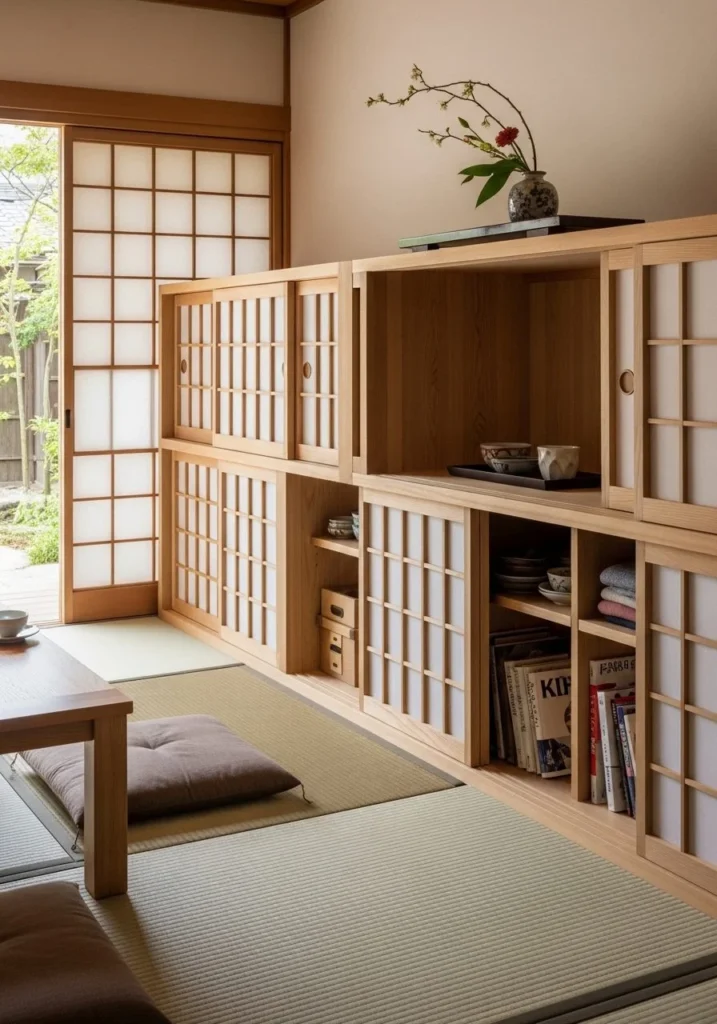
8. Sliding Wooden Door Cabinet Storage
Sliding wooden door cabinets are a functional and aesthetic staple in Japanese style furniture living room design, offering a perfect balance of practicality and minimalism. Their sliding mechanism saves valuable space by eliminating the need for swinging doors, making them especially suitable for compact or open-plan interiors. In Japanese living room ideas, clean lines and uncluttered surfaces are essential, and these cabinets support that philosophy by maintaining a smooth, uninterrupted visual flow. Natural wood finishes such as oak, ash, or cedar enhance warmth while preserving a calm, organic feel that aligns with Zen-inspired interiors. Hidden handles or push-to-open mechanisms further reinforce the minimalist aesthetic, keeping the design sleek and understated. These cabinets are often used for discreet storage, helping maintain an organized and clutter-free environment. The design works beautifully because it combines efficiency with elegance, ensuring the living space remains functional, visually balanced, and deeply connected to the simplicity and harmony of Japanese interior design principles.
Styling Tips:
- Sliding wooden panels
- Hidden storage design
- Light natural tones
Why it works:
It reduces clutter and enhances flow.
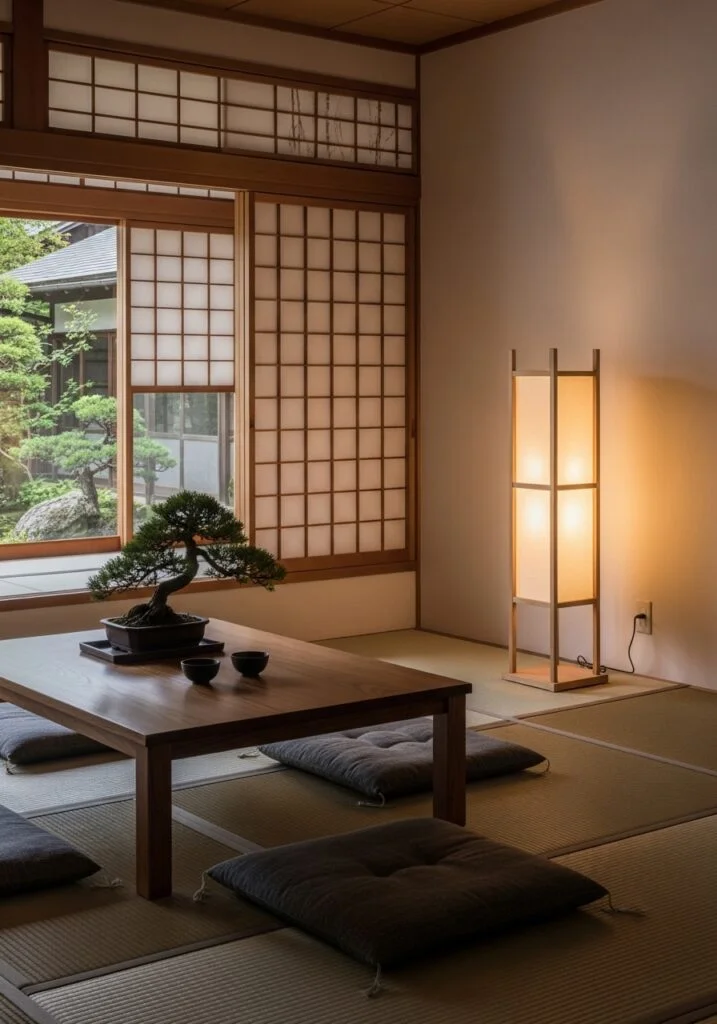
9. Zen Floor Lamp Soft Ambient Glow
A Zen floor lamp is a subtle yet essential element in modern Zen living room spaces, designed to create a soft, calming ambient glow that enhances relaxation and balance. In minimalist Japanese interior design, lighting is never harsh or overpowering; instead, it is gentle and diffused to support a peaceful atmosphere. Paper lantern-style lamps or bamboo-inspired designs are especially popular, as they reflect natural materials and traditional Japanese aesthetics. These lamps often emit warm, filtered light that softens shadows and highlights textures within the room, contributing to a serene and grounded environment. Placed in corners or beside low seating, they help define space without visual clutter. In Japanese living room ideas, this type of lighting supports mindfulness and simplicity, reinforcing the principles of Zen design. The result is a tranquil, harmonious space where light becomes part of the decor, enhancing comfort, mood, and the overall sense of natural elegance.
Styling Tips:
- Paper shade lamps
- Warm soft lighting
- Minimal structure
Why it works:
It creates calming ambient light.
10. Bamboo Accent Furniture Elements
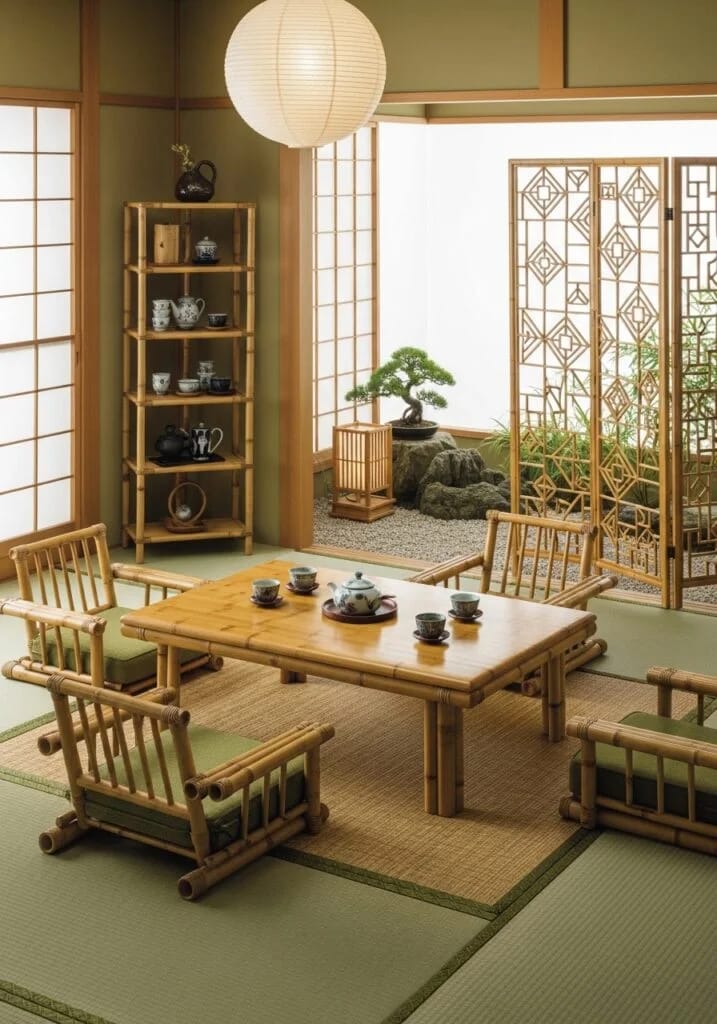
Bamboo accent furniture brings a sense of natural elegance and effortless simplicity into Japanese living room ideas. Known for its strength, flexibility, and lightweight structure, bamboo perfectly reflects the principles of sustainability and mindful living central to Japanese interior design. Its natural grain and warm tones introduce organic texture without overwhelming the space, making it ideal for minimalist and Zen-inspired environments. In Japanese living room styling, bamboo is often used in chairs, side tables, shelving, or decorative screens, where its clean lines maintain visual balance and openness. This material pairs beautifully with neutral palettes, linen fabrics, and soft lighting, enhancing the calm and grounded atmosphere of the room. In Japanese home decor ideas, bamboo is valued not only for its aesthetic appeal but also for its eco-friendly nature, symbolizing harmony with the environment. The result is a space that feels light, sustainable, and thoughtfully designed, where simplicity and natural beauty come together seamlessly.
Styling Tips:
- Natural bamboo material
- Light finishes
- Simple designs
Why it works:
It adds eco-friendly natural texture.
11. Low Coffee Table Tea Ceremony Style
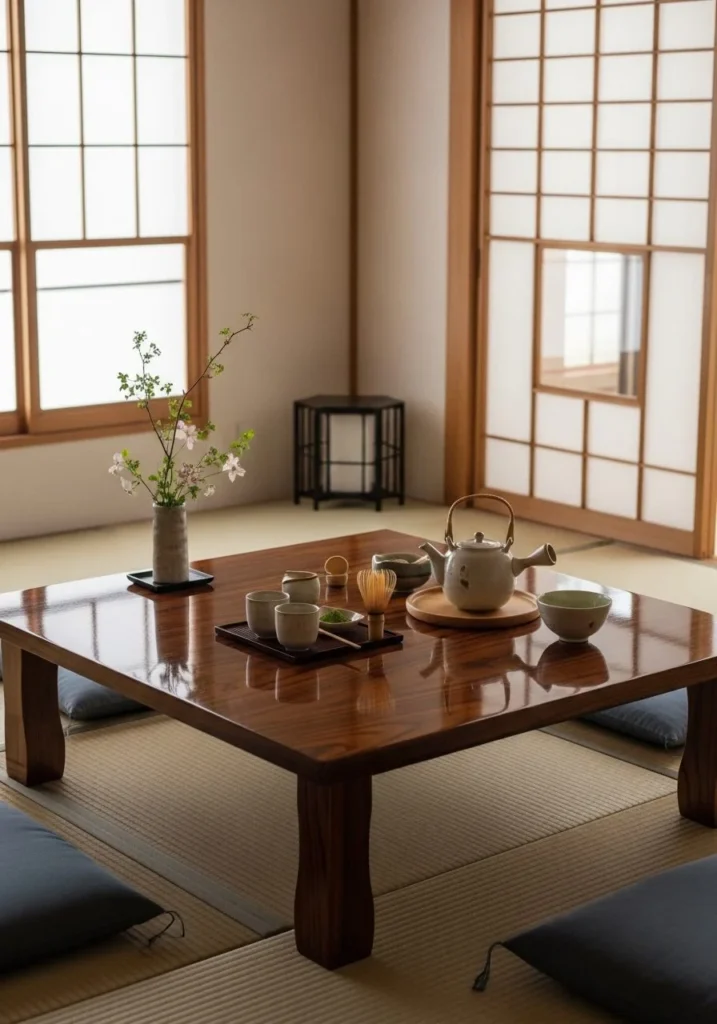
A low wooden coffee table inspired by traditional tea ceremony culture is a central element in Zen living room design, embodying mindfulness, simplicity, and intentional living. In Japanese living room ideas, furniture is kept close to the ground to promote a sense of humility, calm, and connection to the space. This low-profile table encourages slow living, where daily rituals like tea drinking become moments of reflection and presence rather than rushed activity. Typically crafted from natural wood with clean, minimal lines, it blends seamlessly into uncluttered interiors and enhances the overall sense of balance. In Japanese style furniture living room layouts, the table is often paired with floor cushions or zabuton seating, creating an intimate and grounded setting. Its simplicity allows focus to remain on the experience rather than decoration. This design works beautifully because it fosters calm interaction, reduces visual noise, and reinforces the core Zen principles of harmony, mindfulness, and natural elegance.
Styling Tips:
- Dark or light wood table
- Minimal tabletop décor
- Floor seating setup
Why it works:
It promotes mindful daily rituals.
12. Paper Lantern Ceiling Lighting Mood
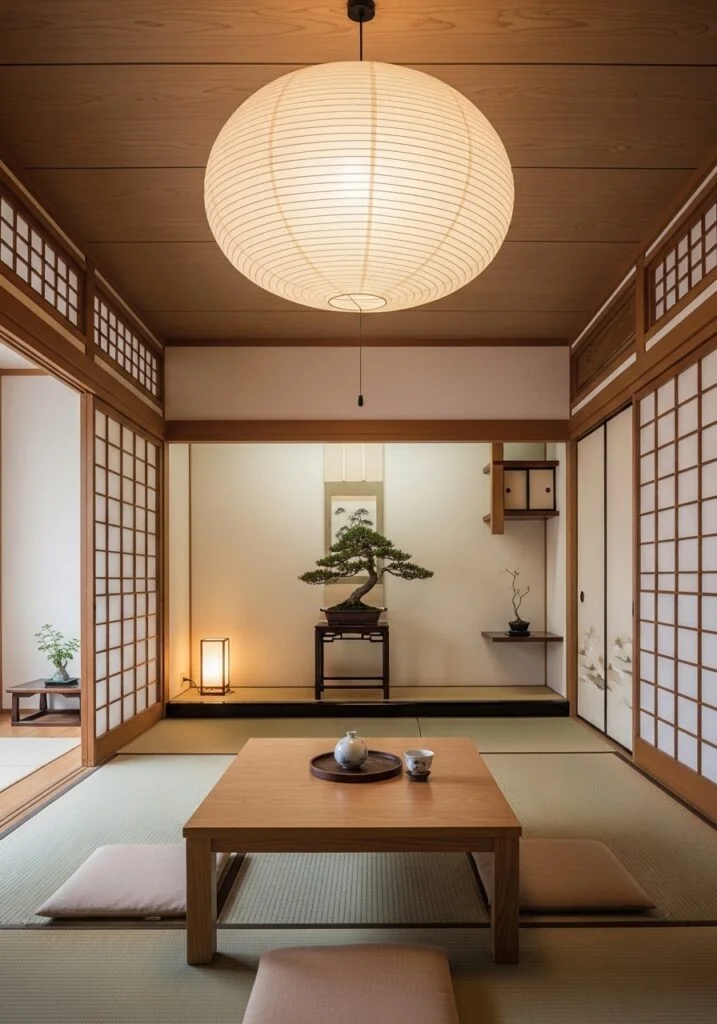
Paper lantern ceiling lighting is a timeless and iconic feature in minimalist Japanese interior design, known for creating a soft, calming atmosphere through beautifully diffused light. In Japanese living room ideas, lighting is not just functional but an essential part of the emotional experience of the space, and paper lanterns embody this philosophy perfectly. Their delicate, translucent material allows light to spread evenly, reducing harsh shadows and creating a warm, peaceful glow that enhances relaxation. Typically designed in simple white or natural tones, they blend seamlessly into neutral interiors and pair effortlessly with wood, bamboo, and linen elements. In Zen living room design, this type of lighting helps establish a sense of balance and mindfulness by keeping the visual environment gentle and uncluttered. Whether used as a single ceiling centerpiece or grouped in clusters, paper lanterns add subtle depth and softness. This design works beautifully because it transforms lighting into a soothing presence that supports calmness, simplicity, and timeless elegance.
Styling Tips:
- White paper lanterns
- Warm bulbs
- Symmetrical placement
Why it works:
It creates soft, peaceful lighting.
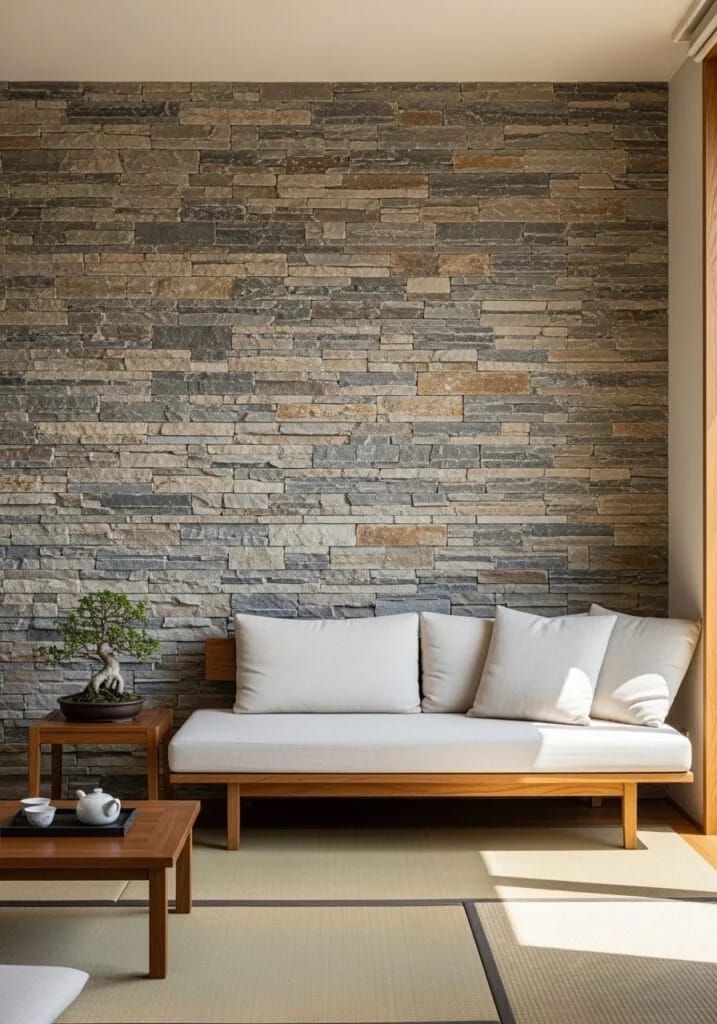
13. Natural Stone Accent Wall Texture
A natural stone accent wall brings grounding energy, texture, and quiet strength into Japanese home decor ideas. In minimalist Japanese interior design, stone is used to balance softer materials like wood, linen, and paper, creating a harmonious contrast that feels both natural and refined. The irregular texture and organic variation of stone add depth to the space without overwhelming its simplicity, making it ideal for Zen living room design. Typically kept in neutral tones such as gray, beige, or muted earth shades, stone walls help anchor the room visually while maintaining a calm, balanced atmosphere. When paired with warm lighting and minimal furniture, the surface becomes a subtle focal point that enhances the overall mood of stillness and stability. In Japanese living room ideas, this design choice reflects a deep connection to nature and imperfection, reinforcing the philosophy of wabi-sabi. The result is a serene, timeless interior that feels grounded, authentic, and effortlessly balanced.
Styling Tips:
- Natural stone finish
- Neutral palette
- Minimal décor
Why it works:
It adds earthy stability.
14. Floor Cushions Flexible Seating Space
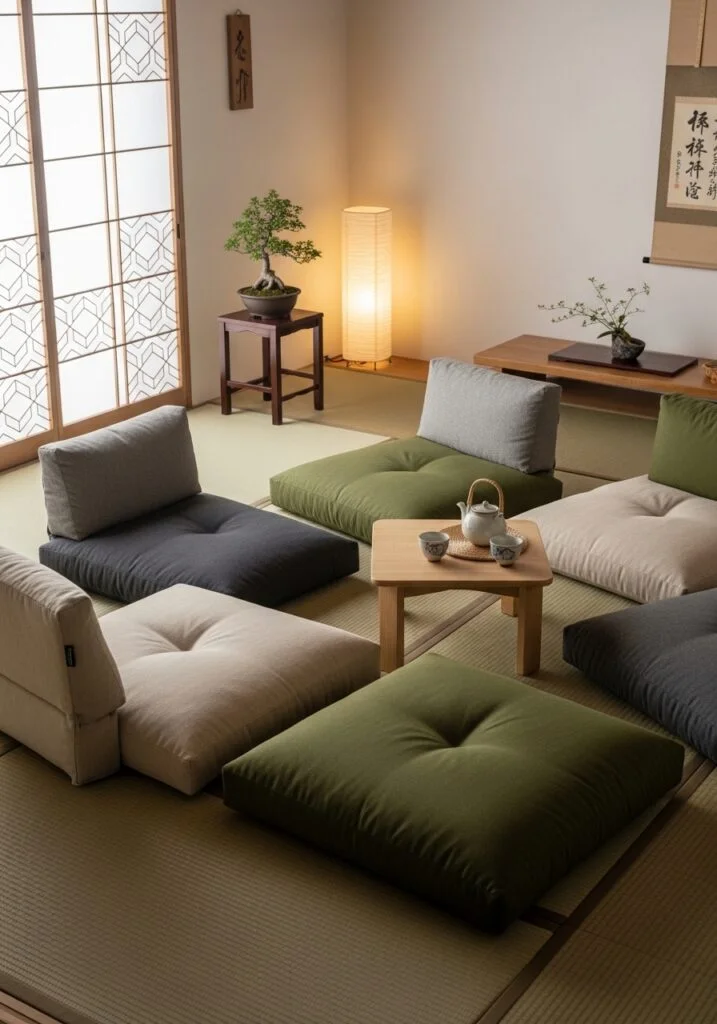
Floor cushions are an essential element in Japanese style furniture living room setups, offering flexibility, comfort, and a deeply relaxed approach to seating. In Japanese living room ideas, these cushions—often known as zabuton—are placed directly on tatami or low-floor arrangements, encouraging a closer connection to the ground and a more mindful way of living. Their lightweight and movable nature allows the space to be easily reconfigured, making them ideal for informal gatherings, tea moments, or quiet relaxation. In minimalist Japanese interior design, floor cushions help eliminate the need for bulky furniture, keeping the environment open, clean, and visually calm. Typically crafted in natural fabrics and neutral tones, they blend seamlessly with wood, bamboo, and soft lighting elements. In Zen living room design, this seating style supports simplicity and presence, encouraging slower, more intentional interaction. The result is a flexible, serene, and clutter-free space that embodies comfort, balance, and understated elegance rooted in traditional Japanese living principles.
Styling Tips:
- Soft fabric cushions
- Neutral colors
- Low seating layout
Why it works:
It encourages relaxed living.
15. Wooden Slatted Divider Panels
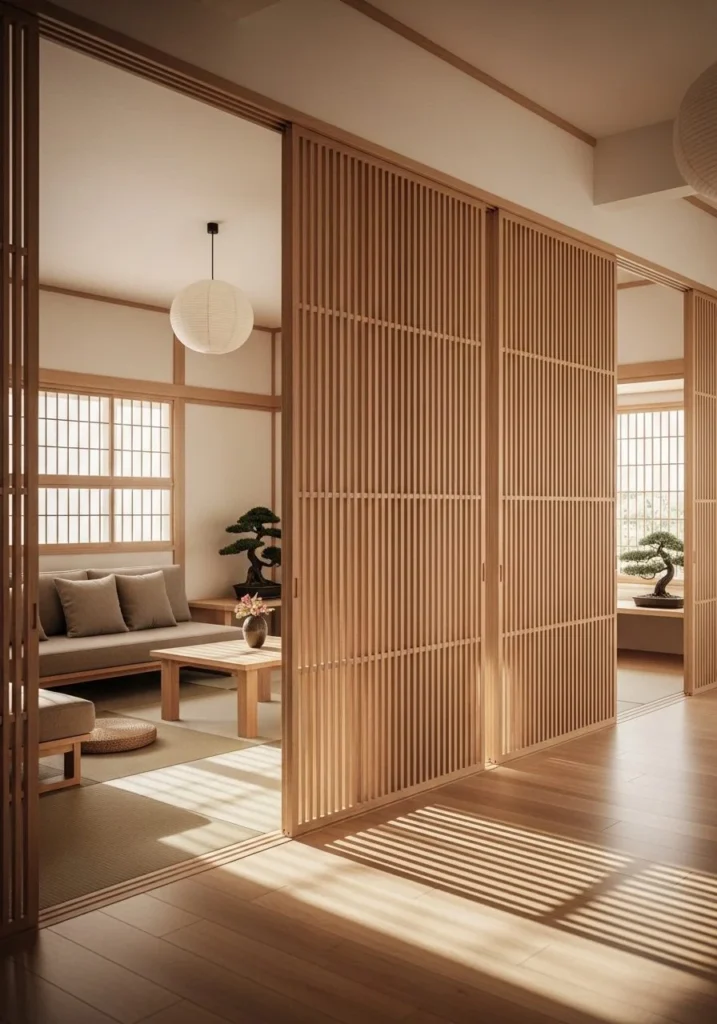
Wooden slatted divider panels are a defining feature in Japandi living room ideas, offering a perfect balance between openness and subtle spatial separation. These vertical or horizontal slatted structures allow light and air to pass through freely while gently dividing areas within an open-plan layout. In minimalist Japanese and Scandinavian-inspired interiors, they are valued for maintaining visual flow without creating heavy or closed-off partitions. Typically crafted from natural woods like oak, ash, or walnut, these dividers introduce warmth, texture, and architectural rhythm to the space. Their clean, linear design complements the simplicity of Japandi aesthetics while adding a layer of visual interest. In modern Japanese living room ideas, slatted panels are often used to separate seating areas, dining zones, or entryways without disrupting harmony or brightness. This design works beautifully because it preserves openness, enhances natural light, and creates a calm, structured environment that feels both functional and aesthetically balanced.
Styling Tips:
- Vertical wooden slats
- Light wood tones
- Open structure
Why it works:
It maintains openness and structure.
16. Wabi-Sabi Textured Wall Finish Serenity
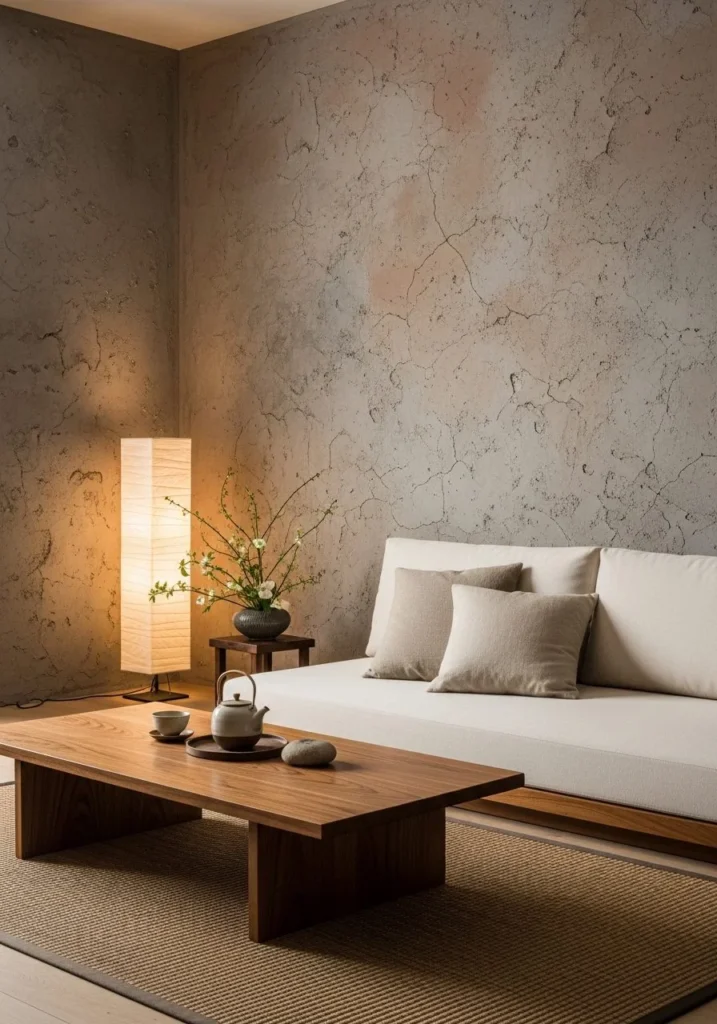
Wabi-sabi textured walls are a core element of Japanese living room ideas, celebrating imperfection, softness, and natural aging. In Zen living room design, walls are not meant to look perfect—they are meant to feel organic and calm. Use limewash, plaster, or clay-based finishes in soft beige, warm gray, or off-white tones. This style is essential in minimalist Japanese interior design because it removes visual noise and replaces it with subtle depth. Pair these walls with wooden furniture and linen textiles to enhance the natural aesthetic. The slightly uneven texture creates shadows that shift with daylight, adding emotional warmth to the space. This approach is perfect for Japandi living room ideas where simplicity meets soulful imperfection, turning your living room into a peaceful, grounded sanctuary.
Styling Tips:
- Limewash or clay plaster walls
- Soft neutral tones
- Minimal wall décor
Why it works:
It creates depth through natural imperfection and softness.
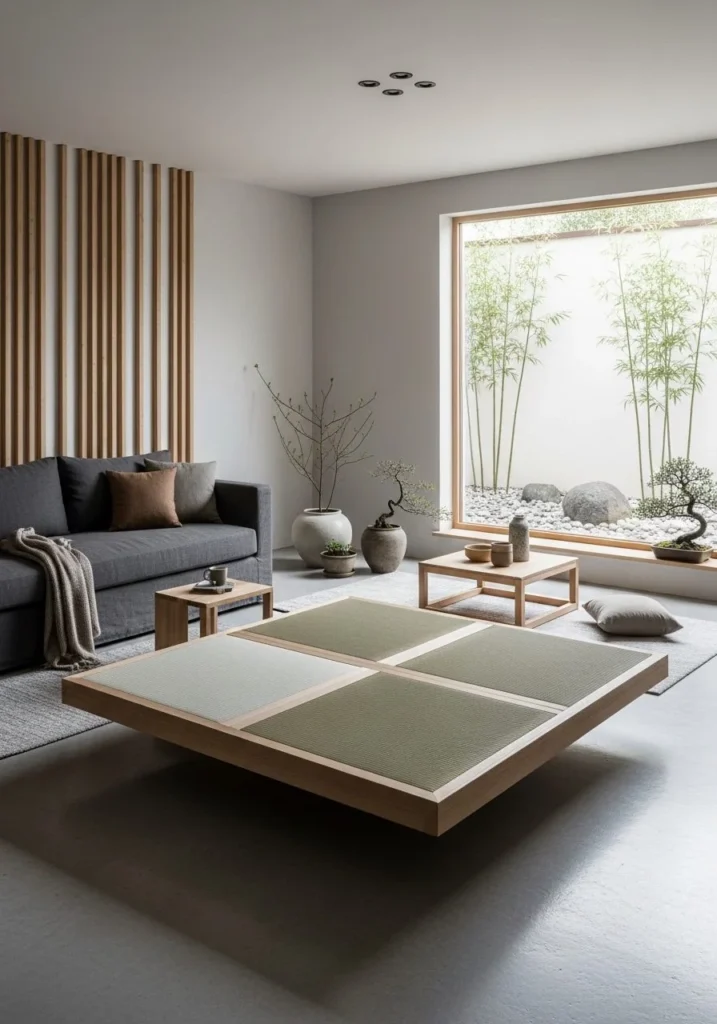
17. Floating Tatami-Inspired Wooden Platform Zone
A floating wooden platform inspired by tatami design brings structure and calm into Japanese style furniture living room layouts. This raised platform defines a seating or relaxation zone without using walls. In Japanese living room ideas, this design enhances grounding energy while keeping the space visually open. Use natural oak or ash wood with clean edges and pair it with floor cushions or low seating. This works beautifully in Zen living room design because it separates space through elevation rather than clutter. Add a small tea table or bonsai corner for balance. The floating platform also adds architectural interest while maintaining minimalist Japanese interior design principles.
Styling Tips:
- Raised wooden platform
- Floor seating arrangement
- Natural wood finish
Why it works:
It defines space without visual heaviness.
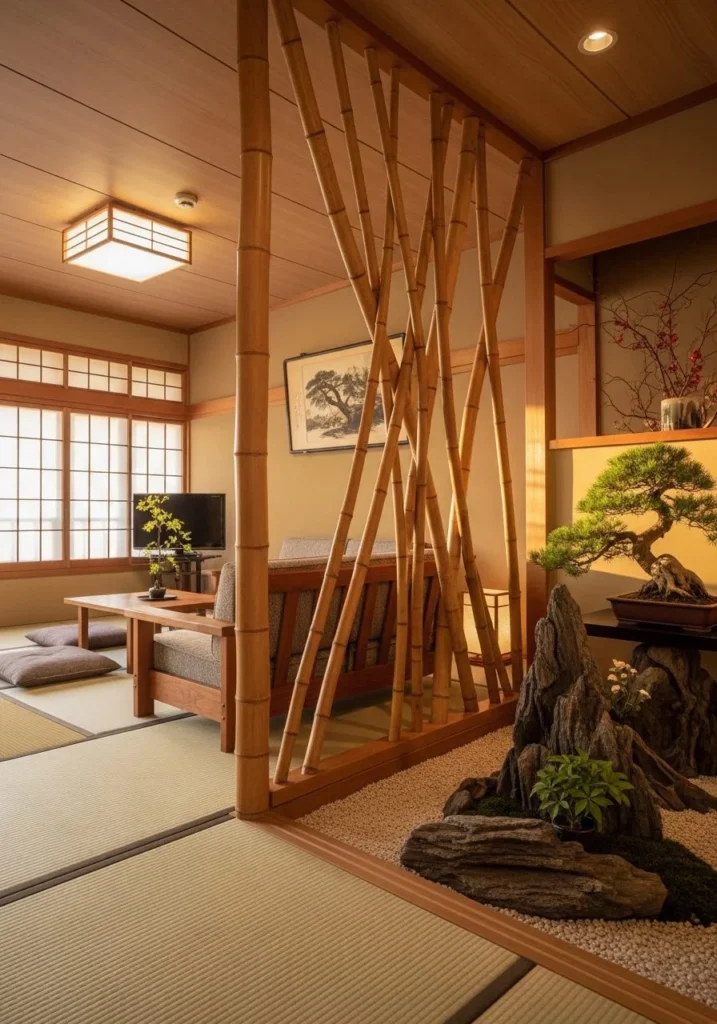
18. Bamboo Room Divider Natural Flow Structure
A bamboo divider is a lightweight and elegant addition to Japanese living room ideas. It creates separation while maintaining openness and airflow. In Japandi living room ideas, bamboo is valued for its sustainability and natural texture. Place it between seating and dining areas or as a soft background feature. The vertical lines of bamboo create rhythm and visual calm, essential in Zen living room design. Pair with neutral tones and minimal furniture to maintain harmony. This design supports minimalist Japanese interior design by adding structure without blocking light or movement.
Styling Tips:
- Natural bamboo panels
- Vertical line design
- Neutral surrounding décor
Why it works:
It separates space while preserving openness.
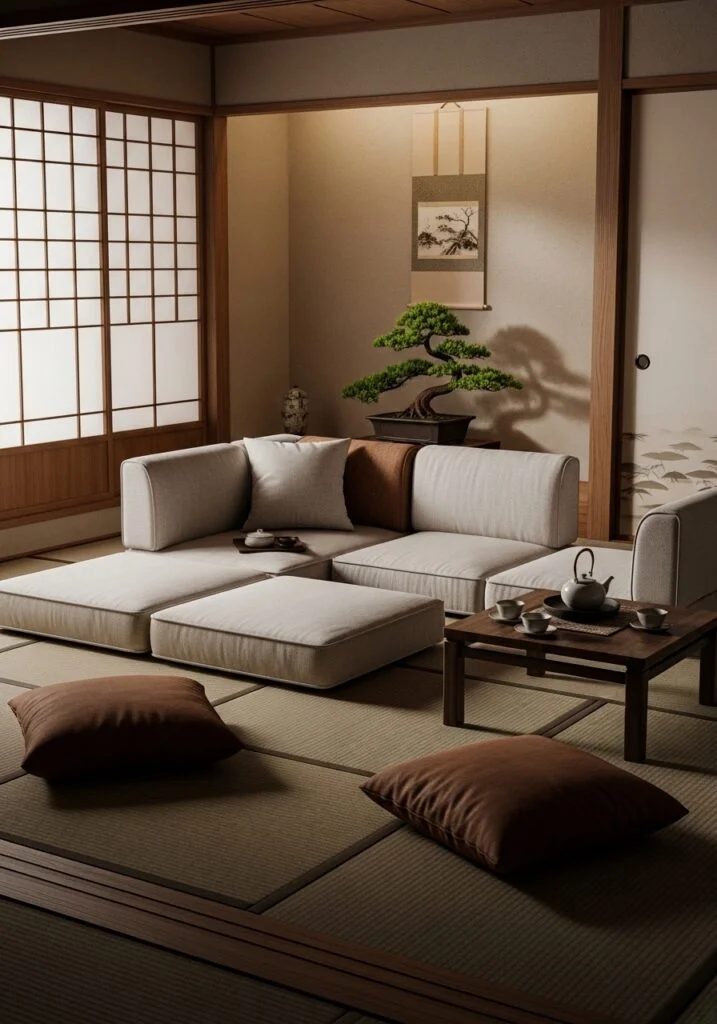
19. Low Modular Floor Sofa System Flexibility
A low modular floor sofa system is ideal for modern Japanese living room ideas, offering flexibility and comfort. These sofas sit close to the ground, reflecting traditional Japanese seating culture. In Zen living room design, modular layouts allow you to rearrange seating based on mood or function. Choose soft linen or cotton fabrics in beige, cream, or muted gray. This design is essential in minimalist Japanese interior design because it avoids bulky furniture while maximizing usability. The low profile also enhances ceiling height perception, making the room feel larger and calmer.
Styling Tips:
- Modular low seating pieces
- Neutral fabric tones
- Flexible arrangement
Why it works:
It combines adaptability with visual simplicity.
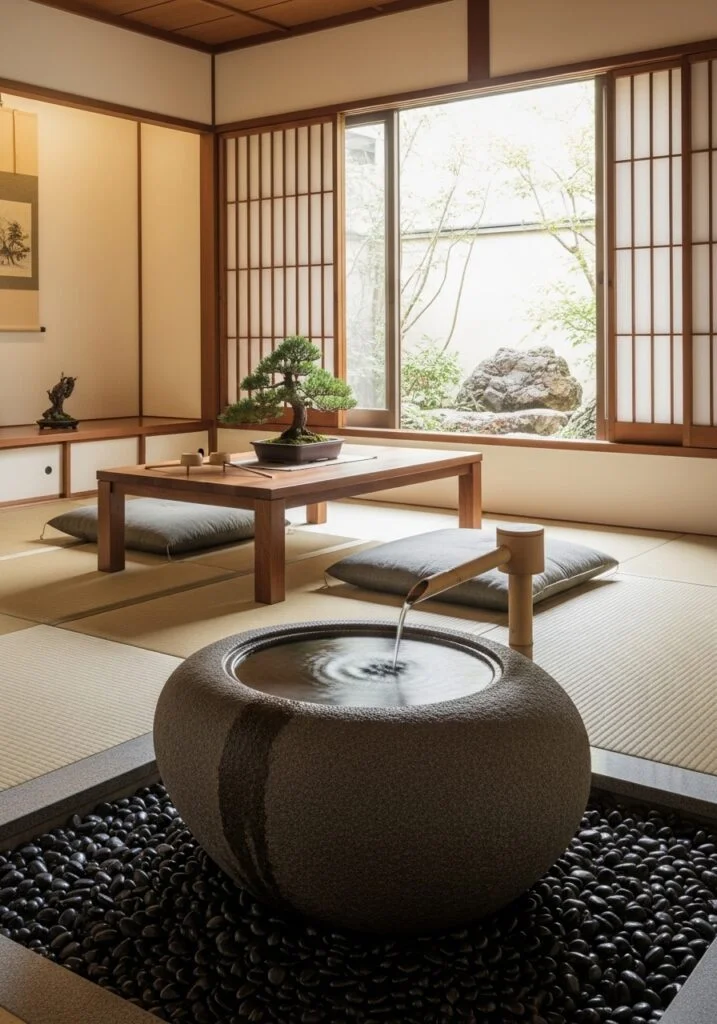
20. Stone Basin Decorative Water Element Calmness
A stone basin water feature is a deeply calming and symbolic addition to Japanese home decor ideas, introducing a sense of stillness, purity, and natural balance into the living space. In Zen living room design, water represents flow, renewal, and emotional clarity, making it a powerful element for creating a peaceful atmosphere. A simple stone basin filled with still water—or gently circulating movement—placed in a quiet corner can instantly transform the mood of the room, encouraging reflection and mindfulness. When combined with natural wood accents, soft ambient lighting, and minimalist surroundings, it creates a harmonious composition rooted in nature. In minimalist Japanese interior design, such features are not decorative excess but intentional elements that support emotional balance and spatial calmness. The raw texture of stone paired with the fluidity of water enhances grounding energy while maintaining visual simplicity. This design works beautifully because it brings together nature, symbolism, and serenity, resulting in a space that feels deeply peaceful, balanced, and restorative.
Styling Tips:
- Natural stone basin
- Soft ambient lighting
- Minimal surrounding décor
Why it works:
It introduces calming natural energy.
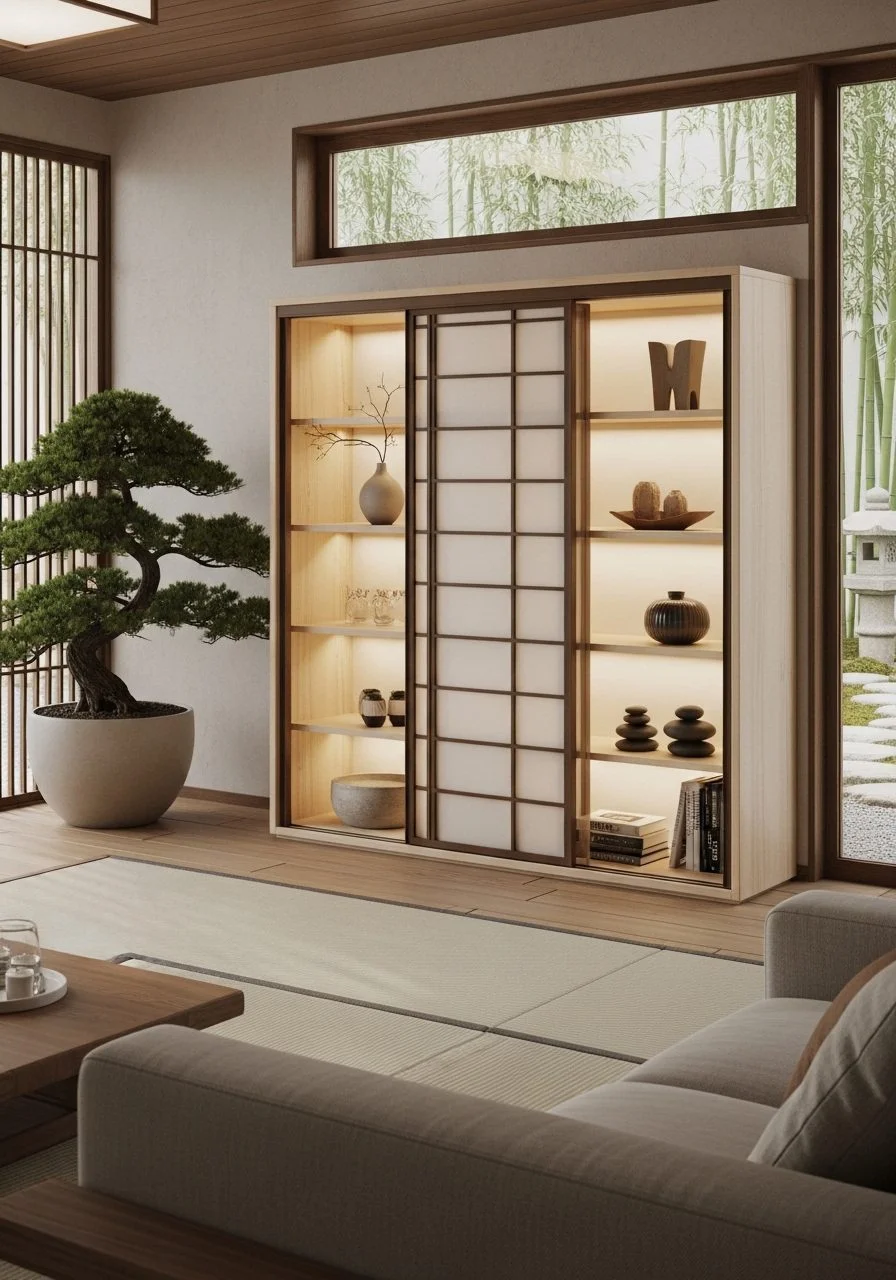
21. Shoji-Inspired Glass Cabinet Storage Design
Shoji-inspired glass cabinet storage is a refined blend of tradition and modern practicality in Japanese style furniture living room layouts. Drawing inspiration from classic shoji screens, these cabinets typically feature slender wooden frames paired with frosted glass or paper-textured panels, creating a soft, diffused visual effect. This design allows storage to remain concealed while still maintaining a sense of lightness and elegance within the space. In Japanese living room ideas, transparency and simplicity are essential principles, and this approach perfectly supports both by reducing visual heaviness without sacrificing functionality. Instead of exposing clutter, the frosted surfaces gently obscure contents, preserving a calm and orderly environment. In Zen living room design, this subtle concealment helps maintain mental and visual clarity, reinforcing a clutter-free lifestyle. The combination of natural wood tones and softened translucency enhances warmth while keeping the overall aesthetic minimal. This design works beautifully because it balances storage needs with serenity, creating a space that feels organized, airy, and deeply harmonious.
Styling Tips:
- Wooden frame cabinets
- Frosted glass panels
- Minimal contents display
Why it works:
It hides clutter while maintaining light flow.
22. Minimal Ceramic Decor Sculptural Display
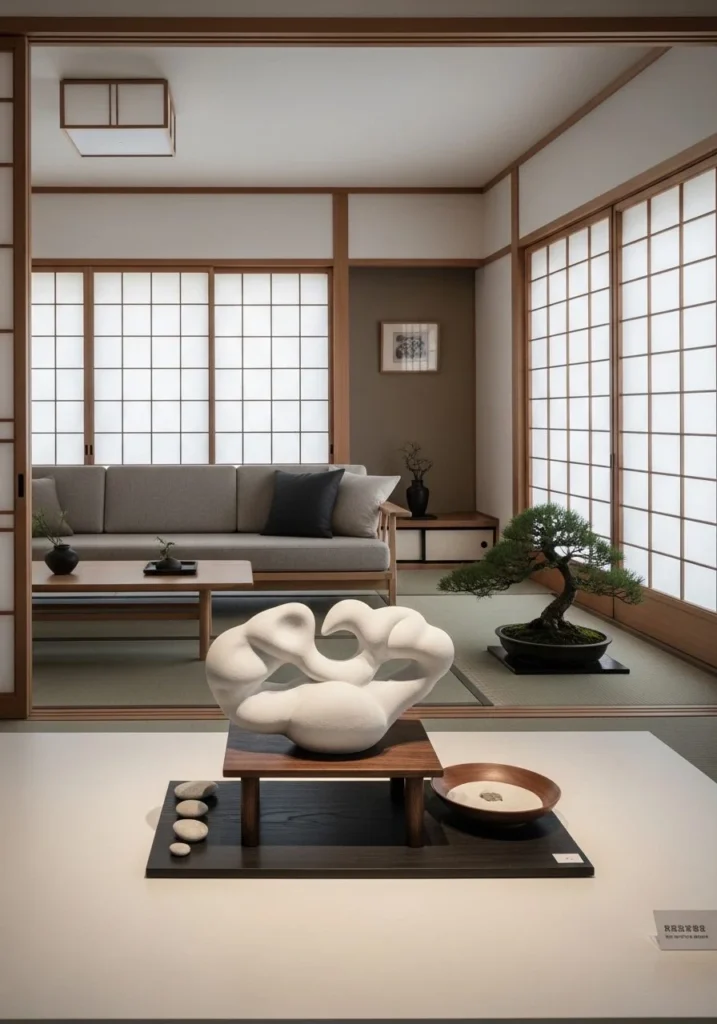
Minimal ceramic decor is a key element in Japanese home decor ideas, emphasizing simplicity, craftsmanship, and quiet beauty. In minimalist Japanese interior design, every object is chosen with intention, focusing on form, texture, and emotional presence rather than quantity. Handcrafted ceramic vases, bowls, or sculptural pieces in soft neutral tones—such as ivory, clay, or muted gray—bring a sense of organic elegance into the space. When placed on natural wooden surfaces, these objects create a gentle contrast between raw material and refined craftsmanship, enhancing visual balance. In Zen living room design, negative space is just as important as the objects themselves, allowing each piece to breathe and be appreciated fully. This restrained approach encourages calm visual storytelling, where each item contributes to a quiet narrative of simplicity and mindfulness. The design works beautifully because it avoids clutter, highlights natural imperfection, and creates a serene, grounded atmosphere that feels both artistic and deeply peaceful.
Styling Tips:
- Handmade ceramic pieces
- Neutral color palette
- Minimal grouping
Why it works:
It adds subtle artistic presence.
23. Zen Reading Corner Floor Lamp Setup
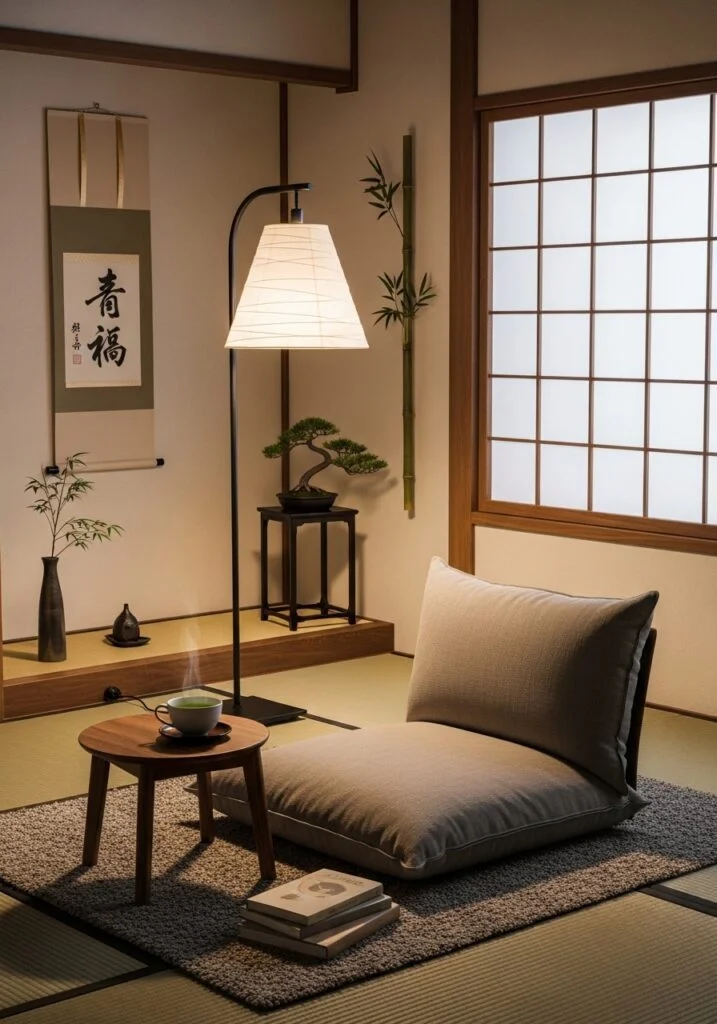
A Zen reading corner floor lamp setup is a thoughtful addition to Japanese living room ideas, creating a dedicated space for quiet reflection, reading, and relaxation. In Zen living room design, personal calm zones are essential, as they support mindfulness and encourage slow, intentional living. This setup typically includes a low wooden chair or floor cushion paired with a soft, paper lantern-style floor lamp that emits a warm, diffused glow. The gentle lighting reduces visual strain while enhancing a peaceful and cozy atmosphere. In minimalist Japanese interior design, simplicity is key, so the space is kept uncluttered, often featuring only a small side table or a single decorative object like a plant or book. Natural materials such as wood, linen, and bamboo help reinforce harmony with the surrounding environment. This design works beautifully because it combines comfort, function, and serenity, transforming an unused corner into a calming retreat that supports focus, relaxation, and emotional balance.
Styling Tips:
- Soft warm lighting
- Floor seating
- Minimal books or décor
Why it works:
It creates a peaceful personal retreat.
24. Sliding Wall Storage Hidden Minimal Design
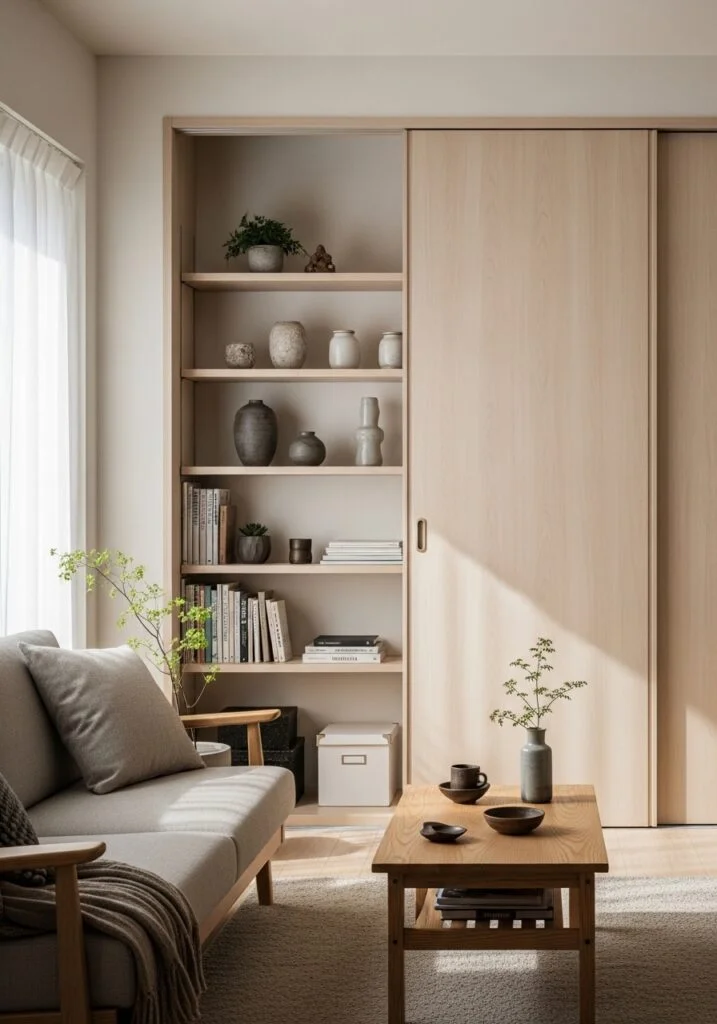
Sliding wall storage is a core element in Japanese style furniture living room design, offering a seamless way to maintain order while preserving a clean, minimalist aesthetic. In Japanese living room ideas, hidden storage solutions are essential for reducing visual clutter and supporting a calm, organized environment. These sliding panels are typically integrated directly into the wall structure and finished in natural wood, bamboo, or neutral tones that blend effortlessly with the surrounding architecture. Instead of opening outward, the sliding mechanism allows for smooth, space-saving functionality, making it ideal for compact or open-plan interiors. In minimalist Japanese interior design, this approach ensures that everyday items remain concealed, keeping surfaces clear and visually balanced. The subtle design helps maintain uninterrupted lines across the room, enhancing the sense of openness and flow. This works beautifully because it combines practicality with restraint, allowing the living space to feel spacious, harmonious, and deeply aligned with Zen principles of simplicity and clarity.
Styling Tips:
- Hidden sliding doors
- Neutral finishes
- Seamless wall integration
Why it works:
It maintains perfect visual order.
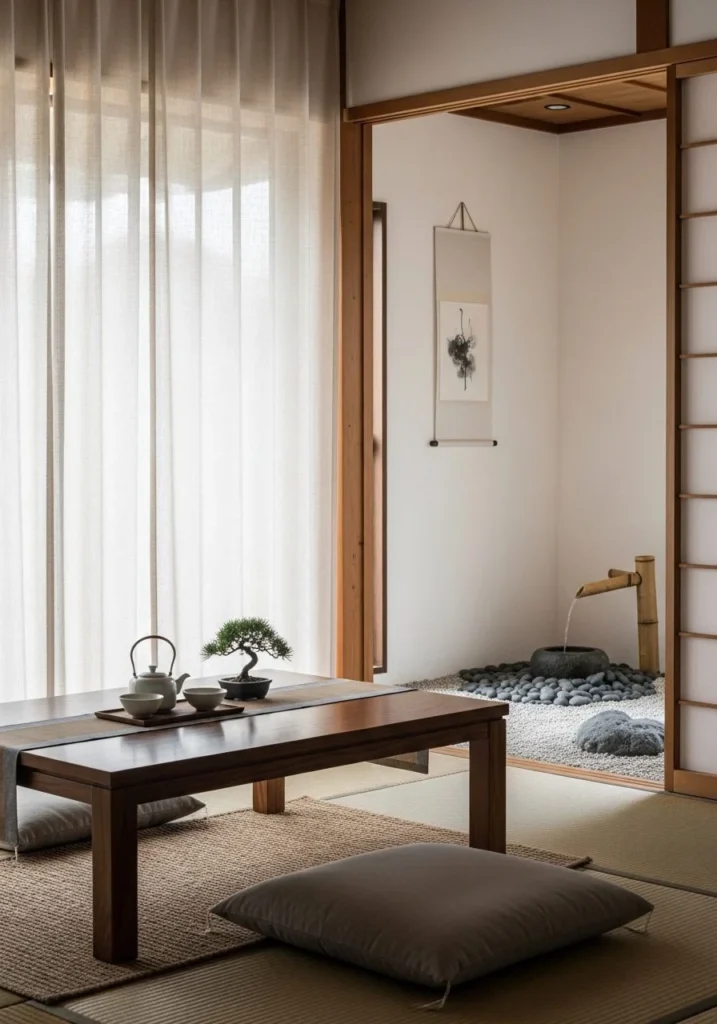
25. Natural Linen Curtain Soft Light Flow
Natural linen curtains are an essential element in Japanese living room ideas, designed to gently filter daylight and create a soft, calming flow of light throughout the space. In Zen living room design, natural light is considered a key emotional and atmospheric component, and linen fabric enhances this by diffusing harsh sunlight into a warm, balanced glow. The slightly textured weave of linen adds subtle organic character while maintaining a clean, minimalist appearance that aligns with Japanese interior principles. Typically used in neutral tones such as white, ivory, beige, or soft gray, these curtains blend effortlessly with wood, bamboo, and stone materials, reinforcing a cohesive natural aesthetic. Their floor-length drape also enhances vertical proportions, making the room feel taller, lighter, and more open. In minimalist Japanese interior design, restraint is essential, and linen curtains embody this philosophy by offering beauty through simplicity. This design works beautifully because it softens light, enhances serenity, and creates a peaceful, breathable environment rooted in nature and calmness.
Styling Tips:
- Light linen fabric
- Floor-length curtains
- Neutral shades
Why it works:
It softens light and enhances serenity.
26. Wooden Slat Ceiling Warm Texture Design
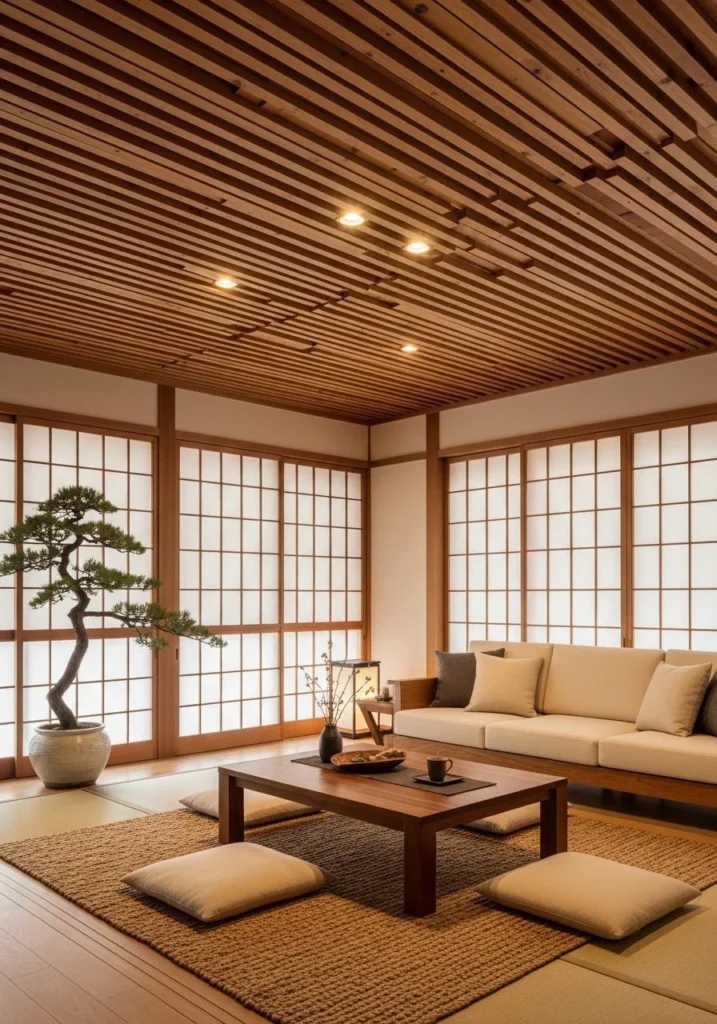
Wooden slat ceilings are a refined architectural feature in minimalist Japanese interior design, introducing warmth, rhythm, and natural texture without overwhelming the space. In Japanese living room ideas, ceilings are often treated as an extension of the overall design language, and wooden slats help create continuity between walls, flooring, and furniture. The linear pattern adds subtle visual movement, guiding the eye across the room while maintaining a calm and balanced atmosphere. Typically crafted from natural woods like oak, cedar, or ash, these slats bring an organic softness that contrasts beautifully with clean, minimal interiors. In Zen living room design, this detail enhances spatial harmony by adding depth without clutter or visual noise. The spacing between slats also allows light and shadow to interact gently, creating a dynamic yet peaceful effect. This design works beautifully because it combines structure with simplicity, resulting in a space that feels warm, grounded, and thoughtfully composed while preserving the essence of Japanese minimalism.
Styling Tips:
- Light wood slats
- Even spacing
- Neutral walls
Why it works:
It adds texture without clutter.
27. Futon Floor Sleeping Sofa Concept
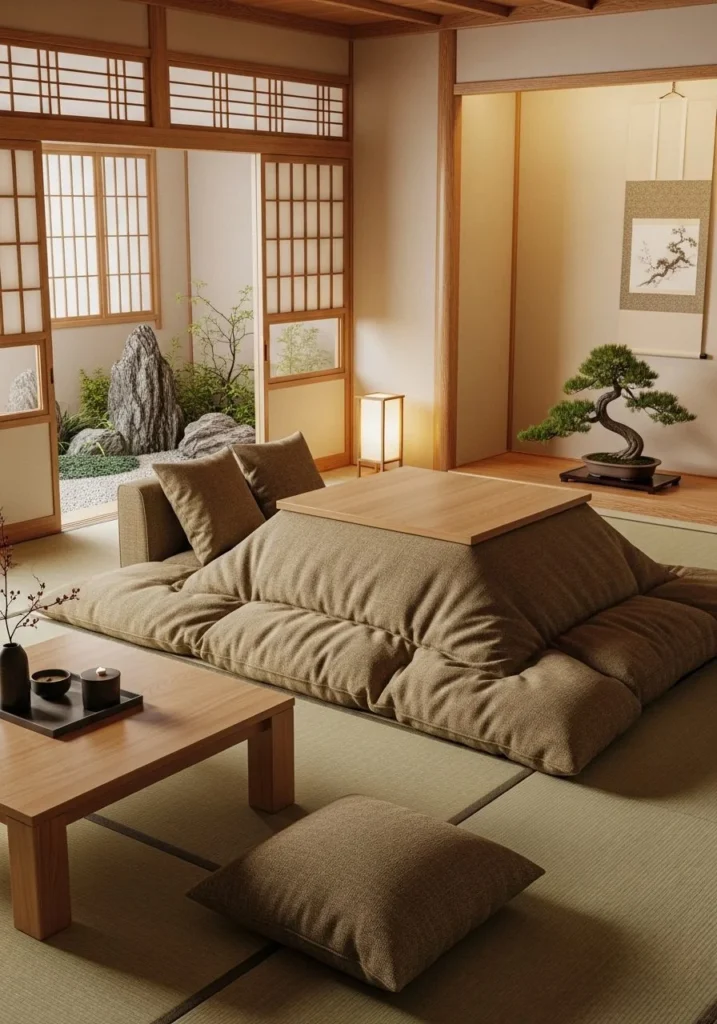
A futon-inspired seating concept is a versatile and space-efficient element in Japanese living room ideas, embodying the principles of simplicity, adaptability, and multifunctional living. Rooted in traditional Japanese design, the futon allows a space to transition effortlessly between seating and sleeping, making it ideal for compact or minimalist interiors. In Japanese style furniture living room layouts, this approach reduces the need for bulky furniture and promotes a more open, flexible environment. Typically placed directly on tatami mats or low platforms, futon-style seating encourages a closer connection to the floor, reinforcing grounding and comfort. In Zen living room design, this simplicity supports mindful living by eliminating excess and focusing on essential use. Modern interpretations often incorporate soft mattresses or modular cushions that maintain comfort while preserving a low-profile aesthetic. This design works beautifully because it maximizes functionality without sacrificing calmness, creating a living space that feels adaptable, uncluttered, and deeply aligned with traditional Japanese principles of balance and minimal living.
Styling Tips:
- Foldable cushions
- Soft natural fabrics
- Minimal setup
Why it works:
It supports flexible living.
28. Indoor Zen Garden Corner Feature
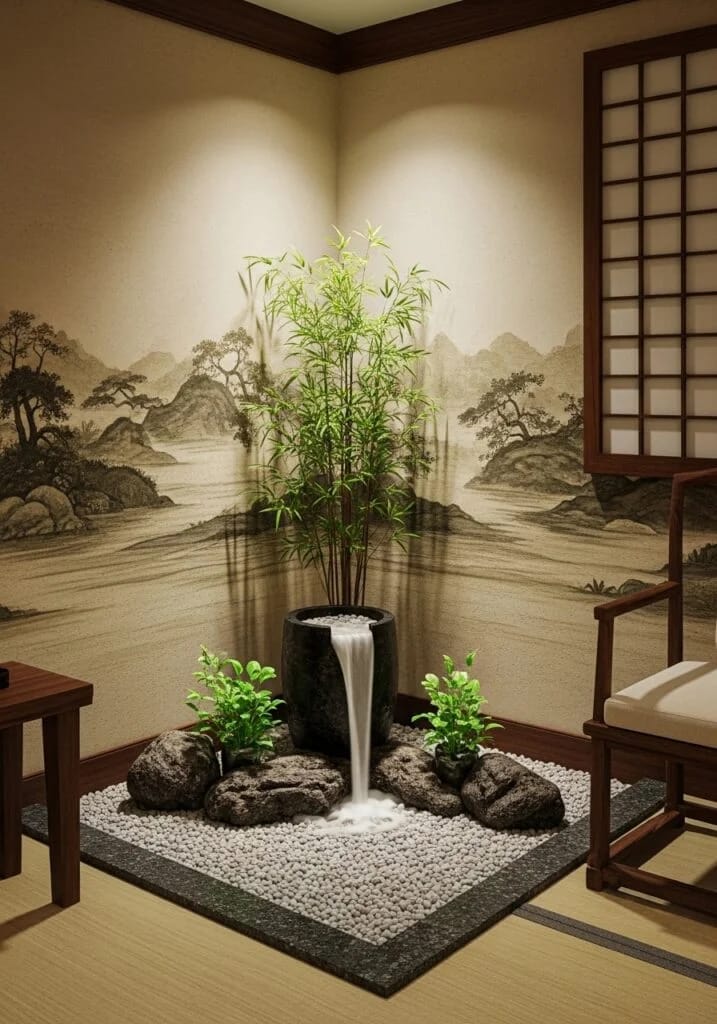
An indoor Zen garden corner is a calming and symbolic addition to Japanese home decor ideas, bringing nature, stillness, and mindfulness into the living space. Rooted in traditional Zen living room design, this feature uses simple natural elements such as fine sand, smooth stones, gravel, and minimal greenery to create a quiet, meditative atmosphere. The arrangement is intentionally minimal, often featuring carefully raked sand patterns that represent flow, balance, and reflection. In Japanese living room ideas, this type of corner serves as a visual retreat that encourages pause and contemplation within the home. Small elements like bonsai, moss, or a single sculptural plant can be added subtly without disturbing the simplicity of the design. The space is typically framed with natural materials like wood or stone to enhance its grounding effect. This design works beautifully because it transforms a small corner into a peaceful sanctuary, promoting mental clarity, emotional balance, and a deeper connection to nature through simplicity and restraint.
Styling Tips:
- Sand and stone arrangement
- Bonsai accent
- Wooden tray base
Why it works:
It creates meditative focus.
29. Minimal Black Accent Contrast Elements
Minimal black accent elements are an essential detail in Japandi living room ideas, adding depth, definition, and subtle contrast without disrupting the calm, minimalist aesthetic. In Japandi living room design, which blends Japanese simplicity with Scandinavian warmth, black is used sparingly and intentionally to ground lighter tones and enhance visual structure. Thin black metal frames, furniture legs, or subtle hardware details are commonly incorporated to create clean lines and architectural balance. These accents help highlight neutral palettes of beige, white, soft gray, and natural wood, making the overall composition feel more refined and intentional. In Japanese style furniture living room layouts, restraint is key, so black elements are never dominant but instead act as quiet anchors within the design. This approach works beautifully because it introduces clarity and contrast while preserving simplicity, resulting in a space that feels modern, balanced, and effortlessly sophisticated with a strong sense of visual harmony and calm.
Styling Tips:
- Matte black details
- Minimal usage
- Neutral base
Why it works:
It enhances visual balance.
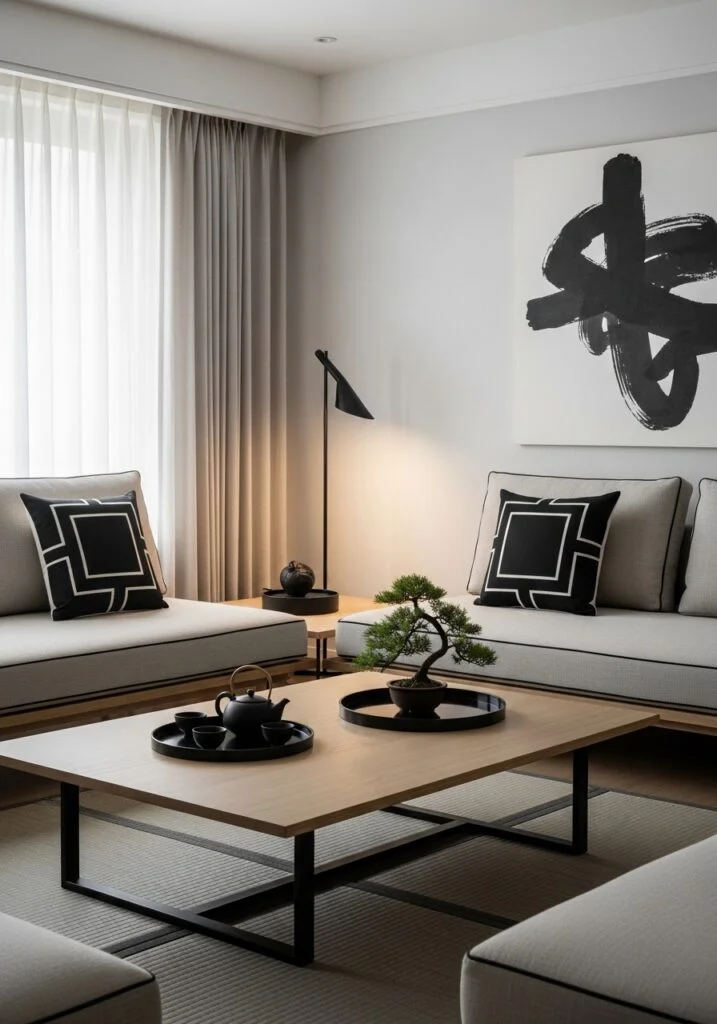
30. Ultimate Zen Japanese Living Room Harmony
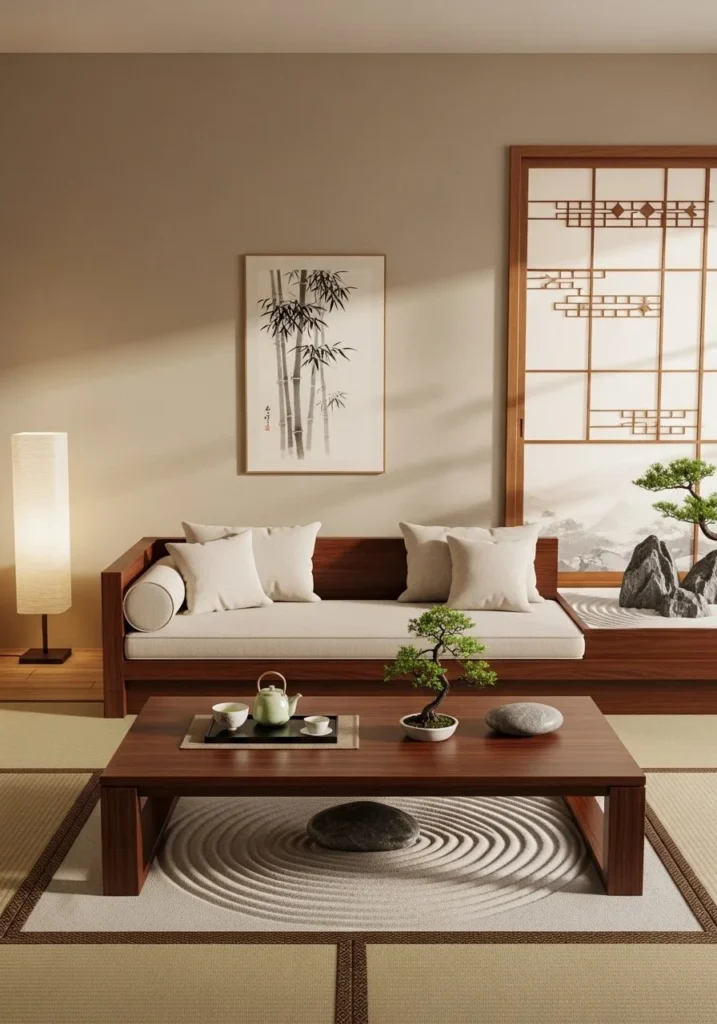
The ultimate Japanese living room ideas combine low furniture, natural wood, soft lighting, tatami elements, and neutral tones. This creates a fully immersive Zen living room design where everything feels balanced. In minimalist Japanese interior design, harmony is more important than decoration. Each piece serves a purpose while maintaining calm energy. This final look embodies Japandi living room ideas at their purest form, creating a timeless sanctuary.
Styling Tips:
- Natural wood + linen + stone
- Soft warm lighting
- Minimal balanced layout
Why it works:
It creates complete harmony, balance, and Zen calmness.
Conclusion:
Japanese interiors are not about filling space—they are about creating peace within it. With these 30 Japanese living room furniture ideas, you can transform your home into a calm, balanced sanctuary inspired by Zen living room design and minimalist Japanese interior design principles. Start with simplicity, embrace natural materials, and let your space breathe.