Will a forest green living room feel like a cave? That question stalls more dark-paint projects than any budget does, usually in the paint aisle with a sample card in hand. The honest answer is that the green rarely causes the cave effect. Too little reflected light does. A deep green wall soaks up much of the light that hits it, so everything else in the room has to work harder.
The ideas below solve that problem in different ways, from one rug to a painted ceiling. They are grouped by how much commitment each takes, so you can start where your budget and your nerve allow.
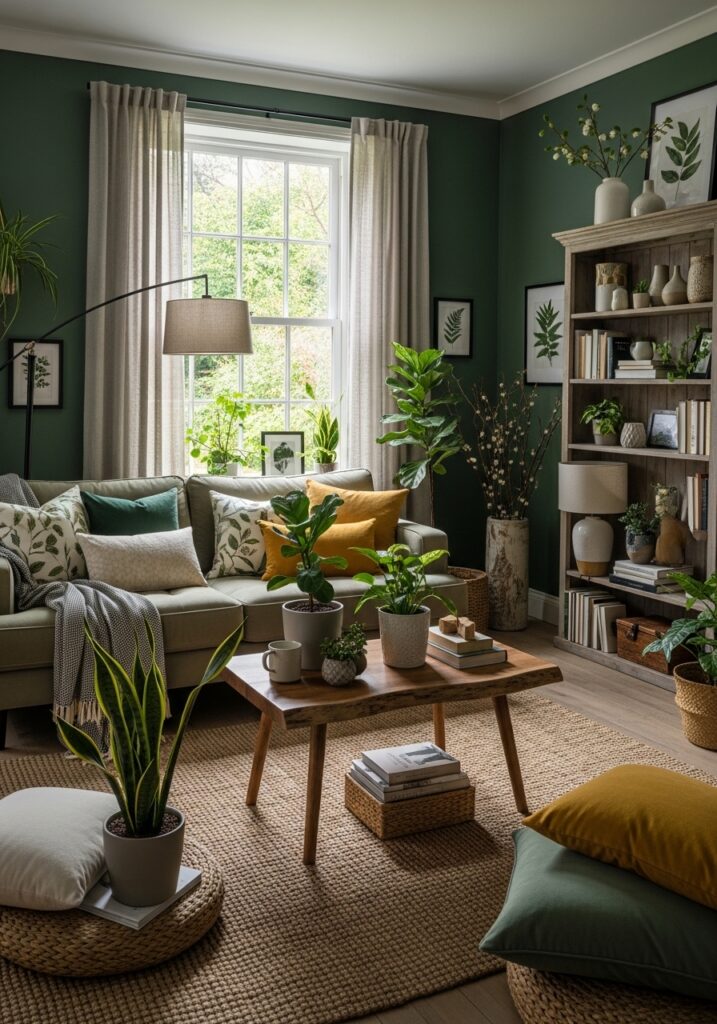
Pick the Green Before You Pick Anything Else
“Forest green” is not one color. Cards labeled forest, hunter, and evergreen can land anywhere between blue-black and almost brown. Hold the card next to your largest wood piece. Warm oak or walnut sits comfortably with an olive-leaning green. Gray upholstery looks cleaner beside a blue-leaning one.
Paint two-foot sample squares in two places: your darkest corner and the wall beside the main window. Look at both for a couple of days. A dark green can read nearly black next to a north window and leafy next to a south one, so judge it where you will actually sit.
Decide on trim now, too. Warm white trim gives a crisp, traditional frame. Trim painted the same green as the wall, in satin, makes the room feel drenched and hides uneven door and window casings. Switching trim color halfway through the job costs a second round of taping, so settle it before you open the can.
Ideas for People Who Aren’t Ready to Paint
Start with fabric and objects. They cost less than a paint job, and you can return them if the room pushes back.
A Forest Green Rug Under the Seating Area
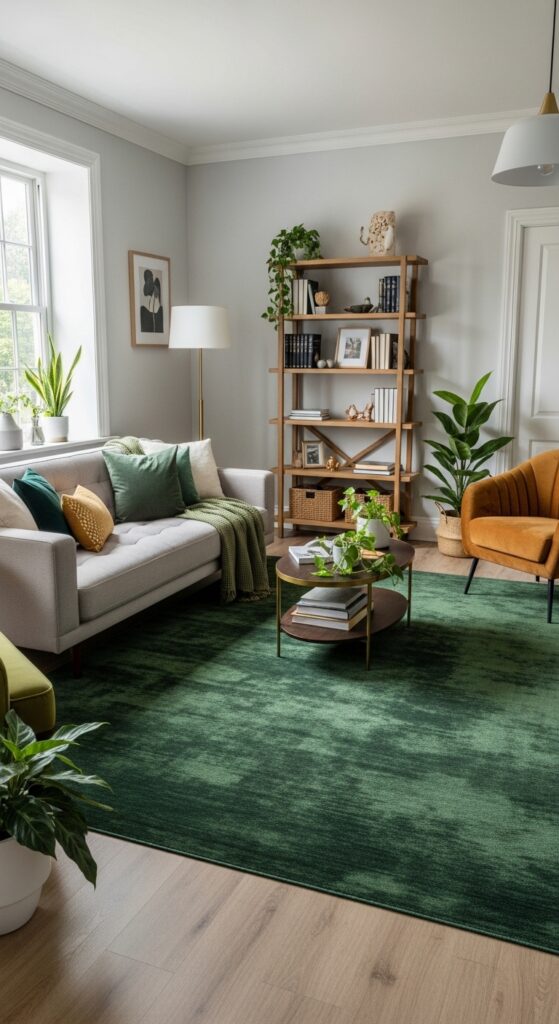
An 8-by-10 rug delivers about 80 square feet of green without touching a wall. Choose wool with a low, dense pile so sofa legs sit steadily. Keep the rug clearly darker or lighter than the sofa, or the two blur together. Our guide to rug placement ideas covers sizing rules.
A Green Velvet Sofa That Survives Real Life
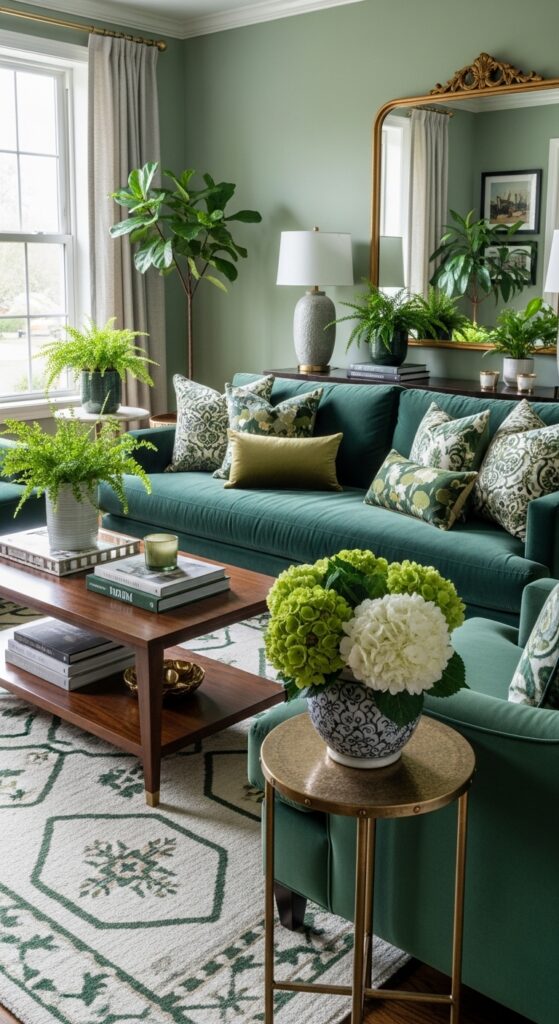
Buy performance velvet, usually polyester and often rated for 100,000 double rubs or more. Cotton velvet crushes and water-marks. Check the pile direction too. If the seat and back cushions run opposite ways, one sofa shows two greens in daylight. An 84-inch velvet sofa commonly costs $1,200 to $3,500.
Curtains in Green Linen or Lined Velvet
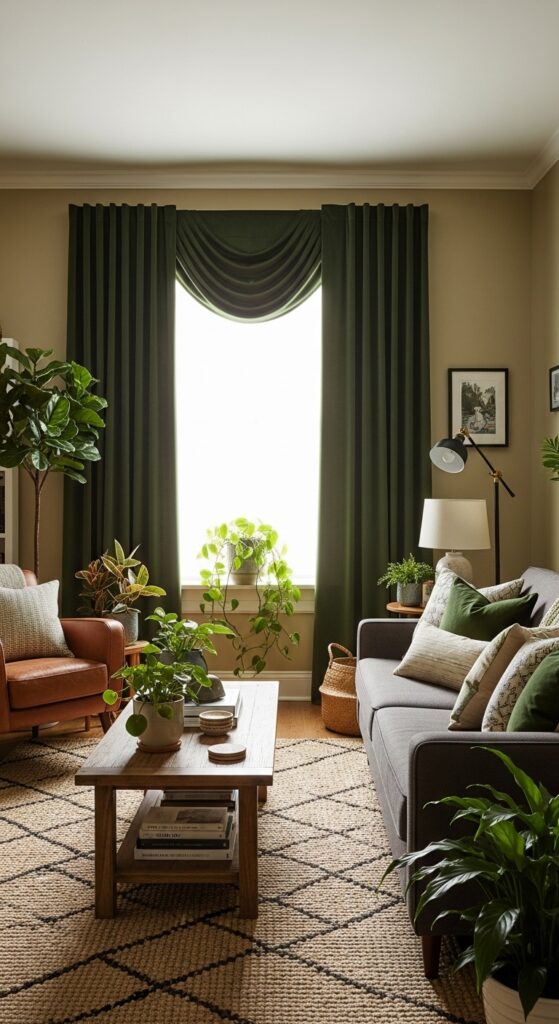
Sheer green linen turns daylight into a mossy glow. Lined velvet blocks light and mutes noise. Order a swatch first, because screens show green lighter and bluer than the real fabric. Dye lots also vary, so buy every panel for one window in a single order. Sun fades green dye, so line anything facing south.
A Small Cluster of Vintage Green Objects
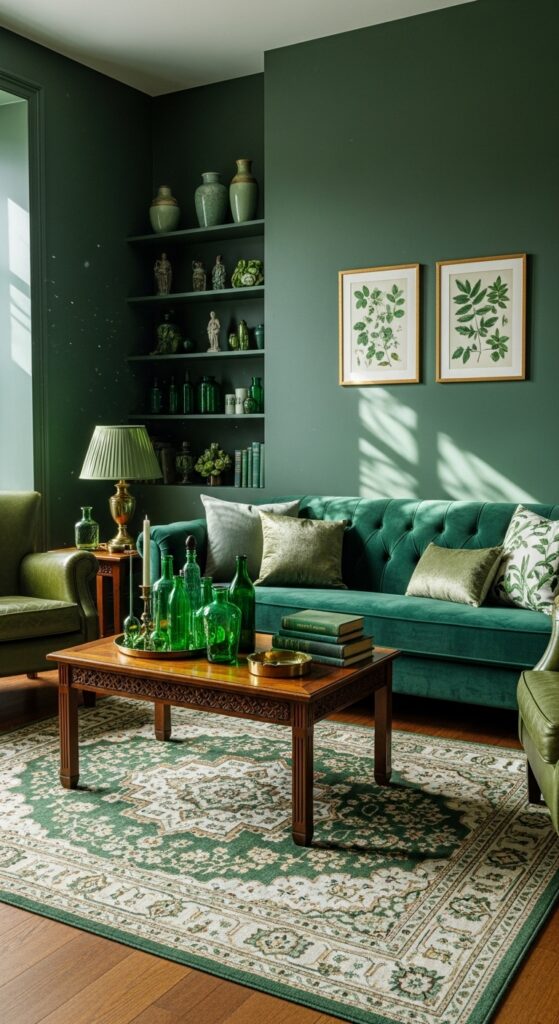
Three to five pieces beat scattered singles. Think a jade lamp, two green glass vases, and a framed botanical print on one shelf. Estate sales and thrift shops often price old green glass at $5 to $30 a piece. Grouping them makes the repeated color read as a collection rather than clutter.
Geometric Pattern to Lighten the Mood
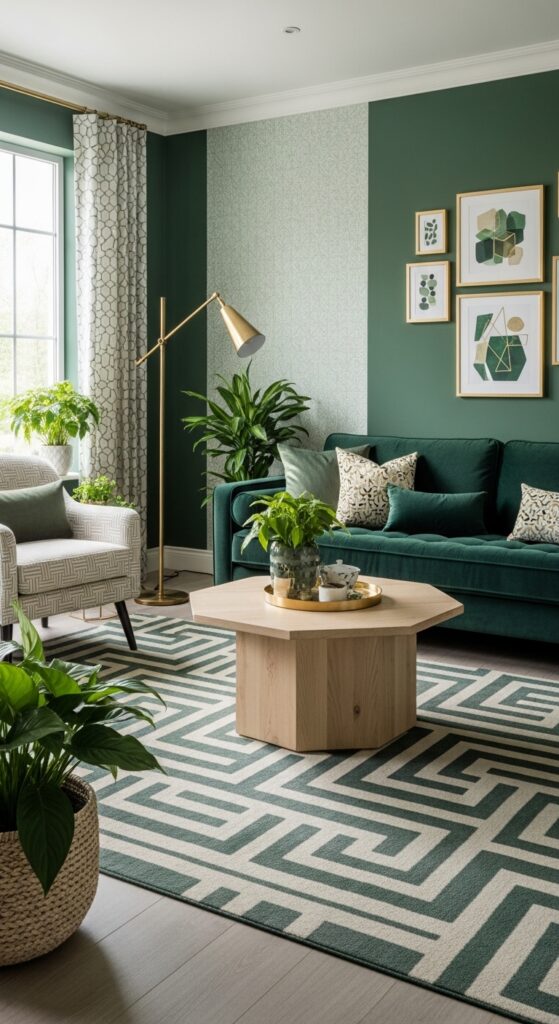
Pattern helps when green feels heavy. Try a black-and-cream geometric rug or ticking-stripe pillows. Use three patterns at most, vary their scale (one large, one medium, one fine), and repeat one color from each in the others. Wallpapering only the back of a bookcase is a cheap trial and takes one or two rolls.
Ideas for When You Are Ready to Paint
Dark paint is a weekend job that rewards prep. Open windows and run a fan while you work. The EPA’s indoor air guidance names painting as one of the short-term activities that call for extra ventilation.
A Feature Wall Behind the Sofa
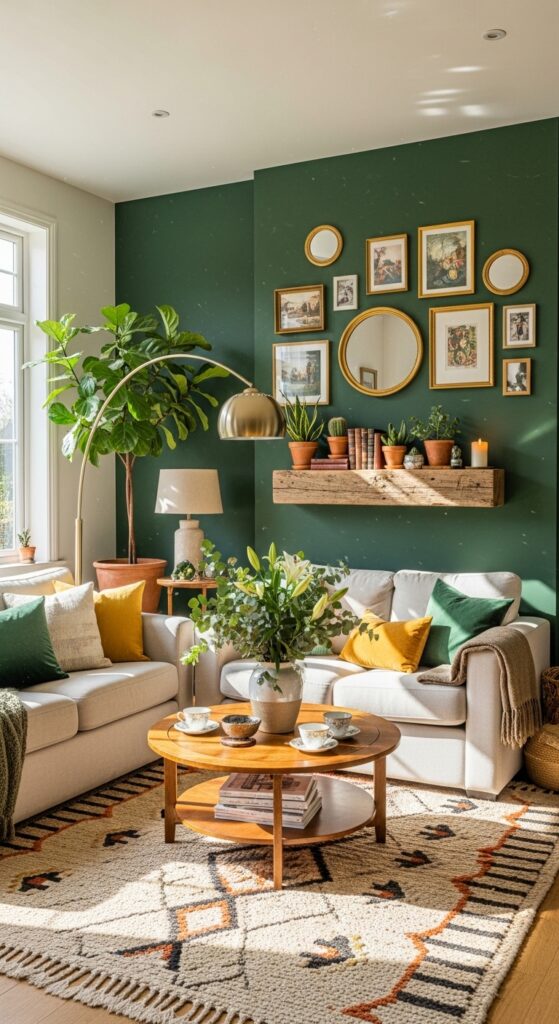
Choose the wall your eye hits first, usually the one behind the sofa or around the fireplace. Avoid the wall with the big window. A dark wall opposite bright glass causes glare. Stop the green at an inside corner, never mid-wall, and run a thin bead of paintable caulk along the tape edge for a crisp line. Keep the tape on for the first coat only. Pull it while the final coat is still slightly tacky, and the edge will not peel.
The Fifth Wall Painted Green
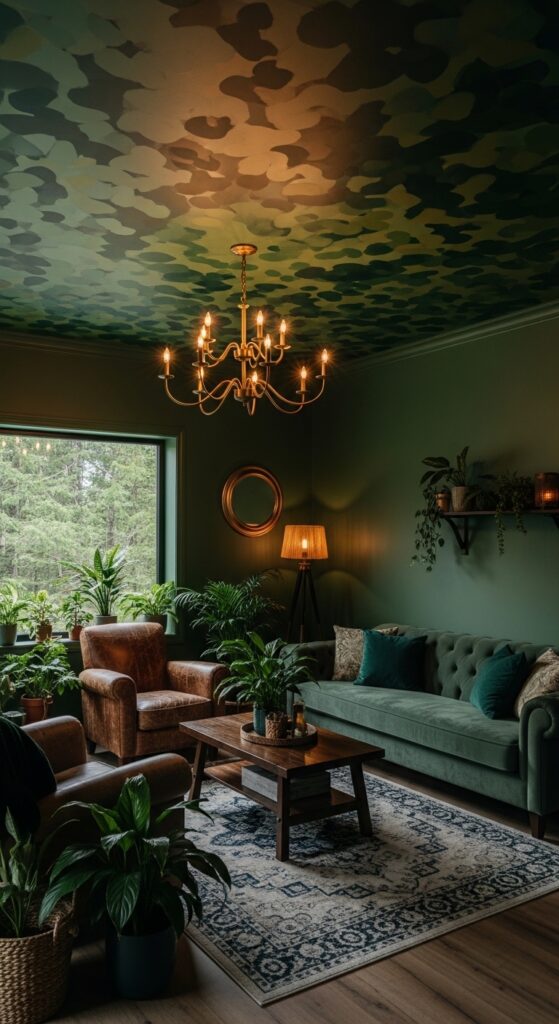
Reserve this for ceilings of 9 feet or higher, or for a small den you want to feel wrapped. On an 8-foot ceiling, dark overhead paint can feel like a lid. Use flat ceiling paint, which hides roller marks better than satin. Paint the ceiling first, then the walls, so drips never land on finished edges.
Three Greens in One Room
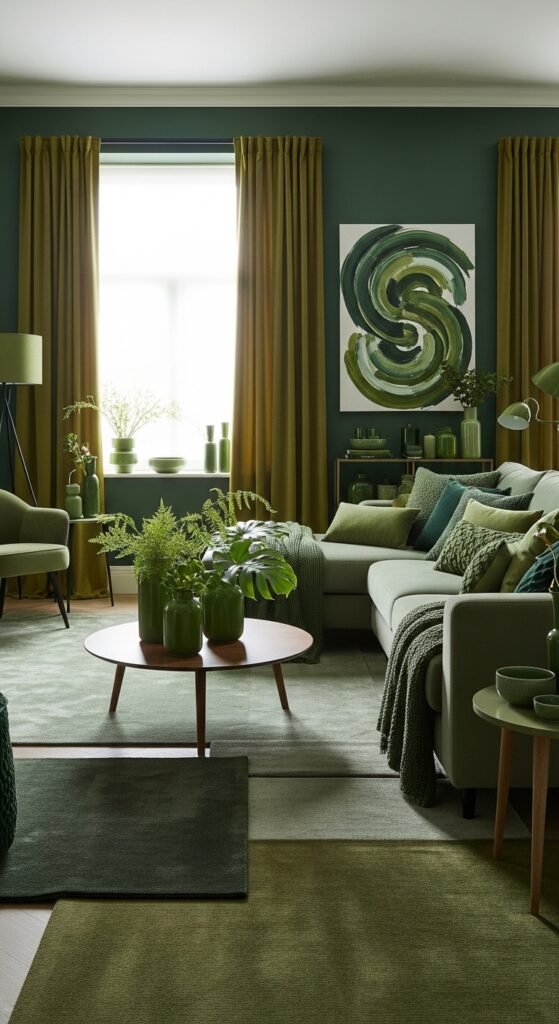
Pair a forest green wall with an olive sofa and a pale sage throw instead of repeating one shade. Aim for roughly 60 percent dark, 30 percent mid, and 10 percent light. Then change the finish: matte wall, nubby wool rug, glossy ceramic. Without the texture shift, a tonal room looks like a paint chip.
Art That Glows on Dark Walls
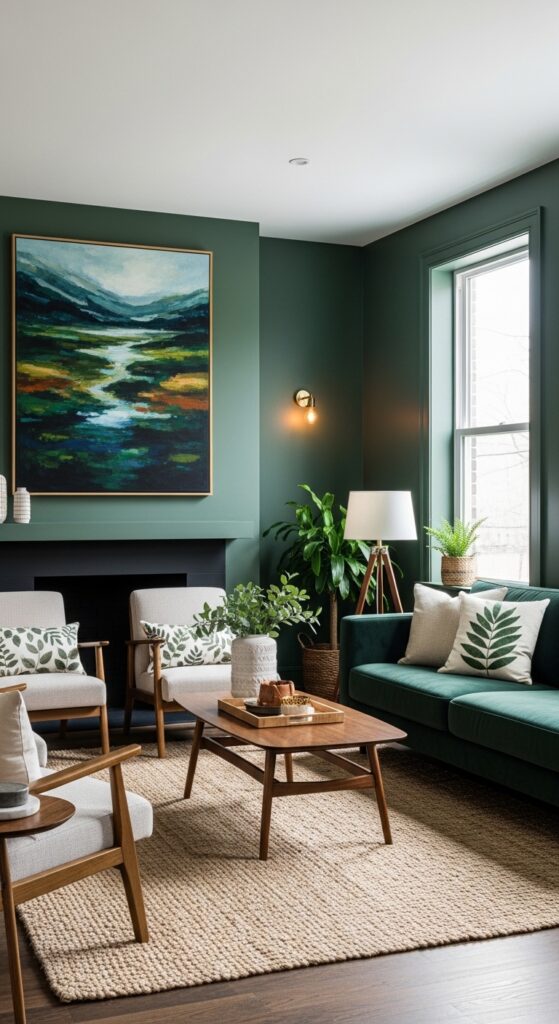
Forest green makes a strong gallery wall. Hang pieces with their centers 57 to 60 inches from the floor. Use warm-white mats, which stand out against green far more than stark white ones. Brass and gold frames pop, while thin black frames sink into the wall. A single large piece deserves its own plug-in picture light. Lay the arrangement out on the floor first and trace each frame on kraft paper. Taped to the wall, the paper templates save you from filling extra nail holes, which show on dark paint.
Lighting That Doesn’t Flatten the Green
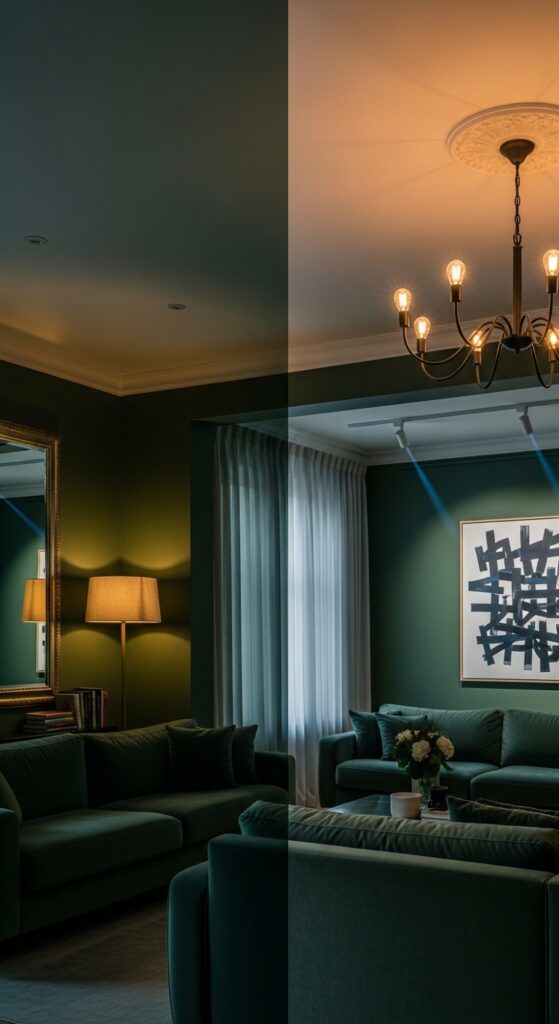
One ceiling fixture makes dark green look flat. Add a lamp below eye level, such as one on a console, plus a swing-arm sconce that grazes the wall surface. Put both on dimmers, and choose bulbs with a color rendering index of 90 or higher, which keeps green looking green instead of gray. Our breakdown of how sage and olive greens behave in daylight and lamplight shows how undertones shift after sunset.
Colors That Sit Well Next to Forest Green
Cream and Oatmeal Neutrals
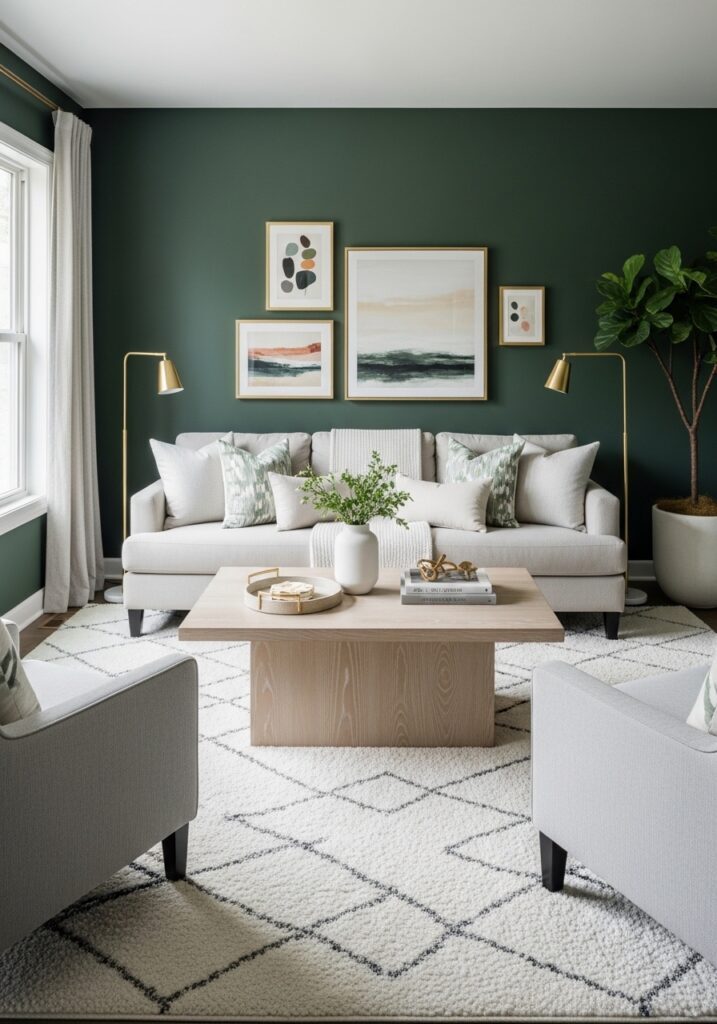
Keep about 40 percent of what you can see light: cream sofa, ivory rug, off-white curtains. Choose a warm cream rather than a blue-white, because stark white next to forest green looks hospital-bright. Floor-length linen curtains in a pale tone also pull the eye upward.
Soft Gray, Chosen Carefully
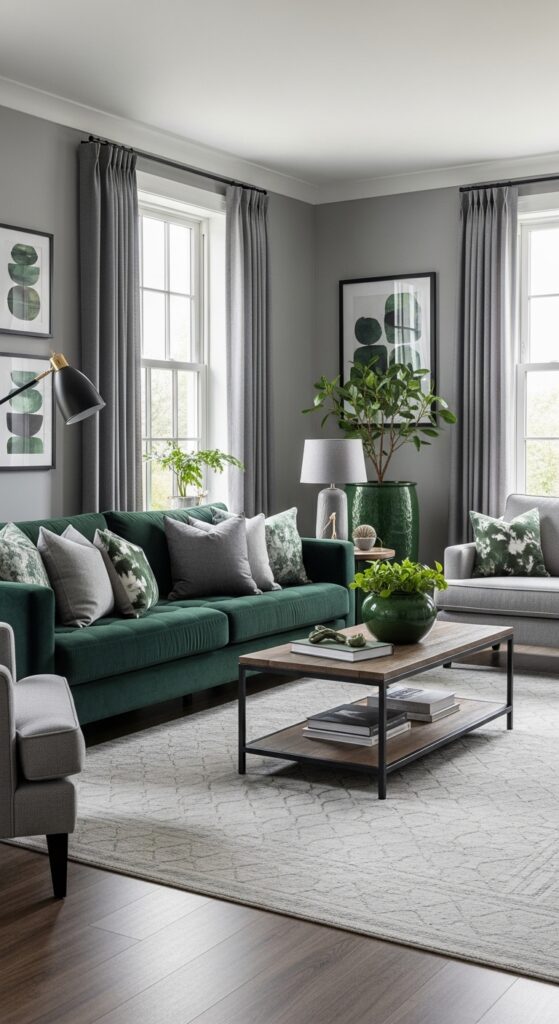
Gray works when it leans warm. A greige or putty sofa calms the green. A cool blue-gray can make the walls look cold and inky. Request a free fabric swatch and tape it beside your paint sample before ordering. Check it at night, too.
Burnt Orange, Mustard, or Burgundy Accents
Warm accents glow against green, so use them in small repeats: two pillows, one vase, one throw. Stay near 10 percent of the room, or the green stops being the star. Burgundy is the most forgiving partner. Mustard is the loudest, so start with one object and see how it feels in a week.
Terracotta, Rust, and Clay
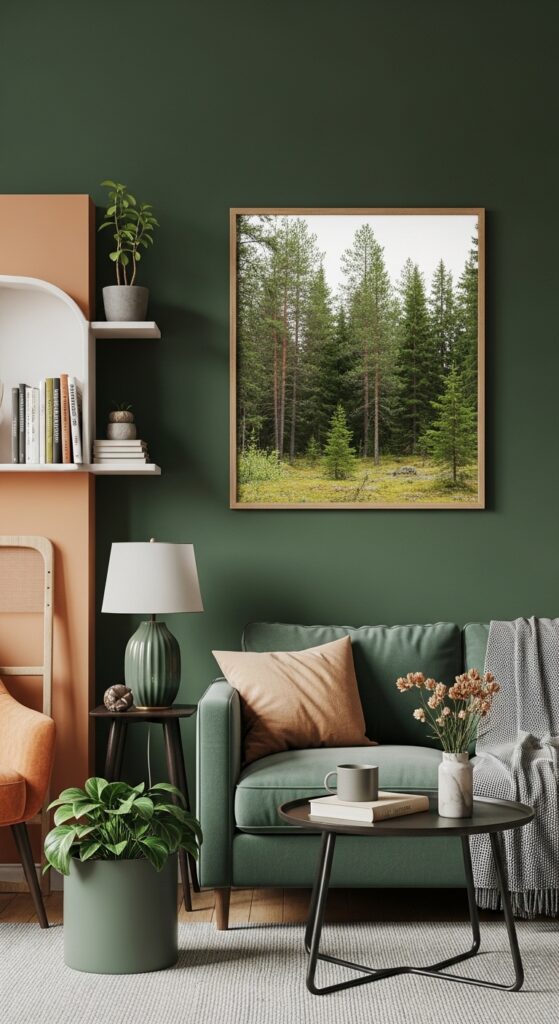
These tones are quieter than orange and look right all year. Try a rust leather chair, a raw clay planter, and one terracotta vase. Unglazed clay pots cost far less than glazed ceramic and have the matte surface that deep green favors.
Navy, Charcoal, and Matte Black
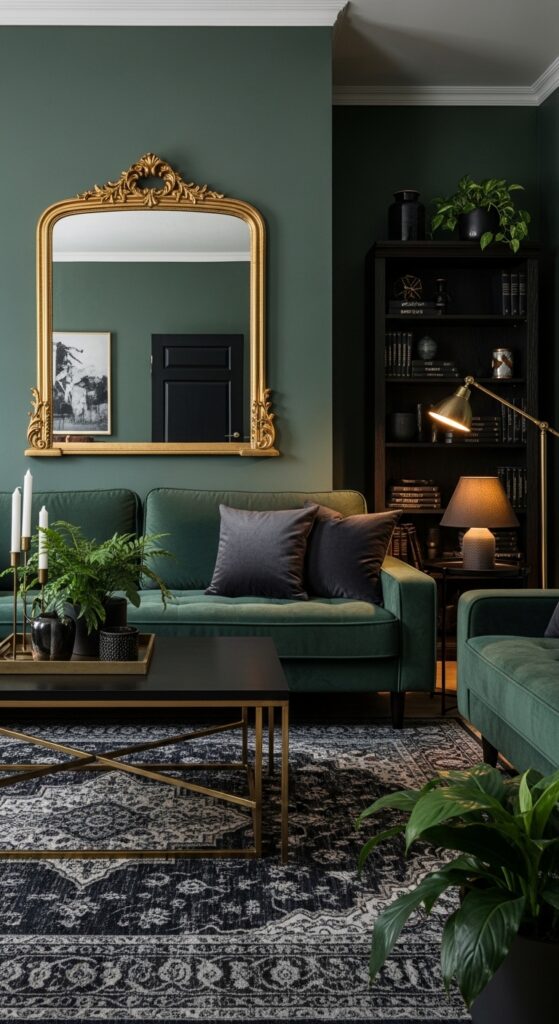
Dark-on-dark only works when you separate the values. Navy and forest green sit close in darkness and tend to blur, so place something lighter between them, like a cream cushion or a pale wood side table. Use black in thin lines: frames, window hardware, cabinet pulls. A large black sofa will swallow a green room.
Brass, Gold, and Copper
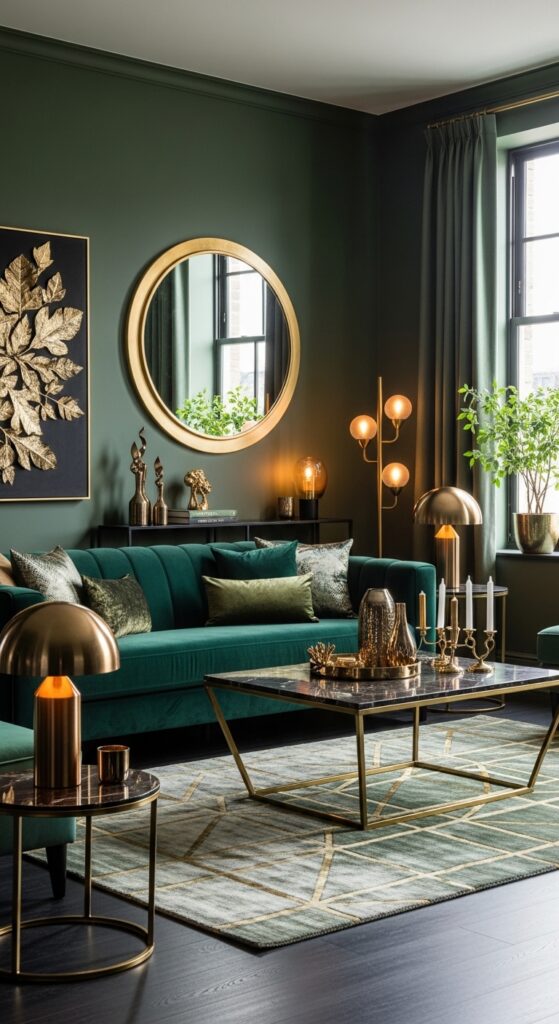
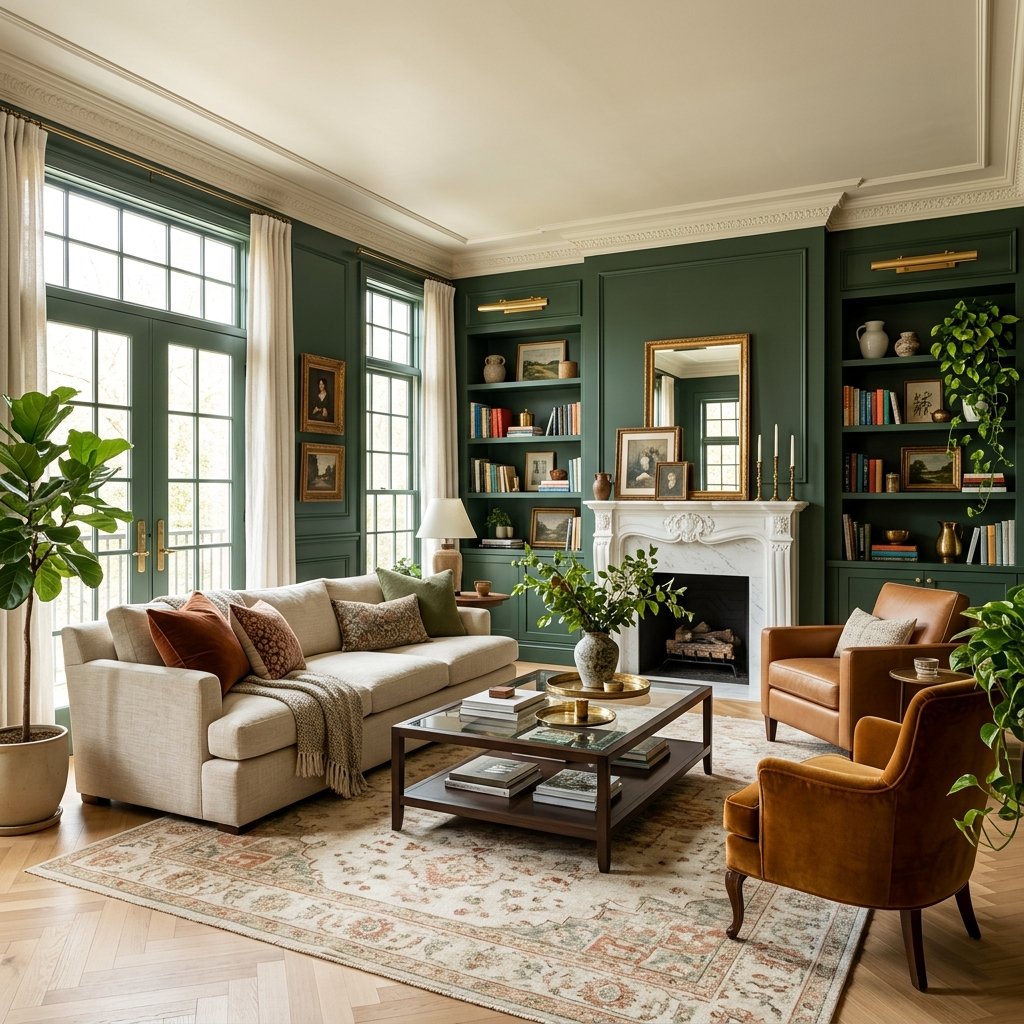
Choose unlacquered or aged brass. Lacquered brass stays shiny and can look dated beside green, while unlacquered brass darkens into a warm patina. A thin brass-framed mirror hung opposite a window bounces the most light. At 30 by 40 inches, it is large enough to matter. Match cabinet pulls and lamp bases to the same metal so the brass looks planned, not sprinkled.
Materials That Keep a Dark Room From Going Flat
Walnut, Oak, and Live Plants
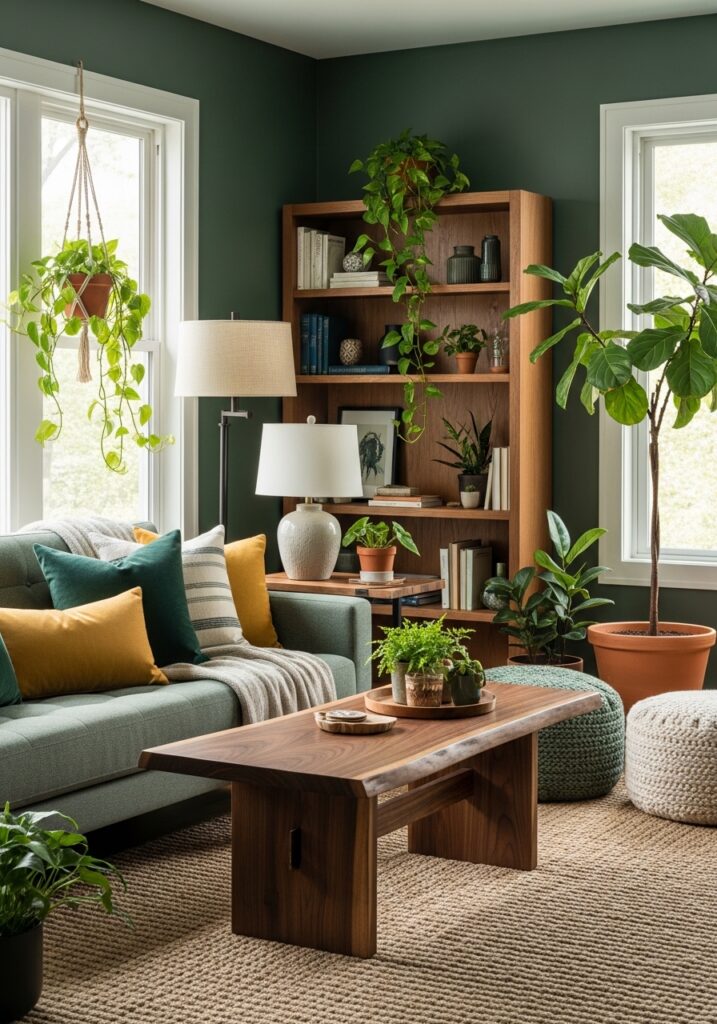
Medium-toned wood warms green. Choose plants for the light you have: snake plants and ZZ plants tolerate dim corners, while fiddle-leaf figs want bright light a dark room cannot give. Skip the air-cleaning claim. The EPA says there is no evidence that a reasonable number of houseplants remove significant pollutants at home. Plants are for mood. Windows are for air. Group three of different heights in one corner, in unglazed terracotta pots, and the cluster reads as a deliberate layer instead of scattered pots.
Velvet, Linen, and Leather Together
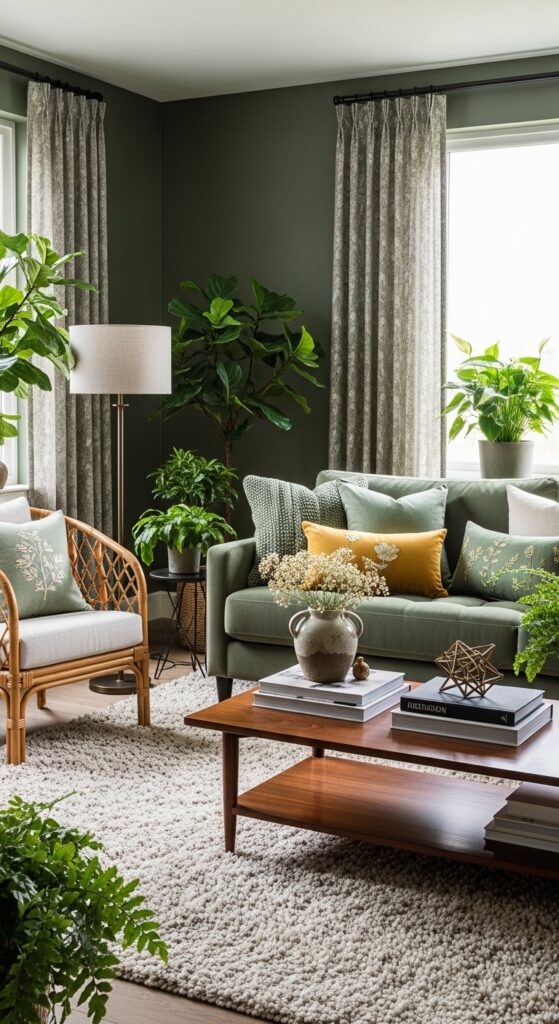
Combine three surfaces with different shine: matte linen, semi-sheen velvet, and satin leather. A cognac armchair is the classic green partner, and it darkens attractively with use. Vary the weave scale as well. A chunky knit throw beside a fine linen pillow reads richer than two of the same.
Wool and Down for Sound
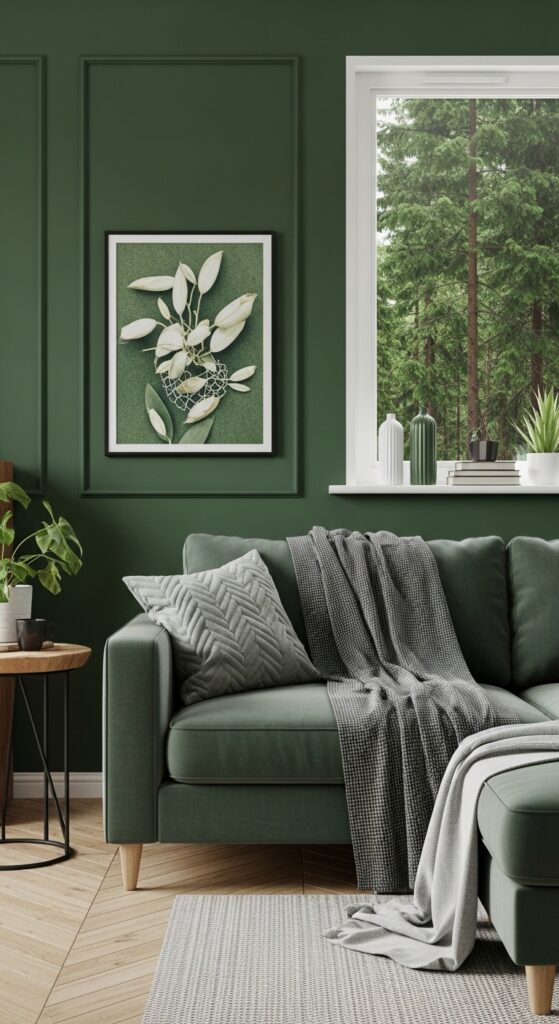
Dark rooms feel colder when hard surfaces bounce sound. A wool rug on a felt pad, lined drapes, and down-blend cushions soften the echo and the look together. Stuff 20-inch covers with 22-inch inserts so the pillows look full instead of limp.
Marble and Stone Against the Green
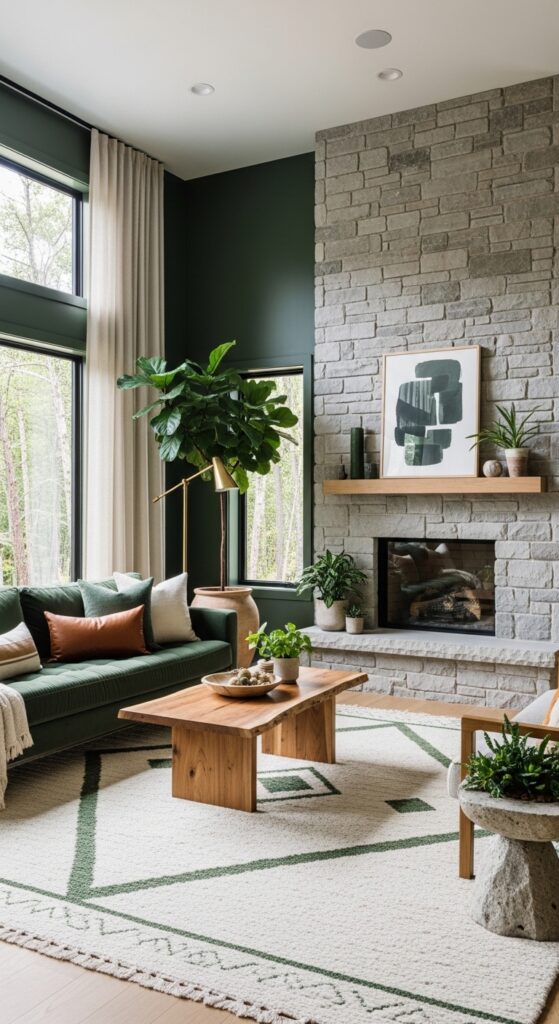
A white marble coffee table brightens a green room. Honed marble hides scratches better than polished, but it etches from lemon juice or wine within minutes. Coasters and a sealer help. For less upkeep, quartzite gives a similar look and resists etching better.
Mid-Century and Antique Pieces
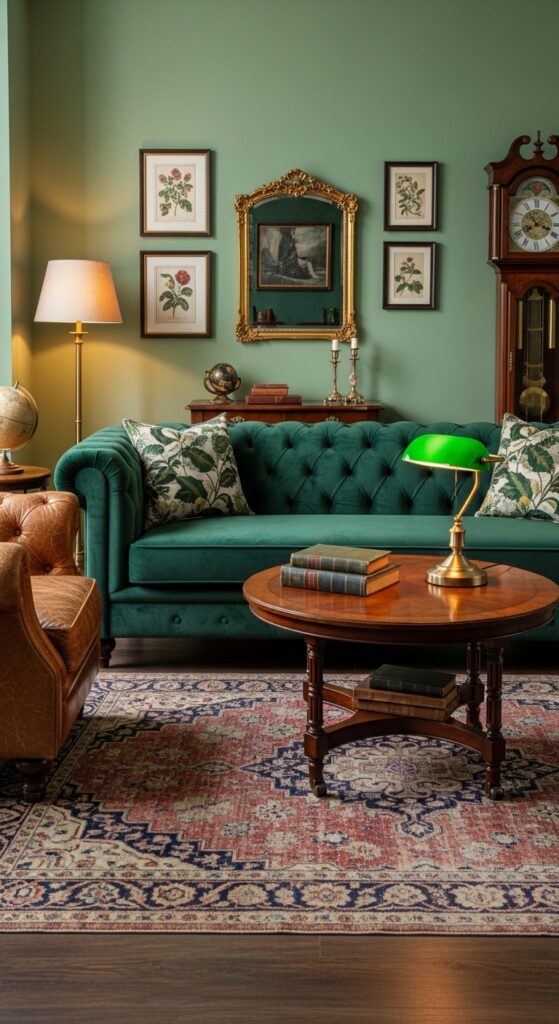
A 1960s teak sideboard or a tufted Chesterfield makes an easy partner. Used teak sideboards often sell for $600 to $2,000 depending on maker and condition. Check the joints before the finish. Teak oil fixes surface scratches, but a wobbly frame is a bigger repair.
Style Directions That Wear Forest Green Well
Bohemian With Rattan and Macramé
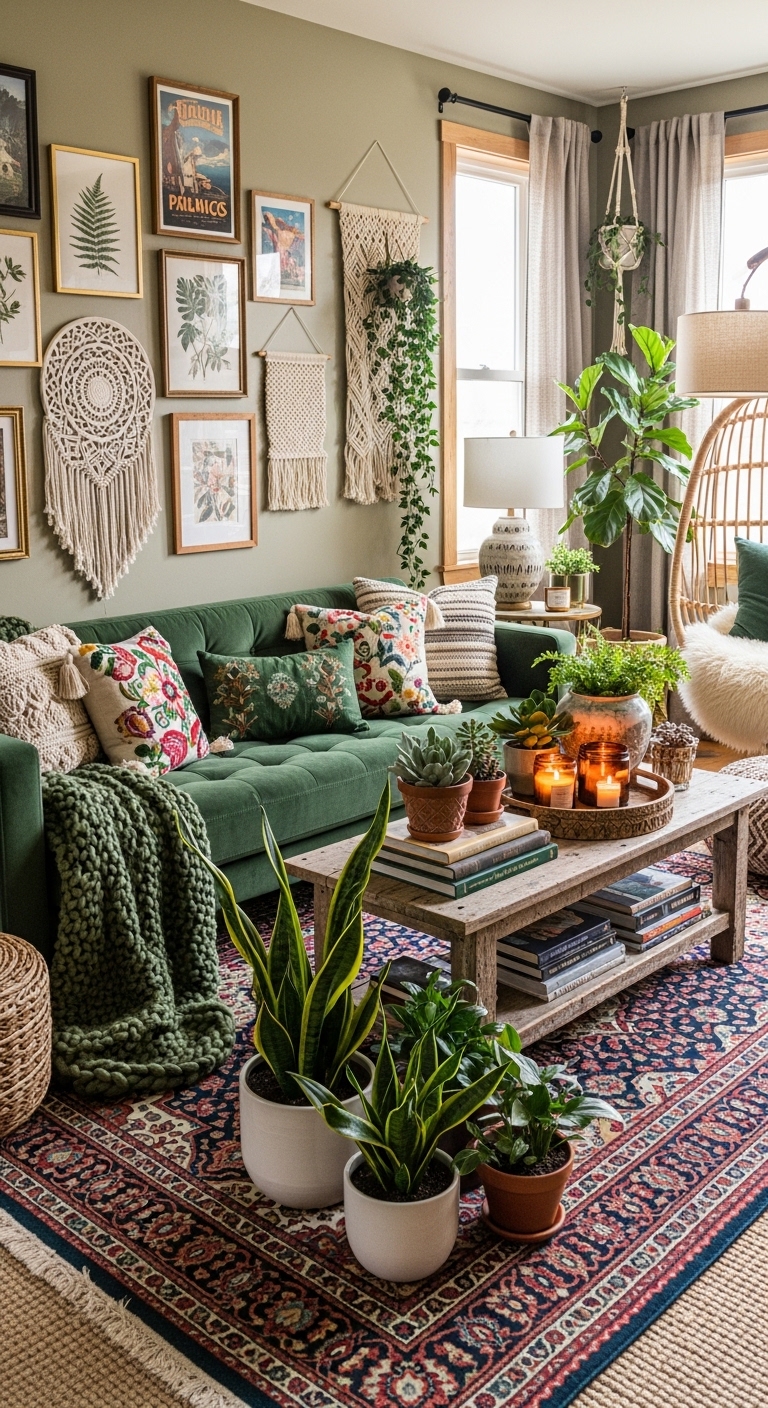
The boho version leans on pattern and texture. Let the wall be the one solid, and hold the patterns to three. Layer a flatweave over a jute rug. The jute adds depth and hides footprints on a high-traffic floor.
Coastal Without the Navy
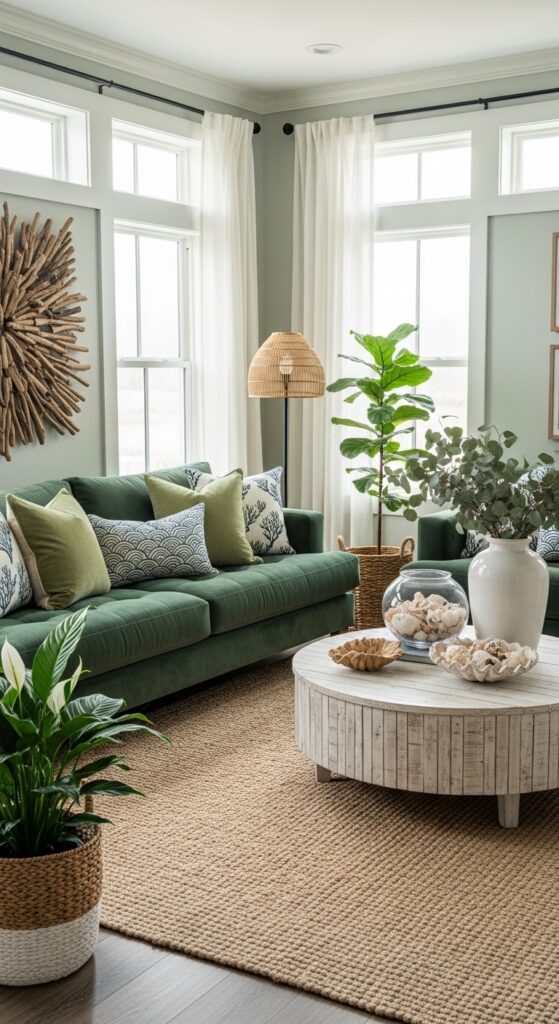
Swap navy for forest green and keep the rest: sand linen, whitewashed wood, jute, and glass. The result looks like pine woods meeting a beach. Use sea-foam sparingly, such as a single vase, so the green stays dominant.
Industrial Edges
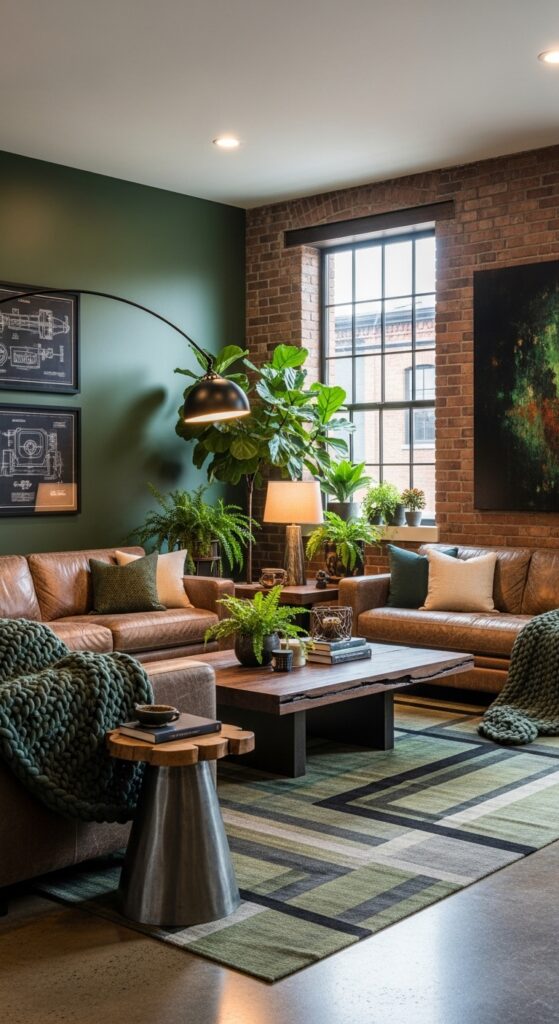
Exposed brick is red-orange, which sits across from green on the color wheel. Paint the plain walls green and leave the brick bare. Keep metal matte black and wood medium-toned. Skip chrome, which looks cold here. If you have no brick, thin brick veneer on one wall is a real-brick option.
Modern Farmhouse With Green Built-Ins
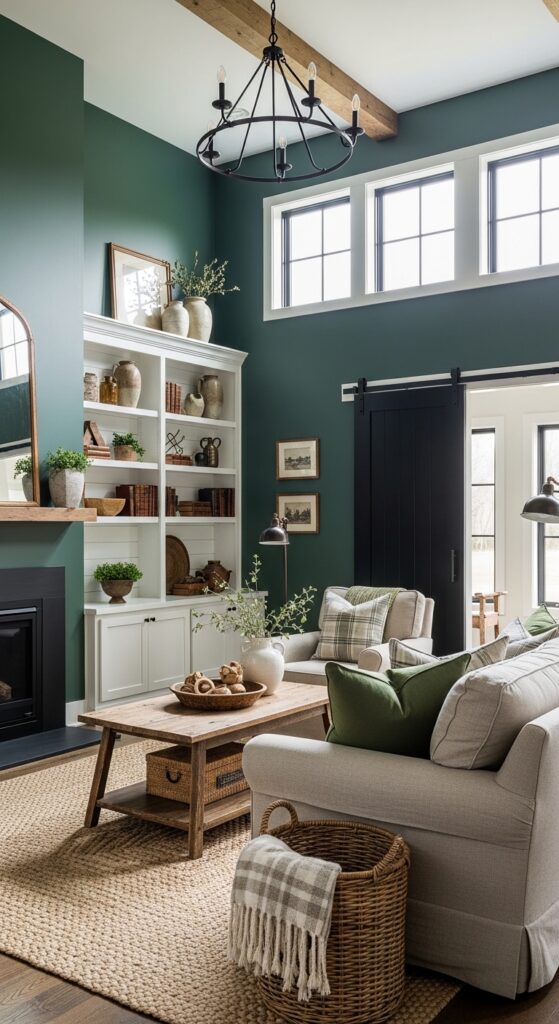
Paint the built-ins on either side of the fireplace and leave the walls white shiplap. Satin cabinet enamel wipes clean and costs less than repainting a whole room. Add matte black pulls and a reclaimed-wood mantel.
Where to Begin
Renting? Start with the rug and curtains. Owning, but nervous? Paint one wall and add two plants. Ready for drama? Paint the walls, trim, and ceiling the same green, then add the lamps.
Rough costs help with the choice. A rug and a pair of curtains typically run $700 to $2,500 together. One feature wall costs about $80 to $150 in paint, primer, and supplies, plus a weekend. A full room in a 12-by-15 space needs roughly $250 to $450 in materials if you paint it yourself. Hired painters often quote $600 to $1,500 for the same room, depending on your area and how much prep the walls need.
Whichever route you pick, tape the sample card to the wall before buying anything else. A week of looking at it will show you if you want green on one wall or on every surface.
Frequently Asked Questions
Does a forest green living room make the space look smaller?
It can in a room under about 120 square feet or one with a single north window. Dark walls recede at night but add boundaries in daylight. Rooms with two windows and 8-foot ceilings handle full coverage well. In smaller rooms, paint one wall and keep the rest warm white.
What paint finish is best for dark green walls?
Choose scrubbable matte or eggshell. Plain flat paint on dark colors scuffs and shows a shiny rub mark where furniture or hands touch it. Eggshell wipes clean but shows wall flaws under side light, so patch and sand first. Skip satin and gloss on walls, since they reveal every roller mark.
How many coats does forest green need?
Plan on one coat of gray-tinted primer and two topcoats. One gallon covers roughly 350 to 400 square feet, so a 12-by-15 room needs about two gallons for two coats. Let each coat dry for the time on the can, usually 2 to 4 hours, before recoating or the green turns streaky.
What floors go best with forest green walls?
Medium oak, walnut, and gray-washed boards all work. Strongly red-toned floors, such as cherry or orange oak, fight the green because red sits opposite it. If you have them, cover most of the floor with a neutral wool rug in at least 8 by 10 and the clash fades.
What if my green turned out too blue or too black?
First, test it under your own lamps and daylight, since the wall may just be lacking light. If it still looks wrong after a few evenings, repaint with a more yellow-leaning green rather than tinting the existing coat. A sample quart costs about $8 to $15 and can prevent a second full repaint.