You get home, drop your keys, and the room feels like it shrank again. The sofa is the right size on paper. The walls are white. Yet the whole space feels heavy, like a closet with a TV in it.
The usual advice says to buy smaller things. That’s only half the story. A small living room feels airy when three things go right: light moves freely, your eye can travel across the room, and nothing looks bulky. Each idea below pulls one of those three levers, and every idea is labeled so you can see which.

Light and Airy Color Schemes
Every paint color has a light reflectance value, or LRV. The scale runs from 0, which reflects no light, to 100, which reflects all of it. Sherwin-Williams notes that north-facing rooms benefit from colors with a higher LRV, as shown on its room orientation guide. As a rule of thumb, start at about 60 or higher for small rooms.
Check the number on the back of the paint chip. Then keep the ceiling the same or a shade lighter than the walls. Add depth with a slightly darker sofa, not darker walls.
Undertone matters too. A cool white in a north-facing room can look gray and flat, so lean warm there. In a sunny south-facing room, a cooler white can look crisp. Test two swatches on different walls and look at them at 9 a.m. and again at dusk. Choose a matte or eggshell finish, since glossy walls show every flaw.
Airy lever: Light

Minimalist Living Room Furniture
Bulk comes from depth and from furniture that sits flat on the floor. A sofa 32 to 36 inches deep takes much less room than a 40 inch one. Look for slim arms and legs at least 6 inches tall, so you can see floor underneath.
As a starting point, a 72 to 80 inch sofa suits most walls under 12 feet. Add one chair, not two. Seating you can see through feels lighter than seating you can’t.
Airy lever: Visual weight

Use Mirrors to Expand the Space
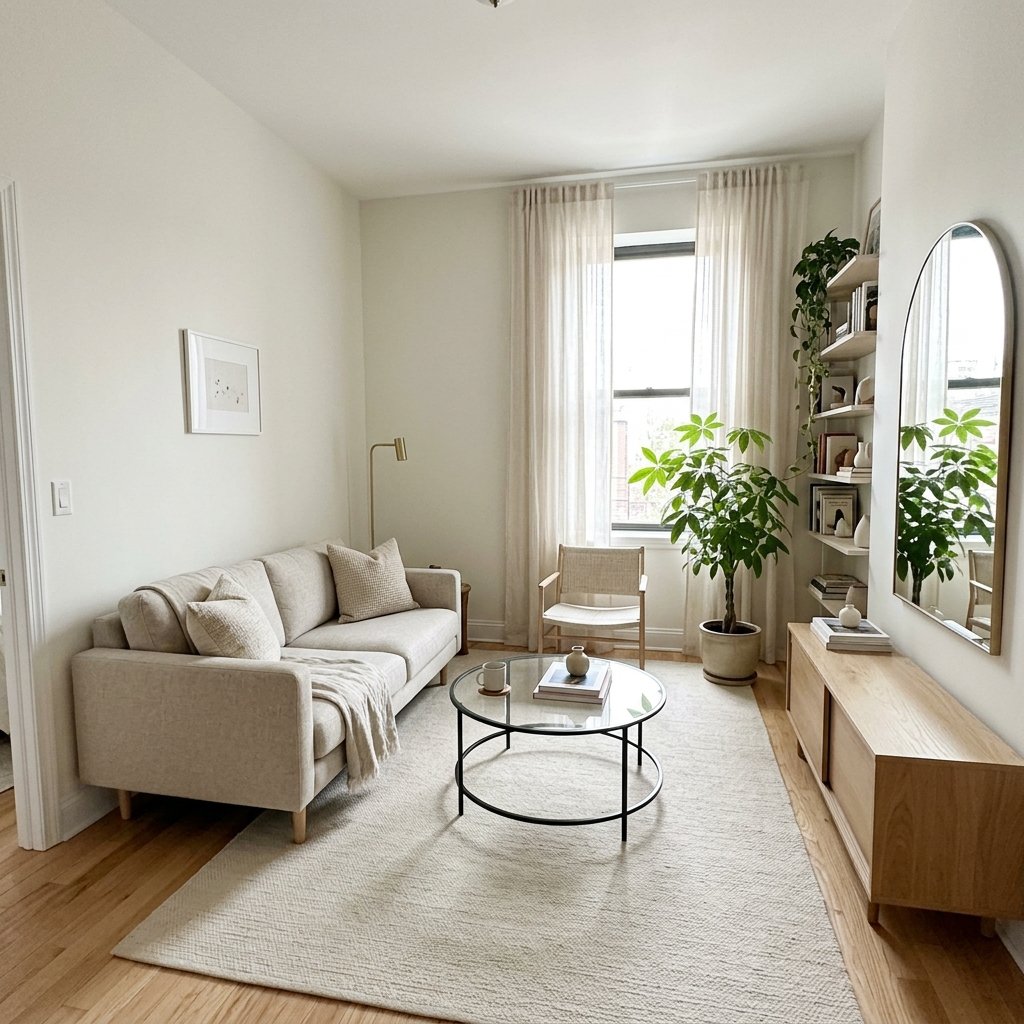
A mirror only helps if it reflects something worth doubling. Hang it opposite a window and it carries the view and the daylight deeper into the room. Hang it opposite a cluttered shelf and you get two shelves.
Choose a mirror about two-thirds the width of the sofa or console below it. Lean a tall mirror against the wall if you can’t drill. Check the reflection from your sofa seat first.
Airy lever: Light

Embrace Vertical Space
A bookcase that stops at five feet cuts the wall in half. Go taller and slimmer instead. A 72 to 84 inch unit that’s only 11 to 12 inches deep adds storage and draws the eye up.
Anchor tall pieces to wall studs, especially in homes with kids or pets. Keep the top shelf lighter than the bottom, with plants or baskets up high and heavy books low.
Airy lever: Sightline

Multi-Functional Layout
Airy layouts leave clear paths. Keep about 30 to 36 inches for walkways and 14 to 18 inches between the sofa and coffee table. Keep seating within roughly 8 feet of each other so people can talk without raising their voices.
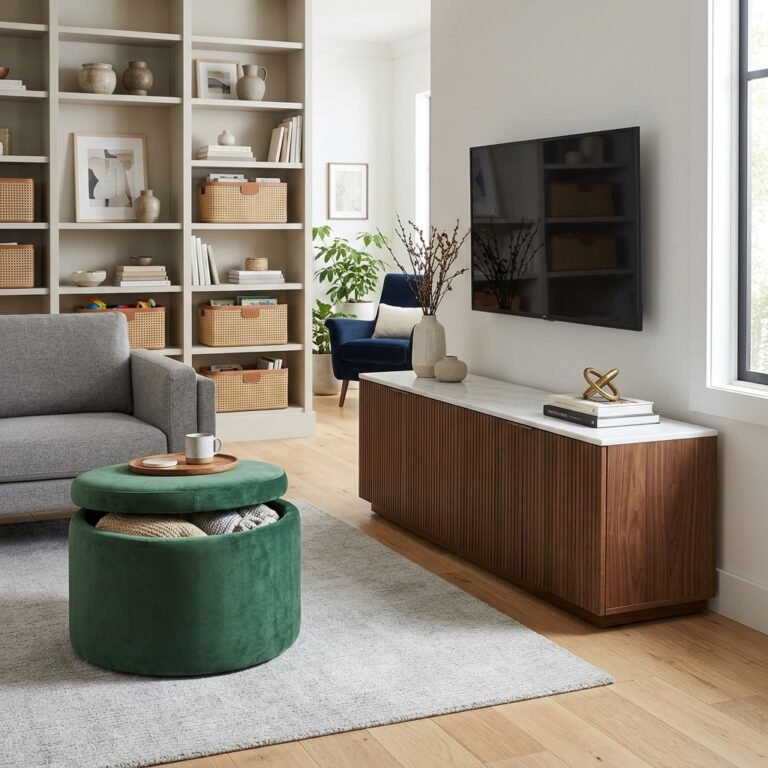
Then add pieces that earn their spot: a storage ottoman, a nesting table, a lift-top coffee table. For a deeper look at furniture placement, see our small living room layout ideas.
Airy lever: Sightline

Choose Lightweight and Transparent Furniture
Glass and acrylic let your eye pass through a piece instead of stopping at it. A glass coffee table or a pair of clear acrylic chairs shrinks visual weight fast.
Use it once or twice, not everywhere. A room of clear furniture can feel cold. Know the trade-offs too: glass shows fingerprints, and acrylic scratches. Choose tempered glass and wipe with a microfiber cloth.
Airy lever: Visual weight

Keep Window Treatments Simple
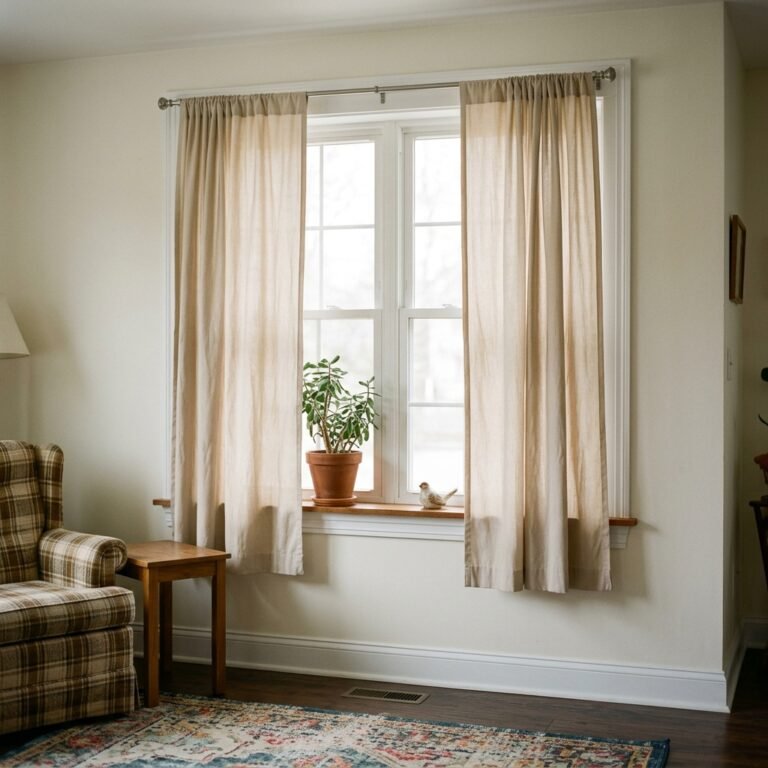
Heavy drapes at the window frame make a room feel squeezed. Hang a rod 4 to 6 inches above the frame, or nearer the ceiling, and extend it 8 to 12 inches past each side. Sheer or light-filtering panels let daylight in.
Length matters as much as height. Panels should just brush the floor. Our curtain length mistake guide shows what goes wrong when they don’t.
Airy lever: Light

Use Rugs to Define Spaces
A rug that’s too small cuts the floor into pieces. Choose a light, low-pile rug large enough that at least the front legs of the sofa and chairs rest on it. In a small room, 5 by 8 feet is a common fit.
One quiet pattern beats three loud ones. Natural fibers like wool or jute add texture without adding weight.
Airy lever: Sightline
Add Greenery and Natural Elements
One tall plant does more than five small ones. A 4 to 5 foot plant in a corner draws the eye up and softens hard edges. Snake plants and pothos tolerate lower light. Ferns need more humidity, so skip them in dry rooms.
Put the plant on a stand or in a pot of matching color so it reads as furniture. Check which plants are safe around your pets before you buy.
Airy lever: Sightline

Layer Lighting
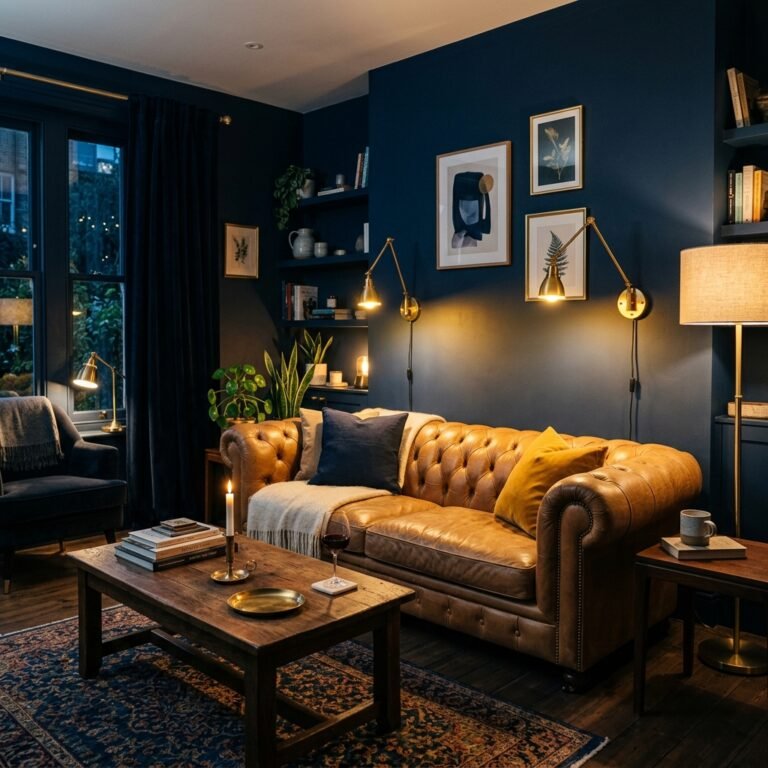
One overhead light flattens a room and leaves corners dark. Add a floor lamp and a table lamp, and put them at different heights. Aim an uplight floor lamp at the ceiling and the room feels taller.
Use warm bulbs rated 2700K, about 800 lumens for a main lamp. Add a dimmer so you can go bright for daytime chores and soft in the evening.
A simple plan for a 10 by 12 foot room is three sources. Put an uplight floor lamp in the corner farthest from the window. Set a table lamp on a shelf or side table at the opposite end. Add one small lamp or a plug-in sconce near the main seat for reading. Together they fill the dark corners that a single ceiling fixture misses.
Airy lever: Light

Maintain a Clutter-Free Space
Clutter breaks sightlines into pieces. You don’t need to throw things out. You need a place for them. Use closed storage for cables, remotes, and blankets, and keep open shelves partly empty.
A simple test: leave about one-third of every surface bare. Try a basket by the sofa for the daily pile, and clear it weekly.
Airy lever: Visual weight

Strategic Wall Art
A gallery of small frames reads as noise in a small room. One large piece reads as a calm focal point. Choose art about two-thirds the width of the sofa and hang it with its center near 57 inches from the floor, which is average eye level.
Leave 6 to 8 inches between the bottom of the frame and the sofa back. Pull colors from your rug or pillows, so the art feels like part of the room.
Airy lever: Visual weight

Use Patterns Sparingly
Pattern isn’t the enemy. Too much of it is. Pick one pattern in a medium scale, then support it with solids in the same color family. A striped pillow, a geometric rug, or a printed chair is plenty.
If you use two patterns, vary their scale: one large, one small. Keep both in the same palette so they read as a pair.
Airy lever: Visual weight

Floating Storage Solutions
Floating furniture lets the floor run uninterrupted to the wall. Hang a media console 8 to 12 inches off the floor and the room reads as larger. A 10 to 12 inch deep wall shelf holds books without crowding a walkway.
Always screw into studs or use anchors rated for the load. Run the TV cables inside a paintable cord channel so wires don’t ruin the clean line.
Airy lever: Sightline

Reflective Surfaces
Small reflective touches bounce light without adding bulk. Think a brass tray, a glossy ceramic lamp base, or a mirrored side table. Two or three such accents are enough.
Place them near a window or a lamp, where there’s light to catch. Keep glossy surfaces away from the TV, since glare gets in the way of the screen.
Airy lever: Light

Add Personal Touches
An airy room still needs to feel like yours. The trick is editing. Group three or four meaningful things in one spot, such as a shelf of books, a framed photo, and a small plant, and leave the rest of the wall bare.
Fold a throw in a basket instead of draping it over the sofa. A single textured pillow adds warmth without adding visual weight.
Airy lever: Visual weight

How to Tell Which Lever Your Room Needs
Before you buy anything, run three quick tests. Each takes about five minutes.
The light test: Visit the room on a bright afternoon with every lamp off. If you still want a light on to read, you have a light problem. Start with window treatments, paint, and lamps.
The sightline test: Stand in the doorway and look at the far wall. Can you see the floor where it meets that wall? Can you see wall behind most furniture? If big pieces block both, you have a sightline problem. Think legs, floating storage, and open shelving.
The weight test: Take a photo from the doorway and squint at it. Does one dark, bulky shape dominate? That is your visual weight problem. Look at the sofa, the TV unit, and any heavy curtains first.
Most small rooms fail one test badly and the others mildly. Fix the worst one first and you’ll often see the room change more than if you had spread the same effort across all three.
A Sensible Order for a Weekend Refresh
Work from free to cheap to bigger purchases. That way you only spend where the room still needs it.
Start with what costs nothing. Clear surfaces, move extra furniture out for a week, and see if the room breathes. Then try the cheap fixes: raise the curtain rod, swap in warm 2700K bulbs, and lean a mirror where it can catch a window. Live with those for a few days.
Only then buy the larger pieces. A rug, a floor lamp, or a slimmer sofa is where the real money goes, so shop after you know what the room is missing. Measure twice, and tape the footprint of anything big on the floor first. If it blocks a path in tape, it will block it in real life.
Mistakes That Make Small Rooms Feel Heavier
Painting everything one flat white. White reflects light, but a room with no texture looks like a waiting room. Add linen, wood, wool, or a woven basket so the white has something to play against.
Buying doll-sized furniture. A tiny sofa and tiny table can make the room feel like a set. Aim for fewer, properly scaled pieces instead of many small ones.
Choosing glossy everything. A few shiny accents help. A room full of them bounces glare at your eyes and the TV.
Hanging curtains at the frame. It makes the window look short and the ceiling look low. Raise the rod and widen it.
Matching everything. A full furniture set can look bulky and flat. Mix finishes lightly, and let the sofa, table, and shelves differ in shape.
A Quick Size Cheat Sheet
Keep this list handy while you shop. It is a set of starting points, not strict rules, so adjust for your room.
Sofa: 72 to 80 inches wide, 32 to 36 inches deep, legs at least 6 inches tall. Rug: 5 by 8 feet, with the front legs of seating on it. Curtain rod: 4 to 6 inches above the frame and 8 to 12 inches wider on each side. Mirror: about two-thirds the width of the piece below it. Art: center near 57 inches from the floor. Walkways: 30 to 36 inches. Sofa to coffee table: 14 to 18 inches. Lamps: warm 2700K bulbs at several heights.
Conclusion
Don’t try every idea at once. Pick the lever that’s weakest in your room. If it’s dim, start with light. If your eye gets stuck, work on sightlines. If everything feels heavy, lighten the furniture.
Make one change, live with it for a week, and then choose the next. A small room doesn’t need to be bigger. It needs to feel lighter, and that’s within reach.