You walk in after work and flip the switch. One overhead light comes on. The sofa is beige, the walls are white, and the room looks back at you without any opinion. Nothing is wrong, exactly. Nothing is memorable either.
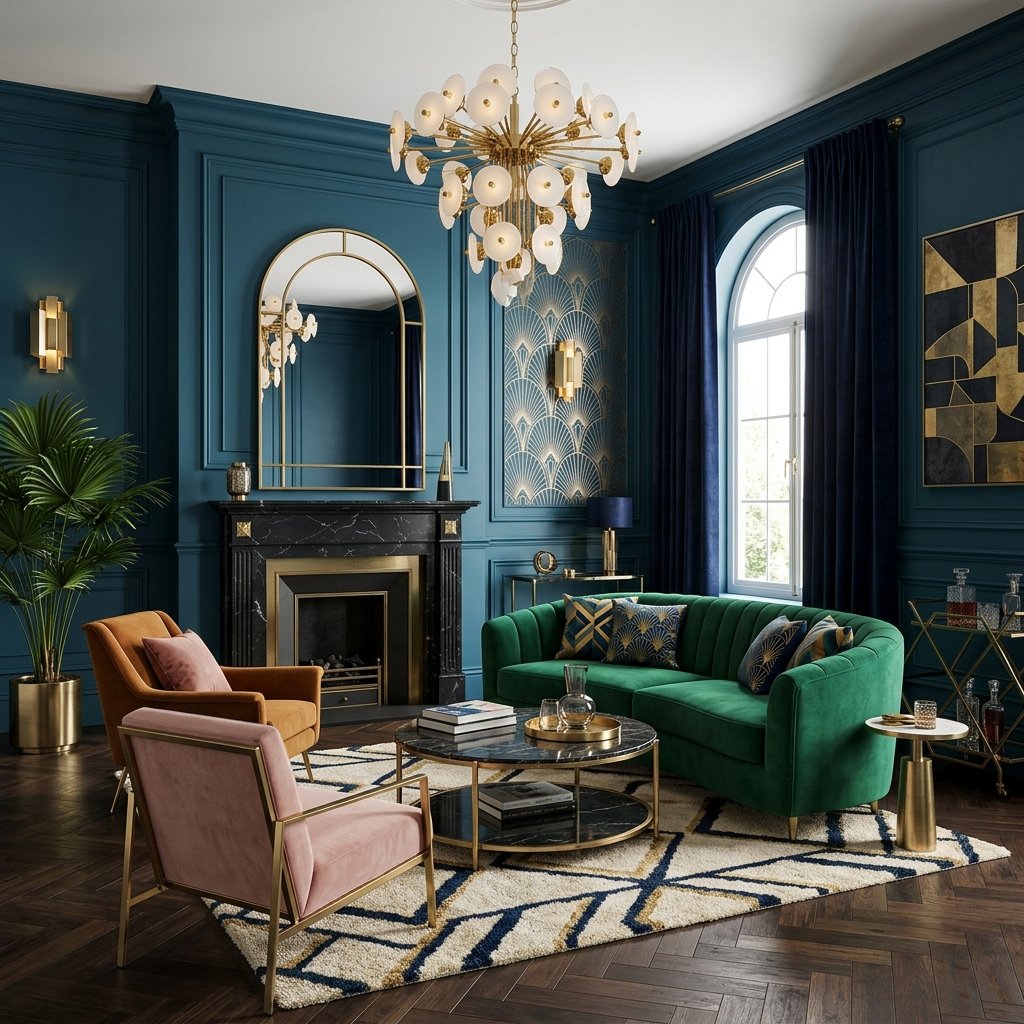
That flat feeling is what Neo-Deco is good at fixing. It borrows the geometry, glossy materials, and warm metals of 1920s glamour, then trims the excess. The result looks dramatic but still livable. These 20 Neo-Deco interior ideas come with real measurements and practical cautions, so you can fix a boring living room one decision at a time, no renovation required.

Why Neo-Deco Is the Style Your Living Room Needs
Neo-Deco is short for Neo Art Deco. Art Deco took its name from a 1925 design exposition in Paris. The original look was heavy on ornament, mirrored surfaces, and high shine. Neo-Deco keeps the best parts and drops the fuss. You get bold shapes, rich materials, and strong lighting, set against clean, current lines.
That balance is why it suits ordinary homes. It works in apartments, in rentals where you cannot touch the walls, and in minimalist rooms that need one dose of drama. You do not have to commit to the whole look. Most rooms need only three or four of the ideas below to change character.

What Defines Neo-Deco Interior Design?
Four traits show up again and again. First, geometry: arches, stepped shapes, sunbursts, and chevrons. Second, symmetry, usually in pairs. Third, shine, from brass, mirrors, glass, and lacquer. Fourth, depth of color, with jewel tones or near-black against creamy neutrals.
Traditional Deco stacked all four in every corner. Neo-Deco gives each room one or two statements and lets the rest stay calm. A good test is the three-second rule. If your eye stops on one clear focal point within three seconds of entering, you have it right. If it bounces around, remove something.

Velvet Sofas in Jewel Tones
A deep green, sapphire, or burgundy velvet sofa is the fastest way to give a pale room a center of gravity. Velvet catches light differently across its surface, so one color looks richer than a flat fabric ever could. Check the durability rating before you fall for a color. Look for 15,000 double rubs or more on the Wyzenbeek test if the sofa gets daily use. Keep it out of strong direct sun, which can fade pile unevenly. Brush the nap in one direction every few weeks.

Geometric Wall Paneling
Paneling gives flat walls structure without adding a single object to the room. The easy version uses thin molding, about three-quarters of an inch wide, arranged into large rectangles with three to four inches between frames. A stepped, ziggurat-style pattern adds a Deco accent. Paint the molding and the wall inside it the same color, so the shadows do the work. Peel-and-stick panels are a good rental option, though test one first, because textured walls can stop them from sticking.

Brass and Gold Accents
Brass is the warm counterweight to all that black and cream. Brushed or antique finishes look softer than polished gold, and they hide fingerprints. Think of three brass pieces as the sweet spot: a mirror frame, a side table, and a tray, spread across the room. Fewer looks timid, and many looks like a hotel lobby. Check whether a piece is lacquered or unlacquered. Lacquered brass stays bright, while unlacquered brass darkens into a soft patina over time.

Statement Lighting as Art
A flush-mount ceiling light makes every room look the same. A sculptural chandelier, a globe pendant, or a tiered floor lamp becomes a feature even when switched off. Hang a pendant so the lowest point sits at least seven feet above the floor in any walkway. Then add layers: ambient light overhead, a task lamp beside the reading chair, and a small accent light near art or a plant. Choose warm bulbs around 2700K, since cooler bulbs flatten brass and velvet.

Curved Furniture Silhouettes
Deco is full of straight lines, so curves keep it from feeling stiff. A rounded bouclé sofa, an arched-back chair, or an oval coffee table softens the room’s angles. Curved sofas need room to breathe, so leave at least a foot between the back and the wall. Bouclé is cozy but snags easily, so avoid it if you have cats. Stick to one curved statement piece per seating area, and let the other pieces stay simple.

High-Contrast Color Palettes
Deco loves a strong pairing: charcoal with cream, navy with blush, black with warm white. The trick is limiting the palette. Use two main colors and one metallic. A simple split works well, with about 60 percent light neutral, 30 percent dark tone, and 10 percent brass or accent. Repeat the dark shade in at least three places, such as a lamp base, a frame, and a pillow. That repetition makes the contrast look planned instead of random.

Marble Coffee Tables
Black-and-white marble is a Deco classic, with bold veining that looks like brushstrokes. A honed finish feels more modern than a polished one and shows fewer fingerprints. Real marble stains from wine and citrus, so choose a sealed top or a good faux stone if you entertain often. Size matters as much as material. Aim for a table about two-thirds the length of your sofa. Our full coffee table ideas guide covers sizing and care in more detail.

Mirrored and Glass Surfaces
Mirrored consoles, glass shelves, and beveled cabinet fronts push light deeper into the room. They work best in darker or narrower spaces. Place a mirrored piece where it can catch a window or a lamp, not where it reflects a pile of clutter. Antiqued mirror, with a soft smoky tint, looks more refined than bright silver and hides smudges better. Wipe glass with a microfiber cloth and plain water to avoid streaks.

Bold Area Rugs with Deco Motifs
A rug with sunbursts, fans, or stepped geometry grounds a seating area and sets the pattern for the whole room. Size it correctly or the effect fails. In most living rooms, an 8-by-10 rug is the minimum, and at least the front legs of every seating piece should sit on it. A 5-by-8 rug will look like a doormat. With a bold pattern, keep the sofa solid and let the rug carry the geometry.

Symmetrical Furniture Layouts
Symmetry is the quickest way to make a room feel composed. Place matching chairs on either side of a fireplace, or twin side tables on either end of the sofa. Pairs should match in height, not necessarily in design. A mirror hung dead center over the sofa anchors the arrangement. If you want the look without rigidity, make the main axis symmetrical and keep the accessories slightly different on each side.

Sculptural Coffee Tables
If the marble table is the classic choice, the sculptural one is the confident choice. Look for a fluted drum, a stepped plinth, or a chunky stone slab that echoes Deco’s layered silhouettes. These pieces are heavy, often over 100 pounds, so check your floors and delivery route. Keep the surface simple with one tray and one bowl. The shape is the decoration. For more shapes and materials, see our modern coffee table ideas.

Decorative Wall Mirrors
A sunburst, arched, or stepped mirror acts as both art and a light source. Size it to about two-thirds the width of the sofa or console below it. Hang the center of the mirror roughly 57 to 60 inches from the floor, so it sits at eye level. Opposite a window is the strongest position, because it doubles daylight. Avoid hanging a mirror across from a cluttered shelf, which only repeats the mess.

Layered Textures
High-contrast rooms can feel cold without texture. Layer velvet, bouclé, silk, and nubby wool so your hands notice as much as your eyes. Aim for at least three different textures in the seating area, and vary their scale. A chunky wool throw beside a fine-weave velvet pillow reads richer than two similar fabrics. Keep the colors close and let the texture create the contrast. Silk and satin pillows suit decorative use rather than daily lounging.

Moody Accent Walls
Midnight blue, forest green, and charcoal turn a plain wall into a backdrop. Pick the wall your eye reaches first, usually behind the sofa or fireplace. Paint choice matters more than usual with dark shades. For a north-facing room, Sherwin-Williams advises choosing warm undertones even for a bold, dark color, and says light reflectance value (LRV) shows how light or dark a color will read. Test a two-foot sample in morning and evening light, and choose a matte or eggshell finish to soften glare.

Art-Inspired Decor Pieces
Small, mismatched objects make a Deco room look fussy. Choose fewer, bigger pieces instead: one large geometric canvas, a bronze sculpture, or a tall ceramic vase around 24 to 30 inches high. Art over a sofa should span about two-thirds of its width. If one big piece is out of budget, group three frames tightly with two inches between them so they read as one. Leave empty wall space around the piece, since Deco depends on breathing room.

Modern Deco Storage Solutions
Storage that looks good lets you keep the rest of the room clear. Ribbed or fluted cabinets, brass-handled consoles, and lacquered credenzas fit the style and hide daily mess. Console height is usually 30 to 34 inches, which suits a lamp and a mirror above. Check the interior as well as the outside. Adjustable shelves hold more than fixed ones. If the budget is tight, swap plain handles for brass ones and the cabinet looks twice the price.

Subtle Patterned Upholstery
Pattern keeps a solid color from feeling dull, and subtle pattern keeps a Deco room from getting loud. Look for tone-on-tone chevrons, small geometric weaves, or embossed velvet. They add shadow and highlight without competing with the rug. Scale matters. Choose a smaller pattern for a chair and a larger one for a big sofa. If you already have a bold rug, limit upholstery pattern to one piece, such as an accent chair.

Vertical Design Elements
Deco has always pointed upward, like skyscrapers. In a living room, that means drawing the eye to the ceiling. Hang curtain rods near the ceiling and let panels just touch the floor. Add a tall floor lamp, a narrow bookcase, or channel-tufted headboard-style panels. Extending the rod 8 to 12 inches past each side of the window frame also makes the window look wider. Keep vertical elements slim so they lift the room without crowding it.

Mixing Modern Minimalism with Deco Glam
This is the idea that keeps the whole look wearable. Start with simple furniture, such as a clean-lined sofa and a plain console. Then add Deco in small, deliberate doses. A good ratio is about 80 percent calm basics and 20 percent glamorous pieces. Place each Deco moment where it can be seen on its own, like a mirror over the console or a brass lamp on a bare table. When in doubt, take one object away.

Affordable Neo-Deco Decor Upgrades
You do not need to buy everything at once. Start with the changes that show most. Replace the ceiling light, add a large mirror, and swap hardware for brass. Spray-paint thrifted lamp bases in metallic or black for a custom look. Peel-and-stick panels can create a geometric accent wall in an afternoon. Buy the sofa and rug last, since they cost the most and are the hardest to change. Live with the cheaper updates for a month before deciding what else the room needs.

Final Thoughts: Start with Three Ideas
You do not need all 20 of these. Pick three that suit your room: perhaps a mirror, a better light, and a bolder rug. Live with them for a few weeks, then add more if the room still feels flat. For a wider look at what is shaping living rooms this year, read our guide to 2026 living room decor trends. Save your favorite Neo-Deco looks to Pinterest, and take one small step this weekend.