You clear a corner of the bedroom for a yoga mat, then realize the dumbbells have nowhere to go. A treadmill appears a week later, followed by resistance bands, a water bottle, and a pile of towels. Suddenly, the workout area feels more like storage than a place you actually want to use.
A good home gym does not start with buying more equipment. It starts with deciding how the space needs to work. In a small apartment, that may mean one wall, one foldable machine, and storage that disappears when you finish exercising. In a basement, it may mean separate areas for strength training, cardio, and stretching.
The best home gym design makes the next workout easy to start and easy to clean up afterward. These ideas focus on layout, equipment, storage, flooring, mirrors, lighting, technology, and decor so you can create a workout space that fits your home instead of fighting against it.

Plan the Workout Zone Before Buying Equipment
The easiest home gym mistake is shopping before measuring. A machine can look compact in a product photo and feel enormous once it enters a bedroom or basement. Start with the activities you actually expect to do.
If most workouts involve strength training, you may need more clear floor area than equipment. If you walk or run regularly, the treadmill becomes the anchor. If yoga, Pilates, or mobility work matters most, an open mat area deserves priority.
Measure the room before purchasing anything large. Then mark the footprint of each major item on the floor with painter’s tape. This simple trick shows how much walking space remains around the equipment.
It also reveals problems that photographs cannot show. Doors need clearance. Windows may need to remain accessible. Electrical outlets need to be reachable without cables crossing the room. A basement may have support columns or a low ceiling that affects equipment placement.
Think in zones rather than filling every available wall. One area can hold the main machine, another can store smaller equipment, and a clear section can remain open for stretching. The result feels more intentional and gives you room to move.
Make a Small Home Gym Work Harder
A small home gym can be surprisingly capable when every item earns its place. Instead of buying several machines that perform similar functions, choose equipment that supports different types of workouts.
Adjustable dumbbells, resistance bands, a compact bench, and an exercise mat can support many routines without requiring an entire equipment room. If cardio is your priority, one well-positioned machine may be more useful than several smaller pieces that leave no open floor.
Foldable equipment becomes especially useful when the workout area shares space with another room. A folding treadmill can be moved against a wall when it is not being used. A collapsible bench can free floor space for stretching. Resistance bands can fit inside a drawer or basket instead of living permanently on the floor.
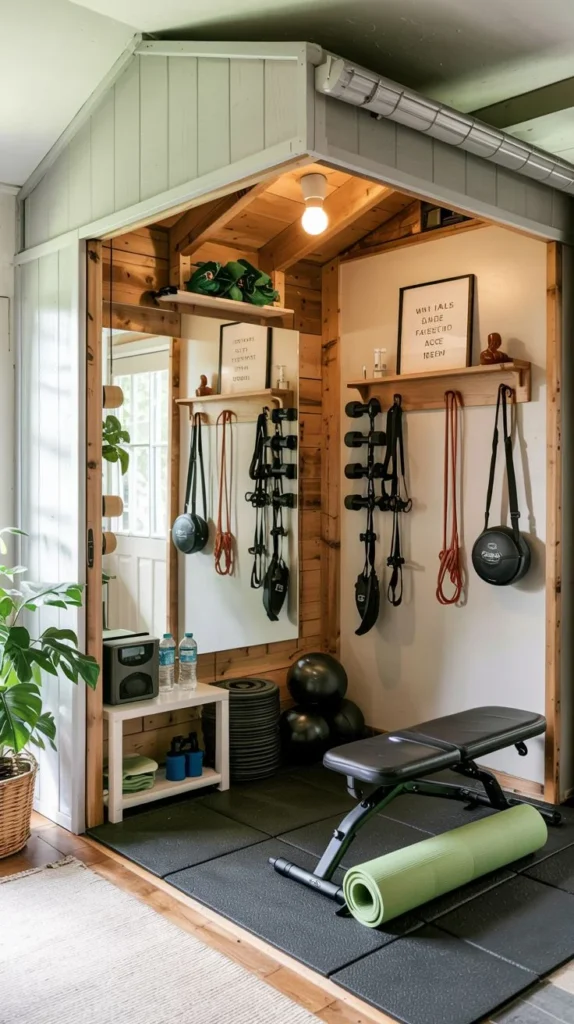
Vertical storage matters just as much as compact equipment. A narrow wall rack, pegboard, or suitable shelf can hold lightweight accessories while keeping the floor open.
For additional home gym layout inspiration, Houzz’s home gym design ideas can help you compare different equipment arrangements and room layouts.
Create a Mini Gym at Home Without Making the Room Look Like a Gym
Not every workout zone needs black rubber flooring, commercial equipment, and motivational slogans. If your gym is in a bedroom, living room, or hallway corner, let it blend with the surrounding interior.
Choose storage that relates to the room. A light wood shelf can work beautifully in a warm neutral interior, while a slim black rack can disappear into a modern space. A woven basket can hold resistance bands and towels while looking like ordinary decor.
You can also use a folding screen, curtain, or tall cabinet to visually separate equipment from the rest of the room. This works especially well when the gym occupies a multipurpose space.
Keep one visible feature that makes the area feel intentional. That could be a framed print, a large mirror, a simple plant, or an attractive light fixture. One strong detail usually looks better than a wall covered with unrelated gym signs.
Use a Basement for a Dedicated Workout Room
A basement gives you something a small bedroom often cannot: enough space to create separate activity zones. Before filling it with equipment, look carefully at the conditions of the room.
Check for moisture, low ceilings, support columns, limited natural light, and the location of electrical outlets. A basement gym should solve these practical issues before you start decorating.
Use the strongest and most stable part of the room for heavier equipment. Keep a clear route to the entrance and leave enough open floor for exercises that require movement.
If a support column interrupts the room, work around it instead of trying to hide it. It can become a natural divider between a strength area and a stretching zone.
Basements can also feel visually heavy when they have little natural light. Lighter walls, brighter lighting, mirrors, and a controlled color palette can make the room feel more inviting without making everything white.
For more visual inspiration, you can browse Houzz home gym ideas for examples of dedicated workout rooms, basement layouts, flooring choices, and equipment arrangements.

Choose Flooring for the Type of Workout
The floor affects how the room feels, how equipment sits, and how comfortable the space is during floor exercises. The right choice depends on what happens there every day.
Rubber gym flooring is a practical choice for many strength areas because it provides a durable surface around workout equipment. Interlocking tiles can be useful when you want to cover only part of a room. Other options, including vinyl, cork, foam, or finished wood, may work depending on the room and workout style.
Before choosing a material, think about how the room will actually be used. A strength-training area needs a different surface from a quiet yoga corner. If weights are regularly placed on the floor, durability and impact protection become more important.
For a basement, inspect the existing floor before installing a new surface. If moisture is already a concern, gym flooring should not be used to conceal the underlying problem.
Sound matters too. A workout room directly above a bedroom needs a different approach from a basement on a concrete slab. Mats beneath equipment can help protect finished surfaces, while a separate exercise mat provides a softer area for stretching and floor work.
You can also review Houzz’s guide to creating a home gym for additional flooring and room-planning considerations.
Give Your Small Gym Room a Clear Storage System
Storage is what separates a home gym that looks finished from one that feels permanently unfinished. When every accessory has a home, cleanup takes minutes instead of becoming another task you avoid.
Start with the items you reach for most. Keep frequently used bands, towels, and small accessories at an easy height. Put less frequently used items higher up or inside closed storage.
A narrow shelf can hold bottles and towels. Hooks can keep bands and jump ropes off the floor. A wall-mounted rack can keep suitable equipment organized without taking valuable floor space.
Do not put heavy gym equipment on decorative shelves that were never designed for substantial loads. Storage should match the weight and movement involved. Wall-mounted systems also need to be installed correctly for the wall construction and manufacturer’s requirements.
A storage bench can be particularly useful in a multipurpose gym. It provides a place to sit while also hiding smaller accessories. A closed cabinet can work in the same way when you want the room to look more residential between workouts.
For broader compact-home storage inspiration, see Homedecorio’s small space organization guide, which covers vertical storage and multifunctional solutions that can translate well to a workout corner.

Build the Room Around One Main Piece
A home gym often looks more polished when one piece acts as the visual anchor. In a cardio-focused room, that may be a treadmill or bike. In a strength room, it may be a rack or adjustable bench. In a yoga-focused room, the open floor becomes the main feature.
Once you choose the anchor, position the remaining items around it. Avoid scattering small pieces across the room simply because there is an empty corner. Grouping equipment by purpose creates a cleaner layout.
This approach can also control spending. Start with the equipment that supports your main workout and add pieces only when you know you will use them. A beautiful gym does not need to be completely equipped on day one.
Use Mirrors Where They Actually Help
Mirrors can make a small gym feel brighter and more open, but their practical value matters even more. A well-positioned mirror can let you observe movement and check positioning during exercises.
In a narrow room, a large mirror can visually extend the space. In a basement, it can also help distribute available light. You do not necessarily need to cover an entire wall. One strategically placed mirror can provide the benefit without making the room feel overly commercial.
Position the mirror according to the activities you perform. Keep the surrounding floor clear so the reflection does not simply make clutter look more obvious.

Layer the Lighting Instead of Relying on One Ceiling Fixture
A single harsh ceiling light can make a basement gym feel cold. A better approach is to combine general lighting with focused light where the room needs it.
Start with enough overall illumination to move safely around the equipment. Then consider focused lighting near storage, mirrors, or a stretching area.
If the room has a window, keep it as open as possible during the day instead of blocking natural light with bulky storage.
LED lighting is worth considering for a frequently used gym. The U.S. Department of Energy’s LED lighting guide explains the efficiency and lighting-control benefits of LED technology.
Choose lighting based on the atmosphere you want rather than automatically copying a commercial fitness studio. A home gym should still feel connected to the rest of your home.

Add Decor That Supports the Mood
Home gym decor should make you want to enter the room without turning it into a collection of slogans. Start with the feeling you want.
A yoga and mobility space may suit soft neutrals, natural wood, plants, and simple artwork. A strength-focused room may feel better with deeper tones, stronger contrast, and cleaner lines.
Use one or two decorative themes and repeat them. If your home already uses oak, cream, and black accents, carry those materials into the gym. That connection makes the workout area feel like part of the house instead of an unrelated room.
Artwork can add personality without taking floor space. A small clock, framed print, or simple typography piece may be enough.
Avoid decorative clutter around moving equipment. Anything near a treadmill, bike, rack, or free-weight area should be positioned so it cannot become an obstacle.

Divide a Larger Gym Into Activity Zones
A large workout room can actually feel less functional when everything is spread randomly. Create zones based on how you move through a typical session.
Place cardio equipment together if you use it for warmups. Keep weights and benches in a dedicated strength area. Leave a clear section for stretching, floor exercises, or mobility work.
If you use a screen for guided workouts, orient it toward the area where you will spend the most time following instructions.
Visual dividers can be subtle. A different flooring material can define the strength zone. A mat can identify a stretching area. A painted accent wall can mark the main equipment wall.
You do not need partitions unless the room genuinely needs them. The objective is to make the layout understandable at a glance.

Bring in Fitness Technology Without Creating Cable Clutter
Technology can make a home gym more useful, but too many devices can quickly make it look messy. Decide which technology genuinely supports your routine before adding screens, speakers, trackers, or connected equipment.
A tablet on a stable stand can be enough for guided workouts. A wall-mounted screen can work well when several people use the room. Wireless speakers can reduce visible cables, while a small charging station keeps devices off the floor.
Think about cable paths before installing anything. Cords should not cross walking routes or sit beside moving equipment. Keep electronics away from areas where bottles may spill, and follow the manufacturer’s installation and clearance requirements for powered machines.
If children or pets have access to the room, pay particular attention to moving equipment. The U.S. Consumer Product Safety Commission’s treadmill safety information highlights serious hazards involving children, pets, and objects around treadmills and emphasizes keeping them away from moving equipment.

Make the Workout Room Easy to Reset
The best home gym design is not the one that looks perfect in a photo. It is the one you can reset quickly after a real workout.
Give every loose item a specific home. Keep a towel basket close to the entrance. Store bands together. Place small weights in one location. Keep cleaning supplies accessible without leaving them beside exercise equipment.
If something regularly ends up on the floor, that is a sign the storage system needs to change. The problem may not be laziness. The storage location may simply be inconvenient.
A quick reset also protects the visual quality of the room. When the space looks ready for the next workout, there is less friction between deciding to exercise and actually starting.

Keep the Final Look Simple and Personal
Once the practical decisions are finished, resist the temptation to keep adding decor. A home gym already contains plenty of visual information: equipment, mats, racks, mirrors, screens, and storage.
Choose a small number of details that make the space feel like yours. That could be a framed print, a favorite color, a natural wood shelf, or a plant in a simple planter.
The goal is to create a room you enjoy being in, not a showroom filled with fitness products. This becomes even more important when the workout space shares a room with another function.
The more carefully you edit the gym area, the easier it becomes to maintain the rest of the room.

Protect Open Floor Space in a Compact Layout
When square footage is limited, the temptation is to use every available inch for storage. That usually makes the room harder to exercise in.
Keep a meaningful portion of the floor open. Open floor is valuable for warmups, stretching, bodyweight movements, mobility work, and exercises that require you to change position.
Mirrors, consistent flooring, and lighter wall colors can reinforce the feeling of openness. But visual tricks cannot replace a workable layout.
If you have to move three pieces of equipment before putting down a mat, the room still needs editing. A compact gym with fewer pieces and more usable floor can support more activities than a crowded room filled with machines.

Conclusion
A successful home gym is less about creating a miniature commercial fitness center and more about designing a room that works with your everyday habits. Start with the workout you actually do, measure the available space, and let that determine your equipment and layout.
For a small gym room, prioritize compact equipment, vertical storage, and open floor space. For a basement gym, think in zones and address lighting, flooring, moisture, and ventilation before decorating. For a mini gym at home, blend storage and equipment with the surrounding interior so the space can serve more than one purpose.
Then add the details that make you want to return: a useful mirror, comfortable lighting, a few personal decor pieces, and technology that genuinely supports your routine.
When equipment has a clear home and the room is easy to reset, your home gym becomes more than a corner filled with gear. It becomes a practical part of your home that is ready whenever you are.