
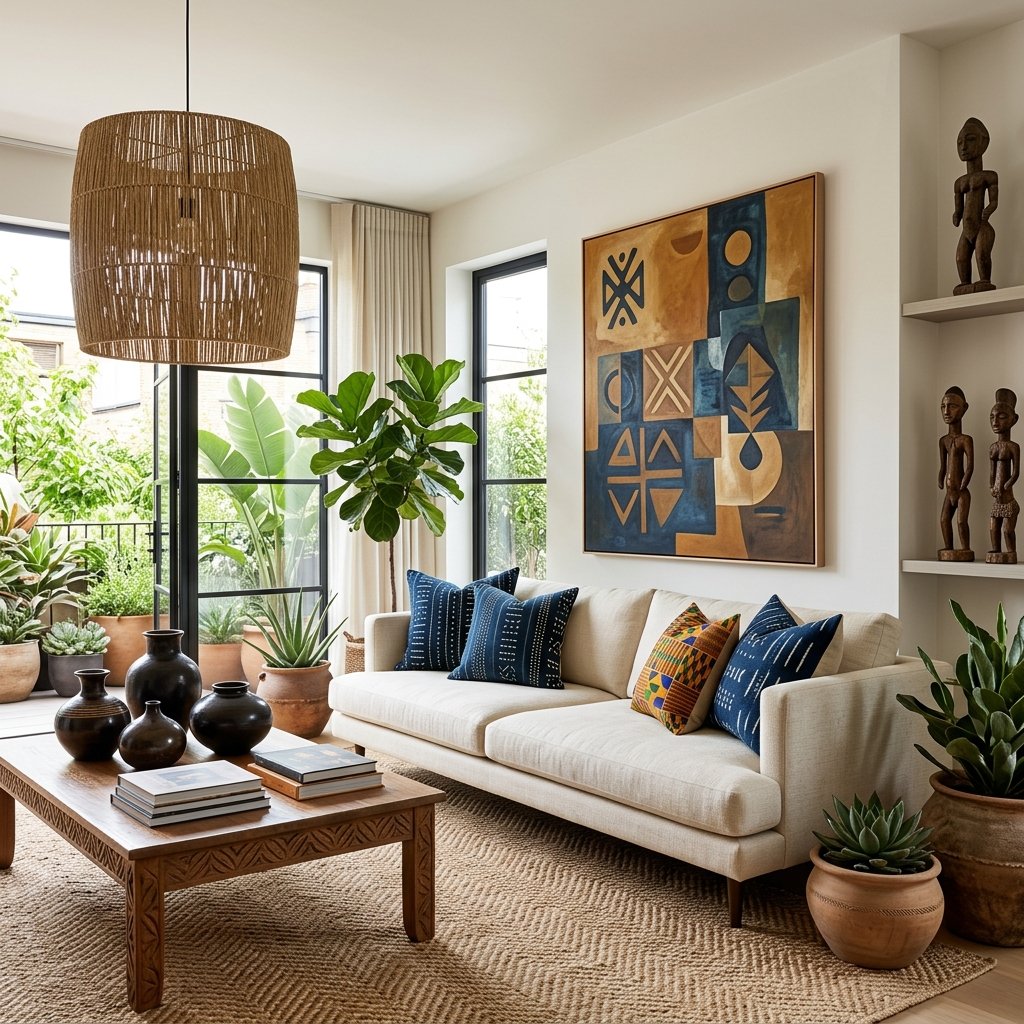
Explore 10 Afrohemian decor ideas blending African heritage with bohemian style. Warm, soulful interiors perfect for modern and small spaces.
Picture your living room after a long trip: a woven basket from a market stall, a carved stool you almost didn’t check as luggage, a throw you bought because the pattern stopped you in your tracks. That collected, meaningful feeling is the heart of Afrohemian decor. It roots African heritage in the free-spirited layering of bohemian style, and the result is a home that feels warm, personal, and globally inspired. The look has gained real traction across modern, luxury, and small-space decor alike, because it works with almost any floor plan. It blends easily with minimalist layouts, contemporary furniture, and cozy family homes.

What Is Afrohemian Decor?
Afrohemian decor blends traditional African design elements with the free-spirited layering of bohemian style and the practicality of modern interiors. At its core, it celebrates handcrafted details, natural textures, and earthy color palettes drawn from the land. Think warm browns, terracotta, deep greens, and sun-washed neutrals. Woven textiles, carved wood, tribal patterns, and artisanal objects come together without feeling forced.
What sets it apart from other eclectic styles is its connection to cultural symbolism and storytelling. Every piece feels intentional, often tied to heritage, travel, or personal history. Unlike trend-driven interiors that change with the seasons, Afrohemian spaces hold up over time because they’re rooted in tradition rather than a passing look. The result is lived-in and welcoming, where modern comfort meets soulful design and every room has something to say.
The name itself points to its two influences. “Afro” nods to African design traditions, from Kuba and mud cloth textiles to hand-carved wood and beaded objects. “Bohemian” carries the layered, gathered-over-time quality that’s defined boho interiors for decades. Put together, Afrohemian decor isn’t a strict rulebook. It’s closer to a set of instincts: choose pieces with a story, favor natural materials over synthetic ones, and let color and texture do the talking instead of matching furniture sets.
Earthy Color Palettes Inspired by African Landscapes
Earthy color palettes are the foundation of Afrohemian design. They bring warmth, depth, and a strong sense of place into the home. Common colors include terracotta and clay hues, warm browns, sandy neutrals, deep greens, muted golds, soft blacks, and creamy whites. Together they form a balanced palette that feels organic rather than overwhelming.
These shades work well in a living room, a bedroom, or a minimalist space when layered with intention. Start with neutral walls for a calm base. Introduce earthy tones through rugs, cushions, throws, and curtains. Pottery, woven baskets, and natural wood accents add texture without much effort. To keep the look modern rather than costume-like, balance the bold hues with clean lines and understated furniture. One accent wall or a single large rug is often enough to set the palette for the whole room.

Handwoven Textiles and Tribal-Inspired Fabrics
Handwoven textiles sit at the heart of Afrohemian interiors. Traditional mud cloth and intricately woven throws add visual interest and a tactile richness that makes a room feel lived-in. They’re also a direct way to celebrate artistry and cultural heritage, so each piece feels meaningful rather than purely decorative.
There are several easy ways to bring these fabrics in. Drape a throw blanket over the sofa for an instant cozy touch. Upholster a single accent chair to create a statement piece without redoing the whole room. Layer cushions on beds and benches for extra depth. Mudcloth and Kuba cloth, two of the most recognizable African textile patterns, work especially well framed as wall art if you’d rather not commit to upholstery. These fabrics pair naturally with affordable decor, especially against neutral furniture that lets the patterns stand out. Styled thoughtfully, they turn a plain room into something with real character.

Statement Wall Decor with Cultural Meaning
Statement wall decor is where Afrohemian interiors really set themselves apart. Every piece is chosen to tell a story instead of just filling space. Popular choices include African masks arranged with care, hand-carved wooden art, woven wall baskets, and textile wall hangings.
These pieces work in both modern and heritage-leaning homes, since the artistry itself does most of the visual work. A cluster of three to five woven baskets in graduated sizes reads as a single composition rather than scattered decor. If you’re sourcing masks or carvings, look for pieces from artisan cooperatives or fair-trade importers rather than mass-produced replicas, since authenticity is part of what gives this style its meaning. Selecting pieces that resonate personally, rather than filling wall space for its own sake, is what keeps the room feeling curated instead of themed.

Natural Materials That Ground the Space
Nature plays a central role in Afrohemian design. Solid wood furniture, rattan and cane accents, ceramic and clay pottery, and linen or cotton fabrics connect the interior to the natural world while adding real texture. These materials also create a sense of calm that manufactured finishes rarely match.
Leaning into natural materials fits well with sustainable, timeless renovation choices, since solid wood and natural fiber pieces age better than particleboard or synthetic weaves. A rattan accent chair or a clay table lamp costs roughly the same as a mass-produced equivalent but wears in rather than wears out. Layer wood, stone, clay, and textile together rather than choosing just one, and the room reads as intentional instead of assembled from a single catalog. When you’re shopping secondhand, look for solid joinery and real wood grain rather than veneer. Those details are usually the easiest way to tell a piece will hold up.

Afrohemian Living Room Styling with Modern Balance
Afrohemian living rooms work best with layered warmth and a modern sense of restraint. Start with low-profile, comfortable seating that anchors the space without blocking sightlines across the room. Add one bold statement piece, like a hand-carved coffee table or an oversized textile, to serve as the cultural focal point. Keep the layout open so people can move and talk without squeezing past furniture.
The modern finish comes from mixing traditional artisanal pieces with sleek, contemporary silhouettes. A carved side table next to a clean-lined sofa reads as curated, not cluttered. Harmonize the earthy, soulful materials with a few crisp modern lines, whether that’s a glass coffee table top or a plain linen sofa, and the room feels rooted in heritage without looking like a themed set.

Afrohemian Bedroom Decor for Restful Luxury
Afrohemian bedroom decor turns a sleeping space into a soulful, quiet retreat. Start with layered bedding in calming neutral tones for a plush, easy foundation. Drape a handwoven throw at the foot of the bed for texture and craftsmanship without much effort.
Lighting matters more here than almost anywhere else in the home. A sculptural lamp with a soft, amber glow works as both a light source and a piece of art on the nightstand. Whether you’re going for high-end luxury or a cozy, budget-friendly version, the goal is the same: a room that feels grounded and restorative, not overstyled. Two matching bedside lamps in a natural material, like carved wood or woven rattan, tie the look together without needing much else.

Sculptural Decor and Artisan Accessories
In an Afrohemian home, the details do a lot of the work. Wooden stools are one of the most versatile pieces you can add, since they double as extra seating and a rustic side table. Ceramic vessels with earthy glazes bring a sense of history to a shelf or console.
Handcrafted bowls and trays are useful too, not just decorative, since they give you a spot to corral keys or jewelry with some visual interest. These pieces double as functional household items and curated art at the same time. Choose accessories with weight, texture, and a story behind them rather than anything mass-produced, and the space starts to feel intentional instead of assembled in a single shopping trip.

Plants and Greenery for a Lived-In Feel
Greenery is the connective tissue between bold textures and modern lines in an Afrohemian room. Plants do more than clean the air. They soften hard architectural edges and bring in some organic energy that furniture alone can’t.
A fiddle leaf fig adds sculptural height in a corner that needs some drama. A palm brings feathery, expansive fronds that echo a warmer climate. In tighter spots, a snake plant adds vertical structure with almost no maintenance, which matters if you don’t have a reliable green thumb. Trailing pothos vines look great draped over a bookshelf for a cascading, jungle-like effect. Whether you’re filling a large room or working with small space decor, styling plants at a few different heights creates a layered look that feels intentional rather than an afterthought.

Afrohemian Decor for Small Spaces
Afrohemian decor scales down into a compact apartment more easily than you’d expect. The look doesn’t need square footage, it needs intention. Use vertical wall decor, like a woven basket cluster or an elongated tapestry, to draw the eye upward and make a low ceiling feel taller.
Multifunctional furniture matters most in a small footprint. A hand-carved wooden stool that works as both a side table and extra seating earns its place twice over. Keep your palette to a narrow range of earth tones and creamy neutrals so the room doesn’t feel visually crowded even when it’s physically tight. If you’re working with limited square footage more broadly, our luxury small apartment design ideas guide has more ways to make a compact layout feel intentional rather than cramped.

Mixing Heritage with Contemporary Design
The best Afrohemian spaces balance history and modernity rather than leaning fully into either one. Pair African-inspired pieces, like a hand-carved stool or bold mudcloth textiles, with the clean lines typical of mid-century or Scandinavian furniture. That contrast keeps the heritage pieces as focal points instead of blending into a themed room.
A neutral backdrop, like soft terracotta, warm sand, or crisp ochre, works like a gallery wall and lets the artisanal textures stand out. This aesthetic pairs naturally with bohemian styling more broadly. If bohemian layering already appeals to you, our boho living room ideas guide has more inspiration for mixing textures and eras in the same space. The last rule is restraint: an overloaded room loses the contrast that makes the mix work in the first place. Give each heritage piece room to breathe and the fusion reads as deliberate.

How to Style Afrohemian Decor Without Overdoing It
Afrohemian styling works best with quiet intention rather than a full room makeover in one weekend. Designers who work in this style, including those interviewed by Apartment Therapy on the trend, point to a handful of anchor pieces, like mudcloth textiles or large-scale statement art, as the fastest way to establish the look without overwhelming a room. Give those key pieces room to breathe instead of surrounding them with competing patterns.
Skip matching furniture sets entirely. The charm of this style comes from a collected-over-time feeling, not a showroom set bought in one trip. Mix old and new on purpose: a sleek, contemporary sofa next to a hand-carved coffee table reads as curated rather than mismatched. Focus on quality over quantity, choosing a few resonant, artisanal pieces instead of many generic ones. These same principles carry across the living room, the bedroom, and everywhere in between.
Home Decor FAQs
What is Afrohemian decor?
Afrohemian decor blends African heritage elements with bohemian and modern interior design for a soulful, layered look.
Is Afrohemian decor suitable for modern homes?
Yes, it pairs beautifully with modern furniture and minimalist layouts when styled intentionally.
Can Afrohemian decor work in small spaces?
Absolutely. Thoughtful layering, vertical decor, and neutral palettes make it ideal for small space decor.
What colors define Afrohemian interiors?
Earthy tones like terracotta, beige, brown, muted greens, and soft black are key.
Is Afrohemian decor expensive?
It can be both affordable and luxurious, depending on how you source decor and furniture.
How do I start decorating in Afrohemian style?
Begin with textiles, natural materials, and a few meaningful decor pieces, then build slowly.
Conclusion: Decor That Tells a Story
Afrohemian decor is deeply personal. It’s about honoring heritage, embracing creativity, and building a home that feels soulful rather than staged. Blend African-inspired elements with modern comfort, and you end up with a space that’s warm, expressive, and timeless. Inspired to decorate with meaning?
Explore more home decor ideas, subscribe for weekly interior inspiration, and save your favorite Afrohemian looks on Pinterest to revisit anytime.
Your home deserves a story. Let Afrohemian style help you tell it.
1 comment