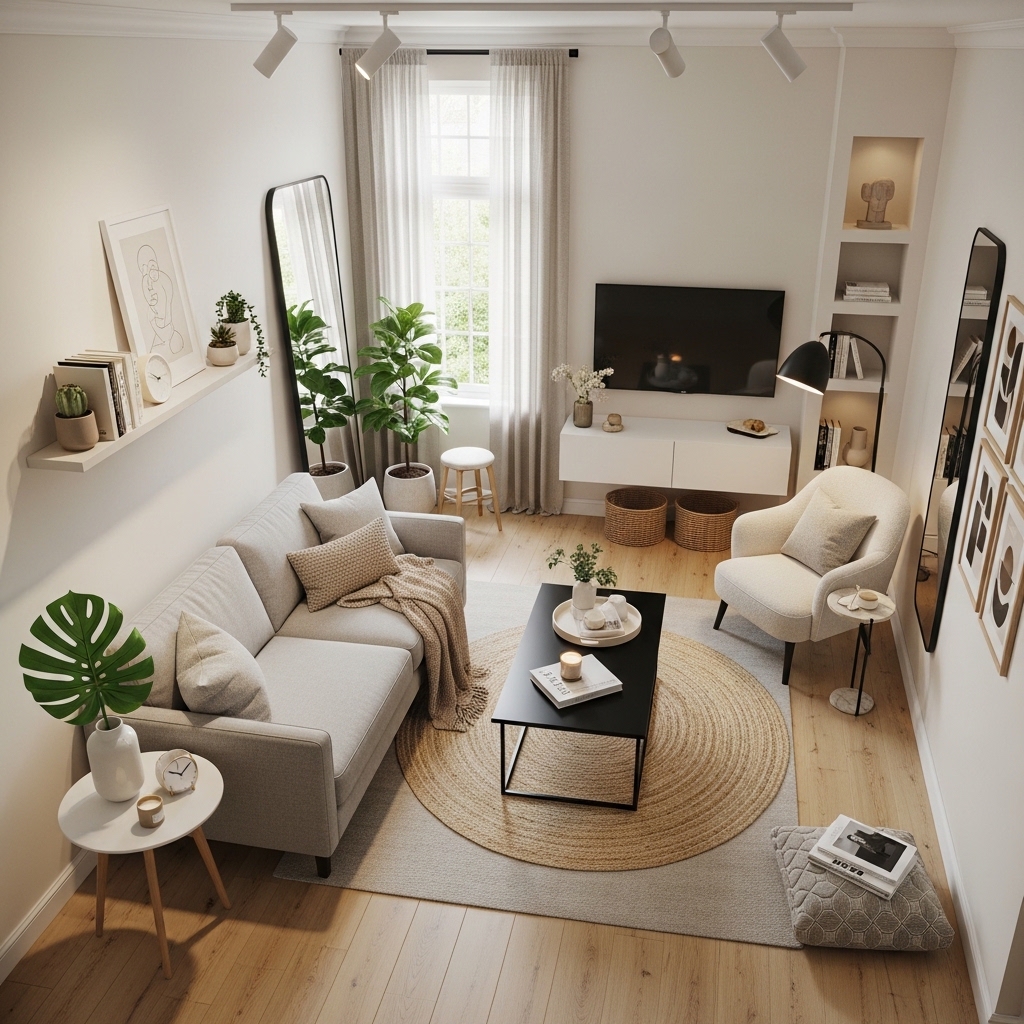
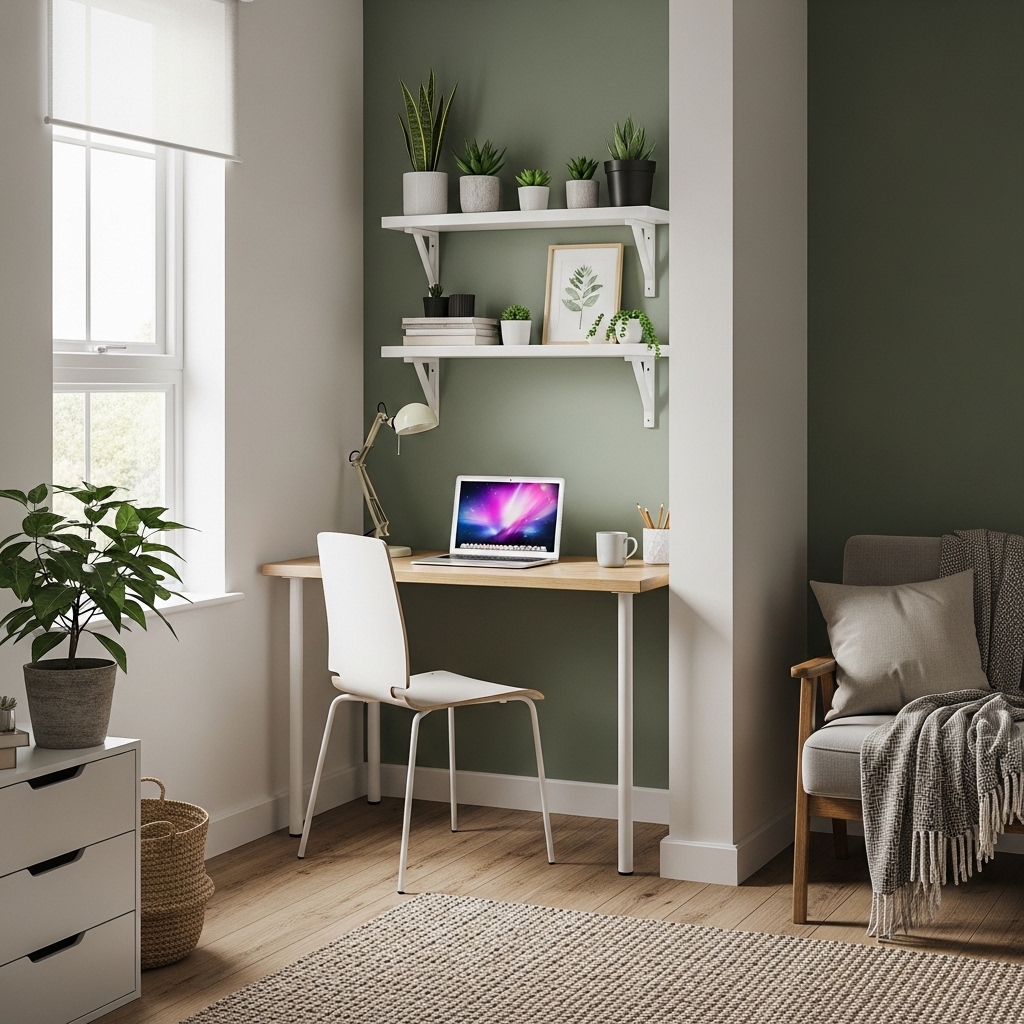
Designing a functional workspace within a compact living area is an exercise in spatial intelligence, turning architectural constraints into a sleek, multi-purpose environment. In the modern era of hybrid work, your desk shouldn’t compete with your living room; it should complement it. The key lies in selecting layouts that respect the “psychology of the room”—using vertical space, underutilized corners, and light-reflecting surfaces to maintain an airy feel. When planning your setup, focus on visual continuity; choosing materials and colors that match your existing furniture prevents the desk from looking like an after-thought. Whether you opt for a hidden Murphy system or an elegant floating ledge, the goal is to establish a clear boundary between “office hours” and relaxation without sacrificing a single square foot of comfort. By strategically positioning your station near natural light and prioritizing cable management, you can create a high-performance hub that fuels focus while preserving your home’s aesthetic tranquility.
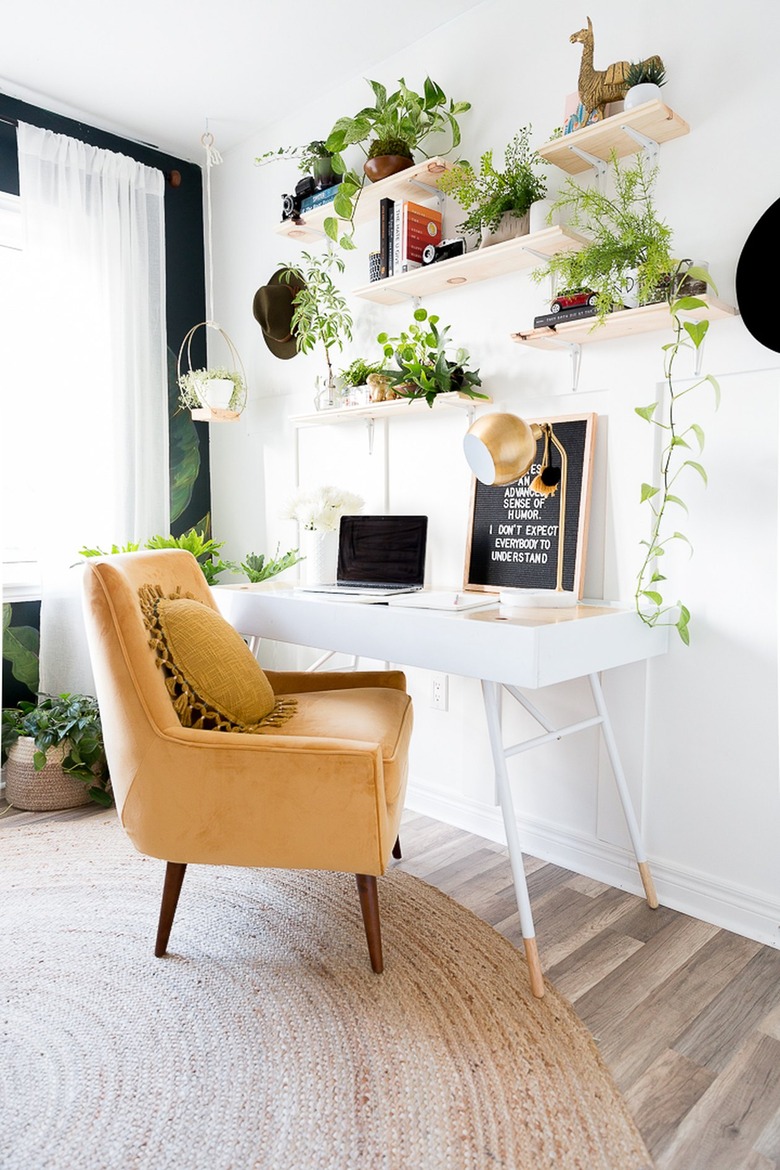
1. Floating Wall Desk With Shelving
A floating wall desk with integrated shelving is the ultimate spatial “cheat code” for cramped living rooms, effectively decoupling productivity from floor-plan constraints. By mounting the workspace directly to the wall, you eliminate bulky legs that traditionally clutter sightlines, fostering a minimalist aesthetic that makes a small room feel significantly more expansive. To maximize this setup, prioritize verticality: install tiered shelving above the desk to house peripherals and decor, ensuring your “office” footprint remains exactly zero square feet of floor space. When positioning the unit, aim for a location adjacent to natural light sources to reduce eye strain, and utilize the void beneath the desk for a tuck-away stool to maintain an unobstructed traffic flow. This configuration doesn’t just provide a surface; it crafts a dedicated, high-functionality zone that preserves the architectural integrity of your home while keeping essentials within an ergonomic reach.
2. Fold-Down Murphy Desk
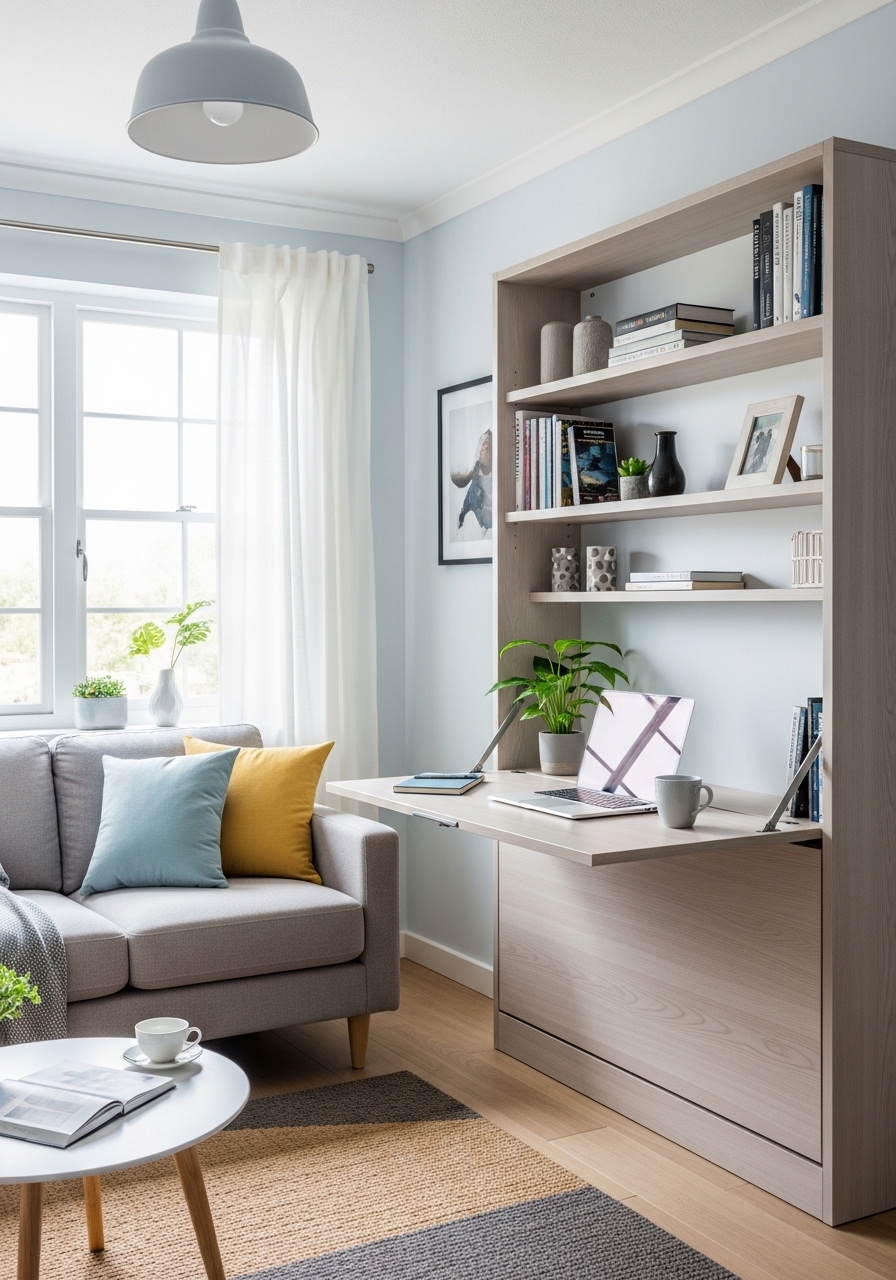
For those navigating the challenges of dual-purpose living, the Murphy desk is a masterclass in spatial efficiency, acting as a “disappearing” workstation that preserves the sanctity of your downtime. By stowing flush against the wall when idle, it instantly reclaims floor area for socializing, preventing the mental weight of an exposed office from encroaching on your evening. To implement this effectively, prioritize high-gauge steel hinges and robust locking mechanisms to ensure a rock-solid, wobble-free surface. Strategically mount the unit at a height that allows your existing accent chairs to serve as ergonomic seating, and ensure proximity to a power outlet to avoid trailing cables that disrupt the “invisible” illusion. Ultimately, the Murphy desk converts a single wall into a high-performance hub that respects the boundaries between professional productivity and domestic comfort, making it an indispensable asset for the modern, compact home.
3. Corner Desk Nook
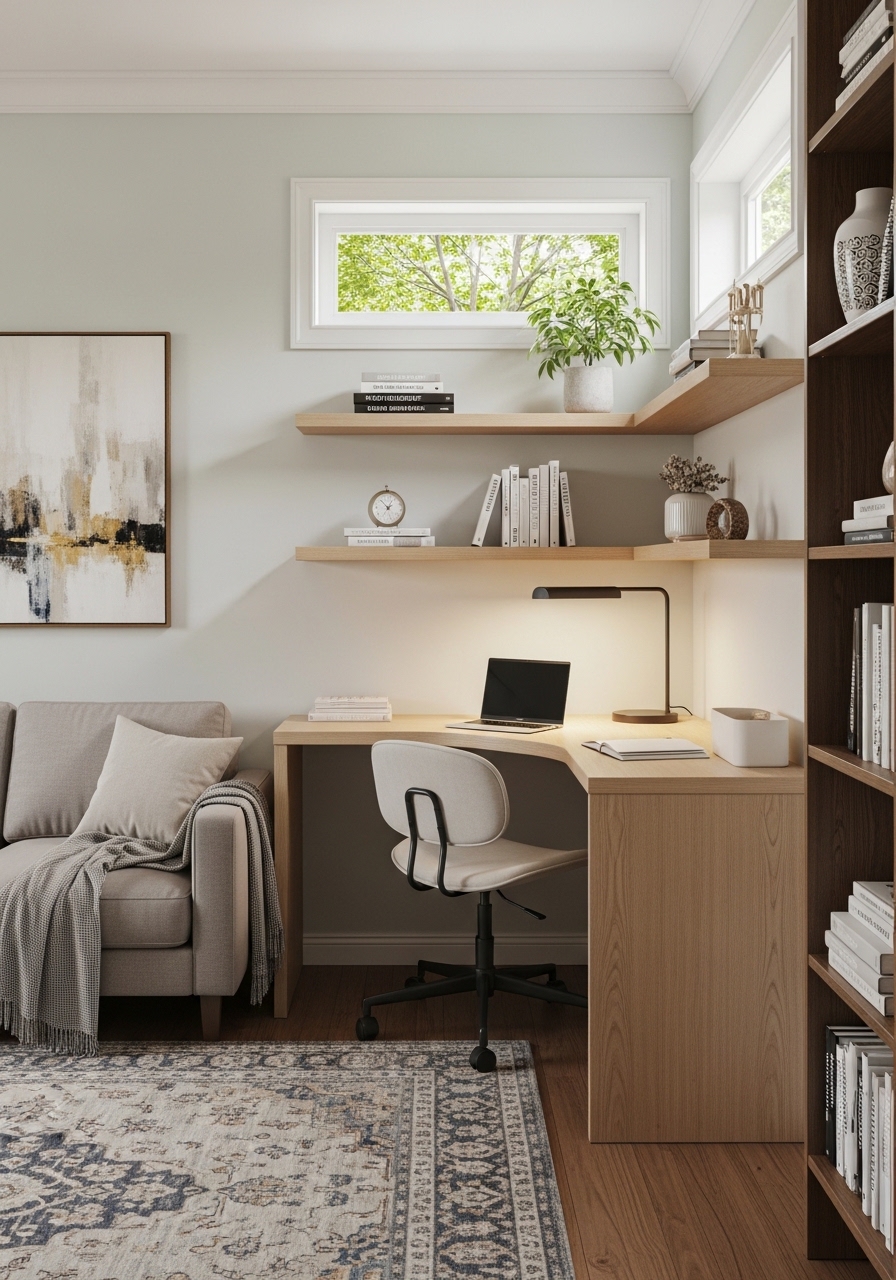
Transforming a neglected corner into a dedicated nook is a masterstroke of spatial geometry, converting dead space into a high-utility “gold mine.” By anchoring your workspace in a corner, you naturally clear the central floor area, maintaining an unobstructed flow through the room while gaining the ergonomic advantage of two intersecting surfaces. To make this zone feel like a curated destination rather than an afterthought, prioritize lighting and texture: a sleek task lamp provides essential focus, while a vertical corkboard or pegboard turns the walls into a functional “brain dump” for inspiration. For the best results, select a desk with a triangular or L-shaped footprint to maximize surface area without protruding into walking paths. This layout naturally creates a sense of privacy and “cocooning,” helping you mentally separate from household distractions. By treating the corner as an architectural feature, you build a compact, high-performance hub that feels intentional, cozy, and remarkably efficient.
4. Slim Console Desk Behind Sofa
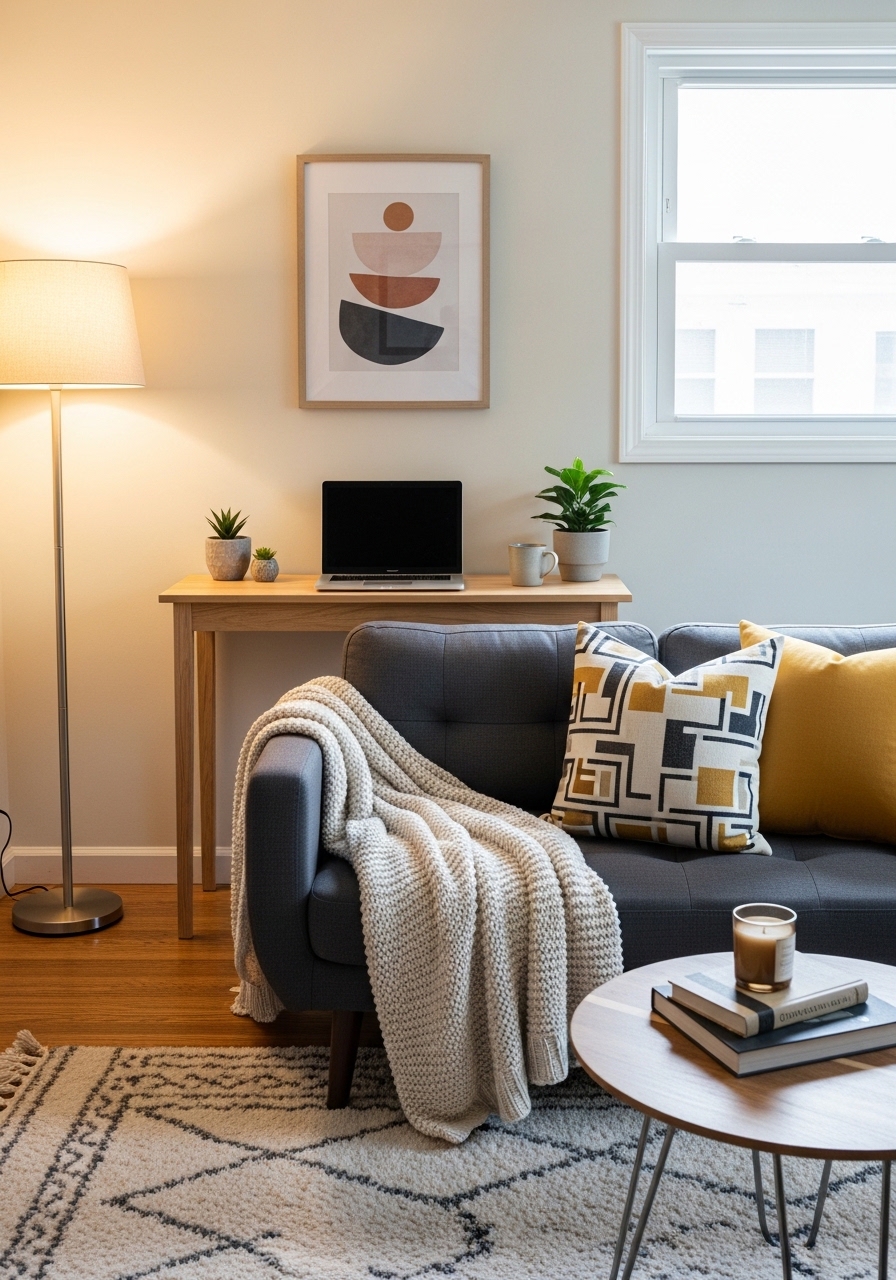
Positioning a slim console desk directly behind your sofa is a masterstroke of “stealth” interior design, transforming the often-ignored gap between seating and the rest of the room into a high-utility workstation. This layout excels at creating a seamless transition between professional and personal zones, as the sofa acts as a natural physical anchor that hides the desk’s footprint from the main seating area. To maximize this setup, select a desk height that sits roughly one inch below the sofa back to maintain a clean, unobstructed sightline across the room. Prioritize a depth of no more than 15–18 inches to ensure your walkways remain open and fluid. By integrating a low-profile task lamp and a cable management box to tuck away unsightly cords, you create a sophisticated “command center” that feels like a deliberate architectural choice rather than a cluttered addition. This strategy effectively doubles your furniture’s utility without sacrificing an inch of precious floor real estate.
5. Window-Ledge Workspace
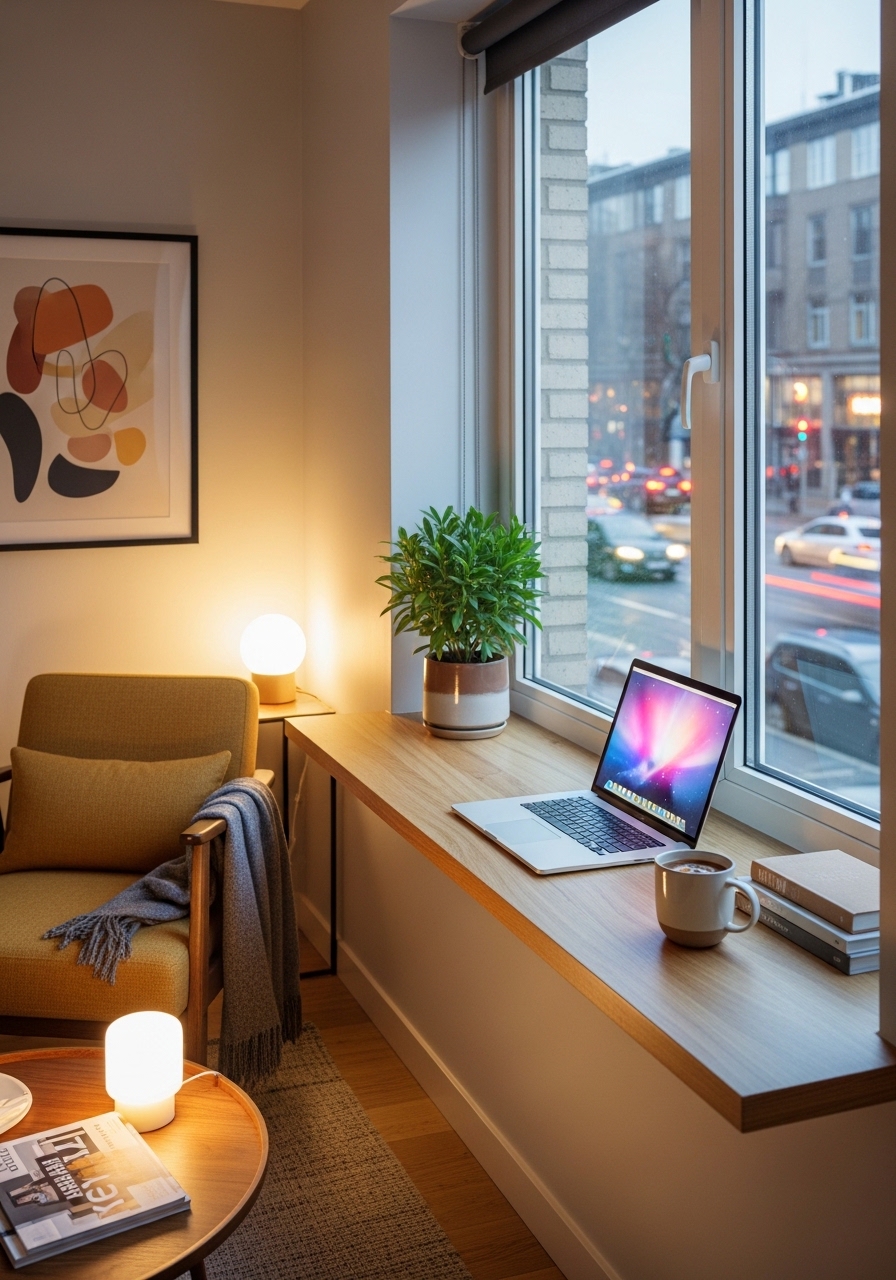
A window-ledge workspace is a masterstroke of biophilic design, leveraging the “spatial expansion” of natural light to make even the tightest room feel infinitely more breathable. By anchoring your desk beneath a window, you replace a static wall with a dynamic view, significantly reducing the “boxed-in” feeling common in small apartments. To execute this effectively, select a minimalist, low-profile desk—or even a deep, custom-fitted shelf—that aligns perfectly with the sill to create a continuous, built-in appearance. Prioritize adjustable light control, such as top-down/bottom-up cellular shades or sheer linen curtains, to mitigate screen glare and heat gain throughout the day without sacrificing the view. This layout doesn’t just provide a surface; it creates a high-performance “well-being hub” where sunlight boosts productivity and Vitamin D. By keeping the desk’s silhouette slim and its materials light-reflective, you ensure the workstation remains a transparent addition that invites the outdoors in, rather than a bulky barrier to your room’s natural focal point.
6. Bookshelf Desk Combo
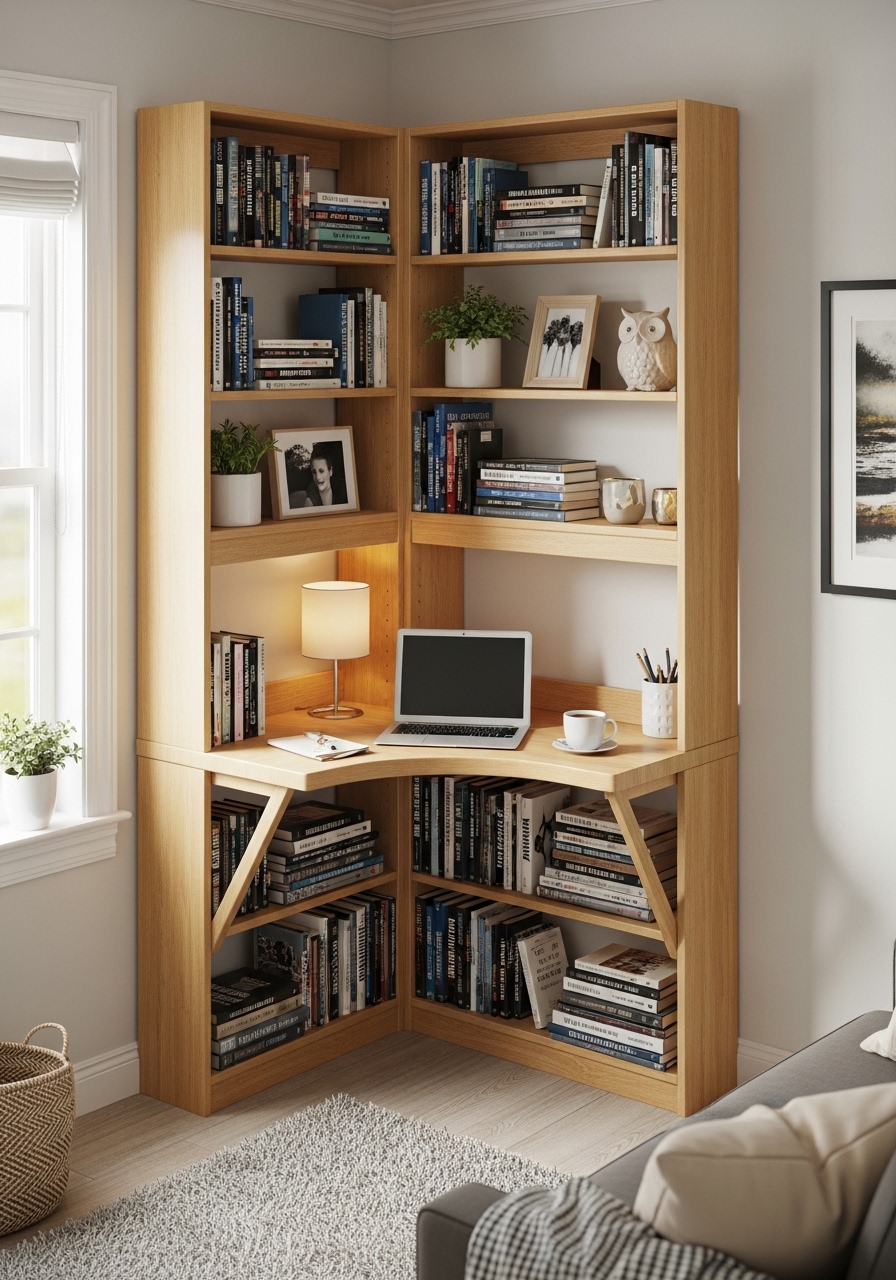
A bookshelf desk combo is a masterstroke of vertical integration, transforming a standard storage unit into a high-utility “all-in-one” workstation that consumes zero additional floor space. by repurposing a central shelf at a standard 28- to 30-inch height, you create an ergonomic surface that feels like a built-in architectural feature rather than a cluttered addition. This layout excels at “zoning,” where professional tools coexist with personal decor, allowing your office essentials to remain within an effortless, ergonomic reach while books and plants provide a sophisticated backdrop for video calls. To maximize this setup, prioritize a reinforced shelf or a pull-out “glider” surface to ensure stability for your laptop and wrists. By maintaining a consistent color palette across the shelving unit, you ensure the desk remains a quiet, cohesive element of your living room’s DNA. This strategy turns a simple storage piece into a dynamic command center that balances high-density utility with a polished, curated aesthetic.
7. Under-Sofa Hidden Desk
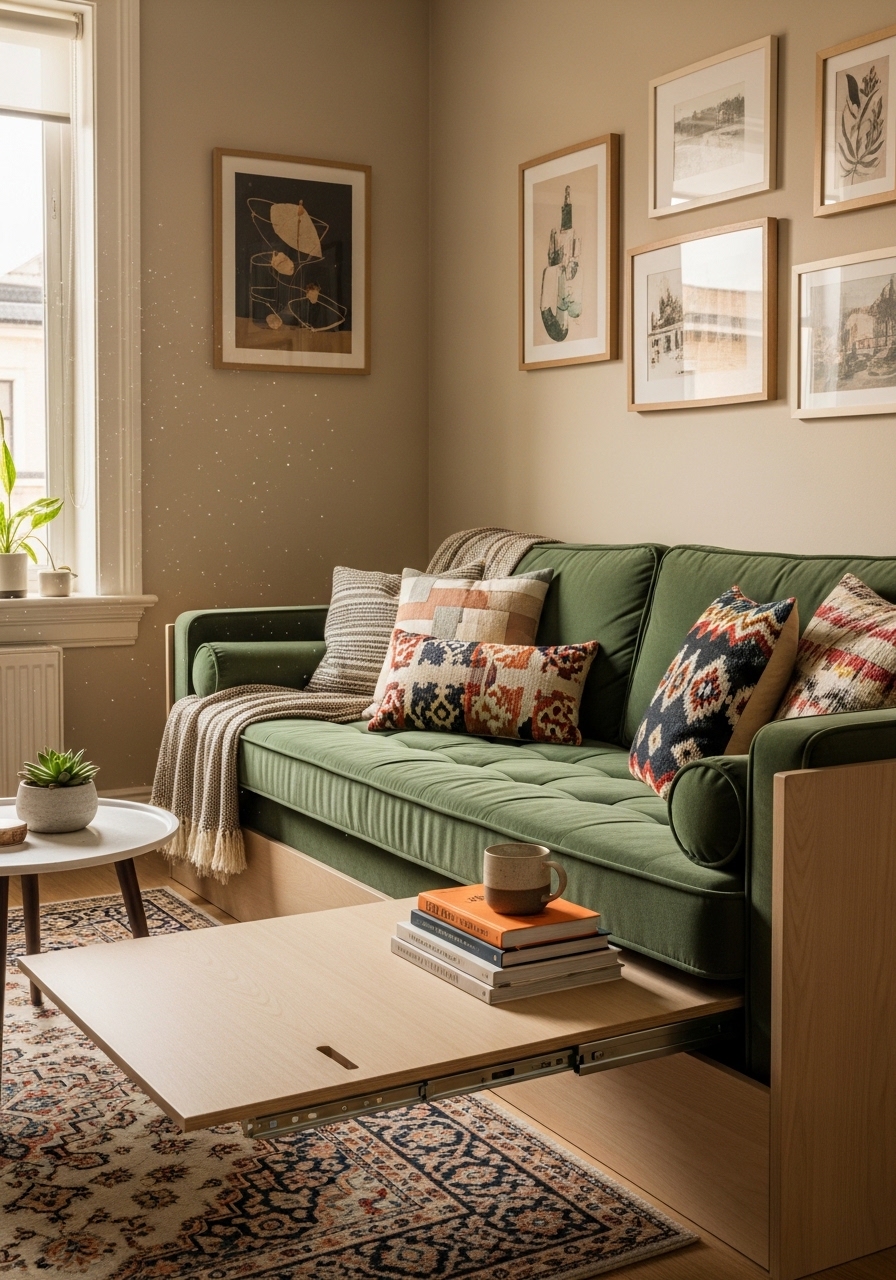
An under-sofa slide-out desk represents the pinnacle of “stealth utility,” transforming the literal footprint of your seating into a high-performance workspace. This ingenious layout capitalizes on the often-wasted clearance beneath a sofa or built-in bench, using a high-load telescopic drawer slide or a rolling nested platform to deploy a work surface only when needed. To execute this effectively, ensure the desk height aligns with a comfortable typing position while seated on the sofa—typically requiring a “c-table” style lift or a slim profile that clears your knees. This strategy is a masterclass in visual decluttering; by retracting the unit after hours, you mentally “close the office,” restoring your living room to a pure relaxation zone. For the best results, prioritize lightweight materials like bamboo or thin-gauge aluminum to keep the mechanism fluid and easy to operate. This setup doesn’t just save space; it deletes the visual noise of a traditional desk, making it the ultimate “secret weapon” for ultra-minimalist, tiny living environments.
8. Glass Desk for Visual Lightness
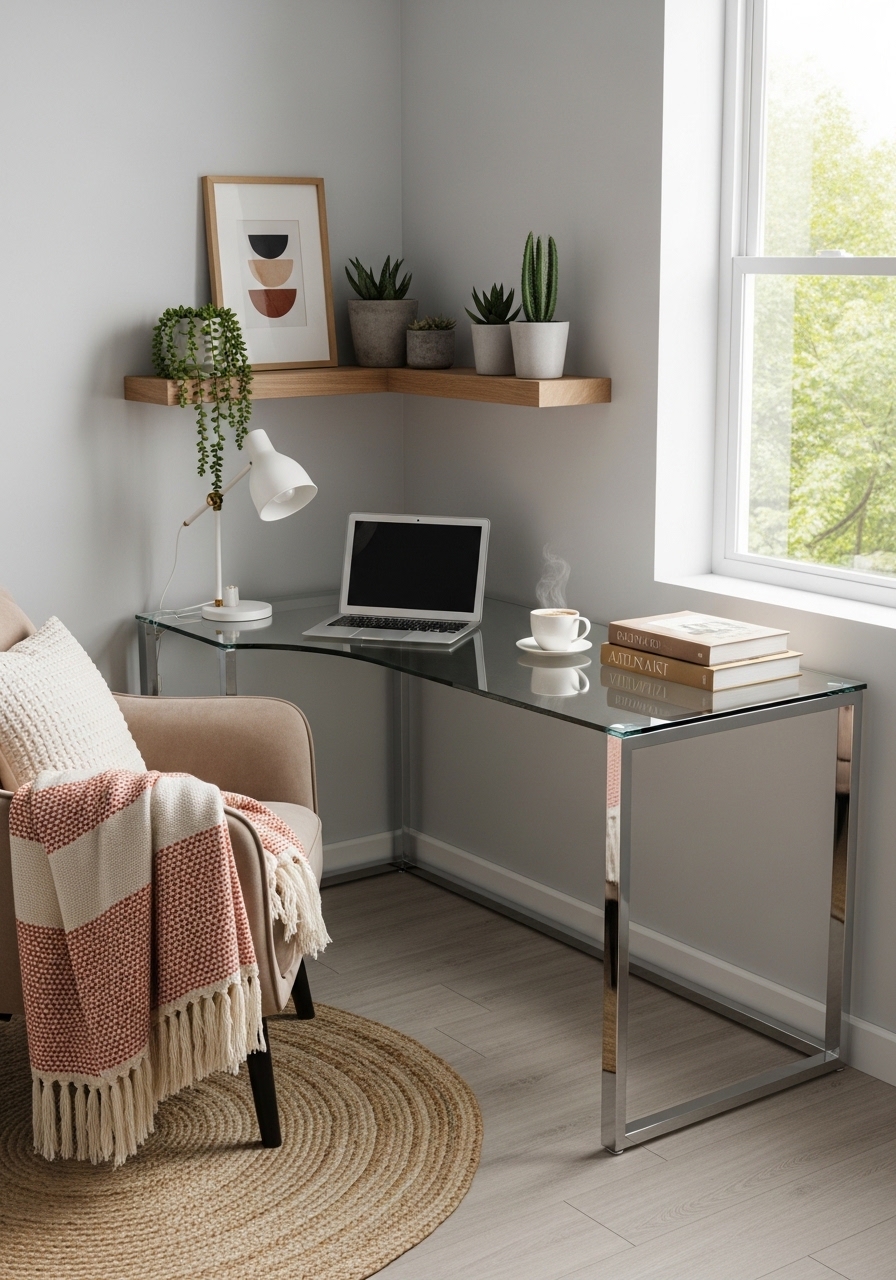
A glass desk is a masterclass in “optical expansion,” serving as a high-performance workstation that maintains the visual integrity of a tiny living room by appearing almost invisible. By allowing light to flow through the surface rather than blocking it, a glass desk eliminates the heavy “visual weight” of traditional timber or metal, making a cramped corner feel airy and unobstructed. To master this look, prioritize ultra-clear tempered glass and a slim-profile frame—perhaps in a reflective chrome or a muted matte—to further diminish the desk’s footprint. Because glass hides nothing, rigorous cable management is the secret to success; utilize clear adhesive clips or a sleek floor-mounted cable spine to keep wires organized and out of sight. Pair the desk with a transparent acrylic or “ghost” chair to complete the weightless aesthetic, creating a sophisticated zone that facilitates deep work without encroaching on your room’s sense of openness. This setup doesn’t just provide a surface; it creates a “floating” command center that respects the architectural flow of your home.
9. Wall-Mounted Foldable Desk Panel
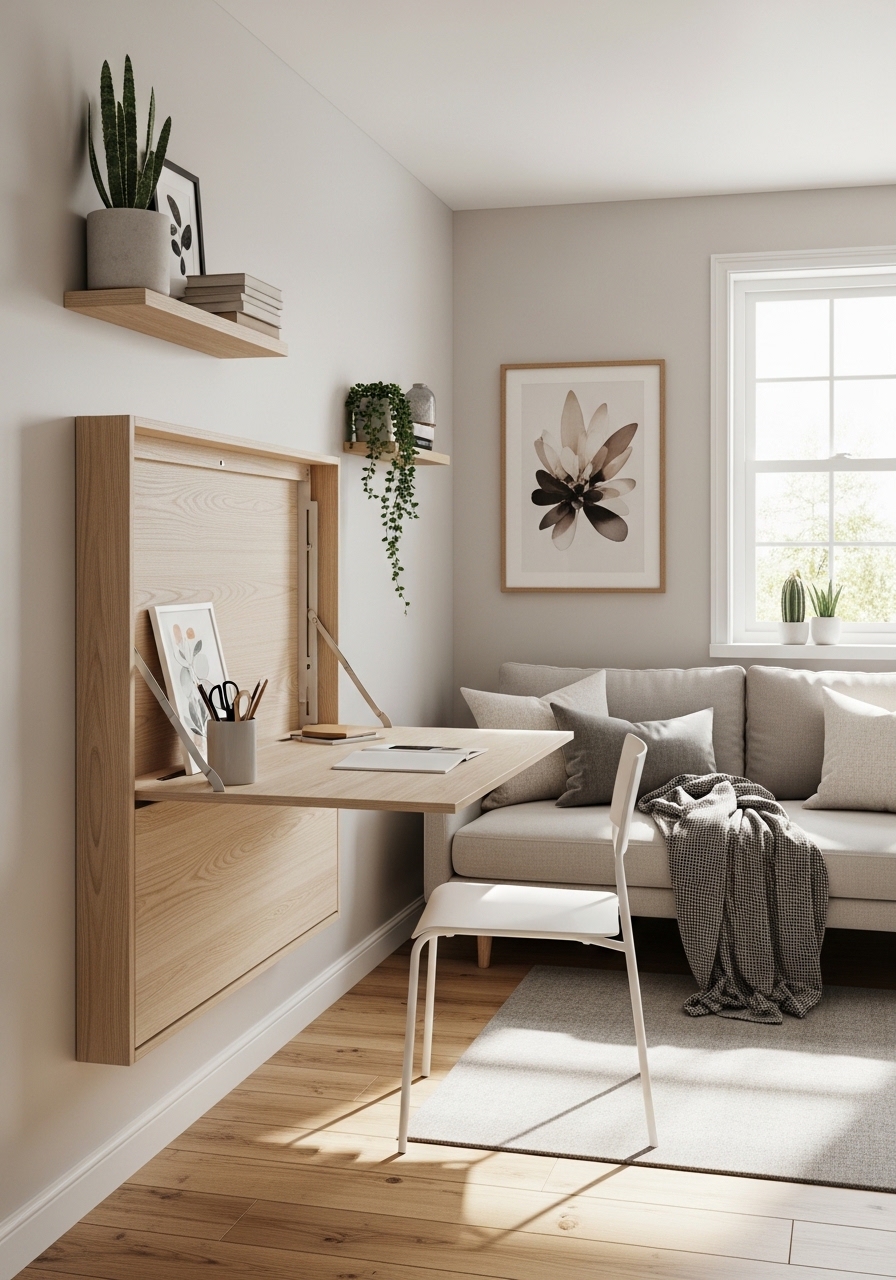
A wall-mounted foldable desk panel is a masterstroke of “incognito” design, functioning as a high-utility workstation that masquerades as minimalist wall art when idle. This vertical solution is a spatial powerhouse for tiny living rooms, as it replaces the traditional four-legged desk with a hinged, flip-down surface that consumes zero floor area. To maximize this setup, treat the interior “storage slots” as an ergonomic dashboard; use them to organize your laptop, tablets, and stationery so that your entire office literally disappears with a single upward motion. When selecting a unit, prioritize a solid-core wood or high-density laminate panel to ensure a sturdy, vibration-free typing surface. For a cohesive aesthetic, customize the exterior face of the panel with a chalkboard, a mirror, or a framed print to ensure it contributes to your room’s decor during off-hours. This strategy doesn’t just save space; it provides a psychological “reset” button, allowing you to physically close the door on your workday and reclaim your living room’s tranquil atmosphere.
10. Pencil-Thin Desk with Vertical Storage
A pencil-thin desk with vertical storage is a masterstroke of “linear efficiency,” prioritizing a shallow horizontal footprint while exploiting the underutilized volume of your walls. By selecting a desk with a depth of just 12 to 15 inches, you maintain a wide-open floor plan, preventing the furniture from “choking” the room’s natural traffic flow. To make this ultra-slim surface functional, you must pivot to the vertical plane: install a high-utility pegboard or a modular rail system directly above the desktop to “float” your monitors, stationery, and tech peripherals. This strategy keeps the primary work surface entirely clutter-free, ensuring that even a “pencil-thin” ledge feels spacious enough for deep focus. For a professional finish, use integrated LED strip lighting under the lowest shelf to eliminate shadows and define the zone. By shifting the storage burden from the desk to the wall, you create a high-performance command center that feels like a sleek architectural accent rather than a bulky piece of office furniture.
11. Ladder Desk for Vertical Style
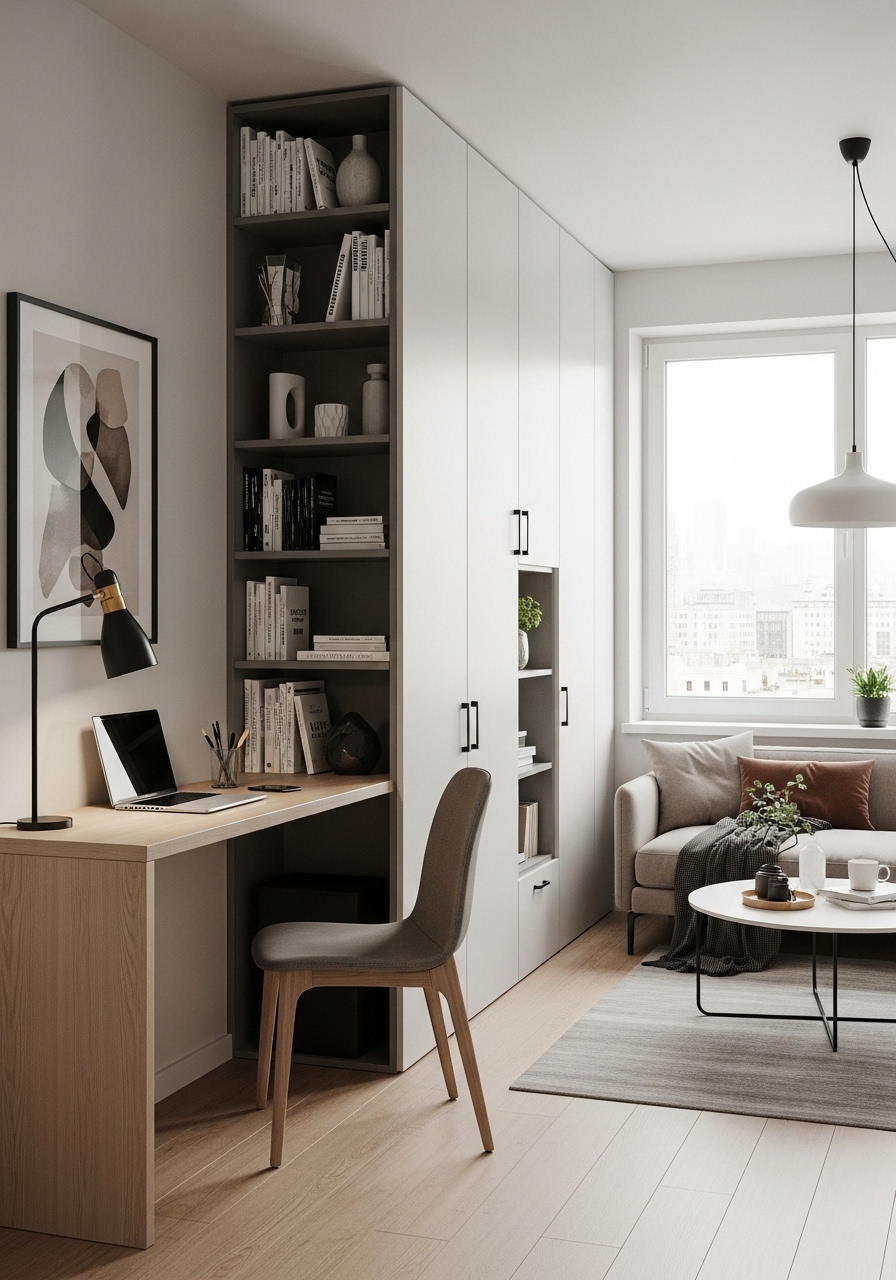
A ladder desk is a masterstroke of “leaning efficiency,” utilizing a vertical incline to provide a multi-tiered workstation that consumes a remarkably small footprint by directing its visual weight upward rather than outward. By resting a tapered frame against the wall, this design prevents the cramped feeling of traditional boxy furniture, making it a “spatial cheat code” for small apartments. To maximize this setup, treat the deeper lower shelf as your primary ergonomic surface—ideally at a 28- to 30-inch height—while using the ascending, narrower tiers for “passive storage” like tech peripherals, books, or cascading plants. For a rock-solid experience, prioritize a model with integrated wall-anchor hardware to eliminate micro-wobbles during heavy typing sessions. Whether you opt for warm oak to achieve a “Scandi-cozy” aesthetic or matte black for a “sleer urban” vibe, the ladder desk functions as a piece of functional sculpture that bridges the gap between a bookshelf and a command center. This strategy doesn’t just save space; it curates it, turning a sliver of wall into a high-performance, Pinterest-ready hub that feels intentionally light and modern.
12. Built-In Wall Niche Workspace
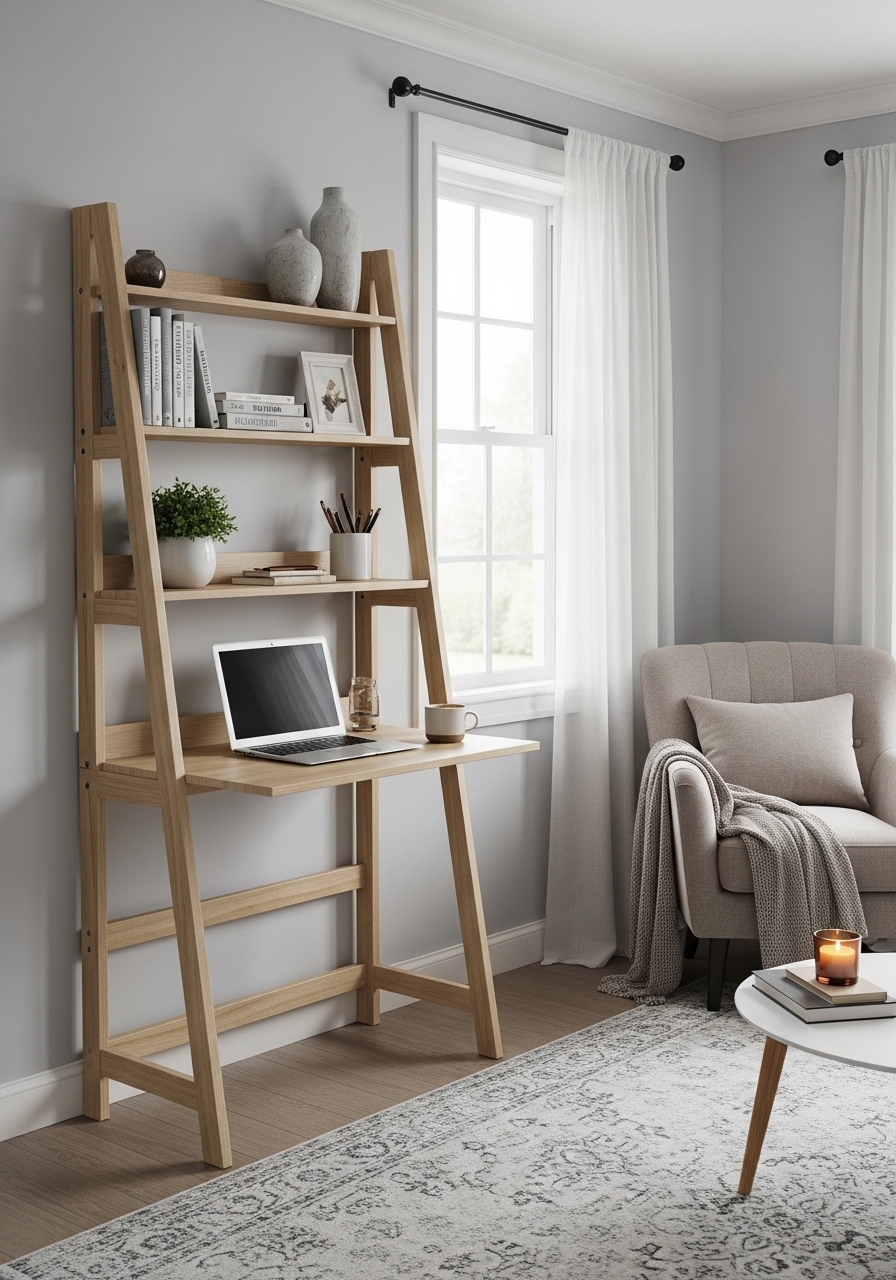
Transforming a built-in wall niche into a workspace is a masterstroke of “architectural reclamation,” turning a structural quirk into a high-utility command center that feels like an intentional design choice rather than a spatial compromise. By fitting a custom-cut desk surface directly into the recess, you effectively “delete” the desk’s footprint from the main room, preserving every square inch of floor space for social flow. To maximize this “secret productivity cave,” install tiered floating shelves above the desk to draw the eye upward and provide vertical storage for peripherals. For a sophisticated finish, paint the interior of the niche one shade darker than your primary walls to create a sense of depth and visual separation without the need for physical dividers. To ensure long-term comfort, integrate recessed LED strip lighting or a slim puck light under the lowest shelf to eliminate shadows in the “alcove” effect. This strategy doesn’t just provide a surface; it creates a curated, high-performance zone that blends seamlessly into your home’s DNA, offering a sense of “cocooned” focus that traditional freestanding desks can’t replicate.
13. Round Bistro Table Desk
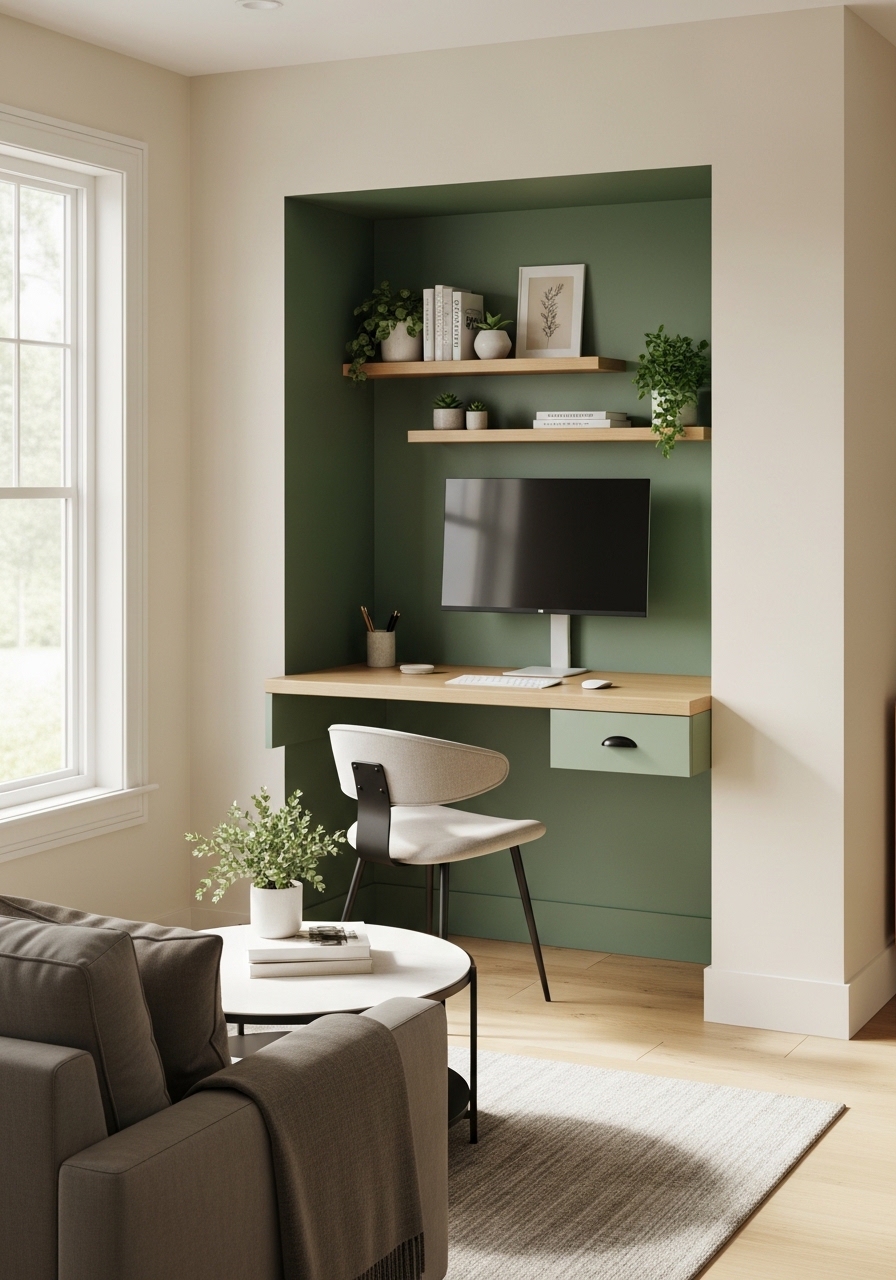
A round bistro table desk is a masterstroke of “fluid functionality,” challenging the rigid definition of office furniture by serving as a high-utility chameleon that adapts to your daily rhythm. This circular layout is a spatial powerhouse for tiny living rooms because it lacks the aggressive corners of traditional desks, significantly improving traffic flow and softening the room’s overall geometry. To execute this effectively, select a table with a pedestal base—rather than four legs—to maximize legroom and allow for a wider range of ergonomic seating options. To transition seamlessly from “spreadsheet mode” to “social mode,” prioritize mobile tech storage, such as a felt laptop sleeve or a small rolling cart, to clear the surface in seconds. For a sophisticated look, pair the table with a high-back velvet or mid-century modern accent chair that provides lumbar support during work hours but feels like a curated decor piece during dinner. This strategy doesn’t just provide a surface; it creates a versatile, charming hub that respects the boundaries of your home while offering the ultimate “invisible” office solution.
14. Desk Inside a Cabinet
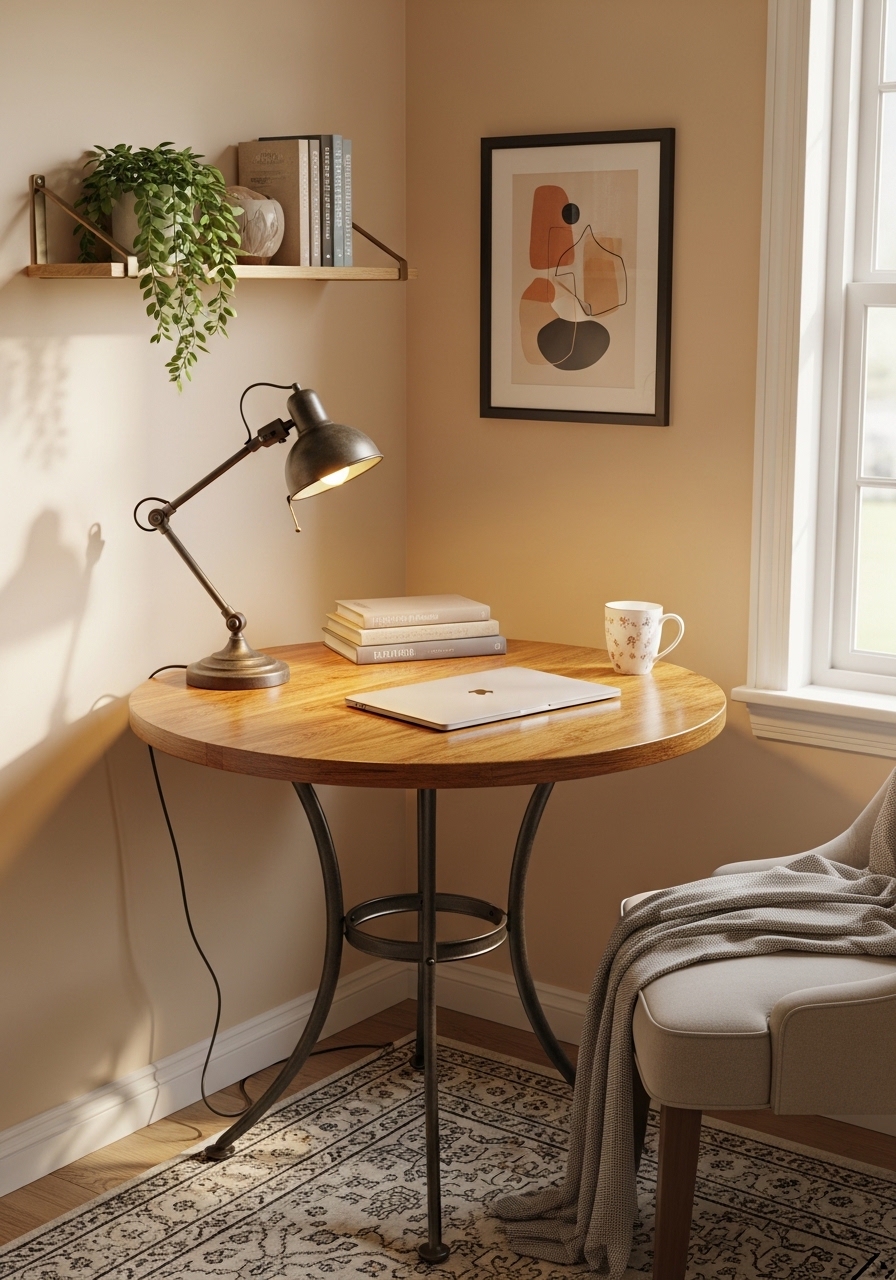
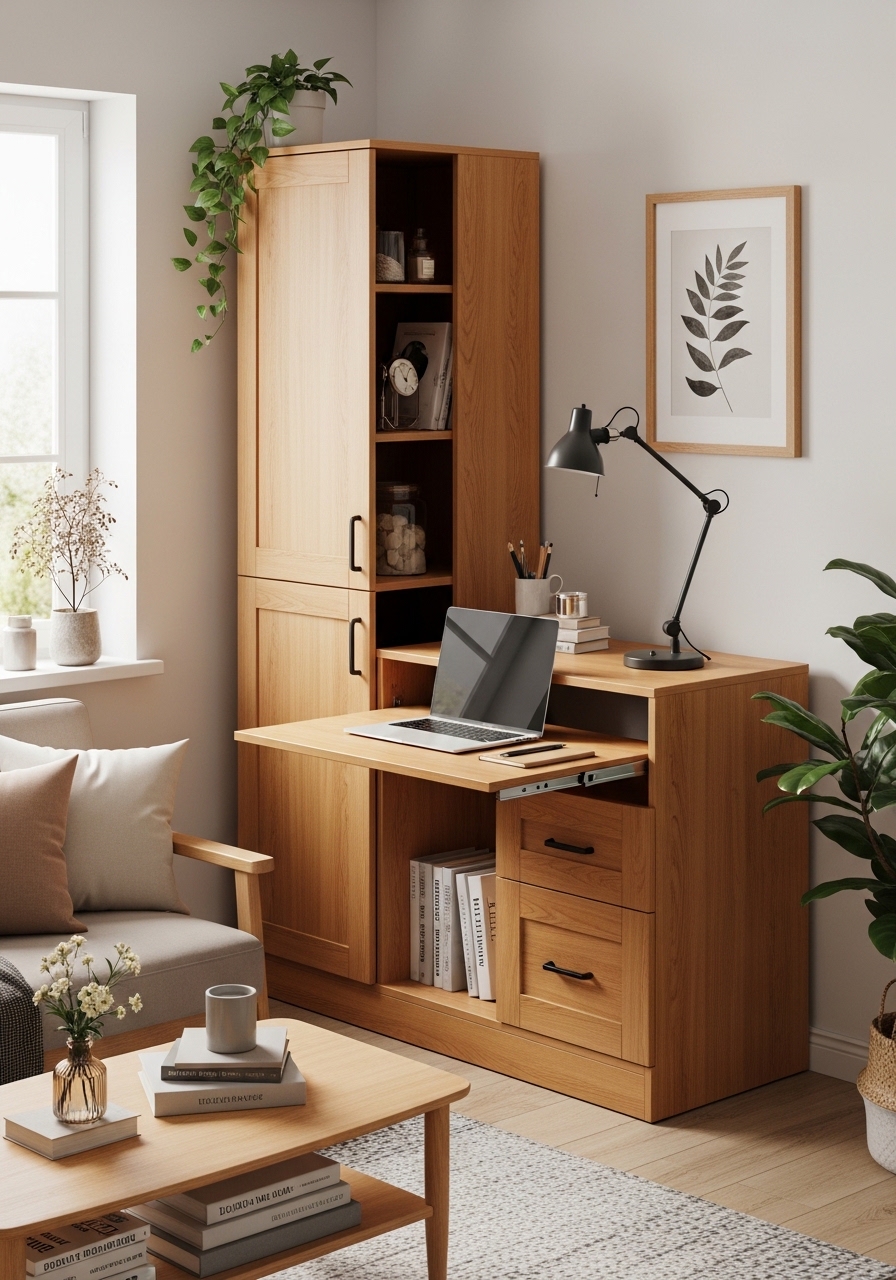
A cabinet desk is a masterstroke of “visual erasure,” serving as a high-utility workstation that completely disappears behind a polished facade when the workday ends. By housing your monitor, peripherals, and stationery within a dedicated armoire or secretary-style unit, you gain the psychological benefit of physical closure, instantly restoring your living room’s serene atmosphere. To maximize this “secret office,” prioritize a cabinet with bi-fold or pocket doors that tuck away when open, ensuring they don’t obstruct traffic flow or create awkward barriers in tight quarters. For a professional-grade interior, install low-profile LED strip lighting or puck lights under the upper shelves to eliminate the “cave effect” and define your focus zone. Strategically drill a discreet 2-inch “grommet hole” in the back panel for sleek cable management, allowing you to keep the unit plugged in while the doors are shut. This strategy doesn’t just provide a surface; it creates a high-performance command center that respects the boundaries of your home, offering a sophisticated, clutter-free solution that maintains a curated, Pinterest-worthy aesthetic.
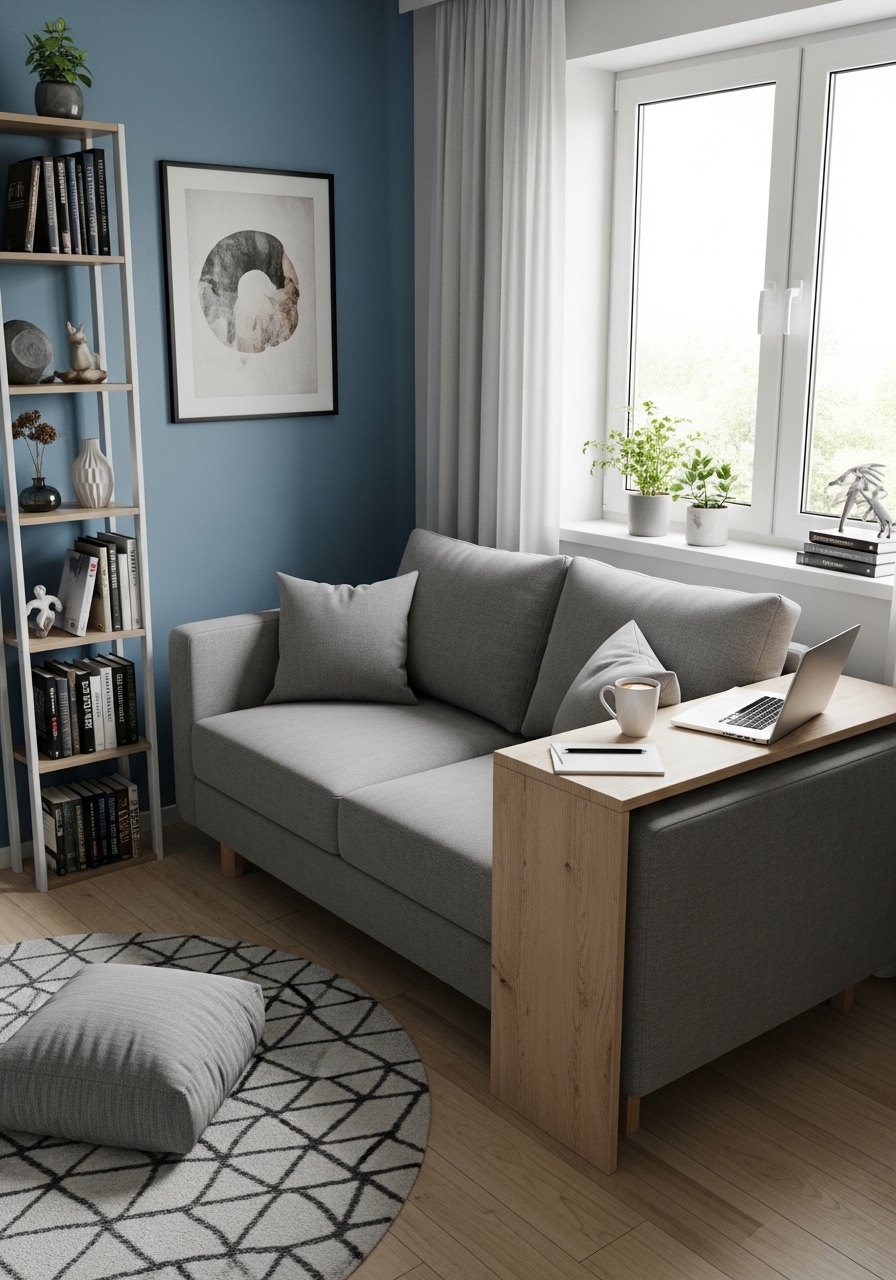
15. Sofa Armrest Desk Extension
A sofa armrest desk extension is a masterstroke of “micro-spatial engineering,” reclaiming the often-underutilized horizontal plane of your furniture to create a high-utility workstation without adding a single inch to your room’s footprint. This “stealth” layout is a spatial powerhouse for ultra-compact living rooms because it effectively deletes the need for a traditional four-legged desk, maintaining an unobstructed traffic flow and an airy, minimalist aesthetic. To execute this effectively, select a custom-fitted wooden sleeve or a weighted acrylic wrap that matches your sofa’s arm width to ensure a rock-solid, vibration-free surface for laptop use. To prevent “ergonomic drift,” prioritize a slim, adjacent wall shelf or a nearby C-table to house your coffee and peripherals, keeping the armrest surface strictly for your primary device. For a professional-grade finish, utilize a low-profile cable clip on the sofa’s rear frame to discreetly route power cords and maintain the “invisible” illusion. This strategy doesn’t just provide a surface; it creates a versatile, high-performance “hot desk” that respects the architectural boundaries of your home, proving that the most impactful functional upgrades often come in the smallest, most integrated packages.
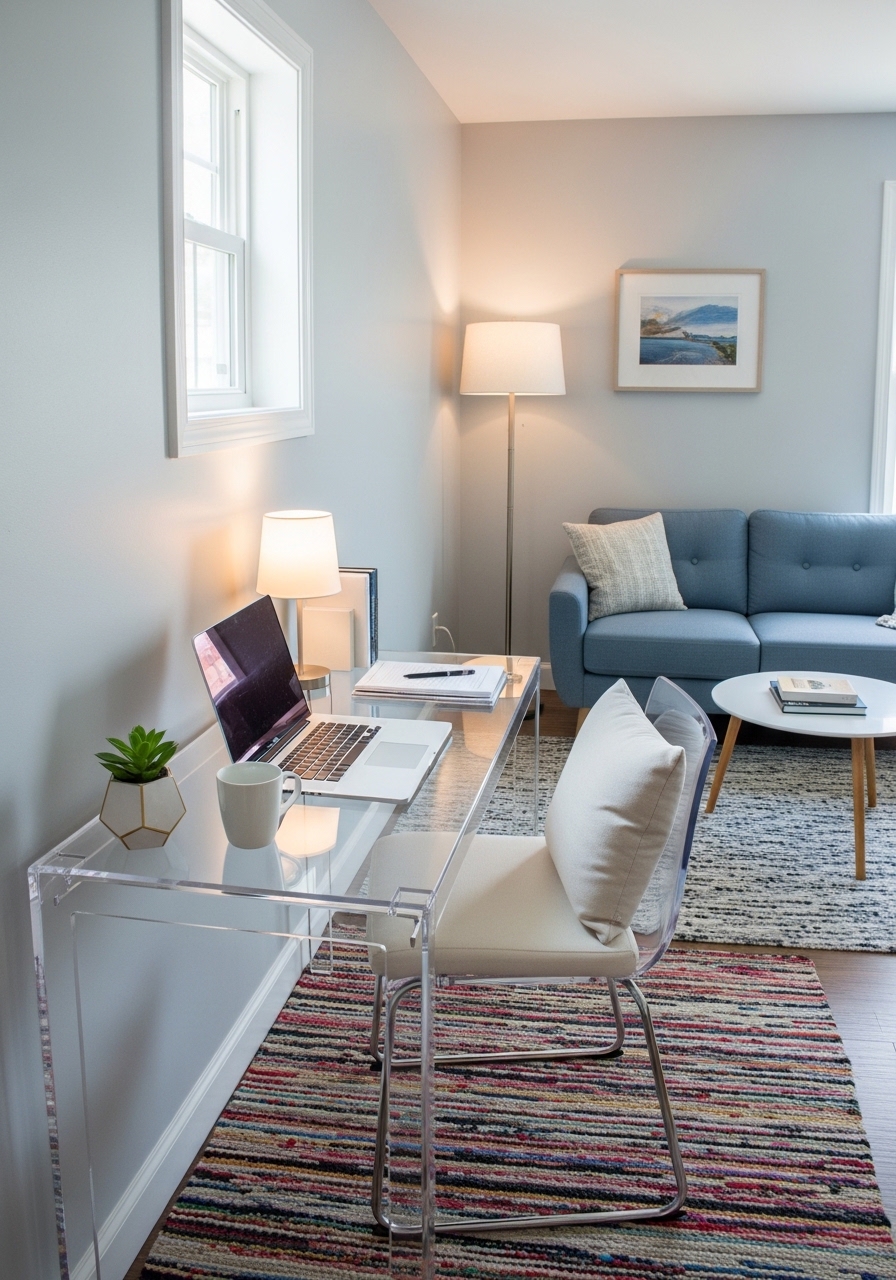
16. Transparent Acrylic Desk
An acrylic desk is a masterstroke of “optical invisibility,” serving as a high-performance workstation that maintains the visual integrity of a tiny living room by effectively deleting its own footprint. By allowing light to pass through the surface rather than blocking it, an acrylic desk eliminates the heavy “visual weight” of traditional furniture, making a cramped corner feel airy and expansive. To master this look, prioritize thick, high-grade Lucite or tempered acrylic with polished edges to ensure a rock-solid, vibration-free typing surface that resists yellowing over time. Because transparency hides nothing, rigorous cable management is the secret to success; utilize clear adhesive clips or a sleek, color-matched cable spine to keep wires organized and out of the light’s path. Pair the desk with a neutral-toned rug and a “ghost” chair to complete the weightless aesthetic, creating a sophisticated zone that facilitates deep focus without encroaching on your room’s sense of openness. This strategy doesn’t just provide a surface; it creates a “floating” command center that respects the architectural flow of your home while offering a chic, modern solution for the minimalist enthusiast.
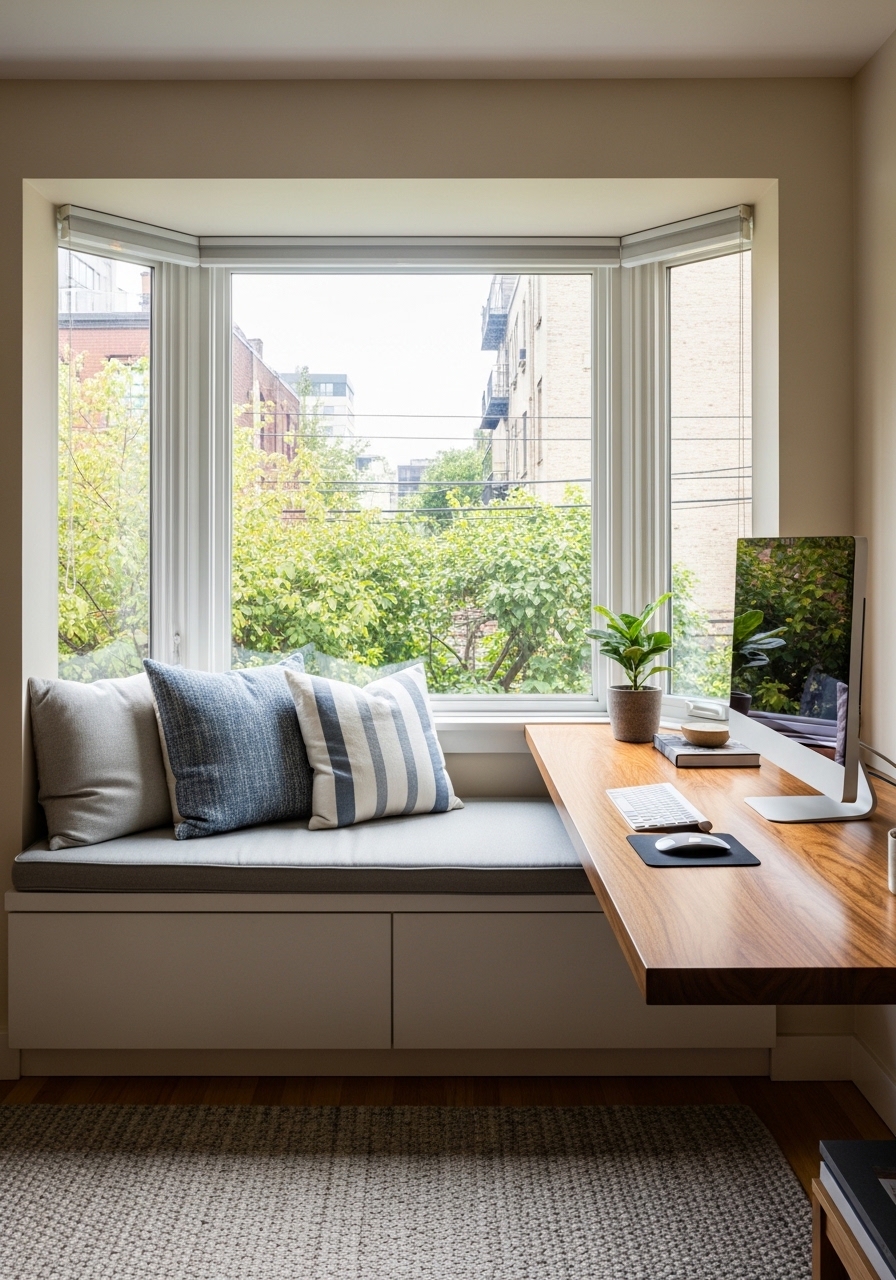
17. Bay Window Bench Desk
A bay window bench desk is a masterstroke of “architectural integration,” transforming a decorative alcove into a high-utility command center that consumes zero additional floor space. By extending a custom-fitted timber or laminate surface across the width of the bay, you leverage the natural depth of the window to create an expansive workspace without the “visual bulk” of a freestanding desk. To maximize this layout, prioritize under-bench storage drawers or rolling bins to house peripherals and stationery, keeping the primary surface entirely clutter-free. To ensure long-term comfort, position a slim-profile swivel chair that can tuck fully into the knee-hole, maintaining an unobstructed traffic flow through the room. Because this zone is a natural focal point, incorporate top-down/bottom-up cellular shades to precisely manage screen glare while still flooding the room with the productivity-boosting Vitamin D that makes small apartments feel larger. This strategy doesn’t just provide a surface; it creates a “panoramic office” that bridges the gap between cozy domesticity and professional performance, all while keeping your living room’s footprint light and airy.
18. Compact Secretary Desk
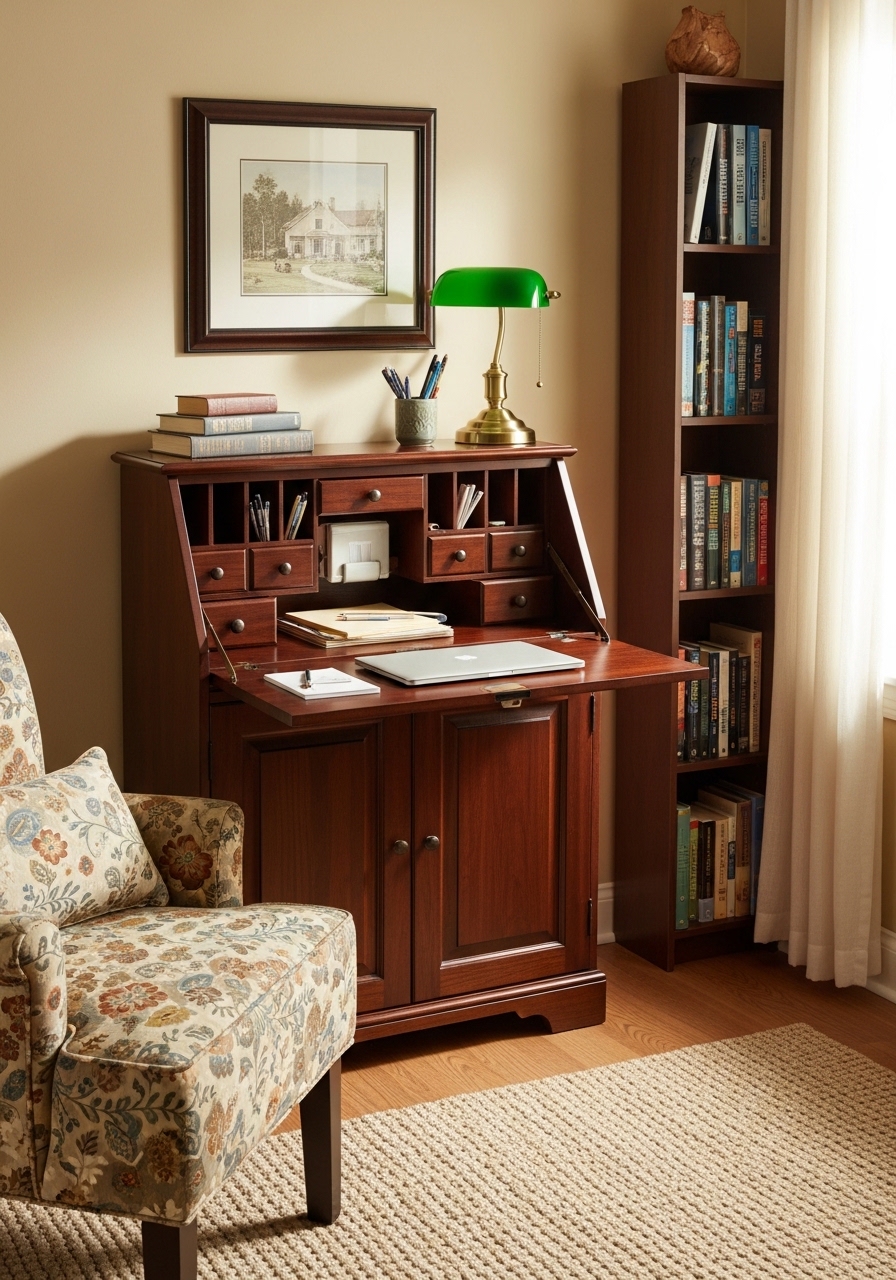
A compact secretary desk is a masterstroke of “vertical versatility,” functioning as a high-utility command center that masquerades as a charming, vintage-inspired cabinet when the workday ends. By utilizing a hinged drop-front surface, this design provides a surprisingly generous workspace and internal organizational compartments without the sprawling footprint of a traditional desk. To maximize this setup, treat the internal cubbies as a high-density docking station, using them to house your laptop, mail, and stationery so they are instantly concealed the moment the lid is closed. To ensure ergonomic comfort, pair it with a sleek, low-profile chair that can be fully pushed in, maintaining a clear path for foot traffic in your living room. For a modern finish in a cozy minimalist home, style the top surface with a single architectural plant or a curated sculpture to cement its identity as a piece of decor rather than an office utility. This strategy doesn’t just save space; it provides a psychological boundary for work-life balance, allowing you to “shut the door” on professional stress and reclaim your home’s tranquil atmosphere in seconds.
19. Rolling Cart Desk
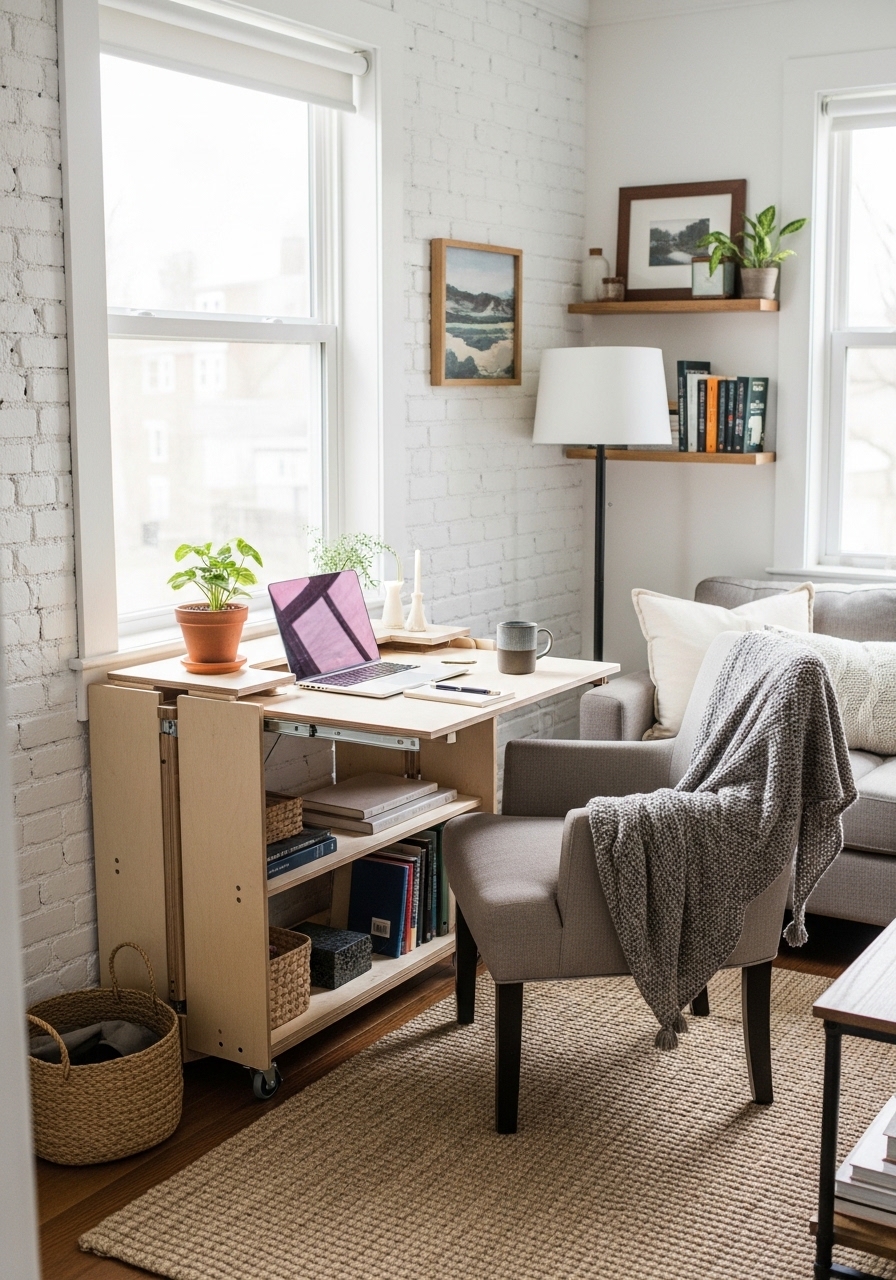
A rolling cart desk is a masterstroke of “nomadic utility,” offering a high-performance workstation that prioritizes fluid mobility over a fixed architectural footprint. This flexible solution is a spatial powerhouse for renters or those in tiny living rooms because it allows you to “deploy” an office to the best natural light or a quiet corner and then retract it into a closet or alcove when the workday ends. To maximize this setup, select a sturdy, wide-top tiered cart with locking casters to ensure a vibration-free surface for typing and video calls. Treat the lower tiers as an ergonomic supply hub, utilizing modular baskets for tech peripherals and a clip-on LED lamp to keep the primary work surface entirely clutter-free. For a sophisticated “cozy minimalist” finish, choose a cart in a matte neutral or powder-coated finish that complements your existing decor, ensuring it feels like a deliberate design choice rather than a utilitarian afterthought. This strategy doesn’t just provide a surface; it grants you spatial freedom, proving that in a compact home, the most practical desk is the one that can disappear on command.
20. Wall-to-Wall Slim Desk
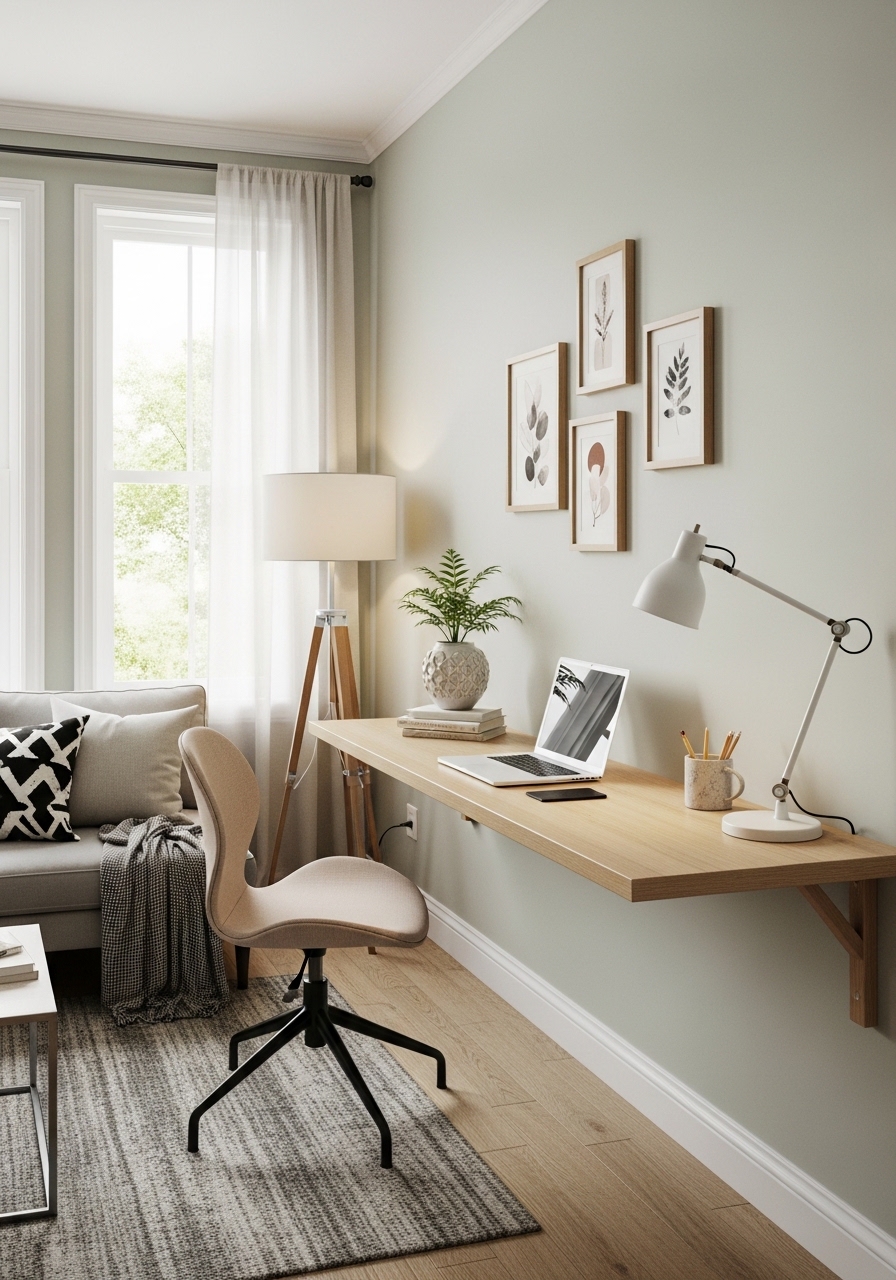
A wall-to-wall slim desk is a masterstroke of “linear optimization,” transforming an entire perimeter into a high-performance workstation that consumes a remarkably shallow footprint. By installing a continuous surface—even at a pencil-thin 12-inch depth—you create an expansive workspace that feels like a seamless architectural feature rather than a protruding piece of furniture. This layout is a spatial powerhouse for studio apartments because it zones the room without physical barriers, providing a dedicated “productivity strip” while maintaining an open, unobstructed center. To maximize this setup, pair the long ledge with modular floating shelves above to draw the eye upward and house bulky peripherals like printers or speakers. For a professional finish, incorporate a discreet cable raceway along the underside of the desk to keep the long horizon line entirely clutter-free. This strategy doesn’t just provide a surface; it creates a streamlined “command wall” that balances high-density utility with a sophisticated, built-in aesthetic that respects the flow of your home.
21. Fireplace Side Desk
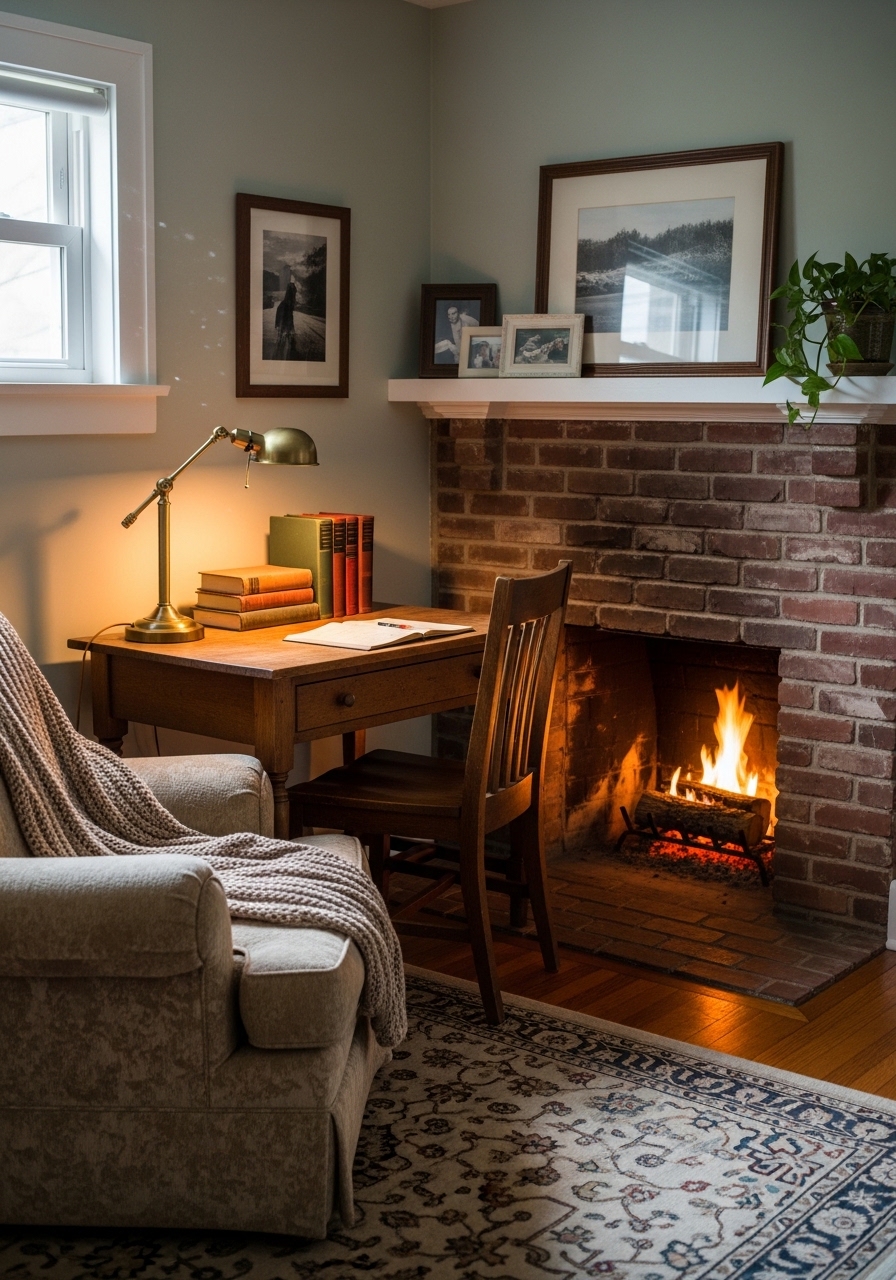
A fireplace side desk is a masterstroke of “symmetrical integration,” leveraging the room’s natural architectural anchor to house a high-utility workstation that feels like an original feature. By nestling a small desk into the alcove or wall space flanking a mantel, you utilize the “dead zones” typically found in traditional living room layouts, ensuring your office doesn’t compete with the center of the room. To maximize this setup, select a desk with a frame that matches the mantel’s material—such as natural wood or painted masonry—to create a cohesive, built-in aesthetic. Because this area is a visual focal point, prioritize minimalist styling; use the mantel itself for “overflow” decor like plants or art to keep your actual work surface clear for deep focus. For a professional-grade finish, install a slim floor lamp or a swing-arm wall sconce to provide task lighting that complements the warm ambiance of the hearth. This strategy doesn’t just provide a surface; it creates a sophisticated “nook” that balances professional productivity with the cozy, centered energy of a fireplace, making your workspace feel like an intentional part of your home’s DNA.
22. Fold-Out Coffee Table Desk
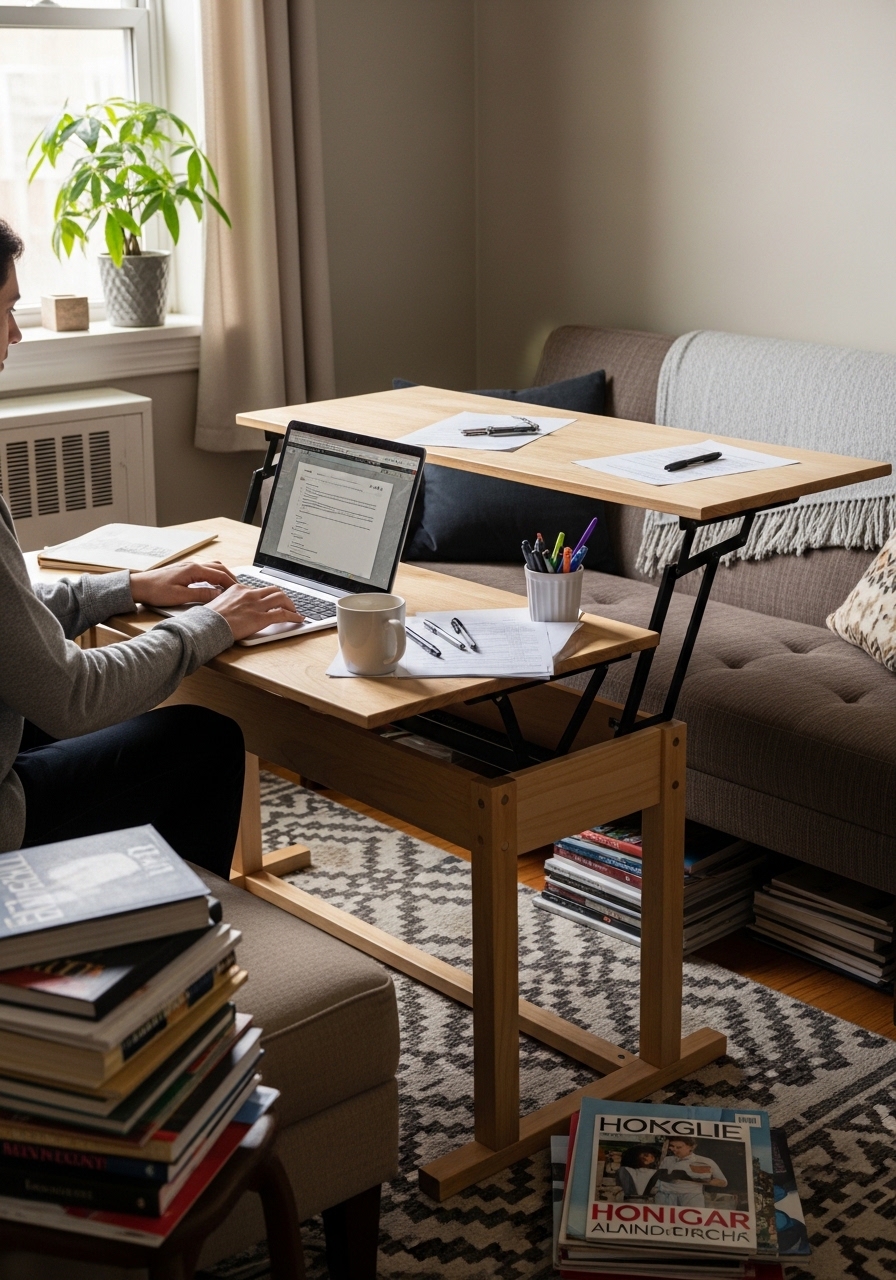
A fold-out coffee table desk is a masterstroke of “kinetic transformation,” utilizing a hidden internal mechanism to bridge the gap between relaxation and productivity without adding a single inch to your floor plan. This “stealth” workstation is a spatial powerhouse for tiny living rooms because it features a spring-loaded or hydraulic lift-top that elevates the surface to an ergonomic typing height—typically 24 to 28 inches—directly from your sofa. To maximize this setup, treat the expansive internal compartment as a high-density “office drawer” to house your laptop, chargers, and stationery, ensuring they remain completely invisible when the table is closed for social hours. For a professional-grade finish, select a model with a sturdy steel lifting arm to eliminate surface wobble during heavy typing sessions, and pair it with a low-profile floor lamp to provide focused task lighting. This strategy doesn’t just provide a surface; it creates a high-performance “transformer” hub that respects the architectural boundaries of your home, offering a sophisticated, clutter-free solution that maintains a curated, Pinterest-worthy aesthetic.
23. Minimalist Writing Shelf
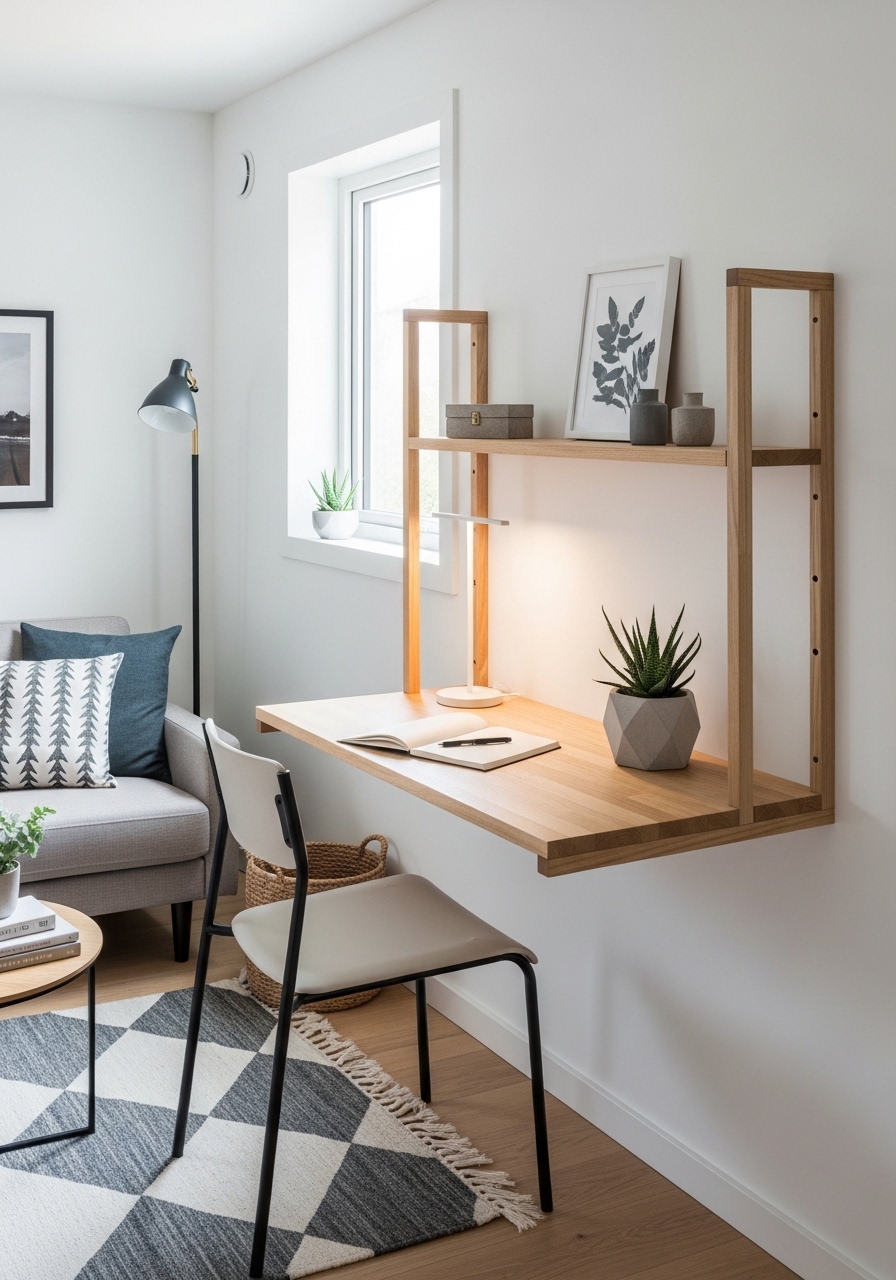
A minimalist writing shelf is a masterstroke of “spatial reduction,” offering a high-utility workstation that occupies almost zero visual or physical volume by eliminating the traditional desk base entirely. This ultra-slim, wall-mounted ledge is a powerhouse for the tightest living rooms because it can be installed at standing-desk height to promote movement or paired with a sleek bar stool to maintain a “floating” aesthetic. To maximize this setup, prioritize a solid-timber or reinforced-steel shelf with a depth of at least 12 to 15 inches to ensure a stable, vibration-free surface for laptop use. To maintain a “less is more” vibe, utilize a single, low-profile wall sconce above the shelf to provide task lighting without cluttering the surface with cords or lamp bases. For a professional finish, treat the wall space above as a “vertical gallery,” styling it with a single architectural plant or a framed print to anchor the shelf as a piece of curated decor. This strategy doesn’t just provide a surface; it creates a “weightless” command center that respects the architectural flow of your home while offering a chic, modern solution for the true minimalist.
24. Room Divider Desk Combo
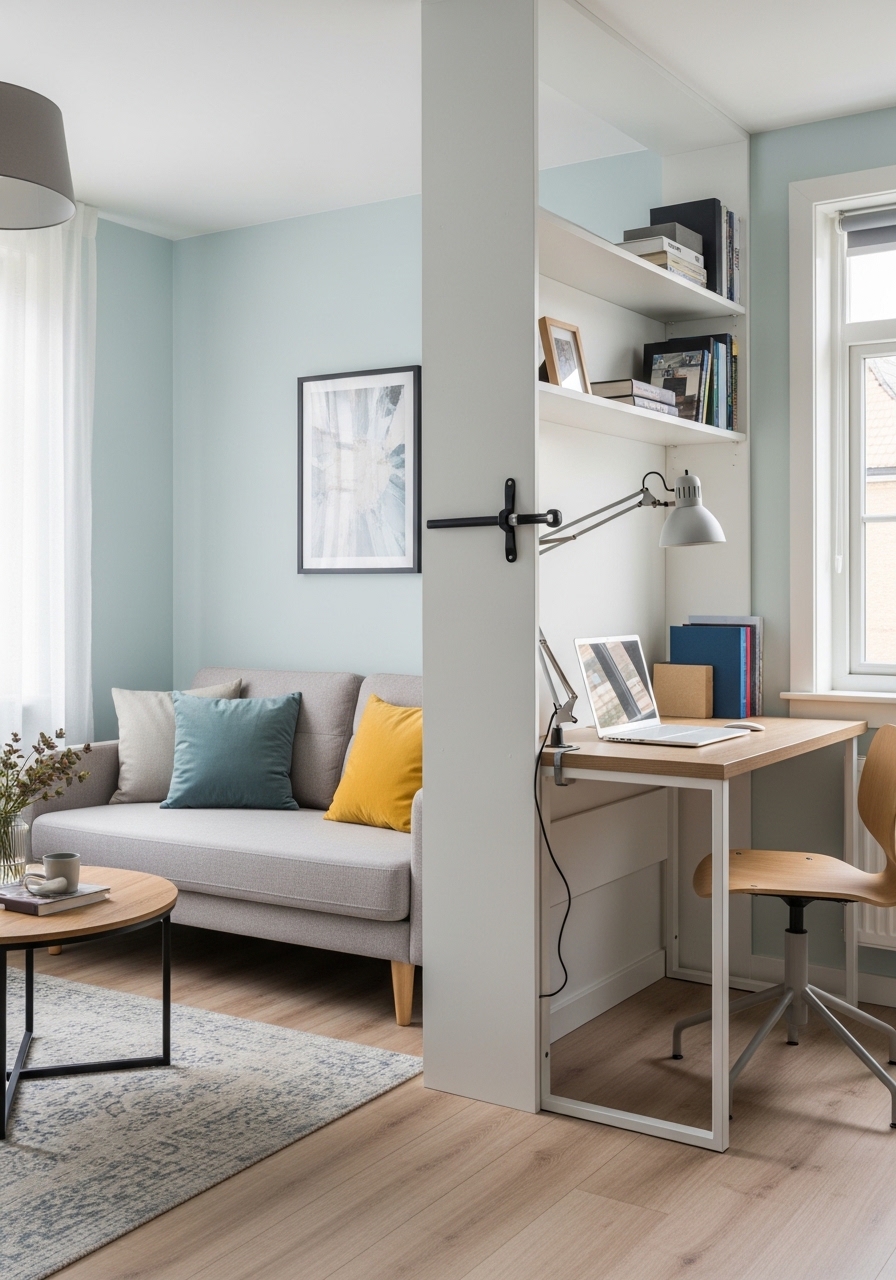
A room divider desk combo is a masterstroke of “spatial dual-purpose,” employing a single piece of furniture to bifurcate a studio or open-plan living room into distinct zones for labor and leisure. By integrating a desk surface into a slim, double-sided shelving unit, you create a structural boundary that provides the psychological “privacy” of a separate office without the light-blocking bulk of a solid wall. To maximize this setup, prioritize open-back shelving to maintain a sense of “visual breathability” and allow natural light to permeate both sides of the room. Treat the shelves above the desk as a shared organizational hub, using the desk-facing side for tech peripherals and the living-room-facing side for curated decor like books or ceramics to soften the “office” aesthetic. For a professional-grade finish, select a unit with integrated cable-routing ports within the frame to ensure power cords remain invisible from the lounging area. This strategy doesn’t just provide a surface; it acts as an “architectural anchor” that defines your home’s geography, offering a sophisticated, high-performance solution that balances productivity with the cozy, open energy of modern minimalist living.
Conclusion
Designing a workspace inside a tiny living room doesn’t mean sacrifice—it means creativity. These 24 tiny living room desk ideas help you craft a functional workspace that feels intentional, inspiring, and genuinely livable. By combining smart layouts, space-saving furniture, and thoughtful lighting, you can enjoy both productivity and comfort in your compact home. Whether you love minimalist tiny living room ideas or cozy setups for small apartments, there’s a workspace solution here for every lifestyle.