
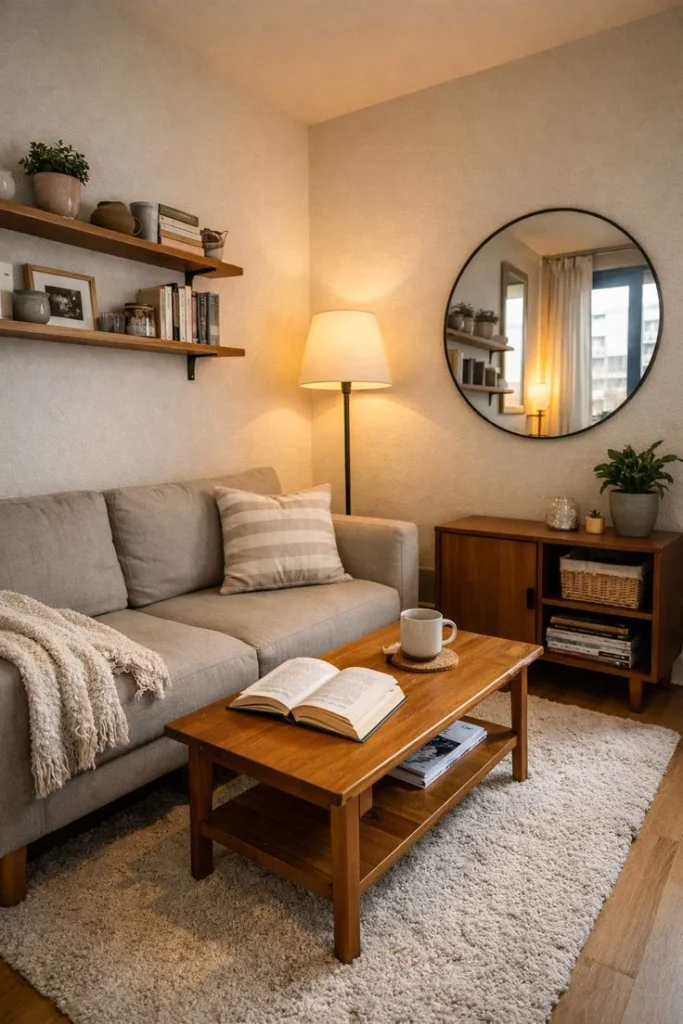
Transform Your Compact Living Room Into a Spacious, Sophisticated Sanctuary
There’s something magical about small spaces. They force you to be intentional. They demand creativity. They teach you that luxury isn’t about square footage, it’s about making every single inch count. And honestly? Some of the most beautiful, welcoming living rooms I’ve ever seen have been small ones because they’re designed with purpose and style rather than just filled with whatever fits.
The truth is, a small living room doesn’t have to feel cramped or limited. With the right approach to layout, color, lighting, and furnishings, your compact space can feel open, airy, and surprisingly luxurious. You don’t need to knock down walls or move. You need strategy, smart choices, and a willingness to think differently about how you use your space.
This guide walks you through 20 proven decorating ideas specifically designed for small living rooms. Each one addresses the unique challenges small spaces present while creating the illusion of more room, better flow, and genuine beauty. Whether your living room is 150 square feet or 200, these ideas will help you design a space that feels bigger, brighter, and so much more inviting.
Let’s make your small living room feel absolutely spacious and completely yours.
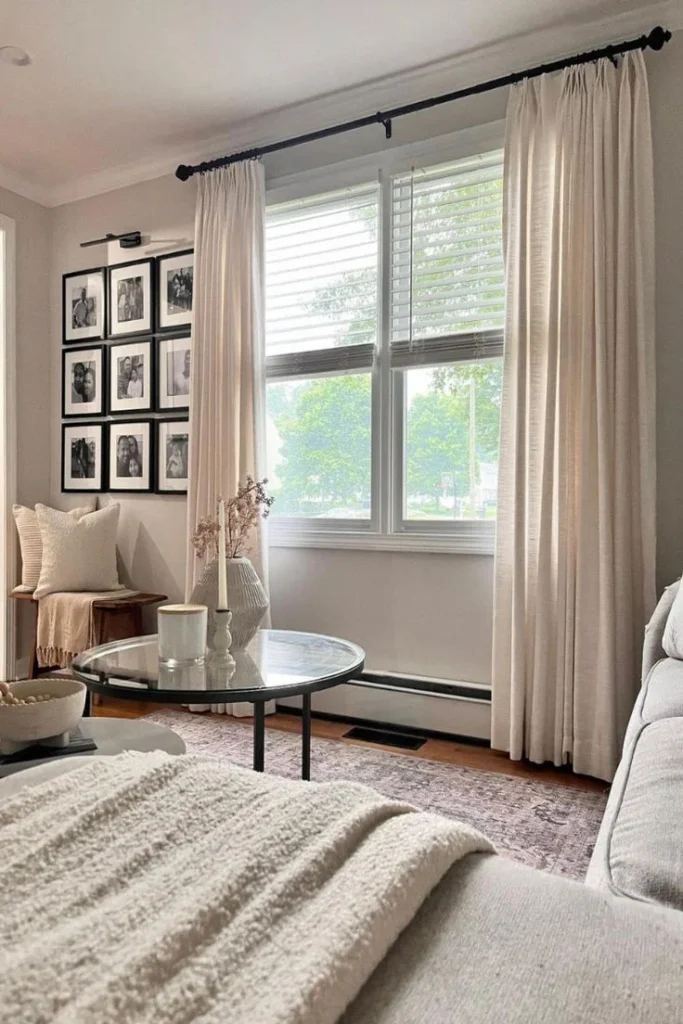
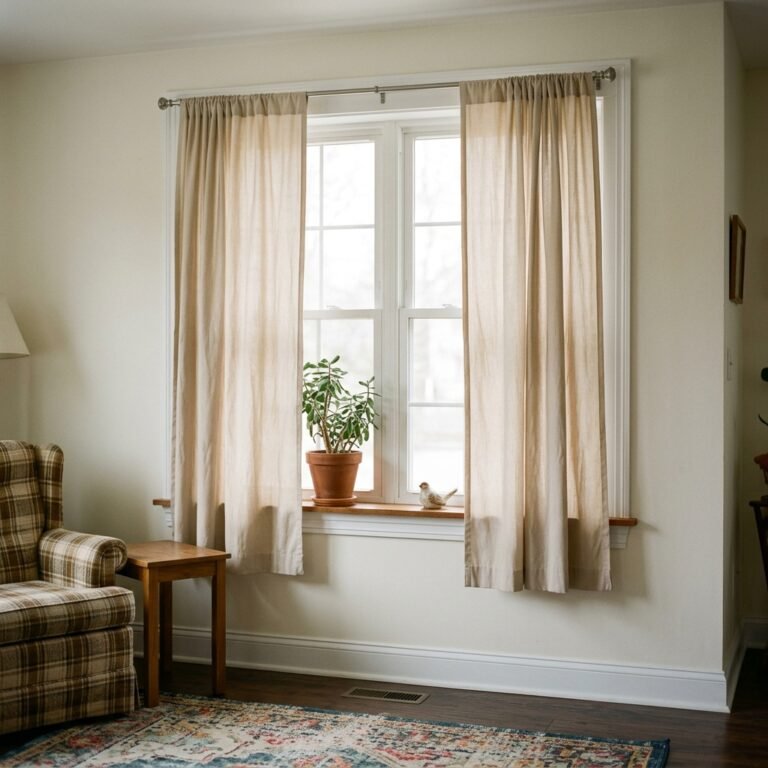
1. Floor to Ceiling Curtains That Draw the Eye Upward
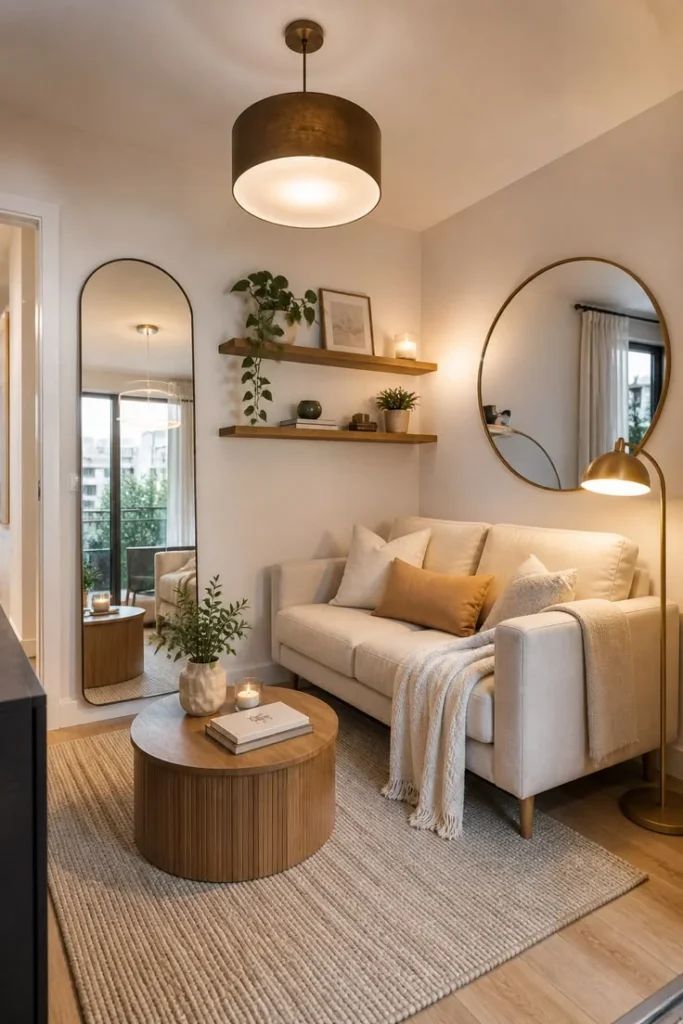
Your windows are one of your greatest assets in a small room. Instead of hanging curtains at window height, mount your rod as high as possible and let panels fall all the way to the floor. This creates a vertical line that tricks the eye into seeing taller ceilings and more expansive walls. The optical illusion is powerful because vertical lines naturally draw the eye upward, making the room feel less boxy and more grand. Light, flowing fabrics like linen or sheer panels amplify the effect by allowing light to filter through while maintaining softness and dimension.
Styling Tips:
- Mount curtain rods 12 inches above the window frame for maximum impact
- Choose sheer linen or semi-sheer fabrics in white, cream, or soft gray
- Use lightweight fabric that moves gently with air currents for visual lightness
- Consider layering sheers with a heavier linen panel for flexibility
- Allow panels to pool slightly on the floor for added elegance
- Keep the curtain color lighter than your walls for visual expansion
- Mount rods as wide as your wall allows to maximize the stretching effect
Why It Works: The vertical lines created by floor-to-ceiling panels extend your sightline from floor to ceiling, making the space feel taller. Light, flowing fabrics prevent visual heaviness while maintaining privacy and elegance. This simple change costs very little but transforms how the room feels.
Best Materials and Colors: White, cream, or soft taupe linen for timeless appeal and light reflection. Sheer polyester or linen blends for budget-friendly options. Brass or matte black rods for minimal visual weight. Lightweight fabrics under 4 ounces per yard for movement and airiness.
2. Mirrors Strategically Placed to Reflect Light and Space
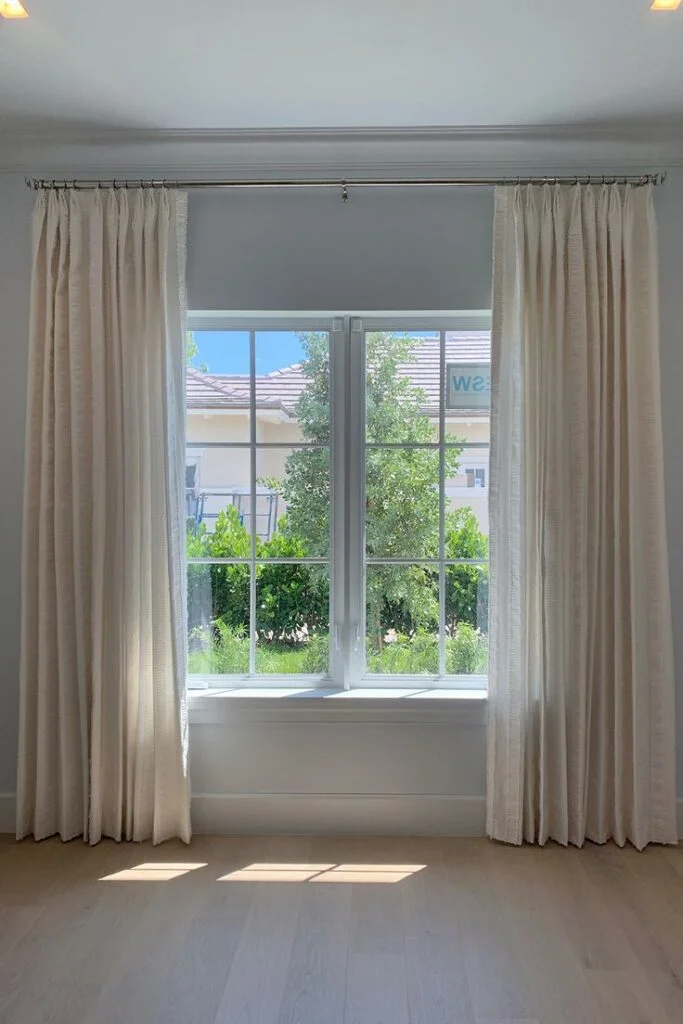
Mirrors are your secret weapon for making small spaces feel larger. Hang a large mirror opposite a window to reflect natural light throughout the room, or position mirrors to reflect architectural features or artwork. This creates the illusion of another room beyond the mirror’s surface. The reflection doubles the visual information your eye processes, making the brain perceive more space than actually exists. Multiple mirrors create a sense of depth and movement that compact rooms desperately need.
Styling Tips:
- Place a large mirror opposite your main light source or window
- Lean an oversized mirror against the wall for a relaxed, intentional look
- Group several smaller mirrors at varying heights for visual interest
- Choose frames in brass, natural wood, or matte black for sophistication
- Ensure mirrors reflect something beautiful, not clutter or blank walls
- Position mirrors to amplify light during daytime hours
- Avoid reflective chaos by placing mirrors thoughtfully rather than randomly
Why It Works: Mirrors reflect light and create visual depth through the illusion of reflected space. Your brain interprets the reflected image as an extension of the room, automatically perceiving the space as larger. Strategic placement ensures mirrors reflect the best elements of your room, creating focal points that draw interest upward and outward.
Best Materials and Colors: Brass or gold frames for warmth and luxury. Matte black or natural wood frames for modern appeal. Mercury glass or vintage frames for character. Thin frames rather than heavy ornate options to avoid visual weight. Avoid ornately decorative frames that compete with your decor.
3. Light and Neutral Color Palettes That Expand Visual Space
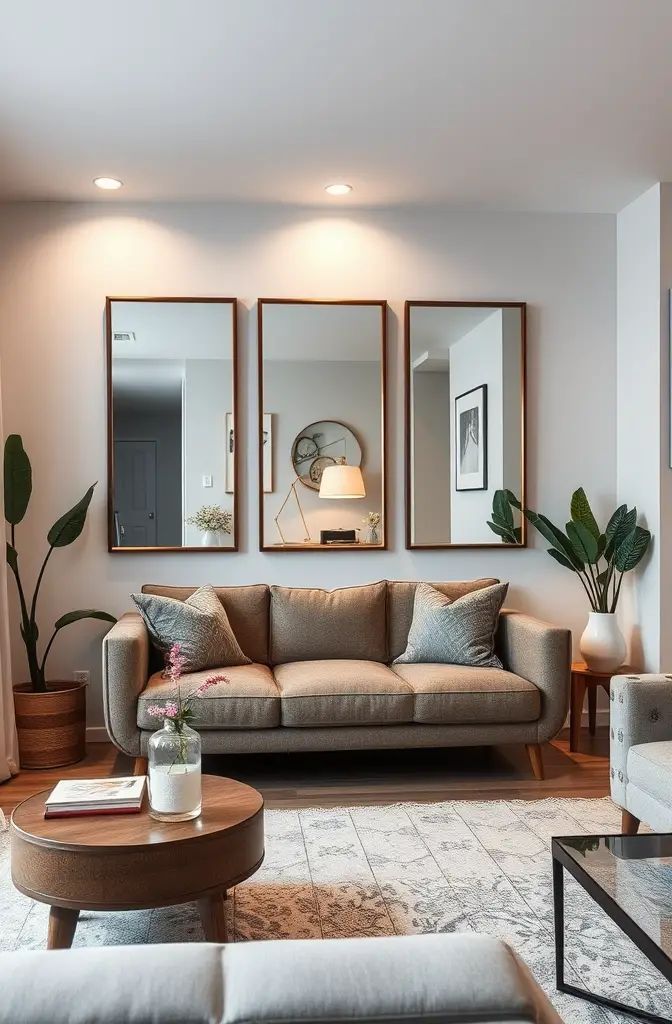
Your color choices fundamentally impact how large or small a room feels. Light, neutral colors reflect light and make spaces feel open and airy, while dark colors absorb light and make rooms feel smaller and more enclosed. Whites, creams, soft grays, warm beiges, and gentle greiges create a visual expansion effect that’s immediate and dramatic. These neutral tones also provide the perfect backdrop for colorful accents and artwork without overwhelming a compact space. The key is choosing warm neutrals rather than cool ones, preventing the room from feeling sterile or cold.
Styling Tips:
- Paint walls in warm whites such as Benjamin Moore Cloud White or Sherwin Williams Alabaster
- Choose warm grays rather than cool blue grays for welcoming feeling
- Paint ceiling in the same color as walls or slightly lighter to extend space visually
- Keep trim and baseboards light colored rather than dark
- Use light neutral fabrics for main furniture pieces
- Add small pops of color through accessories you can easily swap
- Ensure flooring is light enough to reflect light and expand space
- Consider soft greige (gray-beige hybrid) for sophisticated neutral tone
Why It Works: Light colors reflect light throughout the room, making spaces feel brighter and more open. Your eye perceives light spaces as larger than dark ones. Neutral tones create visual continuity without clashing, making small rooms feel cohesive rather than chaotic. This foundation allows you to add personality through accessories without overwhelming the space.
Best Materials and Colors: Benjamin Moore Cloud White, Sherwin Williams Accessible Beige, or Farrow and Ball Pointing for paint. Cream, soft gray, or warm taupe for fabrics. Light oak or whitewashed wood rather than dark stains. Avoid pure whites that feel clinical, opting instead for warm whites with yellow undertones.
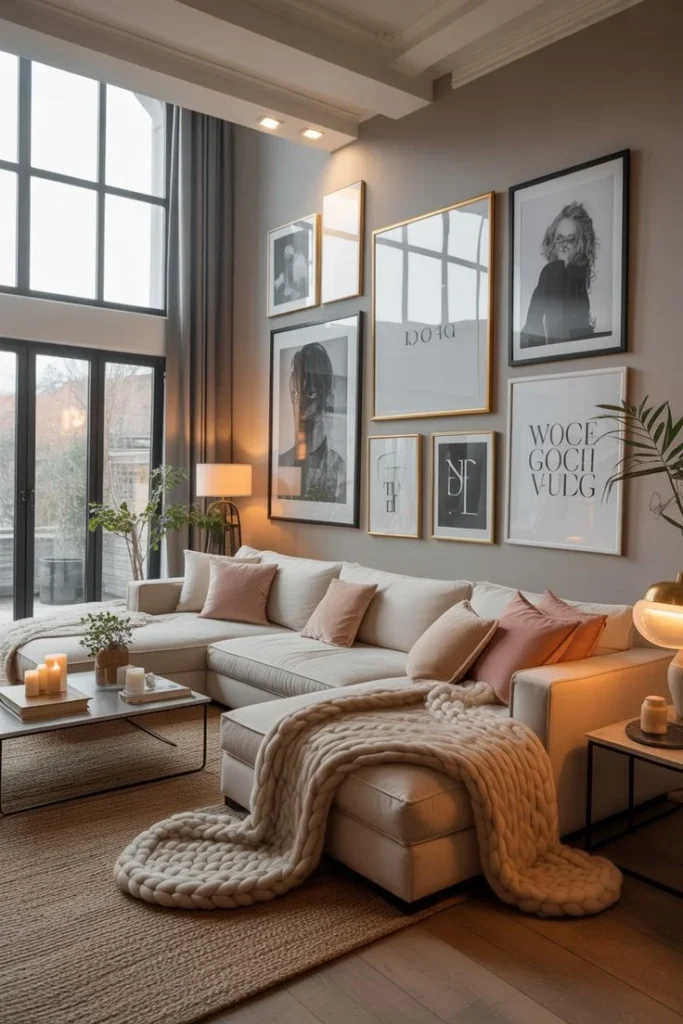
4. Vertical Storage Solutions That Keep Floors Clear
Small living rooms have limited floor space, so vertical storage is essential. Install floating shelves, tall narrow bookcases, or wall mounted cabinets to store items without eating into your square footage. When your floor remains clear, the room feels exponentially larger because your eye can travel unobstructed across the entire floor space. Clutter on floors creates visual heaviness and makes compact rooms feel chaotic and cramped. Vertical storage solves this problem while providing display opportunities for beautiful items.
Styling Tips:
- Install floating shelves at varying heights for visual interest
- Use tall, narrow bookcases rather than wide, squat ones
- Mount shelves 12 to 15 inches apart for proper spacing
- Style shelves with books, plants, and decorative objects in a cohesive color story
- Leave negative space on shelves to avoid overcrowding
- Use matching baskets or containers to corral small items and hide visual clutter
- Keep frequently used items accessible while storing seasonal pieces elsewhere
- Choose shelves in natural wood or white for light, airy feeling
Why It Works: Vertical storage uses wall space rather than floor space, keeping your floors clear and open. Clear floors create unobstructed sightlines, allowing the eye to travel farther and perceive more space. Vertical lines naturally extend upward, making ceilings feel higher and rooms feel less box-like.
Best Materials and Colors: Floating shelves in white, natural wood, or light finishes. Tall, narrow shelving units rather than wide pieces. Metal brackets in brass or matte black for minimal visual weight. Wood or white baskets for storing items while maintaining clean lines.
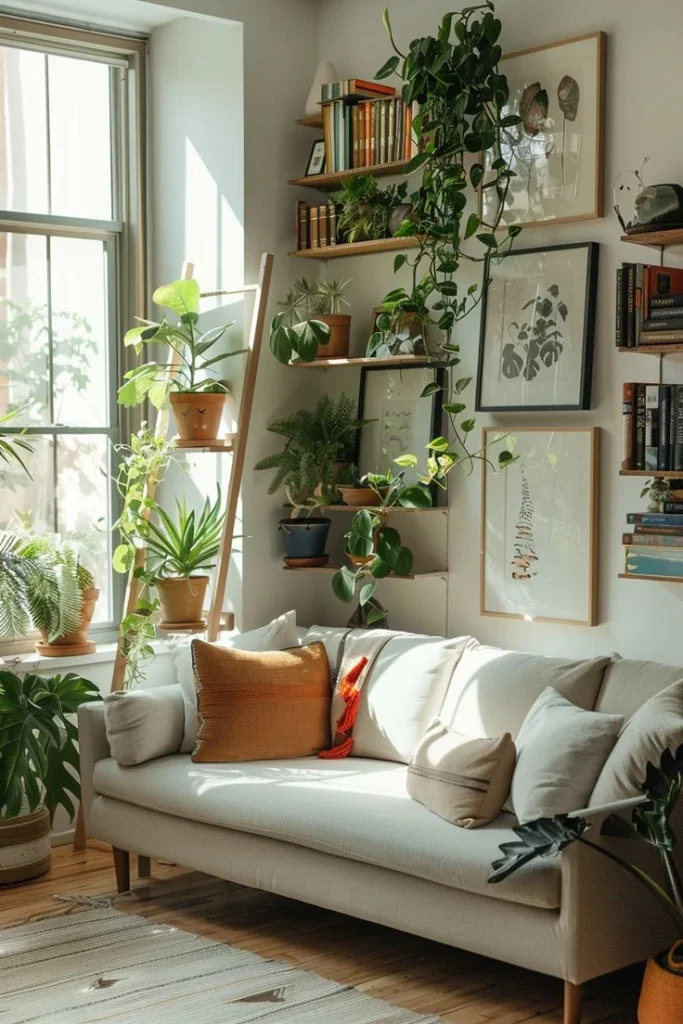
5. Multipurpose Furniture That Serves Multiple Functions
Every piece of furniture in a small room must earn its place by serving multiple purposes. An ottoman might be a footrest, coffee table, and hidden storage. A console table can serve as a desk, display surface, and visual anchor. A storage bench provides seating while hiding blankets and pillows. Multipurpose furniture reduces the number of pieces you need, freeing up floor space and creating a cleaner, less cluttered environment. This approach prevents the common mistake of over furnishing small spaces.
Styling Tips:
- Choose ottomans with hidden storage compartments
- Select console tables that double as workspace for a laptop
- Incorporate storage benches at the end of seating for function and style
- Use nesting tables that can be tucked away when not needed
- Look for sofas with storage underneath or pull out beds for guests
- Ensure each piece has a secondary function beyond its primary use
- Keep multipurpose items subtle so they don’t look overly functional
- Measure carefully to ensure pieces fit properly without overwhelming space
Why It Works: Multipurpose furniture reduces the total number of pieces needed in your room, keeping the space from feeling overcrowded. Each piece earns its place through multiple functions, making your small room feel more efficient and spacious. Storage built into furniture keeps items organized and out of sight.
Best Materials and Colors: Quality wood construction for durability. Performance fabrics for easy maintenance on frequently used pieces. Neutral tones that blend with your color palette. Metal frames in brass or matte black for modern appeal.
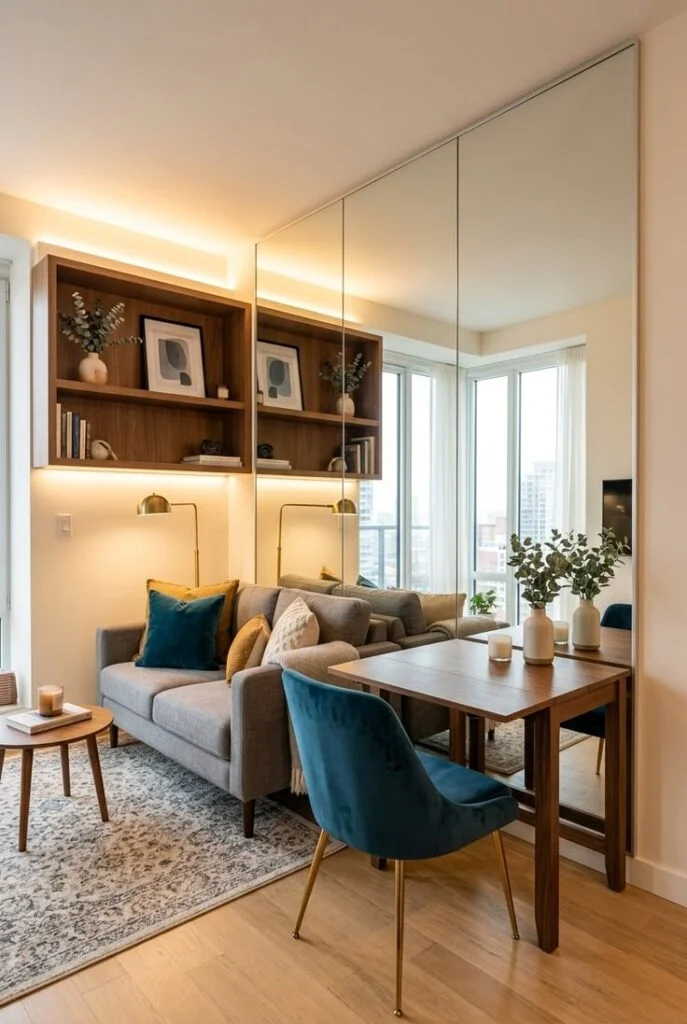
6. Low Profile Furniture That Maintains Clear Sightlines
The height of your furniture dramatically impacts how spacious a room feels. Low profile pieces like platform sofas, low lying media consoles, and shallow armchairs keep sightlines clear and allow the eye to travel uninterrupted across the space. When furniture sits low, more wall is visible, making rooms feel more open. Compare a room with a tall sectional to one with a sleek, low sofa, and the difference is immediately apparent. The lower furniture sits, the more the room expands visually.
Styling Tips:
- Choose sofas with low arms and minimal height
- Select coffee tables that don’t rise above knee height
- Opt for media consoles under 30 inches tall
- Avoid tall bookcases if possible, using floating shelves instead
- Position furniture away from walls slightly to create flow
- Ensure negative space beneath and around furniture
- Choose furniture with exposed legs rather than closed bases
- Keep furniture proportionally scaled to your small room
Why It Works: Low profile furniture maintains clear sightlines, allowing your eye to travel farther and perceive more space. Wall visibility increases when furniture sits lower, making rooms feel more open. The visual clarity created by low furniture prevents the cramped feeling that tall pieces create in small spaces.
Best Materials and Colors: Streamlined sofas with legs visible at base. Transparent or metal legged furniture for minimal visual weight. Media consoles with open shelving rather than closed bases. Armchairs with low backs and minimal bulk.
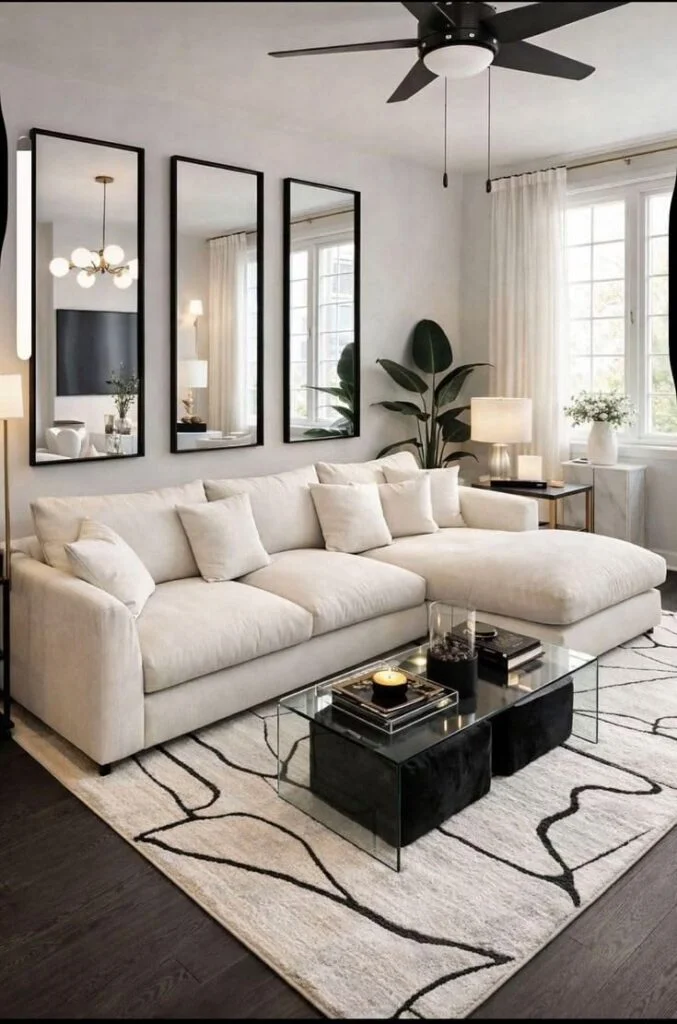
7. Strategic Lighting That Eliminates Dark Corners
Dark corners make rooms feel smaller and more confined. Instead, layer multiple light sources throughout your space to eliminate shadows and create brightness that opens the room visually. Wall sconces, table lamps, and recessed lighting create a sense of spaciousness by removing the visual heaviness of dark areas. Warm lighting (around 2700K) feels more inviting than cool lighting and prevents the room from feeling sterile. Good lighting is one of the most underestimated tools for making small spaces feel larger.
Styling Tips:
- Install wall sconces on either side of a mirror or artwork
- Add table lamps on consoles and end tables in corners
- Use warm colored light bulbs (2700K) for inviting feeling
- Install recessed lighting if possible for unobtrusive brightness
- Layer ambient, task, and accent lighting for flexibility
- Use dimmer switches to control brightness throughout the day
- Ensure lighting fixtures are scaled appropriately for your small room
- Avoid large, statement lighting that consumes visual space
- Position light sources to illuminate dark corners and edges
Why It Works: Multiple light sources eliminate shadows and dark areas that make rooms feel smaller. Bright, well lit spaces feel more open and expansive. Warm lighting creates a welcoming atmosphere while brightening the space. Strategic placement ensures even light distribution rather than harsh spotlighting.
Best Materials and Colors: Brass or matte black sconces scaled for small spaces. Table lamps with linen or frosted glass shades for soft light diffusion. LED bulbs in 2700K warm white for energy efficiency and ambiance. Simple, unobtrusive fixtures that provide light without taking up visual space.
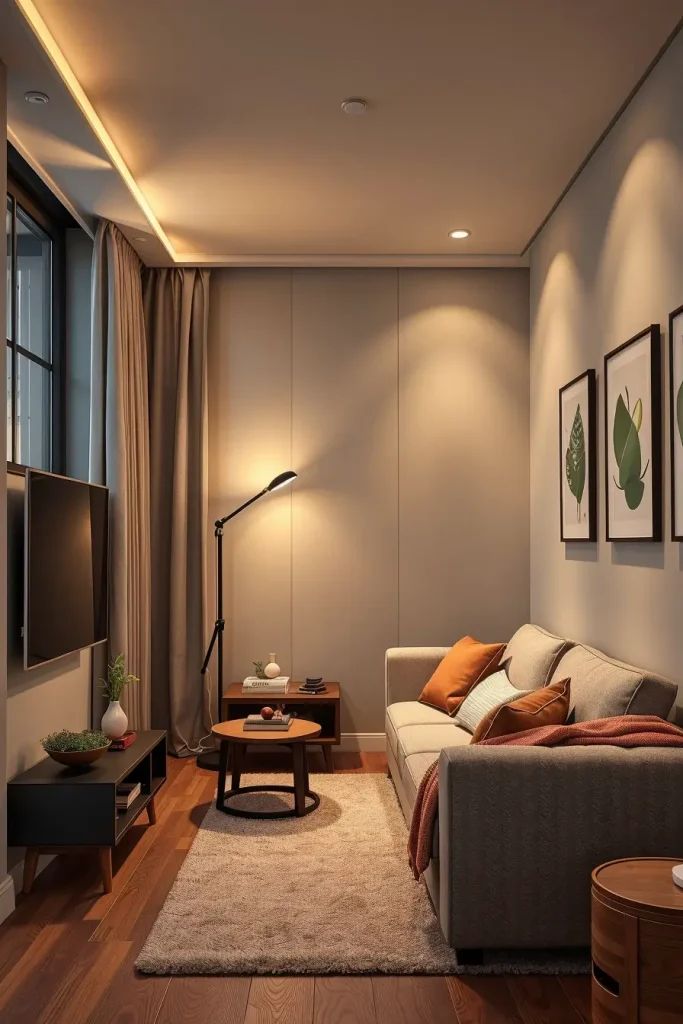
8. Statement Art Above a Console or Focal Wall
A single piece of large scale artwork becomes an immediate focal point that draws the eye and makes the room feel intentional rather than small. Hang an oversized piece above a console table or in a prominent location where it anchors the space visually. The artwork gives your eye somewhere meaningful to land, preventing the cramped feeling of staring at bare walls. A thoughtfully chosen piece signals design intentionality and confidence, making the entire space feel more sophisticated.
Styling Tips:
- Choose artwork at least 30 to 36 inches wide for impact
- Hang artwork 57 to 60 inches from floor to center
- Pair with a console table and simple styling below for function and beauty
- Keep artwork within your color palette for cohesion
- Use brass or natural wood frames for warmth
- Ensure artwork reflects light and doesn’t absorb darkness
- Position artwork where it becomes the first thing people notice entering the room
- Consider oversized photography or abstract pieces for modern appeal
Why It Works: Large scale artwork becomes an immediate focal point that makes the room feel intentional and designed. The eye naturally travels to artwork, creating visual interest that prevents the room from feeling sparse or small. A strong focal point makes the entire space feel more curated and intentional.
Best Materials and Colors: Original art or high quality museum prints. Lightweight canvases or paper rather than heavy frames. Gold or matte black frames in minimal styles. Photography or abstract art that complements your color palette. Avoid ornate frames that add visual weight to small spaces.
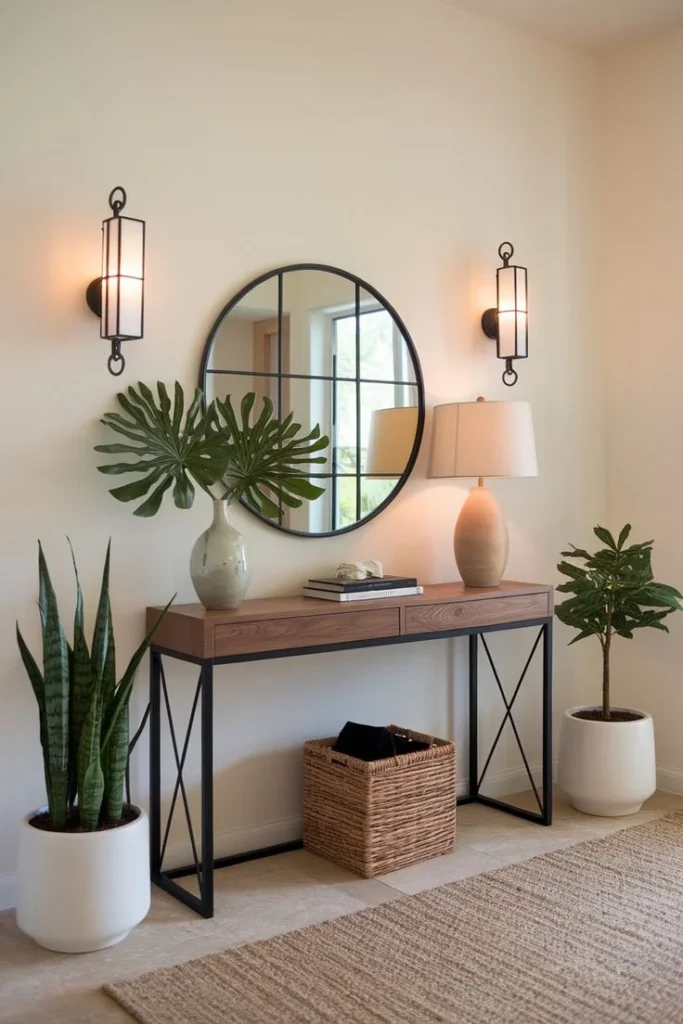
9. Glass or Transparent Furniture for Visual Lightness
Transparent or translucent furniture creates visual lightness that solid pieces can’t achieve. A glass coffee table, acrylic accent chair, or transparent shelving maintains function while allowing the eye to see through to the space beyond. This simple swap eliminates visual bulk and makes rooms feel more open. You get the furniture you need without sacrificing the airiness that small rooms require.
Styling Tips:
- Choose glass or acrylic coffee tables instead of solid wood ones
- Select clear or light tinted glass for maximum transparency
- Consider acrylic side tables or accent pieces for lightness
- Use glass shelving in cabinets for visibility without bulk
- Pair transparent furniture with darker rugs or artwork for visual definition
- Ensure glass surfaces are kept clean and fingerprint free
- Layer transparent pieces with solid pieces for balance
- Avoid all glass rooms that feel sterile by mixing materials
Why It Works: Transparent furniture allows sightlines to continue uninterrupted, making spaces feel larger. You maintain the functionality of furniture while eliminating the visual bulk that solid pieces create. The ability to see through furniture prevents the cramped feeling of solid pieces in small spaces.
Best Materials and Colors: Tempered glass tables for durability and clarity. Clear acrylic for modern appeal and affordability. Light tinted glass in soft gray for subtle warmth. Metal legs in brass or matte black to anchor transparent pieces.
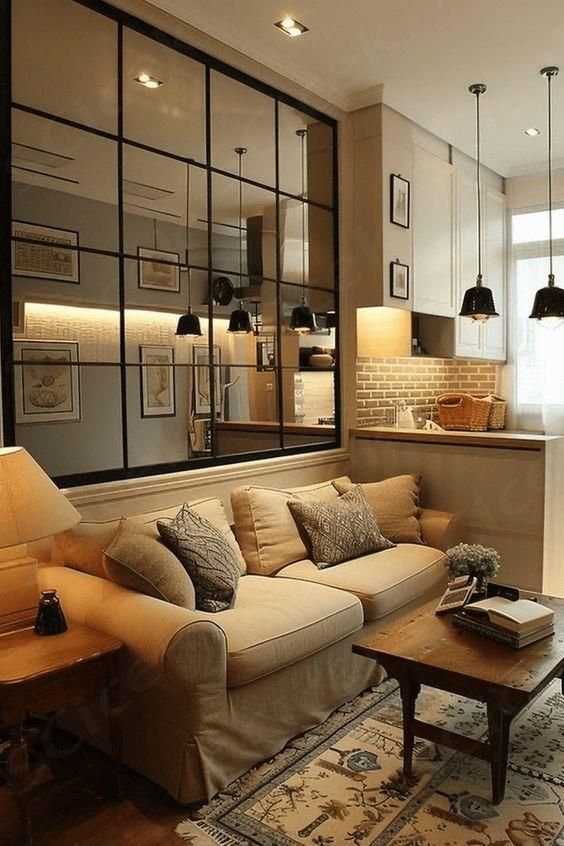
10. Area Rugs That Define Without Dividing
A quality area rug anchors your seating arrangement and creates visual definition without walls. Rugs actually make rooms feel larger when sized correctly because they create a designated zone that the eye perceives as intentional rather than cramped. Choose rugs in neutral tones or subtle patterns that coordinate with your walls rather than dividing the space. A rug that’s too small makes the room feel fragmented, while one sized appropriately creates cohesion and openness.
Styling Tips:
- Select rugs at least 6 by 9 feet for proper space definition
- Ensure front sofa legs sit on the rug for visual anchoring
- Choose neutral tones like cream, light gray, or soft taupe
- Select natural fibers like wool or jute for texture and quality
- Avoid dark rugs that absorb light and make spaces feel smaller
- Use geometric patterns if desired but keep them subtle
- Position rugs to define seating without creating barriers
- Ensure rugs don’t bunch or wrinkle, which creates visual chaos
Why It Works: Area rugs create visual definition and anchor your seating arrangement, making the room feel more intentional and spacious. Properly sized rugs tie furniture together and create a sense of organization that small spaces need. Light colored rugs reflect light and expand the visual space.
Best Materials and Colors: Wool or wool blend rugs for durability and luxury feel. Jute or sisal for natural texture and warmth. Cream, light gray, or warm taupe in solid or subtle geometric patterns. 100 percent natural fibers that age beautifully over time.
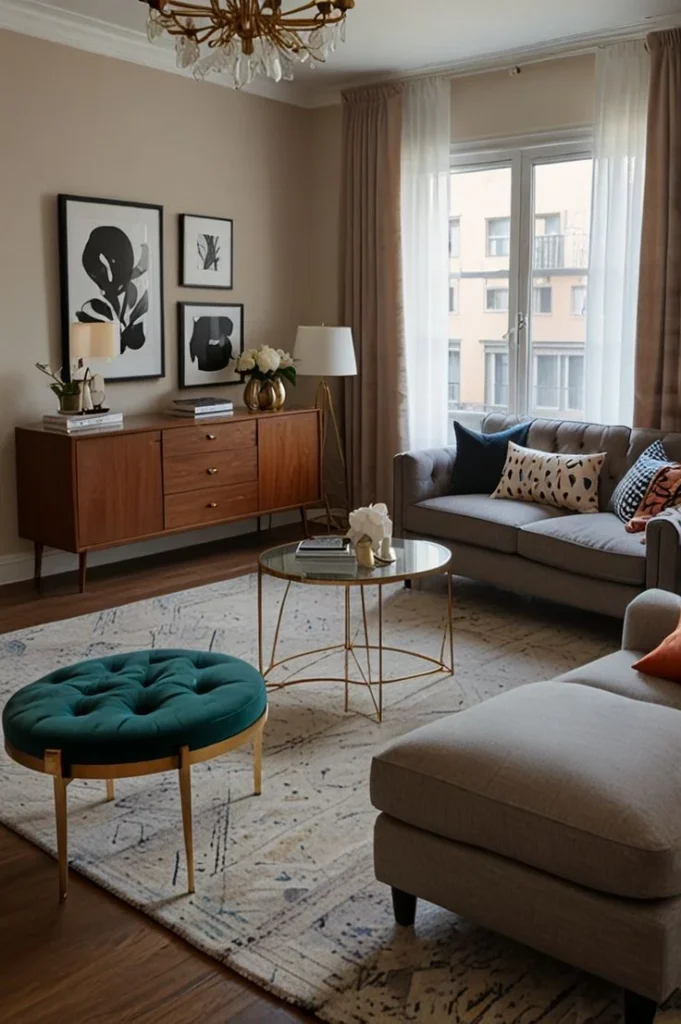
11. Minimal Window Treatments for Maximum Light
Heavy curtains, valances, and ornate window treatments consume visual space and block precious light in small rooms. Instead, opt for minimal treatments that let light flow freely. Sheer panels, simple roller shades, or frosted window film provide privacy while maximizing brightness. The more light flowing through your windows, the more open and spacious your room feels. Sometimes the best window treatment is no treatment at all, just clean glass and flowing light.
Styling Tips:
- Choose simple roller shades in white or cream instead of heavy drapes
- Use sheer panels that diffuse light while maintaining privacy
- Consider frosted window film for privacy without blocking light
- Avoid valances and cornices that consume wall space
- Mount shades flush to the window frame to avoid visual bulk
- Keep window treatments the same color as your walls for continuity
- Ensure treatments can be fully opened to flood the room with light
- Avoid multiple layers of curtains that block light and add weight
Why It Works: Minimal window treatments allow maximum light to flow into your room, brightening and expanding the space. Heavy treatments absorb light and make rooms feel smaller and darker. Letting light flow freely creates an immediate sense of openness and airiness.
Best Materials and Colors: White or cream roller shades that match your walls. Sheer fabrics in white, cream, or soft gray for light diffusion. Frosted window film for privacy without visual bulk. Light filtered through windows rather than absorbed by heavy treatments.
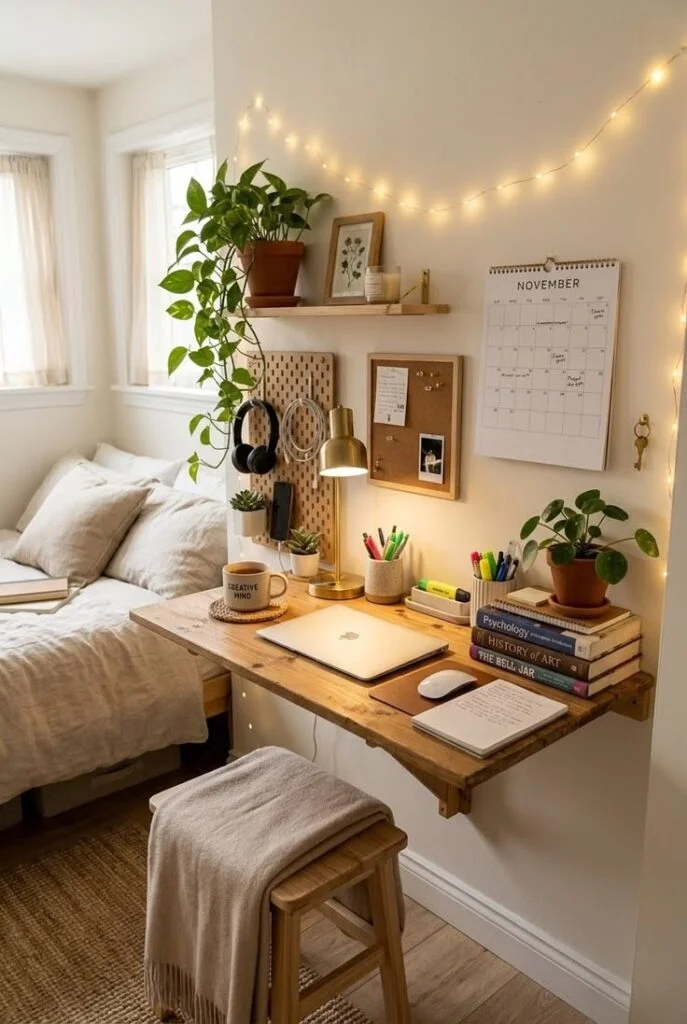
12. Floating Desk or Workspace That Doesn’t Take Up Floor Space
Many small living rooms double as home offices. Instead of a traditional desk that consumes floor space, mount a floating desk against a wall. This provides workspace without eating into your square footage and maintains the open feel of the room. Floating desks appear lightweight and don’t create the visual heaviness of four legged desks. This solution proves that functionality and small space living can coexist beautifully.
Styling Tips:
- Mount floating desks 30 to 36 inches high for comfortable working height
- Choose desks in light wood or white for visual lightness
- Install floating shelves above the desk for storage and organization
- Use desk chairs without wheels or bases to minimize visual clutter
- Keep desk surfaces clear during non work hours for space to feel residential
- Position desks near windows for natural light during work hours
- Ensure adequate lighting with a simple table lamp or wall sconce
- Style desk area minimally to blend with your living room aesthetic
Why It Works: Floating desks use wall space rather than floor space, keeping your living room open. The floating appearance creates visual lightness and prevents the heavy, office like feeling that traditional desks create. Workspace integrates seamlessly into living space when designed thoughtfully.
Best Materials and Colors: Light wood in natural finishes or white painted wood. Minimal metal legs or invisible brackets for light appearance. Surfaces that coordinate with your overall decor rather than standing apart. Clean, simple designs without unnecessary bulk.
13. Corner Seating Arrangements That Maximize Space
Corner seating arrangements make efficient use of your small room by utilizing edges that might otherwise go unused. An L shaped sectional in a corner creates a cozy conversation zone while freeing up the rest of the room. Corners that might feel dead become functional, comfortable gathering spaces. The arrangement creates clear definition without overwhelming the limited square footage available.
Styling Tips:
- Place L shaped sectionals in corners to maximize seating efficiently
- Ensure the sectional is appropriately scaled for your room
- Add a small round table in front rather than a large rectangular coffee table
- Layer seating with accent chairs in opposite corners if space allows
- Use throw pillows to add comfort and softness to corner seating
- Ensure pathways remain clear around the seating arrangement
- Position corner seating to face a focal point like artwork or view
- Keep sectional color neutral to let the room feel spacious around it
Why It Works: Corner seating arrangements utilize space efficiently by fitting furniture into areas that might otherwise sit empty. The arrangement creates definition and coziness without spreading furniture throughout the room. Corners become assets rather than wasted space when furnished intentionally.
Best Materials and Colors: Compact L shaped sectionals without excessive depth. Neutral fabrics like cream, light gray, or soft taupe. Performance fabrics for durability in well used small spaces. Scaled appropriately so the sectional doesn’t dominate your limited square footage.
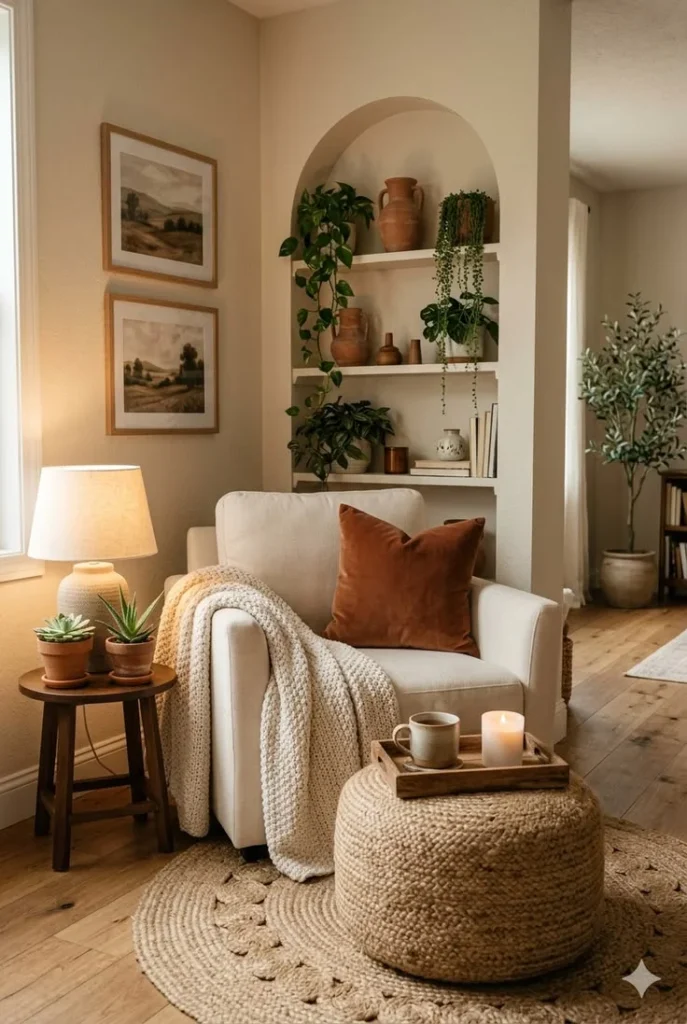
14. Open Shelving With Negative Space for Breathing Room
Open shelving displays beautiful items while keeping floors clear, but overstuffed shelves create visual clutter that makes rooms feel smaller. Instead, practice the art of negative space by intentionally leaving empty areas on shelves. This breathing room prevents visual overwhelm and maintains the open, airy feeling that small rooms need. Every item on display should be worthy of attention, and empty space between items makes each piece more impactful.
Styling Tips:
- Style shelves with only 60 to 70 percent capacity rather than filling completely
- Create visual rhythm by grouping items and leaving space between groups
- Stack books both vertically and horizontally for visual variety
- Include at least one living element like a plant on each shelf
- Use coordinating colors or materials for cohesion across shelves
- Leave the top shelf partially empty for visual lightness
- Ensure line of sight passes through shelves to the wall beyond
- Rotate displayed items seasonally to keep the look fresh
Why It Works: Negative space on shelves prevents visual chaos and maintains the open feeling that small spaces require. Intentionally empty areas create breathing room for the eye, preventing the overwhelming sensation of too much stuff. Each displayed item gains importance when surrounded by space.
Best Materials and Colors: Floating shelves in light finishes that don’t compete with displayed items. Objects in coordinating colors that create visual flow. Green plants that add life and break up visual clutter. Books with beautiful spines that add color without chaos.
15. Wall Mounted Entertainment Center Instead of Floor Standing
A wall mounted media console takes up less visual space than a traditional entertainment center sitting on the floor. Hanging the television and shelves above the floor maintains clear sightlines and keeps the floor open for movement. This approach also provides storage for media items, gaming systems, and accessories without consuming your limited square footage. Wall mounted systems are both functional and space efficient.
Styling Tips:
- Mount the television at eye level while seated in your main seating area
- Install shelves on either side of the television for balanced appearance
- Use floating shelves or mounted cabinets for hidden storage
- Keep the area around the television clean and organized
- Style surrounding shelves with plants, artwork, and books
- Mount all cords behind the television or along walls to hide clutter
- Ensure mounting hardware is secure and properly installed
- Paint the wall a calming color or add subtle wallpaper for visual interest
Why It Works: Wall mounted systems eliminate the visual heaviness of floor standing entertainment units. Keeping the floor clear maintains open sightlines and prevents the cluttered feeling. Wall mounted systems integrate technology into your room’s design rather than making it a separate focal point.
Best Materials and Colors: Metal mounting brackets in brass or matte black. Floating shelves in natural wood or white for cohesion. Neutral backgrounds that don’t compete with your television. Hidden storage in closed cabinets to keep cords and technology out of sight.
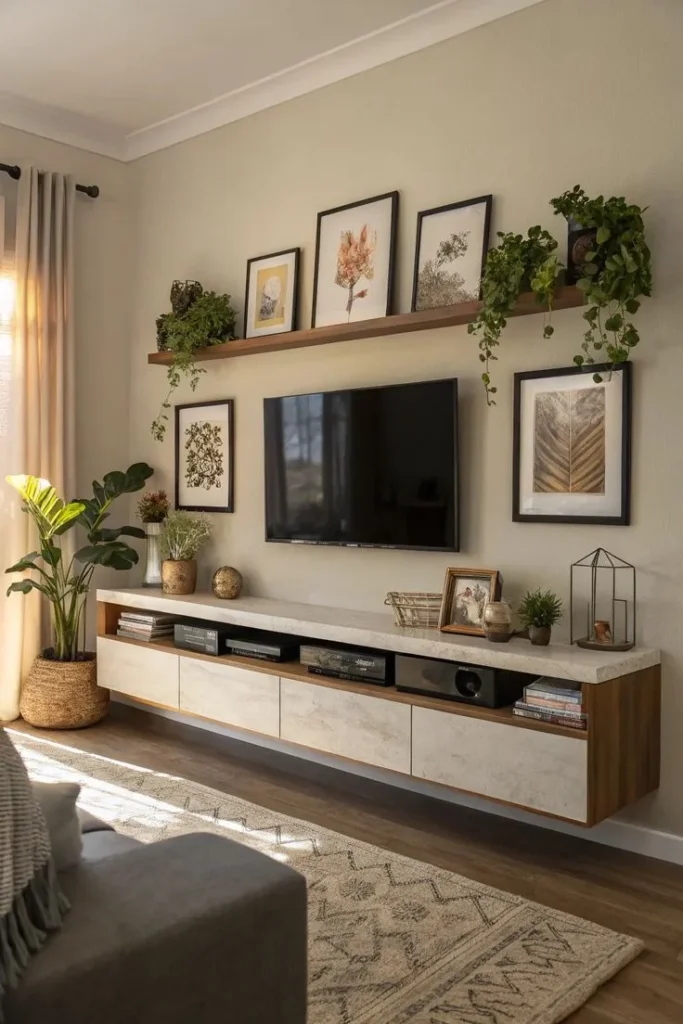
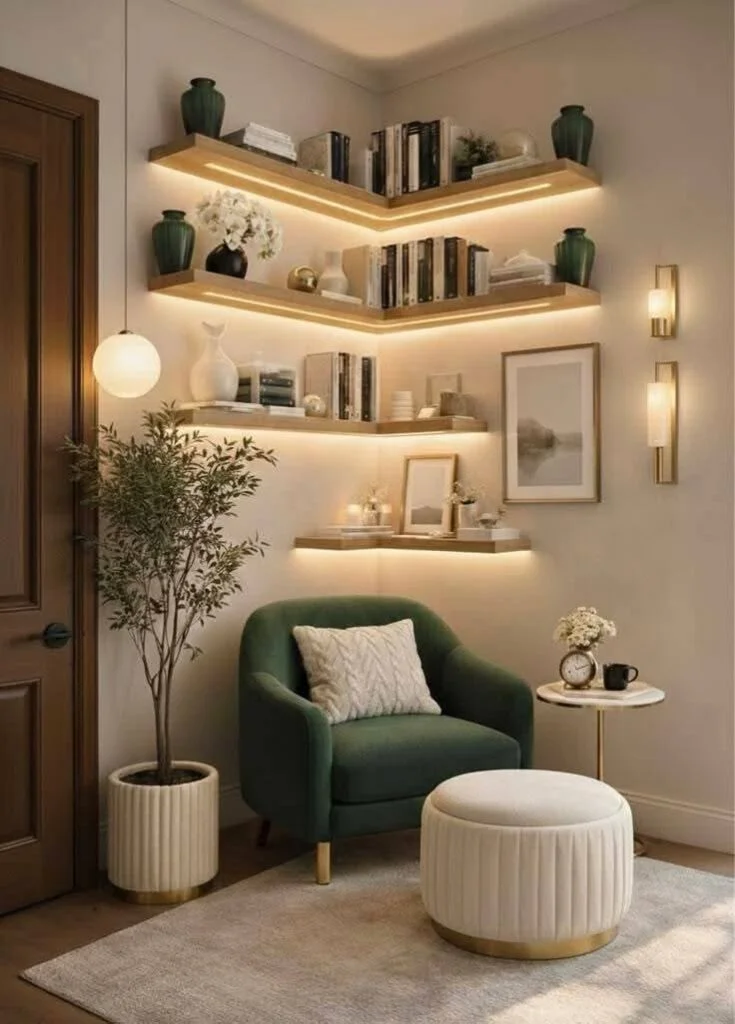
16. Layered Lighting With Hidden Sources for Visual Spaciousness
Beyond the obvious lamps and fixtures, incorporate hidden lighting like LED strips behind floating shelves or concealed uplighting in corners. These hidden light sources create a sense of ambient brightness that makes rooms feel larger and more sophisticated. The light feels like it’s emanating from the room itself rather than coming from obvious sources. This layering creates depth and dimension that solid, visible light sources can’t achieve.
Styling Tips:
- Install LED strips behind floating shelves for subtle downward lighting
- Add up lighting in dark corners to eliminate shadows
- Use light strips with dimmer switches for mood control
- Hide light sources so they’re not visible but their effect is apparent
- Choose warm white LED bulbs for inviting atmosphere
- Layer hidden lighting with traditional fixtures for complete coverage
- Ensure hidden lighting is installed professionally for safety
- Test lighting effects before fully committing to installation
Why It Works: Hidden lighting sources create an ambient glow that makes spaces feel larger and more open. Visible shadows are eliminated, and the light seems to emanate from the room itself. This approach creates sophistication and spaciousness without additional visible fixtures that consume space.
Best Materials and Colors: LED strip lighting in warm white (2700K) for ambiance. Dimmable options for mood control. Hidden installation behind shelves or cornices. Brass or matte black hardware for fixtures that are visible.
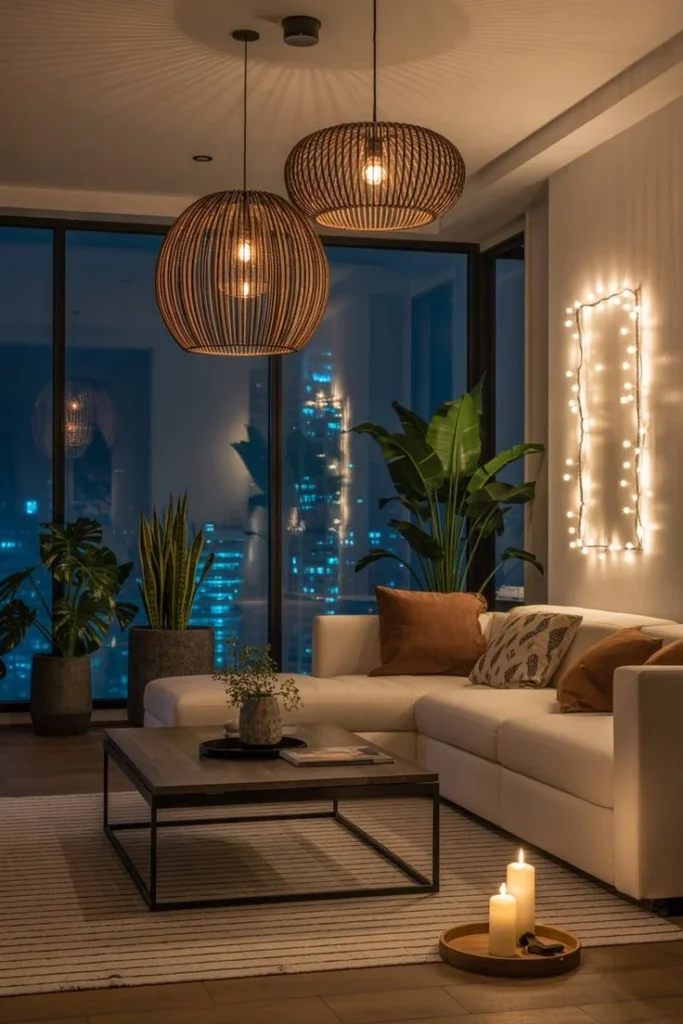
17. Minimal Accessories and Curated Collections Instead of Clutter
Small rooms require restraint. Rather than filling every surface with decorative items, curate a small collection of meaningful pieces that you truly love. A few carefully chosen accessories have far more impact than a sea of trinkets. Each item should have purpose and beauty. This approach makes small rooms feel intentional and organized rather than cluttered and cramped.
Styling Tips:
- Display only items you genuinely love and that have meaning
- Group similar items together rather than scattering them
- Leave most surfaces relatively clear for visual spaciousness
- Rotate accessories seasonally to prevent visual fatigue
- Choose items in a cohesive color palette for unity
- Ensure each surface has room to breathe around displayed items
- Keep kitchen and bathroom surfaces clear of unnecessary clutter
- Store out of season items elsewhere to maintain clean lines
Why It Works: Minimal accessories reduce visual clutter and make small spaces feel organized and intentional. Each curated item has more impact than a room full of miscellaneous pieces. Clear surfaces create the visual spaciousness that small rooms desperately need. Restraint signals good design rather than lack of decoration.
Best Materials and Colors: Handpicked items in materials like natural wood, brass, ceramics, and glass. Objects in neutral tones or your established color palette. Meaningful pieces with personal significance rather than mass produced decor. Items that are beautiful enough to earn shelf space rather than hidden away.
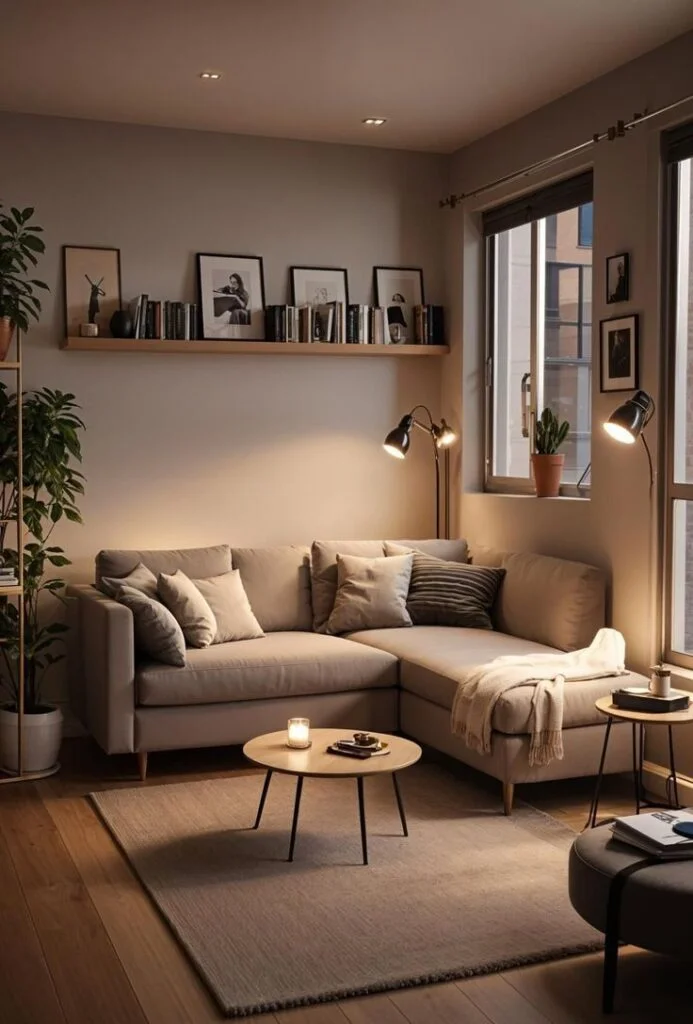
18. Texture Through Fabrics and Natural Materials Rather Than Bulk
Small rooms need texture for visual interest, but adding bulk through numerous decorative items isn’t feasible. Instead, introduce texture through the materials themselves: soft linen, tactile knits, smooth marble, natural wood grain, and woven baskets. These materials add visual and tactile interest without cluttering your space. Texture becomes part of your foundational design rather than an added layer.
Styling Tips:
- Layer fabrics with varying textures like linen, velvet, and knits
- Incorporate natural wood in flooring and furniture
- Use woven baskets for storage that adds texture and function
- Include marble or stone elements in accessories or furniture
- Add plants that bring organic texture and movement
- Mix smooth surfaces with rough textured ones for contrast
- Choose throw blankets and pillows with interesting weaves
- Ensure textural elements are visible and intentional
Why It Works: Texture adds visual interest and depth without requiring additional decorative items or bulk. Natural materials like wood, stone, and woven fibers bring warmth and sophistication to small spaces. Textural variety prevents rooms from feeling flat or one dimensional while maintaining the minimal aesthetic required.
Best Materials and Colors: Natural linen, wool, and cotton fabrics. Woven jute, rattan, and seagrass for baskets and accents. Natural wood in warm tones. Marble or slate for elegant surfaces. Living plants that add organic texture.
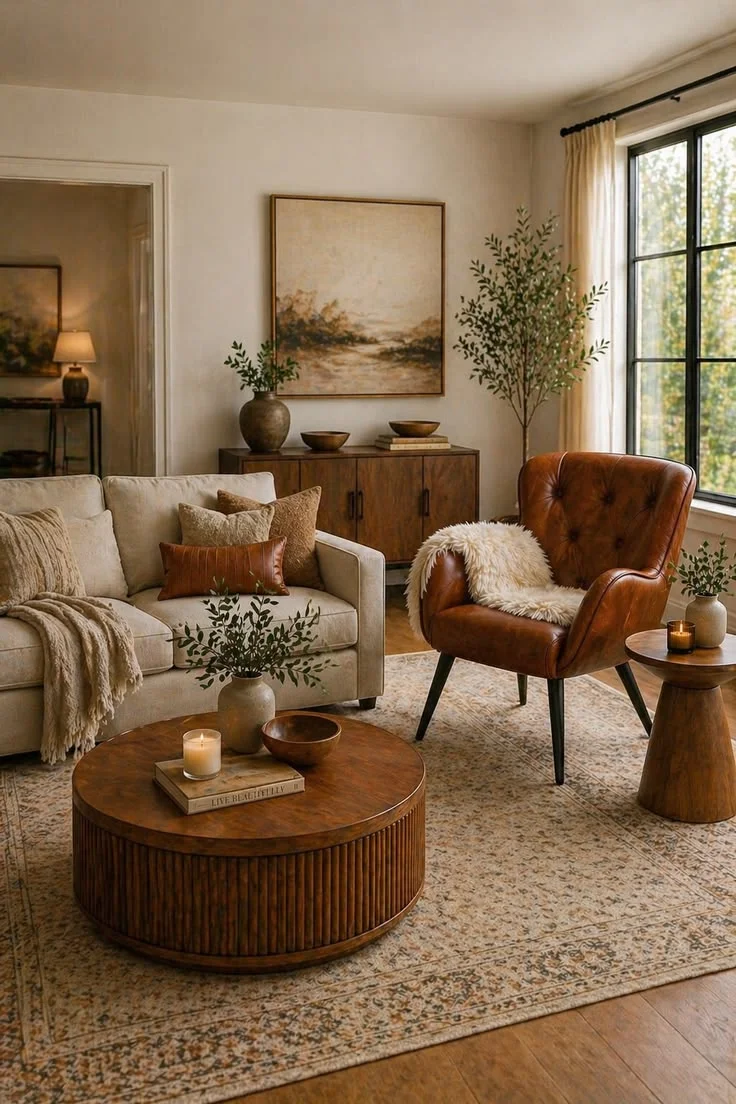
19. Smart Color Accents Through Removable Elements
While your walls should remain neutral, introduce color through easily changeable elements like throw pillows, artwork, and plants. This allows you to add personality and warmth without overwhelming the space or committing to permanent color. Removable color can be swapped seasonally or whenever you crave change, keeping your small room feeling fresh without repainting or major changes.
Styling Tips:
- Choose one or two accent colors to repeat throughout the space
- Introduce accent colors through pillows, artwork, and plants
- Use seasonal color changes to refresh your room’s appearance
- Keep accent colors visible in at least three places for cohesion
- Balance bold accent colors with plenty of neutral space
- Use warm accent colors like warm terracotta, sage, or warm blue
- Avoid cool colors that feel sterile in small, enclosed spaces
- Ensure removable elements make sense with your main color palette
Why It Works: Removable color elements add personality and warmth without permanently changing the room or overwhelming small spaces. Seasonal color changes keep small rooms from feeling static. Strategic accent color creates focal points and visual interest while maintaining the spacious feeling that neutral walls provide.
Best Materials and Colors: Warm accent colors like terracotta, sage green, warm mustard, or soft rust. Jewel tones like emerald or navy in small quantities. Pillows, artwork, and plants as color vehicles. Colors that appear in at least three locations for design cohesion.
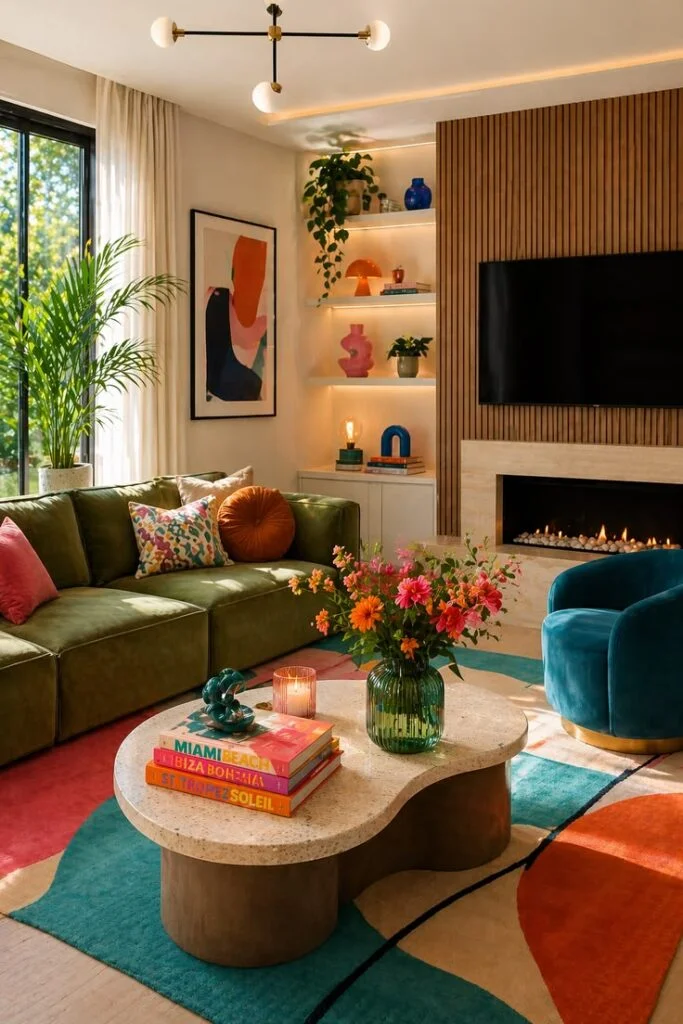
20. Personal Items on Display That Tell Your Story
Finally, the most important element for making your small living room feel like home is displaying items that matter to you. Photographs, books you love, collections you’ve gathered, or art that speaks to you transform a designed space into a home. These personal touches make small rooms feel warm, lived in, and authentically yours. A room filled with your story is infinitely more beautiful than a perfectly styled room that doesn’t reflect who you are.
Styling Tips:
- Create a small gallery wall or shelf display of meaningful photographs
- Display favorite books with beautiful spines facing outward
- Showcase collections you love whether they’re plants, pottery, or objects
- Mix family photos with artwork for balanced personal expression
- Ensure personal items are displayed intentionally rather than scattered
- Use coordinating frames for family photos to create cohesion
- Allow your personality to shine through your carefully curated displays
- Update displays seasonally with meaningful items and memories
Why It Works: Personal items create emotional connection and warmth that no amount of styling can achieve. Your space becomes uniquely yours when it reflects your interests, memories, and taste. Personal displays make visitors feel welcome and create conversation starters. Small rooms decorated with intention and personality feel infinitely more spacious and beautiful than sterile, perfectly styled ones.
Best Materials and Colors: Photographs in matching or coordinating frames. Books with beautiful covers and meaningful titles. Objects from travels and experiences. Collections that bring you joy whether they’re plants, art, or crafted items. Items displayed in your established color palette.
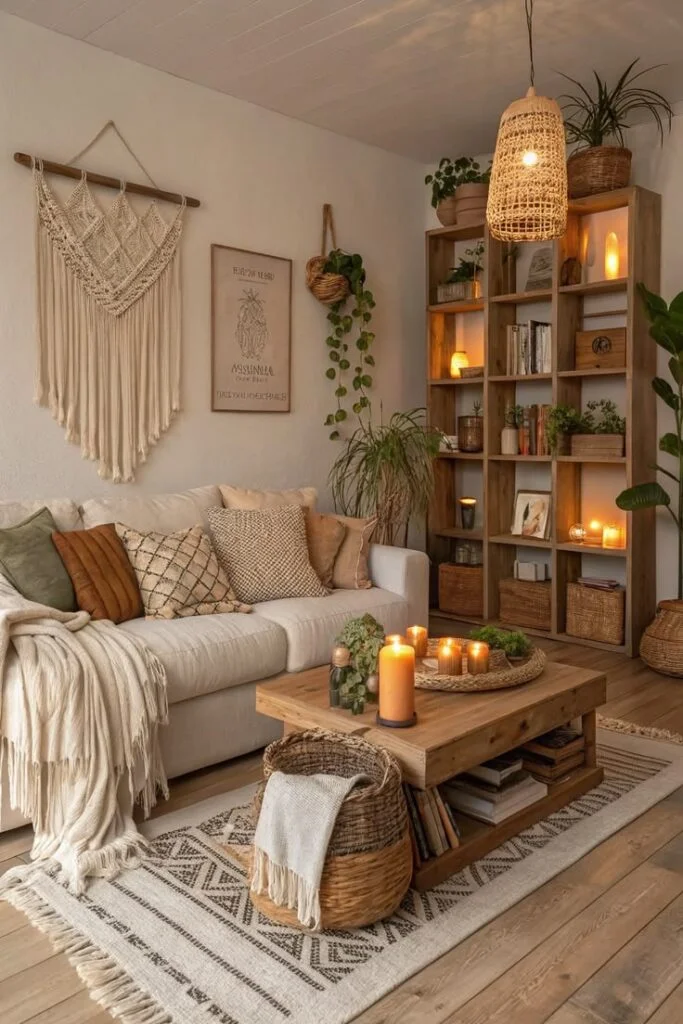
Conclusion:
A small living room might feel like a limitation, but it’s actually an invitation to design with intention. You don’t have room for mistakes or unnecessary items, which means every single choice matters. That forces you to be thoughtful, to invest in quality, and to create a space that’s perfectly suited to your life rather than filled with generic decor.
The 20 ideas in this guide provide a framework for transforming your compact living room into a space that feels open, airy, sophisticated, and infinitely more spacious than its square footage suggests. Start with the foundational ideas: light colors, vertical storage, and strategic lighting. These create the framework that allows everything else to work. Then layer in personal touches, texture, and meaningful items that make the space truly yours.
Remember, making a small room feel bigger isn’t about tricks or illusions that viewers eventually see through. It’s about understanding how the eye perceives space, how color and light affect mood, and how thoughtful design choices create rooms that feel open, organized, and intentional. Every idea in this guide works because it respects both the physical limitations and the possibilities of small spaces.
Your small living room is an opportunity to create something special. It’s a chance to prove that luxury and beauty aren’t about size, they’re about intentionality, quality, and design that respects both the space and the person living in it.
Ready to transform your small living room? Choose one idea that resonates most with you and implement it this week. Maybe it’s hanging curtains from floor to ceiling, adding a large mirror, or introducing better lighting. One change creates momentum. Before long, you’ll have designed a room that feels spacious, beautiful, and completely yours.
Share your small room transformation in the comments or tag us in your before and afters. We love seeing how these ideas come to life in real homes. Your compact space has so much potential waiting to be unleashed.
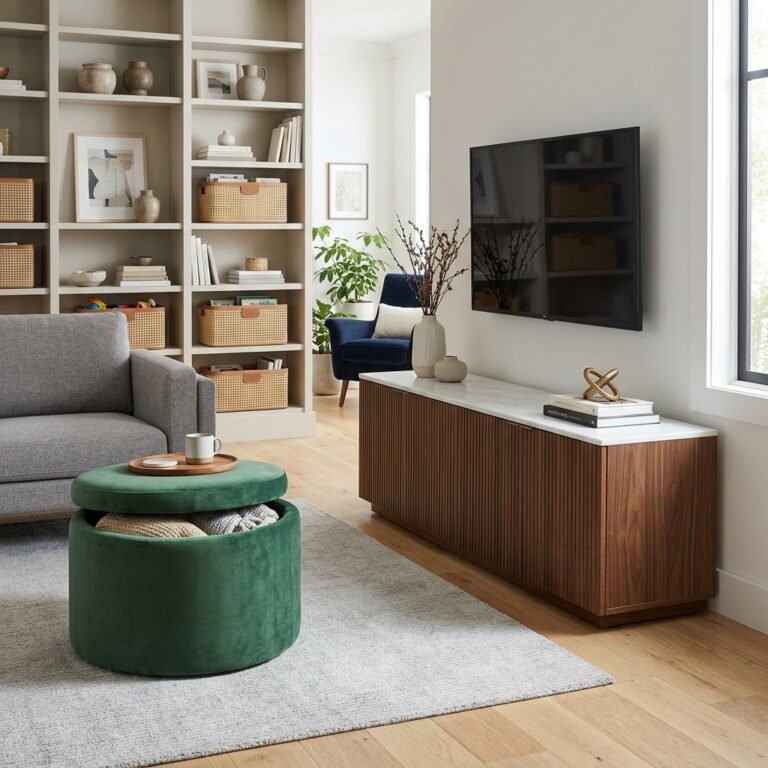
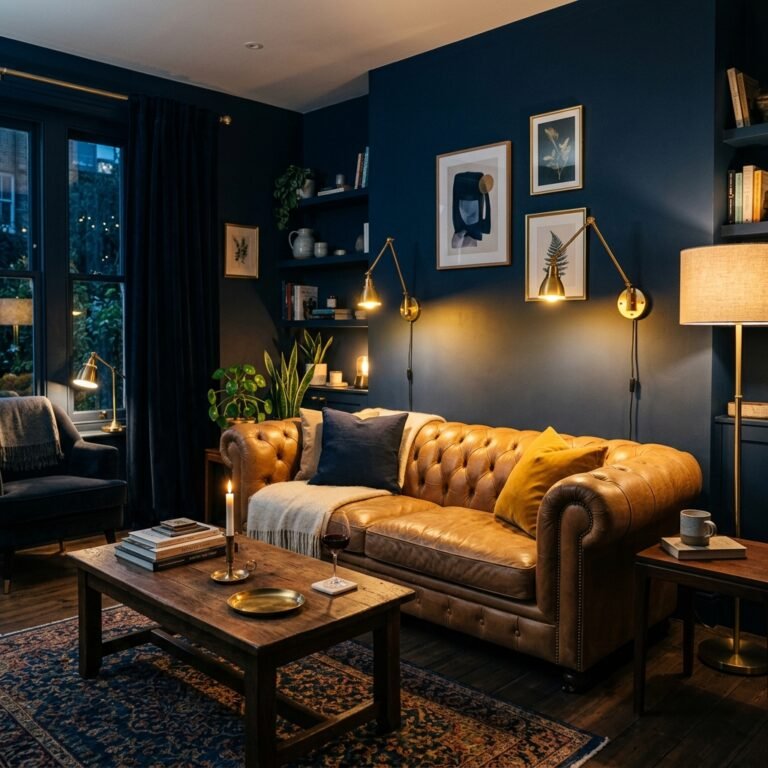
1 comment