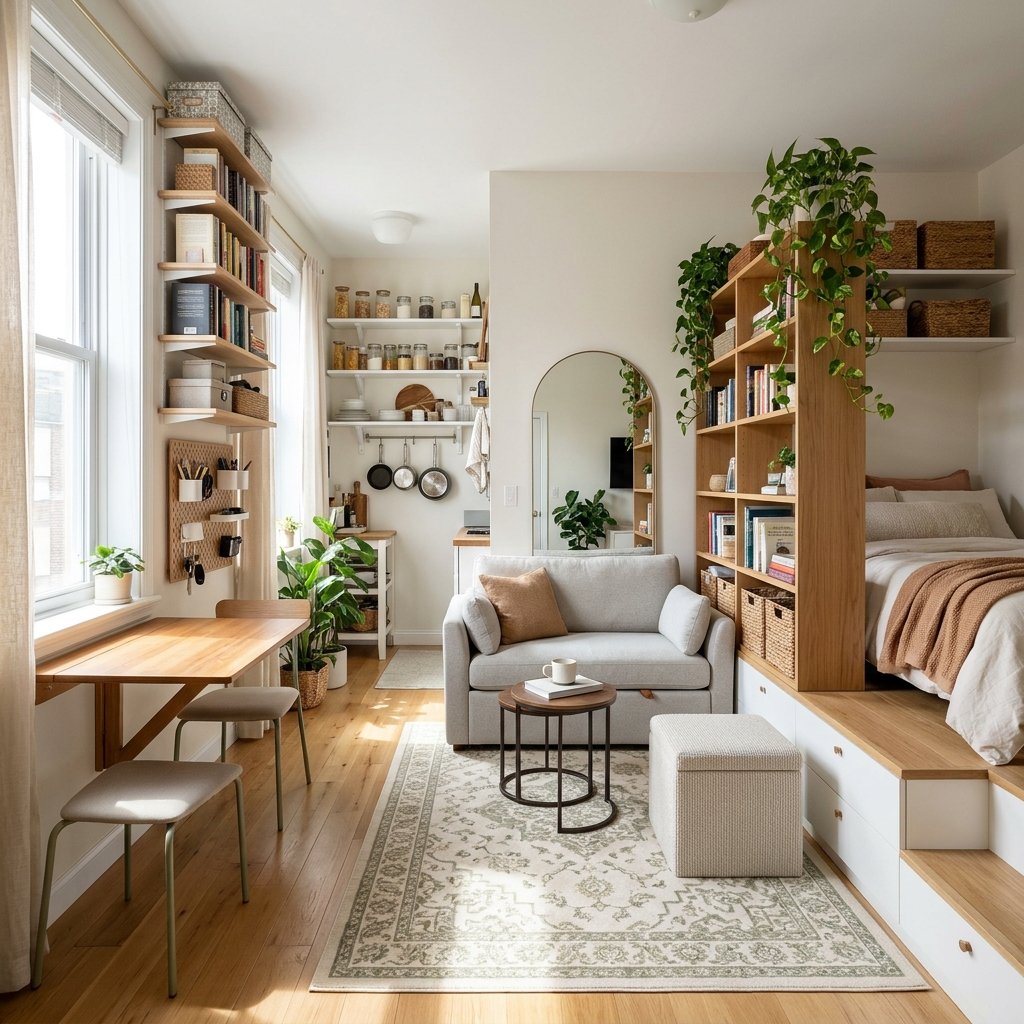
Studio apartment decor ideas work hardest when every piece earns its place. A single room must handle sleeping, living, cooking, and often working, so each choice affects the whole space. Smart storage, flexible furniture, and careful color can make a compact studio feel open, functional, and warm.
This guide covers twenty studio apartment decor ideas that maximize every inch. Each idea explains how the approach works, where it fits, and which trade-offs deserve attention. A short measuring step comes first, since a studio leaves little room for buying mistakes.
Measure Before Buying Anything
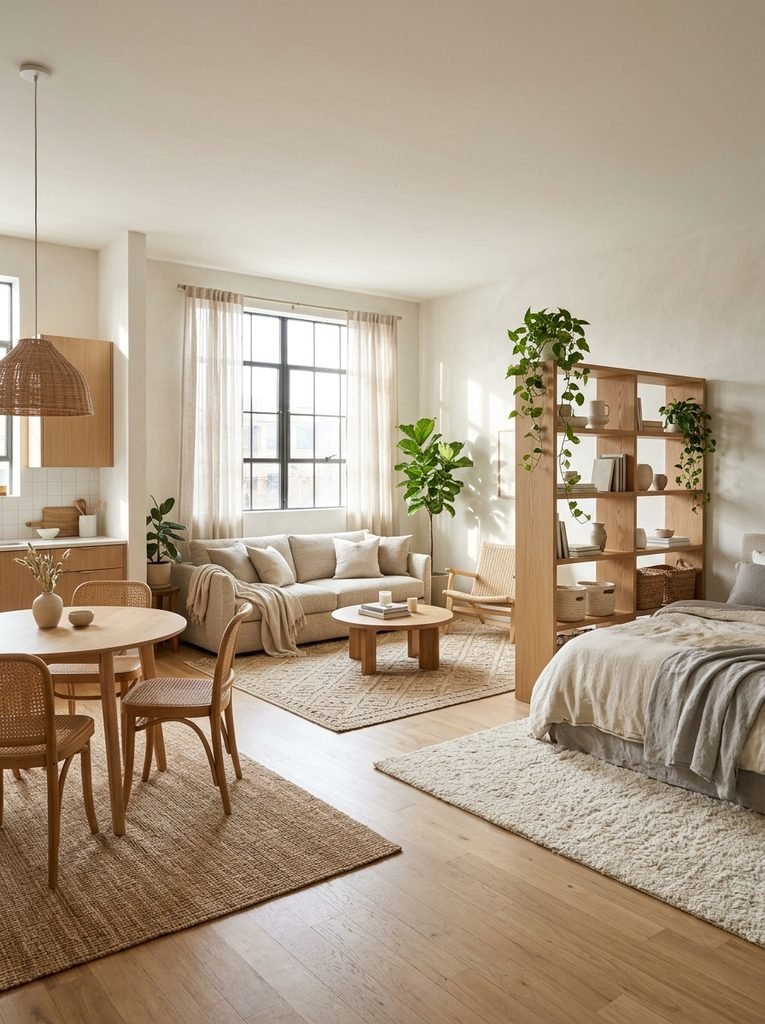
Accurate measurements prevent the most common studio mistakes. Floor dimensions, door swings, window heights, and radiator positions all limit where furniture fits. A simple sketch on paper or in an app shows how each piece will sit before anything is bought.
Measuring in both inches and centimeters helps when product listings use different units. Walkways between zones also need attention, since cramped paths make a room feel smaller than it is. Clear routes to the door, bathroom, and kitchen come first, and decor fills in around them.
Create Zones Without Walls
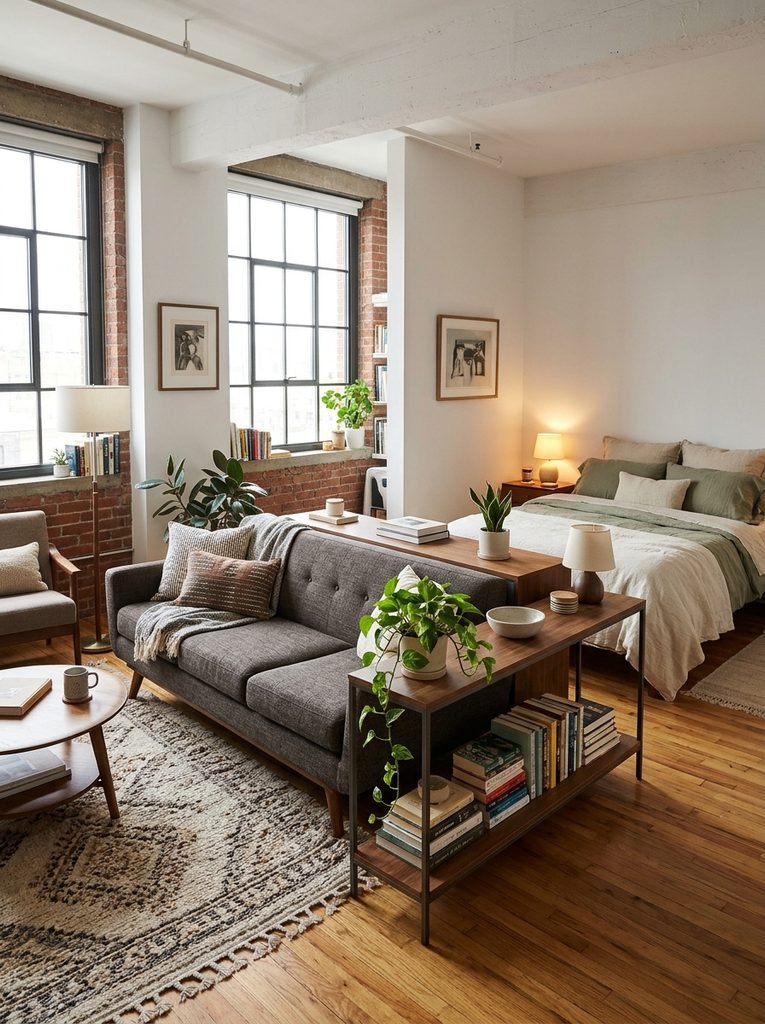
Defining zones makes a studio feel like a complete home instead of one crowded room. Furniture placement can separate sleeping, living, and dining areas without any construction. Rugs, sofas, and shelving units each mark a boundary, and the eye reads those boundaries as separate rooms.
A sofa turned with its back toward the bed forms a natural divider. A narrow console behind it adds a surface for lamps and keys. A separate guide on studio apartment layouts that separate sleeping and living areas goes deeper on floor plans for different room shapes.
Styling Tips
- Separate rugs define each area
- A sofa back works as a divider
- Console tables add surface space behind seating
- Works because each boundary gives the eye a separate room to read
Go Vertical With Storage
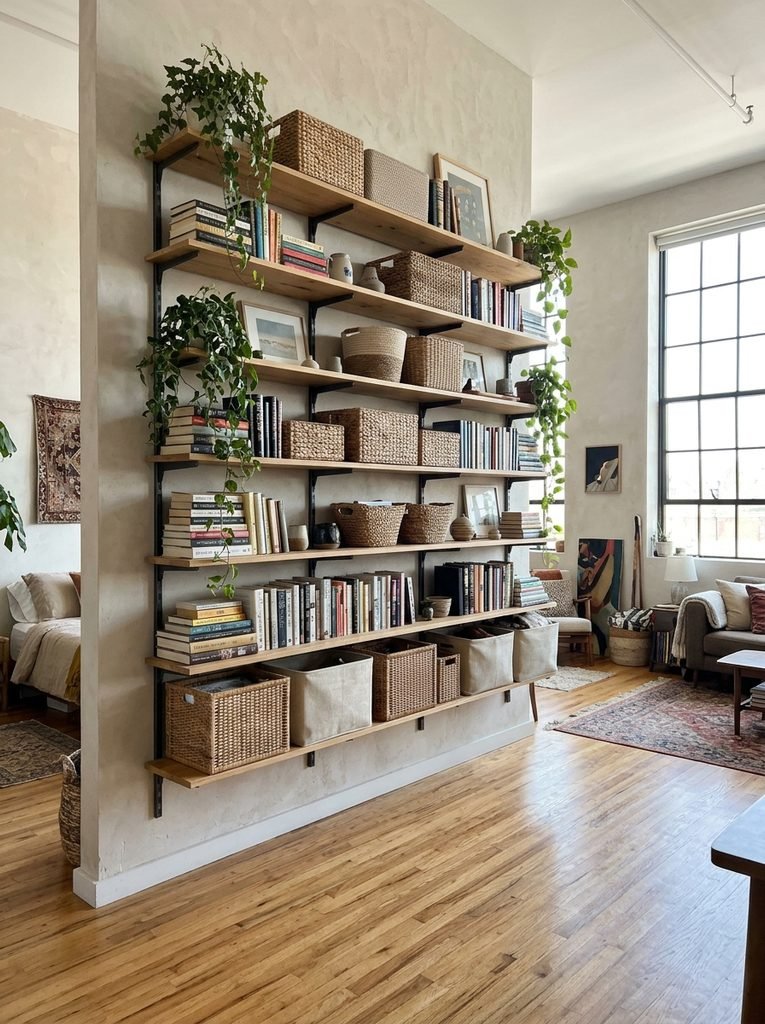
Tall shelves, wall-mounted cabinets, and floating units move storage off the floor. Clear floor space makes a studio feel larger, and vertical lines draw the eye toward the ceiling. Wood shelving adds warmth, while open shelves keep the look light.
Tall storage needs one safety step. The Consumer Product Safety Commission advises anchoring bookcases and dressers securely to the wall to prevent tip-overs. Renters should check lease rules before drilling, and anti-tip options suited to rentals exist. Heavy items belong low, and top shelves stay minimal.
Styling Tips
- Floating shelves keep the floor clear
- Ladder-style shelving suits narrow walls
- Minimal top shelves keep the room open
- Works because storage uses wall space that otherwise sits empty
Use Light Colors to Open Up Space
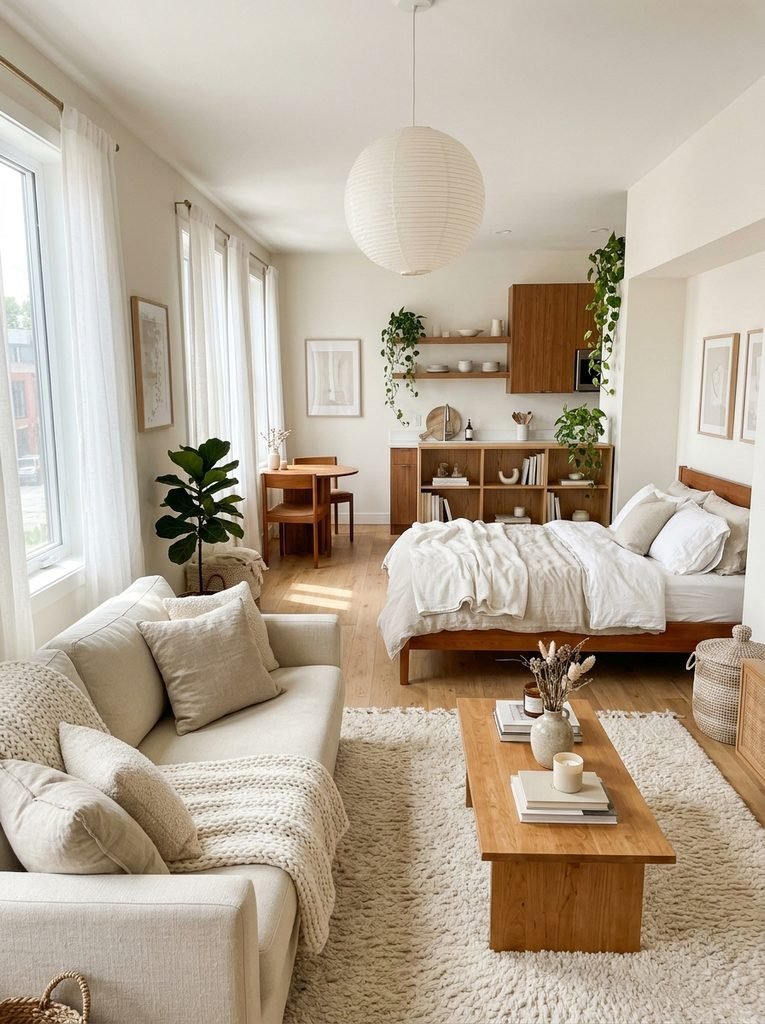
Light palettes make a studio feel open and airy. White, cream, and soft gray reflect natural light and soften the edges of a small room. Too many pale surfaces can feel cold, so texture matters as much as color.
Warm wood, linen, and wool keep a pale room from feeling sterile. Paint finish also plays a role. Matte and eggshell finishes hide wall flaws, while glossy finishes reflect more light but show every dent. Renters should confirm paint rules before repainting.
Styling Tips
- Neutral tones carry light across the room
- Warm wood accents add contrast
- Soft textiles prevent a sterile look
- Works because light surfaces bounce daylight deeper into the room
Choose Multi-Functional Furniture
Every piece of furniture in a studio should earn its footprint. Storage beds, foldable tables, and ottomans with hidden compartments each solve two problems at once. Clutter disappears into the furniture instead of stacking on surfaces.
Build quality matters more here than elsewhere, since hinges, drawers, and folding parts see daily use. Pieces that match the room’s palette also keep the studio visually calm. Measuring clearance before buying prevents a storage bed from blocking a door or closet.
Styling Tips
- Beds with storage drawers hold off-season items
- Nesting tables expand only when needed
- Storage ottomans double as seating
- Works because one piece does the work of two
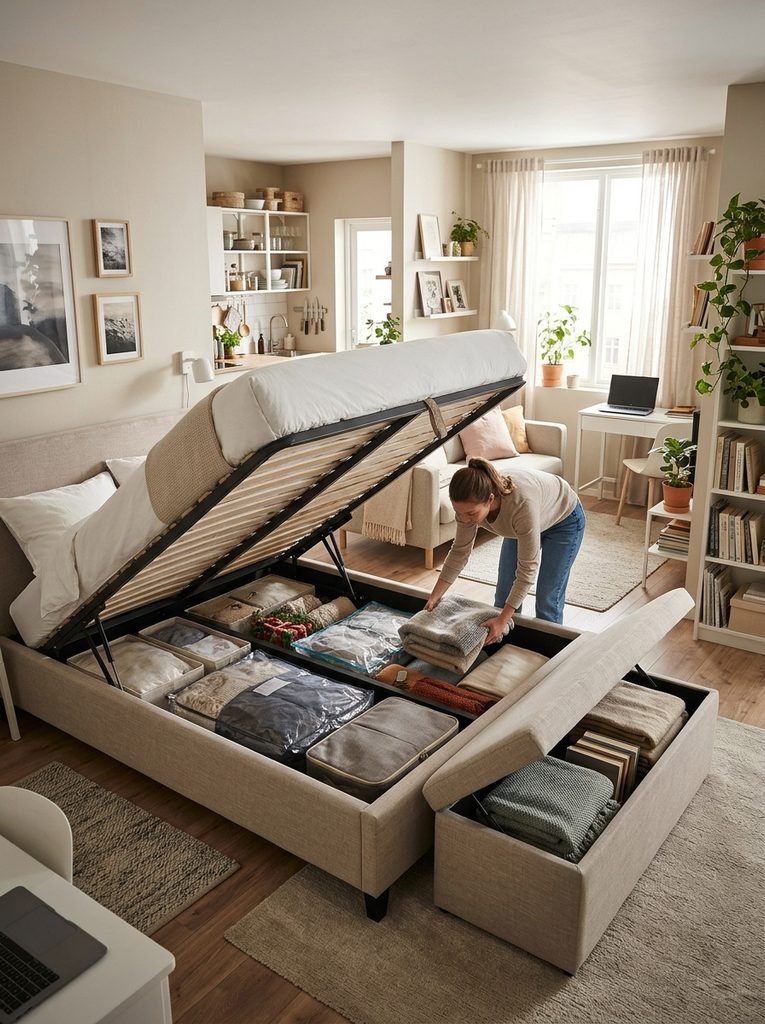
Add a Statement Rug
A statement rug adds personality without using extra floor space. It defines the living area, anchors the furniture, and brings pattern into a room with few other places for it. Bold and textured designs both work well.
Size decides success. A rug large enough for at least the front legs of the sofa and chairs to rest on it ties a seating group together. A rug that is too small makes the arrangement look like it floats. Measuring the seating area in inches and centimeters before ordering avoids guesswork.
Styling Tips
- Bold or textured rugs create a focal point
- Furniture front legs on the rug tie the group together
- Tones that echo the decor keep the look cohesive
- Works because a rug defines a zone without adding a wall
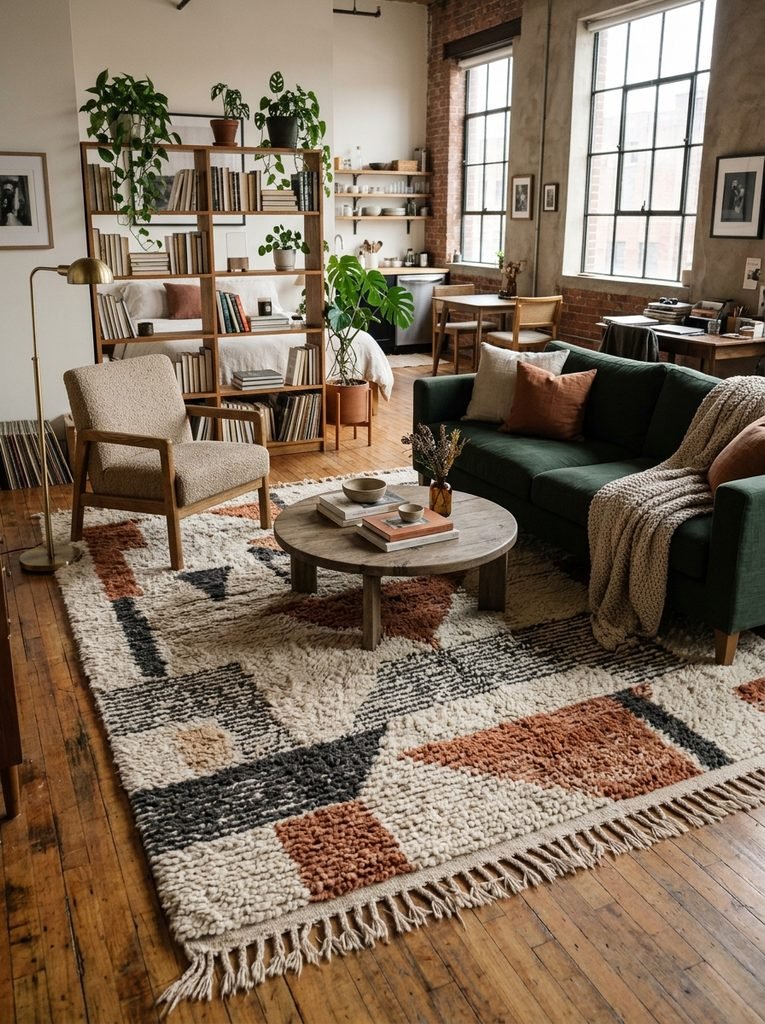
Use Mirrors to Double the Space
Mirrors make a studio feel bigger by reflecting light and views. A large mirror opposite or beside a window sends daylight deeper into the room. The reflection also adds a sense of depth that a flat wall cannot.
Placement matters more than size. A mirror facing a cluttered corner doubles the clutter, so reflections should show something worth seeing, such as a window, plant, or lamp. Wood frames add warmth, and leaning mirrors suit rentals because they need no drilling. Heavy mirrors should follow the manufacturer’s securing directions.
Styling Tips
- Mirrors across from windows double the daylight
- Oversized designs read as architecture
- Wood frames add warmth
- Works because reflected light and views create the impression of depth
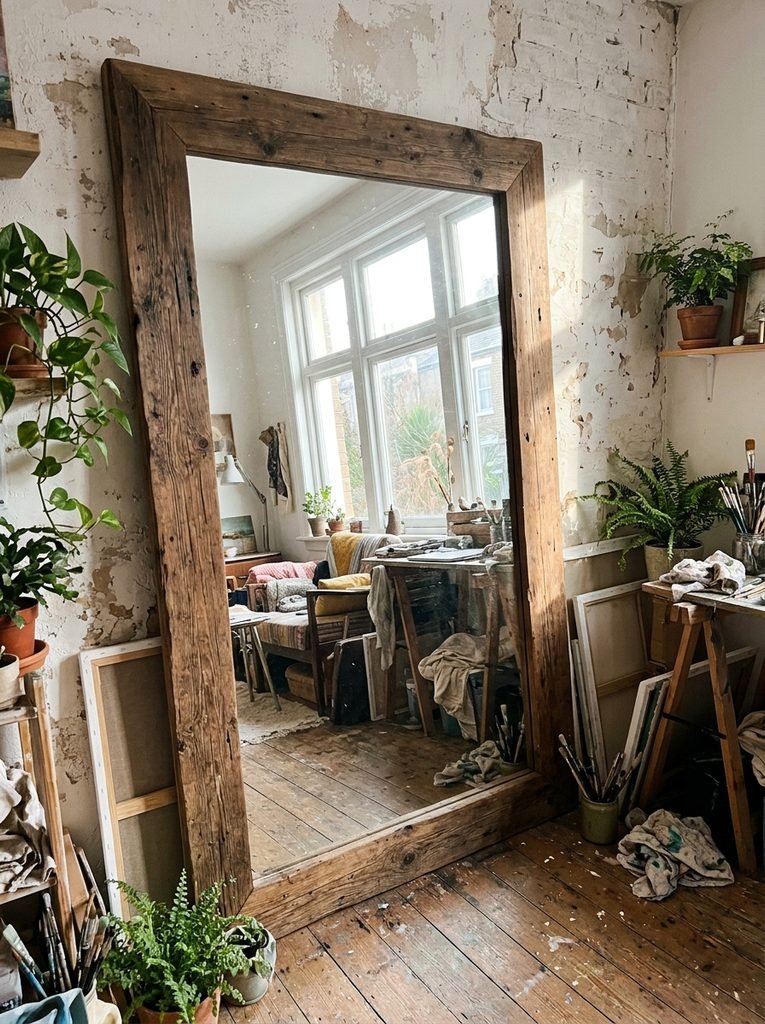
Opt for Low-Profile Furniture
Low-profile furniture keeps sightlines clear and makes ceilings appear higher. Low sofas, platform beds, and slim media units leave more wall visible, so the room reads as taller and wider. Bulky pieces with heavy arms and skirts do the opposite.
Visible legs help as well, because floor showing beneath a piece creates a sense of airiness. Sleek, grounded designs suit minimalist schemes. Comfort still matters, so seat height should suit daily use, especially for older adults and anyone with knee trouble.
Styling Tips
- Low sofas and beds keep sightlines open
- Visible furniture legs add airiness
- Lighter designs avoid overwhelming the room
- Works because lower pieces make walls and ceilings read as taller
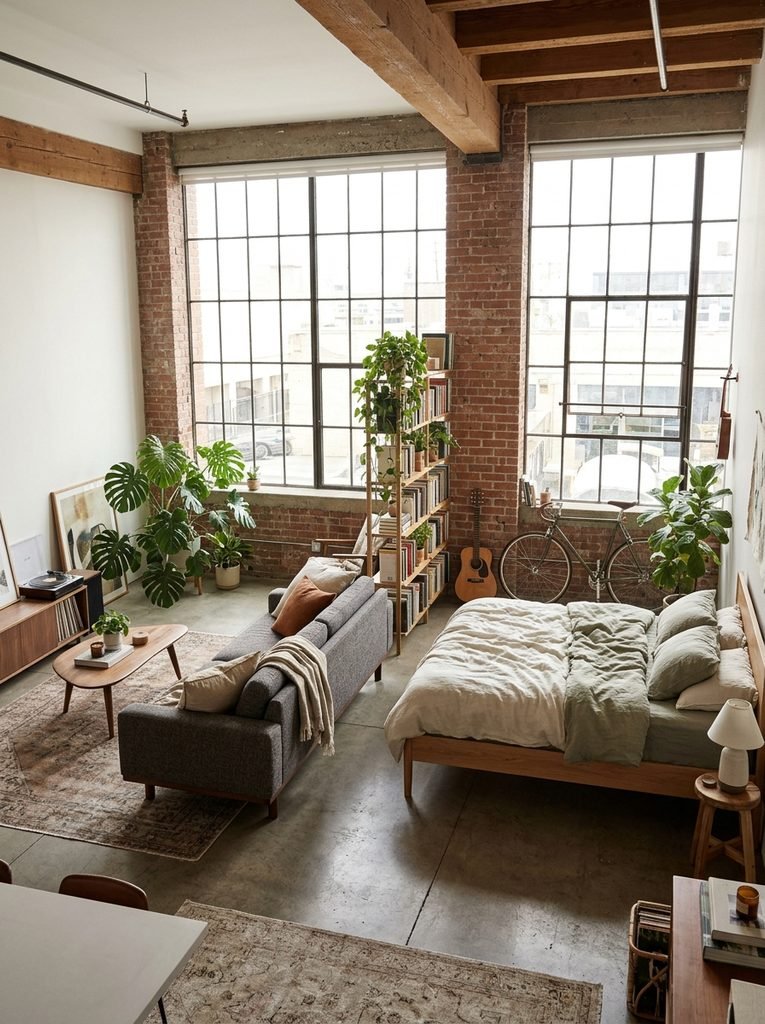
Install Floating Desks
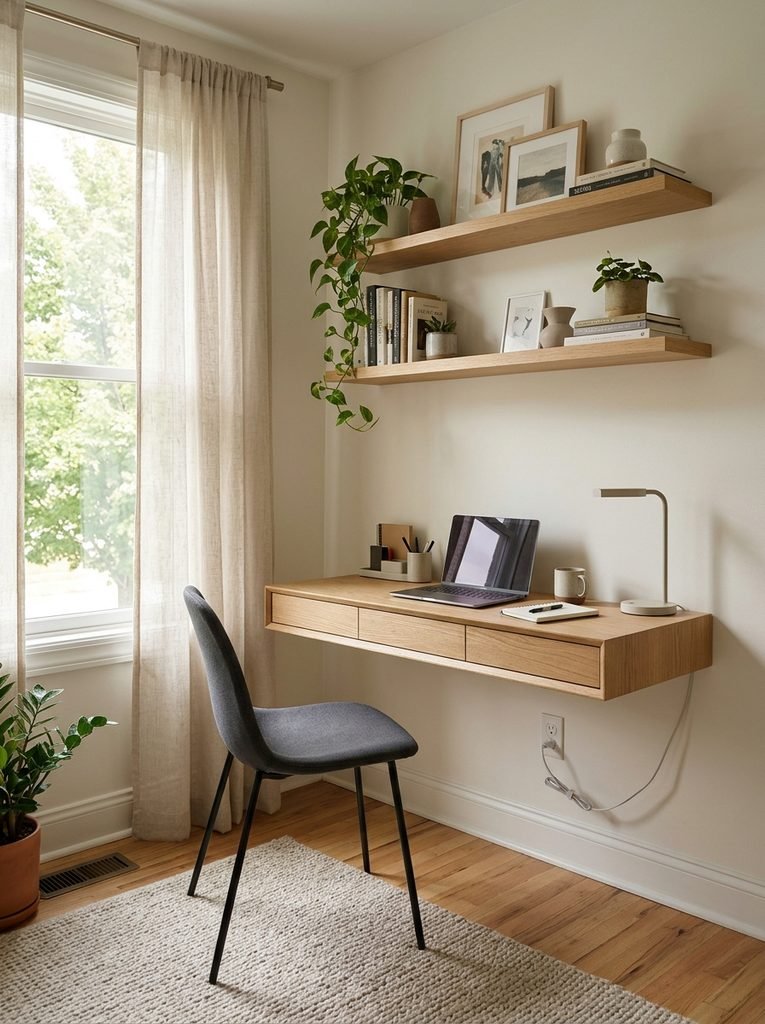
A floating desk creates a workspace without taking up floor space. Mounted to the wall, the desk frees the area beneath it and keeps the layout clean. A slim chair tucks fully under when the workday ends.
Wall-mounted furniture needs proper anchoring into studs or suitable hardware, and renters should confirm lease terms before drilling. Where drilling is not allowed, a slim console table or foldable desk serves the same purpose. Placement near a window supplies natural light for daytime work.
Styling Tips
- Placement near natural light helps daytime work
- Shelves above hold supplies off the surface
- Slim chairs tuck fully out of the way
- Works because it removes legs and bulk from the floor plan
Use Curtains to Divide Spaces
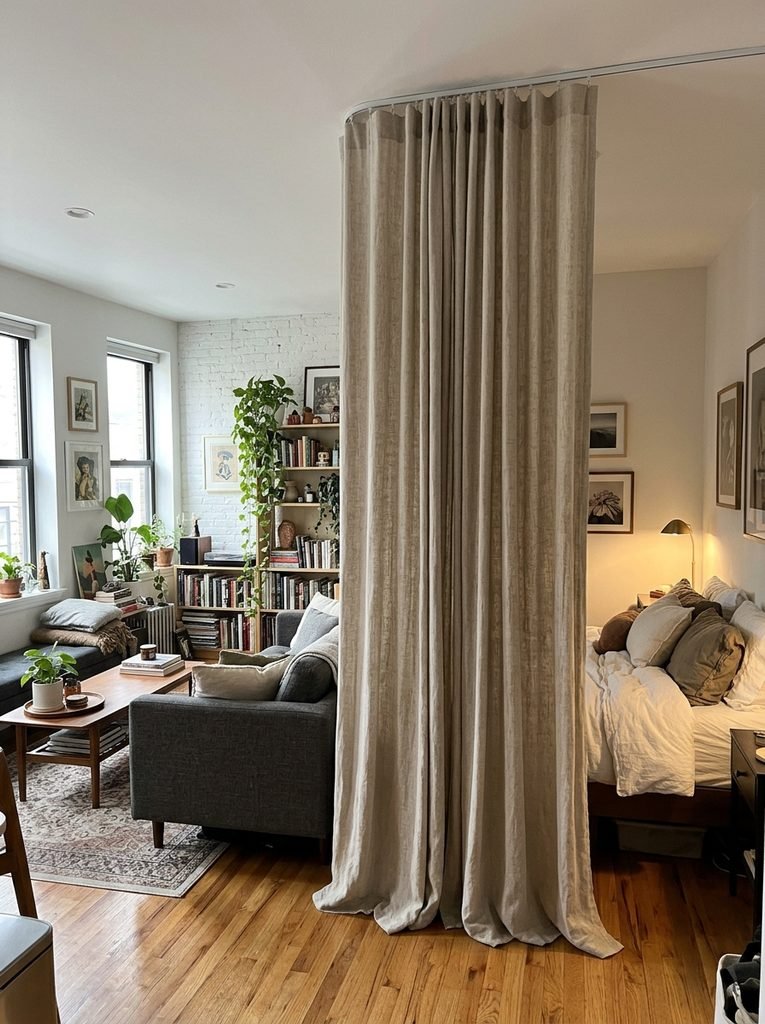
Curtains offer a flexible, affordable way to divide a studio. They add privacy around a bed while keeping the room light, and they open fully during the day. Fabric also softens the hard surfaces common in small apartments.
Light fabrics such as linen suit small rooms, while heavier weaves block more light and sound at night. Ceiling tracks give the cleanest result, though tension rods suit rentals where drilling is off the table. Renters can find more no-drill options in a guide to rental-friendly decor ideas that won’t damage walls.
Styling Tips
- Light fabrics like linen keep the room airy
- A matched palette helps the divider blend in
- Ceiling tracks give a clean hanging line
- Works because fabric adds privacy without permanent walls
Keep Decor Minimal but Intentional
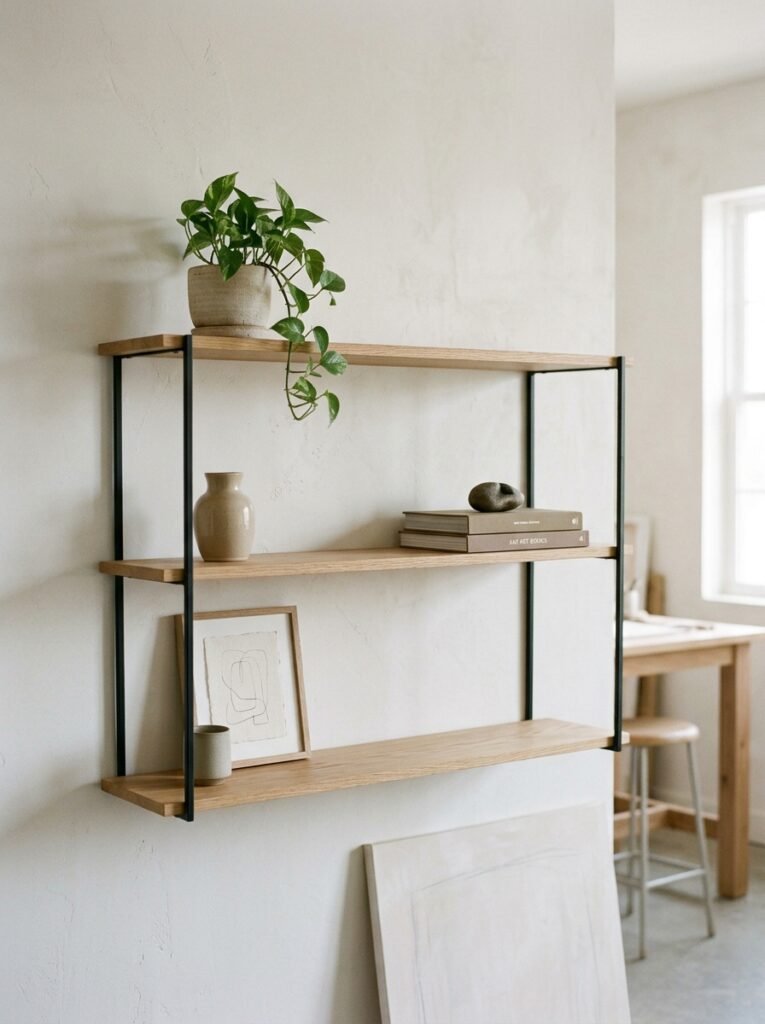
Minimal decor prevents the clutter that overwhelms studios fastest. A few meaningful pieces carry more personality than a crowded shelf of small objects. Clear surfaces also let the eye rest.
Curating works best by grouping items. A few pieces on a tray look deliberate, while scattered singles look random. Seasonal rotation keeps the room fresh without adding storage needs. Everything else belongs in closed storage.
Styling Tips
- Fewer decor items make each one count
- Statement pieces replace many small ones
- Clear surfaces keep the room calm
- Works because empty space reads as openness
Incorporate Warm Rustic Textures
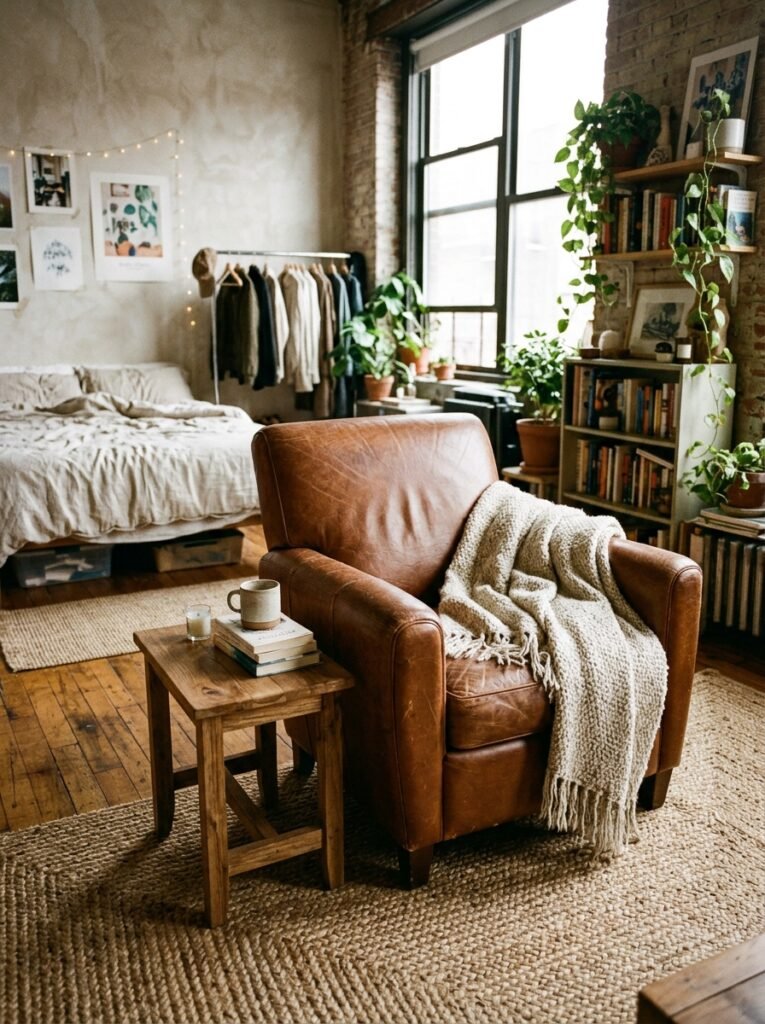
Rich textures keep a compact studio from feeling flat. Reclaimed wood, leather, jute, and hand-woven fabrics add warmth that paint alone cannot. Layered materials, such as a wool throw over a leather chair or a wooden table on a jute rug, give the room depth.
Restraint keeps the effect polished instead of heavy. Two or three textures repeated across the room look cohesive, while too many compete. Natural materials also age well and move easily from one apartment to the next.
Styling Tips
- Leather accents add richness
- Woven throws add softness
- Wood furniture grounds the palette
- Works because layered materials give the eye depth in a small footprint
Use Open Kitchen Shelving
Open shelving removes the visual weight of upper cabinets and makes a studio kitchen feel lighter. Dishes, glasses, and jars become part of the decor, and daily items stay within easy reach. Raw wood and metal shelves suit rustic and industrial looks alike.
Success depends on curation. Matching dishware and neat stacks look intentional, while mismatched clutter looks messy. Shelves near the stove collect grease, so regular cleaning is part of the deal. Rentals often limit cabinet changes, so freestanding shelving offers a simple alternative.
Styling Tips
- Organized shelves look intentional
- Matching dishes keep the display calm
- Small plants soften the lines
- Works because open storage removes bulky doors from view
Add Wall Hooks for Storage
Wall hooks reclaim floor space by using vertical surfaces. Coats, bags, hats, and kitchen tools stay within easy reach, and clutter never reaches the floor. Entryways, bedrooms, and narrow hallways benefit most.
Hardware finish turns hooks into decor. Brass, matte black, and natural wood each suit different palettes. Hooks should match the load, since heavy coats and bags demand screw-in or high-rated options. Adhesive versions suit lighter items, and each package lists a weight limit.
Styling Tips
- Hooks near the door hold bags and coats
- Neat arrangements read as a design feature
- Mixed materials add interest
- Works because it uses wall height instead of floor space
Choose Foldable Furniture
Foldable furniture adapts a studio to the task at hand. Collapsible tables, stackable chairs, and wall-mounted desks provide full function when needed and then disappear. The room moves from workspace to dining area to open lounge in minutes.
Stability and build quality matter, since folding pieces carry loads at their hinges. Simple designs avoid fiddly mechanisms that frustrate daily use. A designated storage spot, such as behind a door or beside a wardrobe, keeps folded pieces from becoming clutter.
Styling Tips
- Wall-mounted tables free the floor
- Stackable chairs store flat
- Simple designs last longer
- Works because furniture takes up space only while in use
Layer Lighting for Depth
A single overhead fixture flattens a studio. Layered lighting combines ambient, task, and accent sources, and each source can mark a separate zone. Floor lamps suit reading corners, under-cabinet lights suit kitchen counters, and dimmers soften the evening.
Bulb color shapes mood. Warm white bulbs, which carry the lower Kelvin numbers on the packaging, suit sleeping and lounging areas. Cooler white suits desks and kitchens. Matching bulb color within each zone looks consistent, and plug-in lamps need no electrician.
Styling Tips
- Floor and table lamps add pools of light
- Warm bulbs make evenings cozy
- Light in dark corners removes flat spots
- Works because several low sources create depth that one fixture cannot
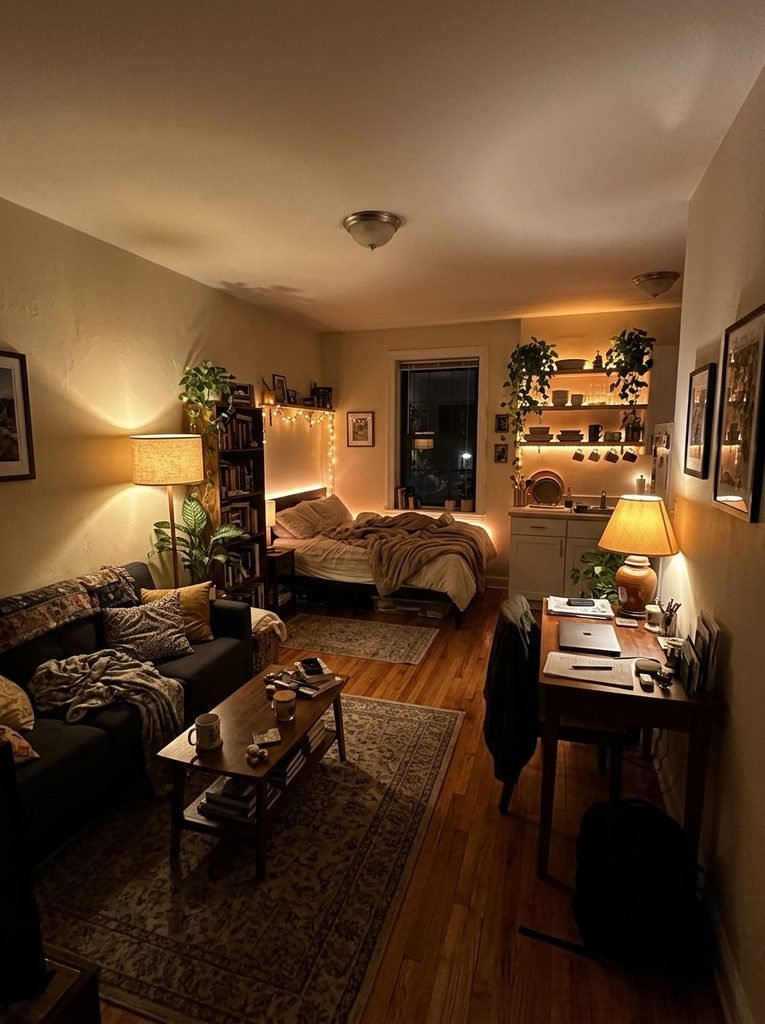
Use Glass Furniture
Glass furniture keeps a studio open by letting the eye see through it. Coffee tables, desks, and shelves in glass add function without the visual weight of solid wood or metal. Light passes through, and floor space reads as larger.
Practical trade-offs apply. Glass shows fingerprints and dust, so cleaning becomes part of the routine. Rounded corners and sturdy glass suit homes with children and active pets. Neutral decor pairs well, since the furniture itself stays quiet.
Styling Tips
- Glass tables keep sightlines clear
- Clean surfaces show the effect
- Neutral decor lets the glass recede
- Works because transparency reduces visual weight
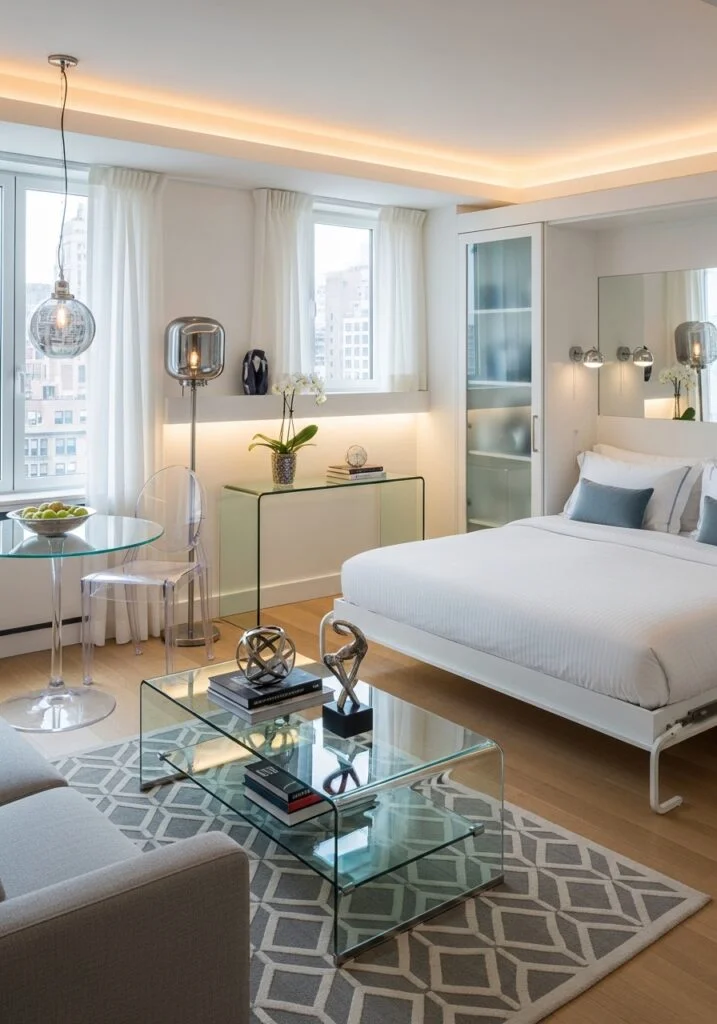
Create a Cozy Corner Nook
An unused corner can become a reading retreat. A compact accent chair, a slender floor lamp, and a soft throw create a room within a room. The nook gives the studio a quiet place that stays separate from the bed and desk.
Scale matters. Compact chairs with slim arms fit tight corners, and a small side table holds a mug or book. Warm lighting makes the nook inviting at night. A small plant adds softness without crowding the walkway.
Styling Tips
- Compact furniture suits tight corners
- Soft cushions add comfort
- Warm lighting makes evenings cozy
- Works because a defined purpose makes a small corner feel intentional
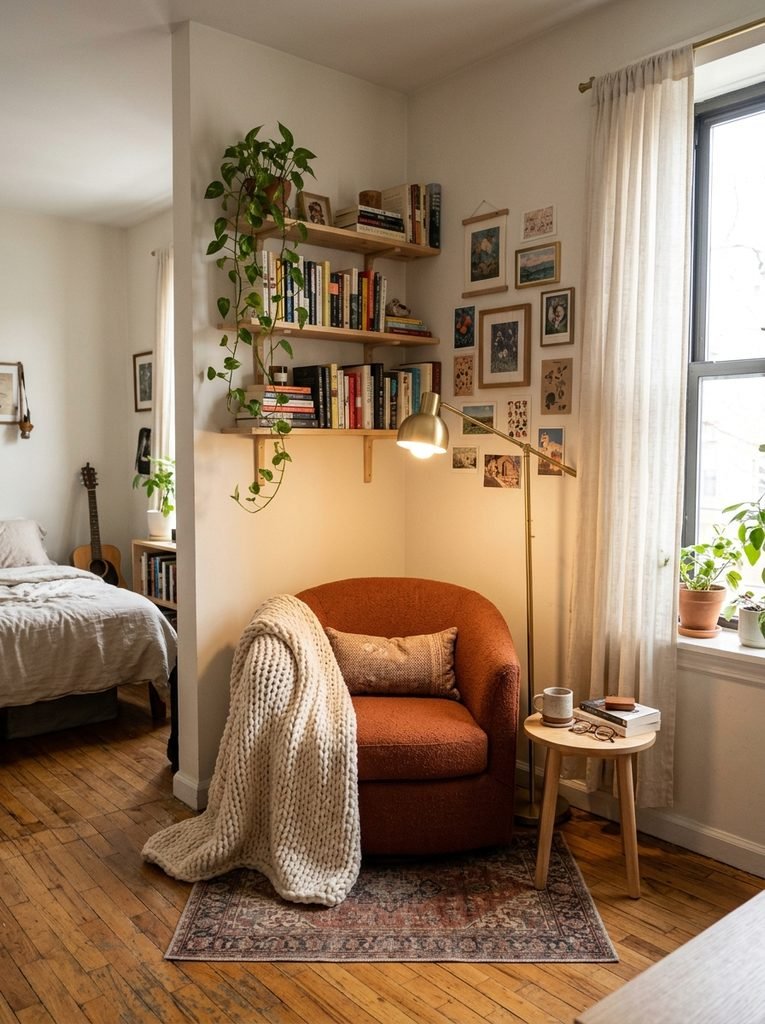
Use Sliding Doors
Sliding doors remove the swing radius of hinged doors. Closets, bathrooms, and partitions gain usable floor space, and furniture can sit closer to the opening. Glass and barn-style panels each add a distinct design element.
Track installation is permanent, so renters should ask the landlord first. Freestanding sliding screens offer a reversible alternative. Weight and wall construction affect which hardware fits, and professional installation suits heavy panels.
Styling Tips
- Sliding doors suit closets best
- Sleek finishes suit modern rooms
- Matching decor ties them in
- Works because a track replaces the swing space a hinged door needs
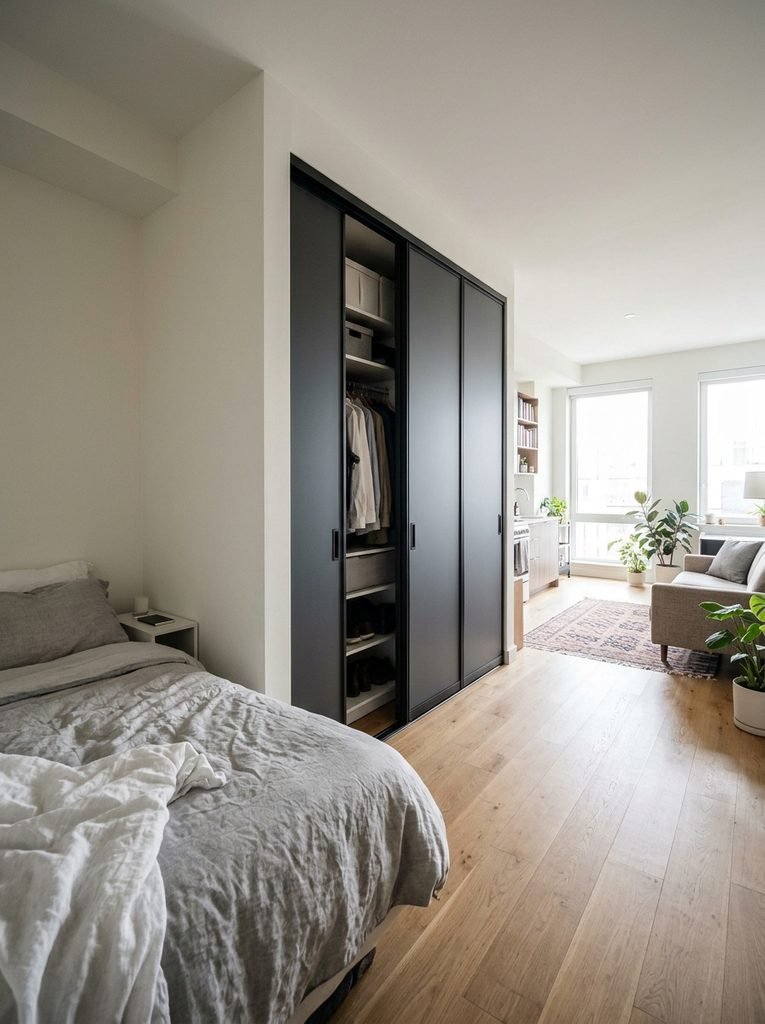
Keep a Cohesive Color Palette
A unified palette links the sleeping, living, and dining zones into one calm space. Repeated tones remove the harsh visual breaks that make a one-room layout feel fragmented. The eye travels across the room without interruption, and the studio reads as larger.
Both airy neutrals and deep, moody shades work, provided the scheme stays restrained. A few core colors repeated in textiles, art, and furniture do more than many unrelated shades. Subtle contrast, such as a darker accent, prevents the room from looking flat.
Styling Tips
- A restrained palette suits small spaces
- Repeated tones link each zone
- Subtle contrast adds depth
- Works because continuity reduces visual clutter
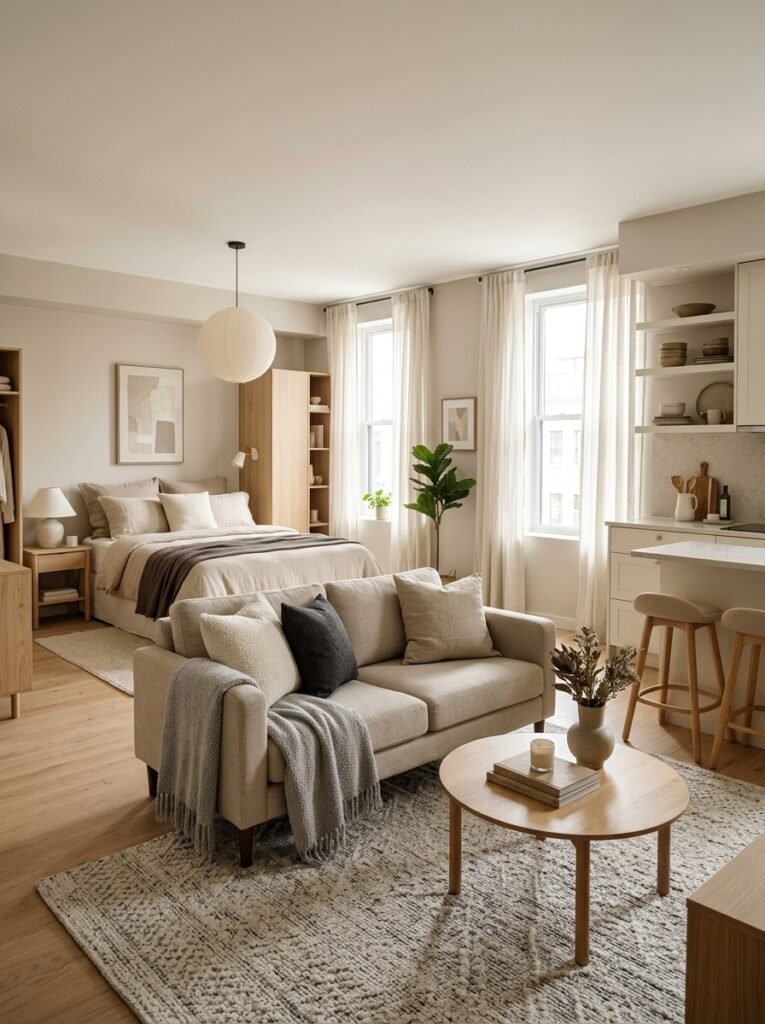
Add Greenery for Freshness
Greenery brings freshness and life to a studio. Small succulents, trailing ivy, and a statement plant by a window soften hard lines and add natural color. Plants work as living decor, adding texture that manufactured pieces rarely match.
Placement matters in tight rooms. Hanging planters use vertical space, and windowsill herb pots add function. Light needs vary by species, so plant choice should follow window exposure. Plants add atmosphere, but they should not be counted on to clean the air.
Styling Tips
- Small pots suit narrow sills
- Hanging planters save floor space
- Placement near windows supports growth
- Works because plants add life without using floor space
Conclusion
Designing a studio comes down to balance between function and beauty. Smart storage, flexible furniture, layered lighting, and a restrained palette each help one room serve several purposes. Every idea above supports the same goal: more usable space and a calmer look.
Starting with two or three changes works better than overhauling everything at once. Zoning, vertical storage, and a well-sized rug usually deliver the biggest change for the least effort. Each step can build on the last, so the studio improves gradually without a single large purchase.