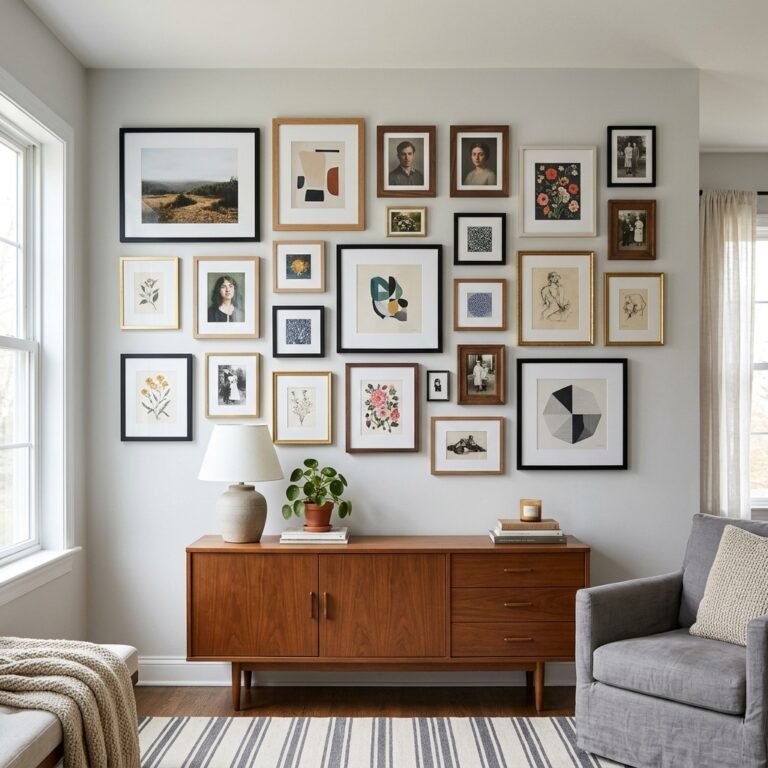
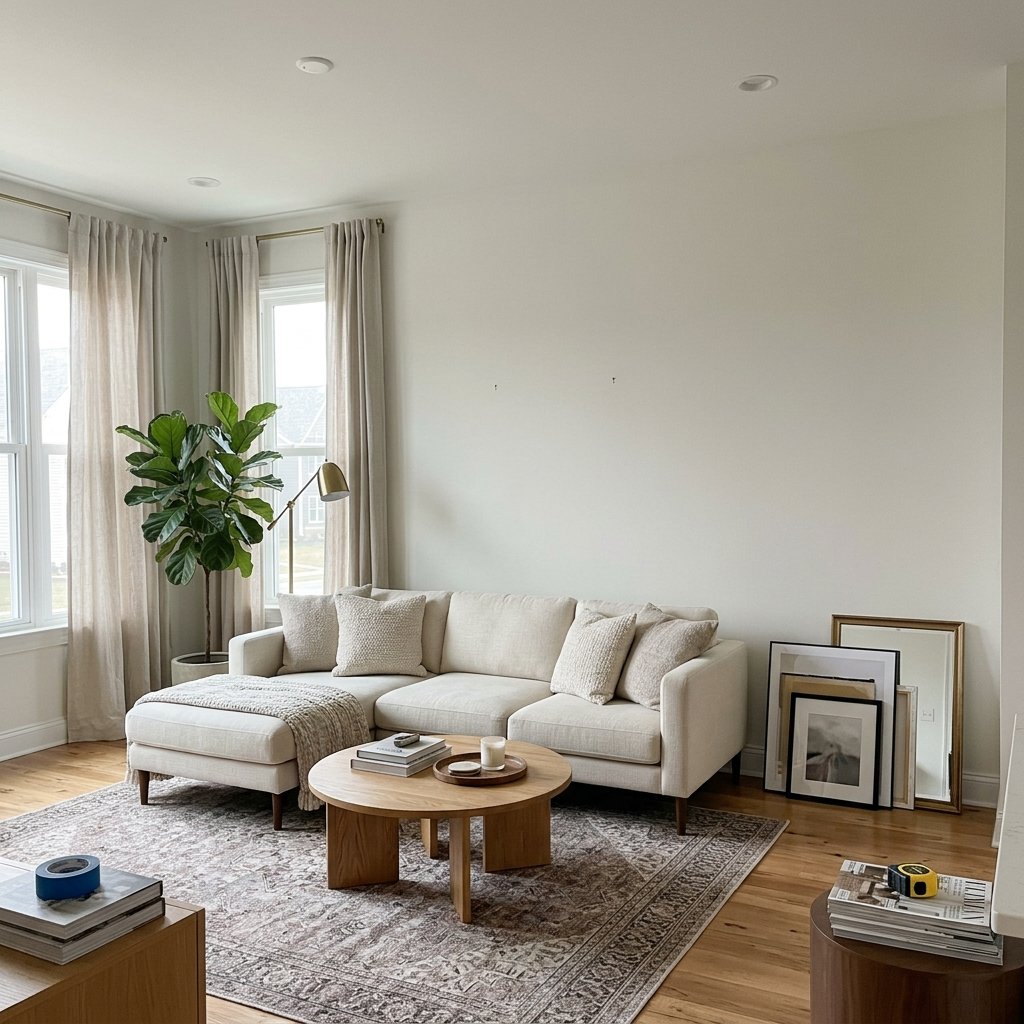
It is Sunday evening and you have just hung the last frame. The rug is down, the pillows are plumped, and the lamp finally sits where you wanted it. You step back into the doorway and snap a photo to send to a friend.
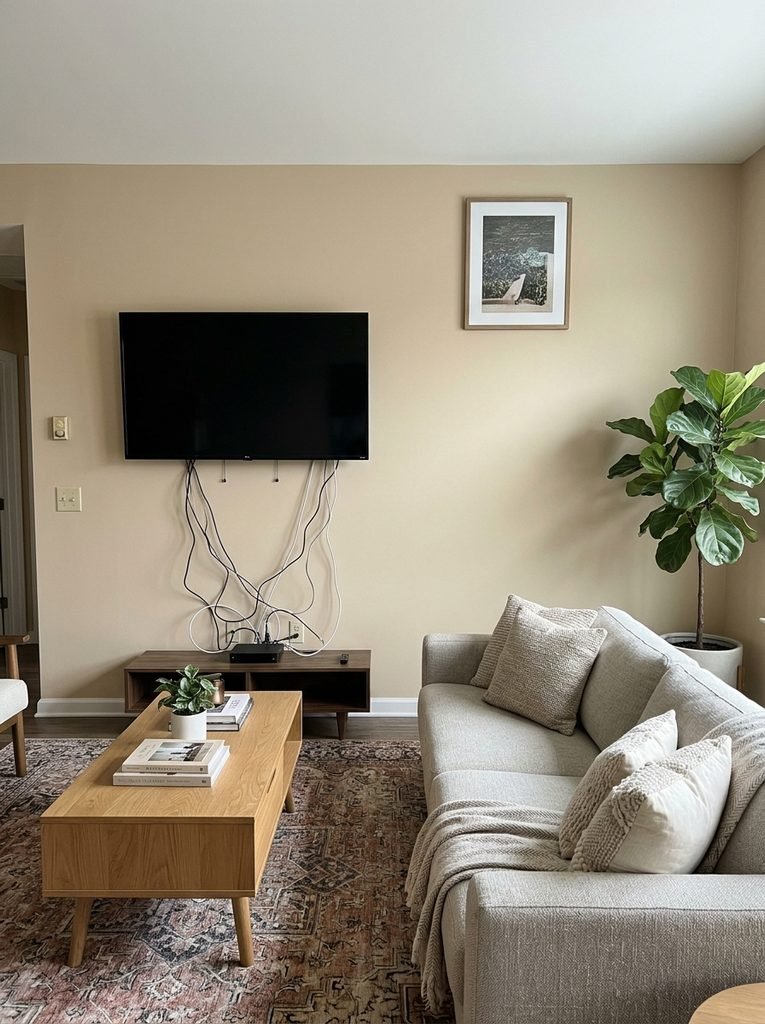
Then you look at the photo. Your eye skips past the new art and lands on a yellowed outlet plate, a white charger cord draped across the baseboard, and a black TV screen the size of a tabletop. The room is decorated. It still looks unfinished.
That gap has a cause, and it is not a shortage of decor. You shopped for the things you chose and ignored the things a builder chose for you. Those leftovers sit at eye level, repeat in every room, and carry more contrast per square inch than anything on your shelves. Below you will find how to spot them, what each fix costs, and which ones you can finish in an afternoon without hiring anyone.
Why a Finished Room Still Reads as Unfinished
Your eye does not rank objects by price. It tends to catch small, crisp, high-contrast shapes at the height where you stand and sit. Standing eye level sits around 57 to 60 inches off the floor, and seated eye level is closer to 42 to 48 inches. A beige switch plate on a white wall is tiny, but it is sharp-edged, it is right in that band, and it never moves.
Builders buy these parts by the thousand, at the lowest price that passes inspection. Nobody picks a switch plate to suit your sofa. The result is two design languages in one room: the one you built, and the one that shipped with the walls.
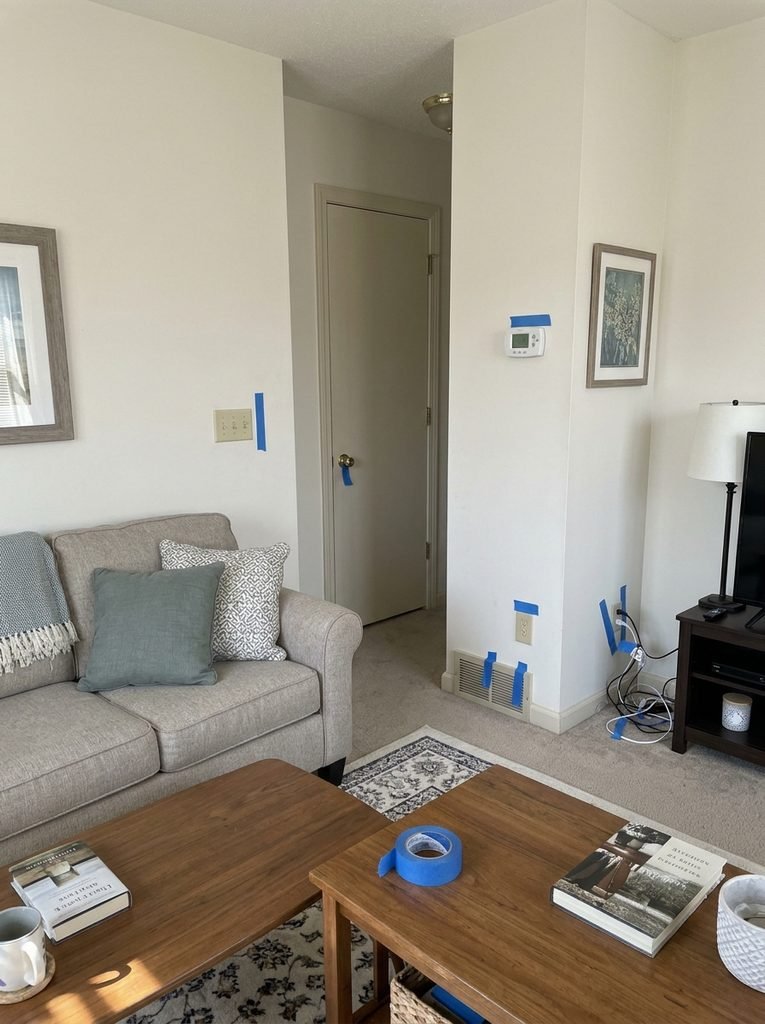
Run a quick test before you spend a cent. Tear off a roll’s worth of painter’s tape strips. Stand in the doorway, then sit on the sofa, and stick a strip on every item you did not choose: plates, vents, door knobs, cords, the thermostat, the TV frame. You will probably tag more than you expect. Anything at eye level, or next to a lamp or window, goes to the top of the list.
Outlet and Switch Plates: The Cheapest Fix in the Room
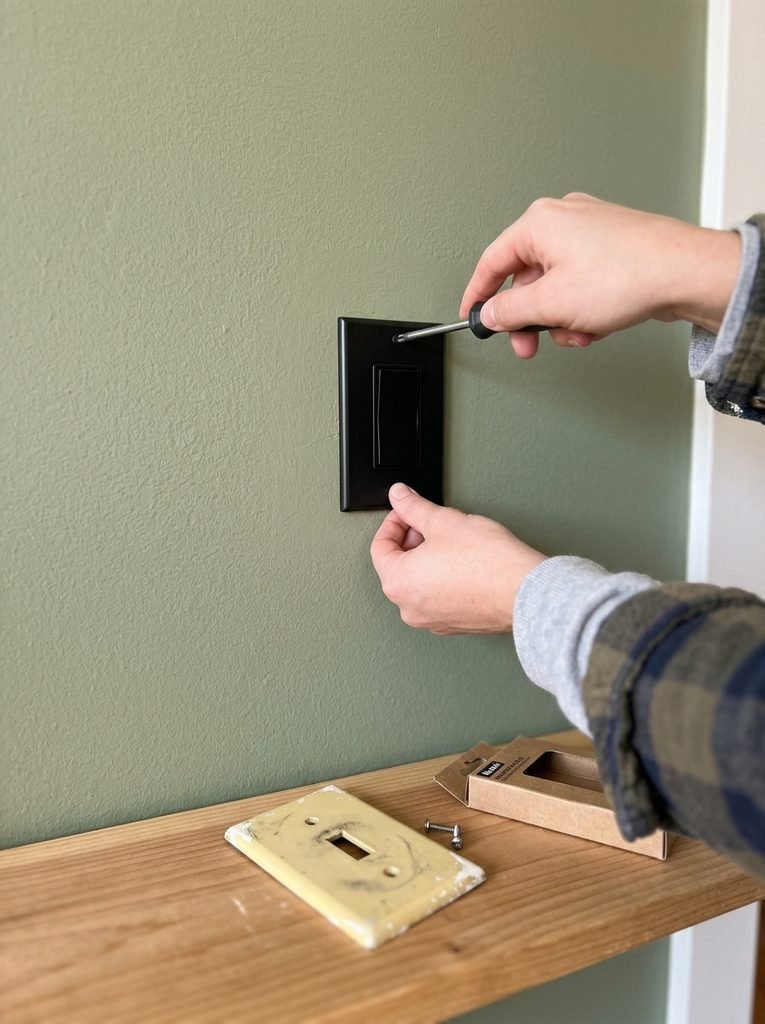
A standard wall switch sits roughly 48 inches off the floor, so its plate is one of the first things you see when you walk in. Plastic plates yellow with age, pick up paint ghosts, and collect fingerprints right where hands reach for the light. Replacements are cheap: a plain white plate is a dollar or two, a screwless snap-on runs about $4 to $8, and metal plates in brushed nickel, brass, or matte black usually cost $6 to $15 each. Prices vary by store, but even a whole living room rarely tops $60.
Check the switch before you buy anything. A classic toggle switch needs a plate with a narrow slot. A flat rocker, often called decorator style, needs a plate with a long rounded opening. They do not swap, and the wrong shape is the most common reason people return plates.
Two installation habits save frustration. First, if the plate sits crooked, the box behind it is probably tilted. Loosen both screws, level the plate by eye, and snug them gently, because overtightening cracks plastic. Second, a plate swap does not touch the wiring, but flip the breaker anyway while the plate is off, since the screw terminals on the side of the switch are exposed.
Then decide once per room whether plates should vanish or show off. A plate that matches the wall color disappears. A matte black plate on a white wall becomes a small graphic mark, so use it only if you repeat black somewhere else nearby, such as a lamp base or a door lever.
Door Knobs and Hinges Chosen for the Budget
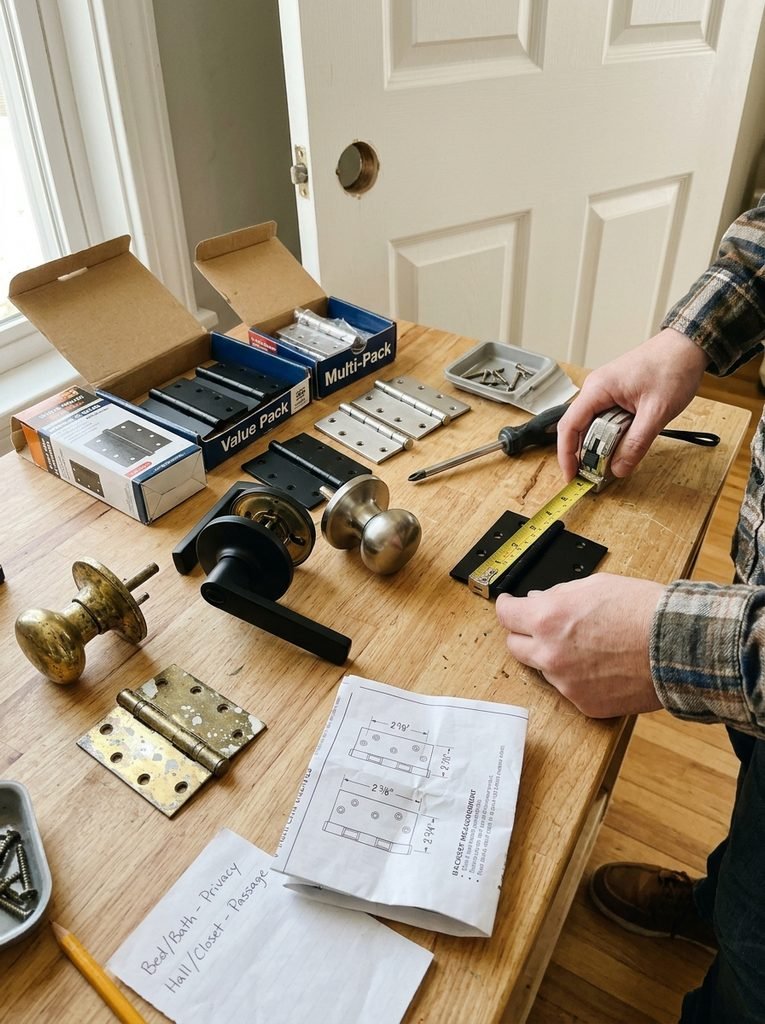
Interior doors get touched more than any piece of furniture you own. In many builder-grade homes the knob is thin, shiny brass or a pitted nickel, and the hinges wear several coats of old paint. Neither looks broken. Both look cheap, and both sit at hand height.
You can often skip the drilling. Measure the backset, which is the distance from the door edge to the center of the knob hole. It is almost always 2 3/8 or 2 3/4 inches. The hole through the door face is usually 2 1/8 inches. Most replacement sets include an adjustable latch that fits either backset, so the new knob drops into the old holes.
Match the function. Bedrooms and bathrooms take a privacy set with a lock, closets take a passage set that only latches, and a dummy knob does nothing at all. Buying the wrong type is the second most common return after the wrong plate.
Hinges need the right corners. Interior hinges are usually 3 1/2 inches tall, but the corners are either rounded at 1/4 inch or at 5/8 inch. Match the radius or the new hinge leaves a visible gap in the cutout. Replace one hinge at a time so the door stays hung and aligned.
Expect $12 to $40 per knob set and $3 to $8 per hinge. Start with the doors you can see from the main room, then work outward. Pick one finish for the whole floor, and echo it in your plates so the metal looks planned.
Cords and Chargers That Cut Across the Room
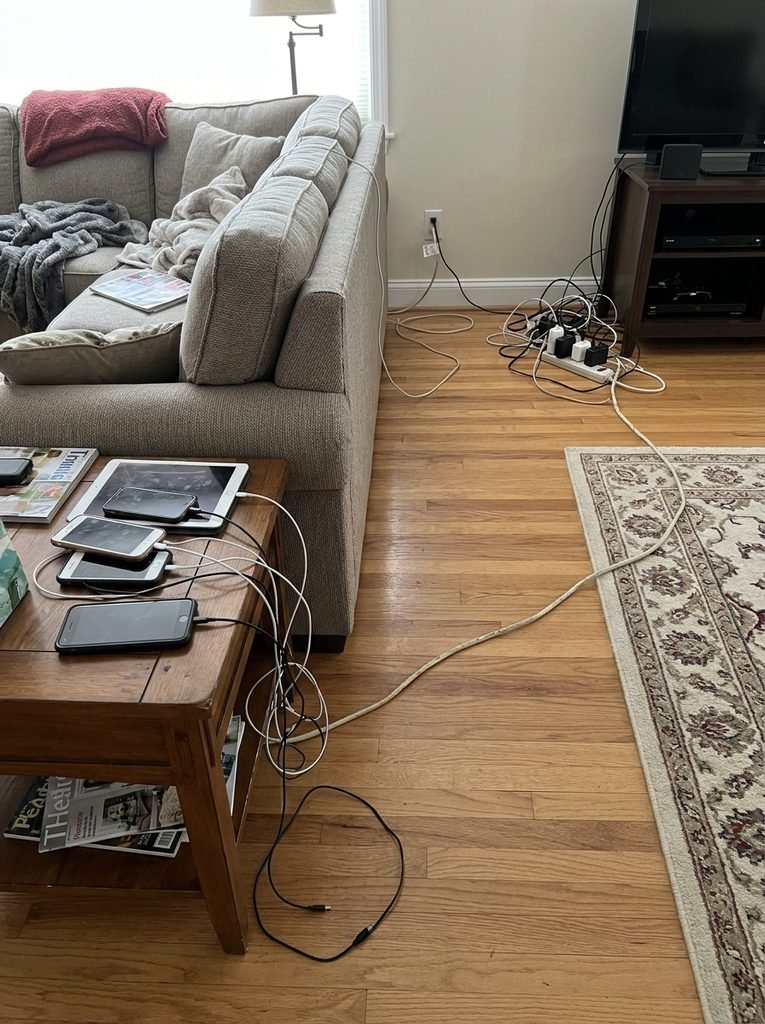
Cords are the one eye-level detail that actively moves around your room. They droop behind the sofa, loop across baseboards, and tangle behind the TV. Handle each situation differently.
The lamp cord behind the sofa. Run it along the back leg or the frame edge and secure it with adhesive cord clips every 12 to 18 inches. Wind the slack into a cord shortener rather than coiling it on the floor. If the cord crosses a baseboard, a paintable raceway kit covers it. Kits for a few feet of cord commonly cost $10 to $25, and painting the raceway the same color as the wall makes it nearly vanish.
The cord that wants to go under the rug. Do not let it. The U.S. Consumer Product Safety Commission warns against running extension cords under carpets, through doorways, or beneath furniture, and notes that a covered cord cannot shed heat, which raises the risk of fire. Read the details in CPSC’s extension cord safety guidance. If the outlet is on the wrong side of the room, shift the sofa 8 to 10 inches or ask an electrician about adding a wall outlet.
The power strip. A lidded cable box, usually $20 to $40, swallows the strip and the plug bricks. Pick one with openings at the ends so the strip can breathe, and do not stack strips inside it.
The chargers. Give phones one tray or one drawer slot near the entry. A single charging spot reduces the white cords trailing across end tables.
The Black Rectangle on Your Wall
A 55-inch TV is about 48 inches wide and 27 inches tall. That is the footprint of a large piece of art, except it is black, glossy, and switched off for most of the day. Against a bright white wall it is the highest-contrast object in the room.
You do not have to hide it. You have to soften the edges. Try these moves in this order:
- Narrow the contrast. A mid-tone wall behind the screen, such as a warm gray or muted green, makes the black frame recede. Paint only the wall behind the TV if you are not ready for the whole room.
- Break the block. Put a lamp or a plant on one side and art on the other, leaving 4 to 6 inches of clear wall around the frame so nothing looks crowded against the bezel.
- Test before you drill. Cut kraft paper to the TV’s size, tape it to the wall, and live with it for a day. You will spot balance problems immediately.
- Vent the boxes. Put the cable box and streaming gear in a cabinet with an open back or slatted door. Enclosed electronics run hot.
Lampshades That Show Too Much
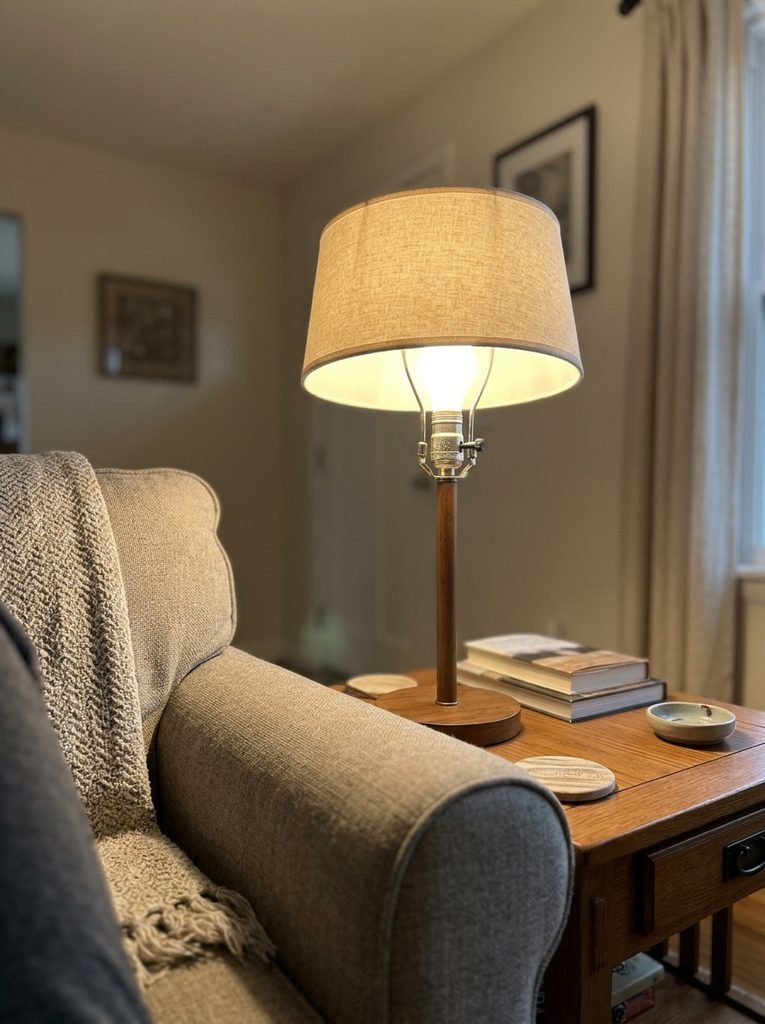
Sit on your sofa and look at the lamp beside you. Can you see the bulb? What about the harp, the metal U-shaped bracket that holds the shade? If so, the shade is too short or sits too high. A well-fitted shade’s lower edge falls at or just below the socket, so from a seated position you see glowing fabric and not hardware.
Shades also age. Paper shades dent, linen fades unevenly in a sunny window, and old lining turns amber. A replacement costs roughly $15 to $45 for a standard size, which is far less than a new lamp.
Before you shop, find out which fitter your lamp uses, because this is where most replacements fail. A spider fitter rests on the harp, a clip-on fitter grips the bulb itself, and an Uno fitter screws on under the socket. Buy a shade with the wrong fitter and it will not seat. Choose a lined shade for an even glow, since unlined fabric can show a hot spot where the bulb sits.
Vents, Thermostats, and Closet Doors Nobody Picked
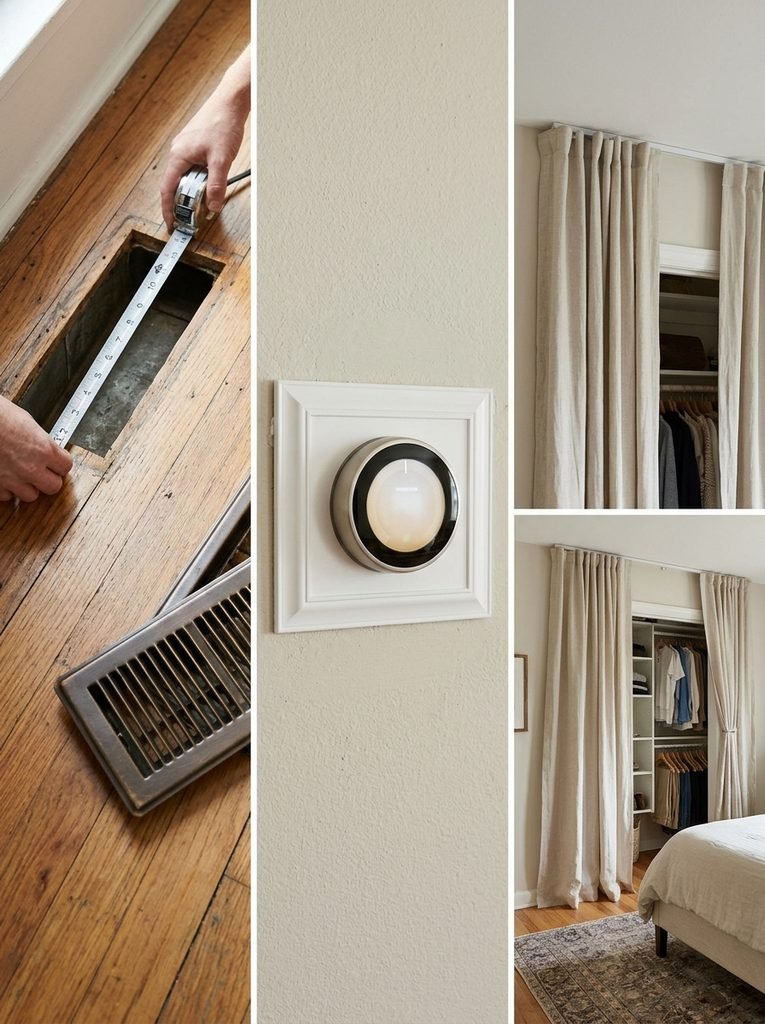
Vent covers. Measure the duct opening in the wall or floor, not the outside edge of the old cover. Common openings are 4 by 10, 4 by 12, 6 by 10, and 6 by 12 inches, and the cover is always larger than the hole. Covers run $8 to $25, and a floor register that sits in a walkway should be rated to hold weight.
The thermostat. An old thermostat often leaves a paint ghost or a rough patch of drywall around it. A trim wall plate, typically $10 to $20, covers the scar without touching the wiring. Leave smoke alarms alone, though. Never paint them or cover them with anything.
Bifold closet doors. They stay off their tracks, rattle, and tend to be the most dated surface in a bedroom. Take them down and hang a curtain on a ceiling-mounted track, letting the fabric overlap the opening by about 6 inches on each side. You get softness and easy access for much less than a new door.
Where to Start Tonight
Match the fix to the time you have. In an hour, swap every plate in the room. On a Saturday morning, replace knobs on the doors you can see from the sofa, and lay a paintable raceway along the worst cord run. In one afternoon, handle the TV wall and the lampshades. For a typical main room, the whole list usually lands between $100 and $300, depending on how many doors and plates you have.
This guide covers objects, not paint. If the contrast where your walls meet the trim and ceiling is still bothering you, that problem has its own fix in The Paint Color Mistake That Makes Small Rooms Feel Even Smaller. For the bigger styling errors, such as rug size and lighting, go deeper with Home Decor Mistakes That Make Your Space Look Cheap.
When the last strip of tape is gone, take the doorway photo again. Nothing in the picture will have changed except what you stopped noticing.
Frequently Asked Questions About Fixing Eye-Level Details
Are screwless outlet covers worth the extra money?
Yes, in sightlines you see every day, such as beside the sofa or next to the front door. A screwless plate snaps over a hidden mounting plate and costs about $4 to $8 each. Skip them where the wall surface is uneven or the outlet box sits recessed, because the cover can pop off.
Can I change an interior door handle without drilling new holes?
Usually, yes. Measure the backset, which is normally 2 3/8 or 2 3/4 inches, and the face hole, usually 2 1/8 inches. Most replacement sets include an adjustable latch that fits both. If your old strike plate is a different shape, a new one comes in the box and takes minutes to install.
How do I hide a TV cord without cutting into the wall?
Use a paintable surface raceway, which sticks to the wall and hides cords inside a flat channel. Paint it the wall color so it blends in. Do not run a regular power cord inside the wall, which breaks electrical code; an electrician can install a recessed outlet behind the TV instead.
What height should I mount a TV in the living room?
Aim for the center of the screen at seated eye level, about 42 inches off the floor. On a 55-inch TV that is 27 inches tall, so the bottom edge lands near 28 inches. If the screen sits much higher, you will tilt your neck, and glare from windows becomes easier to notice.
Is it okay to paint over old switch plates?
It is not worth it. Paint tends to gum up toggle slots and chip along the edges, and replacements cost a dollar or two. If you must paint one, take it off the wall and prime it first. Never paint the switch or the outlet itself.