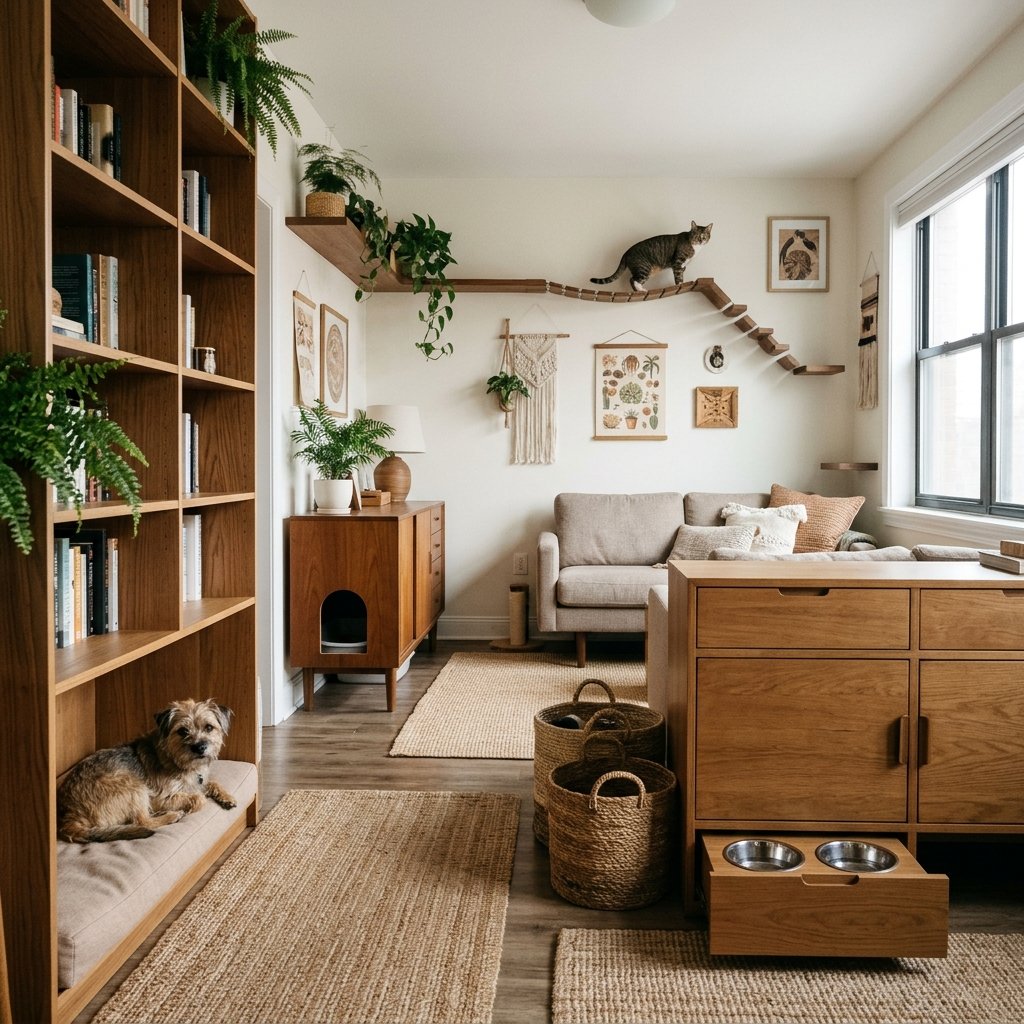
Add up what one medium dog needs on the floor. A 30-by-20-inch bed takes 600 square inches. A 12-by-20-inch feeding mat adds 240. A 16-by-12-inch toy basket adds another 192. That is just over seven square feet, and you have not counted the leash, the treat jar, or the water that slops across the tile.
Seven square feet sounds small until your whole apartment is 450. The real problem is where it sits. Pet gear lives at floor level, in plastic, in colors no designer would pick, right where your eye lands when you walk in. Most small-space advice stops at “buy a nice bed.” These fifteen ideas go further. Each one gives a piece of pet gear a home that reads as furniture, or moves it out of your sightline altogether.
This guide is about pets specifically. For general layout and storage, start with our small space home decor planning guide, then come back here to deal with the fur.
Feeding Stations That Stop Taking Over the Kitchen
Give the Bowls a Lipped Tray
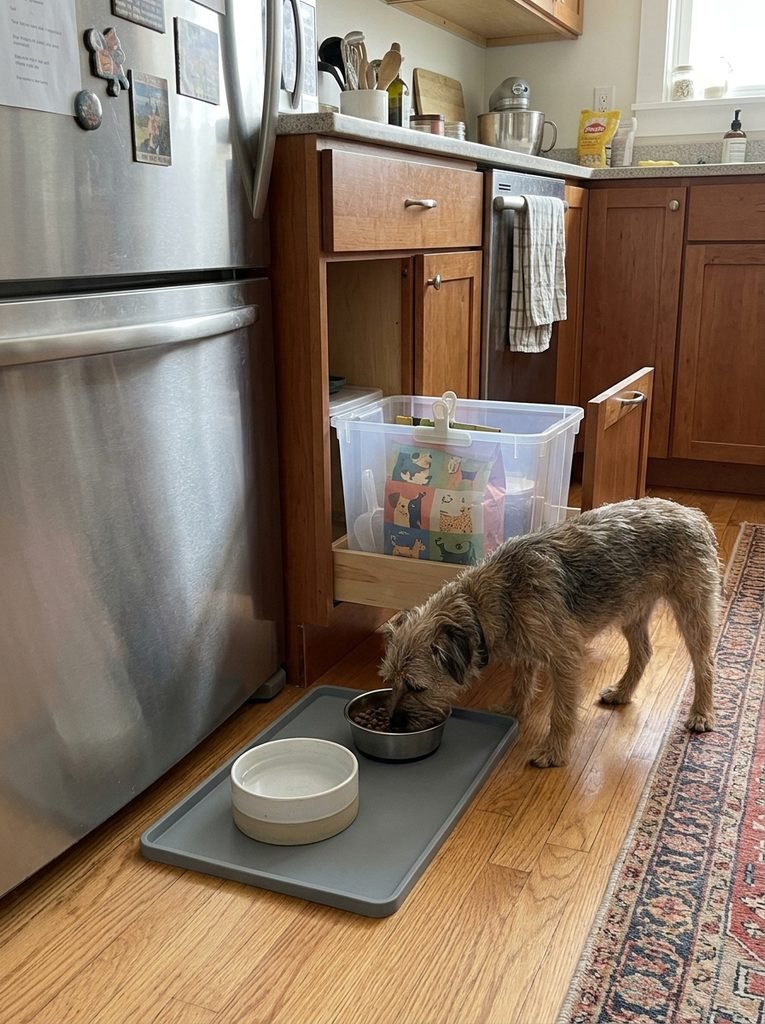
A water bowl is the most reliable puddle-maker in a small kitchen. Set both bowls on a silicone tray with a raised edge of about half an inch, roughly 12 by 20 inches, and the splashes stay on the tray. Tuck it in the gap beside the fridge or at the end of the counter run, not in the path between sink and stove. Pick gray or oatmeal so it reads as a mat. Wipe it daily, because a tray that never dries grows a slimy film. Choose one with non-slip feet and test it by shoving it with your shoe. A dog who pushes the bowl around while eating will chase a sliding tray across the whole kitchen, and that gets old quickly.
Store Food in Its Original Bag
Measure your actual food bag before you buy a bin. Bags are floppier and wider than the tubs sold to hold them, so tape the footprint on a shelf first. A lidded bin under the sink or inside a storage bench works well. Leave the kibble in its original bag inside the bin. That way you keep the lot number and expiration date handy if there is ever a recall. Scoop with a dedicated cup and a clip on the bag, since open kibble goes stale and attracts pantry pests in a warm studio.
Sleeping Spots That Look Like Furniture
Put the Bed Where Your Pet Already Naps
Spend one day watching where your pet actually settles. A bed forced into the “perfect” corner gets ignored, and your pet takes the sofa instead. Once you know the spot, buy a bed with a zip-off, machine-washable cover in the sofa’s color family. A spare cover means the bed is never out of service on laundry day. Look for a bolster edge, which gives dogs something to lean against and gives you a tidy outline. Keep the bed off the floor vent in winter, because direct heat dries out a dog’s skin and makes the cover smell warm and stale.
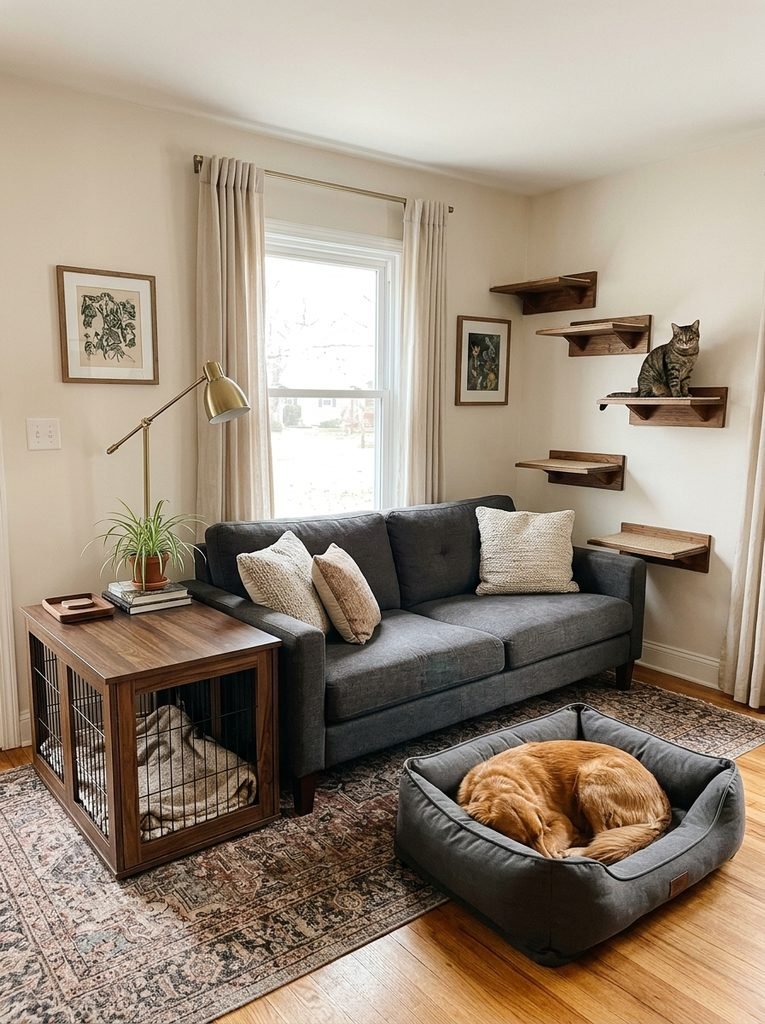
Let the Crate Double as an End Table
If your dog uses a crate, a furniture-style one with a flat wood top can replace a side table. A crate for a medium dog is commonly about 36 inches long and 24 inches wide, which is generous for a tray, a few books, and a plant you have checked for toxicity. One catch: do not put a plugged-in lamp on top. The cord hangs within chewing reach, and a knocked lamp is a fire risk. Use a wall sconce or a floor lamp behind the sofa instead. Also check that the top is flat and solid rather than a wire grid, and that a tray cannot slide off when the dog shifts inside.
Give the Cat a Route Up the Wall
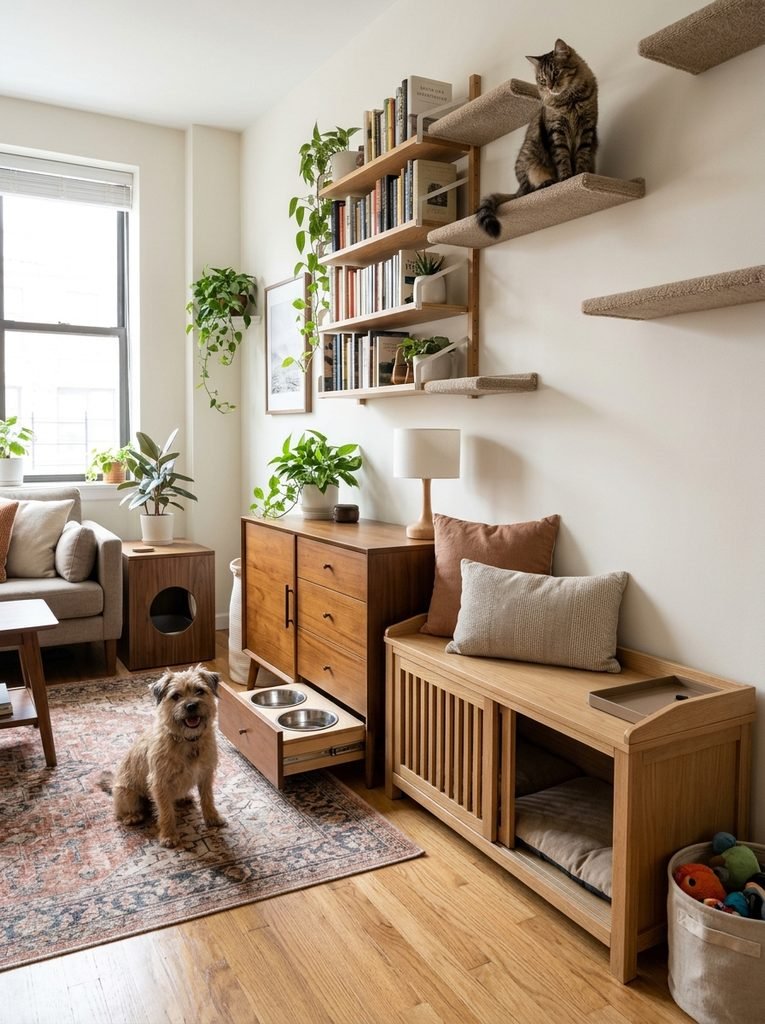
Cats in small apartments want height more than floor. Stagger wall shelves 10 to 12 inches deep, about 12 to 16 inches apart vertically, so they work like stairs. Start the first one near the sofa arm, not five feet up, so older cats can use it. Screw each shelf into a stud. A jumping cat lands with more force than its weight, and drywall anchors will pull out. Renters can use a floor-to-ceiling tension pole with platforms instead. Leave at least 20 inches of clear space above the top shelf so the cat is not jammed against the ceiling, and keep it away from curtains and blinds, where cords can tangle a paw.
Litter, Leashes, and Muddy Paws
Hide the Litter Box Without Trapping the Cat
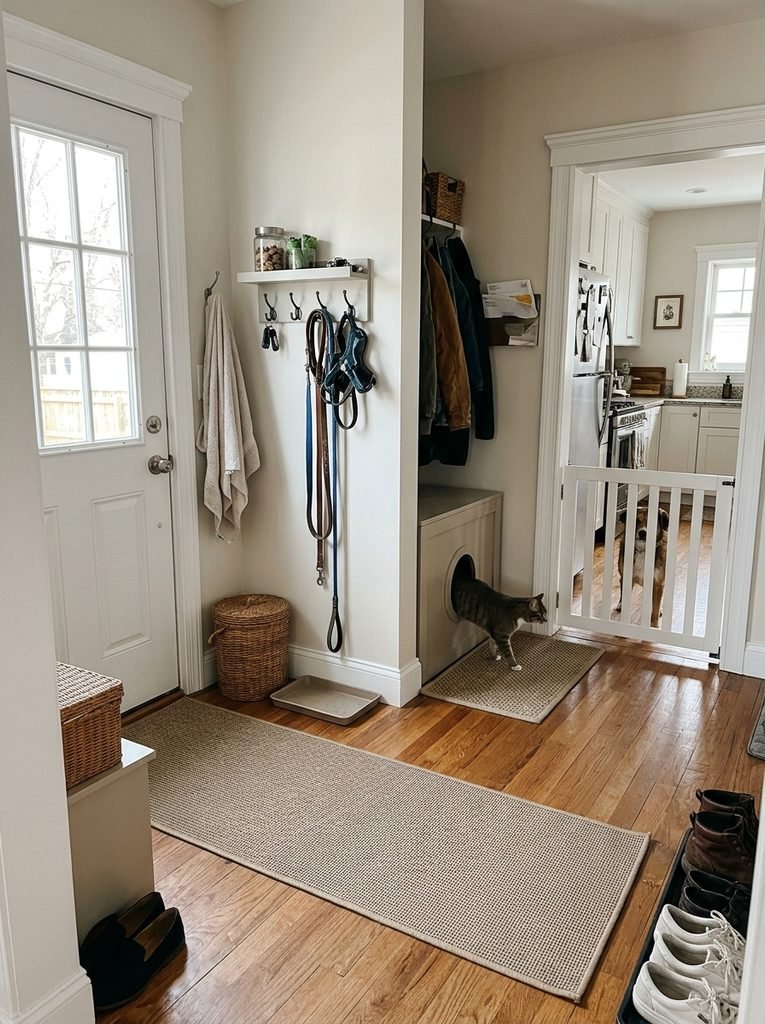
A common guideline says the box should be about one and a half times as long as your cat, measured from nose to the base of the tail. Many store-bought boxes run around 18 inches, which is too short for a big cat. If you build the box into a cabinet, give it an opening about 8 inches wide, add vent holes, and place it where you pass daily. A hidden box gets scooped less often, and cats stop using a dirty one. Put a textured mat about 24 inches long at the exit, because it catches litter from the paws before it spreads to the floor. Replace the mat when the surface flattens, usually every few months.
Hang the Leash Where Wet Fur Drips
Mount a hook rail beside the door at about 52 inches. A doubled six-foot leash hangs near the 16-inch mark, high enough that it never drags on the floor. Add a shelf 4 inches deep above it for waste bags and a treat jar. Put a tray below to catch drips on rainy days. A rail with a shelf commonly costs $15 to $40, and it replaces the pile of leash, bags, and keys that tends to grow on the nearest chair. Mount hooks into studs or use heavy-duty anchors, since a lunging dog can rip a leash hook out of drywall.
Make a Paw-Wipe Landing Strip
Lay a 2-by-6-foot washable runner just inside the door, with a rubber backing so it grips the floor. Hang a towel on a hook above it and keep wipes in a lidded basket. Wipe paws on the runner, and the rest of your rug stays clean. Machine-wash the runner weekly. If your entry is too narrow for six feet, use a 2-by-4 and put the basket on a shelf. In snowy or rainy months, keep a second towel on the radiator so there is always a dry one when the first is soaked.
Mark Dog-Free Zones with a Gate That Matches the Trim
A hinged white gate across a galley kitchen entry keeps a dog off the stove zone and out of the trash. Measure the doorway at the baseboard, because baseboards add half an inch to an inch to each side. Most pressure-mounted gates adjust across roughly 28 to 36 inches. Never use a pressure-mounted gate at the top of stairs. Pick one with hardware mounting there instead. In a studio, a gate also works across a closet or bathroom door you want to keep closed to a curious puppy, without shutting the room off from airflow.
Fabrics and Floors That Handle Fur and Claws
Choose Tight Weaves Over Loops
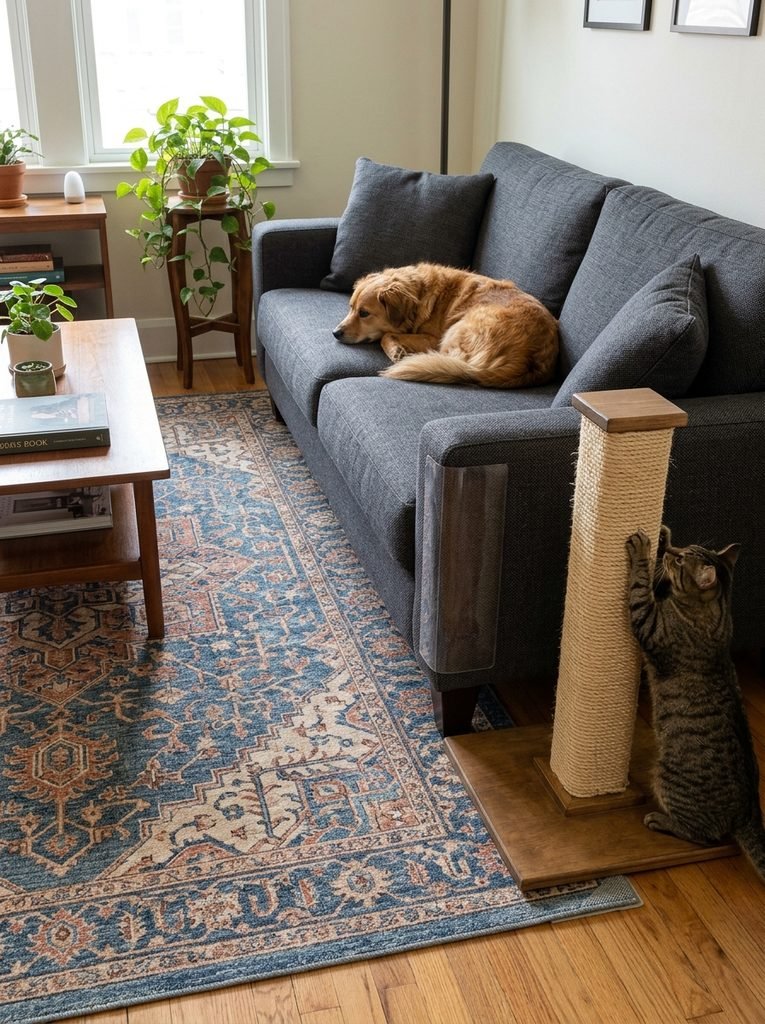
Claws snag loops. Bouclé, chenille, and looped linen pull into long threads within weeks, while tight-weave performance fabric and microfiber shrug off scratching. Leather resists snags but will show scratches. Color matters as much as weave: hair is invisible when the sofa is close to your pet’s coat and obvious when it contrasts. A black lab on an oatmeal sofa is a daily vacuum job. If your sofa is already a problem, a washable slipcover often runs $60 to $200. Check the seams when you buy: slipcovers that bunch at the arms look sloppy, so look for ones with elastic straps that tuck into the cushion gaps.
Pick a Low-Pile Rug in a Pattern
Keep rug pile under half an inch. Shag traps hair and gives claws something to catch. A busy pattern in a mid-tone hides fur and paw prints far better than a solid cream. Machine-washable rugs in a 5-by-8 size are easy to find. To pull hair out, drag a rubber squeegee or a damp rubber glove across the surface. Both lift hair into piles that a vacuum often leaves behind. Add a thin grip pad under the rug so it does not shift when a dog skids across it, especially on hardwood or tile.
Park a Scratching Post at the Spot the Cat Already Targets
Cats scratch near where they sleep and where you walk by. Put a post right at the sofa corner your cat is already working on. Choose one at least 30 inches tall so she can stretch fully, with a sisal wrap and a base wide enough that it does not wobble. A wobbly post gets ignored. Cover the sofa corner with clear guards for a few weeks while the habit shifts to the post. If your cat ignores a new post, rub it with a little catnip or dangle a toy from the top for a few days. Cats often need a nudge before they accept a new spot.
Safety Details That Hide in Plain Sight
Rotate Toys Out of a Closed Bin
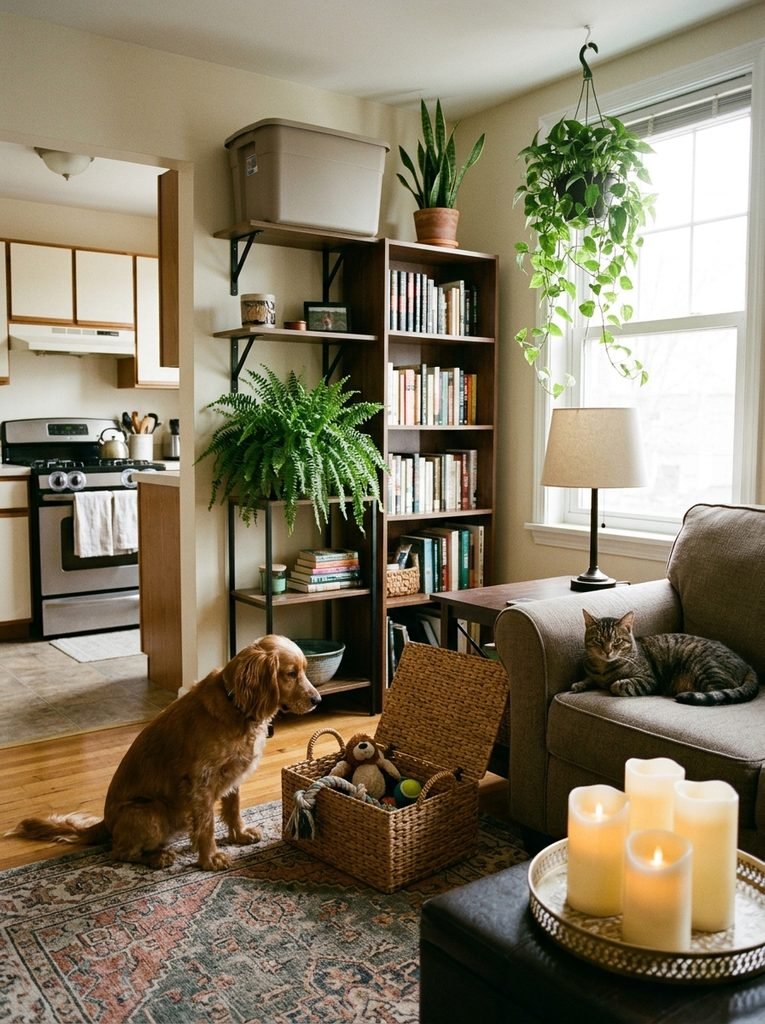
A toy basket that overflows is the fastest way to make a small room look messy. Keep three toys out at a time in an open basket at nose height, and store the rest in a closed bin on a high shelf. Swap the three every week. Your dog treats the rotation as new toys, and the floor stays clear. Pick a basket with a flat bottom and handles, so you can carry it from room to room.
Swap Open Flames for Flameless Candles
The National Fire Protection Association notes that pets can bump into, turn on, or knock over cooking equipment, candles, and lamps. Read the full list in NFPA’s pet fire safety tip sheet. In a small apartment, flameless LED candles give you the glow without the risk. Put covers on stove knobs if you have a counter-surfing pet, and tuck lamp cords behind furniture so they are out of chewing reach.
Check Every Plant Before You Buy It
Search the ASPCA’s toxic plant list for each species before it enters your apartment. Lilies are especially dangerous for cats. Pothos and snake plants, common apartment staples, appear on that list as mildly toxic, so keep them on a high shelf or in a room your pet cannot enter. Hanging planters work if they hang well above a cat’s jumping range. Safer choices exist, and the list is searchable by plant name.
Where to Start
Rank the pet gear by how often you trip over it. Anything that sits in a walking path goes first, whether that is the water bowl, the litter box, or the leash pile. Then deal with whatever smells, then whatever sits at eye level. If you have no obvious place for a bed or a litter cabinet, the single most wasted corner in a small home is covered in our guide to the corner that wastes the most space.
Frequently Asked Questions About Small Apartments and Pets
Where should I put a litter box in a studio apartment?
Choose a spot away from the food bowls and the bed, ideally in the bathroom or a corner with a draft. Cats dislike eating near the box. If you use the bathroom, prop the door with a stopper so your cat is never shut out, and keep the box at least a few feet from the toilet.
How often should I wash pet bed covers?
Wash them every week or two if your pet sleeps there daily. Use a warm cycle and dry them completely, because damp fabric develops a musty smell fast. Keep a spare cover so the bed is never out of service. Check the label for fabric-specific heat limits.
Will a pet gate fit a doorway that is not standard width?
Often, yes. Most pressure-mounted gates adjust across roughly 28 to 36 inches, and extension kits add several inches more. Measure at the baseboard, where the opening is narrowest, and measure again at the top of the frame. If the gap is wider than the gate allows, buy a model sold with extensions.
How do I keep a small apartment from smelling like a pet?
Start at the source. Scoop litter daily, wash soft bedding weekly, and open two windows for ten minutes to create a cross-breeze. Skip heavy air fresheners, which mask odor and can bother sensitive animals. Vacuum fabric furniture weekly, since hair and dander hold smells long after the pet leaves the room.
Can renters install cat shelves without damaging walls?
Yes, with a floor-to-ceiling tension pole that has platforms. It presses between floor and ceiling without screws. Check your ceiling height first, because many poles fit only 7 to 9 feet. Add a non-slip pad at the base so it does not mark the floor. Skip adhesive shelves, which cannot hold a jumping cat.