15 Kids Room Ideas That Grow With Your Child
You paint the nursery. You find the perfect crib. Somebody gifts you the animal wall decals and honestly, it looks adorable.
Two years later your kid announces that animals are for babies.
So you redo it. New bed, new bedding, new wall stickers, and a small pile of perfectly good furniture nobody needs anymore. Three years after that, homework becomes a thing, and the whole room has to shift again. Then the tween phase arrives and suddenly everything you chose is embarrassing.
Most parents I know have been through at least two rounds of this. It’s expensive, it’s tiring, and the frustrating part is that it’s almost always avoidable.
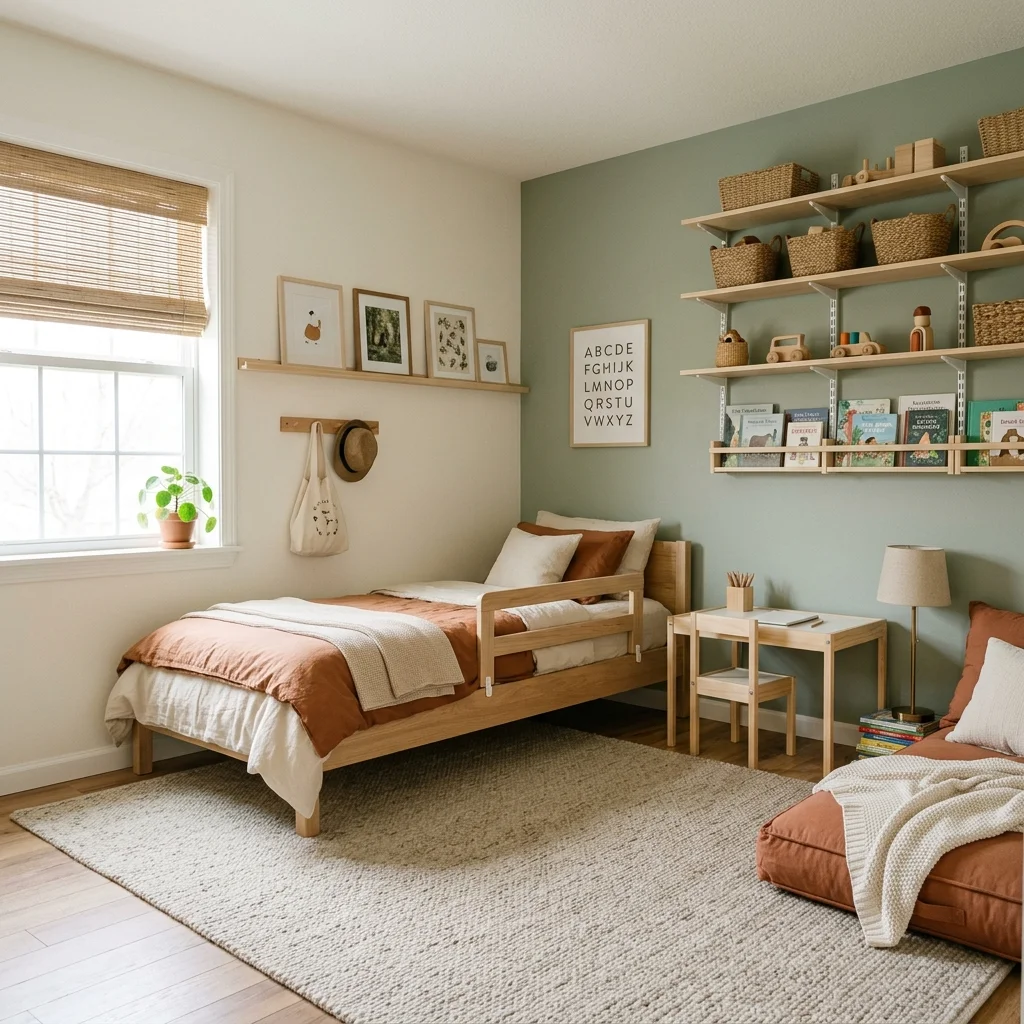
A kids room that grows with your child isn’t a room that magically stays relevant. It’s a room built in layers, where the cheap layer is the one that changes and the expensive layer stays put for a decade. Once you see the room that way, the decisions get a lot easier and a lot less costly.
Here’s how I’d approach it, plus fifteen specific ideas that keep working as your child gets older.
Split the Room Into Two Layers Before You Spend Anything
Everything in a kids room belongs to one of two groups.
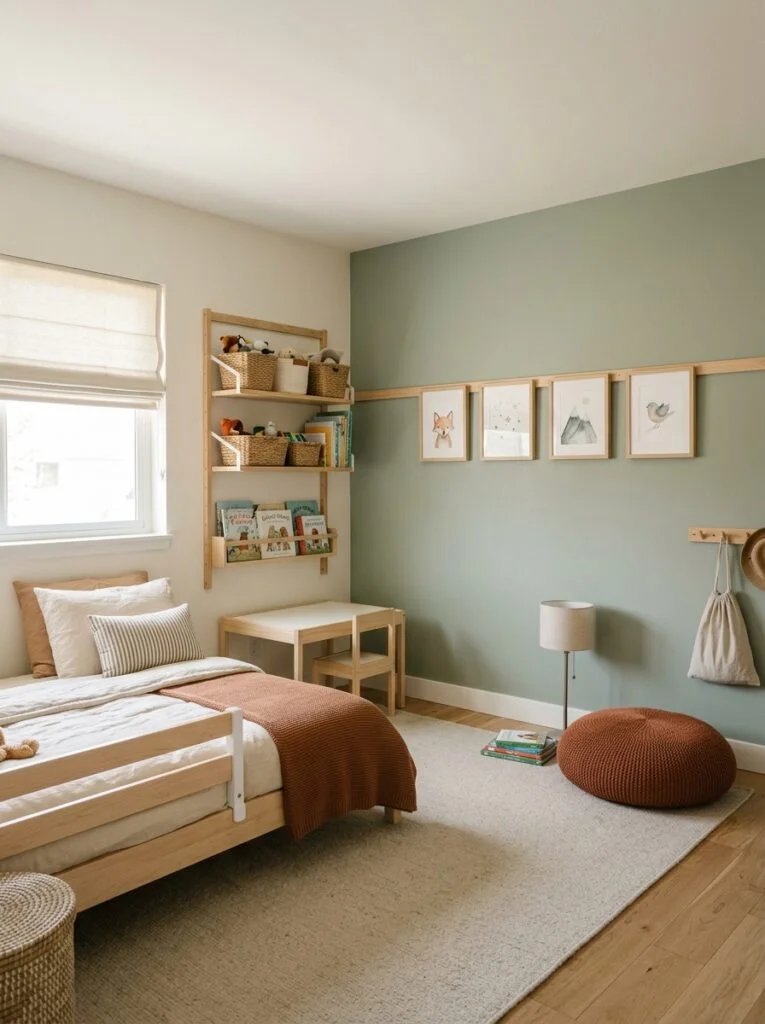
The bones are the things that are expensive, heavy, or annoying to replace. Bed frame, mattress, wardrobe or dresser, shelving, wall color, flooring, lighting positions. These should be chosen for the oldest version of your child you can picture. Boring is fine here. Boring is the point.
The skin is everything cheap and quick. Bedding, cushions, posters, wall art, bins, curtains, that one plush thing they carry everywhere. This is where the dinosaurs live. This is where the personality goes.
The mistake almost everyone makes is backwards. Trends go into the bones (the race car bed, the castle mural, the built in themed desk) and the money goes into things that will not survive the next phase.
Get the layers the right way round and a room can genuinely take a child from toddler to teenager with a few refreshes along the way. Nothing structural. Just new textiles and a different set of things on the shelves.
Where the Money Usually Gets Wasted
Before the ideas, the short list of things I’d think twice about.
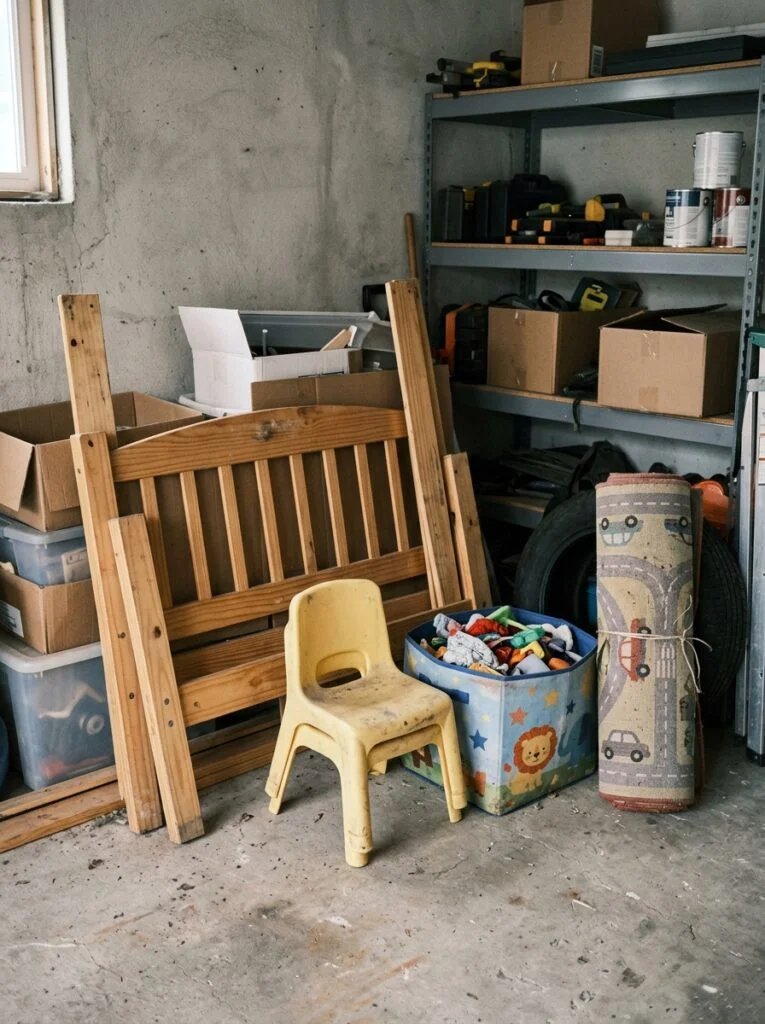
- Toddler beds. They’re cute and they get roughly two years of use. A standard twin with a removable guardrail does the same job and then keeps going.
- Themed built ins. Anything permanently shaped like a car, castle, or spaceship has a very short shelf life and no resale value.
- Character bedroom sets. Matching furniture printed with a licensed character dates faster than almost anything else in the room.
- Tiny furniture. Miniature chairs and play tables get outgrown fast. One or two is lovely, a full set is a storage problem.
- Wall decals on a wall you’ll want to repaint. Some peel cleanly. Many take paint with them. Test one in a corner first.
- A rug that’s too small. Small rugs make floor play awkward and never quite look right under a bed later.
None of this is a disaster. It’s just money that could have gone into a mattress or a decent wardrobe instead.
Three Fast Wins If All You Have Is a Weekend
If you’re mid phase right now and something feels off, start here.
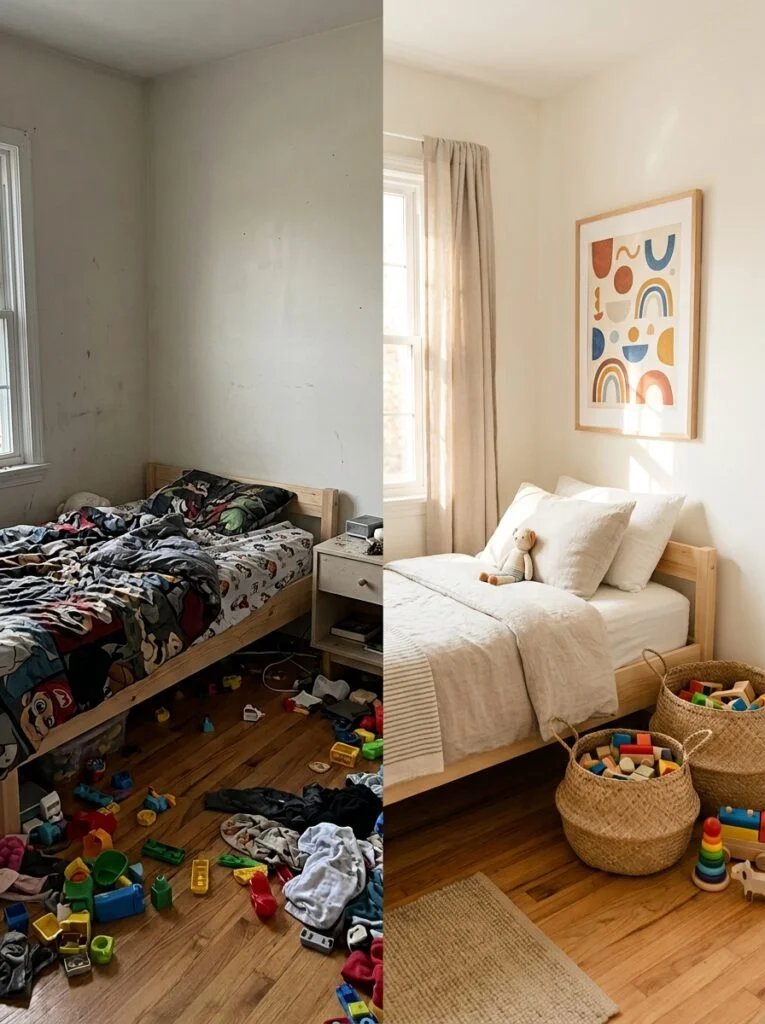
Swap the bedding and add one large piece of art at your child’s eye level, not adult eye level. Instant reset, very little money.
Move the bed so it isn’t floating awkwardly in the middle of a wall. Corners and clear sightlines make small rooms feel calmer.
Get the toys off the floor and into two or three open bins your child can actually reach. Tidiness has more to do with reachable storage than with rules.
That’s a Saturday. Now the longer game.
Buy the Bed for the Ten Year Old, Not the Toddler
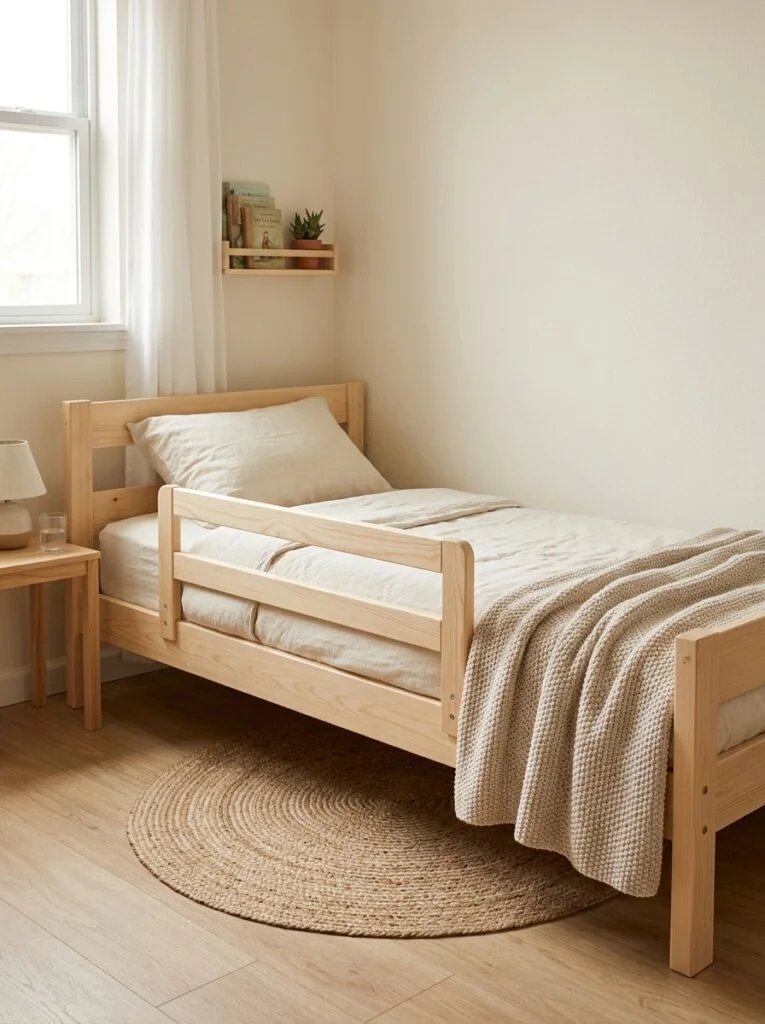
A twin or full bed with a low frame and a removable guardrail covers the transition out of the crib and still works at fifteen. If you’re buying a crib, a convertible one that becomes a toddler bed and then a headboard earns its price.
Keep the frame simple and low. Simple frames take any bedding you throw at them, and low frames feel safer during the years when your kid rolls around like a windmill.
The mattress is the one place I’d stretch the budget, since it’s the item getting used ten hours a night for years. And if you want a headboard, an upholstered one in a plain fabric ages far better than anything shaped like a theme.
Let the Bedding Carry the Theme
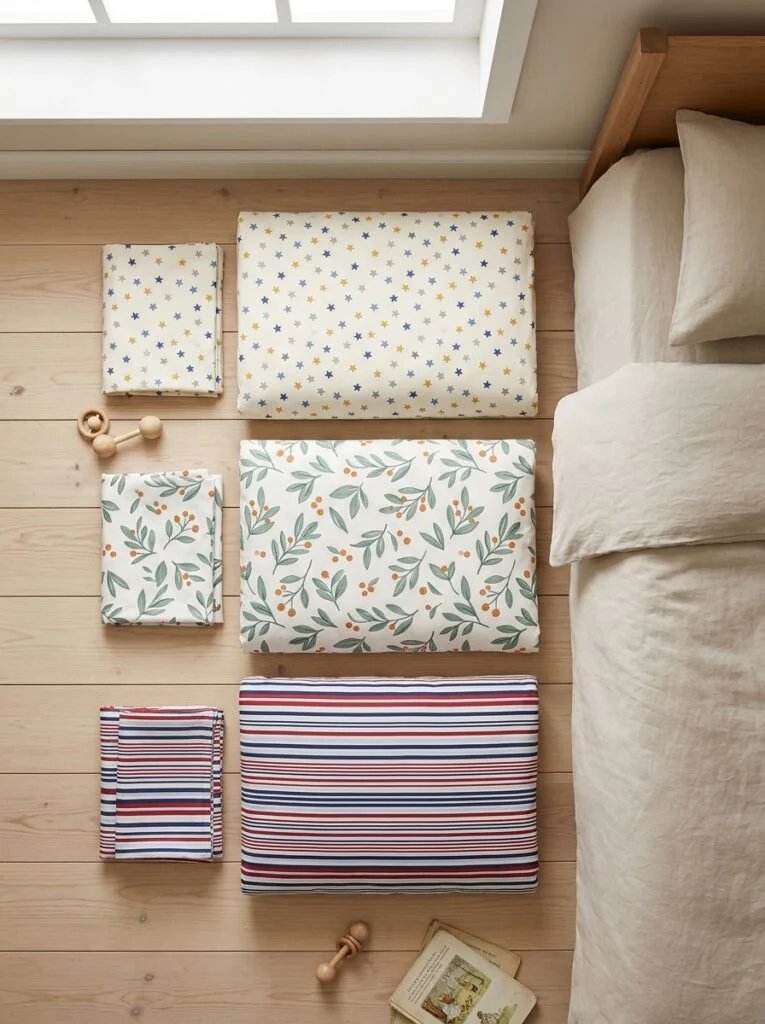
This is the single most useful habit in the whole article. When your child is obsessed with something, put the obsession in the duvet cover, a pillowcase, and maybe one poster.
A new bedding set costs a fraction of repainting a room, and it can change the entire mood in ten minutes. Two sets in rotation means one is always in the wash and your child gets a small thrill every time you switch.
Neutral Walls, One Wall With Permission to Change
Paint three walls something warm and soft. Not stark white, which shows every fingerprint, and not a strong color you’ll be sick of by next spring.
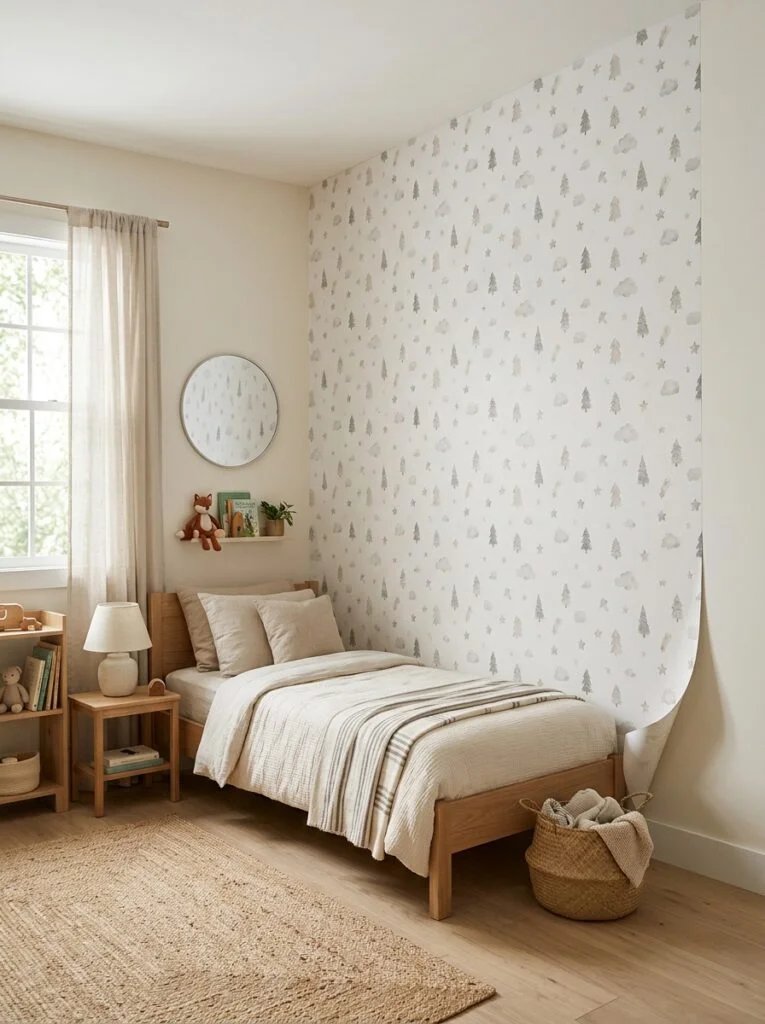
Then let one wall be the fun one. Peel and stick wallpaper, a painted arch, a color block behind the bed. It’s a two hour job to change later, and only one wall needs new paint when tastes shift.
One thing worth knowing before you buy paint: flat finishes look lovely and wipe terribly. In a kids room, eggshell or satin is the practical choice, because sticky handprints and stray marker come off without taking the color with them.
Hang Shelves on a System That Moves Up
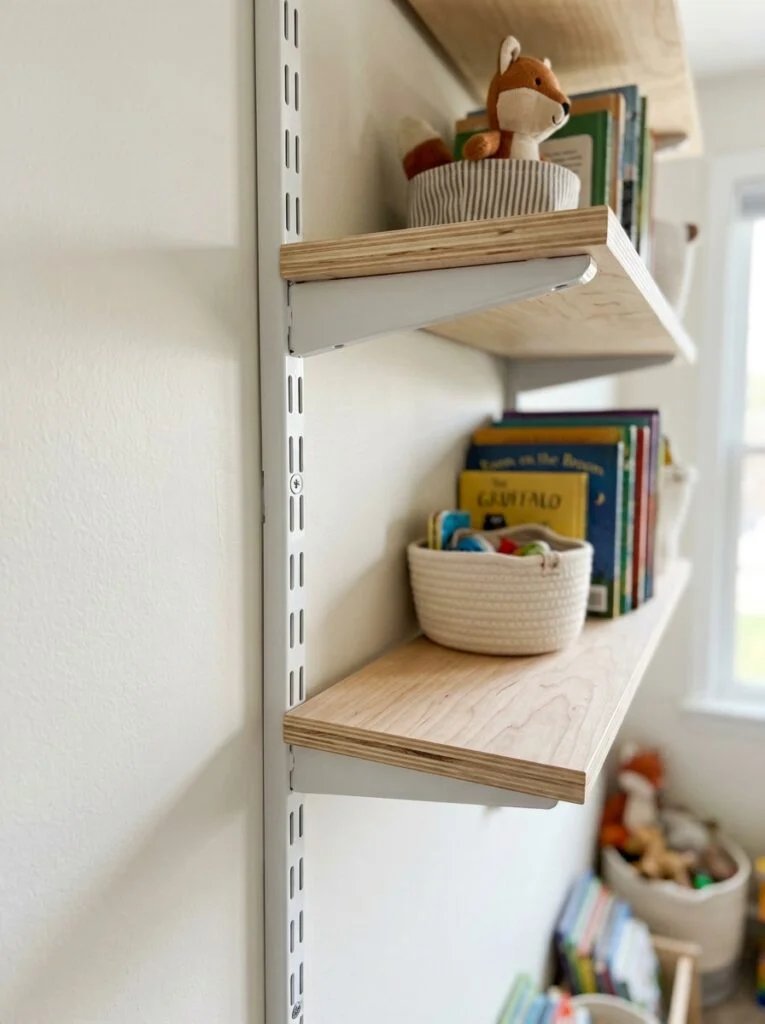
Track shelving, cleat systems, and adjustable brackets let you move shelves without new holes in the wall. Start with shelves higher up, out of climbing range, then add a lower row once your child is old enough to use it.
Anchor anything tall into studs. Tip over accidents are one of the real risks in a kids room, and a wall strap costs almost nothing.
One Table, Three Different Jobs
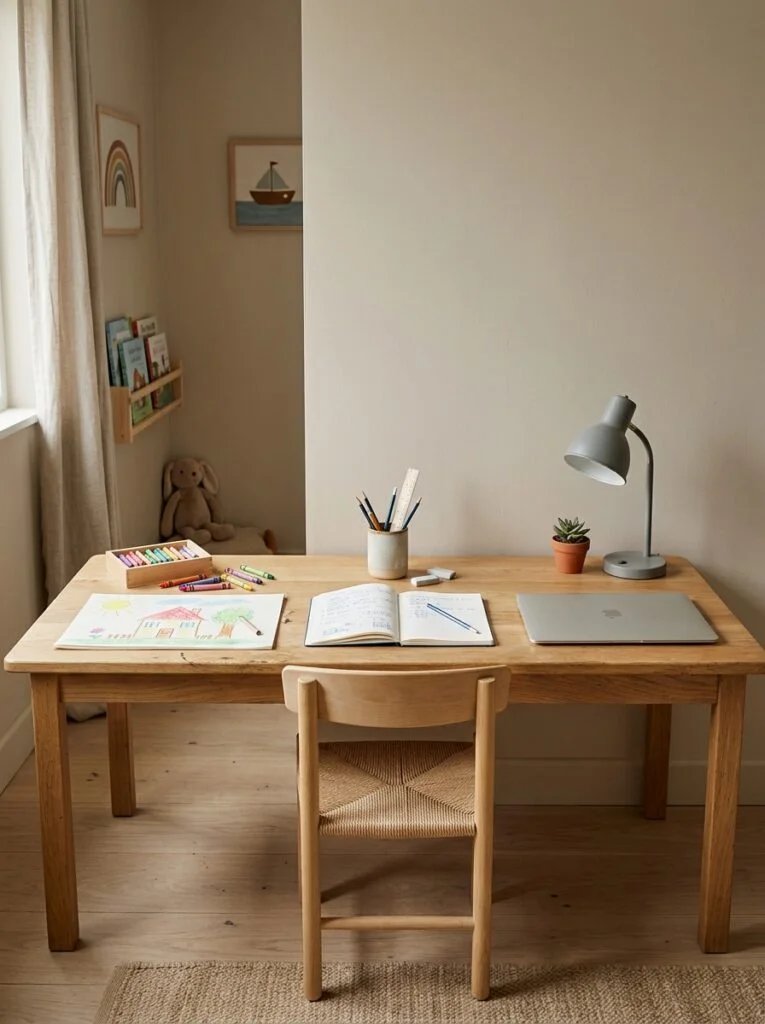
Skip the themed kids desk. A plain table around 28 to 30 inches high works as an art table with a booster chair at four, a homework desk at eight, and a laptop desk at fourteen. Height adjustable desks do the same thing with less improvising.
What changes over the years is the chair and the lamp, not the table.
Storage That Keeps Its Shape and Swaps Its Contents
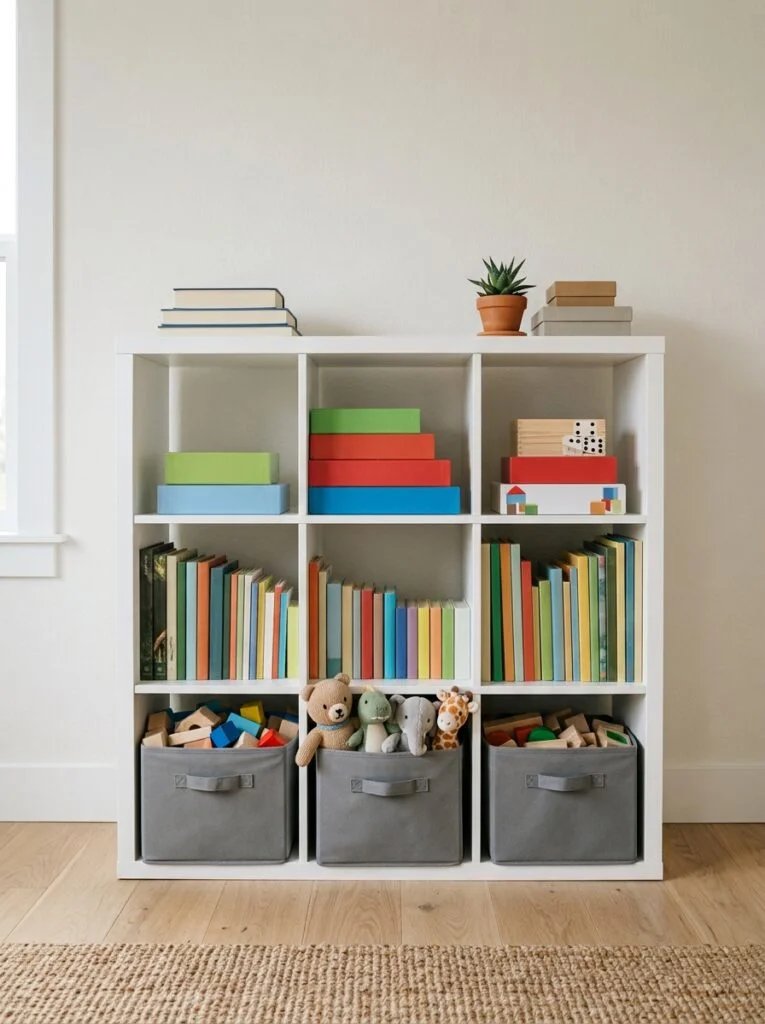
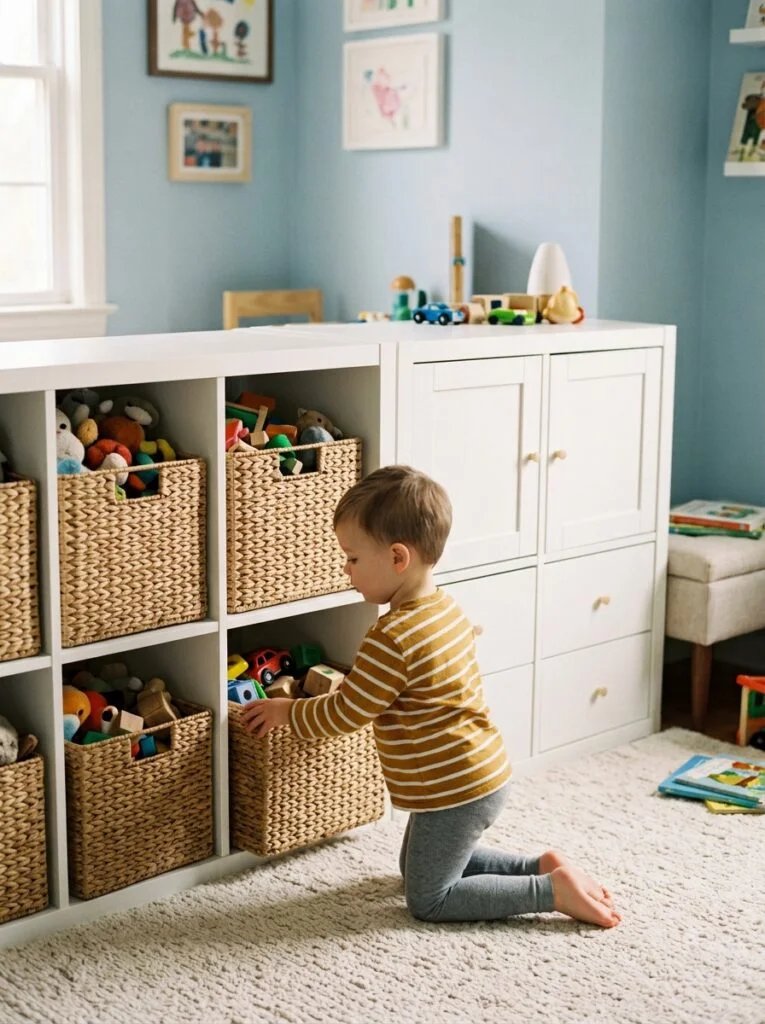
Cube units, low bookcases, and simple drawer towers all have one thing in common. The furniture stays the same while the contents change completely.
Blocks and stuffed animals now. Board games and books in a few years. Sports gear, art supplies, or a speaker later. Buy the shape, not the theme, and you’ll never have to replace it.
Start With Open Bins, Add Doors Later
Small children put things away only if they can see where things go. Open bins at floor level make that possible.
Older kids want the opposite. They want the mess hidden behind a door. If you choose a unit that can take drawer inserts, fabric bins, or doors, you can move from one to the other without buying new furniture.
Adjustable Closet Rods and a Stool That Graduates
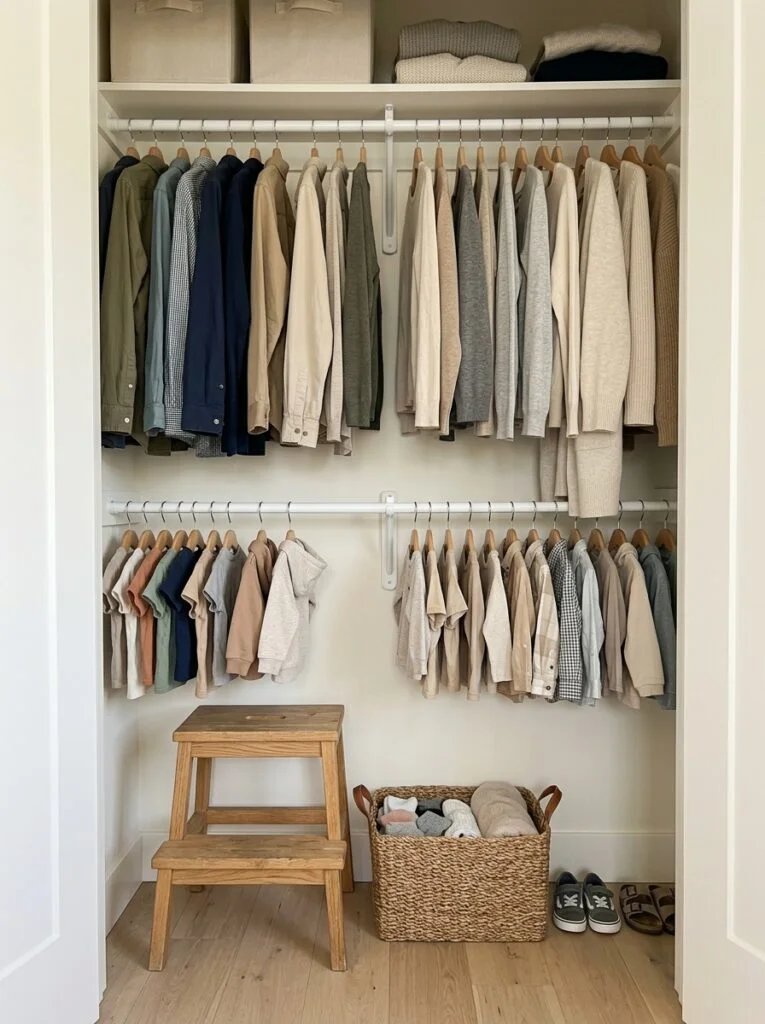
Kids clothes are short, which means a single high rod wastes most of the closet. Add a second rod low enough for your child to reach, roughly 30 to 35 inches off the floor, and you double the hanging space while teaching them to hang their own things.
Raise it as they grow. A sturdy step stool covers the gap in the meantime and later becomes a seat or a plant stand.
Layer the Lighting Instead of Relying on the Ceiling
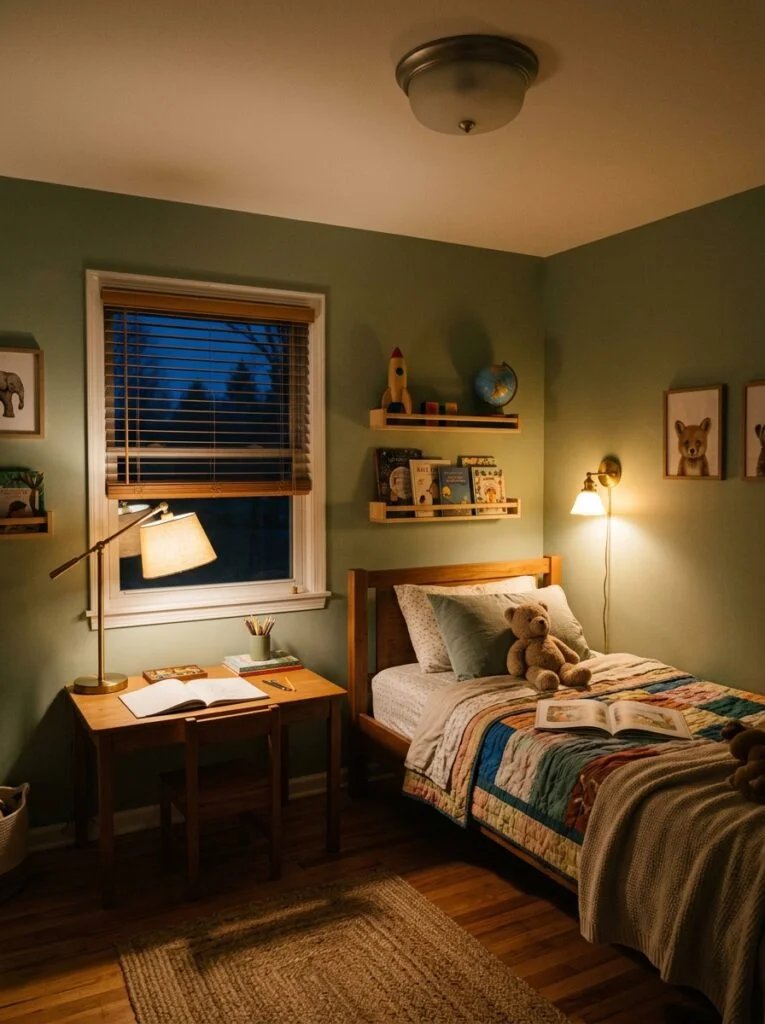
One overhead light does not cover the range of things that happen in a kids room. Aim for three sources.
A dimmable ceiling light for getting dressed and tidying. A soft plug in nightlight or a wall sconce near the bed for the years when the dark is a problem. A task lamp once homework arrives.
Warm bulbs make the room feel calmer at bedtime than cool white ones. And if you’re changing window coverings anyway, choose cordless blinds. It’s the easiest safety upgrade in the room.
Size the Rug for Floor Play, Not for the Bed
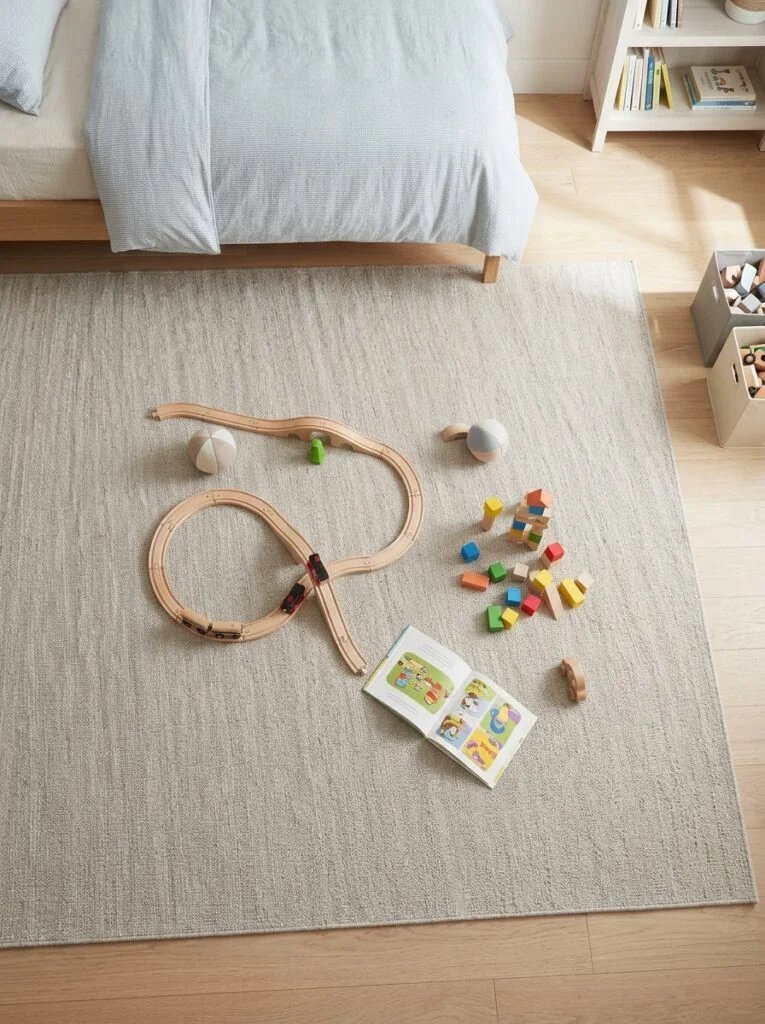
Small children spend most of their time on the floor, so give them a soft surface with real square footage. A low pile washable rug with a non slip pad underneath handles spills, train sets, and stray building bricks.
Later, that same rug becomes the piece that anchors the bed and warms up the room. A rug bought for play is almost always the right size for the room afterwards. A rug bought to sit under a bed rarely works the other way round.
Build a Wall That Takes New Art Without New Nails
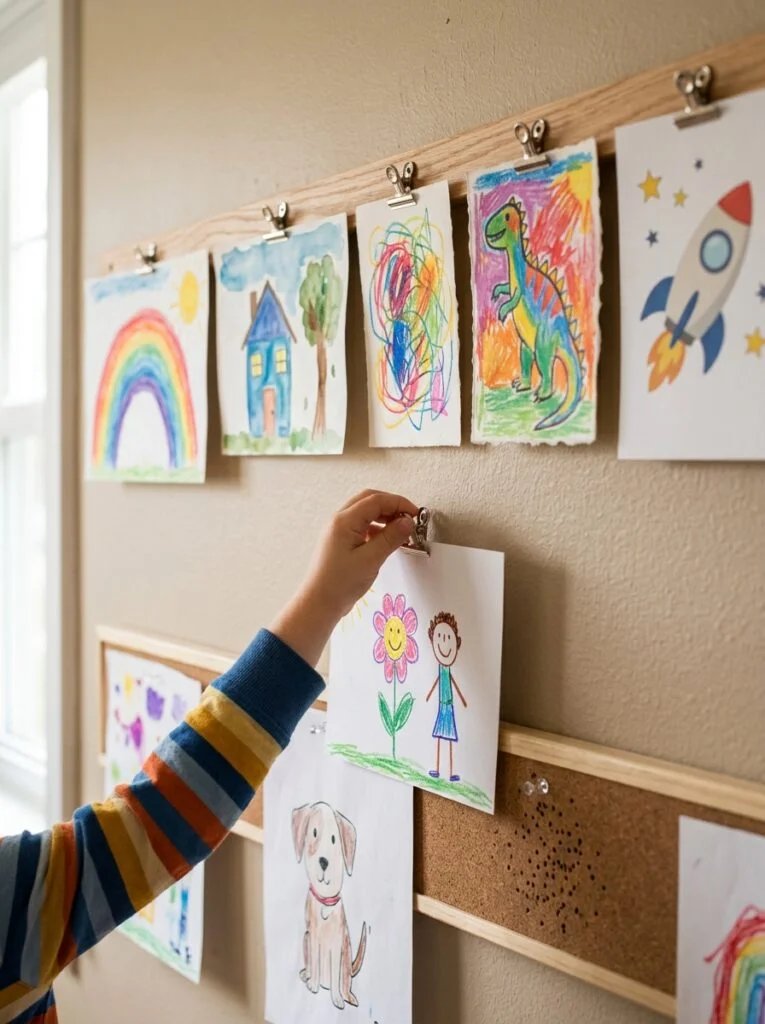
Kids produce a lot of art, and their taste in posters changes constantly. A picture rail, a cork strip, a pegboard, a length of wire with small clips, or a few frames with easy open backs all let you swap what’s on display in five minutes.
This is also what keeps a room from feeling like nobody has settled in yet, the same trap that makes so many dorm rooms feel temporary instead of lived in. Blank walls read as unfinished at every age.
A Reading Corner That Can Change Its Seat
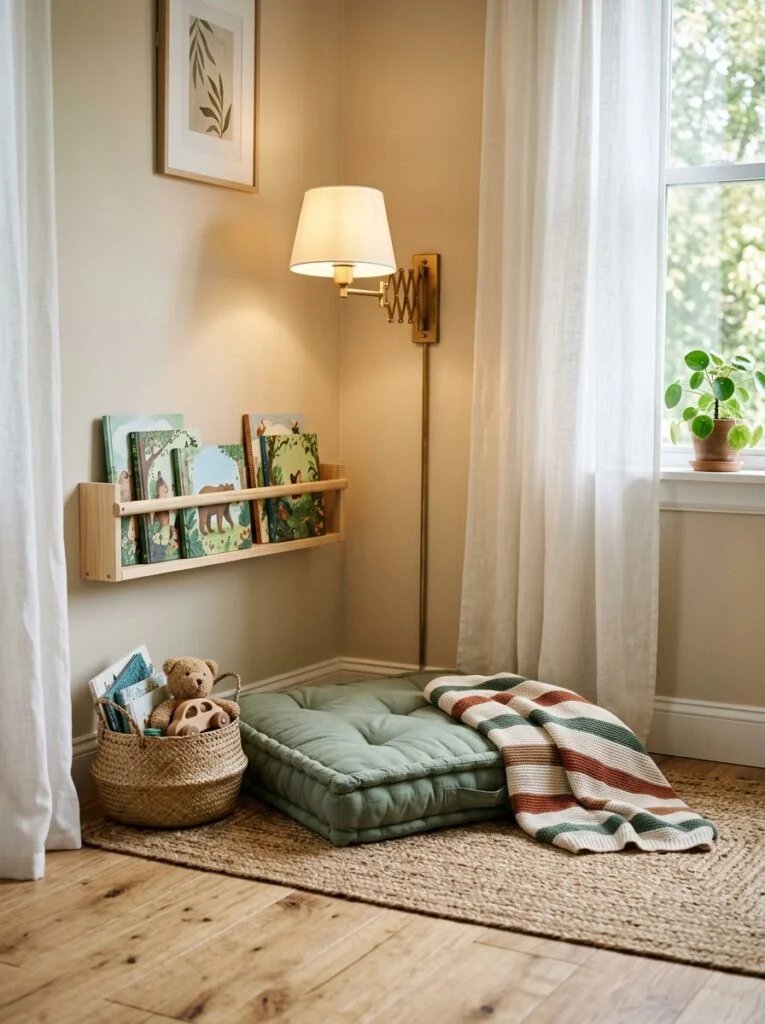
Pick a corner, add light, and give books a home where the covers face outward. Pre readers choose books by the picture on the front, so front facing ledges get used far more than spines on a shelf.
The seat is the part that evolves. A floor cushion at three, a beanbag at seven, a proper chair by twelve. Same corner, same lamp, same shelf.
Choose Furniture You Can Move By Yourself
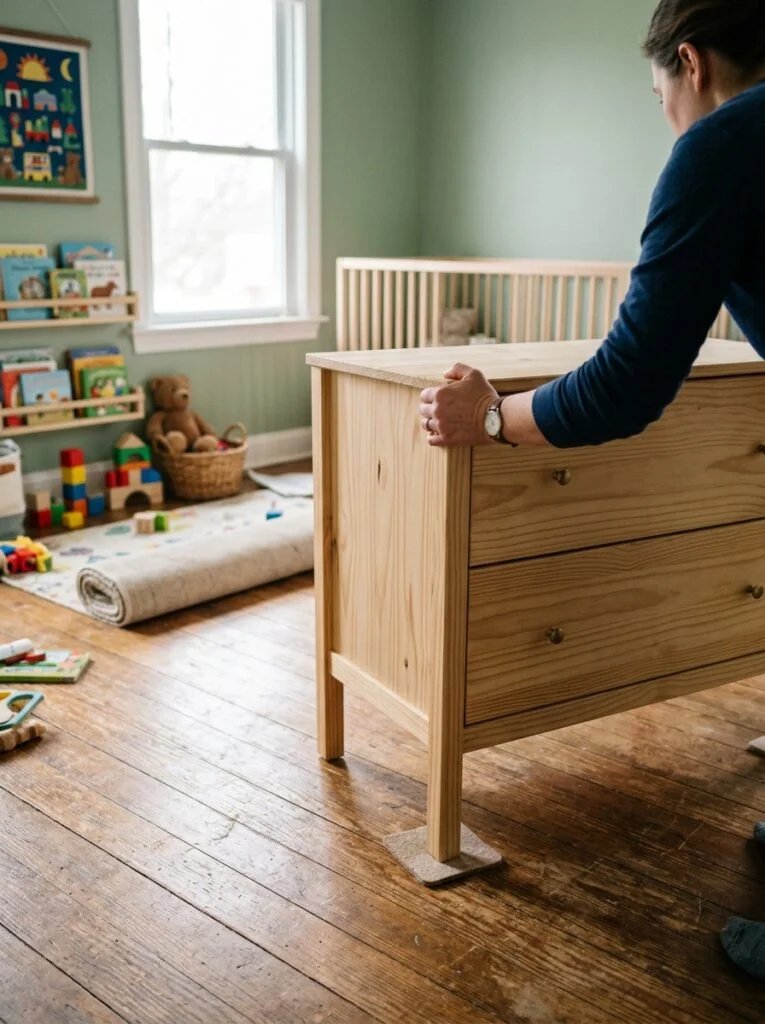
Rooms need rearranging every few years, usually right when your child’s needs change. Furniture with legs, lighter frames, and no built in fixings makes that a Sunday afternoon instead of a project.
Stick felt pads under everything. It’s a two dollar decision that saves your floors and makes moving things quiet.
Label With Pictures First, Words Later
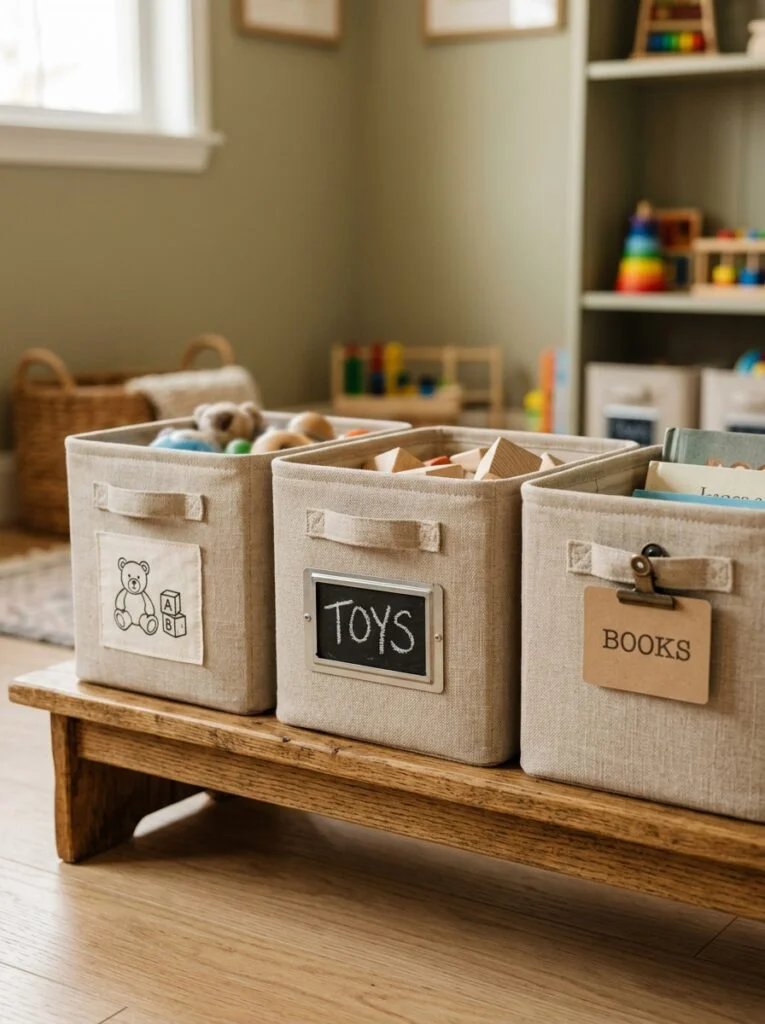
Picture labels on bins work brilliantly for children who can’t read yet. A quick photo or a simple drawing taped to the front and suddenly the toys have addresses.
Once reading clicks, switch to words. Use chalk labels, tape, or clip on tags so you can rewrite them as the contents change. This is a small thing that quietly makes tidying up possible without you standing there directing.
Leave One Zone Deliberately Empty
This is my favorite one, and it’s the hardest to do because empty space feels like a missed opportunity.
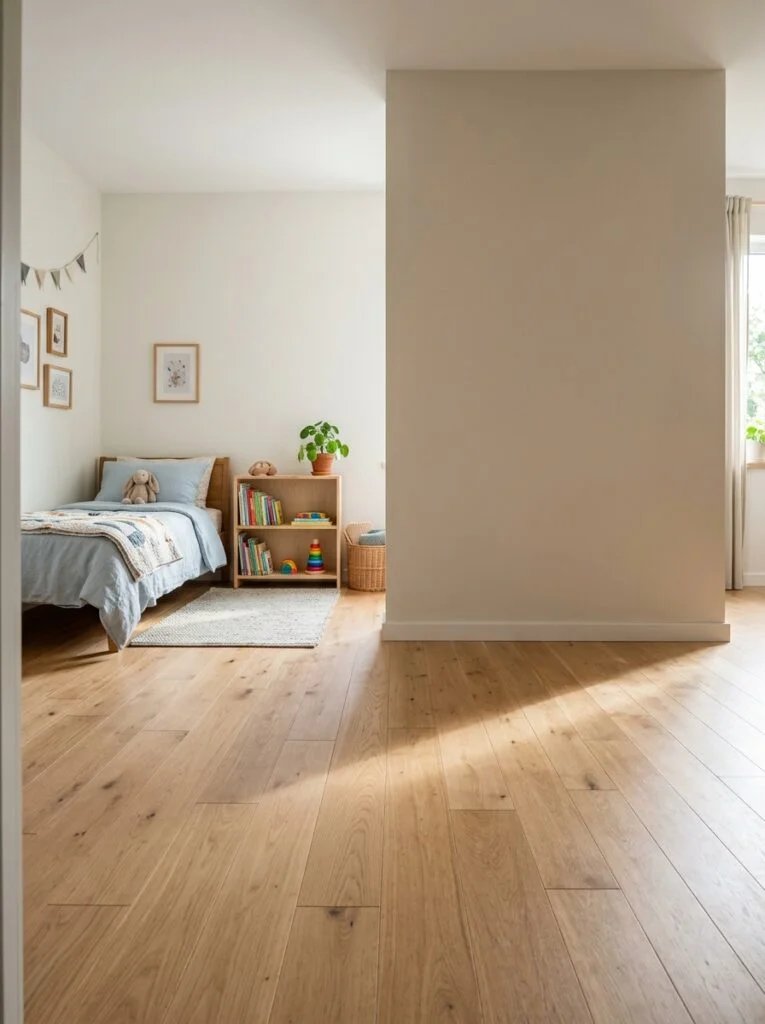
Keep a clear patch of floor or one wall with nothing planned for it. In a few years that space becomes the gaming setup, the drum practice corner, the sewing table, the spot where three friends sit on the floor.
You cannot predict which hobby is coming. You can leave room for it.
Questions Parents Ask Me About This
Realistically, how often will I need to change things? Expect a small refresh every three or four years, and expect it to be textiles and wall art almost every time. If the bones were chosen well, you shouldn’t be buying furniture again until your child needs a bigger bed or a real desk.
Where should the money go, and where can I save? Spend on the mattress, the bed frame, and the main storage piece. Save on bedding, bins, wall art, and anything decorative. That split is the entire strategy in one sentence.
What about siblings sharing a room? Keep the bones matching and let each child own their own personality zone. Separate reading lights, separate bins, and their own patch of wall prevents most of the arguments. Bunk beds are worth checking age guidance on, since the top bunk generally isn’t recommended for younger children.
The room is tiny. Where do I start? Bed position first, because everything else works around it. Then go vertical with storage, keep the floor as clear as you can, and check that the door and closet can open fully. Small rooms fail on circulation more than on square footage.
How do I involve my child without ending up with a neon room? Give them full control of the swappable layer and offer choices rather than an open question. Two bedding options you’re happy with, both fine by you. They get real ownership, you get a room you can live with.
The Version of This Room You Won’t Have to Redo
The best kids rooms I’ve seen weren’t the most impressive ones. They were the ones where the parents made calm choices about the big stuff and let the child go wild with the small stuff.
Your kid changes fast. The room doesn’t have to keep up with all of it. It just has to be flexible enough to follow along.
Get the bones right once, and after that you’re mostly just changing the bedding and moving a few shelves. Which, compared to redecorating from scratch every three years, feels like a very good trade.