
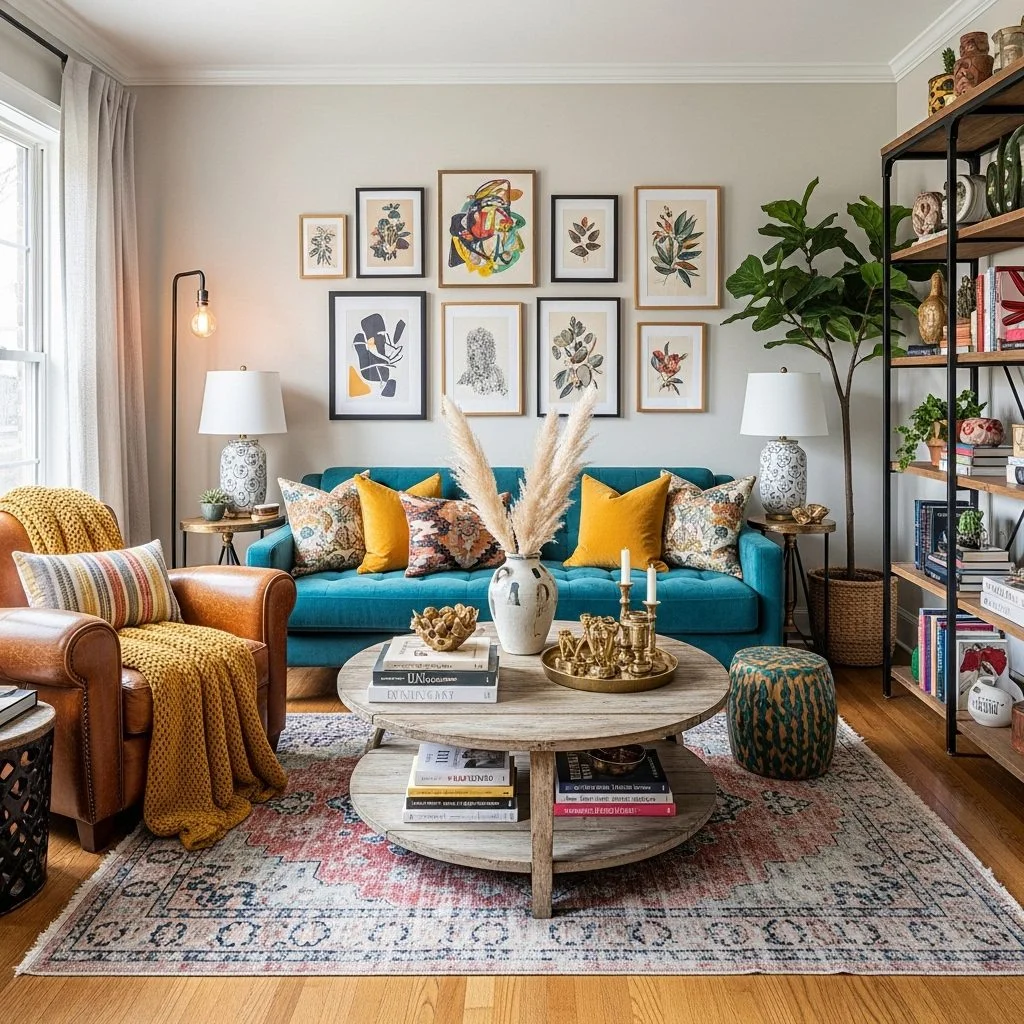
You walk in after a long day, drop your keys on the nearest chair, and notice what you notice every night. The room is fine. It just does not feel like yours yet. Pride in a home rarely comes from one big purchase. It comes from small, finished decisions: a mirror hung at the right height, a lamp that glows instead of glares, a shelf that looks edited instead of crowded. This guide gives you 27 of those decisions. Each one comes with a number, a measurement, or a simple test, so you can act on it this weekend. Pick three, start there, and let the rest wait.

Paint One Statement Wall That Reflects You
Pick the wall your eye lands on first when you walk in, not the one that is easiest to paint. Choose a color pulled from something you already own, such as a rug, a throw, or a favorite print. Test two swatches, each about two feet square, and check them in the morning and at night. Deep green, inky blue, and warm terracotta all look confident without shouting. Leave the other three walls calm. One bold wall feels deliberate. Two start to feel like an argument.

Style Your Coffee Table Like a Designer
Start with the spacing. Leave 14 to 18 inches between the sofa and the table, so your knees and your mug both fit. Then build a trio: a stack of two or three books, one sculptural object, and something living, like a small plant. Vary the heights so the eye moves up and down. Set a tray under the group to keep it from drifting. Leave a third of the surface empty for real drinks. For more layouts, browse these coffee table styling ideas designers love.

Layer Your Lighting for Instant Luxury
One ceiling fixture flattens a room. Lighting designers plan three layers instead: ambient light for overall glow, task light for jobs like reading, and accent light for art or shelves. HGTV’s lighting guide suggests planning the ambient layer first, then adding task and accent light. At home, that means a ceiling or wall light, a table lamp beside the sofa, and one small picture light or shelf light. Aim for at least three sources at different heights in every main room.

Add Indoor Plants for Life and Freshness
Plants make a room feel looked after. Start with one plant at least three feet tall on the floor, such as a rubber plant, then add two smaller ones on a shelf or table. Odd numbers look more natural than pairs. If your light is weak, choose a snake plant, ZZ plant, or pothos, which tolerate dim corners. Hide plastic nursery pots inside a basket or ceramic planter that is an inch wider. Check whether a plant is toxic to cats or dogs before you buy it.

Invest in Cozy Textiles
Comfort is something guests feel before they see it. Layer three textures on your sofa: a chunky knit throw, a linen or velvet cushion, and a wool or bouclé accent. Buy cushion inserts one size larger than the covers, so a 20-inch insert fills an 18-inch cover. That small gap makes cushions look plump instead of sad. Keep the palette to two or three colors. Leave a basket of spare throws near the sofa, so people actually use them.

Declutter and Embrace Minimalism
Decluttering goes faster when you sort by category, not by room. Gather every mug, every pen, and every stray cable into separate piles, and keep only what you use or love. For the maybes, try a 30-day box: seal them in, date it, and donate it unopened if you never reach for it. Minimalism does not mean empty. It means each item has room around it, so the things you love get noticed. Finish by clearing one surface completely.

Use Mirrors to Expand Space
A mirror works best when it reflects something worth seeing. Hang it opposite or beside a window, so it carries daylight deeper into the room. Center it at about 57 inches from the floor, close to average eye level. Over a console or sideboard, make the mirror about two thirds the width of the furniture below. Avoid pointing it at clutter, since mirrors double whatever they see. In a narrow hall, a leaning mirror at least 60 inches tall stretches the space without drilling.

Personalize with Meaningful Decor
Sentiment is not the same as clutter. Choose five pieces with a real story: a bowl from a trip, a grandparent’s frame, a child’s drawing in a good mat. Group them with newer decor so they look styled instead of stored. Give each piece about two inches of breathing room from its neighbors. Print travel photos in black and white and use matching frames to calm a mix of memories. When a guest asks where something came from, you have done it right.

Refresh with a Neutral Color Palette
Neutrals look flat when every shade shares one undertone. Mix a warm white, a greige, and a deeper taupe or charcoal instead. A reliable ratio is 60 percent main color, 30 percent secondary color, and 10 percent accent. Hold paint chips against your flooring and sofa before you commit, since floors change how whites read. Then add richness through materials: matte ceramic, black metal, and rough linen. A neutral room gets its depth from texture, not from color.

Upgrade Your Bedding for Hotel Vibes
Hotel beds look generous because they are built in layers. Start with cotton percale sheets if you like crisp and cool, or sateen if you like smooth and soft. Add a duvet in white, cream, or a quiet tone. Then stack two sleeping pillows, two 26-inch Euro shams behind them, and one lumbar pillow in front. Fold a throw across the bottom third of the bed. Make it every morning, because a made bed lifts the whole room.

Create a Functional Entryway
Treat your entryway as a landing strip. Mount hooks at 60 to 66 inches for coats, and add lower ones at about 40 inches for kids’ bags. Add a bench roughly 18 inches high, so you can sit to take off shoes, with a basket underneath. In a narrow hall, a console 10 to 12 inches deep still holds keys and mail. Leave at least 36 inches clear to walk. A small mirror and a bowl for keys finish the job.

Add Wall Shelves for Style and Storage
Floating shelves look best when you plan the spacing. Leave 10 to 12 inches between shelves for books and 14 inches or more for taller objects. Choose a depth of 8 to 10 inches, which fits most books without sticking out. Fix brackets into studs, not just drywall. Fill about two thirds of each shelf and leave the rest bare. Mix books laid flat, a plant, and one framed print. Repeat one color across shelves so the wall reads as one unit.

Use Scent to Elevate Your Space
Scent is the quietest decor you own. Pick one fragrance family per zone: something fresh like citrus in the kitchen, something soft like lavender or sandalwood in the bedroom. Avoid competing candles in the same room. Trim wicks to about a quarter inch before each burn, and let the first burn run until the wax melts across the whole top. Never leave a flame unattended. In the entryway, a reed diffuser is a safer choice than an open flame.

Mix Textures for Depth
A room feels flat when every surface is equally smooth. Try this: for each smooth surface, add a rough one, and for each hard one, add a soft one. A glass lamp sits well beside a woven basket. A leather chair loves a nubby wool throw. Aim for at least three materials per room: something woven, something shiny or reflective, and something soft. If a room still looks dull, the missing piece is often a matte natural material, like wood or stone.

Highlight One Luxury Piece
One great piece beats ten forgettable ones. Choose the item you see or touch every day, like a sofa, a lamp, or a dining table. Put your biggest budget there and keep the supporting pieces simple. A workable split is about 40 percent of a room’s budget on that single anchor. Give it space: leave at least 24 inches around it so it reads as a focal point. Repeat its color or material once elsewhere in the room.

Organize Open Spaces Beautifully
Open storage only looks good when containers do the editing. Use trays about 12 to 16 inches wide to corral small items on a dresser or console. Choose lidded baskets for things you need but would rather not see, like remotes, chargers, and cords. Group by use: all bedside items on one tray, all desk items in one box. Stick to two container materials per room, such as rattan and ceramic, so the storage looks planned instead of random.

Add Curtains for Softness
Curtains change how tall a room feels. Hang the rod four to six inches above the window frame, and let it extend three to six inches past each side. This makes windows look taller and keeps the glass clear when the panels are open. Aim for panels that skim the floor or hover half an inch above it. Buy panels with a combined width about twice the window width, so the fabric looks full. Choose linen for light and lined fabric for privacy.

Style Your Kitchen Counter
Counters work best when they hold few things. Keep at least 24 inches of the main work area clear for chopping and setting down hot pans. Then choose three items to stay out: perhaps a wooden board leaned on the backsplash, a jar of utensils, and a small herb pot. Put oil, salt, and pepper on one tray near the stove. Move small appliances you use less than weekly into a cabinet. A clean counter always reads as styled.

Use Art to Express Emotion
Choose art by how it makes you feel, then check the size. Above a sofa, aim for a piece or group about two thirds the width of the sofa, hung six to eight inches above it. Center the middle of the artwork at about 57 inches from the floor. For a gallery wall, keep two to three inches between frames and lay the arrangement out on the floor first. Mix originals, prints, and personal photos. If a piece makes you pause when you walk past, it belongs.

Create a Reading Nook
A nook needs three things: a comfortable chair, good light, and a place to set your drink. Tuck it into a corner or beside a window, with the chair angled slightly toward the room. Add a side table about 18 inches wide and a lamp giving roughly 800 lumens, close to an old 60-watt bulb. Put a footstool nearby and a throw over the arm. Keep a small basket for books. Even a three-by-three-foot corner works.

Layer Rugs for Style
Start with a large base rug in flat-weave jute, sisal, or low-pile wool. In a living room, 8 by 10 feet is a common size, with at least the front legs of the sofa and chairs resting on it. Place a smaller patterned rug on top, leaving about 12 inches of the base visible around the edge. Use a non-slip pad under the base rug and a thin grip under the top one so corners do not curl. Keep both rugs in one color family.

Upgrade Hardware Details
New pulls are the cheapest way to make a kitchen or dresser look newer. Before you shop, measure the distance between the existing screw holes, center to center. Common sizes are 3 inches, 3¾ inches, and 5 inches, so match them to avoid drilling new holes. Choose one finish for the whole room, such as matte black or brushed brass. A pull about one third the width of the drawer looks balanced. Swap tarnished door knobs at the same time.

Add Accent Chairs
A good accent chair earns its place twice: it seats someone and it adds shape. Angle it slightly toward the sofa, with 18 to 24 inches to the nearest side table, and leave 30 to 36 inches for walkways. Pick a shape that contrasts with the sofa, such as a curved chair against a boxy sofa. Repeat one color from the room in the chair. For more layouts, read our guide to accent chair placement in the living room.

Use Warm Lighting in Evenings
After sunset, the bulb matters. Choose bulbs rated 2700K, the warm white on the box, and avoid anything above 3000K in living rooms and bedrooms. Plug lamps into a timer so they switch on at dusk. Add a dimmer to at least one ceiling light. Dim everything to about half after dinner, and switch off the overhead light entirely. Lamps at eye level or lower soften shadows and flatter skin, wood, and fabric.

Keep Surfaces Styled but Clean
A styled surface follows a simple formula: one tall item, one medium item, and one low item. A lamp or vase supplies the tall, a stack of books the medium, and a small dish the low. Then stop. Spend one minute each week on a reset: remove one thing, wipe the surface, and put everything back with space between pieces. Anything you did not touch that week goes in a drawer. This keeps a display feeling light and fresh.

Add Seasonal Touches
Seasonal decor does not need a storage unit. Pick three swappable items per season: cushion covers, a throw, and stems or branches in a vase. Store the off-season pieces in one labeled bin. In spring and summer, lean on linen, pale tones, and fresh flowers. In fall and winter, switch to wool, rust, deep green, and candlelight. Keep the furniture and walls unchanged, so each switch takes under 20 minutes and costs little.

Design with Emotion, Not Trends
Trends are fine when you buy them small. Use a two-year test: if you would still choose the piece in two years, buy it. Put anything that fails the test in a cheap, swappable category, like cushion covers, candles, or a vase. Save bigger purchases, such as sofas and rugs, for what you love regardless of what is popular. Keep a note on your phone with five words that describe how you want your home to feel. Hold every purchase up against them.

Conclusion
Pride is rarely about perfection. It is the moment you notice a lamp glowing just right, a mirror catching the afternoon light, or a shelf that looks like you. You do not need all 27 ideas. Start with the cheapest three: hang a mirror at eye level, swap one bulb for 2700K, and clear one surface. Live with them for a week, then add one more. A home you are proud of grows in small, deliberate steps.
2 comments