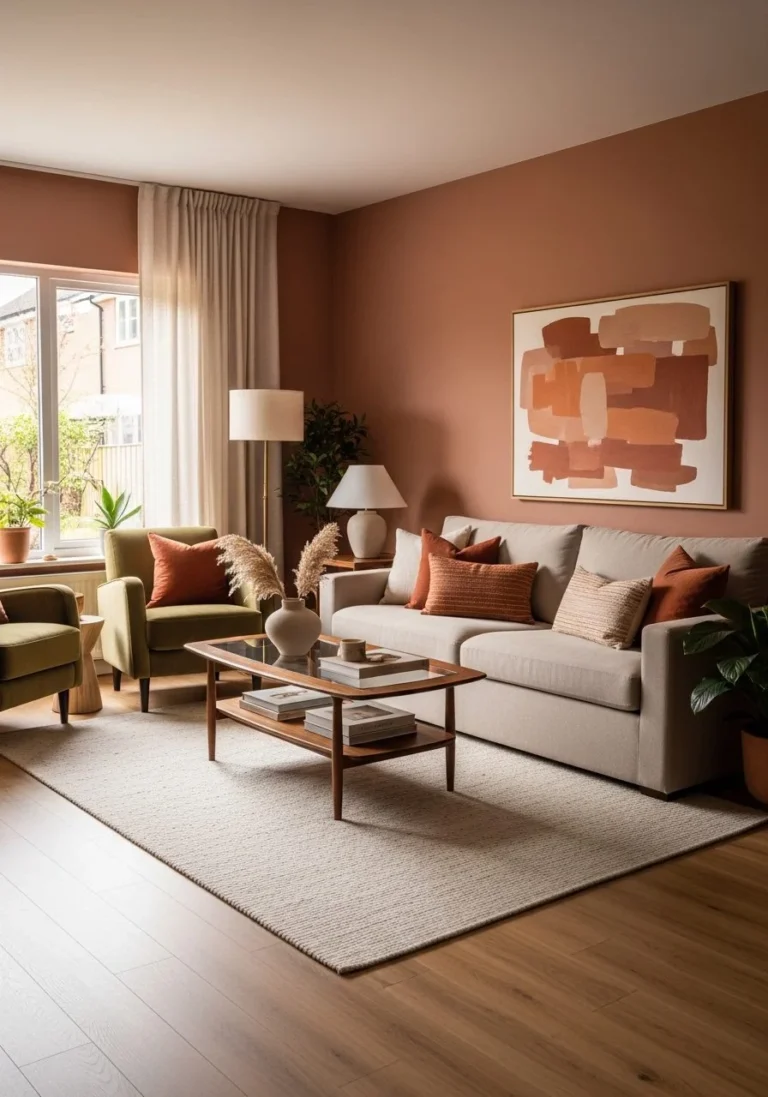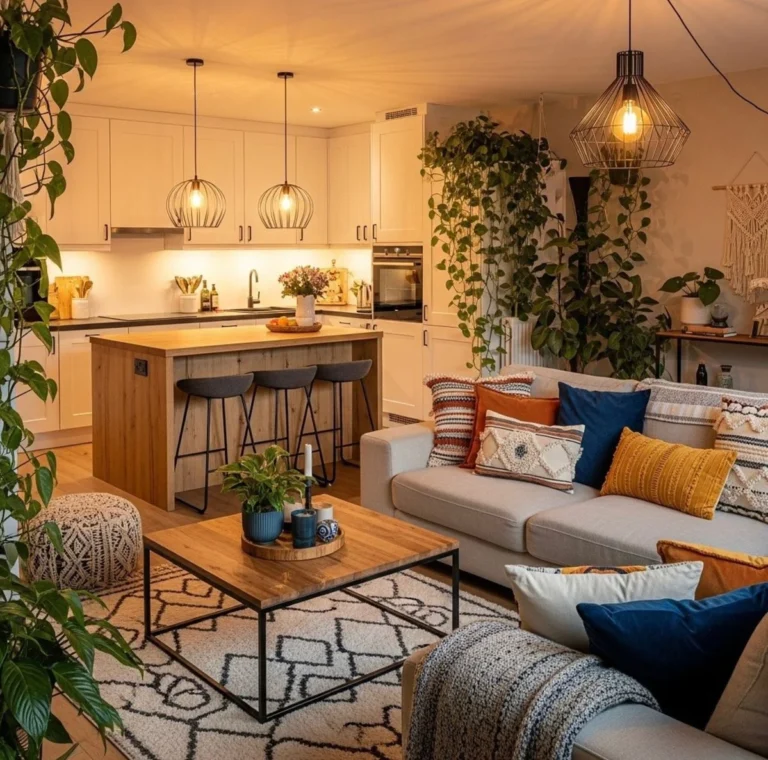
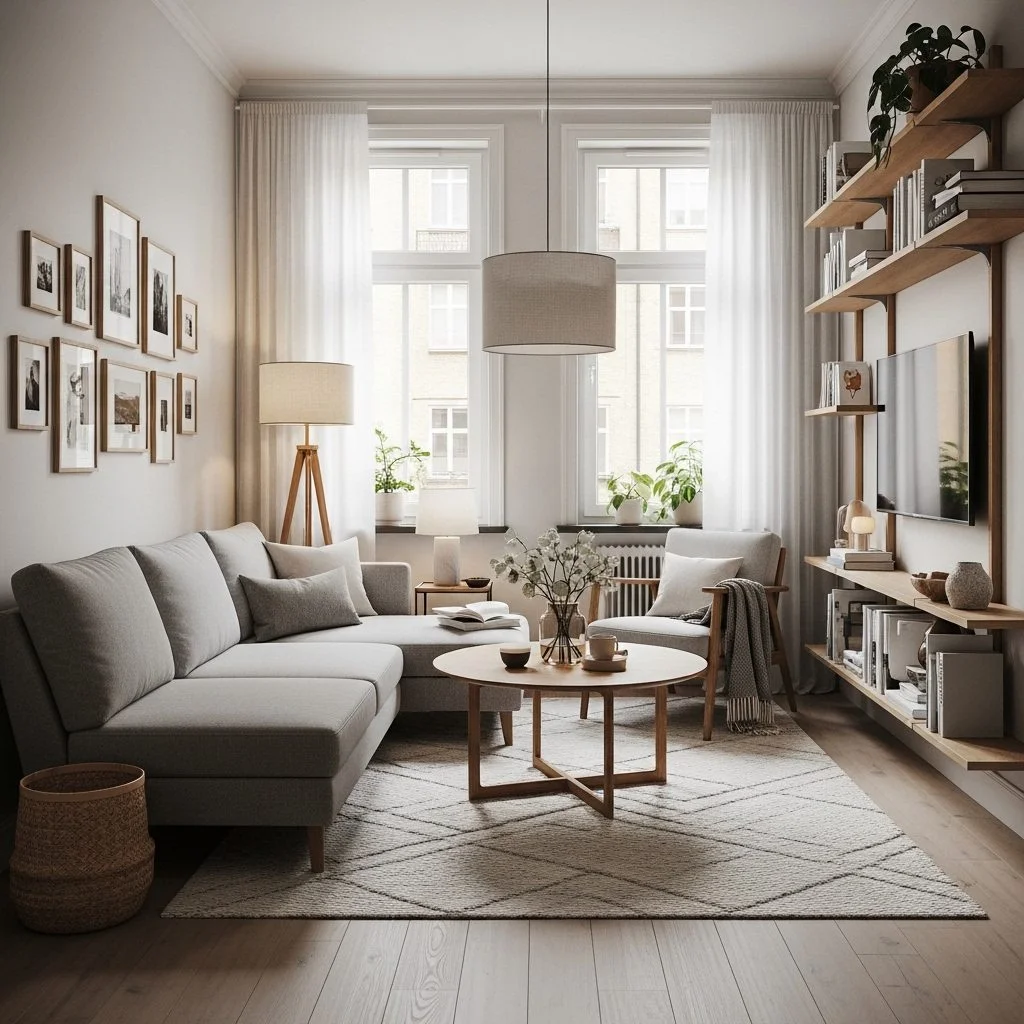
Small Living Room Design Guide (Furniture, Lighting & Storage)
Designing a small living room requires a strategic approach to balance, where every piece of furniture must earn its place through multi-functionality and scale. To prevent a compact space from feeling cluttered, interior designers prioritize a “less is more” philosophy, opting for elevated legs on sofas and transparent materials like glass or acrylic to maintain a clear line of sight across the floor. Layered lighting—combining ambient overhead fixtures with targeted task lamps and soft accent glow—recesses shadows and creates an illusion of expansive depth, while a cohesive color palette further unifies the architecture. Smart storage solutions, such as ottomans with hidden compartments or vertical shelving that draws the eye upward, maximize every square foot without sacrificing style or comfort. Whether you are navigating the tight dimensions of a city apartment or a cozy cottage, focusing on these intentional design choices ensures your living area feels airy, bright, and meticulously organized. By anchoring the room with a few high-quality, appropriately scaled pieces rather than multiple small items, you transform a limited footprint into a sophisticated sanctuary that feels both open and inviting. Ultimately, a well-planned small room proves that style is never determined by square footage, but by the thoughtful integration of form and function.
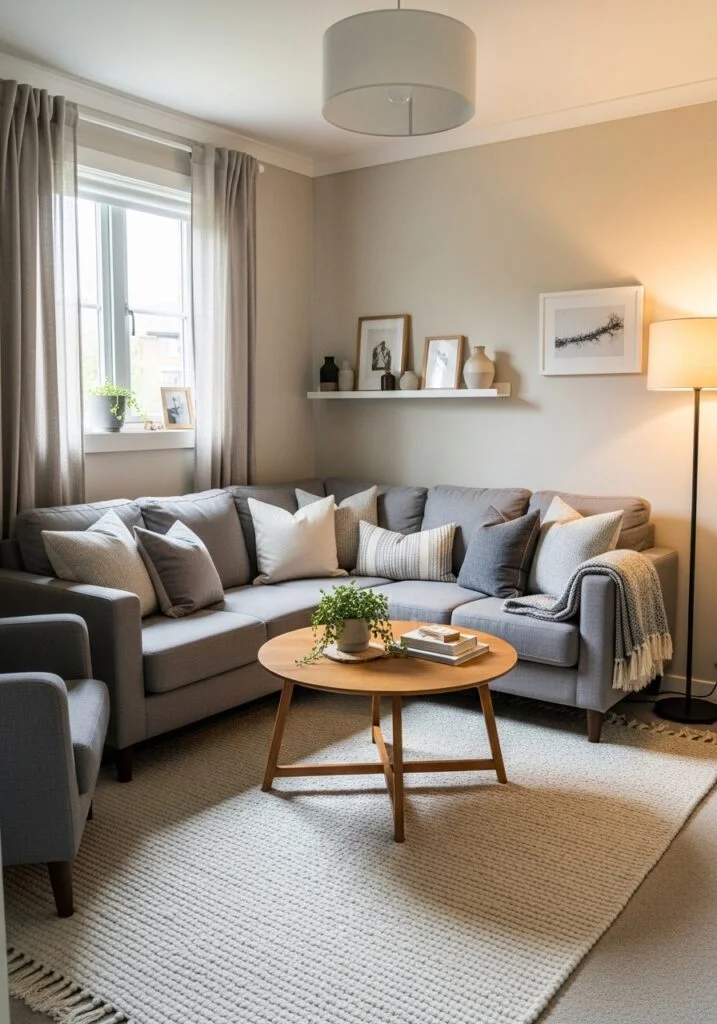
1. Choose Space-Saving Furniture
Strategic furniture selection is the most critical factor in mastering small living room design, as the silhouette of your pieces directly dictates the room’s perceived volume. To avoid a cramped aesthetic, interior designers swap bulky, floor-skimming sofas for compact alternatives featuring clean lines and raised legs. This “legged” furniture is a classic designer trick; by exposing the floor underneath, you allow light to circulate and sightlines to extend, creating an immediate sense of architectural breathing room. For tighter layouts, apartment-sized sectionals or sleek loveseats provide ample seating without overwhelming the floor plan. The secret to a professional finish lies in matching the furniture’s proportions to the room’s actual scale, resisting the urge to cram pieces into every corner. Furthermore, adopting a palette of soft neutrals—such as sophisticated creams, light grays, or beiges—makes even substantial furniture feel visually weightless and airy. By prioritizing these light-reflecting tones and streamlined forms, you transform a limited footprint into a balanced, high-end sanctuary that feels both intentional and spacious. Ultimately, prioritizing “visual floor space” ensures your living area remains functional while appearing significantly larger than its physical square footage suggests.
2. Use Multi-Functional Furniture
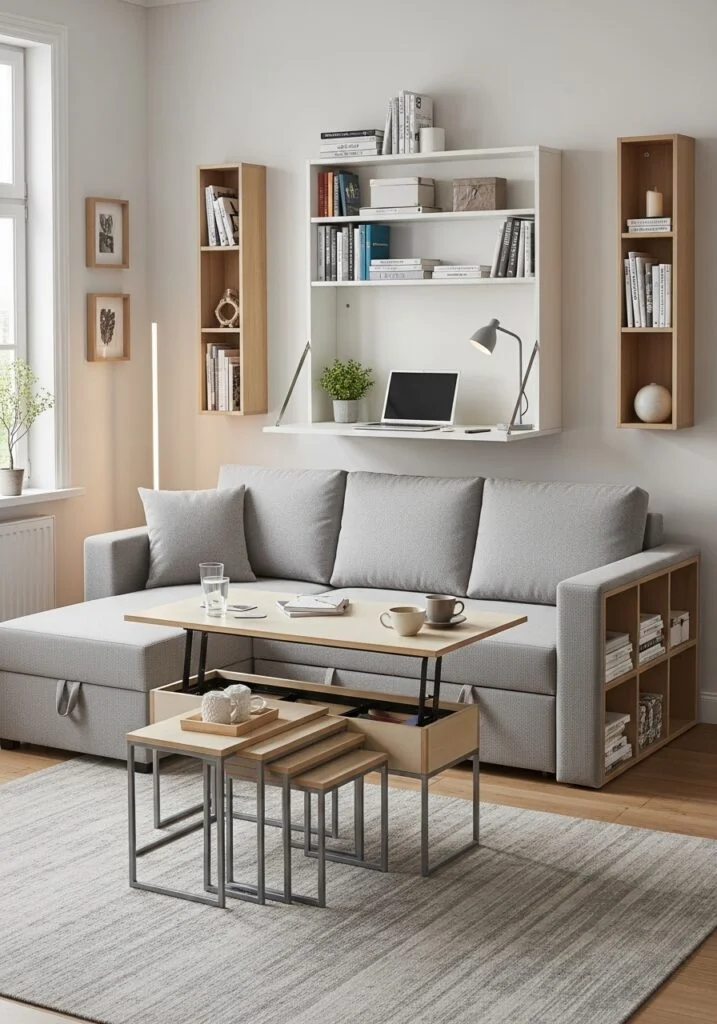
In a limited footprint, multi-functional furniture is the ultimate designer secret for balancing high utility with a clutter-free aesthetic. Pieces that pull double or triple duty—like a storage ottoman that transitions from a plush coffee table to extra guest seating—allow you to maximize functionality without encroaching on precious floor space. Interior designers frequently utilize these versatile elements to hide everyday essentials like blankets or magazines, keeping the visual landscape clean and intentional. For those living in compact apartments, a sleek sofa bed provides a seamless transition for overnight guests, while nesting tables offer the flexibility to expand for entertaining and tuck away for daily movement. By integrating furniture with built-in storage, you eliminate the need for additional, bulky cabinets that can make a small room feel boxed in. This strategic approach to “hidden” utility ensures your living area remains highly organized and adaptable to the changing needs of your day-to-side life. Ultimately, investing in smart, transformative pieces allows you to enjoy the full amenities of a larger home within a cozy, curated environment that never feels overwhelmed by “stuff.”
3. Create Smart Furniture Layouts
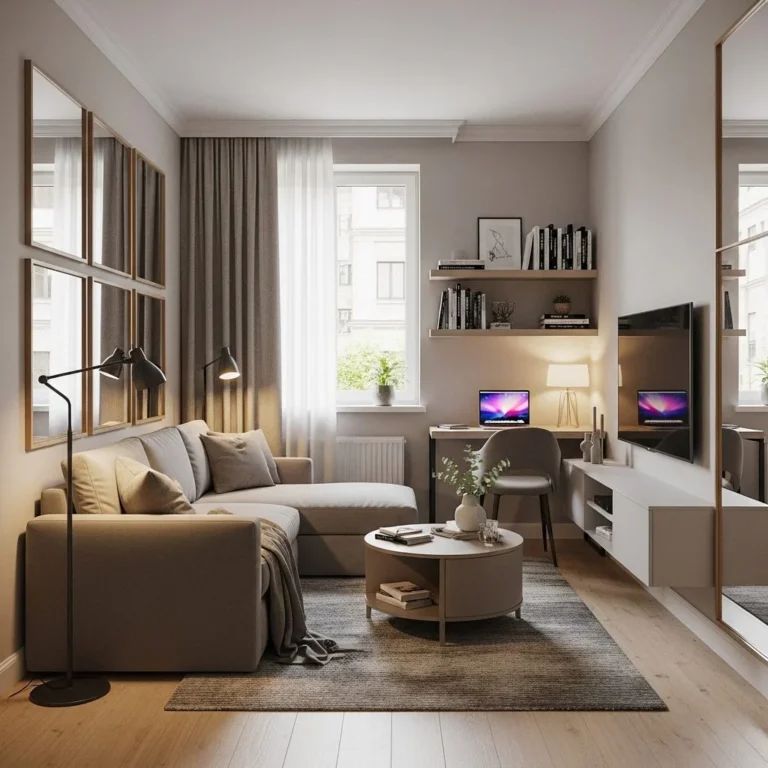
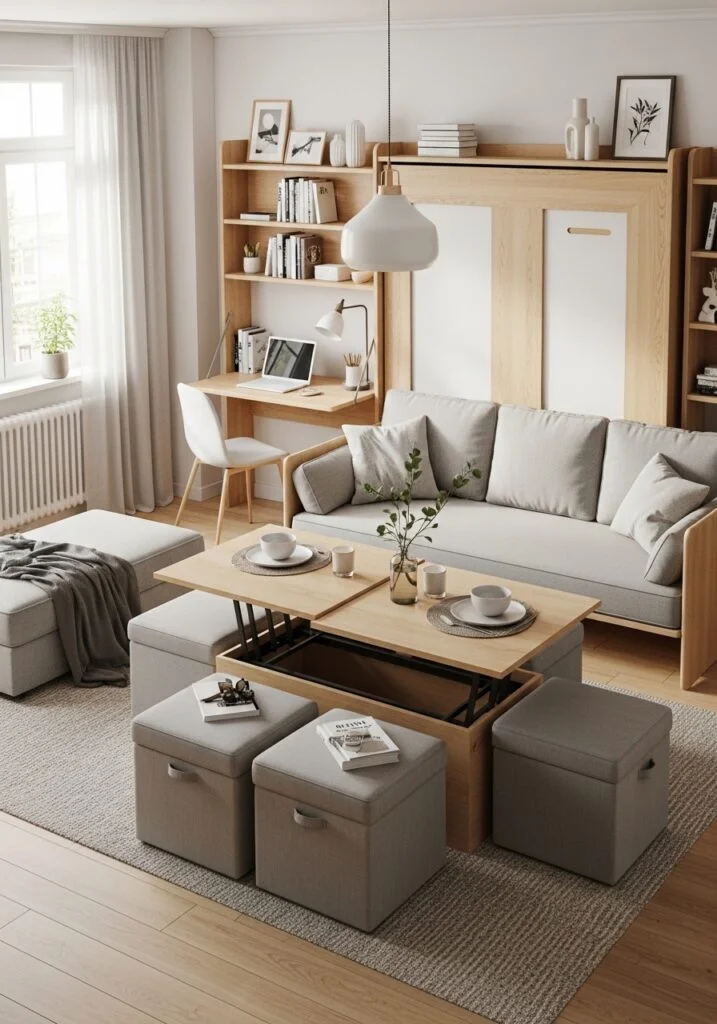
A strategic furniture layout is the secret to making a compact living room feel both expansive and expertly designed. While the instinct in a small space is often to push every piece against the walls, interior designers suggest pulling furniture slightly inward to create “breathing room,” which prevents the layout from feeling stagnant or unbalanced. By anchoring the room around a central focal point—such as a large window, a sleek media console, or a curated coffee table—you establish a clear sense of purpose and order. Creating intimate conversation areas by positioning accent chairs across from the sofa encourages a natural flow, making the environment feel social rather than cramped. Crucially, maintaining clear walking paths ensures the room remains navigable and comfortable for daily movement, avoiding the common mistake of “blocking” natural transitions. Even minor adjustments, such as angling a chair or centering a rug, can dramatically improve the spatial energy and functional harmony of the area. Ultimately, a well-planned arrangement prioritizes “flow” over “filling,” transforming a limited footprint into an open, inviting sanctuary that feels meticulously curated.
4. Use Layered Lighting
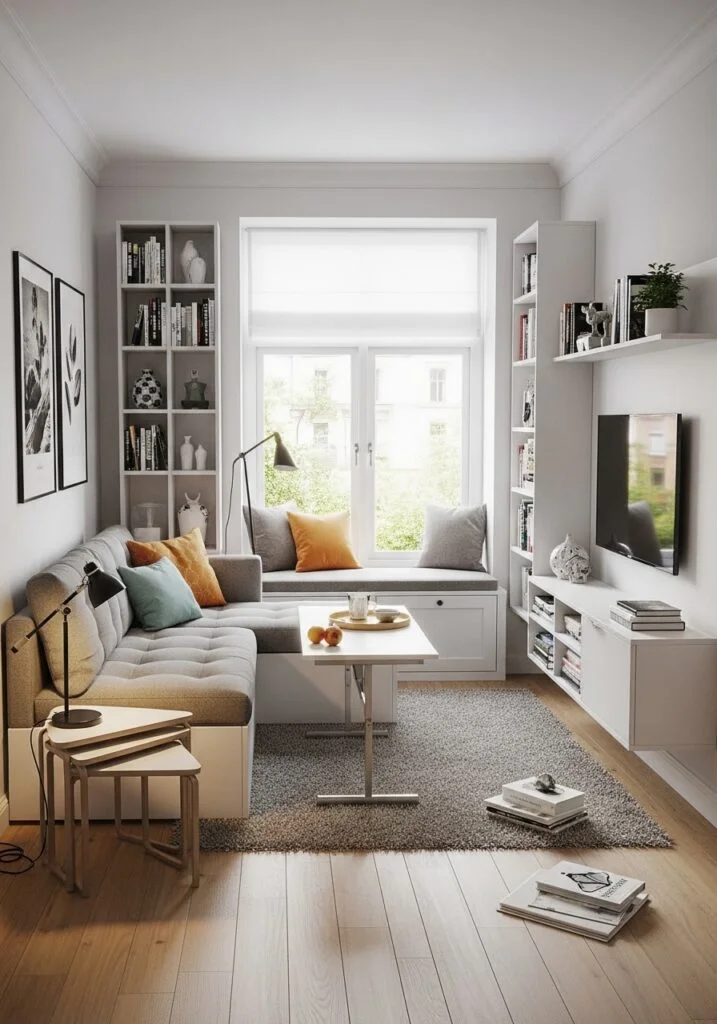
Layered lighting is one of the most effective tools in a designer’s arsenal for visually expanding a compact footprint and adding architectural depth. Rather than relying on a single, harsh overhead fixture that can flatten a room’s features, a small living space thrives on a tiered approach. By integrating ambient overhead lighting with strategically placed floor lamps, elegant table lamps, or sleek wall sconces, you eliminate the shadowy corners that often make a room feel smaller and more enclosed. Interior designers use these varied light sources to define specific zones—such as a cozy reading nook near a sofa—while simultaneously creating a warm, inviting glow that draws the eye across the entire space. This interplay of light and shadow adds a decorative interest that feels sophisticated and intentional rather than purely utilitarian. Incorporating dimmers or soft-white bulbs further enhances this atmospheric flexibility, allowing the room to transition from a bright, functional morning hub to a serene evening sanctuary. Ultimately, a well-lit room feels airy and “limitless,” proving that the right illumination can transform even the tightest quarters into a brilliantly open and polished environment.
5. Maximize Natural Light
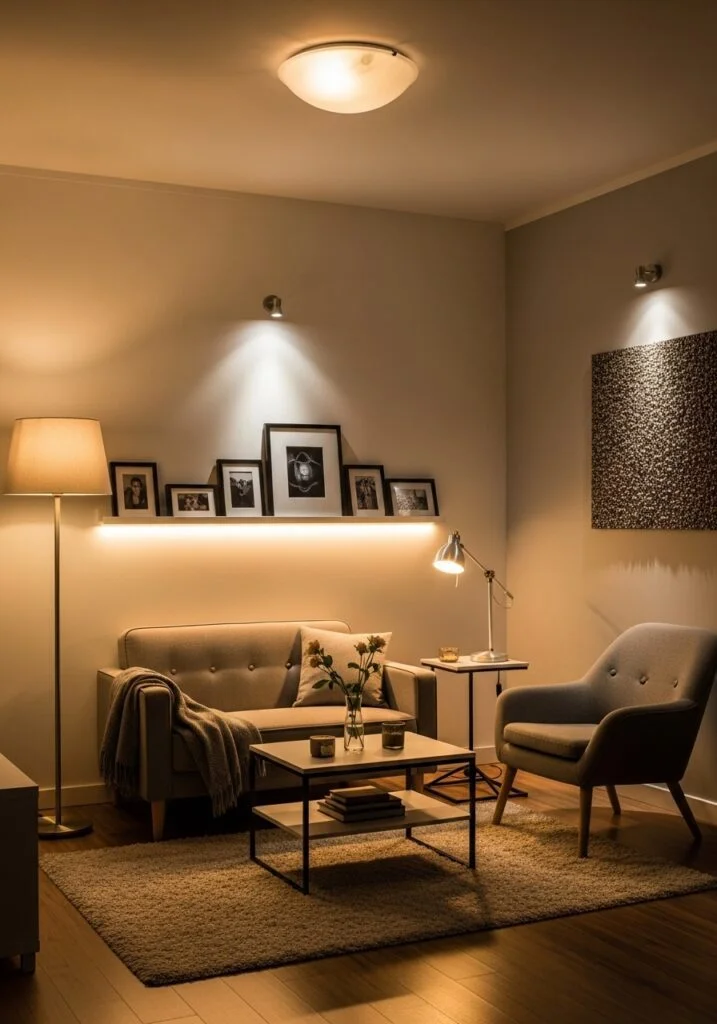
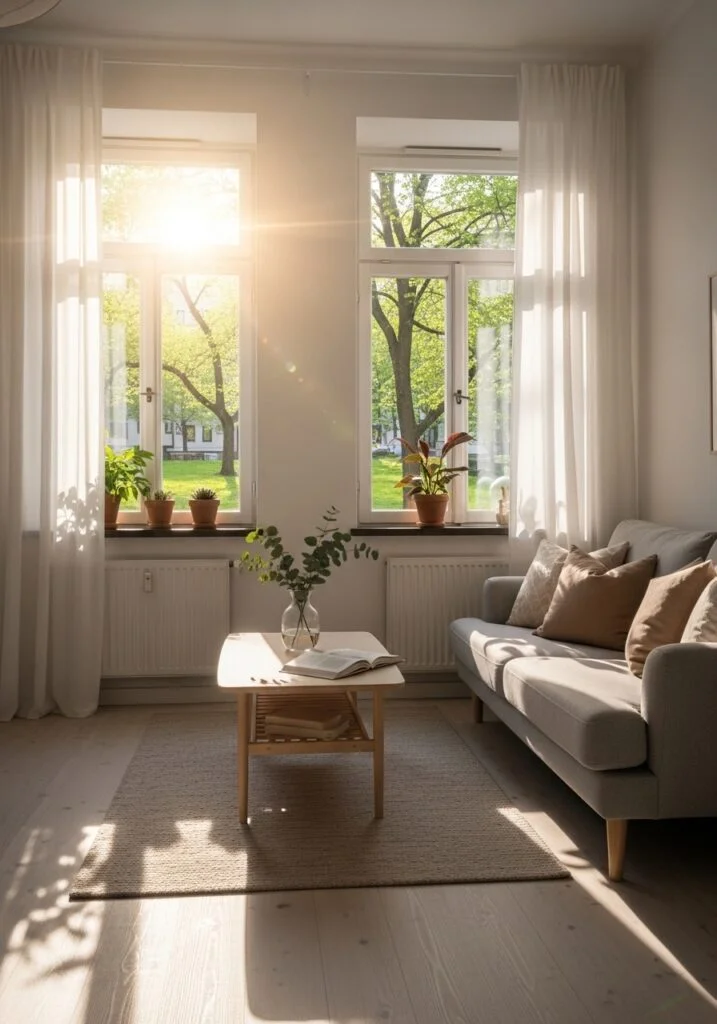
Natural light is a designer’s most potent “secret weapon” for visually expanding a compact footprint, as it instantly dissolves shadows and pushes back the walls. To maximize this effect, keep window treatments light and airy; replacing heavy, light-absorbing drapes with sheer fabrics or minimalist linen panels allows sunlight to flow freely throughout the room. Interior designers often select neutral-toned window dressings that blend into the wall color, creating a seamless, uninterrupted line that makes the ceiling feel higher and the room wider. For an added spatial boost, strategically place a large mirror opposite or adjacent to a window to catch and bounce daylight into the deepest corners of the space. This simple reflection trick not only doubles the brightness but also creates the illusion of a “second window,” effectively hacking the room’s perceived dimensions. A sun-drenched living area inherently feels more welcoming, energetic, and breathe able than one shrouded in heavy fabrics. Ultimately, by prioritizing transparency and reflection, you transform a small, potentially dim interior into a brilliant, open sanctuary that feels significantly more expansive than its physical square footage.
6. Use Vertical Storage
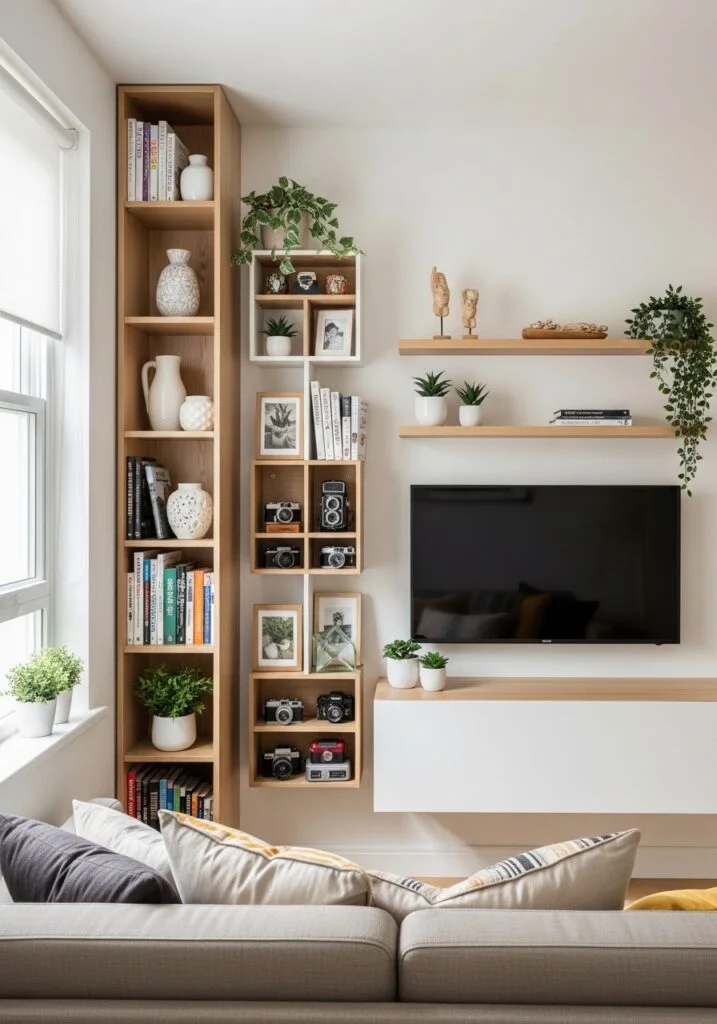
Vertical storage is a designer’s favorite “spatial hack” for small living rooms, as it reclaims underutilized wall space while keeping the floor plan clear and breathable. Rather than relying on heavy, floor-based cabinets that anchor the room and make it feel congested, interior designers pivot to tall bookshelves or sleek, wall-mounted units. This strategic shift draws the eye upward, emphasizing the height of the walls and creating an immediate illusion of a loftier, more expansive ceiling. Floating shelves are particularly effective for displaying a curated mix of art books, trailing plants, and framed photos, providing a decorative layer without the visual weight of traditional furniture. To maximize every square foot, experts often suggest installing shelving above low-profile pieces like sofas or media consoles, transforming dead space into a functional and stylish gallery. By prioritizing a “vertical-first” organization strategy, you maintain a clean, streamlined aesthetic that feels both orderly and intentional. Ultimately, shifting your storage focus from horizontal to vertical ensures your living room remains highly practical while appearing significantly more open, airy, and sophisticated.
7. Choose Light and Neutral Colors
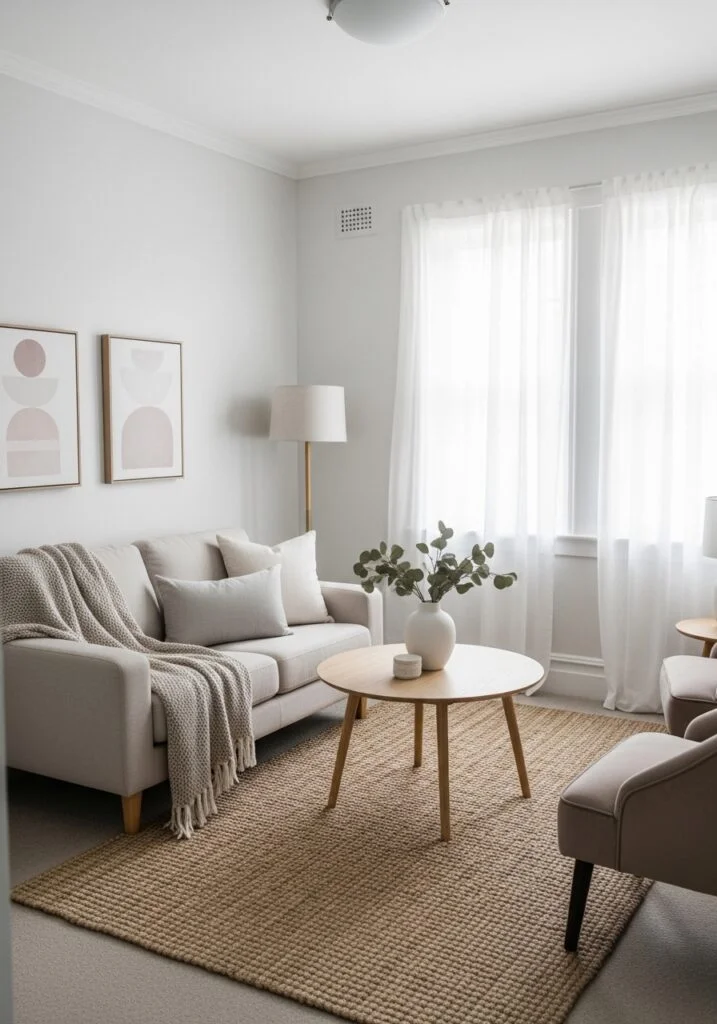
In small-scale interior design, color serves as a foundational tool for manipulating spatial perception, with light and neutral palettes acting as a primary “expander.” Shades such as crisp white, warm cream, soft beige, and airy gray are designer favorites because they possess high light-reflectance values, effectively bouncing natural and artificial light into every corner. By maintaining a cohesive tonal relationship between walls and larger furniture pieces, you create a seamless visual plane that eliminates jarring transitions, making the boundaries of the room feel more fluid and distant. To prevent a neutral space from feeling sterile, designers introduce personality through “micro-doses” of color—think textured throw pillows, a patterned rug, or vibrant artwork—which provide focal points without reclaiming the room’s visual volume. This disciplined approach to color creates a calming, sophisticated environment that feels organized rather than cluttered. Ultimately, a light-driven palette transforms a snug living area into a bright, breathable sanctuary that feels significantly more open than its physical square footage.
8. Use Mirrors to Expand the Space
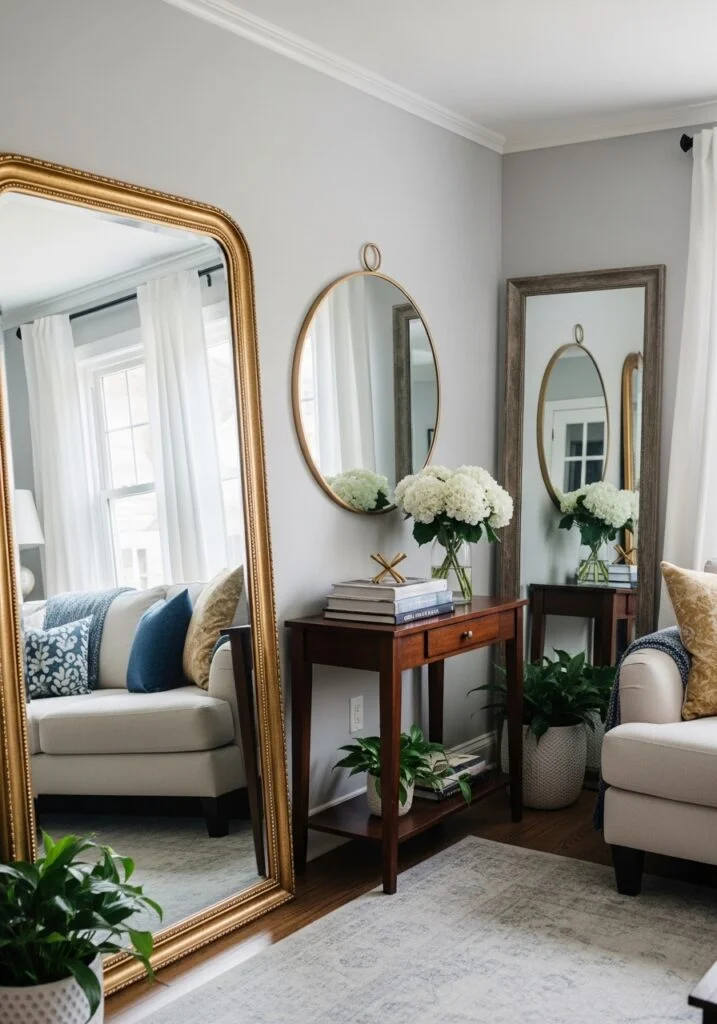
Mirrors are the ultimate “architectural illusion” in a designer’s toolkit, serving as a powerful shortcut to doubling a room’s perceived square footage. By strategically positioning a large-scale mirror—ideally above a sofa or directly opposite a primary window—you effectively “open up” a solid wall, creating an immediate sense of depth and a secondary vista. This classic trick works by capturing and bouncing both natural and artificial light into the far corners of the space, dissolving shadows that typically make a small room feel enclosed. Beyond their functional capacity to brighten, interior designers leverage mirrors as sophisticated artistic elements; a well-chosen frame can anchor a room’s style while maintaining a “see-through” quality that prevents the walls from feeling heavy. Whether you opt for a sleek, floor-to-ceiling lean-on mirror or a curated gallery of smaller reflective surfaces, the result is a living area that feels more breathable, balanced, and expansive. Ultimately, integrating mirrors is a high-impact, low-effort way to transform a snug interior into a luminous, open sanctuary that defies its physical boundaries.
9. Keep Decor Simple and Balanced
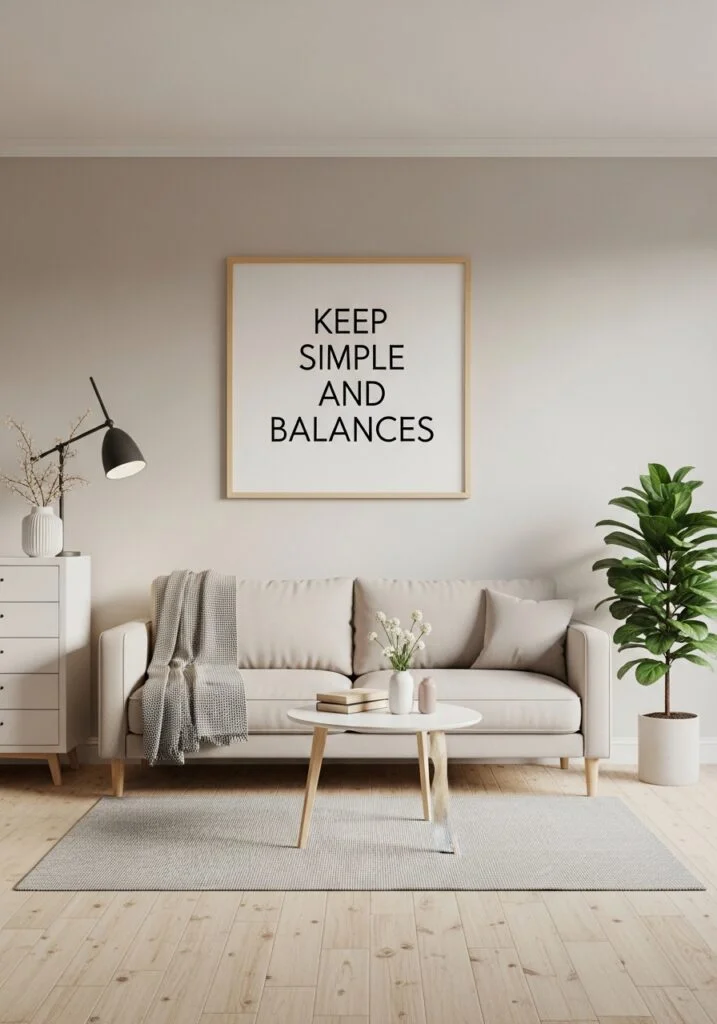
In a compact living room, the line between “curated” and “cluttered” is incredibly thin, making a “less is more” philosophy essential for maintaining a sense of space. Interior designers prioritize a disciplined approach to decor, selecting a few high-impact, meaningful pieces rather than filling every available surface with small trinkets. A single, well-composed coffee table arrangement, one large-scale piece of wall art, or a sculptural indoor plant can inject immense personality into a room without visually shrinking its dimensions. By focusing on balance and intentionality, you allow the room’s architectural lines and furniture to breathe, creating a polished environment that feels organized and sophisticated. This edited approach ensures that each decorative element has the space to be truly appreciated, serving as a focal point rather than contributing to visual noise. Whether you lean toward minimalist chic or a more layered aesthetic, keeping your decor simple and appropriately scaled prevents the room from feeling closed-in. Ultimately, a balanced interior reflects a refined personal style, transforming a small footprint into an airy, intentional sanctuary that feels both welcoming and professionally styled.
10. Add Hidden Storage Solutions
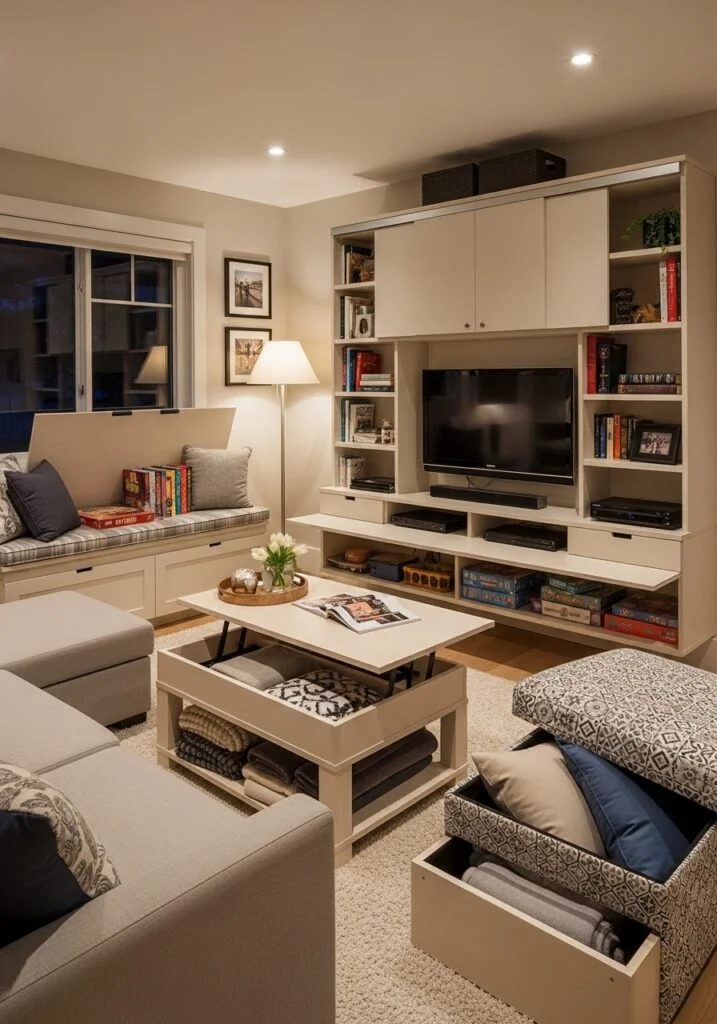
Hidden storage is the ultimate “invisible” design tool for small living rooms, allowing you to maintain a high-end, minimalist aesthetic without sacrificing the necessities of daily life. To prevent a compact space from feeling overwhelmed by “visual noise,” interior designers prioritize multifunctional pieces that double as discrete stowaway zones. A sleek storage bench or a plush ottoman with a removable lid can effortlessly house bulky items like winter blankets or extra pillows, keeping them accessible but entirely out of sight. Similarly, opting for media consoles with closed cabinetry rather than open shelving allows you to tuck away electronics and cables that frequently clutter a room’s perimeter. For smaller essentials like remotes, magazines, and chargers, designers often incorporate tactile baskets or chic decorative boxes that add texture to the decor while serving a practical organizational purpose. By systematically hiding clutter, you instantly clear the room’s energy, making the environment feel more expansive, serene, and intentionally curated. Ultimately, mastering hidden storage ensures your living area remains a relaxing sanctuary where every item has a dedicated home, proving that a tidy room is the fastest way to make a small footprint feel grand.
Conclusion
Designing a small living room doesn’t mean sacrificing comfort or style. By choosing space-saving furniture, using layered lighting, and adding smart storage solutions, you can transform even the smallest living area into a functional and beautiful space. Interior designers focus on simplicity, balance, and clever layouts to make compact rooms feel open and welcoming. With thoughtful planning and the right decor choices, your small living room can become a cozy and stylish place where you enjoy spending time every day.