You hold a sage green paint chip against your knotty pine wall, and something is off. On the chip, the green looks calm and slightly gray. Against the wood, it turns yellow and a little sour. Nothing is wrong with sage. The trouble is that rustic rooms are full of strong materials, and each one carries its own undertone: orange pine, gray fieldstone, cognac leather, honey-colored rattan. Sage has to get along with all of them.
These twelve rustic sage green living room ideas are organized around that problem. Each one starts with a material you probably own or plan to buy, then shows how to choose or place the green so it holds up beside it. Expect real measurements, a few installation mistakes worth dodging, and honest notes on where sage struggles.
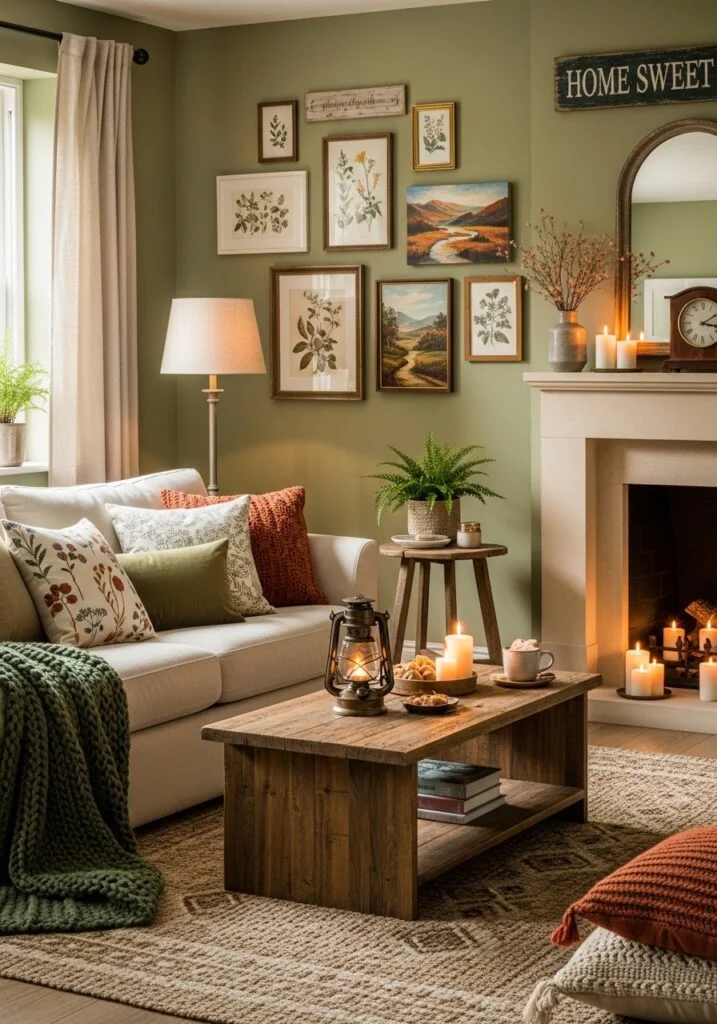
Match the Green’s Undertone to Your Wood Before You Pick a Paint
Wood decides which sage works. Orange-toned pine and golden oak pull warmth out of a green, so a yellow-based sage ends up looking sour beside them. Choose a grayer, slightly cooler sage for those woods and the pairing settles down. Walnut and other red-brown woods tend to be more forgiving because red sits opposite green on the color wheel and makes the green look cleaner.
Test with the real piece, not a swatch book. Prop a large painted sample board next to the coffee table or the timber wall in morning light, then look again at dusk. A reclaimed barn-wood wall with gray weathering can take a softer, mossier green. Freshly stained wood needs a deeper one, or the green looks washed out beside it. Keep the wood tones in your sight line to two at most. A third one usually fights the green instead of supporting it.
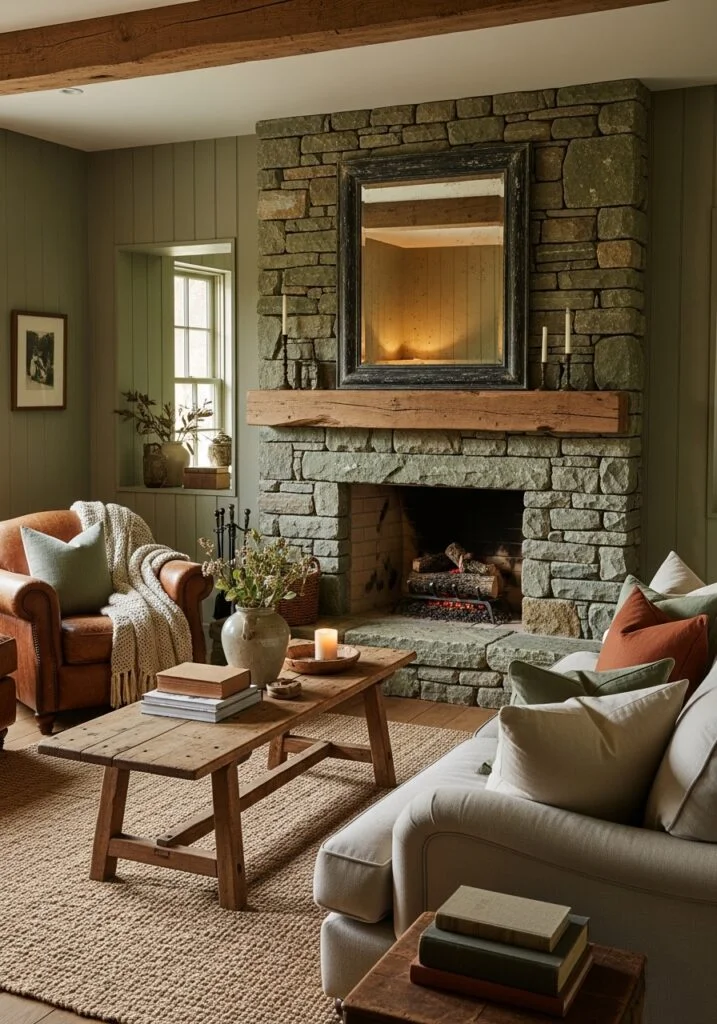
Pull the Sage From the Stone Around Your Fireplace
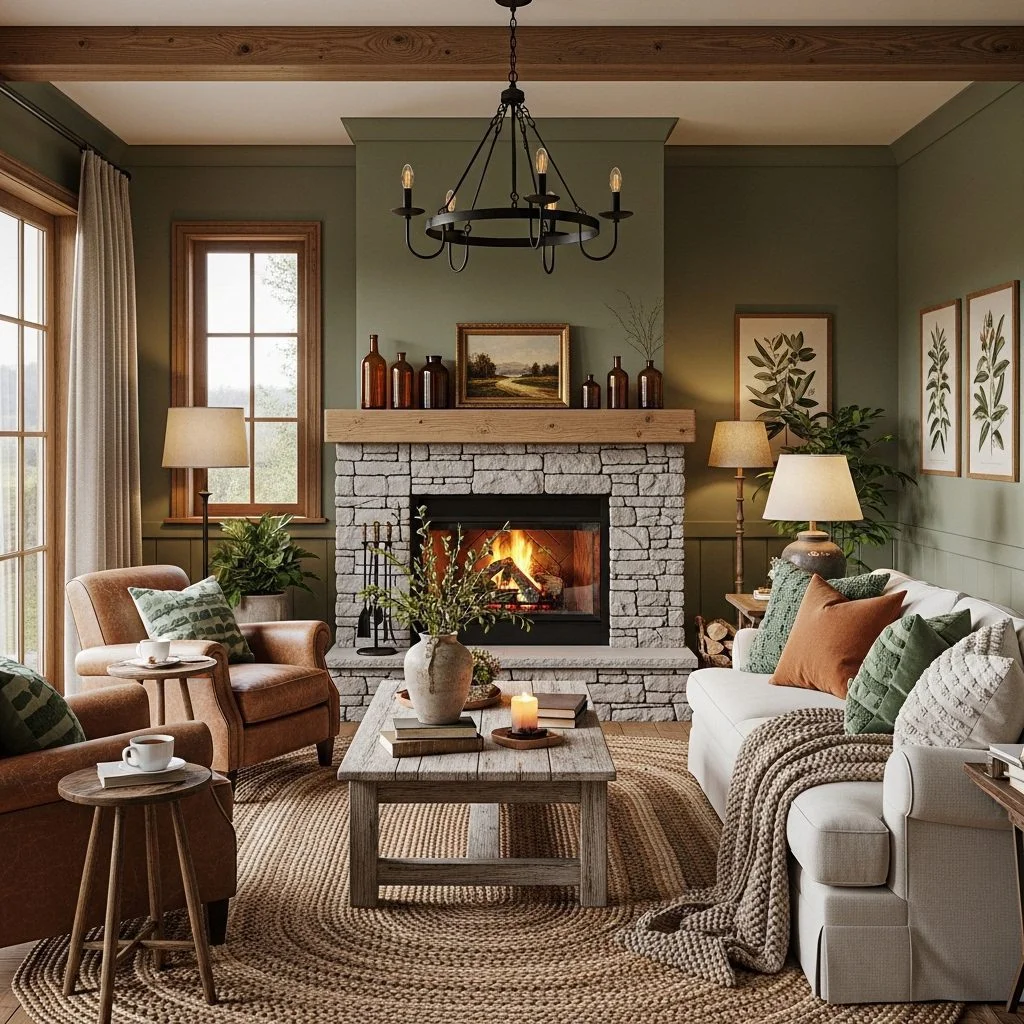
Fieldstone and stacked ledgerstone are rarely one color. Look closely and you will find flecks of gray, rust, tan, and sometimes a muted green. Pick your sage from the fleck that appears most often, and the wall reads as part of the fireplace instead of a separate decision. Gray-dominant stone suits a gray-leaning sage. Rust and tan stone suit a warmer, olive-leaning one.
Cut the paint line against rough stone with a small angled brush. Painter’s tape rarely seals against uneven masonry, and paint bleeds into the crevices behind it. A thick wooden mantel adds a dark horizontal that keeps the green from floating. Before you hang anything combustible on or above the mantel, check your local code and the manufacturer’s clearance guidance, because requirements vary by fireplace type. The same logic applies to a stone feature wall behind the sofa: repeat the green once on the stone side, with a vase or a framed print, so the two surfaces look related.
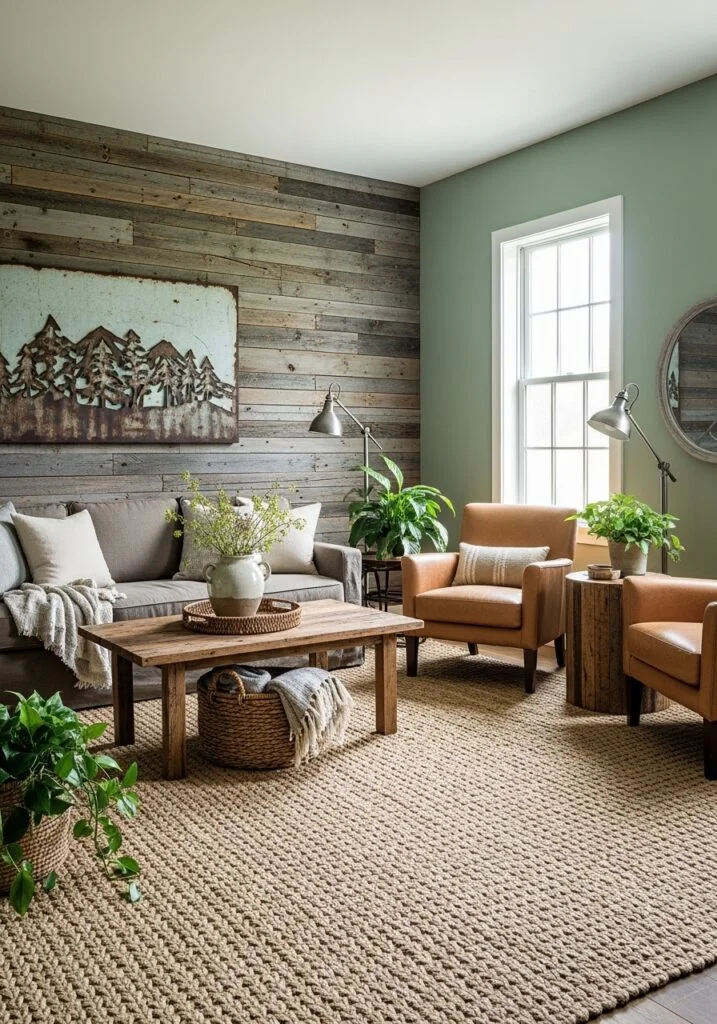
Plank Walls and Beam Ceilings Need a Different Paint Plan
Painted planks look best when you can still see some wood. A full-coverage coat of sage turns tongue-and-groove into flat color. A thinned wash, roughly four parts paint to one part water, lets the grain show through. Test it on a spare board first, because softwoods like pine soak up color unevenly and can blotch without a stain-blocking primer.
The installation mistake to avoid is painting boards after they are nailed up. Wood shrinks in dry winter air, and a pale line of bare tongue shows at every seam. Paint the edges and grooves first. Overhead, dark stained beams give sage walls a frame, but low ceilings suffer. With an eight-foot ceiling, keep beams shallow and the ceiling itself a warm white. Paint also releases volatile organic compounds, and the EPA recommends increasing ventilation while you use products that emit them, so open windows and keep air moving while the walls cure.
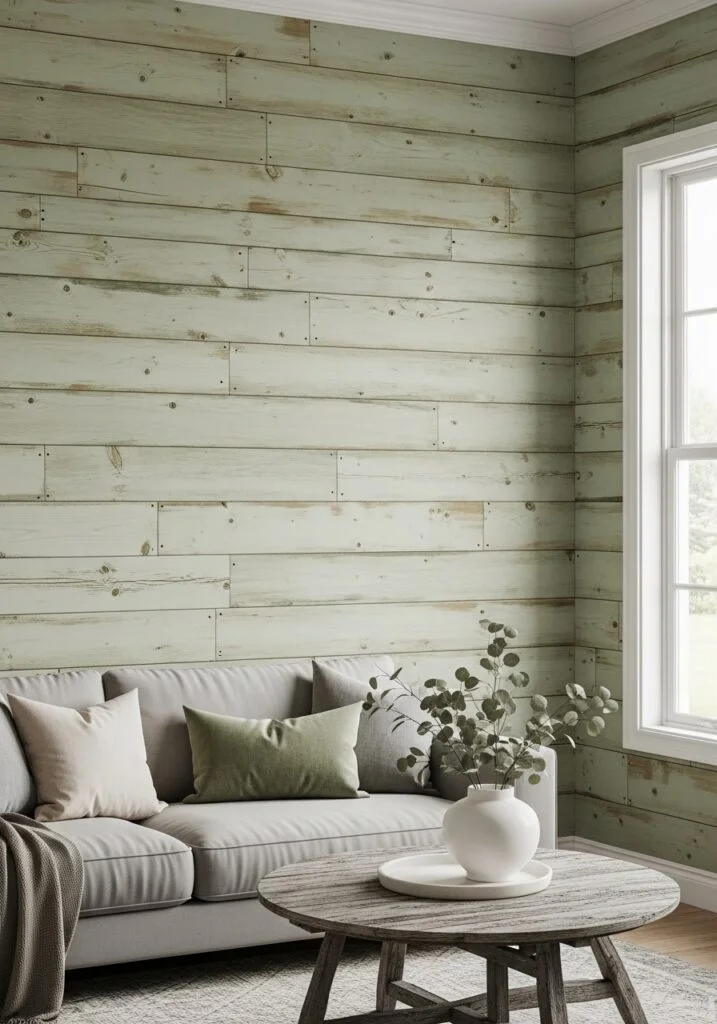
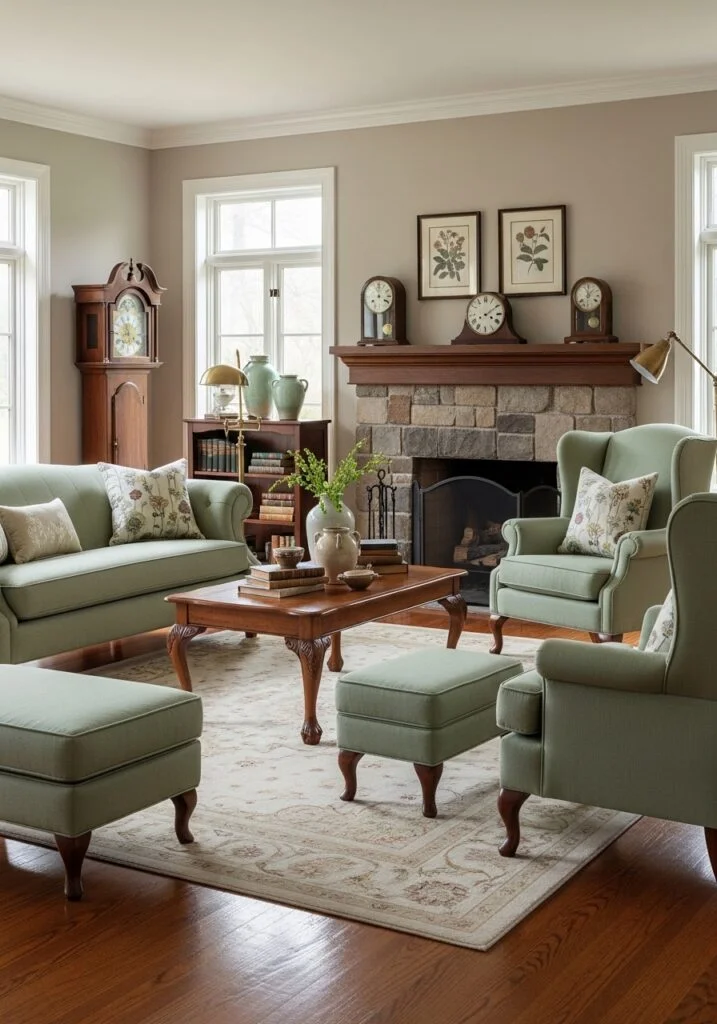
Decide Between a Sage Upholstered Sofa and a Sage Slipcover
Sage velvet looks rich but shows crushed-pile marks where people sit. Performance velvet and tight-weave linen blends hide them better. A slipcover costs less to replace but behaves differently: linen can shrink even after pre-washing, so order a size up or choose a cotton-linen blend, and put the cover back on while it is slightly damp so it smooths out.
Whichever you pick, leather is the best neighbor. Cognac and dark saddle brown warm the green up, while black leather can make it read gray. Mix eras if you like, a mid-century frame beside a heavy farmhouse table, but keep the sofa seat height near 17 to 19 inches so a vintage armchair next to it does not look dwarfed.
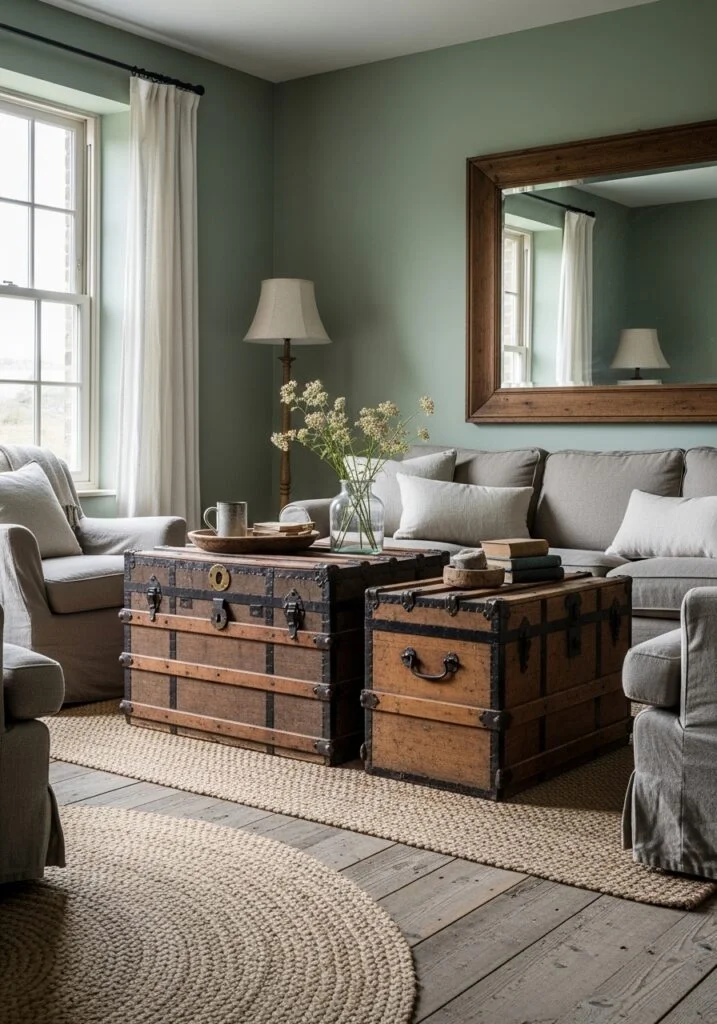
Let an Old Trunk Do the Work of a Coffee Table
A real antique trunk has scuffs that factory distressing cannot copy, and sage shows them off. Look for one between 16 and 19 inches tall, roughly level with your sofa seat, and about two-thirds the length of the sofa. Before you buy, open it and smell the lining. Musty trunks hold odor, and airing them out only goes so far.
Stick felt pads under the corners so rough bottoms do not scratch the floor. Use a wooden tray on top instead of a cut-to-size glass top, which adds cost and hides the wood you chose the trunk for. Check the hardware too. Loose hinges and weak latches are easy fixes, but a cracked lid is not. Inside, store the throws you actually use, so the trunk gets opened every week and stays fresh.
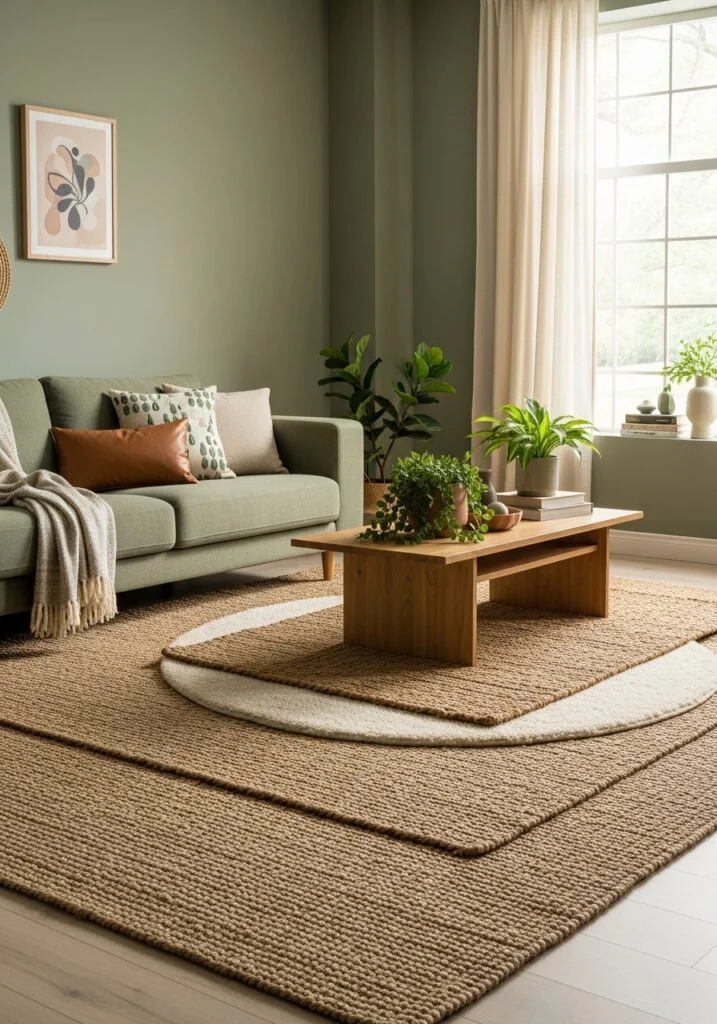
Choose a Rug That Repeats the Sage, Not Just the Texture
Plain jute is yellow-brown, sheds fibers, and can fight a gray-leaning sage. A wool flatweave, or a faded vintage-style rug with sage threaded into the pattern, carries the wall color down to the floor. Size matters more than material. In a 12-by-14-foot room, an 8-by-10 rug should sit under at least the front legs of the sofa and chairs, or the seating area looks like it is floating.
Add a rug pad about a quarter inch thick. It stops sliding and adds cushion without raising the rug enough to catch door edges. A hand-loomed wool 8-by-10 often runs roughly $300 to $900, while synthetic blends cost less. Spend the money here before you spend it on accessories, because the rug is the largest single piece of color after the walls.
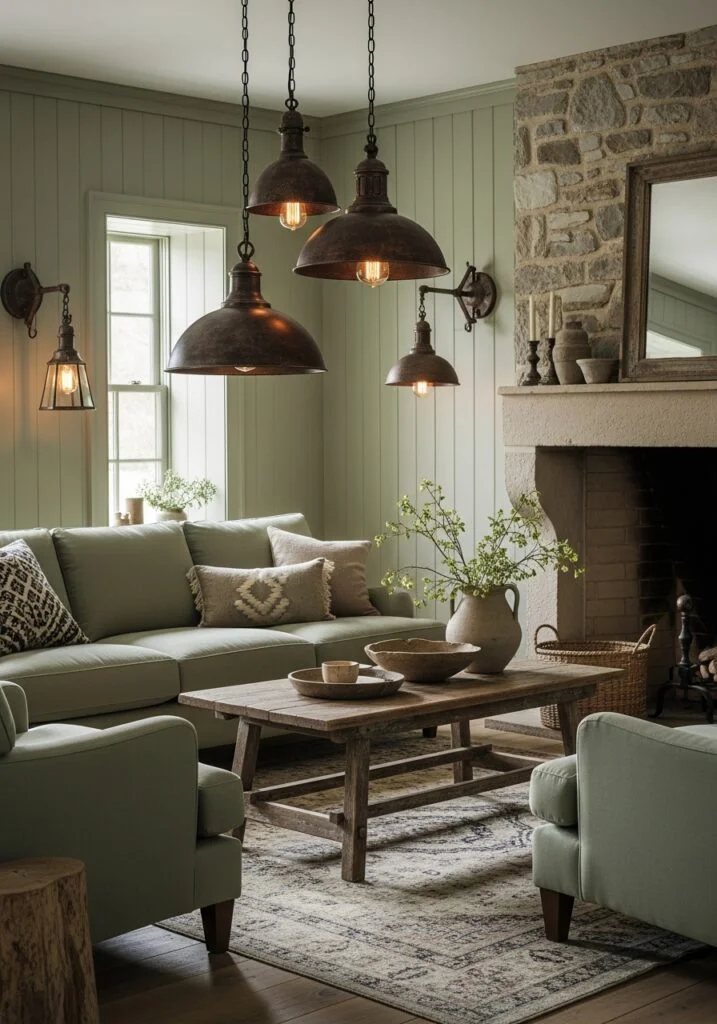
Pick One Dominant Metal for the Whole Room
Brass, black iron, and copper all work with sage, but not in equal parts. Aim for one metal on roughly three-quarters of the visible lighting, hardware, and frames, with a second as the accent. Unlacquered brass warms the green and darkens with age, which suits a rustic room. Lacquered brass stays shiny and can look fussy. Black iron adds contrast and is the better call in a sunny room where brass can glare.
For pendants over a table, hang the bottom edge 30 to 36 inches above the surface. Over open floor, keep it near seven feet so nobody ducks. Match bulb color across every fixture so warm and cool light do not argue, and see our guide to living room color combinations that hold up in daylight and lamplight for how to test a green under your own lamps.
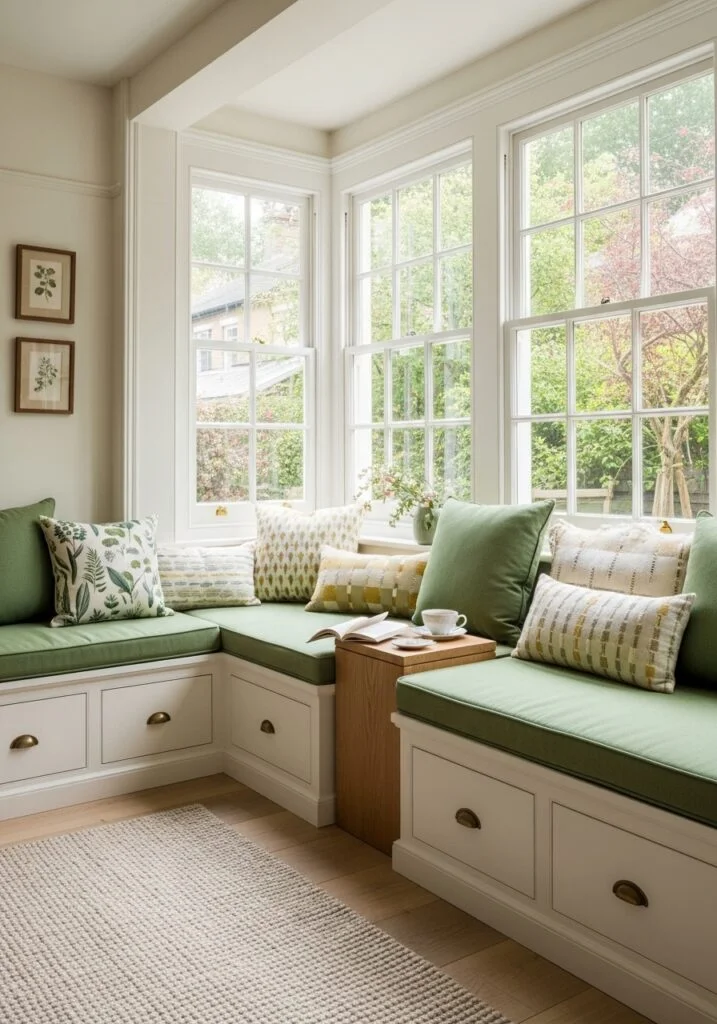
Build the Window Seat Right, Then Dress It in Sage
A comfortable window seat matches ordinary seating: 17 to 19 inches high and 18 to 20 inches deep. Use a hinged lid for storage, with a plywood top at least three-quarters of an inch thick, and cushion foam three to four inches deep. Anything thinner feels like a bench. A custom cushion typically costs about $150 to $400 depending on fabric.
Sage linen fades in direct southern sun, so line the cushion cover or choose a solution-dyed fabric. Roman shades follow the same logic. Mount them above the window frame so the stacked fabric, usually 8 to 12 inches for a lined shade, clears the glass when raised. Natural wood trim or a wood header ties the shade back to the room’s timber.
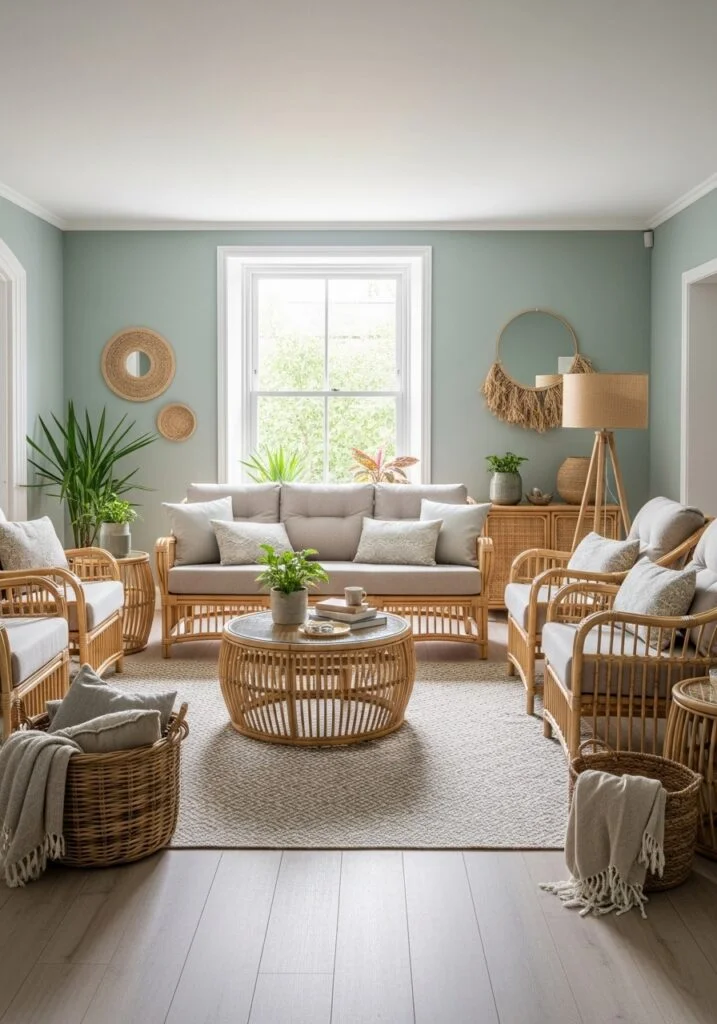
Use Woven Chairs to Warm Up a Cool Green
Sage sits on the cool side, and honey-colored rattan warms it without adding another heavy wood. Use one woven chair or a pair, not a full set. Natural rattan dries and fades in strong sun, and cane webbing can loosen in humid climates, so keep these pieces away from a south window and a heating vent.
An upholstered sage accent chair across the room repeats the green. Check seat depth before ordering: about 20 inches suits most people, while chairs deeper than 24 inches swallow smaller frames. Park a side table 1 to 2 inches below the chair arm so a mug can be set down without reaching up.
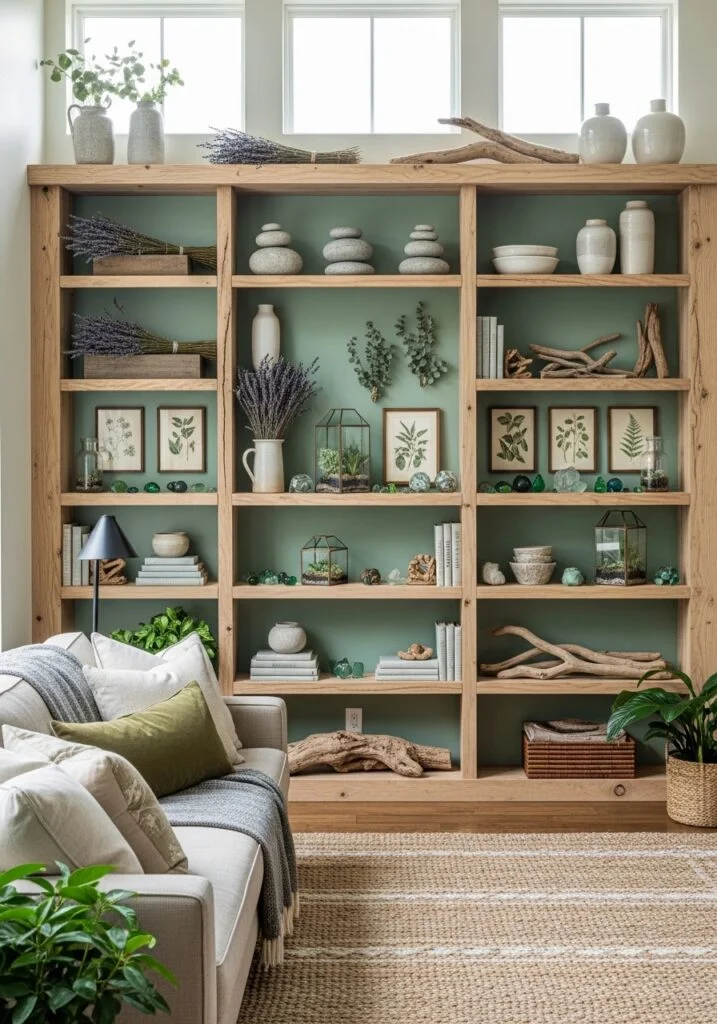
Give a Big Sage Wall Something to Hold Onto
A wide green wall with nothing on it looks unfinished. Shelves 10 to 12 inches deep fit books and bowls, while narrower ones look cramped. The common mistake is anchoring floating shelves into drywall alone, where they sag under books. Find the studs, which are usually 16 inches apart, and put heavy items near the brackets.
For a frame arrangement, center it about 57 inches from the floor, leave two to three inches between frames, and limit yourself to two wood finishes so the wall looks collected rather than random. Prints that contain a little sage, such as botanical drawings or landscapes, tie the art back to the paint.
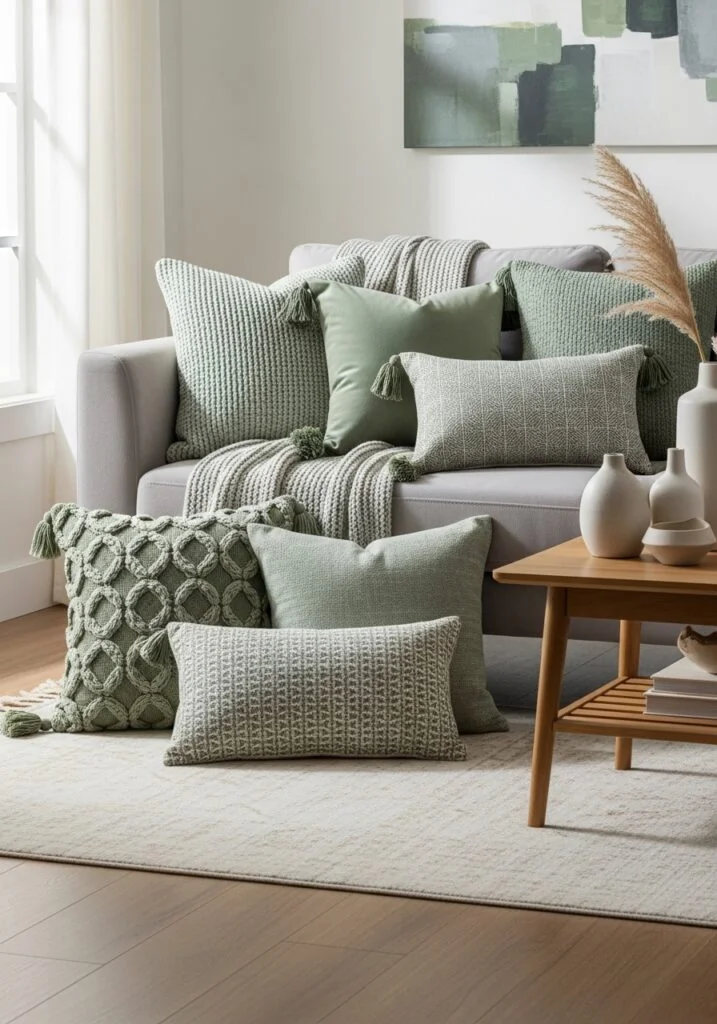
Limit Pillows and Throws to Three Greens
Six shades of sage on one sofa look like a paint-chip display. Use three: one close to the wall color, one lighter, and one deeper olive. Fill the rest with cream and a rust or clay accent. Choose inserts about two inches larger than the cover, such as a 22-inch insert in a 20-inch cover, so the corners look full.
On an 84-inch sofa, five pillows is the practical ceiling. Beyond that, nobody can sit down. Mix surfaces, velvet, nubby linen, and wool, so similar colors still read as layers. Wash linen covers before first use so they soften and settle. A knitted throw in the lightest green is the easiest swap when you want the room to feel different without touching paint.
Carry the Green Into an Open Kitchen Without Painting Everything
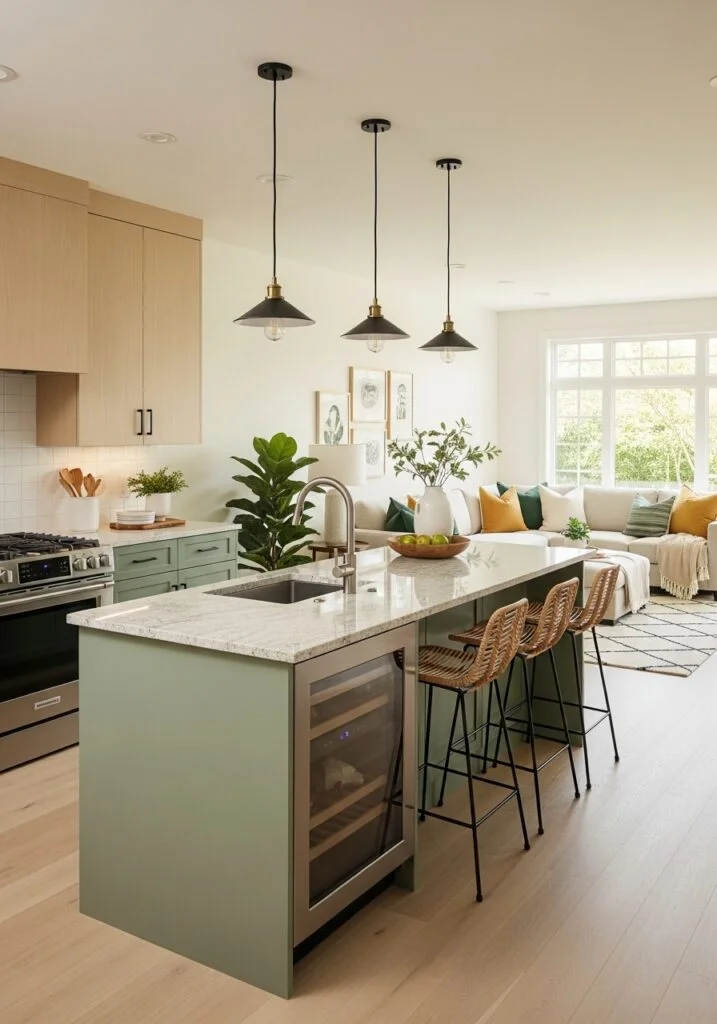
In an open plan, one sage cabinet run or island is enough. The same paint formula reads stronger across a whole wall than on a cabinet door, so if the cabinets carry the green, go a shade lighter on the living room walls. Cabinets need a durable satin or semi-gloss, while walls look best in matte or eggshell. The sheen difference changes how the color reads, so compare samples side by side.
Counter-height stools sit 24 to 26 inches off the floor at a standard 36-inch island, with 10 to 12 inches of knee room. Repeat the island’s wood tone in a dining table or a bar cart in the sitting area so the two zones share a material. A woven basket on the cart can pick up the green without another painted surface.
Start With One Board and One Chip
Make a single sample board of the sage you like, set it beside your wood and stone, and live with it for three days. If it turns yellow next to the pine, step to a grayer green. If it vanishes beside dark stone, go deeper. Then pick one idea from above and finish it completely, a rug, one shelf, a trio of pillows. Rustic rooms get cluttered when ten small changes arrive together. If you would rather build a warm neutral base first, our farmhouse living room ideas cover cream walls, linen, and layered wood in detail.
Frequently Asked Questions
Does sage green look good with orange pine floors?
Yes, if you choose a gray-based sage. Yellow-based greens clash with orange pine and look sour. Lay a painted sample board directly on the floor in morning light and look at both together from standing height. If the green looks muddy, step to a slightly deeper shade, and add a cream rug to separate the two.
What paint sheen works best for sage green living room walls?
Eggshell is the safest choice because it hides minor roller marks and wipes clean. Flat paint looks richer but scuffs easily near doorways and sofas. Use satin on trim and built-ins, since a slight sheen difference outlines the woodwork without needing a second color. Always test the color and sheen together on the same board.
What trim color goes with sage green walls and dark wood beams?
A warm white or soft cream is the usual pick. A bright, blue-based white looks stark against dark timber and can make the green look dingy. Hold a white chip beside both the wall color and the beam before buying, and favor a white with a hint of yellow or gray rather than a pure, crisp one.
What color leather looks best with sage green?
Cognac and saddle brown are the strongest partners because their warmth lifts the green. Dark chocolate also works and feels heavier. Black leather often makes sage look gray, and tan leather can blend into it. If you already own a leather chair, check your paint sample against its arm in lamplight before ordering gallons.
How do I keep sage green fabric from fading near a window?
Rotate cushions every few weeks and close lined curtains or shades during peak sun hours. Solution-dyed acrylic and performance fabrics resist fading far better than untreated linen or cotton. A clear UV-filtering window film, sold at most hardware stores, blocks much of the ultraviolet light that causes color loss without noticeably darkening the room.