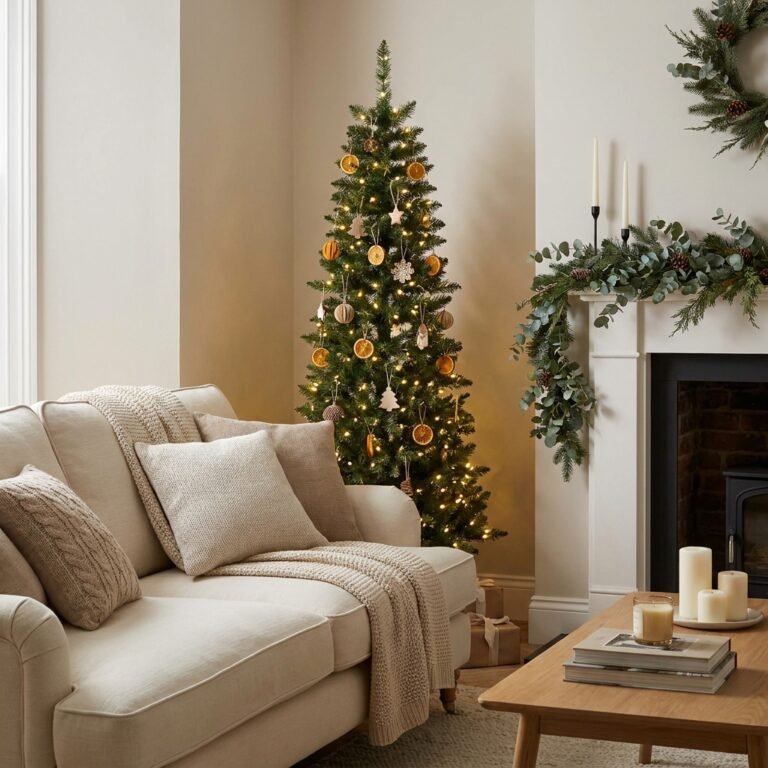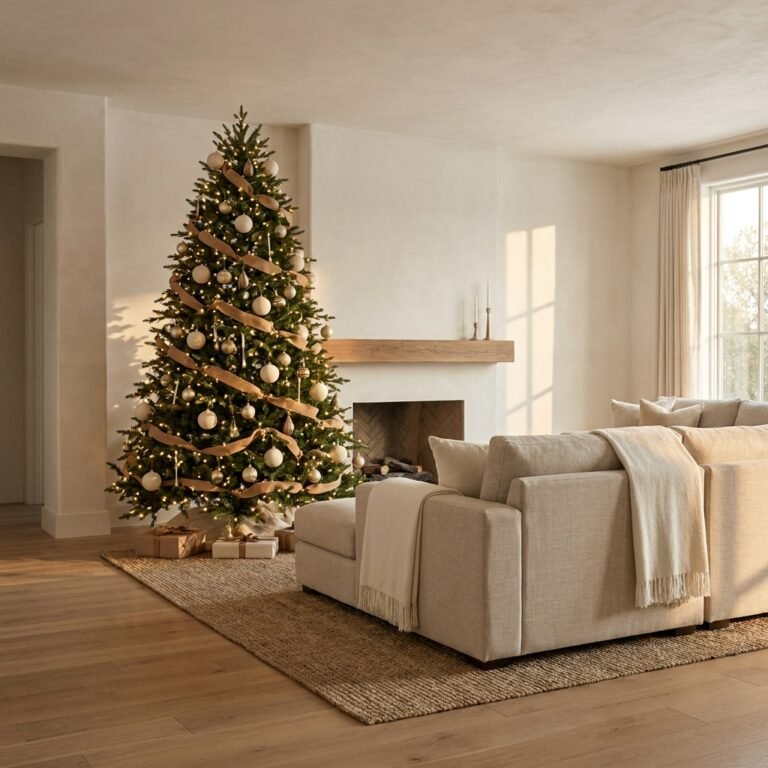
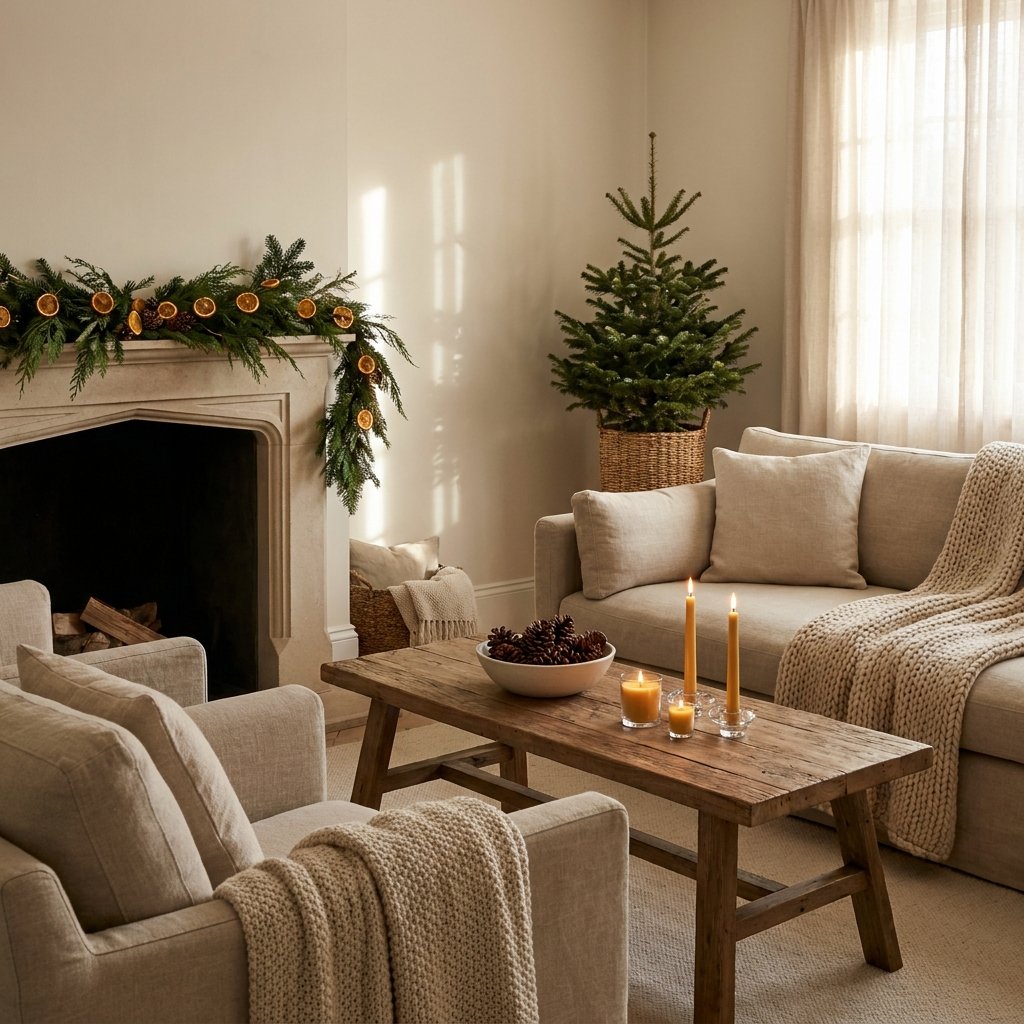
A neutral Christmas can go two ways. In one version, the house looks composed: layers of cream, oat, stone, and wood, with greenery as the single fresh note and candlelight doing the rest. In the other, it looks like someone forgot to finish decorating, with beige everywhere, nothing to look at, and a faint yellow cast over everything.
The difference is rarely about taste. It comes down to a handful of technical choices: undertone, contrast, texture, and where you stop. This guide covers those choices first, then walks through the rooms where neutral decor works best, from the front door to the bedroom.
Neutral Is Not One Color: Start With Undertones
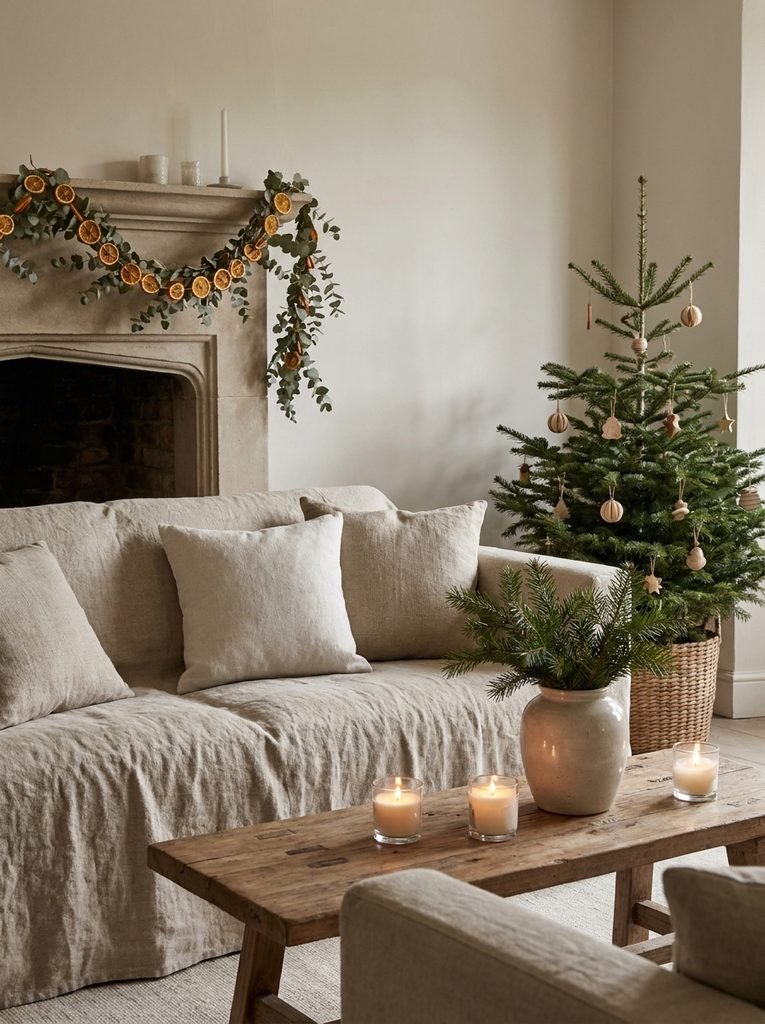
Cream, ivory, beige, greige, taupe, stone, and white are all described as neutral, yet they pull in different directions. Some lean warm, with yellow or pink beneath the surface. Others lean cool, with gray, blue, or green underneath. When these mix without a plan, the result looks slightly off even if nobody can say why.
A quick check helps. Place a plain sheet of white printer paper next to the item in question. A warm neutral will look noticeably yellow or peachy beside the paper, while a cool neutral looks grayish or slightly blue. Do this under the same lamp you will use in the evening, since artificial light shifts colors.
Pick one direction for the main scheme. A warm scheme suits homes with wood floors, brass fixtures, and cream walls. A cool scheme fits gray flooring, white walls, and chrome or black hardware. If you need help judging your room’s baseline, the guide to living room color combinations that look good after dark explains how lamplight changes what you see.
You can still include one item from the opposite side, such as a cool stone bowl in a warm room, but treat it as a deliberate accent.
Build in Contrast, Or the Whole Look Flattens
The most common complaint about neutral decor is that it looks bland. Usually the problem is a lack of value contrast, meaning everything sits at the same lightness.
A balanced neutral scheme includes four roles:
- Light: ivory, chalk, or off-white for linens, candles, and some ornaments.
- Mid-tone: oat, sand, or greige for ribbons, pillows, and baskets.
- Dark anchor: espresso, charcoal, or deep brown for a few small items, such as a wooden bowl, a black candlestick, or dark ribbon.
- Natural green: fresh or good-quality faux evergreen as the one living color.
That dark anchor matters more than people expect. Even two or three dark pieces in a room give the lighter tones something to stand against, which makes the cream look richer rather than faded.
Texture Does the Work Color Normally Would
With color deliberately limited, texture carries the visual interest. Think in terms of surfaces you could describe with your hands.
Linen and cotton napkins bring a crumpled softness. Wool and bouclé add a plush, cozy surface. Unglazed ceramic and stoneware have a chalky matte finish. Raw wood shows grain, rattan has a woven pattern, and handmade paper has a fibrous edge. Beeswax candles, dried grasses, and pinecones add organic irregularity.
Try to include at least five different textures in any room you decorate. Glossy plastic or highly reflective items tend to look out of place in a neutral scheme, so use them sparingly. A few softly metallic accents, such as aged brass or brushed pewter, are fine as long as they are not too shiny.
A Neutral Christmas Dining Table
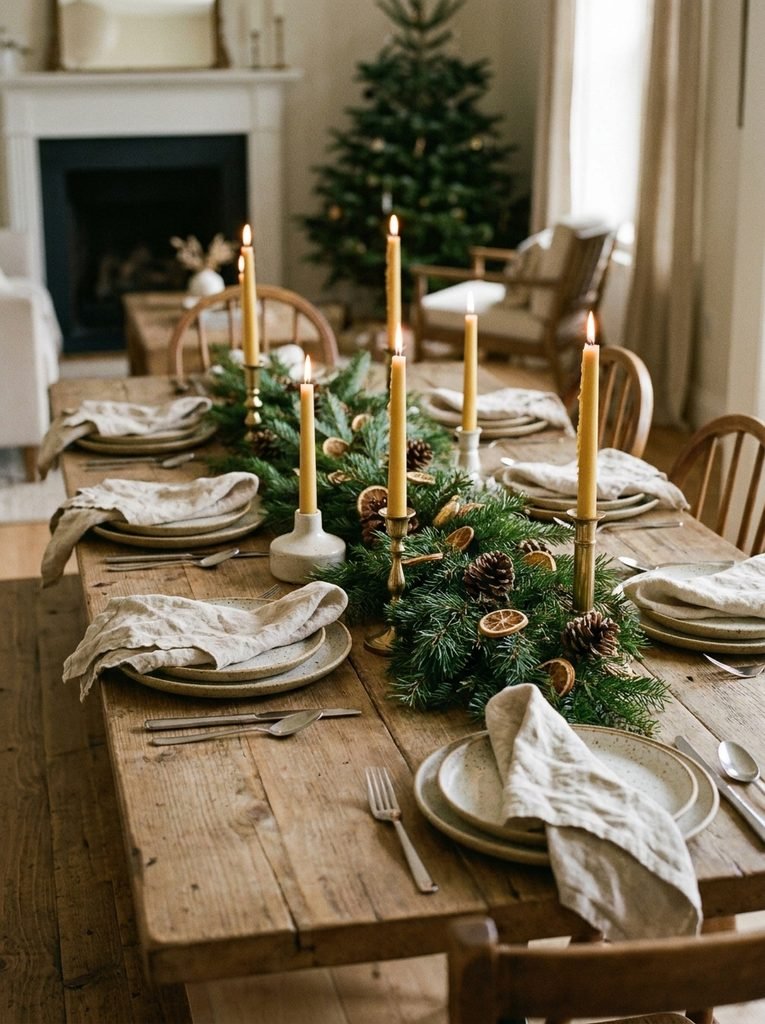
The dining table is a good place to practice because it is small, controlled, and easy to reset. Start with a linen runner or a bare wooden table, then build in layers.
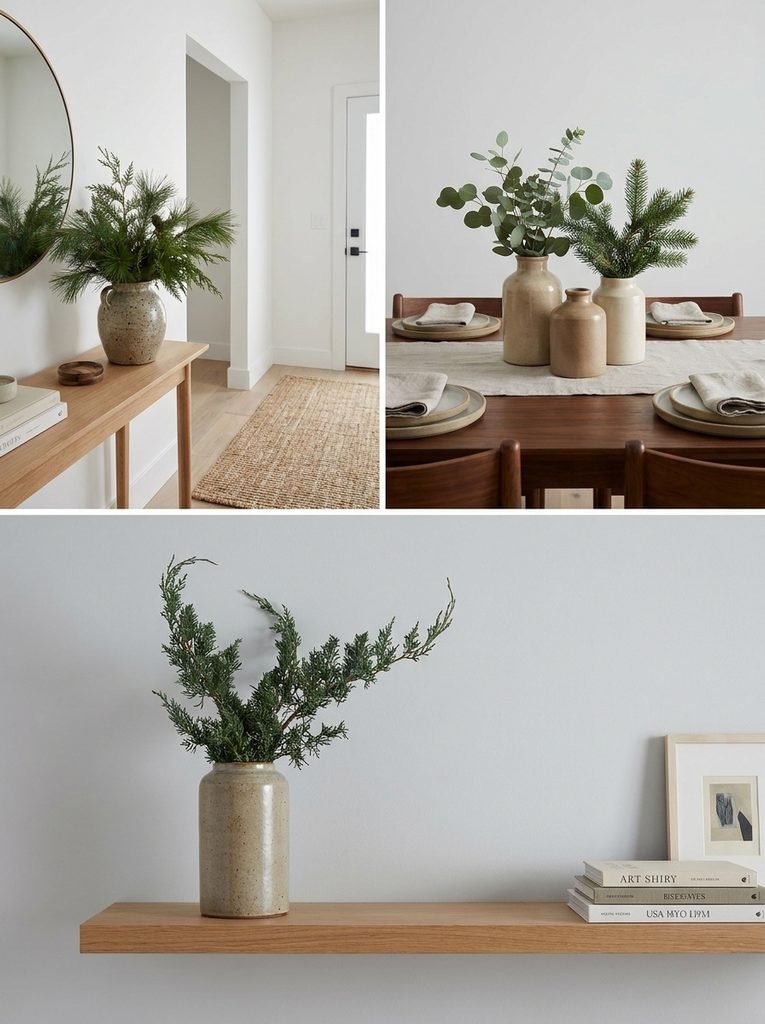
Use stoneware plates in off-white or sand, with simple glasses and linen napkins in a slightly deeper tone. Add a centerpiece of cut evergreen branches in a low ceramic bowl, with a few beeswax taper candles in plain holders of varying heights. A sprig of rosemary tucked into each napkin ring adds fragrance and a fresh green accent.
Leave gaps between objects. A table that includes a visible stretch of bare wood or fabric looks calmer than one covered edge to edge. For tighter dining areas, the ideas in small dining room ideas that feel bigger than they are can help you plan around limited space.
Real candles should be kept clear of greenery and fabric and never left unattended. The National Fire Protection Association offers practical advice at its holiday safety page.
The Entryway and Front Door
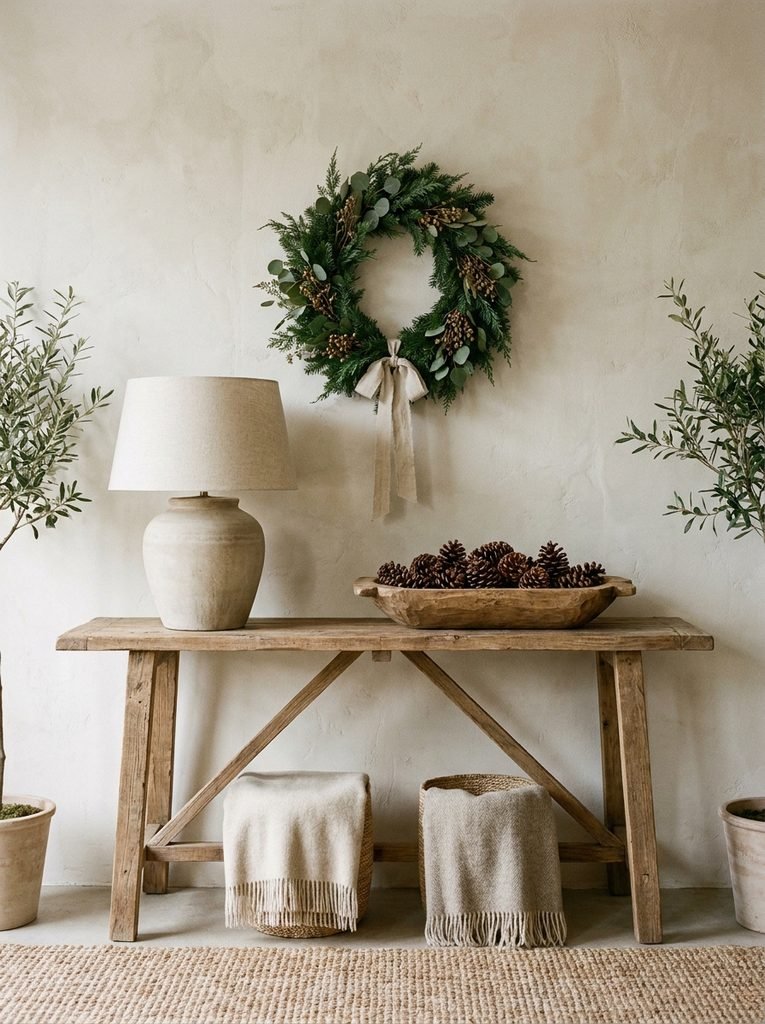
The entry sets the tone before anyone sees the rest of the house, so it benefits from a little restraint. A single wreath on the door is often enough. Choose one with a natural look, such as plain evergreen with a loose linen or jute ribbon, or a dried wreath of wheat and eucalyptus.
Inside, keep the console or bench simple. One lamp, a wooden bowl filled with pinecones, and a basket for coats or shoes creates an organized scene. Layer a wool runner or a natural fiber rug underfoot, and hang a mirror above the console so the lamp’s glow doubles.
A fresh bundle of cedar or pine in a stoneware vase makes the entry smell inviting, and it uses very little space.
A Neutral Gift Wrapping Plan
Gifts are among the largest sources of color at Christmas, so wrapping is a useful place to apply the palette. Choose two or three papers in coordinated neutral shades, such as kraft, cream, and a soft gray-brown, and use fabric or twine for ribbon.
Add small natural details to each package: a sprig of pine, a dried orange slice, a cinnamon stick, or a handwritten tag on plain cardstock. Keep the tags in a single style so the pile looks planned.
When displaying gifts, group them in a woven basket or stack them neatly beside the tree rather than scattering them. If you ship gifts or give them to others, remember they will not stay under your tree, so the effect is mostly for your own home.

Handmade and Natural Ornaments
Neutral ornaments do not have to be plain glass balls. Natural and handmade pieces add character, and many can be made inexpensively.
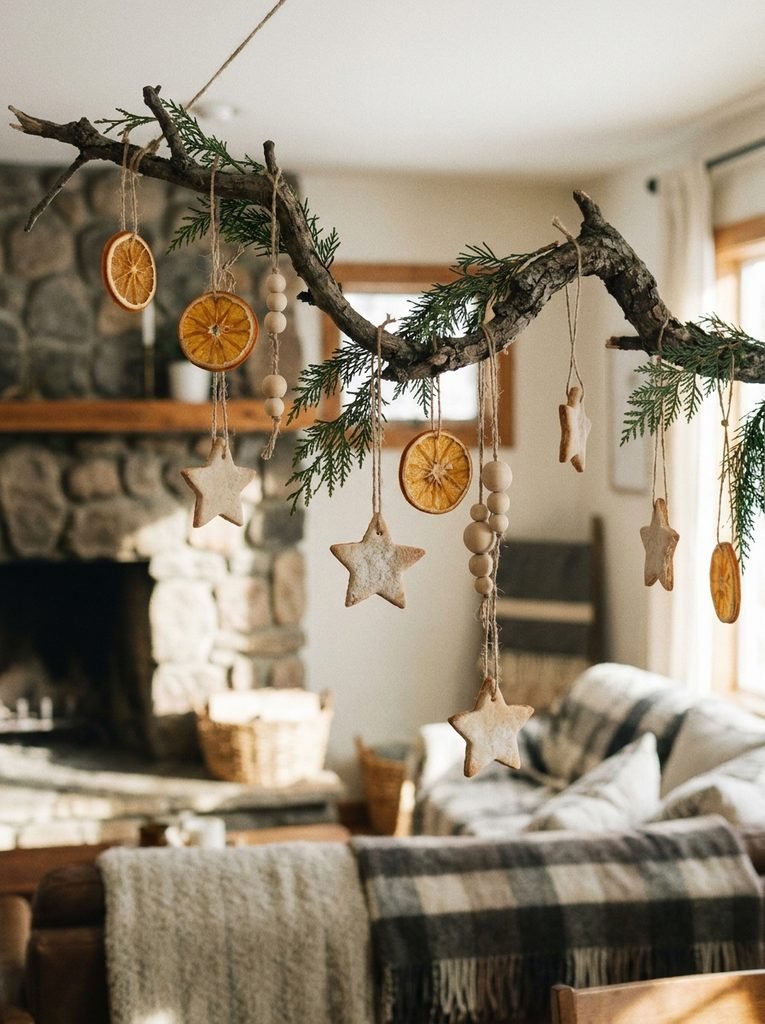
- Dried orange slices: bake thin slices at low heat until dry, then thread with twine.
- Salt dough or air-dry clay shapes: cut simple stars, hearts, or trees, and leave them unpainted or lightly whitewashed.
- Paper stars and snowflakes: fold from textured paper or old book pages.
- Wooden beads, cinnamon sticks, and pinecones: string or tie them with linen thread.
These pieces give a tree or garland an organic, collected feeling. Pair a handful of them with a few glass or ceramic ornaments in ivory so the tree does not feel overly rustic. If you choose a tree with a very pale palette, add a few darker wood or brown pieces for contrast.
A Calm Bedroom for the Holidays
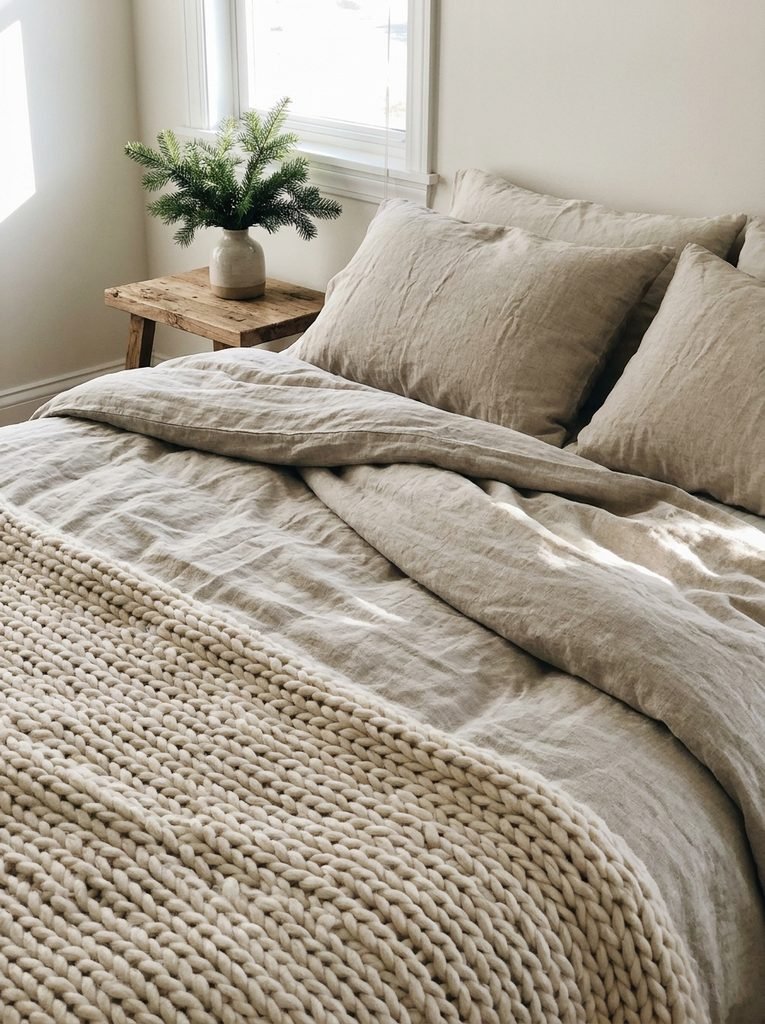
Bedrooms rarely need much Christmas decor, and a quiet approach suits them well. A neutral scheme feels natural here because the room is already built on soft layers.
Swap the bedding for linen or cotton in oat, cream, or soft gray, and add a chunky knit throw at the foot of the bed. Place a small vase of evergreen branches on a nightstand, and use a lamp with a warm bulb. A single wreath on the wall above the bed or on a window adds a seasonal note without clutter.
Layering is the key to the hotel-like feeling many people want. Details such as bedding, lighting, and symmetry are covered in the bedroom details that make a home feel like a boutique hotel, and they work equally well with a seasonal touch.
Where to Add Green Without Breaking the Palette
In a neutral scheme, greenery is usually the only true color, so it deserves some thought. A few guidelines help.
Fresh greenery looks and smells more convincing than most faux options, but good faux can work well. Choose varieties with natural variation in shade and an irregular silhouette. Avoid plastic with a uniform glossy sheen.
Spread greenery across the house in small amounts rather than putting a heavy concentration in one spot. A branch in a vase in the entry, a small bunch on the dining table, and a wreath on the door create a green thread that ties the rooms together.
If you have a fireplace, keep the mantel restrained so it stays in line with the rest of the house. The advice in the Christmas mantel guide applies particularly well to neutral schemes, where one or two elements usually look better than many.
Pitfalls That Make Neutral Decor Look Dull
A few patterns tend to undermine otherwise good plans.
Mixing undertones without noticing. A warm ivory next to a cool white looks dingy. Check your pieces together before committing.
Skipping the dark anchor. All-light schemes can feel washed out. Add a few deep tones.
Too many shiny items. Glossy plastic and bright tinsel break the quiet mood.
Matching everything exactly. Variation within the palette, such as slightly different creams, looks natural. Identical items can look flat.
Treating neutral as a reason to skip lighting. Without color, light becomes the main mood-setter. Use warm bulbs and layered lamps, and turn off harsh overheads.
Budget-Friendly Ways to Build a Neutral Holiday Look
You may already own more neutral decor than you realize. Gather linens, baskets, wooden bowls, white ceramics, and candles from around the house before buying anything new.
Fabric is often a good place to spend a little. A set of linen napkins or a cotton throw can be used year after year. Natural materials like pinecones, branches, and dried citrus cost very little. Thrift stores often carry stoneware, wooden bowls, and brass candlesticks, though prices vary widely.
Buy in layers, adding one or two pieces each year rather than redoing everything at once. A neutral scheme ages well, so you can build on it gradually.
A Final Check Before You Call It Done
When the decorating is finished, stand in the doorway of each room and squint. If the room melts into a single beige blur, add a dark accent or a bit of greenery. If something jumps out and distracts, move it or remove it.
Then dim the lights and watch how the room looks by evening. A good neutral Christmas should feel quiet but not empty, and you should still find something to notice in the textures.