You step out of a five-by-eight bathroom shower, and your elbow finds the towel bar for the hundredth time. The vanity door blocks the toilet. The mirror light makes everyone look tired. Nothing is broken, but nothing feels like a spa either.
Luxury in a small bathroom is rarely about spending more. It comes from a few choices that reduce visual clutter, add warmth, and respect the room’s real dimensions. Each trend below includes a measurement, a material tip, or a catch to check before you buy. Pick three or four, not all twenty-eight.
Spa-Inspired Neutral Color Palettes
Warm beige, soft taupe, and creamy white calm a small bathroom fast. They also reflect more light than deep tones. The trick is to avoid one flat shade everywhere. Layer two or three neutrals with different textures, such as a matte wall, a honed tile, and a woven basket. Test paint samples beside your tile at night as well as in daylight. Cool greys can look cold under warm bulbs.

Wall-Mounted Vanities
A floating vanity shows the floor beneath it, which makes a tight room feel wider. Mounting height is usually 32 to 36 inches to the countertop. The wall must be reinforced with solid wood blocking between studs, because a full sink and drawers are heavy. Floating units also lose some under-sink storage. Choose a deep drawer stack instead of doors, so you can see everything at once.

Large-Format Tiles
Fewer grout lines mean fewer visual breaks. Tiles in the 24 by 48 inch range can make walls look like continuous stone. They need a very flat substrate, though, or the edges will sit unevenly. Large tiles also cannot bend to a sloped shower floor. Use a small mosaic on the shower pan and large tiles on the walls. Match the grout color to the tile so the grid disappears.

Walk-In Showers with Glass Panels
A glass panel lets the eye travel straight through the room. Most building codes set a minimum shower size of 30 by 30 inches, but check your local rules. A fixed panel about 30 to 36 inches wide usually blocks most splash without a door. Place the showerhead on the wall opposite the opening. Add a linear drain along one edge if you want a single-plane floor.

Statement Lighting Fixtures
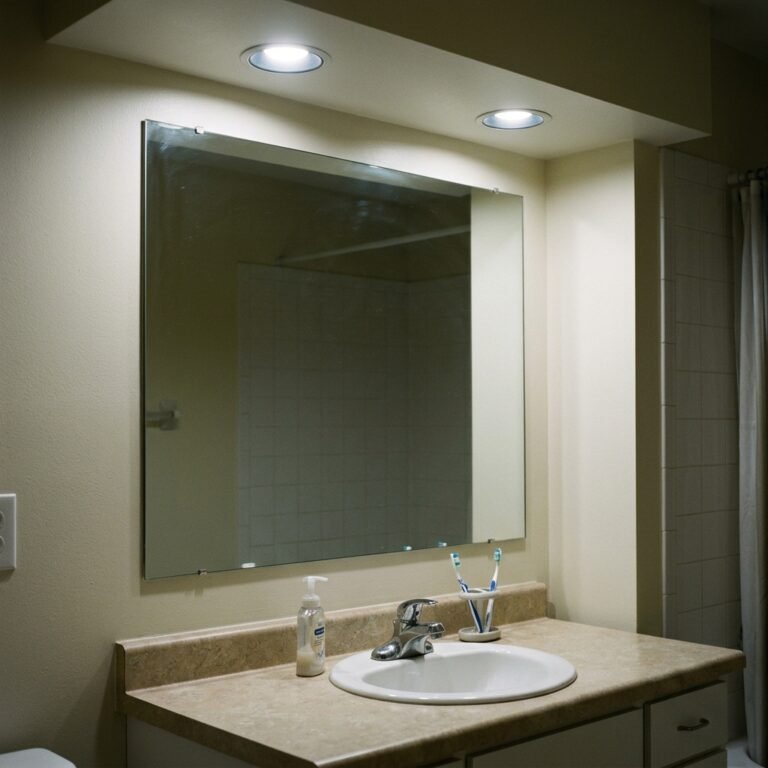
A pair of sculptural sconces can replace a bulky vanity bar. Mount them at eye level, roughly 60 to 66 inches from the floor, on both sides of the mirror. Side lighting fills in shadows under the eyes and chin, which overhead light cannot do. Pick warm white bulbs around 2700K to 3000K. Our post on the bathroom lighting mistake that makes everyone look tired explains why placement matters more than the fixture itself.

Backlit Mirrors
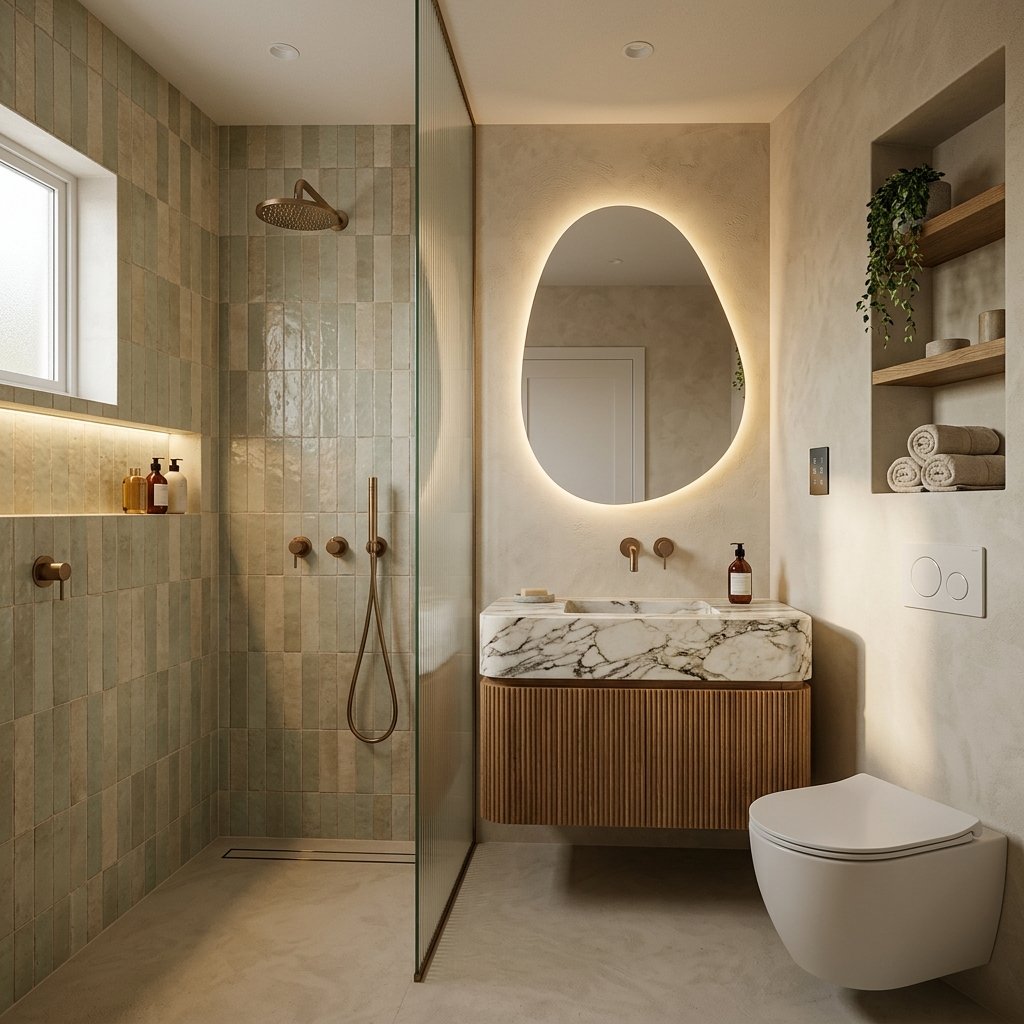
A backlit mirror gives even light and saves wall space. Look for a damp-location rating on the label, because steam and electricity need a safe pairing. Anti-fog pads are worth the small extra cost. A dimming control lets you drop the glow for evenings. Hardwiring looks cleanest, but plug-in models work for renters. Ask an electrician to check that the circuit is GFCI-protected.

Marble and Marble-Look Surfaces
Real marble is beautiful but porous, and acidic cleaners will etch it. Honed marble hides etching better than polished. Marble-look porcelain gives you the veining with no sealing, and it handles daily shower use more easily. A smart split is real stone on the vanity top, where you can see the veining up close, and porcelain on the wet walls. Keep one pattern per room so it stays calm.

Built-In Shower Niches
A niche keeps bottles off the floor and out of the way. Stud walls are usually framed 16 inches apart, so a niche about 12 to 14 inches wide fits between two studs without cutting any. Slope the bottom shelf slightly so water drains out. Keep it away from the direct spray. A single contrasting tile inside the niche turns a practical box into a design detail.

Matte Black and Brushed Gold Fixtures
Dark or warm metal gives a pale room a focal point. Pick one finish for the faucet, shower trim, and towel hardware, and use a second only as a small accent. Matte black shows water spots, so wipe it down weekly. Brushed gold hides fingerprints better than polished brass. Buy fixtures from the same maker when you can, because finishes vary slightly between brands.

Floating Toilets
A wall-hung toilet hides the tank inside the wall, and it clears the floor for easy mopping. The bowl often projects a bit less from the wall than a standard toilet, which helps in tight rooms. The wall needs a rated steel carrier frame, and the wall must be deep enough to hold it. Keep an access panel behind the flush plate for repairs. Ask your plumber about both before you demolish anything.

Textured Wall Finishes
Microcement, plaster, and limewash add soft movement that tile cannot. They work best outside the direct spray zone. Inside a shower, they need a waterproof topcoat and a skilled installer. Limewash on a dry wall is the easiest way to try the look. Pair it with a good fan, because steady moisture can darken or mark any porous finish. Aim for roughly one cubic foot per minute of airflow per square foot of floor.

Compact Double-Duty Storage
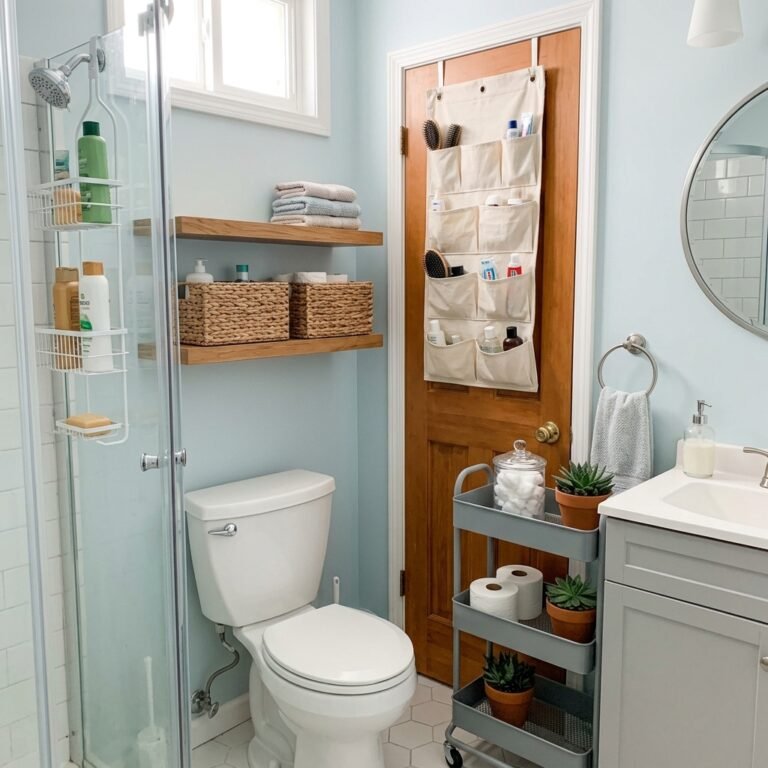
Choose storage that does two jobs. A recessed mirrored cabinet holds daily items and doubles as your mirror. A deep-drawer vanity keeps hair tools and cleaning supplies sorted by height. Use dividers so small items do not slide around. For more ways to clear the counter, see our guide to small bathroom storage ideas that free up counter space.

Warm Wood Accents
Wood warms up a bathroom full of tile and stone. Use species or veneers made for wet rooms, such as teak, and make sure every cut edge is sealed. Keep wood out of direct shower spray. A floating shelf, a vanity front, or a slatted bath mat are low-risk ways to start. Wipe up puddles quickly and run the fan for 20 minutes after each shower.

Minimalist Hardware
Slim pulls and recessed hooks keep surfaces clean. A towel bar mounted about 48 inches from the floor is easy to reach and gives a long hang. Choose one metal finish and stick with it. Brushed gunmetal and champagne bronze both read as quiet and expensive. Order one sample pull first. A grip that looks beautiful but hurts your fingers will annoy you daily.

Underfloor Heating
Warm tile on a cold morning is the biggest comfort upgrade per square foot. Electric mats sit under the tile in a thin layer of mortar. A small bathroom of 30 to 40 square feet needs only a modest mat. Choose a thermostat with a floor sensor and a timer, so it warms up before you wake. The system should run on a GFCI-protected circuit. Install it before tile, not after.

Seamless Glass Shower Doors
Frameless glass removes the metal lines that chop up a small room. Most frameless doors use tempered glass about three-eighths of an inch thick. Heavier glass needs strong hinges and a well-supported wall. Add a clear protective coating to cut water spots. Run the floor tile straight into the shower with only a small curb. The unbroken surface makes the room look larger.

Soft Ambient Lighting
Ambient light is the layer that makes a bathroom feel like a retreat. Put a dimmer on the main light so you can lower it at night. A warm LED strip under the vanity or along the toe-kick throws a gentle glow on the floor. It doubles as a safe night light. Keep every bulb in the same color temperature so the room does not look patchy.

Space-Saving Bathtubs
Standard tubs run about 60 by 30 inches. A deep soaking tub can be shorter, around four feet, with a seat and a taller wall. You trade length for depth. The sides hold more water than a shallow tub, so check the weight against your floor. A compact freestanding tub also needs clearance on all sides for cleaning. Measure twice before you order, and test the room with painter’s tape.

Vertical Tile Layouts
Stand slim tiles on end and the shower wall seems to rise. A 2 by 10 or 3 by 12 inch tile works well. Run it all the way to the ceiling, not just halfway. Choose a grout shade close to the tile for a calm look. Contrasting grout creates a graphic effect, but it adds visual noise. Use a flat wall and a laser level, because tall lines show every wobble.

Smart Bathroom Technology
Smart upgrades earn their place when they save water or time. According to the EPA, WaterSense bathroom faucets use 1.5 gallons per minute at most, a cut of 30 percent or more from the standard 2.2. The agency estimates that this can save an average family about 700 gallons a year. Touchless faucets need power, so plan for batteries or a plug. Smart mirrors need an outlet nearby.

Integrated Laundry Solutions
A washer and dryer behind cabinet doors can free a hallway closet. This is a plumbing and electrical job, so check local code first. A dryer needs a vent to the outside, or choose a ventless heat-pump model. Allow space around the machines for airflow and service. Match the cabinet fronts to the vanity so the unit reads as part of the design, not an appliance.

Neutral Stone Flooring
Honed limestone and travertine give a grounded, quiet base. Both are soft and need a quality sealer. For wet floors, look for a slip-resistance rating, and a dynamic coefficient of friction of 0.42 or higher is a common benchmark for level wet areas. Stone also pairs well with underfloor heating. Choose a honed finish, not a polished one, because polished stone turns slippery when wet.

Recessed Shelving
A standard stud wall is about 3.5 inches deep. That is enough for a shelf holding a candle, a small plant, and a folded hand towel. Put one above the toilet or beside the vanity, where you will actually use it. Never cut a load-bearing stud. Avoid exterior walls, where insulation and moisture are concerns. Light it with a small LED strip to make the niche glow.

Curved Fixtures and Mirrors
Curves soften a room full of right angles. An arched or round mirror is the easiest start. Choose one about two-thirds the width of the vanity. A 24 to 30 inch round fits most single sinks. Add a gooseneck faucet or a rounded sink to echo the shape. Do not use too many curves at once. One or two repeated shapes feel designed, and five feel confused.

High-End Towel Storage
A heated towel rail takes up less floor than a freestanding stand. Plug-in electric models are simple for renters. Hardwired and hydronic versions suit a full remodel. Mount the rail near the shower exit so you can grab a warm towel without dripping across the floor. It also dries damp towels faster, which helps with mildew. Check the wattage and use a timer.

Monochrome Color Schemes
Painting walls, trim, and cabinets in one shade makes the edges of a small room vanish. Use bath-rated paint in a satin or semi-gloss finish so it can be scrubbed. Layer textures so the room does not look flat, such as matte walls and a glossy faucet. Keep the fan running. A drenched room holds moisture on every surface, so ventilation is not optional.

Minimal Decor Styling
Treat clear surfaces as a luxury. Pick one tray, one object, and one scent. A single ceramic vase or a soap dish in stone adds enough character. Decant daily products into matching bottles, and hide the rest in drawers. In a humid room, choose items that handle moisture, such as ceramic, glass, and stone. Skip fabric that holds damp.

Personalized Luxury Touches
The final layer is the one that makes the room yours. Spend on two or three details you will notice every day, such as a custom vanity color, patinated hardware, or an artisan wall covering. Keep everything else simple. A small diffuser with a signature scent costs little and changes the feel. Avoid anything that will date fast, because bathrooms are expensive to redo.

Conclusion
A small bathroom feels luxurious when every piece has a job and nothing fights for attention. Start with the fixes that change how the room works: lighting, storage, and ventilation. Then add one or two finishes you will love for years, such as stone-look tile or warm wood. If you are replacing a showerhead, the EPA says WaterSense models use no more than 2.0 gallons per minute. The agency estimates that saves about 2,700 gallons a year. Comfort and savings can arrive together.