15 Cozy Living Room Ideas That Make Your Home Feel Expensive
You Don’t Need a Big Budget to Have a Beautiful Living Room
Here’s a truth most interior designers won’t tell you upfront: the most stunning living rooms you scroll past on Pinterest aren’t always the most expensive ones. They’re the most intentional ones. The ones where someone took time to layer textures, play with light, and curate every corner with purpose. If your living room feels a little flat, a little forgettable, or just not quite you, this guide is exactly what you need. These 15 cozy living room ideas are rooted in real design principles, budget-friendly thinking, and that warm, pulled-together feeling that makes guests walk in and immediately say, “Oh, this is so beautiful.” Whether you’re starting from scratch or just refreshing what you already have, every idea here is practical, visual, and completely doable. Let’s make your living room feel like a five-star retreat.
1. Layer Your Lighting Like a Pro
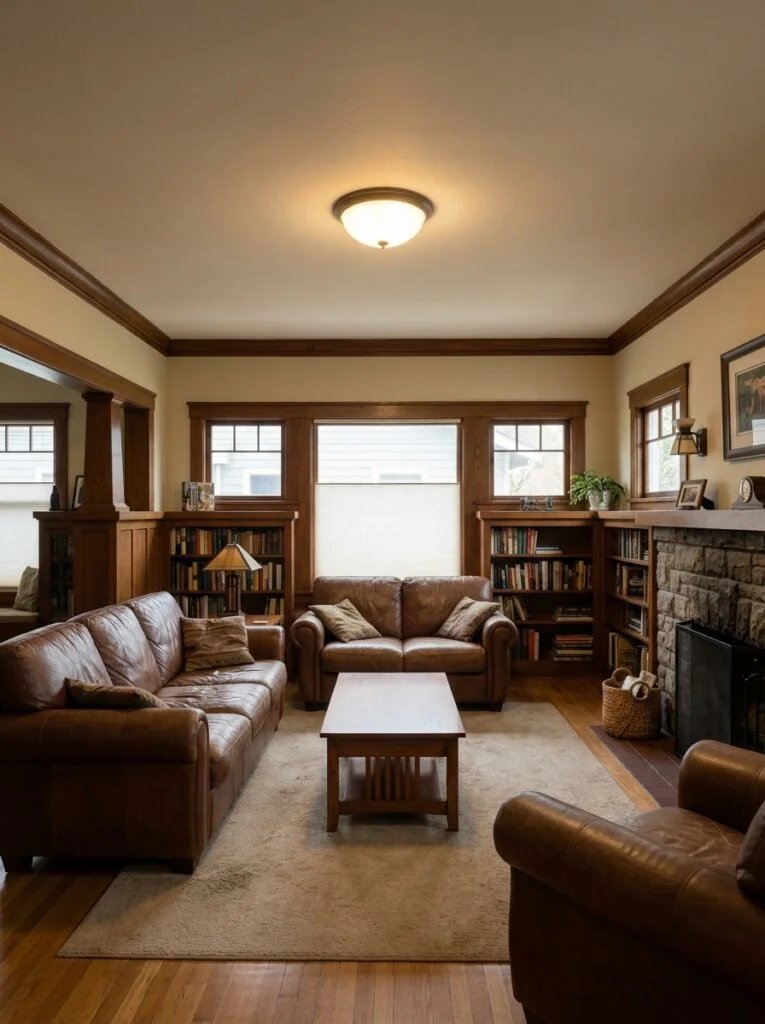
If there’s one thing that separates a cozy living room from a sterile one, it’s lighting, and more specifically, the way you layer it. A single ceiling light flooding a room with harsh brightness is the fastest way to kill ambiance. Instead, think in three layers: ambient lighting for general illumination, task lighting for reading or working, and accent lighting for mood.
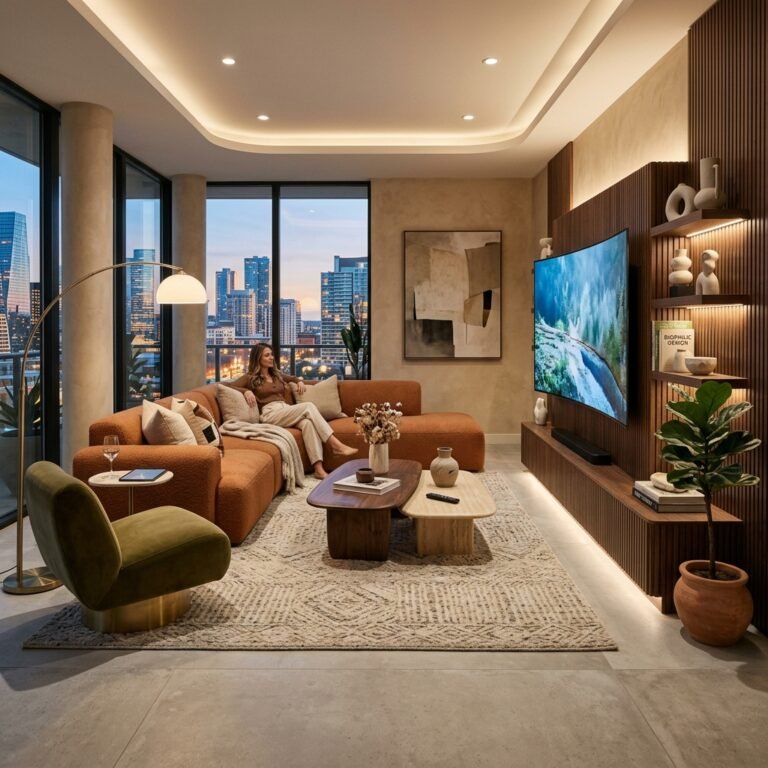
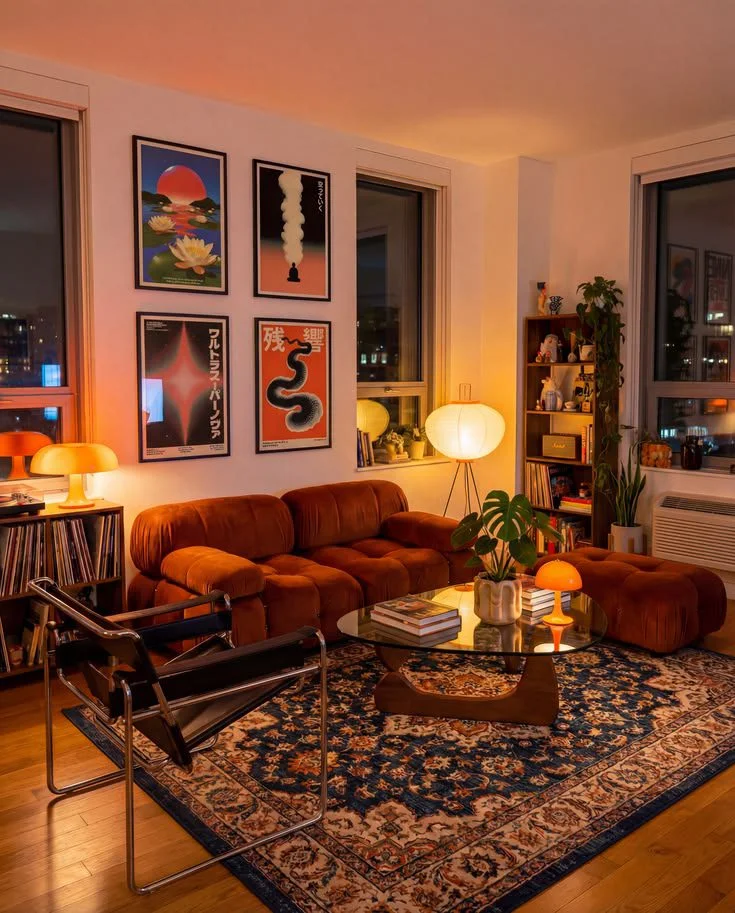
Start by adding a warm-toned floor lamp beside your sofa, one with a linen or fabric shade that diffuses light softly. Place a small table lamp on your side table or bookshelf. Add a string of Edison bulbs or plug-in sconces on a gallery wall. Swap any bright white bulbs for 2700K warm white ones throughout the room. The goal is pools of gentle light scattered around the space, not a single blast of brightness. This layered approach costs very little but transforms the entire mood of the room, making it feel intimate, warm, and incredibly well-designed.
2. Invest in One Statement Rug
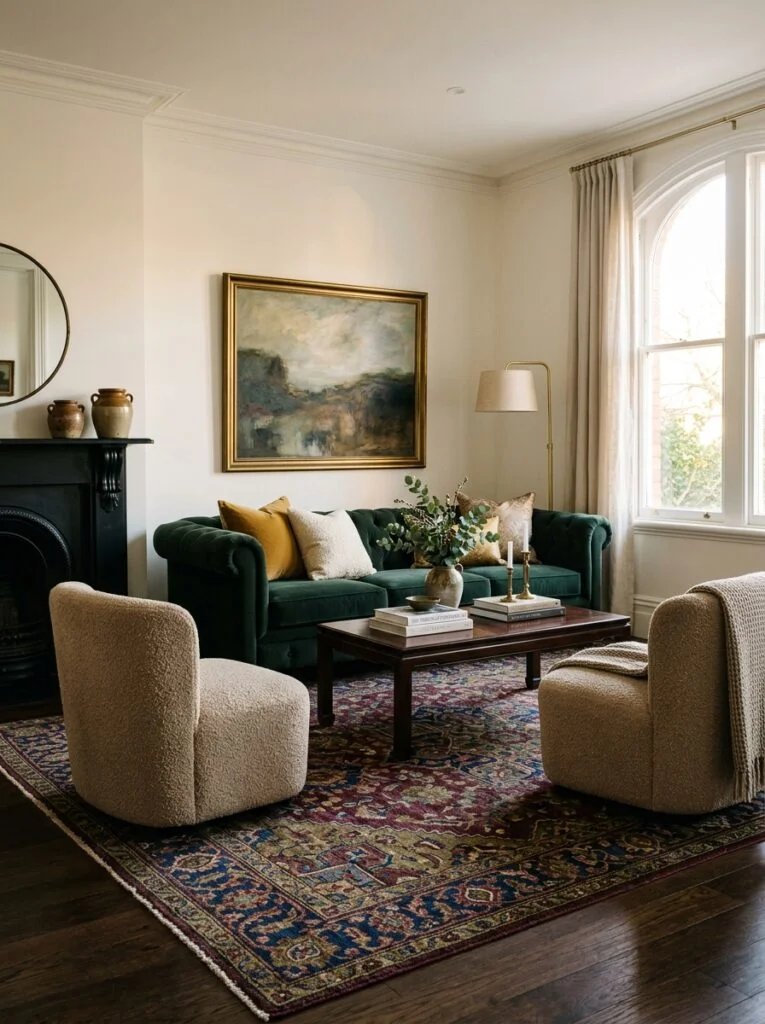
A rug is not just something you put on the floor to protect the hardwood. In a well-designed living room, the rug is the foundation of the entire space. It defines the seating area, ties the furniture together, adds color and texture, and instantly makes the room feel more finished and intentional.
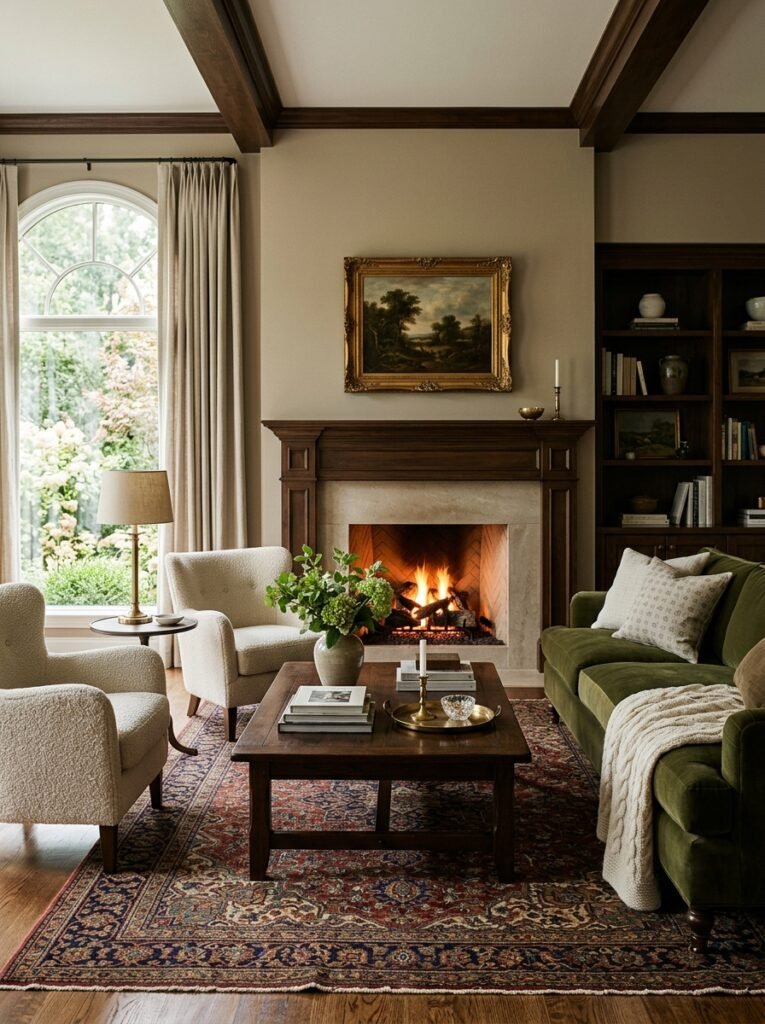
The most common mistake people make is choosing a rug that’s too small. Go bigger than you think you need. Ideally, all four legs of your sofa should sit on the rug, or at minimum, the front two legs. A large, properly-sized rug makes your living room look larger and more luxurious. For cozy appeal, choose natural materials like wool, jute, or a plush boucle. A vintage-style Persian or Moroccan rug adds warmth, character, and that lived-in elegance that no amount of money can fake. Even an affordable option from a discount home store looks high-end when it’s the right size and placed correctly under your furniture arrangement.
3. Pile on the Throw Pillows and Blankets
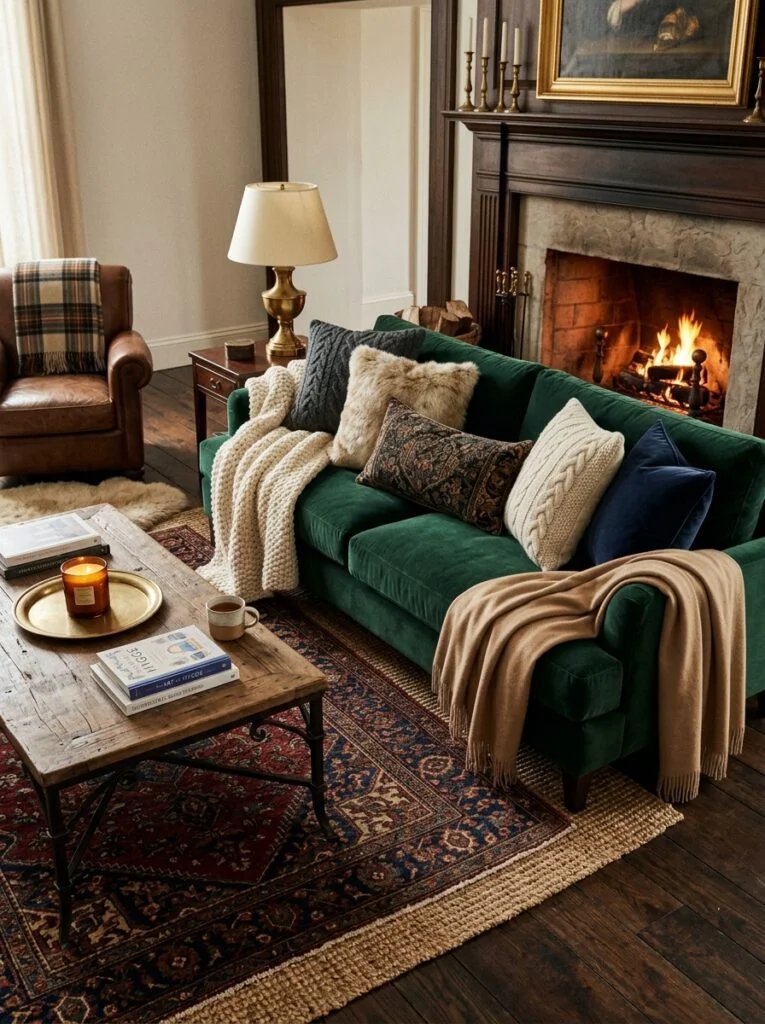
Walk into any room that feels instantly warm and inviting, and you’ll notice one thing immediately: there are layers. Pillows in different sizes and textures. A chunky knit blanket casually draped over the armrest. A linen throw folded at the end of the sofa. This intentional layering of soft goods is what gives a living room that effortless, “just decorated” look.
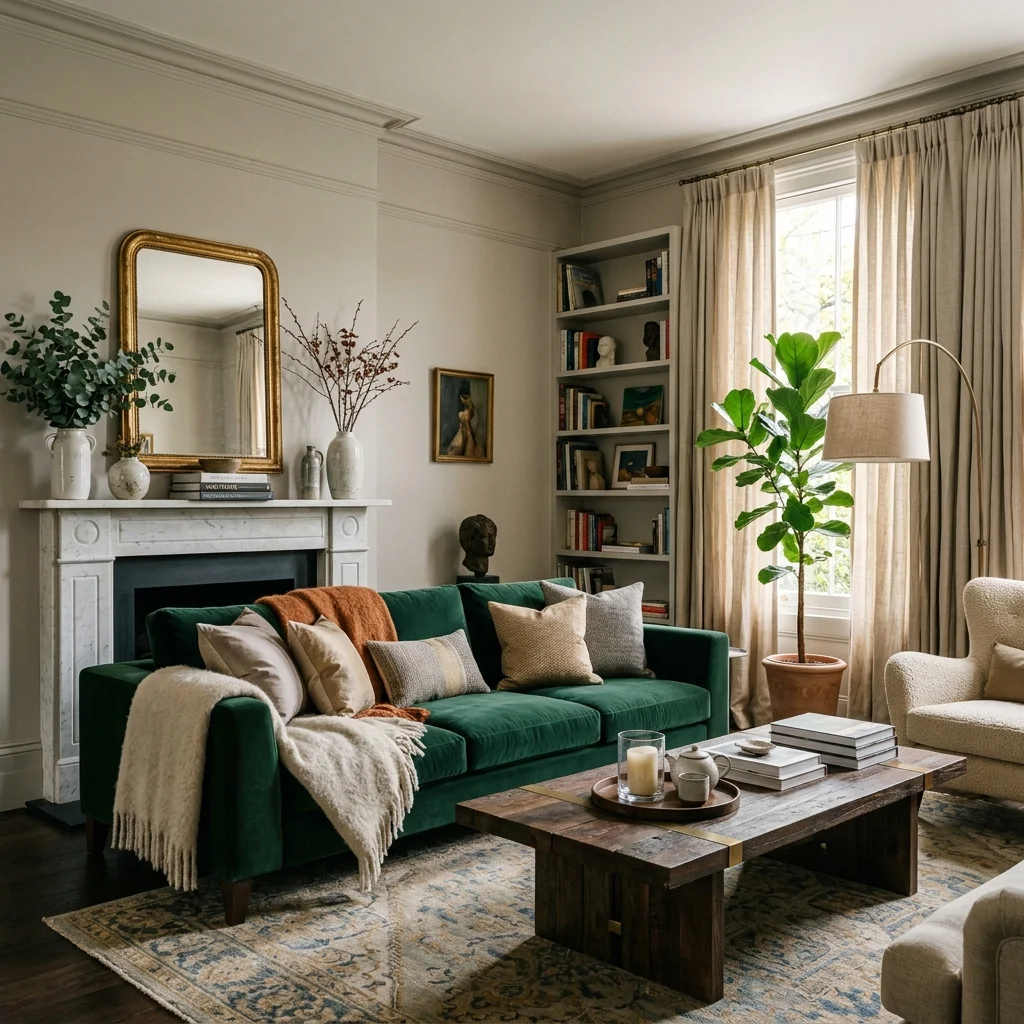
To do this well, start with your sofa. Use a mix of pillow sizes: a couple of large 22-inch squares at the back, medium 18-inch ones in the middle, and a small lumbar pillow in the front. Mix and match textures like velvet, boucle, linen, and knit. Stick to a cohesive color palette so it looks curated, not chaotic. Then add at least two throw blankets, one draped over the back of the sofa and one tossed over an armchair. The moment someone walks in and sees all that softness, they want to sit down. That’s the power of texture done right.
4. Create a Gallery Wall With Personal Meaning
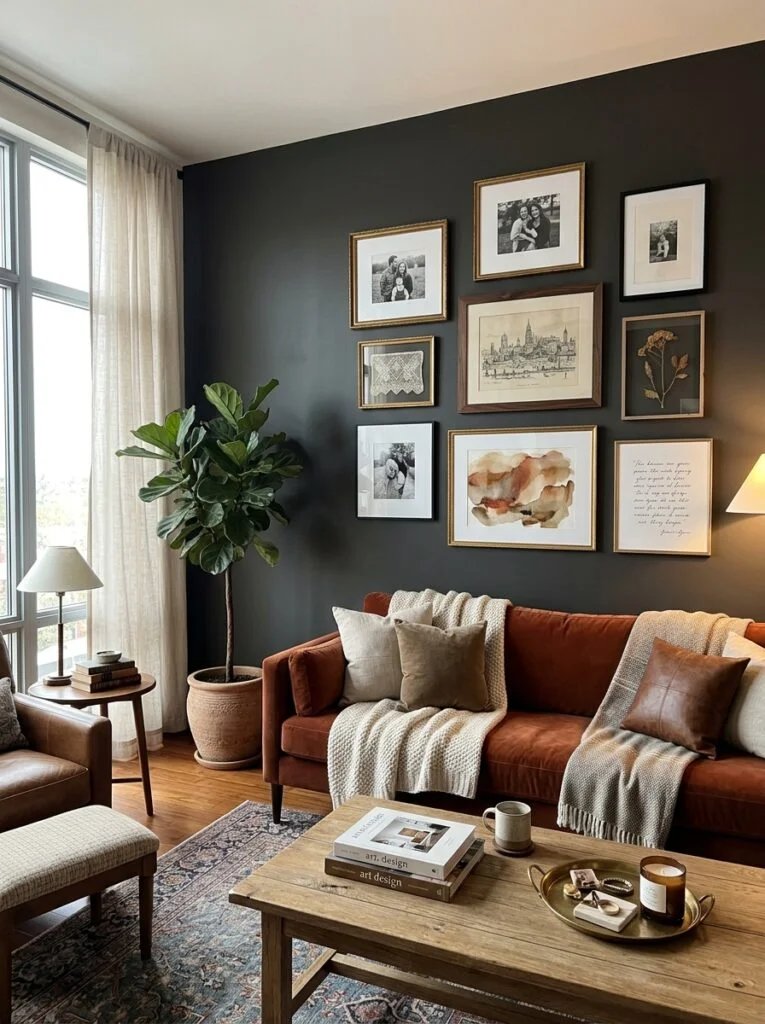
A thoughtfully arranged gallery wall is one of the most impactful and affordable ways to transform a blank wall into a conversation piece. Unlike a single large piece of art that can feel cold or generic, a gallery wall has personality. It invites people in, makes them look closer, and tells them something real about who lives in this home.
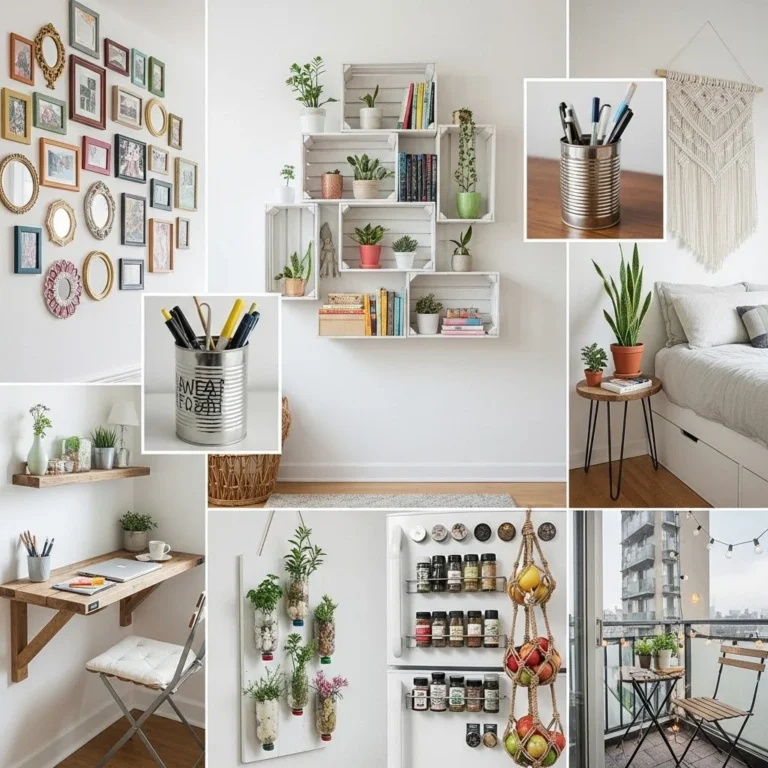
The key to a gallery wall that looks intentional rather than chaotic is planning before you hang. Lay all your frames out on the floor first and arrange them until you love the composition. Mix frame sizes, orientations, and styles, but keep the frames in a similar color family, like all black, all gold, or all natural wood, for cohesion. Include a mix of art prints, personal photos, small mirrors, and even pressed botanicals in frames. Leave consistent spacing of about two to three inches between each piece. A gallery wall like this becomes the visual anchor of your room and gives the space a collected, curated feel that no single piece of store-bought wall art can replicate.
5. Bring in Natural Elements
There is a reason biophilic design has taken over the interior world: people feel calmer, happier, and more at home when nature is present inside. Bringing natural elements into your living room is not just a trend, it is a deeply human need, and it costs almost nothing to do beautifully.
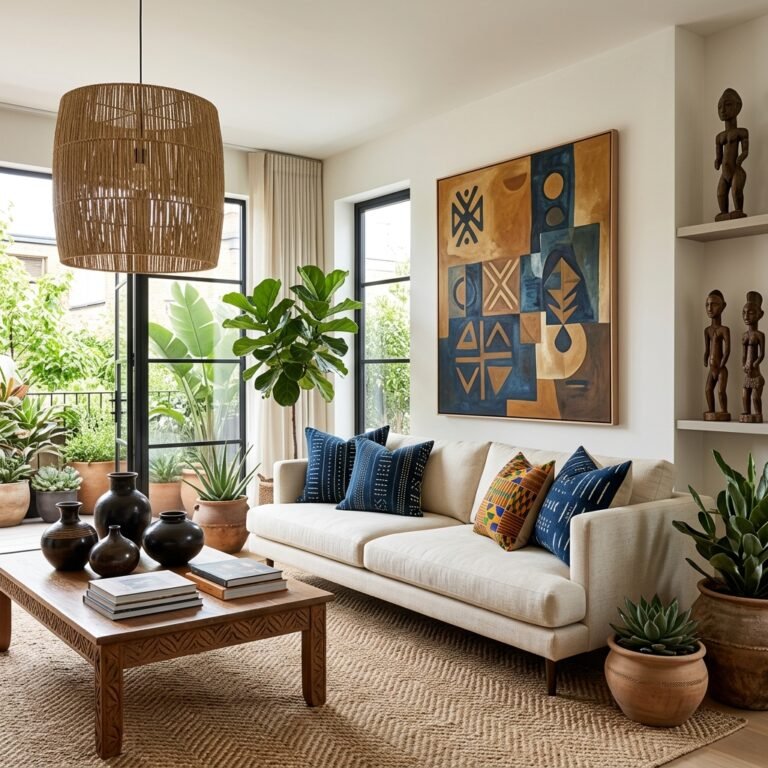
Start with plants. A large fiddle leaf fig or monstera in a corner makes an immediate statement. Layer in smaller plants on shelves and side tables. Add a wooden coffee table or tray for warmth. Place a few smooth river stones or a piece of driftwood on your bookshelf as a simple, free decor element. Incorporate linen curtains, a jute rug, or a rattan side table to build on those earthy tones. Even swapping out a few throw pillows for ones in terracotta, sage green, or warm cream brings the outside in. Natural materials have an inherent richness and warmth that synthetic ones simply cannot replicate. Your living room will feel grounded, organic, and quietly luxurious.
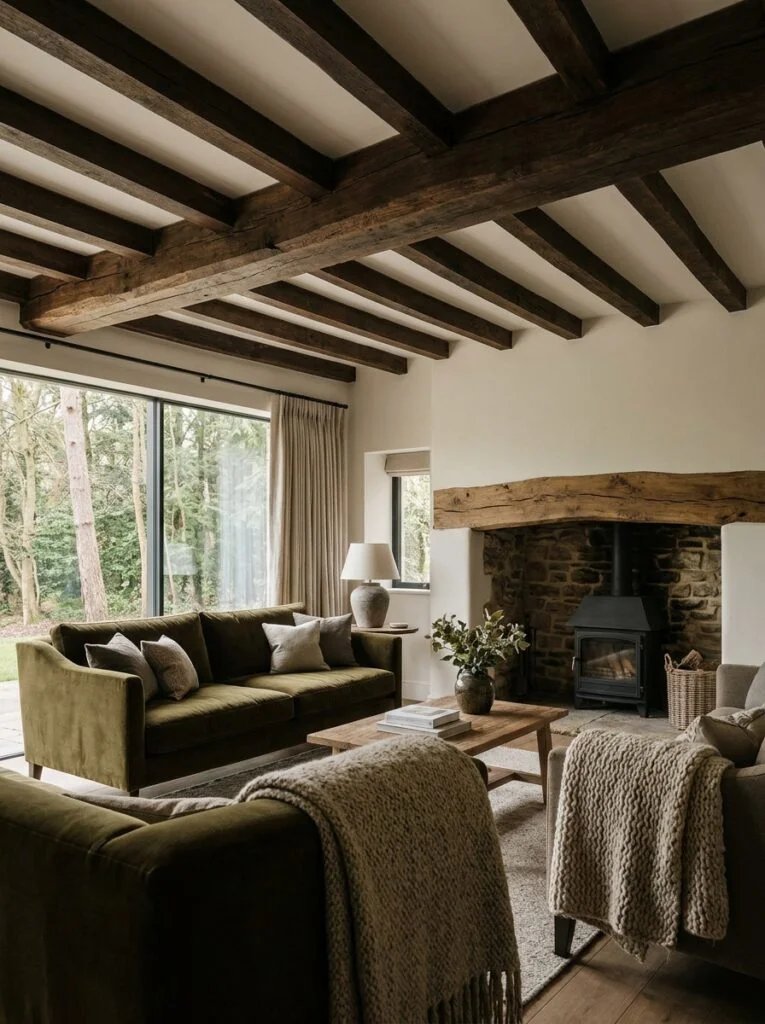
6. Style Your Bookshelf Like an Interior Designer Would
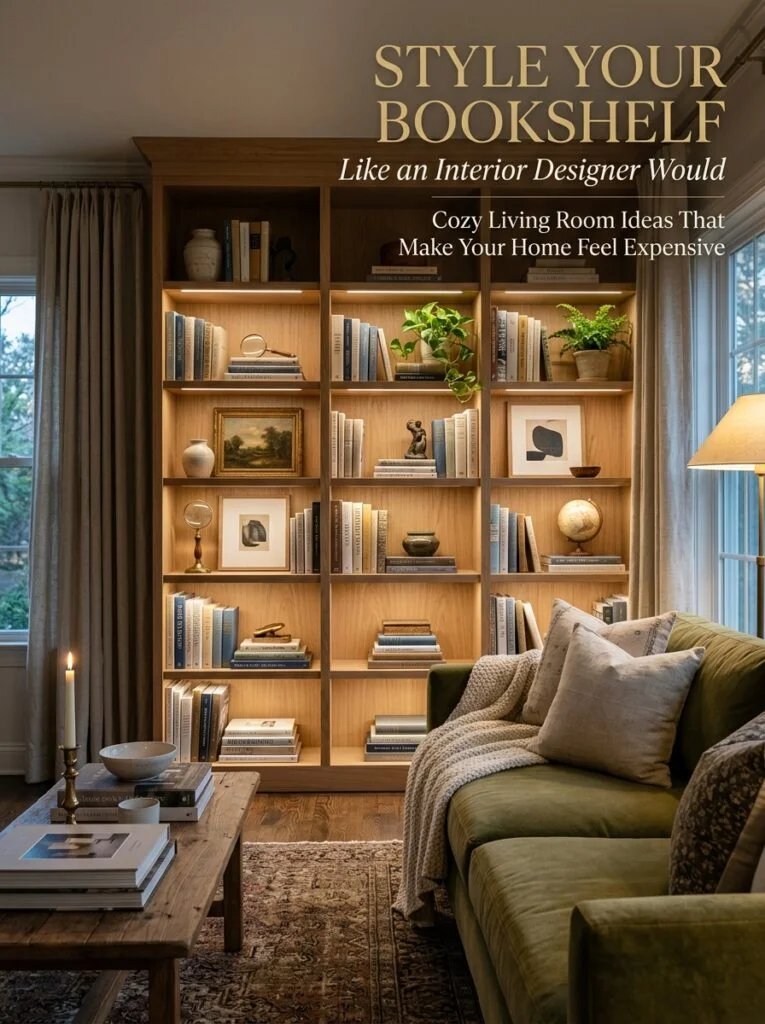
Bookshelves in most homes are an afterthought: books shoved in sideways, random knick-knacks piled up, cords hanging out the back. But a well-styled bookshelf is genuinely one of the most beautiful and expressive features a living room can have. It tells the story of who you are and what you love.
The designer trick is to treat each shelf like a little vignette. Start with your books, but don’t just line them up in a row. Arrange some vertically, stack others horizontally to create platforms, and vary the heights. Then add objects between the book groupings: a small plant, a candle, a piece of pottery, a framed photo, a sculptural object. Use the rule of threes: odd numbers always look more natural and appealing than even groupings. Leave some breathing room. Empty space is not wasted space; it lets the eye rest and makes everything around it feel more intentional. A styled shelf makes your entire living room feel more personal, layered, and genuinely designed.
7. Hang Your Curtains High and Wide
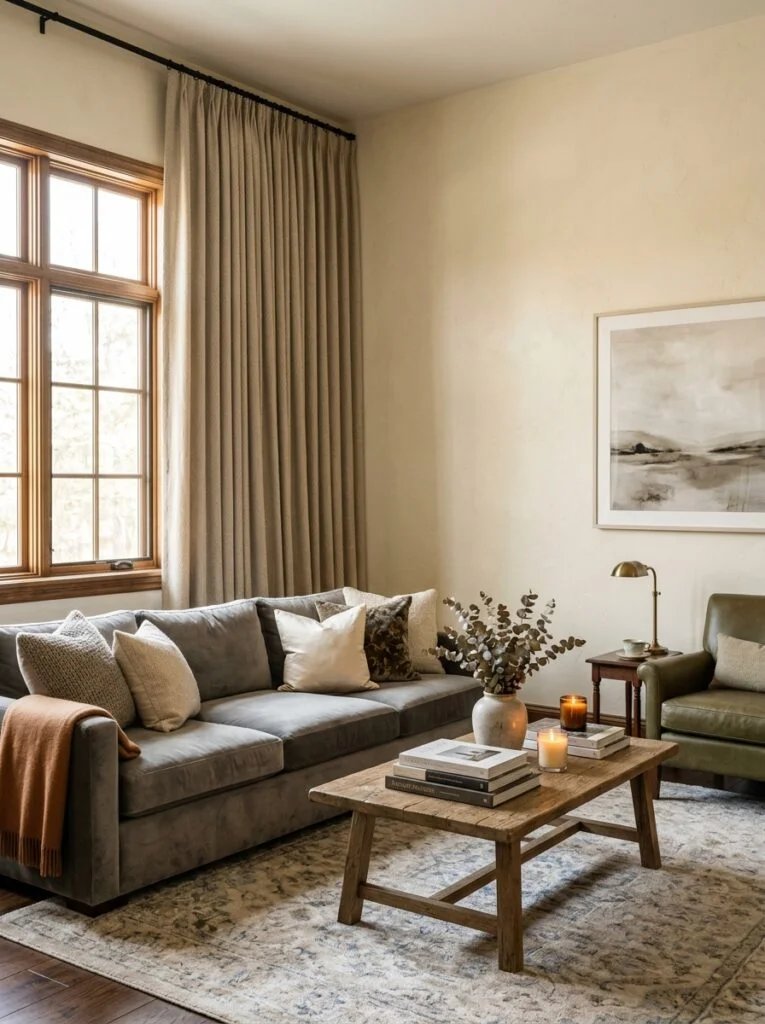
If you’re only going to take one design tip away from this entire article, let it be this one: hang your curtains as close to the ceiling as possible and extend the rod several inches beyond the window frame on both sides. This single change makes your ceilings feel higher, your windows feel larger, and your entire room feel more polished and expensive.
Most people hang curtains directly above the window frame, which boxes in the window and makes the room feel lower and smaller. When you mount the rod two to six inches from the ceiling instead, and extend it 10 to 16 inches past the window on each side, the effect is dramatic. The curtains frame the whole wall, the room feels airier, and the light floods in more generously even when the curtains are open. For maximum coziness, choose curtains in a heavyweight linen, velvet, or cotton canvas. Let them puddle slightly on the floor or have just a half inch of break. This is one of those changes that genuinely looks like you hired a decorator.
8. Add a Cozy Reading Nook Corner
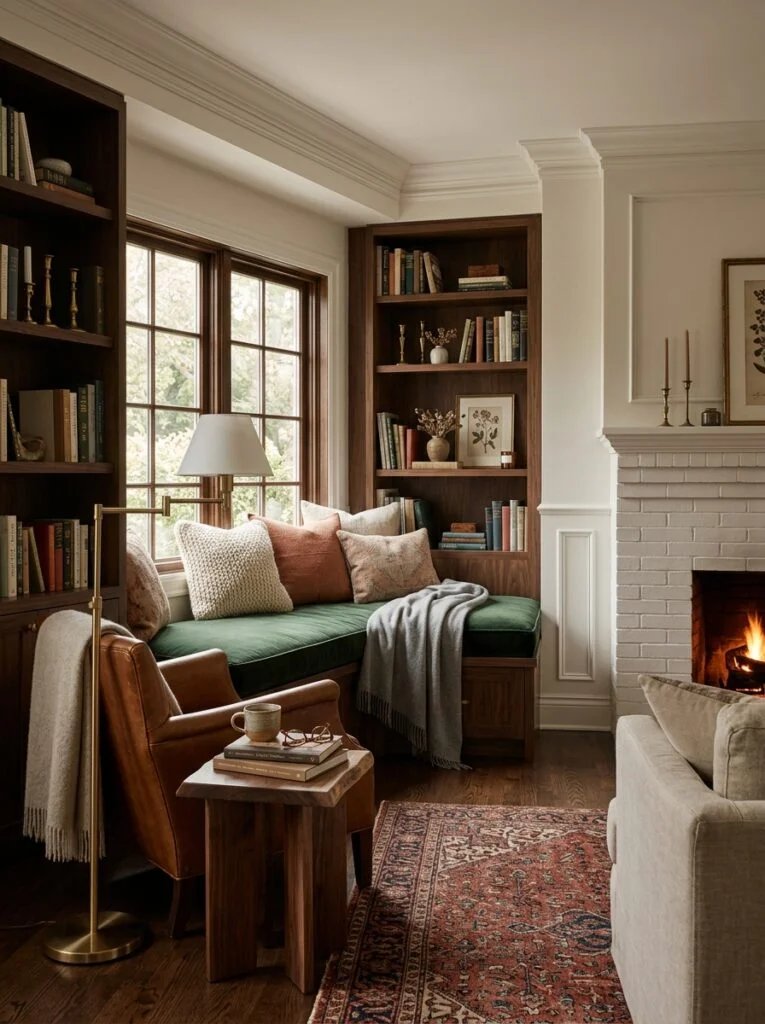
There is something magical about a dedicated reading nook in a living room. It signals that this is a home where people actually slow down, sit, and stay a while. And creating one doesn’t require knocking down walls or doing a renovation. You just need one good armchair, good lighting, and a bit of intention.
Start with a chair that you genuinely love sitting in, something with a deep seat, a curved back, or arms you can sink into. Position it near a window for natural light, or beside a floor lamp for evening reading. Add a small side table or floor-level tray for your coffee cup and whatever book you’re currently reading. Layer a soft throw blanket over one arm and tuck a few extra pillows in the back. If you have wall space nearby, add a small floating shelf for books or plants. This corner becomes the most charming spot in the room and gives your living space a warmth and purposefulness that makes the whole room feel thoughtfully designed.
9. Use Mirrors Strategically to Open Up the Space
Professional interior designers use mirrors constantly, not because they are flashy, but because they are genuinely one of the most effective tools for making a room feel larger, brighter, and more dynamic. A well-placed mirror reflects light, doubles your visual space, and adds a layer of elegance without much effort or expense.
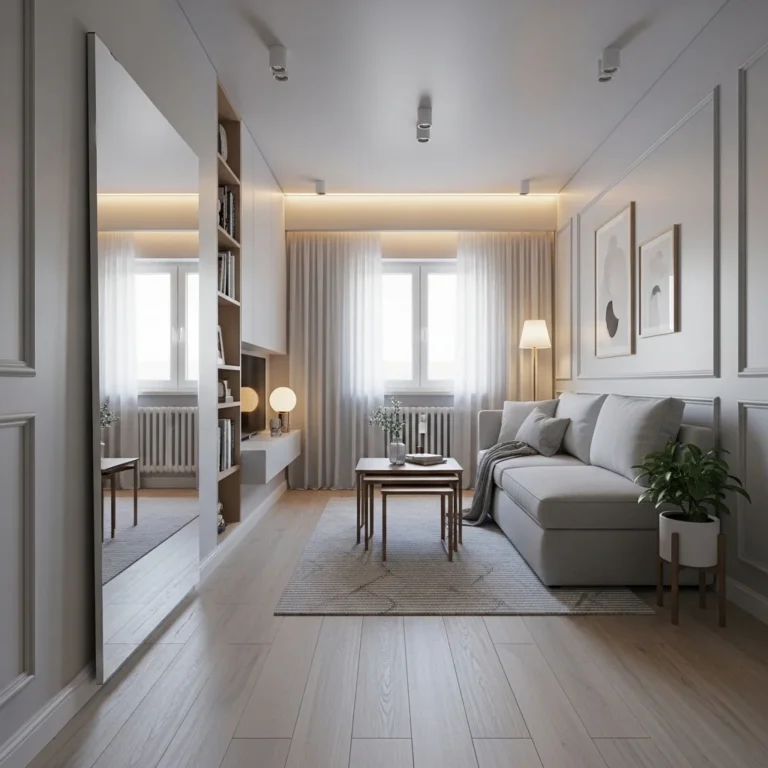
For maximum impact in a living room, lean a large floor mirror against a wall rather than hanging a small one. A full-length or oversized round mirror leaning casually against the wall feels intentional and editorial. Place mirrors opposite windows to reflect natural light back into the room and instantly brighten darker corners. A sunburst mirror or an arched mirror above a console table creates a focal point that doubles as art. Pair a mirror with a plant beside it so the reflection shows greenery, which makes the room feel even more alive. The key is choosing mirrors with frames that complement your existing decor, whether that’s warm gold, dark metal, natural wood, or sculptural rattan.
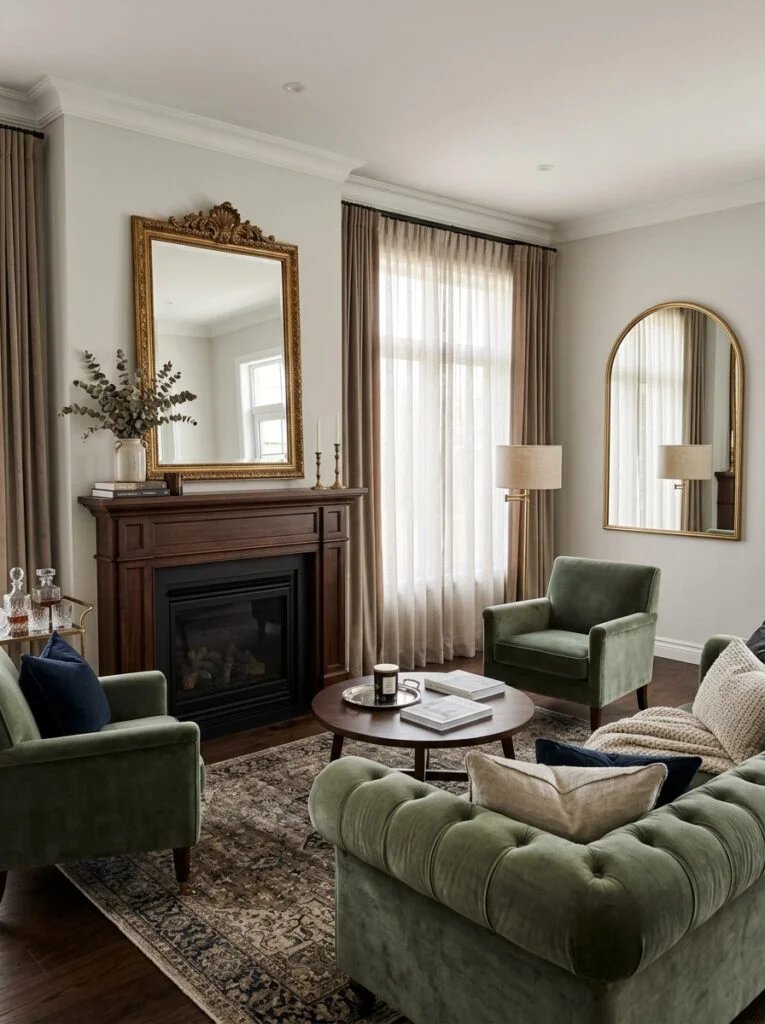
10. Introduce a Scent That Feels Like Home
This is the one living room detail that most decorating guides skip entirely, and it might be the most powerful one on this entire list. Scent is directly connected to memory and emotion. The moment someone walks into your home and it smells warm and inviting, they feel comfortable before they even sit down. A signature scent is one of the most memorable things about a beautifully curated home.
Build your living room scent the same way you layer lighting: with intention and layers. A quality soy candle in a ceramic vessel adds to the visual decor while filling the room with warmth. Opt for scents like sandalwood, amber, white tea, cedar, or vanilla for that cozy, elevated feel. A reed diffuser tucks neatly onto a bookshelf or coffee table for constant, subtle fragrance. You can also simmer a pot of water with cinnamon sticks, orange peel, and cloves on nearby kitchen days for a completely free, deeply cozy scent. When your living room smells beautiful, it feels like a sanctuary, and that feeling is worth more than any piece of furniture.
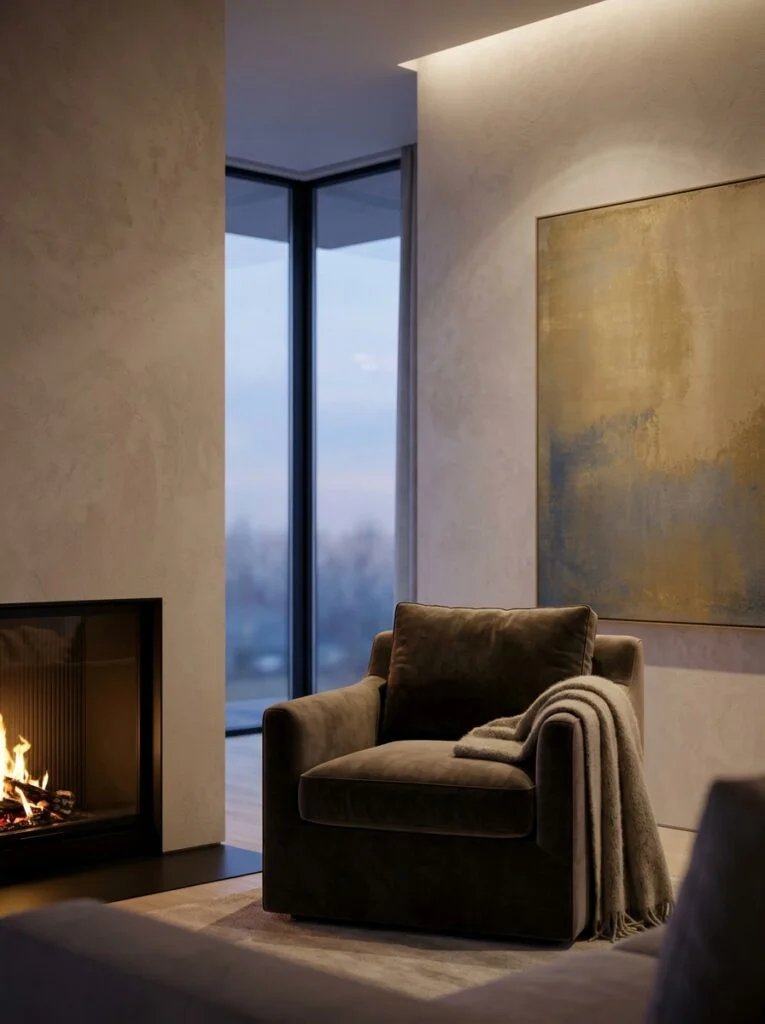
11. Declutter and Edit Your Decor Mercilessly
One of the biggest differences between a room that feels polished and expensive and one that feels chaotic and cluttered is the number of items on display. Expensive-looking rooms are edited. They have space between objects. They give each piece of decor room to breathe and be noticed. Cluttered rooms, no matter how nice the individual pieces, read as overwhelming.
Do a full decor audit of your living room. Remove everything from every surface and put it on the floor. Now, only put back the things you genuinely love and that serve a visual purpose. If something is there just because you don’t know where else to put it, find it a drawer, a closet, or a donation bag. As a general rule, style your shelves and surfaces with one to three items per grouping, and always vary the heights. Leave empty space between groupings. This restraint is the hardest thing for most people to practice, but it is the single most effective way to make your living room feel more sophisticated, calm, and intentional.
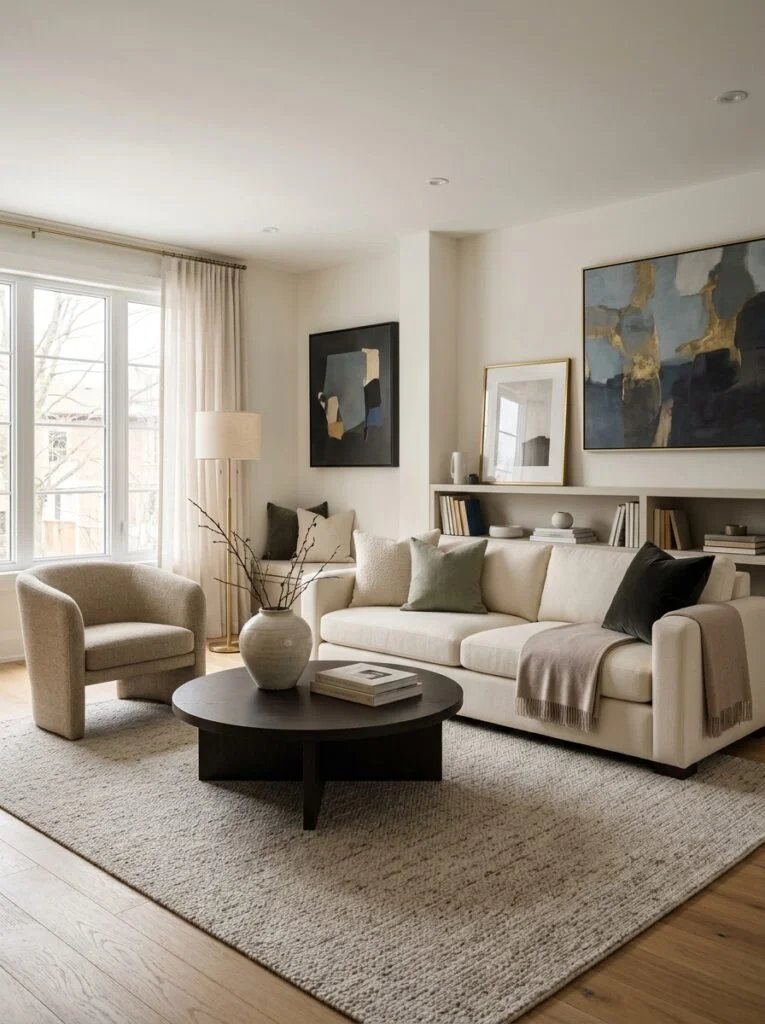
12. Swap Basic Hardware and Small Details
Interior designers always say the magic is in the details, and nowhere is this truer than in a living room. Updating small hardware items, replacing outdated fixtures, and upgrading overlooked accessories adds up to a room that feels quietly refined. These are the changes guests might not consciously notice, but they absolutely feel.
Start with your light switch plates and outlet covers. Standard beige plastic ones are almost invisible when replaced with brushed brass, matte black, or warm white alternatives. Swap out basic brass or chrome curtain rings for ones in oil-rubbed bronze or black. Replace a plain lampshade with one in a textured linen or pleated fabric. Add a tray to your coffee table to corral remotes and candles and make the table look styled rather than scattered. Swap out a basic throw blanket for one in cashmere, waffle cotton, or chunky knit. None of these changes are expensive on their own, but together they communicate an attention to detail that makes your entire living room feel intentionally designed.
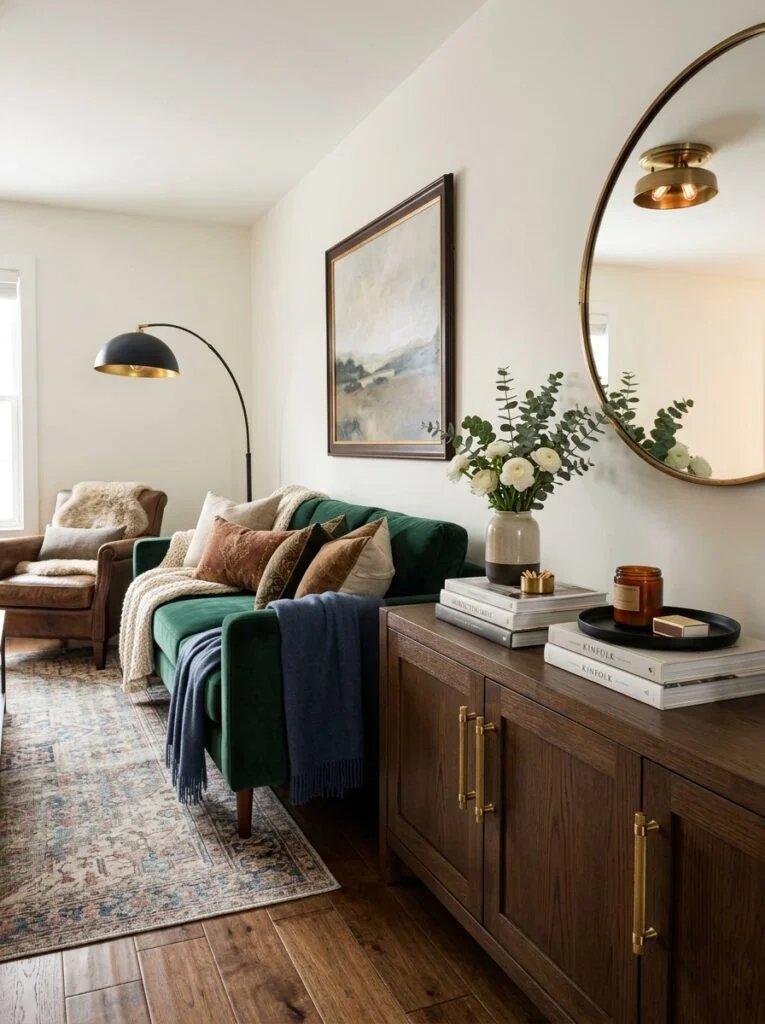
13. Build a Coffee Table Vignette That Looks Styled Always
The coffee table is often the most-used surface in a living room, which means it also tends to be the most neglected. Remote controls, charging cables, old magazines, and half-empty mugs pile up and make even the most beautiful room look messy. But a well-styled coffee table is genuinely one of the easiest and most impactful small changes you can make.
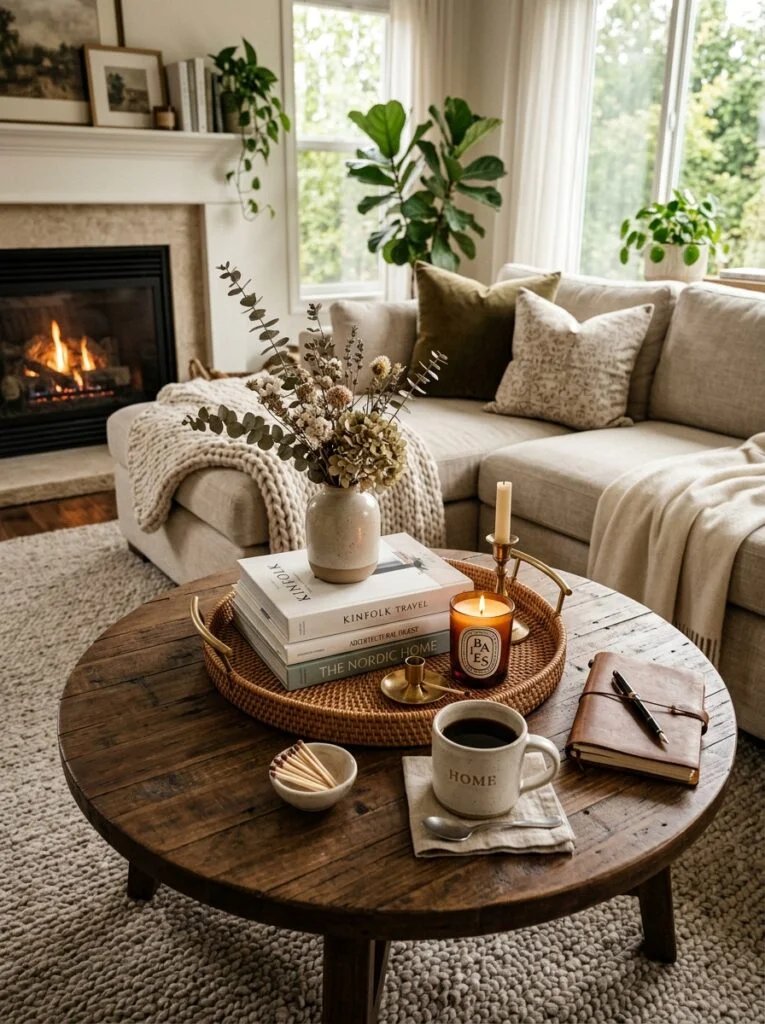
The designer formula is simple: start with a tray to ground the arrangement and contain the items visually. Inside the tray, place a stack of two or three coffee table books with beautiful spines. Add a small candle or a sculptural object on top of the book stack. Place a small vase with fresh or dried stems beside it. Outside the tray, you might have a small bowl for remotes, a plant at the corner of the table, or a beautiful coaster set. Keep it simple and resist the urge to fill every inch. A coffee table styled this way looks like it was arranged by a professional and stays photo-ready with minimal effort, because you have a system for it.
14. Choose a Warm, Cohesive Color Palette
Color is the invisible architecture of a room. When the colors in a living room are cohesive and intentional, everything feels like it belongs together. When they are random and mismatched, even beautiful individual pieces feel disconnected. Choosing a warm, cohesive color palette is one of the most powerful design decisions you can make.
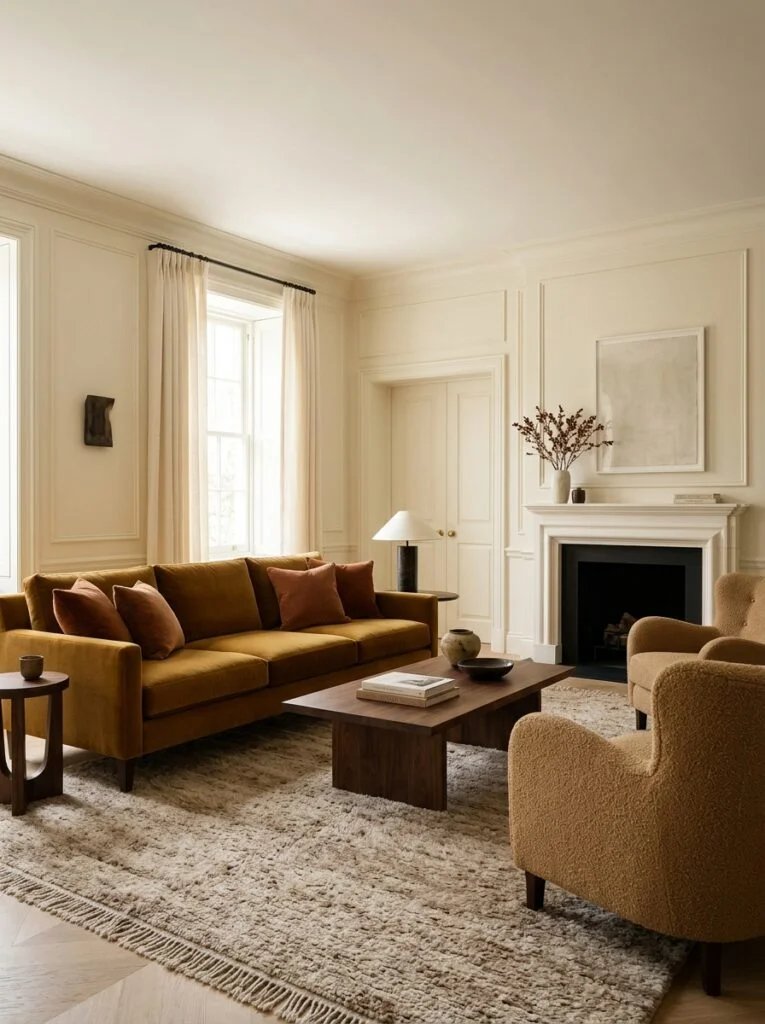
For a cozy, elevated living room, look to warm neutrals and earthy tones: creamy whites, warm taupes, terracotta, sage green, dusty blush, caramel, and deep forest tones all work beautifully together. Pick two to three base colors and then bring in two accent tones through pillows, artwork, and accessories. A soft camel sofa, cream walls, a warm jute rug, and terracotta and sage green accents will always feel pulled together and intentional. Avoid mixing cool grays with warm beiges, as that clash is what makes rooms feel confused. Once you commit to a warm palette and stick to it throughout the room, every single piece you already own starts to look more coordinated and intentional.
15. Make the Sofa Work Harder With Thoughtful Styling
The sofa is almost always the largest and most expensive item in a living room, which means how you style it has an outsized effect on how the entire room feels. A plain sofa with flat pillows and no throw looks incomplete, no matter how nice the sofa itself is. But with a little thoughtful styling, even a modest sofa can look like a designer piece.
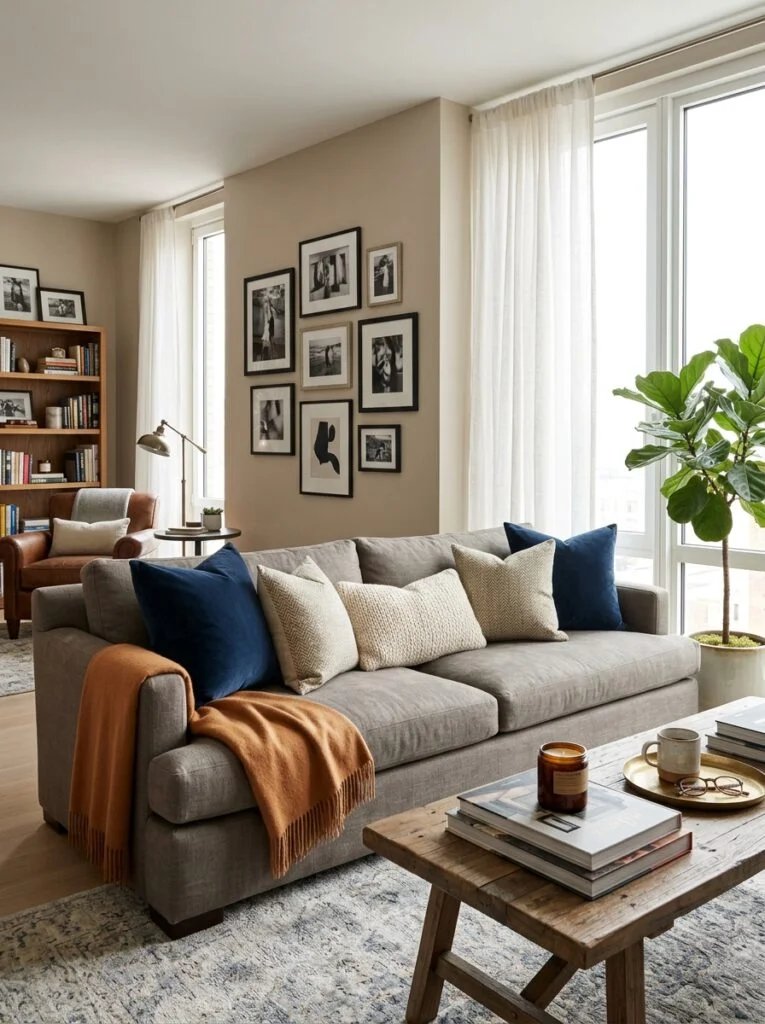
Start with a sofa cover or slipcover in a neutral linen or cotton if your current upholstery is worn or in a color you no longer love. Then layer the pillows with intention: vary sizes, alternate textures, and use an odd number. Drape a large throw blanket over one arm or fold it across the back cushions. Place the coffee table at the right distance, approximately 15 to 18 inches from the front of the sofa, close enough to reach but spacious enough to walk through. Add a side table to at least one end of the sofa for a lamp and a small object. When the sofa looks right, the whole room snaps into place. It becomes the warm, welcoming center of a space that people genuinely want to gather in.
Your Living Room Deserves to Feel Like a Sanctuary
Here’s the truth about all of these ideas: none of them require a massive renovation, a huge budget, or starting over from scratch. What they require is intention. A willingness to look at your space with fresh eyes, remove what isn’t working, and add layers of warmth, texture, and personality that make the room feel like it was made specifically for you.
Start with just one or two ideas from this list. Maybe it’s hanging your curtains higher tomorrow morning, or finally clearing off your coffee table and restyling it with a tray and a few books. Small changes, made with care, add up to a living room that feels genuinely beautiful, cozy, and expensive without the price tag.
Ready to start your living room transformation? Save this post to your Pinterest boards and come back to it every time you’re ready to take the next step. Your dream living room is closer than you think.