The bath sat two feet from the patio door for three weeks, filled with fresh water every morning. The only visitor was a wasp. Nothing was wrong with how it looked. It was a glazed bowl four inches deep, on a table, in full afternoon sun, with no shrub within thirty feet. Birds judge a bath on safety, depth, and footing long before they judge style.
That is the thread through this list. Every idea below looks good in a real garden, and each comes with the one detail that decides whether birds use it: a slope, a rough surface, a patch of shade, a safe height. Prices are rough ranges from typical garden-center and hardware-store shelves, so check your local stores. Read the basics first, then jump to the style that fits your yard.

The Basics Every Style Has to Get Right
Depth comes first. Birds wade, so aim for about an inch of water at the center, with two inches as the absolute ceiling. Sloped sides help, because small birds test the shallows before they commit. If your basin drops deeper, set a flat river rock inside to create a shelf.
Cover comes second. Put the bath in dappled shade, roughly ten feet from the nearest shrub. Birds want a quick dive into branches after a splash, but a bath buried inside shrubbery gives cats a place to wait.
Water comes third. The EPA advises emptying and refreshing bird baths at least once a week so mosquitoes cannot finish a breeding cycle. In July heat, make it a daily rinse and refill.
A Low Stone Basin That Looks Like It Was Always There
Choose cast stone if you want the carved look without the carved price: roughly $90 to $250, versus several times that for solid limestone. Expect 60 to 100 pounds. That weight is a feature, because a light bath tips in the first strong gust. Set it on a level 16-inch paver bedded in an inch of paver sand, and check it with a bubble level before filling. Plant catmint or lavender around the base so the pedestal blends into the bed. Keep the front edge clear, though. Birds land on the rim first, and crowding plants turn the bath into an ambush spot.

A Natural Rock With a Hollow Already Carved In
Stone yards sell boulders by weight, and some arrive with a natural dip on top. Look for a hollow about 12 inches across and one to two inches deep. Granite and basalt hold water well. Sandstone and limestone are porous and may leak, so fill any rock with a bucket of water and watch it overnight before you commit. Bed it level in gravel and wedge small stones underneath so it never rocks when a squirrel lands. Expect to pay $50 to $200 depending on size. The rough surface gives wet feet better grip than most store-bought baths manage.

A Mosaic Stepping Stone for Robins and Other Ground Birds
Robins, thrushes, and juncos prefer to bathe near the ground, and a round stepping stone makes a sturdy base. Buy a plain 12-inch concrete one for under $15. Press outdoor-rated tile pieces into frost-proof adhesive, then finish with sanded grout. Seal the grout, since unsealed lines soak up water and crack in freeze-thaw weather. Set a shallow terracotta saucer in the center and fill it with an inch of water. Keep six feet clear on every side, so birds can watch for cats while they splash. Rinse the saucer daily, because shallow dishes foul quickly.

A Concrete Pedestal Bath, Rinsed Before the First Bird Arrives
New concrete leaches lime, which makes the water alkaline. Before any bird drinks from it, fill the basin, let it soak a full day, drain it, and repeat three times. Skip this step and you will wonder why a $120 bath stays empty. Most concrete pedestals come in two pieces, so run a bead of exterior silicone between basin and column to stop wind from knocking the top off. A rougher finish means better footing. If yours is smooth, scuff the basin lightly with a stiff brush. Expect 50 to 90 pounds, so give it the same level paver base as stone.

A Slim Modern Trough for Tight Courtyards
A rectangle about 24 inches long and 12 inches wide fits a courtyard where a round pedestal would swallow the walkway. The catch is vertical walls. Birds cannot wade into a straight-sided trough, so lay a flat stone as a ramp from rim to floor, and add a few river stones to keep the water shallow. Choose matte powder-coated metal or unglazed concrete over glossy glaze, which turns slippery when wet. Position it against a trimmed hedge or low wall. Clean lines look best with a solid backdrop, and birds feel safer with one flank protected.

A Mosaic Tile Basin With Grippy Grout Lines
Mosaic solves a problem plain ceramic cannot: traction. Grout lines give small feet something to grip, while a glazed bowl acts like an ice rink. Use matte porcelain or unglazed tile pieces rather than glossy glass, which also gets hot in sun. Fix them to a concrete or terracotta basin with frost-resistant adhesive, and seal the grout twice. Blues and greens vanish into foliage, while terracotta reds glow against gray stone, so pick the palette to match your bed. Budget a weekend and about $25 in materials. Let the finished basin cure for three days before filling it.

A Cedar Stand That Holds a Waterproof Dish
Wood and standing water do not get along. A solid wooden basin rots from the inside within a few seasons. Build the stand instead, in untreated cedar or a stump cut flat, and let a removable dish hold the water. A 12-inch glazed saucer works, and it lifts out for scrubbing. Skip pressure-treated lumber, whose preservatives you do not want near drinking water. A stand 24 to 30 inches tall keeps the dish above most dogs and below shrub height. The cedar weathers to silver within a year, which suits a cottage bed well.

A Copper or Galvanized Bowl Kept Out of the Afternoon Sun
Metal looks sharp against green leaves, but it behaves differently in July. A dark bowl in full afternoon sun can get hot enough to put birds off, so give it morning sun only. Pick a pan 12 to 16 inches wide and under two inches deep. A galvanized baking tray or a copper bowl from a restaurant supply store runs about $15 to $40. Set it on a stump, a short stack of bricks, or directly on the ground. Add three or four flat pebbles for footing, because wet metal is slick. Copper develops a green patina that suits a woodland bed.

A Mixing Bowl on Stacked Pots That Costs Less Than Lunch
Stack three terracotta pots upside down, biggest at the bottom, and set a wide glazed or glass bowl on top. Thrift stores and garden clearance racks make the total under $25. Fix each layer with a dab of exterior silicone, since stacked pots slide in a stiff wind. Test the water depth with a ruler after filling. Anything over two inches gets a layer of pebbles. Ceramic cracks when frozen, so tip the water out and bring the bowl indoors before the first hard frost. It is the cheapest idea here and the most flexible, because you can move it every week.

A Teacup Sipping Station Beside the Real Bath
A teacup is too small for a bath. It holds about six ounces and dries out on a summer afternoon. What it does well is serve as a sipping station for bees and butterflies, who need a shallow place to land. Fill it with water and a few pebbles, and set it next to a proper bath. Choose plain white china. Brightly painted vintage cups can have glazes that contain lead, which you do not want in water wildlife drinks. Fix the cup to its saucer with a dab of silicone so it cannot tip. Refill it daily.

A Hanging Dish, Hung Low and Steady
Hanging baths suit gardens with no ground to spare, but most of them swing too much. A 12-inch dish holding an inch and a half of water weighs about six pounds before you count the dish, so use a rated hook and a three-chain hanger that keeps the dish level. Hang it four to five feet off the ground, from a sturdy horizontal branch or a shepherd’s hook. Keep it at least four feet from any fence or railing a squirrel could jump from. Birds avoid a dish that wobbles when they land, so choose a heavy one.

A Planter and Dish Combo for Balconies
On a balcony, a railing bracket with a ring holds a 10-inch saucer, and a trailing planter hangs from the same arm. Lobelia or nasturtiums spilling down the side give birds cover and a perch. Keep the dish clear of fertilizer. Slow-release pellets that drop in from the planter make the water unsafe, so top-dress the pot with compost instead. A filled saucer adds about three pounds, so check your railing’s rating and your lease. Water also splashes outward, so mount the bath on the side that faces away from your neighbor’s door.

A Tiered Fountain With a Shallow Bottom Basin
Moving water draws birds from farther away, because they hear a drip before they see a bath. But the top bowls of most tiered fountains are too steep or too deep to use. Birds bathe in the bottom basin, so choose one that holds an inch of water with a gentle slope. A pump rated 60 to 100 gallons per hour is plenty for a small fountain, and a stronger one sprays water out of the basin. Check the level daily, because fountains lose water quickly and a dry pump burns out within hours. Plug it into a GFCI outdoor outlet. If you plan seating near the sound, the zoning approach in our outdoor jacuzzi ideas for stylish home gardens works the same way around any water feature.

A Solar Bubbler With Its Panel in the Sun, Not the Bath
Solar fountains need four to six hours of direct sun, but birds prefer a shaded bath. Solve the conflict by buying a model with a detachable panel on a cable of 10 feet or more. Stake the panel in the sun and float the pump in the shade. The pump stops on cloudy days, so you still need to change the water weekly. Choose a bubbler or dripper over a high spray, since a spray can empty a shallow basin in a day. Most small units cost $25 to $60, and the trickling sound carries farther than you would expect.

A Fairy Garden Beside the Bath, Not Around It
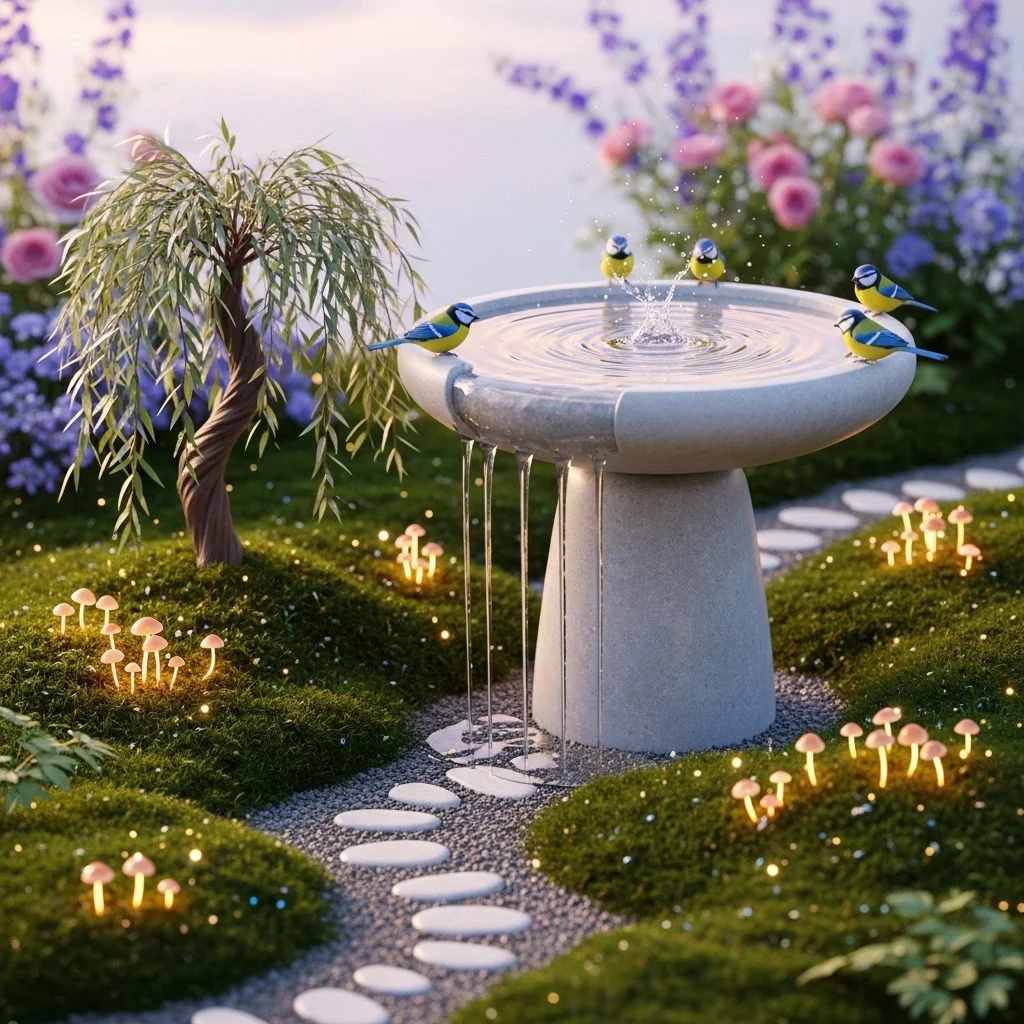
Tiny figures and mushrooms around the rim look charming and keep birds away. Clutter blocks landing space and gives cats cover. Build the scene about 18 inches behind the bath instead, on the side facing your window, so you still see both. Keep a clear 12-inch ring around the rim. Use outdoor-rated resin pieces, and skip anything glued to the bath itself, since adhesive residue ends up in the water. Moss and creeping thyme between the figures keep the scene soft. Children love checking the water level, which makes daily refills a habit rather than a chore.

Start With the Spot, Then Pick the Style
Keep a watering can or hose within reach of whichever bath you choose, because you will refill it more often than you expect. Then stand where you plan to put it and check three things: shade by midday, a shrub about ten feet away, and a clear view from a window you use daily. Get those right with a $20 bowl and birds will find it. Get them wrong with a $300 stone basin and you have built a drinking fountain for wasps. When leaves start falling, our fall outdoor decor ideas for your porch and yard cover styling the rest of the space around it.
Frequently Asked Questions
How do I keep a bird bath from freezing in winter?
Use a thermostatic bird bath heater, which typically draws 50 to 150 watts, on a GFCI outdoor outlet. Never add antifreeze or salt, since both poison birds. Plastic basins and heater-ready dishes survive ice better than glazed ceramic, which cracks as the ice expands. Without a heater, swap in fresh warm water each morning.
How do I get algae out of a bird bath?
Scrub it with a stiff brush and plain water. For stubborn film, soak the basin for ten minutes in one part bleach to nine parts water, then rinse until no smell remains and let it dry in the sun. Skip dish soap, which can strip feather oils. White vinegar loosens mineral crust.
Why aren’t birds using my new bird bath?
Most baths take two to four weeks to attract visitors. Birds notice the sound of dripping water first, so add a dripper or small bubbler. Move the bath closer to a shrub if it sits in open lawn, and cover slick glaze with pebbles. Do not relocate it every few days, because birds need time to learn where it is.
What size should a bird bath be?
Aim for a basin 14 to 24 inches wide. That fits a few small birds at once and still holds only an inch or two of water. A basin under 10 inches empties fast in summer and leaves no room to flap. Larger basins are heavier, so a 24-inch bath needs a firm, level base.
Can I put a bird bath next to a bird feeder?
You can, but keep them at least 10 feet apart. Seed hulls and droppings fall into nearby water and foul it within hours, and shared spots can spread disease between birds. If space is tight, put a shrub between the two, and rinse the basin daily during busy feeding seasons.
Can I use mosquito dunks in a bird bath?
Yes, if the product contains Bti and its label lists bird baths. Bti targets mosquito larvae and, used as directed, does not harm birds. A shallow basin needs only a small crumbled piece rather than a whole dunk. Check the label for dosing, and keep refreshing the water so it stays clean.