Stand in the doorway of most rental kitchens and count the finishes. Beige laminate. Almond appliances. A ceiling fixture throwing blue-white light across all of it. Nobody chose these things together, and the lease says you can’t paint, drill, or swap any of them.
That is the real design problem, and it is narrower than “add some personality.” A kitchen reads as luxe when its finishes agree with each other and the light is warm. It reads as fresh when it has air, a few living things, and nothing left on the counter to snag your eye. You can build both with items a landlord never notices: bulbs, bags, boards, and a roll of film.
Every idea below comes off, unplugs, or packs into a box. Wherever an idea needs adhesive, we’ve noted how to prep the surface and how to undo it, because that is where rentals usually go wrong. If you own your kitchen and can renovate, our guide to modern kitchen ideas that look expensive covers cabinets, stone, and layout changes.
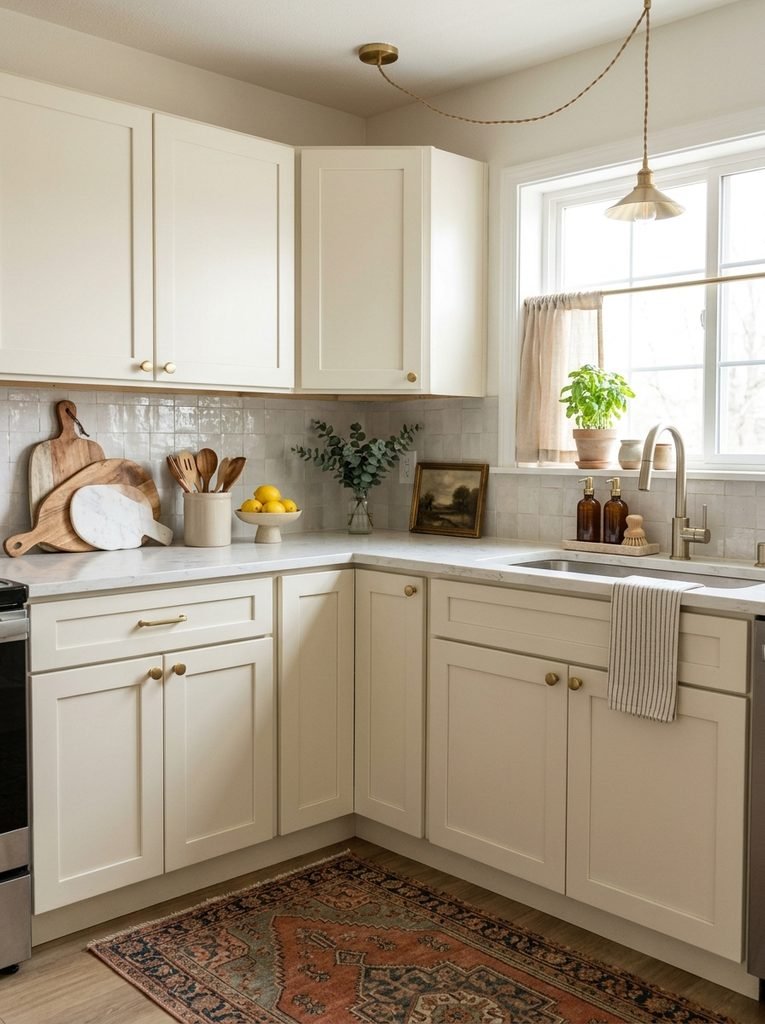
Quick Swaps That Leave No Marks
Most of these take an evening and a screwdriver. Start here, because light and hardware set the tone for everything you add later.
Warm Bulbs With a High Color Rendering Score
Light changes how every other purchase looks, so fix it first. Replace cool-white bulbs with 2700K ones, and look for a color rendering index (CRI) of 90 or higher on the box. At that rating, oak looks like oak, tomatoes look red, and beige laminate reads as cream instead of dishwater gray. Check the maximum wattage printed near the socket before you buy. Keep the old bulbs in their original boxes, since some leases expect the fixture to match its move-in condition.
Pulls Swapped and the Originals Bagged
Measure the distance between the two screw holes, center to center, before you shop. Three inches, three and three-quarter inches (96 mm), and five inches (128 mm) are the common sizes. Buy pulls that match, and they bolt into the existing holes with no new drilling. Single-hole knobs swap in about a minute each. Brushed brass or aged bronze warms builder-grade white or oak far more than chrome does. Drop every original pull and screw into a labeled zip bag and tape it inside a drawer, so the move-out reversal takes one afternoon.
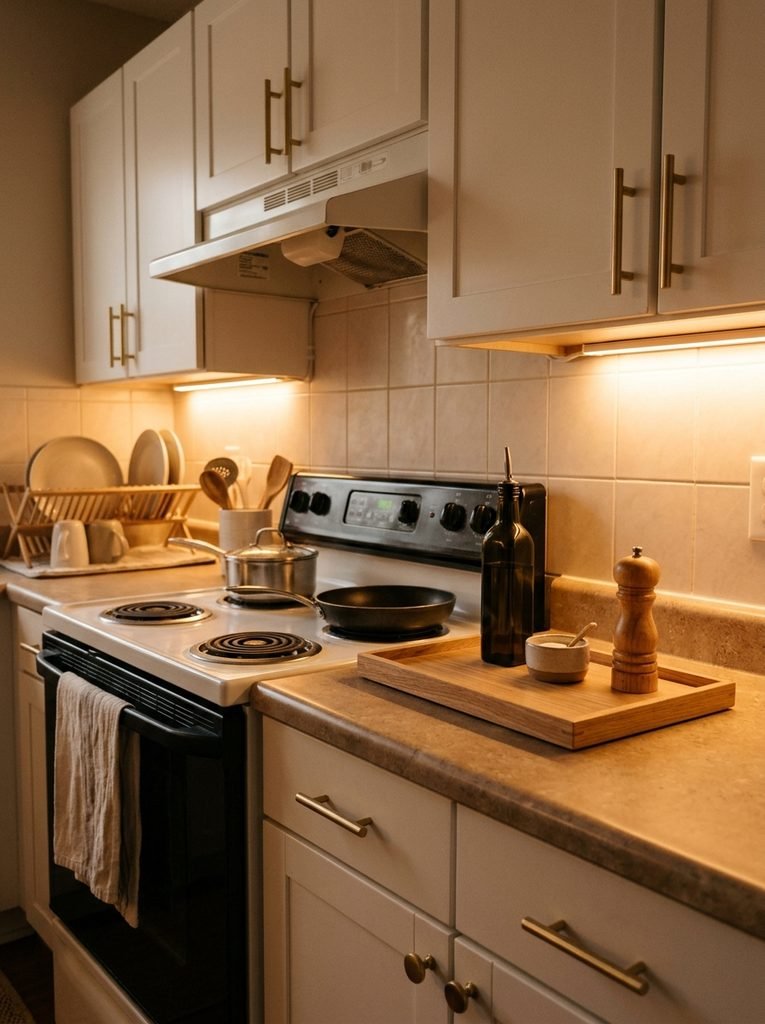
Plug-In Light Bars Under the Wall Cabinets
Rental counters are dark because the only light comes from a fixture behind your head, so your own shadow lands on the cutting board. Plug-in or rechargeable LED bars stuck under the wall cabinets fix that without touching the wiring. Buy a 2700K to 3000K set, since the cheapest bars skew blue and make food look gray. Press each adhesive pad onto a clean, degreased spot tucked behind the front lip, so you see the glow on the counter and not the bar. Cord clips along the cabinet seam hide the wire. A three-bar kit usually runs about $25 to $60.
Stick-On Dampers for Quieter Doors
A slamming cabinet door announces a rental kitchen faster than any beige counter. Clear silicone dampers, stuck to the inside corner of each door or its frame, soften the bang for a few dollars a pack. They won’t match true soft-close hinges, which pull the door shut in one smooth glide, but the quieter thud is what you hear every day. Test one door first: close it slowly and make sure it still sits flush before you use the rest of the pack.
A Tray That Corrals the Cooking Basics
A tray turns a cluster of bottles into one deliberate object. Choose one around 12 by 16 inches with a raised lip, then group a pour bottle of oil, a salt cellar, and a pepper grinder on it. The lip catches drips so the counter stays clean. Marble, wood, and brushed metal all work. Place it beside the stove, not on it: the National Fire Protection Association advises keeping anything that can catch fire, such as towels, wooden utensils, and curtains, away from the stovetop.
Weekend Projects That Peel Off Clean
Adhesives are where renters lose deposits. Each project here starts with surface prep and ends with a removal plan.
Peel-and-Stick Tile Behind the Sink Only
Scrub the wall with a degreaser, wipe it with isopropyl alcohol, and let it dry fully. Adhesive tile grips smooth paint but struggles on heavily textured walls, so press one tile in a hidden spot, wait a day, and tug it. Start at the center of the sink wall, not a corner, because few walls are square and a centered pattern hides the drift. Stop at a natural edge such as the window trim. Remove it later by warming each tile with a hair dryer and peeling slowly at a low angle. For tile that goes beyond a rental, see our kitchen backsplash ideas that give a basic kitchen a custom look.
Film Over Laminate Counters You Dislike
A stone-look vinyl film can make worn laminate read as quartz from a few feet away. Clean and dry the counter completely, then unroll the film from the back wall toward you, pressing out air with a felt-edged squeegee as you go. Place seams where they’re least visible and away from the sink. Film is not heatproof, so a hot pot can mark or melt it. Keep a trivet beside the stove. White-and-gray patterns hide crumbs and scratches better than solid black, and a hair dryer loosens the adhesive at move-out.
One Removable Wallpaper Wall
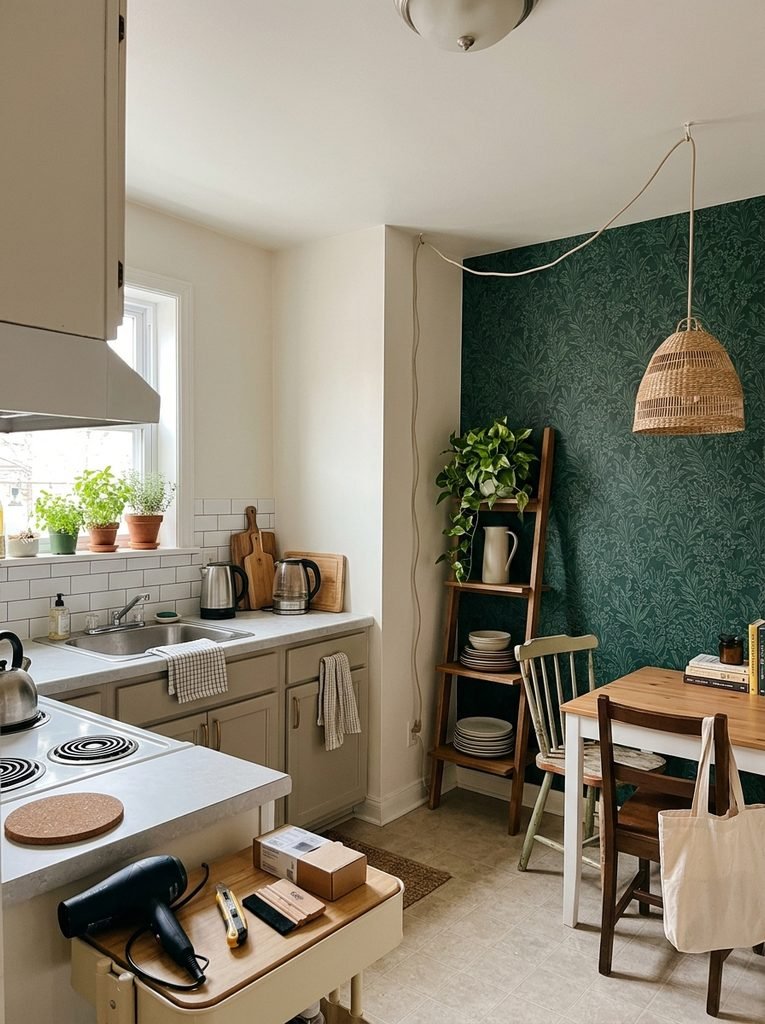
Pick one wall, ideally the one you see from the living area, and leave the rest alone. First test a strip in a closet or behind the fridge. Leave it for a week, then peel it. If paint comes off with it, the landlord’s flat paint is poorly bonded, so skip the wall and hang framed art instead. A deep green, a fine grid, or a plaster-look print gives the room an anchor without fighting the cabinets. Keep it well away from the stove, where heat and grease shorten its life.
A Freestanding Shelf Instead of Drilled Ones
A leaning ladder shelf or a metal baker’s rack gives you open shelving with zero holes. Choose one about 30 inches wide so it doesn’t swallow a small kitchen, and put the heavy ceramics on the bottom shelf. Tall units can tip, and anti-tip straps need a screw in the wall, so either ask your landlord about one small hole or pick a unit under about four feet. Style it with three things: stacked plates, one object with height, and one leafy plant. Add more and it starts to look like storage.
A Plug-In Pendant on a Swag Hook
A plug-in pendant lets you hang a statement fixture without an electrician. Screw a ceiling hook into a joist or use the right hollow-ceiling anchor, drape the cord in a gentle swag, and plug it into a nearby outlet. Hang it about 30 to 36 inches above the table or counter surface so it lights the work without blocking sightlines. The hook leaves one small hole to patch with spackle at move-out, so check your lease first. A cord cover painted to match the ceiling hides the wire.
Pieces That Pack Into the Moving Truck
Furniture and plants are the safest investments in a rental. Nothing about them needs a landlord’s signature, and everything goes with you.
A Low-Pile Runner Along the Sink Run
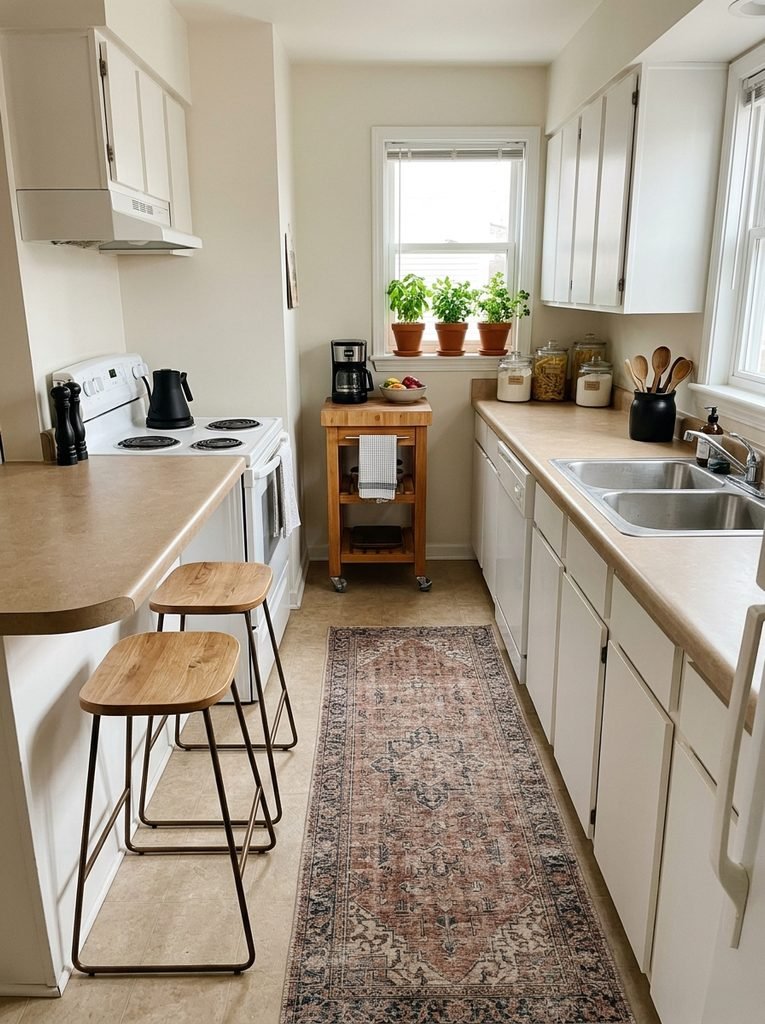
Standing at the sink on a hard floor tires your legs fast. A runner 24 to 30 inches wide, flat-woven or very low pile, adds comfort and hides worn flooring. Keep the pile around a quarter inch so the dishwasher door and drawers clear it, and add a thin non-slip pad so the corners don’t curl. Choose a washable one for the day the olive oil lands. A pattern with tonal variation beats solid cream, which shows every footprint.
Counter Stools Sized to Your Counter
Measure from the floor to the underside of your counter before ordering stools. For a standard 36-inch counter, a seat height of about 24 to 26 inches leaves comfortable knee room. Choose backless stools that slide under the edge, so the kitchen looks open when nobody is sitting. Slim metal or wood legs keep the floor visible. Felt pads protect rental floors, but replace them yearly, since they pick up grit and start to scratch.
A Butcher-Block Cart on Locking Casters
A cart about 36 inches tall works as extra counter, a coffee station, and a landing spot for groceries. Look for solid wood with locking casters, and rub food-safe oil into the top before first use. Wood warms a kitchen full of laminate and white appliances, which paint can’t do. Park it in the walkway only if you keep at least 36 inches of clear path. Narrower than that, and you’ll bump into it daily.
Herbs and Glass Canisters Side by Side
Pair living things with quiet containers. Basil, parsley, and thyme in matching terracotta or white pots with saucers give you freshness you can cook with. Basil sulks below about 50°F, so move it off a cold winter window at night, and give mint its own pot because it spreads. Next to the herbs, decant flour, sugar, and pasta into glass canisters with tight lids, which also keeps pantry moths out. Use removable labels so the set stays tidy.
Three Colors Anchored to What You Can’t Change
Look at the permanent surfaces first: counter, floor, and appliances. Decide whether their undertone runs warm (cream, yellow) or cool (gray, blue), then build a three-color palette around it. If the counter leans beige, choose warm white, oak, and one dark accent rather than stark white. Add matte black in small, repeated doses, such as a kettle, a pepper mill, and a utensil crock. Repeating one dark finish three times looks planned. Using it once looks like an accident.
The Move-Out Bin
Before you start any project, photograph every surface you’ll touch: walls, counters, cabinet fronts, and the ceiling where a hook might go. Then keep one labeled bin for everything you remove. It holds the original pulls and screws, the old bulbs, and a note on where each adhesive product went.
Tape a short list inside the lid, with the wallpaper wall, the ceiling hook, and the counter film noted in one line each. On moving day, work through the list in the same order you installed things. Most deposit disputes come from missing hardware and forgotten hooks, and this bin covers both in about an afternoon.
Frequently Asked Questions
Can I use peel-and-stick backsplash behind a gas stove?
Usually not directly behind the burners. Most adhesive tile has a low heat rating, and the glue softens when pans boil over or the wall heats daily. Check the package for a stated heat limit, and if it lists none, stop the tile at the sink wall. A stainless-steel splash panel that rests or hangs behind the range is usually the safer pick.
Do adhesive hooks and strips damage kitchen paint?
They can, mostly on cheap flat paint that was never primed well. Wipe the spot with isopropyl alcohol, press the strip for 30 seconds, and wait about an hour before hanging weight, as most packages instruct. To remove one, pull the tab slowly straight down along the wall. Grease weakens the bond, so avoid spots beside the stove.
Do I need my landlord’s permission for removable wallpaper or tile?
Read the alterations clause in your lease first, because wording varies widely. Even products sold as removable can count as a change under some leases. Ask in writing, describe the product and the wall, and keep the reply. Photograph the surface before you start so any later disagreement about its condition has evidence on both sides.
Is it safe to put a rug in front of the stove?
It’s better to keep rugs at the sink or prep side. A curling corner is easy to catch with a hot pan in your hands, and fabric belongs away from the burners. Choose a flat-weave runner with a thin non-slip pad, and check every few weeks that the edges still lie flat against the floor.
How long does peel-and-stick tile last in a kitchen?
Prep and steam matter more than brand. On a clean, smooth, degreased wall away from the stove, adhesive tile often stays flat for years. Near the sink, press the edges back down once a week for the first month, since that’s when lifting shows up. Replace any single tile that curls instead of re-sticking the whole run.