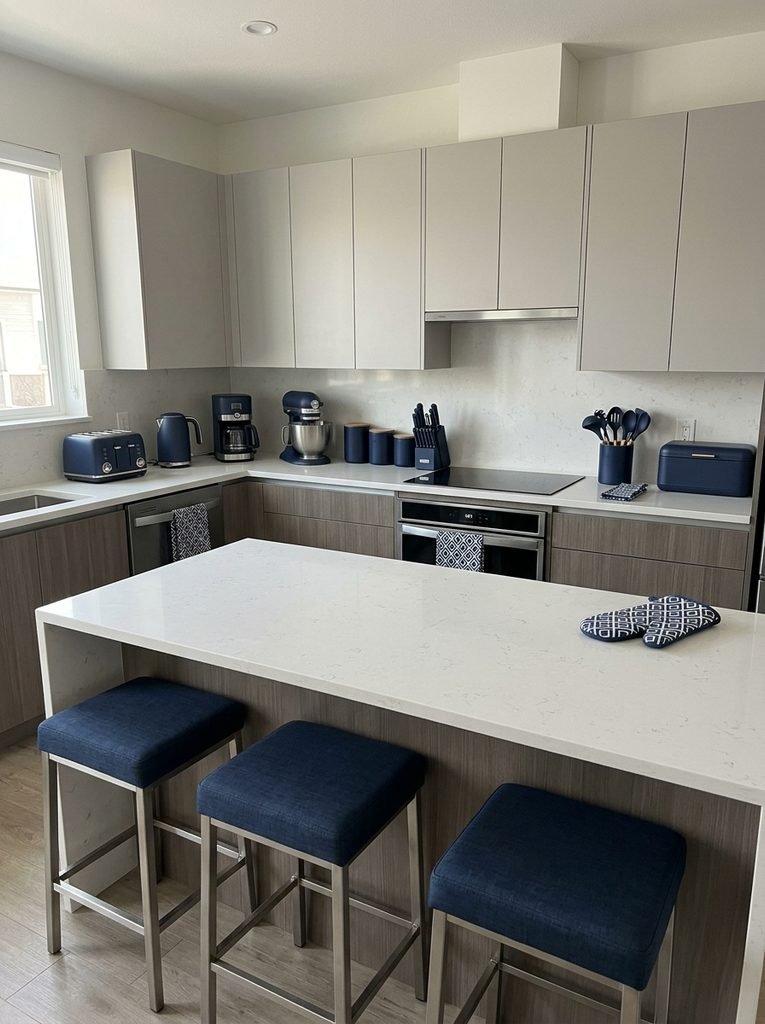
You bought the canisters, the tray, the stools, and the dish towels on the same Saturday, in the same store, from the same color story. You set everything out, stepped back, and the kitchen looked like the backdrop of a product photo. Clean. Coordinated. Oddly cold.
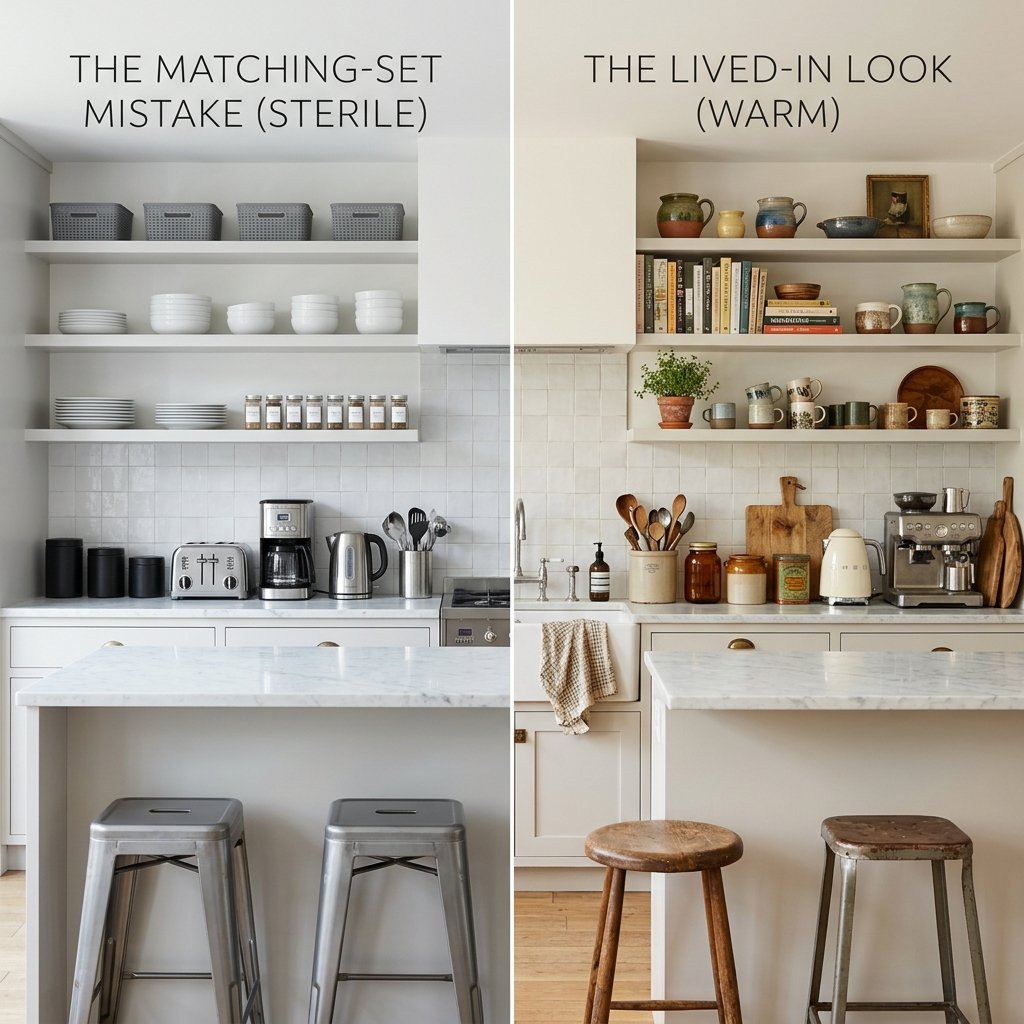
Nothing is wrong with any single piece. The problem is that every piece shares the same age, the same size family, and the same sheen. Your eye has nowhere to land, because nothing in the room has a past.
This is the matching-set mistake, and it is one of the most common reasons a well-stocked kitchen still feels sterile. The fix doesn’t need a bigger budget or more stuff. It needs a few deliberate mixes of age, scale, and texture, tied together by one repeated thread.
What a Matched Kitchen Gets Wrong
A matching set is built by a factory to be identical. The glaze, the edge radius, the sheen, and the proportions are decided once and then repeated. A three-piece canister set shows it clearly: one shape scaled to three sizes, so the rhythm is predictable before you finish unpacking it.
Kitchens already lean hard. Stone, steel, tile, and glass bounce light and absorb nothing. The only softness comes from the objects you add. When every object is new, crisp-edged, and uniform, the room has no softness anywhere and no sign that anyone ever cooked a meal in it.
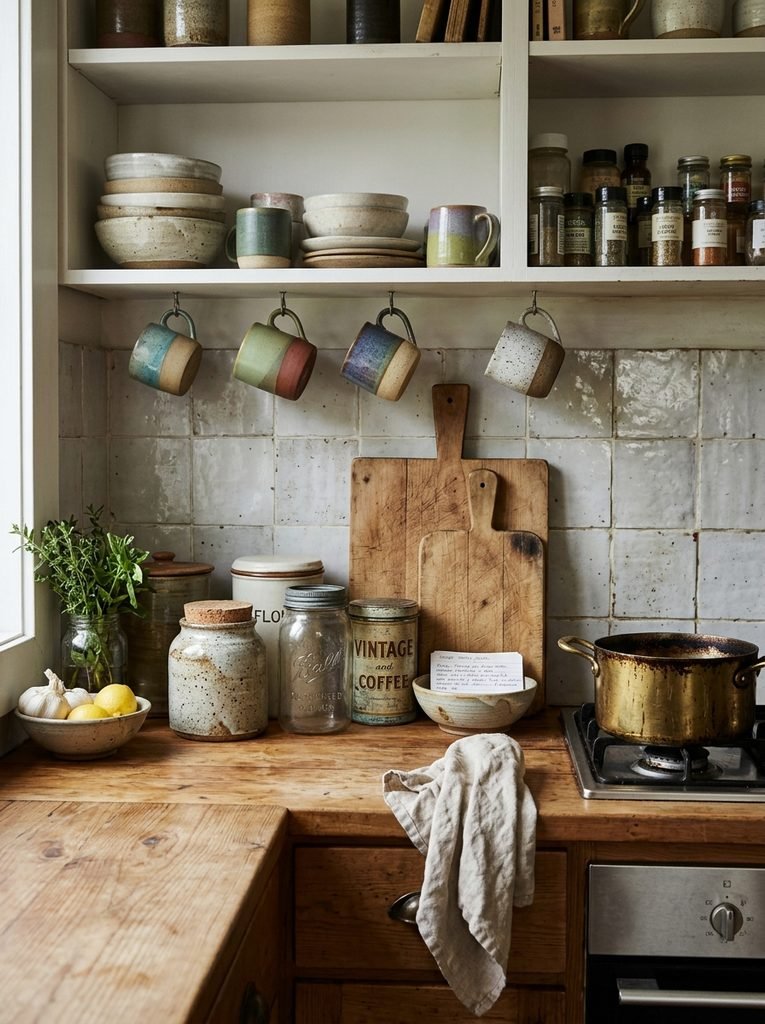
Variation does the opposite work. A board with a faint knife-scored patina, a mug in a slightly different glaze, or a brass pot darkened at the rim all tell the eye that this room gets used. That’s what “lived-in” means. It’s information, not mess.
Why the Mistake Happens So Easily
Retailers price sets so the second and third piece feel free, which makes buying the whole set the thrifty choice. Online carts push the same logic with “complete the look” prompts. Meanwhile, the kitchens that inspire you on screen were styled for a single day of photography, using pieces chosen because they could be arranged in an afternoon.
There’s also fear. Mixing finishes feels risky, and matching feels safe. Nobody gets criticized for buying everything in the same warm white. The trouble is that safe and sterile look identical from across the room.
The Fix Is Three Mixes and One Thread
You don’t need to start over. Replace about one in three of the visible objects, and choose each replacement to differ from its neighbors in age, scale, or texture. Then tie the result together with one repeated element. Here is how each mix works in practice.
Mix Age, Starting With Wood and Metal
Old wood and old metal are the easiest places to begin, because both improve with use. A vintage bread board or cutting board brings grain and a worn edge that a new one takes years to earn. Sand it lightly by hand, moving from 120-grit to 220-grit paper, then rub in food-safe mineral oil until the wood stops drinking it. Set it on a flat counter and press each corner. A board that rocks is warped, and it will never sit flush against a backsplash.
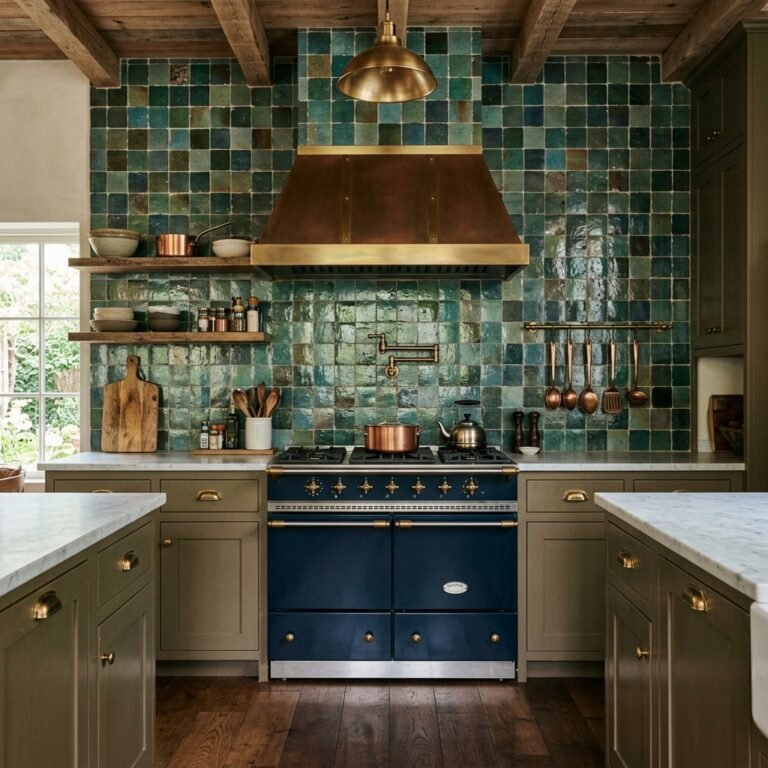
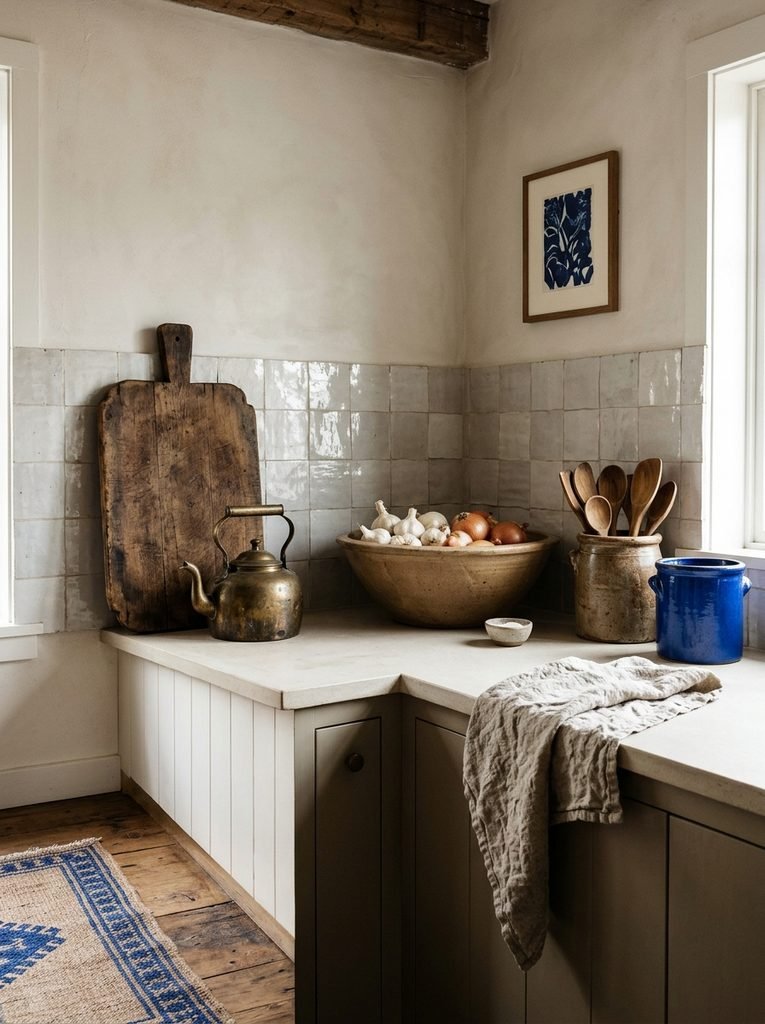
For metal, look for brass, copper, or aged steel with its finish intact, and leave the patina alone. Polishing a brass pot every month turns a quiet piece back into a shiny one. If your kitchen has exposed beams or plaster moldings, they count as your oldest objects too. Keep the styling around them simple and let them speak.
Mix Scale With One Big Piece and One Tiny One
Most coordinated sets sit in a narrow height range, which flattens a counter into one long line. Break it with one oversized object, such as a 20-inch stoneware bowl or a long wooden tray leaning against the backsplash. Then add one object that is almost too small, like a pinch pot for salt. The eye needs a peak and a valley to read depth.
The same rule works on the wall. A large framed print over the counter pairs well with a five-by-seven oil painting hung low beside the coffee station, where you’ll catch it while the kettle boils. Mismatched frames hold together if every mat inside them is the same warm white.
Mix Texture and Let One Surface Be Imperfect
Perfectly flat, perfectly uniform surfaces are the signature of a matched room. Handmade tile, with its slight waves and uneven glaze, catches light differently from every angle. That gives a plain wall more depth than flat tile in the same color. If tile isn’t an option, bring the imperfection in through fabric. A stonewashed linen towel beside a rough stoneware crock gives you two textures in one square foot.
Tie It Together With One Thread
Variety only works when something repeats. Choose one color or one metal and use it at least three times, at different heights: low on the floor, at counter level, and up on the wall. Cobalt does this well. A blue-striped runner, a blue-glazed crock, and a blue-framed print read as a plan, not a coincidence. If your cabinets already set the palette, our guide to kitchen cabinet colors that won’t trap you in one trend shows how to pick a thread that suits them.
Where Collected Pieces Belong in a Working Kitchen
Not every surface suits an antique. Put collected pieces where they’re handled gently and rarely heated. For smaller, stranger details such as switch plates, hooks, and a mini lamp, our kitchen decor ideas no one talks about go further.
The Coffee Corner
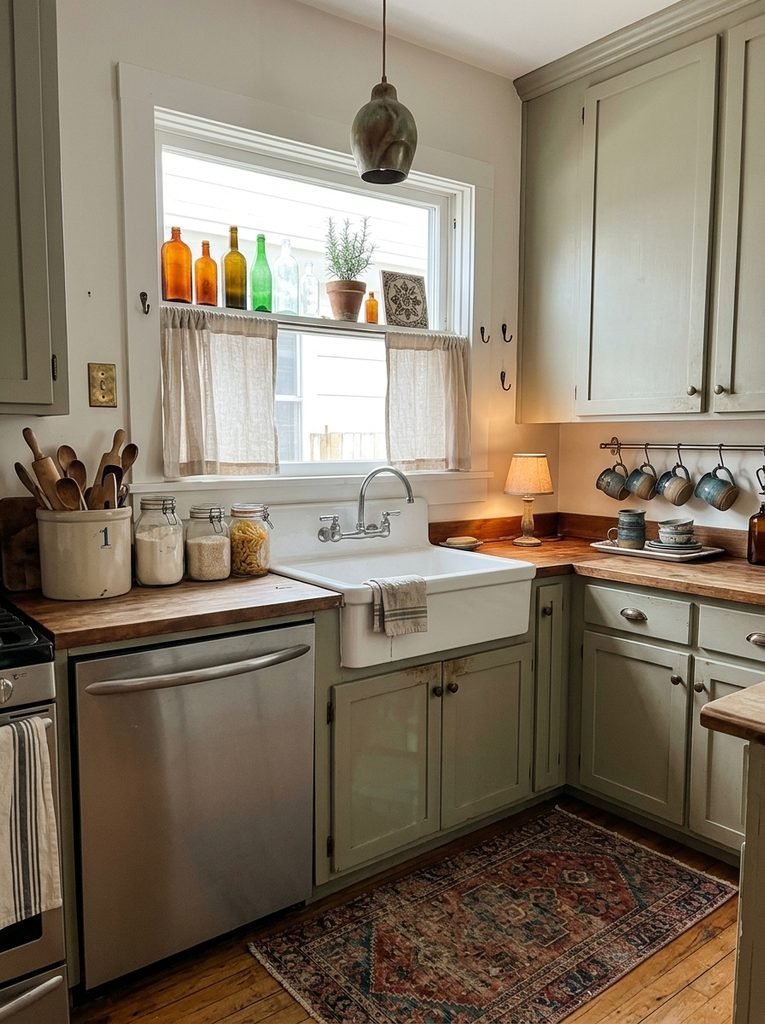
Mismatched mugs are the easiest entry point: four mugs from four decades, hung on a rail or stacked on a tray. Keep them inside one color family so they look gathered, not random. Reserve the vintage ones for display or cold drinks, for reasons covered in the safety section below.
The Window Over the Sink
A windowsill rewards small, odd things: a row of old glass bottles, a single herb pot, a tile propped upright. Keep the lineup under about a third of the glass so light still comes through. Hang a short café curtain, or a length of vintage linen on a tension rod, to soften the frame.
The Floor and the Light
A vintage wool runner in front of the sink adds color and cushioning in one move. A 2.5-by-8-foot size fits most galley runs. Dab a damp white cloth on a hidden corner first, since older dyes can bleed, and add a thin pad so it doesn’t creep. Overhead, one old or sculptural fixture beats three matching new ones. Pair it with a counter lamp and keep the bulbs warm.
Crocks and Jars That Do a Job
A stoneware crock holds wooden spoons better than any steel organizer. Tap it with a knuckle before buying. A clear ring means the piece is sound, and a dull buzz suggests a hairline crack. A one-gallon size fits most counters. Use it for utensils only, never for food, since old interior glazes can carry lead. Glass jars are the safer choice for flour, rice, and pasta.
What Should Stay New
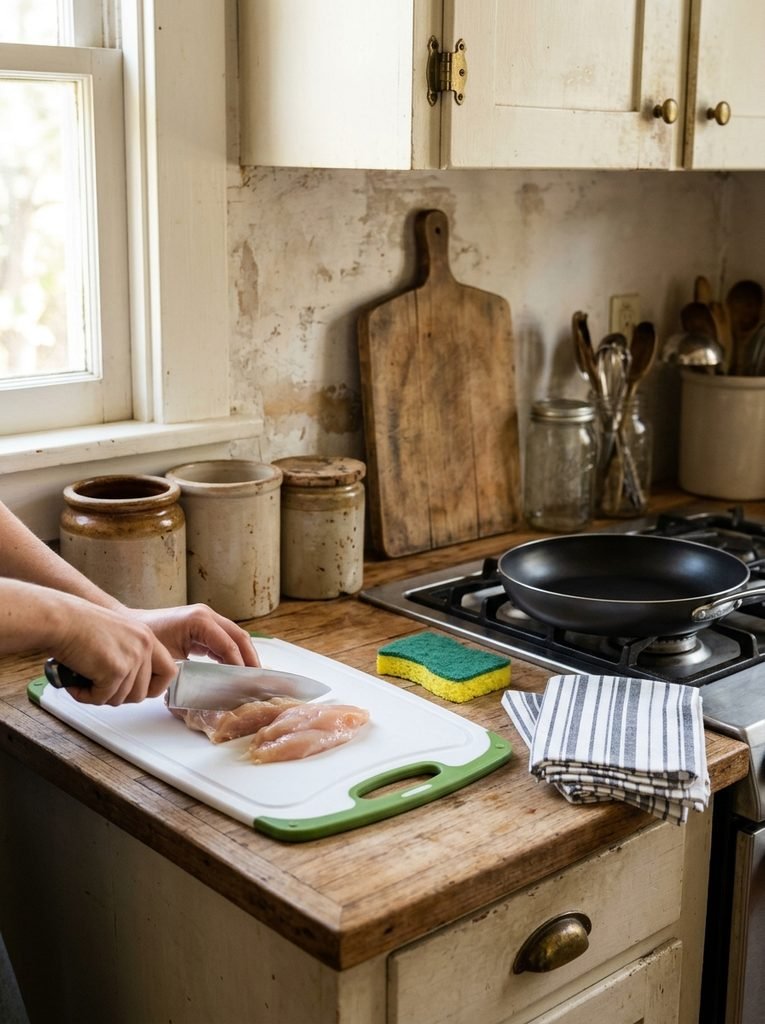
Collected doesn’t mean everything is secondhand. Buy new anything that touches raw meat, high heat, or acidic food. That includes a dedicated board for raw chicken that can go through the dishwasher, and nonstick pans with an intact coating. Skip vintage small appliances with frayed or cloth-wrapped cords, since damaged wiring is a fire risk no patina can justify. Keep sponges, towels, and knives new as well. A good rule is to let old pieces carry the looks and new ones carry the work.
Where to Find Pieces Without Overpaying
Estate sales usually offer the best variety, and many discount on the final day. Go on the first morning for the best pieces and the last afternoon for the best prices. Flea markets reward early arrival for selection and late arrival for bargaining. Thrift stores are cheapest but unpredictable, so check often. Online listings suit specific items, but shipping can double the cost of a heavy crock.
Wherever you shop, run the same four checks. Look for chips and cracks. Set the piece on a flat surface to see whether it wobbles. Smell it for cabinet mustiness. Ask yourself if you’d miss it when someone else buys it first. Pay for condition, not for the story. A dented enamel pot with an intact finish beats a pristine one with rust under the rim.
A Safety Check Before Anything Touches Food
Old glazes are the one real hazard in a collected kitchen. The Centers for Disease Control and Prevention lists antique and older dishes among the types that may contain lead, and says testing is the only way to know. Its guidance is to avoid heating or storing food in dishes that may contain lead, and it warns that dishwashers can damage the glaze and increase leaching.
The practical rule is simple. Let vintage ceramics, enamel, and crystal hold flowers, utensils, and decor, and serve food on modern dinnerware. Wood boards, once sanded and oiled, are the exception.
A Counter, Before and After
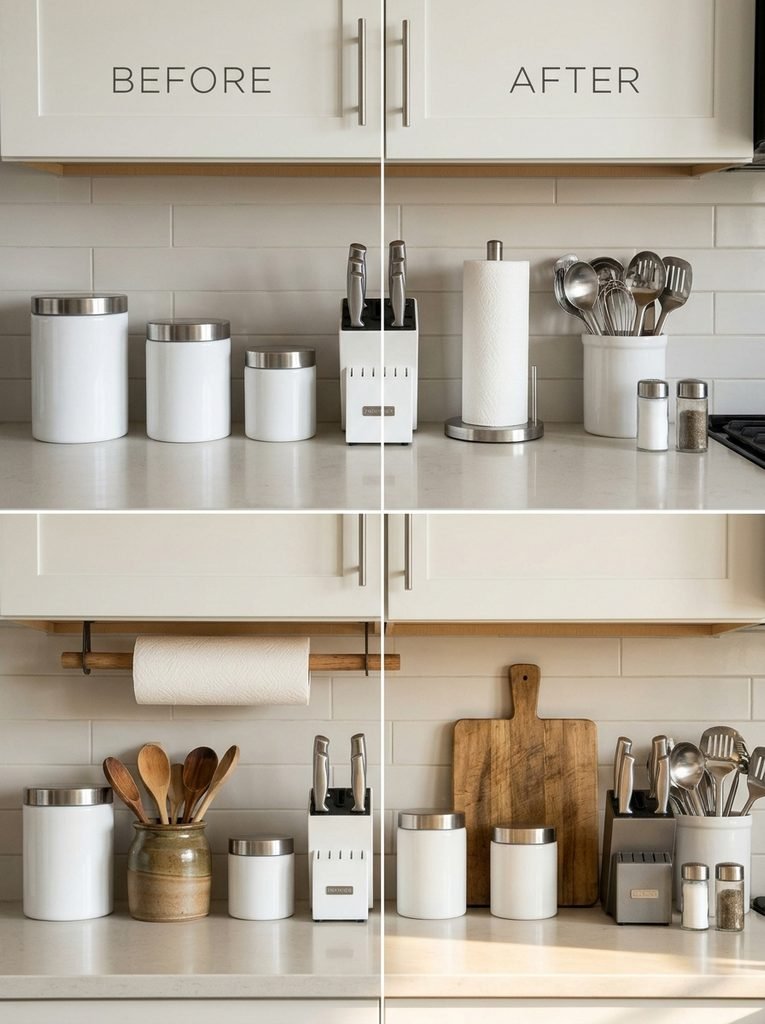
Picture a counter holding eight things: a three-piece canister set, a matching knife block, a steel paper-towel stand, and a white utensil holder. Every object is a similar height and a similar finish.
Now make three swaps. Replace the middle canister with a stoneware crock for spoons. Swap the paper-towel stand for a wooden dowel on a bracket under the cabinet. Lean one wooden board behind the knife block. The counter still holds eight things, but they now differ in age, material, and height. Nothing was added, and the room stops reading as a set.
The Squint Test
When you think you’re done, stand in the doorway and squint. If the room blurs into a few shapes and two or three colors, you’ve got it. If your eye jumps between a dozen competing objects, remove the three that mean the least. Collected isn’t the same as crowded. A collected kitchen leaves clear space around its best pieces.
Start With One Swap
Pick the matching item you like least, perhaps a canister set or a trio of identical jars. Replace just one piece with something older, bigger, or rougher. Live with it for a week. Move it around, wash it, use it. Then decide whether the room needs a second change.
Collected rooms get built slowly, one swap at a time. Rotating a few pieces with the seasons keeps them from going stale.
Frequently Asked Questions
Can I use a vintage cutting board for food?
Yes, if the wood is sound. Sand away the surface, oil it with food-safe mineral oil, and discard any board with deep cracks where moisture and bacteria can hide. Skip boards that smell sour or have dark stains that sanding won’t lift. A board about three-quarters of an inch thick resists warping better than a thin one.
How can I tell if a copper pot is real copper?
Hold a magnet to it. Solid copper isn’t magnetic, so a magnet that sticks means the pot is plated steel or iron. Real copper is also heavier than it looks. Unlined copper reacts with acidic foods such as tomatoes, so treat unlined or worn pieces as display only and cook in modern pans.
How many metal finishes can one kitchen have?
Two metals and two wood tones is a comfortable limit for most kitchens. Pick one dominant finish for the majority of visible pieces, such as brass hardware and a brass pot, and use the second as an accent, like a black faucet. A third metal reads as clutter unless it appears at least three times.
How do I clean vintage enamelware and stoneware crocks?
Wash by hand with mild dish soap and a soft sponge. Abrasive pads scratch enamel and open the door to rust. Dry the piece fully, especially around chipped edges, since trapped moisture rusts the exposed metal underneath. Keep crocks out of the dishwasher, because heat and detergent can dull and damage old glazes.
Is it okay to hang art near the stove or sink?
Keep paper prints away from both. Cooking grease and steam stain paper and warp frames. Choose art behind glass with a sealed backing, or an oil painting, and hang it on the far side of the room from the burners. Avoid direct sun too, since it fades pigments faster than any kitchen mess.