
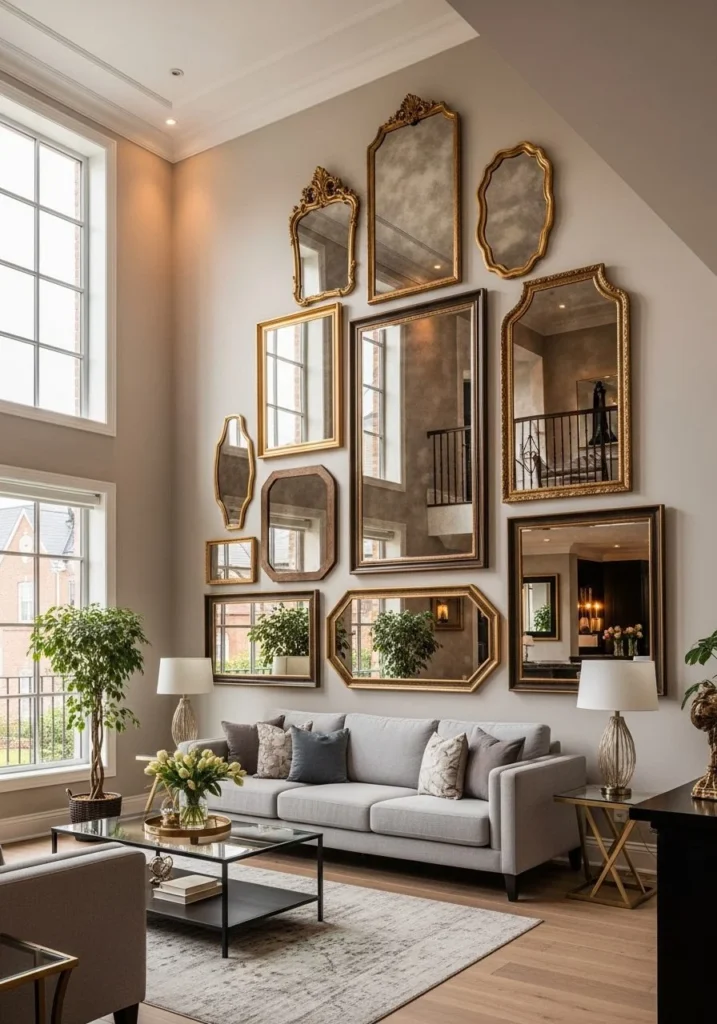
You’ve bought art for that wall twice. Both times it looked right on the product page. Both times it looked wrong over the sofa: too small, too dark, too something. The pieces are in a closet now, still in their bubble wrap.
The problem usually isn’t taste. A blank wall isn’t one problem, it’s several. A wall behind a sofa needs scale. A wall beside a window needs something that survives glare. A wall with a thermostat on it needs a plan for the thermostat. Most idea lists skip all of that and hand you the same frames, shelves, and clocks for every wall.
This guide works the other way around. Find the wall you actually have, and use the fix built for it.

Measure the Wall Before You Shop
Write down five numbers before you open a single shopping tab: wall width, ceiling height, the width of any furniture against the wall, the distance to the nearest window, and the height of every switch, vent, and thermostat.
Then look at the wall at 5 p.m. and again after dark with the lamps on. A wall that glows at noon can sit in shadow by evening, and that changes which colors and finishes survive. Stand in the doorway, then in your usual seat. The wall you face from that seat deserves the most effort. The one you only walk past can stay quiet.
One sorting rule helps. If furniture sits against the wall, the furniture sets the scale. If nothing does, you have to supply a scale yourself, which is why bare walls are the hardest. And if your blank wall is the one with the fireplace on it, our guide to fireplace wall ideas that cover stone, plaster, tile, and built-ins goes much deeper than this list can.
Walls Behind Seating and Storage
Behind the Sofa: One Piece Sized to the Furniture
Multiply your sofa’s width by two-thirds. For an 84-inch sofa, that’s 56 inches, and it’s the smallest the art should be. Anything narrower reads as a postage stamp, which is probably what happened to the pieces in that closet. One horizontal piece around 56 to 63 inches wide works. So do two 28-inch verticals hung close together. Large-format prints from online print shops often run $80 to $160 before framing, so you can reach this size without buying an original.

A Long Wall and a Short Sofa: Split It Into Two Jobs
A 14-foot wall with a 7-foot sofa leaves seven feet of nothing. Centering art on the sofa only makes the lopsidedness obvious. Treat the wall as two zones instead. Put the art over the sofa. At the empty end, add something tall that stands on the floor: an arc floor lamp over a small side table, or a bookcase no deeper than 12 inches. The two zones should rise to different heights, so the eye travels along the wall instead of stopping at the sofa’s edge.
Above a Console or Sideboard: Hang a Mirror With Something Worth Reflecting
A mirror shows whatever it faces, so decide what that is before you buy. Opposite a window, it doubles the daylight. Opposite a bare wall, it doubles the bare wall. Opposite the TV, it gives you a second dark rectangle. Over a 48-inch console, a round mirror of 30 to 36 inches works well, and most cost $90 to $300. A 30-inch glass mirror can weigh 20 pounds or more. Screw into a stud or use toggle bolts rated for the weight, not the plastic anchors in the box.

The Reading Chair Corner: Let a Lamp Do the Decorating
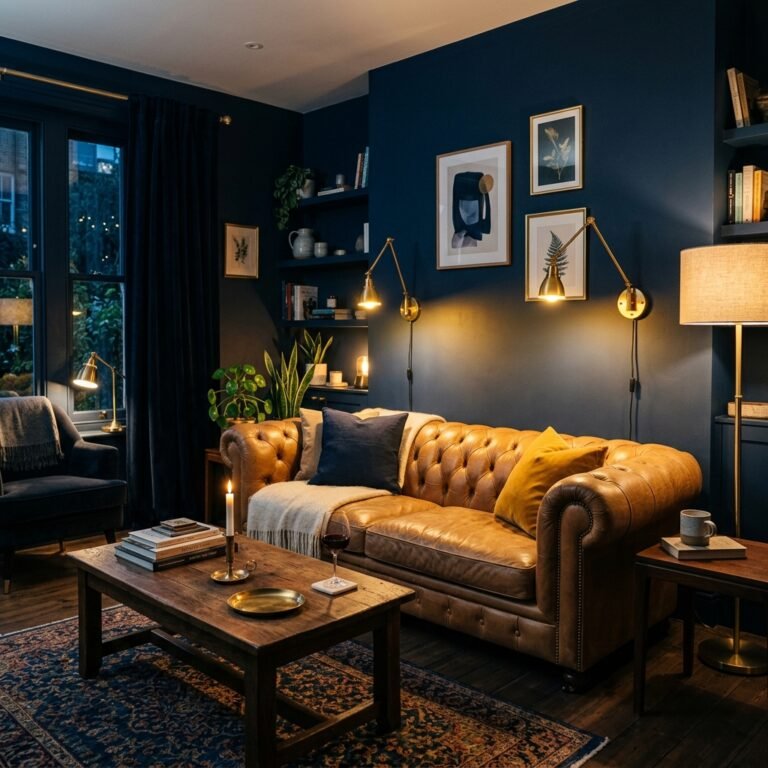
The blank wall beside an armchair is usually a lighting problem in disguise. A plug-in swing-arm lamp needs no electrician. Mount it so the bulb sits near shoulder height when you’re seated, roughly 42 to 48 inches from the floor, and choose a warm 2700K bulb. Run the cord down the wall in a cord cover painted the wall color, then add one small framed piece beside the lamp. Plug-in swing-arm lamps run about $40 to $120. The lamp lights the page and fills the wall, and you skip the art decision entirely.

Walls Beside Windows, Screens, and Doors
The Wall Beside a Window: Choose Art That Survives Sun
South- and west-facing windows throw direct light across the neighboring wall for hours, and that light fades the dyes in inexpensive prints. Ask for UV-filtering acrylic glazing on anything you want to keep. Or choose pieces that fade less easily: ceramic plates, carved wood, or woven work. Skip glossy glass here, too. It bounces window glare back at you and makes the wall hard to look at. A matte mat and non-glare glazing keep the piece readable from across the room.
The Strip Between Two Windows: Go Tall and Narrow
Piers between windows are often 12 to 24 inches wide, and a standard frame looks cramped there. Go taller than wide instead. A 10-by-40-inch framed botanical print works, and so does a linen banner hung from a wooden dowel. Line up the top edge with the top of the window trim. That shared line makes the piece look planned rather than squeezed in. The banner version can stay under $60 if you hem the linen with iron-on tape and cut the dowel yourself.
The Wall Behind the TV: Make the Black Rectangle Recede
A dark screen on a pale wall is the highest-contrast object in the room, so your eye lands there first. Lower the contrast. Paint the wall a deep mid-tone, such as dark taupe, forest green, or navy, so the screen sits against a color closer to its own. Add a bias light strip behind the set, in neutral white around 6500K, for a soft halo that eases eye strain in a dark room.
You’ll sit in this room tonight, so ventilate. EPA’s indoor air guidance on volatile organic compounds lists maximum ventilation during painting, and discarding paint supplies you won’t use soon, among the ways to reduce exposure to indoor air pollutants. Open two windows, point a box fan outward, and pick a low-VOC paint.
If a full paint job feels like too much, 1-by-2 pine battens spaced an inch or two apart over a dark base coat give the same quiet depth. They cost a few dollars per 8-foot length.

The Wall You Face From the Sofa: A Gallery Wall With One Object in It
Seated, you look at one wall more than any other, usually the one across from the sofa. Fill it with five to seven pieces and make at least one of them an object, such as a woven plate or a carved wooden tray. That single object breaks the flat-frame look that makes a gallery wall feel like a showroom. If you’re hanging family photos, print them all at one size in black and white, so different cameras and different years match. For spacing, centering, and how to avoid a messy result, read why gallery walls end up looking cluttered and how to fix the spacing.

Tall, Long, Awkward, and Off-Limits Walls
The Ten-Foot Wall: Order Tall Formats
On a wall above nine feet, one standard frame floats in a sea of paint. Buy tall formats instead. A canvas of 24 by 72 inches is a common size. Hang a pair side by side, running from just above the sofa back to about two feet below the ceiling. The height makes the ceiling feel intentional, and nothing about the arrangement needs a gallery-wall system.
The Long Wall Opposite the Windows: Hang a Rug
A vintage flatweave or kilim, about 5 by 8 feet, covers a long wall with one object and a lot of texture. A rug that size can weigh 20 pounds or more, so don’t hang it from nails. Sew hook-and-loop tape along the top edge, staple the matching strip to a 1-by-3 wood batten, and screw the batten into studs. Marketplace and estate-sale rugs commonly cost $100 to $400. Run a brush attachment over the top edge twice a year, because dust settles there first.

The Wall With Switches, a Thermostat, and a Vent: Build Around Them
Photograph the wall and mark each obstacle with painter’s tape. Align one edge of your art with the edge of the switch plates, so the obstacle becomes part of a line instead of an interruption. Keep anything deeper than a flat frame away from supply vents, so air still reaches the room, and leave clear space around the thermostat so it reads true room temperature. Swapping builder-beige switch plates for ones painted to match the wall takes ten minutes and a small foam brush.
The Desk Corner: Hang a Pinboard Instead of Art
A laptop desk in the corner of the living room needs a wall that works. Wrap a quarter-inch cork sheet in linen over a 24-by-36-inch piece of foam board, using spray adhesive and a staple gun on the back. Hang it above the desk, with one 30-inch floating shelf over it for a lamp or a plant. The pinboard holds receipts and photos, and the linen makes it read as decor. Materials run about $30 to $60.

The Alcove: Wallpaper the Back of the Recess
A recess beside a chimney breast, 4 feet wide and 6 feet tall, is 24 square feet. A roll of peel-and-stick wallpaper is typically about 28 square feet, so one roll covers it. Rolls often cost $35 to $80. The small area lets you use a bolder pattern than you’d dare on a whole wall. Apply it only to smooth, fully cured paint, since peel-and-stick fails on textured or fresh surfaces. Put a low console or lamp in front so the paper reads as a backdrop.
The Rental Wall: Lean, Don’t Hang
If the lease says no holes, lean one oversized frame, 30 by 40 inches or larger, on a low console or straight on the floor. Tilt it back slightly. On hard floors, put a strip of rubber shelf liner under the bottom edge to stop it sliding, and keep leaning pieces out of the path where kids or pets run. Pair it with a plant or a floor lamp so the lean looks deliberate instead of waiting to be hung.
The Wall With Nothing Against It: Give It a Frame
Without furniture, nothing signals the wall’s scale. Paint an arch to supply one. Mark a 36-inch-wide base. Pin an 18-inch string at the center point where the curve will start, 60 inches up, and swing a pencil around it to draw the top half-circle. Run straight sides down to the floor, and the arch stands 78 inches tall. A quart of paint, about $20 to $35, covers it in two coats. Prefer straight lines? Three 24-by-48-inch rectangles of picture-frame molding use about 36 feet of primed MDF, often $1 to $2 a foot.

Start With One Wall
Tape the outline of the piece you’re considering to the wall, using painter’s tape, and leave it up for three days. If the rectangle looks small by day two, it is. Resize the outline until it stops bothering you, then shop to those dimensions. That one habit would have kept both pieces out of the closet.
Frequently Asked Questions
Should every wall in a living room have something on it?
No. Living rooms often feel settled with two or three active walls and one quiet one. The plain wall gives your eye somewhere to rest, which makes the decorated walls look deliberate. Check from your main seat: if every direction competes for attention, take something down from the wall you look at least.
How do I find a wall stud for something heavy?
Use a stud finder, then confirm by knocking: a hollow sound means drywall, a dull thud means wood behind it. In most U.S. homes, studs sit 16 inches apart center to center, though some walls use 24. Outlet and switch boxes are usually fastened to the side of a stud, so measure outward from them.
What wall color works in a living room with little natural light?
Choose by light reflectance value, or LRV, a 0 to 100 score printed on most paint chips or the manufacturer’s site. Colors above roughly 60 bounce noticeably more light around a dim room. If you would rather lean into the dimness, a deep warm color on purpose usually looks better than a pale one that reads gray.
Does wall decor actually reduce echo in a living room?
A little, but only soft, thick pieces do much. Flat framed art barely changes the sound. Heavy drapery, a hung wool rug, or fabric-wrapped panels absorb more of the clatter that bounces off bare drywall. Expect improvement, not silence. A large rug on the floor usually helps more than anything on the wall.
How long should I wait before hanging things on freshly painted walls?
Wait two to four weeks before taping or sticking anything to the paint. The film keeps hardening after it feels dry, and adhesive can lift it. A nail and hook are fine within a few days. Add a felt bumper to each bottom corner of the frame so it doesn’t press into the finish.
1 comment