
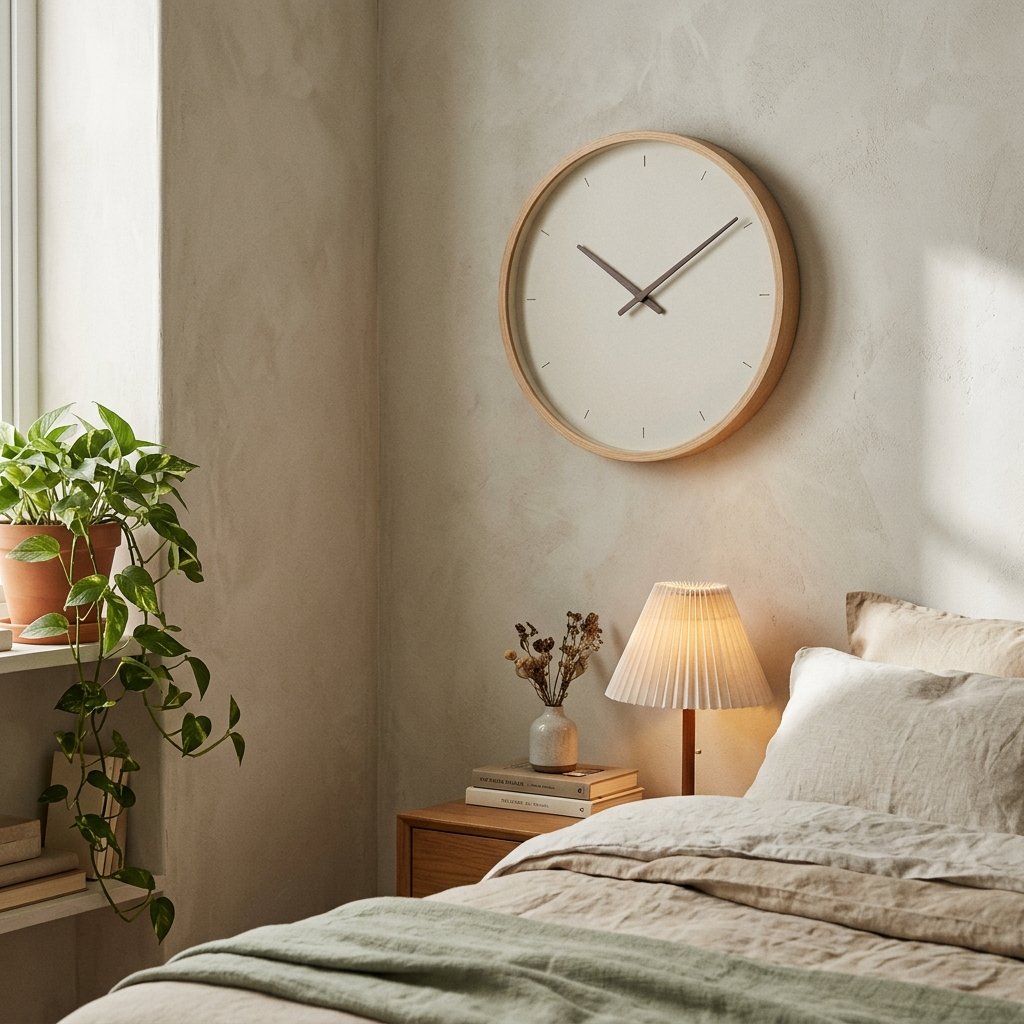
It’s 2:13 a.m. You’re wide awake, and the loudest thing in the house is the clock you bought because it looked great in the store. Tick. Tick. Tick. You start counting without meaning to. By the time you’ve worked out how much sleep you have left, you’re even more awake.
A bedroom clock has two jobs. It has to tell the time, and it has to stay out of your way. The twenty styles below do both. You’ll also find how to pick a movement, a size, and a spot on the wall.

Why the Right Wall Clock Matters in a Bedroom
A clock is the one object you look at while half asleep. That makes it matter more than most decor.
Sound is the first problem. A tick that disappears at noon becomes obvious in a silent room. Light is the second. A glowing display or a stark black-and-white dial grabs your eye each time you open them. Scale is the third. A clock that’s too big dominates the wall you face every night.
A good bedroom clock fixes all three. It runs quietly, has a soft face, and fits the wall it hangs on.

Key Features to Look for in Bedroom Wall Clocks

Silent or Non-Ticking Mechanisms
Look for the words “silent sweep” or “non-ticking” on the box. A sweep movement glides the second hand instead of jumping it one second at a time. That removes the tick most people notice.
Be realistic, though. Very quiet is not always silent. Some sweep movements still make a faint hum. Check reviews for the phrase “can’t hear it” and test the clock in a quiet room before you hang it. Return it if it bothers you.
Size, Shape, and Placement
Match the clock to the wall. A 10 to 12 inch clock suits a nook or a space above a nightstand. A 14 to 18 inch round clock works above a dresser. Go 24 inches or more only above a headboard, where it has room to breathe.
Round clocks soften a room full of rectangles. Square ones suit modern, boxy furniture.
Wood
Wood brings warmth to a bedroom without a pattern. Light oak and ash feel airy. Walnut looks richer and suits darker walls. Check that the finish is matte, since glossy varnish catches lamplight.
Fabric and Soft Finishes
Linen, felt, and woven faces look soft and reduce glare. They also dull echo a little in a hard-surfaced room. Dust them with a brush attachment, since fabric holds dust more than wood does.
Metal With Minimal Design
Brushed brass and matte black look crisp without feeling cold. Choose slim hands and a thin rim. Skip mirror-polished metal, which flashes when headlights or lamps hit it.
Bedroom Wall Clocks Worth Hanging, Style by Style

Minimalist Wooden Wall Clock
This is the safest pick for most bedrooms. Plain wood, no numerals, thin hands. The grain does the decorating, so keep the surrounding wall calm.
Best for: Scandinavian or mid-century rooms. Choose light ash for small rooms and walnut for larger ones.
Silent Scandinavian Style Clock
Scandinavian clocks use white or soft gray faces, thin black hands, and a slim frame. Quiet is the point here. Pair one with a silent quartz sweep movement and it vanishes into the wall.
Best for: Light, airy rooms with white or pale walls.
Soft Pastel Round Wall Clock
Blush, sage, and powder blue add color without shouting. Pick a matte finish so lamps don’t glare off it. Keep the color within one shade of your bedding.
Best for: Bedrooms with white walls that feel a bit flat.

Vintage-Inspired Bedroom Wall Clock
Modern vintage-style clocks borrow the look of old dials, with faded numerals and weathered frames. Most run on quiet quartz, so you get the charm without a tick. Check the numerals are legible in low light.
Best for: Farmhouse and traditional rooms.
Modern Frameless Wall Clock
With no outer rim, the clock reads almost like a mark on the wall. A frameless acrylic or metal dial keeps lines clean. Make sure the hands contrast with the wall, or you’ll squint at night.
Best for: Minimalist bedrooms that dislike visual clutter.
Neutral Linen Texture Wall Clock
A linen or fabric face matches your curtains and bedding. It also cuts glare from bedside lamps. Oatmeal and charcoal weaves are the easiest to live with.
Best for: Layered, textured rooms with linen bedding.

Japandi Style Wall Clock
Japandi blends Japanese restraint with Scandinavian warmth. Expect light wood, a numberless face, and a plain round shape. The empty dial is the appeal, but it takes practice to read at a glance.
Best for: Calm, low-clutter bedrooms with natural materials.
Roman Numeral Classic Clock
Roman numerals add structure to a soft room. Choose antique white, brushed bronze, or matte charcoal rather than shiny gold. A quartz sweep movement keeps the classic look quiet.
Best for: Traditional and transitional bedrooms.
Small Minimal Wall Clock for Nightstands
This small clock, around 6 to 8 inches wide, sits on a nightstand or shelf. You can check the time without reaching for your phone. Choose a matte face and no glowing dial.
Best for: Small bedrooms and anyone trying to keep the phone away from the bed.

White Silent Wall Clock
White on a white wall nearly disappears. It’s the right call when the clock is a tool, not a feature. A matte face avoids glare from sunrise and lamps.
Best for: Coastal, Scandinavian, and ultra-minimal rooms.
Earth-Tone Ceramic Wall Clock
Ceramic feels heavy and handmade. Clay, sand, and sienna tones look best against cream or terracotta walls. The weight is real, so use a hanger rated for it.
Best for: Warm, earthy bedrooms with plenty of natural texture.
Luxury Gold Accent Wall Clock
Gold works when it’s brushed, not shiny. A thin gold rim or gold hands on a cream face add a little glow after dark. Skip it on very white walls, where the contrast gets harsh.
Best for: Cream, taupe, or dove-gray rooms that need a touch of glam.

Nature-Inspired Leaf Design Clock
Leaf shapes in sage, moss, or natural wood break up a boxy room. They act like a small sculpture. Make sure the hands are still easy to read against the leaf pattern.
Best for: Bedrooms with plants and green accents.
Rustic Farmhouse Bedroom Clock
Distressed white-wash or reclaimed oak gives a lived-in look. Imperfect finishes hide dust and scuffs well. Look for a quiet quartz movement, because old-style clocks often tick loudly.
Best for: Cozy, country, and cottage bedrooms.
Soft Gray Modern Wall Clock
Soft gray pairs with almost every bedding color. It also works outside the bedroom, as the photo shows, so it’s a good choice if you share one style across rooms. Choose a warm gray over a blue-gray for a cozier mood.
Best for: Anyone who wants a neutral that never clashes.

LED Night-Friendly Wall Clock
If you want to read the time in the dark, this is the option. Pick a model with a dimmer or an auto-off, and a warm amber or red display instead of bright white or blue. Angle it so the glow doesn’t hit your face.
Best for: Light sleepers who wake often and need a glance-and-go time check.
Handcrafted Artistic Wall Clock
Hand-painted ceramic, carved wood, or metalwork turns a clock into the room’s art. Ask the seller what movement it uses, since artisans don’t always fit silent ones. Treat it as the focal point and keep nearby decor quiet.
Best for: Rooms that already have a calm base and need one personal piece.
Boho Macramé Style Wall Clock
Knotted cotton and soft fringe add texture to a plain wall. It pairs well with rattan, woven baskets, and linen. Vacuum it with a brush attachment, because fringe collects dust.
Best for: Boho bedrooms and reading nooks.

Compact Wall Clock for Small Bedrooms
At 8 to 10 inches wide, a compact clock fits above a bedside table or in an alcove. Hang it at eye level so you can read it from the bed. For more ideas that suit tight rooms, browse our small bedroom decor ideas.
Best for: Small rooms where every inch counts.
Oversized Statement Wall Clock
An oversized clock, 24 to 30 inches wide, can work above a headboard. Hang it 6 to 8 inches above the headboard top. Choose a simple face and soft colors so it doesn’t dominate. Anchor it to a stud or use a heavy-duty hanger.
Best for: Larger bedrooms with a plain wall above the bed.

How to Style a Wall Clock in Your Bedroom
For a clock on an open wall, start with the center at 57 inches from the floor, the same height designers use for art. Apartment Therapy explains why 57 inches works and notes that most people hang things too high. If you mostly read the time from your pillow, hang it a little lower so you don’t crane your neck.
Above a dresser, center the clock on the dresser and leave a gap of about 6 to 8 inches. In a reading corner, hang it beside the chair, not above it. For wall layouts that include art and shelves, see our bedroom wall decor ideas.
One more thing: if you wake at night and tend to check the time, avoid a spot directly in your sightline. Many sleep specialists suggest this, since watching the minutes can keep you awake.

Matching Wall Clocks With Bedroom Themes
Use your bedroom’s strongest material as a guide. Minimalist rooms suit frameless or white clocks. Boho rooms suit macramé or natural wood. Luxe rooms suit brushed gold or marble-look faces. Rustic rooms suit distressed wood. Match one material you already own, such as the bed frame or the curtain rod, and the clock will look planned.

A Quick Checklist Before You Buy
Run through these questions before you add a clock to your cart. They take two minutes and save a return.
Movement: Does the listing say silent sweep or non-ticking? Do reviews mention noise at night? Face: Is it matte, with hands that contrast against the dial? Glossy glass reflects every lamp in the room. Size: Does the diameter fit the wall you have? Cut a paper circle at that size and tape it up for a day. Weight: Is the clock light enough for your hanger? Ceramic and large wood clocks often need a stud or anchor. Power: Does it take a single AA battery, and can you reach the battery door without taking it off the wall?
Hanging and Maintaining Your Clock
Most wall clocks hang from one nail or screw. That’s easy in a house and trickier in a rental. For light clocks under a pound or two, adhesive strips can work. Check the weight rating on the package and clean the wall first. For anything heavier, drive a screw into a stud, or use a drywall anchor rated above the clock’s weight.
Mark the spot with painter’s tape before you drill. Step back and check it from the bed. Then check it from the doorway. If it looks right from both, hang it.
Plan for batteries, too. Battery life varies, so swap the AA battery when the second hand starts to stutter. A fading battery can make a quiet clock sound different, so check it first if the noise changes.
Common Mistakes to Avoid
The first mistake is buying on looks alone. A loud tick or a bright display will undo a beautiful design. Read the reviews for sound.
The second is the wrong scale. A tiny clock on a big wall looks lost. A huge one on a small wall feels crowded. Keep the clock’s width to about one-third of the wall space beside furniture, or two-thirds of a headboard.
The third is hanging it too high. Most people do. Aim for eye level, and test with painter’s tape before you drill.
Final Thoughts on Choosing a Bedroom Wall Clock
Pick the movement first, the style second. A silent clock in a plain finish beats a gorgeous one that ticks. Then match the size to your wall and the finish to something already in the room. Do that and the clock will tell time without ever asking for your attention.
1 comment