You can have a beautiful sofa, a good rug, and plenty of decorative pieces, yet your living room can still feel unfinished. Sometimes the problem is not what you own. It is how those pieces work together.
Living room design in 2026 is moving toward spaces that feel personal rather than perfectly staged. Warm colors, natural materials, curved furniture, meaningful artwork, layered lighting, and flexible layouts are becoming more important than matching furniture sets or overly polished rooms.
That shift gives you more freedom. You do not need to replace everything to make your living room feel current. A sculptural lamp, a warmer wall color, a vintage cabinet, or better furniture placement can completely change the atmosphere.
Current trend research from Houzz’s 2026 home design trends report also points toward warmer palettes, natural materials, softer forms, and spaces that feel more personal and purposeful.
Warm Up the Foundation Before Adding More Decor
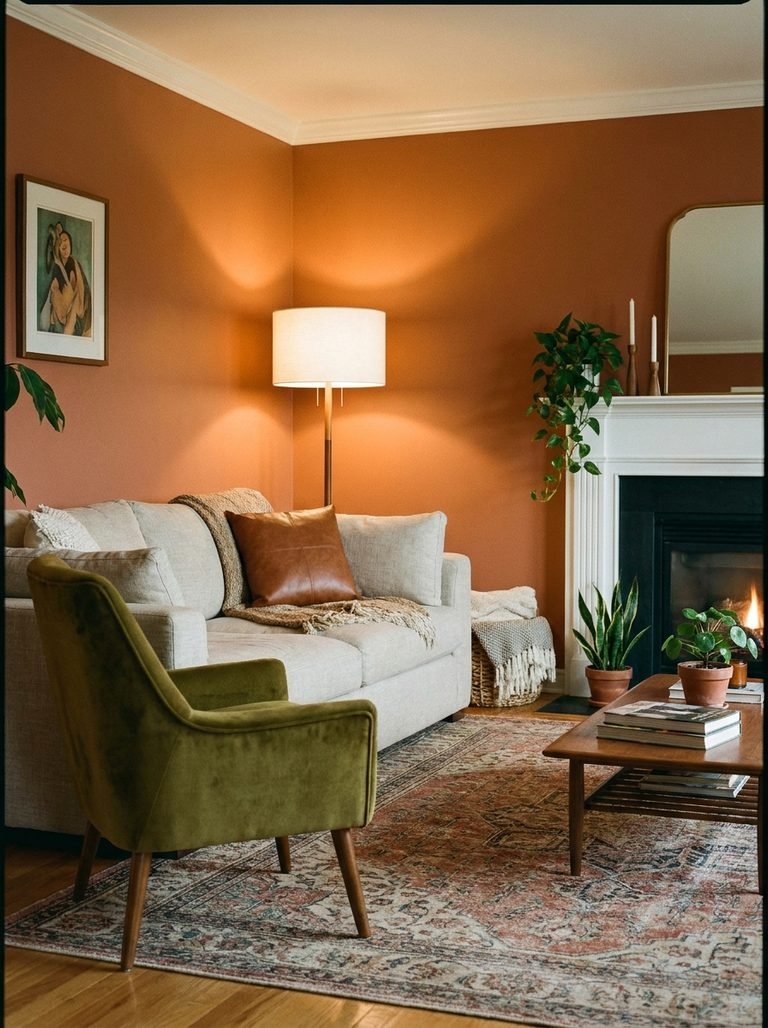
One of the easiest ways to refresh a living room is to reconsider the colors surrounding your furniture. Instead of building everything around stark white or cool gray, consider creamy white, sand, mushroom, caramel, soft clay, or warm taupe. These shades create a softer background for furniture and artwork. They also give you more freedom to introduce deeper colors through smaller pieces.
You do not have to repaint the entire room. If your existing walls are neutral, bring warmth through curtains, rugs, cushions, lampshades, and wood finishes.
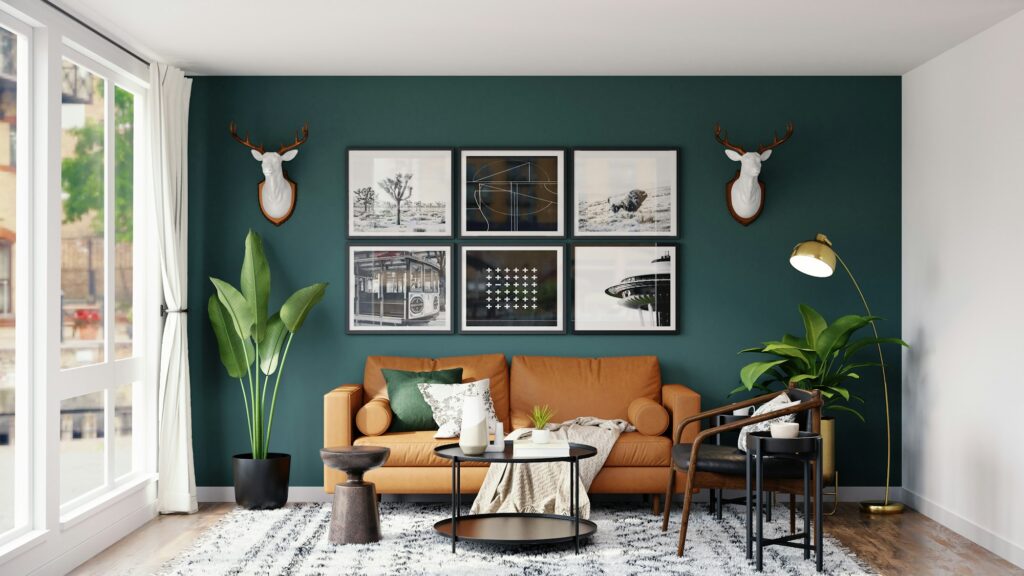
Choose one supporting color and repeat it in a few places. A muted green could appear in artwork, a cushion, and a ceramic vase. Repetition creates connection without making the room feel overly coordinated.
If you are changing the wall color, remember that natural and artificial light can change how paint looks throughout the day. For a deeper guide to choosing colors for different lighting conditions, see Homedecorio’s living room color palette guide.

Give One Wall a Stronger Point of View
A feature wall works best when it has a reason to exist. Instead of decorating every wall, choose one surface that naturally deserves attention.
The wall behind the sofa is an obvious choice, but it is not your only option. You could highlight the fireplace wall, media wall, reading corner, or the wall opposite the main entrance.
Texture is particularly effective because it changes as light moves across the surface. Limewash, subtle plaster finishes, fluted wood, textured wallpaper, and handmade looking materials can add depth without requiring a large collection of accessories.
If your room is small, avoid making the feature wall too busy. One strong material can create more impact than several competing patterns.
You can also use color instead of texture. A deep olive, muted blue, terracotta, or warm brown can create a strong backdrop for lighter furniture. The key is contrast. If the furniture is visually quiet, the wall can carry more personality. If the sofa or artwork is already dramatic, keep the wall calmer.

Choose Furniture That Can Adapt to Real Life
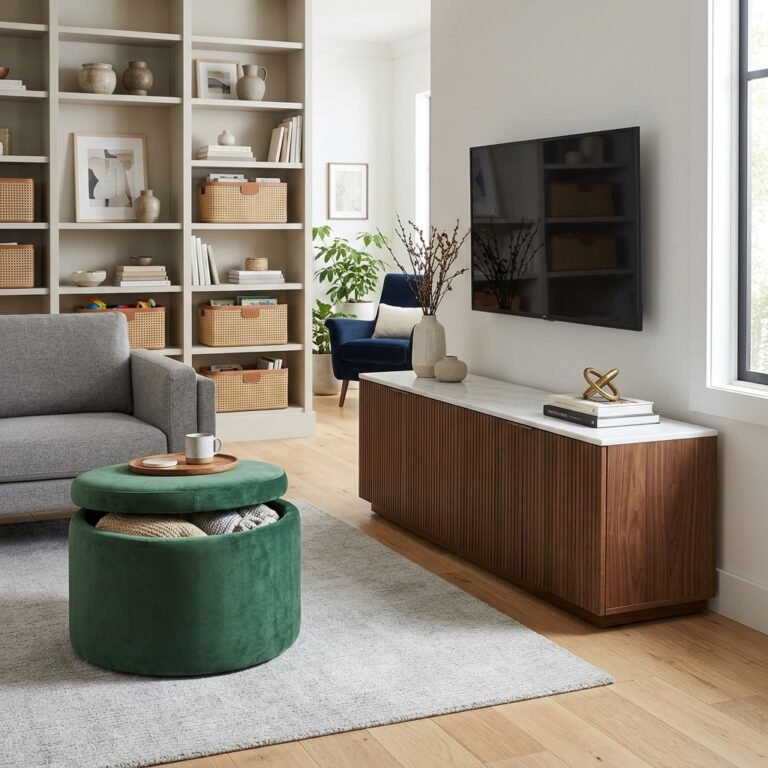
A living room rarely performs only one job. It may be a place for watching television in the evening, working during the day, entertaining friends, and relaxing with a book on the weekend. That is why flexible furniture is becoming increasingly useful. A modular sofa can be rearranged when you want to change the room. An ottoman can work as extra seating, a footrest, or a casual coffee table. A storage bench can hide blankets while providing another seat. For a compact living room, pay attention to proportion before style. A beautiful oversized sofa can make the room feel smaller if it blocks circulation. Measure the furniture before buying it. Then mark its footprint on the floor with painter’s tape. You will quickly see whether there is enough space around it.
If your room is compact, focus on furniture that performs more than one job instead of filling the floor with separate pieces. small living room ideas cover additional ways to improve scale and movement without making the space feel crowded.

Layer Lighting Instead of Depending on One Fixture
Lighting can completely change how your living room looks after sunset. A single ceiling fixture usually makes everything equally bright, which removes depth from the room.
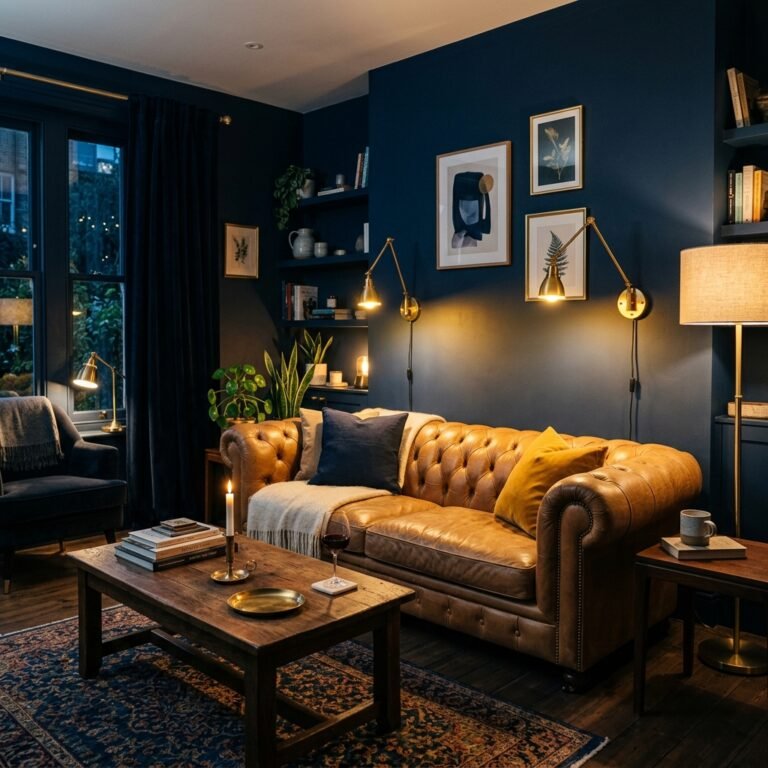
Instead, create several light sources at different heights. A floor lamp can brighten a reading chair. A table lamp can create a warm pool of light beside the sofa. Wall lighting can highlight artwork or architectural details. A ceiling fixture can provide general illumination when you need it. Smart lighting can make these layers easier to control, but the technology should remain secondary to the atmosphere. You want the room to feel comfortable rather than like a showroom for connected devices.
LED lighting can also be useful when you want efficient, controllable illumination. The U.S. Department of Energy’s LED Basics guide explains LED efficiency, dimming, color control, and other characteristics. Choose warmer light for areas where you relax and stronger task lighting where you read or work. The goal is to give the room different moods without changing the furniture.

Build Depth With Tactile Materials
A room can use a simple color palette and still feel rich when the textures are varied.
Think about what your living room would feel like if you closed your eyes. You might have a soft sofa, a woven rug, smooth wood, textured ceramics, linen curtains, and a slightly rough stone surface. That combination gives the room depth without requiring bold patterns everywhere.
Try pairing materials that feel different from one another. Linen works beautifully beside wood. Bouclé can soften a harder coffee table. A woven basket can add contrast to a smooth cabinet. You do not need to introduce every texture at once. Start with the largest surfaces and work downward.
For a current example of this comfort focused approach, Better Homes & Gardens’ comfort stacking trend guide discusses layered textiles, natural elements, warm lighting, and personal details as ways to make interiors feel more comfortable and lived in.

Soften Straight Lines With Curved Furniture
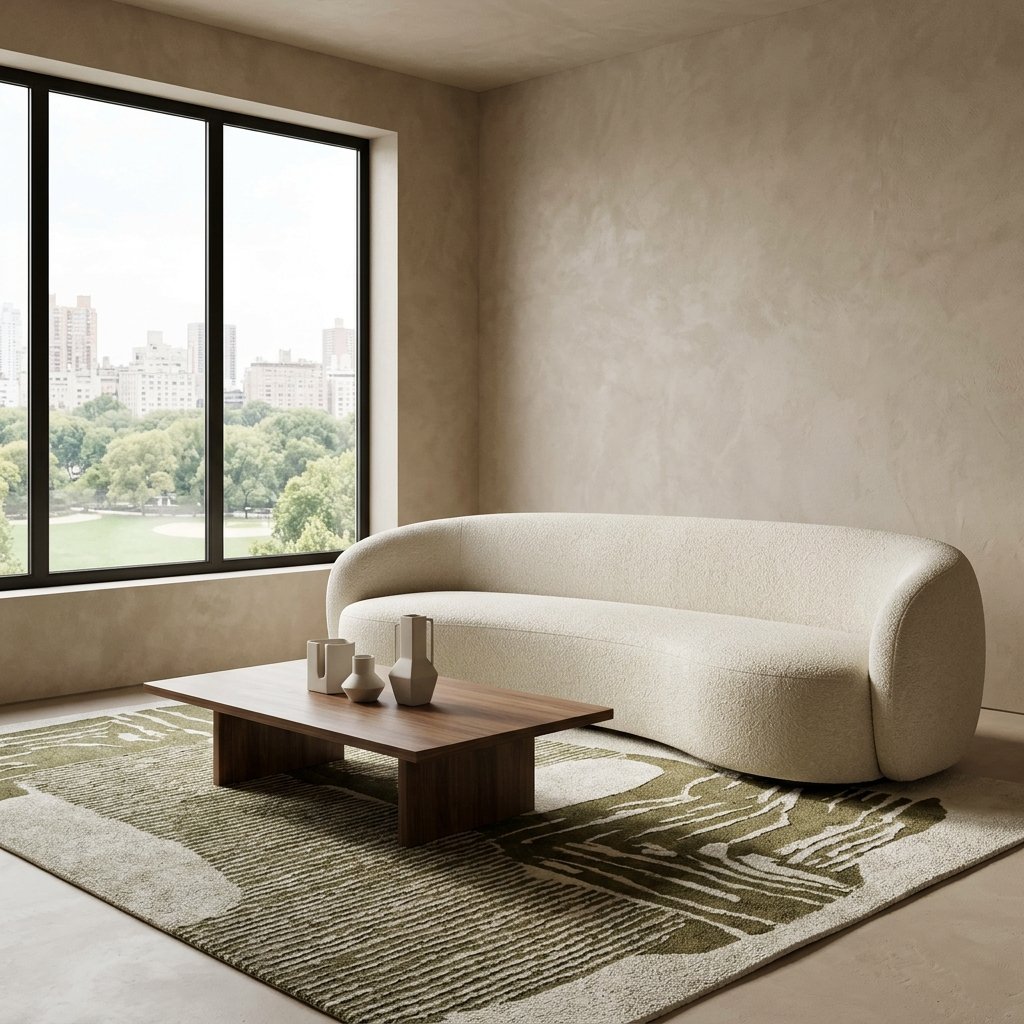
If your living room is filled with straight lines, one curved piece can change the entire visual rhythm. A rounded sofa, circular coffee table, curved accent chair, or arched cabinet can soften a room dominated by rectangular furniture. You do not need a complete curved furniture collection. Mixing shapes usually creates a more natural result. For example, place a rounded coffee table in front of a straight sofa. Add a circular mirror above a rectangular console. Or use an arched floor lamp beside a boxy armchair.
Houzz’s 2026 U.S. Emerging Summer Trends Report identifies curves and soft geometry as an emerging design direction, with homeowners moving toward softer, more fluid forms. Curved furniture can also improve the feeling of a seating area because the shapes naturally encourage a softer visual flow.

Let Your Wall Decor Tell a Personal Story
Your living room should tell people something about the people who live there. That does not mean every wall needs family photographs. Personal style can come through artwork, travel finds, vintage objects, handmade pieces, books, textiles, or something inherited from a relative. A large piece of art can anchor a sofa. A small collection can create interest on a shelf. A textile wall hanging can soften a hard surface.
If you prefer a gallery wall, avoid making every frame identical. Mix sizes while keeping one visual connection, such as a shared color or similar frame finish. Another simple approach is to display one meaningful object rather than ten generic accessories. The room often feels more sophisticated when every visible piece has a reason for being there. This is also where your existing decor can become useful. Before buying something new, walk through the house and look for pieces that could have a better home in the living room.

Bring Nature Into the Room Without Overcrowding It
Plants can add life to a living room, but placement matters more than quantity. One large plant beside a sofa can create more impact than several tiny plants scattered across every surface. A trailing plant can soften a tall shelf, while a compact plant can add color to a coffee table.
Choose plants according to the actual light in your room. A beautiful plant that struggles in a dark corner will eventually become a styling problem. You can also bring in nature without relying entirely on living plants. Wood grain, stone, woven materials, botanical artwork, and natural fibers can create the same visual connection. Keep windows as clear as possible if you want to maximize daylight. Sheer curtains can soften strong sunlight while keeping the room bright.

Make Technology Blend Into the Room
Modern living rooms often contain more technology than ever. The challenge is keeping that technology from becoming the first thing you notice. Start with cable management. A clean media cabinet can hide routers, game consoles, and charging cables. Cord management boxes can keep small wires under control. Furniture with built in charging can also reduce the number of visible cables. A television does not always need to dominate the room. When possible, place it within a cabinet or use a frame style display that works with the surrounding artwork.
Smart speakers, thermostats, lighting, and other connected devices can also be integrated quietly. The goal is not to remove technology. It is to make technology serve the room rather than visually taking over the room.
If storage is part of your media wall problem,living room storage furniture guide covers cabinets, sideboards, media furniture, ottomans, and other ways to keep useful storage looking like part of the decor.

Mix Vintage Pieces With Contemporary Furniture
A room filled with furniture from the same collection can look polished, but it can also feel impersonal. Mixing periods and materials gives your living room more character. Try pairing a contemporary sofa with a vintage side table. Place modern artwork above an older wooden cabinet. Add a traditional rug beneath a cleaner modern seating arrangement.
The secret is finding one connection between pieces. Color, scale, material, or shape can create enough harmony for different styles to live together. Vintage pieces are especially useful when you want your living room to feel collected rather than newly decorated. Look for pieces with visible character. Slightly worn wood, aged metal, handmade ceramics, and old books can add a sense of history. Do not try to make every object look old or new. The contrast is what gives the room personality.

Use Storage as Part of the Decorating Plan
Storage can affect the entire appearance of a living room, especially when books, blankets, remotes, children’s items, and electronics have nowhere specific to go. Instead of adding random baskets after the room is decorated, choose storage furniture as part of the design from the beginning. A low sideboard can anchor a long wall. A closed media cabinet can make the television area calmer. A storage ottoman can hold blankets while acting as seating. A narrow console can organize the space behind a sofa.
Keep the decorative surface edited. A lamp, a stack of books, and one sculptural object can be enough. Leaving some empty space makes the furniture look intentional rather than overloaded. This is especially useful if you are working with a smaller room. Storage that contributes to the visual composition can solve a practical problem without making the room feel busier..
Make the Layout Feel Comfortable Before Making It Trendy
The most important design decision is still the furniture layout. Before buying new decor, walk through the room. Can two people pass comfortably behind the sofa? Can you reach the window without squeezing between furniture? Does the coffee table sit at a useful distance from the seating? Try moving the sofa away from the wall if the room allows it. Bring chairs slightly closer together to create conversation. Keep the main walking path clear.
A beautiful living room becomes frustrating when the layout works only from one camera angle. For a more detailed styling approach, you can also read Homedecorio’s simple living room decor upgrade guide, which focuses on purposeful furniture placement, lighting, texture, and styling.
Keep the 2026 Look Personal Instead of Perfect
The biggest mistake with trend based decorating is trying to reproduce a photograph exactly. Your living room does not need every popular material, color, shape, and technology feature at the same time. Choose the ideas that solve something in your actual space.
If the room feels cold, start with warmer materials and lighting. If it feels crowded, rethink furniture scale. If it feels generic, introduce artwork or vintage pieces with a personal story. If it feels dark, work on lighting and window treatments. This approach makes trends useful rather than restrictive.
Conclusion
The most interesting living rooms in 2026 are not necessarily the ones following every trend. They are the spaces that feel intentional, comfortable, and personal.
Start with a warm foundation, then build depth through texture, lighting, furniture shapes, artwork, greenery, and collected pieces. If your living room is small, focus on proportion and flexibility. If it is large, create defined areas that support different activities.
You also do not need to renovate everything at once. Changing the lighting, adding one curved piece, replacing a few cold accessories with natural materials, or displaying meaningful artwork can shift the entire mood.
The result should feel current without looking temporary. Most importantly, it should still feel like your home when the trend cycle moves on.