A Christmas dinner table has a harder job than most decorative surfaces. It has to look inviting from the doorway, hold plates, glasses, serving dishes, and elbows, and still leave people room to talk across it. Many tables fail on the practical side first: a centerpiece blocks sightlines, candles drip into the gravy, or the place settings overlap because nobody measured.
This guide starts with the practical layout and works outward to style. You will find the setting sequence, three complete table looks, centerpiece rules that protect conversation, and ways to adapt the plan for small dining rooms, kids, and buffet-style meals.
Measure First, Style Second
Decorating comes easier once you know how much table you really have. A common guideline is to allow roughly 24 inches of table edge per person, which gives each guest room for a plate, glass, and flatware without bumping elbows. If you are hosting more people than that allows, a few adjustments help:
- Use smaller plates, such as a 10-inch dinner plate rather than a charger plus oversized plate.
- Skip the charger entirely, or only use it for the first course.
- Serve family-style dishes from a side table or sideboard instead of the center.
- Add a leaf to the table, or extend it with a console pushed alongside.
Count the chairs against the table, too. Chairs with arms take up more space than armless ones, so you may seat fewer comfortably. If your room is tight, the layout ideas in small dining room ideas that feel bigger than they are can help you plan the whole area, not just the tabletop.
The Setting, Piece by Piece
Whether the meal is casual or formal, the standard placement is easy to follow and makes the table look correct at a glance.
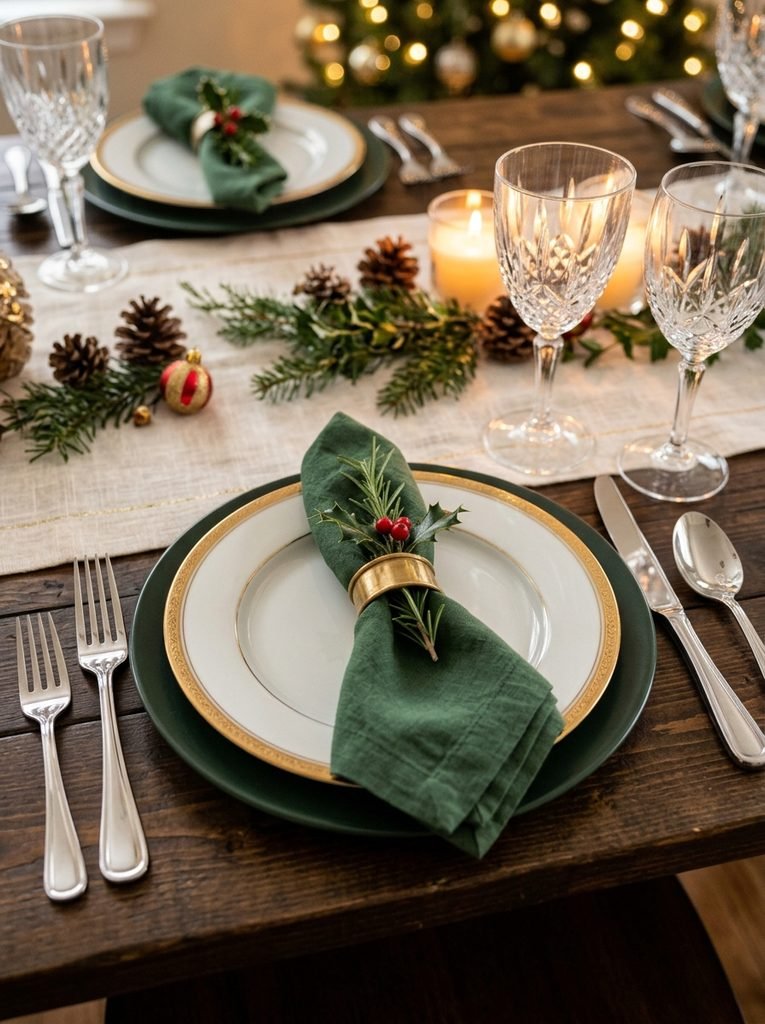
- Plate: centered about an inch from the table edge.
- Napkin: to the left of the forks, or on top of the plate.
- Forks: on the left, with the dinner fork closest to the plate.
- Knife: to the right of the plate, with the blade facing the plate.
- Spoons: to the right of the knife.
- Water glass: above the knife tip, with a wine glass to its right.
- Bread plate (optional): above the forks, with a butter knife laid across it.
Only set out the pieces you will actually use. If dessert will be served later, bring the dessert fork and spoon with it. A leaner place setting looks more refined and gives guests more room.
[Image 2: see Image Prompt 2]
ALT:
Start With the Base Layer
The base layer sets the mood before any decoration appears. You have three simple options.
Bare wood. A natural wood table adds warmth and shows grain, which is especially good with white or cream dishes. Use placemats to protect the surface from heat and moisture.
A tablecloth. A cloth creates a quiet backdrop and hides imperfections. Linen or cotton in white, ivory, deep green, or burgundy are dependable choices. Let it hang roughly 10 to 15 inches over the edge so it covers the table but does not touch the chairs awkwardly.
A runner. A runner down the center of a bare table adds a stripe of color or texture and creates a natural zone for the centerpiece. Choose one that is a little shorter than the table so the ends do not droop into laps.
Wrinkled fabric is the one thing to avoid. Iron the cloth or steam it on the table, since creases catch the light.
Three Complete Looks to Copy
These combinations work as full plans. Each lists the base, the dishes, the centerpiece, and the accents.
The Classic Evergreen Table
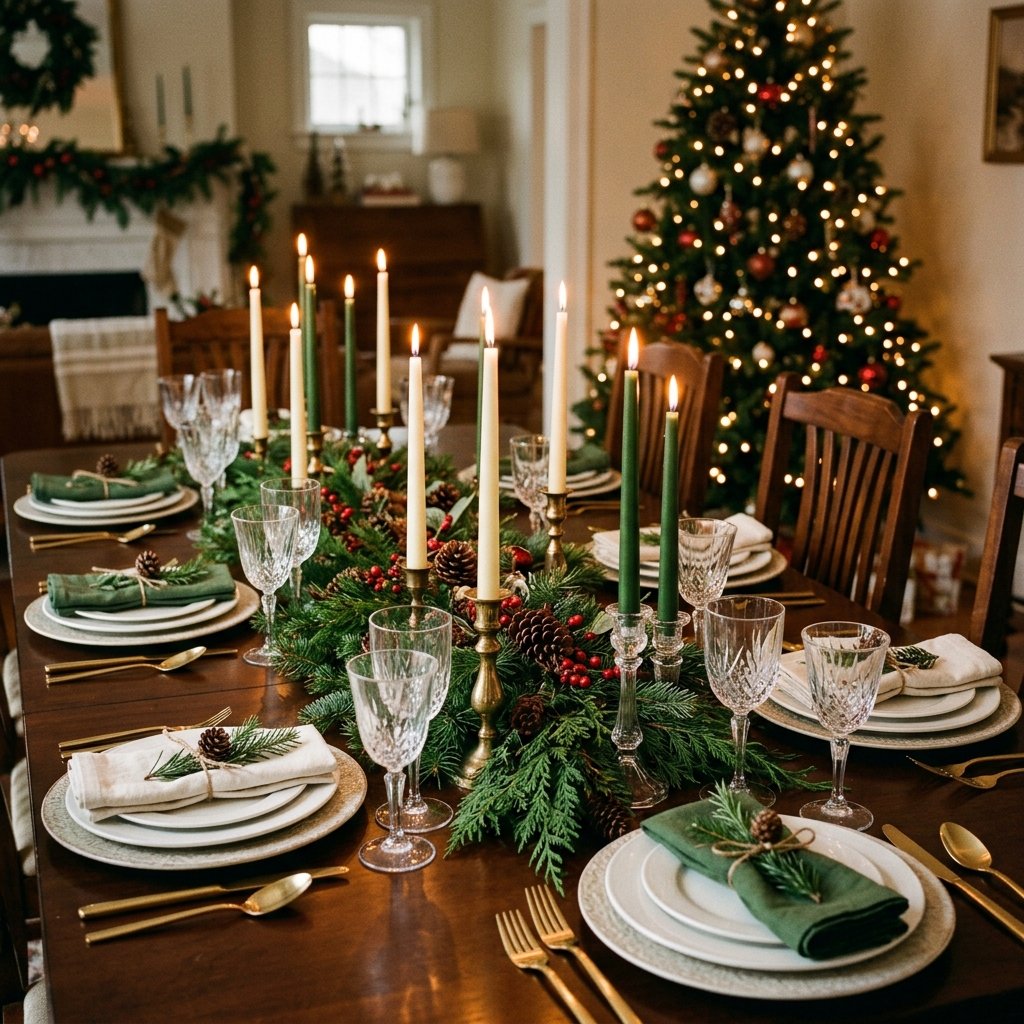
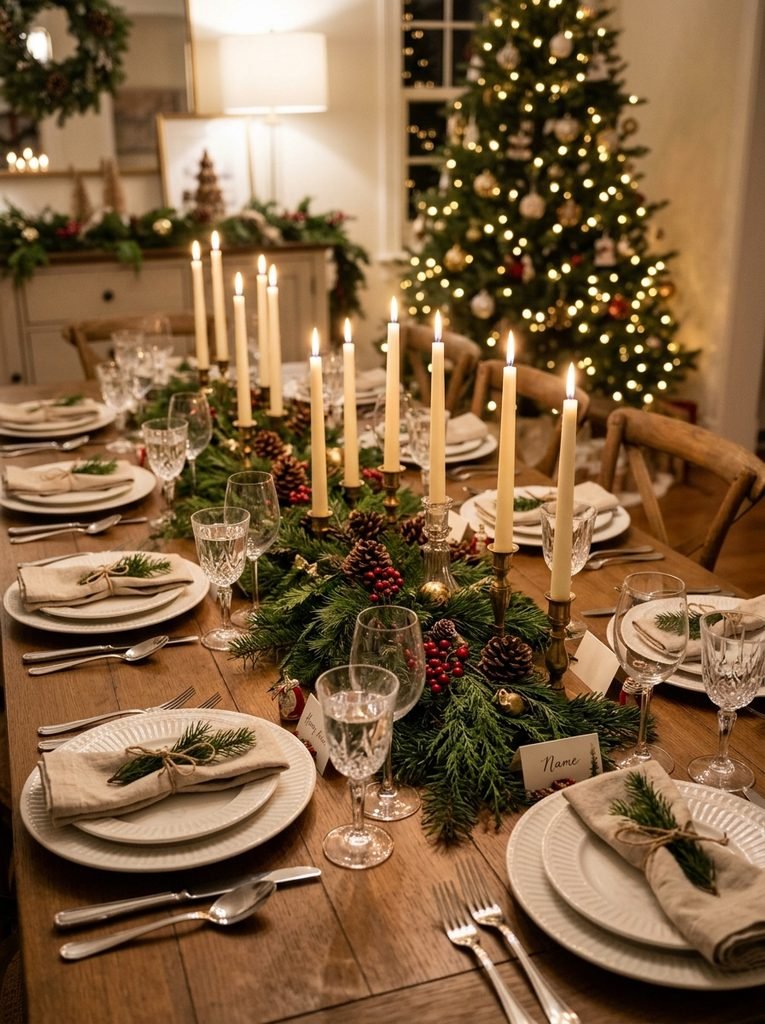
Start with a white or ivory tablecloth. Set out white dinner plates with a thin gold or silver rim, if you have them. Use a deep green or burgundy napkin tucked beneath a sprig of pine. Run a low garland of cedar or fir down the center, with a few red berries or small ornaments tucked in, and place gold or brass candlesticks along it with ivory tapers.
This look is warm and familiar, and it suits traditional dining rooms with wood furniture.
The Modern Winter Table
Use a bare dark wood or white table with black or charcoal placemats. Choose matte white or gray plates, simple glassware, and black flatware if you own it. For the centerpiece, place three clear glass vases of different heights down the center, each holding a single stem of white branches or eucalyptus. Add short white pillar candles in glass holders.
This table works best in rooms with clean lines, and it relies on contrast rather than ornament.
The Rustic Candlelit Table
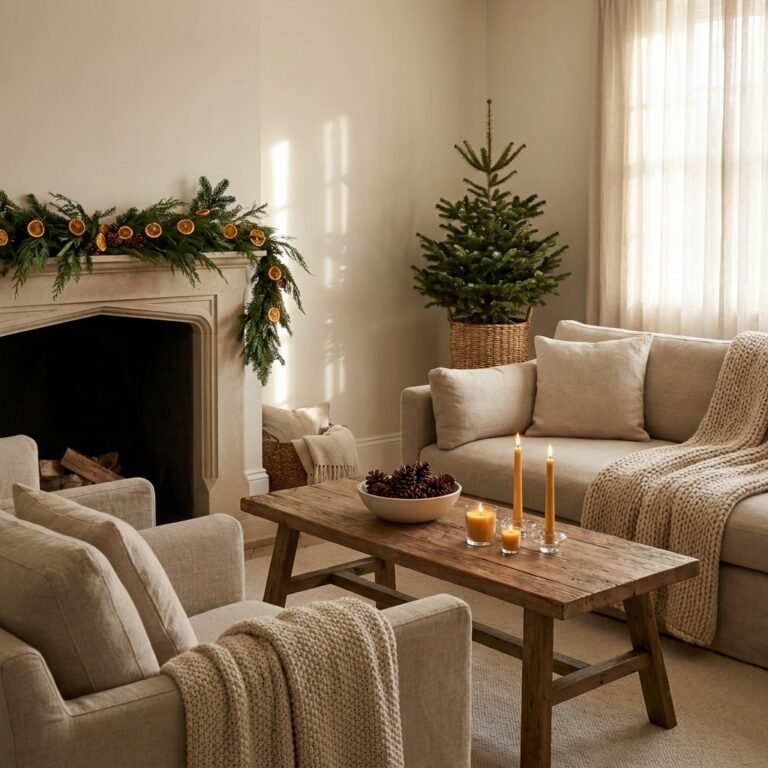
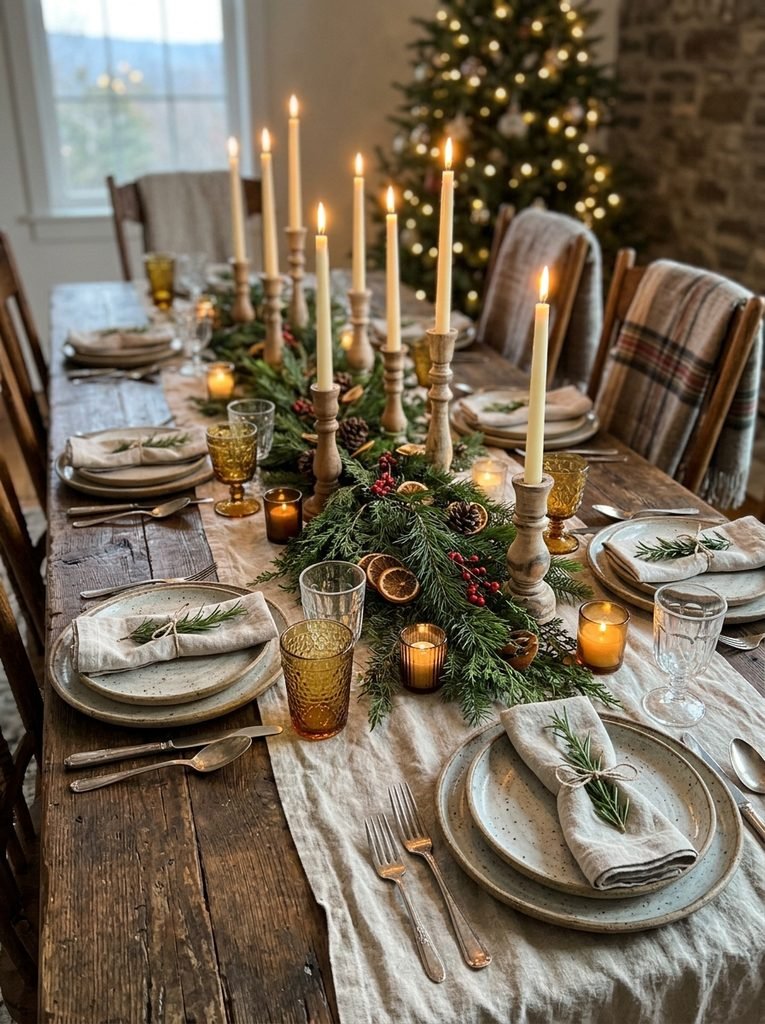
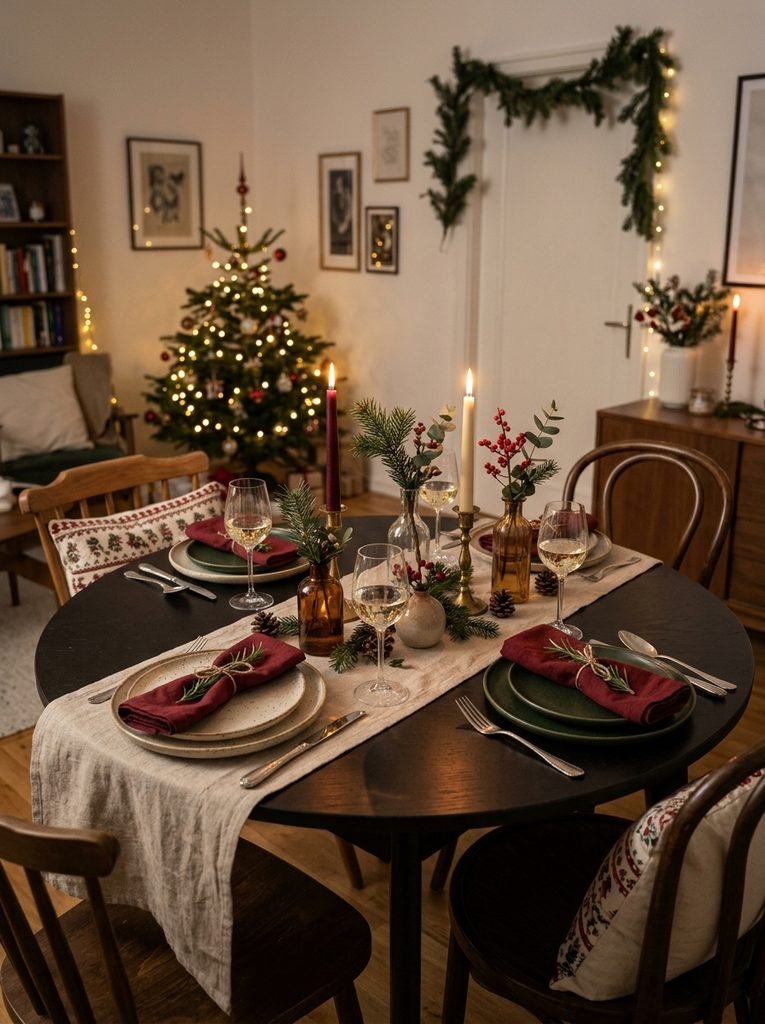
Layer a natural linen runner over a wood table. Mix stoneware plates in a warm tone, such as sand or soft gray, with amber glasses or simple clear tumblers. For the center, arrange a few wooden candle holders, a small bowl of pinecones, and some cut evergreen branches, leaving gaps between items. Tie napkins with twine and a rosemary sprig.
This look suits informal dinners and open-plan homes with natural materials.
Centerpieces That Don’t Block the Conversation
The most common table mistake is a centerpiece that sits between guests. A simple rule of thumb: keep arrangements either low, around 10 to 12 inches or shorter, or tall enough that guests can see under or around them, with a slim stem and the arrangement well above eye level. Anything in the middle zone tends to interrupt conversation.
A few arrangements that work well:
- A runner of loose greenery with candles tucked in, which stays low and continuous.
- A long, shallow wooden tray holding small bowls, candles, and ornaments, easy to move when dishes arrive.
- A series of small bud vases with single stems, spaced along the table.
- A tall pair of candlesticks with slender tapers, which add height without bulk.
Leave enough room for serving dishes. If the main course will be placed on the table, plan the centerpiece to be flexible. Smaller groupings can be shifted aside when platters arrive.
Candles and Lighting at the Table
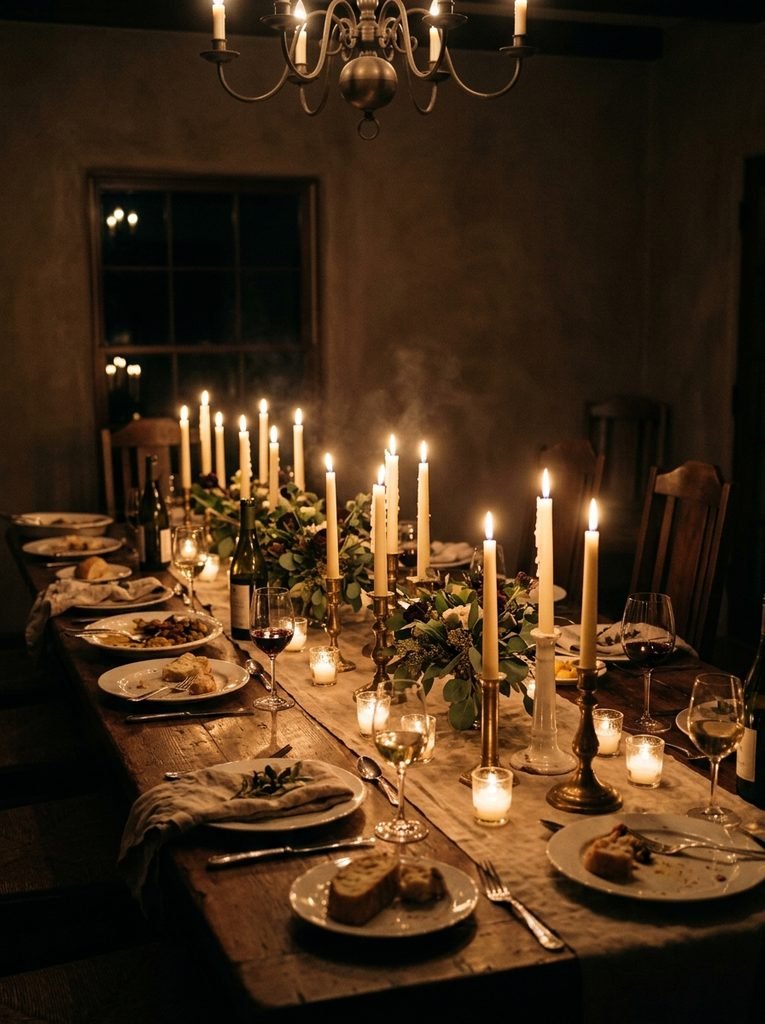
Candlelight is a large part of what makes a dinner table feel special, and it needs a little planning. Taper candles in varied heights give a pleasant rhythm, while votives and tea lights fill gaps. Choose unscented candles for the dining table, since competing fragrances can interfere with the food.
If you use real flames, keep them away from greenery, paper, and fabric, trim wicks, and never leave them unattended. Flameless candles offer a similar glow with less risk, particularly with children around. The National Fire Protection Association has more guidance on its holiday safety page.
The room’s overhead light matters as well. Dimming or turning off the main light lets candlelight take over. If you do not have a dimmer, switch on a nearby lamp and turn off the ceiling fixture. This approach is similar to the layered-lighting advice in luxury apartment decor tricks that make rentals feel custom designed.
Mix Your Dishes Without Making a Mess
You do not need a matching set of Christmas china. In fact, a thoughtful mix often looks more interesting. The key is to keep one element consistent.
Try one of these approaches:
- Same color, different shapes. All white or cream dishes in a mix of plates, bowls, and serving pieces.
- Same shape, different colors. Matching plates in a few tones from the same palette.
- Layering. A white dinner plate on a patterned or textured charger, with a salad plate on top.
Patterned plates can work as long as the rest of the table is quiet. If you use a bold pattern, keep the tablecloth, napkins, and centerpiece simple.
Napkins, Place Cards, and Small Personal Touches
Napkins are an easy place to add color and texture. A few folding options:
- A simple fold with a sprig. Fold the napkin into a rectangle and set a sprig of rosemary or pine on top.
- A napkin ring. Use a wood bead, brass ring, or twine loop.
- A pocket fold. Tuck the flatware into the fold for a casual look.
Place cards help guests feel considered and take the guesswork out of seating. Write names on kraft cardstock, small ornaments, or flat stones. If you have a mix of ages or personalities, seat people next to someone they will enjoy talking to.
Skip small scattered ornaments on the cloth if guests will be passing dishes. They tend to roll or get brushed aside.
A Table for Kids and Casual Guests
If children are joining the dinner, a few small adaptations keep the table pleasant for everyone. Use sturdier dishes and cups that are less likely to shatter. Offer paper napkins or washable cloth ones. A roll of kraft paper across the table, with crayons on hand, can double as a tablecloth and a drawing surface.
Keep candles and fragile decor out of reach, or use flameless options. A small bowl of clementines or a few pinecones makes a simple centerpiece that children can touch without worry.
Serving Dishes and the Flow of the Meal
Table styling does not end at the place setting. The way food reaches the table affects the whole setup. If your kitchen is compact, small kitchen layouts that make cooking and storage easier offers ideas for staging dishes and keeping the work area clear.
A few planning tips:
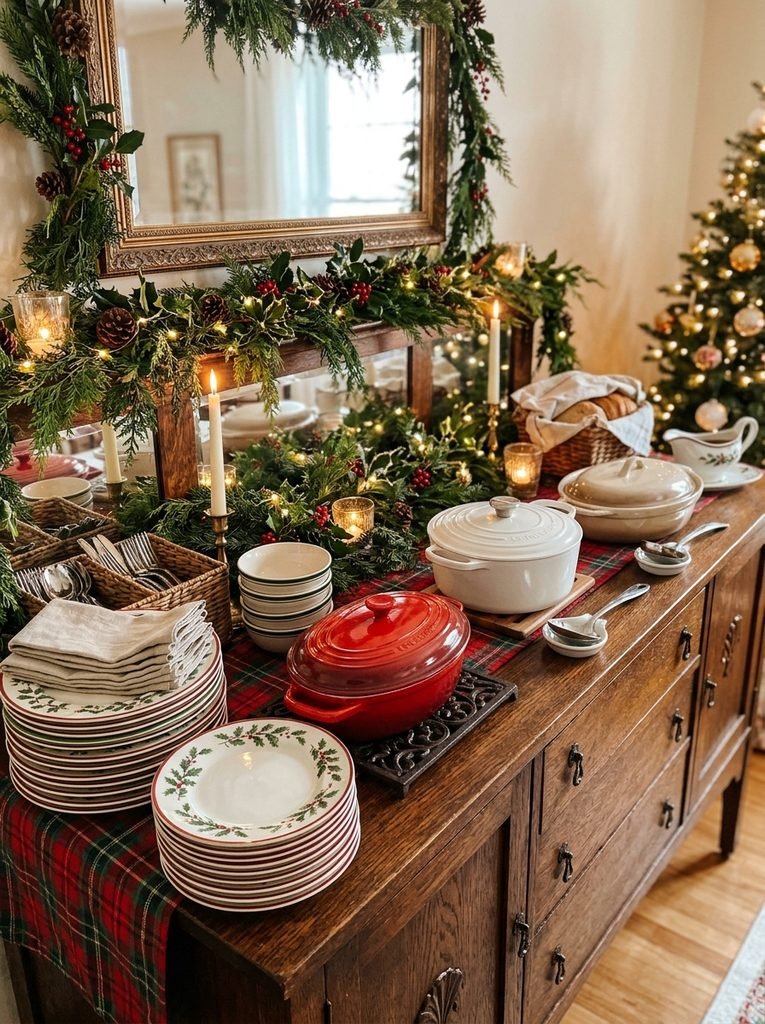
- Set up a serving surface. A sideboard, console, or cart can hold hot dishes, drinks, and extra plates.
- Use trivets or boards. Protect the table from hot dishes.
- Place serving utensils on each dish before it reaches the table.
- Keep water and wine within reach, so no one has to leave the table.
If you serve buffet style, follow the two-hour rule. The USDA advises that perishable foods should not sit at room temperature for more than two hours, or one hour in hot weather above 90°F. See the USDA guidance on leftovers and food safety for details. Keep hot dishes warm in the oven or a warming tray, and refill smaller platters rather than topping off dishes that have been sitting out.
Small Tables and Tight Spaces
A small dining table can still look lovely with some careful editing. Use a narrow runner rather than a full cloth, and keep the centerpiece to a single row of small items. Replace large serving dishes with smaller ones, and refill as needed.
If you have no dining table at all, a coffee table or a pair of side tables pushed together can work for a casual meal. Cushions on the floor, a long runner, and plenty of candles make a relaxed, low-seated dinner. Remember to protect surfaces from heat and wax.
For apartments, folding tables and extra chairs can be borrowed and stored out of sight afterward. Covering a folding table with a floor-length cloth hides its legs and makes it look like part of the setup.
Budget-Friendly Ways to Style the Table
A good table does not depend on expensive pieces. A few budget moves go a long way:
- Use what you own. White everyday plates look clean and festive with a simple green napkin.
- Cut greenery from the yard or buy a small bundle of branches from a grocery store or market. Prices vary by region and season.
- Choose candles over complicated decor. A group of simple candles can carry the whole table.
- Borrow or thrift. Extra glassware, platters, and candlesticks are often available secondhand.
- Repurpose fabric. A length of linen or cotton fabric, hemmed or simply pressed, can serve as a runner.
Plan for reuse. Neutral linens, plain white dishes, and brass or wood candleholders work for many seasons, so you add to your collection instead of replacing it.
The Ten-Minute Check Before Guests Arrive
Before the doorbell rings, do a quick walkthrough from each seat if you can.
- Can you see the person across the table?
- Is there room for your plate, glass, and elbows?
- Are the candles at a safe distance from anything flammable?
- Do you have enough serving spoons, trivets, and extra napkins?
- Is the lighting low and warm, rather than harsh?
Adjust one thing at a time. Most of the time, taking an item away improves the table more than adding another.