Forest green serves as a remarkably versatile and grounding hue, capable of transforming any living room into a sophisticated sanctuary of elegance and organic tranquility. Whether your goal is to curate a moody, academic retreat or a vibrant, nature-inspired hub, this deep shade provides a high-impact foundation that adapts to various design styles. By pairing the color with airy neutrals or layering it with dramatic textures like velvet and leather, you create a sophisticated canvas that expertly balances bold personality with timeless, lived-in comfort. This rich pigment breathes life into architectural details and serves as a lush backdrop for both modern and traditional decor. Let’s explore twenty-five creative, practical ways to bring this stunning and enduring shade into your home.
1. Pair with Light Neutrals for Balance
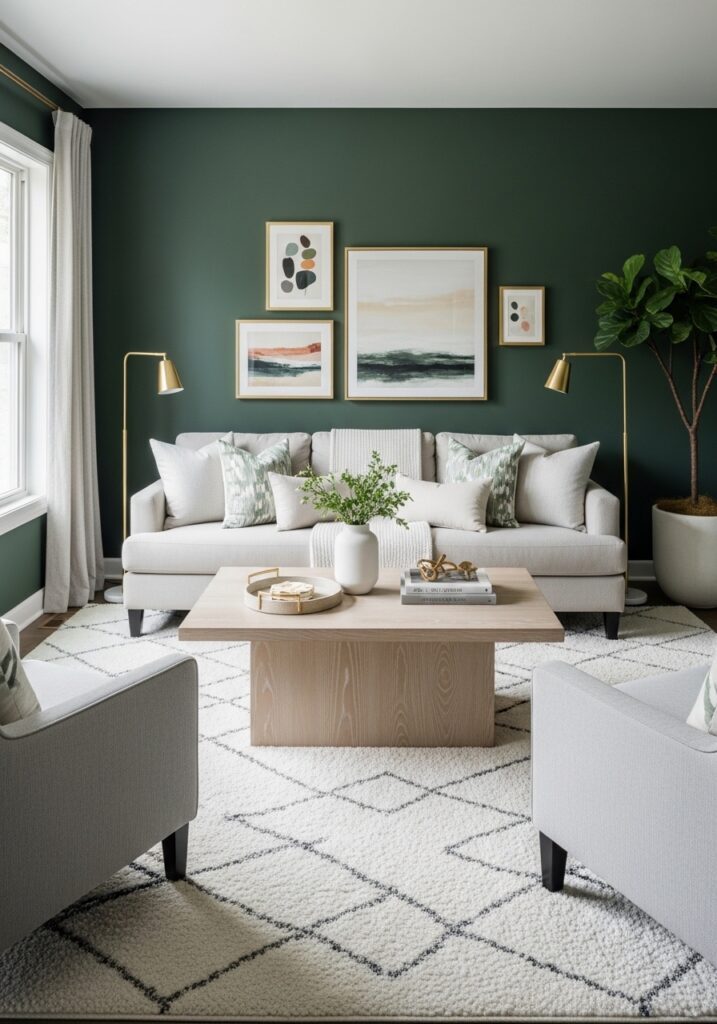
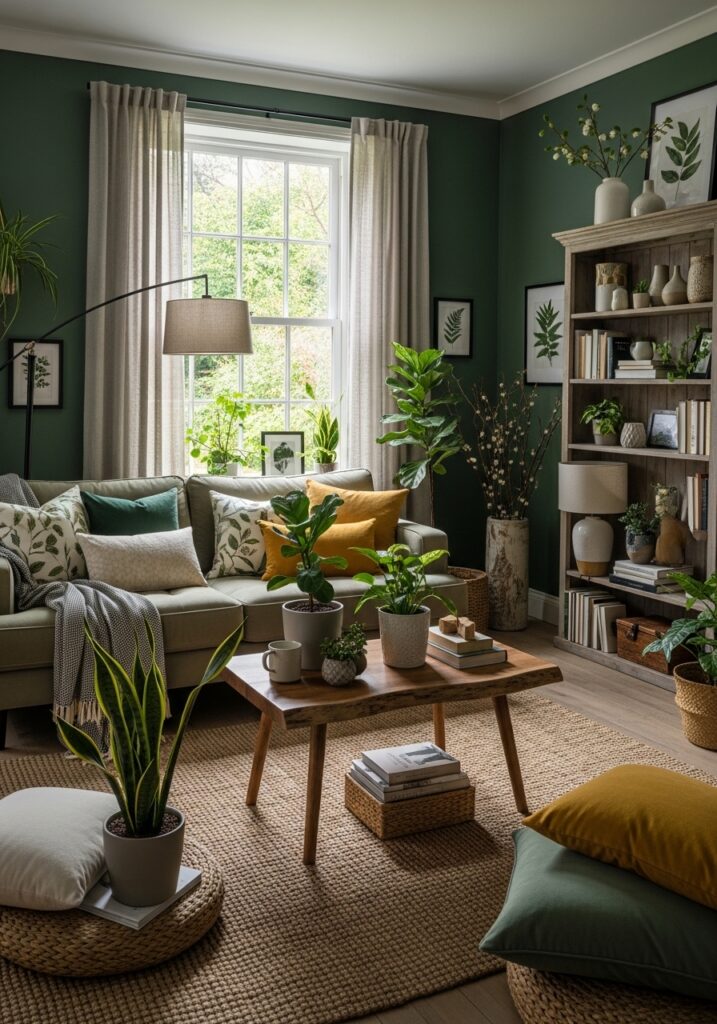
Forest green is an undeniably bold choice, yet it achieves perfect visual harmony when thoughtfully paired with soft neutrals like beige, ivory, or light gray. This strategic combination allows the deep richness of the green to pop with clarity without overwhelming the senses or making the space feel too enclosed. By utilizing neutral upholstery, large-scale rugs, or sheer linen curtains to anchor the room, you create a beautifully balanced, airy atmosphere that feels both professionally curated and profoundly calm. This approach softens the intensity of the dark walls, ensuring the living area remains a welcoming and sophisticated environment. Incorporating these lighter tones provides a necessary visual breather, resulting in a timeless look that feels fresh and intentionally designed.
2. Contrast with Bold Accent Colors
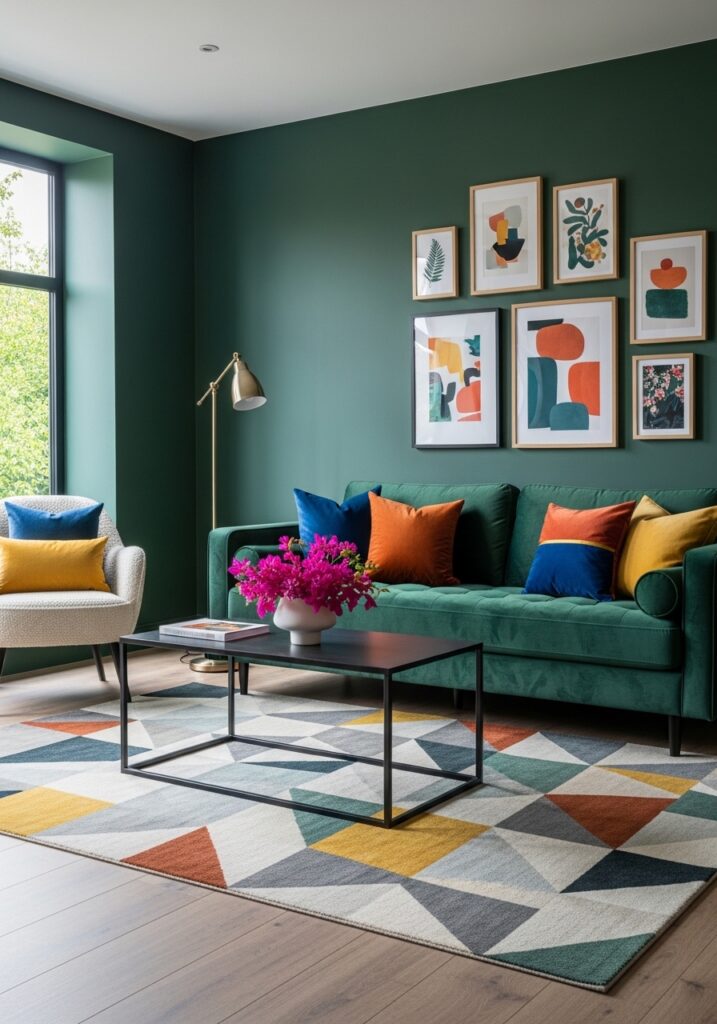
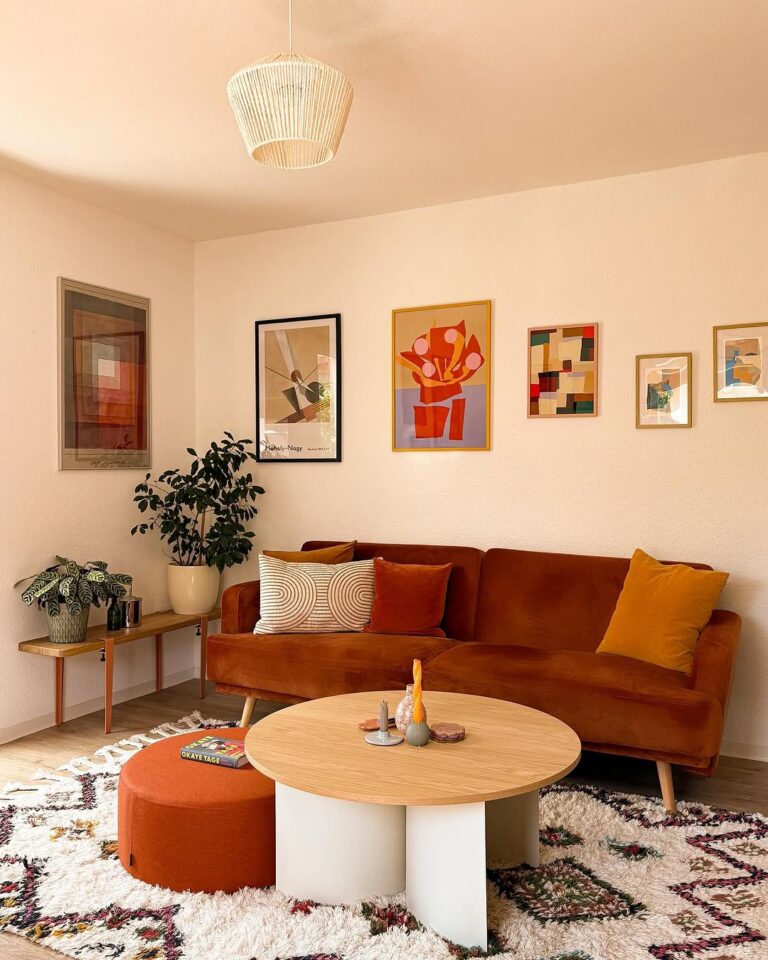
Forest green serves as a spectacular, high-contrast backdrop that allows warm, high-energy accent colors to truly shine. To elevate the space, consider infusing the room with strategic pops of burnt orange, mustard yellow, or deep burgundy. These rich, autumnal tones establish a vibrant visual dialogue with the deep green, effectively adding layers of depth and distinctive personality to the environment. Whether introduced through plush throw pillows, curated artwork, or hand-crafted decorative ceramics, these bold hues break up the darkness while enhancing the room’s overall warmth. The key is to distribute these colors evenly, ensuring they complement the primary green foundation rather than competing with it. The result is a spirited, sophisticated living area that feels both energetic and cozy.
3. Integrate Wood and Living Plants
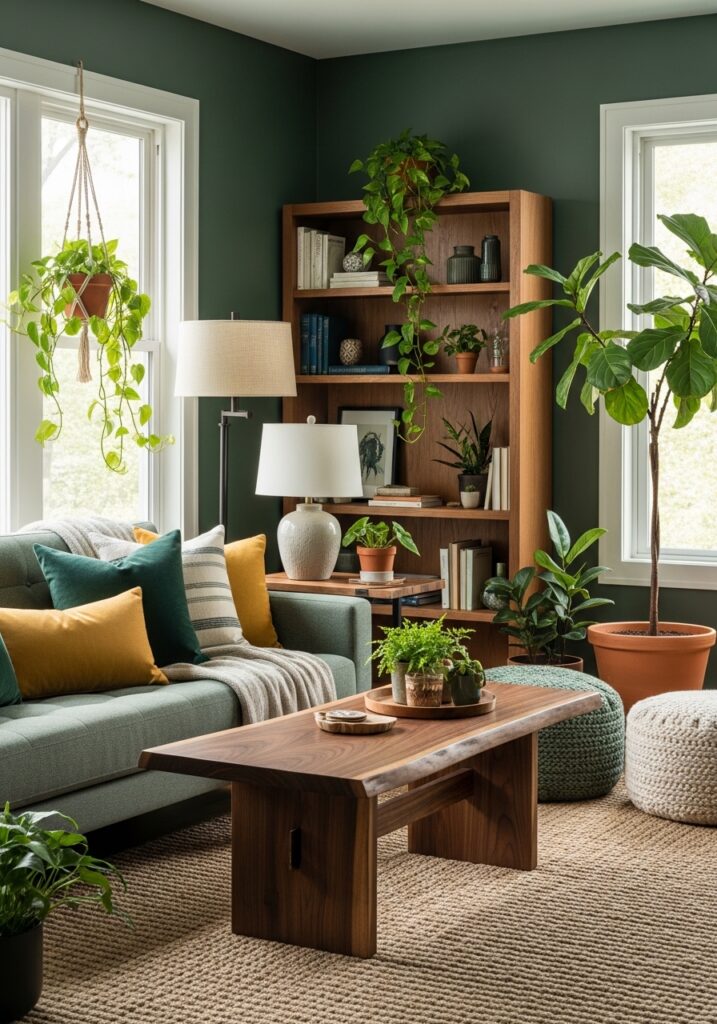
To truly lean into the “forest” in forest green, you should prioritize the integration of natural timber and lush live greenery. Incorporating furniture crafted from rich walnut or warm oak significantly enhances the earthy, organic quality of the dark walls, providing a grounded structural element to the space. Complementing these wooden textures with indoor plants, such as architectural Monstera or sleek Snake Plants, creates a seamless and refreshing indoor-outdoor connection. This intentional biophilic approach does much more than simply improve the room’s aesthetic; it actively refreshes the air quality and provides a soothing balm for the soul. By layering these living elements, you transform a standard living room into a restorative, nature-inspired sanctuary that feels timeless.
4. Go Monochrome with Layered Greens
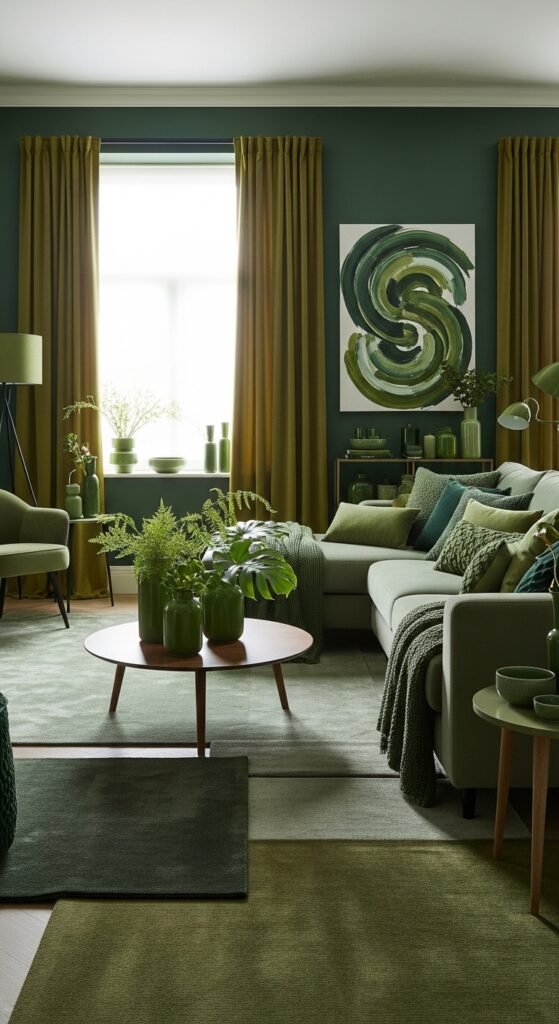
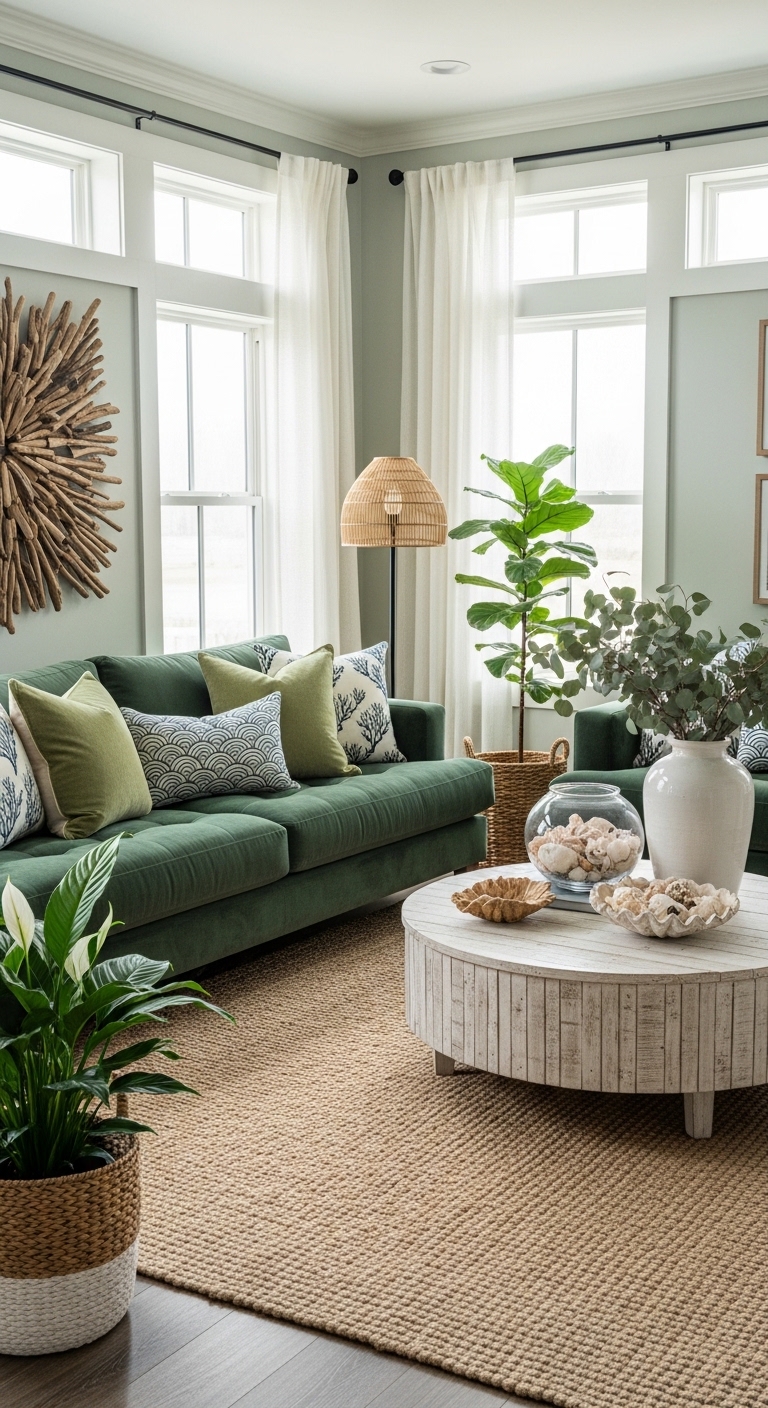
For a sophisticated, editorial look, experiment with a monochromatic palette by layering forest green with diverse shades like olive, sage, and mint. This cohesive approach creates a sense of rhythmic harmony and professional polish within your living space. To prevent the room from feeling flat or static, it is essential to vary your materials; for example, pairing a plush velvet sofa with a woven tonal rug or matte-finished accents creates necessary visual movement and tactile interest. By exploring the full spectrum of the same color family, you add sophisticated depth that feels both intentional and modern. The result is an immersive, serene environment that showcases your design confidence while maintaining an incredibly cozy and unified atmosphere.
5. Embrace Darker Accents for Drama
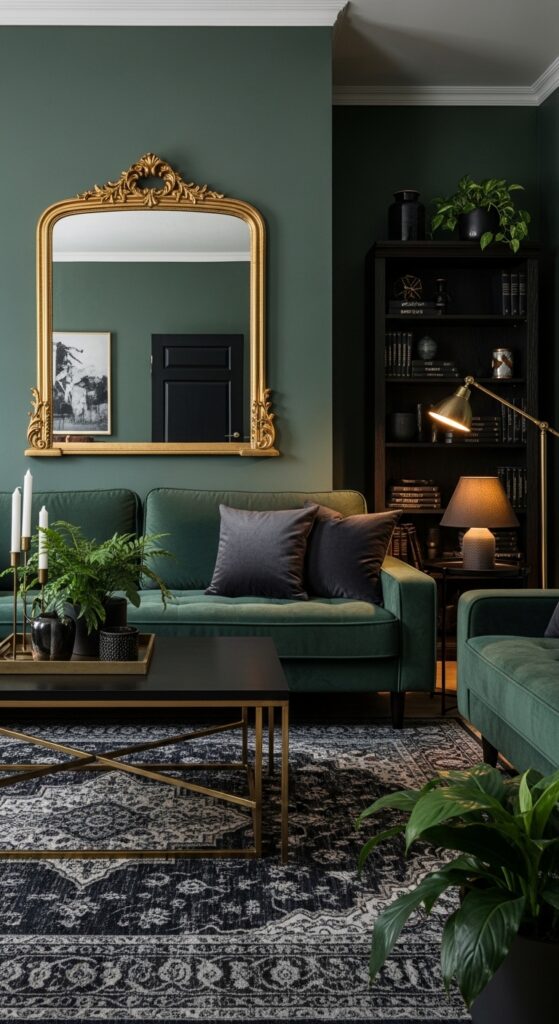
If you are aiming for a moody, “gentleman’s lounge” aesthetic, pair forest green with deep charcoal, navy, or matte black accents. These darker tones work together to intensify the room’s inherent depth, effectively grounding the space and providing a sophisticated edge. By incorporating black metal hardware, navy textiles, or charcoal-finished cabinetry, the overall design begins to feel exceptionally polished, intimate, and intentionally dramatic. This heavy-set color palette creates a sense of luxury and quiet focus, perfect for those who prefer an atmospheric environment over an airy one. When executed with precision, this combination elevates a standard living area into a high-end retreat that exudes masculine charm, timeless strength, and a uniquely bold sense of architectural style.
6. Use Lighting to Shift the Mood
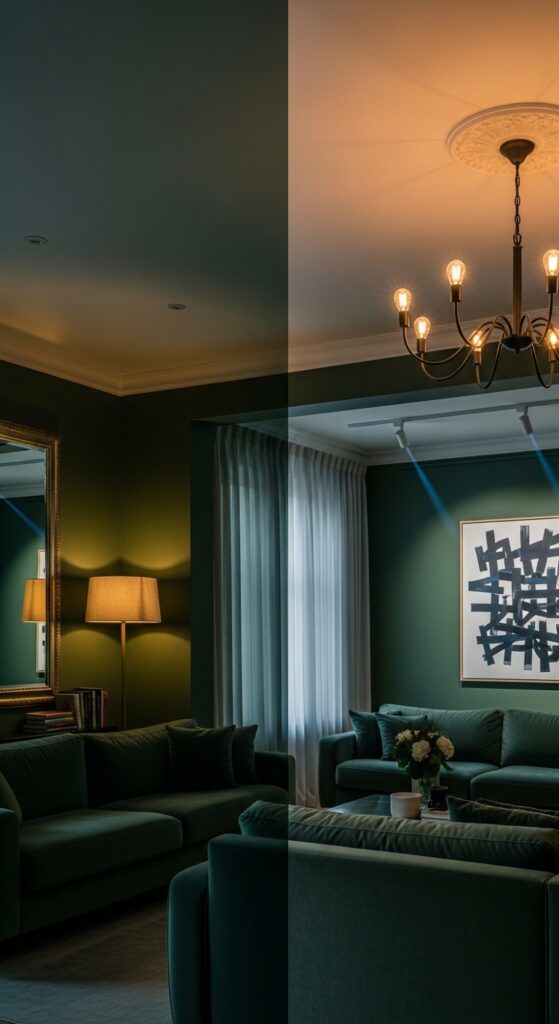
The appearance of forest green shifts beautifully under varying light conditions, making your choice of illumination crucial for setting the desired mood. Warm-toned bulbs transform the deep green into a cozy, enveloping embrace, perfect for intimate evening relaxation. Conversely, cooler daylight emphasizes the hue’s crisp, botanical freshness, making the room feel energized and alive. To maximize this effect, incorporate statement chandeliers or polished brass wall sconces that cast deliberate shadows, highlighting the wall’s unique texture and artisanal finish. By layering your lighting sources, you can successfully alter the room’s ambiance throughout the day, ensuring the space feels as vibrant at dawn as it does sophisticated at dusk. This dynamic interplay ensures your design remains visually engaging and versatile.
7. Layer Textures for Visual Richness
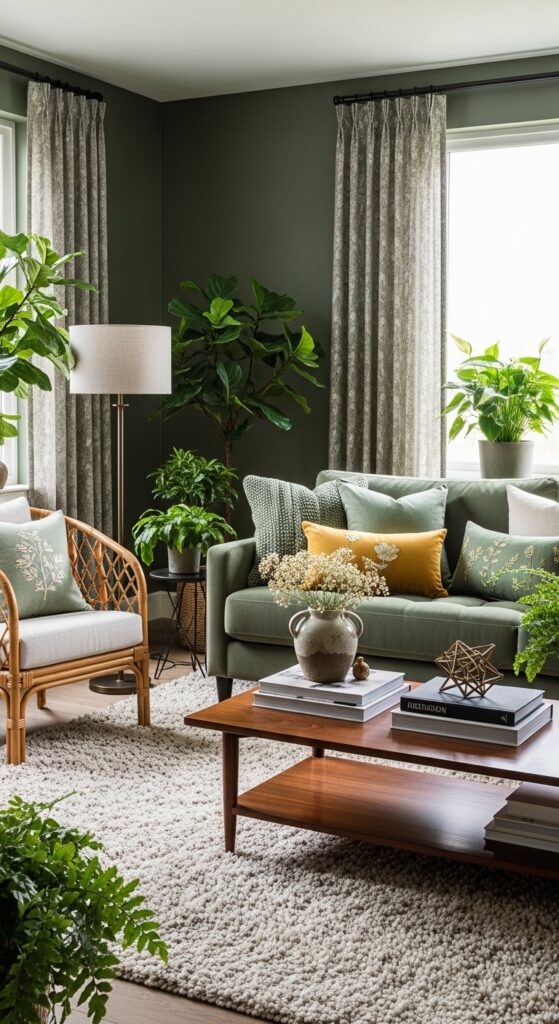
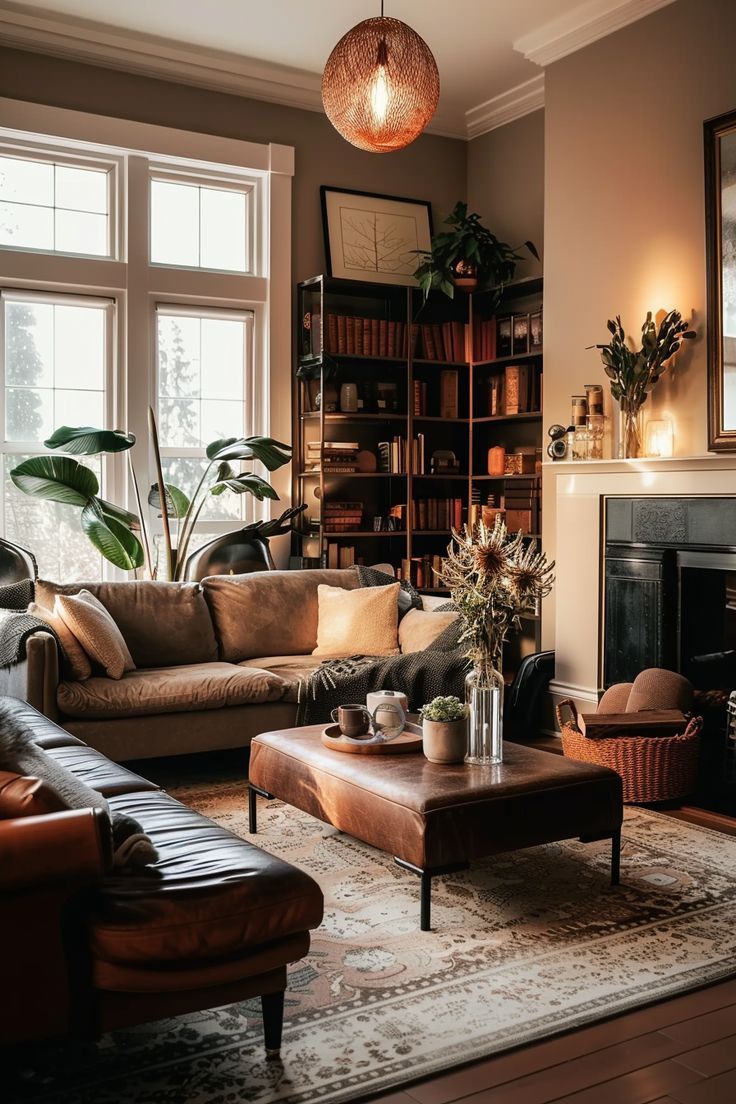
Texture serves as the ultimate secret to making a dark room feel exceptionally expensive and layered. To achieve a high-end look, strategically mix diverse fabrics such as opulent velvet, crisp linen, and rugged leather. For example, a plush forest green velvet sofa paired with a sleek, cognac leather armchair and a chunky knit wool throw creates a multi-dimensional sensory experience. These contrasting materials break up the solidity of the deep green walls, adding necessary visual movement and tactile richness to the space. This design approach ensures that the room remains as comfortable as it is visually striking, preventing a dark palette from feeling flat or uninviting. The result is a sophisticated, masterfully balanced environment full of character.
8. Incorporate Metallic Accents for Glamour
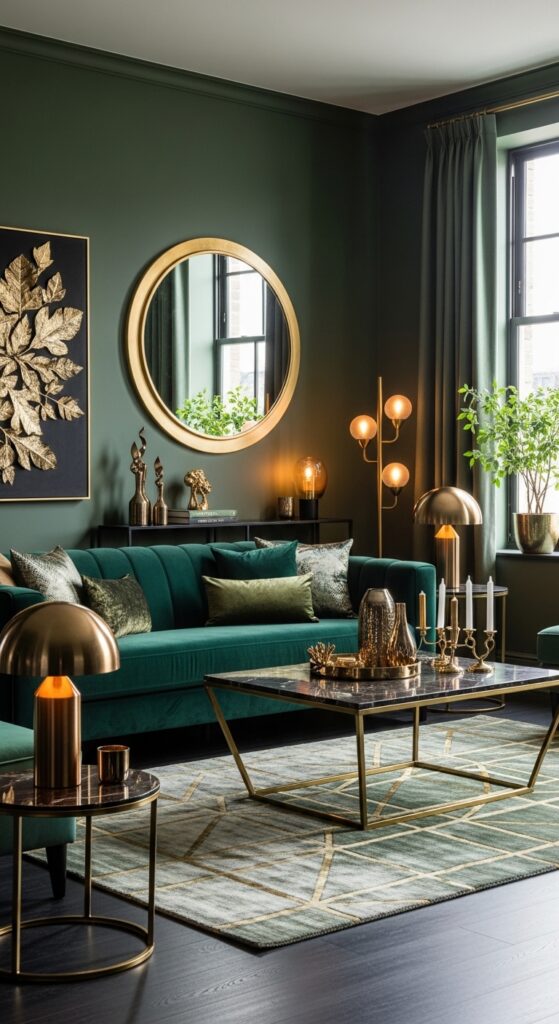
Metallic accents like gold, brass, and copper serve as the natural best friends of forest green, providing a necessary brilliance to the room. These warm metals expertly cut through the saturated depth of the green, reflecting light and adding a sophisticated touch of “jewelry” to your living space. To successfully elevate the design, look for gold-framed mirrors, sleek brass coffee table legs, or polished metallic hardware for your cabinetry. These reflective surfaces create a high-contrast glamour that prevents the dark walls from feeling too heavy or closed in. By incorporating these shimmering elements, you introduce a layer of luxury and refinement, transforming a simple nature-inspired room into a truly opulent and polished sanctuary that sparkles with designer intent.
9. Create a Cozy Feel with Soft Fabrics
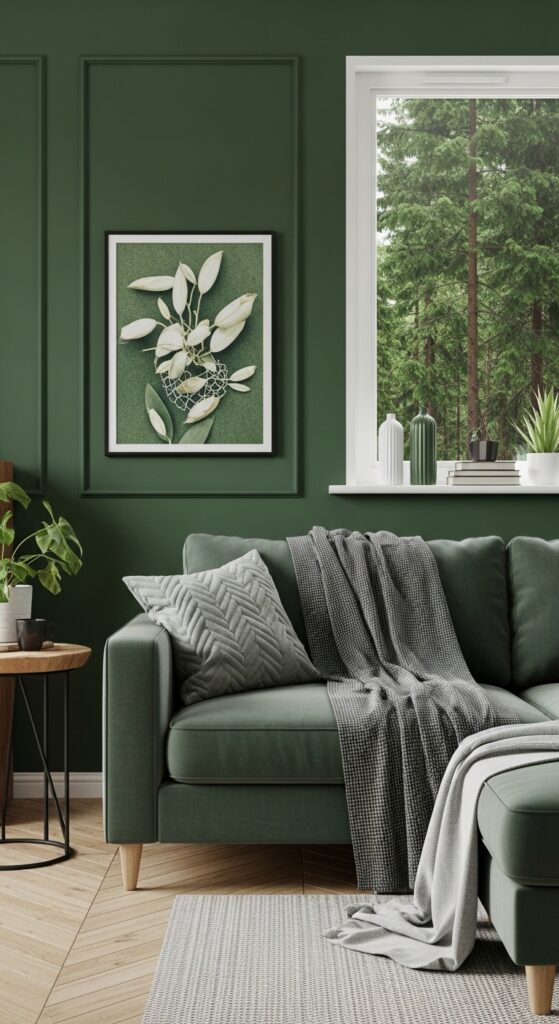
Incorporate tactile softness into your forest green living room to ensure the deep, saturated color feels welcoming rather than cold. Introducing plush elements like thick wool rugs, heavy silk curtains, and oversized, down-filled cushions is essential for creating a cozy, high-end atmosphere. These rich materials perform a functional role by absorbing both sound and light, effectively transforming your space into a quiet, peaceful cocoon. The contrast between the dark walls and the inviting softness of the textiles adds a layer of physical comfort that balances the room’s bold visual impact. By layering these luxurious fabrics throughout the seating area, you foster a sense of warmth and intimacy, making the environment an ideal sanctuary for rest and relaxation.
10. Introduce a Feature Wall
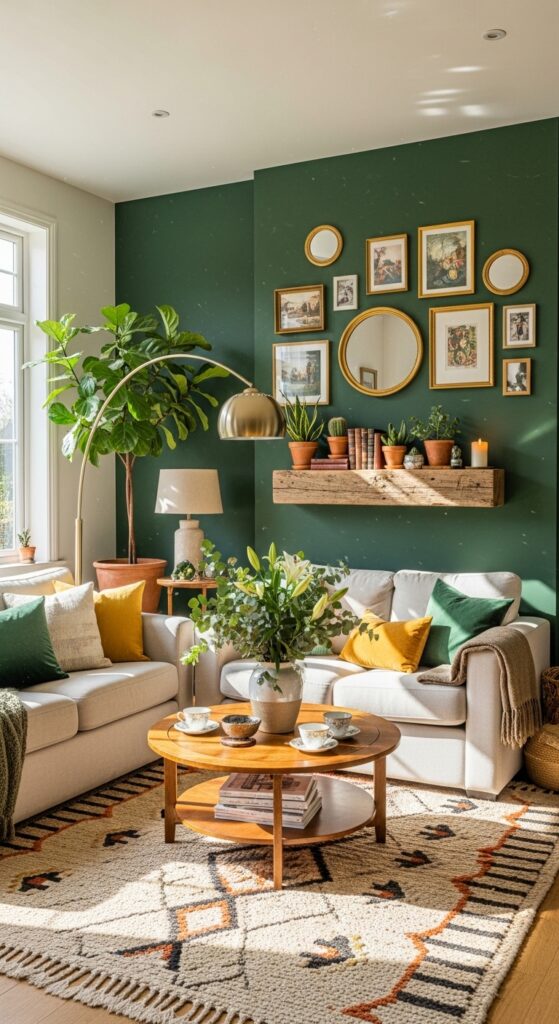
If painting an entire living room in such a saturated hue feels daunting, introducing a forest green feature wall is an excellent way to transition into bold color. By selecting the wall behind a sofa or a fireplace to serve as the primary focal point, you instantly add a sense of “architecture” and intentional structure to the space. This strategic design move provides all the moody drama of a deep green palette while allowing the rest of the room to remain light, airy, and visually accessible. It creates an impactful anchor for your furniture and artwork without overwhelming the environment. This balanced approach is perfect for those who want to experiment with sophisticated, nature-inspired tones while maintaining a sense of openness.
11. Choose Vintage-Inspired Furniture
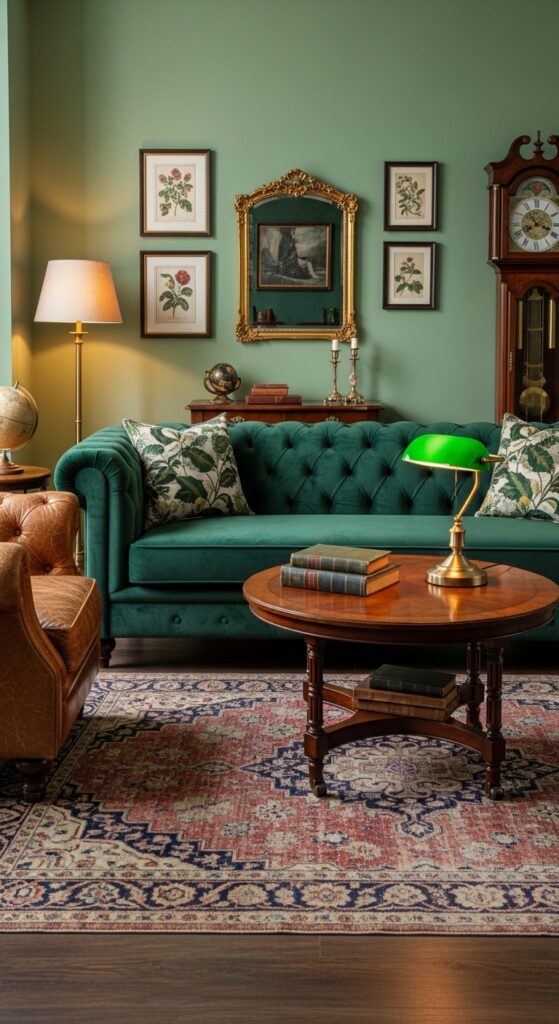
Forest green possesses a timeless, historical quality that pairs exquisitely with antique or mid-century modern furniture. This rich, academic hue serves as the perfect backdrop for storied pieces, such as a vintage teak sideboard or a classic, tufted Chesterfield sofa. When these weathered textures meet the depth of the green walls, they create an environment that feels profoundly nostalgic, layered, and incredibly charming. This design choice suggests a space curated over decades rather than decorated in a day, adding a sense of soul and permanence to your home. By leaning into vintage-inspired elements, you highlight the classic nature of the color, resulting in a sophisticated living area that feels both grand and intimately personal.
12. Play with Geometric Patterns
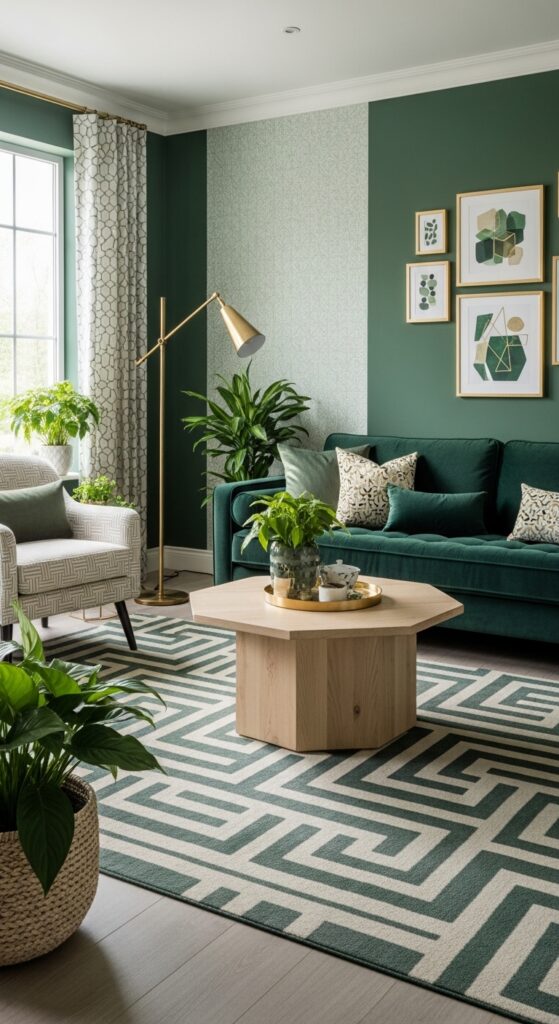
Inject a modern edge into your design by introducing bold geometric patterns throughout the space. Whether you opt for a high-contrast chevron rug or a subtly wallpapered reading nook, the inclusion of sharp lines and mathematical repeats offers a crisp, sophisticated contrast to the organic, moody nature of forest green. These structured elements help ground the deep color, preventing it from feeling overly heavy while keeping the overall aesthetic current and energetic. By mixing the fluid, natural feel of the green walls with the precision of triangles, hexes, or stripes, you create a dynamic visual tension that feels both professional and artistic. This layered approach ensures your living room remains a cutting-edge environment that celebrates both nature and modern architecture.
13. Create a Bohemian Retreat
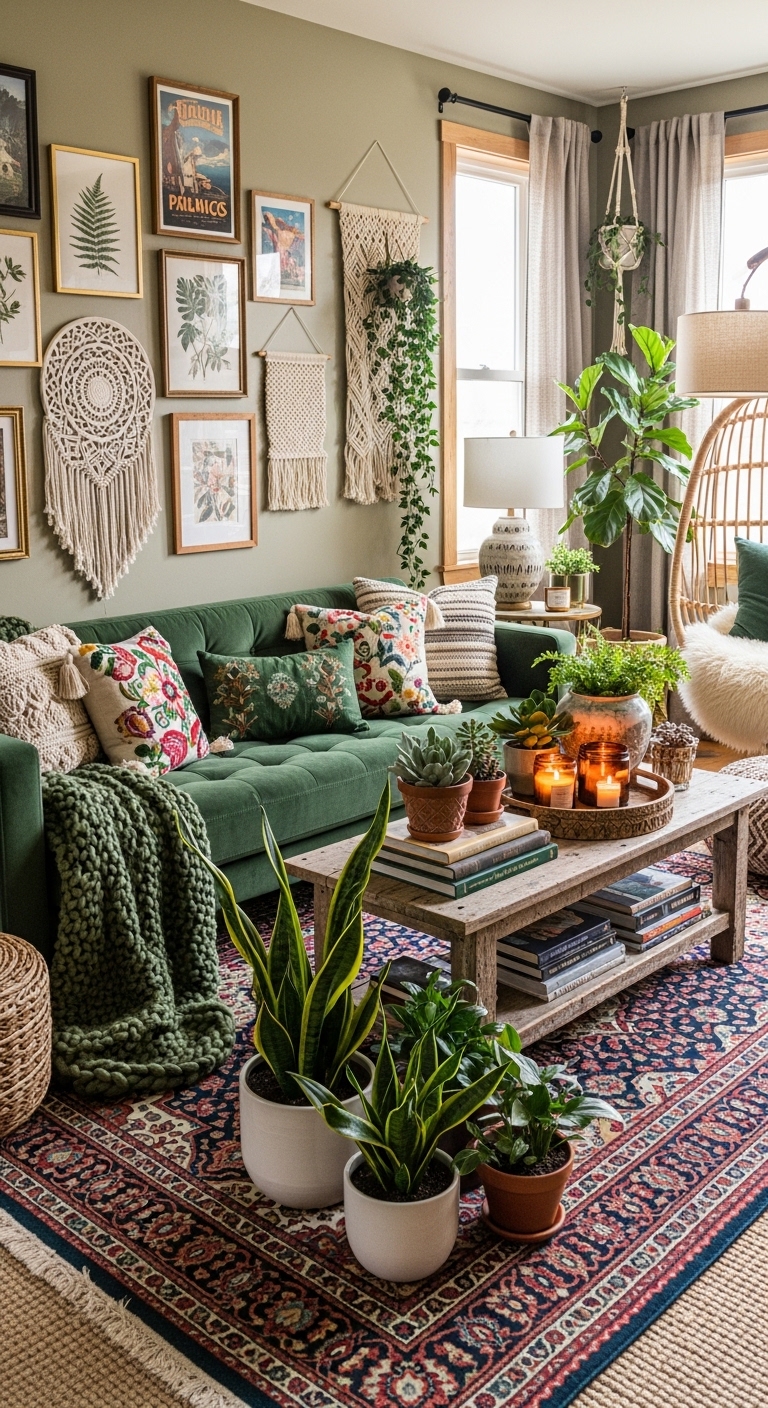
Embrace an eclectic, “jungalow” aesthetic by layering vibrant patterned textiles, natural rattan furniture, and intricate macramé wall hangings against deep forest green walls. This carefree, artistic approach transforms the saturated hue into a lush, tropical backdrop for a personalized and lived-in sanctuary. By combining the earthy stability of the green with global-inspired rugs and artisanal decor, you create a space that feels both grounded and spirited. The deep walls act as a canvas for a collection of mismatched treasures, allowing various textures to pop with organic energy. This design style prioritizes comfort and self-expression, resulting in a restorative retreat that feels like a private indoor garden. The final look is a cozy, bohemian haven that celebrates a rich, adventurous spirit.
14. Opt for a Coastal Green Scheme
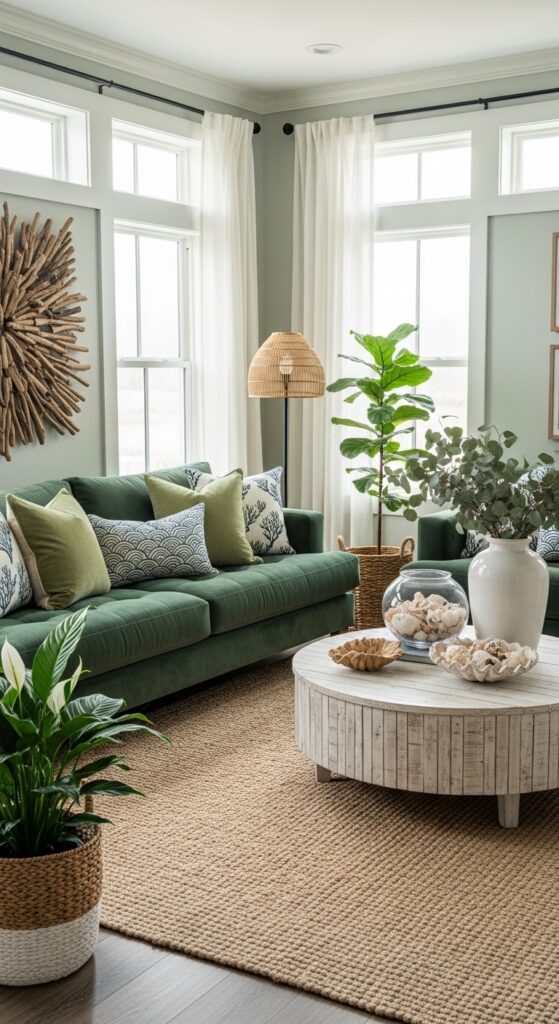
Move away from traditional “navy” coastal styles by embracing a refreshing palette that mixes forest green with sandy beiges and pale sea-foams. This sophisticated color scheme evokes the serene feeling of a dense coastal forest meeting the shoreline, offering a tranquil and unique take on modern beachside living. By utilizing forest green as your grounding base and accenting with light, weathered wood and airy textiles, you create a space that feels both grounded and expansive. This approach replaces the predictability of nautical blues with a more organic, sophisticated aesthetic that celebrates the rugged beauty of the natural coast. The result is a serene, sun-drenched sanctuary that feels cool, calm, and perfectly balanced between land and sea.
15. Anchor the Space with Artwork
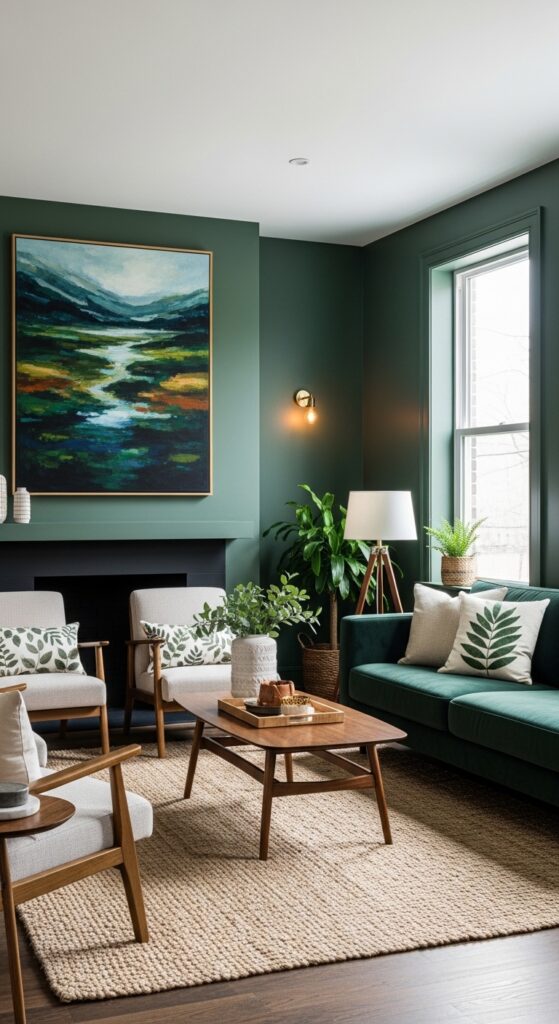
Deep green walls function as a premier gallery backdrop, providing the perfect canvas to make your artwork truly “sing.” Whether you choose traditional gold-framed oil paintings or vibrant modern abstract prints, the saturated dark pigment offers a high-contrast foundation that draws the eye directly to your favorite pieces. This depth of color makes the art the undeniable star of the room, highlighting fine details and vivid colors that might otherwise disappear against a white wall. By anchoring the space with curated frames, you create a sophisticated focal point that feels intentionally museum-like yet warm and personal. The final result is a cultured living area that celebrates artistic expression through the lens of a bold, nature-inspired palette.
16. Try an Industrial Edge
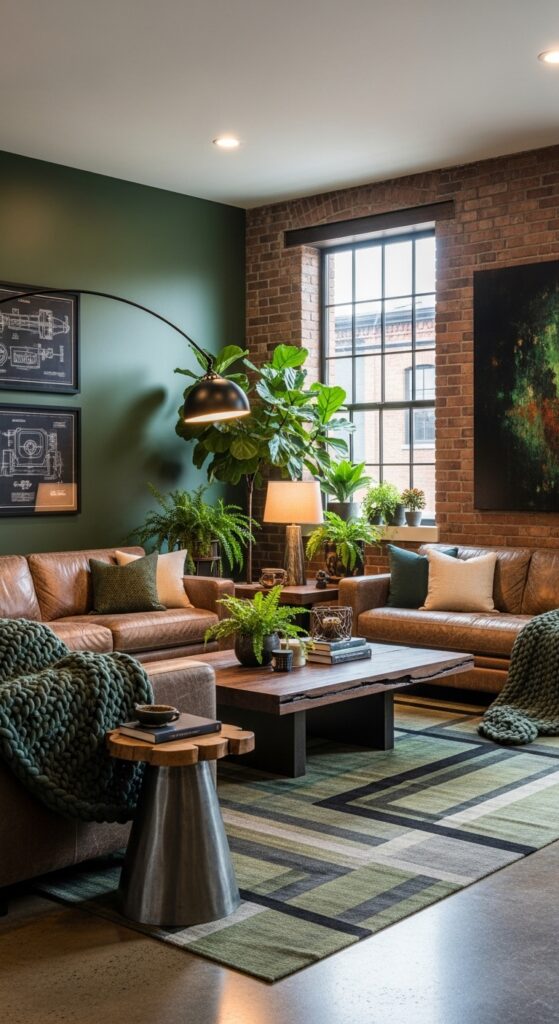
Pairing the rugged elements of industrial design—such as exposed brick, reclaimed wood, and matte black steel—with forest green creates a surprisingly harmonious and edgy aesthetic. The lush, organic nature of the green serves to soften the inherent harshness of cold metal and raw masonry, while the industrial textures inject a modern “cool factor” into the traditionally classic color. To achieve this look, consider using forest green on a feature wall or upholstered seating to contrast against structural elements like factory-style windows or pipe shelving. This strategic blend of raw materials and deep botanical hues results in a living space that feels both sophisticated and grounded, offering a unique balance between urban grit and natural tranquility.
17. Mix with Warm Earth Tones
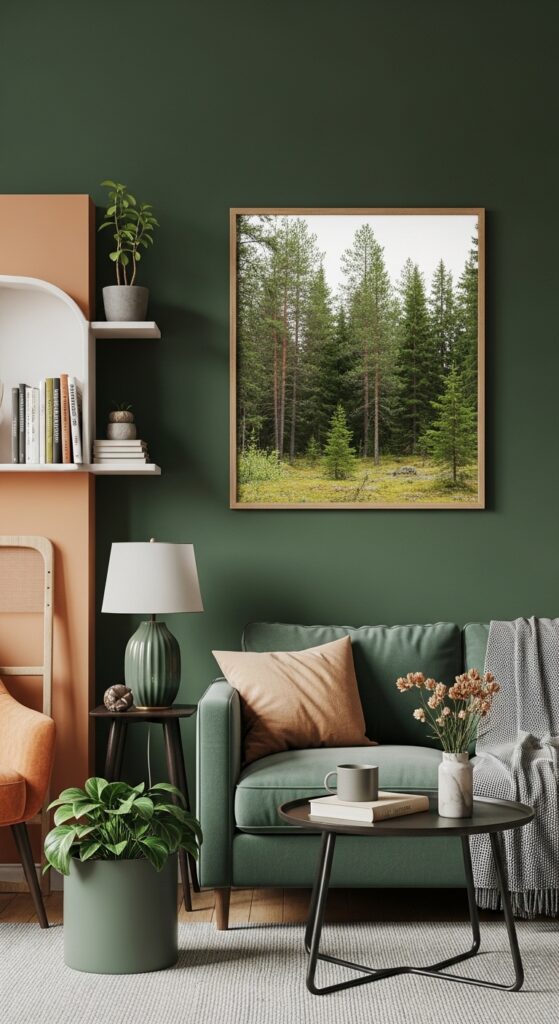
For a grounded, autumnal feel year-round, blend your forest green palette with sun-baked tones like terracotta, rust, and clay. These warm, earthy hues provide a perfect visual counterpoint to the deep coolness of the green, resulting in a living room that feels incredibly cozy and fundamentally connected to the natural world. Incorporating these pigments through textured rugs, clay pottery, or linen throw pillows adds a layer of organic richness that prevents the room from feeling too dark or clinical. This color story mimics the beauty of a changing forest, creating a stable and inviting atmosphere that radiates comfort. The final result is a sophisticated, harmonious space that celebrates the seasonal transitions of nature while providing a timeless, soul-soothing retreat.
18. Indulge in Green Velvet
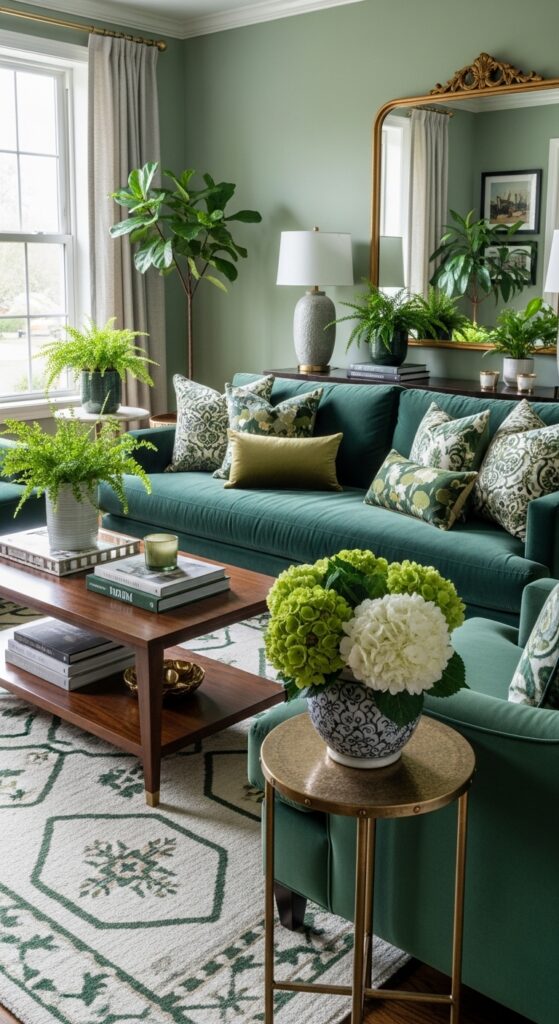
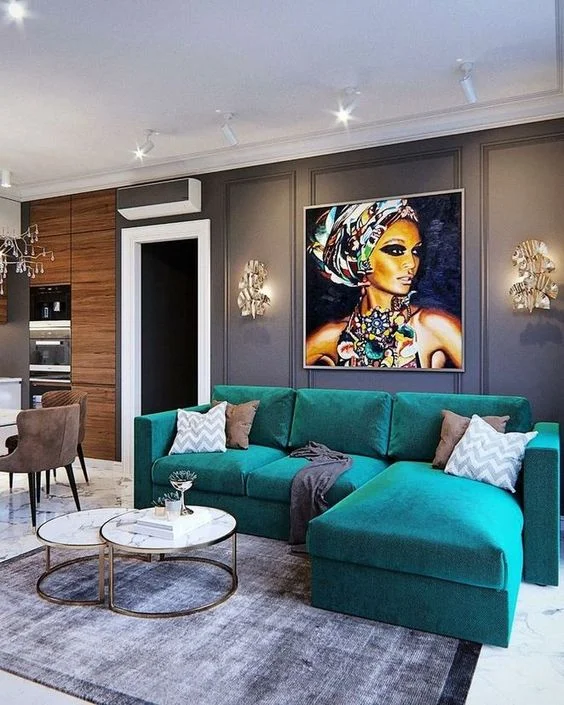
In the world of interior design, there is perhaps no pairing more iconic or luxurious than the union of forest green and plush velvet. This high-sheen fabric catches the light with unique elegance, beautifully highlighting the paint color’s multi-dimensional tones and hidden depths. Investing in a forest green velvet sofa provides a timeless centerpiece that simultaneously screams high-end luxury and unparalleled comfort. The material’s inherent sheen prevents the dark hue from appearing flat, instead creating a dynamic surface that shifts in appearance as you move throughout the room. By indulging in this classic combination, you elevate your living space into a regal, tactile sanctuary that feels both sophisticated and incredibly inviting for years to come.
19. Use a Statement Green Rug
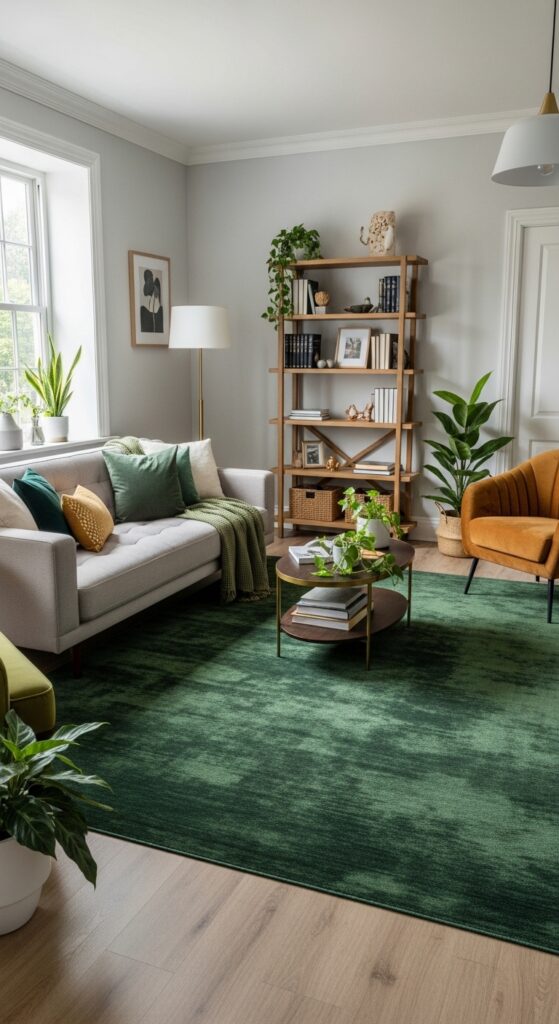
Grounding your seating area with a forest green area rug is an excellent strategy for introducing this rich color, especially if you prefer to keep your walls a crisp, airy neutral. A carefully selected patterned or high-pile rug serves as a lush, soft foundation that physically defines the room’s boundaries while providing an immediate sense of comfort underfoot. This design choice acts as a visual anchor, drawing the eye downward and creating a sophisticated base for your existing furniture. Whether you opt for a traditional Persian motif or a modern, solid-textured weave, the deep green hue adds a necessary layer of organic depth and grounding stability. The result is a balanced, polished space that feels both intentionally designed and incredibly welcoming.
20. Paint the “Fifth Wall” (The Ceiling)
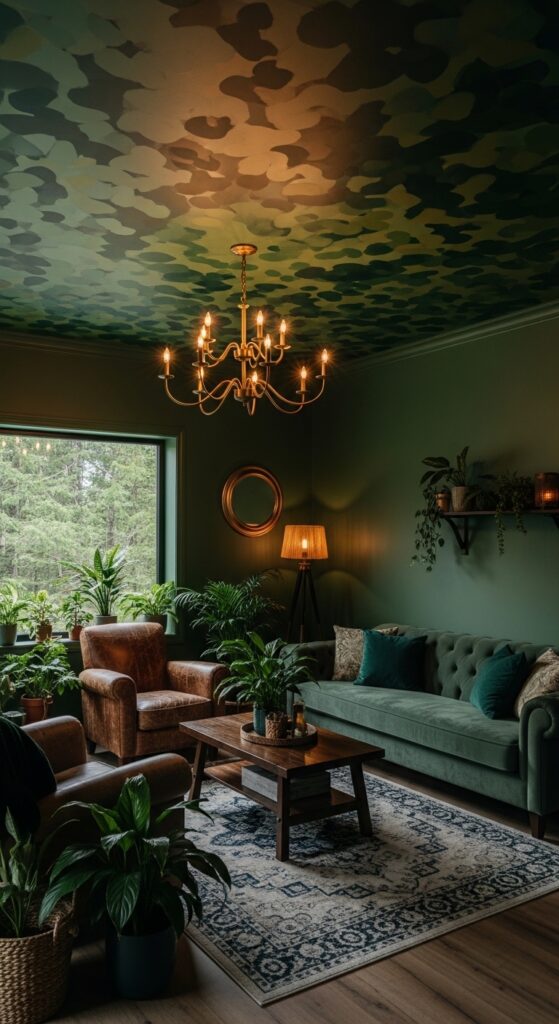
For the truly daring designer, extending forest green to the “fifth wall” offers a transformative architectural experience. Painting the ceiling in this deep, saturated hue can surprisingly make a room feel more expansive by blurring the traditional boundaries and lines of the walls. Alternatively, in smaller dens or libraries, this technique creates an incredibly intimate, “jewelry box” effect that feels both protective and opulent. By enveloping the entire volume of the space in green, you eliminate harsh visual breaks, allowing the eye to travel seamlessly across every surface. This bold application provides a sense of high-end custom design, turning a standard room into a sophisticated, cocoon-like retreat that feels intentionally curated and profoundly atmospheric from floor to ceiling.
21. Experiment with Forest Green Curtains
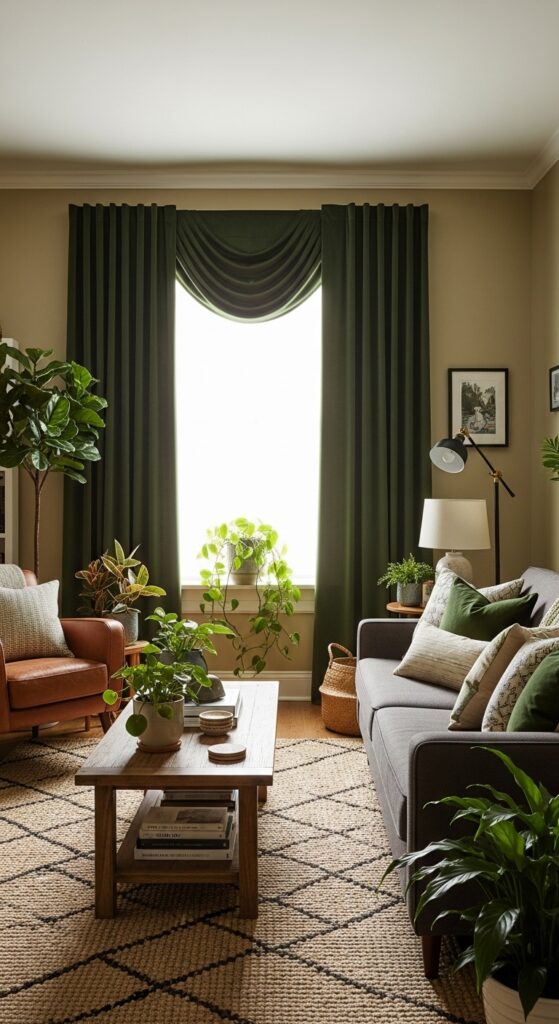
Floor-to-ceiling forest green drapes are a masterful way to introduce vertical drama and a sense of heightened architectural scale to your living space. By selecting a heavy fabric like velvet, you achieve a light-blocking luxury that feels incredibly private and stately, perfect for creating an intimate evening environment. Alternatively, opting for a sheer green linen allows natural sunlight to filter through the weave, casting a soft, mossy glow that mimics the dappled light of a forest canopy. This window treatment acts as a soft architectural frame, bridging the gap between your interior decor and the world outside. Whether you prefer total opulence or organic lightness, these curtains provide a versatile way to saturate your home with sophisticated, nature-inspired color.
22. Accent with Natural Stone
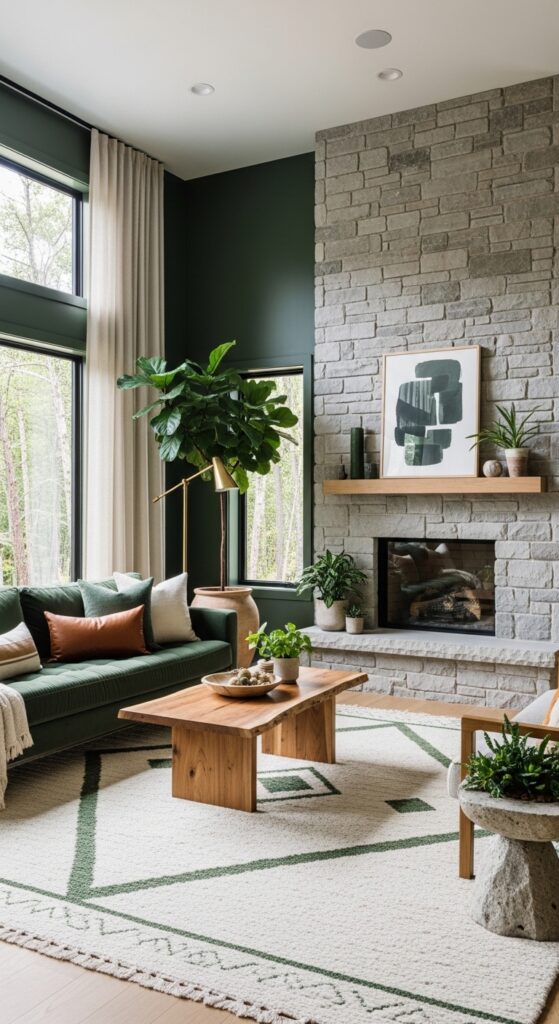
The cool, smooth surface of natural stone, such as marble or granite, provides a sophisticated and refreshing counterpoint to the saturated depth of forest green. Incorporating a white marble coffee table or a sleek stone fireplace surround introduces a clean, high-end finish that effectively brightens the room’s deeper tones through natural luminosity. This pairing balances the organic warmth of the green with a crisp, geological elegance, creating a space that feels both grounded and luxurious. The subtle veining in the stone adds a delicate layer of pattern that mimics natural landscapes, further reinforcing the room’s connection to the outdoors. The result is a masterfully balanced environment where the weight of the dark walls is lifted by the bright, enduring beauty of masonry.
23. Adopt a Modern Farmhouse Style
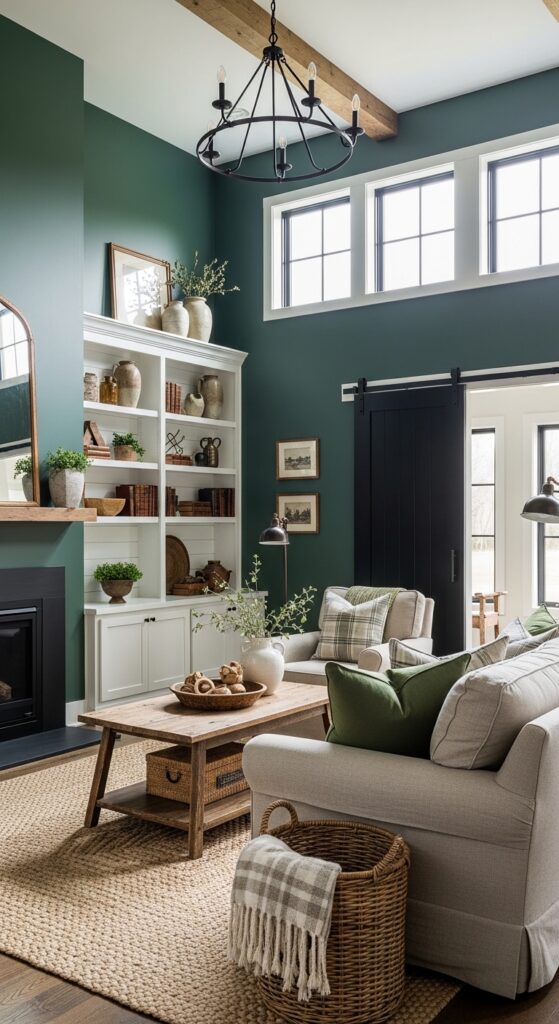
Give the popular farmhouse aesthetic a fresh, moody update by swapping traditional whites and greys for deep forest green accents. When combined with classic elements like white shiplap, reclaimed wood beams, and matte black hardware, this rich green adds a sophisticated “country estate” feel that manages to be both rustic and remarkably refined. This departure from the standard neutral palette introduces a sense of permanence and heritage to the home, making new builds feel instantly more established. Whether applied to a kitchen island, built-in mudroom cabinetry, or a simple accent wall, forest green grounds the airy farmhouse light with a necessary touch of organic weight. The final look is a cozy, high-contrast sanctuary that feels beautifully connected to the surrounding landscape.
24. Combine with Soft Gray
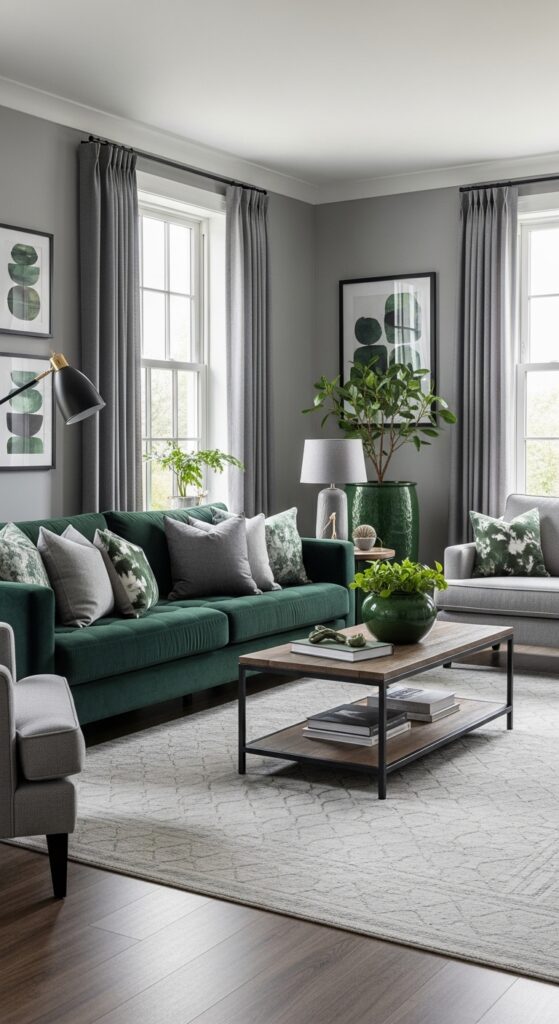
For those seeking a modern, cool-toned environment, pairing forest green with soft grays offers a sleek and contemporary aesthetic. Gray serves as a sophisticated “buffer,” effectively cooling the vibrant intensity of the green while maintaining a professional, understated elegance. This combination is particularly successful in urban apartments where a balance between organic color and industrial neutrality is desired. By utilizing gray for large-scale elements like sofas or rugs, you create a calm backdrop that allows the forest green to feel intentional rather than overwhelming. The result is a refined, high-contrast palette that feels both grounded and airy, providing a polished sanctuary that perfectly mirrors the intersection of nature and city life.
25. Infuse with Vintage Green Details
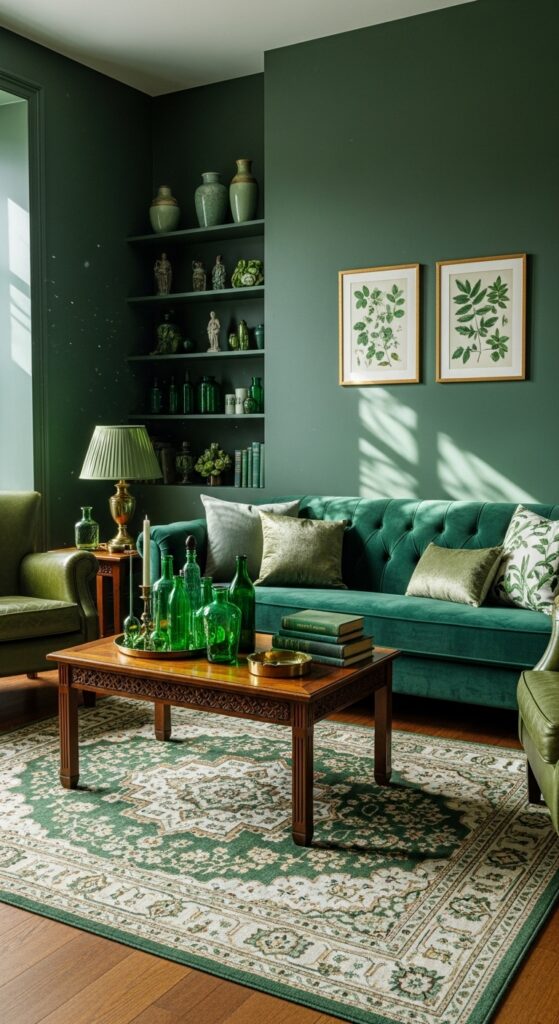
Small vintage details can yield a significant impact, allowing you to curate a cohesive aesthetic through thoughtful, minor additions. By sourcing green glass vases, retro ceramic lamps, or distressed jade picture frames, you introduce “pockets” of color that tie a forest green theme together throughout a neutral room. This approach is ideal for those who want to experiment with the hue without committing to a major renovation or a full paint job. These storied objects add a layer of history and character, acting as sophisticated threads that weave the room’s color story into a unified whole. This method of accessorizing ensures your space feels lived-in and curated, proving that even the smallest accents can define a room’s entire personality and charm.
Conclusion
A forest green living room is far more than a simple design choice; it is a profound expression of mood and atmosphere. By carefully balancing this rich, evocative pigment with thoughtful textures, strategic lighting, and complementary accent colors, you can curate a space that transitions seamlessly from a sun-drenched garden sanctuary to a high-end, dramatic lounge. Whether you begin your journey with a subtle velvet pillow or choose the bold path of a forest-colored ceiling, this nature-inspired shade consistently delivers a sense of lasting beauty and organic permanence to the home. Ultimately, forest green provides a versatile canvas that rewards creativity, ensuring your living environment feels deeply personal, sophisticated, and perpetually in style.