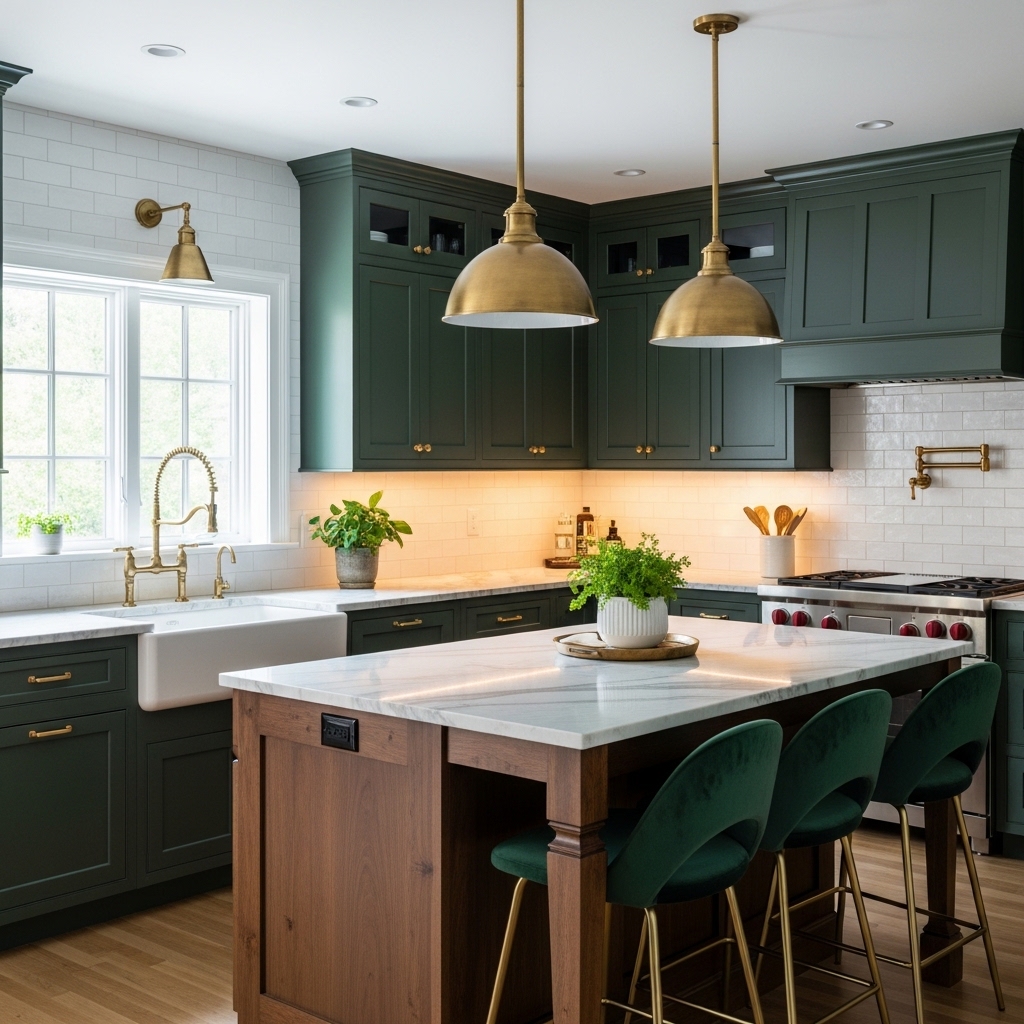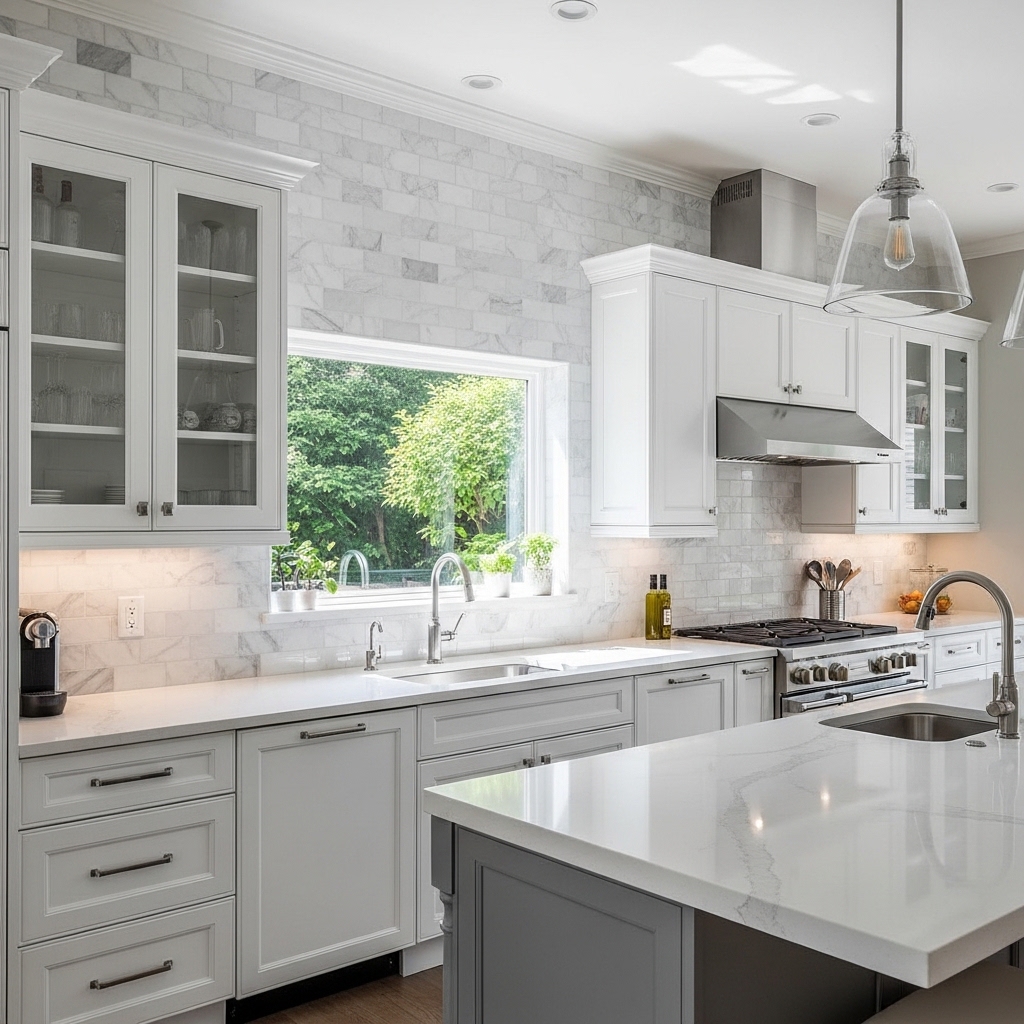
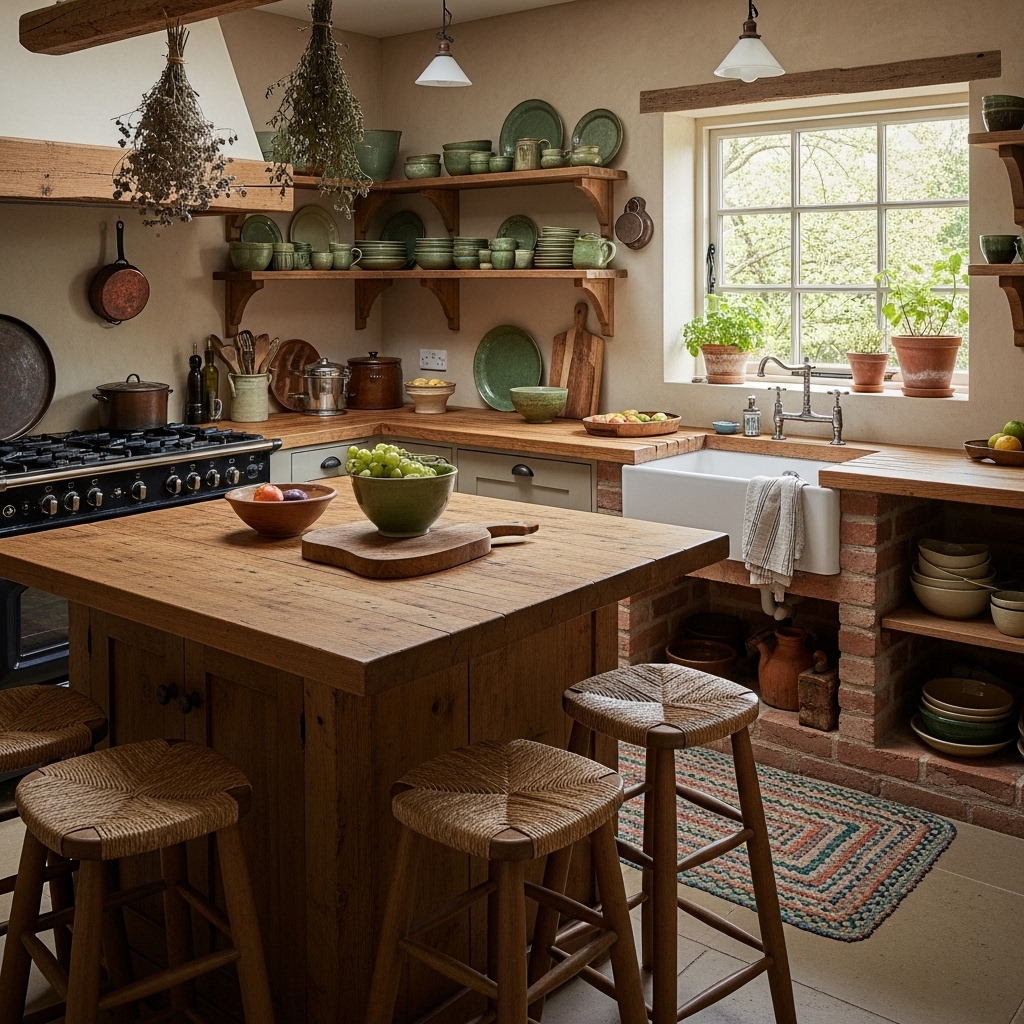
Elevate your home with earthy kitchen designs, a top trend for homeowners seeking a warm, nature-inspired sanctuary. By blending organic textures like reclaimed wood and natural stone with a palette of terracotta and mossy neutrals, you can create a space that promotes comfort and well-being. These sustainable kitchen ideas offer a timeless appeal, seamlessly bridging the gap between rustic farmhouse charm and modern organic aesthetics. Beyond their grounding beauty, natural materials enhance indoor air quality, making your cooking area both functional and eco-friendly. Transform your kitchen into a soothing, inviting retreat where family gathers and style meets nature.
1. Reclaimed Barnwood Kitchen Cabinets
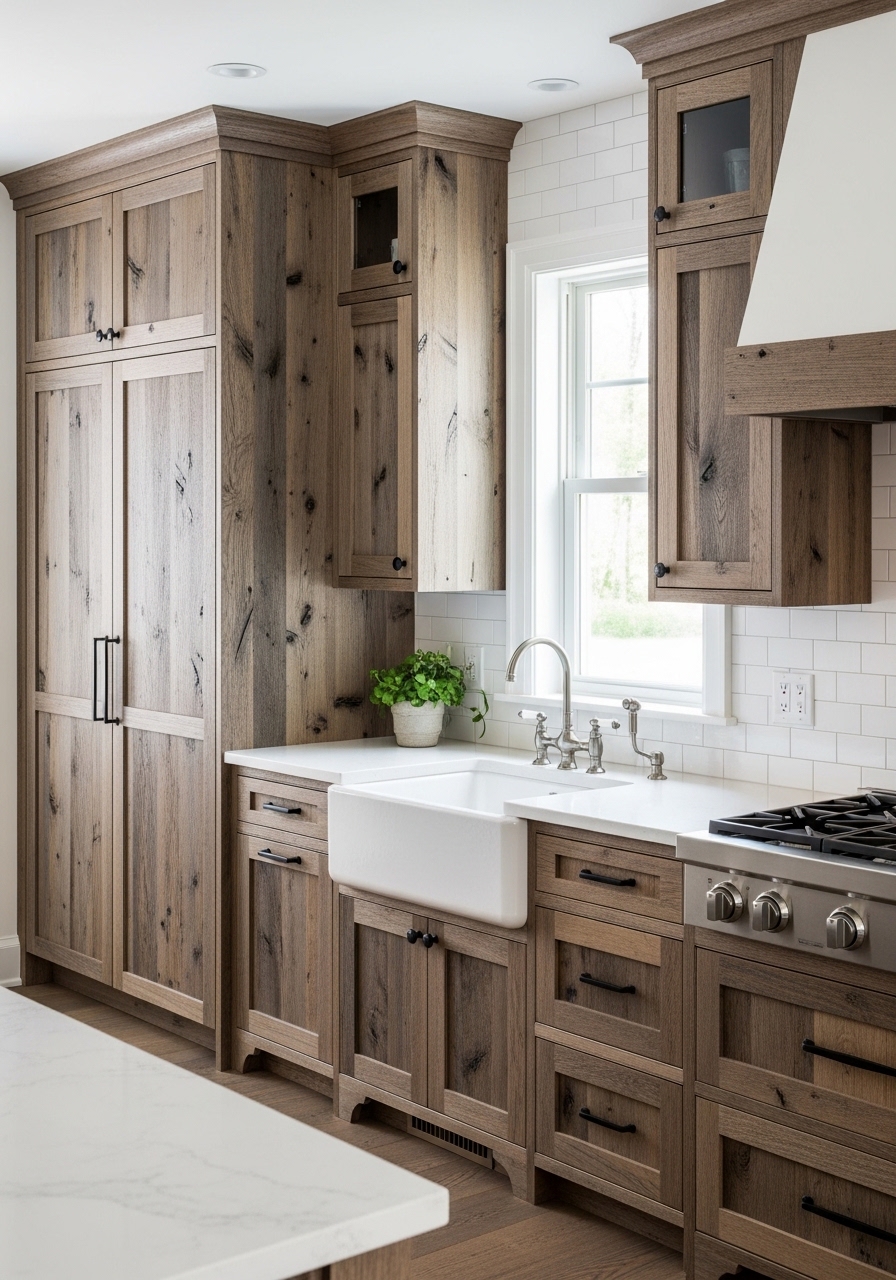
Embrace sustainable luxury with reclaimed barnwood kitchen cabinets, a perfect choice for adding authentic character and weathered texture to your home. These cabinets feature a unique natural patina, showcasing aged wood grain and historic details that create an instant focal point. Ideal for eco-friendly kitchen designs, reclaimed wood pairs seamlessly with natural stone countertops and industrial hardware to balance rustic charm with modern functionality. Beyond their timeless aesthetic, these durable cabinets represent a conscious choice for sustainable living. Elevate your space with cabinetry that tells a story, offering a historic yet fresh atmosphere that serves as the heart of your home.
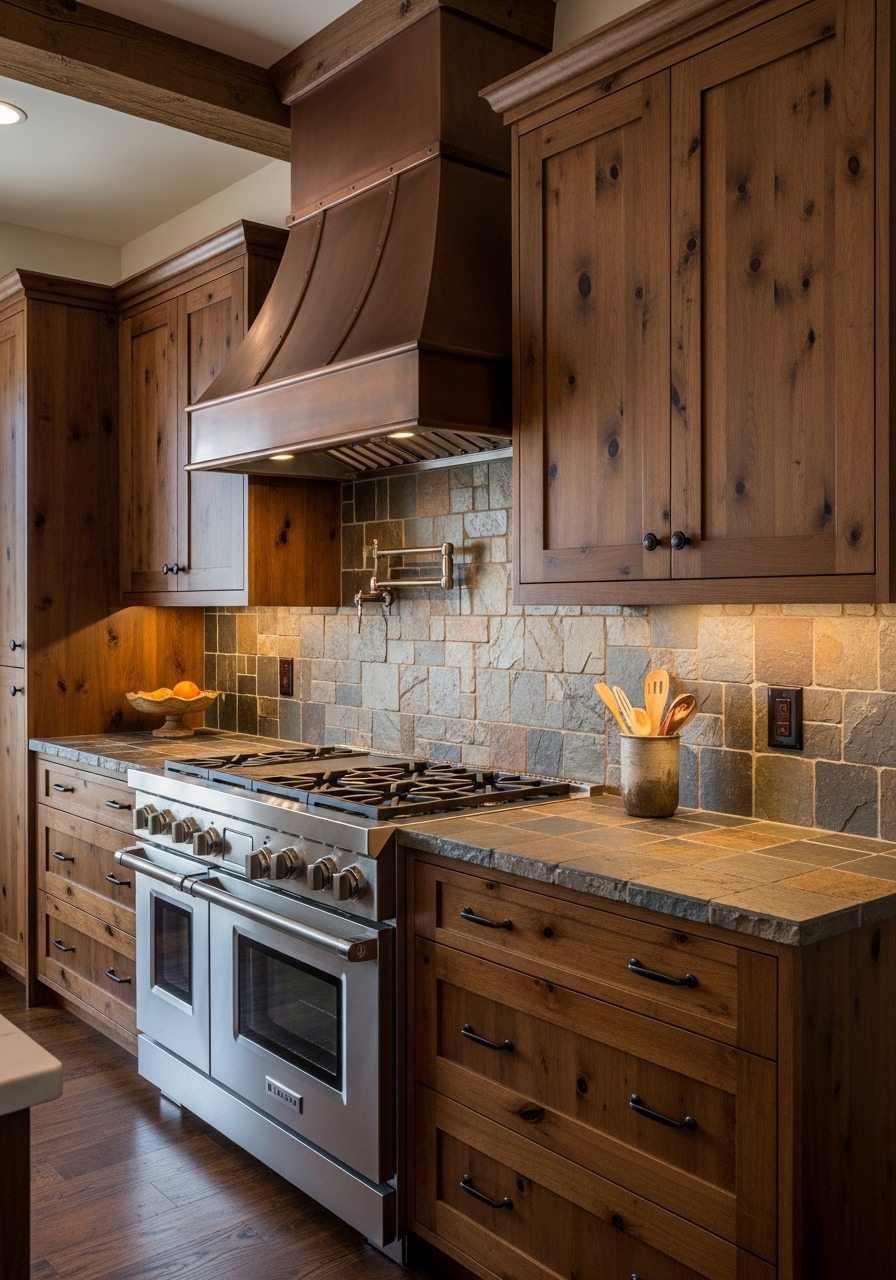
2. Natural Stone Backsplash Kitchen Designs
Add organic elegance to your space with a natural stone backsplash, a premier choice for bringing texture and timeless character into your kitchen. Whether you prefer the earthy tones of travertine, the subtle grain of limestone, or the dramatic depth of slate, natural stone offers unique mineral patterns that manufactured tiles simply can’t replicate. These durable surfaces pair perfectly with wooden cabinetry, creating a grounded, high-end look that anchors your design. From rustic tumbled finishes to sophisticated honed surfaces, a stone backsplash provides a resilient, moisture-resistant focal point that enhances both modern and traditional earthy kitchen aesthetics.
3. Terra Cotta Kitchen Color Schemes
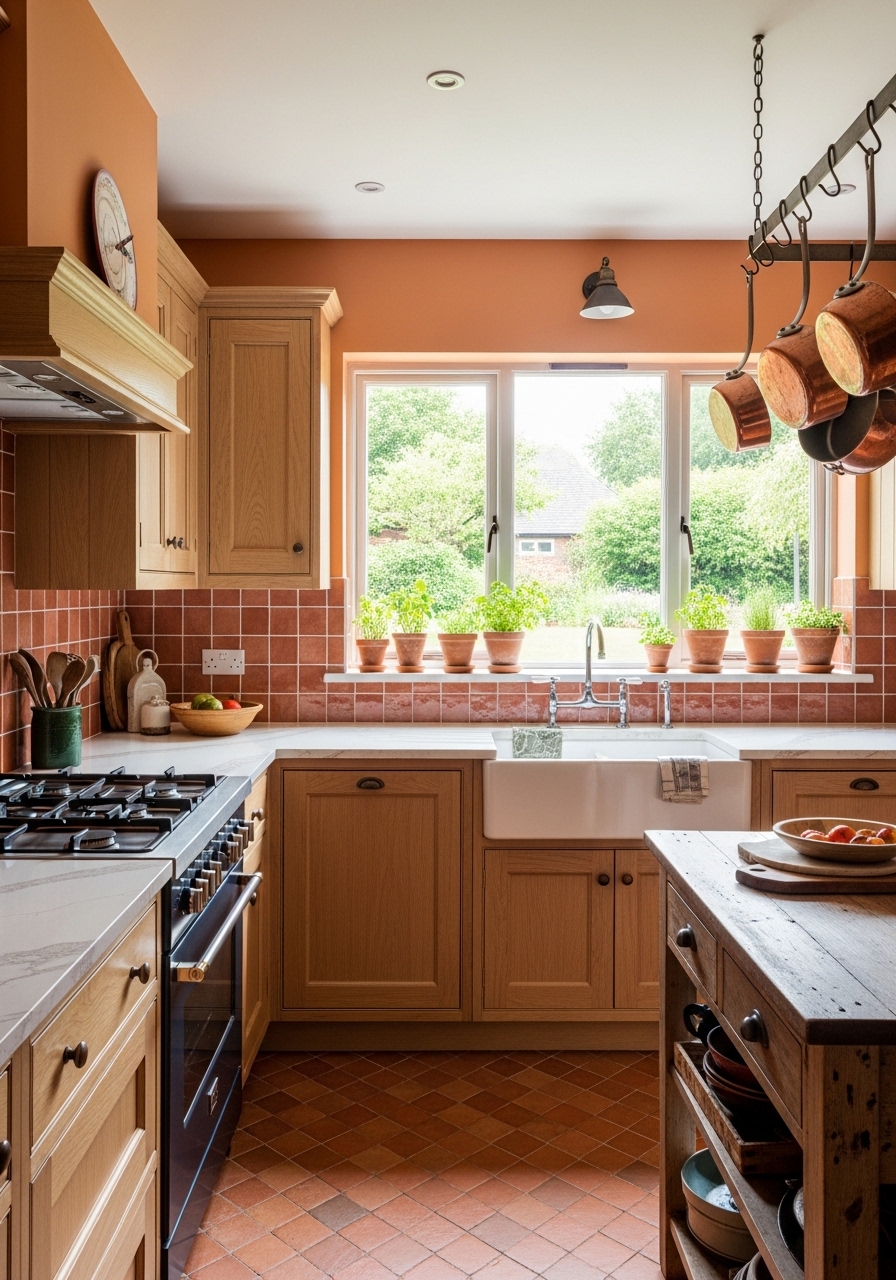
Infuse your home with Mediterranean warmth using terra cotta kitchen color schemes, a vibrant yet grounding choice for nature-inspired interiors. Ranging from soft peach to deep reddish-brown, this earthy palette creates an inviting, sun-baked atmosphere that pairs beautifully with cream, sage green, and deep navy accents. Incorporating terra cotta tiles or painted cabinetry adds artisanal charm, especially when complemented by copper fixtures and natural wood textures. This “baked earth” aesthetic bridges the gap between rustic tradition and modern organic style, providing a sophisticated backdrop for gatherings. Whether through hand-painted ceramics or bold accent walls, terra cotta transforms your kitchen into a cozy, high-energy sanctuary.
4. Rustic Wood Beam Kitchen Ceilings
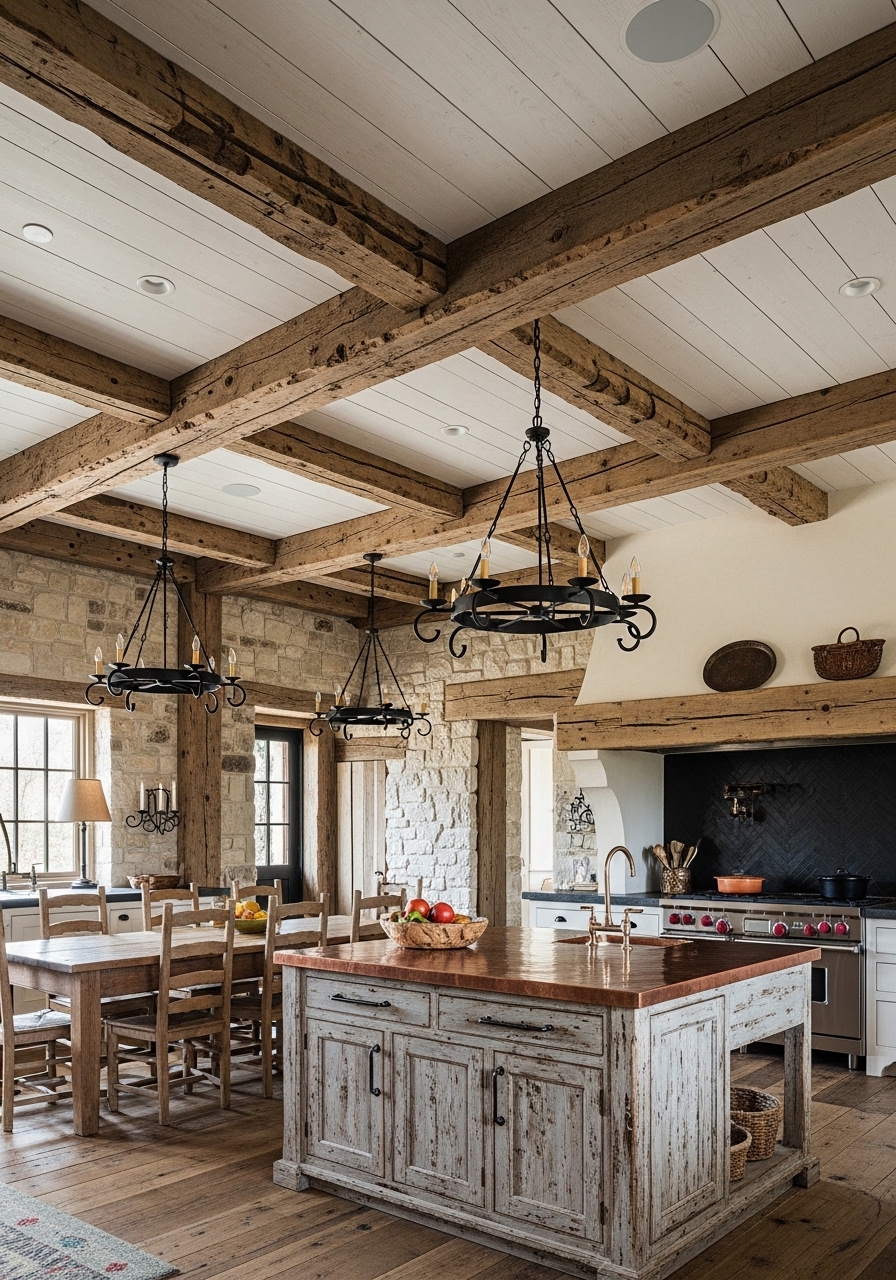
Add architectural grandeur to your home with rustic wood beam kitchen ceilings, a design feature that instantly elevates a space with dramatic texture and warmth. Whether using authentic reclaimed barn beams or stained new timber, exposed beams draw the eye upward, making high ceilings feel cozy and grounded. This rustic element provides a stunning natural contrast to painted cabinetry and modern finishes, bridging the gap between a cabin-like retreat and a sophisticated kitchen. By incorporating varying wood species and grain patterns, you can customize the aesthetic to fit a modern farmhouse or Mediterranean style. These structural accents not only add historic character but also serve as a timeless anchor for your kitchen’s organic design.
5. Stone Countertop Kitchen Islands
Elevate your kitchen’s functionality and style with a natural stone countertop kitchen island, the ultimate centerpiece for high-traffic entertaining and meal prep. Whether you choose the dramatic veining of marble, the rugged durability of granite, or the sophisticated depth of quartzite, each slab offers a one-of-a-kind organic pattern that manufactured surfaces can’t replicate. Incorporating a waterfall edge can modernize the look, allowing the stone’s natural beauty to flow seamlessly to the floor. These heat-resistant surfaces pair perfectly with wooden cabinetry, grounding your kitchen with an earthy, high-end feel. By choosing the right finish—from high-gloss polished to soft, matte honed—you can customize the formality and maintenance level to suit your lifestyle.
6. Woven Texture Kitchen Accessories
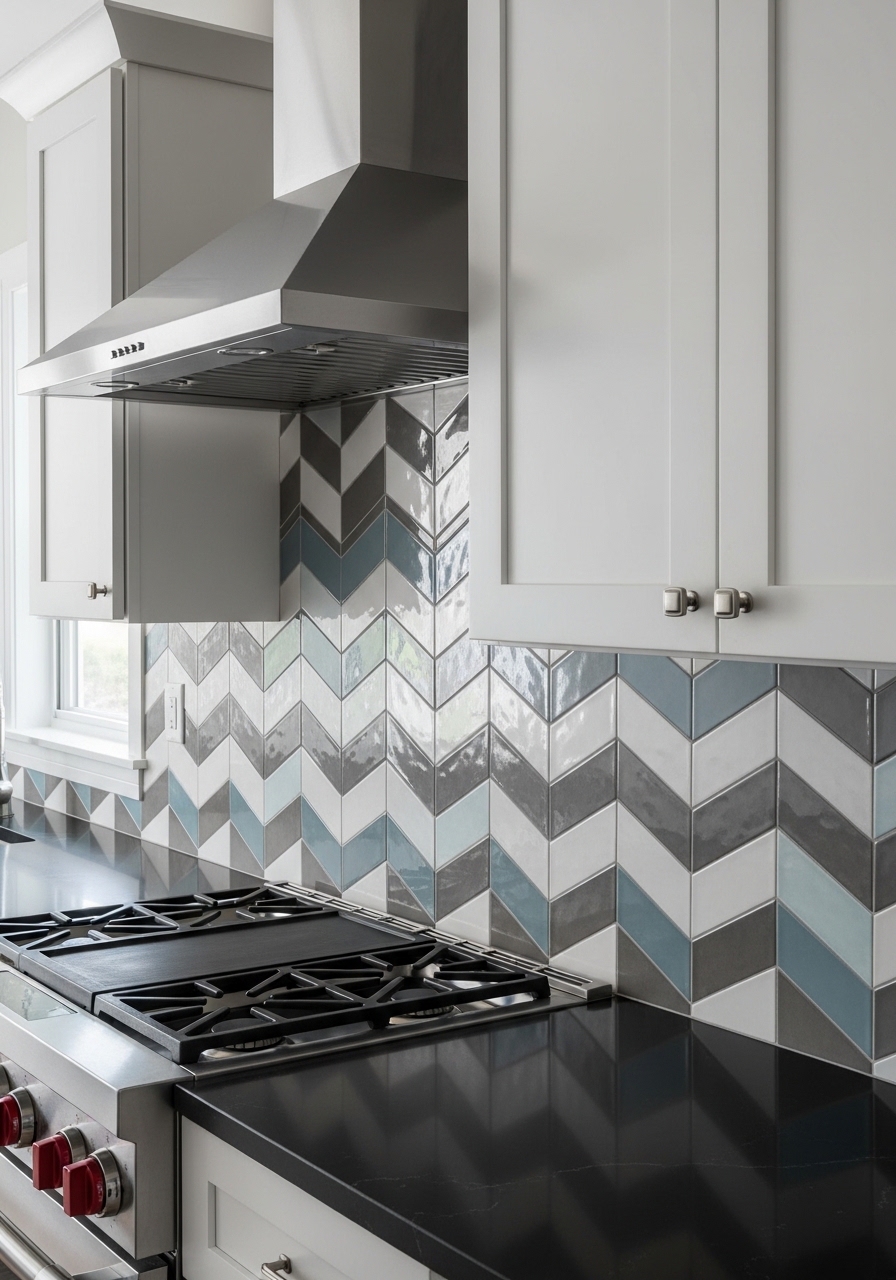
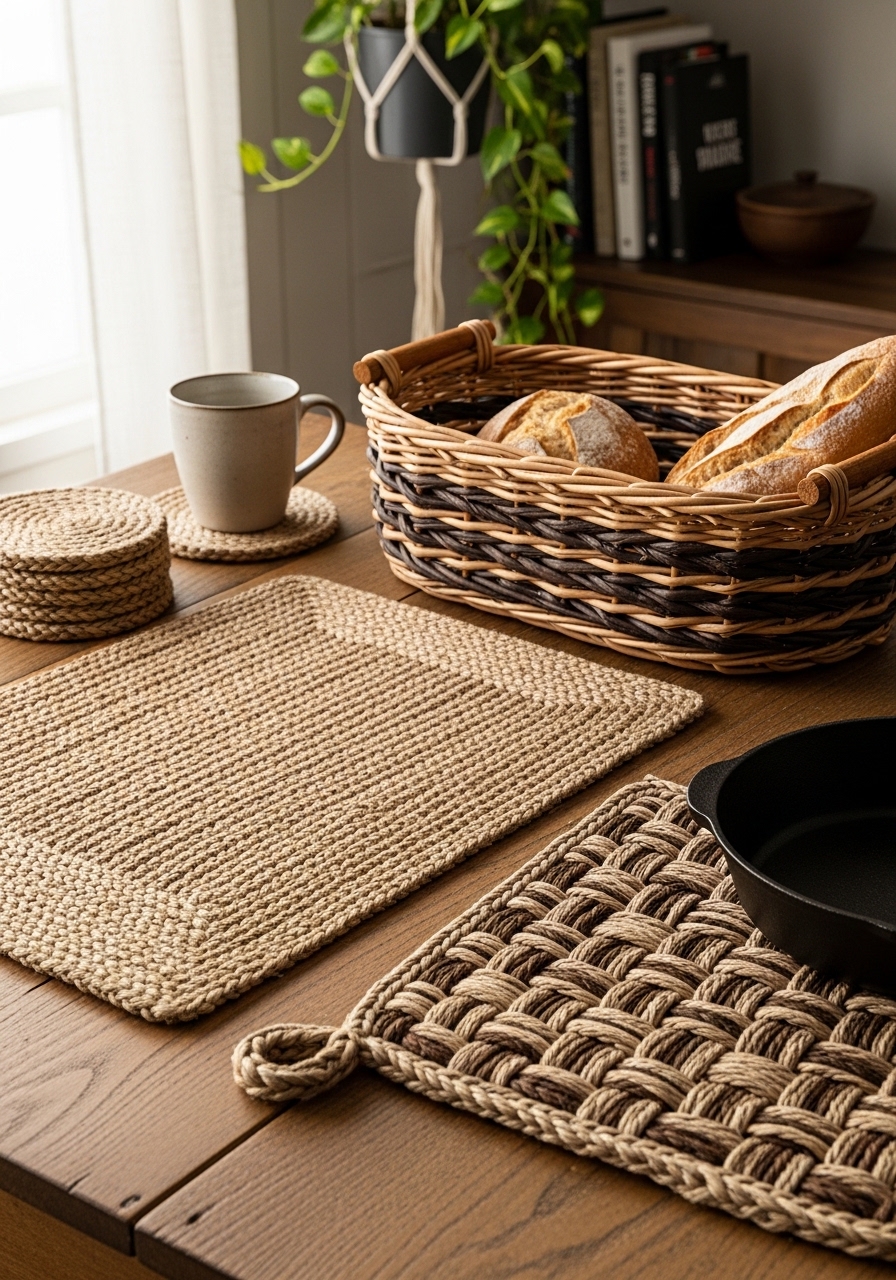
Bring organic softness to your kitchen with woven texture kitchen accessories, the perfect way to layer natural fibers like jute, rattan, and seagrass into your design. These materials introduce a tactile contrast to hard surfaces like stone and wood, offering both style and practical storage. From rattan pendant lights that cast a warm, ambient glow to durable jute rugs that provide comfort underfoot, woven elements are essential for farmhouse, boho, or coastal aesthetics. Utilizing seagrass baskets on open shelving keeps your space organized while reinforcing a nature-inspired kitchen theme. These versatile, eco-friendly accents allow you to refresh your kitchen’s look seasonally, adding a grounding, handmade feel that makes the room feel lived-in and inviting.
7. Live Edge Wood Kitchen Elements
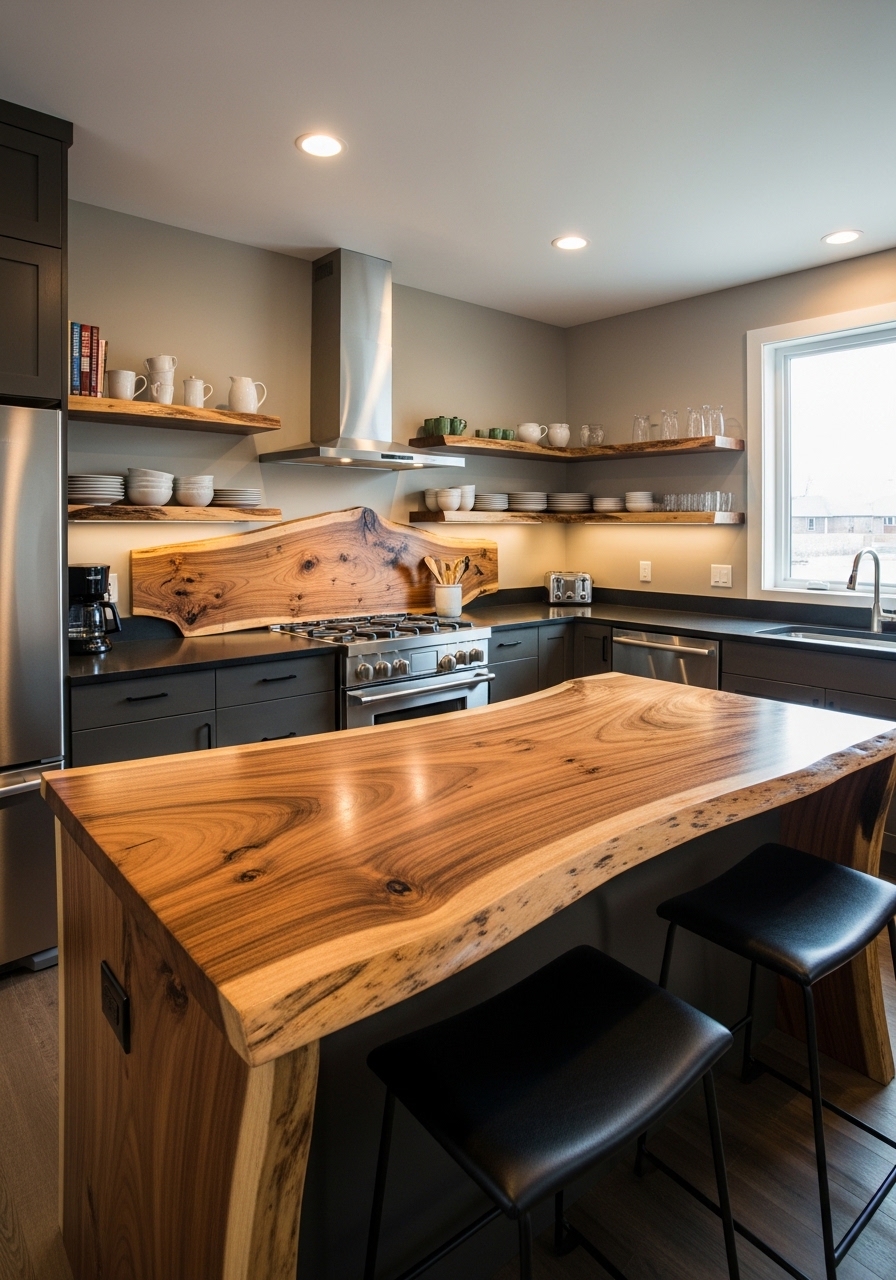
Capture nature’s raw artistry with live edge wood kitchen elements, a design choice that preserves the organic curves and bark edges of a tree’s trunk. Whether used for a dramatic kitchen island, floating shelves, or a custom breakfast bar, these one-of-a-kind pieces introduce a sculptural quality that manufactured cabinetry simply can’t match. From the deep, chocolate tones of black walnut to the airy warmth of maple, live edge wood softens the sharp angles of modern kitchens, creating a grounding connection to the outdoors. Professionally sealed to withstand moisture, these durable surfaces highlight unique grain patterns and knots, ensuring your kitchen features a functional masterpiece. This “forest-to-table” aesthetic bridges the gap between rugged rustic charm and sleek contemporary luxury.
8. Clay Tile Kitchen Flooring
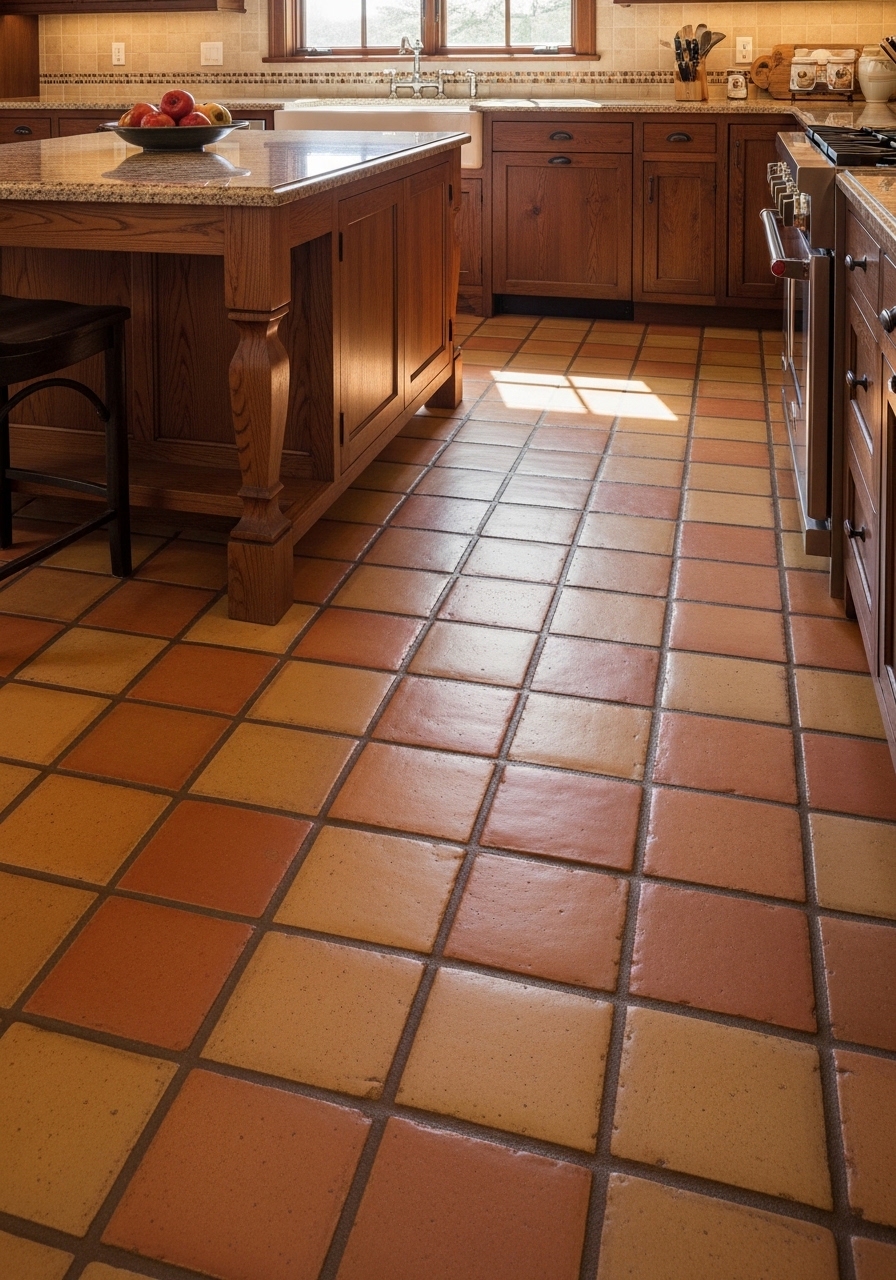
Ground your kitchen with the authentic, sun-baked charm of clay tile flooring, a durable and sustainable choice that brings organic warmth to any design. Whether you choose the rustic, hand-pushed texture of Saltillo, the classic appeal of terra cotta, or the rugged utility of quarry tiles, these materials offer natural color variations from soft ochre to deep burnt sienna. The inherent thermal mass of clay helps regulate room temperature, providing a comfortable, cool surface in summer and retaining heat in winter. These tiles develop a beautiful natural patina over time, enhancing their historic character while pairing seamlessly with wooden cabinetry and stone accents. From sophisticated herringbone patterns to traditional square layouts, clay tiles offer a slip-resistant, eco-friendly foundation that defines the “heart of the home” with a grounded, Mediterranean-inspired aesthetic.
9. Copper Accent Kitchen Features
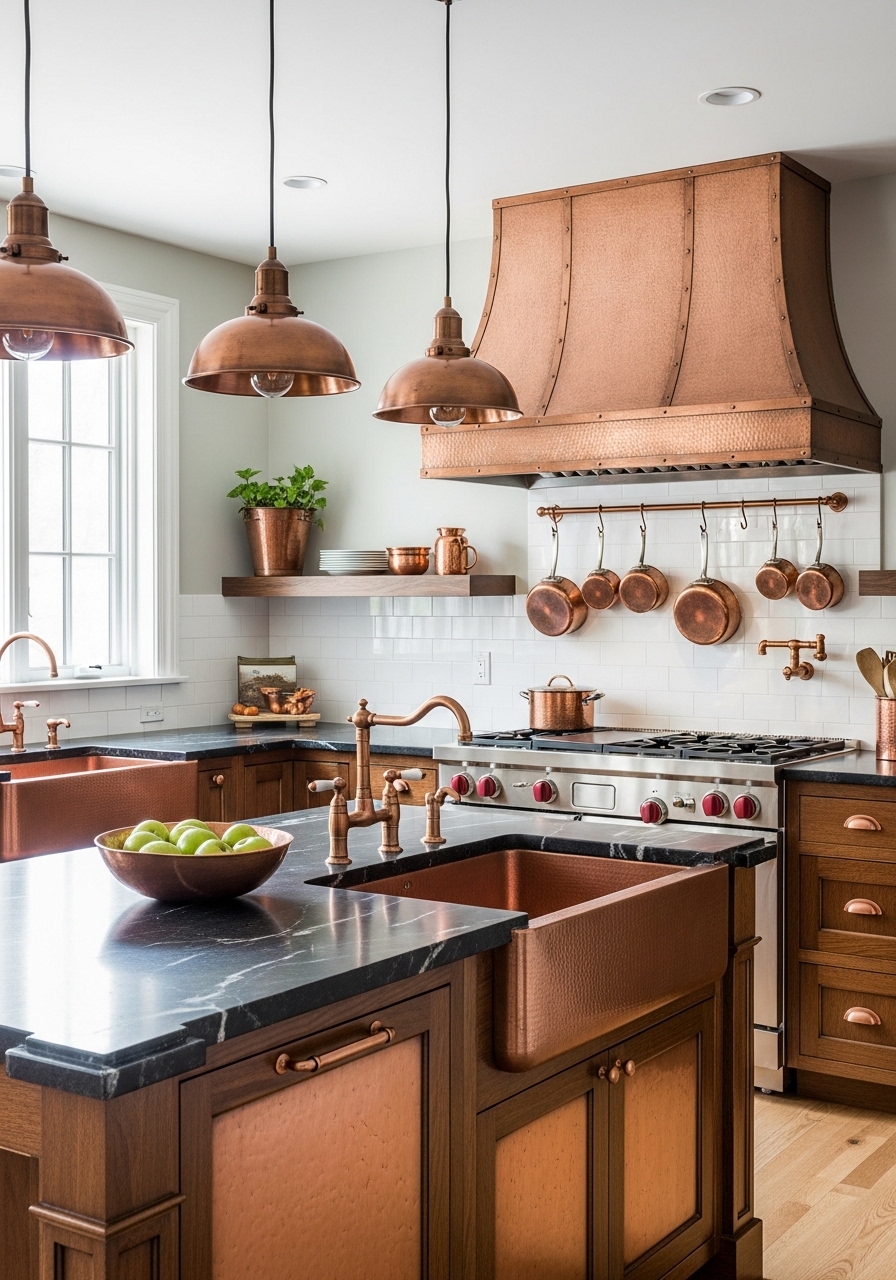
Introduce a touch of timeless warmth with copper kitchen accents, a versatile design choice that adds a glowing, metallic contrast to earthy interiors. From hand-hammered copper sinks that serve as an artisanal focal point to sleek copper hood vents, this metal infuses spaces with “old-world” charm and modern sophistication. Copper is naturally antimicrobial, making it a hygienic choice for high-touch surfaces like faucets and cabinet pulls. Its unique ability to develop a rich living patina adds a layer of storied character that complements reclaimed wood and natural stone perfectly. Whether polished for contemporary flair or aged for a rustic feel, copper reflects light beautifully, enhancing the cozy, grounded atmosphere of a nature-inspired kitchen.
10. Herb Garden Kitchen Windows
Bring the outdoors in with herb garden kitchen windows, a functional design feature that creates a living connection to nature while keeping fresh ingredients within reach. Positioned in natural light, these “culinary windows” allow herbs like basil, rosemary, and thyme to thrive, adding vibrant greenery and pleasant aromas to your cooking space. Whether you use terracotta pots for a Mediterranean feel or wooden planters for a rustic touch, window gardens provide a soft, organic contrast against neutral kitchen backgrounds. Utilizing tiered plant stands or hanging containers maximizes growing space, turning a simple window into an attractive focal point. Regular harvesting not only enhances your culinary experience but also promotes healthy plant growth, making your kitchen a true sanctuary for sustainable, farm-to-table living.
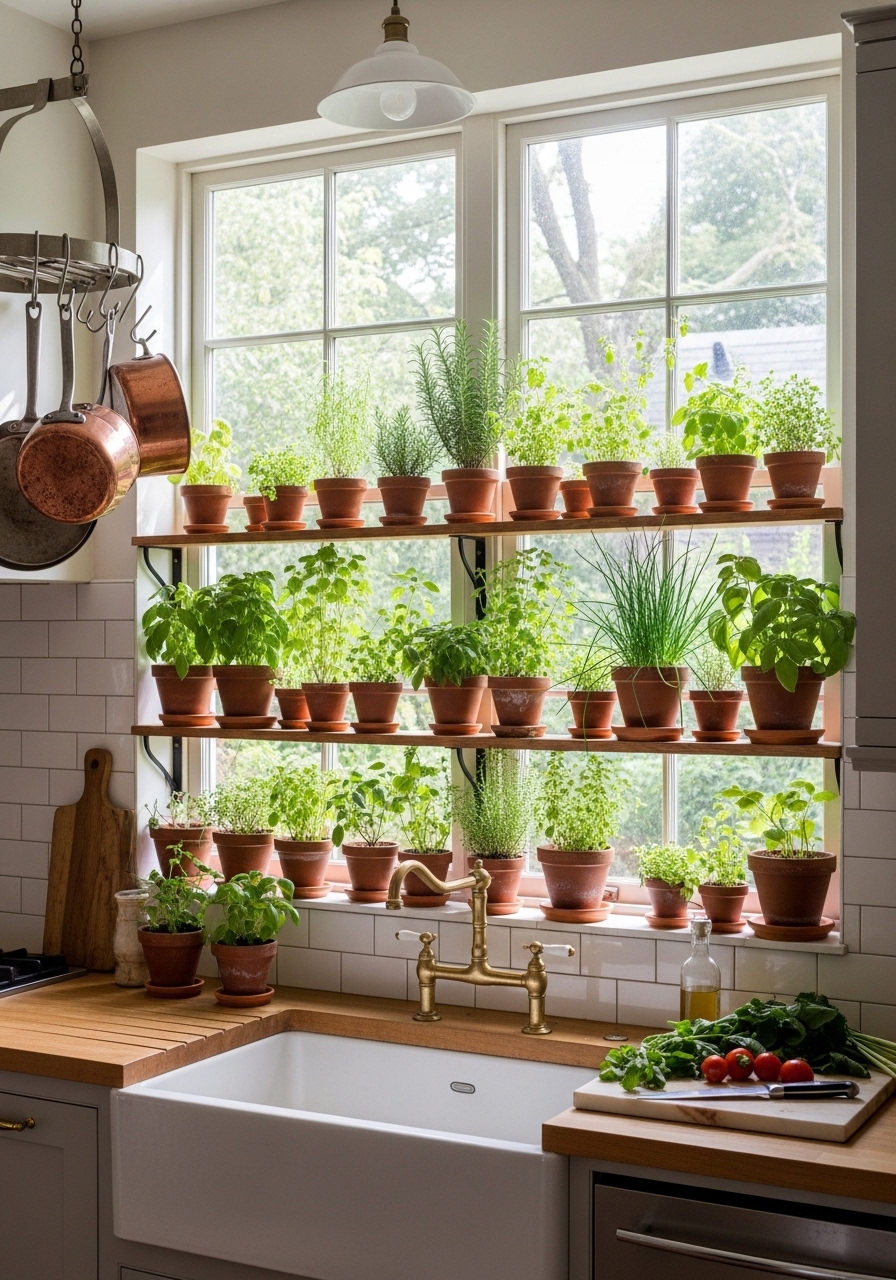
11. Limestone Kitchen Surfaces
Elevate your kitchen with the subtle elegance of limestone surfaces, a sedimentary stone that offers a soft, neutral palette ranging from creamy whites to warm beiges. Known for its organic sophistication, limestone provides a unique tactile experience with its natural porosity and soft texture, making it a favorite for earthy kitchen designs. Whether you choose a tumbled finish for a rustic, lived-in feel or a honed surface for modern refinement, this stone ages gracefully, developing a unique character over time. Perfectly paired with wooden cabinetry and warm metallic accents, limestone serves as a versatile, light-reflecting backdrop. When professionally sealed, these durable surfaces provide a timeless, high-end foundation that bridges the gap between traditional charm and contemporary minimalism.
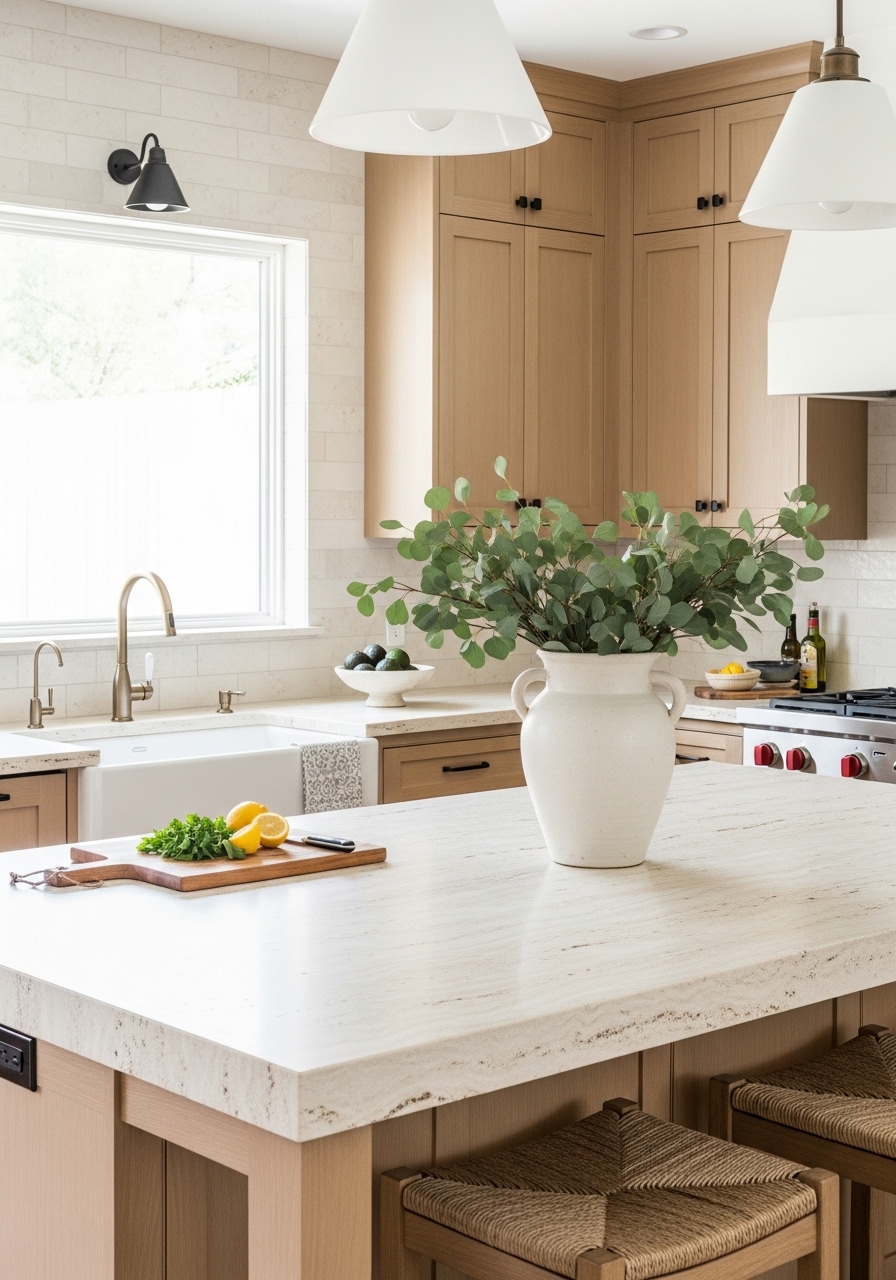
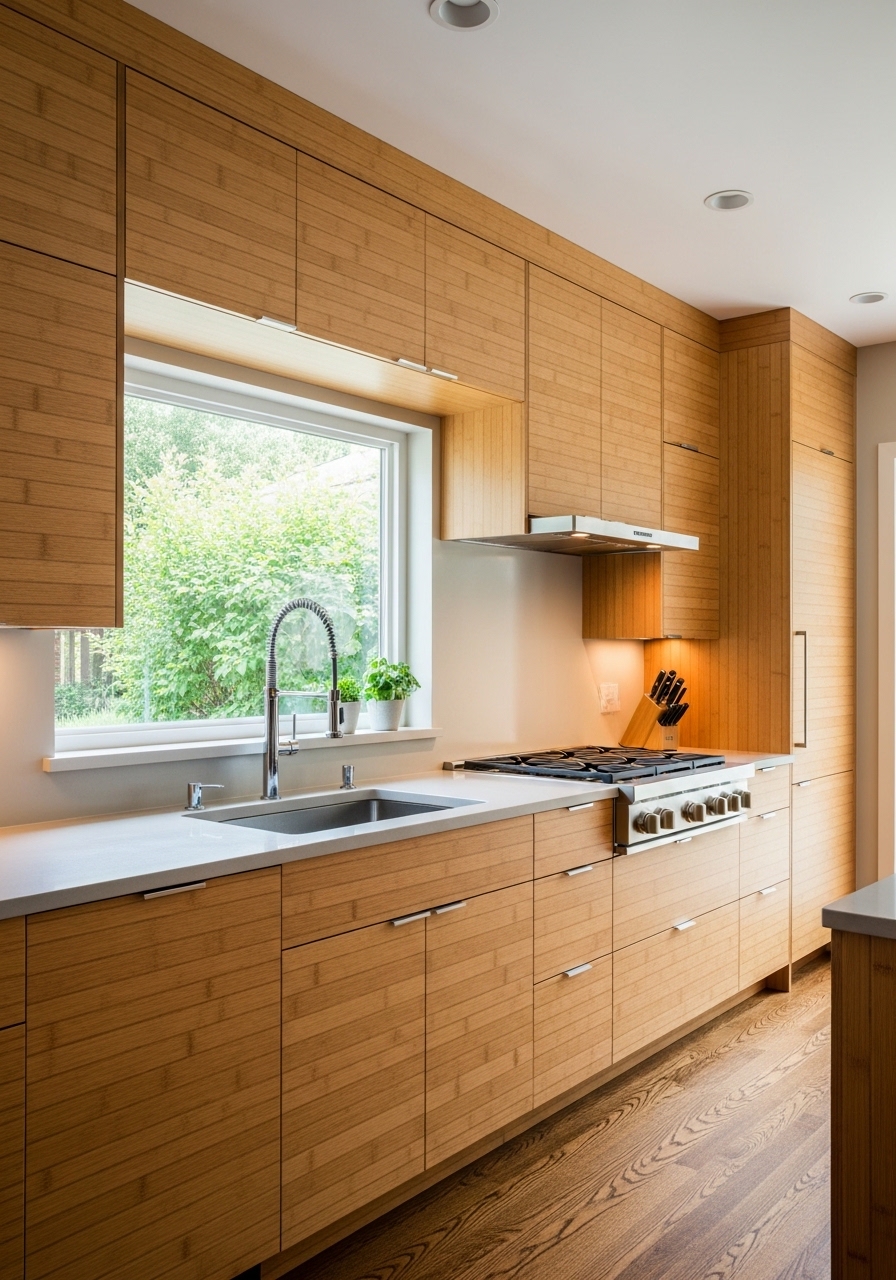
12. Bamboo Kitchen Cabinetry
Embrace eco-friendly luxury with sustainable bamboo cabinetry, a rapidly renewable resource that combines modern durability with distinctive natural beauty. Bamboo’s quick growth cycle makes it an environmentally conscious alternative to traditional hardwoods, offering a strength that stands up to daily kitchen use. Available in shades ranging from natural blonde to rich caramelized tones, its fine grain adds a sleek, organic character to contemporary and transitional designs. Beyond its aesthetic appeal, bamboo possesses natural antimicrobial properties, making it a practical choice for a clean cooking environment. Whether you prefer solid boards or engineered panels, bamboo cabinetry aligns perfectly with sustainable living practices while providing a warm, functional foundation for your nature-inspired home.
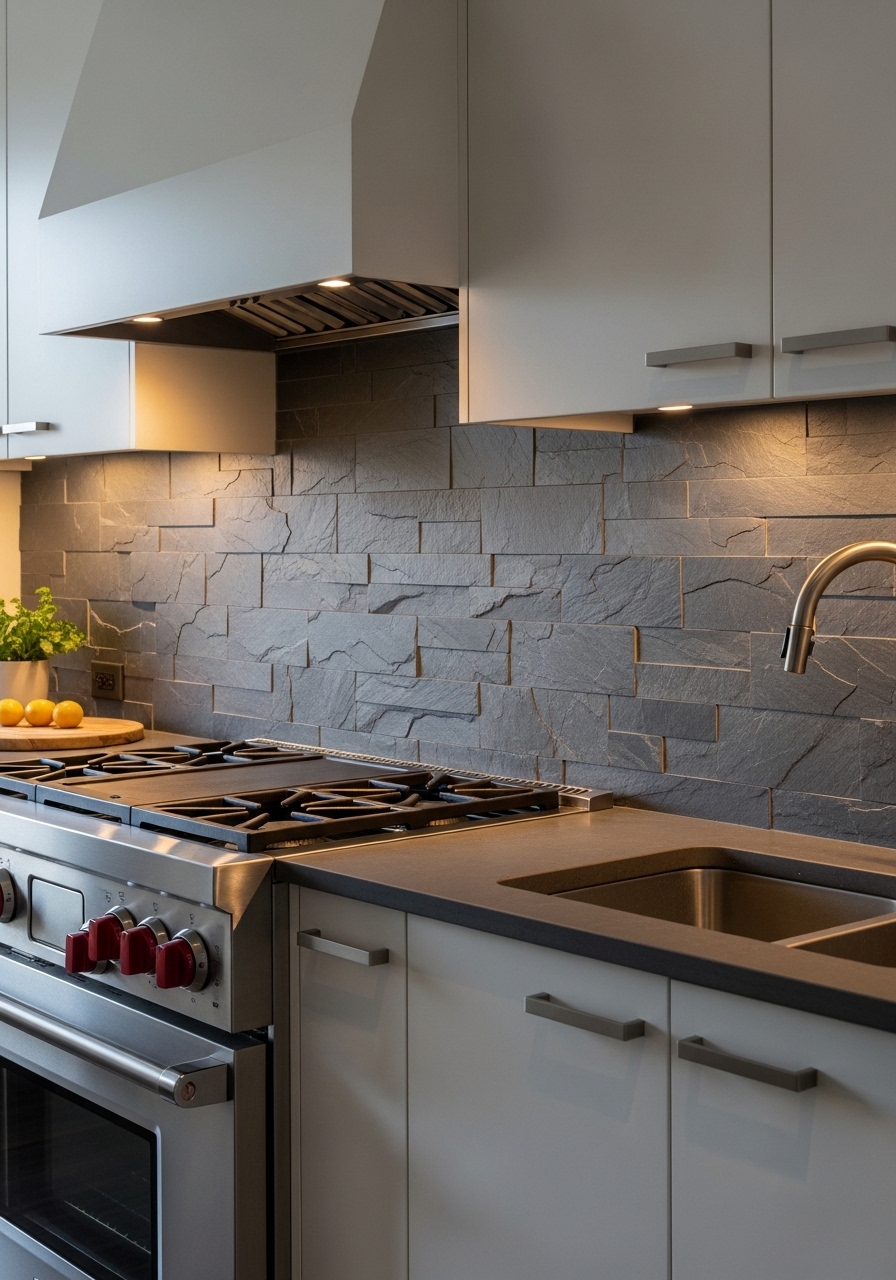
13. Slate Kitchen Backsplashes
Design a dramatic and sophisticated focal point with a natural slate kitchen backsplash, offering rich textures and deep, moody earth tones. Slate’s unique natural cleavage creates a layered, tactile surface that manufactured tiles cannot replicate, while its inherent heat resistance makes it ideal for the high-temperature zone behind your range. With a color palette spanning from charcoal gray to rustic copper and forest green, slate effortlessly complements both warm wood cabinetry and modern stainless steel appliances. Its dense, low-porosity nature makes it naturally resistant to water and steam, and when properly sealed, it provides a durable, easy-to-clean barrier against cooking splatters. Whether you choose a rugged natural cleft finish for a farmhouse look or a smooth honed surface for contemporary elegance, slate brings an authentic, enduring beauty to any earthy kitchen design.
14. Travertine Kitchen Floors
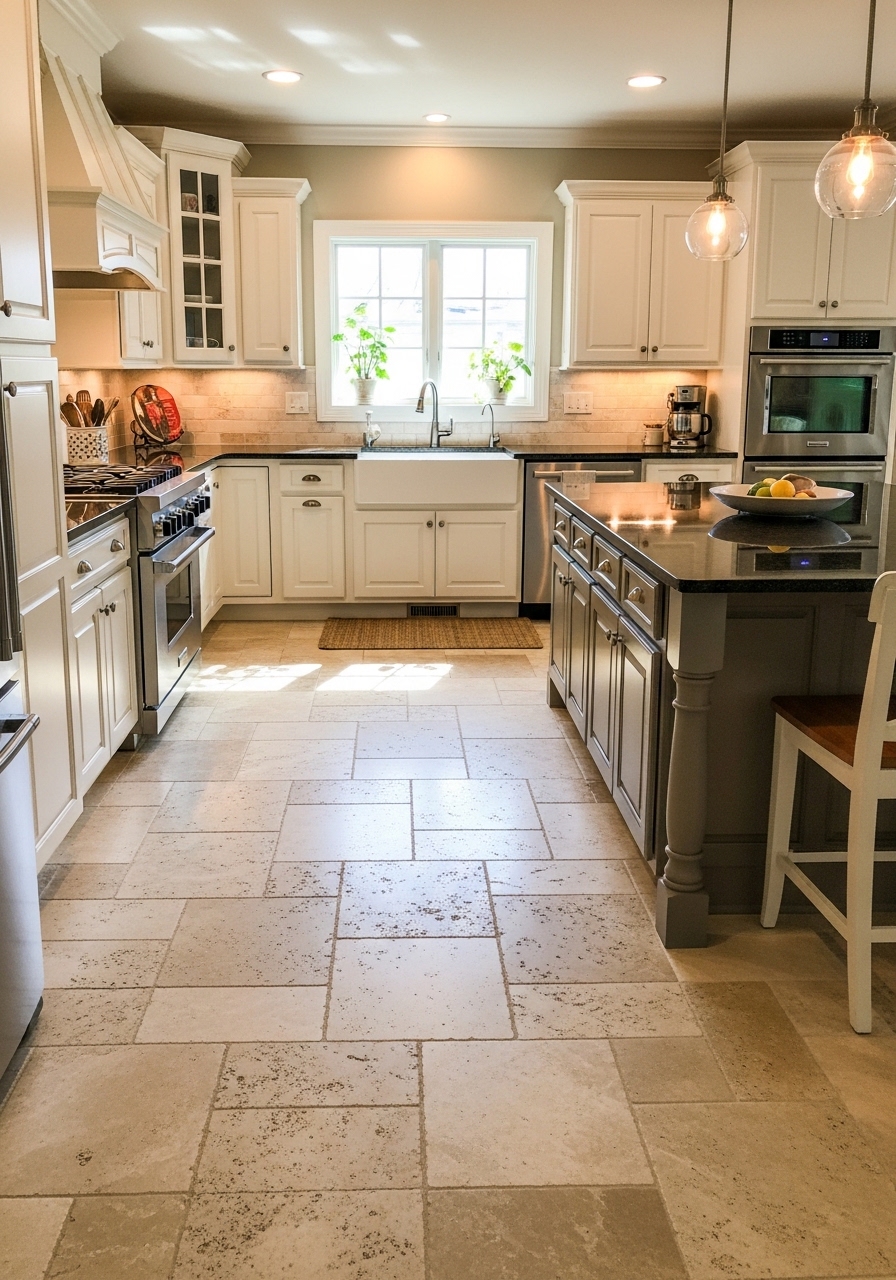
Create a luxurious foundation with travertine kitchen flooring, a limestone variety prized for its soft, fibrous texture and timeless Mediterranean appeal. Each tile features unique pitting and tonal variations—ranging from creamy ivory to rich walnut—that add immediate organic character to your home. In 2026, designers are favoring large-format travertine slabs and herringbone patterns to reduce grout lines and create a seamless, expansive feel. While naturally porous, travertine is incredibly durable and offers excellent thermal regulation, staying comfortably cool in summer and retaining heat well with underfloor heating. Whether you choose a tumbled finish for rustic charm or a honed matte surface for modern organic elegance, this stone provides a slip-resistant, eco-friendly surface that ages gracefully, developing a storied patina that enhances your kitchen’s value and warmth.
15. Cedar Kitchen Elements
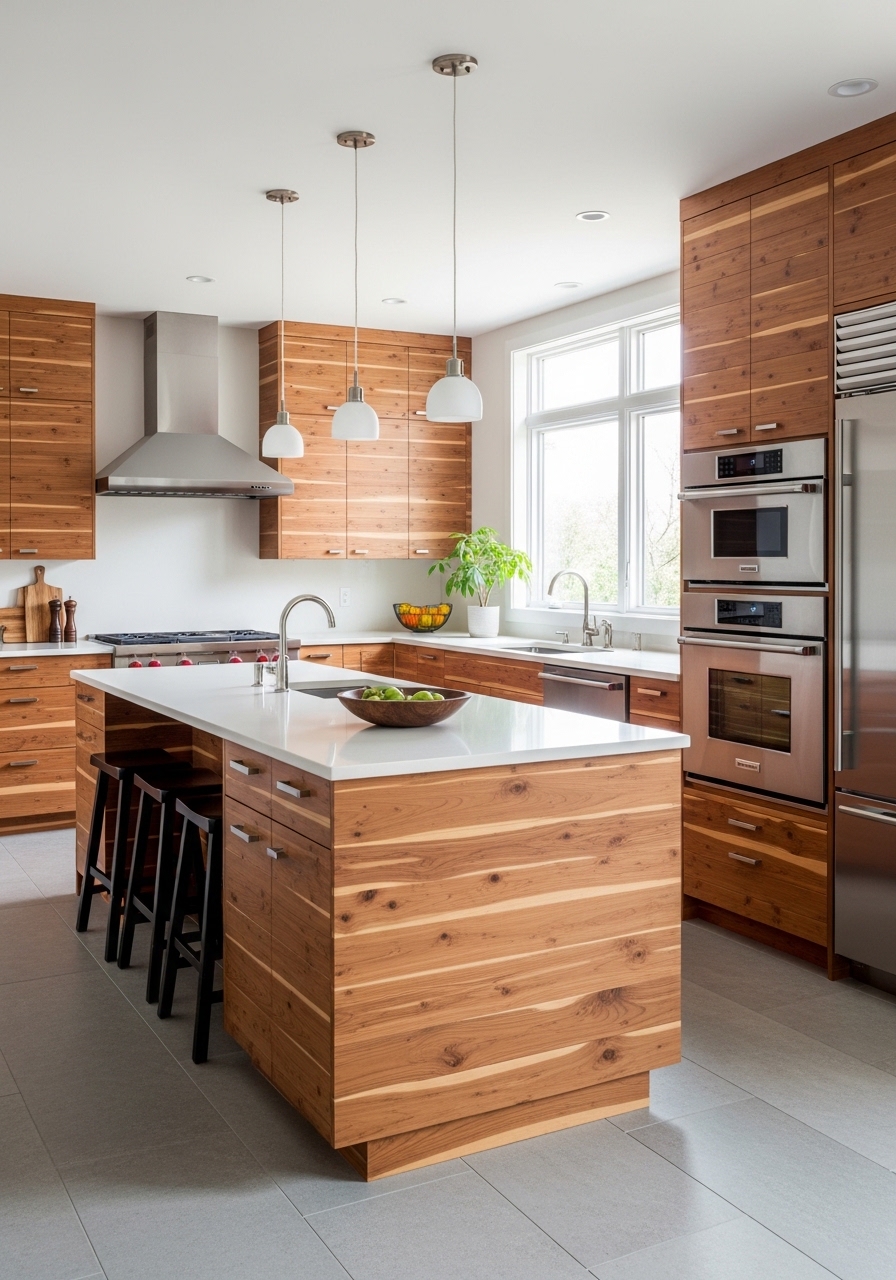
Incorporate aromatic cedar kitchen elements to infuse your space with natural insect resistance and a rich, “forest-fresh” fragrance. Cedar’s high concentration of natural oils—specifically thujone—acts as a non-toxic deterrent against pests like moths and silverfish, making it a functional choice for custom pantries and storage zones. In 2026, designers are moving beyond pale woods toward the deeper, reddish-brown tones of Western Red Cedar, which perfectly complements the year’s trend of moody, grain-forward interiors. Whether used as open shelving, decorative ceiling paneling, or as a contrasting island base, cedar’s distinctive grain adds an artisanal, “cabin-luxe” feel. Its inherent moisture resistance makes it exceptionally durable in humid kitchen environments, while its ability to develop a soft, silvery patina over time offers a timeless connection to the outdoors.
16. River Rock Kitchen Features
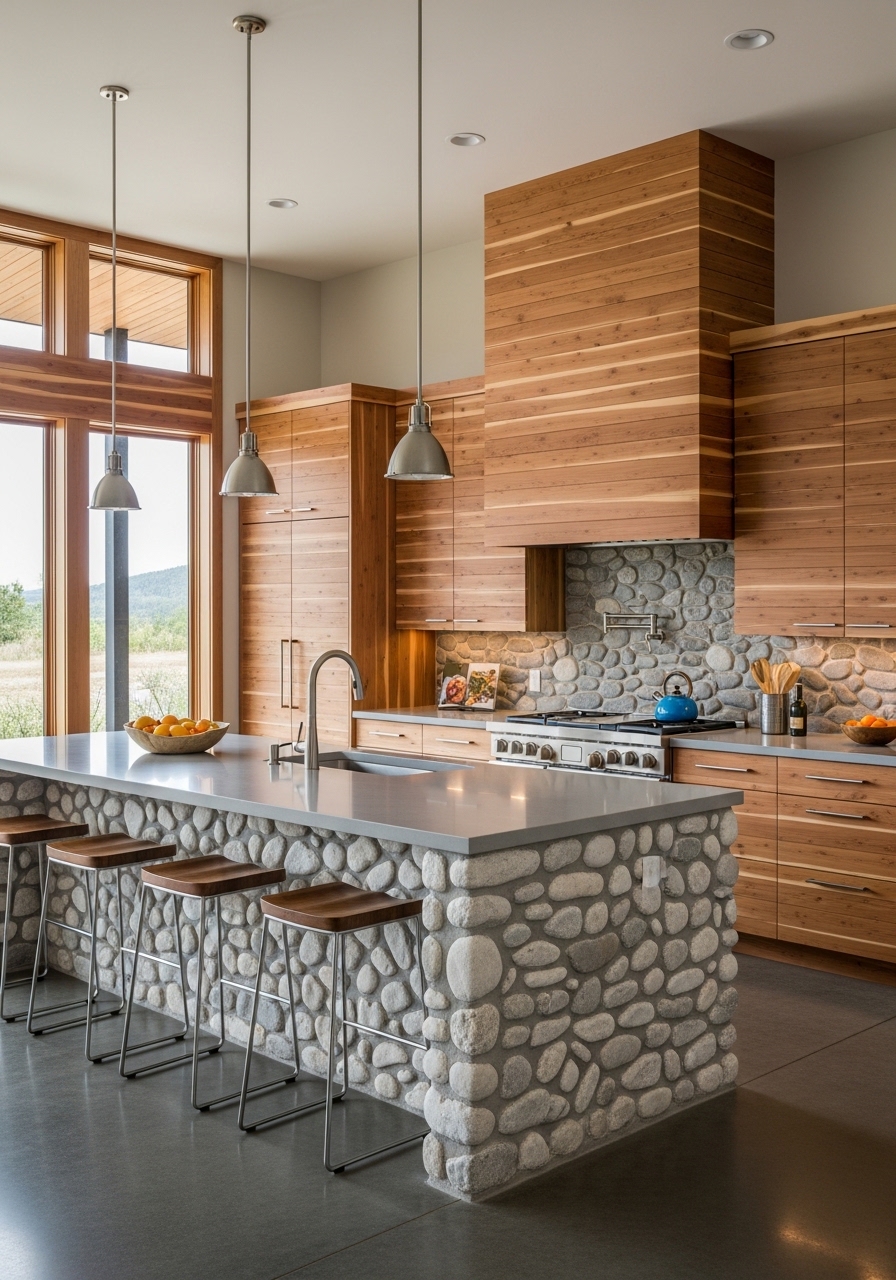
Add organic texture and a tranquil, water-worn beauty to your home with river rock kitchen features, a design element that celebrates the tactile appeal of natural stone. These smooth, rounded stones offer gentle curves and a diverse palette of earth tones—from cool slate grays to warm ochres—creating a sophisticated connection to the outdoors. In 2026, designers are using river rock for tactile backsplashes and accent walls to soften the sharp, industrial lines of modern appliances. Whether installed as a flat, polished mosaic for easy cleaning or left in a three-dimensional “stacked” arrangement for maximum visual depth, river rock pairs perfectly with reclaimed wood and matte black fixtures. Each installation is a unique work of art, providing a grounding, Zen-like atmosphere that transforms your kitchen into a soothing natural retreat.
17. Cork Kitchen Flooring
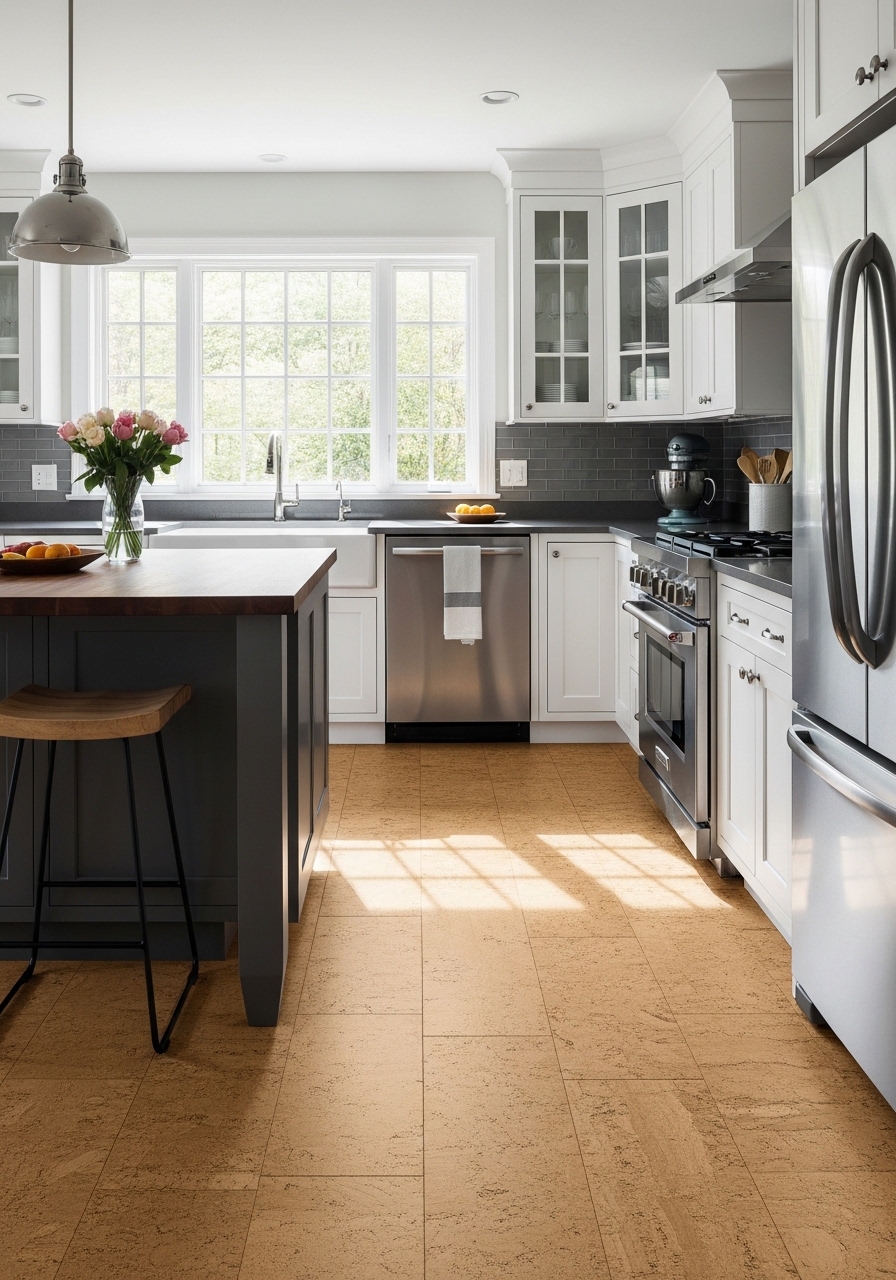
Select sustainable cork kitchen flooring for a high-performance foundation that balances eco-consciousness with unparalleled comfort. In 2026, cork has surged in popularity as a “wellness material” due to its honeycomb cellular structure, which provides natural shock absorption to reduce fatigue during long cooking sessions. This renewable bark-based flooring is naturally antimicrobial and hypoallergenic, containing suberin to resist mold, mildew, and pests without chemical treatments. Cork also acts as an exceptional thermal and acoustic insulator, keeping your kitchen quiet and warm underfoot even in winter. Available in a spectrum of 2026-trending tones—from airy natural honey to deep, saturated chestnut stains—cork offers a tactile, matte finish that grounds modern organic and Mediterranean designs while supporting superior indoor air quality.
18. Soapstone Kitchen Counters
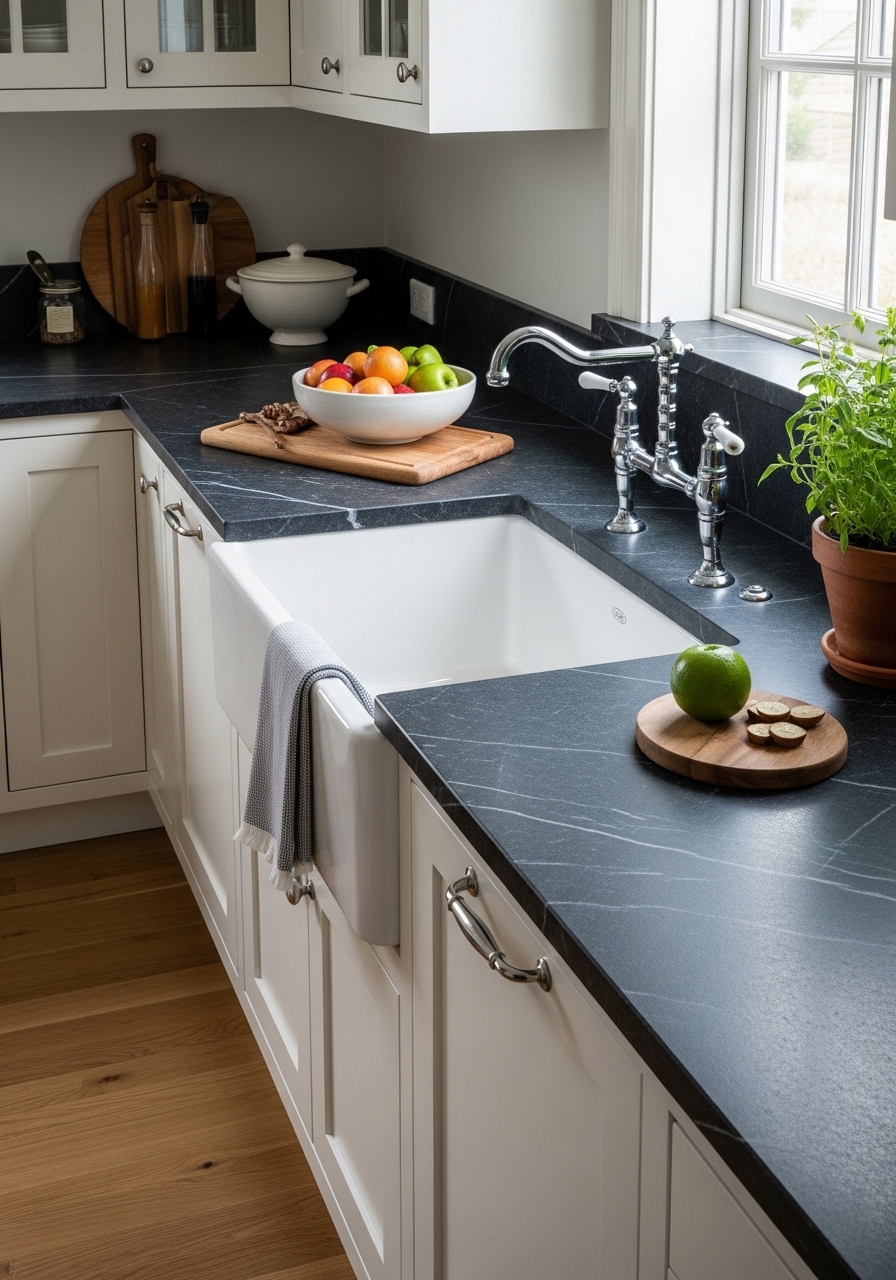
Select timeless soapstone countertops for a sophisticated, matte finish that brings “lived-in” luxury and organic character to your kitchen. In 2026, soapstone has surged in popularity as homeowners move away from glossy synthetics toward materials that age with integrity. This metamorphic rock is naturally non-porous and heat-resistant, allowing you to place hot pans directly on the surface without fear of cracking or staining. Unlike marble, soapstone resists acids like lemon and wine, making it a dream for high-use “chef’s kitchens.” Its unique ability to develop a deep, moody natural patina over time—or instantly with mineral oil—pairs beautifully with 2026’s trending brass hardware and rich wood cabinetry. Whether featuring subtle veining or solid charcoal tones, soapstone offers a velvety, tactile warmth that anchors any earthy kitchen design.
19. Natural Fiber Kitchen Textiles
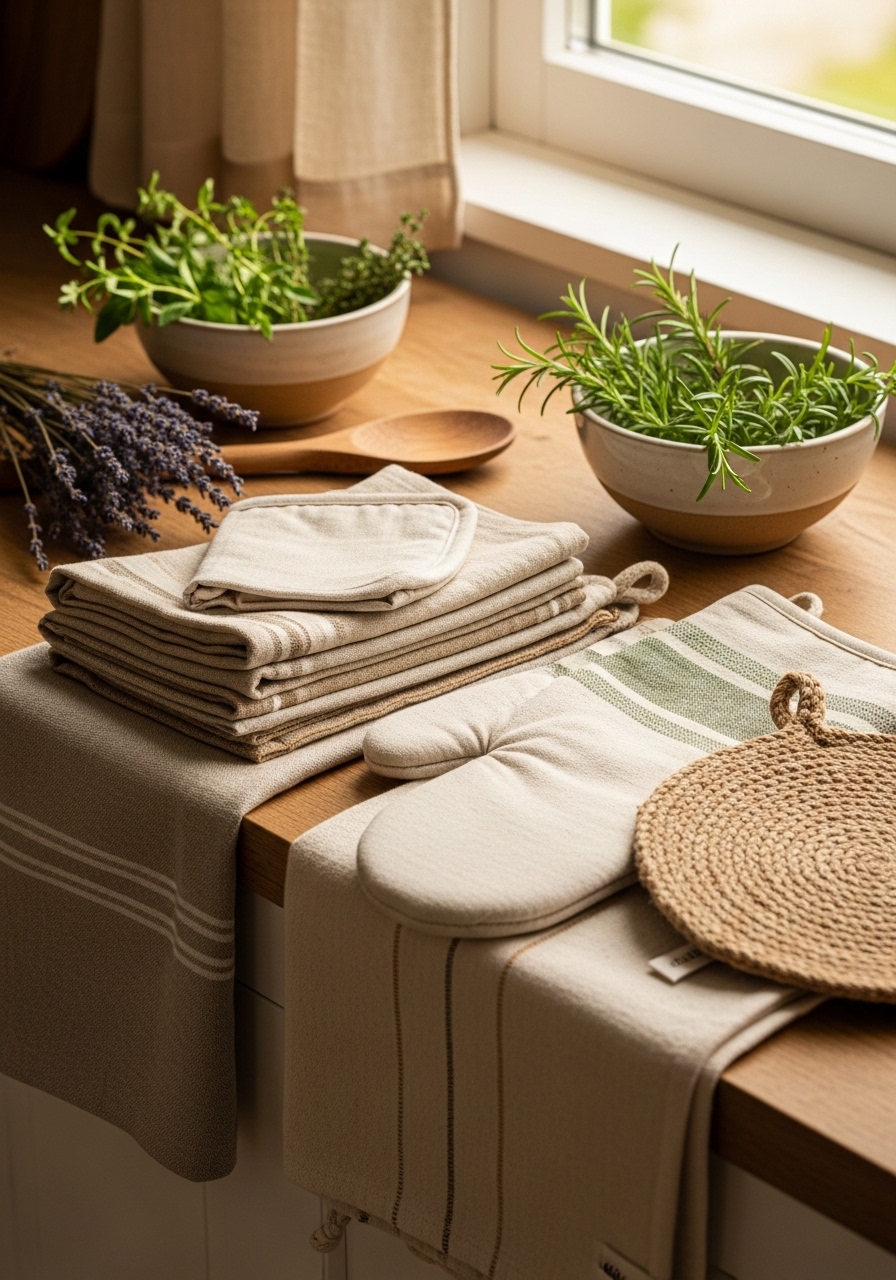
Integrate natural fiber kitchen textiles into your home to soften the hard surfaces of stone and wood with a tactile, eco-friendly layer of comfort. In 2026, the shift toward “slow living” has popularized organic materials like stonewashed linen, raw cotton, and durable hemp for everything from café curtains to floor runners. These breathable fibers are inherently biodegradable and develop a beautiful, lived-in character with every wash. Whether you choose the nubby texture of a hand-loomed hemp dishcloth or the airy elegance of flax linen window treatments, these textiles provide a sophisticated neutral backdrop that complements any earthy palette. By opting for undyed or plant-stained fabrics, you reduce your home’s chemical footprint while introducing a layer of artisanal warmth that makes your kitchen feel curated and grounded.
20. Rustic Iron Kitchen Hardware
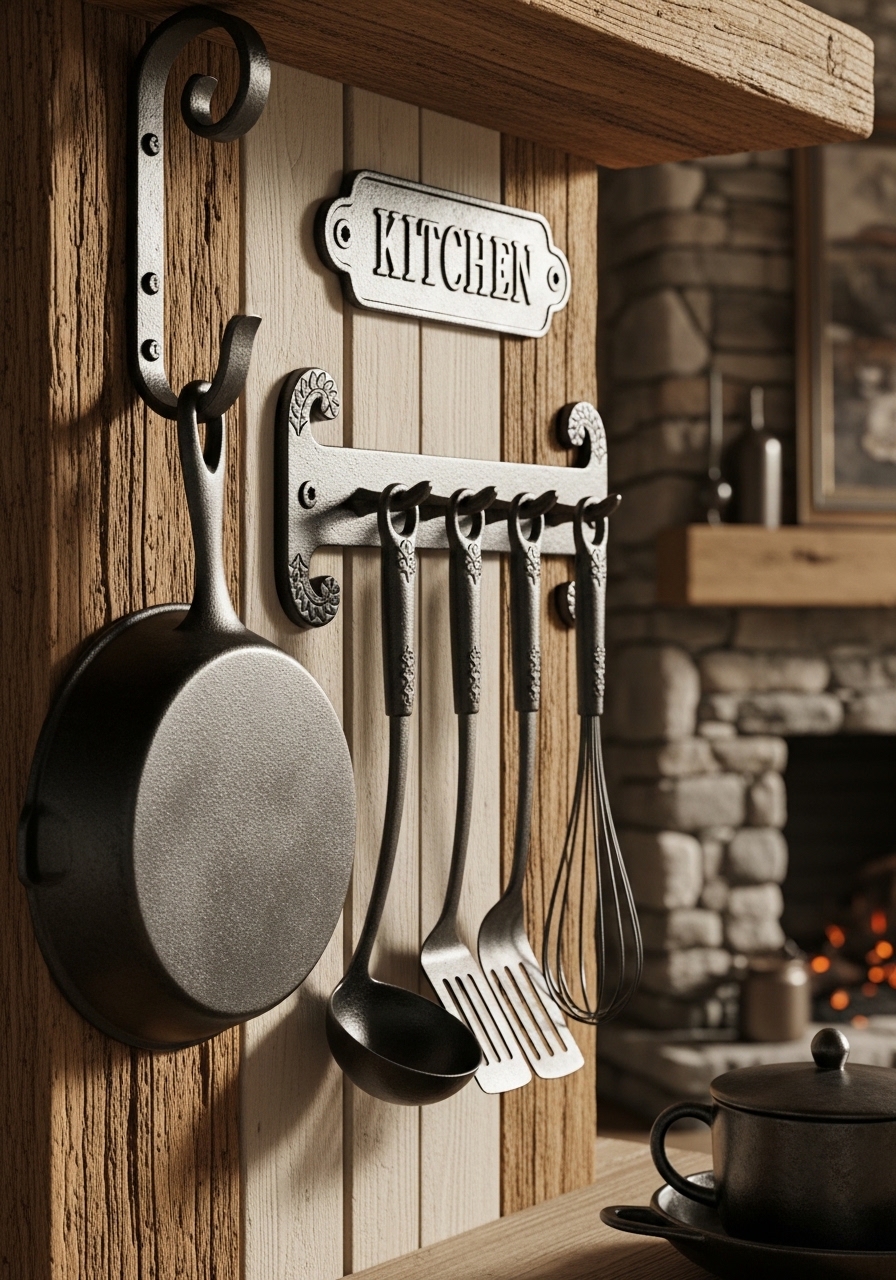
Complete your earthy kitchen design with rustic iron hardware, a material that provides authentic texture and timeless durability. In 2026, designers are moving away from mass-produced metals toward hand-forged wrought iron, valued for its unique artisanal “hammer marks” and weight. This hardware naturally develops a rich living patina over time, though it is also available in matte black for a bold, contemporary contrast against light wood or sage cabinetry. Whether you choose traditional spear-point pulls or minimalist T-bar knobs, iron hardware is the “jewelry” of the kitchen, offering a tactile connection to old-world craftsmanship while being strong enough to last for generations.
21. Quartzite Kitchen Surfaces
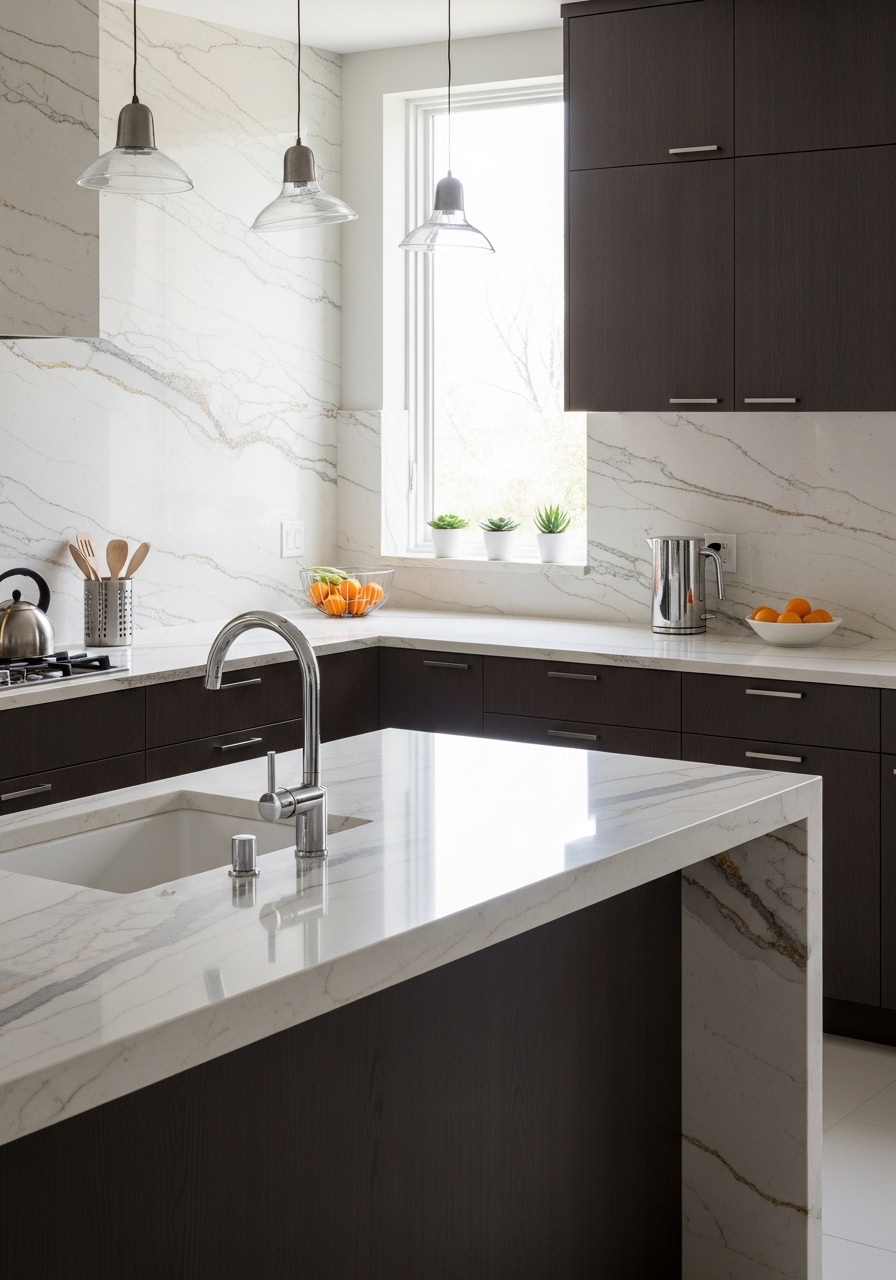
Incorporate luxurious quartzite kitchen surfaces for a high-performance foundation that blends the ethereal beauty of marble with the rugged strength of granite. As a natural metamorphic rock, quartzite offers a level of heat and scratch resistance that outshines engineered alternatives, making it the premier choice for 2026’s high-traffic “chef’s islands.” Each slab is a geological masterpiece, featuring crystalline depth and “watercolor” veining that cannot be replicated. While white remains a staple, 2026 trends are shifting toward specialty character slabs—think deep forest greens, desert golds, and even moody blues. When finished with a modern leathered or honed texture, quartzite provides a tactile, matte elegance that hides fingerprints and reflects the sophisticated, organic spirit of a nature-inspired kitchen.
22. Adobe Style Kitchen Elements
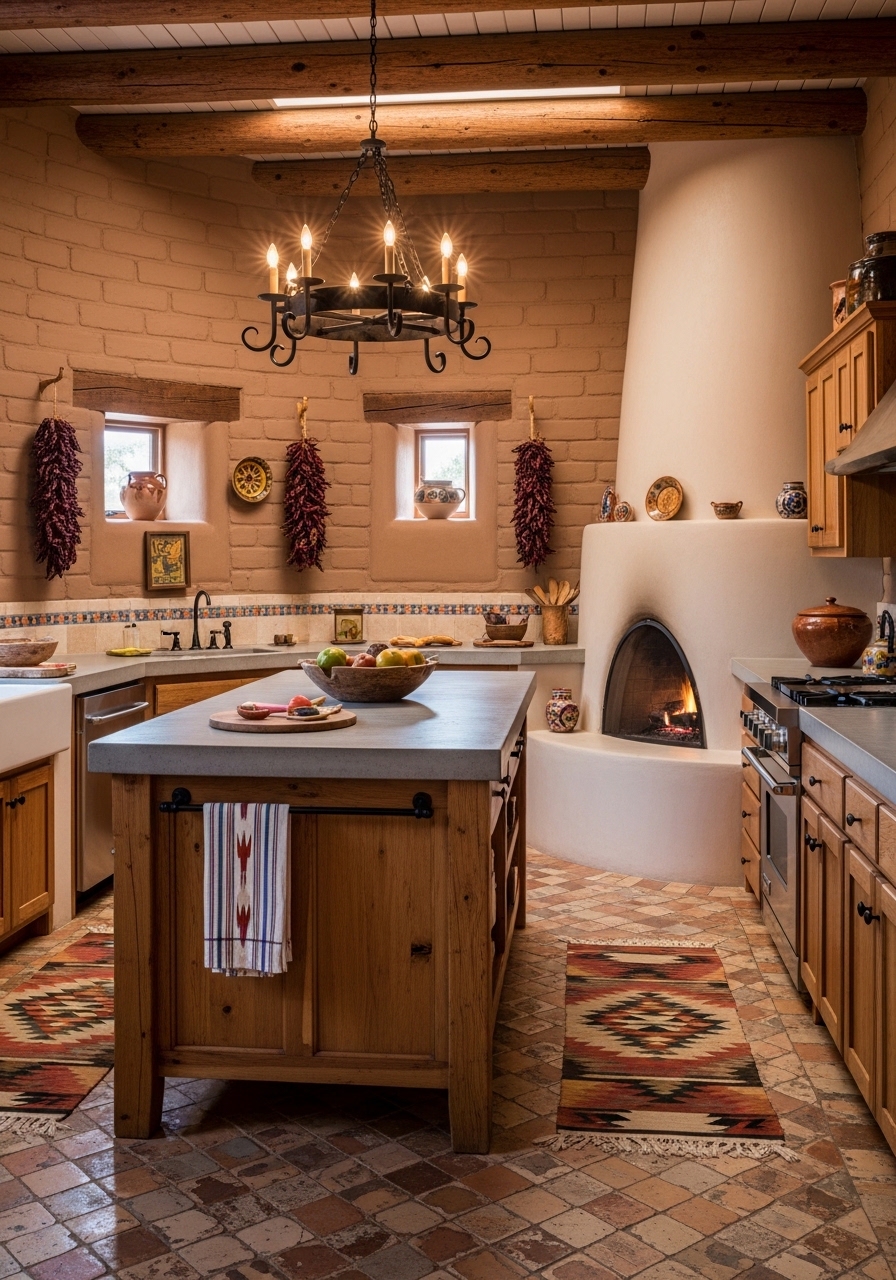
Create southwestern warmth with adobe-style kitchen elements, a design trend that is seeing a major resurgence in 2026 as homeowners embrace “sensorial minimalism.” Defined by thick, sun-baked walls and soft, organic curves, adobe-inspired architecture replaces sharp angles with hand-plastered surfaces that absorb light beautifully. These elements provide significant thermal mass, helping to naturally regulate your kitchen’s temperature while creating a grounding, sanctuary-like atmosphere. In 2026, designers are pairing traditional earth-toned lime washes—in shades of terracotta, sand, and mushroom—with modern recessed niches and integrated banquettes. By blending these ancient earthen construction methods with high-end appliances, you can achieve a “modern desert” aesthetic that feels both primitive and profoundly sophisticated.
23. Pebble Kitchen Flooring
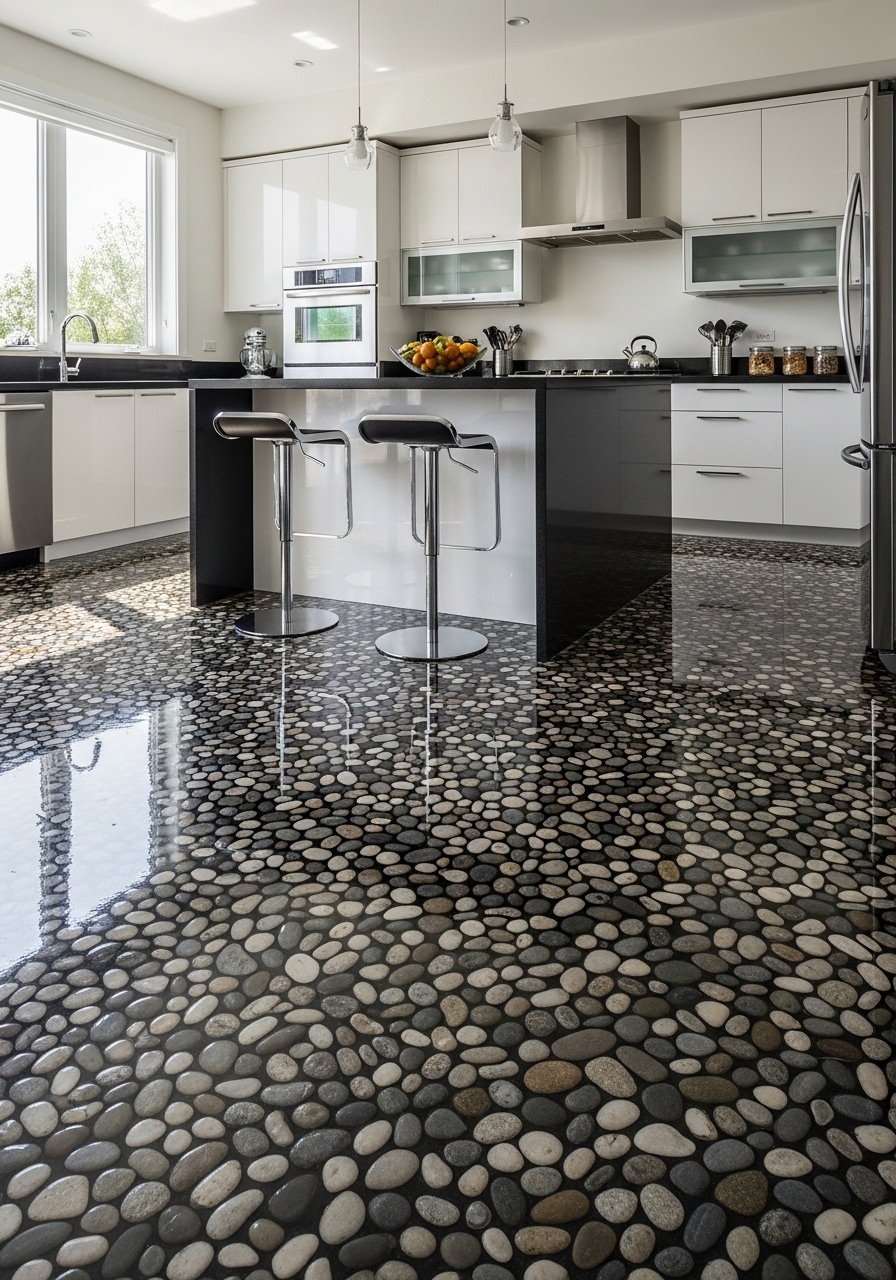
Design a unique, sensory-rich foundation with natural pebble kitchen flooring, a choice that brings the water-worn tranquility of a riverbed directly into your home. These smooth, rounded stones offer a diverse palette of organic earth tones—from cool basalt grays to warm ochres—creating a sophisticated connection to nature. In 2026, pebble flooring is trending as a “wellness” feature, praised for its natural slip resistance and the gentle, massage-like stimulation it provides underfoot, which helps reduce fatigue during long cooking sessions. Whether used as a decorative border or a full-surface floor, pebble tiles offer a tactile, multidimensional aesthetic that softens the sharp lines of modern cabinetry. When professionally installed with high-performance translucent grouts, these floors become a durable, easy-to-maintain masterpiece that bridges the gap between indoor luxury and outdoor serenity.
24. Living Wall Kitchen Gardens
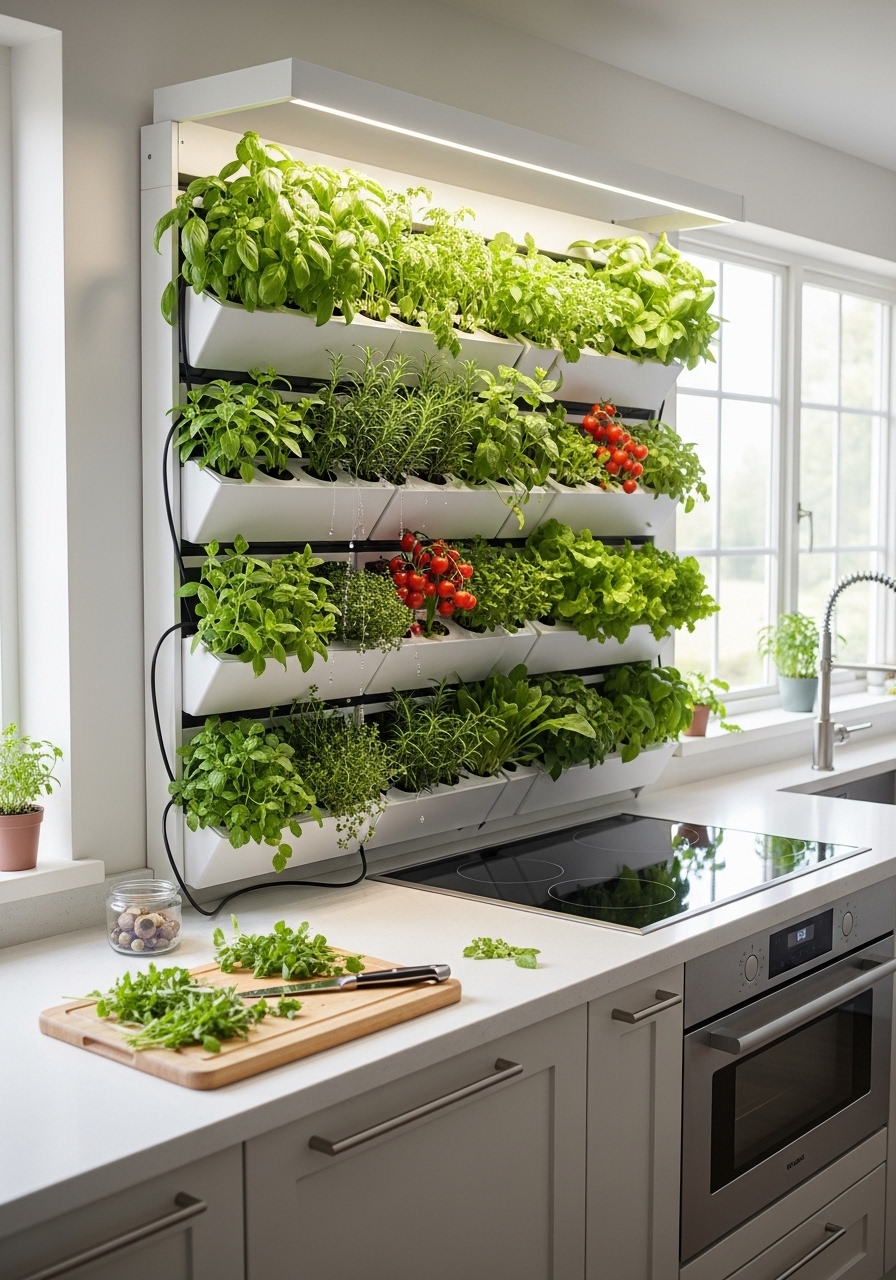
Create a vibrant, oxygen-rich sanctuary with living wall kitchen gardens, a pinnacle of 2026 biophilic design that turns vertical surfaces into productive “edible art.” These systems utilize space-saving modular panels to grow fresh herbs, microgreens, and leafy vegetables directly on your kitchen walls, maximizing yield in compact urban floor plans. Equipped with integrated smart irrigation and app-controlled LED grow lights, modern living walls take the guesswork out of indoor farming by automatically regulating moisture and light cycles. Beyond their culinary utility, these vertical forests act as a natural air filtration system, scrubbing VOCs and regulating humidity to enhance the well-being of everyone in the heart of the home.
Conclusion:
Your conclusion beautifully captures the essence of earthy kitchen design—it isn’t just a trend for 2026, but a movement toward “quiet luxury” and environmental mindfulness. By weaving together raw textures like soapstone and river rock with living elements like herb walls, you create a kitchen that feels less like a sterile laboratory and more like a soulful sanctuary.