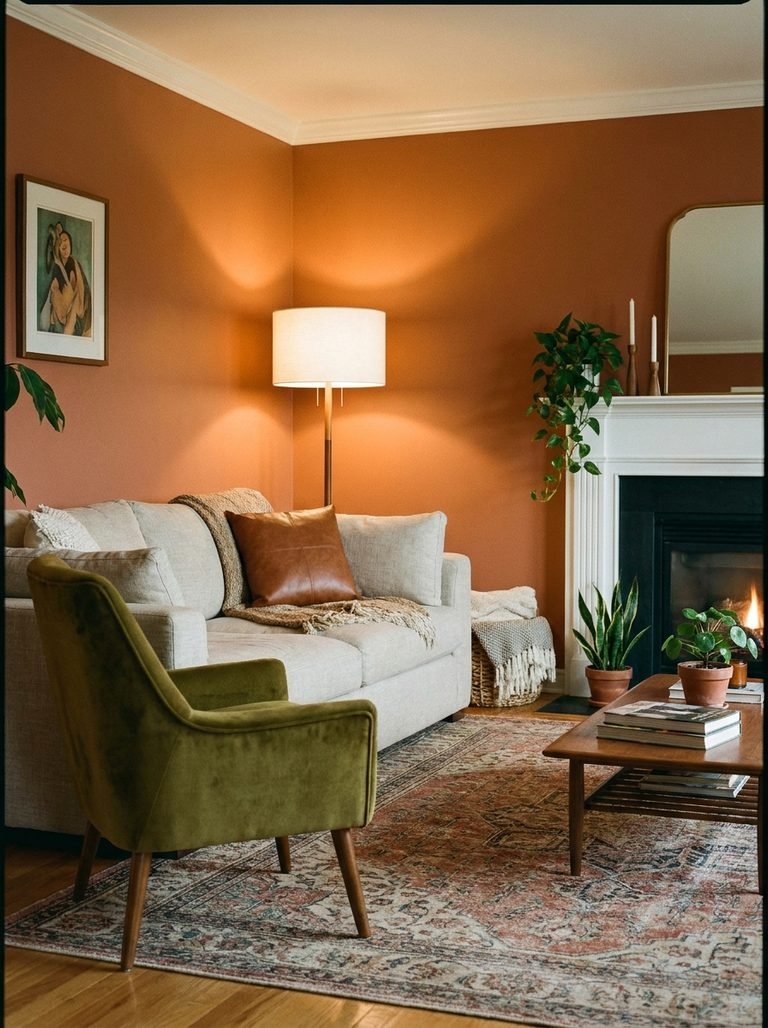

Three weeks after delivery, the left arm of your new white sofa has a faint blue-gray stripe. It is not a spill. It is the back pocket of your jeans.
That is how most white sofas lose their shine in a small living room. Not through one dramatic wine disaster, but through dye transfer, a bag strap, and a patch of afternoon sun you never noticed. In a 10-by-12-foot room, the sofa is the biggest thing you see, so every mark shows.
The answer is not to give up on white. It is to choose the fabric, the placement, and the supporting pieces that keep a white sofa crisp and expensive-looking. These fifteen ideas start with the sofa itself, then work outward to the rug, the lamp, and the wall behind it.

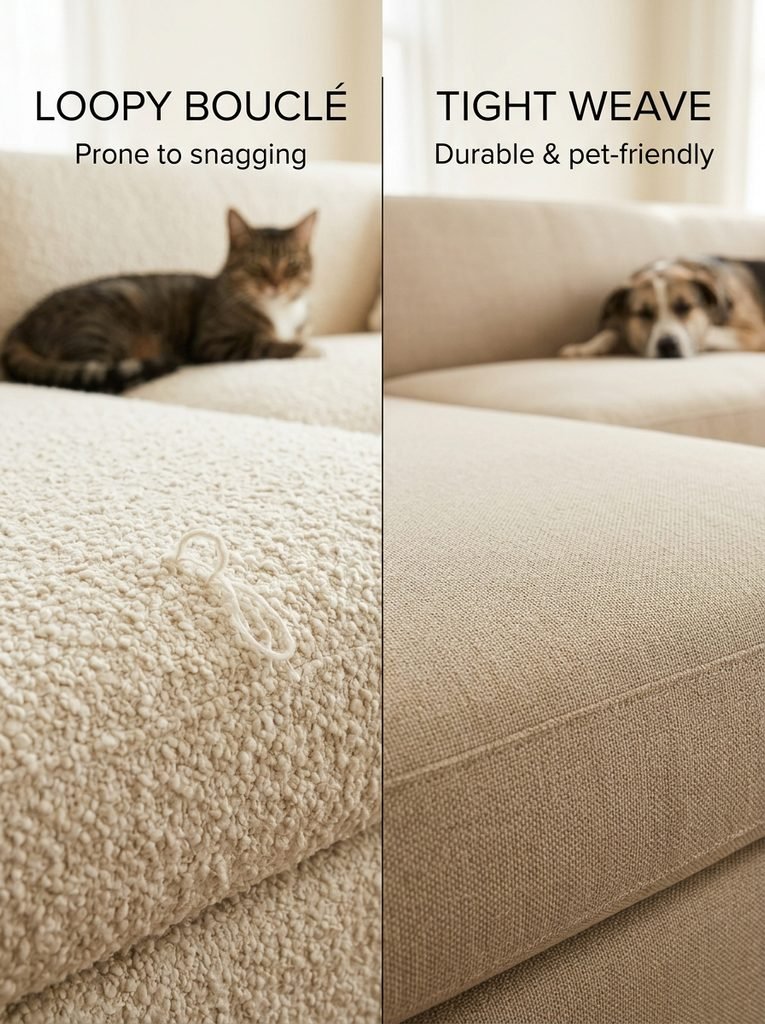
Choose a Tight Weave Over Loopy Bouclé
Bouclé photographs beautifully and snags on contact. One cat claw pulls a single loop, and the thread keeps lifting like a loose sweater yarn. If you share the room with pets, or kids in zip-up jackets, choose a flat, tight weave instead: a woven polyester blend or a performance linen-look fabric. Ask the retailer for the double-rub count. Sources draw the “heavy duty” line anywhere from 15,000 to 30,000, so aim for 30,000 or more on a sofa you sit on daily. The smooth surface also reads as tailored, which is exactly what “expensive” looks like in a small room.
Read the Cleaning Code, Then Torture a Swatch
Lift a seat cushion and find the tag. W means water-based cleaners are safe. S means solvent only. WS allows either, and X means vacuum only. Put water on an S fabric and you can leave watermarks that never fully lift. The Spruce’s upholstery stain guide makes the same case: check the code first, blot instead of rubbing, and never soak the cushion. Before you buy, request a swatch about the size of a placemat. Press dark denim against it, dab coffee on one corner, leave it overnight, then clean it using the tag’s method. If a mark survives, it will survive on the sofa too.
Pick a Tight Back, Track Arms, and Legs You Can Vacuum Under
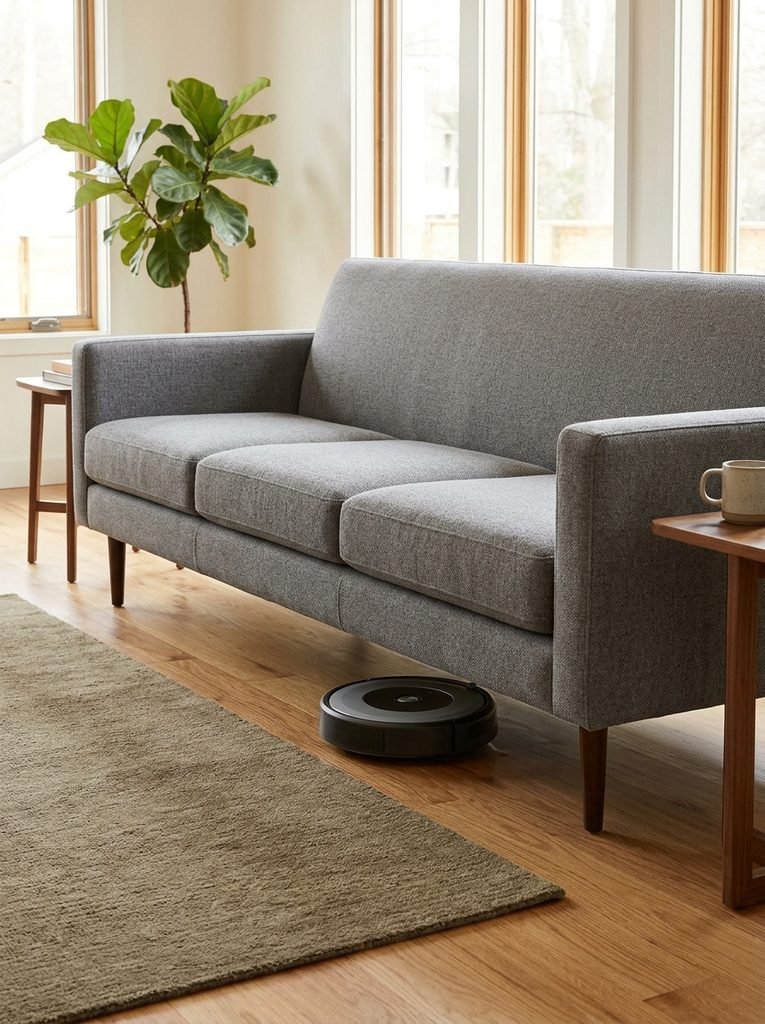
Seams collect crumbs and pet hair, so shop for fewer seams. A tight back, with no loose back cushions, leaves fewer gaps than a pillow-back design. Track arms, the straight, squared-off kind, also help. Arms collect the most skin oil because hands and elbows rest there, and a slim track arm gives you less fabric to clean than a fat rolled one. Check leg clearance too. Most robot vacuums stand about 3 to 4 inches tall, so aim for 5 inches or more under the frame, since a sagging cushion eats into the gap. Rolled arms look softer online. Track arms look sharper, and sharper reads as pricier.
Keep Bags, Jackets, and Jeans Away From the Door End
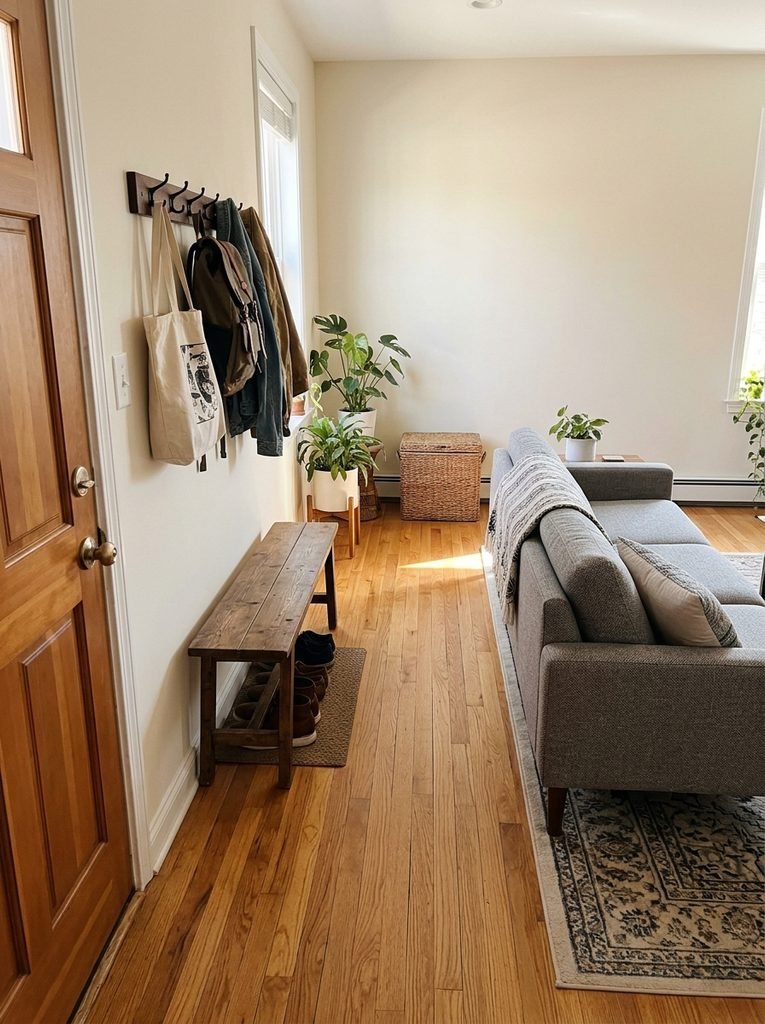
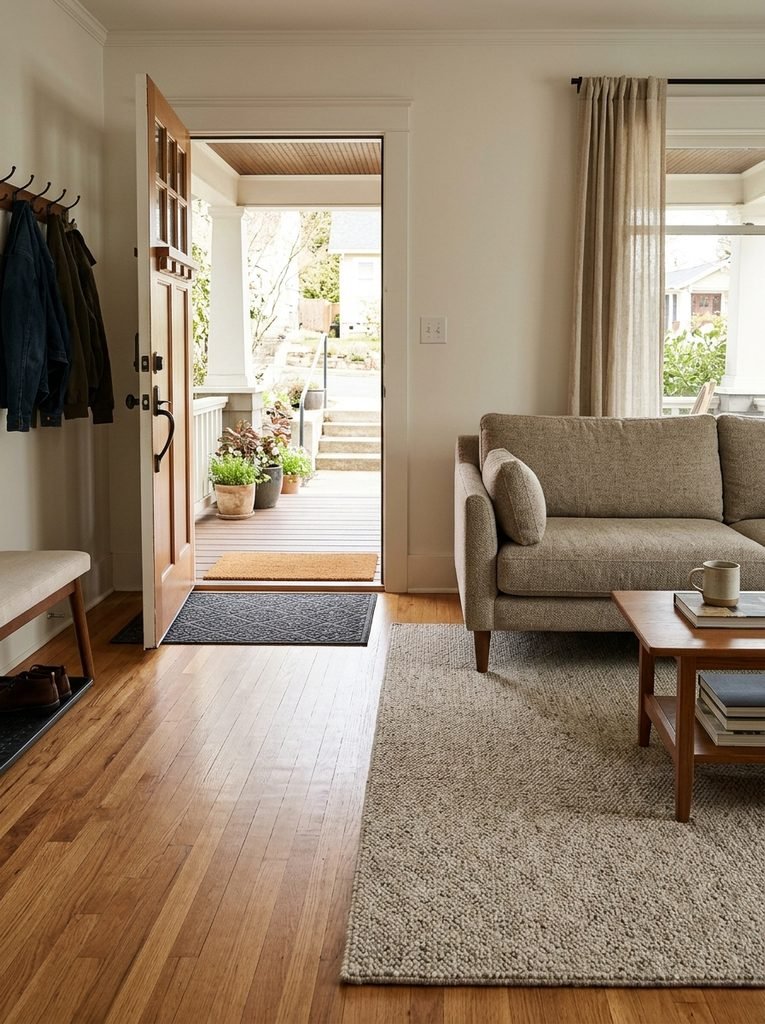
Look at where the sofa sits relative to your door. The end nearest the entrance becomes a landing pad for backpacks, grocery totes, and jackets, all carrying zippers, rivets, and street grit. Rivets and metal zipper pulls snag woven fabric. Give those items another home: a wall hook rail or a bench about 14 inches deep by the door. Keep about 30 inches of clear walkway between the sofa end and the main path. A hook rail runs roughly $25 to $60 and prevents more damage than any fabric spray. No room by the door? Put a lidded basket beside the far arm.
Pull the Sofa Out of Direct Afternoon Sun
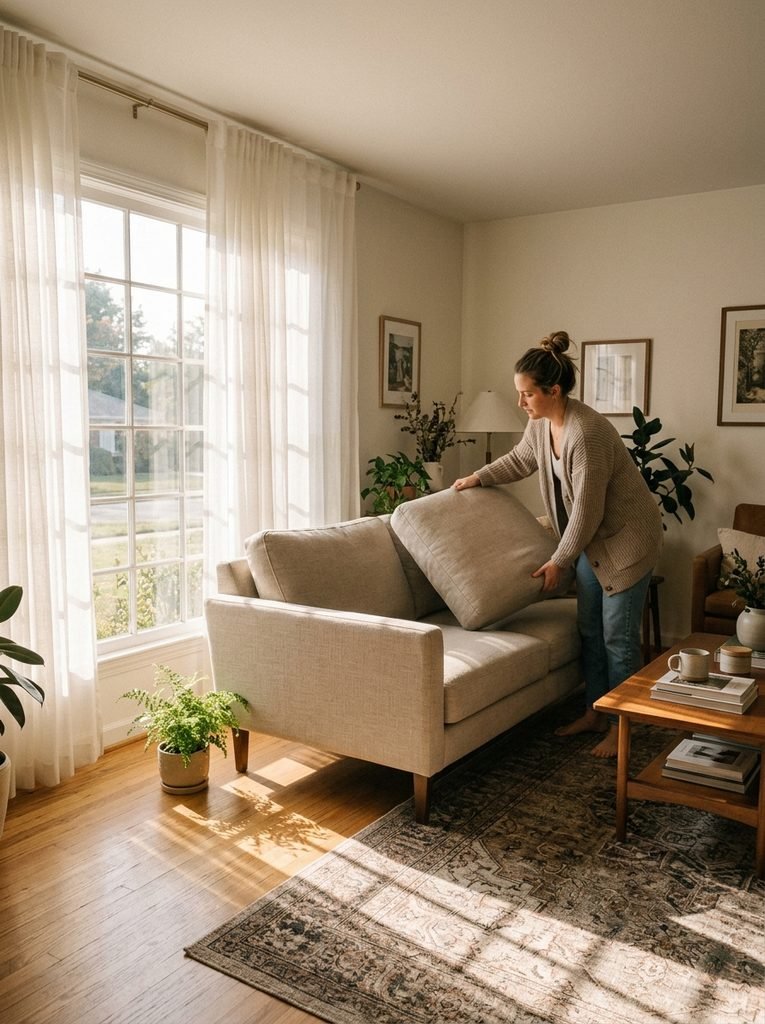
Sun damage creeps in. Light fabrics can turn uneven or yellowed in the spot that takes the most light, and you notice only when you lift a cushion and compare. Set the sofa two to three feet back from a west- or south-facing window, or soften the light with sheer panels. If the room is too small to move anything, a clear UV-blocking window film can stop most ultraviolet light without tinting the glass. Many are rated at up to 99 percent, so check the label and your lease first. Rotate seat cushions monthly. If the sofa looks gray at dusk, our guide to how living room colors shift between daylight and lamplight covers bulb temperature and testing.
Drape a Washable Throw Over the Seat Everyone Fights For
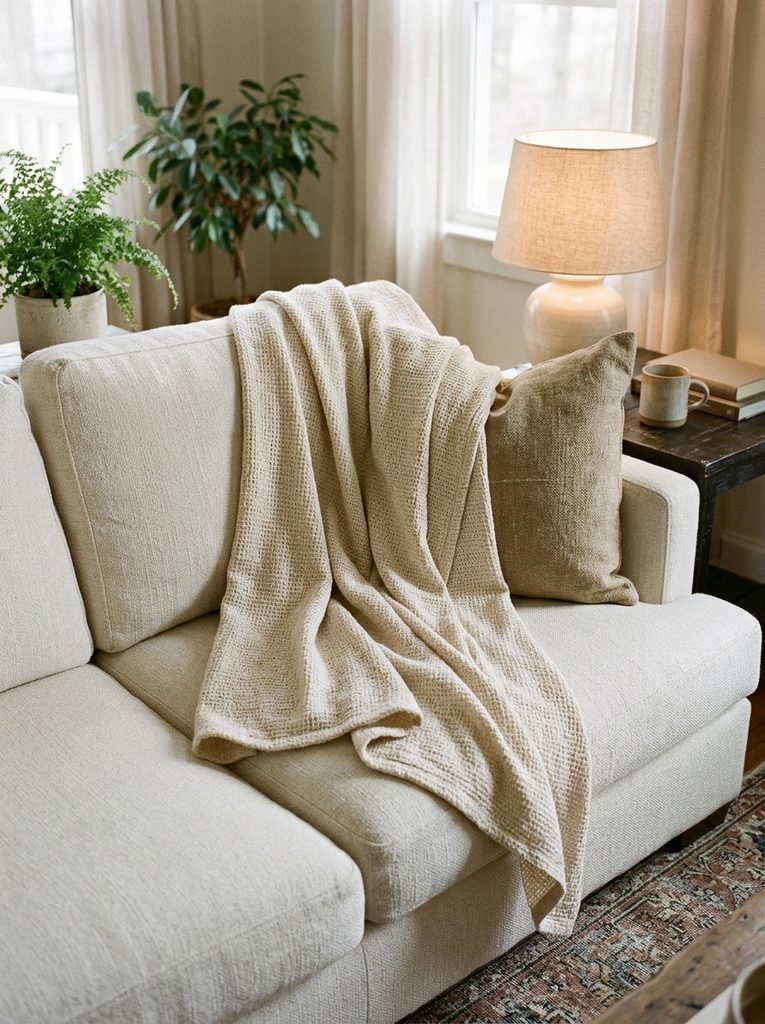
Every sofa has a favorite seat, usually the one closest to the lamp. It wears first and needs cleaning first. A washable throw gives that seat a sacrificial layer. Choose cotton or linen in ivory, oatmeal, or soft white, in a looser weave that survives a home washer. Stay in the same tonal range as the sofa: ivory on white looks rich, while stark white on cream looks mismatched. Fold it over the seat back instead of tucking it into the cushion so it reads as styling, not protection. Buy two. While one is in the wash, the other keeps the room looking finished.
Put Pillows in Zip-Off Covers and Quarantine the Dark Dyes
Dye transfer is the quiet killer. New dark denim, navy velvet, and black leather bags can leave a blue-gray haze on pale fabric. Keep deep colors on pillows with zip-off covers you can wash or replace, and keep raw denim off the sofa for the first few weeks. Stuff an 18-inch cover with a 20-inch insert so it looks full instead of limp. On a sofa under 84 inches wide, four pillows are plenty: two 22-inch squares at the back and two 18-inch squares in front. Velvet and silk-look covers add the richness. The zipper keeps them disposable.

Stop Grit at the Door With a Doormat and a Dense Rug
Grit is sandpaper for upholstery. Every pebble tracked in from the street grinds into the weave when someone sits down. Stop it at the door with a doormat outside and a washable one inside, then catch the rest with a rug. Choose a wool-blend rug with a low, dense pile in a mid-tone with a small pattern, such as oatmeal flecks or tight stripes. Patterns hide crumbs and vacuum tracks that a plain cream rug displays from day one. Size it so the sofa’s front legs sit on it. If the sofa now blends into the floor, our piece on why neutral living rooms look flat shows how to separate the layers.
Swap One Side Table for a Floor Lamp With a Built-In Tray
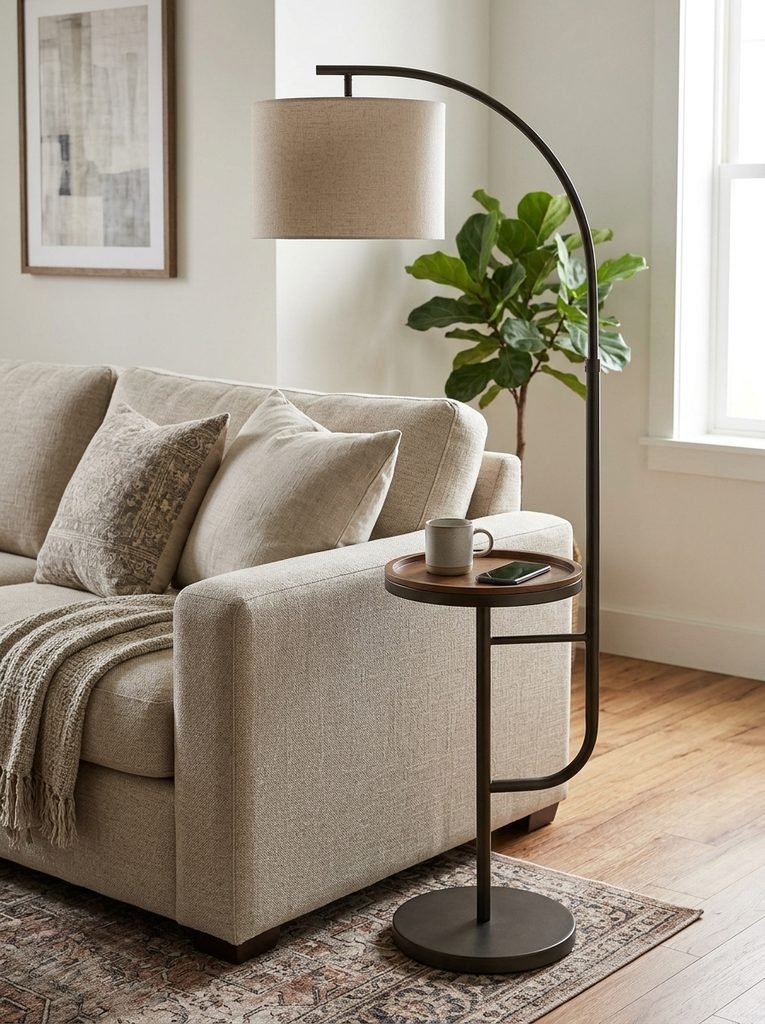
A mug balanced on the sofa arm is a spill waiting to happen, so give each side a landing spot. On the lamp side, choose a floor lamp with a built-in tray or shelf. It holds a drink and a phone and takes only the footprint of its base, usually 10 to 12 inches across. Look for a heavy base and a tray with a raised lip. Place it 6 to 8 inches from the arm so you can reach it without leaning over the cushions. A sculptural or arched lamp reads as decor, not furniture, which is why it looks more expensive than the side table it replaces.
Mount a Narrow Ledge on the Other Side
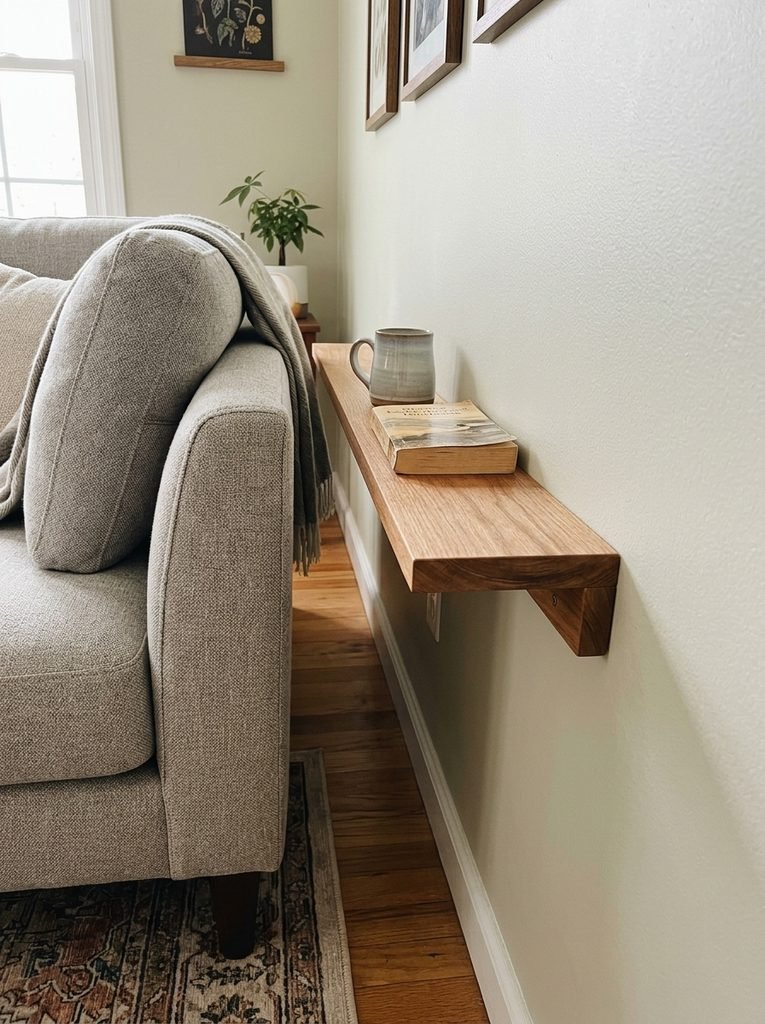
On the opposite arm, skip the table and mount a narrow ledge. Aim for roughly 24 to 26 inches from the floor, close to typical sofa arm height, with a depth of 5 to 6 inches. That is enough for a mug and a paperback. Screw it into wall studs, which usually sit 16 inches apart, or use anchors rated well above the load. A full mug and a hardcover weigh only a few pounds, but elbows push harder than books. Finish it in a wood tone or the wall color. You also gain back the 14-by-14-inch patch of floor a table would occupy.
Float the Sofa Three Inches Off the Wall and Panel Behind It
A sofa pushed flush to the wall rubs the paint, and the wall rubs back. Pull it about three inches forward so it clears baseboards and cords and the back cushions stop picking up scuffs. Then protect the wall itself. Box molding painted the wall color, or vertical wood slats, creates a sturdy panel that takes the rub, and satin or eggshell paint wipes cleaner than flat. Skip limewash directly behind the sofa, since its chalky matte surface tends to show rubs. In a room ten feet deep, three inches costs you almost nothing, and the shadow gap behind the sofa looks custom.
Choose a Plant With a Saucer and Keep It Off the Cushions
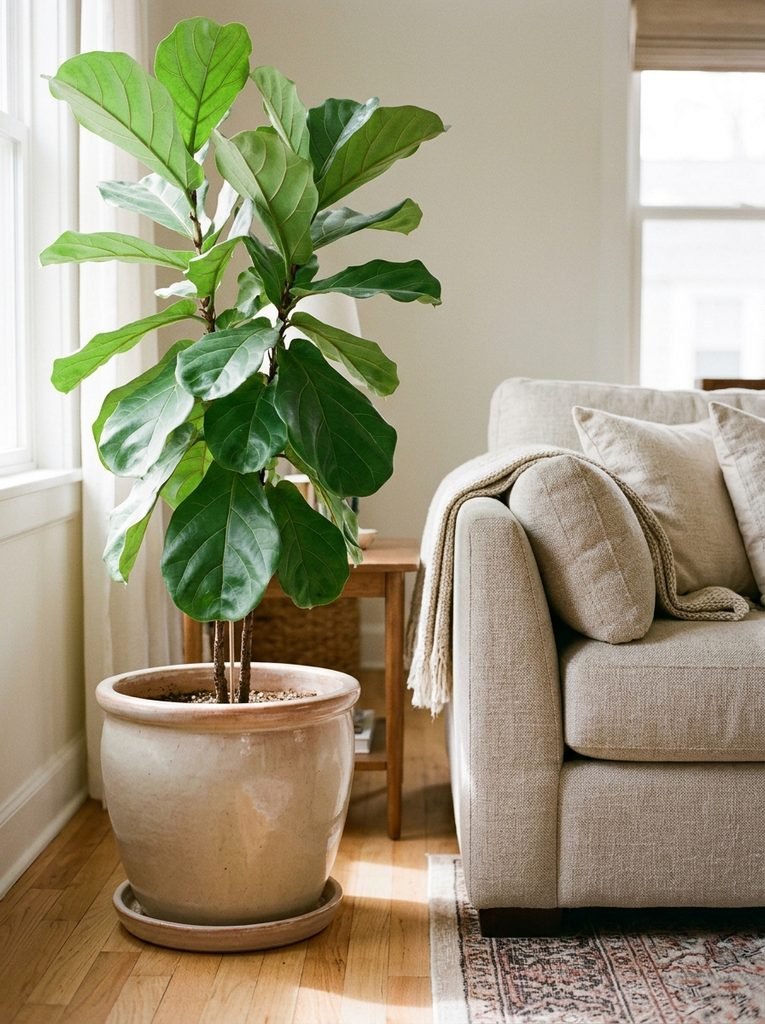
A tall plant looks expensive. A dripping one does not. Use a pot with a saucer, or slip a plastic nursery pot inside a glazed cachepot and carry it to the sink to water. Set it about 12 inches from the sofa arm so leaves do not brush the fabric and soil does not splash. Check the ASPCA’s plant list before you buy, since several popular houseplants are toxic to cats and dogs. Wipe the leaves monthly. Dust that settles on leaves ends up on the cushions below.
Hang Art Above the Head-Rest Zone
The top edge of a sofa back darkens first, from hair products and skin oil. A frame hung too low gets smudged by the same heads. Hang the bottom edge of the art 8 to 10 inches above the sofa back, then press small felt bumpers onto the lower corners so the frames sit flat and clean. For a gallery wall, keep every frame the same finish. Black-and-white prints in thin frames look expensive and wipe down in seconds. Skip glossy glass on the lowest row if a lamp sits nearby, because glare shows every fingerprint.
Hide Spare Covers and Throws in a Storage Ottoman
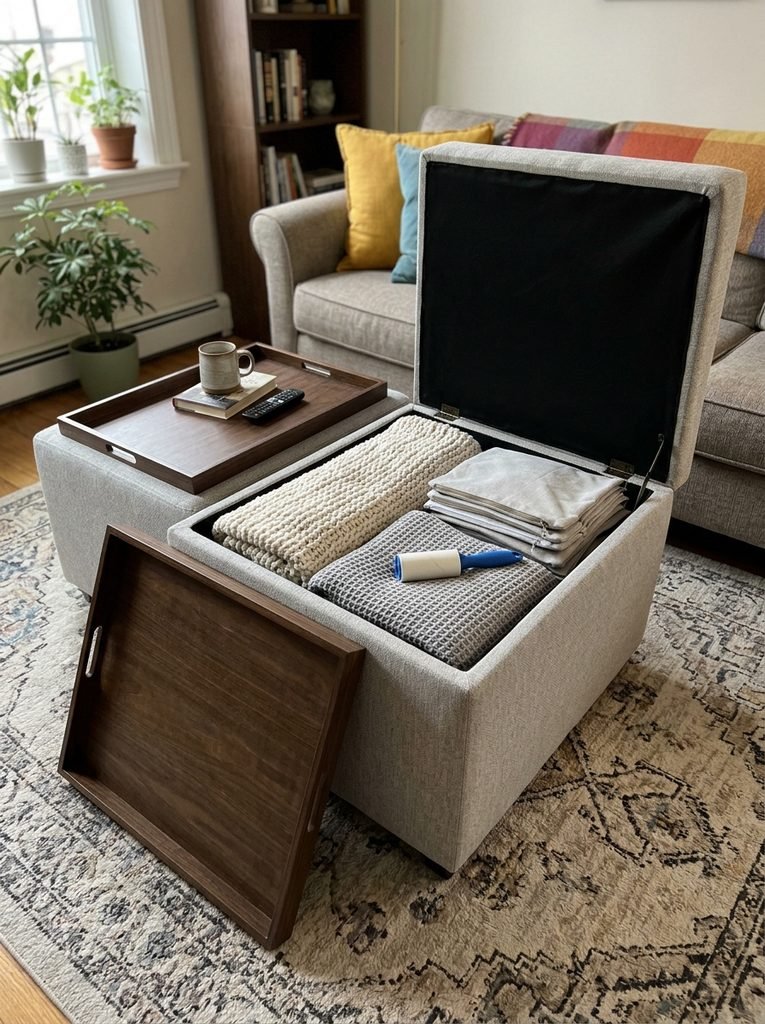
A storage ottoman earns its floor space in a small room. Pick a 30-inch square or round one with a lid that flips to a flat tray, and use it as a coffee table with a spill-proof surface. Inside, keep two spare throws, a second set of zip-off pillow covers, and a lint roller. Avoid tufted tops, which trap crumbs. With a spare set of covers one flip away, a stained pillow becomes a five-minute swap instead of a week of avoiding the sofa.
Run a Ten-Minute Weekly Reset
Once a week, pull off the seat cushions and vacuum the seams with a soft brush attachment. Flip and rotate each cushion so wear spreads evenly. Wipe the arms and the top of the back with a barely damp white microfiber cloth if your code is W or WS, and let them dry fully. Check the pillows for stray dye marks. Those three zones, the arms, the headrest edge, and the front of the seat, collect the gray film that makes a white sofa look tired. A professional clean once a year covers most households.
When the First Stain Lands
It will happen, probably on a Friday. Blot with a clean white cloth, pressing from the edge of the mark toward the center, and lift as much as you can before adding any liquid. Match the cleaner to your code, test it on the underside of a cushion, and never rub. If the tag says X or S and the mark is stubborn, call a professional within a day or two. Then fix the cause: add the tray, move the bag hook, swap the pillow. The sofa stays white because the room around it is set up to protect it.
Frequently Asked Questions
Is a white couch a bad idea with a dog or cat?
Not necessarily, but fabric choice decides the outcome. A tight weave rated 30,000 or more double rubs resists claws far better than loops. Trim nails every two to three weeks, keep a towel by the door for muddy paws, and brush shedding pets before they climb up. Light-colored hair also disappears on white, while dark hair shows.
How do I keep a white couch from turning yellow?
Control light, body oils, and cleaning residue. Keep the sofa out of direct sun, wipe the arms and headrest edge monthly, and rotate cushions so oils do not collect on one seat. Detergent left in the fabric attracts dirt, so use a small amount of cleaner on a damp cloth, then blot with a cloth dampened with plain water.
Can you machine wash removable couch cushion covers?
Only if the care label says so, because many covers are dry-clean only even when the zipper comes off. Never put the foam insert in a washer. If the label allows it, use cold water, a gentle cycle, and mild detergent. Air-dry the covers, or put them back on while slightly damp so they do not shrink out of fit.
How often should a white sofa be professionally cleaned?
Once a year suits most households, and twice a year makes sense with pets, kids, or heavy daily use. A visit for a standard three-seat sofa often runs roughly $100 to $250, depending on your market and fabric. Book before stains set, and ask whether the cleaner uses a water-based or solvent method that matches your tag.
Is white or cream easier to live with?
Warm cream, ivory, and oatmeal usually hide wear better than bright optic white, because there is less contrast between dirt and fabric. A slightly warm off-white also looks softer under evening lamps. If you love true white, pick a performance fabric and keep spare zip-off covers on hand. Compare swatches in your own room, since undertones shift with wall color.