
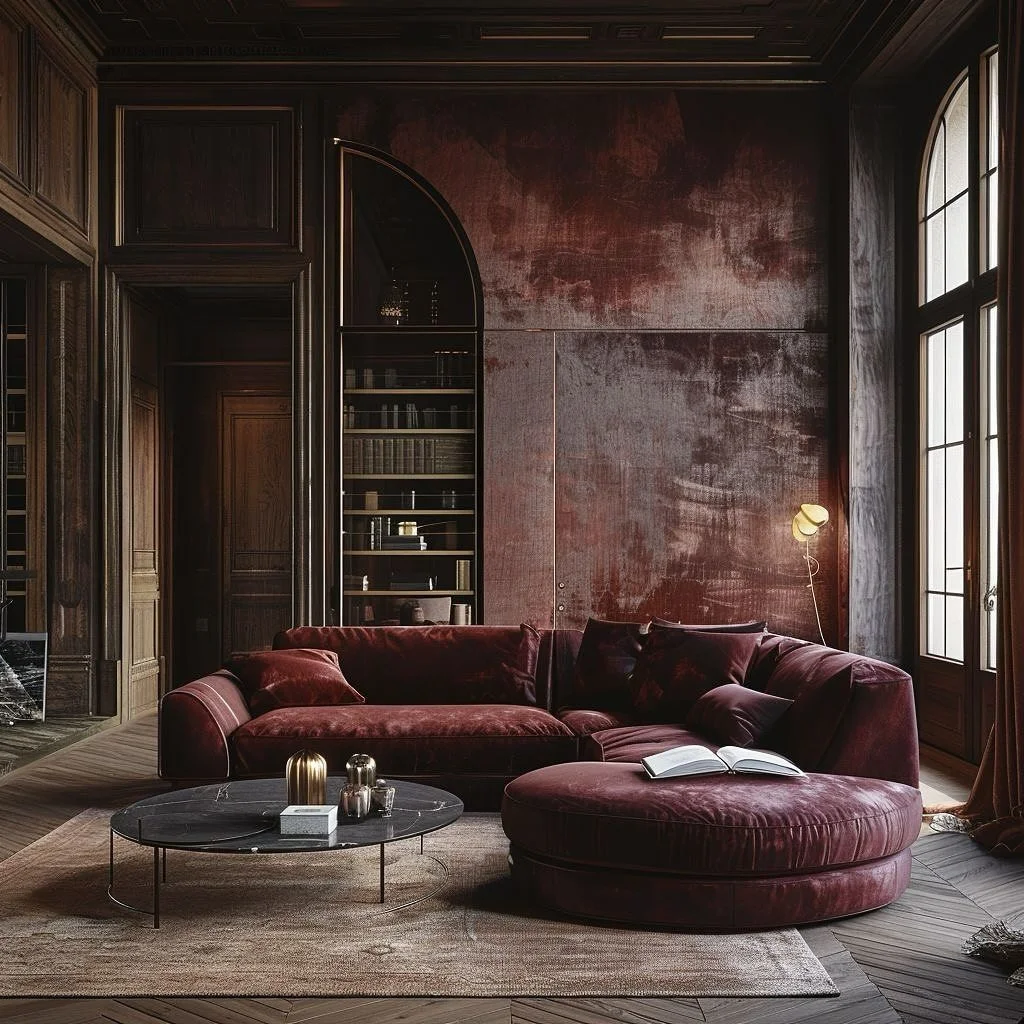
The sofa arrives on a Tuesday: emerald velvet, curved back, brass feet. You pair it with a black marble coffee table, a sunburst mirror, a gold-framed print, and a chandelier that took two people to hang. Every piece is gorgeous alone. Then a friend walks in, looks around, and says, “It looks like a hotel lobby.” She means it kindly. It still stings.
Nothing in the room is wrong. Everything in it is just speaking at the same volume. Neo-Deco, the modern take on Art Deco that keeps the geometry and glamour but drops the ornament, only works when a few pieces lead and the rest stay quiet. Below are the specific spots where the style goes sideways at home, with the measurements and fixes that bring the warmth back. Want raw inspiration first? Browse our modern Art Deco revival ideas, then return here to edit.
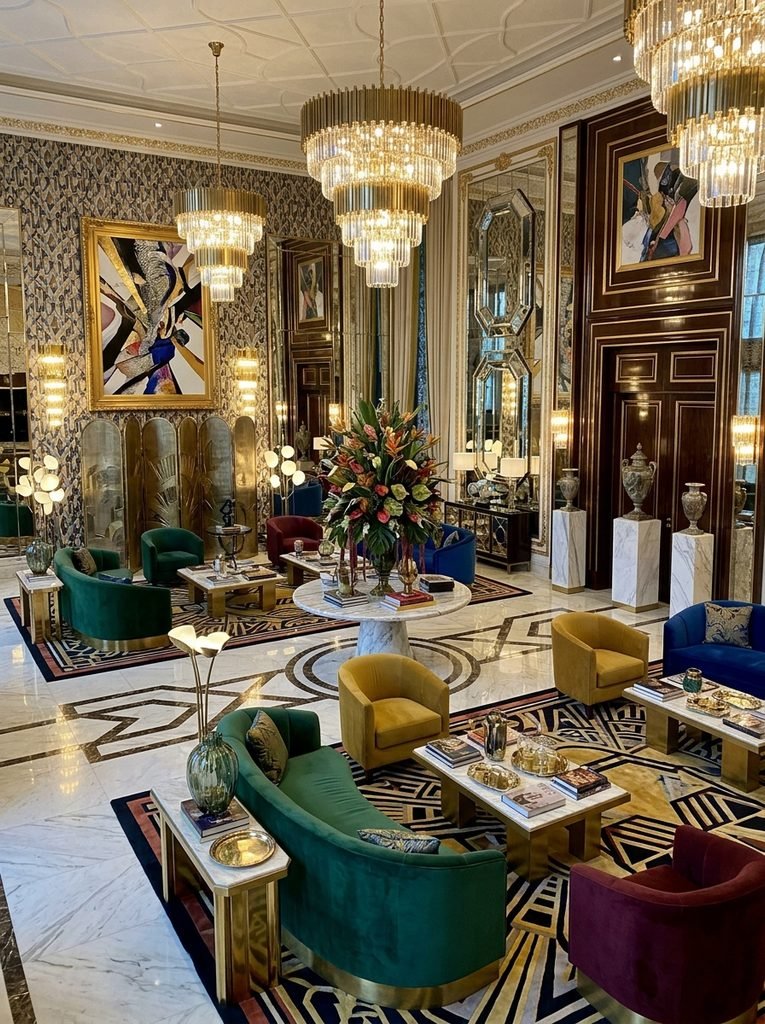
Why Neo-Deco Slides Into Lobby Territory So Fast
Original Art Deco was designed for cinemas, hotel foyers, and department stores. Think ceilings of 14 feet or more, polished stone floors, and chandeliers wider than a car hood. Those rooms were built to impress people walking through. Your living room has to hold someone on the couch for four hours.
Shopping makes the problem worse. Neo-Deco furniture is photographed one piece at a time against a clean wall, so each item is styled to be the star. Buy six of them and you have hired six stars for one stage.
The fix is boring and effective: decide each piece’s job before you buy it.
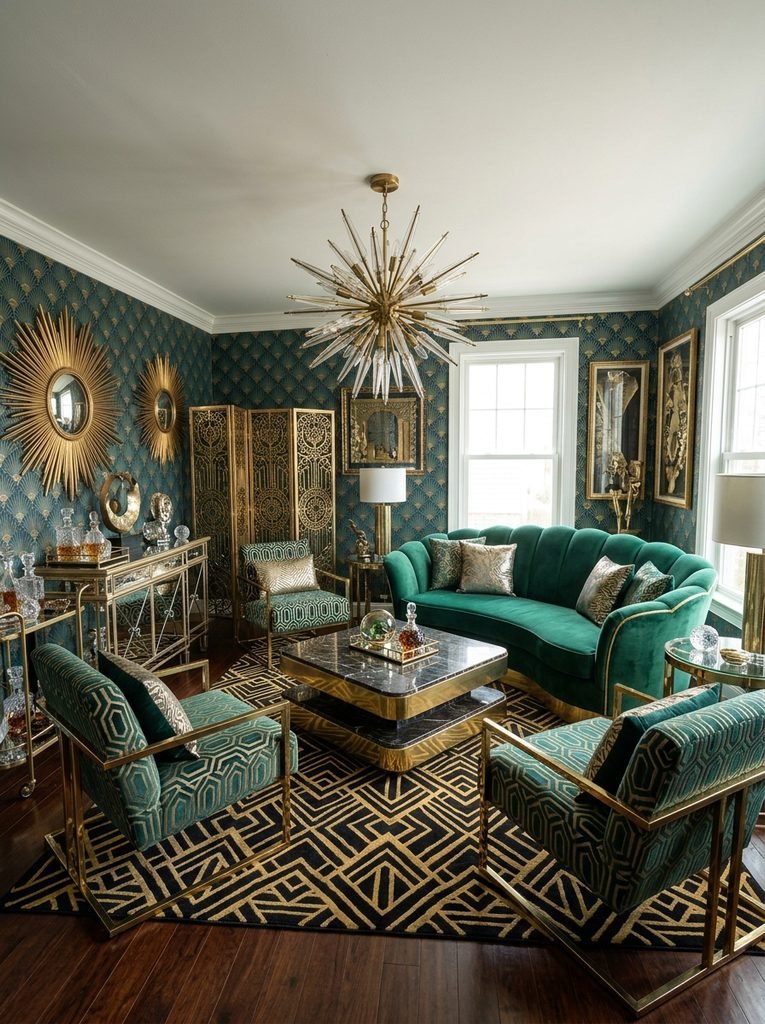
Give Each Room One Loud Piece and Let the Rest Whisper
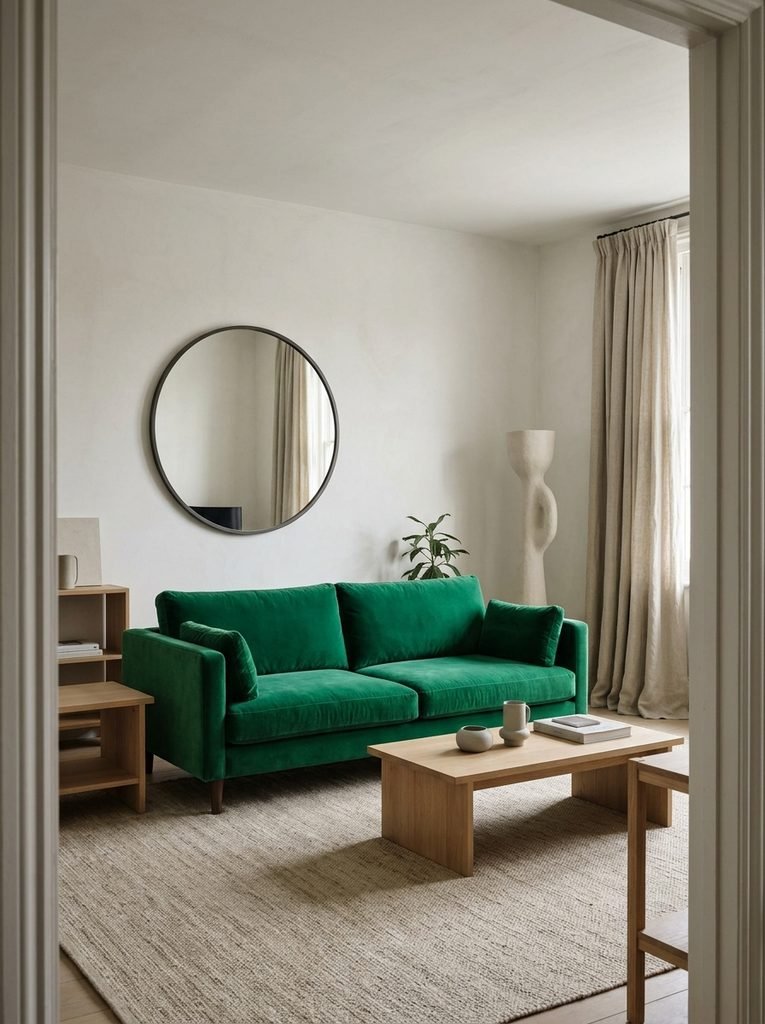
Pick one lead, two supporters, and make everything else background. In a living room, the lead might be the emerald velvet sofa. The supporters are a round mirror and one sculptural lamp. Background means oatmeal linen curtains, plain oak, a matte wool rug, and nothing that shines.
Now flip it. If a chandelier is your lead, buy the sofa in cream bouclé and skip the jewel tones entirely.
Try the squint test. Photograph the room from the doorway, then squint at the photo. If your eye bounces between four objects, demote two. Demoting rarely means removing. Swap high-gloss for matte, a pattern for a solid, or move a brass lamp that sits three feet from a brass side table so the two stop competing.
Metals That Argue With Each Other
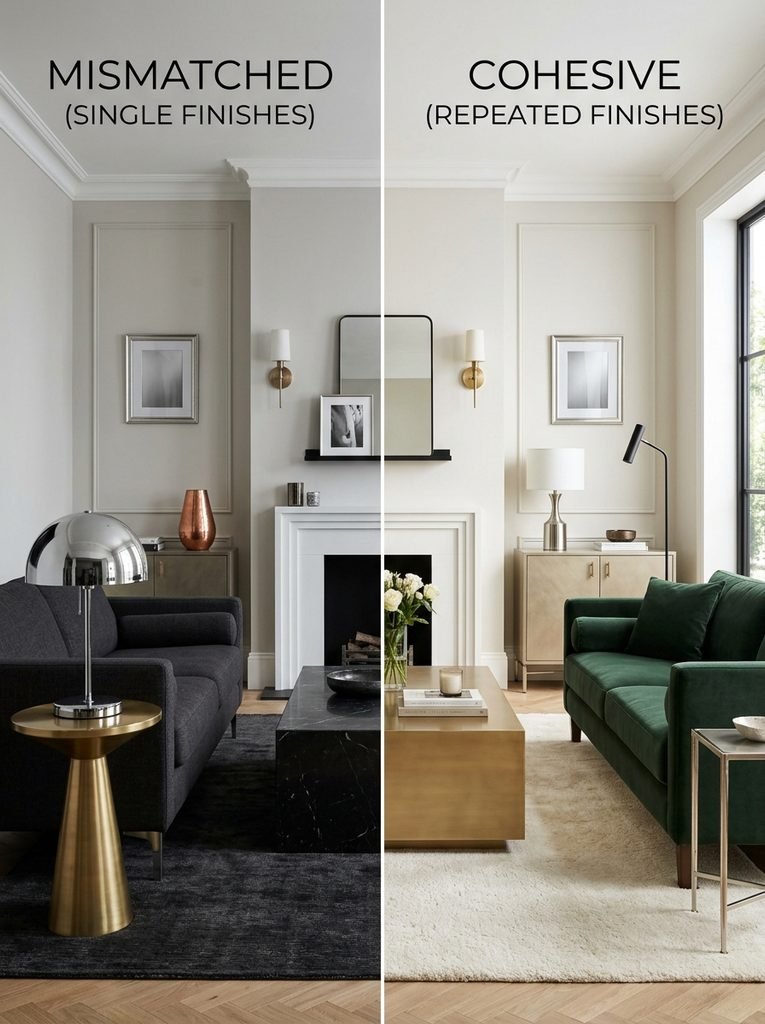
Metals fail in Neo-Deco rooms for one reason: each finish appears once. A lone chrome lamp beside a brass table looks like a mistake. Pick a dominant warm tone, such as brushed brass or champagne gold, for most of the metal in the room. Add one cool metal, like nickel, and repeat it at least three times at different heights: a lamp base, a picture frame, a table leg. Repetition reads as a plan.
Finish matters as much as color. Mirror-polished brass shows every fingerprint on cabinet pulls, so choose brushed. Cheap lacquered brass can flake and turn patchy within a couple of years, while unlacquered brass darkens evenly if you can live with the patina.
Black and gold deserves the same discipline. Use matte black in thin lines, such as a lamp stem, window frame, or picture ledge. A black marble table on a black rug beside a black sofa turns the whole zone into a hole. Aim for black to make up roughly a tenth of what you see.
Light That Flatters Brass and Velvet
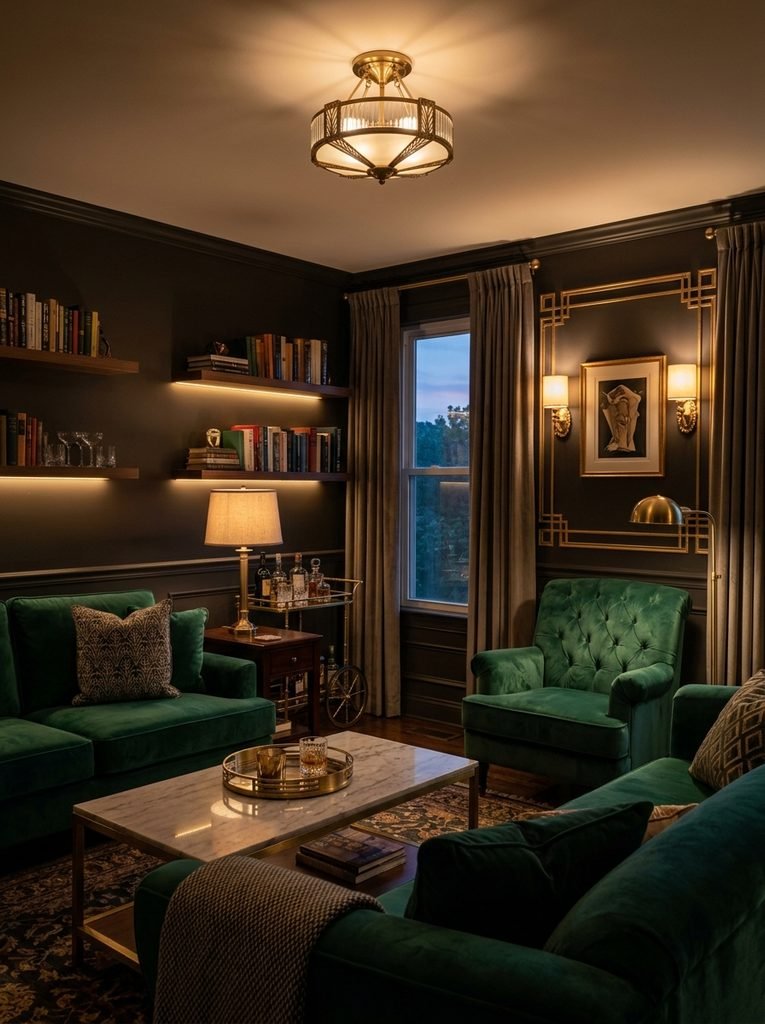
A single ceiling fixture on one switch flattens every Deco detail you paid for. Build three layers instead: an overhead fixture, lamps at table height, and a soft accent source such as a wall sconce, or a strip hidden behind a headboard or under a floating shelf.
Bulbs make or break brass and velvet. The U.S. Department of Energy says warm light, around 2700 to 3000 K, suits living spaces because it flatters skin and fabric. It also notes that color rendition matters even more than color temperature (see Energy.gov’s lighting principles). Translate that at the store: buy 2700 K bulbs with a CRI of 90 or higher so emerald does not turn muddy. Cheap LED strips often ship at 4000 K or above and look clinical beside brass, so read the box.
Sizing trips people too. Above a dining table, choose a chandelier about half to two-thirds the table’s width and hang the bottom 30 to 36 inches over the tabletop. With an 8-foot ceiling, go flush or semi-flush and let a floor lamp supply the drama. Put every layer on a dimmer rated for LEDs, because a standard dimmer can make LED bulbs buzz or flicker.
Scale Mistakes: Deco Pieces Need Room to Breathe
Bold shapes carry visual weight, so Deco pieces look smaller in the showroom and bigger at home. Measure twice, then tape.
Start underfoot. The front legs of every seat in the conversation area should sit on the rug, and 8 by 10 feet is the practical minimum for a sofa and two chairs. A rug that floats mid-room makes sculptural furniture look scattered.
Then the coffee table. Aim for about two-thirds of the sofa’s length and 14 to 18 inches of clearance. A pedestal table in stone or fluted wood eats more visual space than its footprint suggests, so mark the outline with painter’s tape for a day and walk around it.
Curved sofas need air. Pull the back a few inches off the wall or the curve disappears into the paint. Measure your doorway and stair turn before ordering, since a curved frame cannot tilt through tight gaps the way a straight one can.
Walls and Ceilings That Carry the Architecture
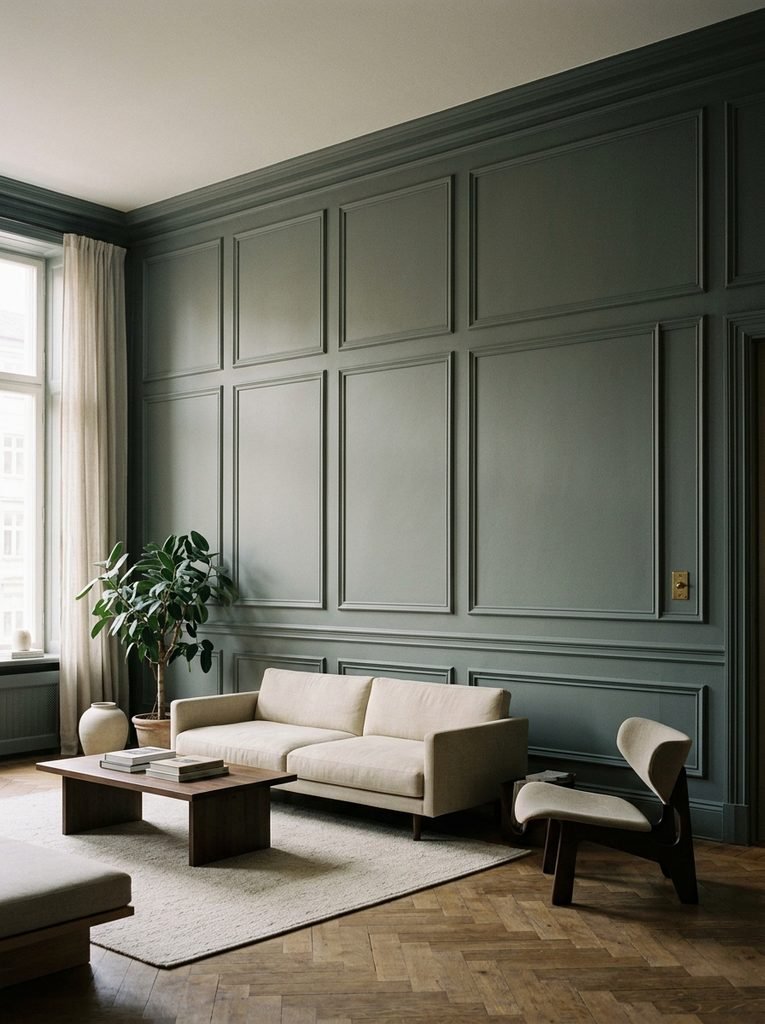
Let the walls carry the Deco so the furniture does not have to. Choose one architectural move per room. Stacking all of them brings the lobby right back.
Panel moulding works best when the wall and the moulding share one color and one finish. Shadow lines do the talking, and the effect reads as architecture instead of decoration. Plan the layout around your outlets before you cut anything. A switch plate landing in the middle of a rectangle looks like an error, so shift the frame by an inch or two and keep the margins equal on all sides. Space the rectangles evenly, usually 3 to 4 inches apart.
Soft Surfaces Keep Hard Finishes From Feeling Cold
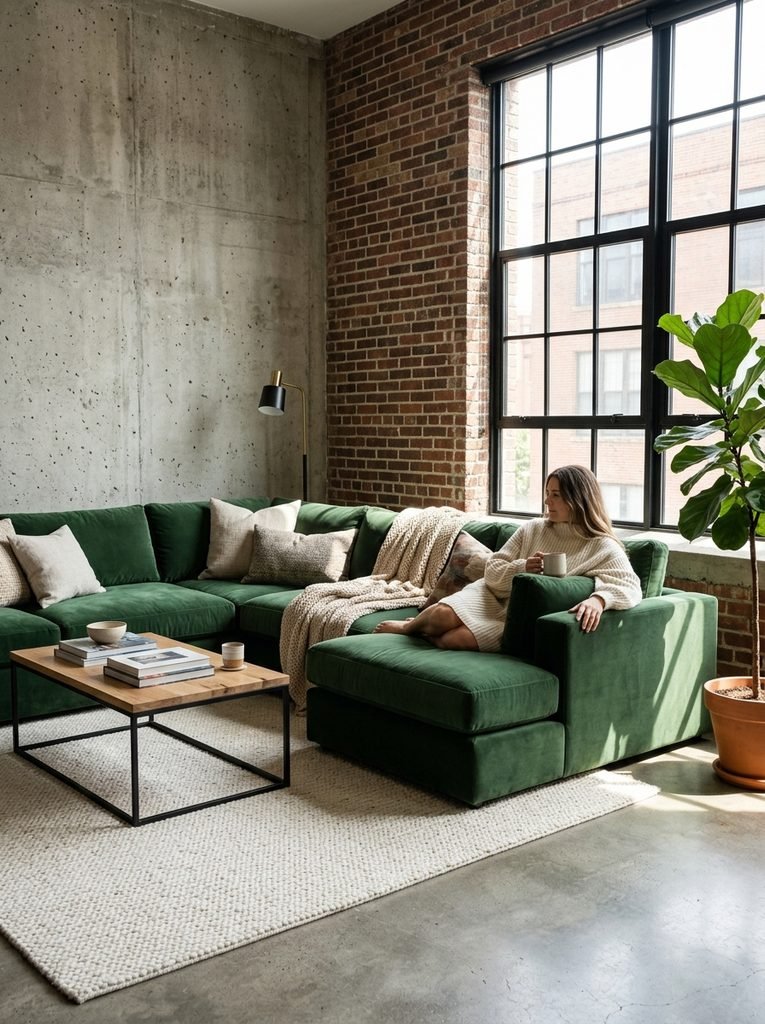
Hard finishes need something to lean on, and velvet is the usual answer. The fabric spec matters. Performance polyester velvet resists crushing and stains better than cotton or rayon blends, and upholstery rated for at least 15,000 double rubs on the Wyzenbeek test handles daily use. Brush your hand across the nap in the store. If the color flips dramatically, the sofa will show every seat mark.
Mirrors That Reflect Something Worth Seeing
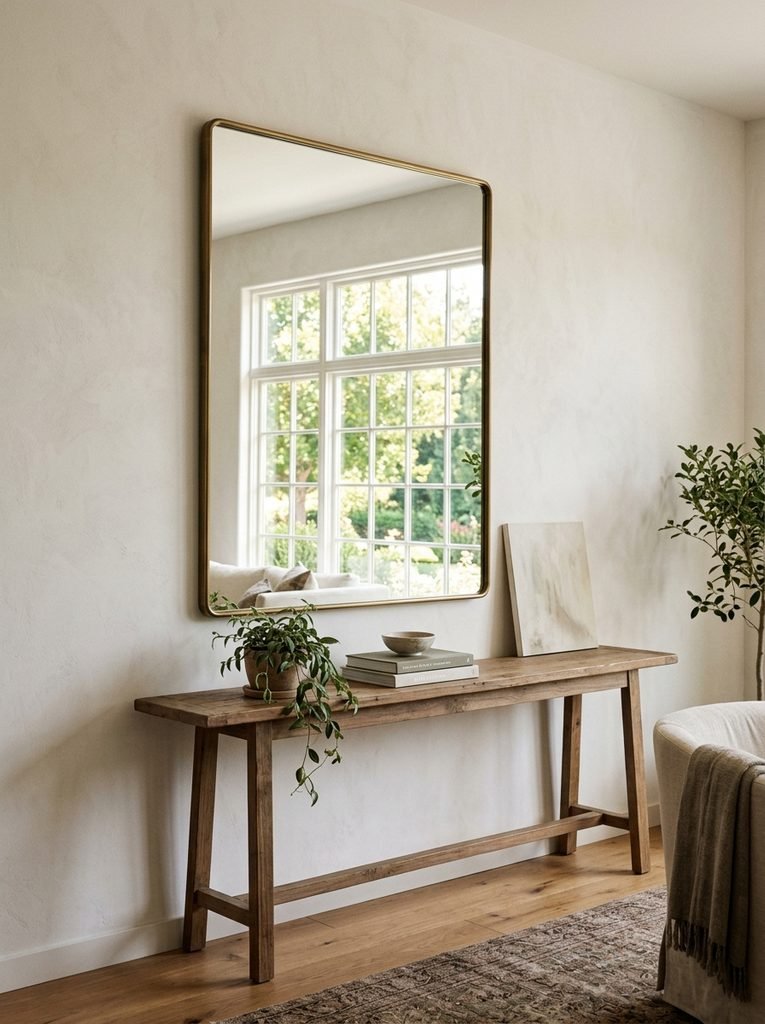
A mirror doubles whatever it faces. Opposite a window, it doubles daylight and the view. Opposite a pile of mail and a television, it doubles the clutter. Check what the glass will reflect before you drill.
Hang the center around 57 to 60 inches high. Over a console, size the mirror to roughly two-thirds of the console’s width. A sunburst mirror under 30 inches across tends to look timid above a sofa.
Bedrooms and Bar Corners Follow Different Rules
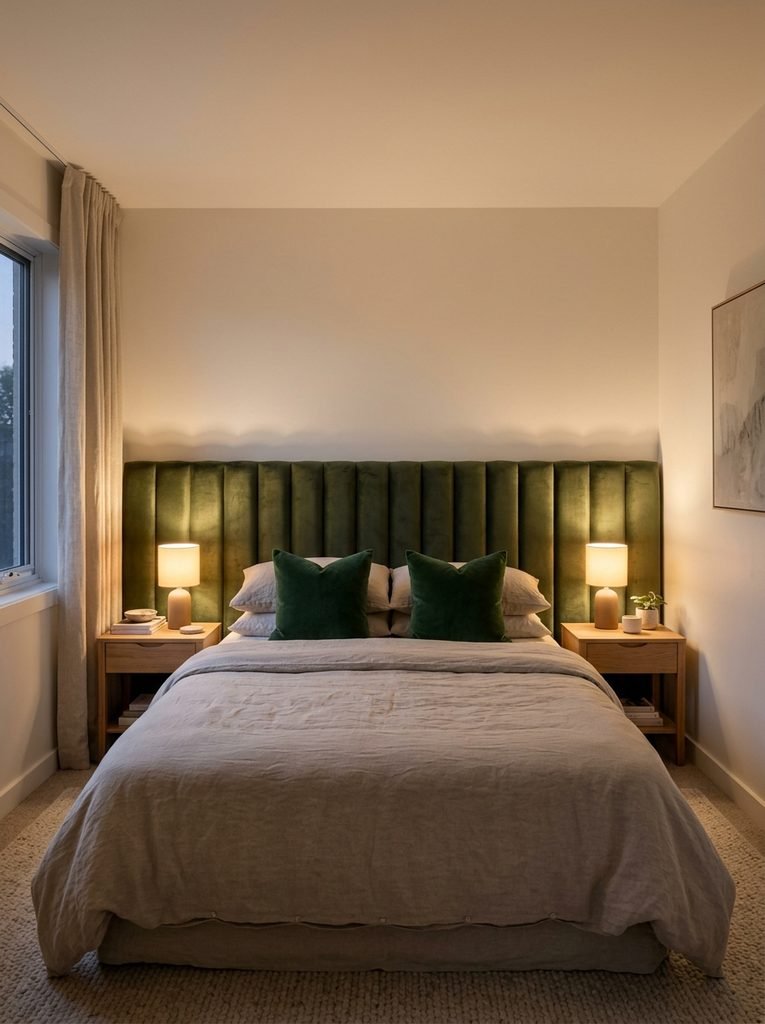
Bedrooms need less drama than living rooms, because you are trying to sleep in them. A fluted or velvet headboard supplies the glamour, so keep the rest soft: linen bedding, warm 2700 K bedside lamps, and no more than two velvet pillows. Choose a headboard that extends a few inches past the mattress on each side, or it looks like a sticker on the wall.
A Five-Minute Check Before You Buy the Next Piece
Dim the lights, stand in the doorway, and look at the room for ten seconds. Where does your eye land first? Where does it go next? Where does it rest?
If the answers are the sofa, the mirror, and a quiet corner, you are finished. If your eye keeps bouncing, do not shop. Take one thing out, wait a weekend, and look again. Most lobby rooms do not need a new purchase. They need one empty surface.
Frequently Asked Questions
What is the difference between Art Deco and Neo-Deco?
Neo-Deco borrows Art Deco’s geometry and metals but strips the dense ornament. Original Deco layered sunbursts, zigzags, and lacquer on almost every surface. Neo-Deco keeps one or two of those motifs, sets them against plain walls and simple upholstery, and favors matte finishes, so a room reads as calm and modern rather than period-perfect.
Can I do Neo-Deco in a rental?
Yes, and lighting and soft pieces do most of the work. Swap a builder-grade fixture for a plug-in sconce, add a velvet chair and a large leaning mirror, and use removable peel-and-stick moulding strips painted to match the wall. Store the original fixtures in a labeled bag so you can restore them before move-out.
How much does DIY panel moulding cost for one wall?
A 10-foot accent wall usually costs roughly $80 to $200 in MDF or polyurethane moulding, plus paint and caulk. Plan a weekend: measure, cut at 45 degrees, glue and nail, fill the seams, and paint. Order 10 percent extra length for miscuts, and paint wall and moulding one color to hide small gaps.
What paint color works behind a brass and velvet room?
A warm, slightly grayed neutral such as greige or putty lets brass glow, while deep green or ink blue makes jewel tones look rich. Check the paint’s light reflectance value: under about 20 reads dark and dramatic, while 60 or higher stays light. Test a two-foot swatch beside your sofa fabric at night.
Does Neo-Deco work in a small room?
Yes, if you pick one lead piece and skip the rest. A 10-by-12-foot room handles one jewel-tone chair, one round mirror, and a pair of sconces. Add a mural and a dark ceiling and it feels like a closet. Choose slim brass legs and glass tops so more floor shows, which makes the room read larger.
1 comment