
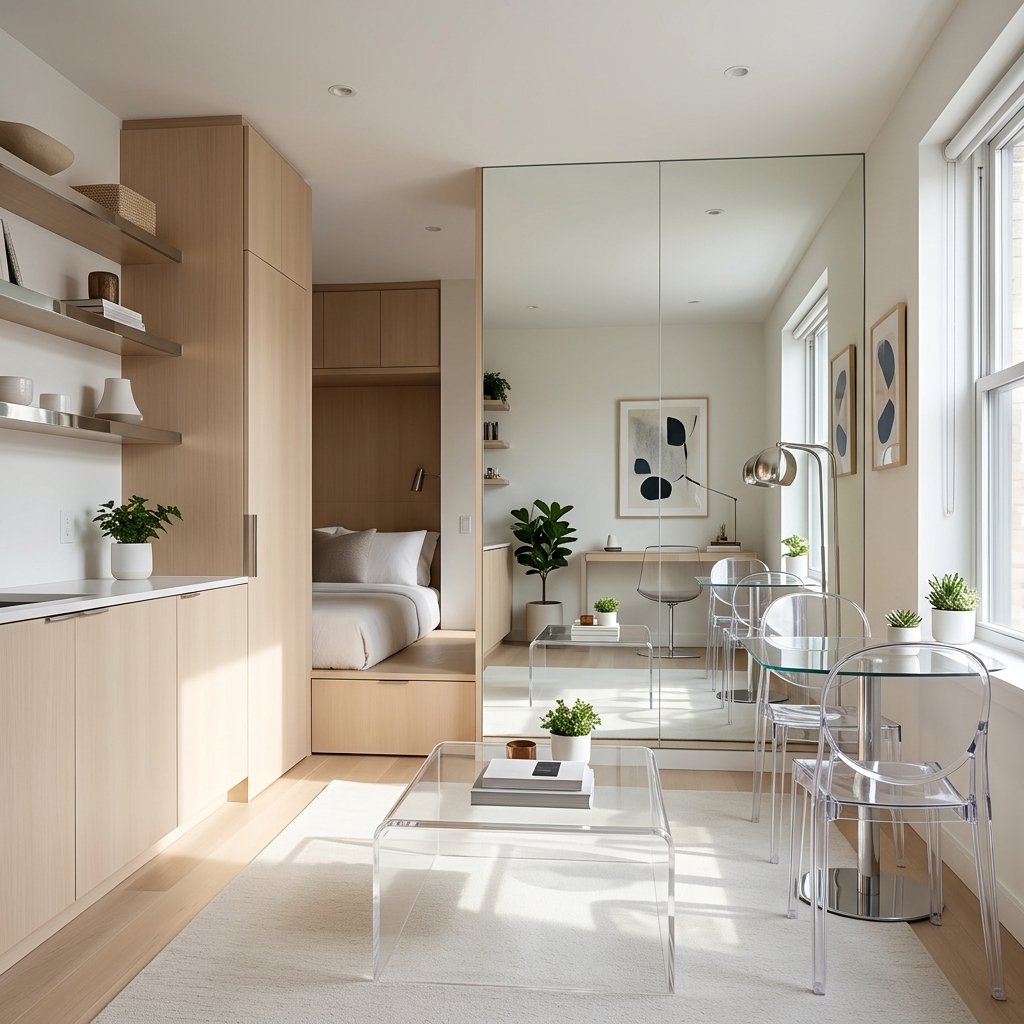
Every article about small apartment living will tell you to use mirrors to make the space feel bigger. To choose furniture with legs so the floor is visible. To keep things light and neutral. To declutter, to edit, to purge. All of that advice is correct and none of it is the thing that actually transforms a small apartment from a space you manage to a space you genuinely love.
The thing that transforms it is almost never mentioned, and when it is, it is buried in the middle of a list where it does not get the weight it deserves. So it is getting its own article.
The trick is this: most small apartments feel small not because they are small but because nothing in them has been done with commitment. Every choice has been made tentatively. The rug is a little too small because a big rug felt like too much. The art is hung a little low because eye level felt safer than high. The sofa is pushed against the wall because the centre of the room felt too bold. The curtains hang from the window frame rather than from close to the ceiling because ceiling-height curtains seemed like a dramatic choice for a small space.
That tentativeness is what makes small apartments feel small. Every half-committed choice confirms the smallness of the space rather than defying it. And the counterintuitive truth is that bold, committed, appropriately scaled choices in a small apartment make it feel significantly larger than small, cautious choices do.
This article unpacks exactly how that principle works in practice, room by room, choice by choice, with the specific applications that designers know and rarely lead with because the reasoning requires a bit more explanation than a quick tip can carry.
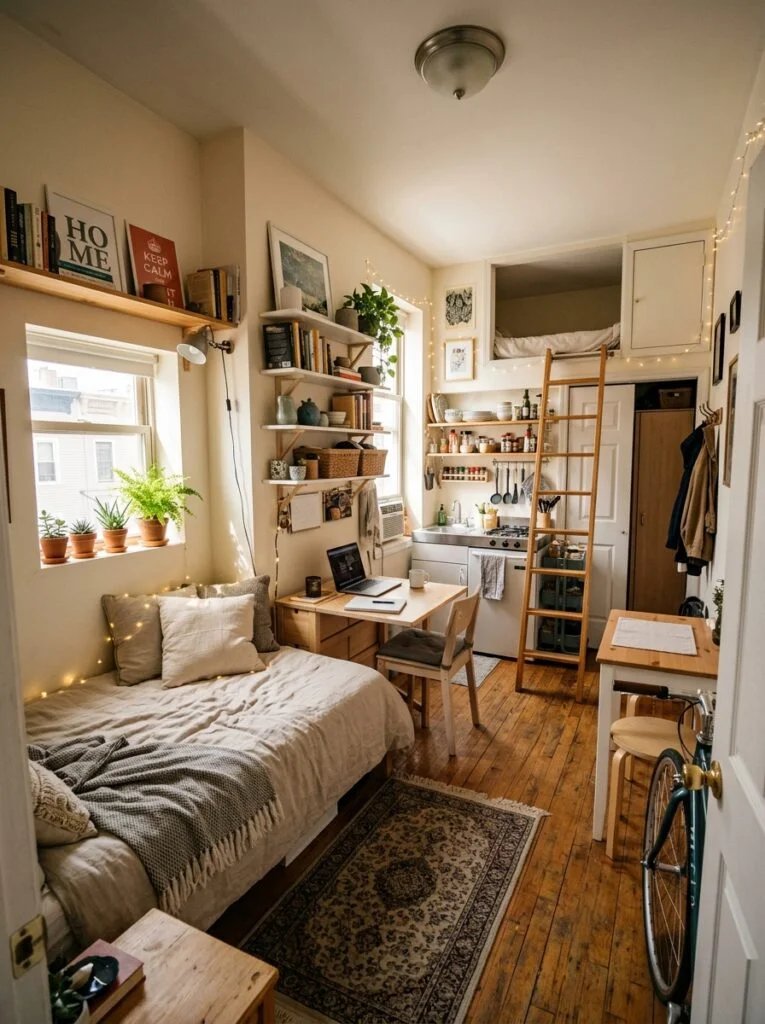
The Commitment Principle: Why Tentative Choices Make Small Rooms Smaller
To understand why commitment matters, it helps to understand how the eye and brain assess the size of a space.
When you enter a room, your brain rapidly surveys the visual elements and draws conclusions about the space from what it sees. A rug that fits the furniture with room to spare signals that the furniture is correctly proportioned for the space. A rug that barely extends beyond the legs of a sofa signals that the furniture is too large for the rug, which makes the brain read the space as too small for the furniture, which makes the space feel small.
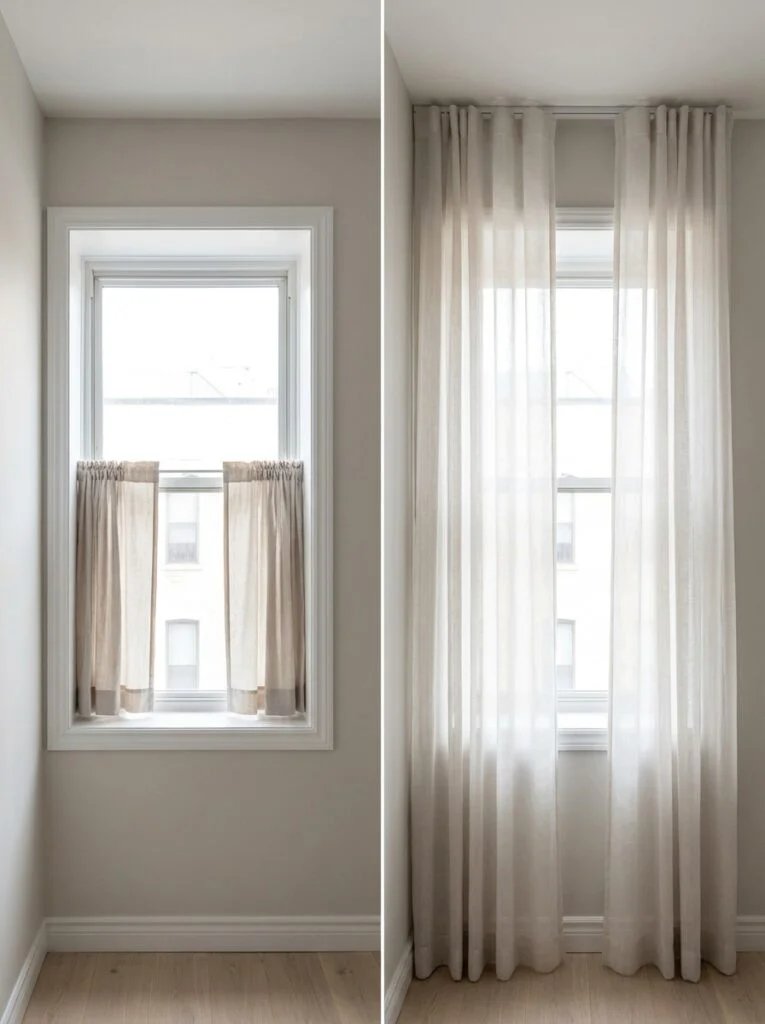
Curtains hung at window-frame height signal that the window goes from the frame to the floor. Curtains hung near the ceiling with enough width to extend beyond the window frame signal that the window is the full height of the wall. The same window, in the same small room, reads as dramatically different in size and proportion depending on where the curtain rod is placed.
These are perceptual effects rather than physical ones. The room does not change size. What changes is the visual information the eye receives and the conclusions the brain draws from it. Every bold, committed, well-scaled choice in a small apartment feeds the brain with visual information that reads as spacious. Every tentative, undersized, cautious choice feeds the brain with information that reads as cramped.
This is the principle. Every specific piece of advice that follows is an application of it.
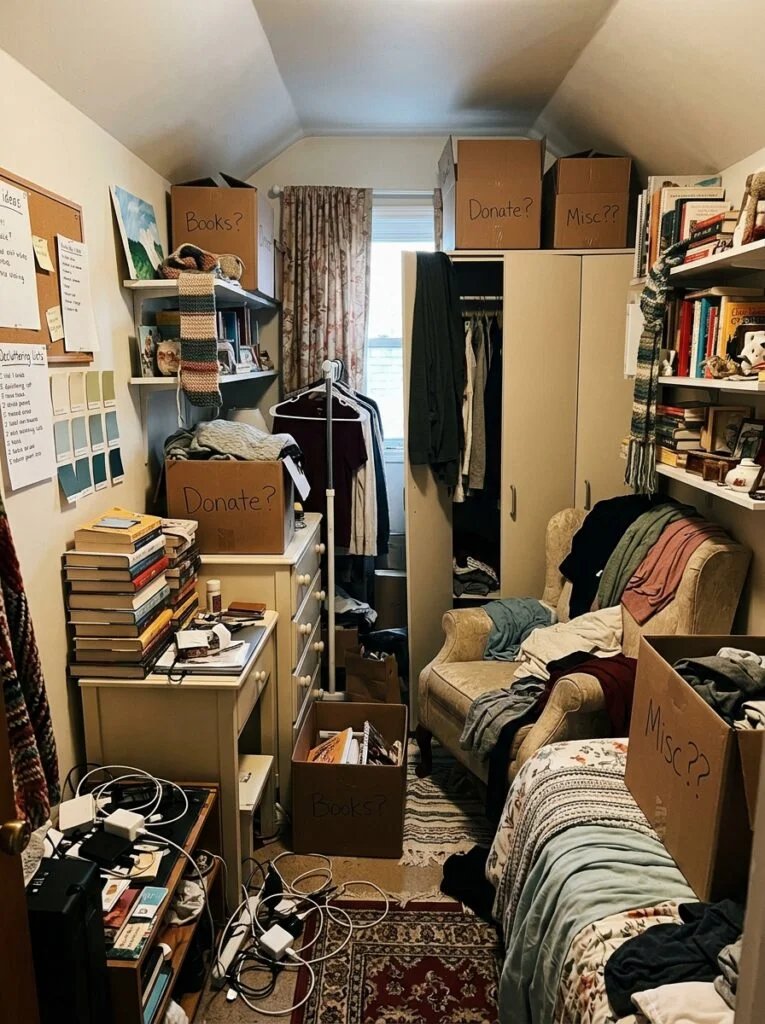
The Rug: Go Bigger Than Feels Comfortable
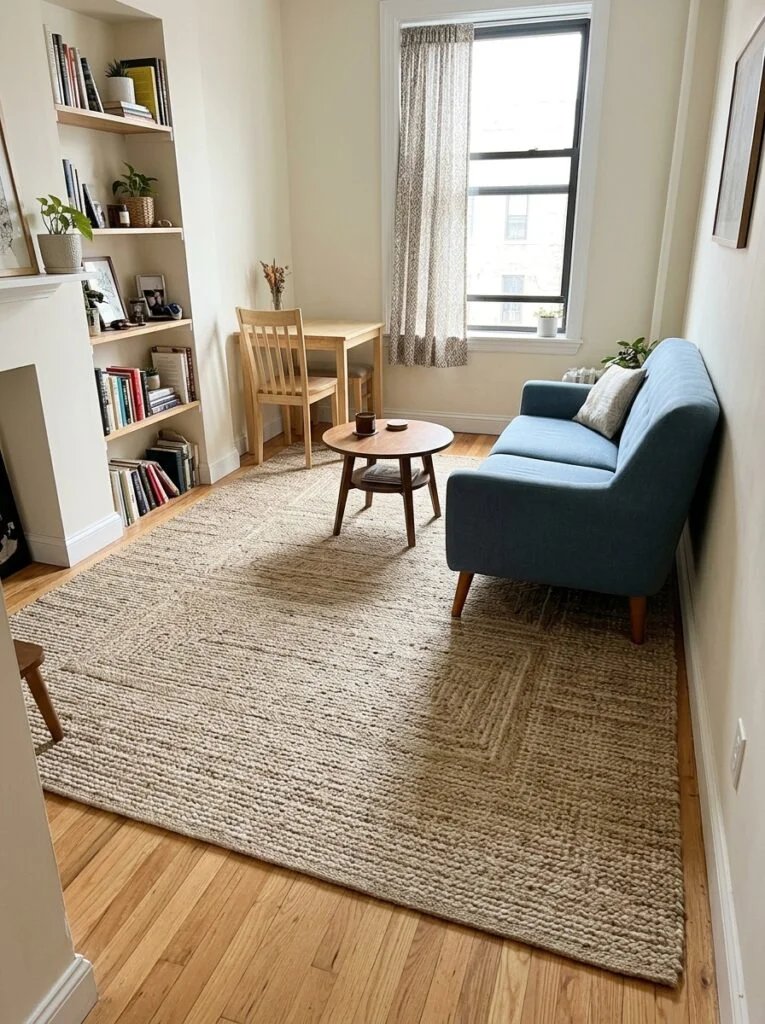
This is the single change that produces the most dramatic improvement in how a small room feels, and it is the change most consistently resisted because the instinct runs in precisely the wrong direction. Small room, people think, means small rug. No. Small room means large rug.
A rug that is the right size for a living room seating area allows the front legs of the sofa and both accent chairs to sit on it comfortably. In a small apartment, that typically means a rug of at least eight feet by ten feet, and more often nine feet by twelve feet. The rug extends beyond the furniture grouping on every side, which tells the eye that the furniture is correctly scaled for the space, which tells the brain that the space is generously sized.
A rug that barely fits under the coffee table with no furniture touching it has the opposite effect. It floats in the middle of the floor like a small island and confirms to the eye that everything in the room is trying to fit into an inadequate space.
If a large rug feels genuinely too expensive, a dhurrie, a flatweave jute, or a simple striped option in the right dimensions will be significantly more effective than a beautiful but undersized option at any price point. Size matters more than material in this specific context.
The Curtains: Hang Them at the Ceiling
This is the second most impactful change in a small apartment and the one that most directly addresses perceived ceiling height as well as perceived window size. Most curtain rods in apartments are installed at the window frame. This is the wrong placement in almost every small apartment.
Mounting the curtain rod as close to the ceiling as structurally possible, and making the curtains long enough to touch or slightly puddle on the floor, creates a visual line that extends from ceiling to floor. The eye follows this line and registers the full height of the room rather than the height of the window. The room appears taller.
Extending the rod six to twelve inches beyond the window frame on each side, and making the curtains wide enough to cover those extensions, means the curtains fall beside the window frame rather than in front of it. When the curtains are open, the window appears to be as wide as the curtain span, which is wider than the window itself. The room appears to have more window than it does, which means it appears brighter and more spacious.
The total cost of ceiling-height curtain rods, brackets, and curtains is not dramatically higher than window-height versions, and the visual impact is genuinely transformative. This is one of the few small apartment changes where the improvement is immediately visible to every person who walks into the space.
The Art: Hang It Higher Than Feels Right
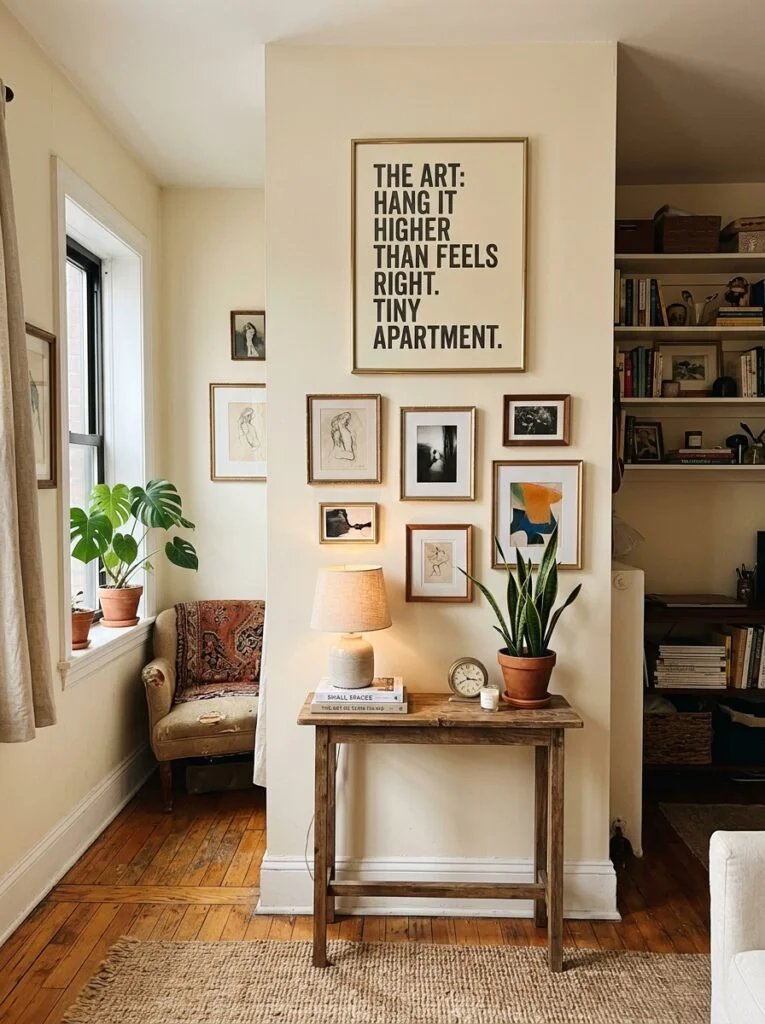
Art hung at standard eye level in a small room with a low or standard ceiling confirms the ceiling height rather than challenging it. Art hung higher than feels comfortable pulls the eye upward, suggests more vertical space than the room technically has, and makes the ceiling feel further away than it is.
The conventional advice to hang art at fifty-seven inches from the floor to the centre of the piece is correct for galleries and for rooms with generous ceiling heights. In a small apartment with standard or low ceilings, hanging art higher, at sixty-five to seventy inches from the floor to the centre of the piece, creates a more dynamic relationship between the art and the ceiling that makes the room feel taller.
A single large piece of art is also significantly more effective in a small apartment than multiple smaller pieces. A collection of small pieces of art in a small room creates visual fragmentation: the eye has to work to process multiple separate objects, which makes the space feel busier and more cramped. One large piece that commands a wall creates a single clear focal point that gives the eye somewhere to rest and the brain a clear signal about where the attention belongs.
Vertical art, whether a single tall piece or a tightly grouped vertical arrangement, emphasises the height of the room. Horizontal arrangements or single wide pieces emphasise the width.
The Sofa: Move It Away From the Wall
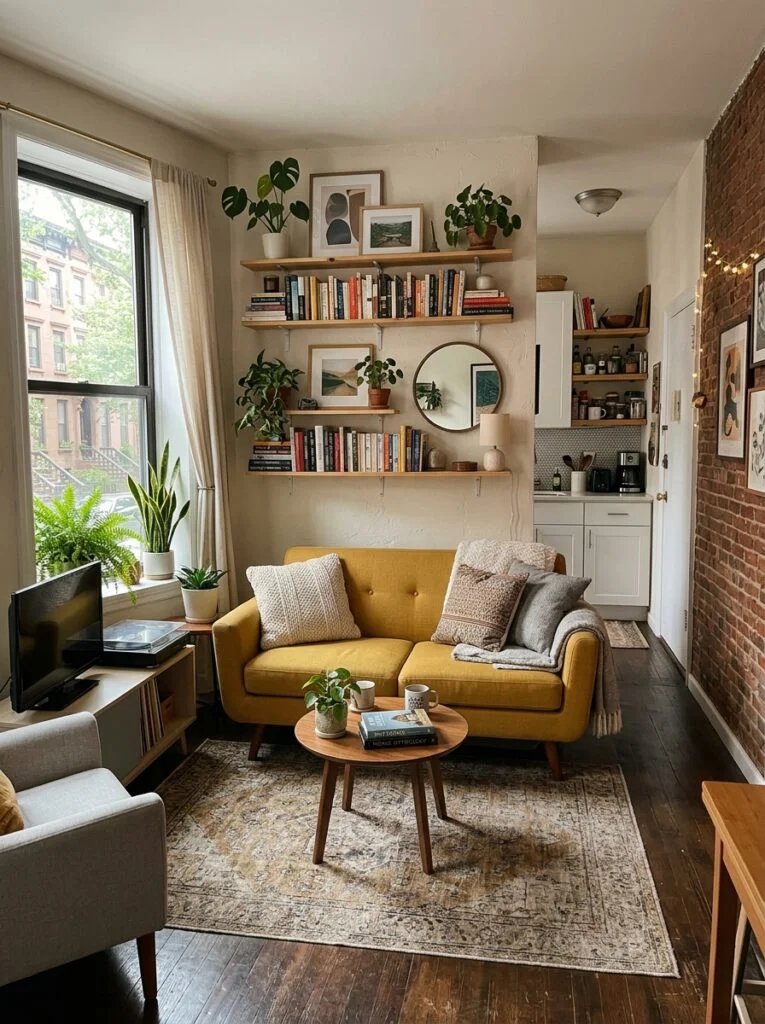
Every interior designer knows this and almost no one who is not a designer does it instinctively: furniture pushed against the walls in a small room does not create more space. It creates less. The psychological effect of furniture hovering near the perimeter of a room is that the centre of the room looks empty and awkward, and the walls themselves look as though the furniture has been crowded against them because there is nowhere else to put it.
Moving the sofa even a few inches away from the wall, creating a small visible gap between the back of the sofa and the wall, does two things simultaneously. It makes the sofa look like a piece of furniture that belongs in the centre of the room rather than an afterthought pushed to the edge. And it creates the visual impression of a room large enough for the furniture to be positioned freely rather than constrained to the perimeter.
In a very small living room, floating the sofa so it faces the television or the focal point of the room, with enough space to walk behind it, creates a living area that reads as a complete, intentional composition rather than furniture arranged around the edges of a box.
The Mirror: One Large Instead of Many Small
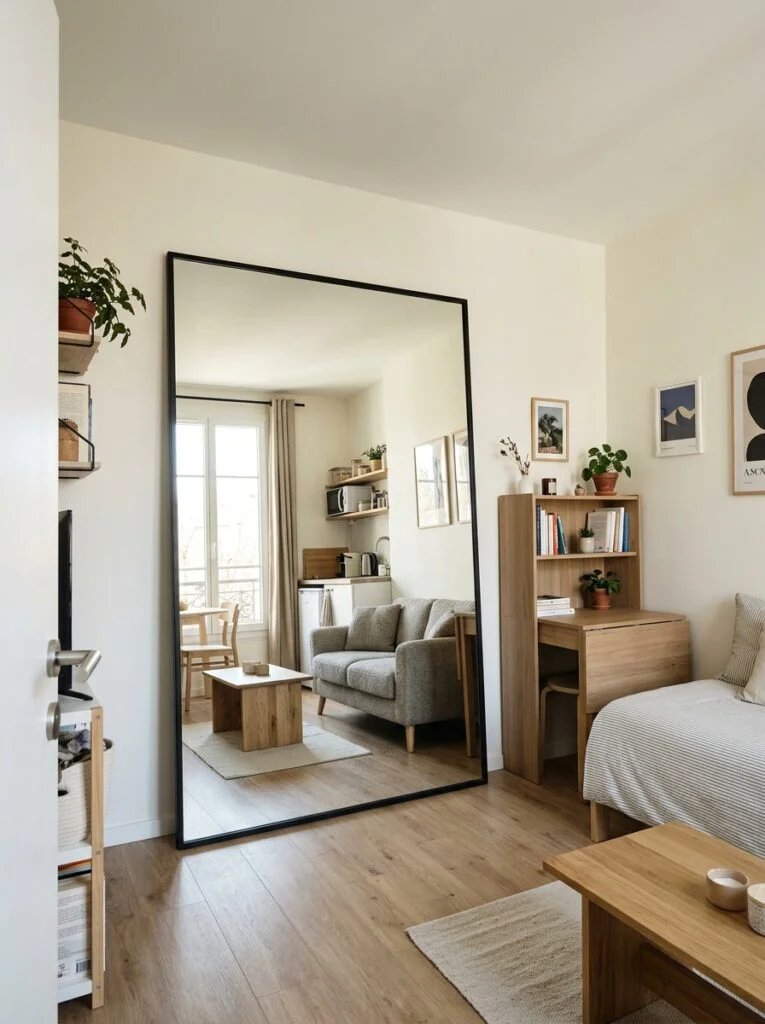
Mirrors in small spaces are almost universally advised, and the advice is correct, but the application matters enormously. A collection of small mirrors is significantly less effective than a single large one. The small collection creates the same visual fragmentation that a gallery wall of small art pieces creates: the eye has to process many separate elements, which is cognitively busier than processing one.
A single large mirror, ideally as large as can comfortably be accommodated on the wall where it will be placed, reflects the full scene rather than a fragment of it. It creates the impression of a continuation of the room rather than the impression of a surface with some reflective elements on it. The room appears to have a double in that direction, which doubles the perceived volume.
The placement of the large mirror matters. Placing it on the wall opposite a window reflects the window light back into the room, which both amplifies the natural light and creates the impression of a light source where there is none. Placing it at the end of a narrow corridor creates depth where the corridor would otherwise terminate abruptly. Placing it beside a light source, a lamp or a cluster of candles, amplifies the light significantly.
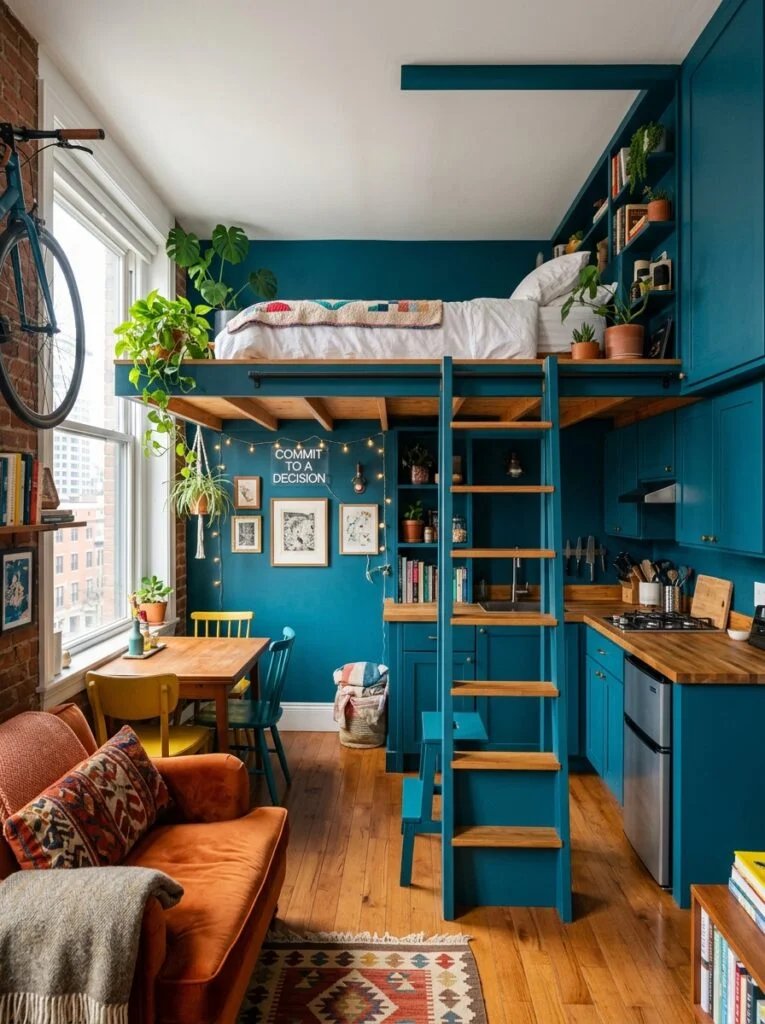
The Colour: Commit to a Decision
Tentative colour decisions are among the most common reasons small apartments look small. A wall colour that is very pale but not technically white, chosen because white felt too stark but colour felt too bold. A piece of furniture in a mid-brown that goes with everything and also does not do much with anything. An accent pillow in a safe complementary tone that does not fully commit to either the sofa colour or the accent colour it was supposed to introduce.
The small apartments that feel the most expansive and the most considered are often the ones where a specific colour decision was made and committed to: a deep, rich wall colour that makes the room feel like a jewel box rather than a cramped cell. A sofa in a strong neutral that holds its own. Accent pieces in a specific colour that was introduced deliberately and returned to consistently.
A dark paint colour in a small room is one of the most commonly feared and most consistently misunderstood choices available. The received wisdom is that dark colours make small rooms feel smaller. This is frequently wrong. Dark colours, when applied with commitment and paired with appropriate lighting, create a sense of depth and atmosphere that makes a room feel more like a complete world rather than an inadequate version of a bigger room. The walls recede visually rather than advancing. The room feels enveloping rather than cramped.
The important caveat: a dark colour requires good lighting to work. Natural light and a well-designed artificial lighting scheme that includes ambient, task, and accent layers are essential companions to a dark wall colour in a small space.
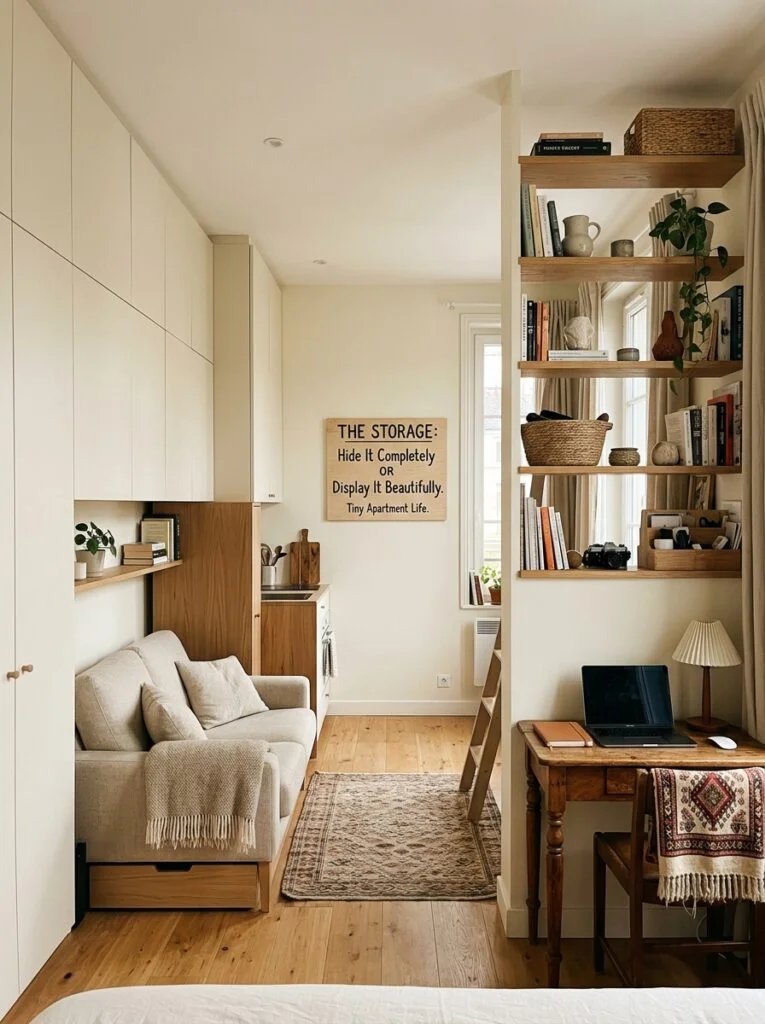
The Storage: Hide It Completely or Display It Beautifully
Small apartments have a storage problem. There is more to store than there is space to store it, and the resulting accumulation of visible storage creates visual noise that makes the space feel smaller than it is. The solution is not more storage. It is a decision about whether storage is hidden completely or displayed as part of the design.
Hidden storage means everything is contained inside closed units, drawers, cabinets, and ottomans, with no visible accumulation of objects above counter level except those objects that have been specifically chosen to be displayed. The effect is a room that appears uncluttered and spacious rather than efficiently packed.
Display-as-design means the things that must be out are organised and styled with enough intention that they contribute to the visual narrative of the space rather than simply cluttering it. A bookshelf where books are organised by colour creates a visual element that reads as design rather than storage. A kitchen counter where everything on display is beautiful and intentionally placed reads as a curated still life rather than a cluttered surface.
What creates the impression of smallness is neither storage nor display on its own. It is the unhappy middle ground where some things are stored and others are displayed but neither the storage nor the display has been done with commitment. That middle ground reads as incomplete and disorganised, which the brain registers as cramped.
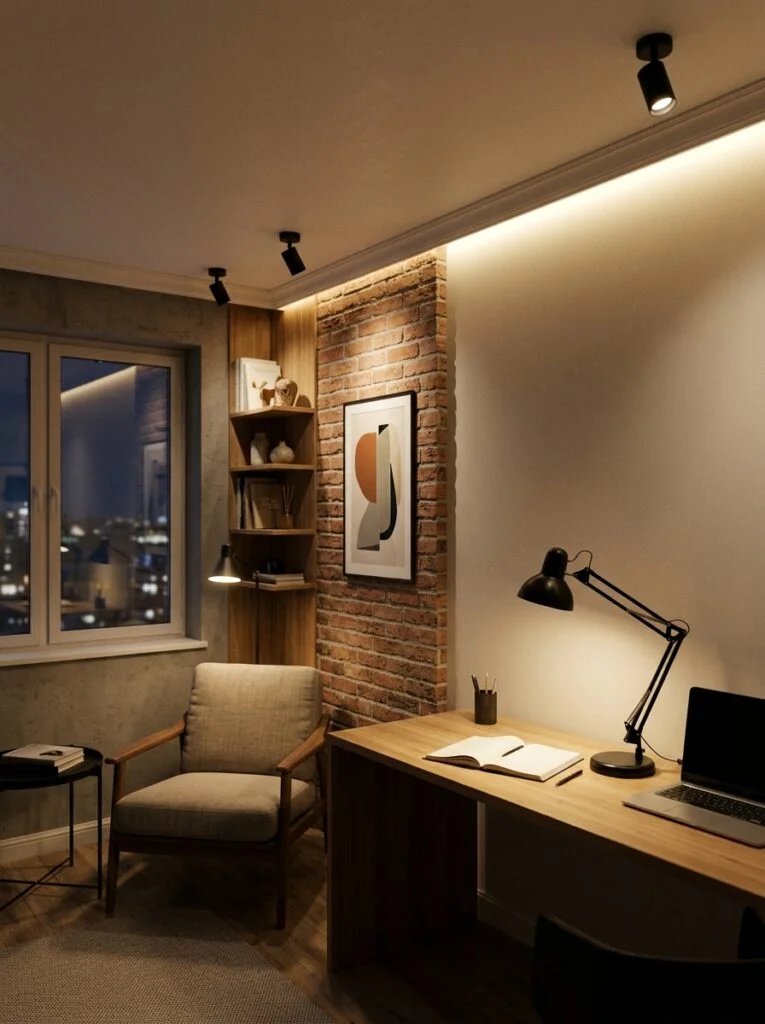
The Lighting: Three Layers, Not One Overhead
The lighting situation in most small apartments is the overhead fixture that came with the unit, possibly supplemented by one or two table lamps. The overhead fixture illuminates the space evenly and flatly, which means there are no shadows, no depth, and no atmosphere. The room looks like what it is: a small box that is well-lit.
Three layers of light create the atmosphere that makes a small room feel like a space worth spending time in: ambient light for general illumination, task light for specific functional needs, and accent light that creates warmth and focal points.
A floor lamp with a warm-toned bulb in the corner of a room creates a pool of warm light that makes that corner feel like a destination rather than an edge. A small lamp on a bookshelf or side table adds a layer of warmth that the overhead fixture cannot replicate. Candlelight or a wax warmer in the evening adds a quality of light that transforms the room from a space that is fully illuminated to one that feels genuinely inviting.
Warm bulbs, between 2700K and 3000K, are essential in small apartments because they make the space feel warmer and more intimate rather than bright and functional. An overly bright, cool-toned light in a small apartment reveals its limitations. Warm, layered light conceals them and creates something better.
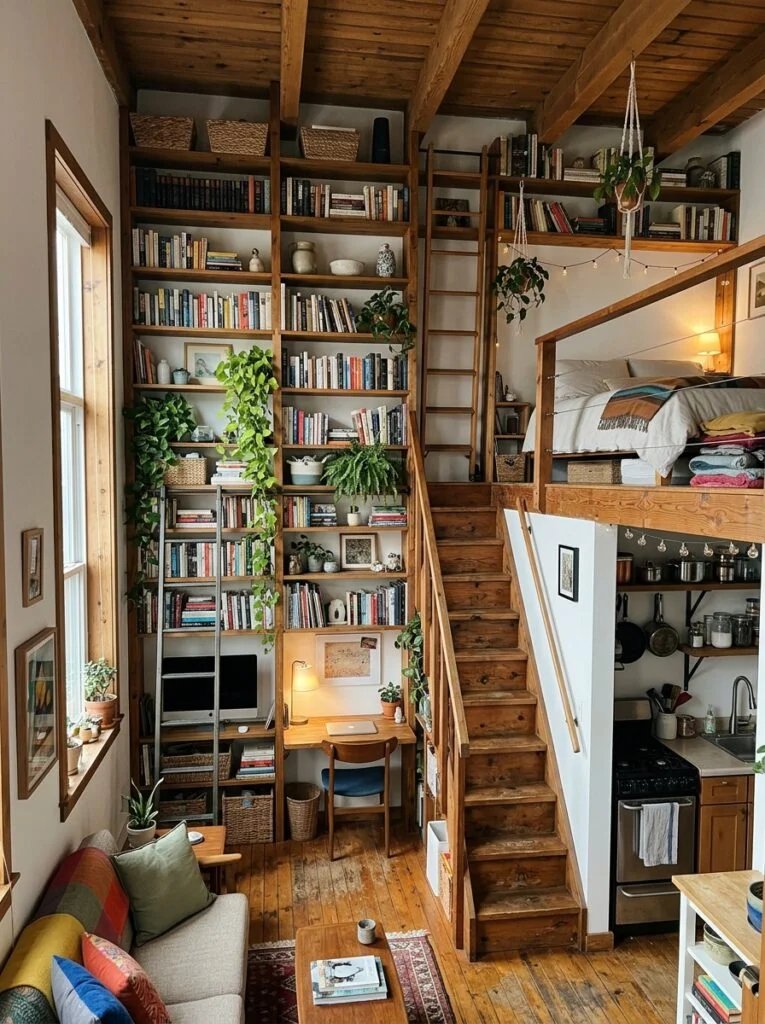
The Vertical Dimension: Use It Completely
The most unused resource in most small apartments is the space between the top of the furniture and the ceiling. This space, which in a standard apartment with nine-foot ceilings is often three feet or more above the top of a six-foot bookcase, is where commitment to scale would place things but where cautious decorating leaves them empty.
Bookshelves built up to the ceiling or very close to it: most ready-to-assemble shelving is available in tall configurations that reach within a foot or two of a standard ceiling, and stacking two units doubles the vertical storage while creating a dramatically different visual impression than a single unit with empty space above it.
Art hung high: already covered, but worth repeating in the context of the vertical dimension, because it is the most direct way to draw the eye upward into the space that is currently unused.
Plants that are tall, large-scale, and placed in the corners of a room rather than on shelves or counters: a large fiddle-leaf fig, a bird of paradise, or a tall monstera in a floor-level pot fills vertical space in a corner in a way that communicates that the room extends upward and that the space has been considered from floor to ceiling.
Pendant lights hung from the ceiling rather than table lamps where the ceiling height allows: pendant lights draw the eye upward and create a visual connection between the furniture level and the ceiling that makes the room feel like a complete, vertically considered space.
The Common Mistake That Undoes Everything Else
All of the above changes work cumulatively. A large rug with ceiling-height curtains and art hung high and furniture floated from the walls creates a room that feels significantly more spacious and more considered than the same room with any single one of those changes in isolation.
But there is one consistent mistake that undoes the cumulative effect of all of them: too much furniture.
A small apartment that has been beautifully styled with the right scale, the right art placement, the right curtains, and the right lighting still feels cramped if it contains more pieces of furniture than the space can comfortably hold. The brain can process the visual signals of scale and proportion up to a point, but a room crowded with furniture registers as crowded regardless of how well each individual piece is styled.
The small apartment requires the same editing that a capsule wardrobe requires: fewer pieces, each one genuinely good and genuinely necessary, rather than every piece that might be useful. A living room with a sofa, a coffee table, one or two accent chairs, and one side table is typically all a small apartment living room can hold while still feeling spacious. Adding a second sofa, an armchair, a console table, a floor lamp, and a collection of small side tables might work in a large room and creates clutter in a small one.
Edit the furniture. Keep what is necessary and genuinely good. Remove what is there by default or by inertia. The room will breathe, and the breathing is the thing that makes a small apartment feel like a home rather than a managed inconvenience.
Frequently Asked Questions
What is the single most effective change for a small apartment? Moving from a tentative, undersized rug to a correctly sized one that allows all the seating furniture’s front legs to rest on it produces the most immediately visible improvement in how a small living room reads. It is also the change most people resist most strongly because a large rug in a small room feels counterintuitive. It is not. It is one of the most powerful perceptual tricks available in interior design.
Do dark colours really work in small apartments? Yes, in the right conditions. A dark wall colour in a small apartment requires adequate lighting, both natural and artificial, to work as intended. With good lighting, a dark paint colour makes a small room feel like a deliberate design choice, a jewel box or an intimate retreat rather than a cramped space. Without adequate lighting, any dark colour will feel oppressive regardless of how it is applied. The lighting is the non-negotiable companion to any dark colour decision.
How do I make a studio apartment feel like it has separate spaces? The most effective technique is using rugs to define zones. A rug beneath the seating furniture defines the living area. A rug under or around the dining table defines the dining area. A room divider, a bookcase placed perpendicular to a wall, a curtain panel, or even a different wall colour on one wall can suggest a bedroom zone without physical separation. The visual definition of distinct zones within a single open space creates a perception of having multiple rooms rather than one undivided box.
Is it worth hiring an interior designer for a small apartment? If the budget allows it, yes. An experienced interior designer has an understanding of scale, proportion, and spatial perception that allows them to see the potential in a small space that most people cannot see when they are inside it. Even a single paid consultation, rather than a full design service, often produces insights and specific recommendations that produce significant improvements. Many designers offer hourly consultation rates that are accessible at a much lower cost than a full design project.
How do I make a small bedroom feel larger? The bedroom principles mirror the living room principles. A large rug that extends well beyond the bed on all sides. Curtains hung at the ceiling. Mirrors on the wardrobe doors or a single large mirror on the wall facing the bed. Lighting that layers ambient, task, and accent rather than relying on an overhead fixture alone. A bed frame in a colour close to the wall colour to reduce visual fragmentation. And a commitment to keeping surfaces clear rather than accumulating objects on every available horizontal space.
The Real Secret
The designers who create beautiful small apartments share one quality that has nothing to do with a specific trick or a particular product. They treat small spaces as complete design opportunities rather than as problems to be solved. They make committed choices rather than cautious ones. They choose one large mirror rather than three small ones. They use a dark paint colour rather than the palest version of it. They hang curtains at the ceiling rather than at the window. They float the furniture rather than push it to the walls.
The result is not a small apartment that has been made to look bigger through clever illusions. It is a small apartment that has been designed with enough commitment and enough confidence that it feels like a complete, considered space rather than an inadequate version of a larger one.
That is the trick. Commit to your choices. Make them at the right scale. And stop apologising for the size of the space by making every decision tentatively.

1 comment