14 Budget Living Room Ideas That Look Expensive
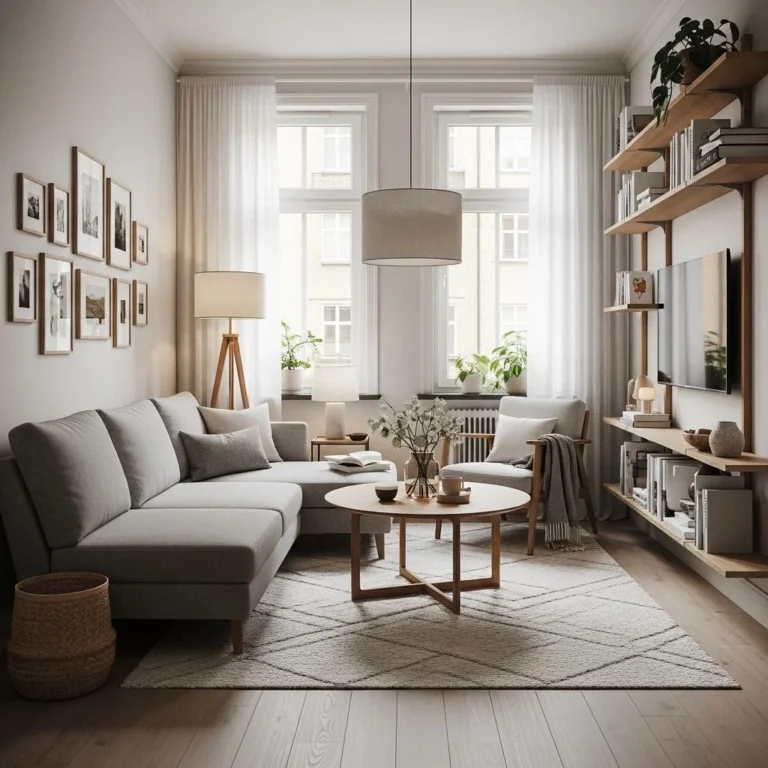
Achieve a high-end aesthetic on a modest budget by focusing on strategic styling over expensive renovations. In the world of professional interior design, luxury isn’t defined by a price tag, but by the intentionality of the layout and the quality of the “visual layers.” This budget strategy prioritizes high-impact adjustments—like repositioning existing furniture to improve flow or utilizing “designer hacks” like oversized art—to create a sophisticated, curated atmosphere. By focusing on the “bones” of the room and adding thoughtful, affordable accents, you can transform a standard apartment into a refined, high-clarity sanctuary that feels both expensive and deeply personal. The secret to an “expensive” look is consistency and contrast. For example, updating old cabinet hardware with sleek brass pulls or swapping out standard light bulbs for “warm white” LEDs can instantly elevate the mood of a room for under $50. This approach to frugal yet impactful design ensures that every dollar spent contributes to a cohesive vision, such as a tranquil Japandi retreat or a crisp Scandinavian living area. By mastering these clever techniques, you ensure your home remains architecturally light and aesthetically polished without the financial strain of a major overhaul.
1. Use Neutral Color Palettes
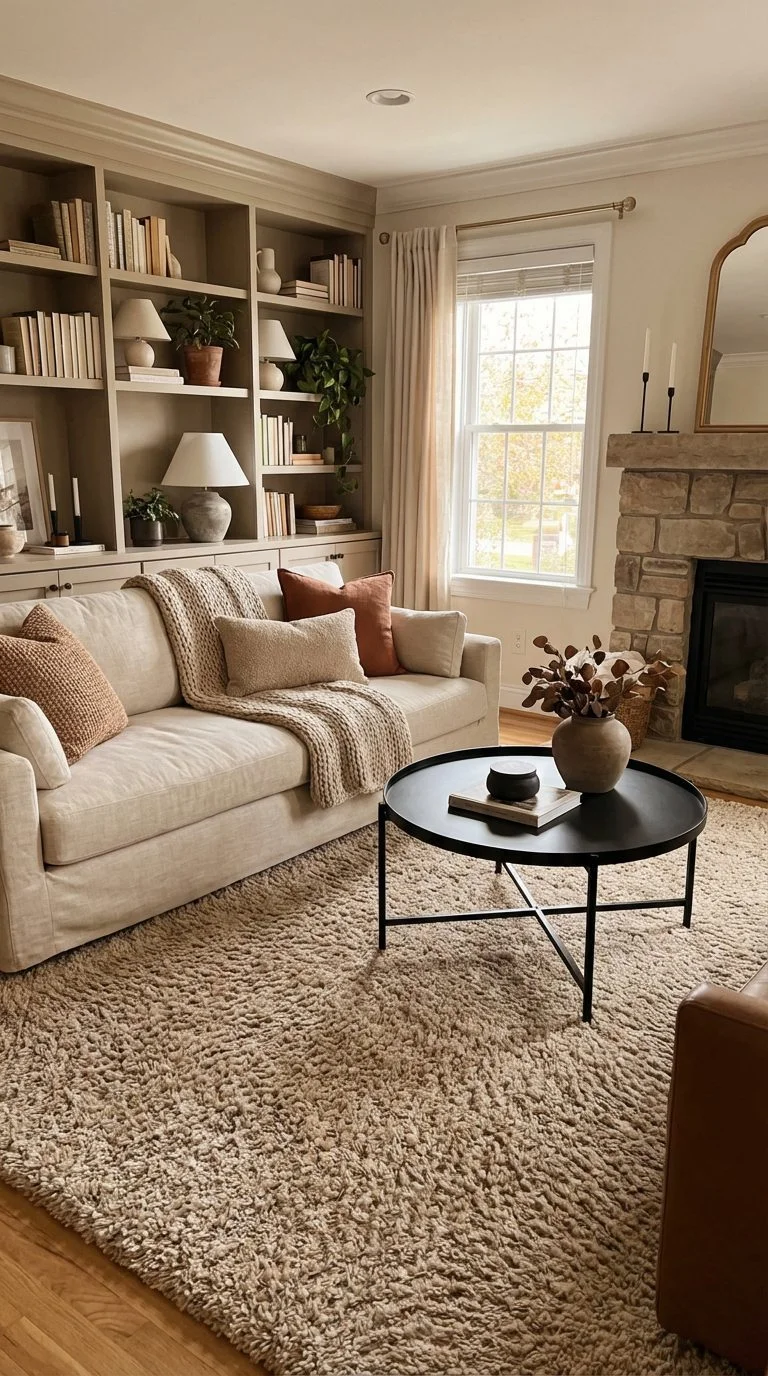
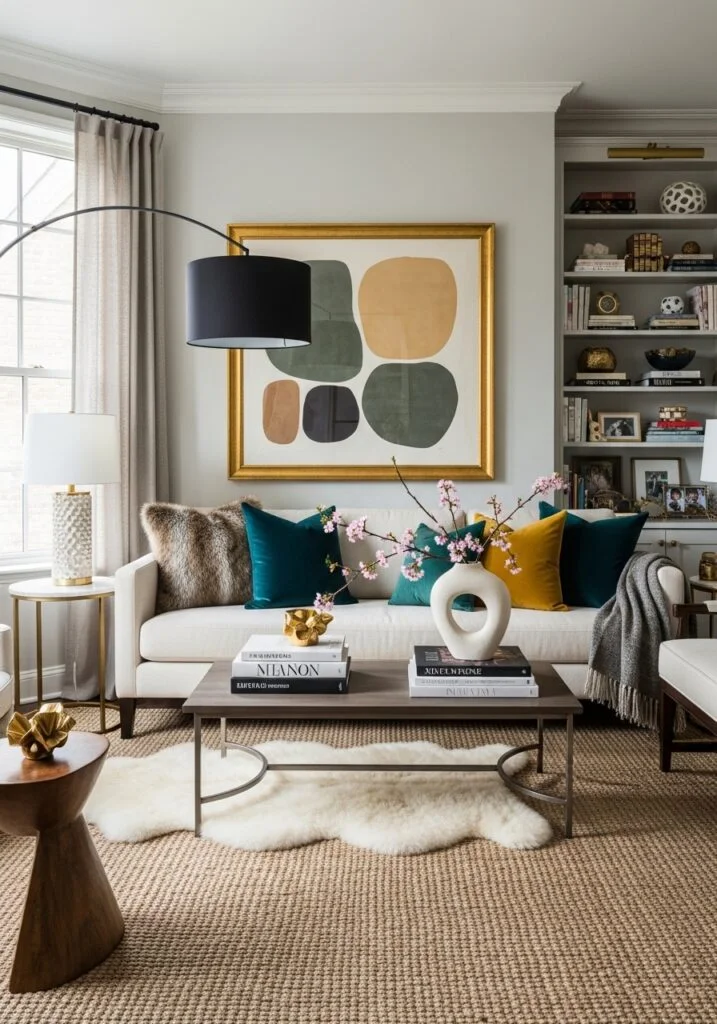
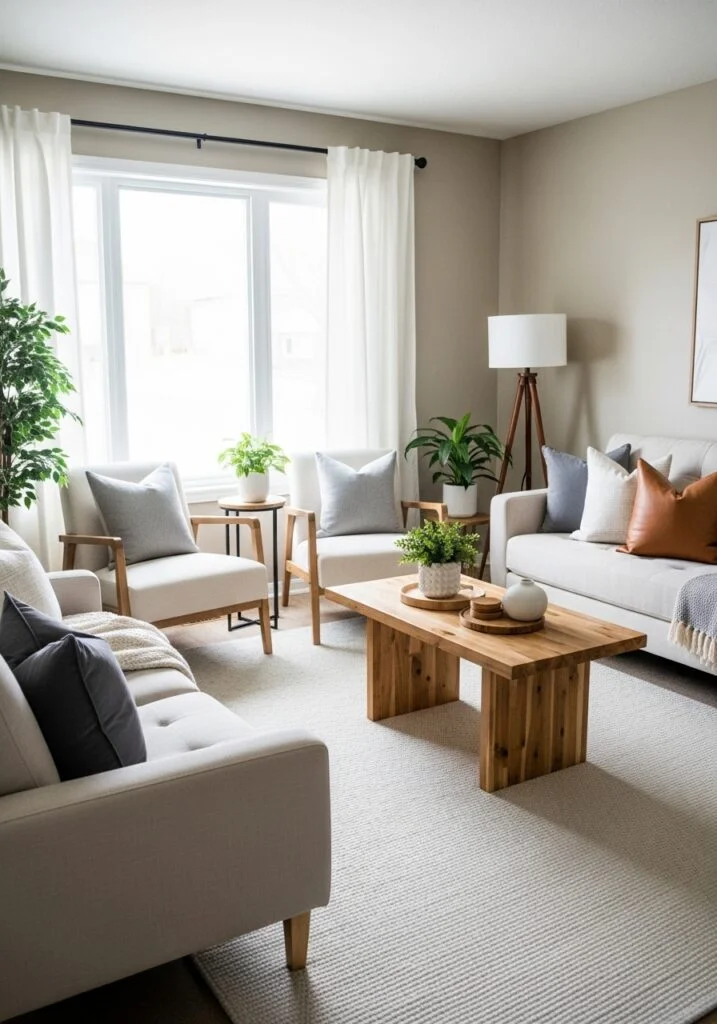
Establish a high-clarity foundation by adopting a neutral color palette, a cornerstone of sophisticated interior design that provides an immediate “luxury hotel” feel to any apartment. Utilizing a spectrum of creams, soft beiges, muted grays, and warm whites serves as a strategic “optical expander,” reflecting natural light to make smaller floor plans feel significantly more expansive and airy. This color strategy acts as a timeless canvas, allowing the architecture of the room to take center stage while providing the flexibility to evolve your style over time without the need for costly repainting. To ensure a neutral space feels “curated” rather than flat, professional designers focus on textural layering as a substitute for bold color. By contrasting soft elements like a bouclé chair or a linen sofa against “hard” accents like a natural oak coffee table or brushed brass fixtures, you create a multi-dimensional environment that feels both expensive and effortless. This approach is particularly effective for Scandinavian and Japandi-inspired interiors, where the goal is to create a serene, restorative sanctuary. By prioritizing a cohesive, light-toned palette, you achieve a sophisticated architectural balance that feels intentionally designed and perpetually modern.
2. Add Statement Throw Pillows
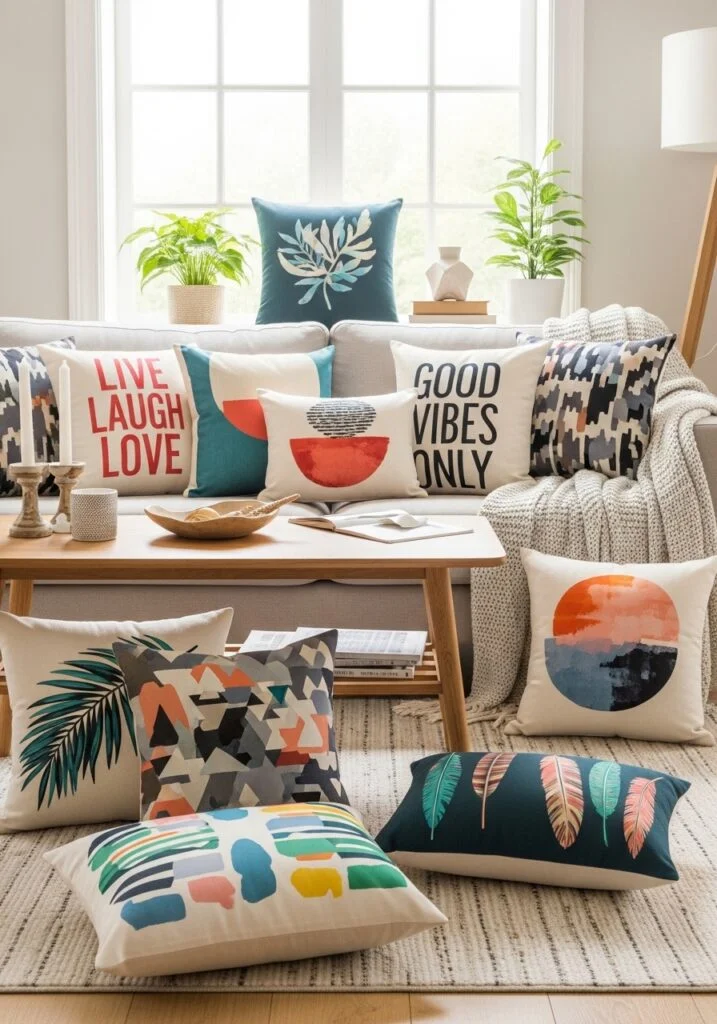
Enhance your seating area with statement throw pillows, a high-leverage styling technique that delivers an immediate “decorator’s touch” for a fraction of the cost of new furniture. In a professionally styled apartment, pillows are used to bridge the gap between “functional seating” and a “curated sanctuary.” By selecting rich textures like velvet, heavy linen, or intricate embroidery, you introduce a layer of tactile luxury that makes even a basic neutral sofa feel custom-made. This textile strategy focuses on creating “visual density” through layering, which draws the eye and gives the room a polished, high-end finish. The secret to a “designer-grade” arrangement is the intentional mix of scale and pattern. Instead of matching sets, use a balanced odd-numbered grouping—typically three to five pillows—to create a sense of organic movement. By pairing a large, solid-textured base pillow with a smaller, subtly patterned companion and a singular “accent” piece in a contrasting fabric, you create a sophisticated, multidimensional look. This low-commitment styling trick is essential for modern minimalist and Scandinavian aesthetics, where the goal is to add depth and “personality” while maintaining a clean, streamlined environment.
3. Upgrade Your Lighting
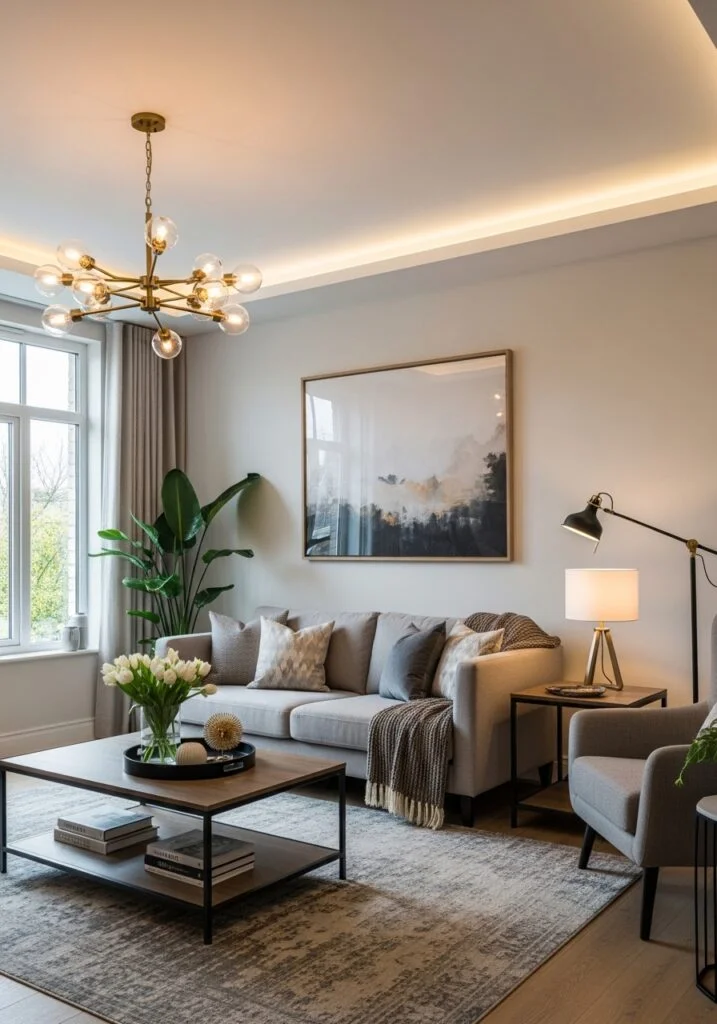
Elevate the “architectural mood” of your home by upgrading your lighting, a high-impact design move that instantly shifts a room from basic to bespoke. In professional interior styling, lighting is treated as the “jewelry” of the space; it defines the atmosphere and highlights the textures you’ve carefully curated. By replacing generic, overhead fixtures with stylish floor lamps, sculptural table lamps, or modern pendants, you introduce intentionality into your floor plan. This illumination strategy focuses on replacing “flat” light with layered, warm-toned sources to create a sophisticated, three-dimensional sanctuary that feels thoughtfully designed and exceptionally welcoming. The hallmark of an expensive-looking living room is “lighting layering,” which involves distributing light at different heights rather than relying on a single ceiling source. Integrating lamps with metallic finishes, such as brushed brass or matte black, adds a touch of modern sophistication even on a modest budget. For a clean, minimalist aesthetic, choose fixtures with slim profiles to maintain “visual lightness.” By prioritizing warm-white bulbs (around 2700K), you ensure your space feels soft and restorative, transforming a standard apartment into a luminous, high-clarity environment that looks professionally curated at any hour.
4. Use Large Wall Art
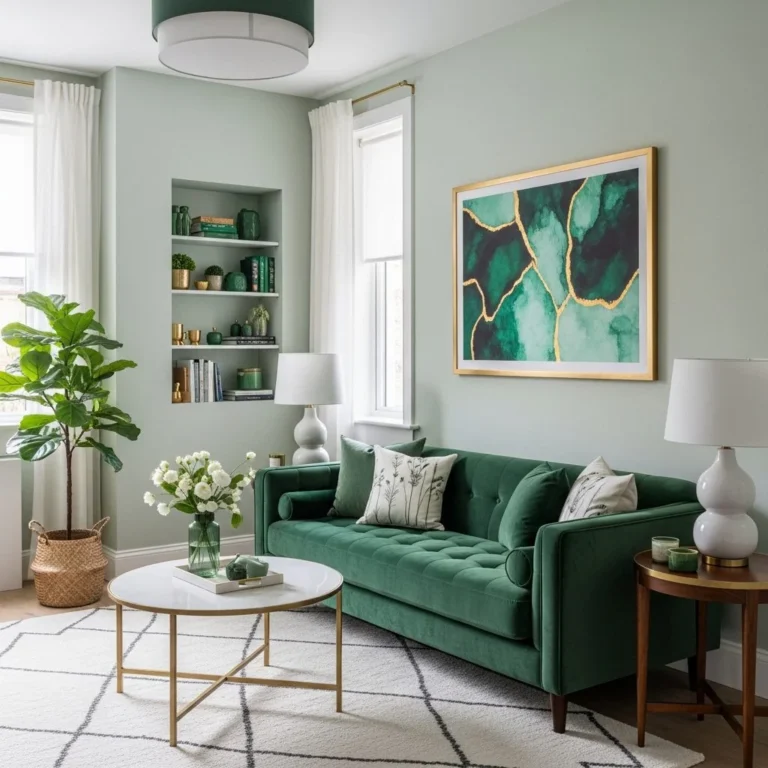
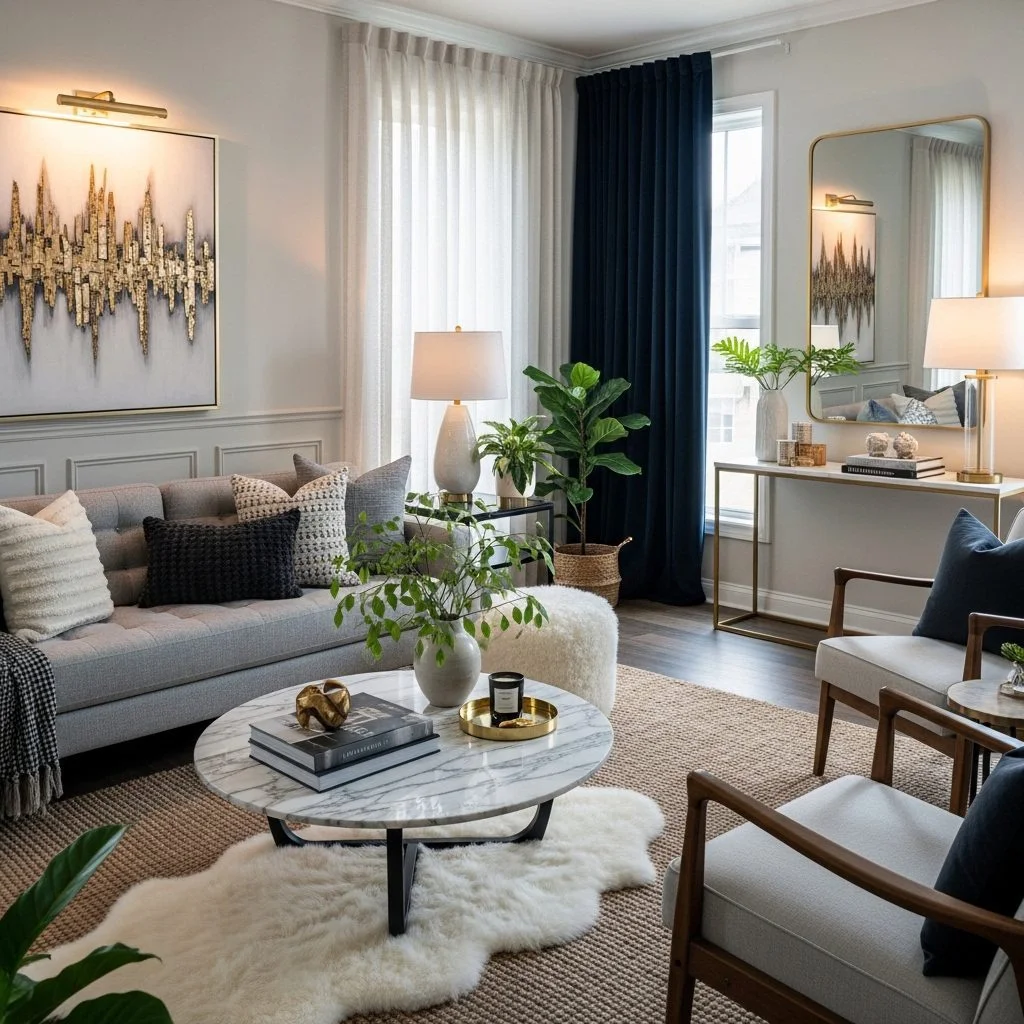
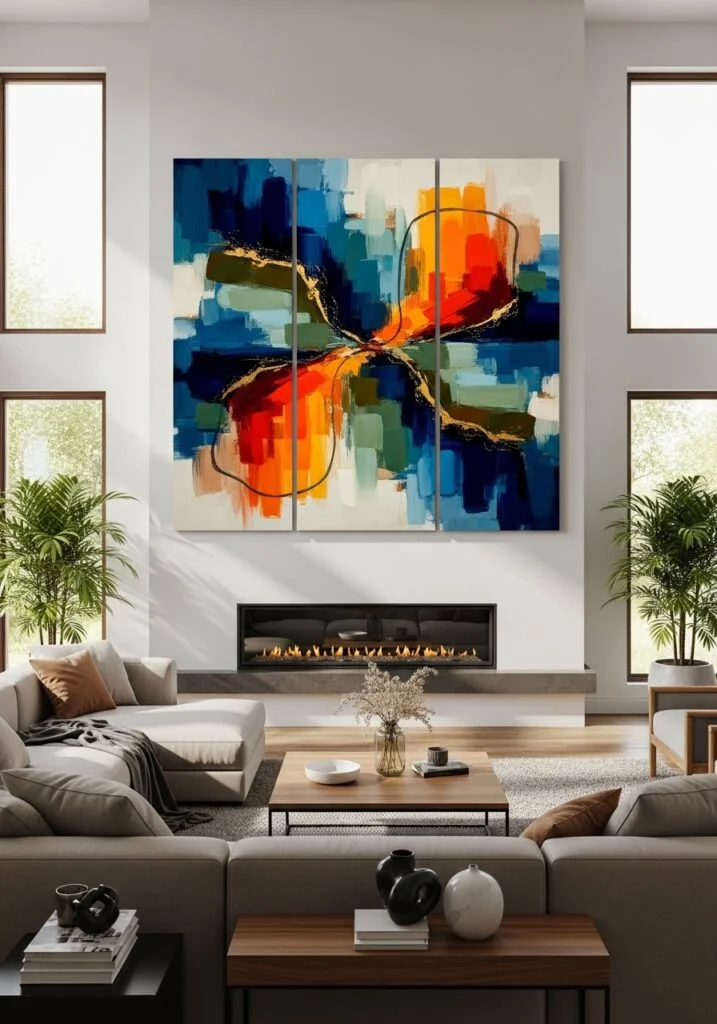
Establish a powerful architectural focal point by incorporating large wall art, a strategic design choice that instantly elevates the perceived value of your living room. In professional interior styling, a singular, oversized piece—whether an abstract canvas, a nature print, or a minimalist graphic—acts as an “anchor” for the entire space. This gallery strategy is far more effective in a small apartment than multiple small frames, as it draws the eye to a single point of interest, creating a sense of height and grandeur while eliminating “visual noise.” To achieve a high-end, gallery-inspired look on a budget, the secret lies in the framing. Even an affordable print can look like a custom commission when placed in a clean, oversized frame with a generous white mat. For a sophisticated and cohesive aesthetic, position the artwork about 6 to 10 inches above your sofa or console table, ensuring it is roughly two-thirds the width of the furniture below it. This approach to spatial optimization is a hallmark of modern and Japandi-inspired interiors, transforming a standard wall into a curated, high-impact feature that feels intentionally designed and architecturally light.
5. Style a Coffee Table Like a Designer
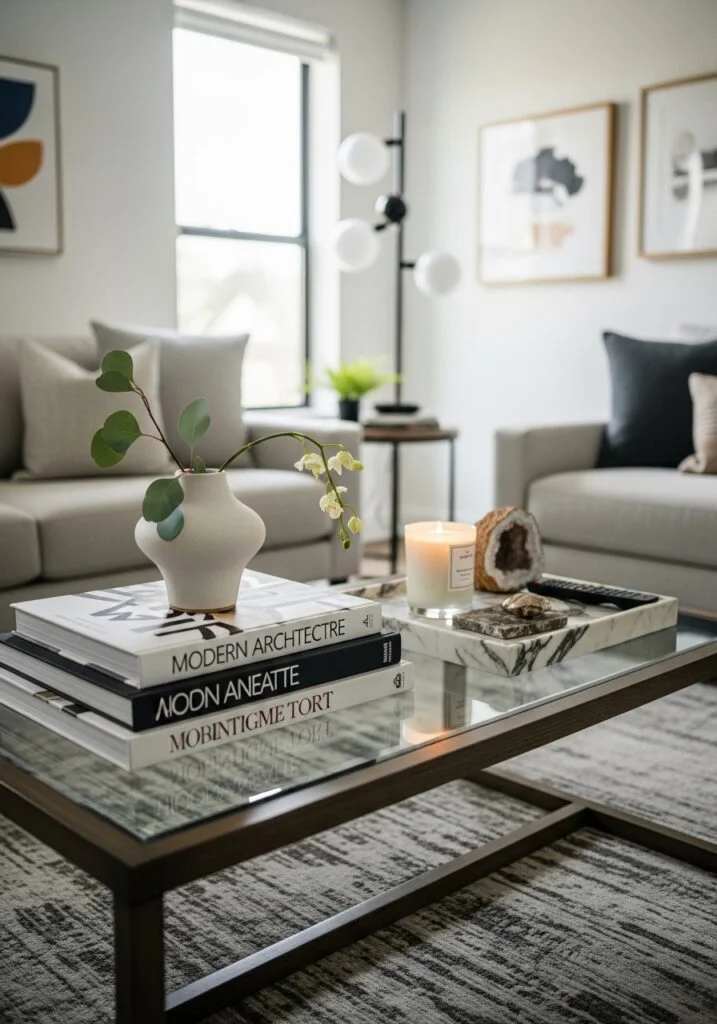
Transform your living area into a professionally curated sanctuary by styling your coffee table like a designer—a high-leverage technique that elevates the room’s entire “visual IQ.” In sophisticated interior styling, the coffee table is more than a surface; it is a dynamic focal point that bridges the gap between furniture and art. By utilizing a layering strategy, you can organize decorative elements—such as trays, books, and organic textures—to create a sense of balance and intentionality. This approach is essential for achieving a minimalist or Scandinavian-inspired look, where the goal is to create a “composed” feel that is both functional and architecturally light. The secret to a high-end display lies in the variation of heights and textures. A simple decorative tray acts as a “frame within a frame,” instantly corralling smaller items like candles or coasters into a polished, singular unit. To build depth, designers recommend stacking large-scale coffee table books to create a pedestal for a small plant or a sculptural object. This spatial zoning ensures that the arrangement feels rich and multi-dimensional rather than flat. By prioritizing quality over quantity and maintaining a “clean” perimeter, you transform a basic piece of furniture into a sophisticated, gallery-grade centerpiece.
6. Add a Large Area Rug
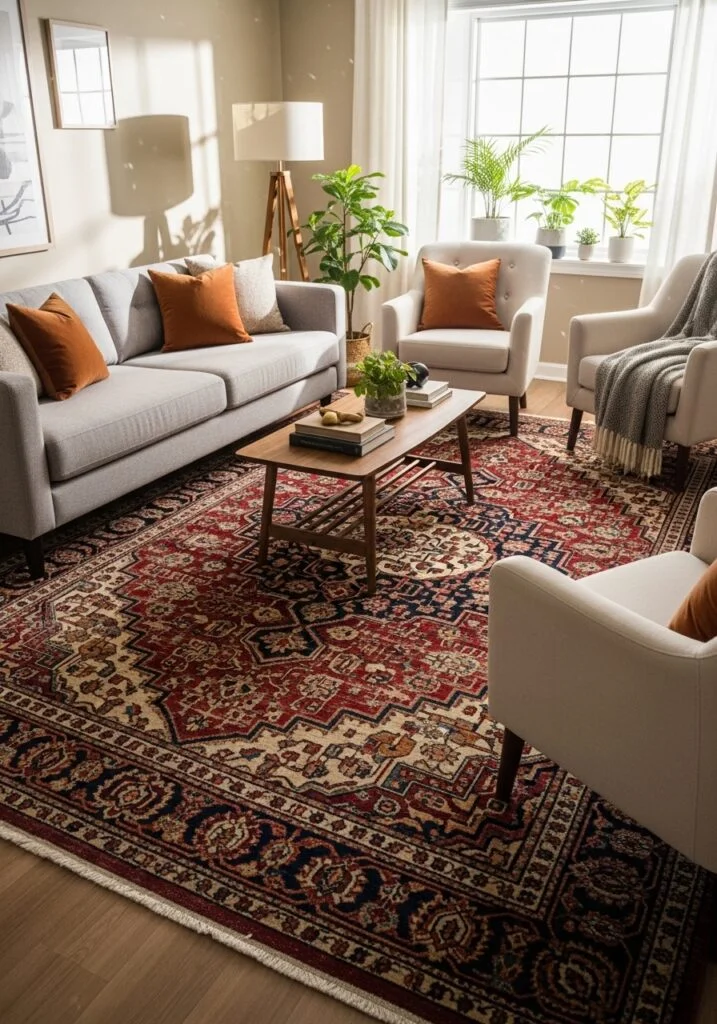
Establish a structural foundation for your layout by incorporating a large area rug, a high-leverage design move that instantly “anchors” your furniture and creates a sense of cohesive luxury. In professional interior styling, a rug acts as the “visual boundary” of a room; it defines the seating area and prevents individual furniture pieces from appearing as if they are “floating” aimlessly. This spatial strategy is a favorite for open-plan apartments because it uses texture and scale to zonally define a room without the need for physical walls. The secret to an expensive, “designer-grade” look is choosing a rug large enough to comfortably fit at least the front legs of your sofa and chairs. Opting for neutral tones or subtle, organic patterns—such as a muted cream or a soft, faded gray—adds warmth and “visual depth” without overwhelming the room’s architecture. This approach is central to Scandinavian and minimalist aesthetics, where the rug serves as a soft, tactile counterbalance to hard surfaces like wood or tile. By prioritizing a generous scale, you transform a standard floor into a sophisticated, high-clarity sanctuary that feels both expansive and exceptionally polished.
7. Use Mirrors to Reflect Light
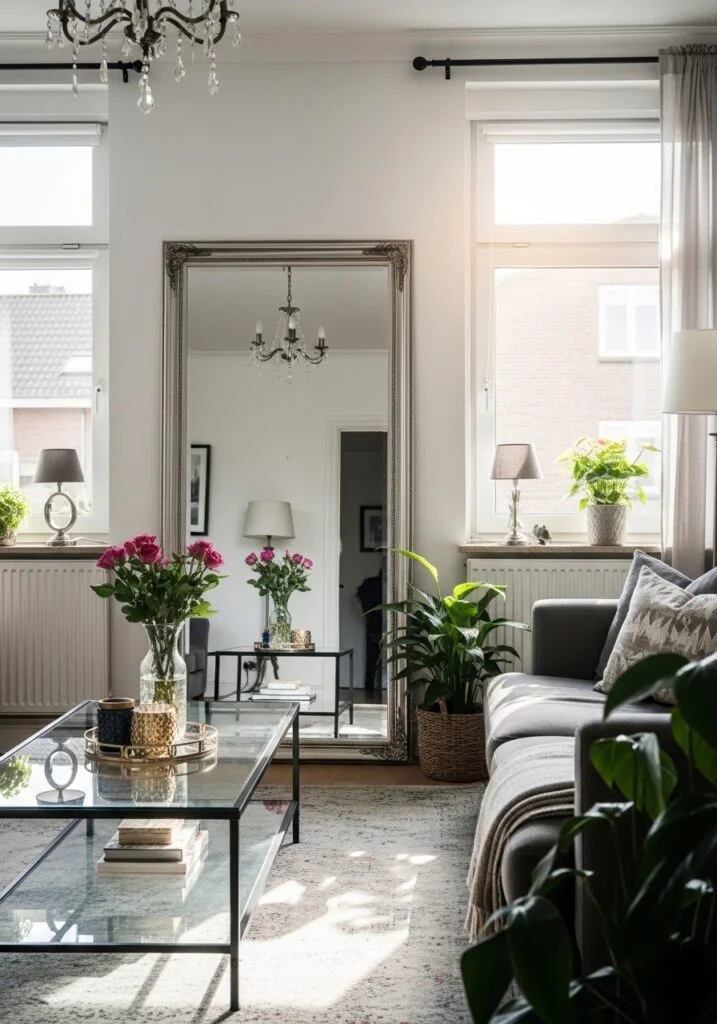
Maximize your room’s “luminous potential” by utilizing mirrors to reflect light, a high-impact design technique that serves as an architectural “window” where none exists. In a professionally styled apartment, mirrors are more than just functional surfaces; they are strategic tools used to visually double the square footage and pull natural light into the deepest corners of a room. This spatial hack is a favorite for small-space living because it creates an immediate sense of “airy openness,” transforming a standard layout into a bright, high-clarity sanctuary. To achieve a high-end, gallery-grade look, consider placing a large decorative mirror directly across from your primary light source or window. For those who prefer a more personalized touch, symmetrical arrangements or “mirror walls” using clean-lined or even thrifted frames can add significant character without introducing visual clutter. This approach is a hallmark of minimalist and modern design, where a singular statement mirror with a metallic or sleek frame acts as a piece of sculptural art. By treating your mirrors as architectural features, you ensure your living area remains vibrant, architecturally light, and perfectly scaled.
8. Declutter for a Minimal Look
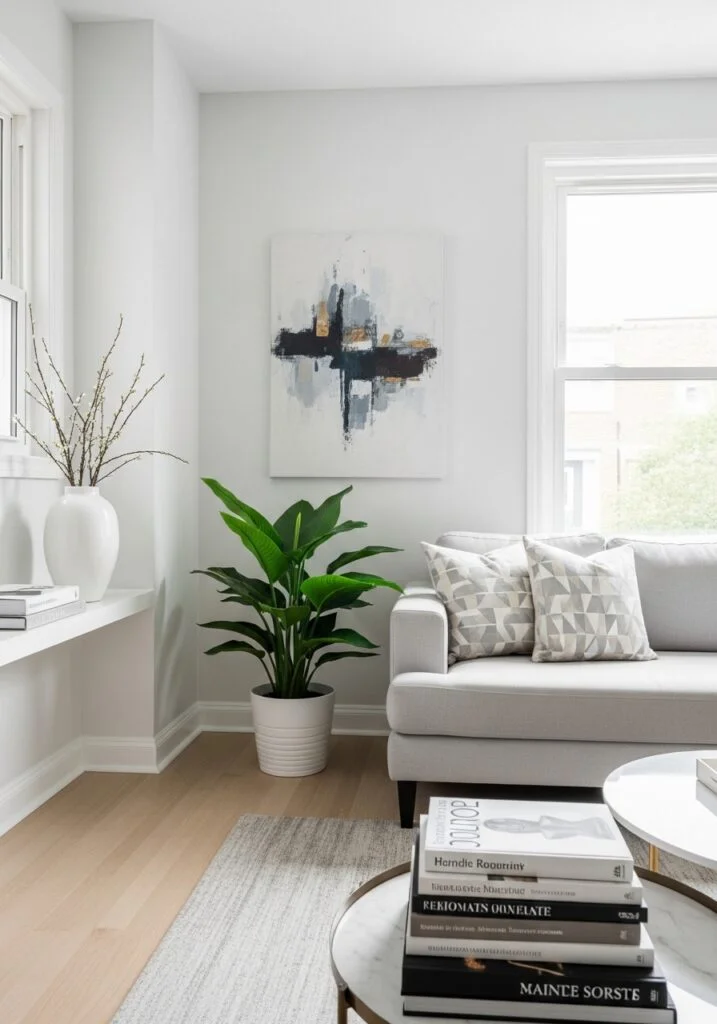
Achieve a high-clarity, refined aesthetic by mastering the art of decluttering, a fundamental principle of luxury interior design that prioritizes “intentional space” over excess. In a sophisticated apartment, the most powerful design element is often what isn’t there. By removing unnecessary decor and visual noise, you allow your hero pieces—like a statement sofa or a curated art print—to truly breathe. This minimalist strategy focuses on the “curatorial edit,” transforming a busy room into a tranquil, architecturally balanced sanctuary that feels expansive and expensive. The secret to a “designer-grade” minimalist look is purposeful placement. Instead of filling every inch of a bookshelf or coffee table, focus on displaying a few carefully chosen decorative objects that vary in scale and texture. This creates “white space” for the eye to rest, which is a hallmark of Scandinavian and Japandi design. By treating your surfaces as mini-galleries rather than storage areas, you ensure your living space remains streamlined, airy, and perfectly scaled for a modern, high-end lifestyle.
9. Add Indoor Plants
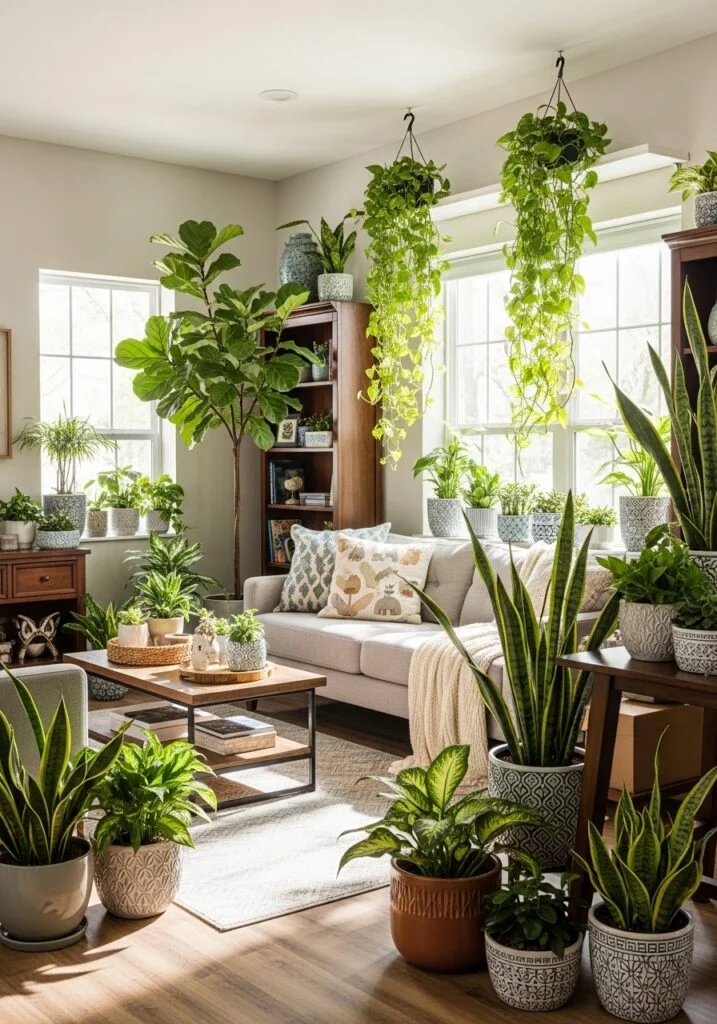
Introduce a breath of organic vitality by adding indoor plants, a high-leverage design strategy that delivers “living texture” and freshness to your apartment. In professional interior styling, greenery is more than an accessory; it acts as a dynamic, architectural element that softens sharp lines and bridges the gap between the indoors and the natural world. This botanical strategy is particularly effective in neutral or minimalist spaces, where the vibrant green hues provide a sophisticated “pop” of color that feels restful rather than overwhelming. For a high-clarity, designer look, focus on the silhouette and scale of your plants. A tall Fiddle Leaf Fig can act as a “sculptural anchor” in an empty corner, while the vertical, architectural blades of a Snake Plant add structure to a sleek console table. If you’re working with limited floor space, trailing plants like Pothos are perfect for adding soft, cascading movement to higher shelves. By pairing these plants with natural ceramic or terracotta planters, you reinforce a refined, earthy aesthetic that transforms a standard living room into a luminous, restorative sanctuary.
10. Use Decorative Curtains
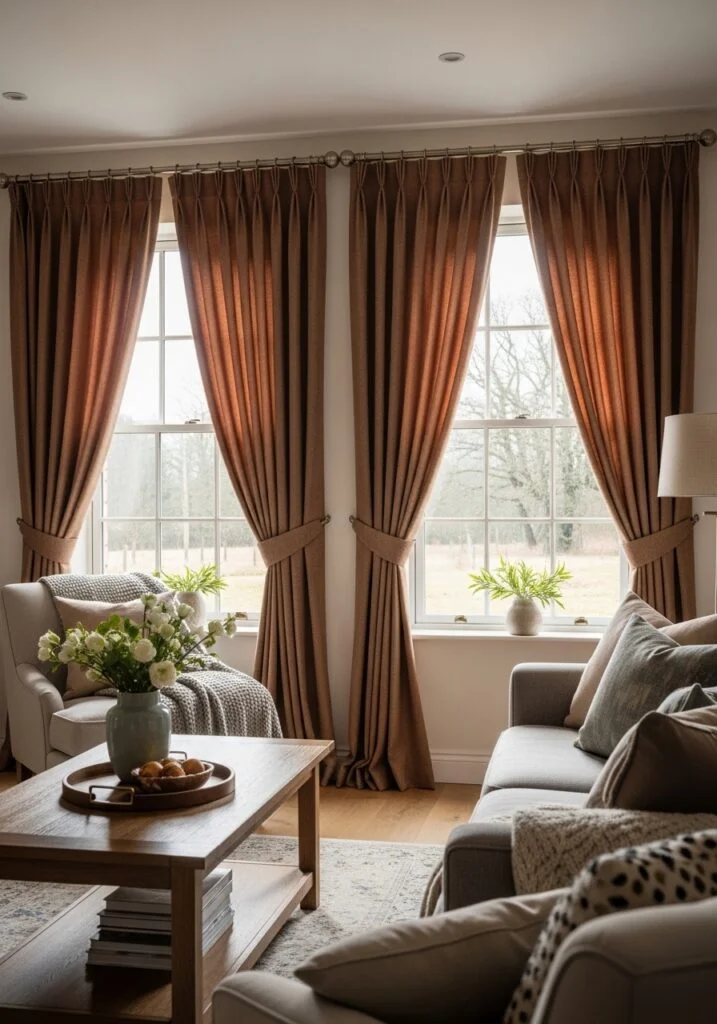
Enhance the verticality and softness of your space by incorporating decorative curtains, a high-impact styling technique that serves as the “architectural frame” for your living room. In a professionally styled apartment, window treatments are used to manipulate light and scale. By hanging your curtain rod higher and wider than the actual window frame, you create an optical illusion that draws the eye upward, making your ceilings appear significantly taller. This “height-hacking” strategy is a favorite among minimalist designers for its ability to add dramatic “visual volume” without cluttering the floor plan. To achieve a high-clarity, luxury aesthetic, prioritize soft, breathable fabrics like linen or light cotton. These materials allow natural light to filter through while introducing a sophisticated, organic texture that feels both refined and effortless. For a modern, seamless look, choose curtains in a tone that closely matches your wall color; this creates an uninterrupted “visual flow” that makes the entire room feel more expansive. By focusing on these subtle yet powerful adjustments, you transform a basic window into a tailored, high-impact feature that feels like a custom-designed sanctuary.
11. Incorporate Metallic Accents
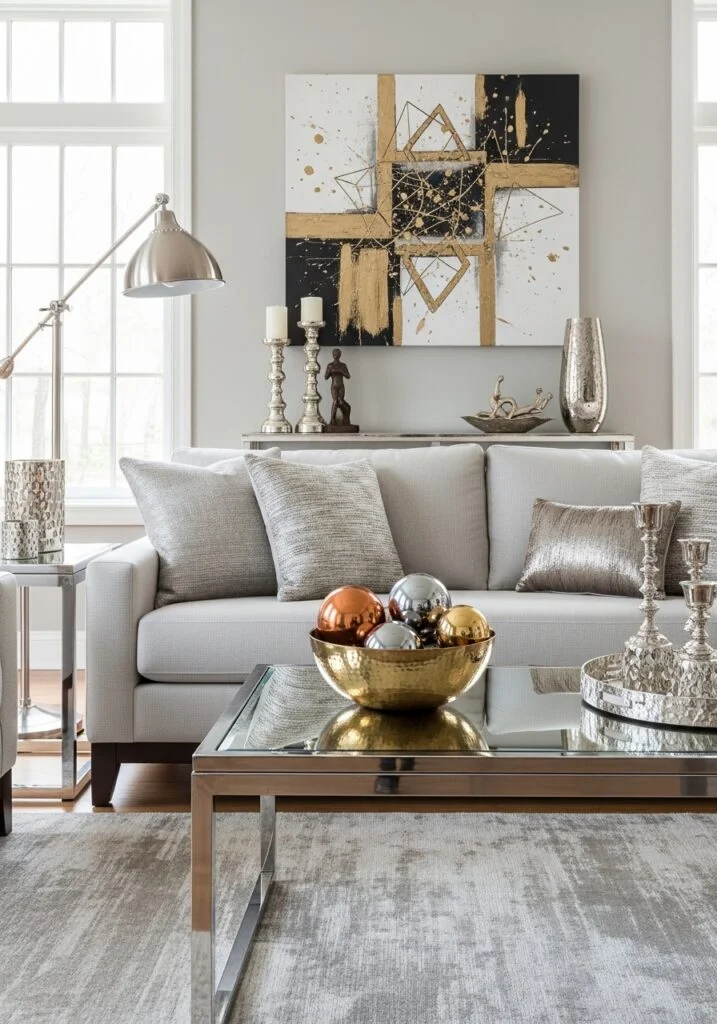
Introduce a touch of modern refinement by incorporating metallic accents, a high-leverage design technique that adds “visual polish” and luxury to your apartment. In professional interior styling, metals like brushed brass, matte gold, and polished silver act as the jewelry of the room—small but impactful elements that catch the light and provide a sophisticated contrast to soft textiles. This accent strategy allows you to elevate your decor through reflective surfaces that draw the eye, making even a budget-conscious space feel architecturally significant and intentionally designed. The secret to a high-end look is curated consistency. Rather than overwhelming the room with metallic finishes, focus on a few key “touchpoints,” such as a sleek gold tray on a coffee table or a minimalist brass floor lamp in a reading nook. These metallic surfaces create a dynamic interplay with natural light, which is particularly effective in minimalist and Scandinavian-inspired interiors where light and shadow define the atmosphere. By selecting metallic pieces with clean, sculptural lines, you transform a standard living area into a luminous, high-clarity sanctuary that feels both sophisticated and timeless.
12. Layer Textures for Depth
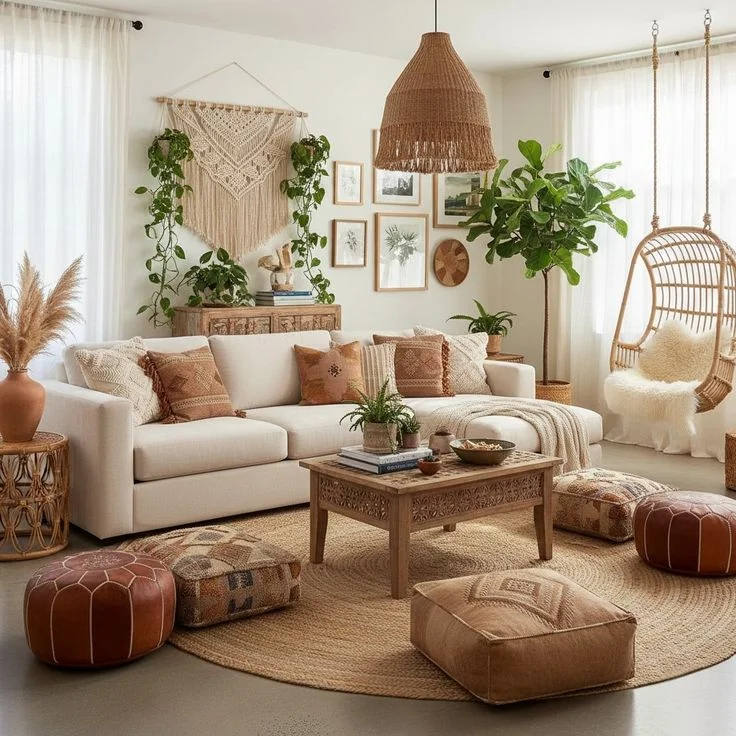
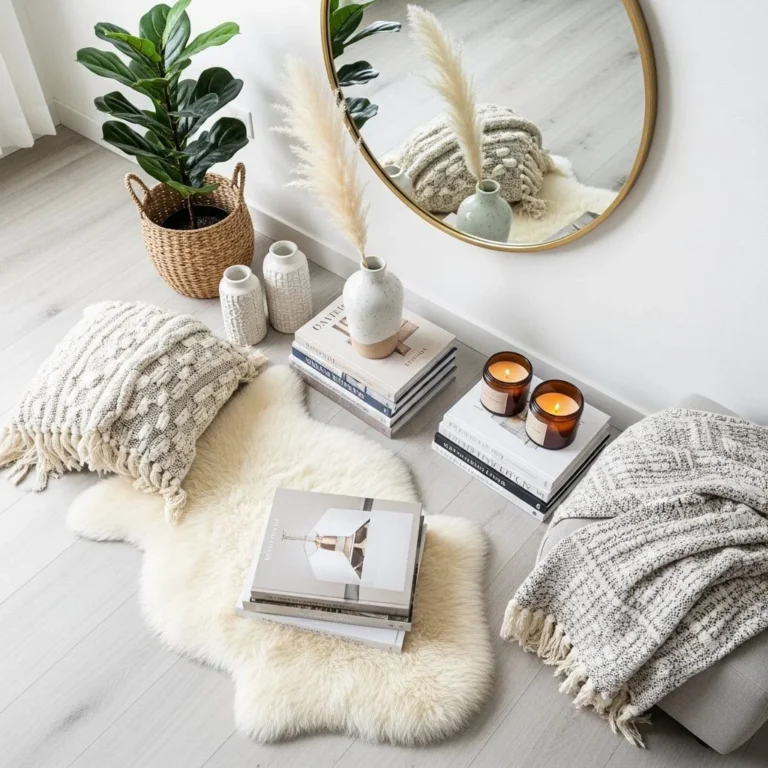
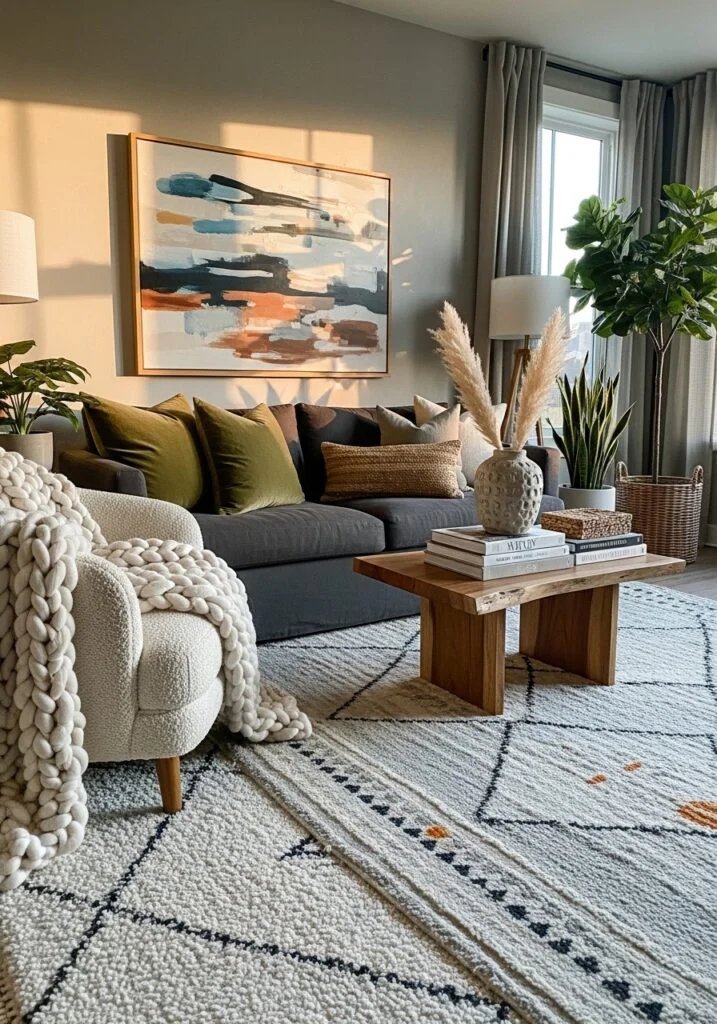
Incorporate textural layering to transform a flat living area into a rich, multi-dimensional sanctuary. In professional interior styling, “texture” is used as a silent substitute for color, providing visual interest and warmth without cluttering the room’s palette. By strategically combining soft throws, tactile pillows, natural wood furniture, and woven baskets, you create a high-clarity environment that feels “architecturally deep.” This layering strategy is essential for achieving a sophisticated Japandi or Scandinavian aesthetic, where the interplay of different materials creates a sense of effortless, high-end comfort. The secret to successful layering is material contrast. For a designer-grade look, pair “hard” surfaces with “soft” accents—place a chunky wool throw over a sleek leather sofa, or tuck a rugged seagrass basket beneath a smooth oak side table. This variety in surface quality draws the eye and makes the space feel intentionally curated over time. By prioritizing a diverse material mix, you ensure your living room feels vibrant, inviting, and exceptionally polished, regardless of its square footage.
13. Create a Gallery Wall
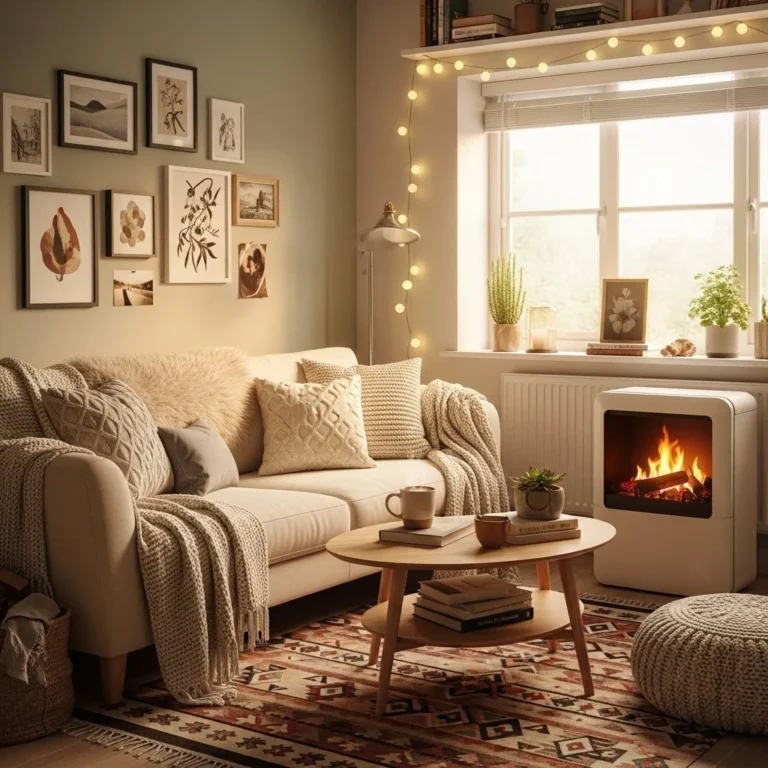
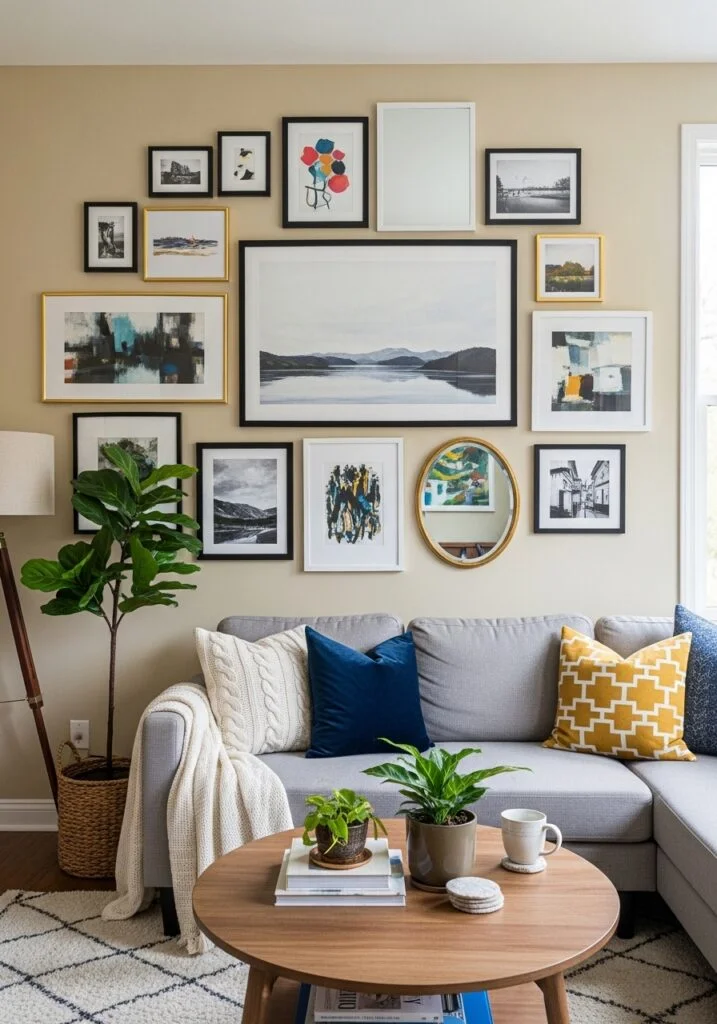
Establish a visually dynamic narrative by creating a gallery wall, a high-impact styling technique that transforms a blank surface into a curated, designer-grade feature. In professional interior styling, a gallery wall is used to introduce personality and “visual movement” without the need for expensive structural changes. By utilizing an arrangement strategy—mixing affordable prints, personal photography, and varied artwork styles—you create a cohesive display that reflects a sophisticated, lived-in aesthetic. This approach is perfect for modern and Scandinavian-inspired homes, where the goal is to balance eclectic charm with architectural order. The secret to a “gallery-standard” look is frame consistency. Using similar frames—such as all-black, natural oak, or thin white profiles—provides a unifying thread that allows the diverse artwork inside to shine without feeling cluttered. For a clean, high-clarity finish, designers often use a “grid” or “balanced-cluster” layout, ensuring that the spacing between frames remains uniform (typically 2 to 3 inches). By treating your wall as a single, expansive canvas, you transform your living area into a curated, high-impact sanctuary that feels intentionally designed and deeply personal.
14. Rearrange Furniture for Better Flow
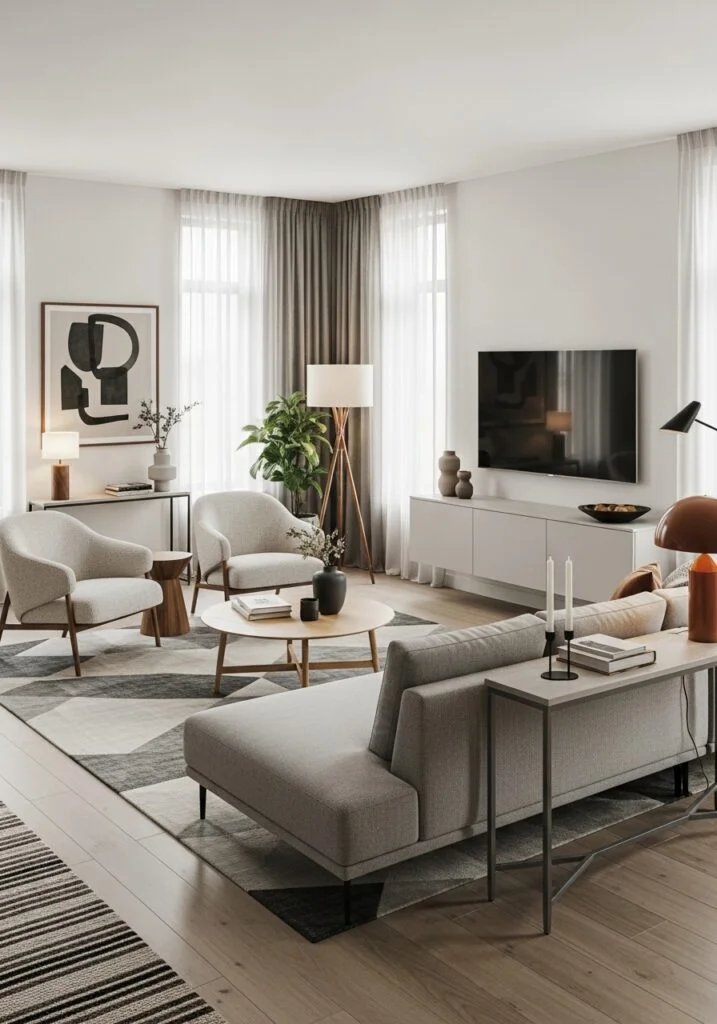
Maximize the architectural potential of your apartment by strategically rearranging your furniture—the ultimate zero-cost design technique for an immediate luxury upgrade. In professional interior styling, the “flow” of a room determines its perceived value and comfort. By moving away from “peripheral placement” (pushing all furniture against the walls) and creating a dedicated conversation core, you introduce a sense of intentionality and high-end spatial planning. This layout strategy focuses on “visual breathing room,” transforming a standard living area into a sophisticated, high-clarity sanctuary that feels both expansive and inviting. The hallmark of a designer-grade floor plan is balance and circulation. Position your sofa and chairs to face each other around a central coffee table, creating an intimate “social island” that encourages interaction. For a clean, minimalist aesthetic, ensure there are clear walkways (ideally 30 to 36 inches) to maintain a sense of uninterrupted movement. By prioritizing the “logic of the space,” you transform your current furniture into a tailored, gallery-standard arrangement that looks professionally curated without spending a dime.
Conclusion
Designing a beautiful living room doesn’t require a large budget. With thoughtful styling, strategic decor choices, and simple upgrades, you can create a space that looks luxurious while remaining affordable. Neutral colors, layered textures, proper lighting, and well-chosen accessories can transform even the most basic living room into an elegant environment. By focusing on impactful details rather than expensive furniture, you can achieve a high-end interior design look that feels comfortable, stylish, and welcoming without overspending.