22 Apartment Living Room Ideas That Actually Work
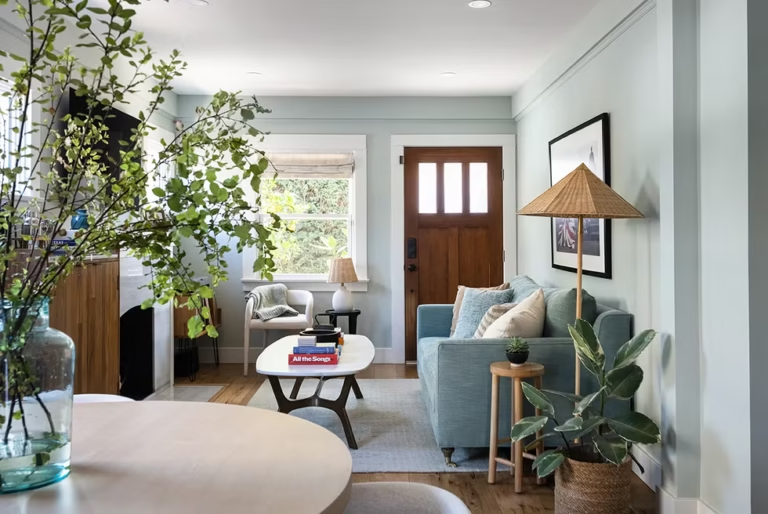
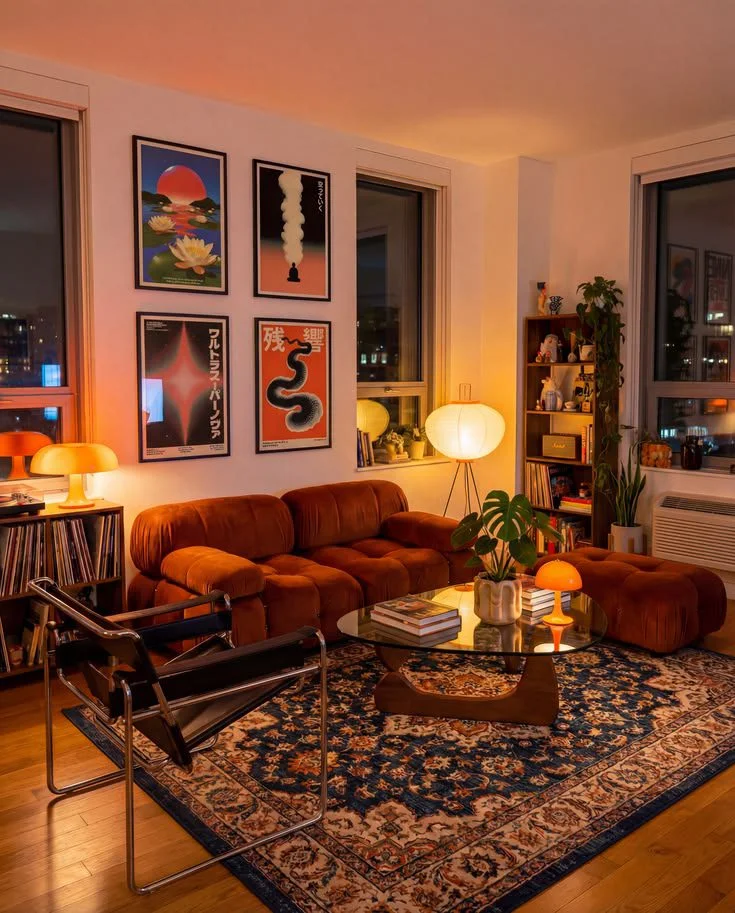
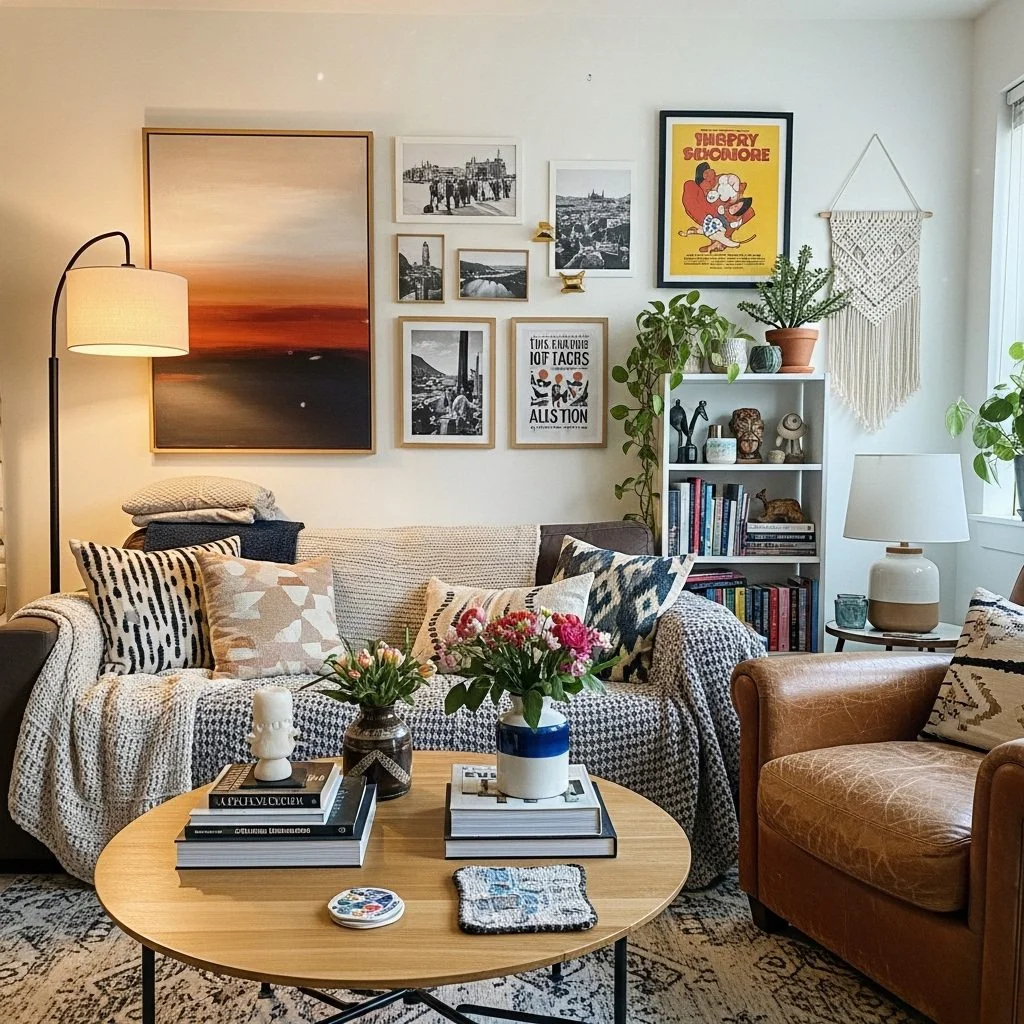
Transforming a compact apartment living room requires a shift from purely decorative thinking to strategic spatial optimization, where every design choice serves both an aesthetic and a functional purpose. In limited square footage, the goal is to create a visually expansive environment that doesn’t sacrifice comfort for utility. By prioritizing “breathable” layouts and slim-profile furniture, you can prevent the common pitfall of overcrowding, ensuring your home feels like a curated sanctuary rather than a cluttered storage space. This apartment styling approach focuses on verticality, light reflection, and furniture scale to trick the eye into perceiving a much larger footprint. Key strategies for high-efficiency living include the use of multifunctional pieces, such as ottomans with hidden storage or a nesting coffee table set that can be expanded only when needed. Incorporating reflective surfaces like oversized floor mirrors or glass-topped tables helps bounce natural light deeper into the room, instantly brightening dim corners and adding architectural depth. Furthermore, choosing furniture with tapered legs—which exposes more of the floor—creates a sense of “visual lightness” that is essential for modern, minimalist apartment living. By anchoring your space with a appropriately sized area rug and keeping the color palette cohesive, you can achieve a sophisticated and airy interior that feels both stylishly intentional and perfectly scaled for urban life.
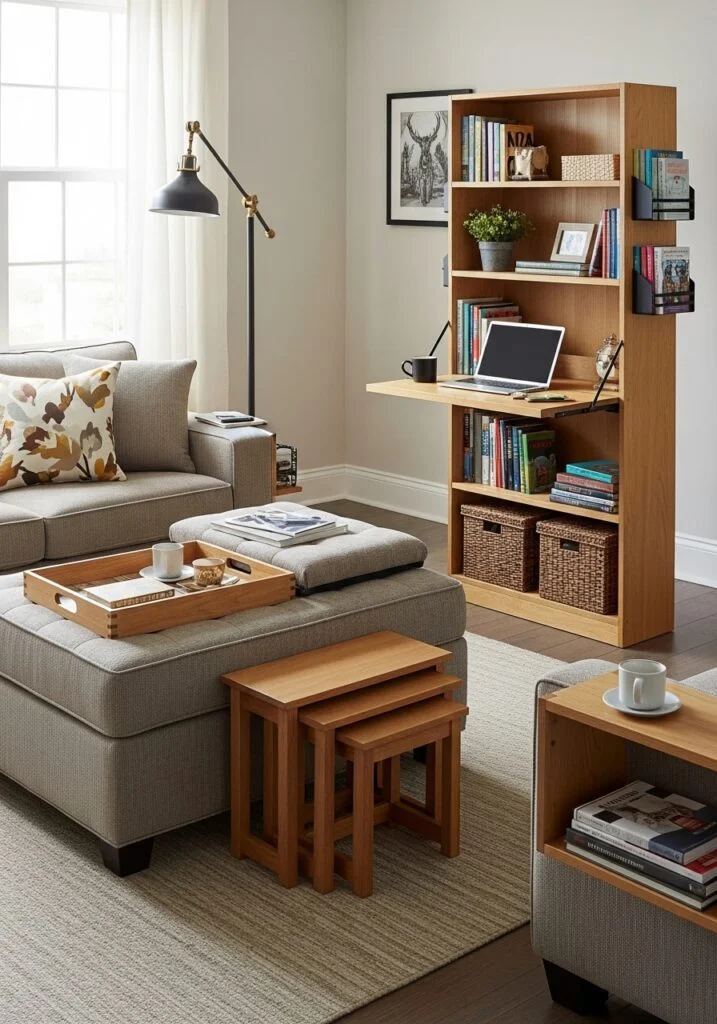
1. Choose Multi-Functional Furniture
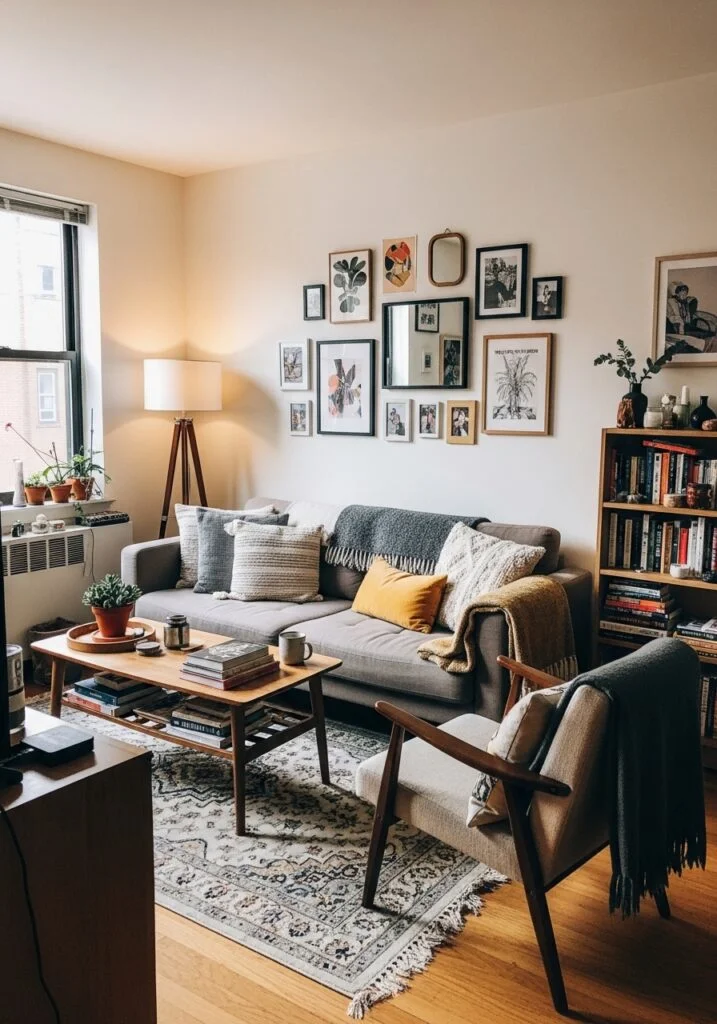
Maximize your square footage and organizational efficiency by choosing multi-functional furniture, a cornerstone of smart apartment living and small-space interior design. In environments where every inch counts, selecting pieces that serve dual or triple purposes—such as a sleek sofa bed, a lift-top coffee table with hidden storage, or upholstered storage ottomans—is essential for maintaining a clutter-free sanctuary. These “transformer” pieces allow you to pivot your room’s utility instantly, turning a quiet reading nook into a functional guest suite or a streamlined home office without the need for additional bulky items. This spatial optimization strategy is particularly vital for studio apartments or open-concept floor plans where the living area must also function as a dining or sleeping zone. By opting for furniture that combines modern aesthetic appeal with high-capacity utility, you create a “visually light” environment that feels expansive rather than cramped. Incorporating these versatile elements ensures that your home remains both stylish and highly functional, providing professional-grade solutions for urban dwellers who refuse to sacrifice comfort for a smaller footprint.
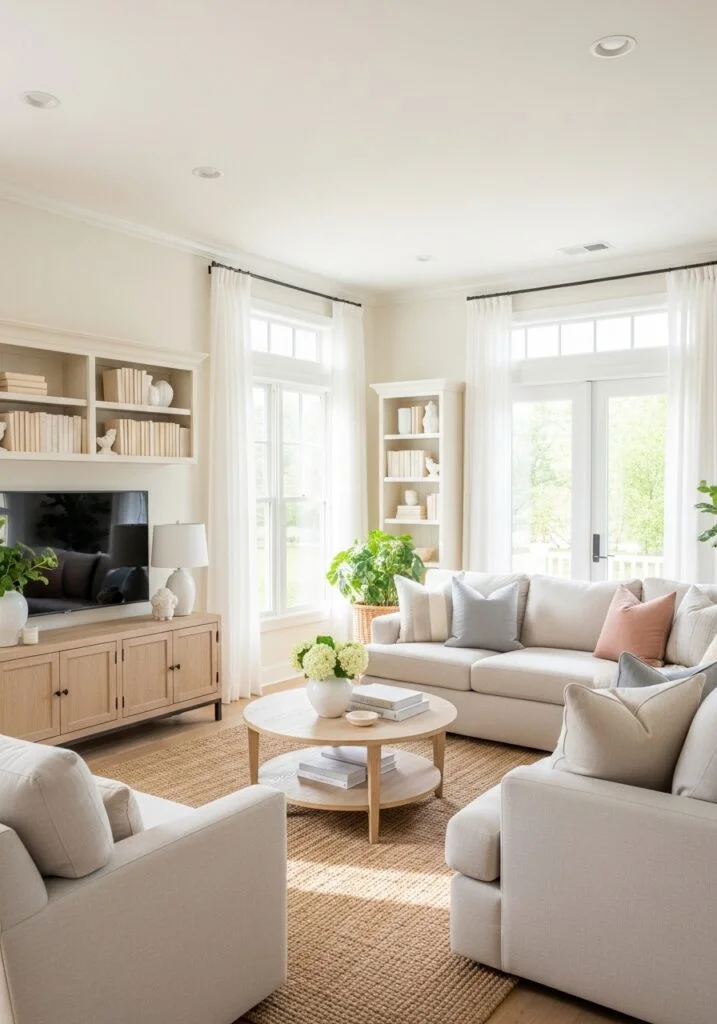
2. Use Light Colors to Open the Space
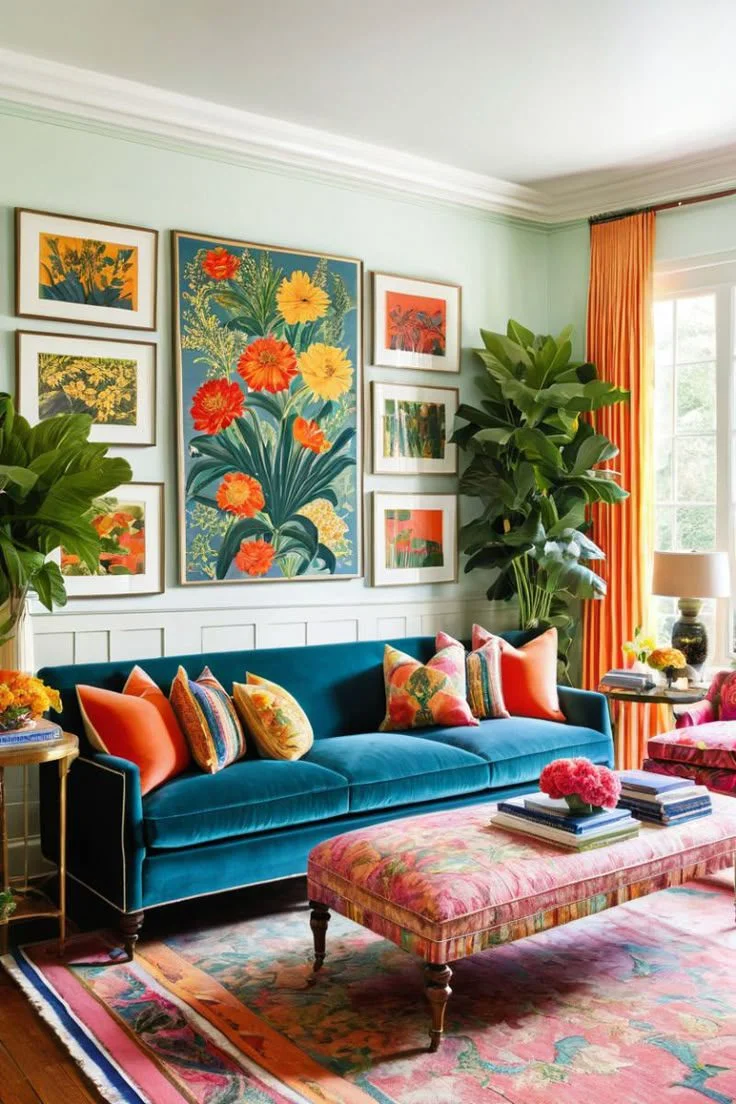
Maximize the perceived square footage of your home by using light colors to open the space, a foundational interior design technique for transforming compact apartment living rooms into airy, expansive sanctuaries. Utilizing a palette of bright whites, soft beiges, cool grays, or ethereal pastels allows surfaces to reflect natural light deeper into the room, effectively blurring the boundaries of the walls and creating a visually “limitless” atmosphere. By applying these high-reflectance tones to your primary surfaces—such as the walls, large-scale sectional, or floor-to-ceiling drapes—you establish a clean, sophisticated backdrop that counters the “closed-in” feeling often associated with urban apartment living. This spatial optimization strategy doesn’t require sacrificing your unique personality; rather, it provides a high-clarity canvas for curated pops of color. You can effortlessly layer in vibrant cushions, abstract artwork, or textured decorative accents to add warmth and interest without visually shrinking the room. This balance of a bright, light-reflective base with strategic personality pieces is one of the most effective professional design tricks for making even the smallest studio feel spacious, inviting, and architecturally light. By prioritizing a luminous color story, you ensure your living area feels like a breathable, modern retreat that maximizes every inch of available light.
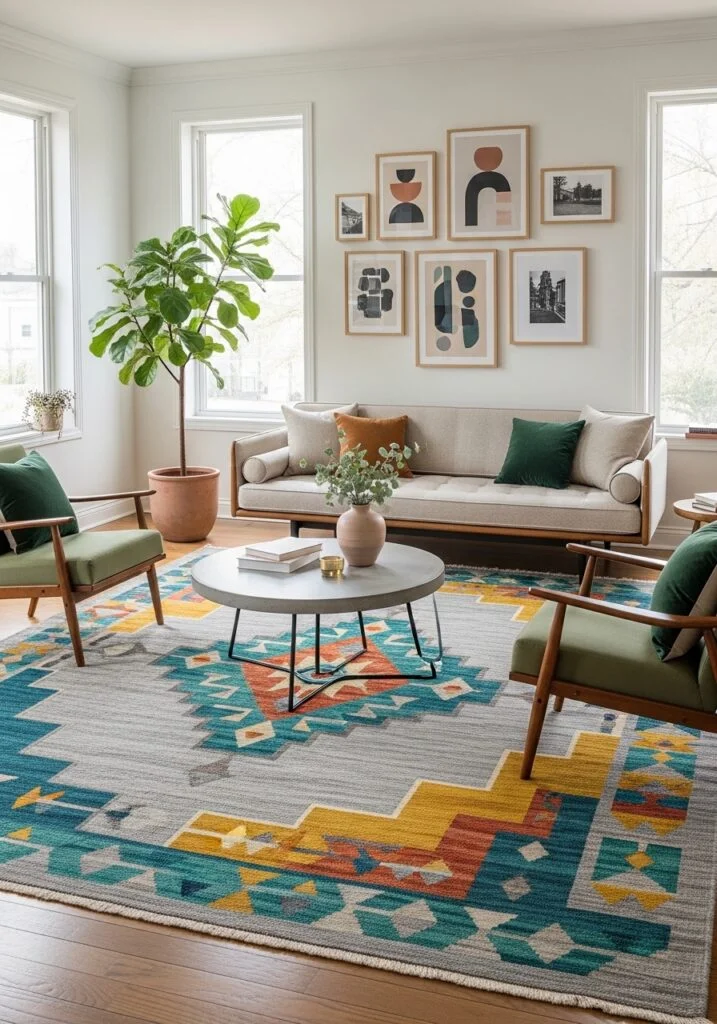
3. Add a Statement Rug
Elevate your apartment’s architectural flow by adding a statement rug, a high-impact interior design strategy that serves as the ultimate visual anchor for your seating area. In open-concept living rooms or studio apartments, a well-chosen rug acts as a “borderless divider,” effectively zoning your relaxation space from dining or workspace areas without the need for bulky physical partitions. By selecting a piece that introduces rich texture or subtle geometric patterns, you provide a sophisticated foundation that grounds your furniture and prevents the room from feeling disjointed. This spatial zoning technique is particularly effective for small living rooms, as a rug that is properly scaled—ideally large enough for all front furniture legs to rest upon—tricks the eye into perceiving a wider floor plan. Beyond its structural benefits, a statement rug introduces essential warmth and acoustic softening to hard flooring surfaces, making your home feel like a curated, cozy sanctuary. Whether you opt for a high-pile Moroccan shag for tactile depth or a low-profile jute for a minimalist aesthetic, a bold rug adds a layer of character that transforms a standard apartment layout into a professionally styled, visually cohesive living space.
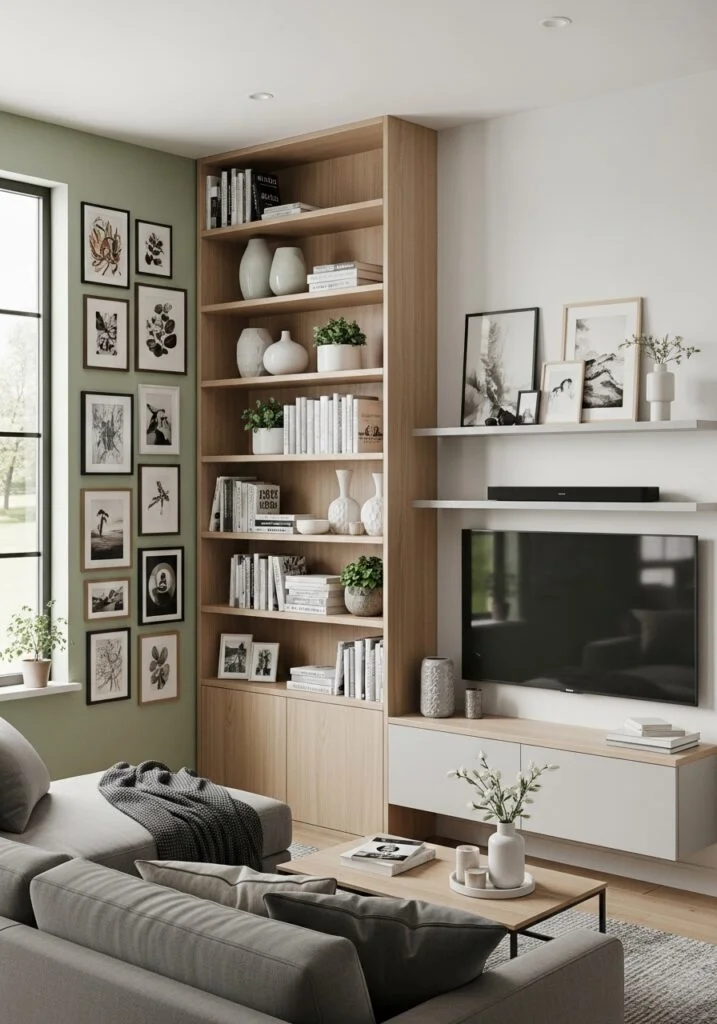
4. Use Vertical Wall Space
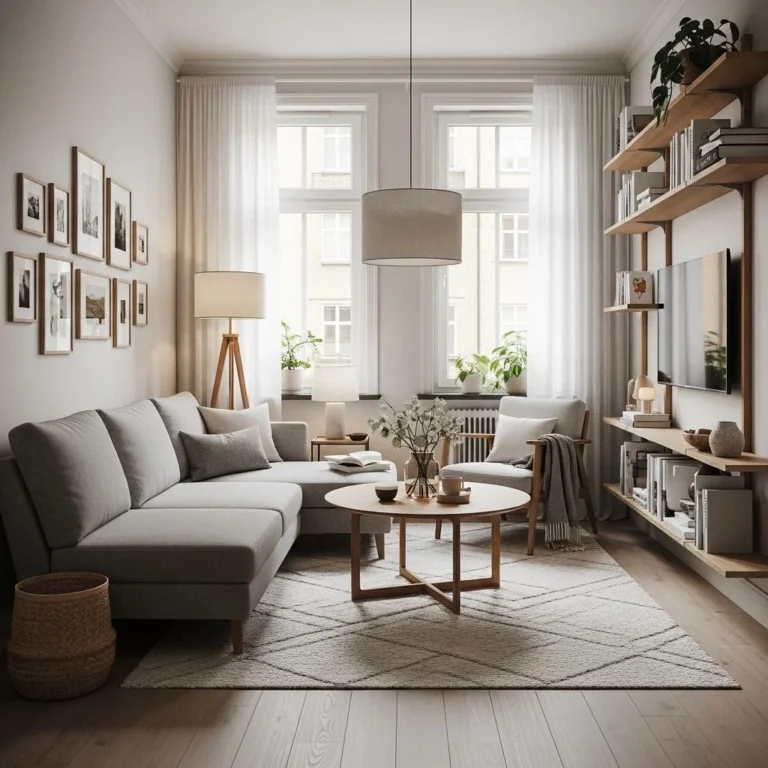
Maximize the architectural potential of your apartment by strategically using vertical wall space, a high-efficiency interior design tactic that shifts storage and decor upward to liberate valuable floor real estate. In compact living rooms, walls are often underutilized “vertical square footage” that can be transformed into functional galleries or organized hubs. By incorporating floating shelves, floor-to-ceiling bookcases, or wall-mounted media consoles, you can display curated collections and store essentials without encroaching on the room’s walking paths. This spatial optimization strategy is a favorite among urban minimalist designers because it maintains a clean, “breathable” floor plan while adding sophisticated visual layers to your interior. Drawing the eye upward with vertical elements—such as a tall, slim library ladder or a vertical art gallery—effectively tricks the brain into perceiving a higher ceiling and a more voluminous room. This “lifting” effect is essential for making smaller studios or standard apartments feel like expansive, high-ceilinged sanctuaries. Beyond storage, using your walls for lighting (like swing-arm sconces) or greenery (like a living wall) ensures that every inch of your home works toward a visually cohesive and functional design. By prioritizing height over width, you create a professionally balanced environment that feels organized, intentional, and architecturally dynamic.
5. Keep Furniture Proportional
Achieve a high-end, architectural balance by keeping your furniture proportional to your room’s scale, a vital interior design principle for preventing a small apartment from feeling cramped or overwhelmed. In compact living areas, the “visual weight” of a piece is just as important as its physical dimensions; opting for slim-profile sofas, compact coffee tables, and armless accent chairs ensures that the room maintains a sense of “breathability” and flow. This spatial planning strategy focuses on pieces with exposed legs and narrow silhouettes, which allow more of the floor and walls to remain visible, effectively tricking the eye into perceiving a more expansive environment. By selecting furniture that respects the specific dimensions of your layout, you ensure that the living room remains functional and easy to navigate without sacrificing style or comfort. For instance, a “loveseat” scale sofa or a transparent acrylic coffee table can provide the same utility as their oversized counterparts while preserving the room’s open-concept energy. This disciplined approach to scale and proportion is a favorite among professional designers because it creates a polished, well-fitted sanctuary where every element feels intentionally placed rather than forced into the space.
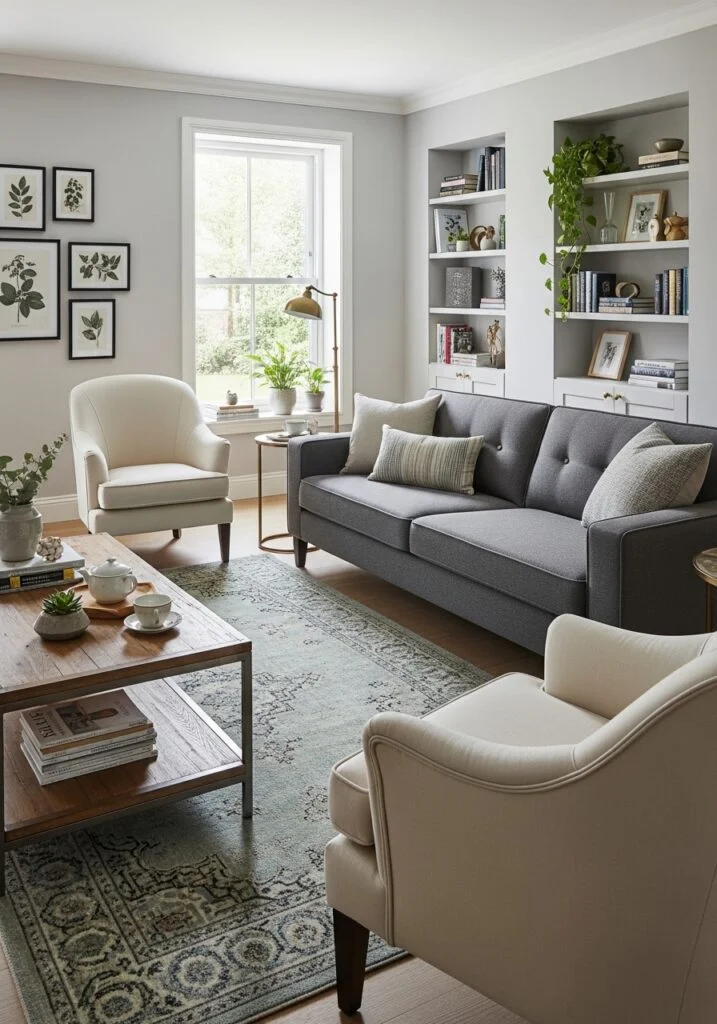
6. Use Mirrors to Create Depth
Unlock the hidden dimensions of your home by using mirrors to create depth, a high-impact interior design “cheat code” for transforming a narrow apartment into a bright, expansive sanctuary. Mirrors serve as architectural windows, using specular reflection to bounce natural light into the darkest corners and effectively “double” the perceived square footage of a room. For maximum spatial optimization, professional designers recommend placing a large-scale floor mirror directly across from your primary window. This strategic positioning doesn’t just brighten the space; it pulls the outdoor view inside, creating an illusion of infinite depth that breaks the visual boundaries of your walls. In addition to their light-enhancing properties, mirrors act as sophisticated focal points that add a layer of modern luxury without the bulk of traditional furniture. Whether you choose a minimalist oversized leaning mirror or a curated gallery of smaller reflective pieces, this technique introduces a sense of airy transparency that is essential for small-space living. By treating mirrors as structural tools rather than just decorative accessories, you can achieve a high-end, luminous aesthetic that makes even the most compact studio feel open, intentional, and architecturally grand.
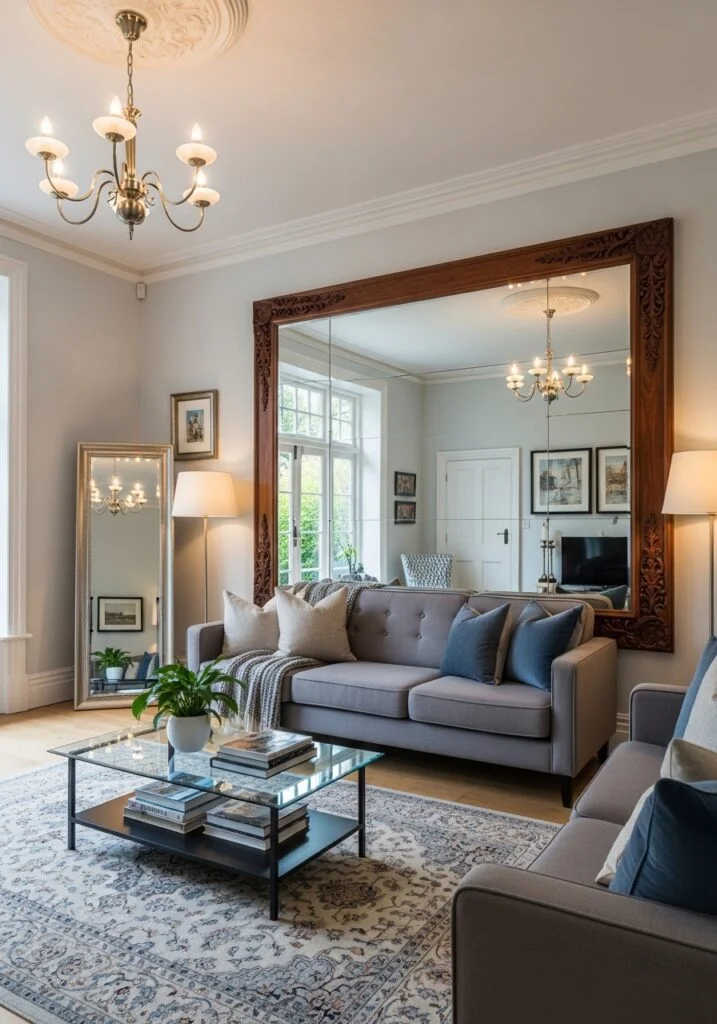
7. Create a Gallery Wall
Transform your apartment into a curated sanctuary by creating a gallery wall, a premier interior design technique for injecting personality into a room without sacrificing a single inch of floor space. By artfully arranging a collection of framed art, photography, and high-quality prints, you create a sophisticated visual focal point that draws the eye upward, effectively making your ceilings feel higher and the room more expansive. This wall decor strategy allows you to tell a visual story, blending diverse textures and styles—from sleek modern frames to vintage-style sketches—to achieve a professionally layered look. A well-executed gallery wall acts as an “anchor” for your furniture, providing architectural balance to a sofa or a console table. To maintain a visually cohesive aesthetic, designers often recommend sticking to a consistent color palette or a unified frame finish (like all black or all natural oak). This approach is particularly effective for small space optimization, as it transforms a blank, static wall into a dynamic feature that adds depth and character. Whether you prefer a structured, symmetrical grid or a more organic, eclectic “salon style” arrangement, a gallery wall is the ultimate way to showcase your unique taste while keeping your living area functional and clutter-free.
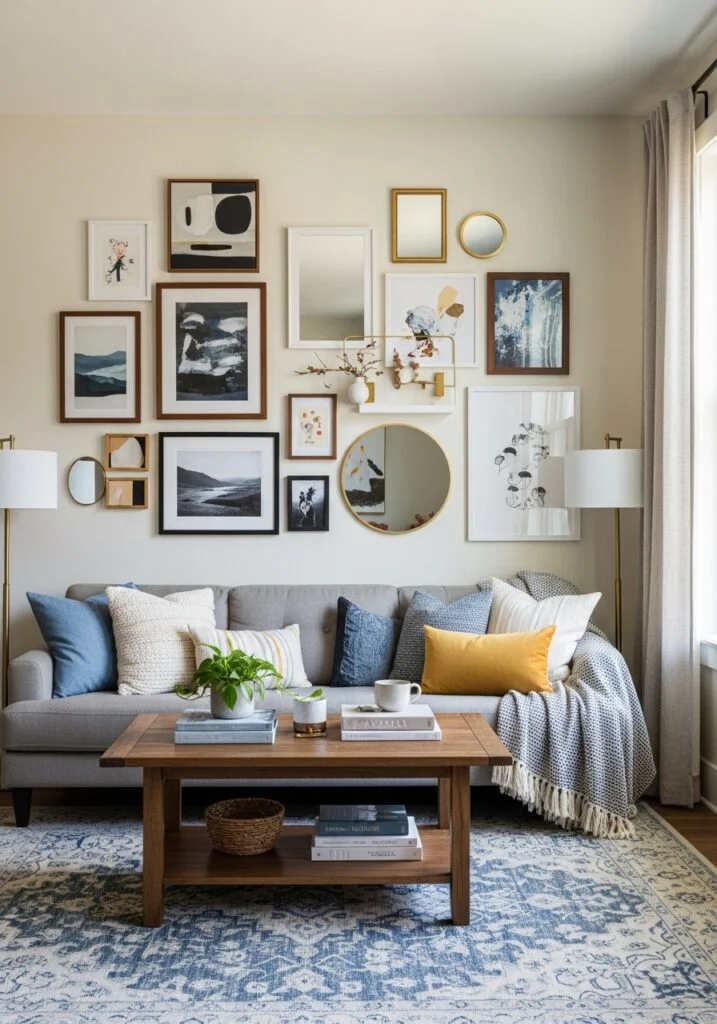
8. Use Slim Furniture Designs
Refining your furniture selection to include slim designs and open bases is a masterclass in “visual transparency,” a technique that prevents a small apartment from feeling weighed down by heavy upholstery. When you choose pieces with tapered mid-century legs, thin metal frames, or floating silhouettes, you maximize the “continuous floor” visible to the eye. In interior design, the more floor space you can see, the larger the room feels. This spatial trick replaces bulky, skirted sofas with “leggy” alternatives, allowing light and air to flow under and around your furniture, which instantly eliminates that “cluttered” sensation. By prioritizing these streamlined silhouettes, you maintain all the comfort of a standard living room while significantly reducing its “visual footprint.” This approach is especially effective for modern minimalist and industrial styles, where the structural elegance of the furniture becomes a design feature in itself. The result is a sophisticated, high-clarity sanctuary that feels intentionally curated for urban living, ensuring your home remains both stylishly functional and architecturally light.
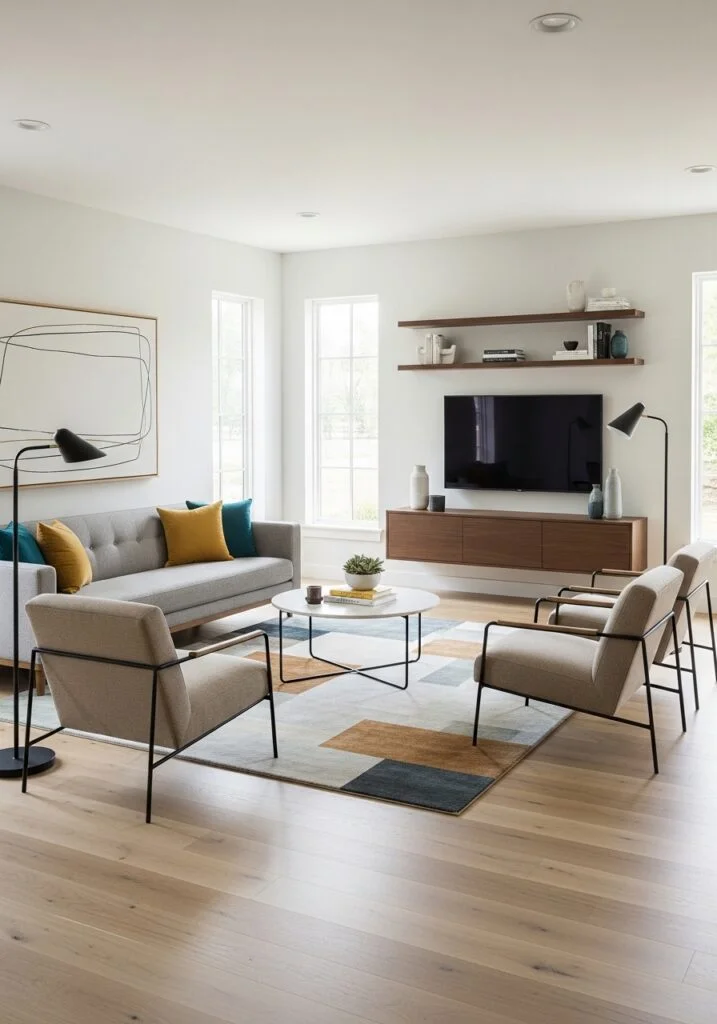
9. Add Indoor Plants
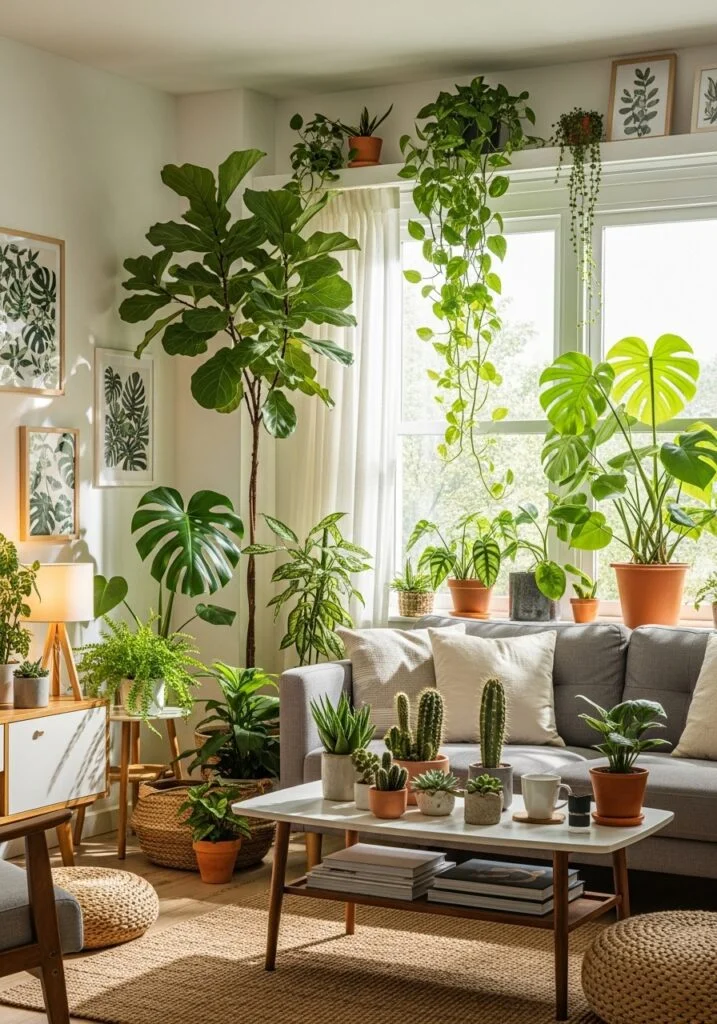
Breathe life into your apartment by incorporating indoor plants, a premier “biophilic” design strategy that adds organic texture, vibrant color, and a sense of freshness to any living room. In smaller spaces, greenery serves as “living decor,” softening the hard lines of furniture and architecture while making a room feel instantly more welcoming and inhabited. Whether you’re placing trailing Pothos on a high floating shelf or anchoring a sunlit corner with a stately Fiddle Leaf Fig, plants introduce a dynamic layer of visual interest that static furniture simply cannot replicate. This greenery styling is a favorite among modern and Scandinavian interior designers because it creates a “connection to nature” that is often missing in urban apartment living. For those with limited floor space, vertical gardening—using hanging planters or wall-mounted pots—is a brilliant way to add lushness without encroaching on your walking paths. Beyond their aesthetic appeal, indoor plants are natural air purifiers, transforming your home into a health-conscious, serene sanctuary that feels both stylish and restorative. By strategically placing a variety of leaf shapes and heights, you can add “visual depth” and a professionally curated energy to your most-used living areas.
10. Use Layered Lighting
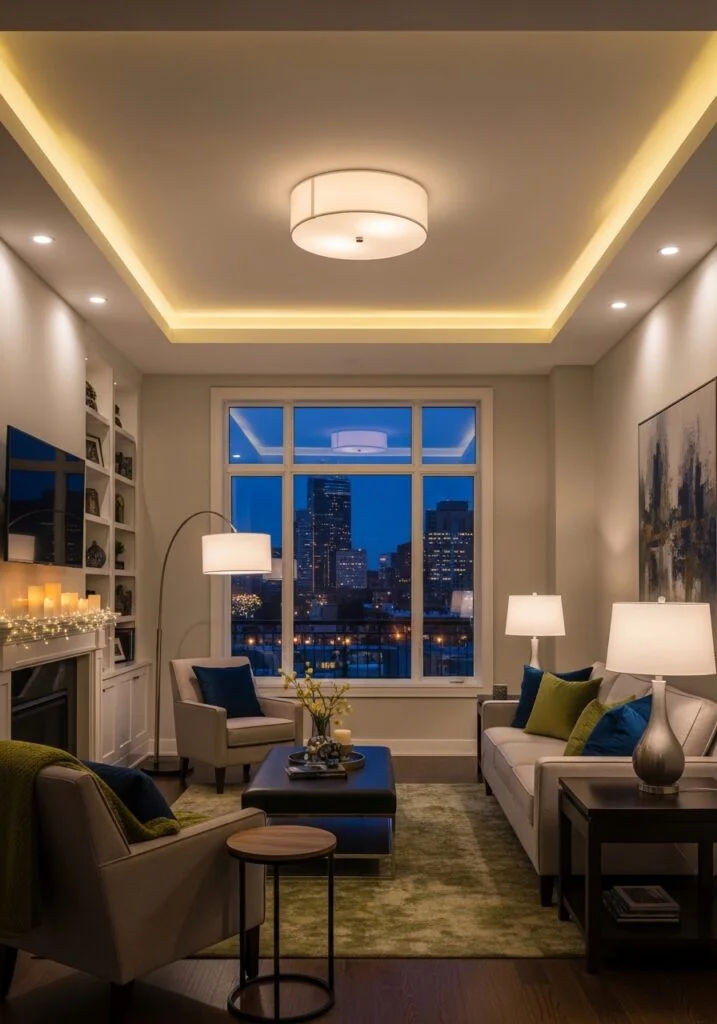
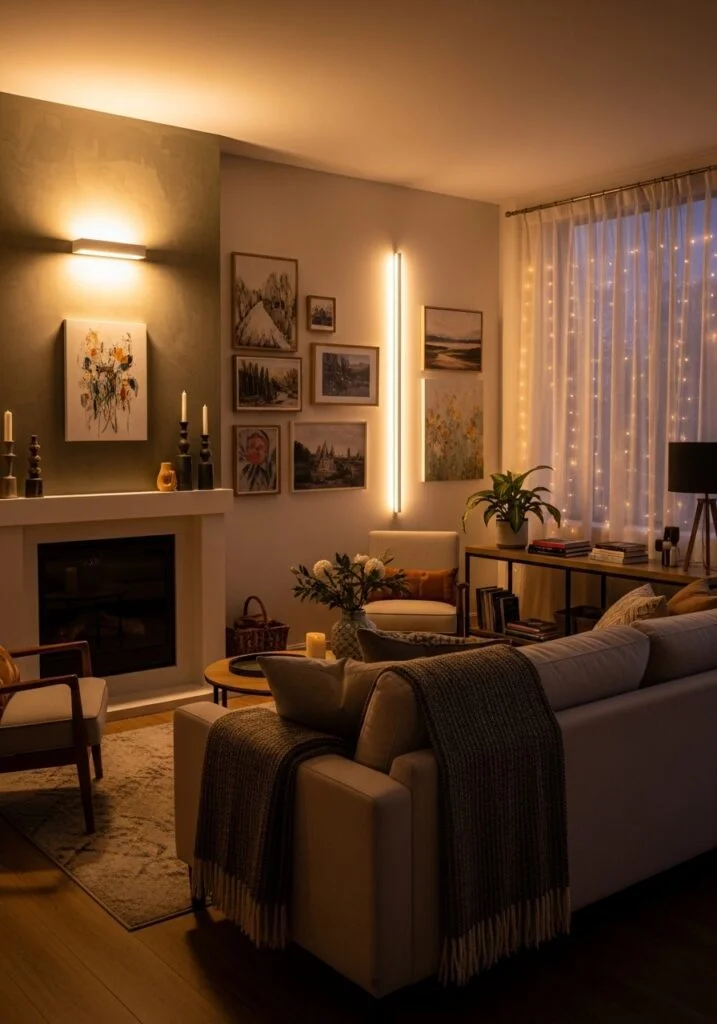
Master the art of ambiance by incorporating layered lighting, a sophisticated interior design strategy that transforms a flat, one-dimensional apartment into a warm and architecturally dynamic sanctuary. In small living rooms, relying solely on a single overhead fixture—often nicknamed “the big light”—can create harsh shadows and make the space feel clinical or cramped. By strategically blending ambient, task, and accent lighting, you introduce a “glow” that defines different zones of the room, making it feel both functional for daily tasks and inviting for evening relaxation. This lighting design approach relies on placing light sources at varying heights—such as a sleek floor lamp next to a reading chair, a warm table lamp on a side console, and subtle LED strips under floating shelves. This “triangulation” of light draws the eye across the room, creating a sense of depth and “visual texture” that mimics a high-end hotel suite. For apartment dwellers, choosing slim-profile or wall-mounted swing-arm sconces is a brilliant way to add these layers without sacrificing valuable tabletop or floor real estate. By prioritizing a “warm white” bulb temperature (around 2700K to 3000K), you ensure your living area feels cozy, expensive, and perfectly balanced.
11. Choose a Neutral Sofa
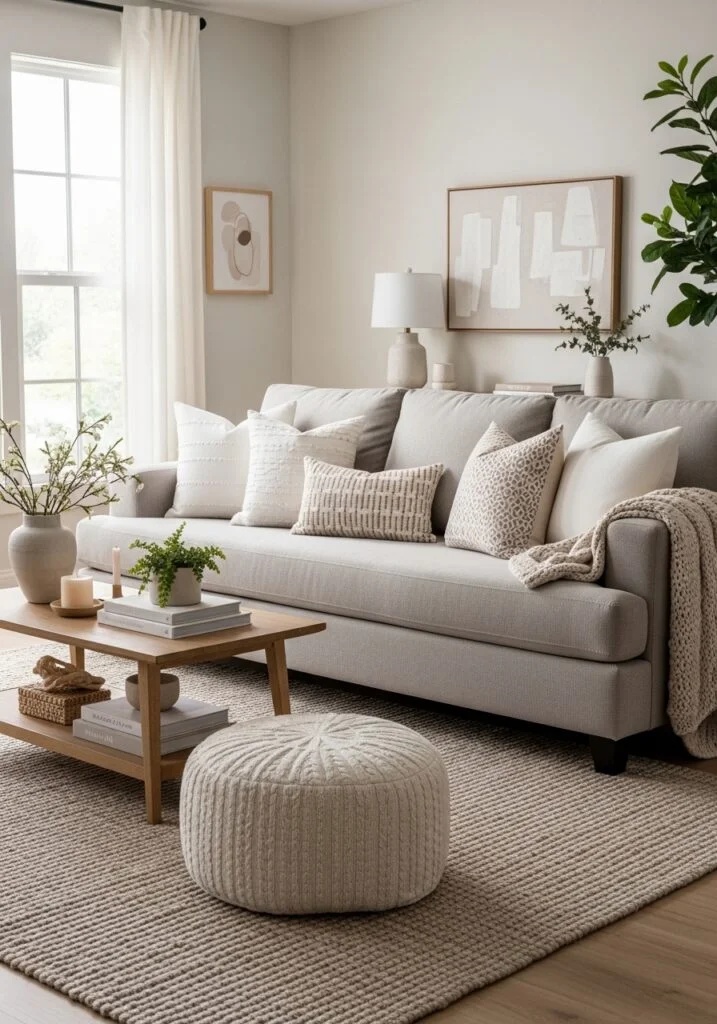
Think of a neutral sofa as the “Little Black Dress” of interior design—a timeless, high-value investment that provides the ultimate foundation for an evolving living room. By opting for a palette of oatmeal, stone gray, soft beige, or muted charcoal, you anchor your space with a sophisticated piece that transcends fleeting trends. This furniture strategy is a favorite among professional designers because it offers maximum “aesthetic ROI”; instead of being locked into a bold color that may overwhelm a small apartment, a neutral sofa has a recessive quality that makes the room feel larger and more “breathable.” The true power of a neutral anchor lies in its unparalleled versatility. It acts as a high-clarity canvas, allowing you to completely pivot your room’s personality simply by swapping out textured throw blankets, vibrant velvet pillows, or seasonal decorative accents. Whether you want to transition from a cozy, earthy autumnal vibe to a crisp, coastal summer look, a neutral sofa adapts seamlessly without the cost of a major furniture replacement. This approach to spatial and financial optimization ensures your sanctuary remains stylish, intentional, and perfectly balanced for years to come.
12. Use Wall Mounted TV Units
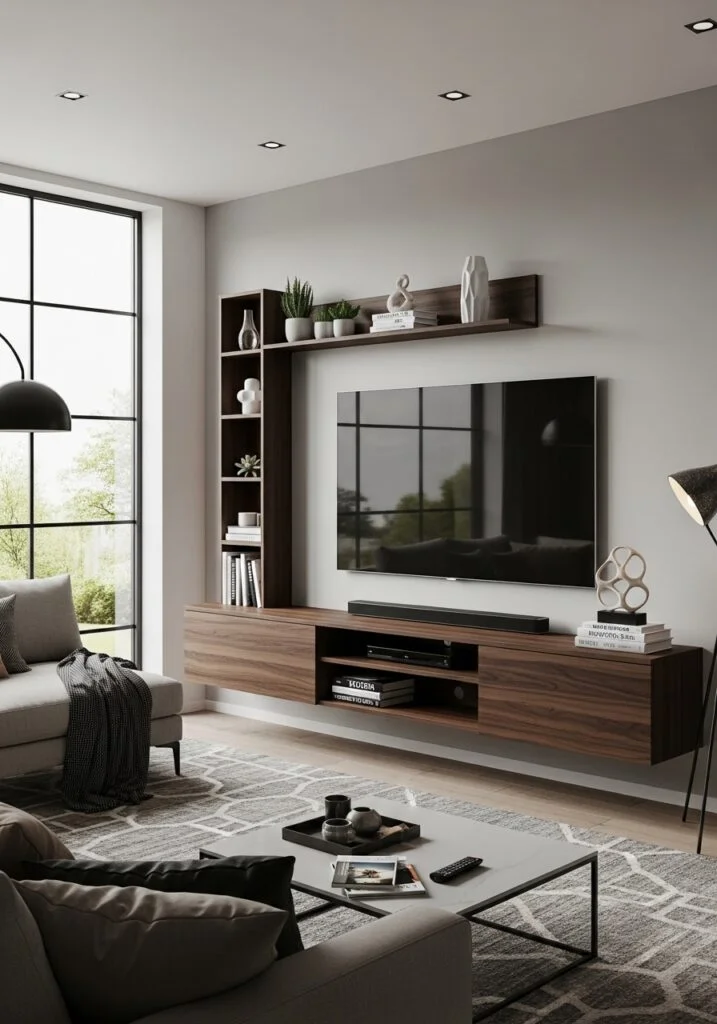
Maximize your available square footage and achieve a high-end, streamlined aesthetic by incorporating a wall-mounted TV unit, a masterstroke of spatial optimization for modern apartment living. By elevating your media center, you eliminate the need for a bulky, floor-standing console, which immediately creates a sense of “visual lightness” and makes the room feel more expansive. This media styling strategy is a favorite among minimalist designers because it conceals unsightly cord clutter and keeps sightlines open, allowing the floor and baseboards to remain visible—a key trick for making small rooms appear larger. Beyond its space-saving benefits, a wall-mounted setup allows you to position your screen at the perfect ergonomic height, reducing neck strain and enhancing your viewing experience. To add a layer of professional-grade sophistication, you can surround your TV with floating shelves or a minimalist “floating” console directly beneath it. This provides a platform for curated decor or media devices without encroaching on your walking paths. By shifting your entertainment hub to the vertical plane, you transform a standard living room feature into a sleek, architectural focal point that feels both intentional and perfectly scaled for urban life.
13. Try a Minimalist Layout
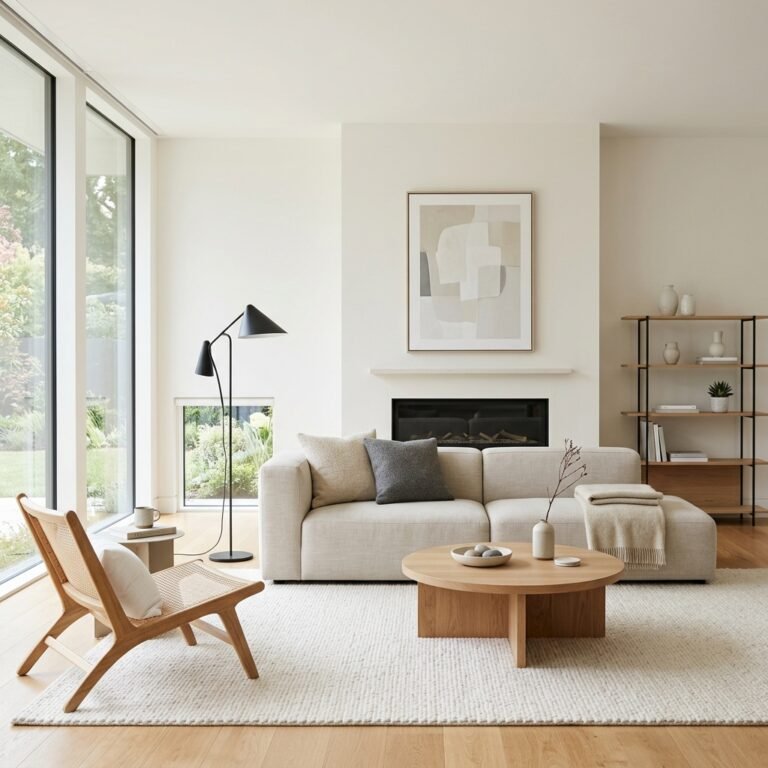
Achieve a high-end, serene atmosphere by adopting a minimalist layout, a strategic interior design philosophy that prioritizes intentionality over quantity. In the context of apartment living, minimalism isn’t about having nothing; it’s about ensuring that every object in the room serves a clear functional or aesthetic purpose. By focusing on a few high-quality, statement pieces—such as a well-crafted sofa or a singular piece of oversized art—you eliminate the “visual noise” that often makes small spaces feel chaotic. This spatial strategy creates “white space” within your floor plan, allowing the architecture of the room to breathe and making the entire living area feel significantly more expansive and curated. A minimalist approach is particularly effective for modern and Japandi-style interiors, where clean lines and a restrained palette create a sense of calm. By reducing the number of small decorative objects, you also simplify your home’s maintenance, ensuring that your sanctuary remains an uncluttered and restorative environment. This “less is more” tactic emphasizes the beauty of your furniture’s silhouette and the quality of your materials, transforming a standard layout into a sophisticated, gallery-like space that feels intentionally open and architecturally light.
14. Add Textured Fabrics
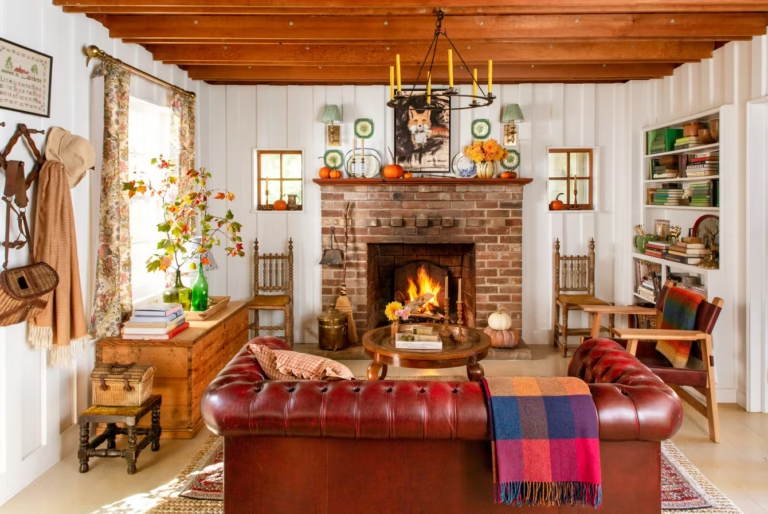
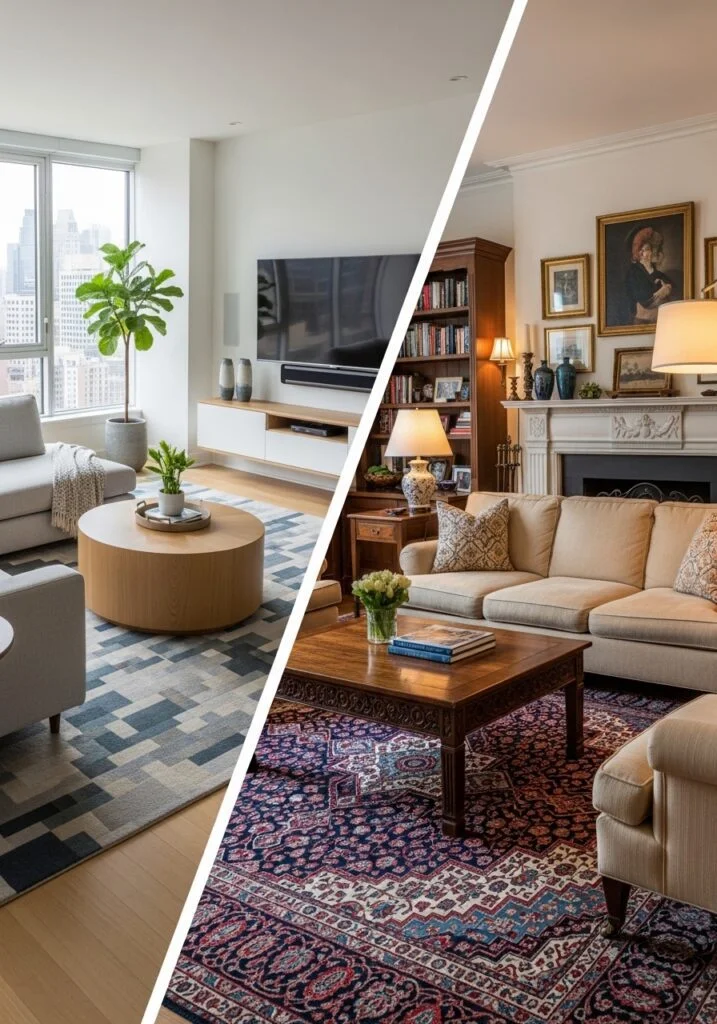
Elevate the sensory appeal of your living room by incorporating textured fabrics, a designer-favorite technique for adding sophisticated depth and warmth without encroaching on physical floor space. In a minimalist or neutral-toned apartment, texture acts as “visual interest,” replacing the need for additional furniture or busy patterns. By layering diverse materials—such as plush velvet pillows, a high-pile wool rug, or a chunky knitted throw—you create a rich, tactile experience that makes the room feel “finished” and high-end. This layering strategy focuses on the play of light and shadow on different surfaces, transforming a flat room into a multidimensional, cozy sanctuary. The beauty of focusing on textiles is that they introduce comfort and “visual weight” exactly where you need it most. A smooth leather sofa paired with a soft mohair blanket, for example, creates a professional-grade contrast that feels both modern and inviting. This approach is particularly effective for Scandinavian and Japandi aesthetics, where the “coziness factor” (or Hygge) is achieved through a thoughtful mix of organic fibers. By prioritizing tactile variety over physical objects, you ensure your home feels luxurious and restorative while maintaining a clean, streamlined footprint..
15. Create a Cozy Corner
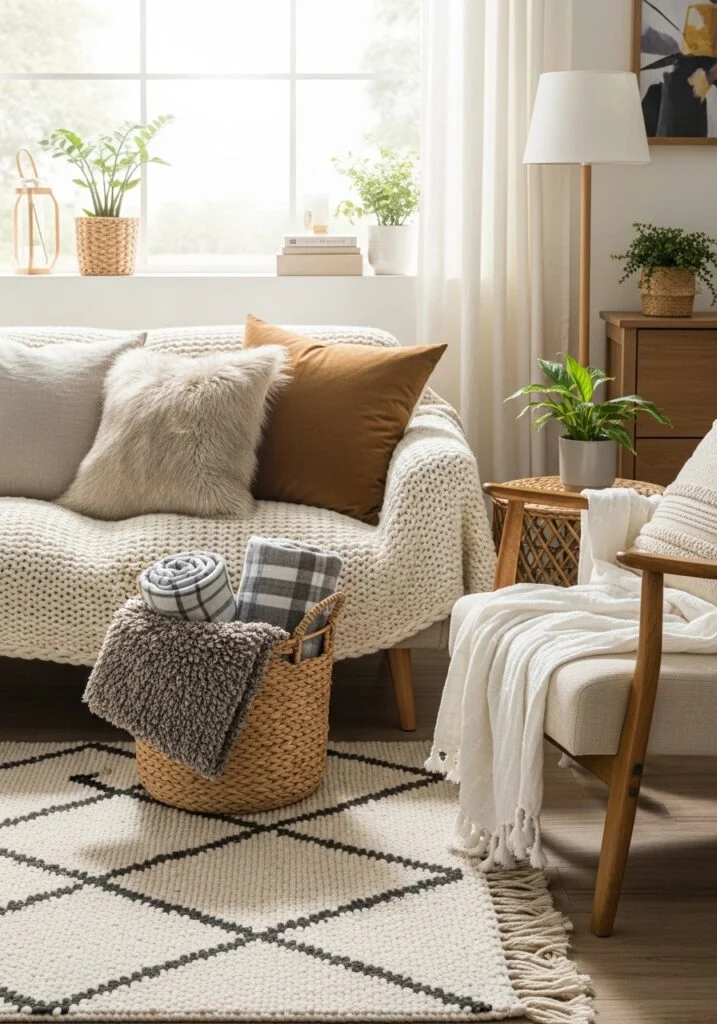
Maximize the utility of underutilized nooks by creating a cozy corner, a “room-within-a-room” strategy that adds a dedicated zone for relaxation without requiring a full renovation. In many apartment layouts, corners are often left empty, contributing to a sense of “unfinished” space. By intentionally grouping a contoured armchair, a slim floor lamp, and a petite side table, you define a functional sanctuary for reading, sipping coffee, or unwinding. This spatial zoning technique is a masterclass in making a small floor plan feel larger by proving that even a single corner can serve a specific, high-value purpose. To maintain an architecturally light aesthetic, professional designers recommend selecting a chair with a relatively low profile or “leggy” design to keep the sightlines open. Adding a soft textile element—like a weighted knit throw or a small sheepskin rug—underneath the chair helps to “anchor” the corner, visually separating it from the rest of the living area. This approach transforms a static corner into a sophisticated architectural feature that balances comfort with a streamlined, modern footprint. By prioritizing a single, well-lit “destination” within your room, you create a sense of luxury and intentionality that makes the entire apartment feel more expansive.
16. Use Storage Ottomans
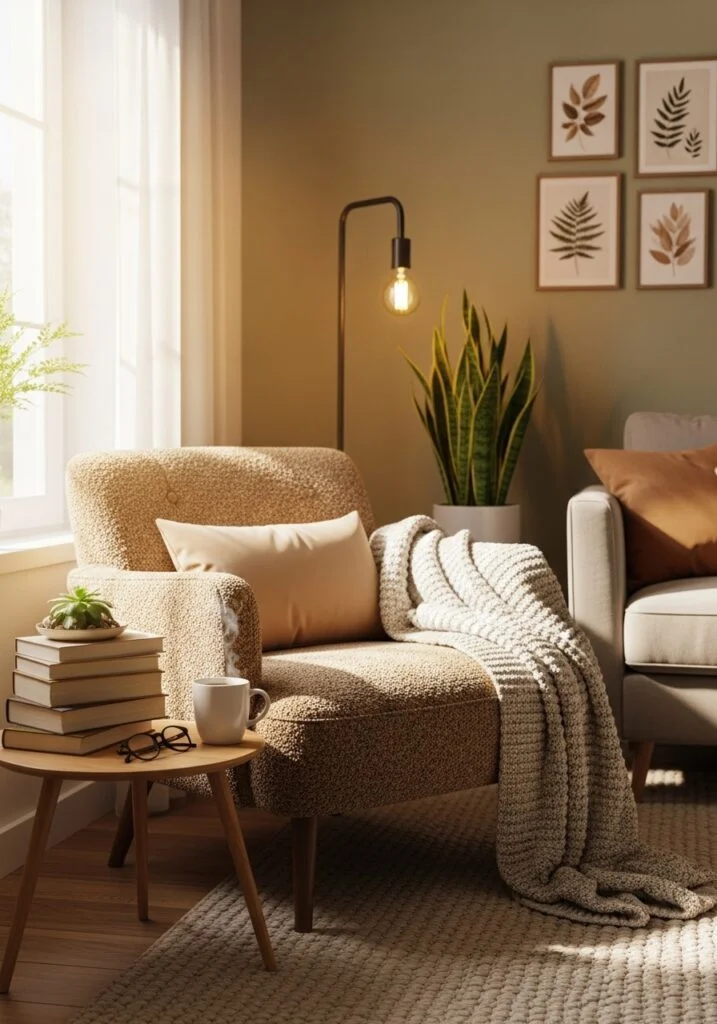
Optimize your living room’s footprint by incorporating storage ottomans, the ultimate multi-functional “secret weapon” for high-efficiency apartment living. In a space where every square inch counts, a storage ottoman serves as a triple-threat: a comfortable footrest, an extra seat for guests, and a concealed hub for items like blankets, pillows, or tech accessories. This storage strategy is a favorite for maintaining a minimalist aesthetic because it provides a dedicated place for “visual clutter” to disappear, ensuring your home remains clean, organized, and architecturally light. By replacing a traditional, “hollow” coffee table with one or two large ottomans, you introduce a softer, more inviting texture to the center of the room. Professional designers often recommend choosing performance fabrics or leather for durability, especially if the piece will be used as a primary tabletop (simply add a wooden tray for stability). This approach to spatial and functional optimization is particularly effective for small-space layouts, as it offers the utility of three separate furniture pieces while occupying the footprint of only one. Whether used as a singular statement piece or a pair of tucked-away cubes, a storage ottoman is a masterclass in sophisticated, dual-purpose design.
17. Keep the Layout Open
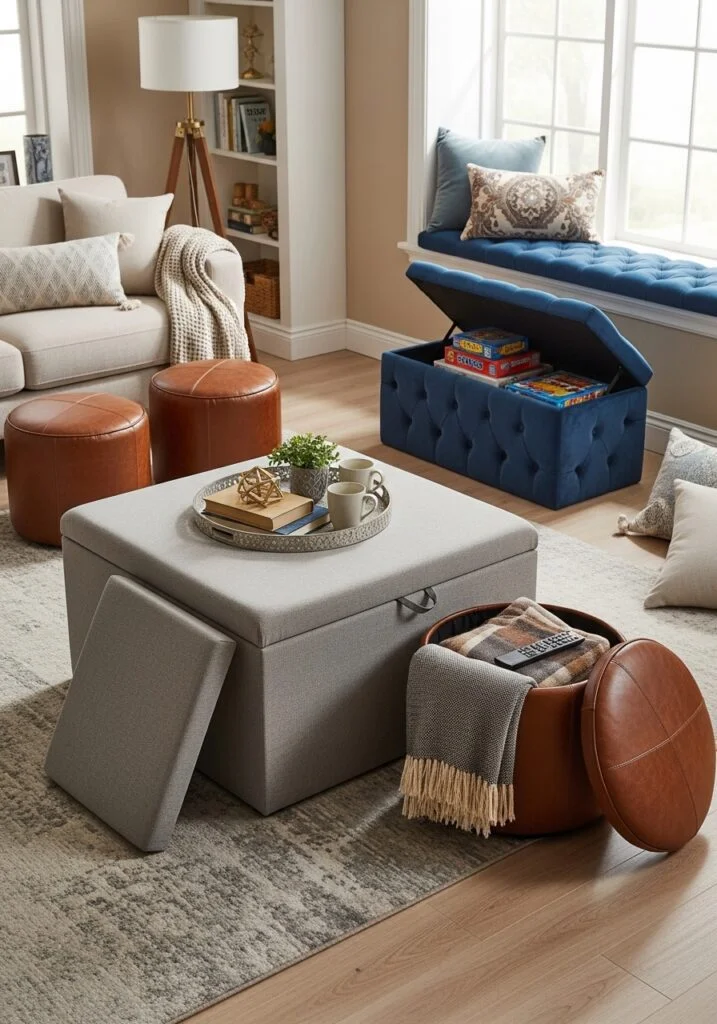
Prioritize “spatial flow” by keeping the layout open, an essential interior design principle for maintaining a sense of ease and movement in a compact apartment. Overcrowding a small living room with too many pieces—even stylish ones—can create “visual friction” and make the environment feel claustrophobic. By ensuring there are clear walking paths of at least 30 to 36 inches between major furniture items, you create an architecturally balanced sanctuary that feels expansive and intentional. This floor planning strategy focuses on “the breath between the objects,” allowing the eye to travel across the room without hitting a wall of clutter. A high-clarity layout is best achieved by choosing multi-functional pieces and pulling furniture slightly away from the walls (a technique known as “floating”) to create the illusion of more volume. This approach is a hallmark of minimalist and Scandinavian design, where the goal is to balance utility with a light, airy aesthetic. By resisting the urge to fill every corner, you preserve the room’s natural light and improve its overall functionality. The result is a sophisticated, high-flow living area that feels professionally curated, relaxing, and perfectly scaled for modern urban living.
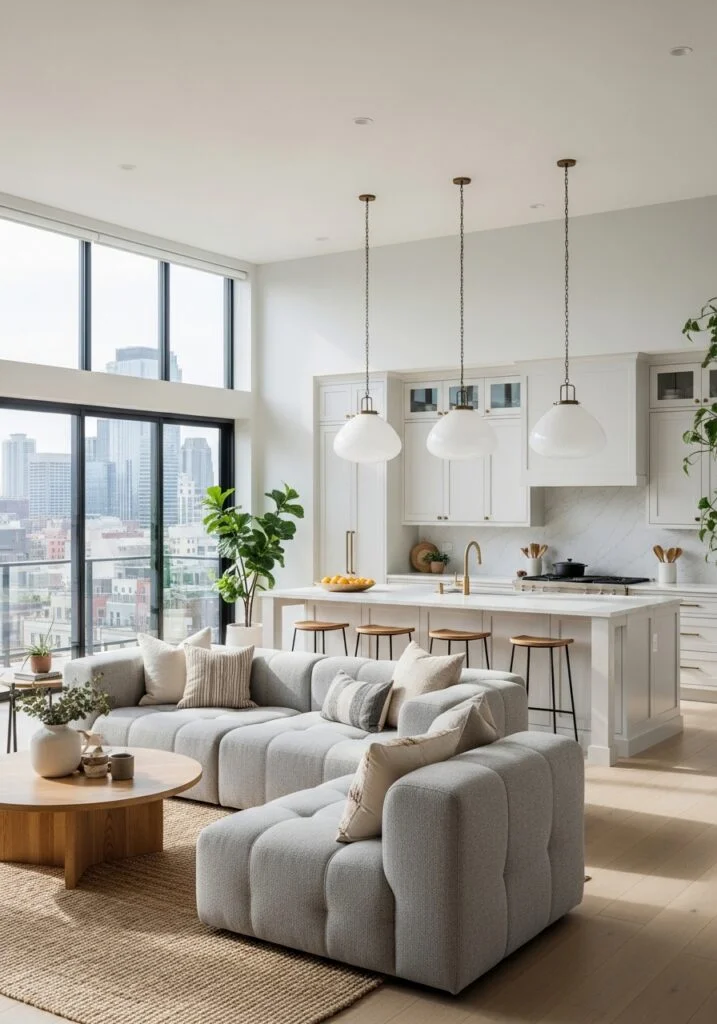
18. Use Curtains to Add Height
Maximize your room’s vertical potential by hanging curtains higher than the window frame, a high-impact “optical illusion” used by professional designers to make standard ceilings appear significantly taller. By mounting your curtain rod closer to the ceiling—typically 4 to 6 inches above the window frame or even just below the crown molding—you draw the eye upward, creating a sense of architectural grandeur. This window treatment strategy effectively elongates the visual lines of your walls, transforming a modest apartment living room into a more expansive, airy sanctuary. To achieve a polished, high-end aesthetic, ensure your curtain panels are long enough to “kiss” the floor or puddle slightly, rather than hanging mid-wall, which can visually “cut” the room in half. Choosing lightweight, breathable fabrics like linen or sheer cotton allows natural light to filter through while maintaining privacy, further enhancing the room’s sense of openness. This approach to spatial optimization is a favorite for minimalist and Scandinavian-inspired homes because it adds soft, vertical texture without taking up any physical floor space. By treating your windows as full-height architectural features, you create a sophisticated, luminous environment that feels intentionally designed and perfectly scaled.
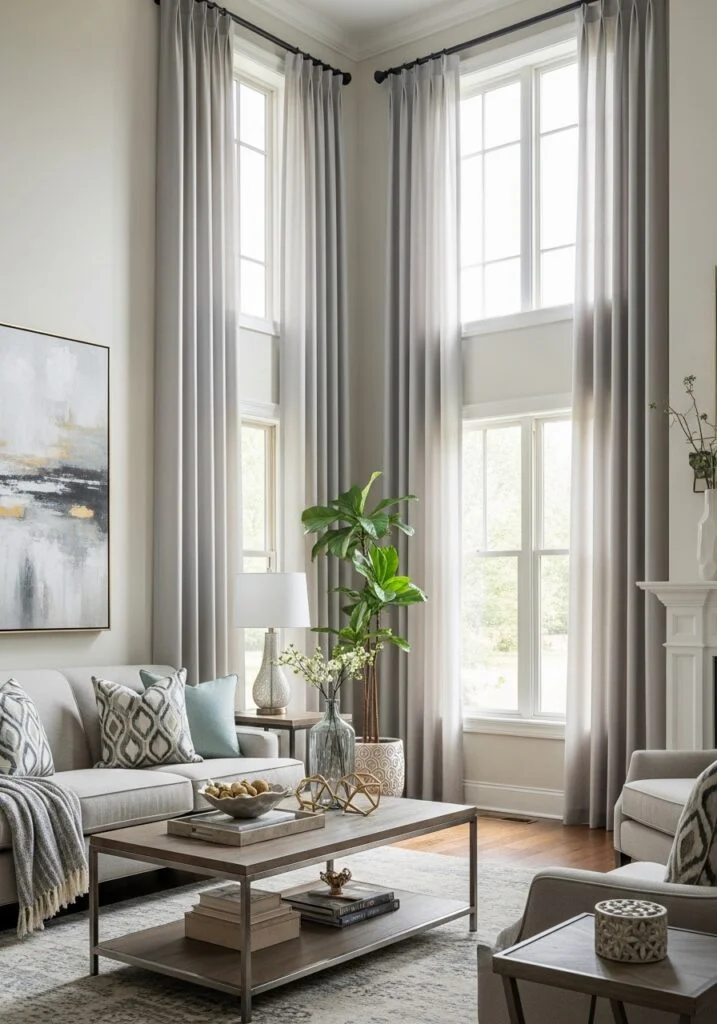
19. Add Accent Pillows
Introduce a sophisticated layer of visual interest by adding accent pillows, the ultimate interior design “finishing touch” for injecting color, texture, and personality into your living room. In a small apartment, pillows serve as high-impact accessories that provide a professional-grade look without the permanence or cost of larger furniture pieces. This styling strategy is a favorite among minimalist designers because it allows you to maintain a neutral base—like a stone-gray or oatmeal sofa—while using textiles to reflect current trends or seasonal moods. By thoughtfully layering different sizes and fabrics, you transform a standard seating area into a textured, high-clarity sanctuary that feels both curated and incredibly inviting. The true strength of accent pillows lies in their unmatched flexibility. They act as a “style bridge,” connecting different elements of your room—like a piece of art or an indoor plant—to your furniture through a shared color palette. For an architecturally balanced aesthetic, designers often recommend a mix of scales: starting with larger 22-inch “anchor” pillows in a solid texture, followed by smaller 18-inch pillows featuring a subtle pattern or a bold “pop” of color. This approach to low-commitment decor ensures your space remains dynamic and easy to refresh, allowing your home’s personality to evolve as effortlessly as your tastes.
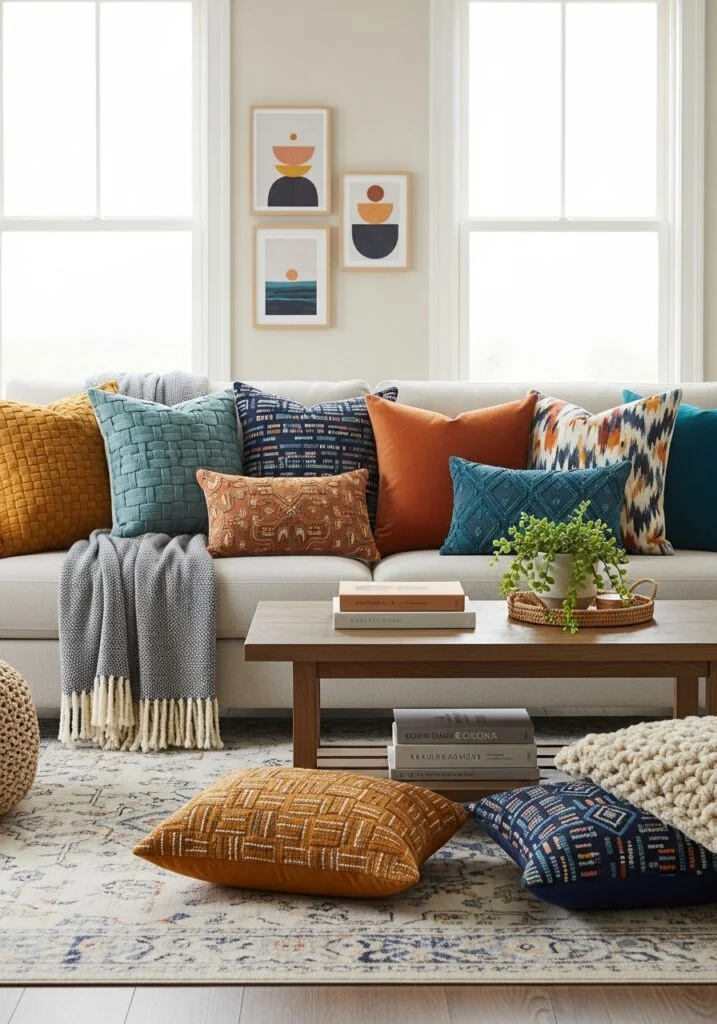
20. Try a Statement Coffee Table
Anchor your living room with a statement coffee table, a high-impact design choice that serves as the functional and aesthetic centerpiece of your layout. In a curated apartment, the coffee table acts as a “visual weight” that grounds the surrounding furniture, providing a surface for daily utility while doubling as an architectural focal point. This centerpiece strategy is especially effective when you select a piece that contrasts with your sofa—for instance, pairing a rectangular sofa with a round or organic-shaped table to soften the room’s lines and improve flow in tight quarters. For those favoring a clean, intentional look, selecting a table made from natural wood or stone introduces an organic warmth that is essential for minimalist and Japandi-inspired spaces. To maintain a sense of “visual lightness,” professional designers often recommend nesting tables or designs with slim, tapered legs, which provide ample surface area without blocking floor visibility. By choosing a table that balances sculptural beauty with everyday durability, you transform your seating area into a sophisticated, high-clarity sanctuary that feels both structurally sound and perfectly balanced.
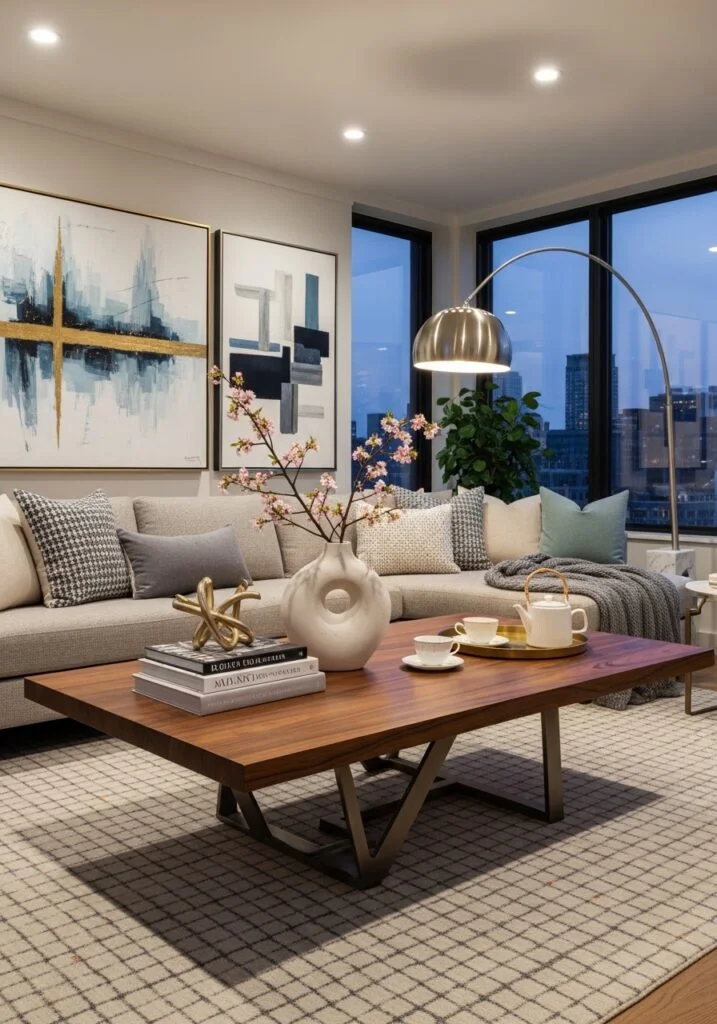
21. Incorporate Wall Lighting
Free up your valuable tabletop and floor real estate by incorporating wall lighting, a high-efficiency design strategy that provides essential ambiance while keeping your apartment’s footprint clear. Wall sconces are the ultimate “spatial hack” for small living rooms because they move your light sources onto the vertical plane, eliminating the need for bulky floor lamps or side table space. This lighting solution is a hallmark of sophisticated, high-clarity interiors, offering a permanent, “built-in” look that makes even a standard rental feel like a custom-designed sanctuary. For those who want to avoid hardwiring, plug-in sconces or battery-operated LED options offer the same architectural elegance with zero renovation. By placing a pair of sconces on either side of a sofa or a piece of statement art, you create a “triangulation” of light that adds depth and texture to your walls. This approach is particularly effective for modern and mid-century aesthetics, where the fixture itself serves as a piece of sculptural decor during the day and a source of warm, inviting glow at night. By shifting your focus to wall-mounted fixtures, you ensure your living area remains uncluttered, architecturally light, and perfectly balanced.
22. Personalize with Art and Decor
Transform your living room into a curated, high-clarity sanctuary by personalizing it with art and decor, the final layer of design that breathes unique character into a space. In a well-styled apartment, accessories are more than just “fillers”—they are the narrative elements that bridge the gap between a generic layout and a home that feels warm and lived-in. This styling strategy focuses on the “art of the edit,” where selecting a few high-quality, meaningful pieces prevents the room from feeling cluttered while ensuring it reflects a sophisticated, intentional aesthetic. A professional-grade approach to decor often involves grouping items in “vignettes”—small, organized clusters of books, ceramics, or personal treasures on a coffee table or shelf. This technique creates “visual anchors” that draw the eye without overwhelming the senses. For those favoring a minimalist or Japandi aesthetic, choosing art with organic shapes or neutral tones can add “texture” to a wall without disrupting the room’s calm. By prioritizing pieces that resonate with your personal style, you transform a standard living area into a vibrant, high-impact environment that is both unique and welcoming.
Conclusion
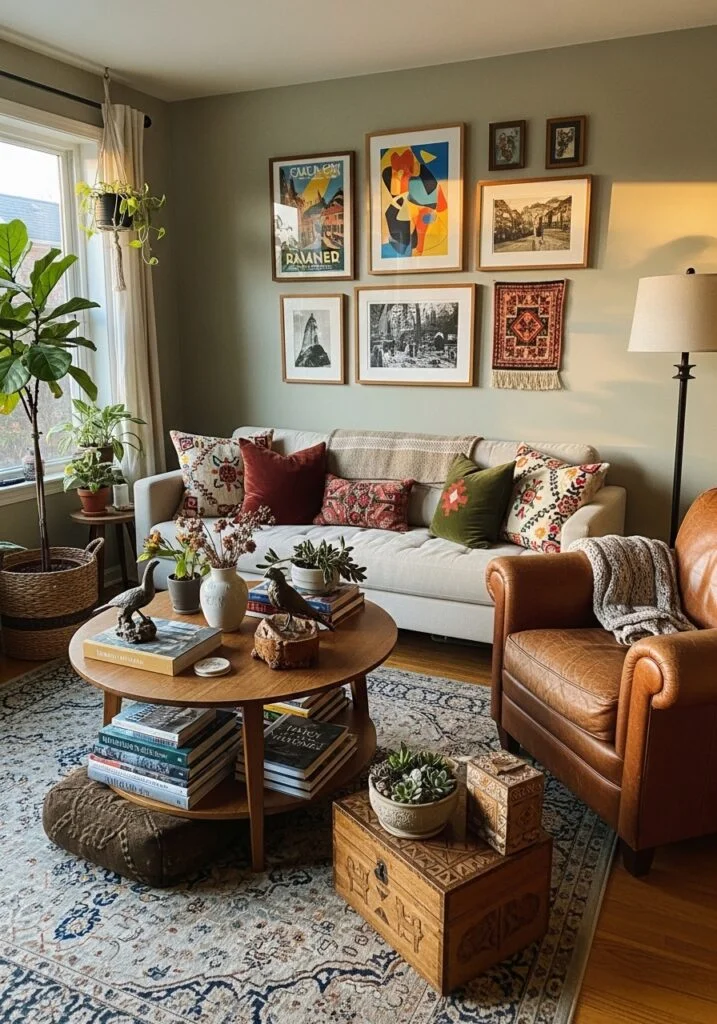
Designing an apartment living room requires creativity and thoughtful planning, but even small spaces can become beautiful and functional with the right ideas. By choosing smart furniture, maximizing vertical space, and maintaining a balanced layout, you can create a stylish living room that feels comfortable and inviting. The key is focusing on practical solutions that enhance both the appearance and functionality of the room. Whether you prefer minimalist design, cozy textures, or modern decor accents, these apartment living room ideas can help you transform your space into a place that truly feels like home.