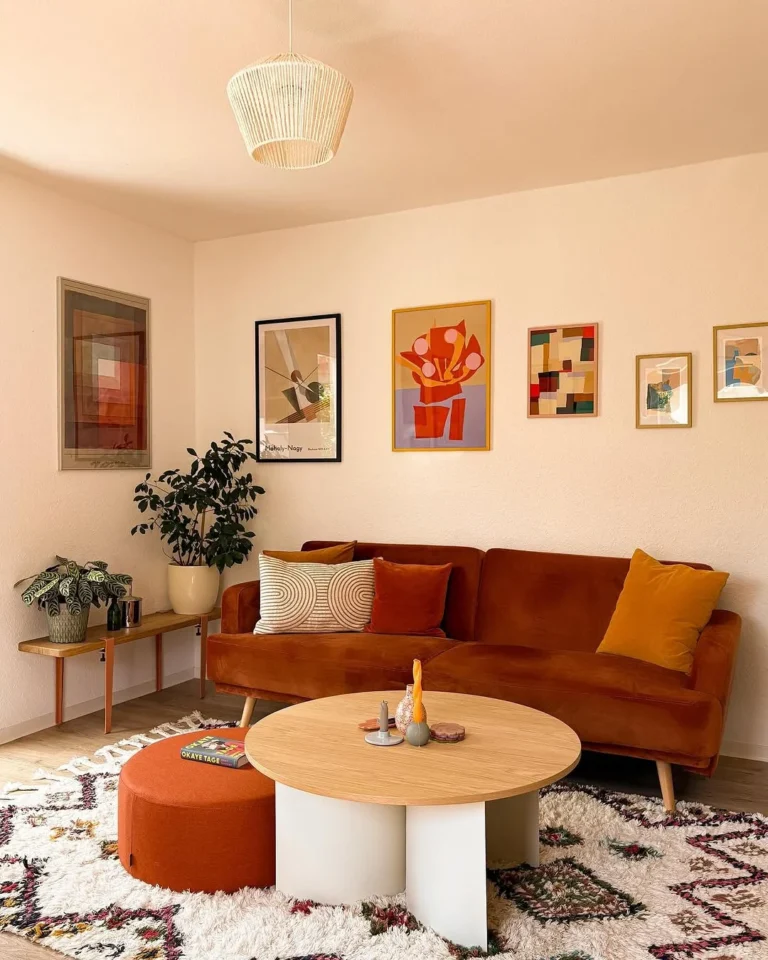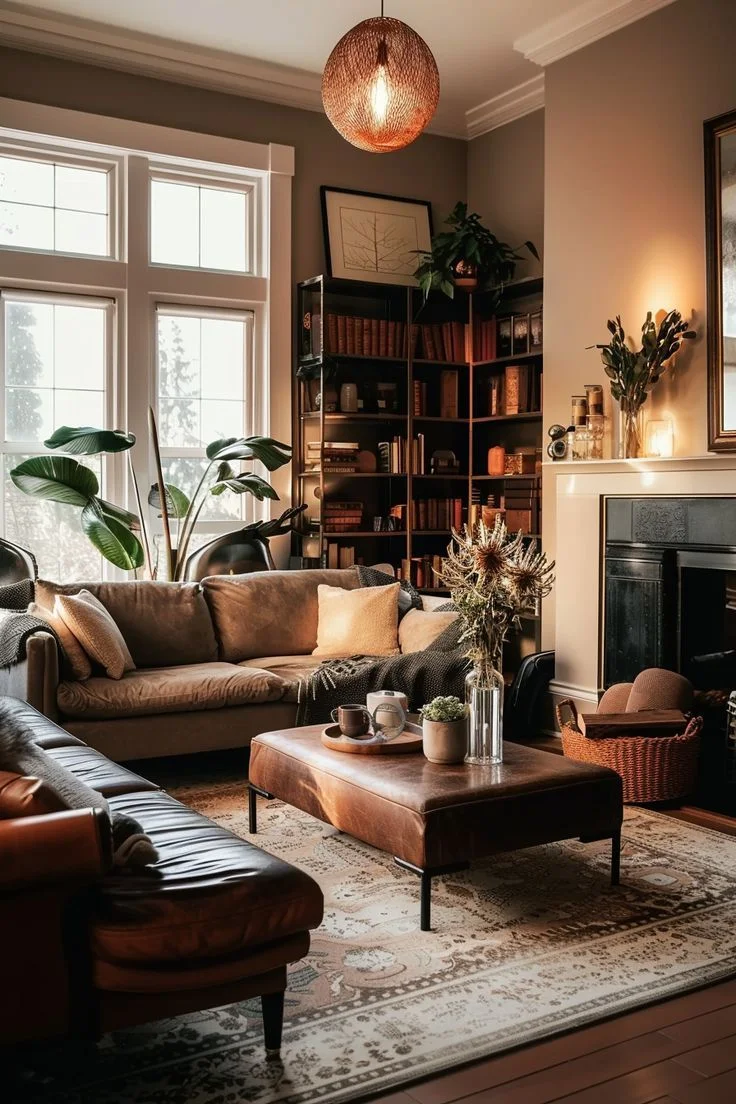
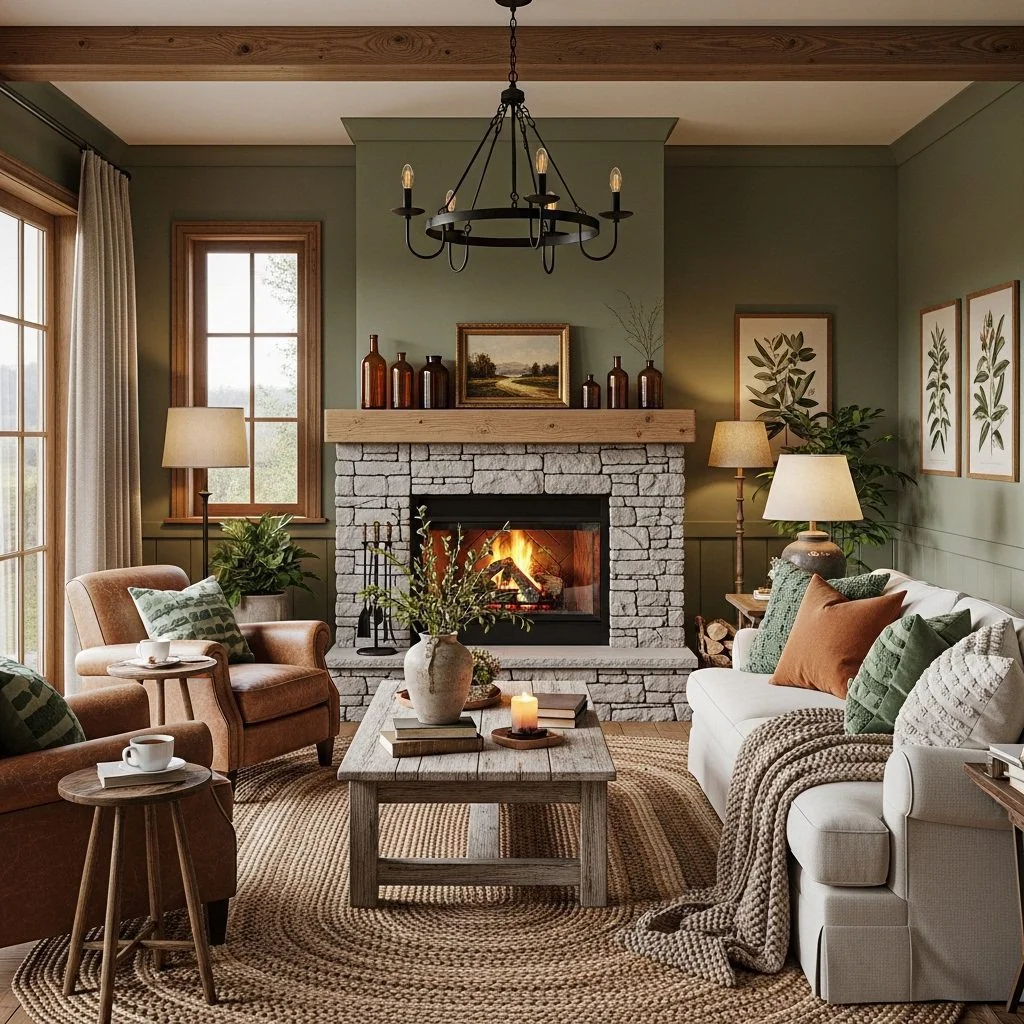
Sage green living room ideas offer the ultimate balance of organic tranquility and timeless warmth for today’s modern interiors. This sophisticated color scheme blends the soothing essence of sage with classic rustic design elements to create a home environment that is both grounded and revitalizing. The earthy, muted undertones of sage green provide a seamless backdrop for weathered wood accents, natural stone fireplace surrounds, and the raw textures central to rustic styling. These thoughtfully designed spaces act as a peaceful sanctuary for relaxation while upholding an air of curated elegance. Because of its incredible versatility, sage green functions beautifully as a bold accent wall or a soft neutral, harmonizing effortlessly with creamy whites, warm wood tones, and earthy browns. Whether you are looking for a dramatic color transformation or subtle organic touches, rustic sage green decor provides limitless inspiration for building an inviting living space that honors natural beauty and cozy, comfortable living.
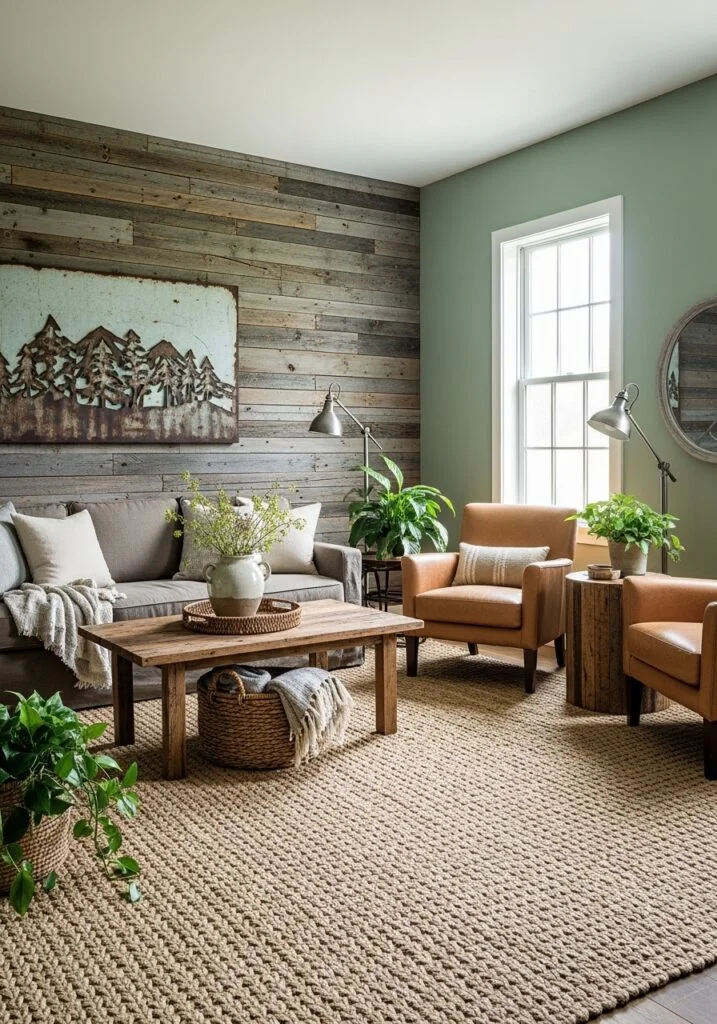
1. Reclaimed Wood Accent Walls with Sage Green Paint
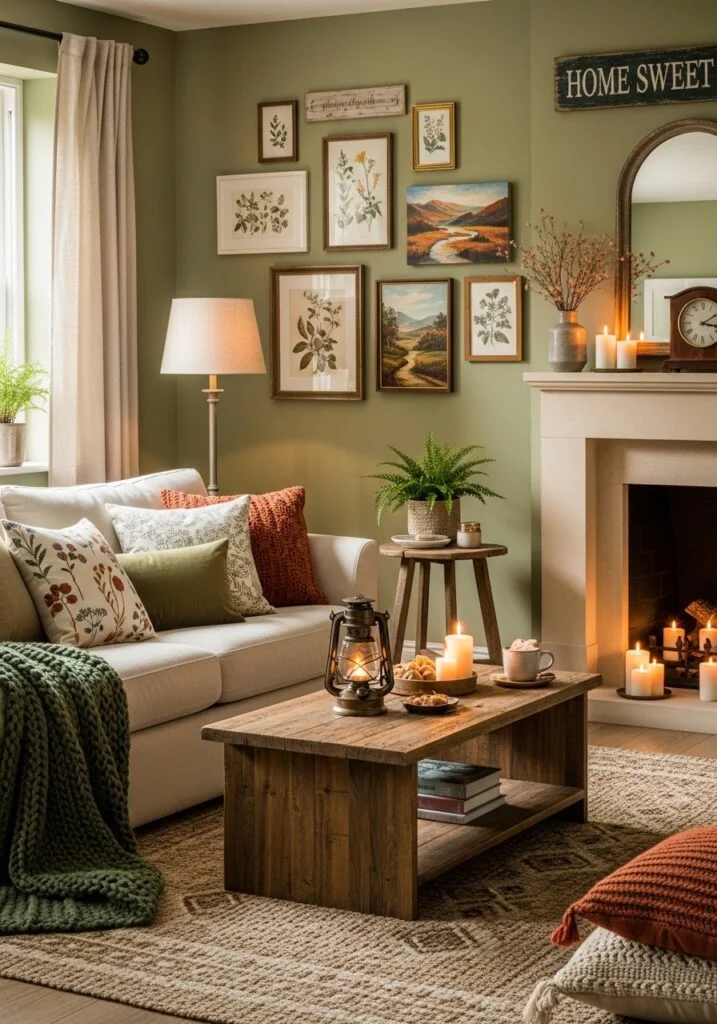
Reclaimed wood accent walls paired with sage green paint offer a masterclass in textural contrast, instantly elevating the rustic aesthetic of any modern living room. By blending the natural patina of weathered barn wood with the soft, organic tones of sage, you create a focal point that exudes both history and craftsmanship. This sophisticated combination works perfectly to anchor seating areas, where the green backdrop highlights the warm undertones of the timber to provide exceptional visual depth. For a curated look, try mixing various wood stain intensities and finishing the space with vintage brass hardware or industrial lighting fixtures. This design strategy is particularly effective for open-concept floor plans, as it defines specific zones with a “natural reset” vibe without sacrificing the room’s airy flow. Whether you are aiming for a farmhouse feel or a contemporary retreat, this pairing celebrates the best of earthy interior design and timeless character.
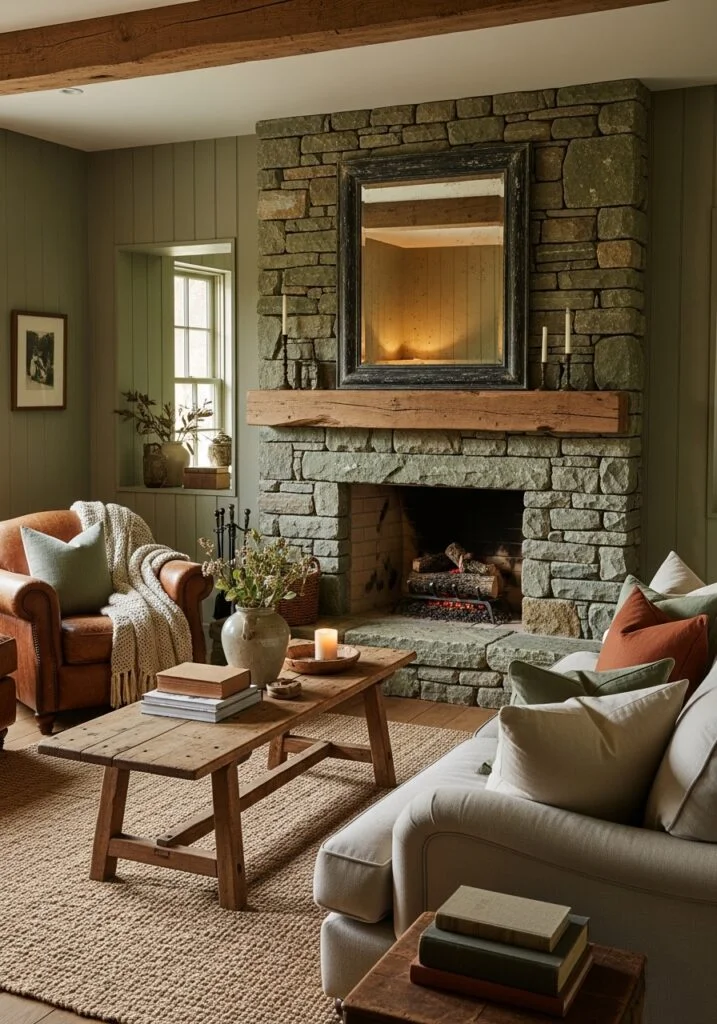
2. Stone Fireplace Surrounds in Sage Green Rooms
Integrating stone fireplace surrounds into sage green rooms is a premier choice for achieving a high-end, rustic living room aesthetic that feels both grounded and luxurious. A natural stone fireplace serves as a magnificent architectural focal point, especially when framed by the calming, earthy tones of sage green paint that accentuate organic textures. Whether you opt for stacked stone, rugged river rock, or traditional fieldstone, these materials harmonize beautifully with the muted gray-green palette to create a sophisticated, cozy atmosphere. Adding a reclaimed wood mantel provides the perfect bridge between raw masonry and refined interior design, while extending the stonework into built-in seating or storage niches adds functional character. During the evening, warm firelight reflects off sage green walls, casting an inviting glow that makes the space the ultimate family gathering spot. This timeless combination of natural stone decor and botanical hues offers a “natural reset” for modern homes, ensuring your living area remains a centerpiece of comfort and style.
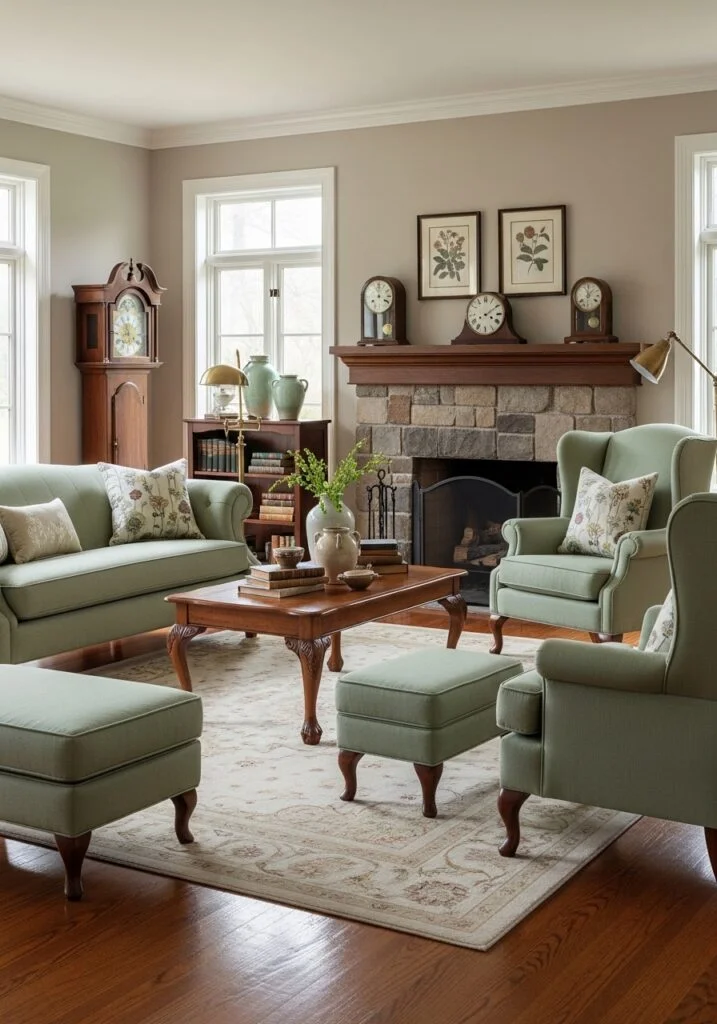
3. Vintage Furniture Collections with Sage Green Upholstery
Integrating vintage furniture collections with sage green upholstery is an exceptional way to infuse authentic character and a “collected over time” feel into any rustic living room. By sourcing unique pieces like distressed armchairs, weathered wooden coffee tables, and antique cabinets, you create a space rich with history and aged patina. A sage green velvet sofa or linen-covered seating adds a layer of sophisticated comfort that perfectly complements a rustic home aesthetic. Mixing different design eras—such as mid-century silhouettes with farmhouse textures—ensures an eclectic yet cohesive look that feels personal and curated. For a sentimental touch, consider reupholstering family heirlooms in muted sage fabrics to bridge the gap between vintage charm and modern style. Accenting these pieces with aged leather and vintage brass creates a multi-dimensional environment that serves as both a conversation starter and a cozy retreat. This approach to shabby chic decor and botanical-inspired furniture provides the perfect balance of functional seating and timeless, high-end design for everyday living.
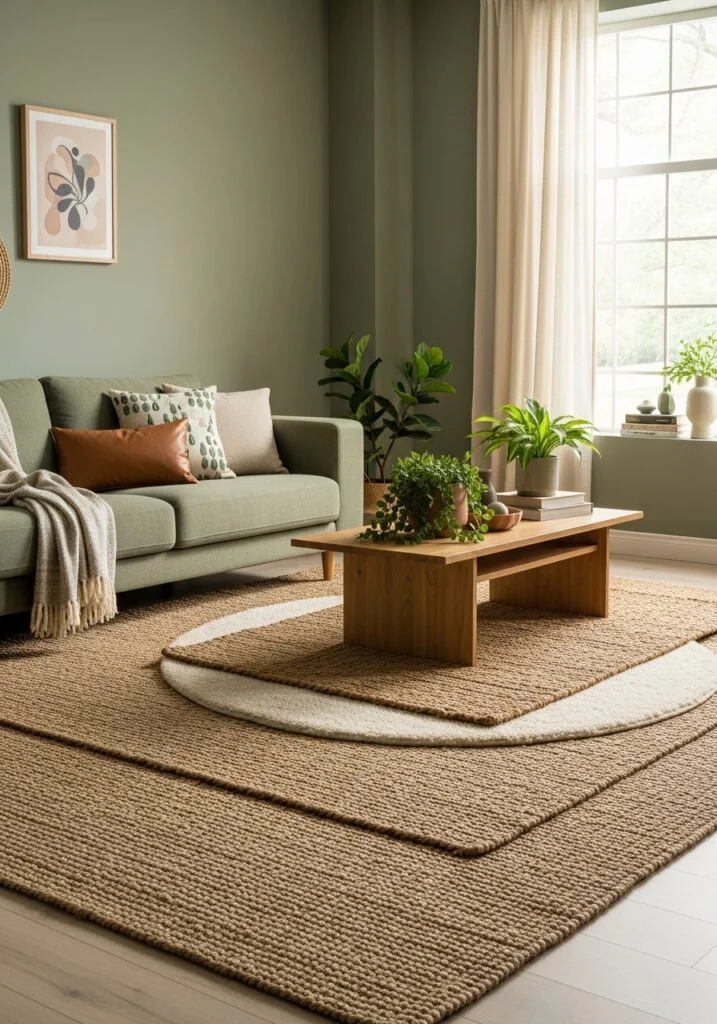
4. Natural Fiber Rugs Layered in Sage Green Spaces
Integrating natural fiber rugs into sage green spaces is a brilliant way to build visual warmth and textural depth within a rustic living room design. By layering a large jute or sisal base rug in neutral tones with smaller, patterned rugs in complementary sage and cream hues, you instantly create a more curated and comfortable environment. This popular interior design technique helps define seating areas in open-concept homes while providing a durable, low-maintenance foundation perfect for high-traffic family rooms. Natural materials like hemp, wool, and organic cotton blend seamlessly with rustic aesthetics, offering a tactile contrast to smooth sage green walls and bold furniture pieces. Experimenting with different weave patterns adds sophisticated visual interest without overwhelming the room’s calming palette. Ultimately, the earthy tones of natural fiber flooring ground the space, enhancing the botanical-inspired walls to create a cohesive “natural reset” for your home. This layering approach is the secret to achieving that sought-after balance of functional durability and high-end organic modern style.
5. Exposed Wooden Beam Ceilings with Sage Green Walls
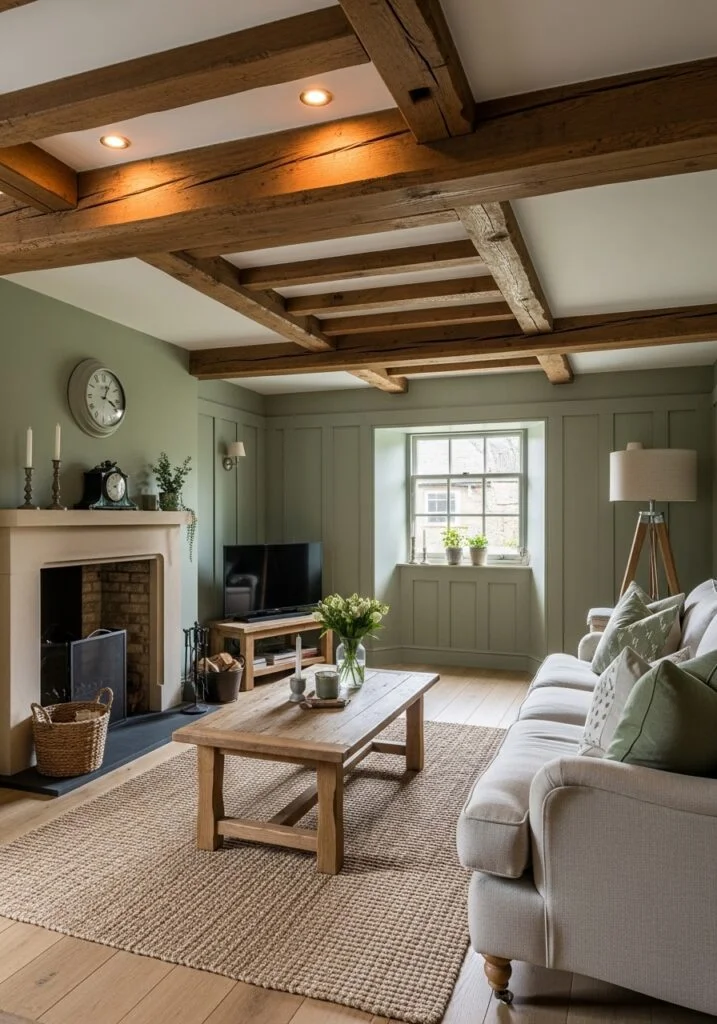
Incorporating exposed wooden beam ceilings with sage green walls is a premier way to add architectural drama and a “natural reset” vibe to any rustic living room. These structural elements draw the eye upward, providing a stunning contrast between the organic, dark-stained timber and the soft, muted tones of sage green paint. By emphasizing the height of cathedral or vaulted ceilings, exposed beams make modern interiors feel more spacious while adding the raw, tactile character that defines farmhouse-style decor. The natural lines of the wood soften the geometric edges of contemporary furniture, creating a balanced and harmonious environment. To further enhance the aesthetic, consider installing recessed lighting between the beams to highlight their unique grain and texture during the evening. This timeless combination of architectural wood features and botanical wall colors ensures your home remains sophisticated and cozy for years to come. Whether you are Renovating a historic space or styling a new build, exposed timber ceilings paired with sage green offer an enduring blend of rustic charm and high-end elegance.
6. Distressed Wood Coffee Tables in Sage Green Settings
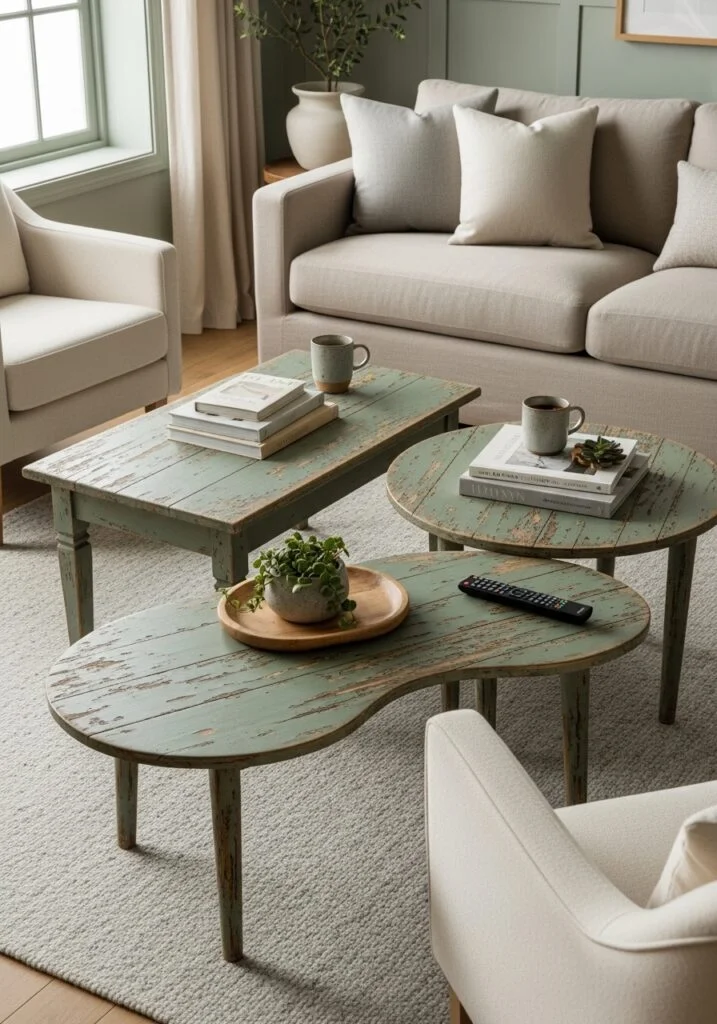
Incorporating distressed wood coffee tables into sage green settings is a masterful way to anchor a rustic living room with a functional yet artistic focal point. These weathered, substantial pieces bring authentic character to modern interiors, offering a tactile contrast to the smooth, calming tones of sage green paint. By selecting a table with visible grain patterns, worn edges, and natural imperfections, you introduce a sense of history and craftsmanship that defines rustic home decor. The warm, earthy undertones of reclaimed timber perfectly complement a botanical-inspired palette, especially when paired with soft linen or velvet upholstery. For added utility, look for distressed furniture with built-in drawers or lower shelving to maximize storage without sacrificing the room’s aesthetic. To finish the look, style your tabletop with organic elements like potted greenery, wooden bowls, or vintage books to further enhance the “natural reset” vibe. This centerpiece creates a warm gathering spot for family and friends while maintaining the relaxed, sophisticated atmosphere that makes sage green living room ideas so enduringly popular for everyday comfort.
7. Slipcover Sofas in Sage Green and Neutral Tones
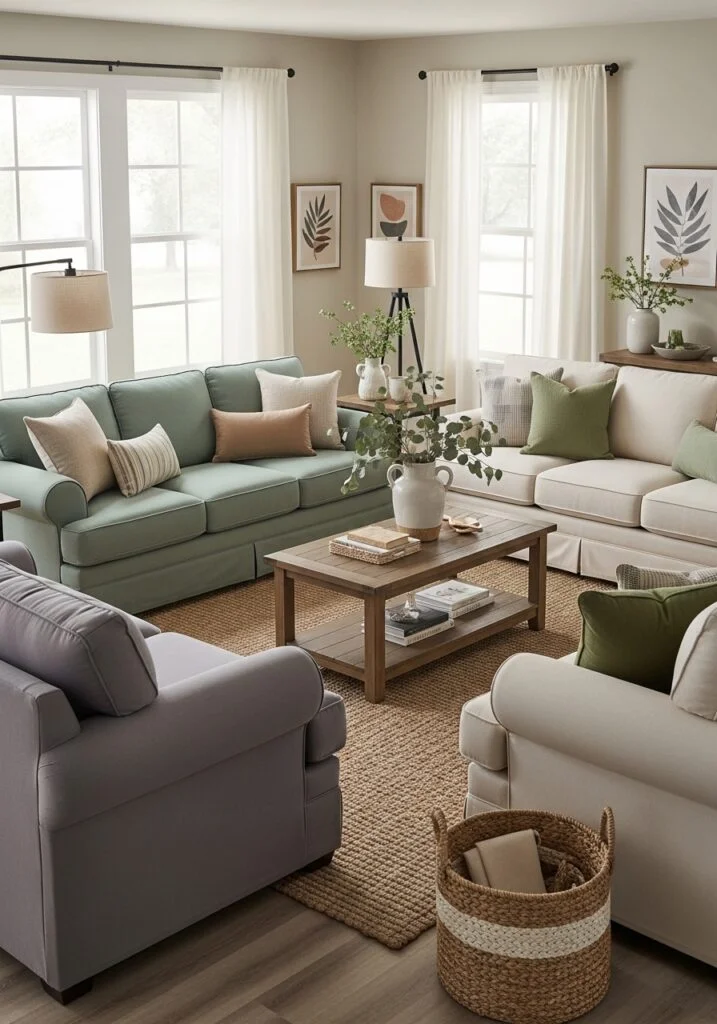
Integrating slipcover sofas in sage green and neutral tones is the secret to creating a high-end, rustic living room that remains effortlessly livable for active families. These practical yet stylish pieces embody the relaxed spirit of modern farmhouse design, providing a durable solution for busy households without sacrificing a sophisticated aesthetic. By choosing natural fabrics like breathable linen, heavy cotton, or hemp, you ensure your seating ages gracefully while developing a unique, lived-in character over time. The slightly rumpled, casual appearance of a linen slipcover sofa adds to the cozy, inviting atmosphere that defines rustic sage green living rooms. For ultimate versatility, consider maintaining multiple sets of covers in varying shades of sage or cream to refresh your home’s color palette seasonally. Pairing these comfortable seating options with weathered wooden side tables and organic accessories creates a cohesive “natural reset” vibe. This functional approach to sage green home decor allows you to prioritize the comfort and durability needed for everyday gathering and entertaining guests.
8. Built-in Window Seats with Sage Green Cushions
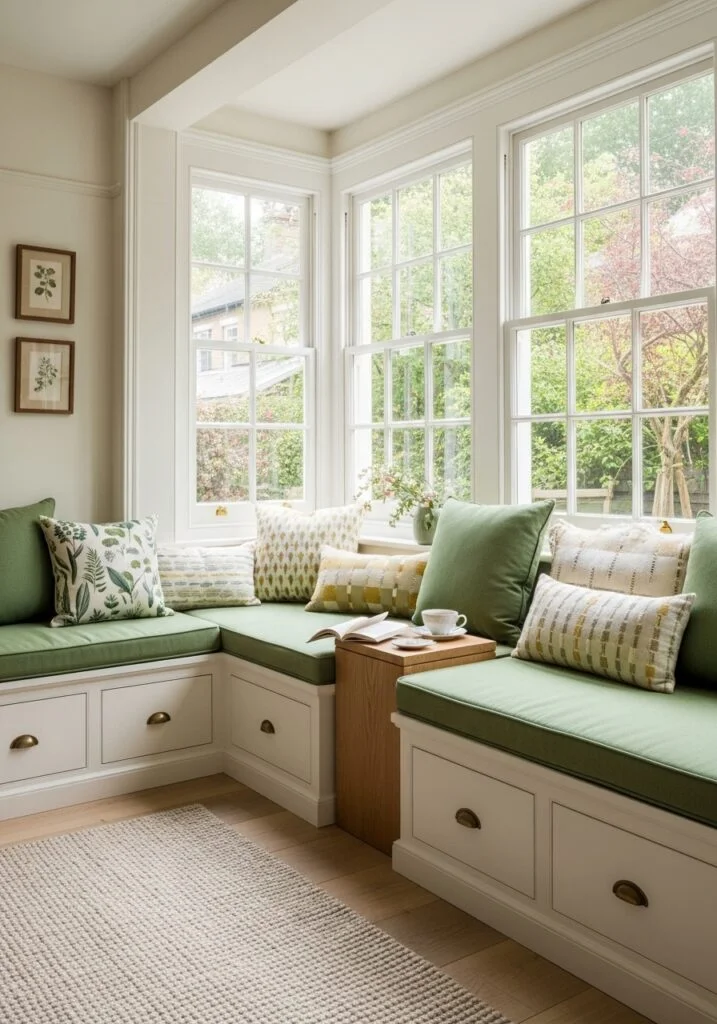
Incorporating built-in window seats with sage green cushions is a brilliant way to transform underutilized alcoves into a cozy, high-end rustic living room feature. These custom-built reading nooks, constructed from warm, natural wood, maximize your square footage while creating an intimate spot to capture sunlight. The addition of plush sage green upholstery softens the structural lines of the cabinetry and perfectly bridges the gap between your interior decor and the outdoor greenery visible through the glass. To boost functionality, design these seats with integrated storage for blankets or books, and flank them with open wooden shelving for a curated modern farmhouse look. Natural light highlights the organic textures of sage green fabrics, making these nooks the ultimate “natural reset” for morning coffee or afternoon relaxation. Whether you have a classic bay window or a modern alcove, this combination of rustic wood construction and botanical-toned textiles adds significant character and value to your home. This design strategy is a staple in sage green living room ideas, offering a perfect blend of practical utility and timeless, sophisticated style.
9. Sage Green Kitchen Islands Open to Living Rooms
Integrating sage green kitchen islands into open-concept living rooms is a premier design strategy for creating a seamless transition between cooking and gathering spaces. In modern, rustic home layouts, a substantial sage green island serves as a sophisticated bridge that harmonizes the kitchen and living room palettes while maintaining a cohesive, organic aesthetic. These multifunctional pieces provide essential extra seating, storage, and workspace, often featuring reclaimed wood countertops or vintage-inspired hardware to enhance their rustic charm. By incorporating built-in bookshelves or wine storage, the island functions as a piece of “living room furniture” that eliminates visual barriers while defining distinct functional zones. Pairing the island with natural wood bar stools or sage-accented seating creates a unified look that works perfectly for casual dining, homework, or entertaining guests. This approach to sage green kitchen design transforms the island into a central social hub, offering a “natural reset” that feels both grounded and high-end. Whether you are Renovating a farmhouse or styling a contemporary open-plan home, a sage green island is the ultimate anchor for a shared, stylish living environment.
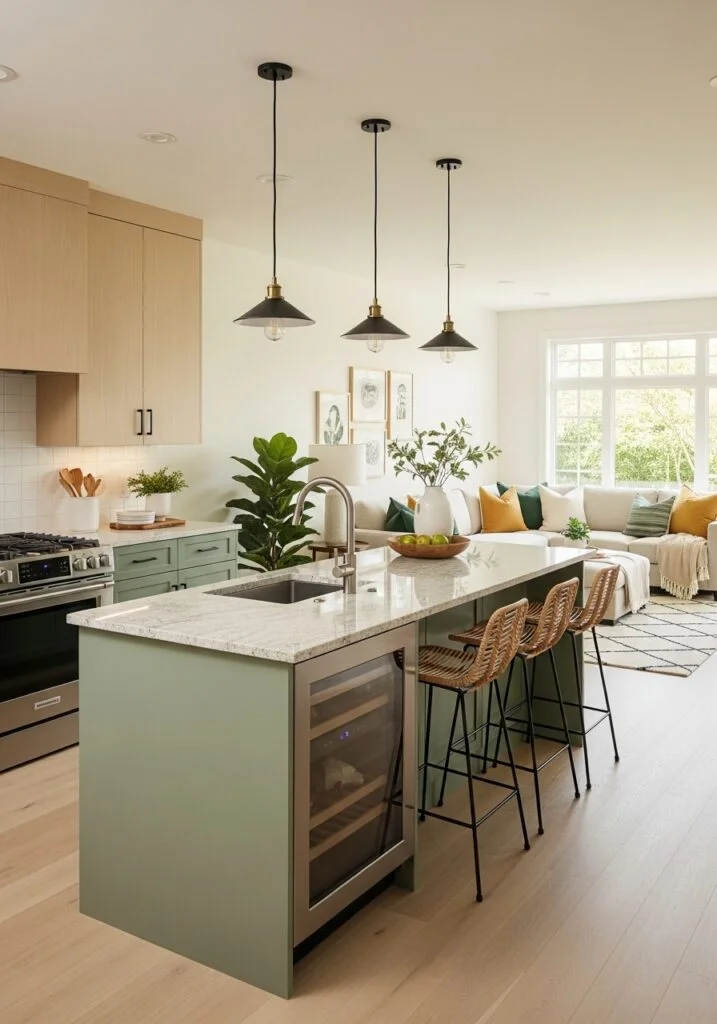
10. Wicker and Rattan Furniture in Sage Green Rooms
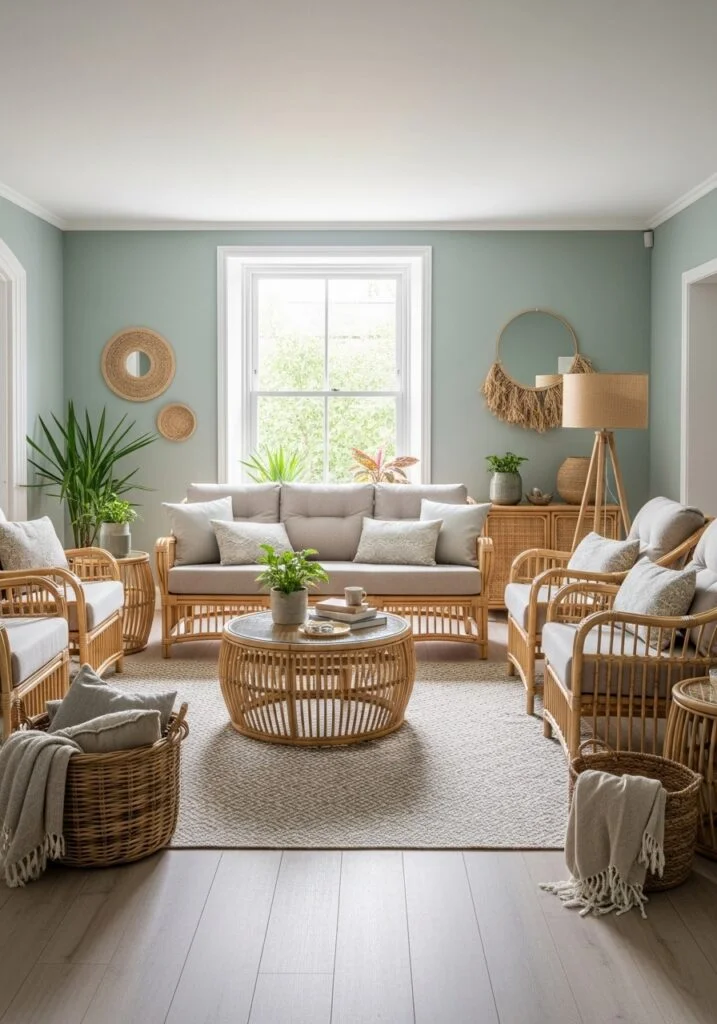
Integrating wicker and rattan furniture into sage green rooms is an effortless way to introduce natural texture and a “casual elegance” to any rustic living room design. These lightweight, organic materials feature soft curves that beautifully break up the rigid lines of traditional wooden furniture while maintaining a cohesive, nature-inspired aesthetic. Incorporating rattan armchairs, wicker side tables, or woven bamboo baskets adds warmth and visual interest without overwhelming the space with heavy silhouettes. The natural honey and straw tones of these materials harmonize perfectly with sage green paint, creating a sophisticated palette that feels both grounded and airy. For a curated look, choose pieces with plush cushions in neutral linen or matching sage fabrics to tie the seating arrangement together. These materials thrive in spaces with abundant natural light, such as sunrooms or open-concept living areas, where they enhance the “natural reset” vibe of the home. The relaxed, tactile nature of wicker and rattan decor creates an inviting atmosphere perfect for family gatherings, ensuring your rustic sage green home feels timeless, comfortable, and stylish.
11. Industrial Lighting Fixtures with Aged Metal Finishes
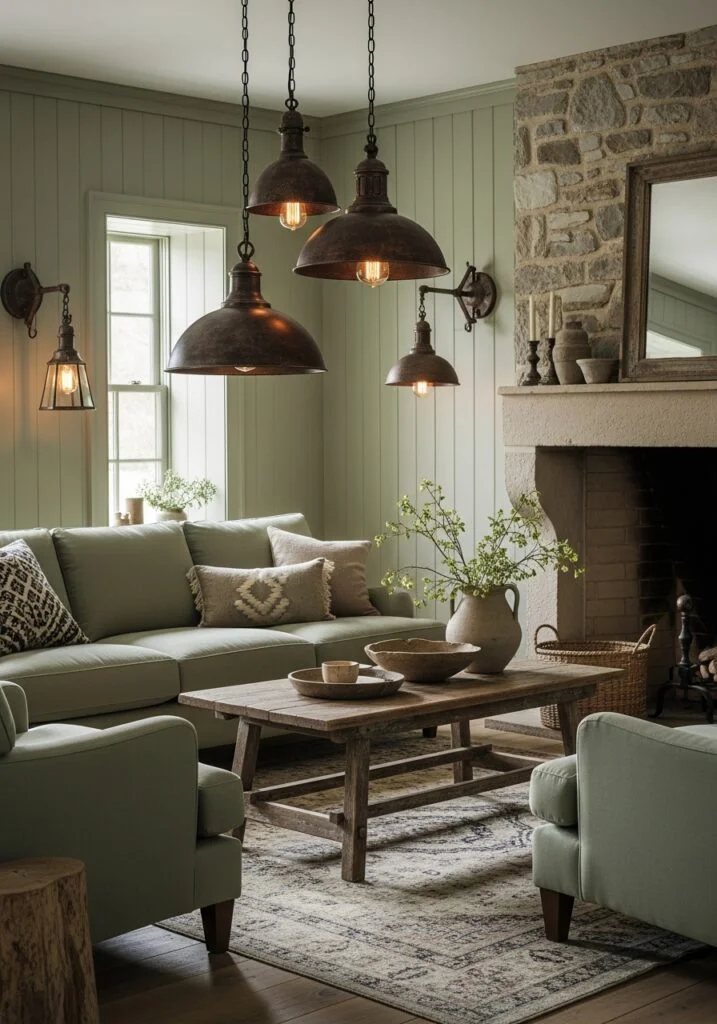
Integrating industrial lighting fixtures with aged metal finishes is a sophisticated way to add modern functionality to a rustic sage green living room. By choosing statement pieces in aged brass, copper, or matte black, you create a striking sculptural contrast against soft, botanical-inspired walls. These fixtures—ranging from oversized pendant lights and tiered chandeliers to vintage-style wall sconces—serve as architectural anchors that reference industrial heritage while enhancing a room’s rustic character. The warm, amber glow from Edison bulbs or vintage LED lighting creates an inviting ambiance, making sage green paint appear richer and more textured during the evening hours. For a curated look, try mixing different fixture styles within the same metal finish family to build visual interest without overwhelming the space. This lighting strategy perfectly bridges the gap between contemporary convenience and timeless charm, providing the necessary illumination while adding a layer of “natural reset” sophistication. Whether you are styling a farmhouse or an urban loft, industrial metal lighting ensures your living area feels personal, polished, and beautifully lit.
12. Farmhouse Dining Tables Extending into Living Areas
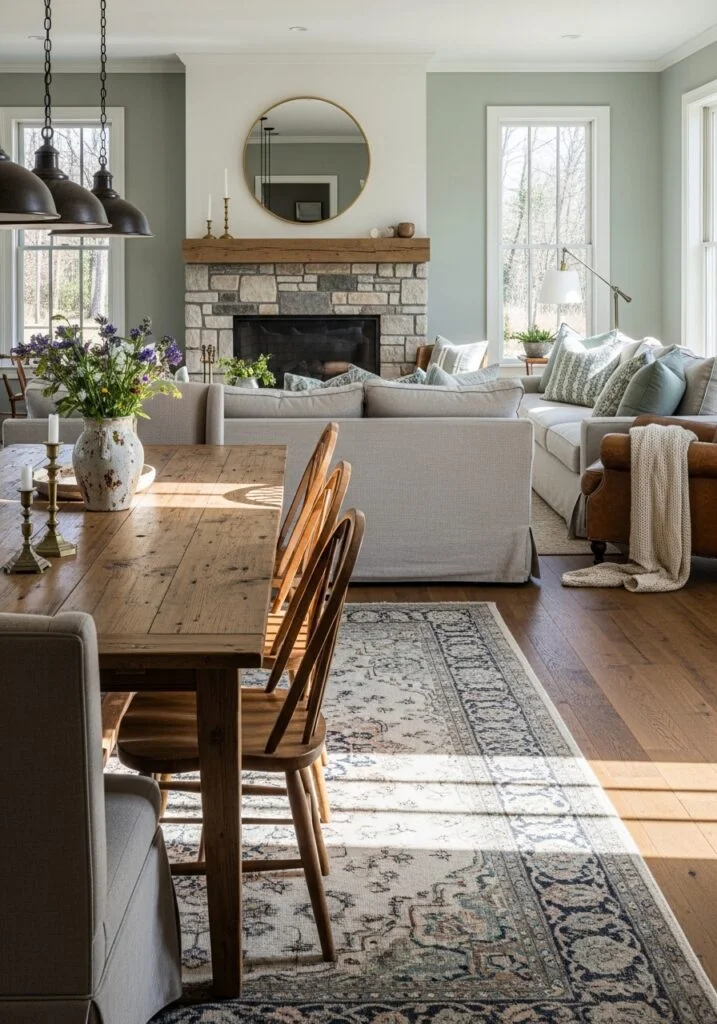
Incorporating farmhouse dining tables that extend into living areas is a premier way to create a seamless flow within an open-concept rustic home. These substantial, handcrafted surfaces act as a multifunctional bridge, accommodating everything from family holiday meals to homework sessions while maintaining a consistent rustic aesthetic. By choosing a table with a thick wooden top, classic turned legs, or a sturdy trestle base, you ground the space with traditional craftsmanship that echoes the beauty of sage green living room decor. The warm, organic timber tones harmonize perfectly with sage green walls, especially when you incorporate matching seat cushions or a coordinated table runner to tie the two zones together. This furniture arrangement encourages natural family interaction without sacrificing the distinct functionality of each area. Choosing a reclaimed wood dining table ensures the durability needed for active lifestyles while providing a high-end “natural reset” vibe for your shared living space. Whether you are hosting a large gathering or enjoying a quiet evening, these timeless pieces offer the perfect blend of farmhouse charm and modern versatility.
13. Sage Green Gallery Walls with Rustic Wood Frames
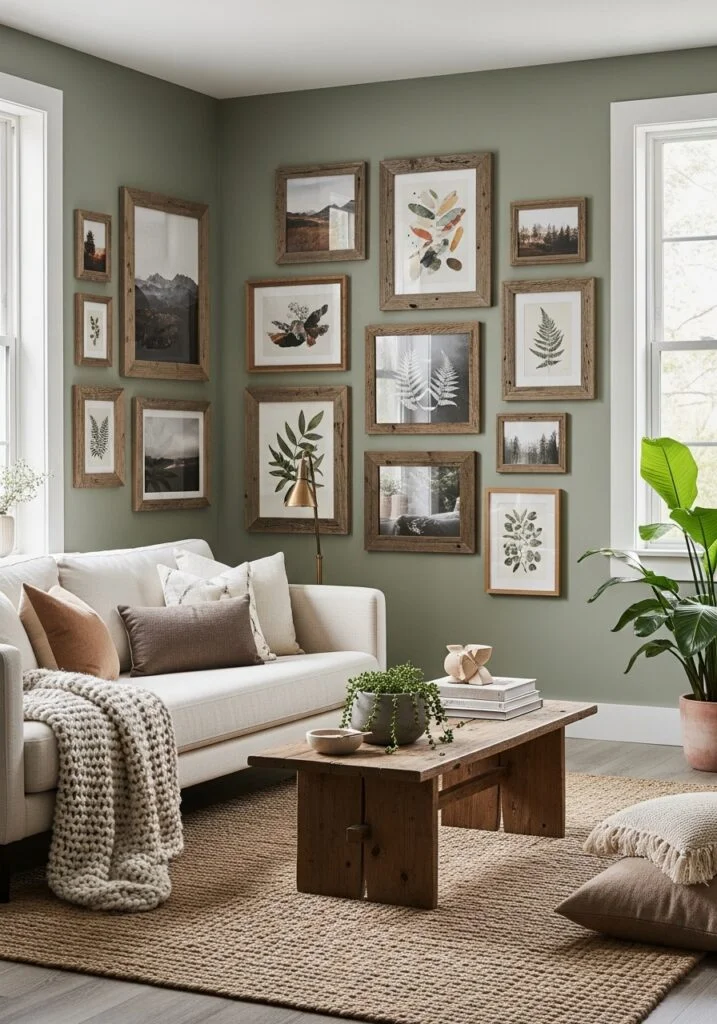
Creating sage green gallery walls with rustic wood frames is a sophisticated way to weave your color palette into the very fabric of your home’s personality. By curating a collection of botanical prints, landscape photography, and abstract art that features muted sage tones, you reinforce a cohesive “natural reset” aesthetic across your living space. Framing these pieces in a mix of weathered barnwood, reclaimed lumber, and distressed timber adds essential textural variety while maintaining a consistent rustic design theme. This layered approach allows you to personalize your walls with family memories and travel photos while using sage green accents to anchor the visual narrative. For added dimension, consider integrating three-dimensional elements like small wooden floating shelves or hanging planters to break up the flat surfaces and add organic life. Whether you prefer a symmetrical grid or an eclectic, free-form layout, a rustic gallery wall serves as a beautiful focal point that celebrates natural beauty and meaningful storytelling. This strategy is a favorite in sage green living room ideas for its ability to make a large room feel intimate, curated, and uniquely yours.
14. Textured Throw Pillows in Multiple Sage Green Shades
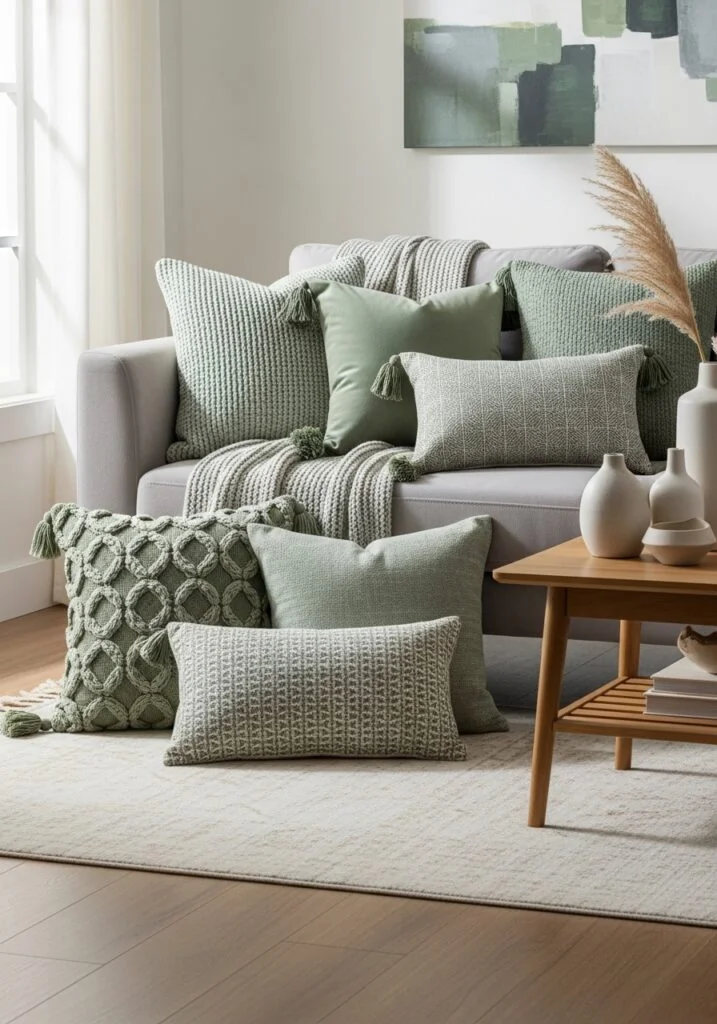
Incorporating textured throw pillows in multiple sage green shades is the ultimate designer secret for adding depth and “tactile warmth” to a rustic living room. By layering a variety of materials—such as breathable linen, rugged burlap, chunky knitted wool, and luxurious velvet—you create a rich, sensory experience that perfectly complements a natural home aesthetic. Utilizing a spectrum of tones, ranging from soft mint to deep, earthy olive, allows you to add sophisticated dimension to neutral sofas and chairs without overwhelming the space. To enhance the rustic design theme, look for classic patterns like subtle plaids, windowpane checks, or botanical prints that bridge the gap between traditional charm and modern style. These versatile accessories offer an affordable way to transition your decor through the seasons, allowing for a “natural reset” whenever you desire a fresh look. Arranging your pillows in odd numbers and varying sizes creates an inviting, lived-in feel that encourages relaxation and comfort. This layering technique is a cornerstone of sage green decor, ensuring your living space remains a peaceful, cohesive sanctuary that celebrates organic beauty.
15. Open Wooden Shelving Displaying Natural Collections
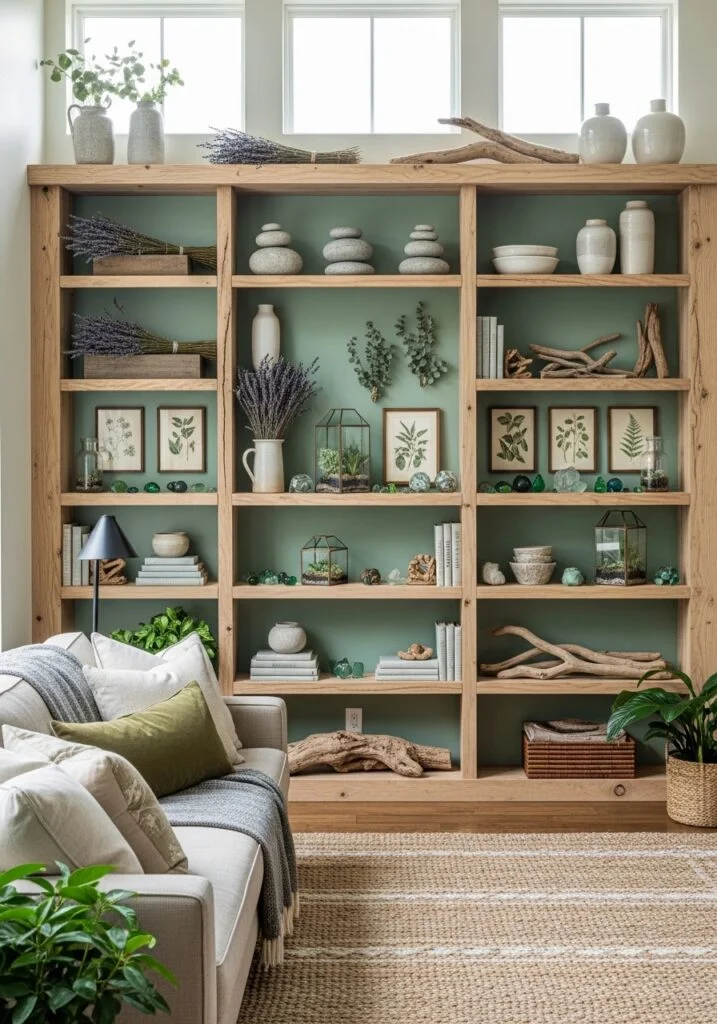
Integrating open wooden shelving to display natural collections is a brilliant way to add functional character and architectural depth to sage green living rooms. These rustic storage solutions serve as a curated stage for your favorite organic treasures—like potted greenery, weathered wooden bowls, and vintage books—against a calming, botanical-inspired backdrop. The rich, warm timber tones of the shelves provide a striking contrast to sage green walls, while the open design eliminates the heavy visual weight of traditional closed cabinetry. Whether you choose reclaimed wood floating shelves, chunky timber brackets, or industrial pipe supports, this flexible storage allows you to rotate displays seasonally for a constant “natural reset.” By mixing varying shelf heights and depths, you create a visual rhythm that turns everyday objects into a sophisticated decorative narrative. This approach to rustic home organization not only maximizes wall space but also reinforces the earthy, lived-in charm that defines modern organic interior design.
16. Sage Green Roman Shades with Natural Wood Trim
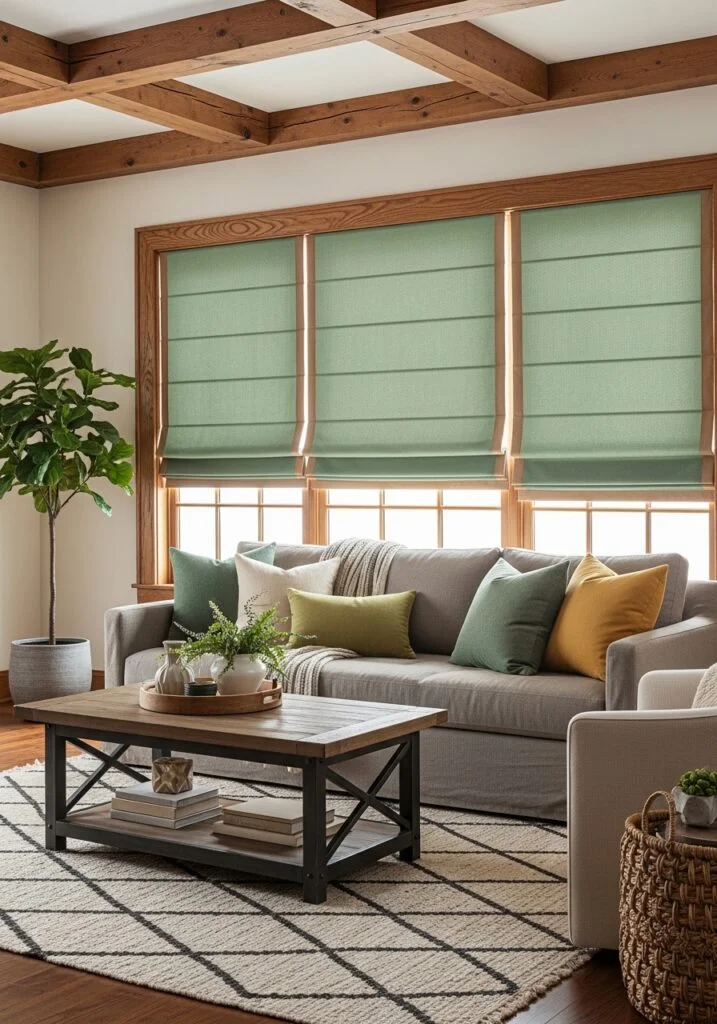
Integrating sage green Roman shades with natural wood trim is an elegant way to enhance privacy while reinforcing a cohesive rustic living room color palette. These structured window treatments offer clean, sophisticated lines that soften the architectural edges of a room while complementing the raw beauty of rustic furniture. By choosing natural fabrics like organic linen or breathable cotton, you ensure your window coverings develop a unique, lived-in character that ages beautifully over time. The botanical hue of the shades creates a “natural reset” for your windows, providing excellent light control and insulation without sacrificing the airy feel of the space. Adding natural wood headers or timber trim bridges the gap between your textiles and other wooden elements, such as exposed beams or flooring, for a fully integrated look. This choice of sage green window treatments is particularly effective in living areas where you want to manage glare and maintain privacy while allowing natural light to highlight the earthy textures of your rustic home decor.
17. Vintage Wooden Chests as Coffee Tables and Storage
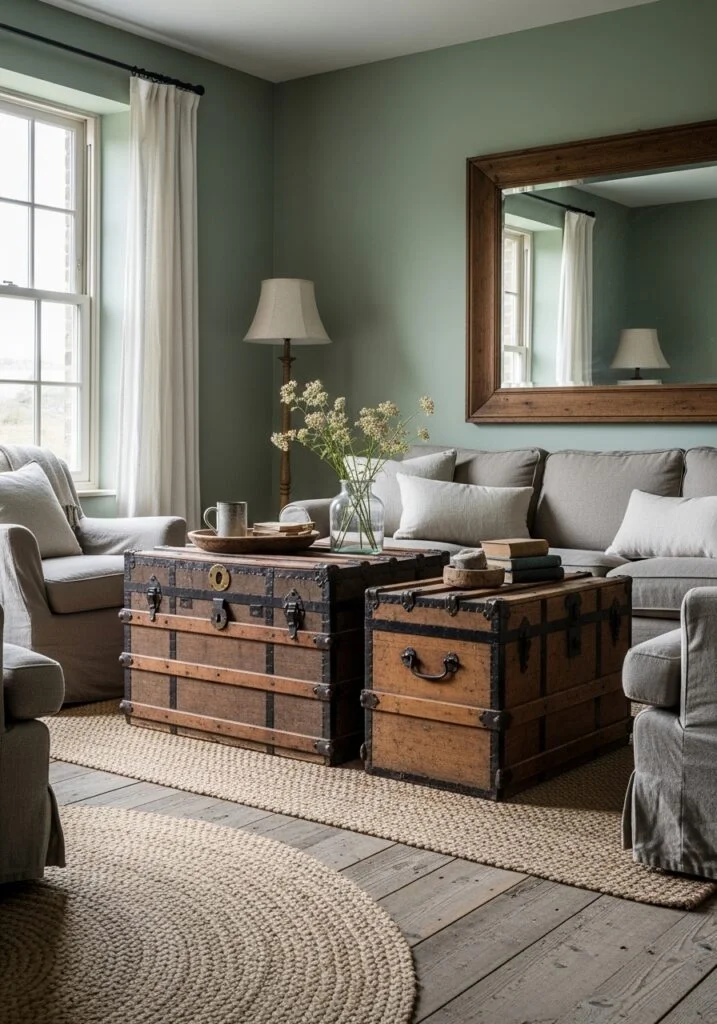
Incorporating vintage wooden chests as coffee tables is a masterstroke for adding both functional storage and historical character to a rustic sage green living room. These substantial pieces serve as unique focal points, offering a perfect “hidden storage” solution for bulky blankets, board games, and seasonal decor while grounding your seating area. With their weathered patinas, antique metal hardware, and hand-carved details, vintage trunks tell a story of craftsmanship that breathes life into modern interiors. The rich, earthy wood tones provide a striking organic contrast against sage green paint, beautifully complementing upholstered sofas and natural textiles. To maximize functionality, you can top your chest with a reclaimed wood tray or a custom glass surface to protect the finish while holding drinks and decorative accents. This approach to reclaimed furniture design ensures your home feels curated and “collected over time” rather than mass-produced. Whether you choose a rugged steamer trunk or a classic cedar chest, these versatile pieces offer a timeless “natural reset” that balances practical utility with authentic, rustic home style.
18. Cozy Reading Corners with Sage Green Accent Chairs
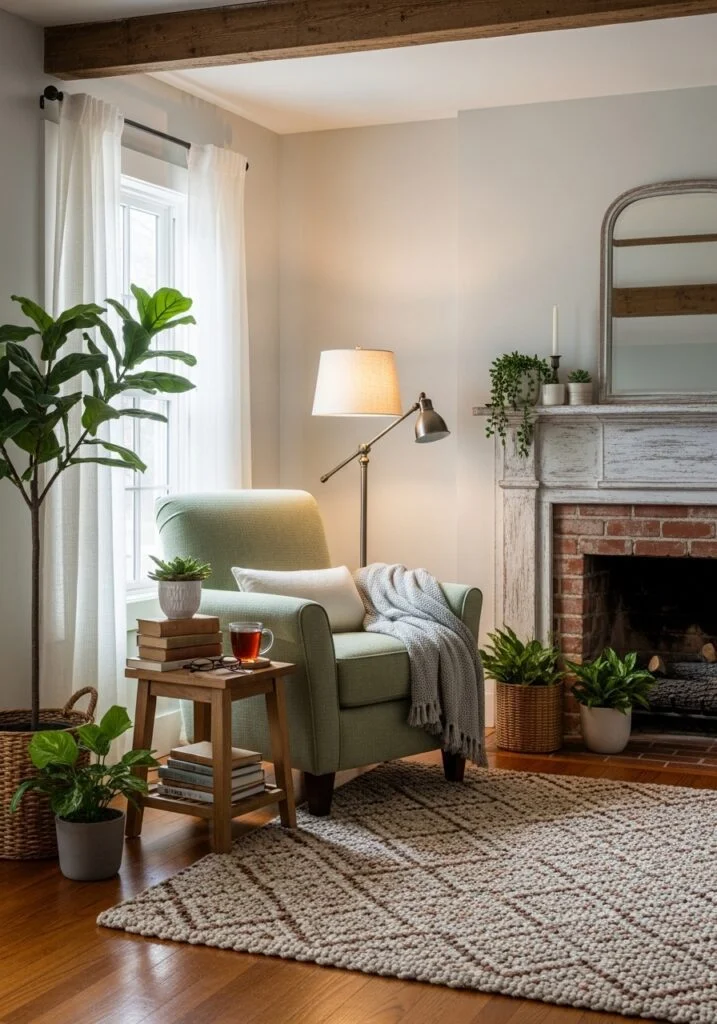
Creating cozy reading corners with sage green accent chairs is a brilliant way to carve out an intimate sanctuary within a larger rustic living room layout. By pairing a generously proportioned armchair in soft, botanical upholstery with a reclaimed wood side table, you establish a dedicated zone for relaxation that enhances your home’s overall color story. The muted, earthy tones of a sage green armchair serve as a “natural reset,” inviting you to unwind while providing a sophisticated contrast to traditional rustic textures like stone or timber. To maximize comfort, incorporate an adjustable floor lamp with a warm-toned bulb to create the perfect ambient glow for evening reading. Positioning these nooks near windows allows natural light to highlight the subtle weave of the fabric, making the corner a magnetic spot for quiet morning coffee or tech-free afternoons. This thoughtful approach to small space interior design ensures every square foot of your rustic home feels intentional, comfortable, and beautifully curated for a peaceful lifestyle.
19. Natural Stone Accent Walls Behind Seating Areas
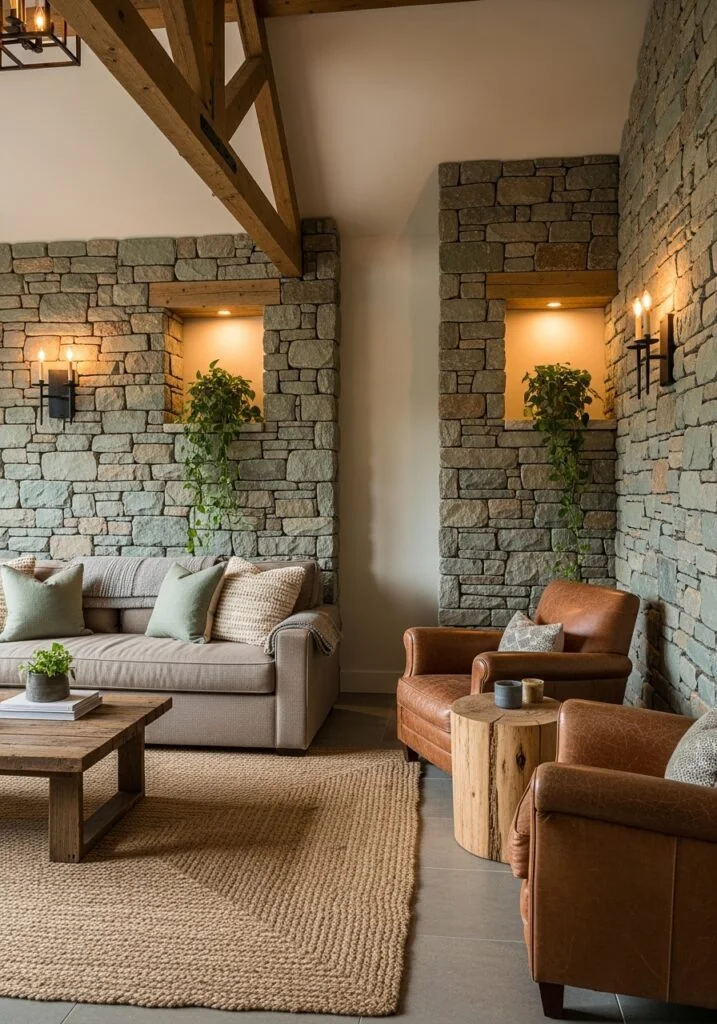
Integrating natural stone accent walls behind seating areas is a premier way to create a dramatic architectural focal point in any rustic sage green living room. These permanent features provide a stunning, tactile backdrop that highlights your furniture while grounding the space with a sense of “geological authenticity.” Whether you choose rugged fieldstone, earthy river rock, or sophisticated stacked slate, the neutral minerals in the stone harmonize perfectly with sage green paint to create a high-end, organic atmosphere. Beyond their visual appeal, stone walls offer excellent thermal mass for energy efficiency and an undeniable texture that manufactured materials simply cannot replicate. For a custom touch, consider incorporating built-in niches for ambient lighting or small plants to further enhance the “natural reset” vibe. This timeless combination of natural stone decor and botanical tones not only increases property value but also ensures your living room remains a sophisticated sanctuary through years of changing interior trends. Pairing a stone feature wall with a neutral linen sofa creates a masterclass in modern rustic design, offering a space that feels both grounded and incredibly luxurious.
20. Mixed Metal Accents in Brass and Iron Finishes
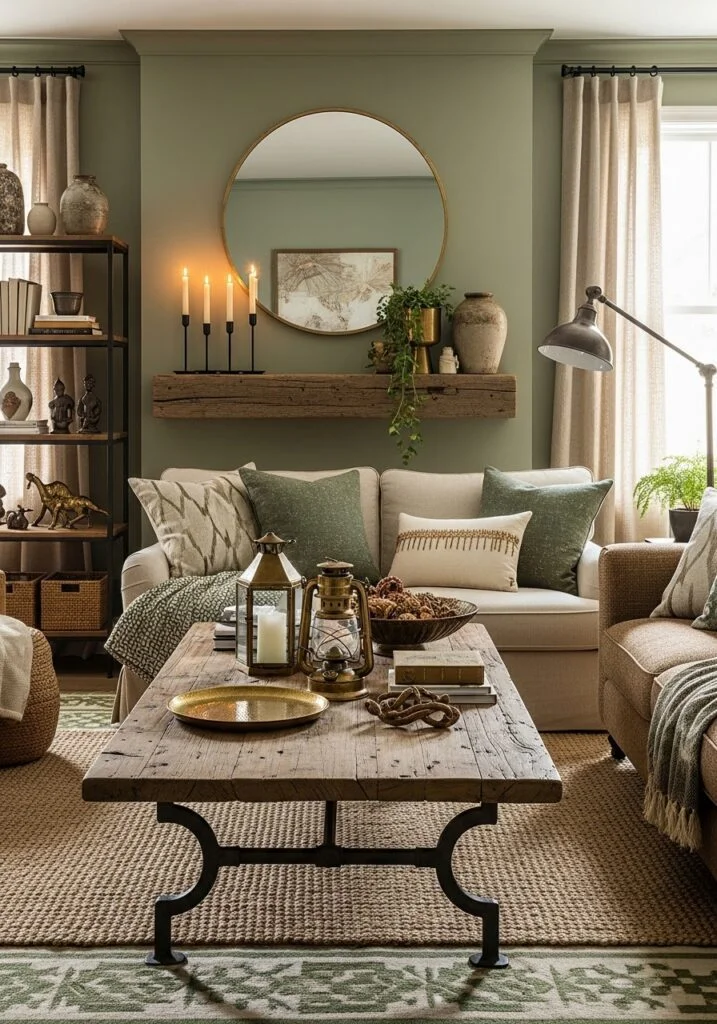
Blending mixed metal accents like aged brass and wrought iron is a sophisticated way to introduce “visual weight” and historical character into a rustic sage green living room. While the warm, golden undertones of brass harmonize beautifully with the botanical calmness of sage green paint, the dark, grounded presence of wrought iron adds the structural strength typical of modern farmhouse aesthetics. This layering of metals—from brass picture frames and copper planters to iron candle holders and steel light fixtures—references traditional craftsmanship and heritage design. To achieve a high-end, “collected-over-time” look, avoid matching every finish; instead, mix different patinas to create a space that feels authentic rather than showroom-perfect. These metallic accents bridge the gap between traditional rustic charm and contemporary convenience, providing a polished “natural reset” that feels both timeless and current.
21. Sage Green Kitchen Cabinets Visible from Living Areas
In open-concept homes, sage green kitchen cabinets serve as a sophisticated visual bridge, creating a “natural reset” that connects the heart of the home to the living area. This botanical hue provides a significant color impact that feels both grounding and airy, perfectly complementing rustic living room furnishings like leather sofas or jute rugs. Whether you choose classic shaker-style fronts, beadboard detailing, or raised panels, sage green cabinetry references traditional craftsmanship while feeling distinctly modern. To enhance this cohesive flow, consider integrating natural wood countertops or a butcher block island, which adds organic warmth and tactile contrast to the painted surfaces. Utilizing open shelving to display coordinated stoneware or glassware further ties the kitchen’s aesthetic to the living room’s decor. This strategic use of color eliminates harsh visual breaks between functional zones, ensuring your home feels peaceful, welcoming, and intentionally designed for both daily life and social gatherings.
22. Layered Neutral Textiles with Sage Green Accents
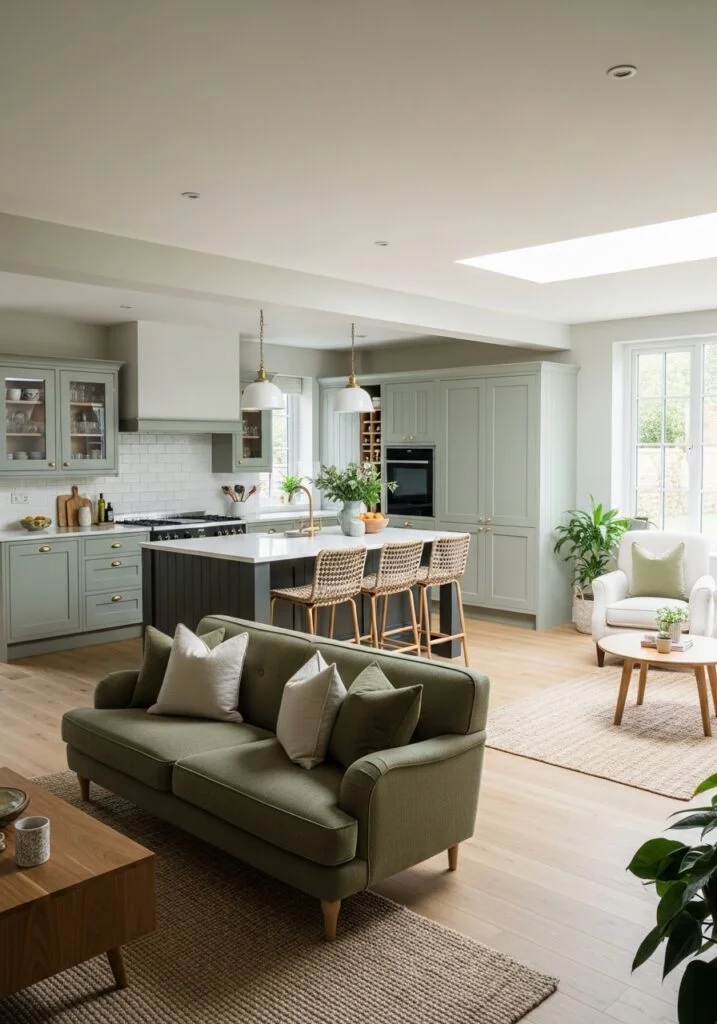
Layering neutral textiles with sage green accents is the definitive way to achieve a “natural reset” in a rustic living room without committing to a high-saturation color palette. By starting with a foundation of cream, beige, and warm gray fabrics, you create a calm, versatile canvas that allows smaller sage green elements—like knitted throws and linen pillows—to truly pop. This technique offers the ultimate flexibility, enabling you to adjust the intensity of the green hues as the seasons change or as your style evolves. Utilizing a mix of natural fibers such as chunky wool, breathable cotton, and nubby jute introduces a tactile variety that makes a room feel lived-in and luxurious. The interplay between a smooth cream linen sofa and a deep olive green velvet cushion, for instance, adds a layer of sophisticated depth that flat surfaces can’t replicate. This approach is not only aesthetically pleasing but also highly practical for active families, as high-quality natural textiles age gracefully and often become softer with every wash.
23. Wooden Wall Planks Painted in Subtle Sage Tones
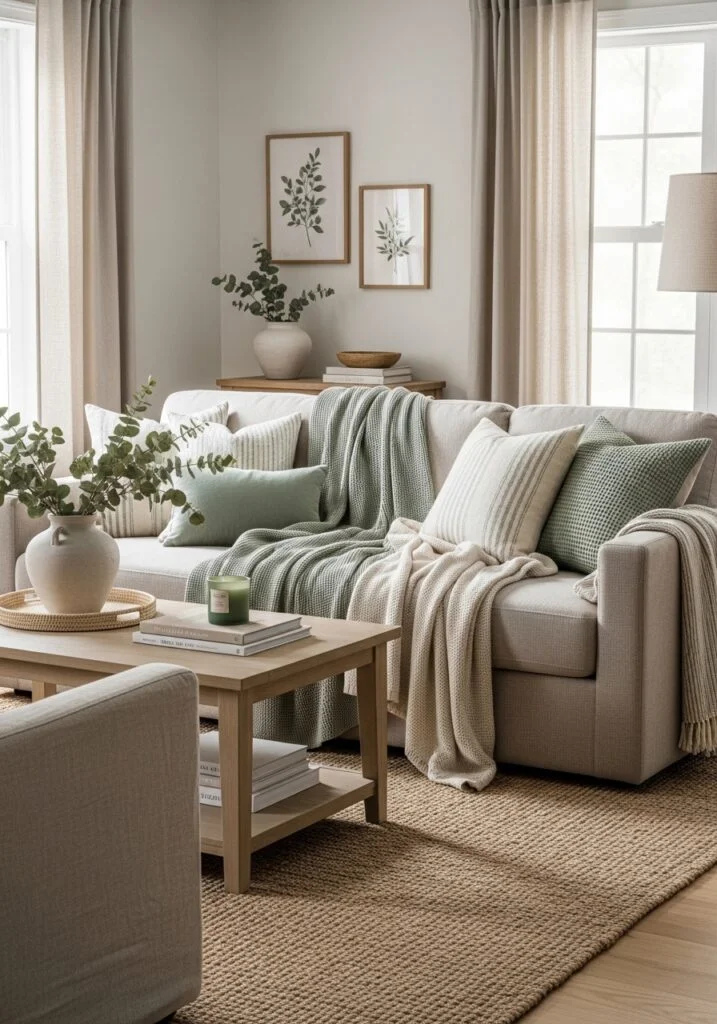
Painting wooden wall planks in subtle sage tones is a sophisticated way to introduce architectural “soul” into a rustic living room. Unlike flat drywall, painted planks—whether installed as classic shiplap, vertical tongue-and-groove, or a dynamic herringbone pattern—provide a tactile rhythm that catches the light beautifully. By using a soft sage finish, you preserve the organic grain and texture of the wood while gaining the color-coordinating benefits of a premium paint palette. This treatment acts as an ideal backdrop for a “natural reset,” grounding seating areas or flanking fireplaces with a look that is both intentional and timeless. For a more authentic, “collected” vibe, consider using slightly different sage green shades on adjacent planks to mimic the natural patina of aged farmhouse wood. This permanent design upgrade bridges the gap between raw rustic character and polished modern aesthetics, adding significant value and a serene, botanical atmosphere to your home’s interior.
24. Rustic Bar Carts with Sage Green Storage Baskets
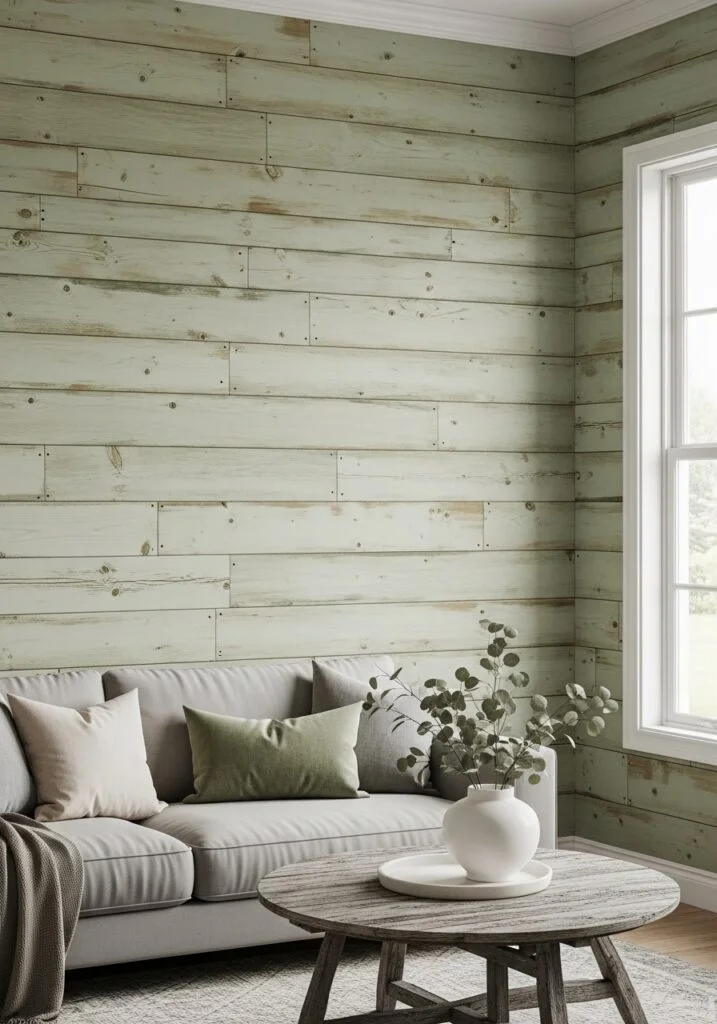
Integrating a rustic bar cart with sage green storage baskets is a clever way to blend mobile functionality with a curated “natural reset” aesthetic. These versatile pieces, often crafted from reclaimed wood with industrial iron wheels, serve as a stylish hub for entertaining while maintaining the organic textures of a rustic living room. By incorporating woven baskets in various sage tones, you create a discreet home for bar tools, linens, and accessories, ensuring the cart remains organized and visually tied to your room’s botanical color palette. The beauty of a mobile bar cart lies in its adaptability; it can easily transition from a cocktail station during parties to a tiered plant stand or a cozy book trolley during quiet afternoons. This multifunctional approach is a staple of sage green home decor, offering a “sculptural” furniture piece that provides practical storage without the heavy footprint of a traditional sideboard. Whether you are styling a small apartment or a sprawling open-plan home, a wood and metal bar cart anchored by sage accents adds a layer of sophisticated, lived-in charm.
Conclusion:
Wrapping up these 24 rustic sage green living room ideas, it’s clear that this botanical hue is more than just a trend—it is a “natural reset” for the modern home. By blending the calming essence of sage with the rugged honesty of reclaimed wood, natural stone, and vintage textiles, you create a space that feels both grounded and incredibly sophisticated. The success of a rustic sage green interior lies in the layers. Whether it’s through substantial architectural changes like stone accent walls or smaller, tactile touches like textured throw pillows, the goal is to create a home that feels “collected, not decorated.” This palette offers a timeless foundation that accommodates the evolving needs of family life while maintaining a serene, organic atmosphere. As you integrate these elements, remember that the most authentic rustic spaces are those that reflect your personal journey, using sage green as the visual thread that ties your history and your home together.