
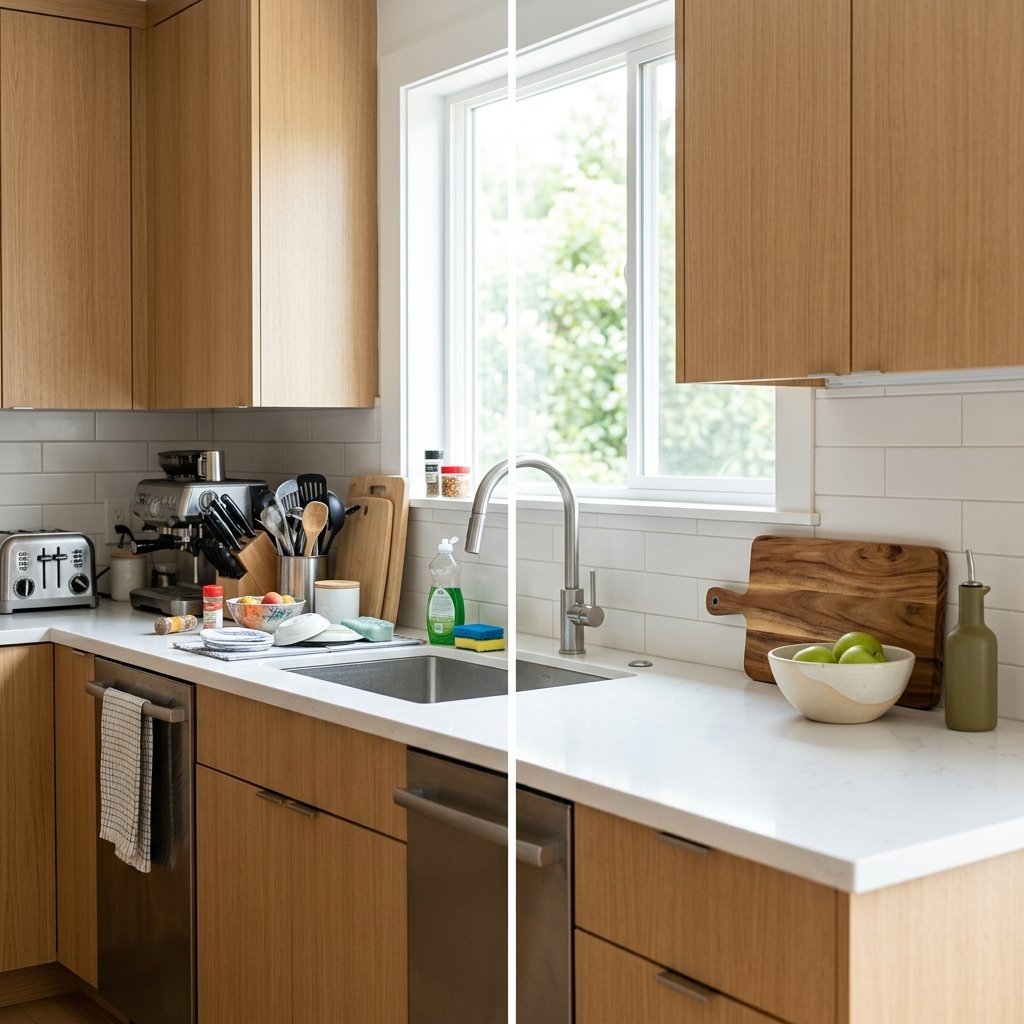
You wipe down the counters, load the dishwasher, put things away, and yet somehow the kitchen still looks cluttered. It’s a strange feeling. You’ve technically cleaned, but the space refuses to look clean. If this sounds familiar, you’re not alone, and the answer isn’t more scrubbing. It’s a simple rule about what lives on your counters in the first place.
I’ve written about kitchens and home organization for years, and I’ve reorganized my own kitchen more times than I’d like to admit. Through all of that, one principle keeps proving itself over and over. The single fastest way to make a kitchen look cleaner isn’t about deep cleaning at all. It’s about clearing the countertops down to almost nothing.
Let me walk you through exactly what this rule is, why it works so well, and how to apply it in a way that actually sticks.
The Rule That Changes Everything
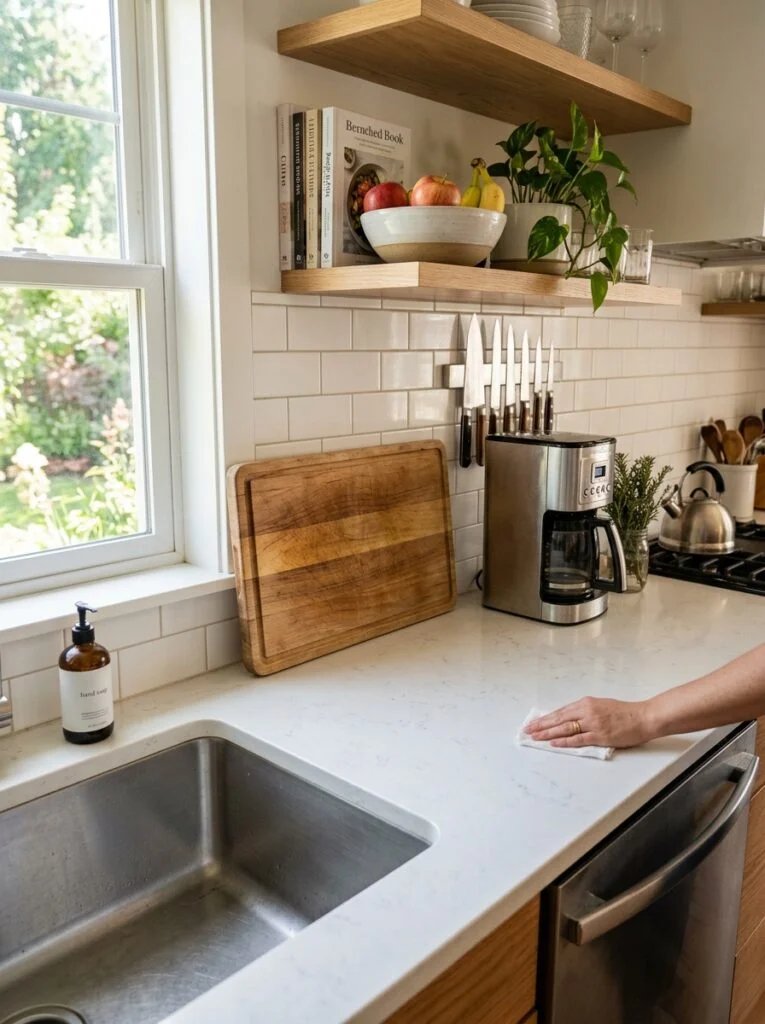
Here it is in plain terms. Keep your counters as clear as possible, and only allow items you use every single day to stay out.
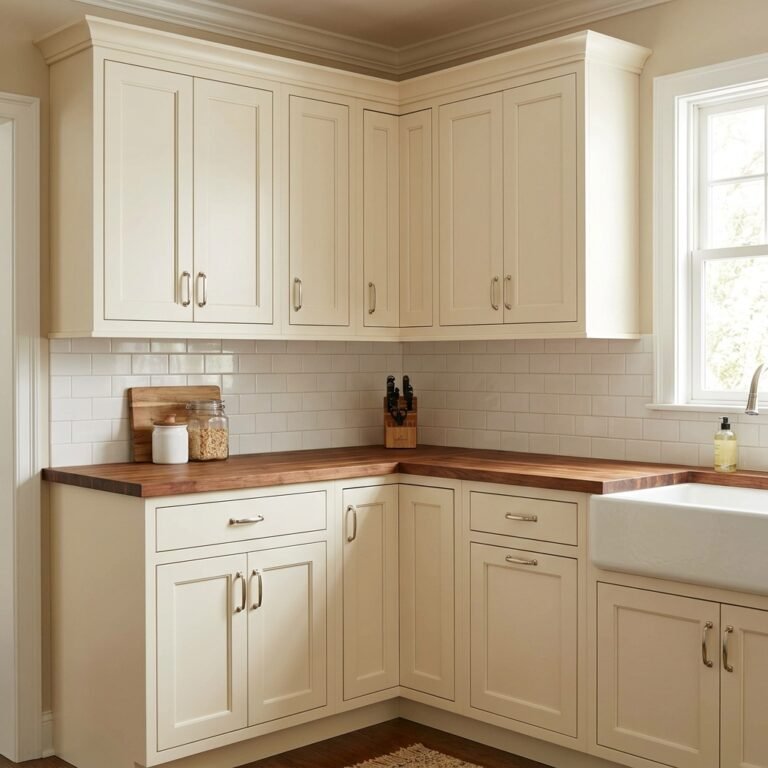
That’s the whole rule. It sounds almost too simple, but the effect is dramatic. When your counters are mostly empty, the eye reads the space as calm, spacious, and clean, even if there’s a bit of dust or a stray crumb somewhere. When your counters are covered in appliances, jars, mail, and gadgets, the space reads as messy no matter how spotless the surfaces underneath actually are.
Clutter, not dirt, is what makes most kitchens look unclean. Once you understand that, everything shifts. You stop fighting a losing battle with a sponge and start winning with a little bit of editing.
Why Clear Counters Feel So Clean
There’s real psychology behind why this works, and it’s worth understanding because it makes the whole thing click.
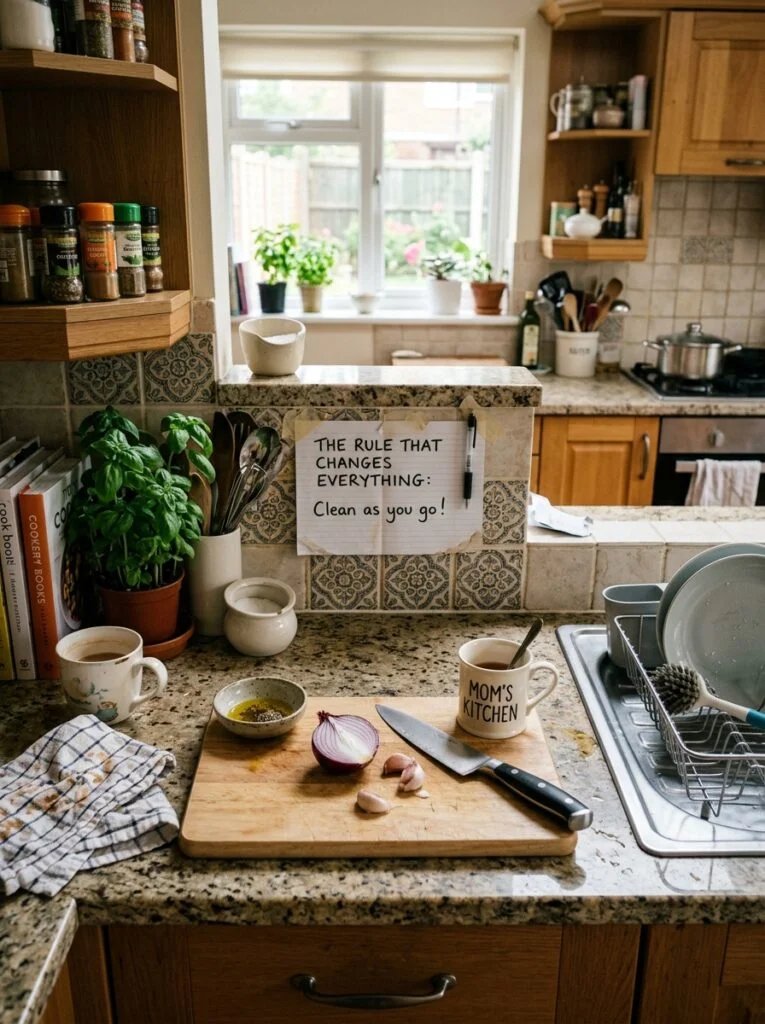
Your brain processes visual clutter as unfinished business. Every object sitting on the counter is a tiny thing your mind has to register and account for. Ten items scattered across a surface means ten little points of visual noise. Clear that surface, and suddenly there’s nothing for your eye to snag on. The room feels lighter, and so do you.
Empty space also signals order. When we see a wide, uninterrupted counter, we instinctively read it as controlled and cared for. It’s the same reason hotel bathrooms and showroom kitchens feel so serene. They’re not necessarily cleaner than yours. They just have less stuff sitting out.
There’s a practical side too. Fewer items on the counter means fewer things to move when you wipe down, fewer surfaces for grease and dust to cling to, and fewer objects gathering that sticky film that builds up in every kitchen. So clear counters don’t just look cleaner. They genuinely stay cleaner with less effort.
What Actually Deserves Counter Space
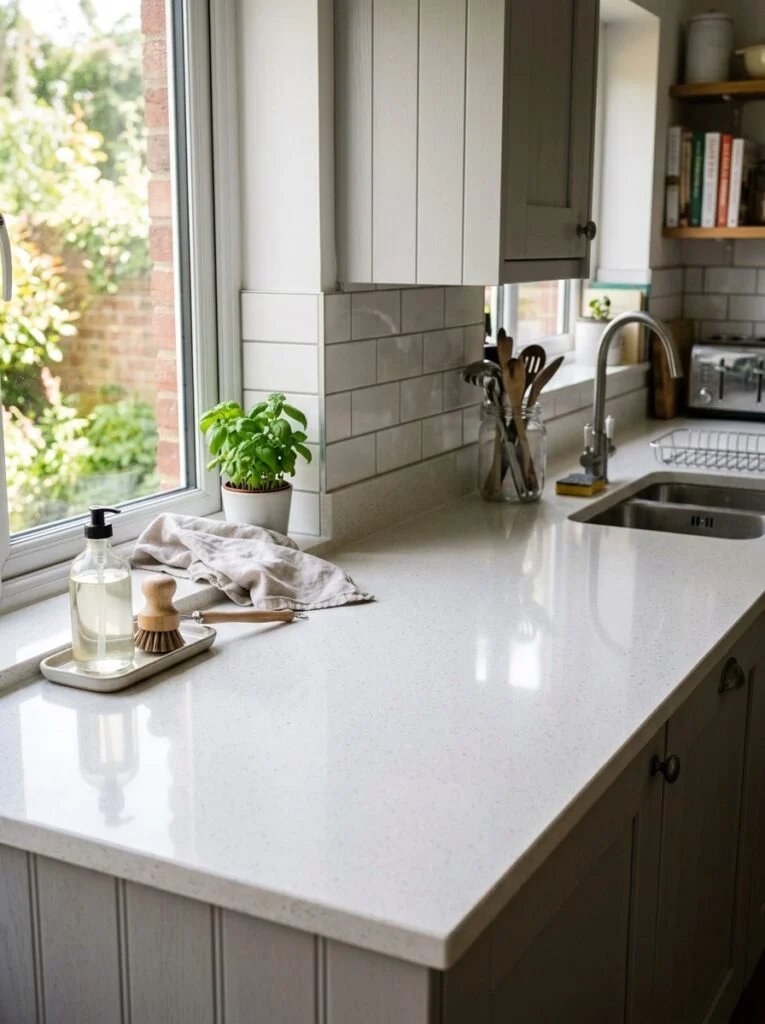
The heart of this rule is deciding what earns a spot on your counter. The test is simple. Do you use it every single day, or at least most days? If yes, it can stay. If no, it goes into a cabinet, a drawer, or the pantry.
Most kitchens have far more out than they need. Let’s sort through the usual suspects.
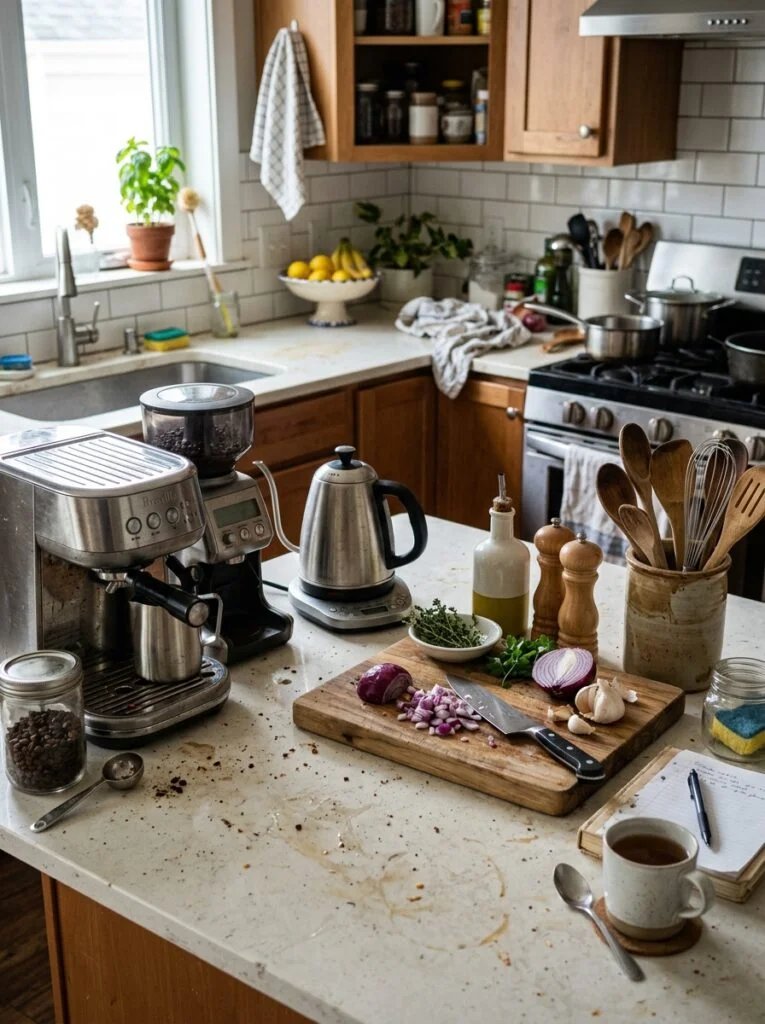
Things That Usually Earn Their Spot
- The coffee maker or kettle, if you use it daily.
- A knife block or a small crock holding your most-used utensils.
- A dish soap and sponge setup near the sink, ideally kept tidy.
- A cutting board, if you cook constantly and reach for it every day.
- A fruit bowl, which doubles as function and a bit of life on the counter.
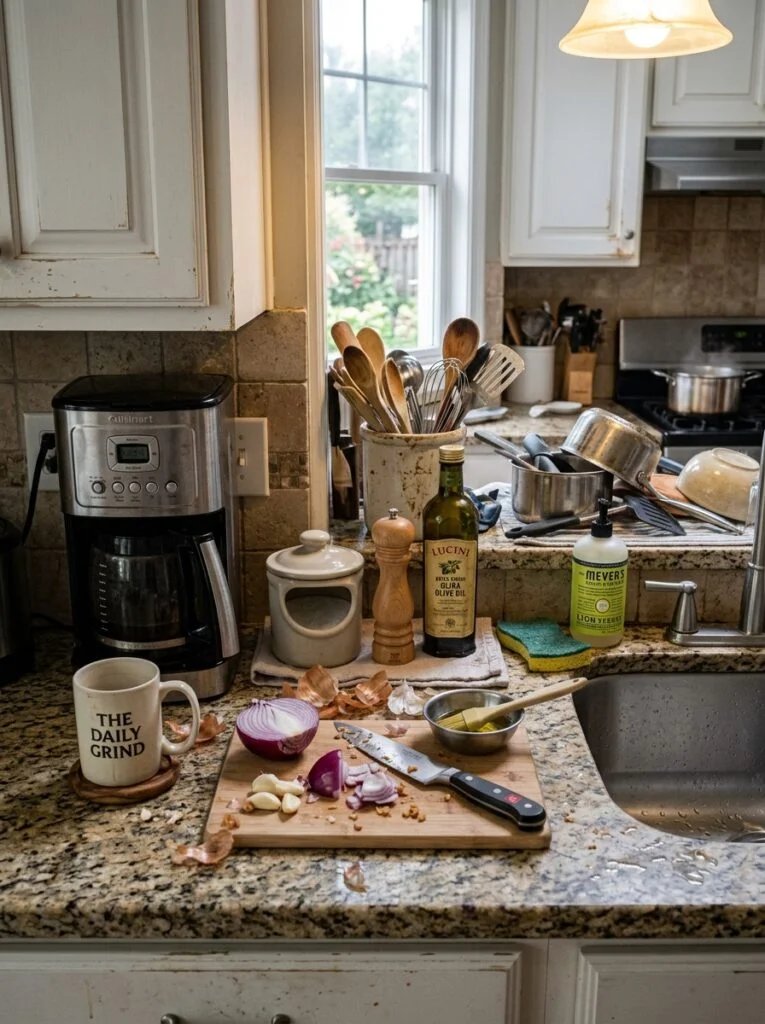
Things That Usually Should Be Put Away
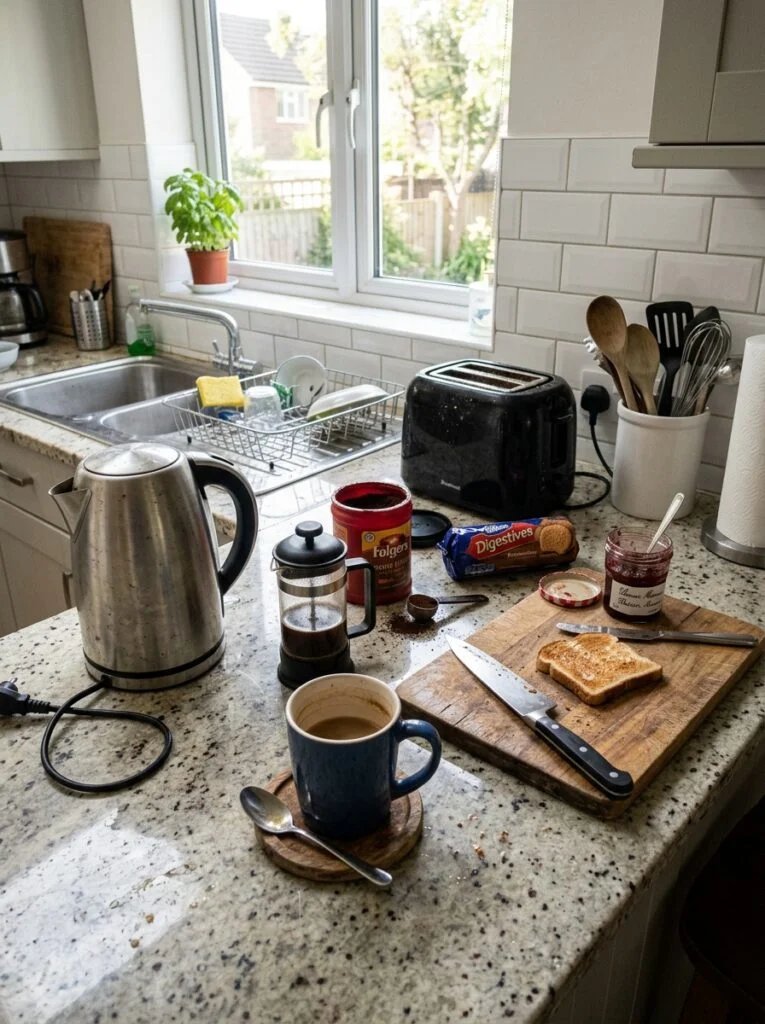
- The toaster you use twice a week.
- The stand mixer that comes out for occasional baking.
- The blender, air fryer, and slow cooker that each get used now and then.
- Spice jars, oils, and cooking supplies that could live in a cabinet.
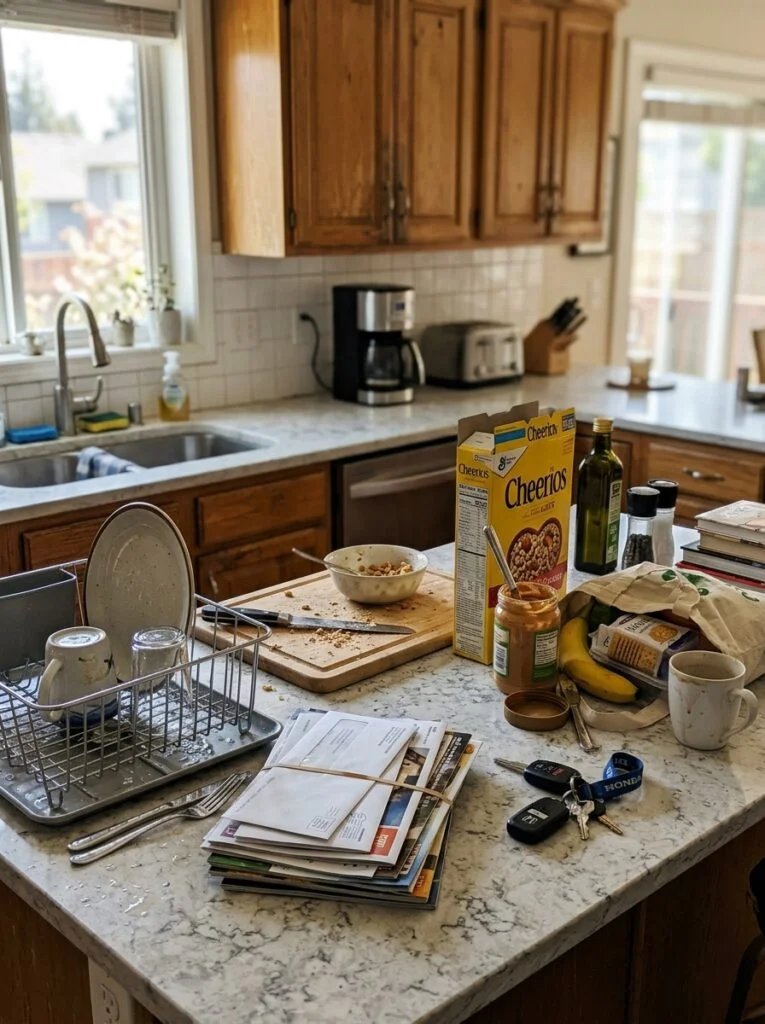
- Mail, keys, chargers, and random paperwork that drift in from other rooms.
The stand mixer is a perfect example. It’s heavy, it takes up a huge footprint, and most people genuinely use it a handful of times a month. Yet it sits on the counter constantly, eating space and collecting grease. Tucking it into a cabinet and pulling it out when needed feels like a small inconvenience, but the payoff in daily visual calm is enormous.
How to Apply the Rule Step by Step
Knowing the rule is one thing. Actually doing it is another. Here’s a straightforward way to work through your kitchen without getting overwhelmed.
Clear Everything Off First
Start by taking absolutely everything off your counters. I mean everything. Pile it all on the kitchen table or the floor. This gives you a completely blank slate and lets you see how much surface you actually have. Most people are surprised by how much counter they own once it’s empty.
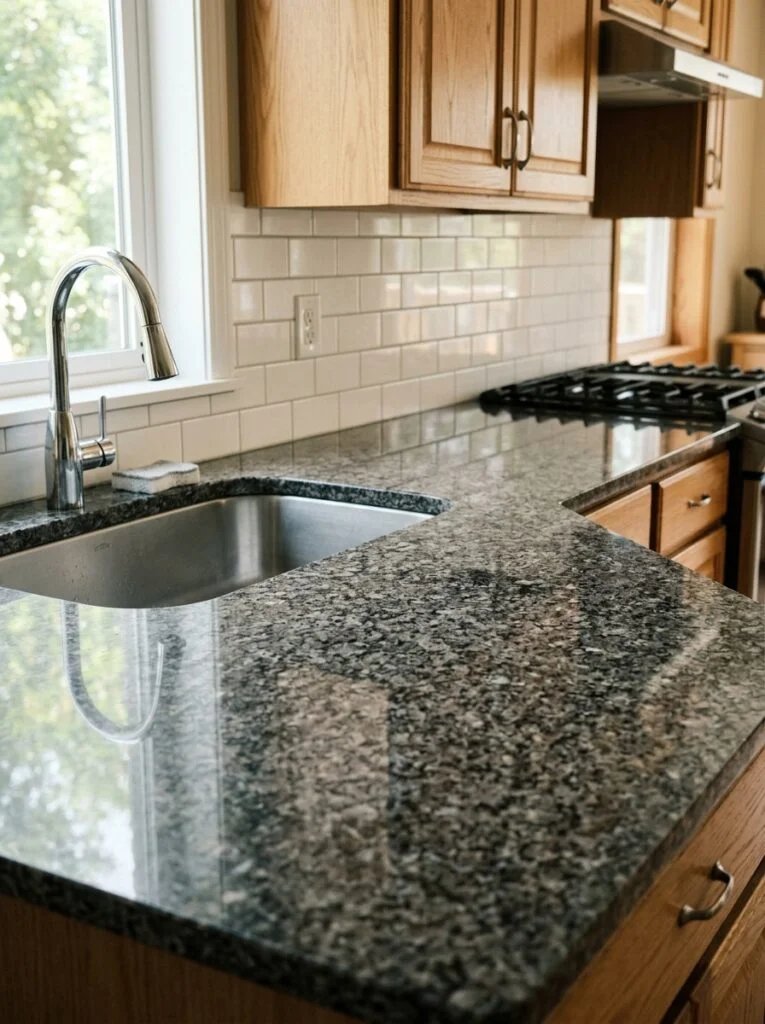
Wipe the Blank Slate
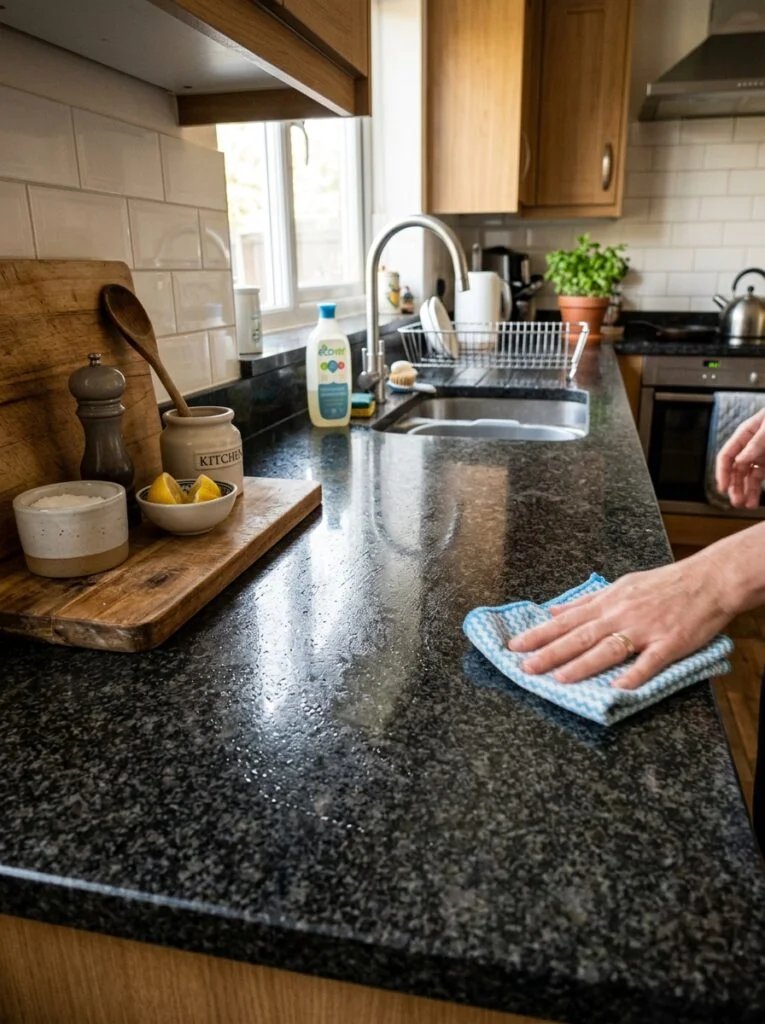
With everything off, give the bare counters a proper wipe down. This is the one time it’s worth doing thoroughly, since you’ll rarely have them this empty again. Enjoy the clean surface for a second, because it’s a preview of what you’re working toward.
Bring Back Only the Daily Essentials
Now, one by one, bring back only the items you truly use every day. Be honest here. If you hesitate on something, that hesitation is your answer. Set it aside instead. The goal is to return the smallest number of items that still let your kitchen function smoothly.
Find Homes for the Rest
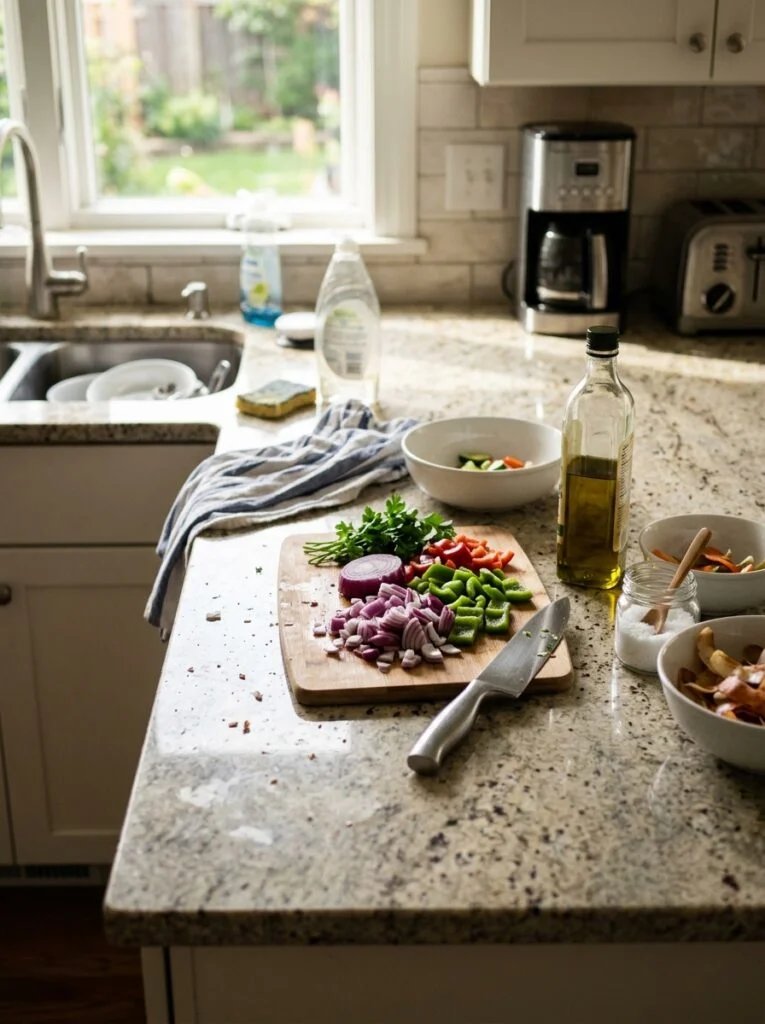
Everything that didn’t make the cut needs a real home somewhere else. Not a temporary pile, but an actual designated spot in a cabinet, drawer, or pantry. This is the step people skip, and it’s why clutter creeps back. If an item doesn’t have a home, it will always end up back on the counter by default.
Create a Landing Zone Elsewhere
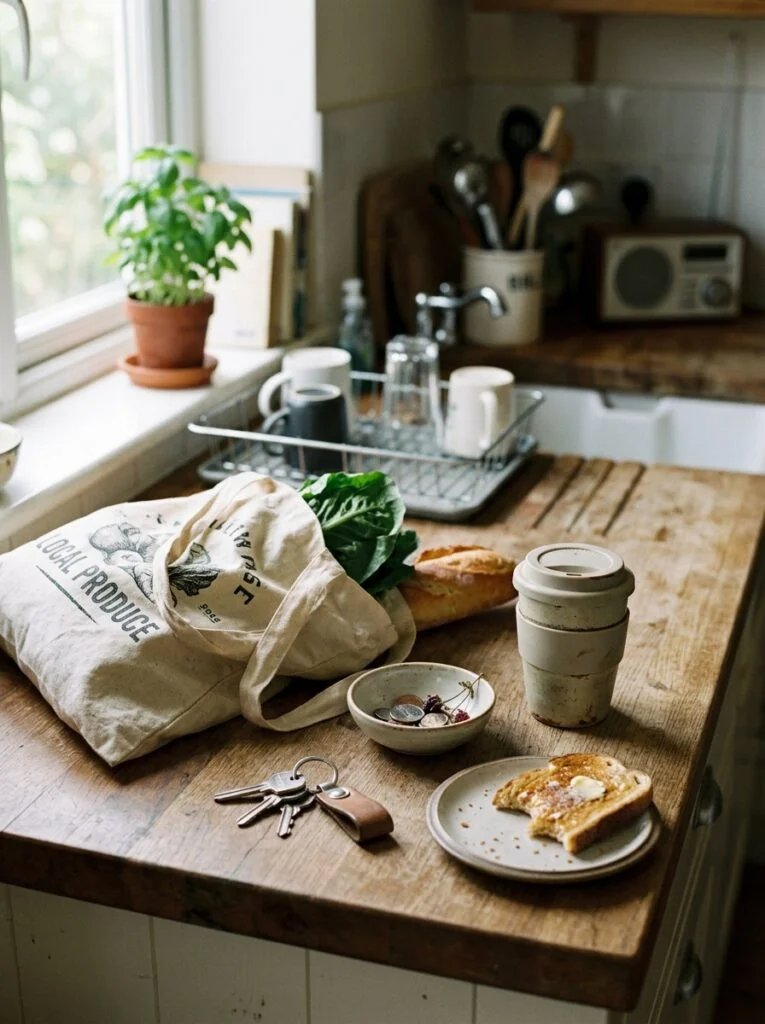
A lot of counter clutter is stuff that doesn’t even belong in the kitchen. Mail, keys, bags, and paperwork. Give these things a home outside the kitchen entirely, like a small tray by the front door or a drawer in the hallway. This stops the kitchen from becoming the household dumping ground.
Keeping Counters Clear Long Term
Clearing your counters once is easy. Keeping them clear is the real challenge, because clutter has a way of returning. Here’s how to make it stick.
The most important habit is the one-touch rule. When you use something, put it away immediately rather than setting it down “for now.” That temporary placement is how clutter is born. It takes a few extra seconds in the moment, but it saves you the slow creep of chaos over the week.
Another helpful mindset is treating your counters like they’re not storage. Counters are workspaces, not shelves. The moment you start thinking of them as a place to store things, they fill up. When you think of them as a surface you clear after every use, they stay open.
It also helps to do a quick reset each night. Before bed, take sixty seconds to clear anything that migrated onto the counter during the day. Waking up to clear counters sets a completely different tone for your morning, and it keeps small messes from becoming big ones.
Finally, be willing to say no to new gadgets that will just sit out. Every appliance you buy needs a home. If there’s no cabinet space for it and it’ll live permanently on the counter, think hard about whether it’s worth the visual cost.
Common Mistakes That Keep Counters Cluttered
Even with the best intentions, certain habits quietly sabotage clear counters. Here are the ones I see most often.
- Keeping appliances out “for convenience.” Convenience is nice, but if you only use something occasionally, the daily clutter isn’t worth the rare time you save reaching for it.
- Using the counter as a mail and paper drop. Paperwork breeds fast. Once one envelope lands, a pile follows within days.
- Storing things on the counter because cabinets are disorganized. If your cabinets are too messy to fit things, the real fix is organizing them, not defaulting to counter storage.
- Holding onto duplicate or unused items. Three spatula crocks, two coffee makers, gadgets you never touch. Clutter often hides as things you’ve simply stopped noticing.
- Decorating with too many objects. A little life on the counter is lovely, but a dozen decorative pieces create the same visual noise as functional clutter.
- Not giving every item a home. This is the big one. Anything without a designated spot will always drift back to the counter.
Expert Insights on Kitchen Visual Calm
After years of testing and rearranging, a few deeper truths stand out about why this rule works so reliably.
The first is that negative space is a design tool. Empty counter isn’t wasted space. It’s the thing that makes the whole kitchen feel intentional and calm. Designers use empty space on purpose, and you can too. Resist the urge to fill every open surface.
The second insight is that consistency beats intensity. A kitchen where you clear as you go will always look better than one you deep clean once a week and let spiral in between. Small, constant effort wins over occasional big pushes every single time.
The third is something interior designers understand well. The counters are the visual anchor of a kitchen. They’re at eye level, they run through the center of the room, and they’re the first thing you notice. Keep them clear, and the entire kitchen reads as clean, even if the rest isn’t perfect. It’s the highest-leverage surface in the whole room.
Finally, remember that this isn’t about living in a bare, sterile space. It’s about being intentional. A kitchen with a few well-chosen items out and plenty of open surface feels warm, functional, and calm all at once. That balance is the real goal, not emptiness for its own sake.
Frequently Asked Questions
Why does my kitchen look messy even after I clean it?
It’s usually clutter, not dirt. When too many items sit out on the counters, the space reads as messy no matter how clean the surfaces are. Clearing the counters down to just daily essentials instantly makes the kitchen look tidier.
How many things should I keep on my kitchen counter?
As few as possible, ideally just the items you use every single day. For most people that’s a small handful of things, like a coffee maker, a utensil crock, and a dish soap setup. Everything else works better stored away.
Should I keep my toaster and other appliances on the counter?
Only if you use them daily. Appliances like toasters, blenders, and stand mixers that you only use occasionally are better stored in a cabinet. Keeping them out creates visual clutter and gives grease and dust more surfaces to collect on.
How do I keep my counters clear long term?
Use the one-touch rule by putting items away immediately after use instead of setting them down temporarily. Give every object a designated home, do a quick nightly reset, and create a landing zone outside the kitchen for mail and keys.
What should I do with items that don’t fit anywhere?
If something has no home, that’s often a sign you have too much or your cabinets need organizing. Consider decluttering duplicates and unused gadgets, and reorganize your storage so everything you keep has a proper place off the counter.
Does clearing counters really make a difference if the kitchen is small?
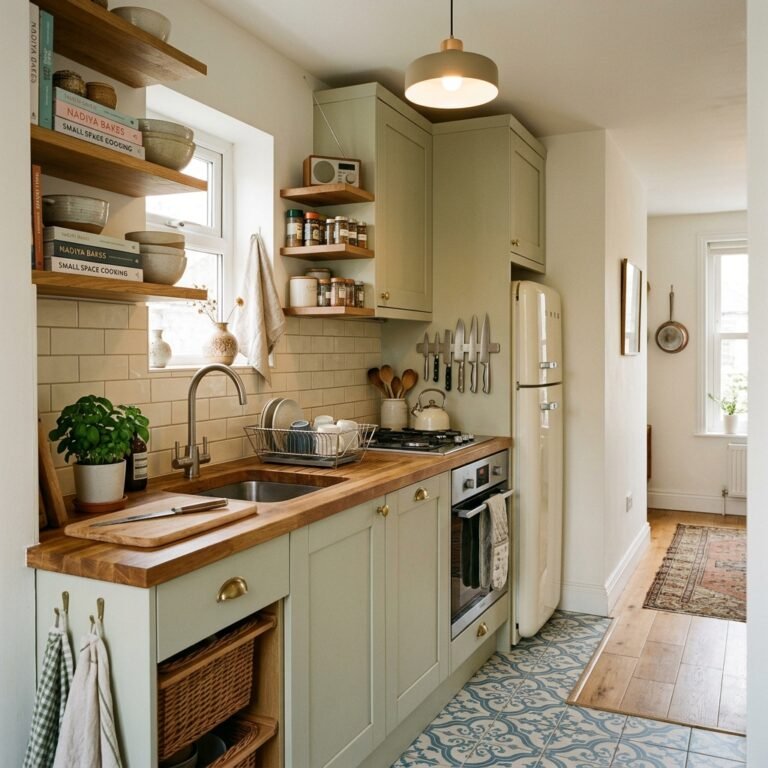
Especially in a small kitchen. Limited counter space means clutter has an even bigger visual impact. Clearing surfaces makes a small kitchen feel noticeably larger, more open, and far easier to keep clean.
Final Thoughts
The next time your kitchen looks cluttered despite your best cleaning efforts, resist the urge to scrub harder. Look at what’s sitting on your counters instead. Chances are the problem isn’t dirt at all. It’s the collection of appliances, jars, and odds and ends crowding your surfaces.
The rule is refreshingly simple. Keep only what you use daily out, and give everything else a real home. That one shift does more for how clean your kitchen looks than any amount of wiping ever could.
Clear counters won’t just make your kitchen look better. They’ll make it easier to cook, easier to clean, and calmer to spend time in. And once you’ve experienced the quiet satisfaction of wide open, uncluttered counters, you’ll wonder why you ever let them fill up in the first place.
1 comment