
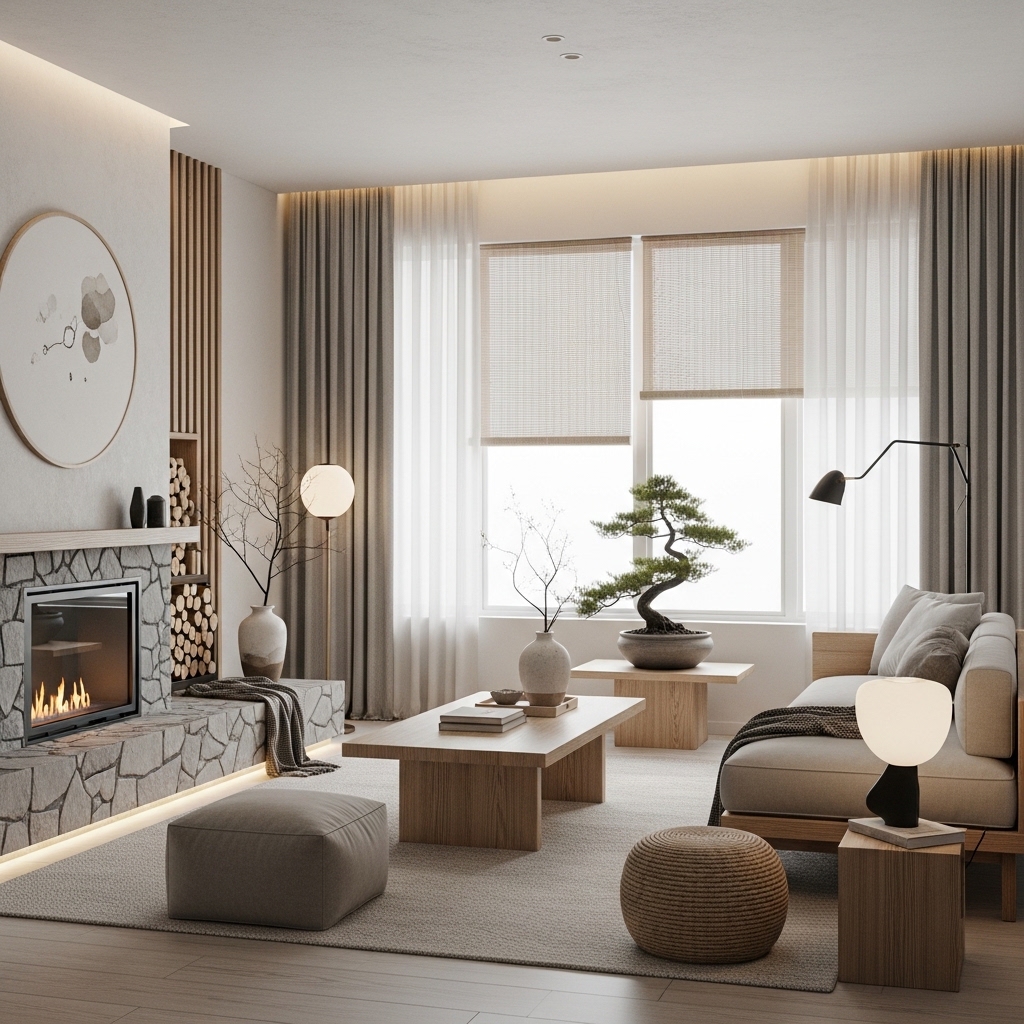
Creating a zen living room transforms your home into a sanctuary of peace and tranquility, where stress melts away and mindful living takes center stage. Rooted in ancient Buddhist principles and Japanese design philosophy, zen aesthetics emphasize simplicity, natural harmony, and purposeful minimalism. This design approach goes beyond mere decoration—it cultivates an environment that promotes mental clarity, emotional balance, and spiritual well-being. By serving as a personal retreat from the chaos of daily life, a zen space offers a dedicated area to unwind and reconnect with yourself. The beauty of this design lies in its ability to create maximum impact through minimal elements, prioritizing quality over quantity and natural materials over synthetic ones. By incorporating these timeless principles, you will discover how thoughtful design choices dramatically enhance your overall quality of life while fostering a lasting, profound sense of serenity.
1. Minimalist Furniture Arrangements
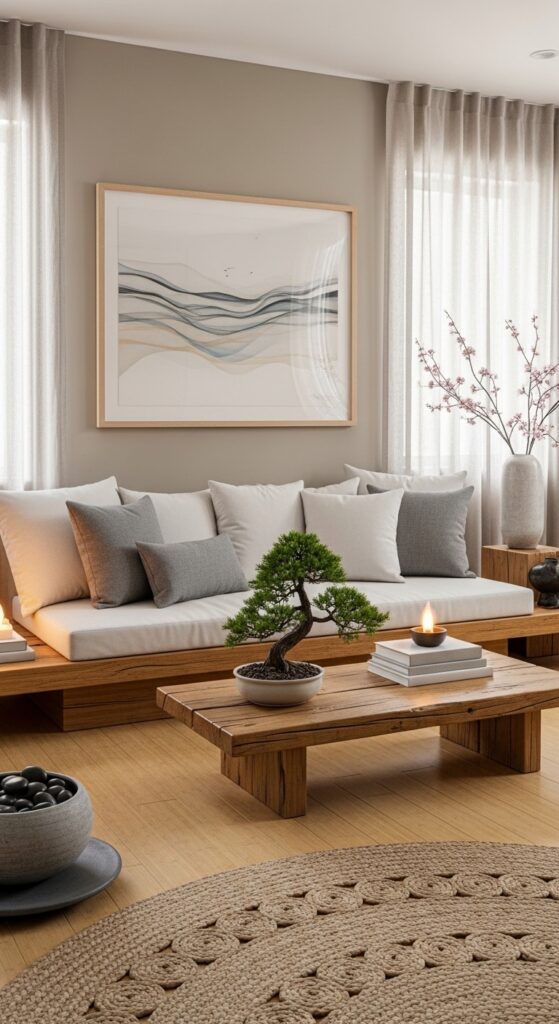
Can you imagine walking into a living room that instantly calms your mind through its sheer simplicity? Minimalist furniture arrangements form the foundation of zen design, emphasizing clean lines, low-profile pieces, and purposeful placement. By selecting only essential items—such as a streamlined sofa, a simple coffee table, and a single accent chair—you prevent the space from feeling overwhelmed by bulky or ornate details. Positioning these pieces to create natural pathways and maintain “visual breathing room” allows the eye to travel effortlessly through the environment. Choosing furniture with geometric shapes and neutral finishes ensures that each element complements the others rather than competing for attention. This intentional approach creates an uncluttered, airy atmosphere where your mind can finally relax, free from the distractions of excess, fostering a deep sense of internal and external peace.
2. Neutral Color Palettes
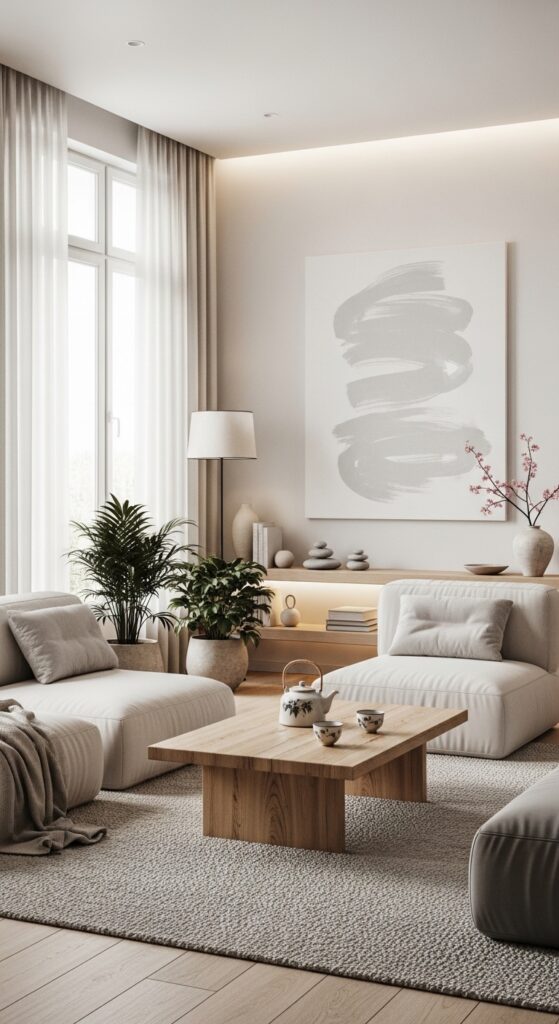
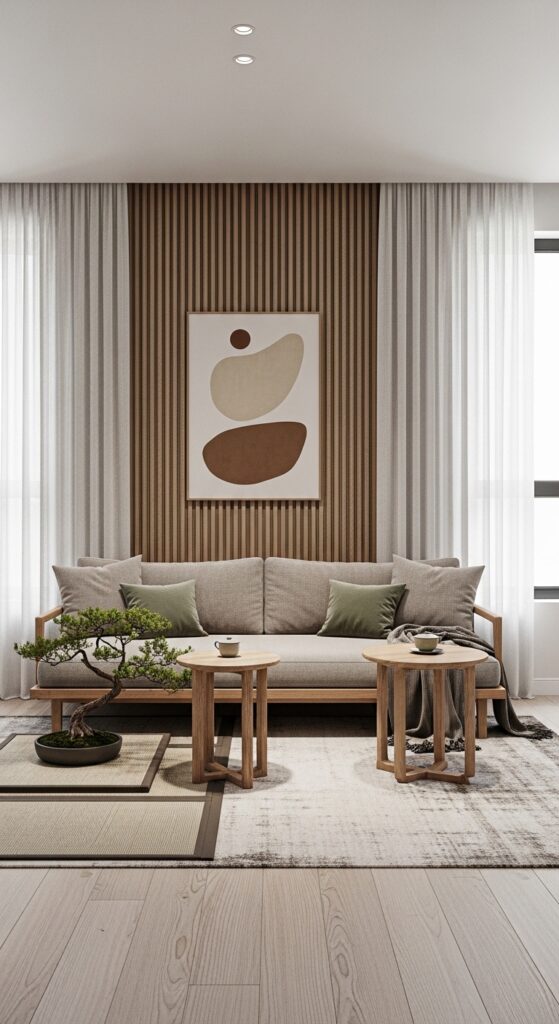
What emotions do soft, earth-toned colors evoke when you enter a room? Neutral color palettes create the serene backdrop essential for zen living rooms, featuring warm whites, gentle grays, soft beiges, and muted earth tones. These calming hues promote immediate relaxation while making your living space feel significantly larger and more open. By applying these neutral tones to walls, major furniture pieces, and foundational textiles like area rugs and curtains, you eliminate the visual tension often caused by bright or high-contrast colors. Instead, layering different shades within the same color family adds sophisticated depth without causing sensory disruption. This monochromatic approach establishes a peaceful, cohesive foundation for all other design elements, ensuring that your environment remains a steady, soothing anchor for the mind throughout the day.
3. Natural Wood Elements
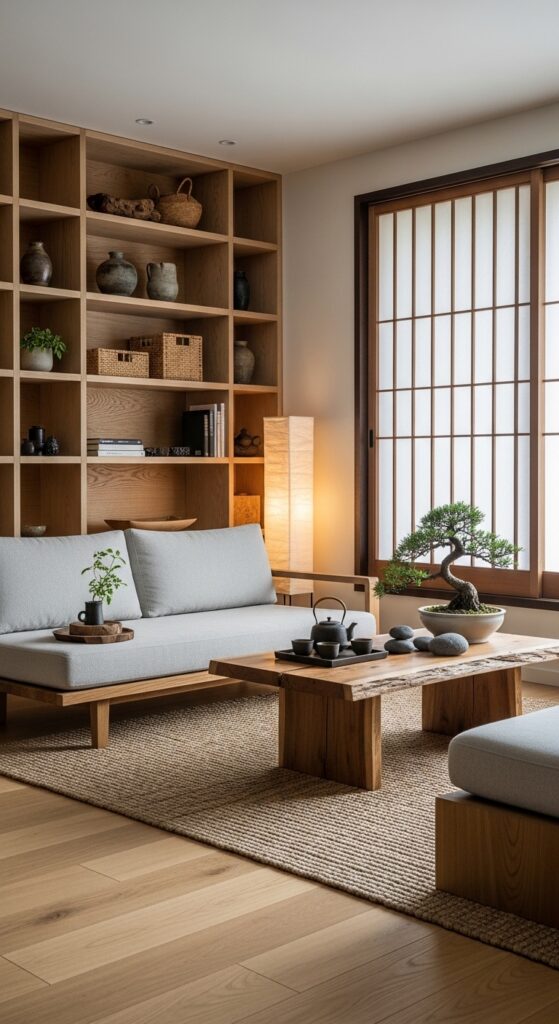
The warmth of natural wood brings organic energy into zen living rooms, connecting your space to the grounding influence of the outdoors. By incorporating light woods like bamboo, oak, or maple through coffee tables and shelving, you introduce a tactile warmth that feels both authentic and timeless. It is essential to avoid heavily stained or painted finishes that mask natural grain patterns; instead, choose furniture with clean profiles that showcase the wood’s inherent beauty. Whether through wooden floors, exposed beams, or subtle wall paneling, these elements add architectural interest while maintaining a commitment to simplicity. The natural variations in the grain provide a soft visual texture that enriches the room without disrupting the peaceful atmosphere. Ultimately, these organic materials foster a sense of harmony, ensuring your sanctuary feels deeply rooted in nature.
4. Floor Seating Options
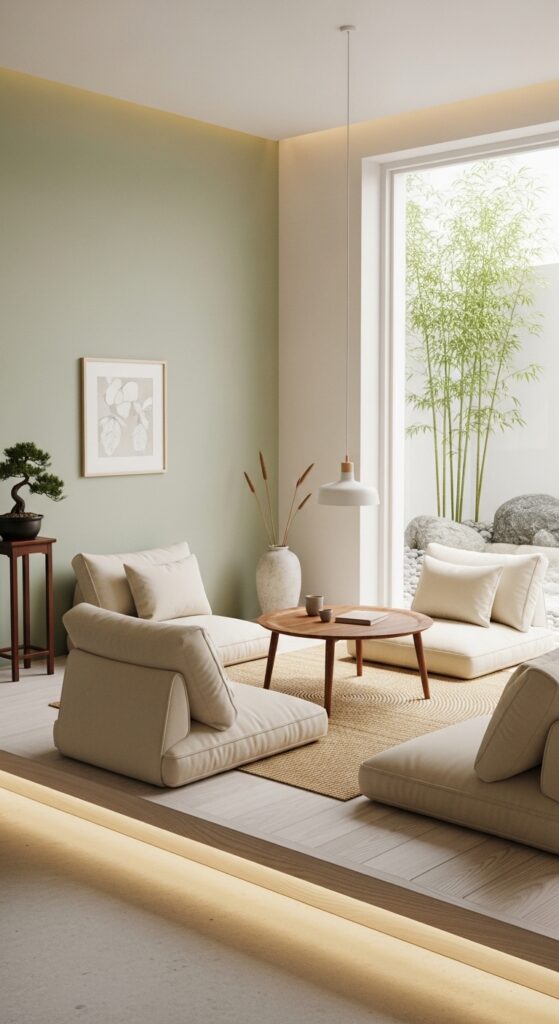
Sitting closer to the ground inherently shifts your perspective, fostering a grounded sense of presence and mindfulness. Floor seating options, such as meditation cushions, tatami mats, and low platforms, create an intimate atmosphere that defines the classic zen living room. By arranging Japanese-style zabuton cushions around a low coffee table, you encourage relaxed conversation and deep contemplation. For added versatility, large, plush floor pillows provide flexible seating that can be effortlessly rearranged or stored to maintain an open floor plan. You might even consider a dedicated raised platform with built-in cushions to create a specific zone for tranquility. This approach not only promotes a closer physical connection to the earth but also naturally encourages better posture and mindful sitting practices. The result is a space that feels deeply intentional, comfortable, and spiritually centered.
5. Indoor Plant Integration
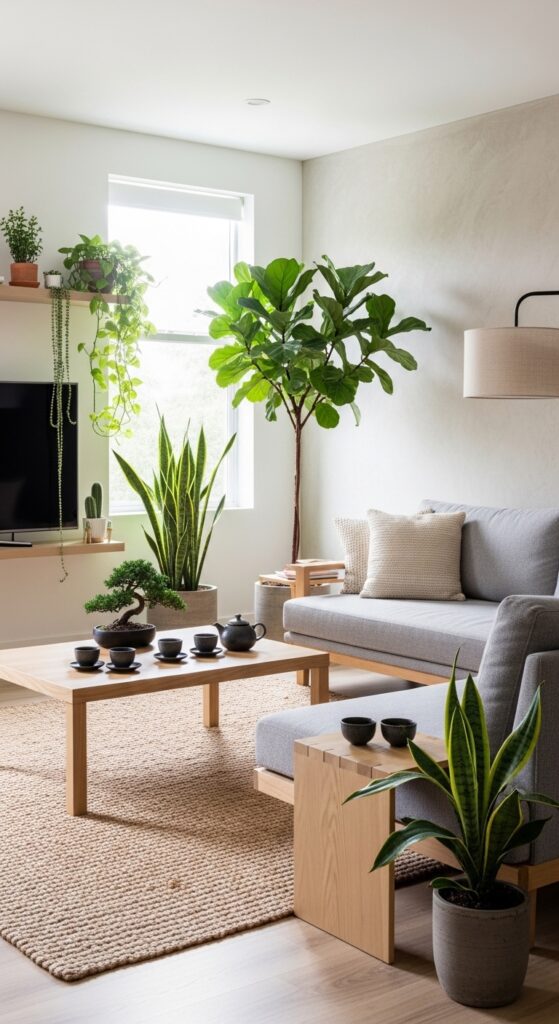
Living plants breathe life and vitality into zen spaces, purifying the air while introducing subtle, organic color variations that soothe the eyes. By selecting low-maintenance varieties like peace lilies, snake plants, or bamboo, you ensure your greenery thrives without adding to your daily chores. Grouping plants of varying heights creates elegant visual layers, especially when housed in simple planters made from ceramic, wood, or woven materials. Positioning these natural elements near windows maximizes light exposure and strengthens the vital connection between your indoor sanctuary and the outside world. Whether you choose a collection of small ferns or a single statement fiddle leaf fig to serve as a living sculpture, plants act as a bridge to nature. This integration fosters deep feelings of tranquility and well-being, ensuring your environment feels vibrant, fresh, and perpetually at peace.
6. Soft Ambient Lighting
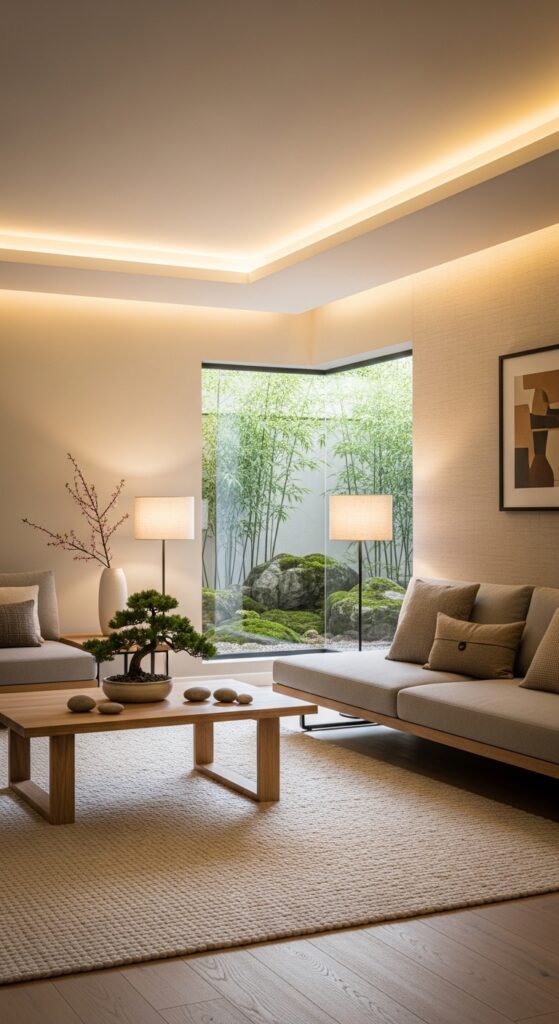
Do you notice how gentle lighting instantly transforms a room’s mood and energy? Soft ambient lighting creates the warm, inviting atmosphere essential for zen living rooms, fostering a sense of calm that harsh fixtures simply cannot provide. By layering different light sources, such as table lamps, floor lamps, and candles, you achieve a balanced illumination that eliminates stark shadows. Using warm LED bulbs or soft white lighting mimics the soothing glow of natural sunlight, which is vital for maintaining your circadian rhythm. Elements like paper lanterns, Himalayan salt lamps, and rice paper lampshades are particularly effective, as they diffuse light beautifully while adding a touch of organic textural interest. Incorporating dimmable switches further allows you to adjust the brightness to suit your mood throughout the day. This thoughtful approach to lighting deepens your relaxation and supports mindful living by creating a soft, luminous sanctuary.
7. Water Feature Integration
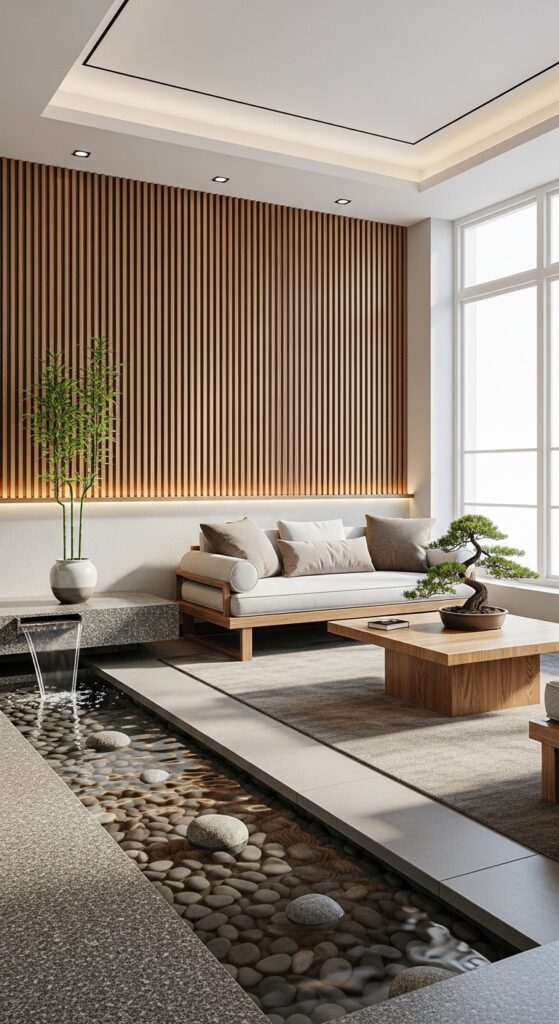
The gentle sound of flowing water creates an immediate sense of tranquility in zen living rooms, offering a sensory anchor that grounds the mind. Small tabletop fountains, wall-mounted features, or desktop gardens add both auditory and visual serenity to your sanctuary. By choosing designs crafted from natural materials like stone, bamboo, or ceramic, you ensure these elements complement your neutral palette rather than clashing with it. It is best to position water features where they can be easily seen and heard—perhaps on a side table or in a reading nook—without allowing the sound to dominate the entire space. The rhythmic, white-noise quality of moving water effectively masks disruptive household sounds while promoting a deeper state of meditation and relaxation. These features serve as elegant focal points that draw the eye and ear, maintaining the peaceful, fluid atmosphere essential to high-end zen design.
8. Bamboo Accent Pieces
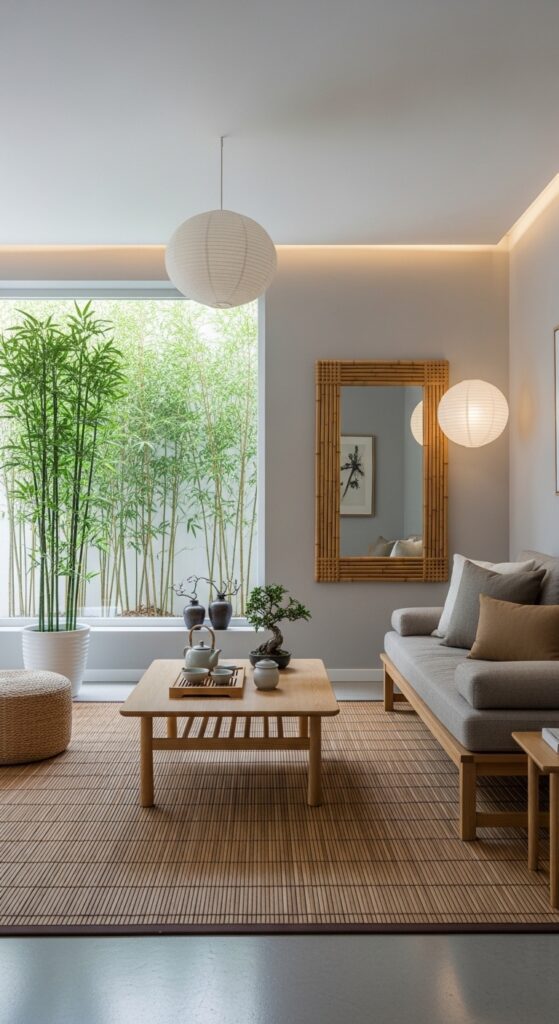
What natural material embodies zen principles better than versatile, sustainable bamboo? Bamboo accent pieces bring an authentic Asian influence to living rooms, offering a unique blend of strength and grace through screens, blinds, and decorative objects. Utilizing bamboo room dividers allows you to create defined functional zones without obstructing the essential flow of natural light. Similarly, bamboo window treatments filter sunlight into a soft glow while maintaining necessary privacy. Practical organization becomes an aesthetic choice when using woven bamboo storage baskets, which provide texture without adding visual weight. Even smaller accessories, such as bamboo vases or frames, contribute to a cohesive, organic feel. The light, airy color and distinct grain of this fast-growing grass enhance the room’s connection to nature while supporting eco-conscious, sustainable living. The result is a space that feels culturally rich, environmentally responsible, and profoundly peaceful.
9. Meditation Corner Creation
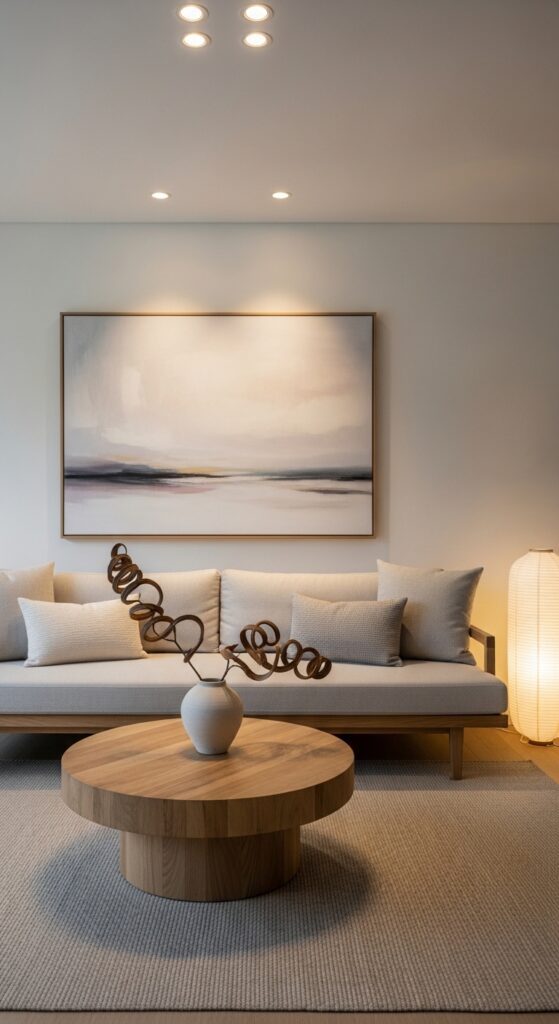
Creating a dedicated meditation corner within your living room establishes a sacred space for mindfulness, providing a physical anchor for your daily practice. To ensure tranquility, select a quiet corner away from high-traffic areas and equip it with a comfortable cushion or a low-profile chair. A simple side table can hold intentional items like candles or inspiring books, while a small plant strengthens your connection to nature. By keeping this zone free from electronics and using a soft rug to define its boundaries, you eliminate distractions. This designated sanctuary serves as a powerful daily reminder to pause, breathe, and center yourself amidst the chaos of life.
10. Hidden Storage Solutions
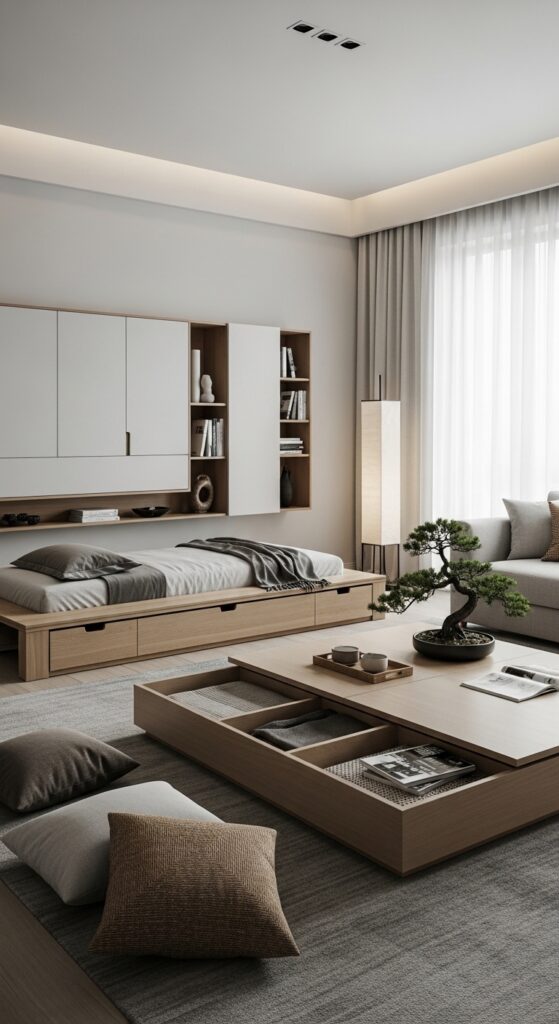
How can you maintain zen simplicity while storing necessary items out of sight? Hidden storage solutions are the secret to preserving the clean lines and uncluttered surfaces essential to a peaceful design. By utilizing built-in cabinets, storage ottomans, and concealed shelving, you keep belongings organized without creating visual disruption. It is best to choose furniture with smooth, unadorned surfaces that blend seamlessly into your walls, making the storage almost invisible. Under-seating benches and wall-mounted units with doors provide excellent dual functionality, hiding the chaos of daily life while allowing you to display only a few carefully curated decorative objects. These clever solutions ensure your living room remains a serene and spacious sanctuary, accommodating your practical needs without sacrificing the minimalist aesthetic. This approach allows the architecture of the room to breathe, fostering an environment where mental clarity can truly flourish.
11. Natural Stone Accents
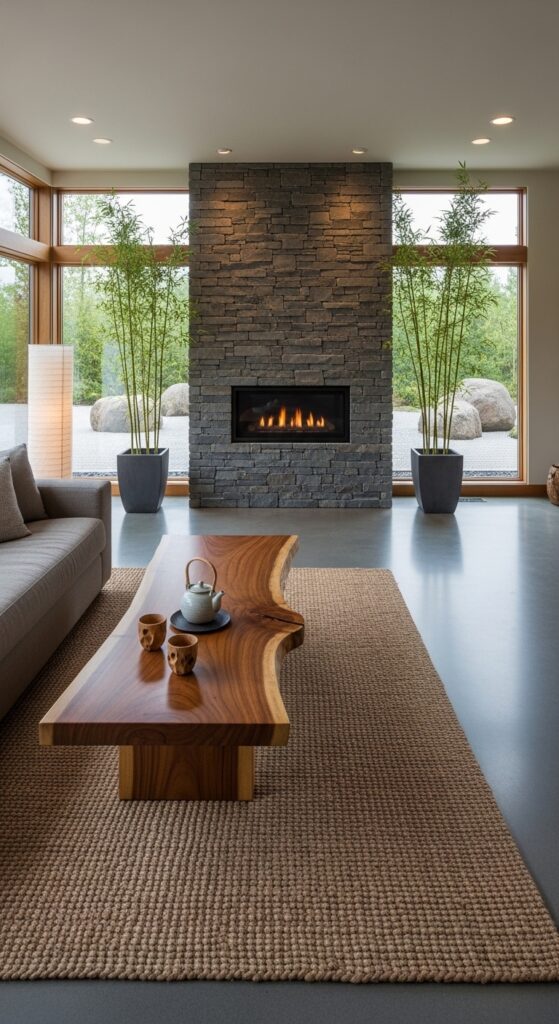
Natural stone elements ground zen living rooms with their timeless beauty, fostering a profound connection to the earth’s stabilizing energy. By incorporating river rocks, slate tiles, or marble accents—whether through fireplace surrounds or simple decorative bowls—you introduce a rugged, textural contrast that beautifully balances soft furnishings. These stones maintain the room’s neutral palette while offering a tactile experience that invites mindfulness and touch. A small indoor zen garden or a stone-based water feature can serve as a powerful focal point for contemplation, anchoring the room’s atmosphere. Because these materials are virtually maintenance-free, they provide lasting beauty that feels both ancient and permanent. By bridging the gap between your interior sanctuary and geological history, stone accents add a layer of sophisticated depth and grounding energy, ensuring your peaceful environment remains steadfast and serene.
12. Shoji Screen Dividers
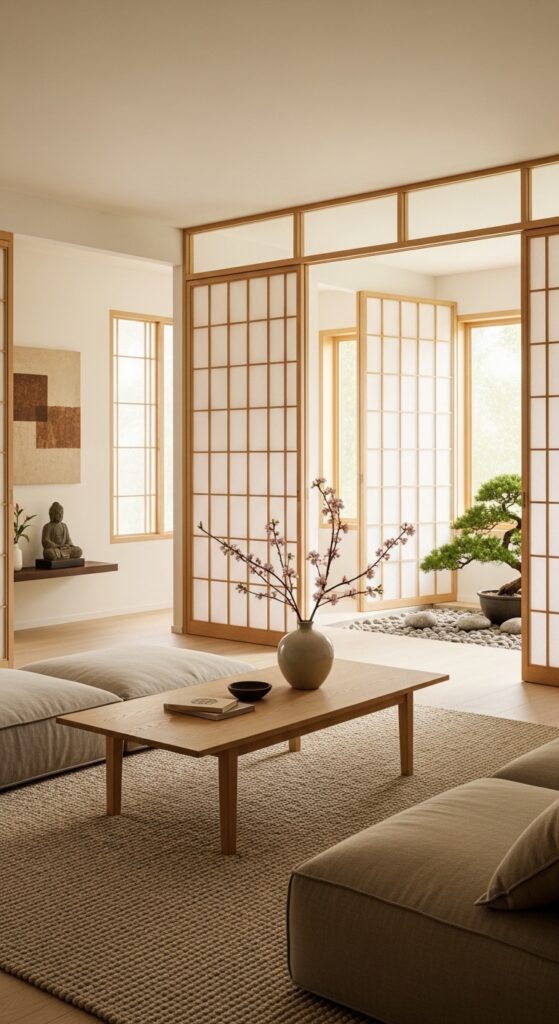
Shoji screen dividers infuse living spaces with authentic Zen character, masterfully balancing privacy with a sense of open, flowing energy. These iconic translucent panels filter soft, natural light while establishing flexible boundaries within a room. Whether used to carve out intimate seating nooks, conceal storage, or partition expansive zones, their geometric patterns provide visual interest without disrupting a minimalist aesthetic. Modern versions adapt classic proportions to contemporary materials, yet remain true to the Zen principle of adaptability. Easily moved or folded away, shoji screens offer a versatile solution for those seeking both structure and serenity in their home.
13. Organic Textile Choices
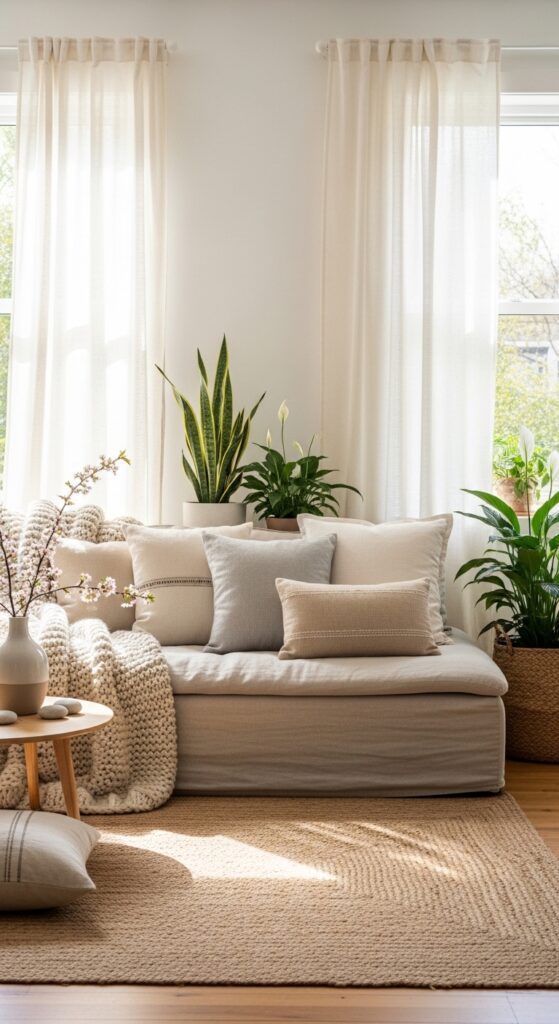
Natural fiber textiles infuse Zen living rooms with organic textures and sustainable origins, grounding the space in authenticity. By prioritizing cotton, linen, hemp, or wool for upholstery and throws, you invite materials that breathe naturally and develop a unique character over time. Unlike synthetic alternatives, these fibers offer a tactile richness that promotes sensory mindfulness. Incorporating neutral-colored textiles in varying weaves adds sophisticated depth without introducing visual clutter. Complement these with woven rugs made of jute or sisal to provide a sturdy, earthy foundation. Ultimately, these conscious choices align with Zen principles, fostering a deeper connection to the natural world.
14. Symmetrical Balance
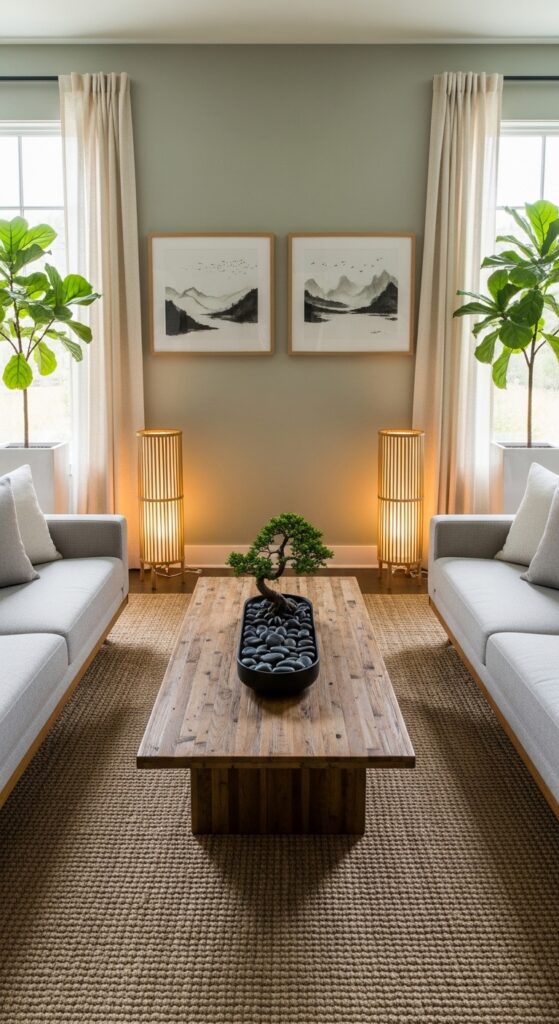
Symmetrical arrangement creates visual harmony by establishing a sense of order that naturally calms the mind. In Zen living rooms, purposeful furniture placement—such as pairing matching lamps, plants, or artwork—builds a framework of tranquility and stability. By organizing seating around a central focal point like a hearth or coffee table, you provide the eye with a clear, restful path. While this approach offers structure, it avoids rigidity by focusing on balanced visual weight rather than mirror-image perfection. This thoughtful distribution of elements promotes mental peace, ensuring the room feels grounded, intentional, and harmoniously aligned with Zen design principles.
15. Monochromatic Schemes
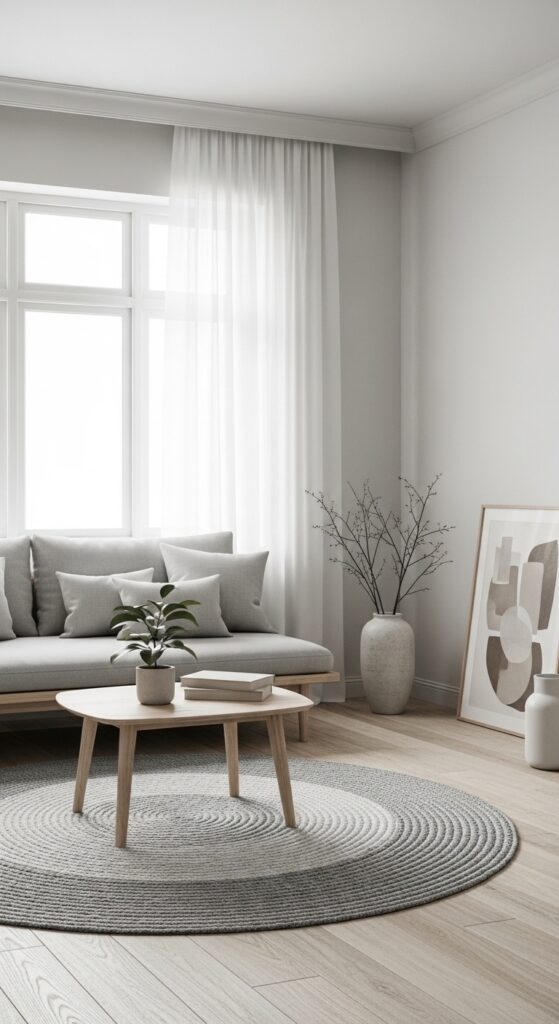
Monochromatic color schemes cultivate sophisticated depth by exploring the subtle nuances within a single color family. By selecting a base like soft beige or warm gray and layering various shades, tints, and tones, you achieve visual unity without sacrificing interest. This approach eliminates jarring color conflicts, allowing the room’s textures and forms to become the primary focus. Integrating these variations through wall colors, upholstery, and accessories creates a seamless flow that supports meditation and rest. Ultimately, a monochromatic palette fosters a sense of calm continuity, providing a serene backdrop that feels both expansive and deeply grounded in Zen principles.
16. Low Coffee Tables
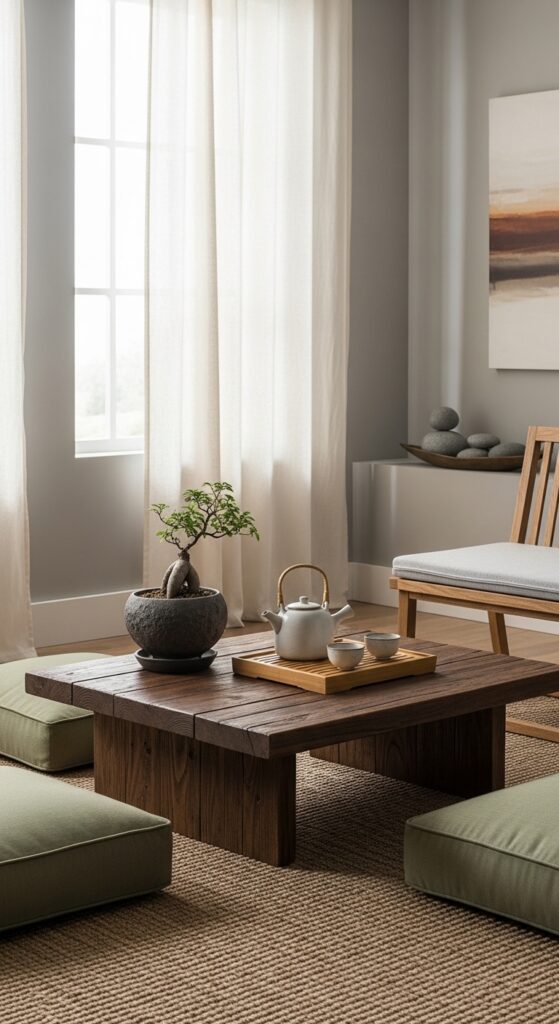
Low-profile coffee tables anchor Zen living rooms with a grounded, humble aesthetic that prioritizes functional simplicity. By sitting close to the floor, these tables encourage relaxed seating and intimate conversations, perfectly supporting floor cushions or low sofas. Materials like reclaimed wood, stone, or bamboo reinforce a connection to nature, while clean rectangular or circular silhouettes avoid unnecessary visual noise. To maintain a sense of calm, keep surfaces clear of clutter, displaying only a few meaningful items like a hand-crafted tea set or a single plant. Ultimately, these low-profile pieces promote a slower, more mindful pace of living and quiet contemplation.
17. Art Wall Simplicity
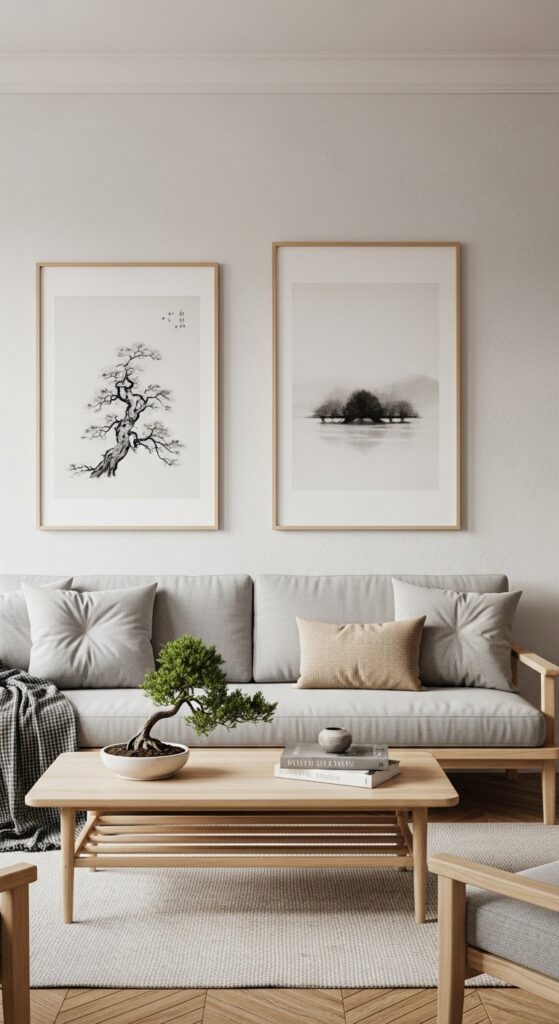
Art wall simplicity in Zen living rooms champions the philosophy of “less is more,” proving that a single, meaningful piece carries far more weight than a cluttered gallery. By focusing on quality over quantity—perhaps a minimalist ink painting or nature-inspired photography—you create a dedicated space for contemplation. Framing art in simple natural wood or clean white allows the work to speak for itself without distraction. When surrounded by intentional empty space, or “Ma,” the artwork is allowed to breathe, making its full emotional impact felt. This restrained approach fosters a peaceful viewing experience, encouraging mindful observation and quiet reflection.
18. Open Space Flow
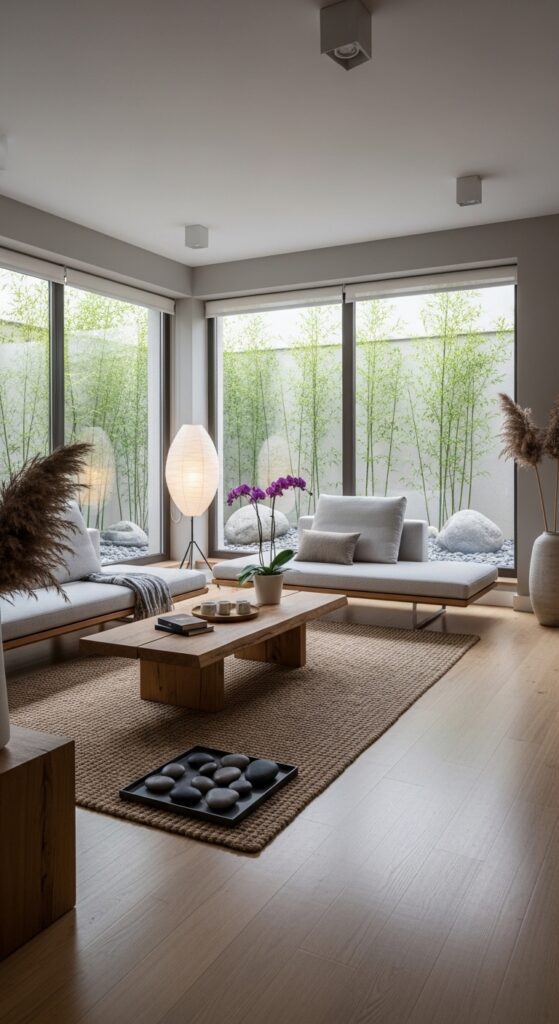
Open space flow in Zen living rooms prioritizes the movement of energy and ease of circulation over furniture density. By arranging pieces to create clear, unobstructed pathways between entrances and seating, you foster a sense of freedom and mental clarity. Maintaining generous spacing between furniture prevents a cramped atmosphere, allowing even smaller rooms to feel expansive and breathable. Using area rugs to define “rooms within rooms” provides structure without the need for physical barriers. This layout allows natural light to circulate freely and honors the Zen principle of non-attachment. The resulting environment is a spacious, serene sanctuary perfectly suited for peaceful contemplation.
19. Natural Light Maximization
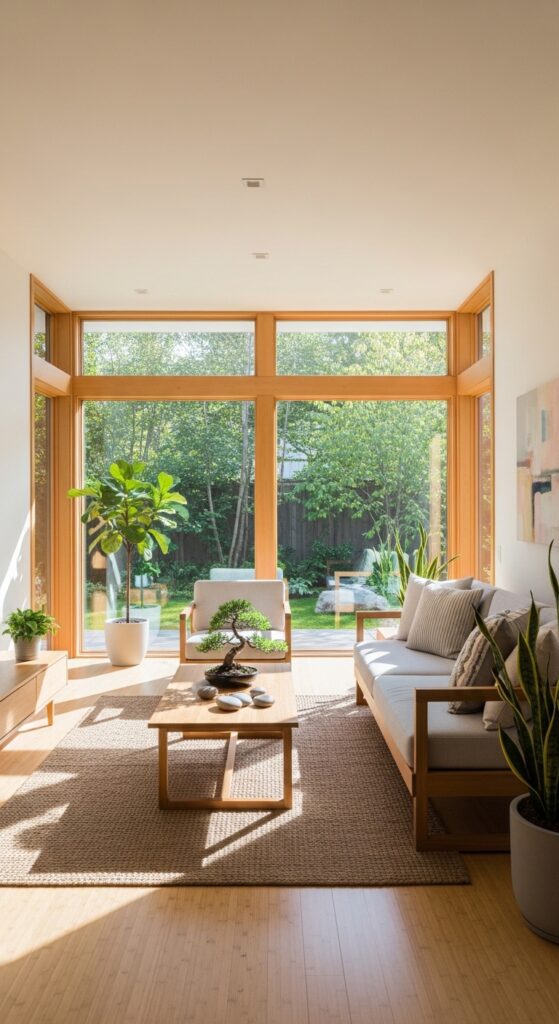
Natural light serves as the ultimate Zen element, seamlessly connecting interior spaces to the rhythmic cycles of the day and seasons. To maximize this vitality, prioritize sheer window treatments and light-colored surfaces that reflect and amplify illumination rather than heavy drapes that absorb it. Strategically placing seating near windows invites moments of sun-drenched relaxation, while mirrors can bounce light into deeper corners. For added brightness without sacrificing privacy, consider skylights or clerestory windows. This dynamic interplay of light not only creates a peaceful, ever-changing atmosphere but also supports your circadian rhythms, fostering a profound sense of well-being and natural harmony.
20. Aromatherapy Integration
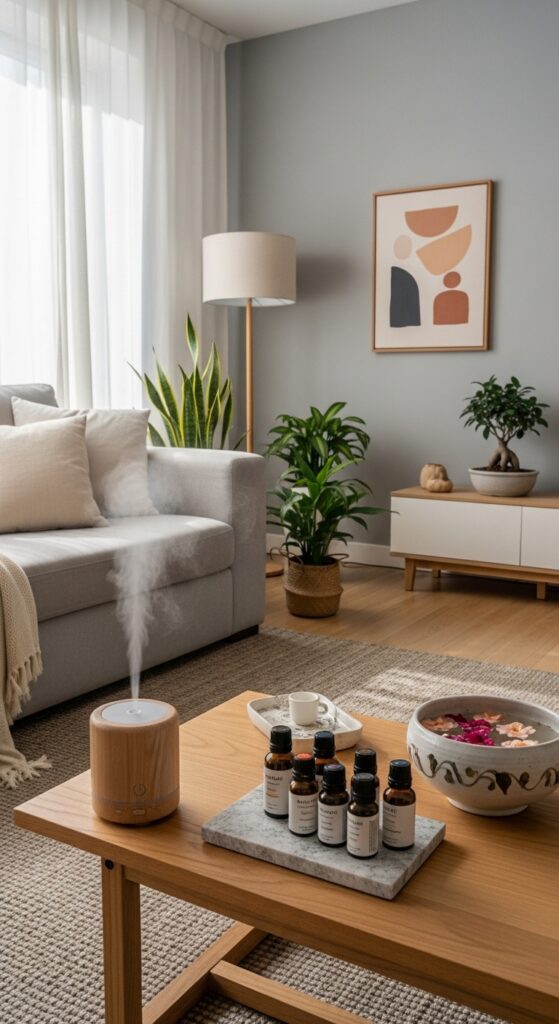
Aromatherapy integration in Zen living rooms engages the sense of smell to cultivate an atmosphere of profound tranquility. By using essential oil diffusers, beeswax candles, or fresh botanicals, you can introduce calming notes of sandalwood, lavender, or eucalyptus that promote immediate relaxation. It is best to avoid synthetic fragrances, which often feel intrusive; instead, opt for traditional incense or sage to cleanse and ground the space. Even a simple vase of fresh herbs can provide a subtle, life-affirming scent. This mindful layering of natural fragrances deepens meditation practices and transforms daily rituals into sensory experiences that align the mind and body.
21. Technology Concealment
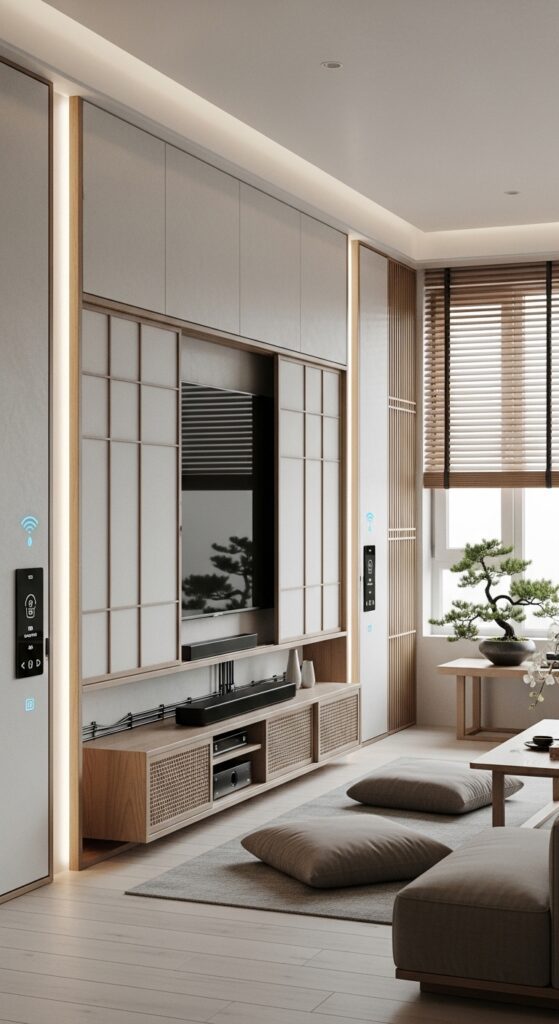
Technology concealment preserves the serene atmosphere of Zen living rooms by intentionally masking devices that often create visual and mental clutter. By utilizing closed cabinetry, sliding shoji panels, or storage ottomans, you can hide televisions and gaming systems when they aren’t in use. Prioritizing wireless technology further eliminates the “cord chaos” that disrupts clean lines. Establishing dedicated tech zones ensures that devices don’t spill into areas meant for meditation or conversation. This thoughtful approach allows you to enjoy modern conveniences without compromising the uncluttered, contemplative environment, ensuring your home remains a sanctuary for focus rather than a hub of digital distraction.
22. Seasonal Flexibility
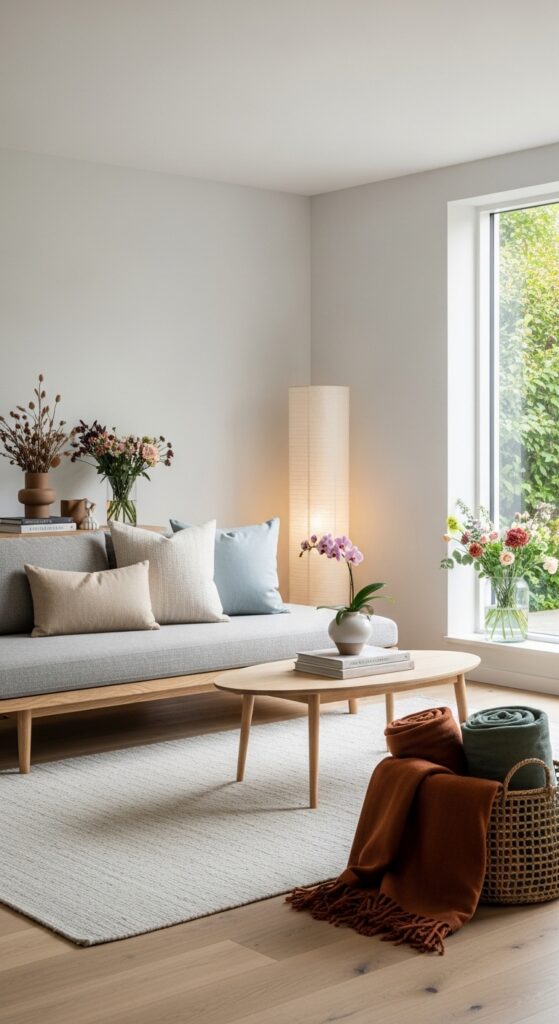
Seasonal flexibility in Zen living rooms embraces the natural law of impermanence, allowing your sanctuary to evolve gracefully with the changing year. By utilizing lightweight furniture and a neutral base palette, you create a versatile canvas that easily accommodates seasonal shifts—from cozy, heavy throws in winter to vibrant, fresh botanicals in spring. This adaptable approach encourages you to store off-season items out of sight, maintaining a clutter-free environment year-round. Rather than clinging to a rigid layout, seasonal adjustments celebrate the unique beauty of the present moment. This fluidity fosters a mindful connection to nature’s cycles, ensuring your home remains a living, breathing reflection of Zen harmony.
23. Mindful Arrangement
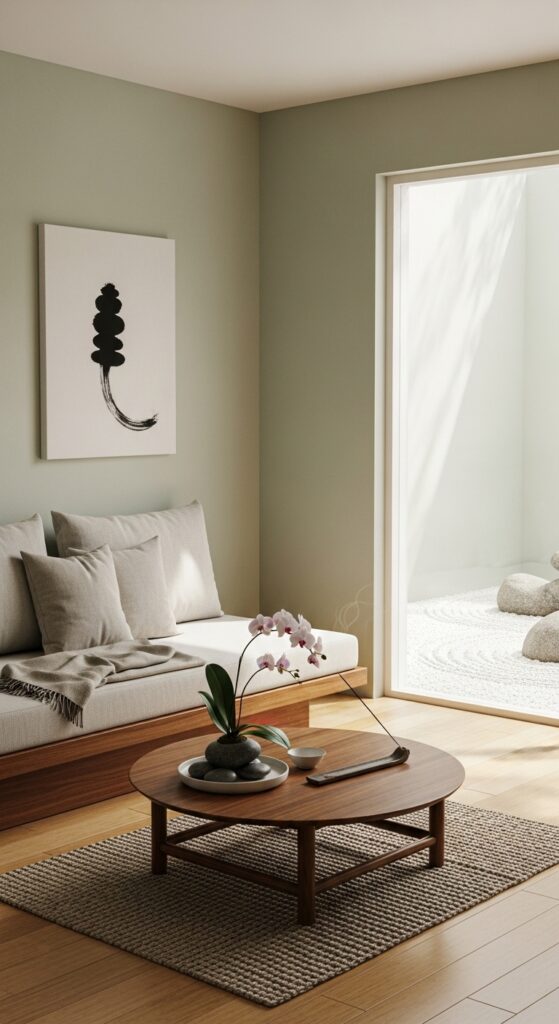
Mindful arrangement transforms your living room into a living meditation, where the placement of every object is an intentional act of composition. By considering sight lines, the path of natural light, and your daily movements, you create a space that feels purposeful rather than accidental. Grouping related items while honoring “Ma”—the Japanese concept of negative space—allows each element to breathe and be appreciated. This contemplative approach invites you to weigh the emotional impact of each piece, ensuring your surroundings support focus and peace. Ultimately, this practice of mindful positioning fosters a harmonious environment that encourages present-moment awareness and deepens your connection to your home.
24. Personal Sanctuary Elements
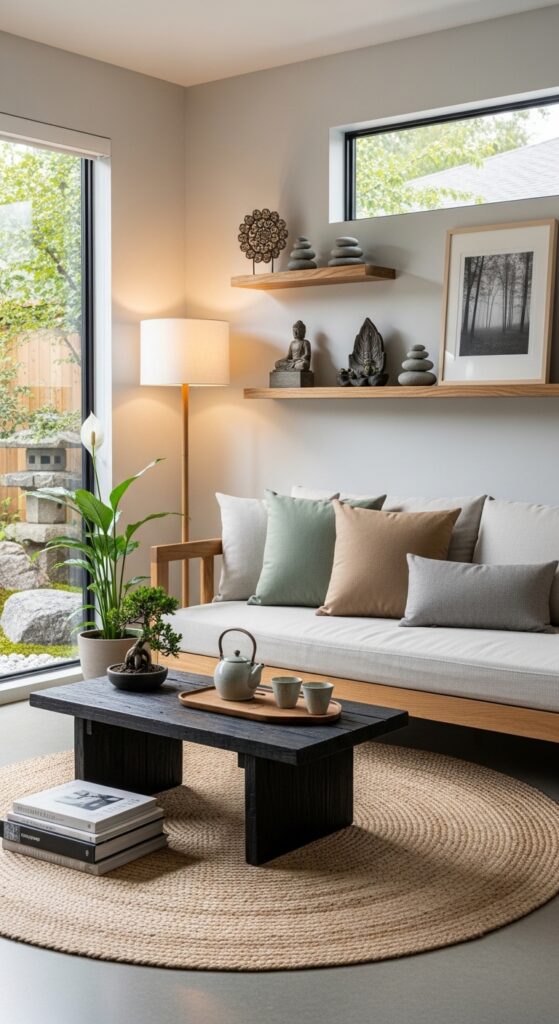
Personal sanctuary elements infuse your Zen living room with deep, individual meaning, grounding the space in your unique journey toward inner peace. By intentionally selecting objects of significance—such as meditation stones, a cherished photograph, or a single family heirloom—you create a landscape for quiet contemplation. These treasures should be displayed with restraint to honor the Zen principle of simplicity, ensuring the room remains uncluttered. Carving out a dedicated retreat, like a plush chair nestled in a sunlit corner, provides a physical space for personal reflection. This balance of individual soul and minimalist design ensures your sanctuary feels authentically yours while maintaining a pervasive, tranquil energy.
Conclusion:
Transforming your living room into a Zen sanctuary is a journey that requires patience, intention, and a steady commitment to simplicity over complexity. These 24 ideas offer a comprehensive foundation for creating a space that nurtures your mind, body, and spirit through timeless principles of harmony and balance. Remember, Zen design isn’t defined by rigid rules, but by cultivating an environment that supports your personal path to mindfulness. Whether you begin by decluttering a single surface or rearranging furniture for better flow, allow your space to evolve gradually. Ultimately, the most vital element of any Zen sanctuary is your own presence and the heartfelt intention to create a home that serves your highest good.


A really good blog and me back again.